In ‘Final Fantasy Tactics’, Throwing Rocks at Assholes Is Solidarity


Final Fantasy Tactics has long been beloved as one of the highest highs of the series, not just for its grand strategical depth but for its sharp and frank political themes, telling a sweeping tale of fantastical kingdoms, conspiracy, the nature of power, the truth in history, and class and political violence in equal measure.

But revisiting the 1997 classic this week for its new remaster, The Ivalice Chronicles, its opening hours reminded me that it’s also really about the simple joy of beaning someone you really, really hate in the face with a stone, even when they’re ostensibly on your own side, as a viable political action.

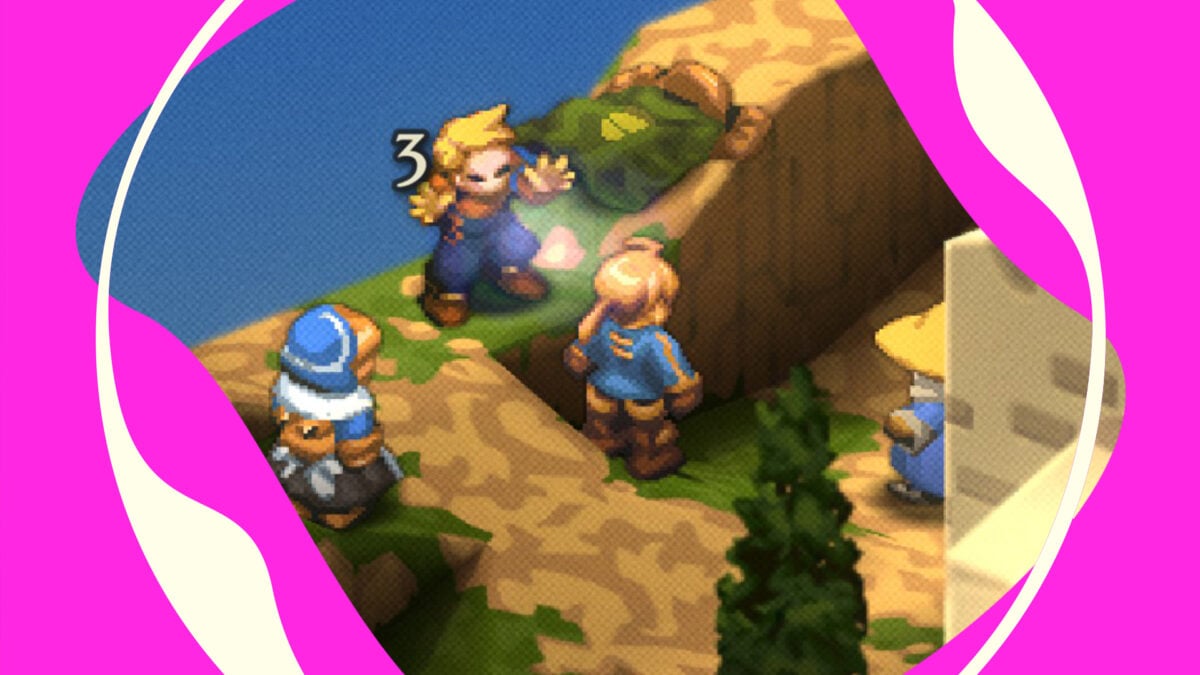
In the early hours of Final Fantasy Tactics, the Throw Stone ability is a fundamental tool in the game’s strategic combat kit. An early ability earned by one of the two default jobs, the Squire, Throw Stone is exactly what you think it is: a ranged attack where your selected character picks up a rock from the ground and promptly hurls it at whatever is in range. It doesn’t do a lot of damage, but it lets you do something on a unit’s turn, and that’s very important in Tactics.

20251001032104 1
© Square Enix

Character progression in Tactics is built around earning both experience points and “job points,” the former increasing your character’s general level in any given job they use and boosting their stats, and the latter being a currency used to unlock abilities within jobs (the term Tactics uses for different traditional Final Fantasy classes, like Knights, Archers, White and Black Mages, and so on). You earn them every time a character performs an action in Tactics‘ turn-based combat—not when they move around the field of battle, but when they perform a major action, like attacking, casting spells, or using items.

Characters can pick and choose abilities from across jobs to essentially multiclass as they progress through the games’ systems; making sure they’re earning XP and job points efficiently is a key layer to the games’ strategy. You want all your characters in the field participating, not just letting your heavy hitters run in and get all the hits in. So push comes to shove, if they’re a melee unit who can’t get in range, or they’re a primarily buffing or healing-based character, getting the Squire’s Throw Stone is useful early on just so a character can pick up a pebble and lob it at someone. It’s a last resort to keep that efficiency ticking over.

But most importantly, in regard to Final Fantasy Tactics‘ themes of class struggle, Throw Stone can target anyone who’s in range, friend or foe. It’s not a lot of damage, barely double-digits at most. If you want the XP and job points at the most efficient rate, why not have your lowly chemist ding your nearby knight with a stone if no one else is in range. They take a teeny bit of damage, you get your points, and it’s all fine.

There are targets among your allies for this minmaxing temptation that are much better than others early on, however. Well, actually, there’s one in particular: Argath Thadalfus, a guy who sucks so much.

20251003032359 1
© Square Enix

Players meet Argath very early on in Tactics. Main characters Ramza and Delita run into him being accosted by members of the Corpse Brigade, a revolutionary band that serves as an early antagonistic force. In Tactics‘ setting, the kingdom of Ivalice has only recently emerged from a half-century-long war with its eastern neighbor, Ordallia—a war that Ivalice broadly lost in suing for peace, having been financially ruined by decades of conflict. The Corpse Brigade is largely made up of disillusioned members of Ivalice’s peasant classes, brought in to fight the war on behalf of its noble families and then cast aside and left unpaid for their service, with no ways to support their families, already ravaged by the cost of the war.

Tactics makes it clear very early on that Ramza and Delita—the former the young scion of House Belouve, the latter his commoner friend—begin to realize that their life as training warriors-to-be is not necessarily on the right side of history as they’re drawn in to help put a final end to the Corpse Brigade. But Argath, who joins your retinue after being rescued, unabashedly and gleefully thinks otherwise: although his own noble family was disgraced in the war, Argath prides himself on his place above other people at every opportunity. He is arrogant and simpering in equal measure and deeply cruel—relishing in fighting alongside Ramza and Delita as they hunt down people he sees as little more than chattel.

Tactics knows this dude is a real piece of work every step of the way, and that’s part of what makes its opening so compelling, as you, the player, slowly come to realize alongside Ramza and Delita that you’re pawns in a much larger game, and the rot in Ivalice’s class structure runs deep. But it also means an interesting intersection of Tactics‘ mechanical and narrative design becomes clear. You have Throw Stone to maximize your leveling up. You have a guy in your party who is a snobby piece of shit that no one really likes. Throw Stone needs a target, and you’re not always going to have enemies in range to use it.

20251003034932 1
© Square Enix

Throw rocks at Argath. Repeatedly. Every turn, if you can. You can always occasionally chuck a potion at him if you get so zealous in your class consciousness that you almost stone him to death, but that just means you can repeat the cycle. Do it because it feels good.

And really, it does feel like an act of class solidarity. Ramza may be a noble, but eventually even he realizes that Argath’s complete disdain for those less well-off than he is abominable. Delita, a commoner himself, is already at odds with Argath, and part of the reason why Argath ultimately splits from your group is when the jerk callously mocks Delita’s sister after she’s believed to be a noble and taken hostage by the Brigade. The rest of your retinue is made up of randomized characters this early on in the game, so you can tell whatever story in your head about them—and with Throw Stone being a low-level Squire ability, it’s easily acquirable by every character you recruit by default, so it really can be a point of commonality for everyone regardless of background or whatever you go on to train them as.

Everyone in Tactics‘ opening can be unified in hating Argath so much that they all want to pelt him with rocks as much as they want to get through a combat encounter alive, to put the high and mighty snob in his place stone by stone. After all, when we all throw rocks at a guy who sucks together, we all rise together.

Want more io9 news? Check out when to expect the latest Marvel, Star Wars, and Star Trek releases, what’s next for the DC Universe on film and TV, and everything you need to know about the future of Doctor Who.
How Final Fantasy Tactics: Ivalice Chronicles Takes The ’90s Tactical RPG Classic To A New Level


Blog | Editorial

When Final Fantasy VII was released all the way back in 1997 on Sony’s beloved original PlayStation console, it didn’t just spark a conflagration of interest for the JRPG genre at large; it also somewhat unintentionally cannibalised a chunk of interest for another Final Fantasy game, which was released in the same year – Final Fantasy Tactics. Some twenty-eight years later, Final Fantasy Tactics is poised to return on contemporary gaming hardware as Final Fantasy Tactics: The Ivalice Chronicles. This release not only brings a godfather of the tactical RPG genre to modern audiences, but does so alongside a raft of deftly considered improvements and audio-visual overhauls too. Here is how Final Fantasy Tactics: The Ivalice Chronicles is set to elevate the 1997 original to a new level.

Overhauled Visuals Worthy Of This Genre-Defining Effort

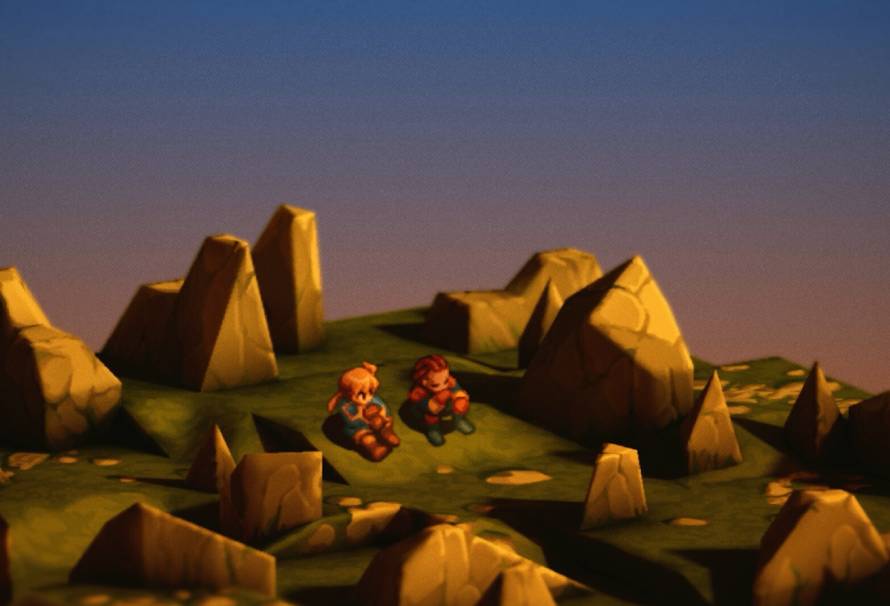
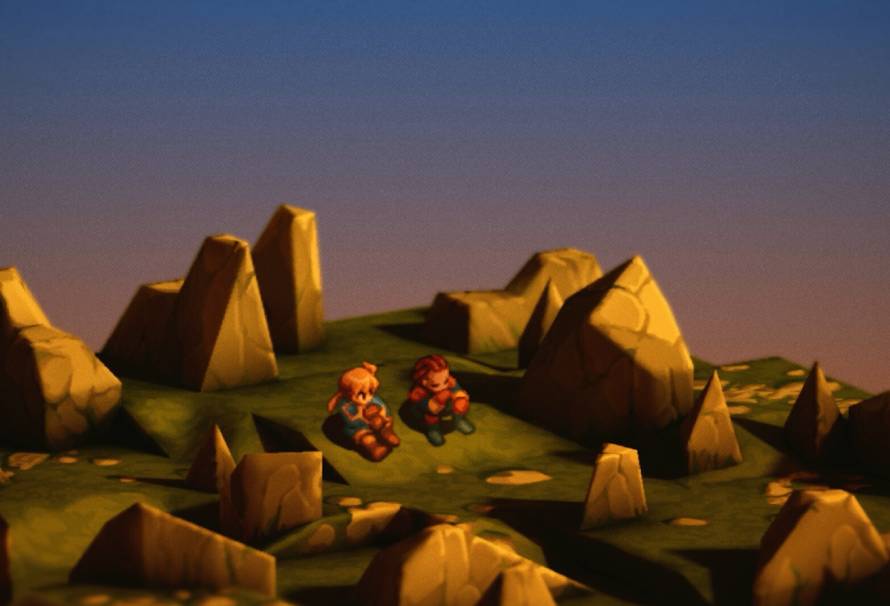
Final Fantasy Tactics: The Ivalice Chronicles delivers the best of both worlds, preserving the visual charm of the 1997 classic while infusing it with fresh detail. Central to this is its ‘enhanced’ mode, which strikes a balance between faithfulness and evolution. Characters retain their iconic sprite-based look, now rendered with sharper fidelity, while the isometric 3D environments receive a dramatic upgrade. The result is a striking blend where nostalgic and modern visual styles complement each other, creating an experience that feels both familiar and refreshingly new.

In addition to the improved character model and environment visuals, developer Square-Enix has also spent time updating the UI for the current generation of gamers. This means that the capabilities of modern platforms allow for improved readability in the myriad of menus that permeate The Ivalice Chronicles, while additional tooltips, a reworked tactical view and a new combat timeline all serve as meaningful presentation updates to this 1997 genre classic.

Final Fantasy Tactics: The Ivalice Chronicles

Speaking of the word ‘classic’, should none of these enhancements happen to align with your particular tastes, you can simply elect to use the original visual presentation instead, thanks to a handy in-game toggle which lets you do just that. Brilliantly, this toggle only affects the visuals, so retro gaming lovers can have their figurative cake and eat it as all of the new quality of life settings, translation and voice acting performances will be active regardless of the visual preset that is chosen.

An All-Star Cast And Language Translation Breathes Life Into This Seminal Tactical RPG

Though the soundtrack and sound effects remain largely unchanged from the 1997 game, both the translation and the new voice acting track serve as substantial improvements over the original. Starting with the voice acting side of things, this represents an entirely new – and arguably overdue – feature that The Ivalice Chronicles brings to the game.

Bringing together a notable voice acting cast of folks such as Joe Pitts, Gregg Lowe and Final Fantasy XVI standout Ben Starr, Final Fantasy Tactics: The Ivalice Chronicles finally brings a dramatic voice (pun intended) to its deep and sophisticated storylines. Better still, rather than just superimposing these performances on top of the existing script, The Ivalice Chronicles adds additional dialogue during battles and extra incidental conversations between characters. As a result, there is considerably more weight to the characters and their motivations.

Final Fantasy Tactics: The Ivalice Chronicles

Perhaps a more significant change for long-term fans of Final Fantasy Tactics is the newly reworked script and translation. Pointedly, the new translation that The Ivalice Chronicles uses is different from both the original 1997 release and the much more stylised script which accompanied the later ‘War of the Lions’ PSP remake. Aiming to be much clearer and easily understood than the script seen in either of those two prior entries, the translation script used in The Ivalice Chronicles instead favours a more natural and mature flow in line with the voice talent that has been recruited for this release, resulting in a much more serious and dramatic tone.

Much like the visual side of things, devoted fans can opt out of The Ivalice Chronicles ‘enhanced’ mode and instead use the ‘classic’ script translation should they so choose. However, somewhat oddly, rather than leveraging the original script seen in the 1997 PlayStation One release, the English version of The Ivalice Chronicles instead uses the translation script seen in 2007’s Final Fantasy Tactics: The War of the Lions, as this was deemed to be a much closer interpretation of the story than the original release.

A Raft Of Crucial Quality Of Life Improvements

Ensuring that The Ivalice Chronicles is nothing less than the definitive version of Final Fantasy Tactics means that developer Square-Enix also had to go deep under the hood and fashion a great number of quality-of-life improvements. Right off the bat, one of the most significant of these improvements is the ability to fast-forward battles. This means you no longer have to painfully wait for battles to lumber toward their conclusion, as now you can just fast forward your way through in a fraction of the time – huzzah!

Final Fantasy Tactics: The Ivalice Chronicles

Another significant feature of The Ivalice Chronicles is the idea of multiple difficulty settings. With easy, normal and hard difficulty levels now present, The Ivalice Chronicles is certainly no longer quite the off-putting prospect for genre newcomers that the original game was back in 1997, which, y’know, is a rather good thing indeed.

Though there are many more quality of life improvements present than I have room to necessarily scribble about here, one final key improvement that The Ivalice Chronicles implements is the new in-game encyclopaedia and compendium reference libraries. For a world as thoroughly steeped in politics, complex relationships and history as Final Fantasy Tactics, being able to have all of that material properly curated in one place where you can read through and digest it at your leisure is a godsend. Thankfully, that’s precisely what The Ivalice Chronicles has done. Elsewhere, a new story compendium feature does a grand job of keeping players oriented regarding the story at large, comprehensively filling you in on the various characters, their motivations and the events which surround them. Delightful.

In the end, Final Fantasy Tactics: The Ivalice Chronicles feels less like a simple remaster and more like a definitive reimagining of a genre-defining classic. By pairing visual and narrative authenticity with modern refinements, Square-Enix has managed to respect the legacy of the 1997 original while making it more accessible and engaging for today’s players. Whether you’re a veteran strategist eager to revisit Ivalice or a newcomer curious about one of the most influential tactical RPGs ever made, The Ivalice Chronicles ensures that Final Fantasy Tactics finally gets the recognition and audience it has always deserved.


John-Paul Jones

Scribbling about videogames since 2005, John-Paul Jones first stoked his love for the industry with the Atari 65XE at the age of four before proceeding onto the ZX Spectrum, Amiga and beyond. These days, he finds himself unreasonably excited about Sega’s Yakuza franchise, foreign cinema and generally trying to keep his trio of sausage dogs from burning his house down. Clearly, he is living his best life right now.