The Hunt: First Edition and How It’s Helping Us Plan for Future Roblox-wide Events


  • The Hunt: First Edition attracted 34 million users who spent 128 million hours completing 212 million quests. 
  • 100 creator teams built new quests showcasing a diverse range of experiences.
  • Our users and creators provided valuable insights that will make future community-wide events even better.

For two great weeks last month, 34 million Roblox users tackled brand-new quests across 100 of our creator experiences as part of The Hunt: First Edition, our first community-wide event in three years. It was a success based on many metrics, including the 212 million quests our users completed and the 800,000 users gathered for the start of the event. The extensive engagement we saw from users and creators makes us excited about the future of community-wide events on Roblox. And, the invaluable insights we collected will help us plan them going forward. 

We designed the Hunt: First Edition, which ran from March 15 on mobile, PC, console, and VR, with something for everyone. Users interested in dipping their toes into participating could earn a reward after just five quests. Those eager for exclusive and rare rewards completed even more quests. And the most intrepid explorers earned the coveted Infinite Egg — a nod to the beloved egg hunts we’ve run in the past on Roblox — after completing at least 95 quests.

Here are some of the biggest highlights from the two weeks of The Hunt: First Edition:

  • 100 of our top experiences had brand-new quests, including Doors by LSPLASH, Arsenal by ROLVe, Piggy by MiniToon, and Catalog Avatar Creator by ItsMuneeeb. 
  • Video Star influencers put together incredible livestreams, never-before-seen collaborations, and a ton of hype content throughout the event. That included handing out Hunt-exclusive gold Vault Headphones to users who joined them in the event hub. 
  • We were excited to see so much fan-made content emerge. For example, users created guides on the hardest and easiest quests to complete, as well as tips and tricks on how to beat quests.

The Hunt: First Edition is the latest example of what’s possible when our creators and users come together. Many in our community have great memories of popular hunts in the past like Metaverse Champions in 2021. 

That was especially powerful in showcasing and driving discovery of our creators’ fantastic experiences. Since then, we’ve listened to and heard our community’s feedback that events like this are important for them. “It’s awesome to see an official event back on the platform,” said MegaSquadMo, one of our Video Star members. “The effort some games put in was amazing. Watching the community come together to help each other complete badge quests and unlock avatar items was really cool after such a long break. Hoping this sets the stage for even better events in the future!”

So think of The Hunt: First Edition as a lightweight re-entry into community-wide events. In the coming months and years, we’ll continue our new series and explore fresh themes and ideas that will rev up our community.

Looking Into the Future

We learned a ton from The Hunt: First Edition and we’re already thinking about how to apply those lessons to future events. Throughout the process, our community provided valuable feedback on what energized them and the iterations they’d like to see in future community events. Among the insights that will help us plan great future community events: 

  • Users loved trying out a broad range of new experiences.
  • They appreciated the nod to past events, including the Infinite Egg, for those who completed 95 quests.
  • Getting our creator and influencer communities involved in advance helped get them excited and, in turn, to reach out to their players and audiences. That drove more engagement. 
  • We’ll work closely with creators in the future to define best practices for events like these.

But there’s still more to learn from last month’s hunt. That’s why Roblox founder and CEO, David Baszucki, will invite a user who heavily participated in the Hunt and the creator team behind one of the quests for The Hunt: First Edition to our headquarters in San Mateo, California to provide feedback. There, they’ll have dinner and put their heads together at a product planning brainstorming session based on their experiences during last month’s event.

frameborder=”0″ allow=”accelerometer; autoplay; clipboard-write; encrypted-media; gyroscope; picture-in-picture; web-share” referrerpolicy=”strict-origin-when-cross-origin” allowfullscreen>

We love that Roblox is driven by our community’s amazing creativity. The Hunt: First Edition was a great example of where our creators can take our platform when we empower them to take the lead. “We saw amazing engagement across several of our games, sometimes from players who haven’t played in years,” said alertcoderf, CEO of Twin Atlas. “It was a great opportunity to show them everything that’s changed since they last played!” 

We’re now working on new tools to help our creators hold their own events tied to major moments they want to share with their audiences. In the meantime, we will continue learning from our ever-evolving community, and we can’t wait for the next iteration of The Hunt. So stay tuned!

visual studio – C++/CLI errors in VS 2022, the IDE recognizes a namespace but the compiler does not


I have a class library using C++/CLI in Visual Studio 2008 and have upgraded it to VS 2022. The upgraded project generates the compile error:

‘AlarisSODLibrary’: is not a class or namespace name

even though the IDE is able to resolve the class and namespace references, see screenshot:

screenshot from IDE

I have made sure C++/CLI support is installed:

CLI support installed

project property sheet

It seems as if somehow the IDE knows something that the compiler does not. I haven’t worked with C++ in a long time, I have been somewhat spoiled by managed code and I have no idea what could be wrong. I have looked through the language settings in the project properties but didn’t see any setting that seemed to be relevant. Has anyone seem something like this before? Thank you.

Bible Commentary: Psalm 61 – Sarah Titus


As you read through the Psalms, in many passages, you get a very good indication of David’s heart during his massive trial of fleeing for his life from Saul, dealing with his son Absalom, and all that trouble that came with it.

His heart is very humble, as he is running for his physical life. And he seems to waver back and forth throughout the whole situation between fear and confidence, as any human would in his situation. 

Here though, we find him comforting himself with truth. Let’s take a closer look…

Psalm 61:1-8

David starts off in verse 1 being incredibly bold and direct with God. Hear my cry. I’m upset. I’m struggling. Lend your ear to me. Listen to my words. Take heed…stop what you’re doing to take notice of this, this is important.

And in verse 2, my favorite part of the chapter. From the end of the earth, I call to You when my heart is faint. 

This. is. absolute. wisdom.

Why? 

What is it that most men do when they are just completely out? Tired, drained, exhausted in spirit, spent. They look for help, but rarely from God.

They look for help in the form of an alcohol bottle to numb the pain. They look for help from syrupy words that many evangelist preachers on TV sputter out to get your money and allegiance. The ones who promise to take away your pain, your sorrows, even physically heal you. They promise to relieve your burdens and all they do is make you MORE comfortable in your sin and poorer.

Humans look to drugs. They try to solve their problems with sex, with overeating, and a myriad of other gods (!) but not THE true and Living God.

David here understands that. He understands all that other stuff is rubbish and goes to the ONLY suitable choice: God Almighty. When my heart is faint, he is saying, I know who to run to. I go to you!

Lead me to the rock that is higher than I. The rock here, meaning God. Lead me to you. God, YOU are higher than me. He’s agreeing with God, lining up his heart with God, fully admitting that God is supreme and sovereign. God is the ultimate. He’s #1. David is humbling himself before God.

In verse 3, he’s stating why. Why do I go to you, why do I trust you? Because you have shown yourself to be powerful. You’ve proven that what you say (you take care of your children), you do. It’s not fluffy empty words to get me through. You back up your Word with action. I’ve seen it. I’ve experienced that love, that protection, that grace. You’ve been a refuge to me, a tower of strength. I’ve been able to hide in you and be safe and taken care of. YOU have done that. 

I love the rest of verse 3, “against the enemy”.

God makes sure to plug that in. We’re fighting here against an enemy. We’re NOT fighting other Christians. 

Listen to me very carefully. 

All genuine believers are on the same team. When you fight each other, you’re fighting your own team member and the other team, the enemy, looks at us and laughs at how stupid we are. And yet I see continual backbiting, gossip, Christians trying to destroy other Christians. 

Do you know that when you fight a brother or sister in Christ, you are fighting GOD?!

Listen, that’s not going to end well.

All day long I am attacked by Christians in various ways, in various situations. Protect yourself, of course, but never fight back a brother. Better to be slapped and take the offense and let GOD judge between you two, than to fight your own team member because when you do, you put yourself in direct opposition to God.

He WILL avenge His children. Are you SURE you’re right? How can you judge? You know not the entire situation, motives included. Take it to the Lord. Let HIM fight your battles for you. You remain innocent, blameless. Do not go around harming His children. If you do, YOU will be punished. 

I think about Kyle and the boys. They WILL be punished. How do I know? They are harming God’s child. But yet, I do not go back and fight them back or seek vengeance for myself. I wait patiently upon the Lord. HE will avenge me. HE will make things right. It’s my job to give it all over to Him to judge and vindicate me. 

In verse 4, he begins by asking, let me. He’s not demanding, pompous, arrogant, or entitled here. He’s asking. Please let me dwell in your tent, let me take refuge in the shadow of your wings. 

It’s interesting the words that are chosen here. Your tent, your tabernacle, your holy space. 

To humans, a tent is a place to go camping in. God’s definition of a tent means something a bit different. Tent to God is translated “personality”,  “heart”, “soul”. The essence of who you are. 

Think about the men who sinned by taking treasures from the spoil of war and keeping them, as commanded not to (Joshua 7:21). They hid the treasures in their tent. And while that was a physical place, their tent, to God, this is saying, you hid sin within yourself. On the outside, everything looks okay but open the tent (the personality, the heart) and wickedness and disobedience abound. 

So from God’s point of view, David is saying, let me dwell in your personality. In your heart. Let me live in You. 

While God lives in us, via the Holy Spirit, we are ALSO to abide in Him. John 15:5 says “Whoever abides in me and I in him…” Notice the word AND in there. It goes both ways. We want to live in Him, fully rooted in His personality, in the essence of Who He is.

When we are rooted in Jesus, we are safe, protected, free, and happy. He is a part of us and we become a part of Him, close to Him, dwelling within Him. THIS is our safe place. 

Not a church building, not alcohol or food, but in the Person of Jesus Christ. We live within the shadow of His wings, within Him.

As if all of that wasn’t already a lot of jewels, this is where it starts to get good. Verse 5

You have heard my vows. He’s saying that when he prays God hears him, but I don’t think that’s all of it. There’s this sense of secrecy here. A whisper. A softened voice. An intimate moment between believer and Creator. You KNOW my vows. You’ve heard them, you’ve seen, you know what those secret vows are. At the end of verse 8, it says, “That I may pay my vows day by day.” 

Obviously, it would include obedience but as to what those specific vows are, it’s between David and God. The text doesn’t say what they are specifically or the words he used, at least not in this passage, so we don’t know. 

Are you ready for it to get good?

The second half of verse 5, you have given me the inheritance of those who fear Your name. 

He’s saying, you will make me king. The inheritance is the people. The people he will very soon rule over by God’s design. 

Then in verse 6, you will prolong the king’s life, His years will be as many generations. 

It is impossible to live your lifetime and several others also, as reincarnation is not Biblical. Rather, what David is referring to here is the remembrance of him. David will be remembered throughout many generations for several reasons. One is stated in the next passage. 

This “His years” person, in verse 7, is stated as “He will abide before God forever.”

There is only One man who has and can abide before God forever: Jesus. David knows Jesus Christ will come from His own lineage!!! How cool is that?! 

And my friends, THIS is where his confidence comes from. 

If you know that a MAJOR event, like the birth of Christ, was coming from your lineage, you wouldn’t fear death. If David dies, Jesus can’t be born* (!!), so for David, scared and running for his physical life, God has given him knowledge and wisdom to understand and more than that, to believe, that he will NOT die (it’s showing us the truth of Jeremiah 29:11).

*Please note: Jesus could still be born another way, just not through David’s lineage, and we get that. We understand God can sovereignly design Jesus’ birth in any way He wants to and doesn’t HAVE TO go through David, but that it’s His will for Jesus to be born through David’s lineage. 

God is saying, “Look, it may APPEAR like things are crazy and you will die but I have bigger plans. I want to use you, for a great kingdom one day”. 

David rests in that fact, and it’s how I can rest too.

Today, I’m behind on my mortgage over $65,000. My lender has started foreclosure on me. And while it’s a scary place to be, for sure, I know that if God forecloses on me, I won’t be able to start up a church that He wants me to start here locally.

We need THIS house, THIS living room that can easily hold 10+ people comfortably. He won’t foreclose on me. He will save me. Since I know what’s coming (in the future), as David knew of his future and God’s plan for him, I can rest even amidst the sudden terror of being foreclosed on.

The second reason David would be remembered for many generations is because his story would be told within a place that is unbreakable and will not die, the Bible. Something safely preserved generation to generation.

Whether or not David knew that He would be in the Bible is unknown, but he did understand his position in Christ and how God would use him and his lineage. That brought him comfort. It was enough to help him keep going in the midst of a massive trial.

Then the latter part of verse 7 – appoint lovingkindness and truth so that Jesus WILL be born and that we may preserve that lineage, so that your will may be done.

And verse 8, despite terror all around him, he found respite in the midst of it all.

So, I will sing praise to Your name. I can praise you in this storm. I can find comfort and relief in the face of amazingly tough trials.

Dear loved ones, if David can find comfort and joy in the midst of being on the run for His physical life, and I can find comfort knowing my God will save me despite being foreclosed on, then whatever it is you’re facing today, SO…CAN…YOU!!!!

Is it still worth buying in 2024?


Back in October 2023, Google launched the Pixel 8 series. While the Pixel 8 offered a ton of capabilities at a reasonable price, all eyes were on the Pixel 8 Pro. With the best camera hardware we’ve ever seen in a Pixel, a new chipset, and a slew of AI tricks, the Pixel 8 Pro was cool enough for me to pre-order my own unit on Day 1 (the free Pixel Watch 2 didn’t hurt, either).

Since then, I’ve used the Google Pixel 8 Pro exclusively as my daily driver. With six months gone since that launch — and our subsequent Editor’s Choice award and best smartphone of 2023 win — I thought it was the right time to tell you my thoughts on it. What’s aged well? What’s aged poorly? And, ultimately, is it still worth buying, even with the Pixel 9 series looming on the horizon?

The good

The Pixel 8 Pro is Google’s top-of-the-line offering at the moment, and there’s a lot to love about it. Here are the things that have aged particularly well about this phone since it launched.

Flat display

google pixel 8 pro flat display

Ryan Haines / Android Authority

The Pixel 8 Pro is great for many reasons, but the flat display is probably one of my favorites. The display was big news when it launched: This is the first Pro-level Pixel to have a flat display. Previously, we’ve only had curved displays on Pro phones. This aligns with trends, as we’ve had curved displays on most flagship Android phones.

Now, I’m not trying to say curved displays are bad. Curved glass is nice because it hides the phone’s bezels, so when you’re watching Netflix or other types of video content, you feel immersed in it.

If I never use a curved display again, it will be too soon.

The problem, though, is that when you’re doing gesture navigation — which, let’s be honest, you’re doing a lot more often than watching content — you need to swipe over that curve on the edge, which isn’t nearly as effective as swiping on a flat display. Simply put, the Pixel 8 Pro is easier and more enjoyable to use because of this. When you add this to the other highlights of the screen — 1440p resolution, 120Hz adaptive refresh rate, insane 2,400 nits of peak brightness — you get one of the best displays on the market.

I’d like to point out that many other Android phones, including the entire Galaxy S24 lineup, also have flat displays. That means this is probably a trend we’ll see going forward, which makes the Pixel 8 Pro a good investment for the long haul. You’re not going to be trapped with a curved display years from now when no other flagships are using curved displays anymore.

Class 3 face unlock

google pixel 8 pro face unlock

Ryan Haines / Android Authority

Another thing I love about the Pixel 8 Pro is Class 3 biometric support in Face Unlock. Class 3 is the highest possible biometric security class in the Android world. Before the Pixel 8 series, the only Android phones that supported Class 3 security through the front-facing camera needed additional hardware to do so. This meant either hiding all the hardware in a chunky bezel (as we saw on the Pixel 4 series) or making the display cutout larger to fit the extra sensors (like we see on modern iPhones and their Dynamic Island). Now, Google’s AI smarts allow for the highest level of security in the same single-lens selfie cutout we expect with most Android devices.

Speaking of iPhones, the most recent ones rely wholly on Face ID for unlocks since they don’t have fingerprint sensors. With the Pixel 8 Pro, you have the best of both worlds. You have the speedy and secure fingerprint sensor underneath the display, and then you also have Face Unlock, which offers the same level of security. Eat your heart out, iPhone.

This all means that you can either use your face or your finger to unlock your phone, approve contactless payments, or log in to sensitive apps, such as banking apps. This one feature has made my life so much easier.

And don’t forget that most other Android phones don’t offer Face Unlock with this level of security. Aside from some outliers that still include that extra camera hardware (such as the HONOR Magic 6 Pro), Class 3 support is something you’ll only get with the Pixel 8 and Pixel 8 Pro. You read that right: Even the mighty Galaxy S24 series doesn’t have this.

Useful AI tricks

Video Boost onboarding

Damien Wilde / Android Authority

Of course, we can’t talk about the Pixel 8 Pro without discussing all the cool AI features Google introduced with this phone. There are so many that have become integral to my life, but I want to touch on three really quickly.

First, we have Circle to Search. Honestly, I have used this feature nearly every day since I got it. It’s so easy to see something I want to learn about, hold down the nav bar, and then circle what interests me to get a full Google search on it. I’ve used it to shop, identify people, places, and things, and even translate signs while traveling. Of course, this feature is also available on other phones, but it’s been on the Pixel 8 series for the second-longest amount of time (the Galaxy S24 series got it first).

Google shocked us all by rolling out a bunch of AI features that weren’t just gimmicks.

The second is Magic Editor. This is another incredible feature that I use all the time. It allows me to delete things from photographs or change the color and lighting of a photo without needing to edit it manually or, even worse, retake it. Sometimes, a photo is just a little bit off, and Magic Editor is always there to rescue me. This is a Pixel 8 exclusive for now, but it’s coming to many other phones in May.

Finally, we have Video Boost, which is exclusive to the Pixel 8 Pro. This allows you to capture a video, upload it to Google’s servers, and then download an enhanced version. Simply put, it’s incredible the difference you can see between what you shot and what you get after Google processes it. If you want to see what I mean, watch the video at the top of this article!

But the best thing about all these AI tools is that Google’s not done yet. Since the Pixel 8 Pro will get seven years of updates, there’s no telling what new tricks it could learn. I’ll touch on this a bit more later.

An amazing camera

google pixel 8 pro bay blue camera

Rita El Khoury / Android Authority

Finally, we can’t talk about Pixels without talking about cameras, and the Pixel 8 Pro has, bar none, the best camera of any Pixel ever. All of the lenses in this camera are astounding. The main lens is a 50MP monster that produces stunning results. The ultrawide lens has terrific color accuracy, especially when you compare it against that main lens. And the periscope telephoto lens is just mind-blowing in how crisp its photos look even at 10x.

I just went on a trip to South America, and while I was there, all my family members designated me as the default photographer. This wasn’t because I’m good at taking photos (I actually am pretty mediocre), but because most of them use iPhones and readily admitted that the Pixel 8 Pro captured better photos every time. This was especially apparent when zoom was necessary, as nothing the iPhone can do in that realm even comes close to what the Pixel 8 Pro can do.

A picture is worth a thousand words, so here’s a collection of shots from that South American trip:

The bad

Despite all its pedigree, the Pixel 8 Pro is far from perfect. Here are a few things that have aged poorly or will likely age poorly as the years go on.

Useless temperature sensor

Pixel 8 Pro and IR thermometer body temperature reading

Dhruv Bhutani / Android Authority

I won’t mince words here: The temperature sensor on the back of the Pixel 8 Pro is one of the worst Pixel gimmicks of all time.

When Google first launched the Pixel 8 Pro, it said that you could use the temperature sensor on objects only, like a soda can or a cup of coffee. This was laughable, as who in their right mind is doing this often enough to need it baked into their phone? Google did say that it would eventually roll out FDA approval so you could use it on yourself. To its credit, Google did do that. But even with FDA approval, I won’t trust my phone over a classic thermometer if I feel under the weather. All evidence shows the Pixel 8 Pro’s thermometer is woefully inaccurate when compared to hardware specifically designed for the task, such as an IR thermometer or even a traditional one. If I’m getting sick, I want to know what’s going on, and I don’t want to need to hope that my phone works the way it’s supposed to.

Honestly, I used this feature once when I first got the phone, just to try it out. But I have not used it again.

The worst thing about the temperature sensor is that it’s driving up the phone’s price. This phone is pretty expensive, and if Google hadn’t included a temperature sensor in it, the price could have decreased slightly. Unfortunately, whether you want it or not, you’re stuck with it.

Tensor G3 won’t age well

Google Tensor G3 logo Pixel 8

Robert Triggs / Android Authority

Honestly, I’ve been pleased with Tensor G3. It doesn’t run nearly as hot as Tensor G2 and it has no problem handling the tasks I throw at it daily, which includes editing my Android Authority YouTube Shorts. However, I simultaneously can admit that there’s a high likelihood that Tensor G3 will age poorly.

When Tensor G3 launched in October 2023, it was already behind. The Qualcomm Snapdragon 8 Gen 2 already beat it in numerous metrics. Now, the Snapdragon 8 Gen 3 is out, and the 8 Gen 3 clobbers the Tensor G3. Just think of how behind Tensor G3 will be in a year or two.

Tensor G3 is fine for now, but will it still be fine five years from now?

Now, I want to be clear that the Tensor G3 is a good chipset. It’s going to do what you need it to do, especially if you’re doing basic smartphone tasks like shooting a video, browsing the web, checking your email, or even playing games. It’s also powering all of that AI-centric tech with on-chip hardware.

But if you really want to push the limits of what the processor can do by playing very intensive games or trying to do high-level tasks, you’re going to face some bottlenecks. At least, you will face bottlenecks that you wouldn’t face if you were using the Snapdragon 8 Gen 3 instead. You’re also going to have thermal problems. The Pixel 8 Pro doesn’t get as hot as my Pixel 7 Pro did, but it still can get pretty toasty.

The bottom line here is that Tensor G3 isn’t going to be the best investment for the long run, especially if you’re a power user.

Removed camera controls

google pixel 8 pro camera app pro controls

Rita El Khoury / Android Authority

Finally, I want to touch back on the camera. I know I’ve already lauded this phone as being one of the best camera phones you can get, but Google did make a controversial change.

Before the launch of the Pixel 8 series, when you opened up the camera app on a Pixel, you would see three slider controls on the viewfinder: brightness, shadows, and white balance. As you composed your shot, you could slide these to make on-the-fly changes. What’s more, you could quickly adjust for each subsequent shot, giving you fast (and easy) control over what you capture.

With the Pixel 8 series, though, Google introduced a new Pro Mode to the Pixel 8 Pro, the first time ever that a Pro Mode has been in a Pixel. Google must have thought, “Hey, since we have Pro Mode now, why do we need these sliders?” Hence, Google took those sliders away.

My colleague Rita goes over why this was such an infuriating move, but I can quickly summarize it for you. Basically, if you want to replicate the same controls you previously had on Pixel phones, you need to swipe and tap multiple times in Pro Mode to modify each of these three settings. As you move around the area and want to make further adjustments, you’ll need to repeat this ad nauseum, making what could have been a one-second task into something that takes multiple seconds. In certain situations, those extra seconds could cause you to completely miss your desired shot. This doesn’t even touch on the fact that the Pixel 8 Pro is the only phone with Pro Mode. All other Pixels just need to deal with the loss without any replacement.

It’s possible Google could revert this change at some point in the future, since people are quite mad about it. For now, though, this is what we’re stuck with.

Google Pixel 8 Pro revisited: Is it still worth it?

Google Pixel 8 Pro back panel

Adamya Sharma / Android Authority

So, is the Pixel 8 Pro still worth buying today, six months later? For those of you just looking for a simple answer, I will say “yes.” I love the Pixel 8 Pro. I think it’s the best Android phone that you can get right now — at least for the price you’ll pay, which is around $1,000. That’s still significantly cheaper than the Samsung Galaxy S24 Ultra ($1419.99 at Amazon), which would be the most comparable Android phone. So you’re going to save a little money comparably, get many of the same features, and even get some features that the Galaxy S24 Ultra doesn’t have, such as Class 3 Face Unlock.

Google Pixel 8 ProGoogle Pixel 8 Pro
AA Editors Choice

Google Pixel 8 Pro

Excellent cameras • Fun, exclusive Android 14 customizations • Industry-leading update promise

Powerful Google phone with powerful camera features

The Google Pixel 8 Pro is packed with unique camera features and AI-assisted software that puts the smart into smartphone.

For those of you looking for a more nuanced answer, I’m going to say, “Yes, but…” Remember how I said the Pixel 8 Pro will get seven years of updates? That’s a huge deal, but it’s also a double-edged sword. Even though Google plans on supporting this phone for that long, what is that support going to look like? Yes, you’re going to get the latest security patches and the newest versions of Android, but are you going to continue to get innovative feature updates for that entire time? For example, if Google releases an awesome new camera feature for the Pixel 11 in 2026, will the Pixel 8 Pro eventually get that feature? That’s a big question we don’t know the answer to because we’ve never seen Google support a phone for this long. That makes me slightly nervous about recommending the Pixel 8 Pro to people, especially when the Pixel 9 series is right around the corner.

For me, the Pixel 8 Pro is nearly perfect except for its size. I really wish this phone was just a little bit smaller, and all the leaks so far suggest that the Pixel 9 Pro that’s coming out in October 2024 will be a little bit smaller while still including most of the Pixel 8 Pro’s features, including a periscope zoom lens. If you’re like me and you wish your phone were just a little more compact, it might be worth waiting for that Pixel 9 Pro.

In the end, though, if long-term feature updates and the smaller Pixel 9 Pro don’t concern you and you just want the best Android phone you can get right now for the money, I have no hesitation in saying that the Pixel 8 Pro is going to do great for you. For everyone else, if you can wait six months for the Pixel 9 series launch, I’d recommend you do that.

AI Programs with a High-Performance PC


Maximizing the Potential of AI Programs with a High-Performance PC

Owning a powerful PC is like having a high-performance sports car – it’s capable of incredible feats, and its true potential is realized when you push it to its limits. In the realm of computing, the integration of Artificial Intelligence (AI) programs takes this experience to a whole new level. In this guide, we will explore how you can leverage the capabilities of a robust PC to your advantage with AI programs.

Choosing the Right Hardware:

Before diving into AI applications, ensure your PC is equipped with top-notch hardware. A high-end CPU, substantial RAM (32GB or more), a powerful GPU (NVIDIA RTX or AMD Radeon series), and a fast SSD are essential components to handle AI workloads efficiently. The right hardware for you depends heavily on your workflow and utilization though – whether you’re using NVIDIA CUDA vs AMD ROCm vs example – so contact us for hardware assistance or get started with our ProMagix HD80 now.

AI Development and Programming:

Tools: TensorFlow, PyTorch, Keras

If you’re interested in developing your AI applications, learning popular frameworks like TensorFlow, PyTorch, and Keras can be immensely beneficial. These tools provide a powerful platform for creating and training machine learning models on your high-performance PC.

Data Science and Analysis:

Tools: Jupyter Notebooks, pandas, scikit-learn

Utilize your PC’s computational power for data analysis and machine learning tasks. Jupyter Notebooks, along with libraries like pandas and scikit-learn, allow you to process and analyze large datasets efficiently, unlocking valuable insights.

Deep Learning and Neural Networks:

Tools: Neural Network Libraries, Microsoft Cognitive Toolkit (CNTK)

Leverage your PC’s GPU for deep learning tasks involving complex neural networks. Frameworks like Neural Network Libraries and Microsoft CNTK are optimized for parallel processing, allowing you to train sophisticated models with speed and precision.

Image and Video Processing AI Programs:

Tools: OpenCV, TensorFlow Object Detection API

Use AI programs for image and video processing tasks, such as object detection and recognition. OpenCV and TensorFlow Object Detection API provide powerful tools to enhance the capabilities of your PC in computer vision applications.

Natural Language Processing (NLP):

Tools: spaCy, NLTK, BERT

Explore NLP applications by processing and understanding human language. Tools like spaCy, NLTK, and pre-trained models like BERT enable your PC to perform advanced language processing tasks, such as sentiment analysis or language translation.

AI-Enhanced Creativity:

Tools: NVIDIA Studio, Adobe Sensei

If you are involved in creative endeavors, AI programs can enhance your work. NVIDIA Studio, coupled with AI-assisted applications like Adobe Sensei, can speed up image editing, video rendering, and other creative tasks on your high-performance PC.

Real-Time AI Programs:

Tools: NVIDIA TensorRT, ONNX Runtime

Optimize AI models for real-time applications using tools like NVIDIA TensorRT and ONNX Runtime. This allows your PC to execute AI tasks swiftly, making it suitable for applications like autonomous systems, robotics, and more.

AI in Gaming:

Tools: NVIDIA DLSS, AMD FidelityFX Super Resolution

Experience AI in gaming with features like NVIDIA DLSS and AMD FidelityFX Super Resolution, which use machine learning algorithms to enhance graphics and improve performance, providing a more immersive gaming experience on your powerful PC.

A high-performance PC, when paired with AI programs, transforms into a versatile tool capable of tackling complex tasks across various domains. Whether you’re a developer, data scientist, creative professional, or a gaming enthusiast, harnessing the power of AI on your PC opens up a world of possibilities. By exploring the diverse applications of AI and integrating the right tools, you can truly maximize the potential of your powerhouse PC for both productivity and entertainment.

The following two tabs change content below.

This content was written by the expert Velocity Micro staff.


The AI Advantage: Top Applications of Artificial Intelligence Beyond the Books


Times have changed. We now live in a world where we are surrounded by AI-powered devices and gadgets. Many apps and services that assist us in doing routine tasks, such as chatting with friends, using email, or using a taxi service, are now driven by AI. With the everyday advancements in AI technology, artificial intelligence will most likely be an indispensable part of our daily tasks. The strength of artificial intelligence is there for everyone to see. From Google Maps to self-driving vehicles, there are several applications of AI in real life. Be it banking or AI in education examples, AI is everywhere. The AI market is expected to rise from $327.4 billion in 2022 to $390.9 billion in 2023. (Source: Analytics Insight)


What is Artificial Intelligence?


The replication of human intellect in robots that are built for performing cognitive functions like humans is referred to as artificial intelligence (AI). It is an extensive subject of computer science that includes the building of artificially intelligent systems capable of doing activities that would normally need human thought.

AI systems are intended to sense their surroundings, understand and translate data, analyze and make judgments, and behave appropriately. They adapt from and enhance their abilities over time by using computations, mathematical structures, and big datasets. There are several applications of AI in real life – banking and finance, healthcare, logistics, education, entertainment, etc.. Its objective is to develop intelligent robots capable of augmenting human skills, automating processes, solving complicated issues, and providing important insights and support.


Why AI is used?


When we talk about the different real world applications of AI, there are several reasons why AI is used. Here are some of them.

  • Automation of repetitive tasks.
  • Providing humans more valuable time for focusing on important tasks
  • Increased efficiency and productivity
  • Offer personalized suggestions and recommendations to customers
  • Understand, interpret, and respond when interacting with humans like in case of chatbots
  • Analyze enormous amounts of data rapidly and correctly, detecting trends, patterns, and insights.
  • Image, video, and audio analysis and interpretation, allowing intelligent machines to distinguish people, things, actions as well as emotions.


Understanding the real world applications of AI


There are several applications of AI in real life. Here are some of them.


Medical and healthcare


  • When we talk about real world applications of AI, the field of medical and healthcare comes right at the top.
  • At present, AI programs are being used by top healthcare organizations across the globe to make improved and faster predictions and diagnosis of diseases in humans.
  • The application of AI in real life in healthcare includes improving the consistency and predictability of identifying life-threatening diseases such as cancer, stroke, heart diseases, etc.
  • With the strength of artificial intelligence, patient care in hospitals and medical care centers can be increased.
  • In addition to making predictions of diseases, AI-powered bots can also respond to human queries related to hospitalization, etc.

Education


There are several AI in education examples that have the capability and potential to transform learning in educational institutions.

Here are some of the AI in education examples.


Personalized learning


  • In the work of education, every student is different.
  • An AI program can analyze the learning abilities of students and identify their strengths and weaknesses.
  • For example, Student A may be good in languages, but may find math difficult.
  • In such cases, AI can be used to provide personalized learning to students based on their specific needs.


Automated assessments of tests


  • Most teachers spend their time on administrative work such as assessment of examination papers and tests.
  • One of the examples of artificial intelligence in education is the automated assessment of examinations, especially those which are objective-based that includes multiple choice questions, fill in the blanks, true or false, etc. having specific answers.
  • Automation of assessment of test papers helps teachers save valuable time, thus allowing them to focus on their teaching and the students.


Feedback to students


An AI program has the capability to provide automated feedback to students by assessing their written responses. The feedback given to students will help them improve and understand where they are going wrong.


Curriculum designing and content creation


  • Another one of the AI in education examples is curriculum designing and content development.
  • Curriculum development is notoriously challenging since the subject matter and its applications are always being upgraded.
  • While AI is good at generating individualized educational materials for each pupil, it may also be extremely useful in improving educational institutions’ curriculum.
  • AI can evaluate massive volumes of data on students’ progress, interests, skills, and obstacles over the course of an academic year and assist teachers and educators on how to increase the efficacy of their educational programs on a big scale. 
  • AI algorithms can detect patterns and trends, evaluate the efficacy of various pedagogical techniques, and forecast the consequences of various educational tactics.

Transportation with smart automobiles

  • Similar to AI in education examples, smart automobiles are another field where AI is becoming more prevalent in our daily lives.
  • Not only are businesses like Tesla at the forefront of employing smart, but many car manufacturers are also working at combining AI with automobiles to give seamless services of many technologies that you use.
  • To effectively manage through traffic, information is shared and transferred between automobiles. 
  • Inputs about traffic statistics, current information on obstacles, and so on are instantly broadcast to inform other cars, allowing for re-routing.

Emails


  • Most of us will send at least one email everyday, if not many. 
  • When you create an email, various tools will perform the spell check and help you generate error-free communications. AI, machine learning, and natural language processing are used in these tools. 
  • Spam filters on the receiving end of your communication utilize AI to either reject emails suspected of being spam or recognize an email that they believe you would like to see in your inbox.

Finance


In the world of finance, artificial intelligence is used in a number of ways. It is crucial to ensure the safety of the transactions we perform and for finding instances of fraudulent activities. When the balance in your account goes below the minimum, you receive a notification automatically on your phone. This is possible through the strength of artificial intelligence. Whether you go to a restaurant for lunch and buy a new pair of clothing, artificial intelligence will evaluate the transaction to see whether it’s a “normal” transaction and either confirm or refuse the transaction in case someone else is using your credit card.


The AI in education market reached $4 billion in 2022 and is expected to increase at a CAGR of more than 10% from 2023 to 2032, owing to an increasing demand for personalized education. (Source: GM Insights) The given statistic provides the increasing AI in education examples. Not just education, AI has penetrated into several industries. With the tremendous potential and real world applications of AI, this technology offers students with opportunities to take their learning beyond the classrooms. Considering the different AI in education examples, its adoption will help students learn valuable skills for transforming their future.

Use Cases + Guide on How To Start


Editor’s note: In the article, Alex Bekker, Head of Data Analytics Department at ScienceSoft, explains how big data analytics can help a company drive revenue and reduce operational costs. Read on to learn how to start your big data journey and be welcome to explore ScienceSoft’s offer in big data services to learn what approach we follow to help our clients embrace big data potential.

As Head of Data Analytics, I enjoy studying the experiences of renowned companies who drive great value from big data initiatives, so that my team can offer our customers similar and even better results. Here, I’ve selected impressive big data use cases from the manufacturing industry, including, from ScienceSoft’s practice, that I hope will inspire you to embark on a big data journey.
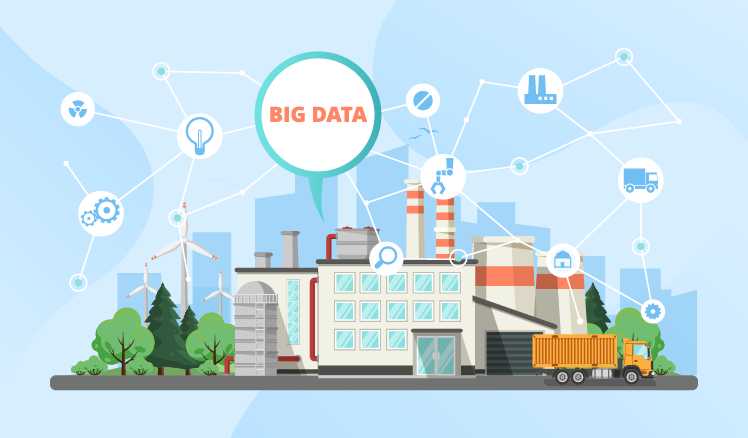
Big data use cases manufacturing

#1. Production optimization

Extracting process improvement

A vertically integrated precious-metal manufacturer’s ore grade declined. The only logical way to avoid loss was to improve metal extracting and refining processes. Using sensor data, the manufacturer’s big data solution identified what factors influenced output the most. And the dominant parameter turned out to be oxygen level. With this insight, the team slightly changed the leaching process and increased the yield by 3.7%. Thanks to big data analysis, the manufacturer now earns $10-20 million additionally every year. Quite a gain, considering the ore grade deterioration rate was 20%.

Chemical yield perfection

A leading European chemicals manufacturer sought to improve yield. Using sensors, their big data solution analyzed how each input factor influenced production output. It analyzed temperatures, quantities, carbon dioxide flow and coolant pressures and compared their influence rates to one another. As a result, they revealed that carbon dioxide flow rates hugely affect the yield. And by slightly changing the parameters, they achieved a significant decrease in raw materials waste (by 20%) and energy costs (by 15%), and impressively improved the yield.

Vaccine yield improvement

A huge pharmaceutical company needed to find a way to improve the yield of their vaccines. To do that, the company’s big data solution analyzed their equipment sensor data, revealed interdependencies between various production parameters and compared how each of them affected the yield. Then, 9 most crucial parameters were identified, reviewed and adjusted to optimize the manufacturing process. It improved vaccines’ yield by 50%. Now, the company additionally makes $5-10 million a year per one substance.

Sugar-sweet optimization

High humidity levels and low-quality raw materials badly affected the taste of sugar of a large sugar manufacturer. To fight it, data science came in use to analyze sensor data and find correlations between the parameters contributing to the best sugar quality. Fortunately, with this insight the manufacturer managed to find a way to quickly influence product quality and achieve a unified sugar standard regardless of external factors. It allowed them to reduce production costs, increase customer satisfaction and simplify workloads.

#2. Quality assurance

Early-stage vehicle quality assurance

As early as 2014, BMW used big data to detect vulnerabilities in their new car prototypes. Data was collected from sensors on the tested prototypes and cars already in use. Due to big data analysis, BMW’s solution (probably integrated with their vehicle design and modelling software) spotted weaknesses and error patterns in the prototypes and in cars already in use. It enabled engineers to remove uncovered vulnerabilities before the prototypes actually went into production and helped reduce recalls of cars already in use. As a result, BMW can not only ensure higher quality at early stages, but also reduce warranty costs, boost brand reputation and probably save lives.

Jet engine design

Rolls-Royce uses big data extensively. And one of their most interesting manufacturing big data experiences is connected with modelling new aircraft engines. At the design stage, their software (integrated with a big data tool) creates simulations of new jet engines and analyzes terabytes of big data to see whether the new models are any good. This allows the company to find weaknesses before the model gets to production, which reduces defect-related costs and helps design the product of a much higher quality. Very smart, don’t you think?

#3. Enterprise management

Data-driven enterprise growth

Using big data analytics in manufacturing, companies can tackle global development challenges, such as transferring production to other countries or opening new factories in new locations. Companies’ historical and external data analysis can establish whether it’s still profitable to run factories in current locations or at current scopes by building predictive models and what-if scenarios. Besides, in the right hands, big data can help explore oceans of unseen opportunity, such as offering new products or even conquering new markets.

Accessible raw materials

To avoid costs connected with supply chain failures, an enterprise needed a better way to manage raw materials delivery. They decided to use their suppliers’ route details as well as weather and traffic data provided by trustworthy external sources to identify the probability of delivery delays. To do that, their big data tool (quite possibly integrated with their MRP) used predictive analytics and calculated possible delays and raw materials shortages. Based on these calculations, the enterprise worked out a supply-related emergency plan and is now able to run their production uninterrupted and avoid excessive downtime costs.

Predictive maintenance

Intel’s factory equipment live-streams IoT-generated data into their big data solution (probably integrated with MES). The analytics solution uses this data for pattern recognition, fault detection and visualization. It allows engineers to see what tendencies require their immediate attention and what actions are needed to prevent serious breakdowns on the shop floor. Such predictive maintenance reduces reaction time from 4 hours to 30 seconds and cuts costs. In 2017, thanks to big data and IoT, Intel predicted saving $100 million. This doesn’t look surprising at all: according to the research, predictive maintenance has appeared on companies’ radars exactly in 2017 and has got straight to top 3 big data use cases.

#4. After sales

Connected car vehicles

One of ScienceSoft’s customers from the connected car industry uses big data to provide after-sales support to their clients and ensure continuous improvement. The customer’s operational centers analyze in real time tons of data fed from car sensors (diagnostics data, mileage, geolocation, etc.) and generate insights into the product’s performance. The analysis of this data allows the company to monitor the product’s state, note and even predict some malfunctions and offer maintenance service early enough to avoid serious breakdowns. Such approach allows the customer to increase the product quality and enhance customer experience.

Hull cleaning

As a standard after-sales procedure, Caterpillar Marine was requested by one if their clients to do an analysis of how hull cleaning impacts fleet performance. Caterpillar’s big data solution (integrated with their Asset Intelligence platform) analyzed data from sensors on ships running with and without cleaned hulls. Then, it found correlations between the client’s hull-cleaning investments and fleet performance. Soon, Caterpillar concluded that their client needed to clean hulls more often (every 6.2 months, not 2 years) and that related investments paid off. As to the manufacturer, big data allowed them to ensure the most efficient exploitation of their products and improve the company’s image.

Wind farm optimization

As a proponent of after-sales with a personalized approach to customers in manufacturing, General Electric helps power producers use big data at 4 levels.

Level 1. Wind turbine’s sensor data analytics enables power producers to optimize turbine’s blade pitch and energy conversion automatically.

Level 2. Wind farm monitoring software compares sensor data to predicted values and recognizes performance patterns, which helps power producers perform preventive maintenance at the farms.

Level 3. Power producers use historical and real-time data to build predictive models, find correlations, detect faults and recognize patterns to optimize the farm’s work.

Level 4. The data is visualized and presented to top management for global-scale informed decision making.

Are you inspired to start leveraging big data potential?

ScienceSoft’s team of big data experts is ready to design, implement or support your big data project to ensure considerable ROI on your big data investments.

A guide on how to start

If the examples of successful big data initiatives triggered your interest, I’ll gladly share a roadmap my colleagues at ScienceSoft and I devised for our customers to set off on a big data journey safely and effectively.

Ready… Set…
big data in manufacturing find approach

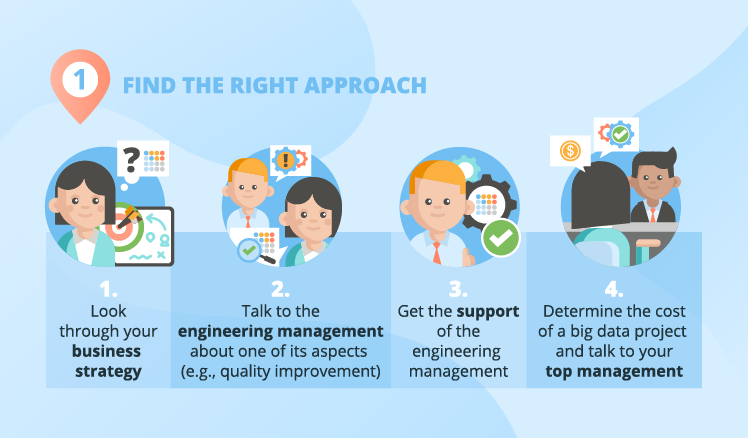
To prepare for a big data adoption project, the first thing crucial for success is finding the right approach. Rather than getting obsessed with the idea of big data, dashing to get the budget and then failing to extract value from it, first, you should lay the groundwork for the possible future ‘novelty.’ Let me show you the steps that will help you achieve business-IT alignment:

Step 1. I always advise big data project sponsors to start with reading about the possibilities of big data, then look at the business strategy and define what goals in it can be achieved with big data’s help.

Step 2. You should get more details on your company’s manufacturing problems and needs. The best way to do it is talking to the engineering management at your enterprise and asking them how the quality improvement process is going. Chances are, the process is problematic and no solution has yet been found, which is where you explain that such challenges can be solved with a thing called big data analytics.

Step 3. Try to get the consent of the engineering management to prove (if needed) to the company’s top management that they do need big data. And also warn them that their involvement will be necessary later to help data analysts understand the needed details of the manufacturing process.

Step 4. Determine a certain range of how much a particular big data project costs and talk to your top management about big data adoption and big data benefits. In our other article, my colleague, Olga Baturina, provided some telling statistics of big data gains.

If you need more details on how to ensure business IT-alignment, you can have a look at the guide written by my colleague, Boris Shiklo, CTO of ScienceSoft.

Go!
plan your big data adoption

I always warn big data project sponsors against applying big data capabilities to complex tasks right from the start. Just like you can’t go to space a few days after deciding to become an astronaut. So, my advice to manufacturing companies is to start out with a simple project (for example, trying to achieve a stable output quality at a vaccine factory). A simple starting project allows you to see how big data can solve your problems with low risks and investments. Which, in its turn, is likely to positively affect your top management’s opinion on big data and encourage them to plan further big data investments (for more serious analytical projects).

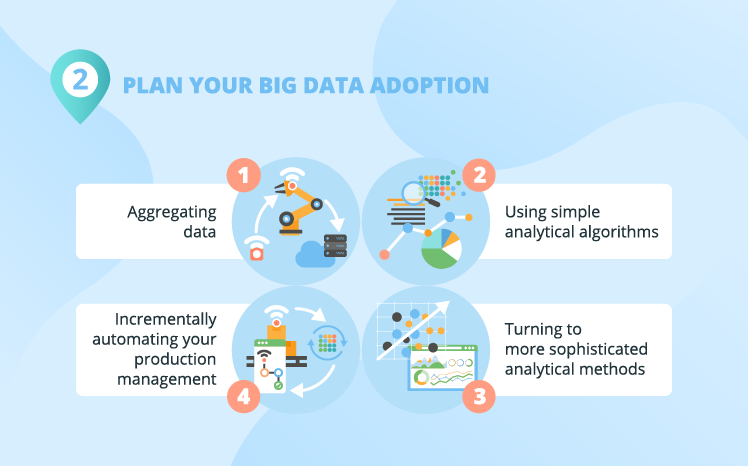
At ScienceSoft, we usually break a big data project down into ‘digestible’ phases that are to be approached separately. Here are the sample phases of a big data project for manufacturing:

  • Aggregating data.
  • Using simple analytical algorithms.
  • Turning to more sophisticated analytical methods.
  • Incrementally automating your production management.

Aggregating data

Before any analysis can happen, you have to start aggregating data. In some cases, it’s not a problem at all: you just deploy/add sensors on your manufacturing equipment, prepare data storing facilities and enjoy the flow of ‘freshly-cut’ data.

In other cases, such as if your production cycle is months- or even years-long, it can prove difficult because you may lack the info on how your production process parameters influence output. And without knowing it, it’s all really a shot in the dark. But don’t get upset: there are ways to fight it. For example, in ScienceSoft’s projects, we recommend our customers to focus on one part of their manufacturing process, rather than on the entire process. That way they can improve the overall process by analyzing and adjusting its constituent parts.

Making analytical baby steps and advancing to big data strides

At ScienceSoft, we usually define the next stages of revealing big data insights:

  1. At first, you can perform relatively simple big data analysis to make targeted changes in your manufacturing processes (to improve product quality, for instance).
  2. Then, you can dig your data deeper to find ways to change your business processes. For example, you used to perform reactive maintenance and, with big data, you start preventive maintenance.
  3. When the time comes, you can even transform your business model, finding a better way to do it through big data analysis (say, you decide to get closer to the customer by making the cars you produce a smart connected product; you deploy sensors on them, analyze data from cars in use and provide after sales services).

The situation, I most commonly encounter, is that at early stages, customers only need the most usual analytical methods, such as correlations and regression analysis. As their big data competences and needs grow, analytical methods become more elaborate, and they start employing predictive analytics and machine learning in search of new business opportunities.

Production management automation

Automation of your production management is probably the most sophisticated way of using big data in manufacturing processes. The concept of automated production management is fairly simple: your historical and incoming sensor data is analyzed in real time and the control apps send targeted commands to actuators on your equipment.

A good example of production management automation is the case with General Electric’s wind turbines. Sensors provide data on energy generation and wind direction, according to which the blade pitch is changed to optimize the wind turbine’s efficiency.

An example to make it clear

Let me share an example of a generalized customer from my practice – a company who produces baby food and decides to go big data. They start with data aggregation (deploy/add data sensors on the production floor and prepare data storage).

For the sake of the example, let’s imagine that systematically, a few times a month, the baby food batches substantially drop in quality. Now, the big data team (together with the engineering team, R&D, product control managers) can find out what causes these quality drops. And together we realize that the manufacturing process doesn’t allow for the variations in the quality of raw material (baby food ingredients). If the ingredients’ quality is lower, the machinery isn’t ‘tuned’ to get a better quality output (say, you don’t adjust temperature and cooking times). And besides that, we also find a way to cut the production cycle duration. This big data application (better quality assurance) can be a good first project.

Getting valuable insights quickly and cheaply makes the company more interested in further big data capabilities and more complex analytical algorithms. And in a while, the enterprise starts running predictive analytics, equipment wear-out analysis and machine learning. Among other things, it allows them to perform predictive maintenance, which enables the staff to react to alarming trends on the manufacturing floor before any real damage is caused.

And as the company expands globally, we help the company to use big data powers to assure and control baby food quality across all the franchisees.

Now, survive
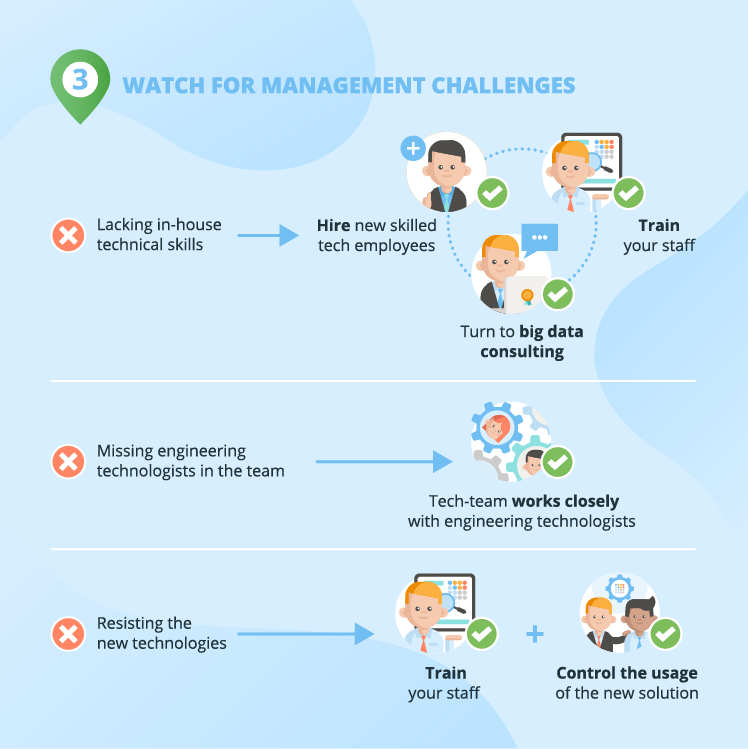
watch for management challenges

Yes, while starting big-data-adoption action, there are always impediments. Big data project sponsors I talk to commonly voice the following concerns:

  1. Lacking in-house technical skills.

I believe, not every business needs complete outsourcing. For example, at early stages, when you’ll need to experiment a lot, it’s simply easier, if your ‘domestic’ people are involved, thus it’s natural to hire new skilled tech employees or retrain old ones.

  1. Lacking the understanding of big data potential

In case of outsourcing a big data project, your vendor will need to work closely with your team (the engineering team, R&D, product control managers, etc.) to ensure the deep understanding of manufacturing processes. Together with a vendor who has a solid approach to cooperation, you’ll be able to see elaborate ways to improve production and its management with big data potential.

  1. Resisting the new technologies.

Some employees – let’s hope the lesser part – will probably resist big data. And there’s nothing personal about it: for creatures of habit, it’s just more convenient to use the old technologies. Training your staff as well as controlling their usage of the new solution can help deal with this challenge.

You are now ready

The manufacturing use cases show that big data can bring big money and big value. They also show that big data is most widely used for production optimization. And it’s quite logical: big data solutions are really good at finding correlations. While production changes based on sensibly selected correlations can improve yield enormously.

To reap the benefits that big data offers and start using big data in your manufacturing organization, you need to carefully plan your actions. So, let’s rehearse them. You should:

– Find the right approach to your big data. Carefully analyze your business needs, find a way to fulfill them with big data.

– Prudently plan your big data adoption. Don’t jump to the most difficult part right off the start. Find a small-scale project to test big data on. Aggregate data, test simple algorithms and then try more daring ones.

– Watch for management challenges. Gain a thorough big data understanding, don’t rush into outsourcing the project completely and engage a needed number of engineering technologists.

But before starting some real action, I advise you to turn to big data consulting, since it can ease the hardships of big data projects and contribute to big data understanding. If you want to know more about our big data consulting services, reach out to me.


Big data is another step to your business success. We will help you to adopt an advanced approach to big data to unleash its full potential.


Xbox Celebrates Mutant Nostalgia With Marvel Animation’s X-Men ‘97 Custom Comic Xbox Series X and Controllers


Summary

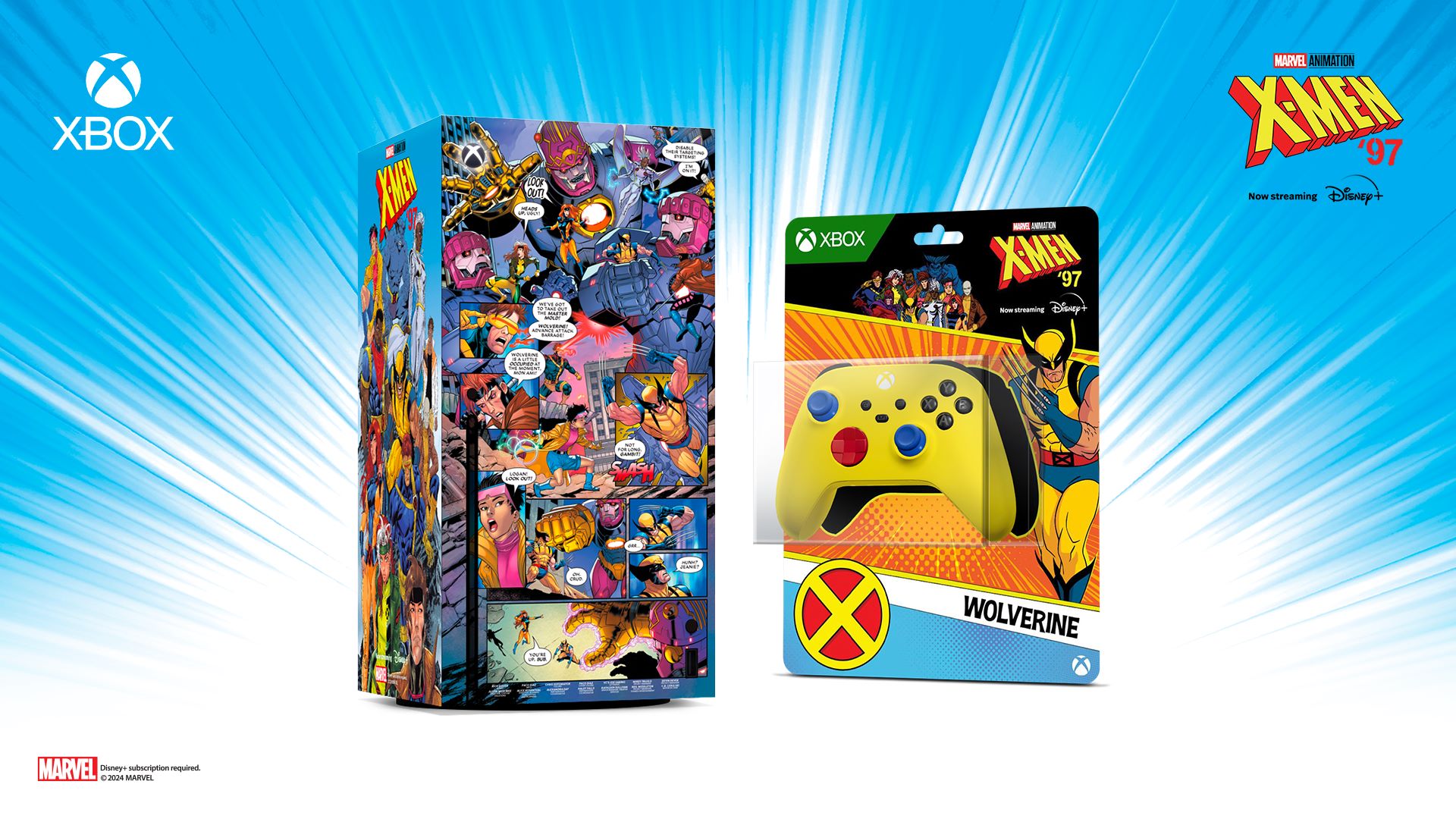
  • Xbox and Marvel Animation’s “X-Men ’97” have united to bring fans an extraordinary collaboration – the “X-Men ’97” Xbox Series X, wrapped in an exclusive comic by Marvel’s Rich Douek and Paco Diaz.
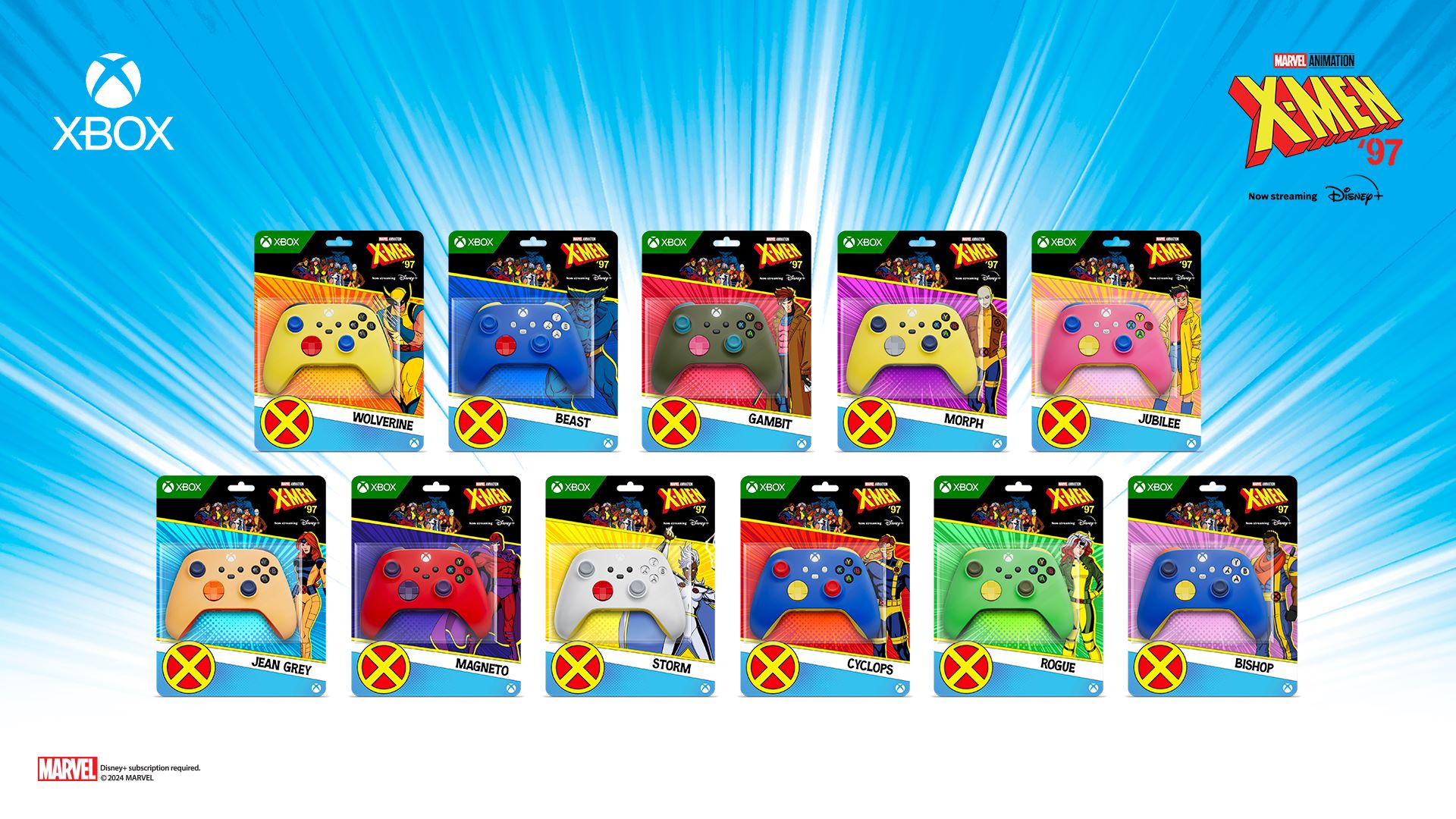
  • Immerse yourself further with Xbox Design Lab’s X-Men character controllers. Each inspired by your favorites, they come in nostalgic blister packs.
  • Enter our limited-time sweepstakes for a chance to win this ultimate collector’s bundle! Don’t miss your shot at this iconic piece of mutant history.

Calling all Xbox and X-Men enthusiasts! We’re ecstatic to announce an incredible collaboration between Xbox and Marvel Animation’s “X-Men ’97,” now streaming on Disney+. Prepare to immerse yourself in the world of mutants like never before.

Xbox and “X-Men ’97” have come together to bring you a very special  Xbox Series X wrapped in a limited-edition comic inspired by the all-new series and created by Marvel writer Rich Douek and artist Paco Diaz. This thrilling 2-page story with full page cover is exclusive to the Xbox Series X, and features Cyclops leading the X-Men in a battle against Sentinels and Master Mold, with an Xbox Series X console making a special appearance in the Danger Room.

Marking the first time an Xbox Series X has been wrapped by a comic book, this collaboration promises to immerse fans in a nostalgic journey through the world of the “X-Men ’97.”

In addition, Xbox Design Lab created a set of controllers inspired by you the colorways of your favorite X-Men characters from the show: Wolverine, Storm, Rogue, Morph, Magneto, Jubilee, Gambit, Jean Grey, Cyclops, Beast, and Bishop. Each character comes to life through unique controller designs, and comes in a 90’s inspired blister pack that makes for the ultimate collector item.

Fans eager to get their hands on the “X-Men ’97”-inspired Xbox Series X and one of the Xbox Design Lab character controllers will have the opportunity to enter the sweepstakes hosted on Xbox Twitter.

By following Xbox on X (formerly Twitter) and retweeting the official Xbox sweepstakes tweet ( #XMen97XboxSweepstakes) during the Entry Period, fans can secure their chance to win a Xbox Series X Console inspired by X-Men ’97, Xbox Wireless Controller (this comes with the console but will not be customized), and a Xbox Design Lab Controller inspired by X-Men ’97 Wolverine . The sweepstakes will run exclusively from Monday, April 22, 6:00am PST through Sunday, May 19, 8:00pm PST, offering participants ample time to join in on the excitement.

Get ready to unleash your mutant powers with this Xbox and “X-Men ‘97” team-up and don’t forget to catch the latest episodes of “X-Men ’97” on Disney+, available on your Xbox!

About Marvel Animation’s “X-Men ‘97”

Marvel Animation’s “X-Men ’97” revisits the iconic era of the 1990s as The X-Men, a band of mutants who use their uncanny gifts to protect a world that hates and fears them, are challenged like never before, forced to face a dangerous and unexpected new future.

The all-new series features 10 episodes. The voice cast includes Ray Chase as Cyclops, Jennifer Hale as Jean Grey, Alison Sealy-Smith as Storm, Cal Dodd as Wolverine, JP Karliak as Morph, Lenore Zann as Rogue, George Buza as Beast, AJ LoCascio as Gambit, Holly Chou as Jubilee, Isaac Robinson-Smith as Bishop, Matthew Waterson as Magneto, and Adrian Hough as Nightcrawler. Beau DeMayo served as head writer; episodes are directed by Jake Castorena, Chase Conley and Emi-Emmett Yonemura, and the series is executive produced by Brad Winderbaum, Kevin Feige, Louis D’Esposito, Victoria Alonso and DeMayo. Featuring music by the Newton Brothers, Marvel Animation’s “X-Men ’97” is now streaming on Disney+


BirdDog’s Dan Miall on Supercharging the Future of Video Production


In a recent interview with TechAdviceLife, CEO and co-founder Dan Miall unveils BirdDog’s groundbreaking contributions to the TV and video production landscape. From pioneering the adoption of the 2016 NDI standard to developing cutting-edge hardware and software solutions, BirdDog is driving a paradigm shift in the industry.

With technology constantly evolving, BirdDog stands at the forefront of innovation, seamlessly integrating networking, high-definition cameras, and award-winning software platforms. This convergence empowers content creators to deliver broadcast-quality video content with unparalleled speed and flexibility.

At the heart of BirdDog’s success lies its utilization of NDI, a game-changing software standard that facilitates high-definition video transmission over computer networks. By harnessing NDI’s capabilities, BirdDog has democratized access to professional video production tools, eliminating the need for significant capital investments.

BirdDog’s commitment to innovation is evident in its development of custom silicon chips for NDI encoding and decoding, leading to a series of world-first products. From hardware encoders and decoders to cameras and tally hardware, BirdDog’s solutions are revolutionizing video production across diverse industries.

Moreover, BirdDog’s impact extends beyond traditional video production, with its technology finding applications in the medical field. Platforms like Remedi are leveraging BirdDog’s solutions to enhance surgical collaboration, showcasing the versatility and adaptability of the company’s offerings.

BirdDog’s relentless pursuit of excellence and commitment to pushing the boundaries of technology are reshaping the TV and video production landscape. As content creators seek faster, more efficient ways to deliver high-quality video content, BirdDog remains a trusted partner, providing innovative solutions that empower creators to unleash their creativity. Alex Zaharov-Reutt’s insightful interview with CEO Dan Miall offers a glimpse into the company’s vision and the transformative potential of its innovative technologies.

Watch the full interview below:


Learn more about BirdDog below:

Exploring the AskVS command in GitHub Copilot for Visual Studio


A step-by-step guide to use the AskVS command in GitHub Copilot for Visual Studio

GitHub Copilot is an AI-driven coding assistant designed to streamline your coding tasks and boost productivity in various development environments. In this ongoing series, we focus on its integration with Visual Studio, illustrating how it can significantly enhance your workflow and coding experience.

The latest short video I just published focuses on a specific command in GitHub Copilot for Visual Studio: the AskVS command.

The AskVS command

In the example from the video, Bruno selects a block of code and then opens the GitHub Copilot Chat window, where he enters the following command:

/AskVS refactor the #

This command triggers a series of helpful auto-completions. The initial / invokes the Slash command menu, allowing Bruno to choose the AskVS option. When he types #, another menu appears, enabling him to select the specific lines of code he previously highlighted. This approach also allows for flexibility, as you can select other context options, like different files or scopes.

Continuing with the command, the updated instruction is:

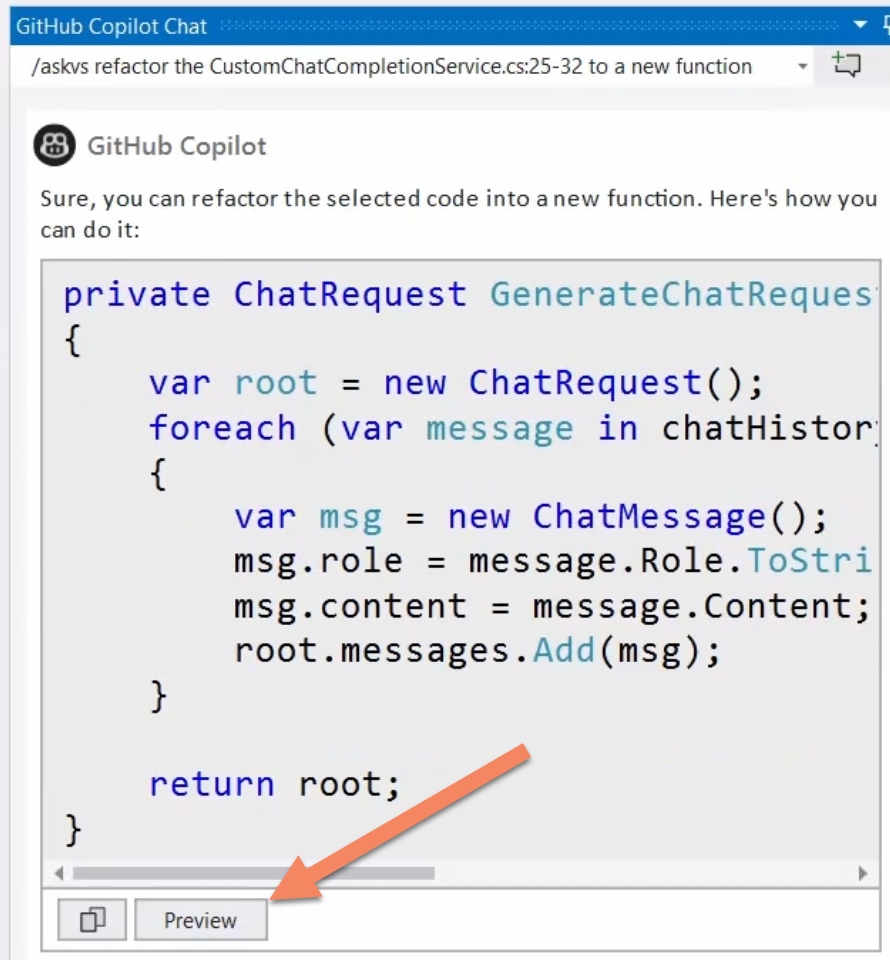
askvs refactor the CustomChatCompletionService.cs:25-32 to a new function

By issuing this command, GitHub Copilot receives a clear directive to refactor lines 25-32 within the specified file.

GitHub Copilot’s Response

After running the command, GitHub Copilot presents the refactored code in a dialog, complete with a preview button. This feature lets you review the proposed changes before applying them, ensuring you’re comfortable with the modifications. Additionally, Copilot might suggest related code, like helper functions or code snippets demonstrating how to utilize the new code structure.

GitHub Copilot AskVS
GitHub Copilot’s Response to AskVS command

Exploring AskVS for More Insights

The AskVS command has broader applications beyond refactoring. In the video, Bruno asks Copilot how to switch from the light theme to the dark theme in Visual Studio. In response, Copilot outlines the steps to change themes and includes hyperlinks to the specific Visual Studio dialogs where these changes occur.

Conclusion

GitHub Copilot offers more slash commands and features, as demonstrated in previous videos. To explore these further, you can view the full-length video here. For additional resources, check our curated collection here.

Additional Resources: