Month: May 2024
Celebrating the Drafters | AutoCAD Blog

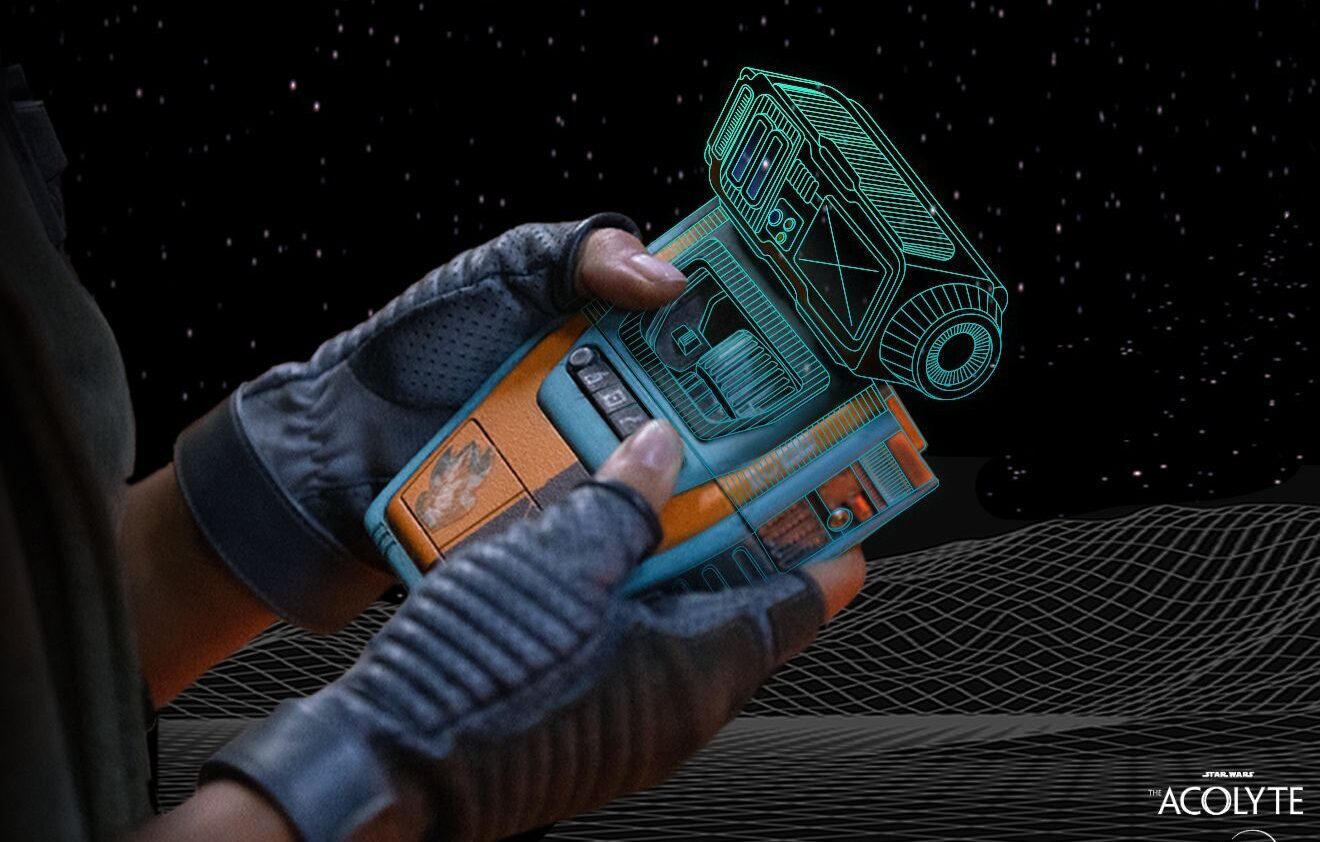
See how Autodesk software like AutoCAD empowers innovators to design and make a limitless galaxy, here and far, far away.
In celebration of the new Star Wars original series on Disney+, The Acolyte, we are taking a moment today to recognize drafters and everyone who uses AutoCAD to help design and make the world we live in.
Every day, people around the world use AutoCAD to bring their ideas to life. Whether its architects who are the hidden heroes of our urban landscapes that shape the spaces where we live, engineers who solve complex problems and design solutions that improve our quality of life, or educators and their students who explore and innovate: AutoCAD is more than just a piece of software.
Today, we’d like to give you an opportunity to create your own innovative design – take a look at these drawings below for some inspiration.

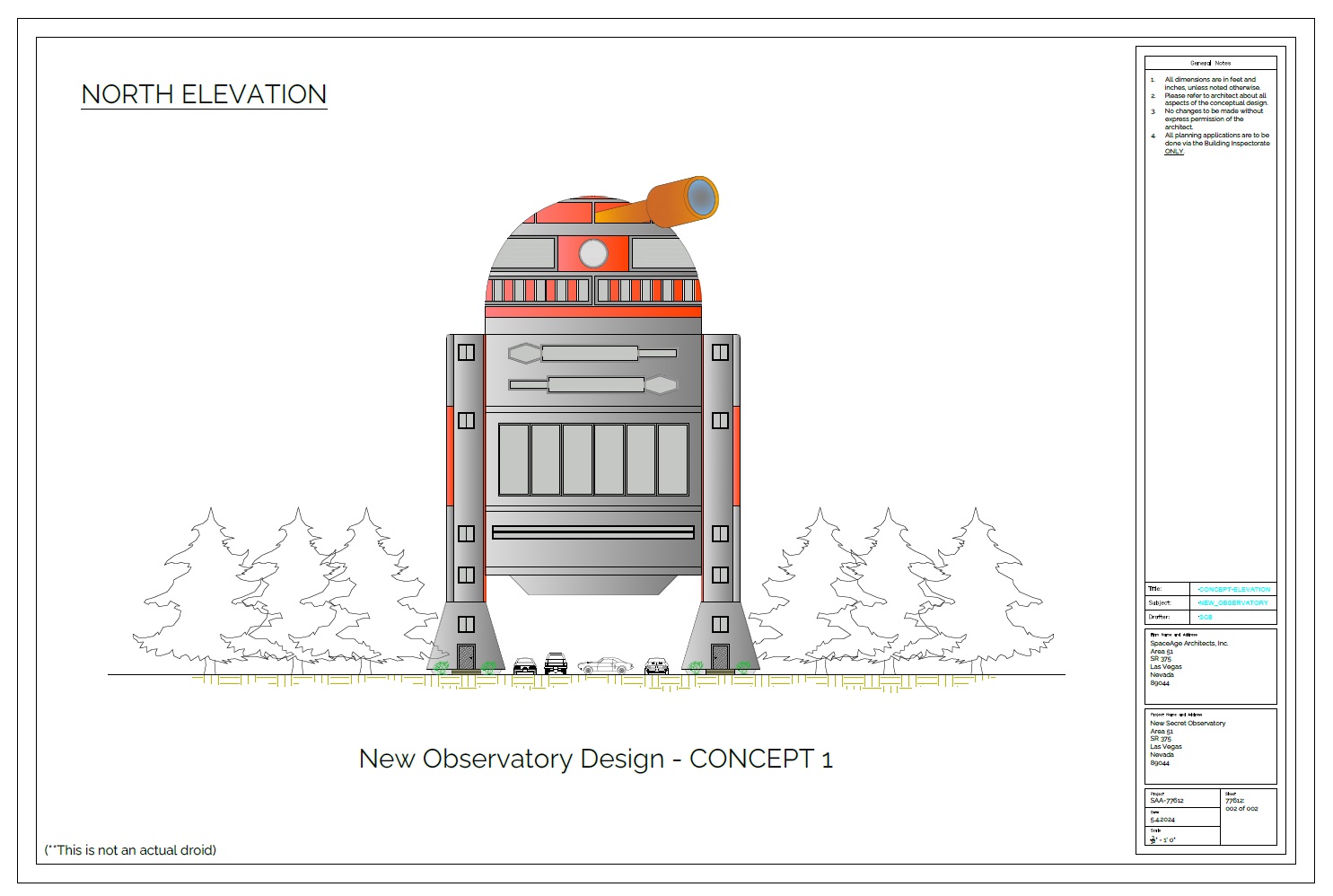
Download the DWG file for this project here to make your very own observatory tower in AutoCAD, to help you keep your eyes on the galaxy. Have fun! And don’t forget to check out the official trailer for The Acolyte, premiering on June 4th exclusively on Disney+.
Please note that this is intended for entertainment only. These drawings and demonstrations are solely being used for parody.
NVIDIA Healthcare AI Microservices Integrate With AWS
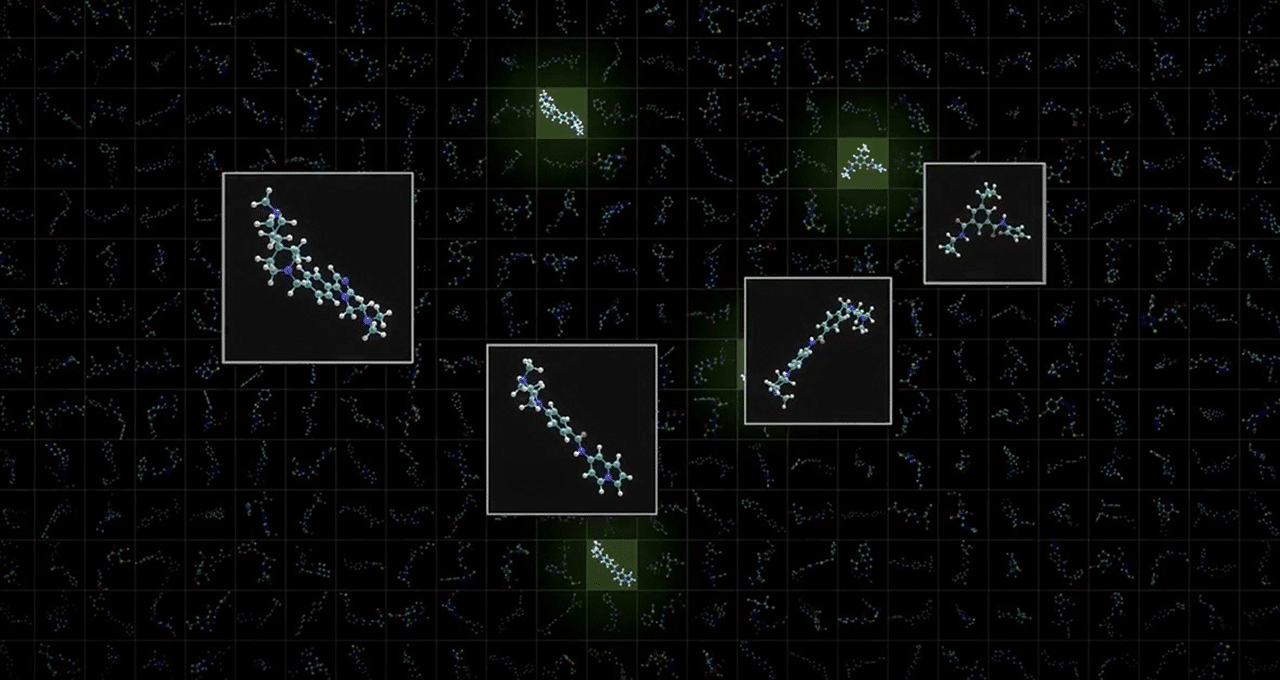
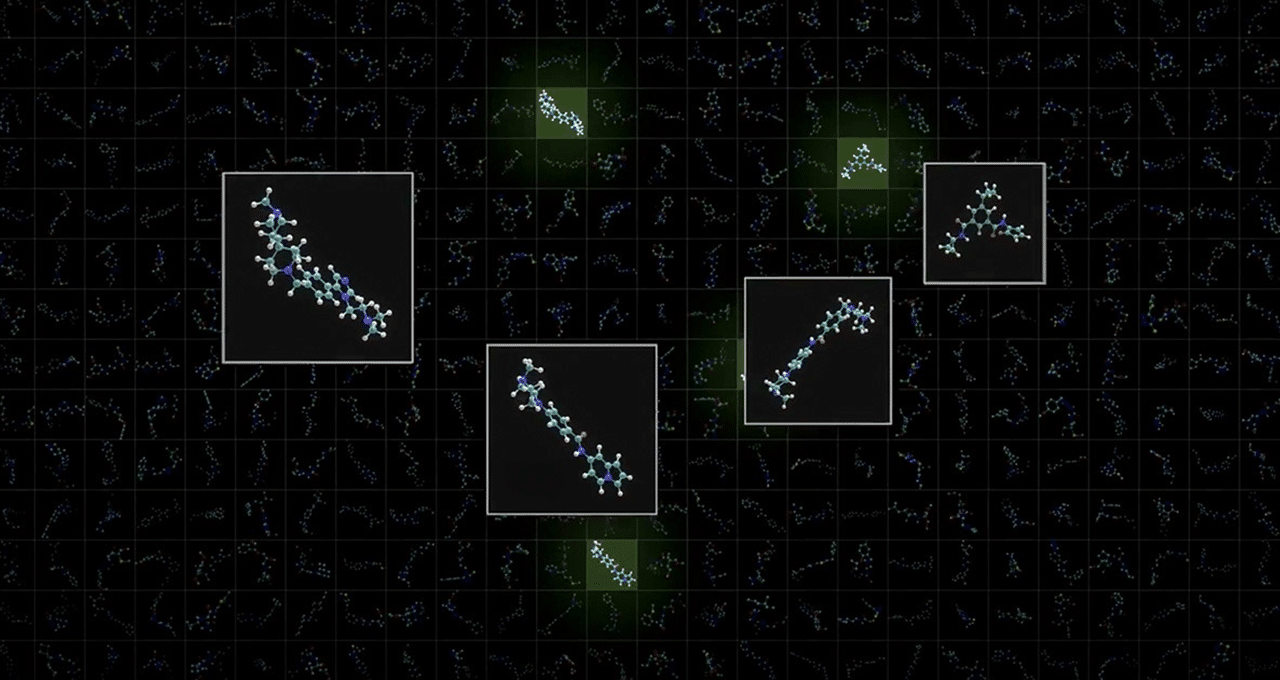
Harnessing optimized AI models for healthcare is easier than ever as NVIDIA NIM, a collection of cloud-native microservices, integrates with Amazon Web Services.
NIM, part of the NVIDIA AI Enterprise software platform available on AWS Marketplace, enables developers to access a growing library of AI models through industry-standard application programming interfaces, or APIs. The library includes foundation models for drug discovery, medical imaging and genomics, backed by enterprise-grade security and support.
NIM is now available via Amazon SageMaker — a fully managed service to prepare data and build, train and deploy machine learning models — and AWS ParallelCluster, an open-source tool to deploy and manage high performance computing clusters on AWS. NIMs can also be orchestrated using AWS HealthOmics, a purpose-built service for biological data analysis.
Easy access to NIM will enable the thousands of healthcare and life sciences companies already using AWS to deploy generative AI more quickly, without the complexities of model development and packaging for production. It’ll also help developers build workflows that combine AI models across different modalities, such as amino acid sequences, MRI images and plain-text patient health records.
Presented today at the AWS Life Sciences Leader Symposium in Boston, this initiative extends the availability of NVIDIA Clara accelerated healthcare software and services on AWS — which include fast and easy-to-deploy NIMs from NVIDIA BioNeMo for drug discovery, NVIDIA MONAI for medical imaging workflows and NVIDIA Parabricks for accelerated genomics.
Pharma and Biotech Companies Adopt NVIDIA AI on AWS
BioNeMo is a generative AI platform of foundation models, training frameworks, domain-specific data loaders and optimized training recipes that support the training and fine-tuning of biology and chemistry models on proprietary data. It’s used by more than 100 organizations globally.
Amgen, one of the world’s leading biotechnology companies, has used the BioNeMo framework to train generative models for protein design, and is exploring the potential use of BioNeMo with AWS.
BioNeMo models for protein structure prediction, generative chemistry and molecular docking prediction are available as NIM microservices, pretrained and optimized to run on any NVIDIA GPU or cluster of GPUs. These models can be combined to support a holistic, AI-accelerated drug discovery workflow.
Biotechnology company A-Alpha Bio harnesses synthetic biology and AI to measure, predict and engineer protein-to-protein interactions. When its researchers moved from a generic version of the ESM-2 protein language model to a version optimized by NVIDIA running on NVIDIA H100 Tensor Core GPUs on AWS, they immediately saw a speedup of more than 10x. This lets the team sample a much more extensive field of protein candidates than they would have otherwise.
For organizations that want to augment these models with their own experimental data, NIM enables developers to enhance a model with retrieval-augmented generation, or RAG — known as a lab-in-the-loop design.
Parabricks Enables Accelerated Genomics Pipelines
NVIDIA NIM includes genomics models from NVIDIA Parabricks, which are also available on AWS HealthOmics as Ready2Run workflows that enable customers to deploy pre-built pipelines.
Life sciences company Agilent used Parabricks genomics analysis tools running on NVIDIA GPU-powered Amazon Elastic Compute Cloud (EC2) instances to significantly improve processing speeds for variant calling workflows on the company’s cloud-native Alissa Reporter software. Integrating Parabricks with Alissa secondary analysis pipelines enables researchers to access rapid data analysis in a secure cloud environment.
Conversational AI Technology Supports Digital Health
In addition to models that can decode proteins and genomic sequences, NIM microservices offer optimized large language models for conversational AI and visual generative AI models for avatars and digital humans.
AI-powered digital assistants can enhance healthcare by answering patient questions and supporting clinicians with logistics. Trained on healthcare organization-specific data using RAG, they could connect to relevant internal data sources to synthesize research, surface insights and improve productivity.
Generative AI startup Hippocratic AI is in the final stages of testing AI-powered healthcare agents that focus on a wide range of tasks including wellness coaching, preoperative outreach and post-discharge follow-up.
The company, which uses NVIDIA GPUs through AWS, is adopting NVIDIA NIM and NVIDIA ACE microservices to power a generative AI agent for digital health.
The team used NVIDIA Audio2Face facial animation technology, NVIDIA Riva automatic speech recognition and text-to-speech capabilities, and more to power a healthcare assistant avatar’s conversation.
Experiment with NVIDIA NIMs for healthcare and get started with NVIDIA Clara on AWS.
Subscribe to NVIDIA healthcare news.
Atomos Sun Dragon: Revolutionizing Cinematic Lighting with Flexibility


In the dynamic world of filmmaking, innovation is the name of the game, and the Atomos Sun Dragon emerges as a game-changer in cinema lighting. Nicole LaJeunesse’s insightful piece for Videomaker unveils the Sun Dragon, hailed as the “world’s first sun spectrum, 5-color HDR LED production strip lighting system.” With its groundbreaking features and unparalleled flexibility, this lighting marvel promises to redefine creative possibilities for filmmakers worldwide.
At the heart of the Sun Dragon’s allure is its remarkable adaptability. Unlike conventional panel lights, this revolutionary system empowers filmmakers to sculpt and manipulate light effortlessly, unlocking a spectrum of creative expressions. Boasting a dazzling output of 2000 lumens and an impressive CRI rate of 98, it ensures unparalleled color accuracy across the full sun spectrum, rendering scenes with breathtaking authenticity.
What truly sets the Sun Dragon apart is its versatility. Designed to thrive in any environment, its waterproof construction grants filmmakers the freedom to illuminate even the most challenging settings, including underwater scenes. Furthermore, its ingenious design allows for multiple configurations, whether coiled up to serve as a dynamic ring light or deployed as a conventional LED panel, offering boundless creative potential.
In terms of control, the Sun Dragon leaves no stone unturned. Equipped with an advanced controller featuring both wired and wireless DMX control options, Bluetooth compatibility for seamless iOS app control, and support for Atomos AirGlu devices, it puts precision lighting at filmmakers’ fingertips. Drawing a modest 80W of power, it strikes a balance between performance and efficiency, while its compatibility with both battery and AC power sources ensures uninterrupted operation on set.
With pre-orders now open and shipments slated to commence in June 2024, the Atomos Sun Dragon presents an enticing proposition for filmmakers seeking a versatile and powerful lighting solution. Priced just under $1000, it represents a worthwhile investment in elevating the visual storytelling experience to new heights. Embrace the future of cinema lighting with the Atomos Sun Dragon and illuminate your creative vision like never before.
Read the full article by Nicole LaJeunesse for Videomaker HERE
Why is my project not being added to a folder within a Visual Studio 2022 solution with cmake?

I am trying to make a Visaul Studio 2022 solution, where “someexe” will be added to the folder “exefolder”. However, someexe is not being added to exefolder. I have attempted to set the folder property in both the solution (I am running cmake on the “scripts\x64\CMakeLists.txt” example below), and in the project “someexe”
My folder structure is
root
    |--someexe
       |--CMakeLists.txt
    |--scripts
       |--x64
          |--CMakeLists
someexe\CMakeLists.txt
cmake_minimum_required(VERSION 3.28)
project(someexe)
add_executable(${PROJECT_NAME} ../main.cpp)

set_target_properties(someexe PROPERTIES FOLDER "exefolder")
scripts\x64\CMakeLists.txt
cmake_minimum_required(VERSION 3.10)
project(x64-Platform)
set(CMAKE_GENERATOR_PLATFORM x64)
add_subdirectory(../../someexe x64_someexe)

set_target_properties(someexe PROPERTIES FOLDER "exefolder")
What Is Low Earth Orbit? A Basic Explainer

More objects are being launched into space than ever, and most are headed for low Earth orbit. This region of space has become increasingly crowded with launches from SpaceX and others that have doubled the number of Earth satellites in just a few years. We talk about rockets and low Earth orbit (LEO) a lot, but we rarely explain where it is and why it’s essential. Let’s figure it all out.
How High Is Low Earth Orbit?
There’s nothing innate about the Earth or its atmosphere that marks the boundaries of low Earth orbit. This is a distinction created by humans to break up all the ways an object might orbit our planet. How it’s defined can vary somewhat, but we are talking about space immediately outside the atmosphere.
According to NASA, low Earth orbit is considered any orbital trajectory below 1,200 miles (2,000 kilometers). However, the surface of Earth is not entirely smooth, and even a perfectly circular orbit can vary in altitude. An object is said to be in low Earth orbit if it completes a revolution every 128 minutes or less. A 128-minute orbit, according to Kepler’s third law, works out to a semi-major axis of 8,413 km (5,228 mi). Such an object with less than 0.25 eccentricity (a roughly circular orbit), therefore, would have an average altitude of 2,042 km (1,269 mi).

The ISS is in a low Earth orbit.
Credit: NASA
Despite this, most objects in low Earth orbit are in the first 100-200 miles of space, so some NASA sources simply consider LEO to be the space occupied by LEO orbits. Yes, the reasoning is a bit circular, but we are talking about orbits here. Things are further complicated because sub-orbital objects can reach the space we consider low Earth orbit. However, they cannot be said to be in low Earth orbit because they don’t complete a circuit before falling back to Earth.
Why Is LEO Important?
As mentioned above, most objects we send into space are headed for low Earth orbit. This is where you’ll find the International Space Station (210 miles), the Hubble Space Telescope (370 miles), and the more than 4,000 SpaceX Starlink satellites (around 340 miles) launched thus far.
Most satellites can do their jobs just fine from LEO, so there’s no reason to boost them higher. Every ounce sent into space costs a surprisingly large amount of money, and the costs go up when you need to use more fuel to get a spacecraft farther from Earth. And it’s not just fuel—reusable vehicles like the SpaceX Falcon 9 can land after sending a payload off to LEO. Still, they are often completely expended when blasting a satellite into a higher orbit, raising costs.

Starlink satellites being deployed in LEO.
Credit: SpaceX
Some satellites, like GPS nodes, are launched into higher “geostationary” orbits around 18,000 miles (30,000 kilometers). This allows them to remain fixed over a specific part of the globe. These satellites, as well as anything else leaving Earth, needs to pass through LEO. In the past, that was of no concern, but this region of space is getting worryingly crowded. Adding 4,000 new Starlink satellites has more than doubled the number of satellites in orbit, and that’s just the start.
Many scientists are concerned that we are sending too many objects into space without a way to deorbit them later. Even tiny pieces of debris zipping around in LEO can be hazardous to spacecraft, making low Earth orbit inaccessible if the problem spirals out of control. There’s even a name for that: Kessler syndrome. It’s a chain reaction where space junk pulverizes one piece of equipment after another until LEO is filled with tiny impactors. There will be disagreements on how to manage LEO in the coming years as some of the richest people in the world try to realize their visions for satellite megaconstellations.
Rainmaker Family Interview- Bailee –
Bailee, a mom of two tells us why she was confident in the Rainmaker Challenge from the beginning.
Read on to see how Bailee shares that she believes mindset is everything and how she says the Rainmaker Challenge has impacted her life.
1. Can you tell us a little bit about yourself and how you got started with The Rainmaker Family?
My name is Bailee and I grew up in northern Virginia. My husband is Zach and we’ve been married for almost 6 years. We have a 3 year old daughter and a 1 year old son who keeps us busy!
We currently live in Arizona where my husband is attending medical school. I started rainmakers in September 2022. I kept seeing the same Facebook ad over and over! I never stopped or cared to click on it to watch it.
One evening, I finally decided to watch it. I didn’t even click on it. I just read the captions since I never click on ads! I couldn’t believe that you could make money selling on Amazon.
I quickly showed my husband the ad and signed up for the Rainmaker challenge that evening. I was enrolled into the mastermind before I completed the 7 day challenge. Rainmakers has literally changed my life.
I was able to tell how genuine Stephen and Chelsey were from the Rainmaker challenge. The testimonials from those who are in Rainmakers made me feel so confident in my decision moving forward with them.
2. Were you hesitant about working with Rainmakers at the beginning?
Not at all. I was so confident in my decision from the very beginning. Stephen and Chelsey give you all the tools to be successful. The only way I would fail is if I didn’t utilize all the tools that were given to me and I wasn’t going to let that happen!
3. There are different ways of approaching Amazon through private labeling, wholesale, etc. What route did you take and how would you explain the process of how the method you chose works to a friend?
The method I use for selling on Amazon is private labeling. I wanted to have my own brand and have a sense of ownership of my products that I sell to customers. I reach out to manufacturers and let them know what I want done with my products and they produce that. My brand name is on the packaging and the product itself.
4. Did you have any experience with this before getting started?
I didn’t have any experience with this before I started. I got my bachelors degree in marriage and family studies.
5. Any Pros or Cons to working with The Rainmaker Family? Anything you wish the course had, but didn’t? Anything you’re especially grateful for?
Stephen and Chelsey are all about implementing feedback from the rainmaker community so they are already adding things that people felt were missing from the course! I really appreciate that they do that.
I’m so grateful for all of the coaching calls that are held all week long. Those have been extremely helpful. It’s nice to be on a call with people that are in the same boat as you. I love that they do a mindset call each week.
Mindset plays a huge role when it comes to success. Stephen and Chelsey work really hard to make sure that we have a positive mindset. There have been times where my mindset wasn’t where I wanted it so I would go back and re-listen to one the mindset calls. Those have been a lifesaver!
6. How much did you invest before you saw any results?
It was roughly $20,000 before I saw results. It felt scary in the moment. I had to remind myself that this was an investment. Just like undergrad and also my husband’s medical school. The ROI is much quicker in Amazon FBA.
7. Knowing what you know now about Amazon, do you think it is necessary to work with a coaching program like Rainmakers to get started or could you have done this on your own?
It is absolutely necessary to work with a coaching program! There is no way I could have done this without rainmakers. There is so much that goes into Amazon FBA.
I wouldn’t have been able to look everything up on Google that I needed to know and get a clear answer. It’s super important to be doing Amazon FBA with people who know what they are doing. It will save you a lot of time and money in the long run.
8. After joining Rainmakers how long did it take for you to get your first sale?
I got my first sale the first day my listing was active! I was really surprised it happened that quickly!
9. How much have you earned since joining Rainmakers?
I started selling 10 months ago and my revenue is roughly $123,000 and my profit is roughly $70,000. I will be launching a variation to one of my products in the next couple of months.
10. What tools or resources are needed to become successful with the Amazon FBA program?
We use the Helium 10 software that shows all the data on Amazon. Knowing that data is crucial. There’s no way to know what product would be success without Helium 10. I can’t speak for other Amazon FBA coaching programs but Rainmakers has it all.
I’ve gone through the entire course and all their resources. They cover every little thing it takes to run an Amazon FBA business. It’s important to have a positive mindset. Mindset is everything when running a business.
11. What does a typical day look like for you now?
My day starts out with me looking at how much money I’ve made while asleep! I love it. I’m able to focus on my kids all day long. I don’t do any work. Every now and then I will send a text message to my manufacturer letting them know about reorders. But that’s it.
My business has become passive. It wasn’t always like this though! I put in a ton of work in the beginning for it to become passive. The good news is that I’ve only worked while my kids napped or after they were asleep at bedtime. This is the perfect mom job.
12. What advice would you give to someone who wants to become successful with Amazon FBA?
I would tell someone to be patient with this. This is not quick money. You’re growing an actual business. It takes time and a lot of work on the front end. There will be times where you make mistakes.
One of my products was a flop. I lost about $4,000 on that one. I had to make a calculated decision to cut my price in half to get rid of my inventory ASAP rather than selling at a much slower rate. I knew if I tried to even break even, I would have lost more money with advertising fees and storage fees.
There will be many ups and downs in this journey but don’t allow the downs stop your journey. Always work on mindset. If my mindset wasn’t straight, I would have quit! If you want to be successful with Amazon FBA, it’s all about who and not how.
Find a community such as Rainmakers to guide you through this. Surround yourself with like-minded people who cheer you on. I wouldn’t be where I am today without the support of Rainmakers and my family!
13. What types of products do you sell, feel free to be as specific or broad as you’d like?
I sell a coffee knock box and stepping stones for kids. I’d like to niche down more and focus on products for children. I resonate with that category more because I have small children!
14. Would you like us to mention your brand for more exposure in the article? If YES, list your brand name here:
My brand is Capri & Camden Co.
Thank you Bailee for such an honest review. Your success is inspiring. If you want to try the 7-day Rainmaker challenge click here (aff link)
Now, this was just ONE of the reviews, if you’d like to binge on the rest, see below:
Google lays off workers, Tesla cans its Supercharger team and UnitedHealthcare reveals security lapses


Welcome, folks, to Week in Review (WiR), TechCrunch’s regular newsletter that recaps the week that was in tech. This edition’s a tad bittersweet for me — it’ll be my last (for a while, anyway). Soon, I’ll be shifting my attention to a new AI-focused newsletter, which I’m super thrilled about. Stay tuned!
Now, on with the news: This week Google laid off staff from its Flutter, Dart and Python teams weeks before its annual I/O developer conference. A total of 200 people were let go across Google’s “Core” teams, which included those working on app platforms and other engineering roles.
Elsewhere, Tesla CEO Elon Musk gutted the company’s team responsible for overseeing its Supercharger network in a new round of layoffs — despite recently winning over major automakers like Ford and General Motors. The cuts are so complete that Musk suggested in an email that they’ll force Tesla to slow the Supercharger network’s expansion.
And UnitedHealthcare’s CEO, Andrew Witty, told a House subcommittee that the ransomware gang that hacked U.S. health tech giant Change Healthcare — UnitedHealthcare’s subsidiary — used a set of stolen credentials to access Change Healthcare systems that weren’t protected by multifactor authentication. Last week, UnitedHealthcare said that the hackers stole health data on a “substantial proportion of people in America.”
Lots else happened. We recap it all in this edition of WiR — but first, a reminder to sign up to receive the WiR newsletter in your inbox every Saturday.
News
Hallucinations, hallucinations: OpenAI is facing another privacy complaint in the EU. This one — filed by privacy rights nonprofit noyb on behalf of an individual complainant — targets the inability of its AI chatbot ChatGPT to correct misinformation it generates about individuals.
Just walk out … of Sam’s Club: Sam’s Club customers who pay either at a register or through the Scan & Go mobile app can now walk out of the store without having their purchases double-checked. The technology, unveiled at the Consumer Electronics Show in January, has now been deployed at 20% of Sam’s Club locations.
TikTok circumvents Apple rules: TikTok is presenting some users with a link to a website for purchasing the coins used to tip digital creators on the platform. Typically, these coins must be bought via in-app purchase — which requires a 30% commission paid to Apple — suggesting TikTok might be attempting to skirt Apple’s App Store rules.
NIST’s GenAI platform: The National Institute of Standards and Technology (NIST), the U.S. Commerce Department agency that develops and tests tech for the U.S. government, companies and the broader public, has launched NIST GenAI, a new program to assess generative AI technologies, including text- and image-generating AI.
Getir pulls out: Getir, the quick commerce behemoth, has pulled out of the U.S., U.K. and Europe to focus on Turkey, its home country. The company — once valued close to $12 billion — said that the move would impact thousands of gig and full-time workers.
Analysis
Inside the Techstars “cold war”: Brilliant reporting by Dom peels back the curtains on a year of financial losses and employee cuts at startup accelerator Techstars, whose CEO, Maëlle Gavet, has been a controversial force for change.
AI-powered coding: Yours truly takes a look at Copilot Workspace, somewhat of an evolution of GitHub’s AI-powered coding assistant Copilot into a more general tool — building on recently introduced capabilities like Copilot Chat, which lets developers ask questions about code in natural language.
Autonomous car racing: Tim Stevens dives into the Abu Dhabi racing event that pitted a driverless car against a Formula 1 driver.
Eyeing the Helldivers 2 backlash with a nervous flop sweat, Sucker Punch assures us that Ghost of Tsushima won’t need a PSN login for single player


PlayStation 5 samurai slice ’em up Ghost of Tsushima is finally coming to PC on May 16, and with all the sturm and drang around Sony stablemate Helldivers 2 introducing a PSN login requirement, developer Sucker Punch would like to remind us that the mostly single player Ghost of Tsushima will mostly not require that.
The clarification was first spotted by BluesNews: in response to a since-hidden Twitter comment that presumably referenced the controversy—and I can only assume not in a friendly way—Sucker Punch wrote: “Just so you are aware, a PSN account is required for Legends online multiplayer mode and to use PlayStation overlay. It is not required to play the singleplayer game.”
Now this was my first clue that Ghost of Tsushima even had an online component: most praise for the game centers on its Assassin’s Creed-style historical focus, open world exploration, and tight swordplay. Legends looks like a co-op horde mode that’s largely siloed off from the base game—a cool extra, but you’ll still get your money’s worth if you don’t want to sign in.
It’s honestly kind of nice that going full single player doesn’t require getting another account involved in things with Sony’s PC lineup—that’s more than I can say for the Halo Master Chief Collection, whose Microsoft account shenanigans have only ever been an impediment to my enjoyment of those games.
The Helldivers 2 controversy, meanwhile, seems to primarily be an issue of rollout and communication: players are already used to not having to deal with the extra hassle after months of play, and it remains unclear what will happen to users in countries that PSN does not support.
JTB World Blog: JTB BatchAttEdit 4.5.0
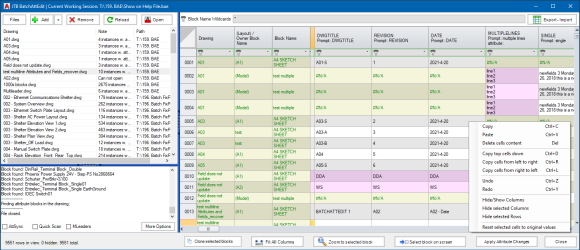
JTB BatchAttEdit 4.5.0 has been released.
In this version we added a “Clone selected blocks” command and other improvements.
This batch attribute editor app for BricsCAD and AutoCAD gathers attributes in all blocks of specified name patterns in multiple drawings and display in a spreadsheet. You can edit attribute texts just like in Excel. When ready, click “Apply Attribute Changes” to update values to drawings.
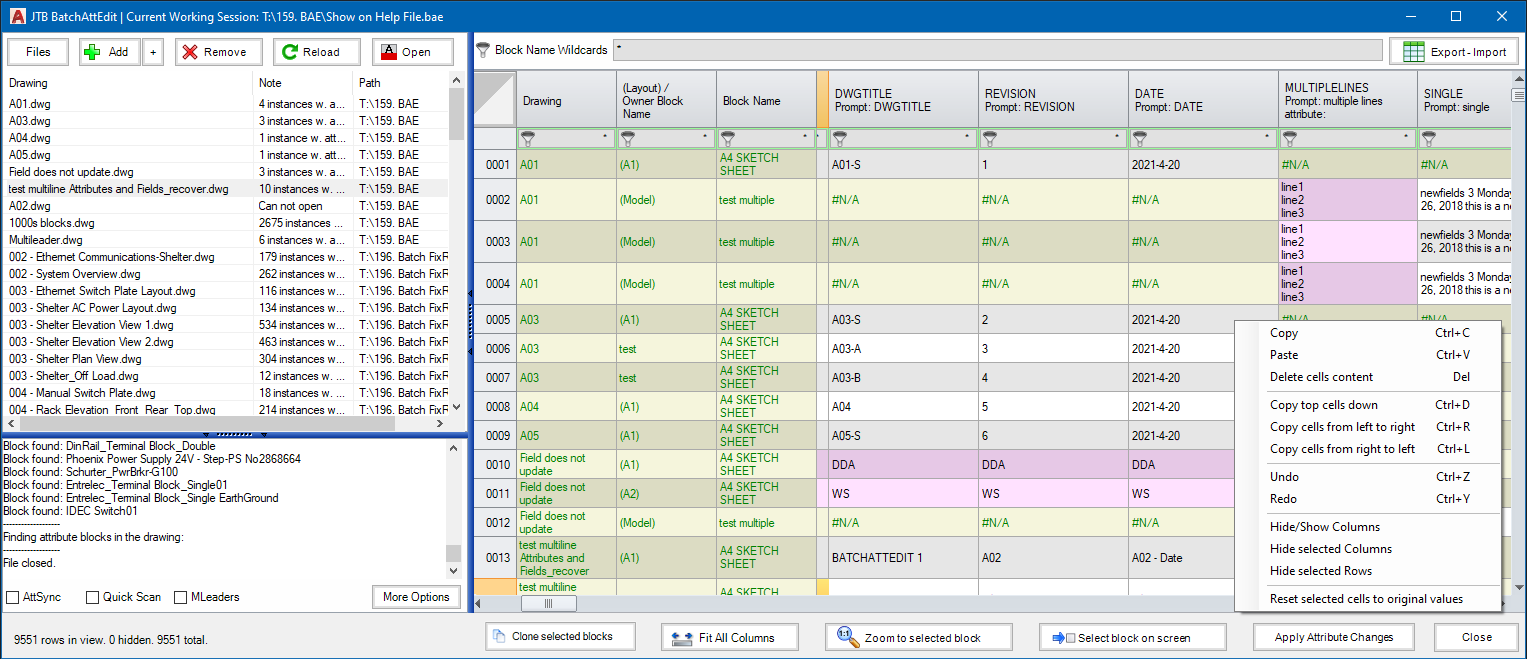
This is a great app to edit title block attributes across many drawings instead of having to do it one drawing at a time. How do you edit all title block data?
Dynamic block properties can be edited too.
If you want to export the attributes to Excel use the “Export – Import” button. Optionally you can make modifications in Excel for example with help of functions and formulas and then import back.
Try it for free by downloading from JTB BatchAttEdit.
For more of JTB World’s software that you might find useful visit our software list and our apps available on Autodesk App Store. We also offer custom programming services and can help you with both small and large projects where we specialize on the AutoCAD, AutoCAD Architecture, Revit, BricsCAD, ZWCAD and other CAD platforms.