In this weekly column, Android Central Wearables Editor Michael Hicks talks about the world of wearables, apps, and fitness tech related to running and health, in his quest to get faster and more fit.
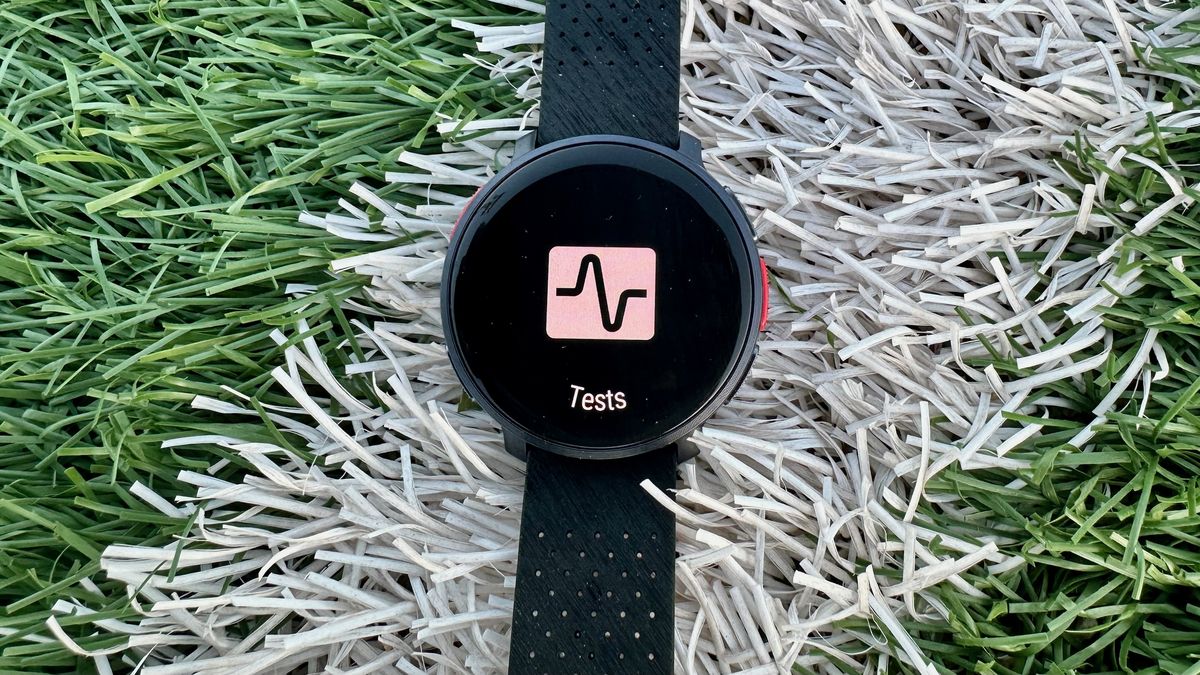
In an age where fitness watches and smart rings use passive health data and hidden algorithms to judge your health and athleticism, Polar takes a direct user approach. The Vantage V3 has a dedicated section for “Tests” on everything from nightly recovery and ECGs to VO2 Max. And while automatic tracking is more futuristic, I’m a fan of this alternative.
The annoying part of buying any new smartwatch is the learning period. You’re promised the equivalent of a constant doctor’s physical and a PE test on your wrist. But once you put it on, you’ll wear it for days, if not weeks, before the software will share its findings or properly gauge your health and fitness level.
Blame my inability to sleep soundly while wearing a smartwatch or the fact that this job makes me switch watches every few weeks, but it’s difficult for me to sustain interest in a new product long enough to take advantage of these features or remember to seek out the information once it’s finally ready.
On the fitness side, I can’t tell you how often VO2 Max data on a smartwatch is woefully incorrect from the start, based on run data that couldn’t possibly provide the insight necessary to make that kind of judgment.
(Image credit: Michael Hicks / Android Central)
Polar isn’t so different from these other fitness watch brands in that it’ll also measure your VO2 Max, nightly recharge, and other data passively over time. But it also lets you take that into your own hands, so to speak, with its active testing section.
I can look at my “Cardio Load Status” to see whether Polar’s algorithm thinks I’m ready to work out or “overreaching” based on my abilities. But if the estimate doesn’t match my perceived energy level, Polar has an orthostatic test that takes a snapshot of my heart rate and heart rate variability (HRV) at rest or while standing.
A full night of HRV data will give Polar more data to work with. But if you don’t sleep with your Polar or wear a different tracker to bed (like my Ultrahuman Ring Air), this gives you the info necessary for a judgment call after four minutes of relaxation.
Get the latest news from Android Central, your trusted companion in the world of Android
Despite “Overreaching” on my training, my orthostatic test found that my body isn’t as tired as the algorithm thinks. (Image credit: Michael Hicks / Android Central)
Even better, Polar has a “leg stiffness” test that measures your muscular recovery after runs.
Every post-run marathoner knows the feeling when their heart has recovered but their legs need another week. Other times, my legs feel fine, but my worn-down heart treats a jog like a sprint. Despite that, most fitness watches lump together cardiovascular and muscular recovery by necessity.
It’d be nice if these watches could use running form analysis to adjust recovery time. I’m sure tired muscles affect our vertical lift or cadence or could make our stride imbalanced. In lieu of that, Polar has you jump up and down three times with your hands on your hips. After a couple of tests, it’ll have a baseline for your normal jumping abilities; if you fall short, you know you’re not ready for a hard run.
I appreciate that Polar lets me check my physical recovery for myself instead of relying blindly on the algorithm.
(Image credit: Michael Hicks / Android Central)
Then we have my absolute favorite: Polar’s VO2 Max running test. I first tried it with the Polar Pacer Pro, one of my first running watch reviews, and I’ve happily returned to it now that I’m testing the Vantage V3. Essentially, it has you slowly pick up your pace from 15:00/mile downwards until you can no longer keep up, for about 10–15 minutes of easy-to-all-out running.
I ended up tiring out as I hit the sub-6:00 pace window and was rewarded with a 53. For context, that’s two points higher than my Garmin VO2 Max average (51). Polar calls it “Very Good” for my age and gender, while Garmin would call it “Excellent.” Either way, it’s an improvement on where my VO2 Max was a year ago.
I don’t know which is more accurate; Garmin works from months of data, while Polar uses the traditional self-guided method. The only definitive way would be to go to a testing lab that measures your breathing on a treadmill.
Frankly, it doesn’t matter to me which is better. I just want multiple ways to test for myself.
(Image credit: Michael Hicks / Android Central)
Raising your VO2 Max is a long, arduous process of increasing your training load week by week; the more you improve, the longer it takes to gain a point. At times, I’ve questioned whether or not I’m actually improving or if my Garmin Forerunner 965 and its algorithm merely reward me for following the training load suggestions.
That’s why having a way to spot-check your VO2 Max is so heartening. Seeing that 53 validated all of the hard track runs and boring low-aerobic jogs I’ve done to try and improve over the past year.
It also triggered my competitive side: next time I do a manual VO2 Max test, I’m not going to let myself get left behind until I push further into the 5:XX range and score higher!
The Polar Vantage V3 and Garmin Forerunner 965 (Image credit: Michael Hicks / Android Central)
Whichever smartwatch brand you buy, you must trust its algorithm, with no way to tweak the numbers or peek behind the curtain. You must have faith in a brand’s reputation, and then spend weeks or months finding out whether the algorithm truly understands your fitness level and how often you need rest.
But even with the most reliable brand, worn for a long time, it doesn’t always get things perfectly right. And that’s to be expected!
Polar’s algorithm isn’t any more imperfect than other brands’ data. But the Vantage V3’s testing suite caters to athletes who want to double-check Polar’s suggestions for themselves, especially in the early days of using the watch, and I appreciate that Polar doesn’t insist on blind trust — as other brands do.
I’ll have my Polar Vantage V3 review completed by next week. Thus far, it did pretty well in a fitness test against COROS and Garmin. I appreciate its comfortable design and straightforward access to specific tools — like Tests — with one or two button presses.
More pertinent to this discussion, I’m hopeful that Polar will continue to expand this testing section over time. It has running, walking, and cycling fitness tests, all variations on the same theme, along with recovery tests. Maybe Polar could offer a hill/stair climber test to see how well you handle elevation gain or an arm strength test to go with its indoor exercise recommendations.
Dedicated athletes are competitive people, and when you give them a way to test and compete against themselves and their own fitness scores, that’s always a recipe for success.
When it comes to powerful copy, few elements hold as much sway as the aptly named ‘trigger words.’
These potent tools wield the power to evoke emotion, spur action, and forge a deeper connection with readers, making them indispensable in the arsenal of any writer.
From the persuasive prose of a seasoned copywriter to the captivating narratives of a storyteller, trigger words help breathe life into written content, transforming passive readers into active participants.
This guide aims to demystify the concept of trigger words, offering writers of all disciplines a comprehensive overview of how to harness their power to enchant, persuade, and engage.
What are trigger words?
Trigger words are linguistic catalysts, meticulously chosen to provoke a psychological or emotional response.
They are the secret ingredients that make headlines irresistible, calls to action compelling, and stories unforgettable. In essence, trigger words tap into our deepest desires, fears, hopes, and dreams, pulling at the heartstrings or stoking the flames of curiosity.
Their power lies not just in the emotional stir they create but in their ability to motivate readers towards a specific reaction or action.
Whether it’s to inspire joy, ignite a sense of urgency, or build trust, the strategic use of trigger words can significantly enhance the impact of your writing.
By understanding the underlying emotions and motivations of your audience, you can select trigger words that resonate on a personal level, making your content not just seen, but felt.
Nine types of trigger words for every situation
Let’s begin our process of exploring different types of trigger words.
For your convenience, we’ve arranged these trigger words into nine distinct categories. We’ll offer guidance on the purpose of each category along with an extensive list of trigger words and what they mean.
Let’s begin with trigger words that provoke an emotional response.
Emotional trigger words
Let’s look at words that trigger an emotional response.
What are emotional trigger words?
Emotional trigger words are powerful tools that tap into a wide range of human emotions, from joy to fear.
These words have the unique ability to connect with readers on a deeply personal level, evoking specific feelings that can significantly enhance the resonance and impact of your writing.
Whether it’s to inspire, comfort, motivate, or challenge, using emotional trigger words effectively can transform your content into a more engaging and memorable experience for your audience.
35 emotional trigger words
1. Joyful: Creates a sense of happiness and delight.
2. Fearless: Inspires bravery and overcoming challenges.
3. Tragic: Evokes feelings of sadness and compassion.
4. Euphoric: Generates a sense of extreme happiness or elation.
5. Infuriating: Provokes anger or strong annoyance.
6. Heartbreaking: Induces deep emotional pain or sadness.
7. Invigorating: Refreshes, energizes, and revitalizes.
8. Lonely: Conveys feelings of isolation or solitude.
9. Optimistic: Inspires hopefulness and confidence in the future.
10. Panic: Triggers a sudden sense of fear or anxiety.
11. Riveting: Captures intense interest or attention.
12. Soothing: Offers comfort, calmness, or relaxation.
13. Terrifying: Evokes extreme fear or horror.
14. Vulnerable: Expresses openness to emotional harm or attack.
15. Whimsical: Relates to light-hearted or playful spontaneity.
16. Empowered: Gives a sense of strength and confidence.
17. Despair: Conveys a deep sense of hopelessness.
18. Thrilled: Produces intense excitement or pleasure.
19. Betrayed: Feels deceived or let down.
20. Nostalgic: Evokes sentimental longing for the past.
21. Overwhelmed: Gives a sense of being overcome with emotions.
22. Anxious: Causes worry, nervousness, or unease.
23. Curious: Inspires a desire to learn or know more.
24. Frustrated: Expresses feelings of dissatisfaction or annoyance.
25. Hopeful: Indicates optimism or a desire for a certain thing to happen.
26. Inspiring: Motivates or influences positively.
27. Melancholic: Relates to deep, pensive sadness.
28. Outraged: Expresses strong anger, shock, or indignation.
29. Peaceful: Conveys tranquility and serenity.
30. Rejuvenated: Feels refreshed or revitalized.
31. Sympathetic: Shows feelings of pity and sorrow for someone else’s misfortune.
32. Wistful: Has a feeling of vague or regretful longing.
33. Zealous: Shows great energy or enthusiasm in pursuit of a cause.
34. Content: Expresses satisfaction or happiness.
35. Enraged: Describes intense or violent anger.
Incorporating a diverse range of emotional trigger words thoughtfully into your content can dramatically amplify its emotional depth and resonance.
By carefully selecting words that align with the desired emotional tone and response, you can craft narratives that not only inform and persuade but also emotionally engage and connect with your readers.
Action-oriented trigger words
It’s time to explore trigger words designed to make your reader take a specific action.
What are action-oriented trigger words?
Action-oriented trigger words are crafted to prompt immediate action or decision-making.
These dynamic words serve as catalysts, propelling readers from passive consumption to active engagement.
Ideal for calls to action in marketing, sales copy, or any scenario where a writer aims to induce a reader to take a specific step, these words can significantly boost conversion rates and reader response.
30 action-oriented trigger words
1. Act: Encourages immediate response.
2. Buy: Direct call to purchase or invest.
3. Click: Invites to follow a link or button.
4. Discover: Promotes exploration or revelation.
5. Download: Suggests obtaining digital content.
6. Enter: Invites participation or entry.
7. Join: Calls to become part of a group or community.
8. Learn: Encourages gaining new knowledge or skills.
9. Play: Suggests engaging in an activity or game.
10. Read: Invites to delve into content.
11. Register: Calls for signing up or enrolling.
12. Save: Promotes cost-saving or resource-preserving actions.
13. Start: Initiates beginning of an action or process.
14. Submit: Requests provision of information or materials.
15. Try: Encourages testing or sampling.
16. Visit: Invites to go to a place or website.
17. Watch: Suggests viewing a video or presentation.
18. Claim: Encourages taking possession of an offer.
19. Compare: Invites analysis or evaluation.
20. Donate: Calls for charitable giving.
21. Upgrade: Suggests moving to a better version or level.
22. Share: Encourages dissemination of information.
23. Schedule: Invites planning or arranging a time.
24. Review: Requests feedback or evaluation.
25. Access: Suggests obtaining entry or rights.
26. Choose: Encourages making a selection.
27. Get: General call to obtain or receive.
28. Sign up: Requests registering or subscribing to a service.
29. Unlock: Offers access to more content or features.
30. Explore: Invites investigation or discovery of something new.
By strategically incorporating these action-oriented trigger words into your content, you can effectively guide your readers toward the desired action.
These powerful words can transform passive interest into active engagement, enhancing the overall impact of your communication.
Trust-building trigger words
Trust is invaluable, and trigger words have a big role to play in building it. Let’s look at how.
These words are vital in creating a sense of reliability and assurance, crucial in all forms of writing but especially in areas where trust is a key factor in the reader’s decision-making process, such as in financial advice, health information, and product reviews.
25 trust-building trigger words
1. Authentic: Signals genuine quality or origin.
2. Backed: Offers support or endorsement from a credible source.
3. Certified: Indicates approval or validation by an authoritative entity.
4. Dependable: Suggests reliability and consistency.
5. Endorsed: Shows support or approval by a respected figure or institution.
6. Guaranteed: Provides assurance of satisfaction or effectiveness.
7. Honest: Conveys straightforwardness and integrity.
8. Legitimate: Signals lawful or genuine status.
9. No-risk: Promises no danger or loss in engagement.
10. Official: Indicates formal authorization or recognition.
11. Proven: Demonstrates effectiveness or validity through experience or testing.
12. Reliable: Suggests dependability and trustworthiness.
13. Safe: Conveys freedom from harm or risk.
14. Secure: Indicates protection from danger or loss.
15. Tested: Shows that something has been examined and proven effective.
16. Transparent: Suggests openness and honesty in operations or intentions.
17. Trusted: Indicates being dependable and reliable.
18. Unbiased: Shows lack of prejudice or favoritism.
19. Verified: Confirms accuracy or authenticity through examination.
20. Warranted: Provides a formal promise, often related to quality or durability.
21. Accurate: Ensures correctness and precision.
22. Confidential: Promises privacy and secrecy.
23. Ethical: Suggests adherence to moral principles.
24. Fair: Indicates impartiality and justice.
25. Privacy: Guarantees protection of personal information.
Incorporating trust-building trigger words thoughtfully within your content can greatly enhance your audience’s confidence in your message. These words help to establish a foundation of credibility and reliability, essential for building lasting relationships with your readers.
Curiosity-Inducing trigger words
Never underestimate the power of curiosity. Here are trigger words that allow you to leverage exactly that.
What are curiosity-inducing trigger words?
Curiosity-inducing trigger words are designed to spark the reader’s interest, driving engagement and exploration.
By promising new knowledge, hidden information, or untold stories, these words leverage the natural human desire to learn and discover.
They are particularly effective in headlines, email subject lines, and introductions, where capturing attention is critical.
25 curiosity-inducing trigger words
1. Secrets: Suggests hidden or exclusive knowledge.
2. Discover: Promises new information or experiences.
3. Reveal: Indicates uncovering or disclosing information.
4. Uncover: Suggests bringing to light previously hidden details.
5. Behind the Scenes: Offers a glimpse into hidden aspects or processes.
6. Mystery: Implies something unknown or to be solved.
7. Exclusive: Signals access to privileged information.
8. Hidden: Suggests concealed or not easily found information.
9. Forbidden: Implies knowledge or areas typically off-limits.
11. Unveil: Promises the revealing of something new or exciting.
12. Insider: Implies access to confidential or privileged information.
13. Unlock: Offers the promise of accessing something valuable.
14. Confessions: Suggests revealing personal or secretive information.
15. Untold: Indicates stories or information not previously shared.
16. Private: Suggests exclusivity or restricted access.
17. Sneak Peek: Offers a quick, exclusive look at something new.
18. Breakthrough: Implies a significant discovery or achievement.
19. Unexplored: Suggests something not yet investigated or known.
20. Exposed: Reveals something hidden, often scandalous or controversial.
21. Unravel: Promises to clarify or solve a mystery or complexity.
22. Little-known: Indicates information not widely known or recognized.
23. Rare: Suggests something uncommon or infrequently encountered.
24. Unprecedented: Indicates something never done or seen before.
25. Classified: Implies restricted or highly confidential information.
By weaving curiosity-inducing trigger words into your content, you can effectively pique the interest of your readers, compelling them to seek more information.
These words act as a magnet, drawing readers into your narrative and keeping them engaged through the promise of learning something new or exclusive.
Urgency-creating trigger words
Urgency is one of the most powerful forces in compelling a response from your readers. Here are the words you need.
What are urgency-creating trigger words?
Urgency-creating trigger words are crucial for conveying time sensitivity, encouraging quicker decision-making.
These words prompt readers to act swiftly, often in scenarios where a limited offer, deadline, or opportunity is at stake.
Perfect for sales, promotions, and calls to action, urgency-triggering words help to increase the perceived value of an offer by highlighting its temporary nature.
20 urgency-creating trigger words
1. Now: Implies immediate action is necessary.
2. Limited: Suggests availability is restricted.
3. Hurry: Encourages quick action.
4. Deadline: Specifies a final date or time for action.
5. Expires: Indicates an offer is ending soon.
6. Last Chance: Suggests a final opportunity.
7. Immediately: Urges instant action or response.
8. Closing Soon: Indicates a nearing end or conclusion.
9. While Supplies Last: Suggests limited stock or availability.
10. Today: Implies action should be taken within the day.
11. Final: Indicates the last opportunity or offer.
12. Countdown: Suggests a limited time before an event or offer ends.
13. Rush: Urges to act quickly or with haste.
14. Urgent: Indicates a need for immediate attention or action.
15. Flash Sale: Suggests a very short-term discount or offer.
16. Offer Ends: Specifies when an offer will no longer be available.
17. Don’t Miss Out: Warns against losing an opportunity.
18. Act Fast: Encourages quick decision-making.
19. Ending Soon: Suggests a nearing deadline or conclusion.
20. Time-Sensitive: Indicates an offer or opportunity is not permanent.
Incorporating urgency-creating trigger words into your writing can significantly influence the reader’s decision-making process, encouraging them to act more quickly than they otherwise might.
These words are especially effective in promotional content, where creating a sense of scarcity and immediacy can drive conversions and engagement.
Value-offering trigger words
Make sure your readers see the value in your content with this type of trigger word.
What are value-offering trigger words?
Value-offering trigger words highlight the benefit or value proposition of an offer, making it more attractive to the reader.
These words are crucial in communicating the advantages or positive outcomes of a product, service, or piece of content, helping to outline what the reader stands to gain by engaging.
They are particularly useful in marketing and sales copy, where showcasing the value directly impacts the reader’s decision to take action.
20 value-offering trigger words
1. Free: Suggests no cost or risk to the reader, enhancing appeal.
2. Bonus: Indicates additional value beyond what is expected.
3. Exclusive: Suggests unique benefits not available to everyone.
4. Premium: Implies superior quality or service.
5. Gift: Offers something extra without expectation of return.
6. Limited Edition: Suggests unique value due to limited availability.
7. Discount: Indicates a reduced price, enhancing value.
8. Deal: Suggests a favorable bargain.
9. Prize: Offers a reward or win for engagement.
10. Value: Emphasizes the worth or usefulness of an offer.
11. Savings: Highlights financial advantage or cost reduction.
12. Win: Suggests receiving something of value through luck or competition.
13. Advantage: Indicates a beneficial factor or superiority.
14. Enhanced: Suggests improved features or benefits.
15. Upgrade: Offers an increase in value or function.
16. Profit: Indicates financial gain or benefit.
17. Reward: Offers a return or benefit for action taken.
18. Solution: Suggests a means of solving a problem, adding practical value.
20. Best: Suggests superior quality or advantage over others.
Utilizing value-offering trigger words effectively in your content can significantly enhance the attractiveness of your offer, clearly communicating the benefits and rewards that await your audience.
By emphasizing what readers stand to gain, you motivate them to take the desired action, whether it’s making a purchase, signing up for a service, or engaging with your content.
Exclusivity-suggesting trigger words
As humans we find the idea of something exclusive and special hard to resist. These trigger words will help you inspire that feeling in your readers.
What are exclusivity-suggesting trigger words?
Exclusivity-suggesting trigger words create a sense of limited access or special privilege, making offers more desirable by tapping into the reader’s desire to be part of an elite group.
These words are powerful in marketing and promotional content, where creating a feeling of scarcity and exclusivity can drive immediate action and enhance perceived value.
15 exclusivity suggesting trigger words.
1. Members Only: Limits access to a select group, increasing desirability.
2. VIP: Suggests premium status and exclusive benefits.
3. Limited Access: Implies restrictions in availability, enhancing value.
4. Exclusive Offer: Signals a special deal not available to the general public.
5. Private: Indicates selective access or confidentiality.
6. Elite: Suggests a superior status or quality reserved for a select few.
7. Secret: Implies hidden or privileged information.
8. Rare: Highlights scarcity and uniqueness.
9. Invite-Only: Limits participation to those who are specially chosen.
10. Restricted: Implies limited availability or access.
11. Selective: Suggests a careful choice, adding to the sense of value.
12. Insider Access: Offers privileged information or opportunities.
13. First Look: Gives early access or a preview before the general release.
14. Exclusive Rights: Suggests unique access to use or engage with something.
15. Limited Release: Indicates availability for a short time or in limited quantities.
Incorporating exclusivity-suggesting trigger words into your writing can dramatically increase interest and urgency, as readers are often driven by the fear of missing out on something special or unique.
By presenting your offer as exclusive or limited, you not only enhance its perceived value but also motivate your audience to act promptly to secure their place or advantage.
Safety-assuring trigger words
The need for safety is incredibly powerful. This set of trigger words can help your readers feel safe.
What are safety-assuring trigger words?
Safety-assuring trigger words convey security, safety, and reassurance, crucial for overcoming objections, especially in transactions or commitments.
These words play a vital role in alleviating fears and building trust, by assuring readers that their decision to engage is free from risk or harm.
They are particularly important in sectors like finance, healthcare, and e-commerce, where concerns about safety and privacy are paramount.
15 safety-assuring trigger words
1. Protected: Ensures defense against harm or loss.
2. Secure: Implies safety from external threats.
3. Guaranteed: Offers assurance of reliability or promised outcomes.
4. Risk-Free: Suggests engagement without potential for loss.
5. Safe: Indicates absence of danger or risk.
6. Privacy: Assures confidentiality and protection of personal information.
7. Refundable: Implies the possibility of getting one’s money back if not satisfied.
8. No Obligation: Suggests freedom from forced commitment or consequence.
9. Insured: Indicates coverage against potential loss or damage.
10. Certified: Verifies approval by authoritative entities for safety or quality.
11. Encrypted: Suggests protection of digital information from unauthorized access.
12. Money-Back Guarantee: Offers reimbursement as assurance of product satisfaction.
13. Secure Checkout: Assures safe and protected online purchase transactions.
14. Confidential: Guarantees that information is kept private.
15. Verified: Confirms authenticity or credibility, enhancing trust.
By skillfully weaving safety-assuring trigger words into your content, you can effectively address and mitigate the concerns and hesitations of your audience.
These words serve to reassure readers, fostering a sense of trust and security that can significantly impact their willingness to take the desired action, whether it’s making a purchase, signing up for a service, or sharing personal information.
Power trigger words for storytelling
Great storytelling is already immensely powerful – this set of trigger words levels up that power even further.
What are power trigger words for storytelling?
Power words for storytelling enhance imagery, emotional depth, and engagement in narrative writing.
These words captivate the reader’s imagination, drawing them deeper into the story.
They are essential for writers looking to create vivid, memorable narratives that resonate with their audience on an emotional level.
20 power trigger words for storytelling
1. Epic: Conveys grandeur and awe-inspiring scale.
2. Heartwarming: Evokes feelings of kindness and comfort.
3. Tragic: Implies deep sadness or disaster.
4. Triumphant: Suggests victory or success after effort.
7. Haunting: Leaves a lasting, profound impression.
8. Riveting: Captures and holds attention tightly.
9. Breathtaking: Indicates overwhelming beauty or impact.
10. Gripping: Holds interest tightly, compelling continued engagement.
11. Spellbinding: Captivates in a seemingly magical way.
12. Harrowing: Describes distressing or agonizing experiences.
13. Enchanting: Captures charm or delight, often magical.
14. Devastating: Conveys extreme emotional or physical impact.
15. Exhilarating: Produces excitement or thrill.
16. Surreal: Indicates an unreal, dream-like quality.
17. Chilling: Suggests fear or horror, a spine-tingling effect.
18. Electrifying: Imparts a sense of thrill or excitement.
19. Poignant: Evokes a keen sense of sadness or regret.
20. Whimsical: Conveys playfulness or fanciful imagination.
Incorporating power words into your storytelling can transform simple narratives into immersive, emotionally charged experiences.
These words help to paint more vivid pictures, evoke stronger emotions, and create a more compelling read.
By carefully selecting power words that align with the tone and direction of your story, you can significantly enhance the impact and memorability of your writing, engaging your readers on a deeper level and leaving a lasting impression.
Now that we’ve explored the vast landscape of trigger words across various categories, let’s conclude our comprehensive guide with practical advice for integrating these powerful words into your writing effectively.
How to use trigger words in writing
Integrating trigger words into your content should feel natural and seamless.
To avoid making your writing appear forced or overly salesy, sprinkle trigger words throughout your content where they naturally enhance your message without overpowering it.
The key is subtlety; let these words amplify your voice rather than overshadow it.
How to choose the right trigger words for your readership and purpose
Understanding your audience is crucial when selecting which trigger words to use.
Consider the emotions, desires, and needs of your readers, as well as the context of your content.
For instance, urgency-creating words might be more appropriate for a promotional email, while trust-building words could be vital for a service description.
Aligning trigger words with your audience’s expectations and your writing goals will ensure they resonate more deeply and elicit the desired response.
How to refine your use of trigger words
The effectiveness of trigger words can vary greatly depending on their context and usage.
Conduct A/B testing in your marketing materials to see which trigger words drive more engagement or conversions.
Pay attention to analytics and feedback to understand how your audience reacts to different words, and be prepared to adjust your strategy accordingly.
Over time, you’ll develop a keen sense for which words work best in various situations, allowing you to craft more compelling and effective content.
Are you ready to put your knowledge of trigger words into practice?
Trigger words are a powerful element in the writer’s toolkit, capable of transforming passive reading into active engagement.
By understanding and using these words thoughtfully across different types of writing, you can enhance the impact of your content, whether you’re aiming to persuade, inform, or entertain.
As you begin to use these trigger words in your writing, don’t lose sight of the importance of having a meaningful message to share.
When you combine purposeful writing with trigger words, you stand a much greater chance of having the effect you desire.
An anonymous reader shared this report from SFGate: Late last year, tales of tech workers paying $700 a month for tiny “bed pods” in downtown San Francisco went viral. The story provided a perfect distillation of SF’s wild (and wildly expensive) housing market — and inspired schadenfreude when the city deemed the situation illegal. But the provocative living situation wasn’t an anomaly, according to a city official.
“We’ve definitely seen an uptick of these ‘pod’-type complaints,” Kelly Wong, a planner with San Francisco’s code enforcement and zoning and compliance team, told SFGATE… Wong stressed that it’s not that San Francisco is inherently against bed pod-type arrangements, but that the city is responsible for making sure these spaces are safe and legally zoned.
So Brownstone Shared Housing is still renting one bed pod location — but not accepting new tenants — after citations for failing to get proper permits and having a lock on the front door that required a key to exit.
And SFGate also spoke to Alex Akel, general manager of Olive Rooms, which opened up a co-living and co-working space in SoMa earlier this year (and also faced “a flurry of complaints.”) “Unfortunately, we had complaints from neighbors because of foot traffic and noise, and since then we cut the number of people to fit the ordinance by the city,” Akel wrote. Olive Rooms describes its space as targeted at “tech founders from Central Asia, giving them opportunities to get involved in the current AI boom.” Akel added that its residents are “bringing new energy to SF,” but that the program “will not accept new residents before we clarify the status with the city.”
In April, the city also received a complaint about a group called Let’s Be Buds, which rents out 14 pods in a loft on Divisadero Street that start at $575 per month for an upper bunk.
While this recent burst of complaints is new, bed pods in San Francisco have been catching flak for years… a company called PodShare, which rents — you guessed it — bed pods, squared itself away with the city and has operated in SF since 2019.
Brownstone’s CEO told SFGate “A lot of people want to be here for AI, or for school, or different opportunities.” He argues that “it’s literally impossible without a product like ours,” and that their residents had said the option “positively changed the trajectory of their lives.”
Welcome to our Best Gaming Workstation PC Build Under $2,000 build guide! In this article, we’ll be showing you all the components you’ll need to put together a workstation that can not only handle serious work, but also play as well.
The gaming workstation build today will be focused building an excellent gaming PC that can handle games on large, high resolution monitors such as 1440p, 1600p and 4K as well as handle workstation productivity applications such as photo editing, video editing, 3D modeling, video encoding, CADD, and more. This build today will have a budget of $2,000 and have a focus of creating a top notch gaming workstation build that’s not only fast and powerful, but also quiet as well.
Best Gaming Workstation Build Component Summary – Budget: $2,000
Congratulations to AMD as the AMD Ryzen 1700 has made it into our best gaming workstation builds series for the first time ever!
Why? This new AMD Ryzen processor is simply a beast, packing 8-cores and 16-threads on AMD’s new Zen CPU architecture. Clock speeds on the AMD Ryzen 1700 go up to 3.7GHz, but it’s also unlocked as well for the more adventurous PC builders who want to dip their toes in a bit of overclocking. Given that applications like video editing, 3D modeling, rendering and others can heavily utilize multiple threads, this makes the AMD Ryzen processor an excellent choice for a workstation build.
What’s really special about the AMD Ryzen 7 1700 however, is its price. At under $300, the AMD Ryzen CPU not only significantly outperforms its chief competitor, the [easyazon_link identifier=”B01MXSI216″ locale=”US” tag=”cupcre06-20″]Intel Core i7-7700K[/easyazon_link], but it’s also slightly cheaper as well making it an obvious pick for our gaming workstation build.
Paired with the AMD Ryzen 7 1700 is the MSI X370 Gaming Pro motherboard. While the MSI X370 Gaming Pro is primarily geared at gamers, the MSI X370 Gaming Pro is an excellent motherboard that packs all the features workstation users would ever need.
Based on the AMD X370 chipset, the MSI X370 Gaming Pro features the new AMD AM4 socket, designed to be used with the new AMD Ryzen CPUs. Additional features of the motherboard include support for up to 64GB of DDR4 RAM, three PCIe x16 slots (two PCIe 3.0, one PCIe 2.0) for multi-GPU expansion options, M.2 SSD support, SATA 6Gbps, USB 3.1 support and more.
There are few names out there more reputable than Corsair when it comes to high performance, reliable RAM.
As such, we’re recommending Corsair’s Vengeance LPX 16GB (2x8GB) kit which the perfect memory kit for this build. We like the Corsair Vengeance LPX kit because these are specifically designed to be low profile which will ensure there aren’t any clearance issues involved when installing large CPU coolers.
With 16GB of RAM, the kit should also provide plenty of RAM for gaming and workstation applications however, those planning to do more memory intensive tasks such as video editing or 3D modeling with large scale 3D models should consider purchasing two kits which will bump up total memory to 32GB. For those who need even more RAM, Corsair also offers a [easyazon_link identifier=”B016ORTR1U” locale=”US” tag=”cupcre06-20″]64GB Corsair Vengeance LPX DDR4[/easyazon_link] kit.
Thanks to the substantial $2,000 budget on this build, we decided to go with the ASUS ROG STRIX GTX 1080 graphics card which will make this build extremely powerful not only as a workstation system, but also a gaming system.
Featuring Nvidia’s new Pascal architecture and built on TSMC’s 16nm FinFet process, the ASUS ROG STRIX GTX 1080 is a top tier graphics card that will be able to play the latest games at the highest quality settings at 1080p, 1440p, 1600p and for many games, 4K without issues.
Those looking for a graphics card strictly for the workstation however, will likely be better served by purchasing an AMD Radeon Pro or Nvidia Quadro graphics card. These graphics cards are specifically designed for professional workstation applications and come with driver and software packages specifically optimized for applications such as CADD, 3D modeling or video editing.
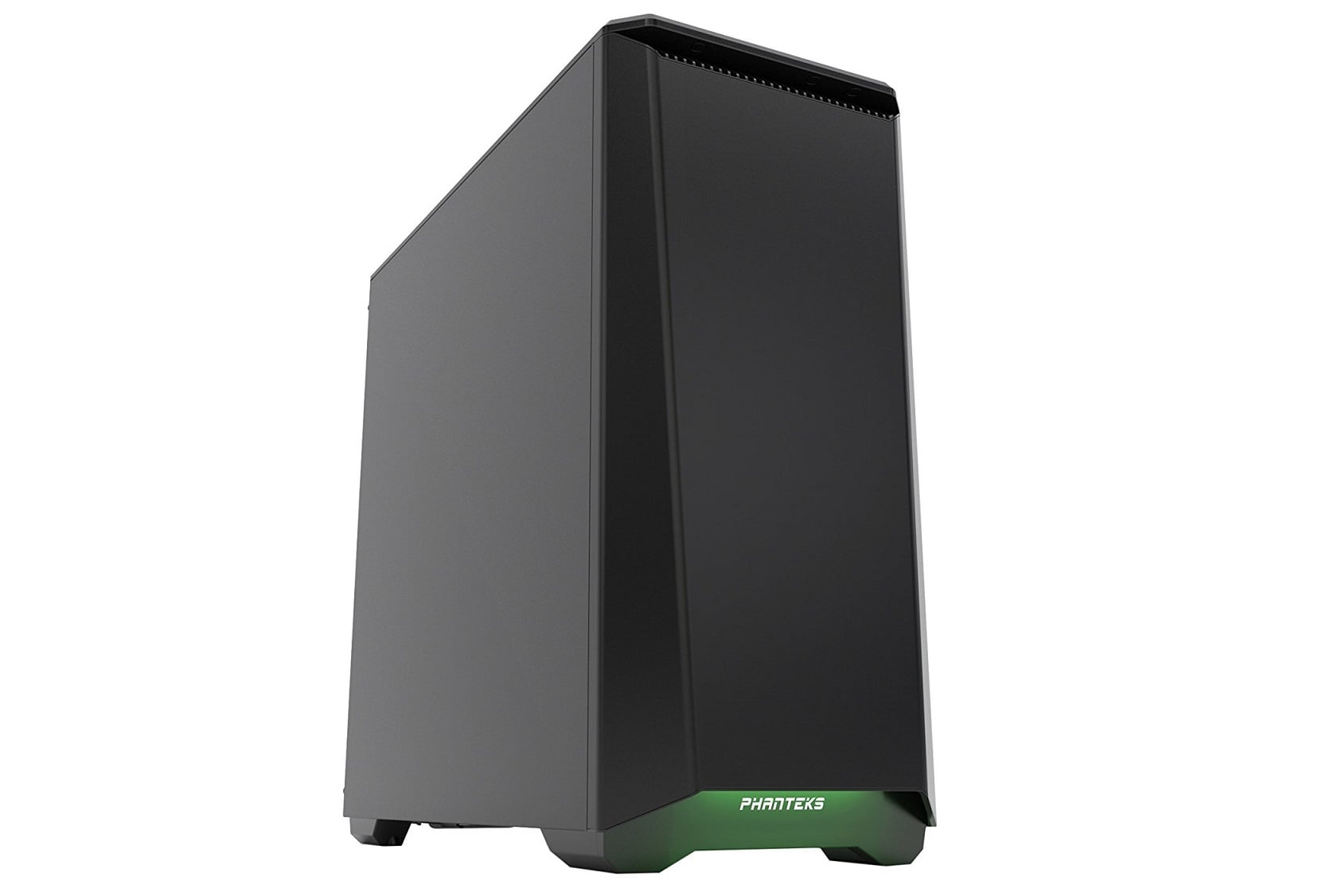
Workstations are designed for work, so a quiet and subtle case that has plenty of room for expansion and growth is one of the most important aspects of an excellent workstation build. This is why we’ve chosen the Phanteks Eclipse Series P400S Silent Edition case.
In many aspects, the Phanteks Eclipse P400S is very similar to its brother, the Phanteks Eclipse P400, but it also packs built-in sound dampening panels as well as an integrated fan controller to ensure the case is nice and quiet when it needs to be. In addition, the case also features a tool-less design, excellent materials for the pricepoint, and plenty of expandability should you decide to throw in another graphics card or put in some major upgrades along the way.
For storage on a high end workstation, there’s really few alternatives to the Samsung 960 EVO or 960 Pro series of SSDs. Thanks to the significantly lowered pricetag of SSDs these days, we’re able to fit in a whopping 500GB of PCIe NVMe SSD storage capable of speeds up to 3.2 GB/s. This will help significantly improve loading times and response times of everything ranging from the latest games to launching Adobe Premiere.
Those who need significant additional archival storage can also purchase a HDD to complement the SSD. Currently 4TB Seagate BarraCuda HDDs can be had for well under $110, which should provide plenty of storage space. Those who need particularly fast archival storage can also look into the [easyazon_link identifier=”B01G844OOO” locale=”US” tag=”cupcre06-20″]Samsung 850 EVO SSD[/easyazon_link], which is offered in storage capacities of up to 4TB, but expect to pay a pretty penny for the massive storage capacity.
Optional Components
Some readers have expressed interest in monitor, speaker, mice and keyboard suggestions, so we’ve also started including some recommendations for these items as well. I won’t be explaining the choices as these optional components are quite dependent on the purpose of PC (For example, someone serious about audio may end up going with something like an Audioengine 5+ paired with an ASUS Xonar Essence STX), but here are some suggestions that are a good fit for this build based on the system’s budget and intended purpose.
Questions? Thoughts? Let us know!
Remember, if you have any questions, need some help, or need to fit the build into your budget please feel free to post all questions in the community forums! For more immediate assistance, feel free to drop by our community Discord as well. If you spot any issues with our build such as GPU/case incompatibilities, cooler/case incompatibilities, etc. please let us know as well so we can update the article.
Also, be sure to join us on Facebook, Twitter, Google Plus, or YouTube to be updated on the latest news, reviews, tutorials, custom computer builds, and more!
Color, texture, vibration, emotion, and passion are necessary for creative expression.
Even then, there are moments when you fall short of realizing the imaginative artistic aesthetics, even when you have put all of your creative skill onto one canvas.
Dream AI art generator By Wombo Dream ia Art has brought you the dynasty of abstract art with exotic execution of dreamy dimensions, fulfilling your yearning for more possibilities of solid vision. If you’d like to take it a step further, consider using DVDFab Photo Enhancer AI, dream image generator, or womb dream AI art generator, which uses a sophisticated convolutional neural network to enhance pixelated photos through dream photo generator professionally.
Dream by Wombo
REVIEWS 3.5K
Create exciting clips and videos
You may add sharpening, denoising, openart ai, enlargement, wombo.ai logo, and many more effects to an image to bring it to the next level of perfection using DVDFab Photo Enhancer AI and DVDFab Enlarger AI.
With the highly advanced and automated AI technology on this platform, you can treat your visual versatility with the most stunning AI image generator dream yet arbitrary frame.
It’s time to discover how this AI-powered dream AI image generator tool may help you achieve your desired look.
What is a dream in the wombo?
Wombo Dream AI, a Canadian company known for its AI-powered lip-syncing app, has introduced an exciting feature in its new app called Dream by Wombo.
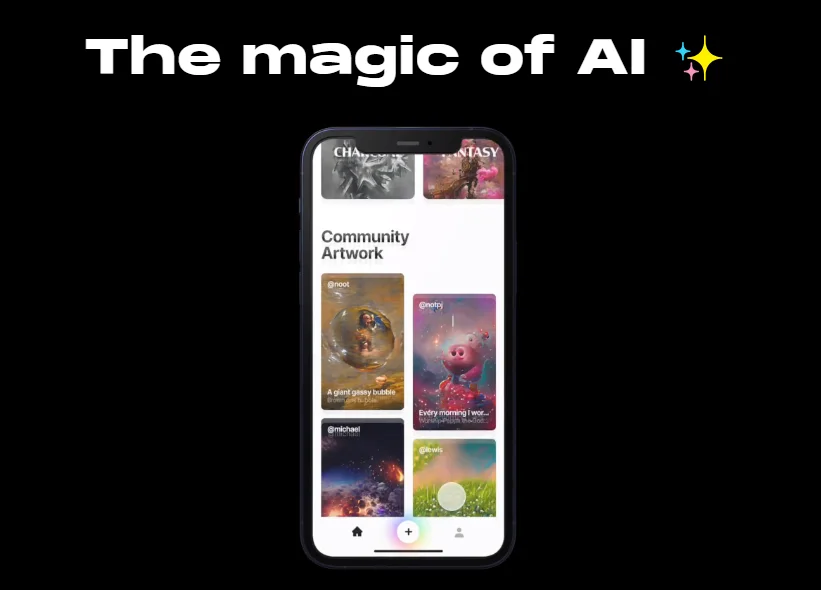
This feature wombo art dream involves advanced text-to-image AI-art technology, allowing users to turn their text into unique and abstract artwork instantly.
When you input a piece of text into the app, the technology uses a smart algorithm called the CLIP-guided method.
This algorithm is like a clever assistant that understands patterns in data. It helps generate the most fitting and creative image based on your text.
It’s magic for your words, transforming them into one-of-a-kind visual art pieces. This AI art generator wombo adds a touch of creativity and imagination to your words in ai image generator wombo, making the process of expressing yourself visually both fun and unique.
0.0
0.0 out of 5 stars (based on 0 reviews)
Excellent0%
Very good0%
Average0%
Poor0%
Terrible0%
Features of Dream-by-Wombo
The Behind-the-Scenes Magic with AI:
When you feed the tool dream combo art ai with a caption or image, ai dream art, it kicks into action using a smart technology called the CLIP-guided method.
This algorithm is like the wizard behind the curtain, sorting through a vast collection of photo databases.
These databases are like giant albums filled with images of various objects and landscapes, dream images forming a visual reference library for the AI.
Navigating the Visual Landscape:
As the AI generator dream tool sifts through the dataset, it starts to correlate your request with different elements present in the images.
It’s like having an extensive conversation with a photo library where each picture represents a unique idea or concept.
The dream art AI translates your input into visual patterns and themes, ranging from video games to cartoon characters.
Features of this tool
Dream by Wombo is an easy-to-use lip-syncing app that helps to generate exciting and entertaining clips with just images.
Provides text-to-image AI-art technology, allowing users to turn their text into unique and abstract artwork instantly.
Dream by Wonbo ai Free offers a dream-free art version accessible on any platform.
Choosing Your Visual Adventure:
These options may include abstract representations of your chosen themes or unexpected combinations of visual elements.
You get to choose the one that resonates with your imagination and fits your specifications.
Abstracting Reality in Your Way:
In essence, this AI dream generator tool offers you the ultimate opportunity to extract abstractions from the most realistic realms.
It’s a creative journey where your everyday words or images become a playground for the imagination, resulting in unique and mesmerizing visual creations.
How does a dream work?
How to use Wombo Dream?
The dream.AI art-generating tool embedded in Dream-by-Wombo is specifically trained to break free from reality. It takes your ordinary, realistic input and transforms it into a visually stunning and abstract piece of artwork in the Dream combo app. In simpler terms, a Dream art generator, it’s like turning your everyday world into a surreal masterpiece through free dream apps.
How to use Dream-by-Wombo:
Ready to turn your ideas into unique AI-generated artwork? Dream Wombo AI art generator makes it easy through the Dream AI app. Follow these simple steps:
Step 1: Launch and Choose
Open the app and hit “Get Started.”
No account is needed, but creating one lets you save your creations.
Step 2: Input Your Vision
Write your text prompts or choose from suggestions.
Experiment until you get the perfect combo.
Step 3: Style It Up
Pick an “Art Style” or go with “No Style” for a unique touch.
Click “Create” to bring your art to life.
Step 4: Fine-Tune and Name
Adjust until you’re satisfied.
Give your masterpiece a name.
Step 5: Save, Share, and More
Download and set it as your background.
Publish to the gallery and share online.
Buy a physical print if you want.
Purpose of Dream-by-Wombo
In the vast landscape of AI tools, each serves a unique purpose, and AI Dream-by-Wombo is no exception. Before diving into the world of this innovative platform, it’s crucial to understand why it exists and how it can enhance your personal and creative endeavors.
Free Creative Expression:
Dream-by-Wombo online opens the doors to your artistic expression without any price tag.
You can freely create captivating frames using the advanced text-to-image AI art generator dream.
It’s a playground for your imagination and the best part? No cost is attached.
Print Your Masterpieces:
While the creation process is free.
If you wish to bring your digital masterpiece into the physical realm.
Dream. Ai by Wombo ai online offers the option to purchase the design for printing.
This way, your unique and abstract artwork can find a place beyond the digital canvas.
Account-Free Accessibility:
Simplicity is key.
You don’t need to go through the hassle of creating an account to explore the wonders of the Dream with the Wombo app.
The platform is easily accessible through the web on Android, iOS, and PC, ensuring a seamless experience without unnecessary steps from the wombo Dream app.
NFT Magic:
For those intrigued by the world of NFTs, Wombo by Dream supports the “Mint as NFT” option.
This means you can create something entirely new while remixing your existing NFTs, adding a layer of innovation to your digital art adventures.
Gallery for Your Creations:
Your artistic journey doesn’t end with creation.
Dream by Ai Art Wombo lets you save your created artwork in a personal gallery.
This gallery serves as a visual diary where you can revisit your creations and, if you choose, share them with your family and friends.
Social Connection:
Beyond individual creativity, Dream by Wombo offers a social dimension.
With an account, you can tap into Wombo’s social networks, ai art dream, including platforms like Discord. Connect, share, and explore the diverse creations of the community.
Copyright-Free Playlists:
Freelancers, rejoice! Dream AI Wombo ai image generator allows you to create a wombo art generator copyright-free personalized playlists.
Wombo ai dream feature adds a musical touch to your creative process, ensuring your freelancing endeavors are both visually and acoustically inspiring.
Create Entertaining Clips with WOMBO
TOOL NAME
Dream by Wombo
VERSION
2023
LAST UPDATE
25/12/2023
PRICE
FREE & PAID
TRAFFIC
3.4M
Pricing plans
Is Dream by Wombo free?
Dream by Wonbo ai Free offers a dream free art version accessible on any platform, but for an even more exciting creative journey, consider the premium options:
Premium Monthly cost: $4.99/ $6.99
Premium Yearly cost: $59.99/ $89.99
Opt for an annual subscription and enjoy premium benefits throughout the year, saving you money compared to the monthly option.
Printing Cost: $20-$100
Embrace the enhanced features of Wombo.ai Dream Premium, whether you’re looking for a short-term boost or a year-long creative journey. The choice is yours!
Can you imagine what 3D architectural renderings would look like without humans? An architectural design without any signs of life is, well, lifeless. Human figures are the fastest way to form and establish an emotional connection. The right visual cues are all it takes to evoke deep feelings, transforming the most straightforward and plainest images into an excellent source of aspiration or awe.
3D architectural renderers try to share these feelings, using representations of humans to take their designs to the next level. This piece delves into several strategies for incorporating human figures in your company’s 3D architectural renderings.
6 Strategies for incorporating human figures in your firm’s 3D architectural renderings
1. Come up with a 3D visual narrative
Good stories linger no matter how much time has passed. The use of people allows you to tell 3D visual narratives without words. All you have to do is present people correctly to urge the viewers to scan the image or understand the critical takeaway with a glance. 3D character modeling services and freelancers can effectively create a narrative. The narrative you want to share should always tie back to the structure’s brand and the specific types of people it wishes to attract.
3D character modeling enables human figures to be inserted into the narrative in the most appealing way. Since humans have been socially conditioned for centuries, this image can quickly get to them in just a matter of nanoseconds. Another factor to consider is how each element of the image, including all the small stories, plays off one another. Most of the time, 3D character designers put their narrative right in the foreground. Since it’s the part where the human eyes often see first, it’s also the perfect spot for placing your story.
Every aspect of the image should supplement or expound on that story in one way or another. 3D character modeling and tiny bits of details can all form a narrative with multiple layers. The secret here is to figure out how to ensure that the stories in the background are kept from competing or taking away too much attention and focus from the main story. Remember that it’s innate for humans to process so much data, so it’s always wise to have your central concept on a golden plate over anything else.
Of course, the story and 3D character models alone will never be enough. The 3D character modeler has to factor in how to place and integrate your human figures. But of course, this task is far from easy because this decision can directly affect how your 3D architectural renderings are perceived. Placing human figures can make a space look small or big and narrow or spacious. It can also highlight some key design elements or conceal its unresolved parts.
3. Think of the future with architectural planning and design
Every area always thinks big, city or not. Sometimes, it can get so big that architectural planning and design plans last several decades into the future, even more so if central services are involved, such as infrastructure or transportation. How should you work on your company’s 3D architectural renderings with such a colossal gap? After all, decades are such a long time.
As you plot out the not-so-distant future, you have to look at trajectories, trends, and the things that are no longer used in the world, particularly on the streets. Those clothes you see on the catwalk might wait to hit the market but might after a few years. Some innovations didn’t work initially, but these ideas often paved the way for developing newer and more exciting creations.
All these changes mean you should choose human figures that look and see nature in the surrounding of a 3D architectural rendering. While space may be fun, it will never feel suitable or appropriate if it fails the scan test. And remember that the goal here is for the viewers to feel right. An unbelievable presentation will make your design moot, squandering the emotional connection. Consider the future of architectural planning and design services for your company, especially during extended development periods.
4. Trigger emotional response
One important thing to consider with human figures or 3D character modeling is your target audience’s feelings about the different looks, aesthetics, clothes, and others they see. Everything can trigger an emotional response, so paying close attention to what you put together is essential. This way, the viewers will feel intrigued or good about whatever you’re trying to show them. Make sure you pay attention to the following:
Age is respected in several cultures but not so much in others. It can also be linked with everything from being past their prime to maturity, which makes age one of the most accessible identifiers for brand intent. If people over 70 mix with those in their 20s, how does it make the space look and feel? If the 3D architectural rendering firm creates 3D architectural renderings filled with kids, what does it say?
Different age ranges work wonders in changing how an image feels, which all boils down to the narrative. Who is part of the narrative, and who becomes the priority? What expectations and biases are there? Always keep the norms in mind and then work from there.
Body language or facial expressions
Are the mood and the faces of the people matched with each other? Do their faces also match their gestures? 3D architectural visualization artists often refrain from overreacting in their works. It’s easy for viewers to spot over-the-top gestures or fake smiles, and they never like any of these two. This is why it’s essential that feeling and look are always synonymous. Context is also critical. The gestures you choose must align with the viewers’ expectations. It would help to remember that everyone thinks about how different environments or situations should function.
Blue is comforting, just like how eye-catching red cars often get more tickets. This subject has been discussed in several studies, but it all boils down to one thing: colors are associated with moods. They draw attention and interest and tell where the eyes should go. Remember this when assigning colors to 3D architectural renderings and human figures. Don’t designate red to an individual if you want another character to stand out.
5. Choose a style
3D architectural visualization services involve two major types: usage and editorial. Usage is self-explanatory and what clients ask for when requesting an animation or image from your company. Usage lets you free your 3D architectural visualizations from all the unknowns to rely instead on clear presentations of the attributes of the environment and let them do most of the work. It is convenient on entitlement projects where balance dictates the fate of the entire neighborhood.
There’s something comforting about depicting a family as it enjoys a picnic on the green grass or bikers enjoying the pleasant climate, especially when you present it positively. Alternatively, you want to be as eye-catching as possible for editorial visualizations. Many companies look to fashion spreads, focusing the image on props or costumes to elevate the mood.
These underlying feelings connecting to a bigger idea of the brand of a building are what you should go after in your editorial push. You’ll have fun taking the editorial route if you have an excellent idea, a target audience ready to respond to creativity and an open brief.
6. Customize it
Every client that comes to your 3D rendering company wants something unique. The fastest and easiest way to look commonplace is to fill your 3D architectural renderings with several stock 3D models they’ve already seen. This is why you might consider developing your library of 3D CAD human figures.
You could use a green screen and hire models for the job. It all boils down to brand. Some people can evoke feelings and emotions in the viewer. Although your company might mainly handle 3D architectural renderings and 3D architectural visualizations from scratch, you can get the highest level of control by casting a human model.
Human figures are what will bring your company’s 3D architectural renderings to life. Without people in your 3D architectural visualizations, it’s almost impossible to evoke emotions, much less achieve the kind of action you’d want the viewers to take. Cad Crowd is a platform that can help you find the best 3D architectural rendering designers who can harness human figures’ power and potential to make your upcoming 3D architectural rendering projects more effective and successful than ever before.
Imagine a spine-chilling scenario: a corporate strategy that was supposed to bring a company to success, lies on a shelf forgotten by its creators and collects dust. At first glance, this scenario is unlikely, as a strategy is the cornerstone of any business. However, BI consulting practitioners have the opposite opinion: this is exactly what happens if a corporate strategy is not supported with the right KPIs.
A strategy may be brilliant, still its execution is likely to fail if the team lacks understanding of how their daily efforts influence the final target. Besides, if a company does not reflect its strategy in KPIs, it is easy to lose focus and step aside, especially at the very beginning when the progress is not obvious. Without right KPIs, a company may lack focus in its actions and consistency in its messages and activities.
Defining KPIs metrics: examples of doing it right and wrong
Let’s take a look at a great real-life example. In 2015, Walmart was brave to declare their intentions publicly through posting their 3-year growth plan on their website. Together with a simple and straightforward goal of turning omnichannel and delivering a seamless shopping experience at scale, Walmart indicated the target of $45-60B new sales to measure the success. Besides, Walmart indicated 5 growth areas and listed relevant KPIs for each.
Thanks to KPIs, Walmart ensured that everybody spoke the same language, understood the priorities, and knew how to measure the progress. For example, Delivering value goes with price leadership and private brands KPIs; the strategic objective of Providing convenience aims at e-commerce, online grocery and smaller formats; key geographies are narrowed down to the North America and China.
Unlike Walmart, companies usually leave their targets for internal use only. However, it does not mean that they fail to set the right KPIs. For instance, Procter and Gamble also published their strategic objectives, albeit with no targets indicated on their website. At the same time, it is clear that the company did a great job of defining KPIs, such as operating total shareholder return for the Value creation strategy, the number of product categories under focus for Portfolio transformation, etc.
However, even large and well-known companies can make mistakes. Wells Fargo’s notorious case is an example. The bank selected cross-selling as one of their strategic initiatives and developed a relevant motivation scheme with a catchy slogan Eight is great. The idea was to incentivize the employees to reach a target of 8 products sold per customer. Years later, it turned out that Wells Fargo chose a wrong KPI. The KPI motivated to boost sales, even if it did not increase the revenue. Besides, it was widely unrealistic, and employees opened 2 million fake accounts to reach their targets.
How business intelligence helps
Let’s find out how business intelligence can help while defining and executing a company’s strategy.
BI for defining a strategy
In a market economy with numerous players, companies tend to choose strategies that will strengthen their competitive advantages. Naturally, the first step is to identify these. At such an important stage, what matters is a fact-based opinion, not a gut feeling. To get much-needed insights, companies should analyze both internal and external data. Market research findings coupled with historical data reveal trends and opportunities to seize. For example, a FMCG manufacturer would be able to choose the markets to expand, customers’ behavior at those markets, the best-fitting product portfolio to offer (say, organic food).
BI for setting KPIs
Once a strategy is approved, the next stage is to define KPIs that will be challenging yet attainable. To do this, business analysts go for historical data analysis and forecasting. Besides, business analysts should develop a hierarchy of non-conflicting KPIs: company-based, departmental and individual. With a hierarchy of KPIs, everybody will focus on their piece of work, but all team members will be working towards a common goal. For instance, the NASA brilliantly put this principle into practice: when John F. Kennedy asked the NASA’s janitor about his job, the latter replied, ‘I am helping to put a man to the moon.’
BI for progress monitoring
When KPIs are defined and communicated to the team, performance monitoring starts. Comparing targets vs. facts and tracking the progress is essential to understand how the company advanced in executing its strategy. To make this monitoring possible, business analysts should develop a set of reports and dashboards, identify how often end users need each report, and what data (input and output) should be there. You are welcome to check our BI demo to see how such dashboards may look like.
To sum it up
Any company should support its corporate strategy with the right KPIs and constantly track the progress. Otherwise, a strategy execution is likely to fail. At all stages of strategic management, business intelligence consulting can bring the synergy. For instance, a company can benefit from data analysis services that are helpful to define a corporate strategy, set the right KPIs and monitor the progress.
One of the biggest moves a freelance writer can make to earn more is to move into better-paying types of work, like white paper writing jobs.
When you go from, say, writing $20 blog posts to writing white papers that can pay $1,500-$10,000, it’s a big leap.
But just how do you may that leap? How exactly do you get into writing white papers? Where do you even find white paper writing jobs? And what are some mistakes to avoid along the way?
That’s what we’re about to discover. Keep reading.
What is a White Paper?
A white paper is a cross between a magazine article and a corporate brochure, sharing an organization’s often-complicated message in an easy-to-understand, formal, and persuasive manner.
Most clients want to read the educational magazine article part of the white paper to find out the solutions to their problems—but the persuasive brochure part of the white paper does its job too, and convinces the readers to buy the product or use the service.
How Much Can You Make on White Paper Writing Jobs?
The unique balancing feature of the white paper—to both educate and sell—makes it one of the most powerful marketing tools. This is the reason why clients are ready to pay $1,500-$10,000 for a six to 14 page document.
The huge upside of writing white papers is why we did a comprehensive training bootcamp on the topic over on the Freelance Writers Den. You can access this entire four-week bootcamp plus over 300 hours of other trainings by becoming a Den member.
How to Get White Paper Writing Experience
If you know how to write articles or marketing materials, you should be able to learn how to write white papers with a little effort and practice.
The first thing you need to do is read all you can about writing white papers from books, blogs, articles, etc. That also means studying examples so you know what’s expected (check out this example). More and more companies are posting white papers online to build their authority—download a few and give them a read.
Now start writing…
After you learn the process of writing white papers, you can start practicing your skill on a hypothetical or real company. Choose a business-to-business company, as B2B tends to commission more white papers than B2C. They usually have complicated offerings and need to convince business owners to purchase their product or service.
Another idea: create a white paper to sell your writing, about how businesses benefit from using freelance writers. Post it on your site as a free download for prospects.
Sharpen your skills by writing white papers as often as you can. Once you feel that you’re ready, start looking for clients.
Where to Find White Paper Writing Jobs
Let your existing clients know what white papers are, how they work and why their business needs one. Show them the samples you’ve created. If you can convince them that they need a white paper, you will be on your way
Look for business owners who are getting articles or brochures written. Explain what a white paper is and why it’s better than a regular article or brochure. Propose possible topics that would be appropriate to their business. Hopefully, you will be able to entice them into asking you to write one
Write one for less. If it’s your first job, then it doesn’t matter if you charge less. Maybe you will not earn enough for all the effort you put in, but you will get a sample that will help you land lucrative jobs in the future
Once you have a few samples in your portfolio, you can look for better jobs.
The best thing is to advertise your services as a white paper writer through your website, cold calling, and other marketing methods. Look for companies that are involved in fields like technology (cloud computing, CRM, content management, IT healthcare), or finance (insurance, banks, re-insurance).
Of course, you can also look for white paper jobs on sites like LinkedIn.
White Paper Writing Mistakes to Avoid
While you’re gaining experience, there are some critical mistakes you should try to avoid as you enter this market.
Here are some mistakes Carol Tice, founder of Make a Living Writing, made on a white paper writing gig:
Mistake 1: Not vetting the client
When a writer-friend tells you, “Hey, this is a chance to work with an amazing end client that’s a Fortune 500,” I don’t know about you, but I tend to get stars in my eyes.
It turned out that I’d be working not directly with this client, but with one of their approved marketing agencies. The guy who headed it was a former staff speechwriter and marketing writer at this F500. Once again, I was wowed.
“Man, this guy must know *exactly* what he’s doing,” I thought.
What I didn’t find out? He’d just recently quit the company and set up this agency…and had no experience running an agency. He’d never had writers working under him before. He hadn’t written white papers either.
That turned out to be something he sucked at. In the course of my project, everyone he had hired as a “staffer” for his little agency quit.
He would have his staff minions give assignments to the writers—and guess what? It was like a big game of telephone.
Almost every single thing I was told, from deadlines to wordcounts, turned out to be wrong. A lot of frantic rewriting ensued.
Takeaway: If I’d asked around about this guy, I might have learned he was a legendary prima donna—and would have trouble delegating writing work.
Mistake 2: No direct client contact
Everything I did on this white paper writing job came down secondhand. I couldn’t even have told you who at the big company this agency reported to.
I’d receive word trickle-down style, about who to interview about what. Then, after I interviewed them, I’d be told I didn’t ask them the right things, or that I needed a different source. These kinds of miscommunications are an epidemic in agencies that keep their clients close to the vest.
In his efforts to keep us from poaching the client work (not even possible with this company, since they only used a few approved agencies), he would parcel out parts of projects to different people. You never knew who else might be touching different parts of your same elephant. The result: chaos.
Takeaway: I should have gotten clarity off the bat on who I’d be reporting to for this white paper writing job, who was on my project, and who I’d be able to access.
Mistake 3: Skipping the research
I basically worked with what I was handed, instead of doing my own research to learn more about the types of charity programs I was documenting. I might have had better backup ideas for interviews, or programs to compare it (favorably) to, if I’d taken the time.
More than once in the course of the project, I was sitting around for days on end, and then having to do a rush job on an interview, where I probably could have more quickly found sources on my own and just asked for approval.
Takeaway: Don’t sit with your hands folded waiting for info from your client—do your own legwork, so that you have more to work with.
Mistake 4: A key question omitted
One big question I really wish I’d asked is, “What is your writing process like?”
After all, I’d never written a white paper before. So I didn’t realize that I needed a few key things:
Approval of each of my sources from higher-ups
A signed release from each of my interview subjects
To let each interview subject read their copy before turning it in
To obtain stock photos from my subjects
Long after some of my interviews, toward the end of the project, I was suddenly asked to “turn in my releases.” To which I replied, “What releases????”
I’d never been given a form or told my interviews had to fill it out…but suddenly, I looked like a clueless fool. It had been weeks since some of my interviews, and it was extra work to dig some of them back up and get them to sign off.
Takeaway: Find out what *all* the elements are that are your “deliverables” in the project—and be sure you get them as you go. Don’t leave paperwork to the end.
Mistake 5: Running in circles
One of the things that was dangled in front of me on this white paper writing job was the idea of foreign travel. Their program is global, and they were including some stories from other countries.
When it was strongly hinted that I might snag one of these assignments, I turned my life upside down to run out and get an expedited passport. Which, of course, turned out to be a total waste of time. In fact, I never left my house, even.
Takeaway: Don’t chase phantoms on a gig. If someone’s hinting you might need to do something for the project, get more details and find out if it’s real, before wasting time.
The good news is that the project did eventually get finished…and it came out real nice. I got a great clip out of the deal. It was definitely worth doing, despite all the problems.
But I wish I’d taken a more thorough attitude to scoping this out before I dove in. Then, I might have had a smoother road and ended up getting more white paper writing gigs for this client, instead of having a relationship that went down in flames.
As it worked out, it was a long time before another white paper writing job opportunity came around.
Microsoft has uncovered a security vulnerability affecting Android apps named “Dirty Stream.”
This could allow attackers to execute malicious code within popular apps, potentially leading to data theft.
The flaw is widespread, with Microsoft identifying vulnerable apps that have billions of combined installations.
Microsoft has brought to light a critical security loophole, potentially affecting countless Android applications. Dubbed “Dirty Stream,” this vulnerability presents a serious threat that could grant someone the ability to take control of apps and steal valuable user information. (h/t: Bleeping Computer)
The heart of the “Dirty Stream” vulnerability lies in the potential for malicious Android apps to manipulate and abuse Android’s content provider system. This system is typically designed to facilitate secure data exchange between different applications on a device. It includes safeguards such as strict isolation of data, the use of permissions attached to specific URIs (Uniform Resource Identifiers), and thorough validation of file paths to ward off unauthorized access.
However, careless implementation of this system can open the door to exploitation. Microsoft’s researchers found that incorrect use of “custom intents” — the messaging system that allows Android app components to communicate — can expose sensitive areas of an app. For example, vulnerable apps may fail to adequately check file names or paths, granting a malicious app the chance to sneak in harmful code camouflaged as legitimate files.
What’s the threat?
By exploiting the Dirty Stream flaw, an attacker could trick a vulnerable app into overwriting critical files within its private storage space. Such an attack scenario could result in the attacker seizing total control over the app’s behavior, gaining unauthorized access to sensitive user data, or intercepting private login information.
Microsoft’s investigation revealed that this vulnerability is not an isolated issue, as the research found incorrect implementations of the content provider system prevalent across many popular Android apps. Two notable examples are Xiaomi’s File Manager application, which has over one billion installations, and WPS Office, which boasts about 500 million installs.
Microsoft researcher Dimitrios Valsamaras emphasized the staggering number of devices at risk, stating, “We identified several vulnerable applications in the Google Play Store that represented over four billion installations.”
Microsoft has proactively shared its discoveries, alerting developers of potentially vulnerable apps and collaborating with them to deploy fixes. Both companies mentioned above have promptly acknowledged the identified issues in their software.
Furthermore, Google has taken steps to prevent similar vulnerabilities in the future by updating its app security guidelines, now placing additional emphasis on exploitable common content provider design flaws.
What can Android users do?
While developers scramble to find and patch vulnerable apps, Android users can take some simple precautions. Staying vigilant with app updates is crucial, as developers will likely be issuing fixes rapidly.
Additionally, it’s advisable to always download applications from the official Google Play Store and be highly cautious when downloading from unofficial sources, which are more likely to harbor malicious apps.
Got a tip? Talk to us! Email our staff at news@androidauthority.com. You can stay anonymous or get credit for the info, it’s your choice.
With Galactic Starfire Squadron, the newest phenomenon in the gaming world, set out on an interplanetary journey unlike anything you’ve ever experienced! Get ready to be enthralled by the breathtaking sights, adrenaline-pumping action, and immersive gameplay as you explore the depths of space. You go on an exciting voyage through galaxies brimming with peril and adventure with Galactic Starfire Squadron. The best part, though, is that you may take in all the thrills for nothing! You heard correctly—Galactic Starfire Squadron is available for free download. To play without spending any credits, just visit Worldof-pcgames and get ready to go into space. It only takes a few clicks to embark on this amazing journey.
So, how can you obtain Galactic Starfire Squadron for free? It’s easy! Simply go to Worldof-pcgames, the best place to find the newest and best PC games. Once there, select the download option by navigating to the Galactic Starfire Squadron page. You won’t have to spend any money; in a matter of minutes, you’ll be prepared to start your incredible space adventure. Don’t pass up the chance to become a part of the Galactic Starfire Squadron community right now. Take advantage of the stunning graphics, thrilling gameplay, and the incredible free price to get started right now. So, why do you hesitate? Visit Worldof-pcgames right now to feel the excitement of Galactic Starfire Squadron!
Features and System Requirements:
Play single-player and survive the challenges.
First-Person And Third-Person Space Shooter game set in a Future Sci-Fi themed universe.
Be the best in the and complete the challenges and levels the fastest.
1 :: Operating System :: Windows XP/7/8/8./10. 2 :: Processor: Dual Core 2.4 GHz 3 :: Ram :: 4 GB RAM 4 :: DirectX: Version 9.0 5 :: Graphics:: 1GB VRAM / DirectX 10+ support 6 :: Space Storage:: 3 GB space
Turn Off Your Antivirus Before Installing Any Game
1 :: Download Game 2 :: Extract Game 3 :: Launch The Game 4 :: Have Fun 🙂