
Month: May 2024
How Are Companies Utilizing CAD Technology to Drive Innovation in Automotive Design?

Computer-aided design, or CAD, plays a significant role in automotive design and development. A professional automotive designer doesn’t only use CAD-based models to design a vehicle’s aesthetics. CAD automotive design also serves as the basis for module and configuration systems. Automotive design professionals also use automobile design for verification and simulation purposes.
Most of you probably don’t know it, but CAD systems aren’t newcomers to the automobile industry. Originally used during the 1980s, CAD design software has existed for three decades. It evolved to become more advanced CAD programs that open exciting doors of possibilities for automobile development. This post will delve into how companies use CAD technology to drive innovation in automotive design.
RELATED: CAD automotive design – when driving becomes personal
A quick history of CAD technology in the automobile industry
Hardware characterized vehicles back in the mid-80s. The development processes used then were focused on optimization cycles based on prototypes. The development of a single car during that time required around 40 labor hours, notably longer than the current duration of just 17 to 18 hours. Revisions were then made on the implementation of CAD methods. 3D CAD design and 2D drafting services officially replaced hardware-based engineering tasks in the 80s.
When the late 90s came, network-based development became the trend. Physical prototypes were also finally replaced with virtual ones for good. These virtual prototypes allowed the collaboration of partners from around the world. It helped cut down the duration of full-vehicle development projects to three years. It’s safe to say that automotive design experts have always been on top of the game regarding technology and innovation. More notably, using CAE or computer-aided engineering and CAD software has seen substantial developments in the past few years.
RELATED: The evolution of 3D CAD design and drafting
CAD technology simplifies the design process
It’s common for an automobile designer to use CAD technology to streamline the design process. Automotive designers often use CAD software to speed up the creation and modification of their designs without the need to start from scratch. It allows them to test various design concepts and make changes more quickly. This helps improve the efficiency of the design process. CAD software also allows automobile designers to generate precise and accurate 3D and 2D models of their designs that can be refined and modified easily.
This ensures a more accurate representation of the final product. This helps save resources and time and reduces the need to develop physical prototypes. CAD technology also allows automotive design professionals to conduct virtual testing and simulate different design settings, eliminating the need for physical prototypes. Again, it helps save resources and time and makes it easier for designers to pinpoint potential flaws in automobile design earlier in the process.
RELATED: Automotive design & engineering services, costs, rates pricing for companies
CAD technology enables new concept design & product design professionals to work together on their design projects anywhere in the world. It improves communication and allows designers to share feedback and ideas to ensure a more cohesive automotive design process. Since it’s possible to integrate CAD software with manufacturing systems, designers can also develop easy-to-manufacture designs. It improves the efficiency of the manufacturing process while cutting down on the resources and time required to launch the product in the market.
CAD technology speeds up the prototyping process
CAD technology allows automobile design experts to speed up the prototyping process. With the help of this technology, automotive designers can conduct virtual simulations of the behavior of different design scenarios. Simulations allow automotive design experts to spot potential flaws in the design and address them right away before the start of the actual production. It eliminates the need to use physical properties and, at the same time, accelerates the process of prototyping.
RELATED: 10 Tips on how to find the best prototype engineering firm services

CAD design software also allows automotive design & engineering design services to work together and enjoy the real-time sharing of models and designs. This enhances communication and ensures that automotive engineers and automotive designers are aligned. CAD technology also enables faster iteration of different design concepts, allowing designs to promptly test and assess numerous design processes to shorten design cycles. 3D prototypes can also be developed using additive manufacturing methods, including 3D printing with the help of CAD software.
This paves the way for rapid prototyping that involves the quick and easy creation of physical prototypes. It allows designers to evaluate and test various design iterations faster. Automobile designers can also use CAD technology to create precise and accurate 3D and 2D models of their designs that they can modify and refine quickly. It makes virtual prototyping possible, where the designers can quickly create and test several design iterations, which speeds up the entire design process.
RELATED: What are CAM engineering costs, company fees, & consulting service rates?
CAD technology improves product quality
The automobile industry has been reaping the benefits of CAD software in terms of improved product quality. Thanks to CAD software, design engineering firms can conduct virtual simulations and testing of different design scenarios, letting them spot and solve potential design errors before the start of the actual production process. This cuts down the number of product recalls and improves the quality of automobile products significantly.
Automobile designers can also use CAD software to produce precise and accurate 3D and 2D models of their designs that are easier to modify and improve. As a result, designers can optimize their designs for performance, functionality, and safety, which results in products that boast higher quality. Thanks to CAD software, designers can also simulate different materials and their respective behaviors, allowing them to choose the most suitable one for their product. This guarantees that the product will be made using the best materials, thus enhancing its durability and performance.
Since it’s also possible to integrate CAD software with manufacturing systems, DFM services can develop designs that can be manufactured easily. It improves the efficiency of the manufacturing process, eliminating the risks of errors and improving the overall quality of the product. Automotive design professionals can also use CAD technology to create standardized designs to ensure that every product meets the same quality standards.
RELATED: Why prototype DFM services are useful for product design at companies and firms
CAD technology guarantees safety and fuel efficiency
One of the most significant roles of CAD technology in automotive design is that it contributes to safety and fuel efficiency. Designers can use CAD software to develop 3D models that are useful for optimizing the aerodynamics of a vehicle. Improving the airflow around an automobile allows carmakers to enhance fuel efficiency and reduce drag. CAD software also helps aerospace engineering designers create accurate 3D models for optimizing the routing and placement of electrical parts and components.
Automobile designers can enhance fuel efficiency by lowering the amount of power needed to run the electrical systems of the vehicle through optimization. CAD technology makes it possible for engineers to simulate the behavior of a vehicle in different crash scenarios. It allows them to pinpoint potential safety concerns and make changes to the design before physical testing. It guarantees substantial advancements in the overall safety of the vehicle. Automotive designers can also use the technology for simulation of the behavior of different materials so they can optimize their designs for reduced weight without compromising on safety.
RELATED: How the aerospace industry is using CAD design services: drafting, modeling, and prototyping
Automobile designers can advance fuel efficiency by lowering vehicle weight while keeping everything safe and secure. 3D product modeling companies can also use CAD software to produce precise 3D models that are handy for sensor integration into automobile designs. Safety features, including backup cameras, lane departure warning, and collision avoidance systems, are significantly improved.

CAD technology lowers production cost
CAD software has always been known to help cut costs in most design processes. The technology allows engineers and designers to share and collaborate on their models and designs in real time. This improves communication and reduces the need for expensive physical testing and prototypes. Engineers and designers can also use CAD technology to develop exact and accurate designs, which lowers the risks of design flaws and errors that would have been otherwise costly to fix much later on.
RELATED: 5 Tips for successful product design
Automobile design professionals also use CAD software to simulate the behavior of different materials and upgrade the design for weight reduction. This lowers material costs and reduces material waste. Physical prototyping is also reduced since CAD technology allows 3D product design experts to develop precise and accurate 3D and 2D design models to enable virtual simulation and prototyping. As a result, physical prototypes that can be very expensive to create and test are no longer required.
Lastly, the time to market with CAD software is also reduced because designs can be made more efficiently and quickly than before. It reduces development costs, allowing automobile design experts to keep up with the erratic market conditions faster than ever.
How Cad Crowd can help
Increasingly, automotive companies use CAD technology to drive innovation in automotive designs. Cad Crowd is a reliable platform where you can search for the best and most reliable automobile design experts who can transform your visions to life so you can have your new car models racing down the road in no time!
Data Lake Implementation: 2 Alternative Approaches
Is your company determined to implement a data lake for your big data? That’s definitely exciting and great news! However, you have challenging times ahead, as you have so many fundamental issues to clarify and decide upon. At this stage, you are most likely interested in a data lake architecture and the required technology stack. To make your journey smooth and comfortable, our big data consultants have prepared the overview of alternative implementation approaches.
Zones in a data lake
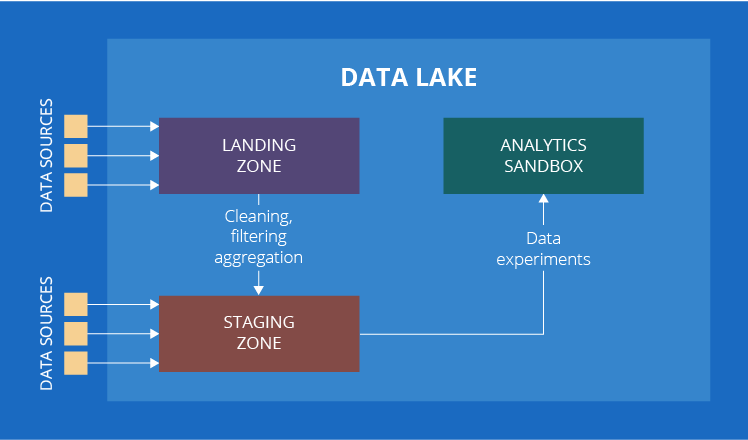
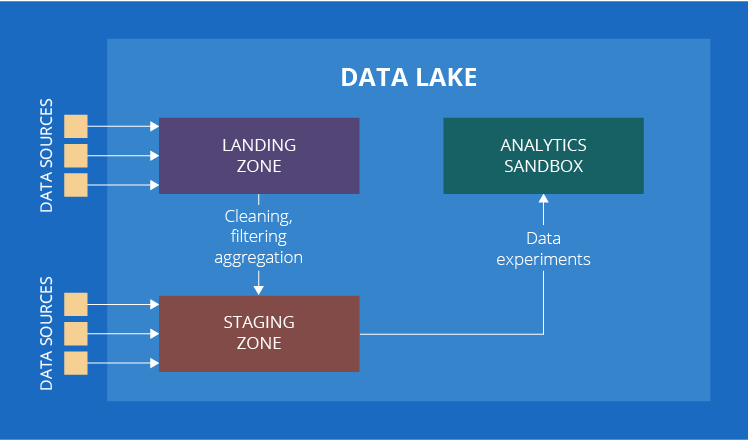
A data lake is a repository intended for storing huge amounts of data in its native format. Data lake implementation will allow you to derive value out of raw data of various types. Unlike a data warehouse, a data lake has no constraints in terms of data type – it can be structured, unstructured, as well as semi-structured. In terms of architecture, a data lake may consist of several zones: a landing zone (also known as a transient zone), a staging zone and an analytics sandbox. Of all the zones mentioned, only staging is the obligatory one, while all the others are optional. To find out what each zone is for, let’s take a closer look at them.
1. Landing zone
Here comes the data (structured, unstructured and semi-structured) that undergoes preliminary cleaning and/or filtering. For example, you collect IoT data from sensors. If one of the sensors is sending abnormally high values while the other sensors that measure the same parameter have not registered anything unusual, a processing engine deployed within this zone will mark the values as erroneous.
2. Staging zone
There are two ways for data to appear in the staging zone. First, it can come from the landing zone (if any), like the sensor data from our previous example. Secondly, we can get data, which does not require any preprocessing, from other internal or external data sources. Customer comments in social networks will be a good example to illustrate this case.
3. Analytics sandbox
This is the zone for data experiments driven by data analysts. It is different from the analytics as we know it, as its findings (if any) are not directly used by business. By the way, we deliberately specified this if any. It happens quite often that analysts apply some models or algorithms to raw data (which may also be coupled with the data from a big data warehouse or from other internal or external data sources) and get no valuable findings. For exploratory data analytics, this is normal.
4. And one more zone under question – curated data zone
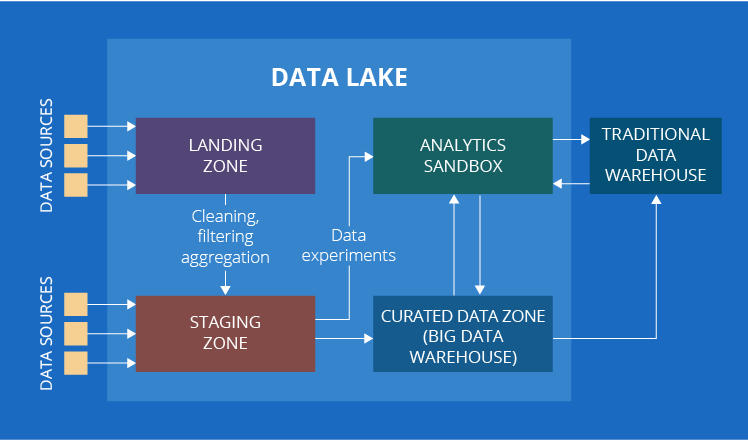
By now, our list should have been over, if there weren’t one slight hitch. In some sources, you may come upon one more component of a data lake – the curated data zone. This is the zone with organized data ready for data analysis.
There exist different opinions about whether the curated data zone should be considered a part of a data lake or not. While both approaches are reasonable, we think that it should rather not. However, prior to providing the arguments to support our point of view, let’s put the terminology to order.
Have another look at the description of the curated data zone. Doesn’t it look very similar to a good old traditional data warehouse? It absolutely does! The only difference is that a traditional data warehouse deals with traditional data only, while the curated data zone – with both traditional and big data. To neutralize the influence of data types, let’s extend the name to a big data warehouse.
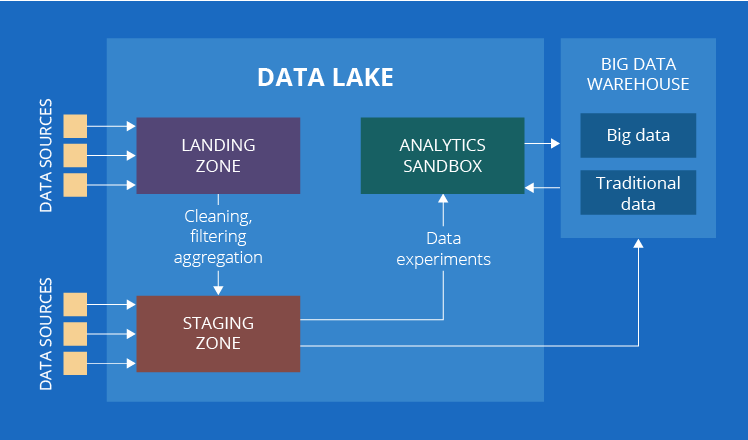
Now, after we clarified that the curated data zone can as well be called a big data warehouse, let’s discuss why we consider that it’s outside a data lake. The data stored in a big data warehouse is fundamentally different from the data in any zone of a data lake – it is more organized, and it is already the source of insights for business users.
Besides, at this stage of data journey, the differentiation between traditional and big data becomes uncritical. Both types peacefully coexist and complement each other to fulfill its purpose – to provide business users with insights. For example, to segment customers, you can analyze a lot of data among which there will be big data such as surfing history on the website and the activities in customer mobile apps. Later you can run reports on sales or profit per customer segment, which is pure traditional business intelligence.
If you wonder why then a big data warehouse is sometimes considered a part of a data lake, we have an explanation for this as well. Most businesses that decide to take the advantage of big data already have a traditional data warehouse in place. So, they usually choose to extend their analytical solution by building a data lake around it. In this case, a traditional data warehouse remains a habitual important element and all new elements are associated with a data lake.
Technological alternatives for implementing a data lake
The list of technologies for big data storage includes a myriad of names: Hadoop Distributed File System, Apache Cassandra, Apache HBase, Amazon S3, MongoDB are just a few most popular ones. Undoubtedly, while selecting a technology stack for a data lake, one will think first of the technologies that enable big data storage. The foundation is the right one, though you need to think about processing as well. So, the list of technologies should be further extended with Apache Storm, Apache Spark, Hadoop MapReduce, etc. No wonder if you are puzzled what combination is the best choice for your data lake!
1. Defining factors to choose a technology stack
Despite each case is individual, we’ve summed up five important factors that will become a starting point of your discussion with your big data consultants:
- Data to be stored and processed: IoT big data, texts, video, etc.
- Required architecture of a data lake
- Scalability
- In-cloud or on-premises solution
- Integration with the existing components of IT architecture.
Is there a leading technology?
According to general big data consulting practice, Hadoop Distributed File System (HDFS) is the most popular among the multitude of possible technologies for a big data lake. The reasons are as follows:
- HDFS is extremely good at handling the diversity of data in a big data lake. IoT big data, video and audio files and text records – with HDFS you can store every data type. If we compare, Apache Cassandra is good for storing IoT big data, while MongoDB – texts.
- HDFS supports a wide range of processing techniques. HDFS is one of the elements of Apache Hadoop ecosystem that includes multiple other components such as Hadoop MapReduce, Hadoop YARN, Apache Hive, Apache HBase, etc. As they belong to the same family, it’s natural that each of them is highly compatible with HDFS. Besides, HDFS has proved to be highly compatible with Apache Spark which gives an opportunity to perform big data processing quickly.
Of course, you can also consider other technologies to implement a data lake. An important criterion is to know how to bypass their limitations. For example, after comparing HDFS and Cassandra, you can decide to run a data lake on the latter. Why not, if you are planning a data lake exclusively as a staging area for IoT data, and you know how to compensate Cassandra’s lack of joins?
2. Data lake as a service
Amazon Web Services, Microsoft Azure, Google Cloud Platform have a relevant offer – a data lake as a service. In fact, it would be difficult for a newbie to spot the differences among these three offers. In essence, they are quite similar: you need an AWS/Azure/GCP account, your data and willingness to pay for the service. In return, you get a predefined set of technologies deployed in the cloud and get rid of a maintenance headache. Under-the-hood technology stack is, of course, different, though the functions they perform are habitual ones: storage, processing, streaming and analytics. We are planning to write a separate blog post revealing the pros and cons of these three offers. So, stay tuned.
Let’s briefly recap
What are the main factors that influence the choice of technologies for a data lake?
- The types of data to be stored and processed
- The zones of a data lake (only a staging zone or a landing zone and an analytics sandbox)
- Scalability
- In-cloud or on-premises solution
- Integration with the existing components of IT architecture.
In the end, should we opt for one technology only?
No, you shouldn’t. Our practice shows that data lake solutions are implemented based on several technologies. To solve a business task, big data consultants can choose a separate technology for each zone of a data lake.
Is there a preferred technology for a data lake?
Hadoop Distributed File System is the most popular, yet not the only technology available. However, be careful and rely on your business goals and, correspondingly, requirements to your future analytical solution rather than on a framework’s popularity.
If I do not want to implement a data lake from scratch, can I opt for a ready-to-use solution?
Yes, you can. Amazon Web Services, Microsoft Azure and Google Cloud Platform offer a data lake as a service. What is needed from you – your data and your subscription and service fees. And you get a data lake that it easy and fast to deploy.
Big data is another step to your business success. We will help you to adopt an advanced approach to big data to unleash its full potential.
Xbox Empowers Asian and Pacific Islander Communities with GameTan and NEEL

Summary
- Learn how Xbox is partnering with GameTan and NEEL.
- Explore games curated by the Asian and Pacific Islander communities.
- Discover how the Ramayana inspired the Xbox logo redesign.
The Asian and Pacific Islander communities have long been a vibrant and integral part of the global gaming ecosystem. Building upon the foundations laid in the early days of video game development, Xbox is proud to innovate in gaming spaces and champion beloved game titles thanks to the incredible work of developers and artists who identify as part of the Asian and Pacific Islander communities. The rich storytelling traditions, innovative technology, and unique artistic perspectives from these regions continue to enrich the gaming world, offering players a wide array of experiences that challenge, entertain, and inspire.
Developers often draw upon their lived experiences to help inform elements of their games. This is also true for many developers within the Asian and Pacific community, who will sometimes feature traditional folklore, art, and philosophy in games. This not only introduces gamers to new narratives and aesthetics but also promotes a greater understanding and appreciation of these cultures. Moreover, the rise of competitive gaming, or esports, has seen players from these communities rise to the top, showcasing their skills on the world stage and inspiring a new generation of gamers. We are also partnering with two nonprofits who live these values. They share our goal of sharing the joy of play and community across the globe and providing opportunities to students and those interested in the industry to learn and gain experience in the world of esports, technology, and game design.
The contributions of the Asian and Pacific Islander communities are not just limited to content creation. The community is also full of avid gamers, forming a significant portion of the player base and actively participating in online communities. Their feedback and engagement are crucial in shaping the development of games, ensuring they remain relevant and enjoyable for a global audience. Xbox is committed to supporting and celebrating the diversity within our community, recognizing that it is the blend of different cultures and ideas that drives innovation and makes the gaming world so dynamic and exciting. After all, games allow players to feel seen, and can also be a tool for empathy and provide insights into underrepresented communities’ experiences. Here’s how we are supporting Asian and Pacific Islander communities this year:
Xbox is Partnering with GameTan and Nevada Esports Education League
This year, Xbox is excited to announce our collaboration with two exceptional nonprofit organizations dedicated to enriching their communities through the power of gaming and esports education. These partnerships are a testament to our commitment to increasing representation and building empathy through the power of play. By working closely with these nonprofits, we aim to create inclusive spaces where the thrill of competition and the spirit of teamwork can thrive through the lens of Asian and Pacific Islander communities.
These nonprofits embody our core mission: to spread the joy of gaming far and wide, and to build strong, supportive networks of gamers within the Asian and Pacific Islander communities. This work is pivotal in unlocking new possibilities, as they expand gaming from mere entertainment into a pathway for educational and professional opportunities. Through these partnerships, we are opening doors to new experiences, empowering individuals with the skills and confidence to explore the dynamic world of esports and gaming, and fostering a community that celebrates underrepresented communities and inclusion. Read more about each organization below:
GameTan (Within HauTutū) – Based in New Zealand, and working within the nonprofit HauTutu GameTan provides kids the opportunity to learn and step into the world of gaming, esports, and technology. Through various events, and projects, they allow students to step into leadership roles and gain experience at a young age. They also host game clubs where they provide a space for the community to come together through food and video games. These game clubs also allow GameTan to help homeless children get a meal, build community, and also learn about opportunities within the gaming, esports, and tech industries. This year, Xbox will be providing a donation to support GameTan in furthering their mission and programs.
GameTan’s mission has 4 main pillars:
- “In order for our kids to change the future, we as teachers must change our approach.”
Me aro ngā kaiako i ngā wawata o ngā tauira, kia mārama ngā tauira i te anamata
- Game-Led Learning: Where Fun Meets Future Skills
Ako Ātea : Te tūtakitanga a tākaro me pūkenga ki te anamata
- Whānau-Centered Innovation: Tech for All
Te auahatanga o te whānau: Mō te ao katoa te hangarau.
- Creating Career Pathways: From Local Talent to Global Leaders
Whaohia te ara ki tua o paerangi: Ngā rangatira o te kainga, Ngā rangatira o te ao
GameTan, where culture meets technology, and innovation knows no bounds. Together, we’re not just playing games; we’re changing the game.
Nevada Esports Education League (NEEL) – The Nevada Esports Education League (NEEL), Nevada’s sole nonprofit dedicated to Esports, pioneers programs for youth focusing on career development, STEM outreach, and community engagement. From organizing charity Twitch streams to volunteering at Esports conventions, and hosting community tournaments and boot camps, NEEL actively engages youth and cultivates inclusive communities, particularly among Asian American Pacific Islander and Native Hawaiian Pacific Islander (AAPINHPI) groups. This year Xbox will be providing a donation that NEEL will leverage to prioritize mental health awareness initiatives tailored for AAPINHPI gamers, champion diversity and inclusion in esports, and celebrate cultural heritage through gaming events. Collaborating with Xbox, NEEL is committed to empowering AAPINHPI youth and fostering positive change within the esports industry, highlighting gaming’s potential as a platform for social impact and community involvement.
Gaming and Impact with Microsoft Rewards
Rewards members in the United States can earn and donate points to organizations supporting Asian and Pacific Islander communities with Xbox. The organizations below will be available on the Rewards hub:
- Asian Americans Advancing Justice | AAJC – works through strategic policy advocacy, active community education, and impactful litigation to advance the civil and human rights of Asian Americans and to build and promote a fair and equitable society for all.
- AAPI Equity Alliance – AAPI Equity Alliance (AAPI Equity) is dedicated to improving the lives of Asian Americans and Pacific Islanders through civic engagement, capacity building, and policy advocacy.
- Stop AAPI Hate – Stop AAPI Hate advances equity & justice by dismantling systemic racism & building a multiracial movement to end anti-Asian American & Pacific Islander hate through community empowerment, solidarity & advocacy for comprehensive solutions.
Xbox players can earn Rewards points in various ways, such as playing games, completing Game Pass Quests, and purchasing games and other eligible items at the Microsoft Store (exclusions apply). Start earning today and redeem your points for great rewards. Donate your points on the Rewards hub or on the Microsoft Rewards redeem page.
Explore Games Curated by Asian and Pacific Islander Communities at Microsoft

Pacific Islander Heritage month featuring water, fire, and two characters from the Ramayana, Sukhrip and Madchanu on a stage with embroidered curtains.
Gaming would not be what it is today without the contributions, perspectives, and influence from Asian and Pacific Islander communities. Here at Xbox, we want to honor this richly diverse set of communities by providing engaging gaming experiences that represent a myriad of histories and heritage.
During May and beyond, check out a variety of game collections that reflect the vast diversity of East Asia, South Asia, Southeast Asia, and the Pacific Islands. These collections showcase creators, lead characters, and games inspired by these cultures. Available on the Microsoft Stores on Xbox and Windows, check out the collections of East, South, and Southeast Asian Community Games and Pacific Islander and Indigenous Community Games. These collections will exist year-round as part of our ongoing work to create more inclusive gaming ecosystems and elevate content that resonates with communities.
Featured titles within the collections available with Xbox Game Pass and PC Game Pass include:
Eiyuden Chronicle: Hundred Heroes (Available with Xbox Game Pass on Console, PC, and Cloud) – Japanese creators Yoshitaka Murayama and Junko Kawano designed this game to bring players a modern take on a classic JRPG experience. Lead up to 100+ playable characters through a war-torn world with diverse cultures and values that only you can save.
Mineko’s Night Market (Available with Xbox Game Pass on Console, PC, and Cloud) – Play this cozy game as Mineko, a curious girl who has just arrived at her new home on a struggling Japanese-inspired island at the base of Mount Fugu. Mineko’s Night Market celebrates Japanese culture while introducing a heartwarming story about friendship, tradition, and many, many cats. The husband-and-wife team of Meowza Games, Brent and Brandi Kobayashi, incorporated inspiration from Studio Ghibli and the real-life cat island in Aoshima, Japan.
Sword and Fairy: Together Forever (Available with Xbox Game Pass on Console, PC, and Cloud) – Enter a realm based on ancient Chinese mythology and aesthetics in a real-time role-playing adventure from Taiwanese director, Yao Zhuangxian. Command a memorable party of characters, tame spirit creatures, play mini-games, and explore a vast world full of side quests to discover.
Thirsty Suitors (Available with Xbox Game Pass on Console, PC, and Cloud) – A celebration of South Asian identity, Thirsty Suitors is a game about culture, intergenerational trauma, and expressing oneself. Follow Jala Jayaratne, a bisexual daughter of immigrants from India and Sri Lanka, in this story-driven adventure that unfolds through skateboarding, cooking, and turn-based battles against exes. Created by Outerloop Games, a minorityled indie game studio that aims to create accessible games with depth about underrepresented cultures and themes.
Venba (Available with Xbox Game Pass on Console, PC, and Cloud) – Cook delicious South Indian cuisine and experience the journey of an immigrant Tamil family, from lead developer Abhi Swaminathan. Take on the role of a loving mother and restore lost recipes in this narrative cooking simulator about family, love, loss and exploring new challenges that arise in day-to-day life.
Discover the Inspiration Behind the Xbox Logo Design

For Asian and Pacific Islander Heritage Month, Xbox commissioned an artist from Thailand to redesign the Xbox logo. The artist was inspired by the Ramayana, an epic tale originally from India and has also influenced other Asian peoples, including those in Thailand, Cambodia, Indonesia, and Laos. In Thailand, the story of the Ramayana is told through Kohn, a traditional Thai dance. Just as players create avatars to assume an identity in a game, Kohn performers wear masks to portray different characters.
The Xbox design features Sukhrip (Sugriva), the son of the sun, and Madchanu, the son of a mermaid. The stage scene focuses on Songkran, the Thai New Year, which is celebrated in April. Traditionally, this celebration includes splashing with water to cool down from the hot sun. In this scene, Madchanu playfully splashes Sukhrip with water, while the Xbox logo represents the vibrant sun, capturing the festive spirit of Songkran.
The stage curtains include embroidered wild orchid flowers in the traditional style of Northern Thailand. The pattern also includes fog and rivers, embodying the beautiful, mountainous landscape of the region.
Xbox Ambassadors Celebrate Asian and Pacific Islander Heritage Month 2024

As part of Xbox’s celebration of Asian and Pacific Islander Heritage Month, we connected with Xbox Ambassadors of Asian and Pacific Islander heritage about their favorite gaming experiences. They shared ways video games can highlight their heritage in positive and authentic ways. Hear more from Xbox Ambassadors in this Asian and Pacific Islander Heritage Month blog.
APIHM Dynamic Background and Wallpaper Available Now
The Asian and Pacific Islander Heritage Month Xbox design is available today as an Xbox wallpaper and dynamic background on console – follow these steps to apply the dynamic background:
- Press the Xbox button on your controller to open the guide.
- Select Profile & system > Settings > General > Personalization > My background > Dynamic backgrounds.
You can choose between Games, Xbox, or Abstract dynamic backgrounds. Choose the background art that you want with the A button.
Learn why PTZOptics Hive is “Best of Show” at NAB 2024

PTZOptics is excited to share that Hive has been honored with the prestigious “Best in Show” award at this year’s NAB Show! We extend a heartfelt thank you to the dedicated PTZOptics team and our valued customers who have enthusiastically embraced the future of remote video production alongside us.
Hive represents a groundbreaking leap forward in remote production technology, offering seamless accessibility from any location worldwide. With features like auto-tracking and real-time collaboration, Hive is redefining the standards for managing and producing video content remotely. Discover how Hive is transforming the way we create video content from anywhere in the world!
Watch the video from PTZOptics below:
c# – Building my project in Visual Studio works fine, but when building via github it does not

Rebuild started at 2:29 PM...
1>------ Rebuild All started: Project: WebAppDB, Configuration: Debug Any CPU ------
2>------ Rebuild All started: Project: WebApp, Configuration: Debug Any CPU ------
1>      C:\Program Files\Microsoft Visual Studio\2022\Community\MSBuild\Current\Bin\Roslyn\csc.exe /noconfig /nowarn:1701,1702,2008 /fullpaths /nostdlib+ /errorreport:prompt /warn:4 /define:DEBUG;TRACE /errorendlocation /preferreduilang:en-US /highentropyva+ /reference:"C:\Program Files (x86)\Reference Assemblies\Microsoft\Framework\.NETFramework\v4.7.2\mscorlib.dll" /debug+ /debug:full /optimize- /out:obj\Debug\WebAppDB.dll /subsystemversion:6.00 /target:library /warnaserror- /utf8output /langversion:7.3 "C:\Users\seisc\AppData\Local\Temp\.NETFramework,Version=v4.7.2.SqlClrAttributes.cs"
Restored C:\Users\seisc\Source\Repos\capstone_project\WebApp\WebApp.csproj (in 102 ms).
Restored C:\Users\seisc\Source\Repos\capstone_project\Unit Tests\Unit Tests.csproj (in 124 ms).
1>      Loading project references...
1>      Loading project files...
1>      Building the project model and resolving object interdependencies...
1>      Validating the project model...
1>      Writing model to C:\Users\seisc\Source\Repos\capstone_project\WebAppDB\obj\Debug\Model.xml...
1>      WebAppDB -> C:\Users\seisc\Source\Repos\capstone_project\WebAppDB\bin\Debug\WebAppDB.dll
1>      WebAppDB -> C:\Users\seisc\Source\Repos\capstone_project\WebAppDB\bin\Debug\WebAppDB.dacpac
2>C:\Users\seisc\Source\Repos\capstone_project\WebApp\Views\Register\Register.cshtml(22,15,22,26): warning CS8602: Dereference of a possibly null reference.
2>C:\Users\seisc\Source\Repos\capstone_project\WebApp\Models\VoterModel.cs(64,13,64,18): warning CS8602: Dereference of a possibly null reference.
2>C:\Users\seisc\Source\Repos\capstone_project\WebApp\Models\VoterModel.cs(121,17,121,22): warning CS8602: Dereference of a possibly null reference.
2>WebApp -> C:\Users\seisc\Source\Repos\capstone_project\WebApp\bin\Debug\net8.0\WebApp.dll
2>Done building project "WebApp.csproj".
3>------ Rebuild All started: Project: Unit Tests, Configuration: Debug Any CPU ------
3>Unit Tests -> C:\Users\seisc\Source\Repos\capstone_project\Unit Tests\bin\Debug\net8.0\Unit Tests.dll
========== Rebuild All: 3 succeeded, 0 failed, 0 skipped ==========
========== Rebuild completed at 2:30 PM and took 02.043 seconds ==========
This is what I get from Visual Studio when rebuilding the project. It succeeds totally fine. However…
Run dotnet build --no-restore
MSBuild version 17.9.8+b34f75857 for .NET
D:\a\capstone_project\capstone_project\WebAppDB\WebAppDB.sqlproj(56,3): error MSB4019: The imported project "C:\Program Files\dotnet\sdk\8.0.204\Microsoft\VisualStudio\v11.0\SSDT\Microsoft.Data.Tools.Schema.SqlTasks.targets" was not found. Confirm that the expression in the Import declaration "C:\Program Files\dotnet\sdk\8.0.204\\Microsoft\VisualStudio\v11.0\SSDT\Microsoft.Data.Tools.Schema.SqlTasks.targets" is correct, and that the file exists on disk.
Warning: D:\a\capstone_project\capstone_project\WebApp\Models\VoterModel.cs(64,13): warning CS8602: Dereference of a possibly null reference. [D:\a\capstone_project\capstone_project\WebApp\WebApp.csproj]
Warning: D:\a\capstone_project\capstone_project\WebApp\Models\VoterModel.cs(121,17): warning CS8602: Dereference of a possibly null reference. [D:\a\capstone_project\capstone_project\WebApp\WebApp.csproj]
Warning: D:\a\capstone_project\capstone_project\WebApp\Views\Register\Register.cshtml(22,15): warning CS8602: Dereference of a possibly null reference. [D:\a\capstone_project\capstone_project\WebApp\WebApp.csproj]
  WebApp -> D:\a\capstone_project\capstone_project\WebApp\bin\Debug\net8.0\WebApp.dll
  Unit Tests -> D:\a\capstone_project\capstone_project\Unit Tests\bin\Debug\net8.0\Unit Tests.dll

Build FAILED.

Warning: D:\a\capstone_project\capstone_project\WebApp\Models\VoterModel.cs(64,13): warning CS8602: Dereference of a possibly null reference. [D:\a\capstone_project\capstone_project\WebApp\WebApp.csproj]
Warning: D:\a\capstone_project\capstone_project\WebApp\Models\VoterModel.cs(121,17): warning CS8602: Dereference of a possibly null reference. [D:\a\capstone_project\capstone_project\WebApp\WebApp.csproj]
Warning: D:\a\capstone_project\capstone_project\WebApp\Views\Register\Register.cshtml(22,15): warning CS8602: Dereference of a possibly null reference. [D:\a\capstone_project\capstone_project\WebApp\WebApp.csproj]
D:\a\capstone_project\capstone_project\WebAppDB\WebAppDB.sqlproj(56,3): error MSB4019: The imported project "C:\Program Files\dotnet\sdk\8.0.204\Microsoft\VisualStudio\v11.0\SSDT\Microsoft.Data.Tools.Schema.SqlTasks.targets" was not found. Confirm that the expression in the Import declaration "C:\Program Files\dotnet\sdk\8.0.204\\Microsoft\VisualStudio\v11.0\SSDT\Microsoft.Data.Tools.Schema.SqlTasks.targets" is correct, and that the file exists on disk.
    3 Warning(s)
    1 Error(s)

Time Elapsed 00:00:40.97
Error: Process completed with exit code 1.
I get the above from github when trying to build the same code. I know it’s trying to find something from SSDT in order to build my database project, but I have no idea how to get that installed on the github builder. Any advice for how to fix this?
I’ve tried copying files and referencing them within the .sqlproj file and that just changes the error to something else entirely.
EDIT: I’ve just tried switching to msbuild as suggested, but the issue where it can’t find the SSDT files persists. It also is not able to build my unit testing project as well now.
Run C:\Windows\Microsoft.NET\Framework64\v4.0.30319\MSBuild.exe capstone_project.sln /p:Configuration=Release

Microsoft (R) Build Engine version 4.8.9037.0
[Microsoft .NET Framework, version 4.0.30319.42000]
Copyright (C) Microsoft Corporation. All rights reserved.
Building the projects in this solution one at a time. To enable parallel build, please add the "/m" switch.
Build started 5/1/2024 8:48:25 PM.
Project "D:\a\capstone_project\capstone_project\capstone_project.sln" on node 1 (default targets).
ValidateSolutionConfiguration:
  Building solution configuration "Release|Any CPU".
Project "D:\a\capstone_project\capstone_project\capstone_project.sln" (1) is building "D:\a\capstone_project\capstone_project\WebApp\WebApp.csproj.metaproj" (2) on node 1 (default targets).
D:\a\capstone_project\capstone_project\WebApp\WebApp.csproj.metaproj : warning MSB4078: The project file "WebApp\WebApp.csproj" is not supported by MSBuild and cannot be built.
Done Building Project "D:\a\capstone_project\capstone_project\WebApp\WebApp.csproj.metaproj" (default targets).
Project "D:\a\capstone_project\capstone_project\capstone_project.sln" (1) is building "D:\a\capstone_project\capstone_project\Unit Tests\Unit Tests.csproj.metaproj" (3) on node 1 (default targets).
D:\a\capstone_project\capstone_project\Unit Tests\Unit Tests.csproj.metaproj : warning MSB4078: The project file "Unit Tests\Unit Tests.csproj" is not supported by MSBuild and cannot be built.
Done Building Project "D:\a\capstone_project\capstone_project\Unit Tests\Unit Tests.csproj.metaproj" (default targets).
Project "D:\a\capstone_project\capstone_project\capstone_project.sln" (1) is building "D:\a\capstone_project\capstone_project\WebAppDB\WebAppDB.sqlproj" (4) on node 1 (default targets).
D:\a\capstone_project\capstone_project\WebAppDB\WebAppDB.sqlproj(57,3): error MSB4019: The imported project "C:\Program Files (x86)\MSBuild\Microsoft\VisualStudio\v11.0\SSDT\Microsoft.Data.Tools.Schema.SqlTasks.targets" was not found. Confirm that the path in the <Import> declaration is correct, and that the file exists on disk.
Done Building Project "D:\a\capstone_project\capstone_project\WebAppDB\WebAppDB.sqlproj" (default targets) -- FAILED.
Done Building Project "D:\a\capstone_project\capstone_project\capstone_project.sln" (default targets) -- FAILED.
Build FAILED.
"D:\a\capstone_project\capstone_project\capstone_project.sln" (default target) (1) ->
"D:\a\capstone_project\capstone_project\WebApp\WebApp.csproj.metaproj" (default target) (2) ->
(Build target) ->
  D:\a\capstone_project\capstone_project\WebApp\WebApp.csproj.metaproj : warning MSB4078: The project file "WebApp\WebApp.csproj" is not supported by MSBuild and cannot be built.
"D:\a\capstone_project\capstone_project\capstone_project.sln" (default target) (1) ->
"D:\a\capstone_project\capstone_project\Unit Tests\Unit Tests.csproj.metaproj" (default target) (3) ->
  D:\a\capstone_project\capstone_project\Unit Tests\Unit Tests.csproj.metaproj : warning MSB4078: The project file "Unit Tests\Unit Tests.csproj" is not supported by MSBuild and cannot be built.
"D:\a\capstone_project\capstone_project\capstone_project.sln" (default target) (1) ->
"D:\a\capstone_project\capstone_project\WebAppDB\WebAppDB.sqlproj" (default target) (4) ->
  D:\a\capstone_project\capstone_project\WebAppDB\WebAppDB.sqlproj(57,3): error MSB4019: The imported project "C:\Program Files (x86)\MSBuild\Microsoft\VisualStudio\v11.0\SSDT\Microsoft.Data.Tools.Schema.SqlTasks.targets" was not found. Confirm that the path in the <Import> declaration is correct, and that the file exists on disk.
    2 Warning(s)
    1 Error(s)
Time Elapsed 00:00:02.38
Error: Process completed with exit code 1.
These new AAA Quest 3 games prove why you should stop buying the Quest 2


What you need to know
- Alien: Rogue Incursion and Batman: Arkham Shadow have been announced as Meta Quest 3-exclusive games.
- Neither title will be coming to the Meta Quest 2 (Oculus Quest 2).
- Meta has recently been selling the Quest 2 at an all-time low price, signaling the end of life for the popular VR headset.
Two big-name IPs just announced AAA games for Meta Quest headsets, but only the Meta Quest 3 is receiving either of them. Alien: Rogue Incursion and Batman: Arkham Shadow are on the way later this year but neither game will be available on the Meta Quest 2 which has recently seen massive discounts to thin out inventory.
Batman: Arkham Shadow comes from Camouflaj, a first-party Meta developer under the Oculus Studios brand and the same developer behind the excellent Iron Man VR released on PlayStation VR and Meta Quest platforms. It’s a brand-new Meta Quest 3-exclusive entry into the mainline Batman Arkham series.
As the teaser trailer suggests, the game should fit nicely in with the Arkham series of games. That should include plenty of stealth missions, high-action fight scenes, using plenty of Batman’s extensive catalog of gadgets, and maybe even flying around the city, all in glorious VR. Given that Iron Man VR’s gameplay revolved entirely around flying, it would be surprising to see this particular mechanic missing from Batman: Arkham Shadow.
More details will be revealed during Summer Game Fest on June 7 at 2:00 p.m. PT.
Meanwhile, Alien: Rogue Incursion comes from veteran VR developer Survios, who was behind games like Creed: Rise to Glory, Raw Data, and Westworld Awakening. Alien: Rogue Incursion marks the first time a game based in the Alien universe is officially available in VR, making the single-player action-horror experience even more real than ever before. This one is coming out for PSVR 2 and PCVR as well, but not the Meta Quest 2 natively.
Just like with Batman: Arkham Shadow, there’s only a teaser trailer for Alien: Rogue Incursion at this time with gameplay details expected over the next few months.
Based on the description, the game sounds like it takes after the excellent Alien: Isolation that debuted a full decade ago. As that’s still one of the scariest games ever made, playing it in fully immersive VR is sure to put plenty of players on edge as they make their way through a space station all while being hunted by a killer Xenomorph.
While we’ve been recommending the Meta Quest 2 as a great budget headset to pick up for under $200, we’re changing our recommendation starting today. While the Meta Quest 2 is still a fantastic budget-priced headset to have around the house, we no longer recommend buying one if it’s going to be your only VR headset.
Instead, we recommend either getting a Meta Quest 3 or waiting for the rumored Meta Quest 3 Lite, which has been said to be priced quite a bit lower than the Quest 2 while still offering the same horsepower as the regular Quest 3. That means next-generation games like Alien: Rogue Incursion and Batman: Arkham Shadow would work on that system just as they will on a regular Meta Quest 3.
Picking up a Meta Quest 2 for under $200 is still a great buy if you plan to use it for playing PCVR games wirelessly or if you want a secondary headset in your home, but it’s clear that the system’s library of native titles is only going to continue shrinking as time goes on. Townsmen VR was the first Meta Quest 3-exclusive game just after the New Year 2024, and other upcoming Meta Quest games like Starship Home are also Quest 3-exclusive titles.
Membership Expert Shares How She Was Able To Scale Her Membership Program to Multiple Six-Figures –


If you have considered starting a membership program, this interview is a must read! We talked with Lisa Princic about her membership program, Scaling Deep and how she was able to build her multi-six-figure membership business.
Lisa shares how to make your offer irresistible, how important communication is to sell and what is most people’s biggest challenge when starting a membership.
Make sure you read to the end to check out Lisa’s links and packages she has available to help you build your dream business, while having more flexibility (and income!).
1. Can you tell us a little bit about yourself and what inspired you to start your business?
I started my business in 2009 when I’d just finished setting up my website and email list after becoming a life coach in 2008. My big impetus was to have more flexibility and freedom to live in a small town with an outdoorsy lifestyle and still do meaningful work.
It’s been a long road from there to here, because I honestly didn’t really have the hunger initially to work hard and make lots of money. Plus, while there were way less people in the market at the time, technology was really challenging.
We didn’t have the integrations or tech back then to connect everything. You had to be really techie or really patient to pull off a true online business. I was neither of those so it took a while to get going.
2. What inspired you to start your membership program, and what were some of the key factors that contributed to its success?
I’d been working with service providers, both online and offline, to develop their offers, funnels with VIP Days.
Despite loving this way of working with people, I knew I was leaving money on the table by not having a follow-up program to continue supporting them.
Plus I wanted more income stability from a 1:many offer. I knew I needed a scalable, signature program and struggled to figure out how I’d develop a compelling group offer that catered to everyone’s needs.
I really wanted a playground for my business that would offer continued support that was less expensive than private. So I launched my first membership and invited past clients.
A number of people jumped in and they showed up regularly for calls. I didn’t provide content, just calls. Knowing I could guide people for a whole year gave me the confidence to create the Scaling Deep Society with a much narrower focus (membership business owners) and I’ve had that program for 3 years.
Critical success factors for any membership program are strong positioning, a clear outcome, copy that converts and understanding how to sell. I use all of my own tools for my own business and teach my members all these foundations.
I also believe firmly in getting membership when scaling. It’s really hard to get perspective and know how to optimize without an excellent guide.

3. What are some common challenges that individuals or businesses face when launching or growing a membership program, and how do you help them overcome these challenges?
I find positioning and sales is the biggest challenge for people.
Clients come to me because they don’t know where to start or what to change and it turns out that they usually don’t have a clear enough value proposition (trying to serve too many people with a vague brand promise) or they simply don’t sell properly one-to-many.
It takes confidence and strong communication to sell without sales calls. Without those, no one knows what the offer is, why it’s for them and how much it can help. And then, they don’t buy.
Positioning is my superpower so I help people on how to make their offer irresistible, price it, write excellent sales pages and create their email sales campaigns.
Yes, I also help people match the value of their offer to the price they want to charge so they don’t over-deliver and undercharge but that’s usually a lot easier for them than creating an awesome sales funnel and sales page that converts.
4. In your experience, what are the most important elements for creating a thriving and engaged community within a membership program?
You just need to have a strong outcome and purpose for the group and a way of attracting members who are really drawn to that outcome and committed to getting it.
If people don’t show up, they won’t get there. I think it’s less about forcing engagement and more about making it easy for them to take action.
Every membership looks different. Some can have chatty communities and others have more mentorship and some only content.
There isn’t a one-size-fits-all model. It has to match the zone of genius of the business owner (so it’s easy for them to provide value) and have deliverables that truly move the needle of its members.
5. Could you walk us through the steps you took in creating your membership?
I just launched. I mean, I knew my content so I created a course that walks people through the same steps I’d use with a VIP client and then created a call schedule for Q&A. I started with the simple tech that I had and built upon that.
The nice thing about a membership is that content accumulates so you don’t have to always add new things. There’s plenty of trainings to point people to depending on what they’re working on.
I also find that all you need is a loose plan and the things that work will gel and others will drop off. It’s an evolving program so there’s no need to etch anything in stone.
I started very small with a small list so it’s changed and grown slowly over time. If I had a larger following and was launching a brand new membership, I’d do more planning and walk myself through the trainings that I take people through inside Membership School (the core program inside my membership).
6. What does a typical day look like for you?
I either have meetings in the mornings (I’m on Pacific time) or sneak in a couple of pilates classes in the week and then work on optimizing my own sales campaigns (emails, FB ads or practicing my webinar) or helping my VIP or mastermind clients on Voxer.
If I’m not overdoing it (which I have been but finally slowing down) my schedule is actually very light. A membership business is VERY flexible and delivers a lot with very little time and I really spend most of my time working on my business.
7. How do you approach pricing and packaging for membership programs, and what strategies have you found to be effective in maximizing revenue while providing value to members?
I think the value of the program has to match the transformation they can expect. This will increase engagement and commitment to the program. I have a ton of pricing courses inside my program because it’s just so important to get this right.
I also think we can be creative with how we sell it, because just because the content delivery and cadence of the program is delivered month-to-month, it doesn’t mean we have to have a “cancel anytime” monthly subscription.
My course on pricing talks about the 4 pricing categories and how to decide which one is best for you and your business overall. Whatever people do, don’t undercharge!
A race to the bottom isn’t a competitive strategy and often backfires. That’s why memberships close down! The pricing isn’t sustainable.
Packaging requires in-depth consideration and will be based on your pricing, deliverables, LTV and what it really takes to bring committed people (who will do the work) inside your program.
I have a full module on several packaging options and which ones are best for whom inside Membership School.

8. How much do you earn with your business?
I’m still gaining growth and experimenting with bigger risks and ad spend so while I’d love to share this, I feel like it’s too unpredictable and I wouldn’t want to pull a number out of the air. I am aiming for multiple 6 figures this year. We’ll see!
9. What platform/tools do you use for your business?
Because I’ve been around for so long I have it all. Thrivecart, Mailerlite, Heartbeat, Zapier, New Zenler, Voxer, HelloAudio, DeadlineFunnel, Asana, YouTube, Libsyn.
There are many others but these ones I use regularly. I’m not the kind of person to jump on the latest app. I like to keep it simple.
10. What advice would you give to someone looking to start their own membership?
Start sooner than you think and get paid to learn about your best clients. I don’t think there’s a right time to do it. They just have to take the leap.
I do think getting support through a program like mine, Membership School, takes a lot of confusion and guesswork out of it. They’ll have way more confidence to launch.
11. What is your vision for the future growth and development of your business?
I love my offers and I’m just looking to continue bringing more and more people into them because they are powerful and really help people.
I also love working with people through my membership, mastermind and VIP packages so I don’t plan to run down any bright shiny rabbit holes this year. It’s all about optimizing now. Consistency for the win!
12. How can others find you- as we are all fans of you now?
I love to stay in touch on email with my people. And have a free training that anyone can access and I’ll share the latest things going on with me: https://scalingdeep.com/training/
I’m on Instagram: https://www.instagram.com/lisaprincic/
Youtube: https://www.youtube.com/lisaprincic
Or find the Scaling Deep podcast wherever you listen.
Wow! Thank you so much Lisa Princic. This information is so valuable and really got our wheels turning when thinking about starting a membership. A membership can be such a useful tool to help so many of your followers. I have really been giving this a LOT of thought. (Hint, hint!!!)
Make sure you check out Lisa’s links and check out her offers if you are thinking of starting a membership yourself. I have personally worked with Lisa and she truly is an expert on memberships!
Best OLED monitor deals: Get an OLED screen from just $450

Up to a couple of years ago, OLED technology only really existed in OLED TVs and very-high-end monitors that cost thousands and thousands of dollars. Luckily, the prices have come down quite substantially, even on the best OLED monitors, especially as the market gets more saturated with options. That means that if you tend to use a monitor for the majority of your content consumption, such as gaming, then you can grab an OLED monitor for a great price and experience amazing visual fidelity and reproduction.
Contents
- LG UltraGear 27-inch gaming monitor — $660, was $1,000
- Alienware 34-inch AW3423DWF QD-OLED curved gaming monitor — $800, was $900
- MSI 34-inch MEG 341CQP QD-OLED curved monitor — $780, was $900
- Samsung 34-inch Odyssey G8 OLED curved gaming monitor — $1,000, was $1,500
- ASUS ROG Swift 41-inch gaming monitor — $1,100, was $1,400
- Samsung 49-inch Odyssey G9 OLED curved gaming monitor — $1,200, was $1,800
- LG 45-inch UltraGear OLED curved gaming monitor — $1,200, was $1,700
- Corsair 45-inch Xeneon Flex OLED bendable monitor — $1,600, was $2,000
To that end, we’ve gone out and scoured all the major retailers and brands to find our favorite OLED monitor deals out there and compiled them below. That said, if you haven’t quite found what you’re looking for, or feel you aren’t ready for an OLED monitor, be sure to check out some of these other great monitor deals.
LG UltraGear 27-inch gaming monitor — $660, was $1,000
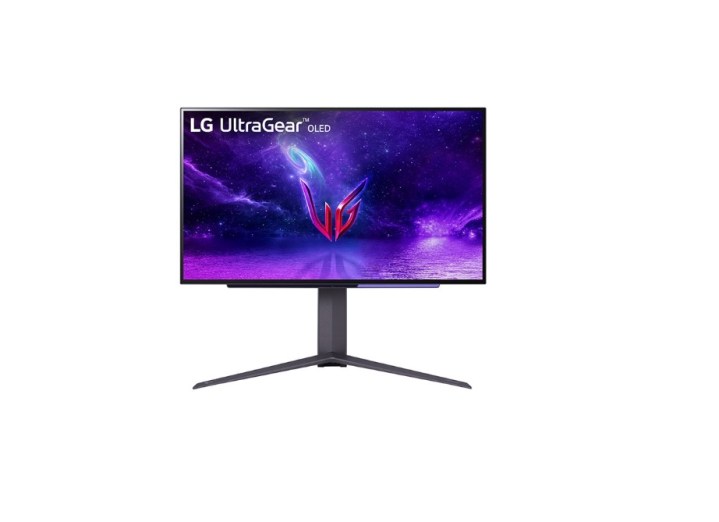
While OLED monitors remain pretty expensive, even in the budget range, this LG UltraGear 27-inch OLED is probably one the cheapest you’re going to find. It has a QHD resolution and can hit a whopping 240Hz, which is perfect for competitive e-sports players, and while the 0.03ms response time isn’t the lowest you can find, most competitive gamers will likely not notice the difference. It also comes with both FreeSync and NVIDIA G-SYNC, as well as HDR10, although it’s worth noting that HDR on monitors isn’t quite at the level of the average TV HDR just yet.
Alienware 34-inch AW3423DWF QD-OLED curved gaming monitor — $800, was $900
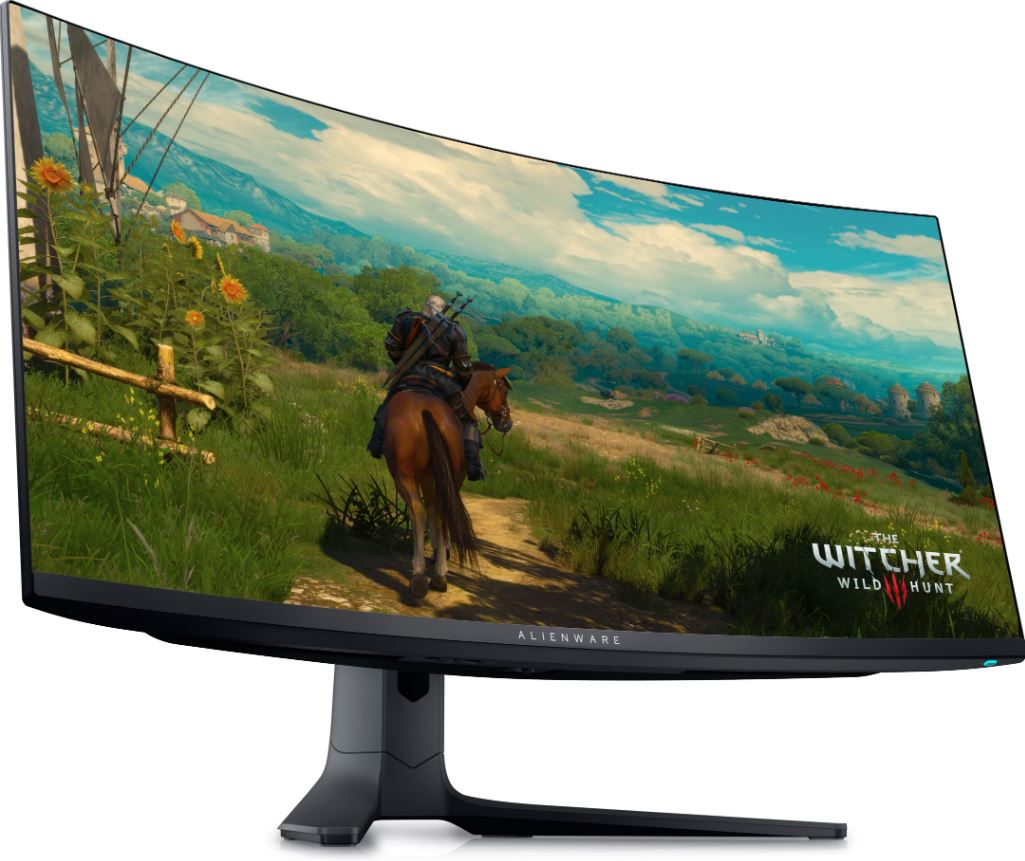
The Alienware AW3423DWF QD-OLED curved gaming monitor is equipped with a 34-inch screen featuring a 1800R curvature, UltraWide Quad HD resolution, a 165Hz refresh rate, and a 0.1ms response time. You’ll enjoy low-latency gameplay with its support for AMD’s FreeSync Premium Pro, and you’ll be able to play for hours with ComfortView Plus that reduces blue light emissions that can harm your eyes.
MSI 34-inch MEG 341CQP QD-OLED curved monitor — $780, was $900
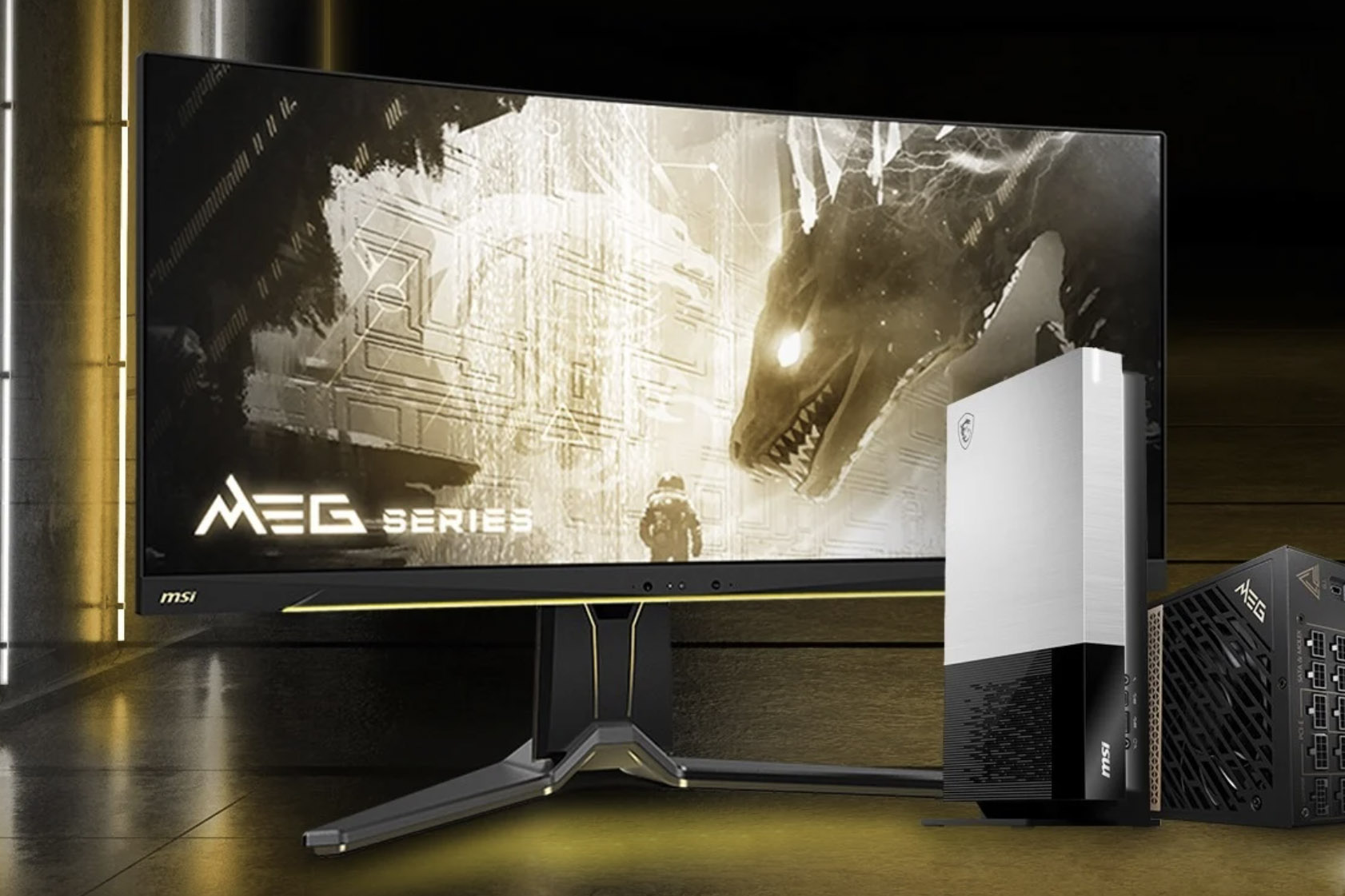
The MSI MEG 341CQP QD-OLED curved monitor offers UltraWide QHD resolution on its 34-inch display, with a 175Hz refresh rate and a 0.3ms response time. The 1800R curvature of the screen creates the perfect viewing angle for your eyes, and the QD-OLED technology further improves picture quality and boosts contrast so that you can better appreciate the details of your favorite games and movies.
Samsung 34-inch Odyssey G8 OLED curved gaming monitor — $1,000, was $1,500

The striking design of Samsung Odyssey G8 OLED curved gaming monitor is the first thing that you’ll notice, with its minimalist stand that doesn’t take up too much desk space and the CoreSync lighting ring that illuminates the back of the screen. The 34-inch display comes with Ultra WQHD resolution and support for AMD’s FreeSync Premium Pro, in addition to a 175Hz refresh rate and a 0.03ms response time. The monitor can also function like a smart display, as it can access streaming services and digital assistants by itself as long as it’s connected to your home network.
ASUS ROG Swift 41-inch gaming monitor — $1,100, was $1,400

Acer has been known for its excellent gaming laptops and other gaming gear, so it’s not a surprise that its gaming monitors are also pretty excellent. This Asus ROG Swift monitor is an impressive 41.5-inch big, runs a 4k resolution, and has an impressive 144Hz refresh rate, which is often hard to hit on higher resolutions consistently. Even more impressive is maintaining the 0.1 millisecond response time at those refresh rates and resolutions, so this is a solid monitor for those who want the smoothest OLED experience for gaming while still being near the $1,000 price bracket. In fact, if you have My Best Buy Plus, you can shave off an extra $100, bring it down to a round $1,000.
Samsung 49-inch Odyssey G9 OLED curved gaming monitor — $1,200, was $1,800
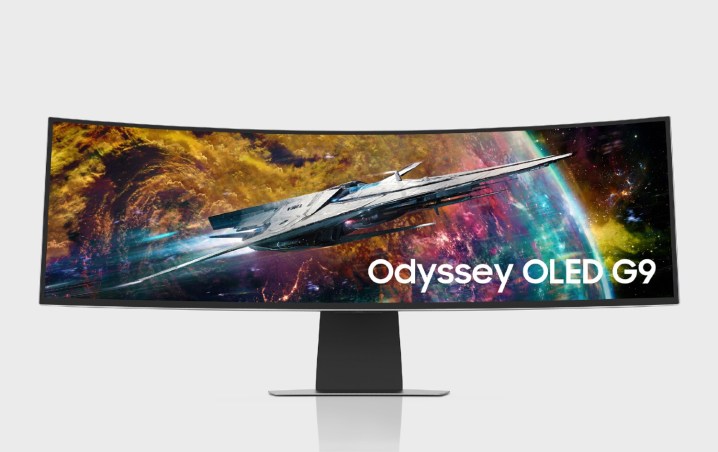
The Samsung Odyssey G9 is the world’s first 49-inch OLED monitor. When it comes to gaming with the Odyssey G9 you can count on a hyper fast 240Hz refresh rate and a 0.03ms response time to keep your games moving. With a refresh rate this high it’s unlikely you’ll come across any issues when it comes to playback lag, image tearing, or stuttering video. This display is also compatible with G-Sync and AMD FreeSync Premium Pro technologies for stable and stutter-free gaming. On the outside the Odyssey G9 features a slim metal design and a heigh-adjustable stand. It also has smart TV features built in, allowing you to watch your favorite streaming services with apps included in the monitor’s software.
LG 45-inch UltraGear OLED curved gaming monitor — $1,200, was $1,700
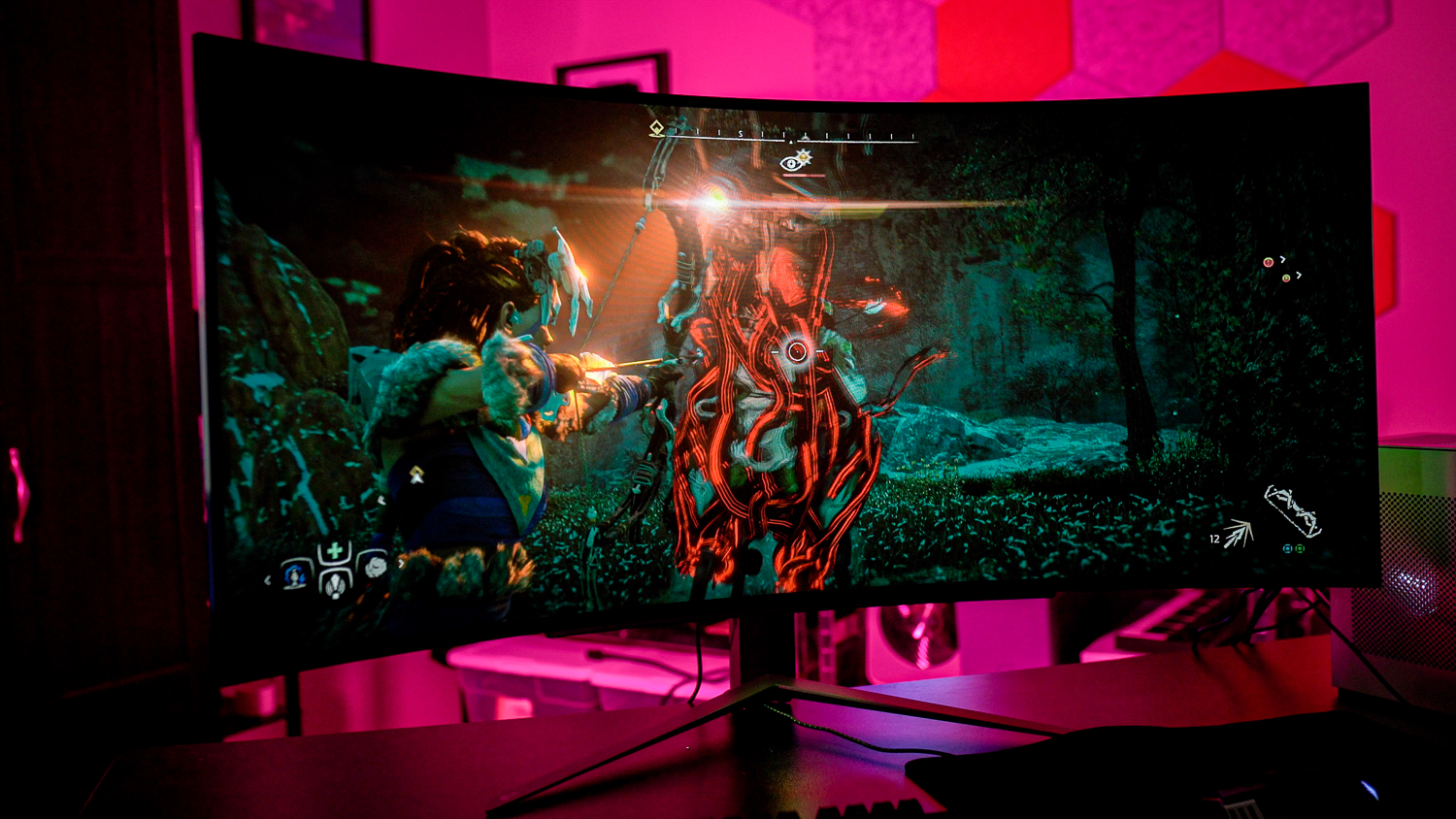
The 45-inch model of the LG UltraGear OLED curved gaming monitor offers most of the same features as its 27-inch version, including a 240Hz refresh rate, a 0.03ms response time, and support for AMD’s FreeSync Premium and Nvidia’s G-Sync. However, the larger display with UltraWide QHD resolution and a 800R curvature will elevate your video game experience to the next level, making it worth the extra cost.
Corsair 45-inch Xeneon Flex OLED bendable monitor — $1,600, was $2,000
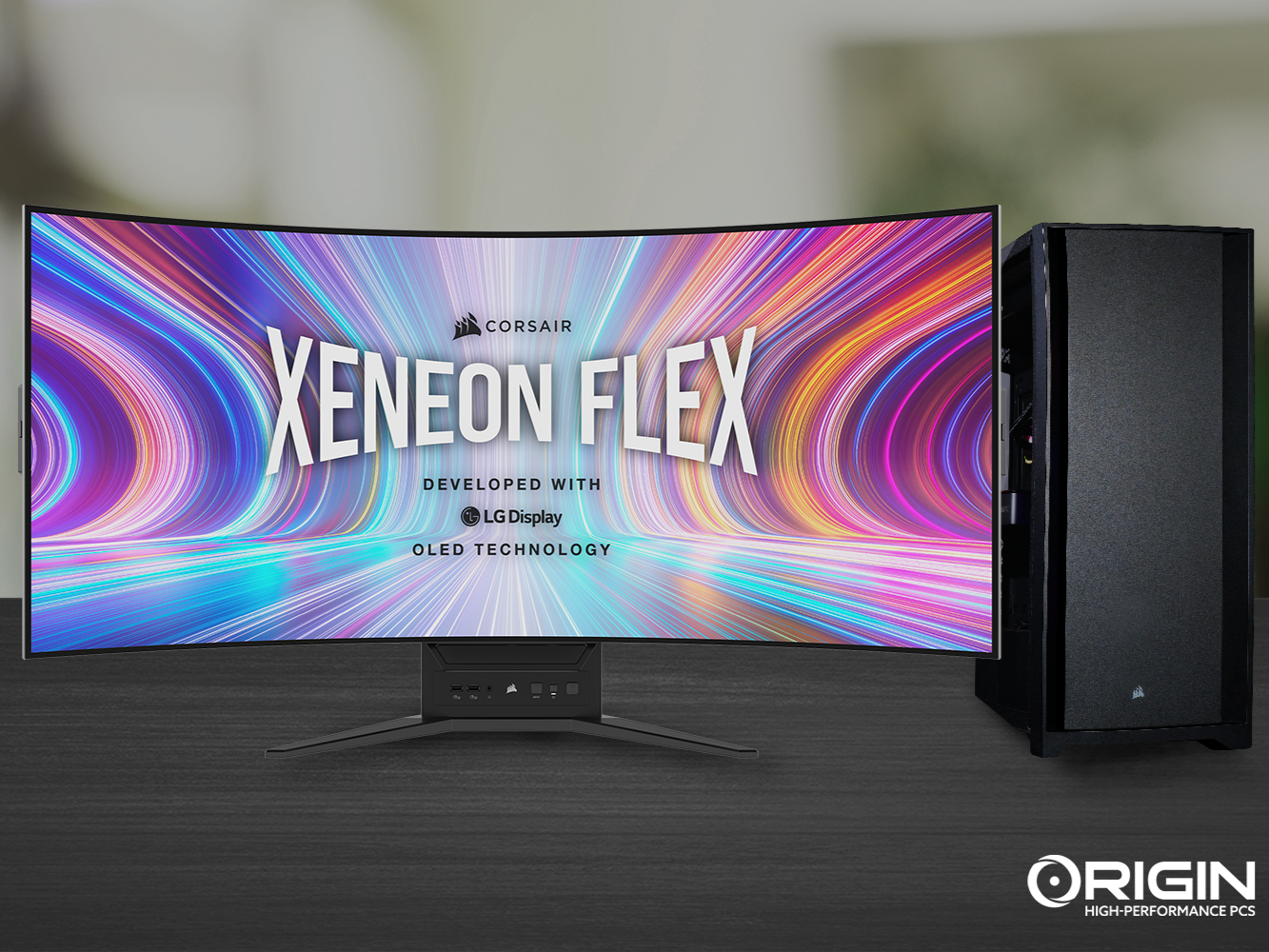
The Corsair Xeneon Flex OLED bendable monitor features a 45-inch display made out of a bendable OLED panel, so you can set the curve of the screen from completely flat to an 800R curvature. A complete flat screen is best for strategy games and sharing the screen with friends, while a curved monitor is for creating immersive gameplay for first-person shooters and simulations. You’ll also be getting QHD resolution, a 240Hz refresh rate, 0.03ms response time, and support for AMD’s FreeSync and Nvidia’s G-Sync.
More Unmissable Deals
A new Batman: Arkham game is coming later this year, and, oh, it’s a VR game

Nearly 10 years after the release of Batman: Arkham Knight, a new addition to the series is finally on the way called Batman: Arkham Shadow, and it gives me no pleasure to tell you that it’s a VR game, exclusive to the Meta Quest 3.
The new game is being developed by Camouflaj and Oculus Studios, in partnership with Warner Bros and DC. It’s set to come out later this year, and will be properly revealed on June 7 during the Summer Game Fest.
There’s not much to the announcement, beyond the fact of the game’s existence: “Evil stalks the streets. Gotham City is in danger. And you’re the only one who can stop it,” Meta said in the reveal, a descriptor that could very easily be applied to pretty much every single day in the Caped Crusader’s life. Let’s be honest about it, in terms of meaningful crime reduction the man just is not having an impact.
Purists will note that this isn’t actually the first new Arkham game since Arkham Knight. Confusingly, that would be Suicide Squad: Kill the Justice League—which, while available on PC and console, suffers from some pretty well-documented issues and struggling player numbers. Gotham Knights, meanwhile, which came out in 2022, is a much more Batman-centric experience but is not an Arkham sequel (and is also not great.) It’s all very confusing.
This also won’t be the first VR game in the series: That honor goes to Batman: Arkham VR, which came out in 2016 and was by all reports pretty good. It holds an aggregate review score of 74% on Metacritic, and we found it “an incredibly impressive and vivid first-person Batman experience that lets you use the controllers to throw Batarangs or use his grapple gun, as well as meet his allies and enemies in unprecedented detail” when we spent some time with it at Gamescom in 2016. Developer Camouflag previously worked on Iron Man VR, which was also well received.
The issue isn’t that VR games inevitably suck, but that they’re so limiting. Only a tiny portion of PC gamers have VR headsets, so no matter how good Batman: Arkham Shadow ultimately proves to be, the vast majority of potential players simply won’t have access to it—and as popular as the series is I don’t imagine it will be enough to convince many people to drop $500 on a VR rig.
Image 1 of 2

Anyway, getting back to the teaser: My first reaction was that it’s supposed to be bats, not rats, but then I recalled Ratcatcher, a C-tier bat-villain who’s been referenced or appeared in past Batman: Arkham games and other media. He was also killed in Batman: Arkham Knight, which is not especially convenient for this bit of theorizing, but hey, it’s comics—I remember when Bane snapped Batman like a twig and he got better, so why not Ratcatcher? We’ll find out in June.