From Concept to Car: How 3D Renderings Are Shaping the Automotive Industry for Freelancers and Companies


Nothing does it better than the auto industry. A simple pencil sketch transforms into a ready and rolling finished product that offers quite a ride. Traditional processes, dozens of sketches made with clay models, literally endless design iterations, and 3D technology forever changed the landscape that it is today in this current digital marketplace. There are 3D designers, engineers, and even marketing teams who have produced their ideas at high speeds in the blink of an eye as they bridged their imagination and reality.

For both freelancers and companies, 3D rendering now opens up this new frontier of possibilities as it streamlines the whole design process, making the process speedier, cost-effective, and, above everything else, spectacularly immersive. Thus, what is the role of 3D renderings within the modern automotive industry? Why should freelance designers and firms care? Let us follow this concept-to-car journey where the art of rendering meets the power of engineering.

3D renderings in the car industry

3D rendering in the automotive industry is revolutionary. It helps designers and engineering design professionals visualize and enhance the conceptual vehicle in a very realistic virtual space. Through 3D rendering, an automobile company can build accurate models of the interior and exterior, as well as individual parts, to analyze aesthetics, ergonomics, and functionality even before production begins.

RELATED: CAD Automotive Design – When Driving Becomes Personal

This technology accelerates design iterations, reduces prototyping costs, and helps in identifying design flaws early, thus enhancing overall product quality. Moreover, 3D renderings are of extreme importance in marketing as they provide lifelike images of the models that will soon be released, can really capture the customers’ imagination, and provide a preview of new features in an interesting way.

The power of visualization

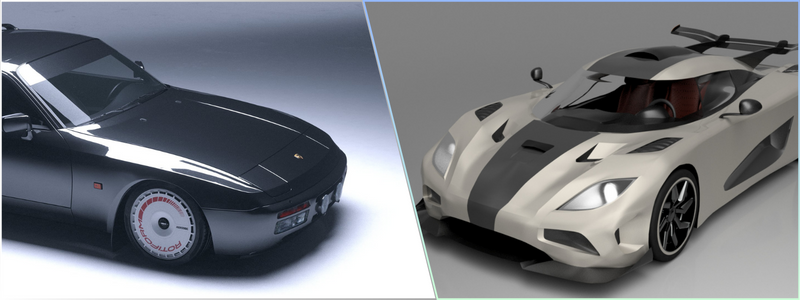
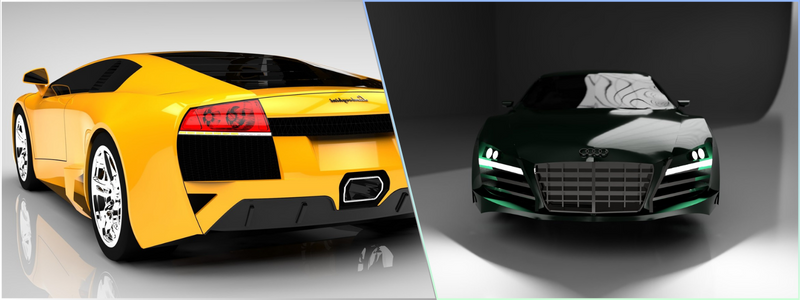
Concept cars were once relegated to sketch or low-fidelity prototypes for years, preventing development and making feedback a long, arduous process. 3D rendering has been a game-changer for designers who can now see cars in an extraordinary level of detail, from the subtle curve of a fender to the sparkle of a headlamp; everything can be rendered digitally to make even the wildest ideas tangible. These hyper-realistic images also give companies a chance to analyze each element of their design even before the model begins to be handcrafted into reality.

This is very important to people who want to work freelance, especially breaking through into the automotive market. This offers a potential gateway for accessing high-profile projects. For instance, you are displaying the finished car, but you are actually only in the conceptual phase. Manufacturing companies will not have to wait to build prototypes; they will take clients, investors, and even consumers based on your 3D rendering. Thus, in this industry, as time equals money, you can be very flexible.

RELATED: Automotive Design & Engineering Services, Costs, Rates Pricing for Companies

Functional prototyping in 3D

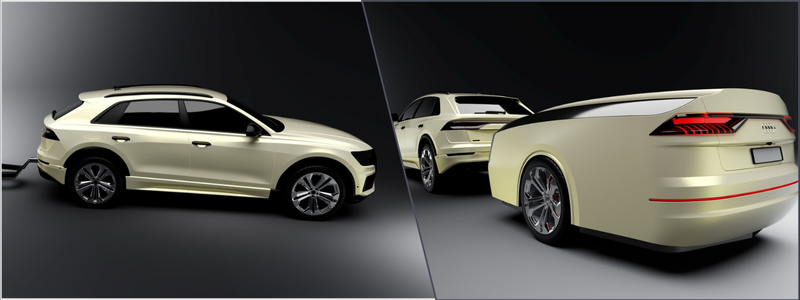
The most exciting application of 3D rendering is that it goes beyond the aesthetic layer into functional design. Let’s face it—cars aren’t just rolling sculptures; they’re complex machines with intricate engineering beneath the surface. With advanced CAD software and simulation tools, designers can now create models that look good but also incorporate accurate physics, aerodynamics, and structural integrity.
automotive engineering design services

This is where the freelancer who has experience with CAD can carve out a unique niche. Merging design aesthetics with engineering precision, the freelancer can create functional prototypes that allow companies to test various aspects of their designs in a virtual environment. These 3D models can be stress-tested under different conditions—how would a particular body shape handle in high winds? What about the heat dissipation for a particular battery layout? 3D renderings are no longer only about aesthetics; rather, they have become the cornerstone of functional validation.

Time and cost savings

Perhaps one of the strongest selling points to companies in 3D product rendering services lies in saving costs. In the old-fashioned way, physical prototypes require time and expense to produce and will often involve multiple attempts at getting something right. The smallest of tweaks required, in earlier times, was going back to the drawing board quite literally. In a digital world, though, companies can tweak and modify with the click of a mouse. Ideas are tested, refined, and ready in real time.

RELATED: Revolutionizing the Automotive Industry Using 3D Printed Cars and Innovative Services 

This efficiency is not only good for large corporations but also for smaller studios and freelancers. For independent designers, 3D rendering provides a means of competition with larger studios in model creation that can be refined iteratively without the cost of overhead. Efficiency for clients also means that changes can be seen within hours rather than weeks. Those who learn to control fast, precise changes to renderings will be much in demand among companies that aim to shorten the design period.

Aiding collaboration across teams and borders

In today’s globalized world, projects in the automotive industry stretch across continents. Design can be done in California, engineering can be done in Germany, and testing can be done in Japan. And 3D renderings are the universal language connecting those geographically dispersed teams. Cloud-based rendering platforms now enable designers and engineers across the globe to collaborate in real-time to share their feedback on every detail of a car’s design, from the smallest rivet to the largest sheet metal.

For 3D rendering freelancers, that’s obviously an important form of connectivity. Now, they can conveniently work with companies from across the globe without needing to show up on-site at a client office. Imagine a freelancer designer being in a room in their studio, chatting with people on main automotive campuses all over the world nonstop.

RELATED: Get Your Engine Revving: 5 Automotive CAD Designs

It makes design an interaction and immediately sends and receives renderings through the means. Companies also benefit from these new designs since there is quicker time to market them. Development cycle risks that would result in miscommunication decrease as more time moves closer to these new designs going into mass production.

Making concepts sellable

The magic of 3D rendering really shines in marketing in the world of autos. Well, after the design, then, showing them to the public in an attention-catching manner presents the problem. No more black-and-white sketches or clay models would do; companies and freelancers must now generate truly captivating and life-like renderings that will make people say, “I want this car.”.

For marketers, with the help of 3D renderings, a car can be viewed in different surroundings, in various colors, or even in lighting conditions, and thus, consumers can experience and get absorbed into a product with a higher resolution. Freelance professionals may mean designers are included beyond the designing process itself to help in the sale of the idea. For freelance 3D artists who specialize in product visualization, companies turn to the side of automotive designers seeking freelance work, a potential stream of revenue, and equity within the marketing efforts behind car designs.
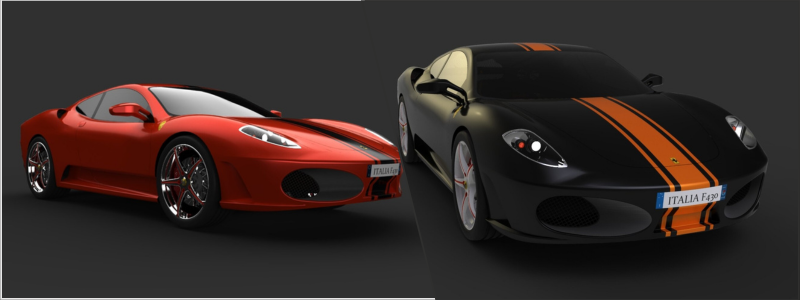
3d modeling design company

Virtual reality and interactive experiences

Advances in 3D rendering technology blur the digital to physical-experience line. Virtual and augmented reality technologies are now embracing mainstream media and bringing immersive experiences to automotive design beyond anything previously imagined. Imagine a potential buyer stepping inside a virtual car showroom where he or she can walk around, sit inside, and experience various driving conditions- all before there is even a physical car.

RELATED: How Are Companies Utilizing CAD Technology to Drive Innovation in Automotive Design? 

This is the perfect opportunity for freelancers. As companies continue to invest in VR and AR experiences, they will need talented AR/VR rendering designers who can bring such interactive 3D experiences to life. Freelancers who specialize in creating VR-ready models or interactive 3D animations can capitalize on this trend, partnering with companies to develop next-level virtual showrooms or even concept test drives that can be enjoyed from the comfort of a customer’s own living room.

Designing for a greener future

3D rendering not only makes the design process faster and more efficient but is also a step toward sustainability. As the need for multiple prototypes is cut down, there will be less waste. Also, with 3D rendering tools, the designers can look into options for environmentally friendly materials and energy-efficient designs before production.

This focus on sustainability strongly resonates in the market, particularly with the newer, more conscious consumers, and companies want to factor in sustainable practices while designing things. 3D product modeling freelancers who show eco-friendly design practices are going to have an easy time getting jobs from companies that need sustainable processes. Freelancers can come into alignment with forward-looking automotive brands that prefer reducing their environmental impact by using sustainable materials, processes, or concepts for designing.

RELATED: The Future of Electronic Design Engineering: Innovations and Trends for CAD Services Companies

The road ahead for freelancers and companies

The automotive industry is embracing 3D rendering to dramatically alter how a car starts and, ultimately, lives. It has several benefits in the turnaround for companies: cost-effective and rapidity, and innovation never thought possible. Freelancers can enter the industry and work on interesting concepts through virtual showrooms and everywhere in between.

The 3D rendering skill mastered by freelancers puts them in a position to offer themselves as an invaluable resource for companies looking to gain an edge in the highly competitive automotive space. From functional testing to immersive marketing, 3D renderings are now as much a part of the car’s DNA as its engine. And while the latest VR, AR, and other innovations advance from dream to design and eventually to highway, the world will never take as entertaining of a path. As long as you’re freelancing or a corporation, then it’s going to get wild.

How Cad Crowd can help

Freelancers and companies should never let their game down if they want to make it big in today’s automotive industry. Here at Cad Crowd, we will make sure that you will be working with the best 3D rendering services that don’t just design car concepts but turn them into tangible realities. Request a free quote today.

author avatar

MacKenzie Brown is the founder and CEO of Cad Crowd. With over 18 years of experience in launching and scaling platforms specializing in CAD services, product design, manufacturing, hardware, and software development, MacKenzie is a recognized authority in the engineering industry. Under his leadership, Cad Crowd serves esteemed clients like NASA, JPL, the U.S. Navy, and Fortune 500 companies, empowering innovators with access to high-quality design and engineering talent.

Connect with me: LinkedInXCad Crowd

CAD Files in Action: Industries and Companies Adopting Popular CAD File Formats


Today’s post explores CAD files and the companies and firms that adopt popular CAD file formats. Before the rise of CAD, paper and pencil were the only combination designers had access to. 3D designs and prototypes were all carried out manually. The result was the slow development of designs and the tedious prototype creation process. Without a doubt, the entire manual process required expensive trials and errors. 

But with the introduction of CAD technologies, the entire design, development, and prototyping process has become easier, faster, and cheaper. As a result, it’s simple to address design concerns and can be done so throughout the design process itself. Instead of the usual drawing, CAD files have become the ultimate weapon for 3D designers to bring their CAD designs to life. 

RELATED: CAD design and 3D modeling rundown

What are CAD files?

Computer-aided design or CAD files are the outputs of CAD software that contain information about the designed objects. These files might be made up of 3D or 2D data and are commonly used by designers, manufacturers, digital artists, engineers, and scientists. The format is the defining characteristic of CAD files. There are kernel, native, and neutral CAD file formats. Neutral file formats were elaborated as readable according to industry standards by most CAD modeling platforms.

These formats have publicly available specifications and are maintained by consortiums or companies. Meanwhile, major CAD vendors produce native formats. Third-party CAD tools conversion is necessary to import these files. Finally, kernel formats are derived from renowned geometric modeling kernels. CAD modeling kernels are components of modeling software. That defines how a shape is mathematically described by it. Kernel formats are recommended for software built on top of the kernel that corresponds to it. Here are some of the industries and companies adopting popular CAD file formats:

RELATED: Discover Why your business should use CAD services instead of manual drafting

Interior design

CAD files allow 3D interior design firms to breathe life into their visions through detailed and intricate digital designs. It allows them to present designs to their clients, from every detail to the smallest ones. They can also showcase the final look of the project upon completion. 

Architecture

Buildings are massive and costly projects. Flawless planning is critical when developing something as expensive and huge as a building. It is another case where CAD files come in handy. In addition to the actual layout and architecture of a structure, the CAD files can also be used to identify the correct specifications, such as weights, volumes, and measurements, even before the start of the actual construction. 

2D drawings and floor plan services can be used in the field once the construction starts. Meanwhile, the 3D architectural visualizations are used to gauge the accuracy of 2D plans and help backers envision the completed project to increase the chances of them funding it. It is especially true for office buildings as well as other commercial structures. However, home designers and builders also increasingly use CAD files and 3D visualizations these days. 

RELATED: Benefits of 3D floor plan rendering and design services for architects and companies

Landscaping

Landscaping companies also use CAD files to conceptualize their outdoor creations and identify the correct placement and location of different landscaping elements such as gardens, patios, fences, trees, and more. Companies can employ 3D landscape rendering designers to visualize their designs.

3d-landscaping-services

Automotive

Sophisticated CAD software and files are also used in different aspects and areas of automotive design. CAD companies for the automotive industry are used to produce 3D prototypes of new styles of car bodies and to design car parts such as engines, tires, upholstery, circuitry boards, and others. Data from CAD files can be fed into CNC machines that cut steel and robots that help construct vehicles on assembly lines. 

RELATED: Revolutionizing the automotive industry using 3D printed cars and innovative services 

Medical 

CAD files are also used by prosthetic design and CAD services for medical applications for prosthetics construction or reconstruction of different body parts. Some of these are even printed out using specialized medical 3D printers. Traditionally, CAD has been used to help engineer designs and models for analysis, representation, and manufacturing. The advancements in biomedicine and information technology have paved the way for new CAD uses and applications with many essential and novel biomedical applications.

The CAD files are used for tissue engineering, where the CAD-based bio-tissue informatics model offers crucial data on tissue biophysical, biochemical, and biological properties for the design, fabrication, and modeling of complex substitutes for tissues. 

Civil Engineering

Today’s urban planners also use CAD files to plan infrastructures in urban areas, including bridges, office complexes, industrial units, parks, and more. It is another aspect where 3D CAD is used most of the time. The urban planning process requires taxpayer dollars and funding. Many people find it hard to envision the appearance of a playground or park based on a 2D drawing alone. It’s even more difficult for them to visualize what a massive professional stadium will look like upon completion. This is where civil engineering professionals can help. If the planners hope for financial support and backing for a taxpayer referendum, CAD files are the best approach. 

RELATED: Civil engineering consulting services, cost, rates, and pricing for companies

Fashion Design

Even though most of today’s reputable fashion designers choose to craft their designs for their unique creations by hand at first, fashion CAD files are often used in the latter phases of the design process. CAD files are also almost always used by industries specializing in ready-to-wear garments. The files are used to identify the most efficient fabric cuts and to change the pattern scale for various sizes.

With the help of virtual models, the files can also be used to present how the item fits and moves when worn. 3D cad fashion design professionals can make the necessary changes to the design afterward. During the manufacturing stage, the cloths can then be cut, typically in large layers, with the help of CNC machines to speed up the whole process. 

RELATED: Fashion industry: benefits of 3D design technology for product development services 

Dentistry 

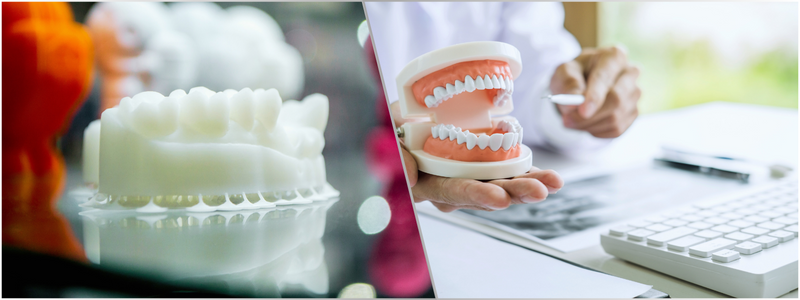
Did you get a tooth crown in the past decade? If yes, then chances are your dentist took advantage of technological advancements in CAD technologies. For 30 years, CAD files have been used in dentistry to digitize dental structures and oral cavities for virtual designs of complex and simple prosthetic units. However, the only difference is that this time, thanks to the rise of dental 3D printers and special dental materials, the structure is made right in the dentist’s office while you wait instead of being sent out to a laboratory first for construction. Dental CAD printing and design technologies can offer unmatched anatomical accuracy even while you wait. 

3d-printing-services

Forensics 

Just like how your well-loved CSI show uses CAD technologies to solve their cases, their counterparts in the real world do so as well. The role of 3D CAD design and 2D drafting services in forensic sciences is to help estimate a person’s age, analyze the injuries incurred, and identify the victim postmortem. Most of the time, postmortem identification involves comparing dental records in the form of models and radiographs of a person before death or ante mortem to that of postmortem or after death. 

RELATED: The history and future of 3D CAD design & modeling

On the other hand, injury analysis may involve comparing bone contusions or fragments to the types of known injuries or weapons. Forensic sciences can also use CAD files to help in 3D reconstruction of the investigation of crime scenes. 

Law

3D CAD reconstructions of crime scenes and accidents that resemble those used in forensics can be used even in courtrooms to assist the jurors in visualizing the events put on trial. 

Mapping

As a form of CAD, computer-aided mapping is especially related to cartography and mapping. This is typically used by GIS mapping experts to generate utility, parcel, and street maps that can be used with GIS or on their own. Even though GIS and CAD are similar to each other, the two have some notable distinctions. Most importantly, CAD is designed to edit and create graphic entities. In general, CAD also has minimal database capacities, but this might not ring true in the case of 3D CAD.

RELATED: Is 3D modeling and rendering the future for architectural design firms?

On the other hand, GIS is the spatial database where graphics are used to display the analytical results, wherein graphic editing is the secondary ability. It is essential to note that several CAD programs come with GIS functionality as an add-on to their core functions in graphic editing. 

Aerospace

The aerospace field is undoubtedly one of the most high-tech modern industries that use CAD files. The aerospace industry includes aircraft, missiles, satellites, and space vehicle manufacturers. Since these products come with colossal price tags, with a single aerospace item easily costing several million dollars, aerospace engineering services and CAD files play a crucial role in the design process.

Before the construction of the actual product, every single detail is planned and virtualized as thoroughly as possible with the help of sophisticated CAD design software. Advancements in computing technologies have undoubtedly paved the way for the continuous rise of CAD files in applications beyond the scope of conventional AEC design. 

RELATED: How the aerospace industry is using CAD design services: drafting, modeling, and prototyping

How Cad Crowd can help

Get in touch with Cad Crowd today and tap into the massive pool of CAD design professionals specializing in CAD files that can be used in various industries and by different companies. Contact us for a free quote.

How Are Companies Utilizing CAD Technology to Drive Innovation in Automotive Design?


Computer-aided design, or CAD, plays a significant role in automotive design and development. A professional automotive designer doesn’t only use CAD-based models to design a vehicle’s aesthetics. CAD automotive design also serves as the basis for module and configuration systems. Automotive design professionals also use automobile design for verification and simulation purposes. 

Most of you probably don’t know it, but CAD systems aren’t newcomers to the automobile industry. Originally used during the 1980s, CAD design software has existed for three decades. It evolved to become more advanced CAD programs that open exciting doors of possibilities for automobile development. This post will delve into how companies use CAD technology to drive innovation in automotive design. 

RELATED: CAD automotive design – when driving becomes personal

A quick history of CAD technology in the automobile industry

Hardware characterized vehicles back in the mid-80s. The development processes used then were focused on optimization cycles based on prototypes. The development of a single car during that time required around 40 labor hours, notably longer than the current duration of just 17 to 18 hours. Revisions were then made on the implementation of CAD methods. 3D CAD design and 2D drafting services officially replaced hardware-based engineering tasks in the 80s.

When the late 90s came, network-based development became the trend. Physical prototypes were also finally replaced with virtual ones for good. These virtual prototypes allowed the collaboration of partners from around the world. It helped cut down the duration of full-vehicle development projects to three years. It’s safe to say that automotive design experts have always been on top of the game regarding technology and innovation. More notably, using CAE or computer-aided engineering and CAD software has seen substantial developments in the past few years. 

RELATED: The evolution of 3D CAD design and drafting

CAD technology simplifies the design process 

It’s common for an automobile designer to use CAD technology to streamline the design process. Automotive designers often use CAD software to speed up the creation and modification of their designs without the need to start from scratch. It allows them to test various design concepts and make changes more quickly. This helps improve the efficiency of the design process. CAD software also allows automobile designers to generate precise and accurate 3D and 2D models of their designs that can be refined and modified easily.

This ensures a more accurate representation of the final product. This helps save resources and time and reduces the need to develop physical prototypes. CAD technology also allows automotive design professionals to conduct virtual testing and simulate different design settings, eliminating the need for physical prototypes. Again, it helps save resources and time and makes it easier for designers to pinpoint potential flaws in automobile design earlier in the process. 

RELATED: Automotive design & engineering services, costs, rates pricing for companies

CAD technology enables new concept design & product design professionals to work together on their design projects anywhere in the world. It improves communication and allows designers to share feedback and ideas to ensure a more cohesive automotive design process. Since it’s possible to integrate CAD software with manufacturing systems, designers can also develop easy-to-manufacture designs. It improves the efficiency of the manufacturing process while cutting down on the resources and time required to launch the product in the market. 

CAD technology speeds up the prototyping process

CAD technology allows automobile design experts to speed up the prototyping process. With the help of this technology, automotive designers can conduct virtual simulations of the behavior of different design scenarios. Simulations allow automotive design experts to spot potential flaws in the design and address them right away before the start of the actual production. It eliminates the need to use physical properties and, at the same time, accelerates the process of prototyping. 

RELATED: 10 Tips on how to find the best prototype engineering firm services

engineering-design-services

CAD design software also allows automotive design & engineering design services to work together and enjoy the real-time sharing of models and designs. This enhances communication and ensures that automotive engineers and automotive designers are aligned. CAD technology also enables faster iteration of different design concepts, allowing designs to promptly test and assess numerous design processes to shorten design cycles. 3D prototypes can also be developed using additive manufacturing methods, including 3D printing with the help of CAD software.

This paves the way for rapid prototyping that involves the quick and easy creation of physical prototypes. It allows designers to evaluate and test various design iterations faster. Automobile designers can also use CAD technology to create precise and accurate 3D and 2D models of their designs that they can modify and refine quickly. It makes virtual prototyping possible, where the designers can quickly create and test several design iterations, which speeds up the entire design process. 

RELATED: What are CAM engineering costs, company fees, & consulting service rates?

CAD technology improves product quality 

The automobile industry has been reaping the benefits of CAD software in terms of improved product quality. Thanks to CAD software, design engineering firms can conduct virtual simulations and testing of different design scenarios, letting them spot and solve potential design errors before the start of the actual production process. This cuts down the number of product recalls and improves the quality of automobile products significantly. 

Automobile designers can also use CAD software to produce precise and accurate 3D and 2D models of their designs that are easier to modify and improve. As a result, designers can optimize their designs for performance, functionality, and safety, which results in products that boast higher quality. Thanks to CAD software, designers can also simulate different materials and their respective behaviors, allowing them to choose the most suitable one for their product. This guarantees that the product will be made using the best materials, thus enhancing its durability and performance. 

Since it’s also possible to integrate CAD software with manufacturing systems, DFM services can develop designs that can be manufactured easily. It improves the efficiency of the manufacturing process, eliminating the risks of errors and improving the overall quality of the product. Automotive design professionals can also use CAD technology to create standardized designs to ensure that every product meets the same quality standards. 

RELATED: Why prototype DFM services are useful for product design at companies and firms

CAD technology guarantees safety and fuel efficiency 

One of the most significant roles of CAD technology in automotive design is that it contributes to safety and fuel efficiency. Designers can use CAD software to develop 3D models that are useful for optimizing the aerodynamics of a vehicle. Improving the airflow around an automobile allows carmakers to enhance fuel efficiency and reduce drag. CAD software also helps aerospace engineering designers create accurate 3D models for optimizing the routing and placement of electrical parts and components.

Automobile designers can enhance fuel efficiency by lowering the amount of power needed to run the electrical systems of the vehicle through optimization. CAD technology makes it possible for engineers to simulate the behavior of a vehicle in different crash scenarios. It allows them to pinpoint potential safety concerns and make changes to the design before physical testing. It guarantees substantial advancements in the overall safety of the vehicle. Automotive designers can also use the technology for simulation of the behavior of different materials so they can optimize their designs for reduced weight without compromising on safety.

RELATED: How the aerospace industry is using CAD design services: drafting, modeling, and prototyping

Automobile designers can advance fuel efficiency by lowering vehicle weight while keeping everything safe and secure. 3D product modeling companies can also use CAD software to produce precise 3D models that are handy for sensor integration into automobile designs. Safety features, including backup cameras, lane departure warning, and collision avoidance systems, are significantly improved. 

automotive-designers

CAD technology lowers production cost 

CAD software has always been known to help cut costs in most design processes. The technology allows engineers and designers to share and collaborate on their models and designs in real time. This improves communication and reduces the need for expensive physical testing and prototypes. Engineers and designers can also use CAD technology to develop exact and accurate designs, which lowers the risks of design flaws and errors that would have been otherwise costly to fix much later on. 

RELATED: 5 Tips for successful product design

Automobile design professionals also use CAD software to simulate the behavior of different materials and upgrade the design for weight reduction. This lowers material costs and reduces material waste. Physical prototyping is also reduced since CAD technology allows 3D product design experts to develop precise and accurate 3D and 2D design models to enable virtual simulation and prototyping. As a result, physical prototypes that can be very expensive to create and test are no longer required. 

Lastly, the time to market with CAD software is also reduced because designs can be made more efficiently and quickly than before. It reduces development costs, allowing automobile design experts to keep up with the erratic market conditions faster than ever. 

How Cad Crowd can help 

Increasingly, automotive companies use CAD technology to drive innovation in automotive designs. Cad Crowd is a reliable platform where you can search for the best and most reliable automobile design experts who can transform your visions to life so you can have your new car models racing down the road in no time!