I have the following simple code that should draw a gradient button, added as gradbtn.cs
using System;
using System.Collections.Generic;
using System.Linq;
using System.Text;
using System.Threading.Tasks;
using System.Windows.Forms;
using System.Drawing.Drawing2D;

namespace CustomControls.GradientControls
{
    public class Gradbtns : Button
     {
        protected override void OnPaint(PaintEventArgs pevent)
        {

            base.OnPaint(pevent);

            pevent.Graphics.FillRectangle(new LinearGradientBrush(
              new PointF(0, this.Height / 2), new PointF(this.Width, this.Height / 2),
              Color.AliceBlue, Color.BurlyWood), this.ClientRectangle);
        }
    }
}
The problem drawing with the above code is that it does not enable the “Button” click action on the Form rather it appears jus as if its drawn on the form.
But using the “OnPaintBackground” event does enable the button but the Colors aren’t seen, See Below image
Mobile devices have opened up a whole new world of possibilities for forex traders – allowing us to respond to changing markets in real-time no matter where we are. Some clever automated trading bots for Android take advantage of this by enabling traders to easily manage positions and execute tactics from their phones. For those new to algorithmic trading, it may seem scary handing control to a bot, but they can make life a lot simpler! Here’s an introduction to 5 of the top free Android bots and why they’re worth exploring.
Benefits of Forex Trading Bots
While giving up control doesn’t come naturally to us humans, automated solutions offer some cool benefits that many traders are finding worthwhile:
Accessibility
Unlike complex desktop software, these bots deploy straight from user-friendly mobile apps. So trading strategies can be adjusted on-the-fly without being stuck at a PC. The convenience this allows in staying on top of positions is huge.
Reliability
Let’s be honest – emotions like fear and greed often mess with our trading decisions. Robots consistently apply logic and analytics without fatigue, hesitation, or bad judgement calls. Less mistakes usually means better results.
The Top 5 Android Assistants for Forex Trading
In the complex world of currency trading, a little automation can go a long way. Savvy Android users can handpick from various bots, easing the maneuvering of financial markets. Below are 5 of the foremost free forex bots for mobile-centric investors.
1. MetaTrader 4
MetaTrader 4 enjoys status as the world’s highest-profile retail trading software for good reason. Its mobile app flawlessly mirrors the functionality that’s made the desktop platform famous. This liberates Android-toting traders through continuity, allowing them to activate intricate custom bots or handy presets like the MACD Sample EA on the fly. Streamlined connections with API-linked brokers further oil the wheels.
2. FXCM Trading Station Mobile
FXCM smartly knows less can be more when it comes to mobile. Their slick app distills automation down to essentials like easy-to-use bots built around popular technical indicators. The ability to conveniently adjust currency positions or receivers quick signals via mobile keeps trading accessible for newcomers.
3. AvaTradeGO
AvaTradeGO allows effortlessly launching proprietary bots engineered to track and capitalize on trends in the volatile cryptosphere. With performance Remaining constantly updated against benchmarks, users can monitor results on the move. Integration with AvaTrade’s infrastructure also enables deposits and bot-driven trades to smoothly flow through Android devices.
4. eToro Copytrader
Unlike fully automated solutions, eToro’s Copytrader focuses on mirroring the ongoing decisions of flesh-and-blood traders with outstanding track records. Investors can apply filters to discover and mimic vetted performers in a passive signals approach better suited for mobile engagement.
5. Trade Interceptor
Billed as the Swiss army knife of mobile trading apps, Trade Interceptor brings multi-broker support and a hearty feature set. This includes one-click trading bots granting customization options for individualized automation strategies. Users can apply tweaks to indicators or allow adaptive response to ever-changing market climates.
Key Factors In Selecting Android Trading Bots
While the aforementioned apps deliver simplified automation to Android devices, choosing the optimal solution depends greatly on individual user priorities and level of trading experience. These key considerations help match needs accurately:
Account Security
Applications lacking fallback encryption protocols for login details expose traders to serious fraud risks. Checking encryption standards is mandatory.
Equally crucial is verifying the regulated status of brokers before allowing any app automation access to accounts. Android versatility remains handicapped without proper regulatory oversight.
Complexity Preferences
Seasoned traders adept at installing custom indicators or EAs will find MT4’s open architecture accommodating. Novices may better prefer ready preset bots on apps like AvaTrade.
Those seeking to automate bespoke signaling approaches requiring original code or complex logic should ensure Android compatibility for their craft first.
Functionality
Applications with tighter device integration allow smoother automated interactions while multitasking across Android screens or notifications.
Traders with higher risk appetites might want automation with more aggressive profit targets without restraints. Conservative investors could demand enforced stop-losses or caps on position sizing for all automated trades.
Carefully analyzing areas that align with such specific requirements and priorities reduces guesswork in determining which Android automated solution best matches individual trading styles and constraints most accurately. This takes the frustrations out of mobile trading.
Maximizing Automation Value
To extract the greatest utility from mobile automated solutions, users should:
Learn their Capabilities
Instead of expecting plug-and-play perfection, traders well-versed in their chosen platform’s strengths spur more powerful synergies. Becoming familiar with all available features allows traders to use bots more strategically.
Customize settings
Default options serve the masses, but tailored configurations matching trading style often improves automated profitability. Taking the time to adjust indicators, risk parameters, and automations to align with personal preferences or strategies boosts profit potential enormously.
Monitor performance
While a major benefit lies in setting and forgetting bot trades, periodic monitoring proves important to ensure markets have not overwhelmed automated logic. Traders should check metrics like win percentages, drawdowns, open trades etc. monthly.
Review functionality
As brokers upgrade platforms and bots integrate new features, reviewing functionality updates ensures traders exploit latest advantages. New machine learning modules, updated technical indicators, or better backtesting capability could elevate profitability.
Conclusion
Android mobility has unlocked exciting potential for traders to tap into sophisticated algorithmic systems on the go. As the platforms explored illustrate, advanced automation is no longer confined to desktop terminals alone. From custom MQL expert advisors to preset technical indicator bots, mobile solutions now mirror essential functionalities of prominent established platforms.
Astute traders realistically assessing their priorities first regarding account security, complexity needs, functionality etc stand better positioned to determine optimal solutions matching individual requirements and constraints accurately. While the chosen application provides the algorithmic “brains”, properly maximizing long-term profitability relies entirely on the human element through education, customization, performance monitoring and ongoing reviews to extract full synergies.
Ultimately, seamless user-bot collaboration systems alone can empower traders fully with reliable automation and analysis tethered reliably to their smartphones everywhere.
Sources:
Top 10 Forex Robots | Does Automated Forex Trading Robot Work? | LiteFinance
(21) 5 Best Automated Forex Trading Robots For Android | LinkedIn
Best Forex Robots (Top EA Trading Options & More) • Benzinga
After having been strung along, attacked, and abused by Kyle for 10 years, and then severely hurt by Ryan who promised to save me for 4 years, but never did, I didn’t really expect to find anyone again. I mean, God had said He would bring me someone, a marriage partner, as a gift to me for my suffering for so long while remaining above reproach in this whole Kyle situation, but I have to be honest, there was a part of me that didn’t believe. A part of me that was doubtful.
After Ryan, God brought Ben, Jake, and Noah and one by one, they all failed to do what they were called to do: tell the world the truth. Tell the world they see everything because they are there and clear my good and godly name.
But admitting such things, the truth, comes with risks. What if I turn on the person telling the truth and send him to jail? They know they are at fault and want to keep their good standing reputation to the public. They don’t want to get in trouble with family and friends when they find out what they’ve been doing this whole time. How involved do you really get? Can you really trust God to keep you safe?
I understand their dilemma. I understand why they didn’t want to tell, but God is God and if He asks us to do something, no matter what it is, we have to do it. We have to do what is right. None of the men did. They all failed to obey God, period.
So when God brought Hunter into my life, I assumed he was just like the rest. Same as the others, he wouldn’t tell the truth either, so I ran from him when God told me he was the man for me, the man He wanted me to marry. I ran because I wanted, I expected a strong warrior and here was yet another man not obeying.
The truth wasn’t told right away and so I just continued to serve for the Lord, leaving it all in God’s very capable hands. I opened up a gifting ministry here locally, helping those in need and ladies wanting to be the Proverbs 31 woman helping to provide for their families and relieve some financial burden off their husbands. It’s been an amazing ministry, one that God has truly blessed my efforts in.
And then it happened!!
I had been asking God about Hunter a few times, throughout all of this, wanting to know how he was doing but God never answered. This time was different- God actually answered!
I was stunned when God revealed Hunter was ready. He was obeying, on track, and doing everything he could to make things right and to do what he was called to do.
The problem with him is that he had been consistently trying to control me, in a sinful way. He wanted me to bow to him and while I believe in biblical submission, it goes BOTH ways and that’s something rarely ever talked about.
Most Pastors always tell you how the woman should submit to her husband and the great Pastors tell you how the husband should love his wife, but it’s left there. No further information is given.
The problem with that is that the idea of biblical submission is only half taught from pulpits and men are left feeling pompous and arrogant, better than women, and women are left feeling like they have to become a doormat or sin against our Creator.
Both ideas are wrong!
Yes, the wife should submit to her husband if he’s not asking her to sin, out of a willing heart, knowing that God first made man, in His own image and then woman to help and please our husband. But God ALSO requires the husband to love his wife. It’s in that word LOVE, that the husband ALSO submits to his wife!!!
See, in a marriage, submission is not a one-way street. BOTH husband and wife should submit to each other.
Do any study you want on God’s love and you easily come across the verse calling Christians to love one another. John 13:34-35 is one of the places you’ll see that. Matthew 22:39 is another. It talks about loving our neighbors as ourselves. Surely a man’s wife is more important to him, as it should be, than his neighbor. So therefore, he should love her more than himself.
And if a man is loving himself, he will love his wife. Doing a study on 1 Corinthians 8:13 will also help understand the love we should have toward others, submitting to our brothers and not taking liberties that we could take because it may offend them or make them stumble. A part of love is submission. It’s about doing what’s best for the other person.
This means tenderly caring for your wife, genuinely listening to her, providing for her, taking care of her. If a man feeds his own body, he should feed his wife’s also. If he loves his own body and takes care of it (brushing his teeth, dressing it, etc.), he should also care about his wife in that way, making sure she has nice, presentable clothes to wear, just as he would himself.
He doesn’t fight with himself, get angry at himself, treat himself badly and neither should he be to his wife.
Men are called to love, honor, and to submit to their wives also. In perfect harmony, the couple bends toward each other, caring for one another, seeking the best for the other.
Submission goes both ways.
Ultimately the husband has the final say of course, but only below God. God is the #1 person in the relationship and both people must not only submit to each other, out of love and concern for one another, but also submit to God and His perfect will.
Hunter, like most men, due to a lack of training in our churches today and a lack of spiritual inspiration through the written word of God (men not taking the time to study the written word of God), Hunter did not know that, as is common.
During this time apart, Hunter learned to stop trying to control me and to let me be. When he came back, in a right relationship with God and me, I worked with him to show him all this and he immediately began submitting to me and to God, out of love for us both. We’ve been working on, together, creating a foundation of mutual love, respect, and submission and I have to say, it’s beautiful!!!
THIS is what God intended a marriage to look like! We both care about each other, are concerned with each other’s hurts, pain, and rejoice with each other in the good times. We are truly HAPPY, something I’ve not experienced for, well 10 years (since I met Kyle and he refused to do what’s right).
Hunter and I are now engaged to be married, and while it’s not your standard relationship (he lives in another state currently and is trying to move back here), we’ve come a long way. He’s picked out my engagement ring (it’s beautiful, just like his soul) ❤️ and we’re starting down the path of being together and creating a life together, for God’s glory.
He is super big on serving others, a trait he got from his parents (his dad being a very godly man too). So we plan to serve our guts out, as we have been individually, but now can do so together.
This Christian website (my ministry as a woman to the Lord), my Christian printables shop and my gifting group- we plan to do it all together and build it all up even more!!! I’m so excited.
Here’s what I want to say…
People mess up. We all fail to do what the Lord asks us to do sometimes, initially, but that doesn’t mean we stay there.
We don’t continue to sin, continue to rebel and dig in our heels. We submit to the Lord, we pray our guts out that God help us obey Him when it is difficult for us to do so and that’s what I’ve consistently seen Hunter do every single day – constantly asking God to help him obey out of a true desire to please the Lord in all ways.
This letter is unlike any other letter because it comes from BOTH of us. We’ve agreed to write it, agreed to let the Lord lead and obey God fully, TOGETHER.
To see Hunter go a full 180°, from initially rebelling to wanting to write this letter is amazing and beautiful and a true work of the Lord.
He’s ready. He’s obeying. He wants to get started serving you with me. We’re ready to start our lives together and it just goes to show you, what God can do with a teachable spirit and a humble heart.
While he started off rocky, the Lord has brought him through to full obedience (Philippians 1:6). The Lord has done a great work in his life. Hunter chose to submit. He is not like the other boys who CONTINUE to not submit to God. Truly, they will be punished for their sin. But this is not that story. This story is about submitting to God’s sovereign work to change the heart and mind of His servant.
All credit goes to God, but it is to Hunter’s credit for submitting to God and obeying Him, because while God’s sovereign work is sure, there is also human will, side by side, working in perfect harmony.
I’m so proud of Hunter, and I’m truly excited to become his wife: a match made in Heaven. I can’t wait for you to meet him, an amazing person and the most godly man I’ve ever met!!!
Nathan Rosenberg, the founder of farm automation platform Farmblox, said if there is one thing to know about trying to sell technology to farmers, it’s that you can’t tell them what to do.
“[Farmers] are multigenerational,” Rosenberg told TechCrunch. “It is not a profession, it’s more a community, a way of life, and you need to respect that. You can’t come in as a Silicon Valley tech person and tell them what to do.”
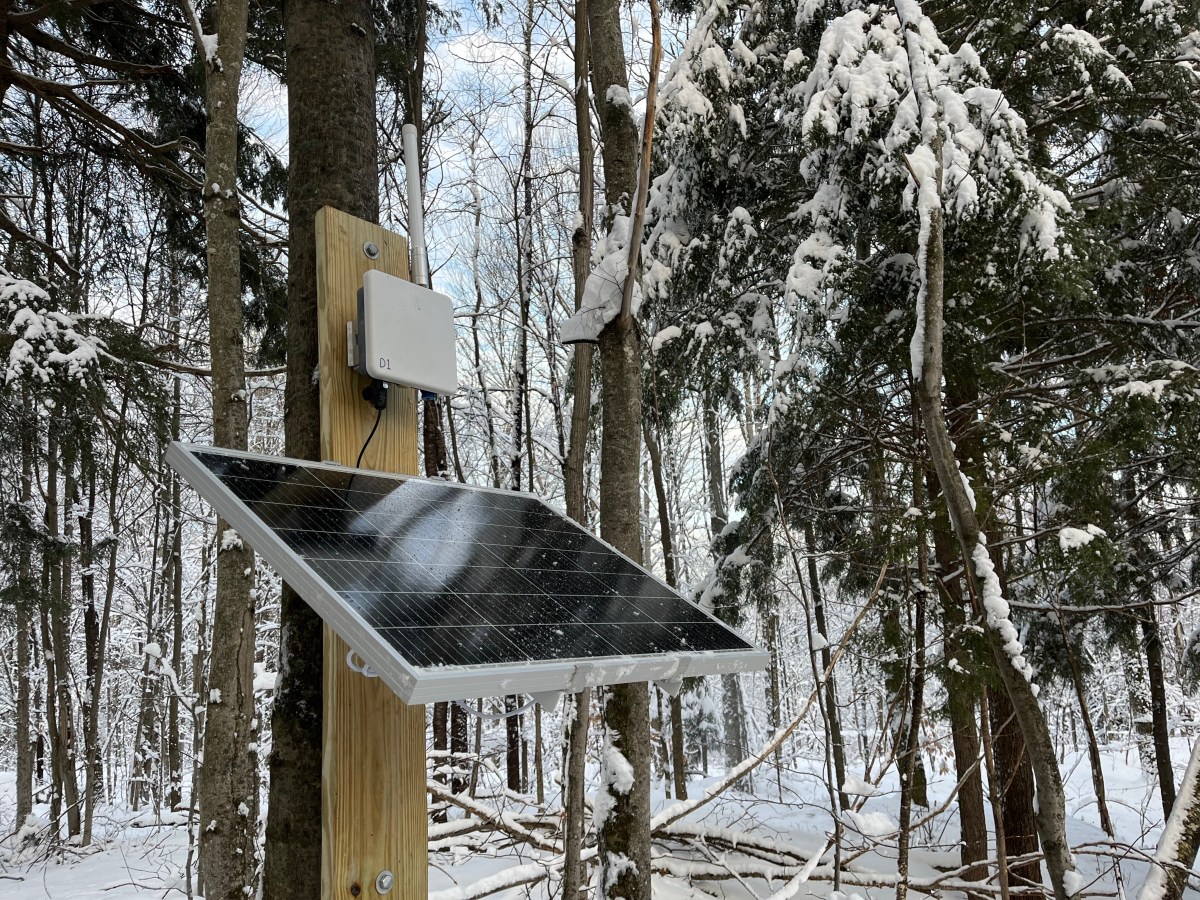
Rosenberg said that’s why his startup Farmblox is approaching agtech a little differently than companies that have come before it. The startup created a solar-powered connected monitor; farmers hook it up to the third-party sensors they are already using, allowing them to track things like soil moisture levels and water waste in a less-manual way. That information is translated back to an AI-powered automation platform that farmers can check from anywhere.
“If you say I can increase your yield with this fancy AI thing, they aren’t going to believe that, but they will believe in not having to go out and check on this specific thing,” Rosenberg said.
The company signed on 55 farms in 18 months, and Rosenberg credits this to the fact that Farmblox gives farmers the control to customize and implement the systems themselves.
“It’s very important for us that the farmer install us themselves,” Rosenberg said. “We don’t do white glove service. Of course we are here if they need it, but they do it all themselves with very little documentation.”
Rosenberg said Farmblox is meant to help solve the biggest issue facing farms right now: labor shortages. Farmblox is meant to help farms reduce the number of people they need to work on a farm at a given time. He said that when he was a teenager, he had a part-time job on an organic farm that involved just walking around constantly to check sensors. It wasn’t efficient. Farmblox looks to automate that.
The company now covers more than 14,000 acres of farm land with Rosenberg using his earnings as a top three developer on Minecraft to bootstrap the startup. Farmblox just raised $2.5 million in a seed round led by Hyperplane with participation from Slow Ventures, MHS Capital and Service Provider Capital.
Vivjan Myrto, the founder and managing partner at Hyperplane, told TechCrunch he got introduced to Farmblox at a startup event held by his Boston-based firm. Hyperplane had backed a handful of other agtech startups and through that, Myrto discovered that a growing problem for farms will be the increasing shortage in water.
While Farmblox isn’t specifically focused on saving water or water waste, it can help farms track that. The fact that the company has already seen the traction, didn’t hurt either. “We were very impressed that this team has basically bootstrapped this from their dorm room to [more than] 50 customers in 18 months,” Myrto said. “In this industry, automating farms has been very costly and very cost prohibitive. What is unique about Farmblox is the bay station is solar powered and very cheap. It has data and sensors that are way ahead of everyone else.”
Farmblox started with high-margin tree-based crops including maple, vineyards and orchards because the sensors can remain on the same trees after a harvest; with other crops like tomatoes, the whole plant is pulled up each season. Rosenberg said he expects the startup will move down into lower-margin crops in the future.
The company will use the seed funding to expand to more farms.
“We are building tools around not just monitoring and giving real-time data to the farmer but really connecting that with automation flows to create new and exciting bundles of solutions that they can deploy on the farm,” Rosenberg said.
1047 Games has just announced a sequel to their popular free to play multiplayer FPS Splitgate, due for release next year on PC and consoles.
While the announcement trailer is purely cinematic and it doesn’t showcase any gameplay footage, it seems that the developers are keeping the original game’s portal-based gameplay for the sequel, which is a very smart move if you ask me, as it’s the thing that differentiated Splitgate from the competition. Apparently Splitgate 2 will introduce three factions to the mix, each offering its own progression path based on the player’s “preferred gameplay style or competitive strategies”.
The game is expected to launch with a large amount of playable arenas, weapons and modes, and there’s solo and team based options available so everyone feels welcome to at least give it a spin when it launches in 2025.
Ready to step into the spotlight? Eager to hear 100,000 fans screaming your name? Seeking fame and admiration? Then join the Sol Splitgate League, where the future is bright–it takes a team to bring home victory, but only one person can top the leaderboard.
Play together. Stand alone.
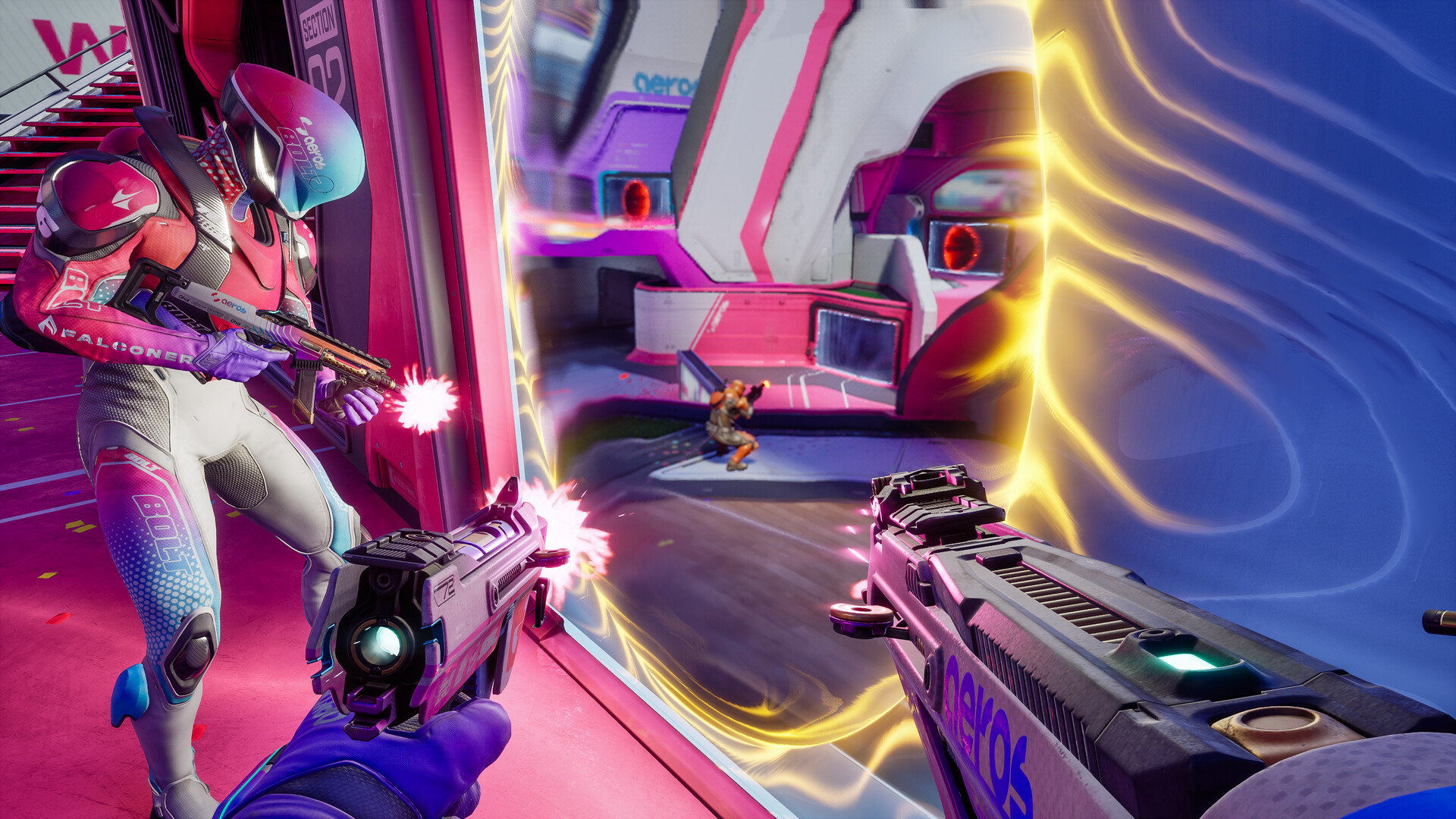
Suit up and portal into the action as an elite Ace in Splitgate 2, a 4v4 free-to-play shooter redefining what it takes to be #1. Choose your faction, customize your weapons, master your portal skills, and play with friends as you compete for glory in a galactic arena.
Win from any angle
Dominate the arena with the ultimate tool–a portal gun. Turn the tide of battle with multi-dimensional combat through portals to flank your foe, or utilize futuristic physics to launch yourself for a jaw-dropping aerial kill.
Evolution is here
This is the future of Splitgate, bringing fast-paced portal gunplay with objective-based game modes and distinctive futuristic maps. Grow your skills as you unlock new capabilities for each Faction, upgrade your weapons, and maximize your loadout potential.
Choose your faction
Dash around the battlefield as the agile Aeros, control the chaos as the tactical and time-manipulating Meridian, or run in guns blazing with Sabrask’s raw power. Utilize dynamic abilities and diverse weapons to your advantage and playstyle. Mix and match factions to build the ultimate team.
Team up and earn glory
Recruit your friends and compete for the respect of the entire galaxy. Take control of the Hotzone while your friends hold off enemies portalling in from all sides. Stand together and steamroll your opponents to win the match and claim victory.
We’ve reached the end of Game Informer’s Dragon Age: The Veilguard cover story coverage as we prepare to launch our next exciting issue. But I still have this one last feature to publish, and it’s about Bellara Lutara, the Dalish elf and member of the new Veil Jumpers faction in the game. During my visit to BioWare’s Edmonton, Canada, office earlier this year, I checked out the game’s expansive character creator, its in medias res prologue, and the first mission after said prologue.
Though BioWare released a big look at Veilguard’s prologue via a 20-minute gameplay trailer last month, they haven’t released much about that subsequent mission, where you meet and recruit your first companion, Bellara. I learned a lot about this character, and knowing I was one of the first outside of the studio to see the mission where you meet her, I spent a chunk of my interviews with the team’s leads talking about Bellara. So, for my final feature on Dragon Age: The Veilguard, here’s everything I learned about this quirky elven mage.
Everything We Learned About Bellara Lutara In Dragon Age: The Veilguard
In talking with BioWare’s various leads, like game director Corinne Bushce, creative director John Epler (who is personally responsible for writing Bellara and leading her development), and BioWare general manager Gary McKay, it’s clear the team has a deep love for this character. She’s energetic, effervescent, and academic, and as a companion for combat, she’s a character I’m pretty excited to use in my party.
“I love Bellara, I think she’s fantastic,” McKay tells me. “I see people that I know in her and so that’s how she really resonates with me. I love the whole tinkerer aspect to her. It was a collective to bring that character to life. It was everything from the writers, to the editors, the animators, to character modelers, to the texturing, to how we light her. I’m really proud of that character.”
Bellara In Combat
When I ask Busche about Bellara, she gives me some insight into what I can expect of the mage on the battlefield. And Bellara sounds like an excellent choice for both support and elemental combos.
“Oh my goodness, she is amazing,” Busche says. “So, first of all, she is a mage. She is an explorer of ancient Elven ruins. She is an elf herself and a member of the Veil Jumpers faction. They investigate the ancient ruins of Arlathan. Everything about her character as a mage leans into that, but she also challenges the kind of archetypal idea of a mage.”
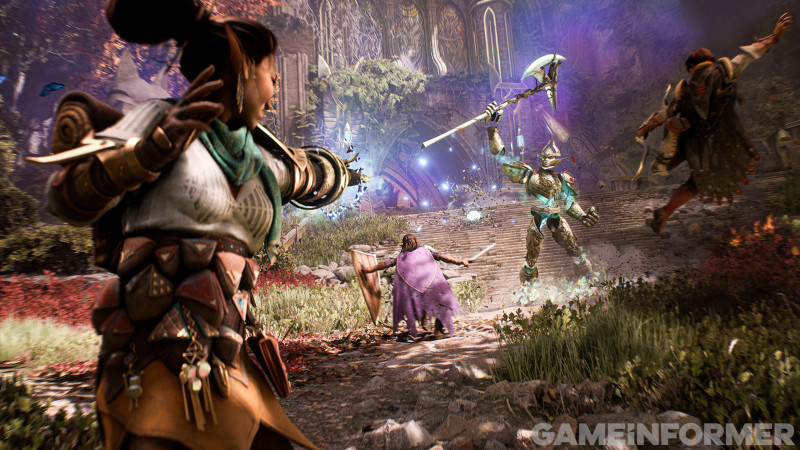
She does that by attacking with a bow at range using electrically charged arrows. But she’s also casting spells that slow down time or heal allies and Rook. She does that by channeling magical energy into her gauntlet. Busche says she starts as a support character in combat, thanks to her healing spells, but notes players don’t have to build her out that way. She also leans into electrical damage, and “damage type really matters a lot when we get into the strategy and tactics,” Busche says.
“You can spec her out in a way where she’s unleashing this devastating vortex that pulls in all enemies into an electrical storm. Maybe then we unleash our own [area of effect attack] with all the enemies clumped together,” Busche adds. “She can debuff all the enemies with the shocked affliction, where they’re taking passive damage. I mentioned she can slow time, she can heal. She is one of the characters that you can build out [to have her] healing spells heal you autonomously, so if you’re the kind of player that likes to be on the frontlines […] Bellara might just be the perfect companion for you.”
Bellara’s Place In The World
Epler, who writes Bellara, tells me about her place in Thedas as an elf and the connection elves have to the magic of the world. He says if you’ve paid attention to the franchise, you likely already know that elves are historically an oppressed people in the games. Now, with two of their gods on the loose in Veilguard, magic has poured back into the world in a big way.
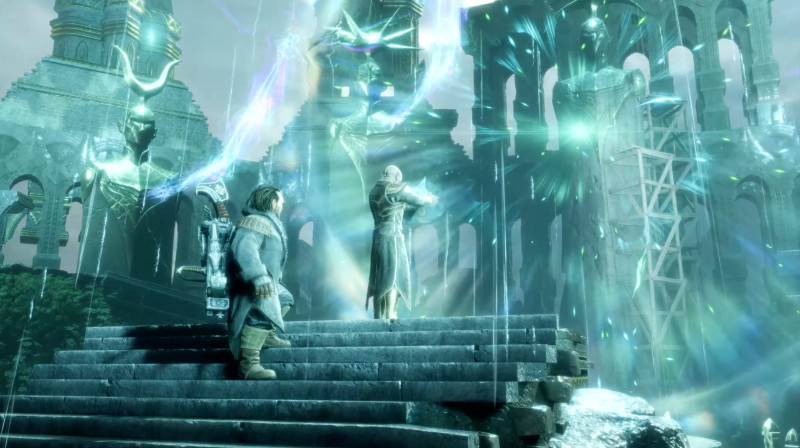
“She represents the Veil Jumpers,” Epler explains. “Now, the Veil Jumpers are a faction that’s appeared in the comics before, but otherwise, this is the first time it’s appeared in the games, and they are the ones journeying through Arlathan, where the ancient elven empire used to exist and left a lot of artifacts when it disappeared. When the elves fell from immortality thousands of years ago, they still left a lot of their artifacts and a lot of their, for lack of a better term, magical technology behind, and Bellara represents this yearning to find the truth of who the elves were because not only did they lose their magic and their immortality, they lost a lot of their history.
“A lot of what they know of their past is based on myth, it’s based on rumor. Bellara is a knowledge seeker. She wants to find out what’s true, what’s not; she wants to find the pieces of who the elves used to be and really understand what their story was, where they came from, as well as figure out where they’re going next, and find a future for the elves. And within the context of The Veilguard, she joins the team, first of all, to help stop the gods because Bellara feels at least partially responsible since they are elven gods, but also to maybe find a little bit more of who they used to be. Because again, you’re dealing with these elves that were around millennia ago that have now reemerged into the world, and who better to teach her who the elves used to be than them.”
A Quick Detour: Magic
For one of my last questions to Epler, I was curious about the contrast between Bellara, an elven mage who is optimistic and bubbly, and Solas, a determined and tragic character. He indicated there might be more to Bellara than meets the eye.
“Solas sees himself as the tragic hero,” Epler says. “He’s not capable of really being happy, he can’t let himself be happy, partially because he carries the guilt of what he did bringing the Veil, doing what he did to the world. Whereas Bellara is somebody who has seen tragedy, and as you get into her character arc and get into her backstory, you realize this is a character who has seen a lot of tragedy. But that tragedy, instead of wallowing in it, she’s forced herself to push past it. She looks at her regrets, and she tells herself, ‘I don’t want to feel regret.’
“Whereas again, Solas tends to wallow in his to a large degree. And it allows us to create a very big differentiation. Part of it is also because Solas is an ancient elf, whereas Bellara is a Dalish elf, but she just sees a problem and wants to solve it. She feels a tremendous amount of responsibility to her people […] to the Dalish, and to the Veil Jumpers, and that drives her forward. That said, she does have her moments where she has doubt, she has moments where she has a more grim outlook, and there are moments where you realize that some of her sunny, optimistic outlook is kind of a mask that she puts on to hide the fact that she’s hurting, she’s in pain. But in general, she doesn’t see any benefit to wallowing in those regrets.”
We learned today that Bellara will be voiced by Jee Young Han, known for her roles in Perry Mason,Unprisoned, and as Sentinel Dax in a previous Bioware game, Anthem. To see the rest of the cast, along with Rook’s four voice options, click here.
For more about the game, including exclusive details, interviews, video features, and more, click the Dragon Age: The Veilguard hub button below.
I’ve been pretty pessimistic when it comes to Samsung’s lineup of foldable phones, namely the Galaxy Z Fold series. Pessimistic is probably too nice of a word, because when looking at the rest of the market, it’s abundantly clear that Samsung is no longer the market leader.
As the rumors and leaks made headlines, whatever excitement I had for the Galaxy Z Fold 6 quickly dissipated. And during Galaxy Unpacked, the larger foldable seemed like an afterthought, taking a back seat to the Galaxy Ring and even the Z Flip 6.
I understand that book-style foldable phones aren’t as popular, likely due to their higher prices. Along with the fact that not everyone wants or cares about the benefits of having a mini tablet that fits in your pocket. So while many, including my colleague Derrek, prefer a flip phone, it’s just not my cup of tea.
Samsung Galaxy Z Fold 6: Price & availability
(Image credit: Andrew Myrick / Android Central)
Samsung announced the Galaxy Z Fold 6 at its Unpacked event on July 10, alongside an array of additional Galaxy devices. The phone is currently available for pre-order ahead of its launch on July 24, with a starting price of $1,899 for the 256GB base model and maxing out at $2,259 for the 1TB version.
Additionally, there are a total of five colors to choose from: Pink, Navy, Silver Shadow, Crafted Black, and White. However, the latter two colors are only available if you purchase the Galaxy Z Fold 6 directly from Samsung’s website.
Armor Aluminum frame, Gorilla Glass Victus 2 (front and back glass), PET screen protector (inner display), IP48 water and dust resistance
Colors
Silver Shadow, Pink,Navy
Samsung.com exclusive colors
Crafted Black, White
Samsung Galaxy Z Fold 6: Initial thoughts
(Image credit: Andrew Myrick / Android Central)
The Galaxy Z Fold 6 was the first time that I wasn’t actually excited about a new foldable phone. While watching Galaxy Unpacked, I scoffed at the idea that a boxier design would result in me replacing the OnePlus Open as part of my “daily carry.” But, as I sit here having spent a little more than a week with the Galaxy Z Fold 6, my opinion is shifting. Slightly.
One thing is for certain, so far at least, as my opinion hasn’t changed regarding Samsung needing to do something drastic. I mean like a complete overhaul of the design, whether it’s to a tri-fold, adopting the shorter and wider screens of the Pixel Fold, or something. Save for a few things here and there, the Galaxy Z Fold 6 and Fold 5 are identical, which was the same as the Fold 4, etc.
Samsung Galaxy Z Fold 6: Design and Cover Screen
(Image credit: Andrew Myrick / Android Central)
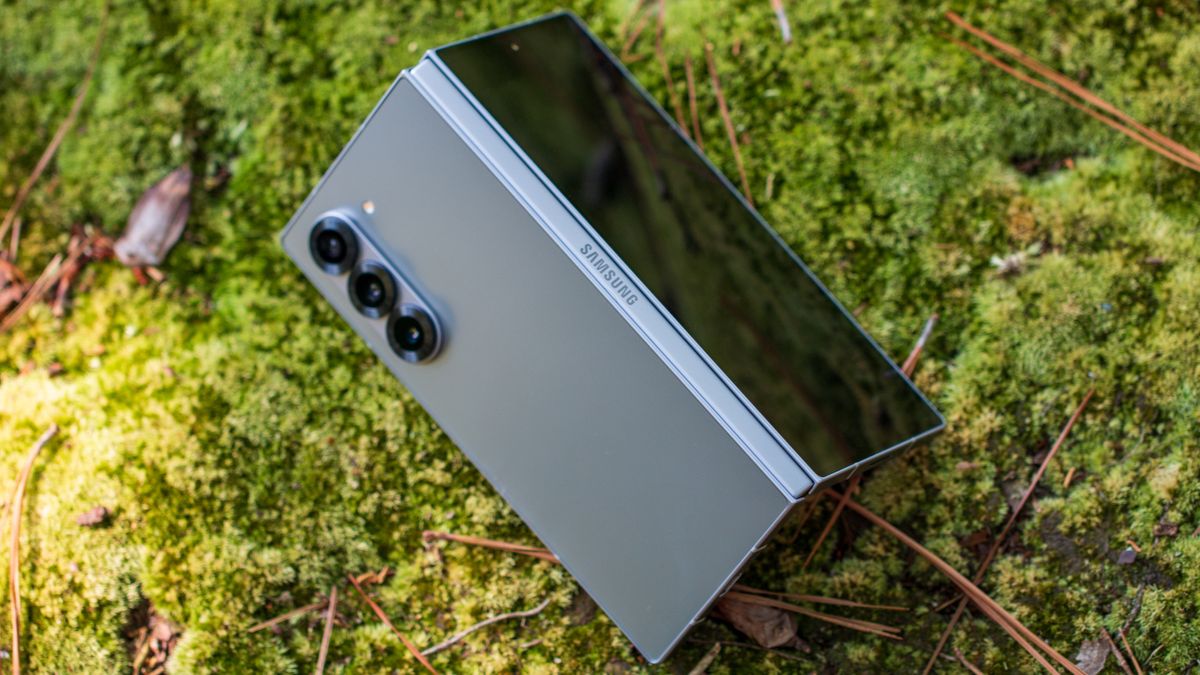
If I’m so pessimistic, what could Samsung possibly have done to even change my mind in the slightest? Well, it actually starts with the boxier design. This move brings it more in line with what we saw with the Galaxy S24 Ultra, complete with the bottom left corner digging into the palm of my hand.
On paper, this design tweak brought with it a 1.05mm increase in the dimensions when closed, making for an ever-so-slightly larger cover screen. It really didn’t seem like much, but I’ve noticed that my hands feel less cramped when typing out messages or jotting down some notes. Really, it’s not much of a difference, but it’s enough to be noticeable while still falling far short of the OnePlus Open or Pixel Fold.
(Image credit: Andrew Myrick / Android Central)
Arguably even more important is that the Galaxy Z Fold 6 is substantially lighter than its predecessor. In terms of numbers, Samsung managed to slim it down to 239 grams, a staggering drop from the 253 grams of the Fold 5. It’s definitely noticeable, and welcome, especially when using the Fold 6 with one hand while the phone is closed.
I’ve made it this far without even talking about the inner display or AI, which is more than what some companies can say. That being said, let’s dive into that now, starting with the inner screen.
Samsung Galaxy Z Fold 6: Hinge
(Image credit: Andrew Myrick / Android Central)
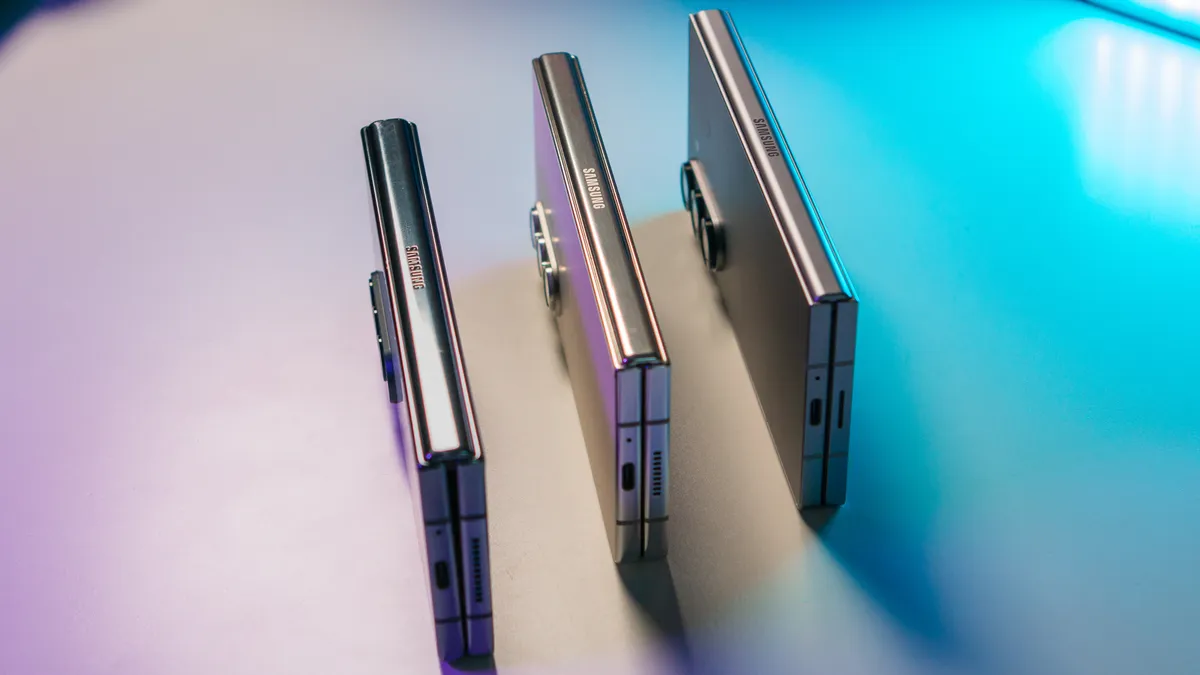
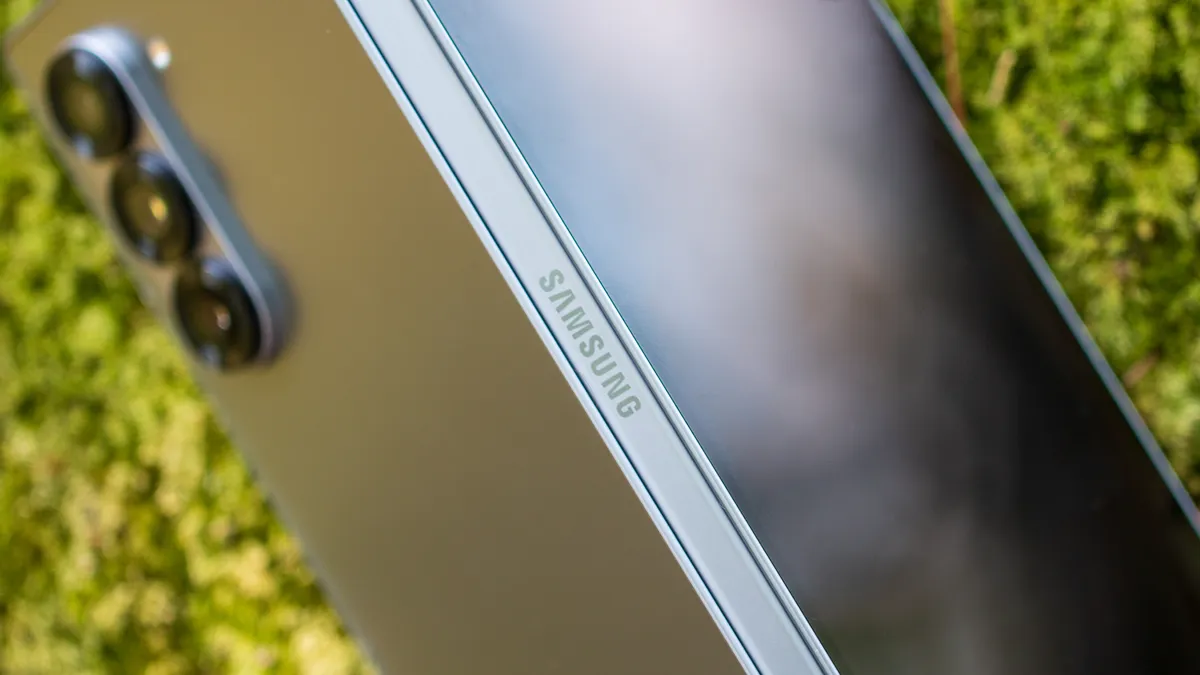
Something else Samsung changed with the design is that it’s now much easier to actually unfold the Galaxy Z Fold 6. There’s a little bit more of a gap between the two sides of the frame. This might sound like a bad thing, but the outer border of the inner screen still closes tightly so that dust and debris don’t make it through.
I discovered this, as one does when using the Fold 6 as a fidget toy. I don’t even know how I managed to do it, but I was able to slightly open the phone with just one hand. The only other book-style foldable I’ve been able to do that with is the OnePlus Open.
The reason why I’m pointing this out is because it’s just much easier to unfold the Galaxy Z Fold 6 compared to the Fold 5. The hinge feels about as perfect as one can get, even smoother than the Pixel Fold and the Open. Not to mention that I don’t feel much resistance (in a good way), and the screen/hinge doesn’t make discomforting noises. I’m hoping the hinge will stay this way, but it’s obviously too early to say with any certainty.
Samsung Galaxy Z Fold 6: Inner screen
(Image credit: Andrew Myrick / Android Central)
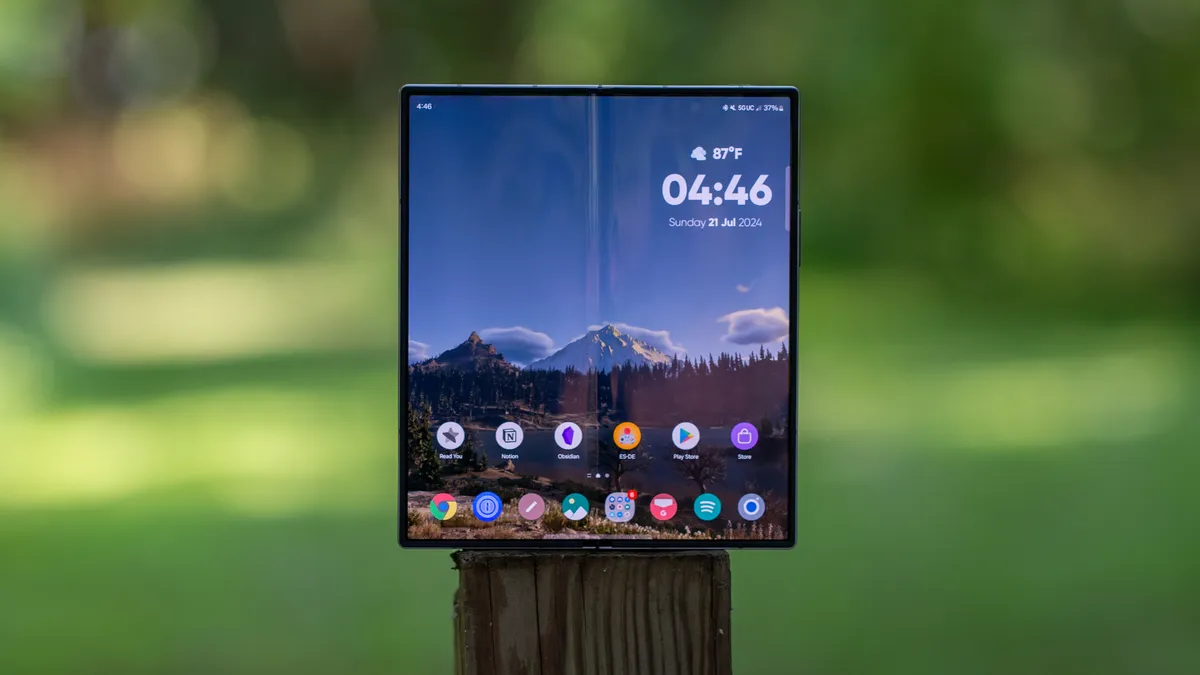
With the Fold 6 open, I’m now staring at a beautiful AMOLED display with a subtle crease down the middle. Seriously, Samsung does make some of the best screens. It’s just a shame and quite frustrating that the company won’t offer any reasons or remedies to those who suffer from PWM. One would think that if a company is trying to reach as many people as possible, it would do something or at least give a disclaimer that the screens might affect you negatively.
Nevertheless, let’s talk about that crease. If I was just going into this thing blind, without having a Fold 5 to compare it to, I’d probably say that the crease is the same with the Fold 6. That’s not the case, as I do notice a slight difference between the two. It’s not much, but there is a difference. However, I’m not sure if that’s because the Fold 5 is a year old, while the Fold 6 is less than a month old, or if Samsung actually did manage to improve the crease.
(Image credit: Andrew Myrick / Android Central)
Even still, there is one thing that didn’t take me long to notice, as all I had to do was use the inner screen while outside. This thing gets BRIGHT. No, it’s not going to blind you or anything, but it’s definitely brighter than the Galaxy Z Fold 5. That’s because Samsung’s display now reaches a peak brightness of 2,600 nits.
This is the same peak brightness level as Samsung introduced with the Galaxy S24 Ultra, surpassing the 1,750 nits found in the Galaxy Z Fold 5. The one thing that the Fold 6s main display doesn’t adopt from the S24 Ultra is the anti-reflective coating. It’s not all that surprising since we’re still working with ultra-thin glass and plastic, but I figured it was worth mentioning.
Samsung Galaxy Z Fold 6: Galaxy AI
(Image credit: Andrew Myrick / Android Central)
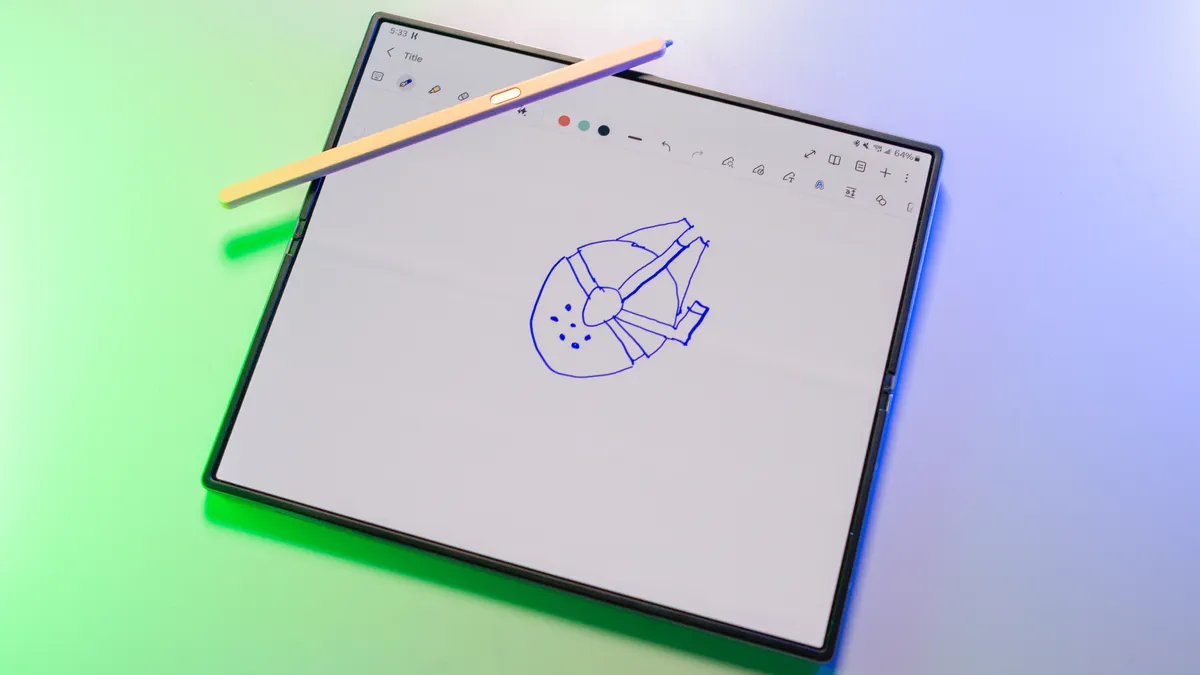
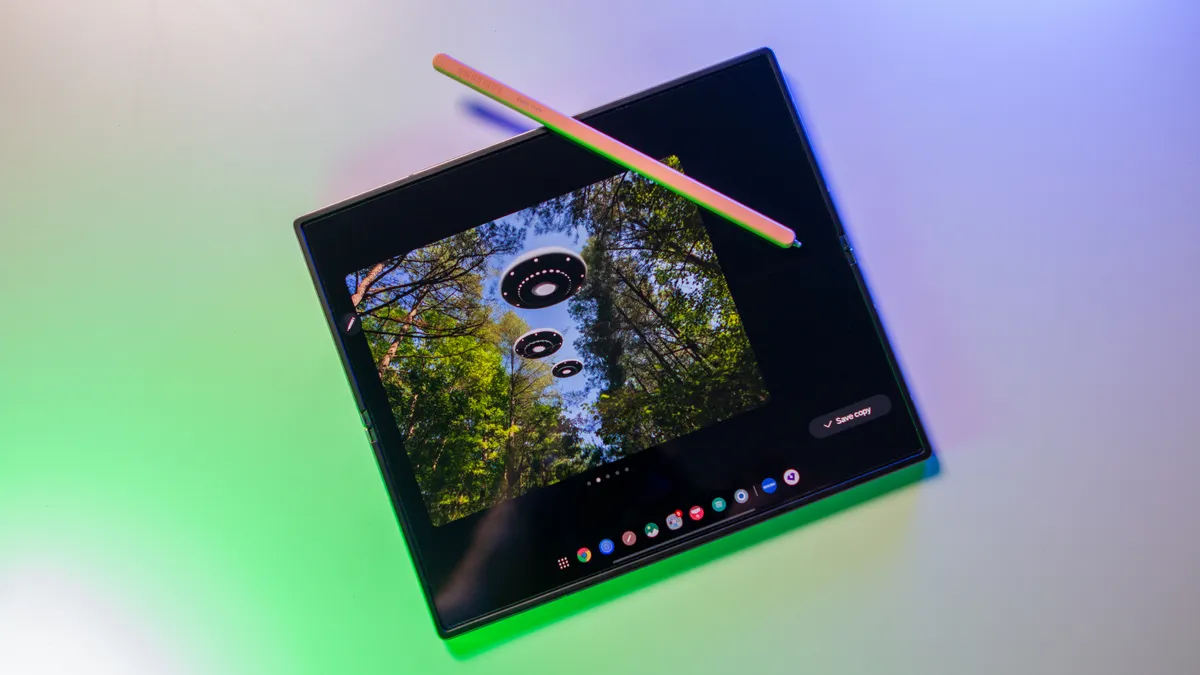
Something else I’m planning on diving deeper into, but thought was worth mentioning are some of the Galaxy AI features. The “Sketch to Image” feature, to be more precise. Before going further, I invite you to enjoy a hearty laugh at my drawings. There’s a reason why I take pictures and type on a keyboard for a living.
Okay, with that out of the way, I think this is arguably one of the coolest things that’s possible with Galaxy AI. You can either draw something out in the Samsung Notes app or use AI to generate images. I know my “artistry” is on par with a 3rd grader, but c’mon, I expected results better than what I got.
Image 1 of 6
(Image credit: Andrew Myrick / Android Central)
(Image credit: Andrew Myrick / Android Central)
(Image credit: Andrew Myrick / Android Central)
(Image credit: Andrew Myrick / Android Central)
(Image credit: Andrew Myrick / Android Central)
(Image credit: Andrew Myrick / Android Central)
However, where this feature managed to impress was when making additions to pictures I’ve taken. For the first one, I tried to draw a sailboat with shark fins surrounding it. So while it didn’t exactly get what I was going for, the end result was much better than expected, even adding reflections in the water.
(Image credit: Andrew Myrick / Android Central)
Next up, was drawing a crown on my son’s head of a picture I snapped while out at a local crab house. This one turned out just about perfect, and you can’t even tell that it’s AI-generated, except for the watermark in the bottom left corner. There’s no way to avoid this, even when using Samsung’s built-in wallpaper generator.
Last but not least, a bear made a surprise appearance while I was walking down to a local beach. Okay, but seriously, this is the fun stuff when it comes to the onslaught of AI generators and buzzwords. The only problem is that, at least with Sketch to Image, it’s really just a parlor trick, albeit an impressive one.
Samsung Galaxy Z Fold 6: Conclusion and more to come
(Image credit: Andrew Myrick / Android Central)
There are a couple of things I’m going to save for the full review, such as the camera along with diving deeper into performance and battery life. With performance, the Snapdragon 8 Gen 3 for Galaxy performs just as well as you’d suspect. The Fold 6 is fast and snappy, as I have yet to run into any game-breaking slow-downs, save for when I’m trying to emulate Switch games. But again, more on that in the full review.
Although I talked about a lot here, there’s still so much more that I want to cover, such as Samsung DeX, the cameras, and gaming. Even still, the Galaxy Z Fold 6 has managed to surprise and impress, despite me having basically written it off before Samsung announced it. I don’t know what else I’ll find in my testing, but be sure to reach out if there’s something specific you would like to see covered.
The best Galaxy Z Fold
Even though Samsung hasn’t implemented any meaningful upgrades, the Galaxy Z Fold 6 is still the company’s best foldable device ever released. A higher price tag and iterative update make this a tough sell, even for the biggest of foldable fans.
As remote work becomes an increasingly common aspect of professional life, having an effective and comfortable home workspace is more important than ever. A well-designed remote workspace can significantly boost your productivity, enhance your focus, and improve your overall well-being. Whether you’re new to working from home or looking to optimize your current setup, creating an environment tailored to your needs is crucial.
In this blog, we will explore practical tips and strategies to help you set up a remote workspace that maximizes efficiency and comfort. From choosing the right furniture to managing distractions, these insights will guide you in creating a home office where you can thrive after you have landed your dream remote job.
Why Set Up a Home Office for Remote Work?
Setting up a dedicated home office for a remote job is essential for enhancing productivity, maintaining a healthy work-life balance, and ensuring a professional environment.
A well-organized workspace reduces distractions, promotes efficient workflow, and allows for ergonomic customization, which can prevent physical strain. Additionally, it helps establish clear boundaries between work and personal life, reducing stress and improving overall well-being. By creating a comfortable and professional setting, you can optimize your remote work experience and achieve greater job satisfaction.
Setting up a Home Office For Remote Work
Creating an efficient and comfortable remote workspace is essential for productivity and well-being. Here are some work from home tips to increase productivity and key steps to help you set up an ideal remote workspace:
1. Choose a Dedicated Space:
Select a Quiet Area: Find a quiet, separate area in your home that can be dedicated solely to work.
Avoid High-Traffic Areas: Choose a location away from busy areas to minimize distractions.
2. Invest in Ergonomic Furniture:
Ergonomic Chair: Invest in a comfortable chair that provides good lumbar support to prevent back pain.
Sturdy Desk: Use a desk that is at a comfortable height and has enough space for your work essentials.
3. Ensure Proper Lighting:
Natural Light: Position your workspace near a window to take advantage of natural light while working remotely.
Desk Lamp: Use a good desk lamp to reduce eye strain, especially if your workspace lacks sufficient natural light.
4. Organize Your Supplies:
Keep Essentials Handy: Keep pens, notebooks, and other supplies within easy reach.
Declutter: Maintain a tidy workspace by organizing your supplies and minimizing clutter even if you are working in a hybrid setup.
5. Set Up Technology:
Reliable Internet: Ensure you have a stable and fast internet connection to support video calls, interviews and online work.
Computer and Peripherals: Use a reliable computer, monitor, keyboard, and mouse. Consider an external monitor for better screen real estate.
Headset and Webcam: Invest in a good quality headset and webcam for clear communication during virtual meetings.
6. Manage Cables:
Cable Organizers: Use cable organizers or clips to keep cords and wires neat and out of the way.
Power Strips: Ensure you have enough power outlets and use power strips to manage multiple devices.
7. Personalize Your Space:
Add Personal Touches: Include items like plants, photos, or artwork to make your workspace inviting and comfortable.
Comfort Items: Consider adding a cushion or a small fan/heater to adjust the comfort level of your workspace.
8. Maintain a Healthy Posture:
Monitor Height: Position your monitor at eye level to avoid straining your neck.
Footrest: Use a footrest if your feet don’t comfortably reach the floor.
9. Create a Routine:
Set Work Hours: Establish regular work hours to create a sense of routine and maintain work-life balance while working remotely.
Breaks: Schedule regular breaks to stretch, move around, and rest your eyes.
10. Minimize Distractions:
Noise-Canceling Headphones: Use noise-canceling headphones to block out background noise.
Productivity Tools: Use productivity remote work tools and apps to stay focused and manage your tasks effectively.
11. Ensure Security:
Secure Network: Use a secure Wi-Fi network and consider a VPN for added security.
Backup Data: Regularly back up your data to prevent loss of important work.
12. Incorporate Sound Management:
Soundproofing: If possible, add soundproofing elements like rugs, curtains, or acoustic panels to reduce noise distractions.
White Noise Machine: Consider using a white noise machine or app to mask background noises and help you concentrate.
13. Optimize Air Quality:
Ventilation: Ensure your workspace is well-ventilated to maintain good air quality.
Air Purifier: Use an air purifier to reduce allergens and pollutants, creating a healthier work environment.
14. Set Up Multiple Monitors:
Dual Monitors: If your work involves multitasking or requires a lot of screen space, set up dual monitors to increase productivity and reduce the need to constantly switch between windows.
Monitor Stands: Use adjustable monitor stands to position screens at eye level, promoting better posture.
15. Create a Backup Plan:
Power Backup: Invest in an uninterruptible power supply (UPS) to keep your devices running during power outages.
Data Backup: Regularly back up your data using cloud storage solutions or external hard drives to prevent data loss.
Setting Up a Home Office for Remote Work
By following these steps, you can create a remote workspace that is both functional and comfortable, helping you stay productive and maintain a healthy work-life balance.
Setting up a dedicated home office, will help you create a conducive environment that supports your productivity, well-being, and professional growth. Investing time and resources into establishing a proper workspace can yield significant long-term benefits, making remote work a more enjoyable and sustainable experience.
If you are looking for remote work, there’s no better place to start than DailyRemote. So, what are you waiting for? Get started today, find the remote job of your dreams, start applying today. Join like-minded people in our