In this SportStream segment, Gary is joined by Janel from LiveU where we dive into the future of sports streaming with LiveU’s cutting-edge lightweight production solutions. Discover how to elevate your sports broadcasts with innovative technology designed for seamless, high-quality live streaming. Whether you’re a seasoned professional or new to the world of sports production, this event offers valuable insights, hands-on demonstrations, and networking opportunities with industry leaders. Don’t miss out on the chance to revolutionize your sports streaming capabilities!
I am using Visual Studio version 2022 to develop and maintain an application database.
The database has over 1900 tables,1600 stored procedures, 1600 views, 200 triggers, 120 functions…
It takes approximately 45 to 60+ minutes to do schema compare.
Is there a way to accelerate the schema compare or to partition the database project so that it more manageable when running schema compare?
I have tried:
Running Visual Studio on a beefy virtual desktop
Run a trace to create plan guides which did help for the first schema compare after creating the plan guides and then it reverted back to it’s usual 45+ minutes to complete
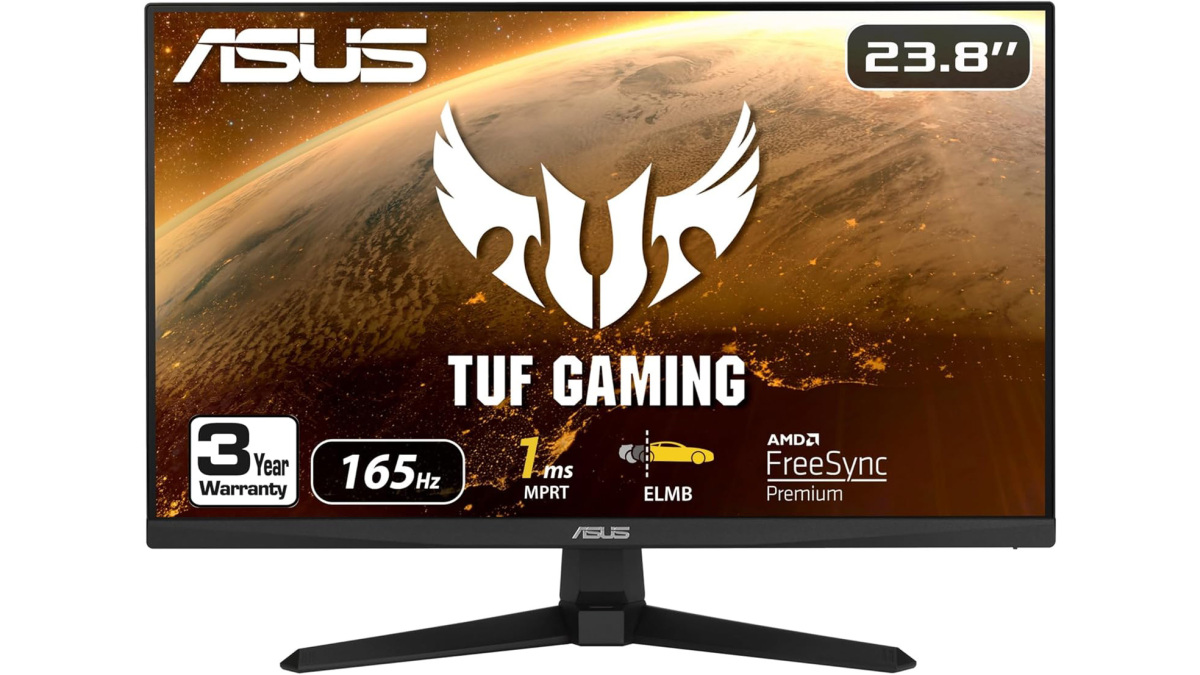
Do you want to try PC gaming but are too afraid to spend big? Because let’s be honest, when one thinks of those gaming monitors, one thinks of big expenses. But not today: The Asus TUF Gaming VG247Q1A is currently available for a jaw-dropping $99, a huge 31% off its regular list price of $159. This is your chance to snag a high-performance gaming monitor without breaking the bank.
The VG247Q1A has an ultrafast 165Hz refresh rate (with 144Hz support), which only means one thing: smooth visuals and no more laggy games. Asus’s Extreme Low Motion Blur (ELMB) technology has a 1ms response time, which virtually eliminates ghosting and motion blur.
Not only this but with FreeSync Premium technology, you can say goodbye to screen tearing and choppy frame rates. The VG247Q1A synchronizes its refresh rate with your graphics card, and what you get is fluid gameplay. It’s compatible with both NvidiaGeForce (GTX 10 series and newer) and AMD Radeon graphics cards.
Now, the size. In one word: it’s big enough (that’s three). The 23.8-inch Full HD (1,920 by 1,080) display can give you vibrant, immersive visuals from all angles, with wide 178-degree viewing angles, which means even multiplayer games with your close friends or cousins are possible. The great viewing angle also minimizes distortion and color shift. Asus’ Shadow Boost technology improves details in dark areas without overexposing bright regions.
To help minimize eye strain during marathon gaming sessions or binge watching that TV series, the VG247Q1A has Asus’ Ultra-Low Blue Light technology and Flicker-Free technology.
It has a DisplayPort 1.2, two HDMI (v1.4) ports, and a 3.5mm audio jack, which means that this Monitor has a lot of connectivity options for your gaming rig and other multimedia devices. The included cables and accessories make setup a breeze.
Users just love it. The Asus TUF Gaming VG247Q1A has an impressive 4.7-star rating from over 7,600 satisfied customers.
First impressions are crucial in a job interview, and your introduction sets the stage for the entire conversation. How you introduce yourself can make a lasting impact on your interviewer, influencing their perception of your confidence, professionalism, and suitability for the role.
Crafting a compelling introduction involves more than just stating your name and background; it’s about presenting yourself in a way that highlights your strengths and aligns with the company’s needs. In this blog, we will provide you with practical tips on how to introduce yourself effectively in a job interview, ensuring you start on the right foot.
Tips to Introduce Yourself in a Job Interview
Making a strong first impression in a job interview is crucial, and your introduction sets the tone for the rest of the conversation. Here are ten tips to help you introduce yourself effectively:
1. Prepare in Advance:
Research the Company: Understand the company’s mission, values, and culture. Tailor your introduction to align with what the company stands for.
Know the Role: Familiarize yourself with the job description and requirements so you can highlight relevant skills and experiences.
2. Dress Appropriately:
Professional Attire: Choose attire that is appropriate for the company’s dress code. When in doubt, opt for business professional attire.
Grooming: Ensure you are well-groomed, as this contributes to a positive first impression.
3. Body Language:
Confident Posture: Stand or sit up straight, and maintain good posture throughout the interview.
Eye Contact: Make eye contact with the interviewer to show confidence and engagement.
Firm Handshake: If appropriate, offer a firm handshake when you first meet the interviewer.
4. Start with a Smile:
Positive Attitude: A genuine smile can help break the ice and create a positive atmosphere.
5. Introduce Yourself Clearly:
Full Name: Start with a simple and clear introduction of your full name.
Brief Background: Provide a concise summary of your professional background, focusing on key experiences and achievements relevant to the role.Example: “Hello, my name is Jane Smith. I have over five years of experience in digital marketing, specializing in social media strategy and content creation.”
6. Highlight Relevant Skills and Experiences:
Tailor to the Role: Mention specific skills, experiences, and accomplishments that are directly relevant to the job you are applying for.
Quantify Achievements: Use numbers and metrics to quantify your achievements where possible.Example: “In my previous role at XYZ Company, I increased social media engagement by 40% and led a successful campaign that generated a 20% increase in website traffic.”
7. Show Enthusiasm:
Express Interest: Clearly express your enthusiasm for the role and the company.
Align with Company Values: Mention why you are excited about the opportunity and how it aligns with your career goals and values.Example: “I’m particularly excited about this opportunity because I admire ABC Company’s commitment to innovation and sustainability, which aligns with my own values and career aspirations.”
8. Be Concise and Focused:
Keep It Short: Aim to keep your introduction brief and to the point, ideally under two minutes.
Avoid Rambling: Stick to the most relevant information and avoid going off on tangents.
9. Practice:
Rehearse: Practice your introduction multiple times to ensure you can deliver it smoothly and confidently.
Seek Feedback: Consider practicing with a friend or mentor and ask for feedback to refine your introduction.
4 Example Interview Greetings and Introductions
Crafting a strong greeting and introduction can set a positive tone for the rest of your job interview. Here are four example greetings and introductions tailored to different scenarios:
1. Standard Professional Introduction
Scenario: A typical corporate job interview.
Greeting and Introduction: “Hello, my name is John Doe. It’s a pleasure to meet you. I have over seven years of experience in project management, specializing in leading cross-functional teams to deliver complex projects on time and within budget. In my last role at XYZ Corporation, I successfully managed a project that improved operational efficiency by 30%. I’m excited about the opportunity to bring my skills to ABC Company and contribute to your ongoing success.”
2. Creative Industry Introduction
Scenario: An interview for a creative role, such as graphic design or marketing.
Greeting and Introduction: “Hi, I’m Jane Smith. It’s great to meet you. I have a background in graphic design with a strong focus on visual storytelling and brand identity. Over the past five years, I’ve worked with various clients to create compelling visual content that resonates with their target audience. At my previous job, I led a rebranding project that resulted in a 50% increase in customer engagement. I’m thrilled about the possibility of joining your team and bringing fresh, creative ideas to your projects.”
3. Technical Role Introduction
Scenario: An interview for a technical position, such as software development or engineering.
Greeting and Introduction: “Good morning, I’m Alex Johnson. Thank you for the opportunity to interview today. With a decade of experience in software development, I have a strong proficiency in languages like Python, Java, and C++. At my current position with Tech Innovations, I developed an automated system that reduced data processing time by 40%. I’m very interested in the innovative projects at DEF Technologies and believe my technical skills and problem-solving abilities would be a great fit for your team.”
4. Entry-Level Position Introduction
Scenario: An interview for an entry-level position or internship.
Greeting and Introduction: “Hello, my name is Emily Brown. It’s a pleasure to be here. I recently graduated from State University with a degree in Business Administration. During my studies, I completed an internship at GHI Enterprises, where I assisted in market research and data analysis, contributing to a successful product launch. I’m eager to start my career at JKL Company, where I can apply my academic knowledge and continue to grow professionally.”
5 Things to Avoid During a Job Interview Introduction
Your introduction in a job interview sets the tone for the entire conversation. While it’s important to make a strong, positive impression, there are certain pitfalls you should avoid. Here are five things to steer clear of during your job interview introduction:
1. Being Unprepared:
Avoid: Starting your introduction without a clear plan or understanding of what you want to convey.
Tip: Prepare and practice your introduction in advance, focusing on key points that highlight your qualifications and enthusiasm for the role.
2. Overloading with Information:
Avoid: Providing too much information or going into excessive detail about your background right from the start.
Tip: Keep your introduction concise and focused on the most relevant experiences and skills. Aim for a brief overview that piques the interviewer’s interest.
3. Negative Body Language:
Avoid: Slouching, avoiding eye contact, or exhibiting nervous habits like fidgeting.
Tip: Maintain good posture, make eye contact, and offer a firm handshake if appropriate. Use confident and positive body language to convey professionalism and self-assurance.
4. Speaking Too Fast or Too Slow:
Avoid: Rushing through your introduction or speaking so slowly that you lose the interviewer’s attention.
Tip: Practice speaking at a moderate pace. Take a deep breath before you start and focus on clear, articulate communication.
5. Being Too Casual or Overly Formal:
Avoid: Using overly casual language or being too stiff and formal in your introduction.
Tip: Strike a balance by being professional yet approachable. Use language that is respectful and appropriate for the interview setting while allowing your personality to shine through.
Conclusion
Mastering your introduction in a job interview is a key step towards making a positive impression and setting the tone for a successful conversation. By preparing thoroughly, highlighting relevant skills and experiences, and presenting yourself confidently and professionally, you can capture the interviewer’s attention from the outset.
By avoiding these common pitfalls, you can ensure that your job interview introduction is effective and leaves a positive impression. Preparation, concise communication, positive body language, appropriate pacing, and a balanced tone are key elements to focus on for a successful introduction.
Remember, a strong introduction not only showcases your qualifications but also demonstrates your enthusiasm for the role and the company. With these tips in mind, you’ll be well-equipped to introduce yourself effectively and move one step closer to landing your desired job.
If you are looking for remote work, there’s no better place to start than DailyRemote. So, what are you waiting for? Get started today, find the remote job of your dreams, start applying today. Join like-minded people in our

Much like the movie that spawned it, Matt Reeves‘ 2022 The Batman, new HBO series The Penguin invites the viewer to creep into Gotham City’s dark, gritty underworld. There’s nothing bright and glossy about Oz Cobb (Colin Farrell) and his life on the mean streets—he may have comic-book origins, but authenticity is the buzzword here. That commitment extends even to the character’s prosthetic make-up. Sure, there are the facial layers that make Farrell largely unrecognizable, but The Penguin is also going below the belt when necessary.
In the opening episode for the spinoff series, Cobb and his foe Sofia Falcone (Cristin Milioti) share a scene in which he’s tied up and tortured by her henchman as she takes him to task for his role in the death of her brother, Alberto. It’s a tense interrogation but the scene is made even more agonizing by the fact that Cobb is completely naked. The audience only gets a glimpse at his fleshy body from the side, but apparently care was taken to transform all of Farrell into the character.
Speaking to Variety, Farrell explained how the show’s prosthetics designer, Michael Marino, who also made the face and body additions he wears while in character, crafted an “anatomically correct” appliance for him to wear… down there. “I had a velcro piece to stick on, and a nice retro bush,” the actor said, calling the prosthetic a source of “surreal discomfort.” Even though he was technically fully covered, he felt so vulnerable he covered up with a towel between takes.
“That was kind of the strange psychological no man’s land that you could find yourself in when you’re the canvas to something as powerful as the makeup designed for it,” he explained. “I felt incredibly exposed, even though I was anything but. I was totally covered, but I was covered by a naked man. And it’s not like I thought I was him, but it had a very strange effect on my ego.”
The Penguin runs for a total of eight episodes, with new installments arriving Sundays on HBO and Max. In addition to Farrell and Milioti, it stars Rhenzy Feliz (as Victor Aguilar), Michael Kelly (Johnny Viti), Shohreh Aghdashloo (Nadia Maroni), Deirdre O’Connell (Francis Cobb), Clancy Brown (Salvatore Maroni), James Madio (Milos Grapa), Scott Cohen (Luca Falcone), Michael Zegen (Alberto Falcone), Carmen Ejogo (Eve Karlo), and Theo Rossi (Dr. Julian Rush). It was developed by showrunner Lauren LeFranc.
However you want to approach your daily Wordle, we’ve got something here that’ll help you out. There are a few quick tips below if you’d like to learn how to improve every single guess, every day, as well as a handcrafted hint for today’s puzzle, and the answer to the September 24 (1193) Wordle waiting to be used, ready to save your win streak.
I regretted my first guess the instant I typed it in—just one yellow letter? Not a great start. I wouldn’t have minded so much if my second guess hadn’t looked eerily similar, with the yellow doing nothing more than switch positions. It was well worth persevering with though, as I turned it around soon after. Make sure you use our clue if you find yourself in a similar position, and save yourself the worry.
Today’s Wordle hint
(Image credit: Josh Wardle)
Wordle today: A hint for Tuesday, September 24
If something is today’s word, it’ll be convenient and useful in a clever way, as well as easily accessible. A jar opener kept in a kitchen drawer is one example.
Is there a double letter in Wordle today?
There are no double letters in today’s Wordle.
Wordle help: 3 tips for beating Wordle every day
Looking to extend your Wordle winning streak? Perhaps you’ve just started playing the popular daily puzzle game and are looking for some pointers. Whatever the reason you’re here, these quick tips can help push you in the right direction:
Start with a word that has a mix of common vowels and consonants.
The answer might repeat the same letter.
Try not to use guesses that include letters you’ve already eliminated.
There’s no racing against the clock with Wordle so you don’t need to rush for the answer. Treating the game like a casual newspaper crossword can be a good tactic; that way, you can come back to it later if you’re coming up blank. Stepping away for a while might mean the difference between a win and a line of grey squares.
Today’s Wordle answer
(Image credit: Future)
What is today’s Wordle answer?
Need a little help? The answer to the September 24 (1193) Wordle is HANDY.
Keep up to date with the most important stories and the best deals, as picked by the PC Gamer team.
Previous Wordle answers
The last 10 Wordle answers
Wordle solutions that have already been used can help eliminate answers for today’s Wordle or give you inspiration for guesses to help uncover more of those greens. They can also give you some inspired ideas for starting words that keep your daily puzzle-solving fresh.
Here are some recent Wordle answers:
September 23: STEAM
September 22: TEACH
September 21: SEVEN
September 20: SMOKE
September 19: PRESS
September 18: FULLY
September 17: BEAUT
September 16: HONEY
September 15: RECUR
September 14: BROAD
Learn more about Wordle
(Image credit: Nurphoto via Getty)
Wordle gives you six rows of five boxes each day, and it’s up to you to work out which five-letter word is hiding among them to win the popular daily puzzle.
It’s usually a good plan to start with a strong word like ALERT—or any other word with a good mix of common consonants and multiple vowels—and you should be off to a flying start, with a little luck anyway. You should also avoid starting words with repeating letters, so you don’t waste the chance to confirm or eliminate an extra letter. Once you hit Enter, you’ll see which letters you’ve got right or wrong. If a box turns ⬛️, it means that letter isn’t in the secret word at all. 🟨 means the letter is in the word, but not in that position. 🟩 means you’ve got the right letter in the right spot.
Your second guess should compliment the first, using another “good” word to cover any common letters you might have missed on the first row—just don’t forget to leave out any letter you now know for a fact isn’t present in today’s answer. After that, it’s just a case of using what you’ve learned to narrow your guesses down to the correct word. You have six tries in total and can only use real words and don’t forget letters can repeat too (eg: BOOKS).
If you need any further advice feel free to check out our Wordle tips, and if you’d like to find out which words have already been used, you can scroll to the relevant section above.
Originally, Wordle was dreamed up by software engineer Josh Wardle, as a surprise for his partner who loves word games. From there it spread to his family, and finally got released to the public. The word puzzle game has since inspired tons of games like Wordle, refocusing the daily gimmick around music or math or geography. It wasn’t long before Wordle became so popular it was sold to the New York Times for seven figures. Surely it’s only a matter of time before we all solely communicate in tricolor boxes.
The days of the “@[insert username] blocked you” page appear to be over. X owner Elon Musk announced a new change to allowing blocked users to see posts of the accounts that blocked them.
Blocked accounts still won’t be able to interact with those accounts but they’ll be able to see their posts. A source from X told the new blocked access feature is being implemented because users can already see and interact with accounts that have blocked them by switching to a non-blocked account.
Musk has wanted to disable the block feature on X for awhile now. More than a year ago, he first expressed (or technically, Twitter) except for direct messages. He wrote that blocking would become “deleted as a ‘feature’” as well as saying “It makes no sense.”
Last May, announced it would implement the blocked viewer change to the platform without including a solid implementation or rollout date. The post said the change would be implemented to give users with blocked accounts the ability to “identify and report any potential bad content that you previously could not view.”
One of our main goals is to help you and your team collaborate more effectively and efficiently on your software projects. That’s why we are constantly improving our Version Control features, especially the ones related to the pull request workflow. Starting in Visual Studio version 17.11, you can enjoy a smoother and smarter pull request experience, from creating to reviewing to merging. You can link your Azure DevOps work items, and in both Azure DevOps and GitHub you can create draft PRs and use default templates. You can even get AI assistance to write your pull request descriptions. Plus, you can view and respond to your pull request comments right in the editor, without leaving Visual Studio. Sounds awesome, right? Download the latest Visual Studio release and see for yourself!
We were so excited by the enthusiastic reception to the new Create a Pull Request flow and the subsequent updates. This feature had hundreds of survey responses, and we read every single comment. We’ve delivered on the top concerns, enabling Azure DevOps work item linking, default Pull Request templates, and draft PRs.
The Azure DevOps “New Pull Request” window now has a section where you can add your linked work items. These items are reflected in the web as being linked – avoiding the context switch to the web and fulfilling many branch policies that require a linked ticket.
Default pull request templates will auto-populate in the description box if there’s one available. Learn more about how to add default templates in your repository in the GitHub documentation and Azure DevOps documentation.
Create your pull request as a draft using the drop down menu on the “Create” button. This lets your colleagues know it’s a work in progress.
Learn more about the GitHub Copilot generated pull request descriptions in our previous blog.
View your pull request comments in the editor
Mapping between your code editor and your browser to view pull request comments can be a hassle. We’ve added your GitHub and Azure DevOps pull request comments directly in your working file. You can now stay in your context, make necessary code changes, and interact with your colleagues’ suggestions without switching contexts to the browser.
Enable the feature flag, “Pull Request Comments”, then checkout any branch with an active pull request branch and click on “Show comments in file”. You can also click on the “PR #” entry point from the Git Changes window or from the Git top level menu with Git > GitHub or Azure DevOps > Show comments in File.
You can navigate between files in the pull request and comments in the files using the toolbar. Leverage the following keyboard shortcuts:
Go to the previous file in the pull request
Ctrl+Shift+Alt+F6
Go to the next file in the pull request
Ctrl+Alt+F6
Go to the previous comment
Ctrl+Shift+Alt+F8
Go to the next comment
Ctrl+Alt+F8
Move focus back to the code from a comment
Esc
In the last preview we included better support for @ mentions and work item references for your comments. We also improved the UI with the addition of avatars, other visual tweaks to improve accessibility, and we enabled better syncing with the server.
Contribute to what’s next
A smoother pull request experience helps your collaborations thrive! Be sure to try out the latest features in Visual Studio 17.11 GA and share your feedback in the following surveys:
We plan to continue improving the pull request experience based on your feedback, so let us know what’s missing and what you’re looking forward to! We’ve got a lot of functionality on the roadmap, including adding new pull request comments and seeing the comments in the diff view between your source and target.
We appreciate the time you’ve spent reporting issues/suggestions and hope you continue to give us feedback when using Visual Studio on what you like and what we can improve. Your feedback is critical to help us make Visual Studio the best tool it can be! You can share feedback with us via Developer Community: report any bugs or issues via report a problem and share your suggestions for new features or improvements to existing ones.
With ever-evolving regulations and 38% of CDOs prioritizing data governance improvements this year, understanding and managing the lifecycle and integrity of data has never been more important. This usually involves many manual, error-prone processes that take time and effort – which is why forward-thinking enterprises are now looking to AI-powered data lineage tools.
Not only does this type of technology streamline operations, but it also prevents AI-related bias, elevates the accuracy of tracing data to its origins and makes it easier to demonstrate compliance with laws like the EU AI Act, GDPR and the CCPA.
In this eBook, you’ll learn:
The benefits of these tools, like improved efficiency and enhanced data governance
Have you used up the 15GB of free storage that comes with your Gmail account? Have you tried to delete a few spammy emails or unsubscribe to those newsletters you stopped reading, but still found yourself with thousands of unread messages? Does the idea of cleaning out your Gmail inbox sound impossible? Before you start paying for extra storage, read on: there’s an easy way to get your account back to inbox zero while keeping all your old email.
All you need to do is create a second Gmail account to store all of your current messages. There’s no restriction on the number of free Google accounts you can own, which means you can set one up as a dedicated archive account, and then transfer all your old emails to it.
Transferring your Gmail messages is also a great strategy if you have a school or business Gmail account that you won’t be able to access permanently. Most universities and businesses will deactivate your account once you are no longer a student or employee, so if you want to view your old messages and files, you’ll have to port them to a personal account before you lose access.
Completing the whole process of transferring your Gmail messages to a new account doesn’t take too long, but it will be dependent on just how many messages you have. We’ll walk you through the simple process of transferring your emails from your old account to a new one (including the important step of backing everything up first).
Fifteen gigabytes of free storage may sound like a lot when you make a Gmail account, but it gets filled up quickly. For starters, the 15GB isn’t just used for email: it also includes the files you’ve saved in your Google Drive and Google Photos.
If you frequently send or receive messages that contain large files such as videos, or if you find yourself uploading a lot of pictures and videos to your Google Photos, then it won’t be long before you’ll see the “Account storage is full” notification. This means that you will no longer be able to send or receive emails on this account, so you’ll want to do something ASAP.
The quickest solution is to upgrade to a Google One account. Even if you opt for the least expensive plan — 100GB for $20/year — you’ll still end up paying money to store old emails that you might not even need anymore.
If you don’t want to buy more storage, you can always delete your old emails. You can get back a surprising amount of storage space by putting large files in the trash. Gmail makes it easy for you to identify and delete files by size. Even so, that option might seem tedious; maybe you don’t want to spend hours sifting through correspondence from a decade or more ago, deciding which memories to keep and which to get rid of forever.
There’s always the option to download large files to your desktop before you delete them from your Google account, but at some point, you’ll probably run into the same issue with your local files and have to manage the storage space on your device.
This brings us to our “nuclear option:” Transferring all your emails to a new Gmail account.
How to transfer your Gmail messages to a new email account
Before you start the Gmail transfer process, we recommend that you back up your emails. You can do this by downloading your emails either to your computer or an external hard drive. You can delete the backup after you finish transferring the emails to your new account if you like, but it’s always a good idea to have an extra copy stored locally.
To back up your Gmail messages, go to Google Takeout. Using our test Gmail account that held about 75,000 messages, we got a download from Google Takeout in about 2 hours.
Once you’ve saved a copy of your emails, you’re ready to begin transferring them. Here are the steps you need to take:
1. Start by logging into your original Gmail account, clicking the “gear” icon in the top right and clicking See all settings.
2. Select the Forwarding POP/IMAP tab, and then select the option Enable POP for all mail (POP stands for Post Office Protocol).
3. You’ll have several options under When messages are accessed with POP. To automatically delete the emails from your original account after the transfer, select delete Gmail’s copy.
4. Select Save Changes.
Now it’s time to create your new account and transfer all your messages there:
1. Login to your new archive account, click the gear icon at the top and select See all settings.
2. Select the Accounts and Import tab at the top, and then select Add a mail account next to Check mail from other accounts.
3. In the pop-up window, enter in the name of your original Gmail account. Select Next.
4. Select Import emails from my other account (POP3), andselect Next again.
5. Enter the password of your original Gmail account. You might also be required to create a Google app password (see note below).
6. Select 995 under Port.
7. Check these 3 boxes: Always use a secure connection (SSL) when retrieving mail, Label incoming messages, Archive incoming messages (Skip the Inbox)
8. Select Add Account.
You’ll probably need to create a Google app password to transfer Gmail messages
We tested this Gmail message transfer process twice, and both times the standard password for the Gmail accounts did not work. After a bit of research, we determined that we’d need to create a temporary “app password” to sync the accounts.
Google app passwords are 16-digit passcodes created for “less secure” apps or devices to access your Google account. They work exactly like your Google password.
If your regular Google password doesn’t work for syncing Gmail accounts, visit https://myaccount.google.com/apppasswords to create an app password. Simply create a name for the password — we used “Transfer Bulk Email” — and then hit the Create button. You’ll get a pop-up window with your new 16-digit passcode.
Once you’ve created the app password, return to step 6 of the instructions above and use that new app password instead of your usual password.
Important: Google will only display your app password once. After you’ve created it, you can’t ask to see it again, so be sure to write it down or otherwise record it after it’s been created.
Google’s own Help Center mentions that “app passwords aren’t recommended and are unnecessary in most cases.” So once you’re done transferring your Gmail messages, we recommend deleting your app password.
What happens after my Gmail accounts are synced?
Once you’ve successfully linked your new Gmail archive account to your original account, your emails should begin to transfer automatically. The process could take several hours or days, depending on how many emails you have.
In our test account with about 75,000 messages, we found that it took Gmail about 2 full days to transfer all of them from the original account to the new archived mail account.
Important: After transferring your Gmail messages to your archived mail account, your original Gmail account will place all those messages in the Trash folder, which you’ll need to empty manually. Clearing out those 75,000 messages from the Trash took about an hour.
Before transferring Gmail messages, our test account was using a little more than 12GB, or 80%, of Google’s free 15GB. After transferring, the account was only using 0.66GB, of which 0.06GB was from Gmail.
What Gmail messages won’t be transferred?
We found that Gmail transferred all of our messages except for two categories — Drafts and Spam.
You’ll need to decide what to do with your Drafts manually. Spam messages are automatically deleted every 30 days, so you can let Gmail handle that, or go into the Spam folder yourself after transferring your mail and delete or forward those messages.
Once all of your emails have been imported to your new account, enjoy the experience of inbox zero. You’ve given your original account a new lease on life.
At this point, there are two last steps: you’ll want to stop the automatic transfer process so that you can continue using your original account, and you’ll want to delete that app password if you had to make one.
1. Login to your new account, go into your Settings and select See all settings.
2. Select the Accounts and Import tab, and then select delete for your original account (under Check mail from other accounts.)
3. When prompted to Confirm delete mail account, select OK.
If you had to create a Google app password and want to delete it now, go back to https://myaccount.google.com/apppasswords and click the trashcan icon next to the password you created.
Congrats, you’re done.
One important final note: Google will delete accounts that have been inactive for more than two years. So make sure you don’t completely ignore all your old emails after transferring them. If you don’t plan to regularly use your archive account to send email, you can still keep the account active by signing in at least once every two years.