Inside Cyberbacker: CEO Craig Goodliffe’s Open-Door Policy


Home Business Magazine Online

Leading with humanity is one of my highest priorities. I want my staff to know I am a person just like they are, with similar dreams, fears, and practices. I want us to understand each other so we can work better together.

I also want to show them my humanity, so I’ve developed what might seem like an extreme open-door policy. It’s a tradition we have with our new hires in which I allow them to ask me any question they want about my professional or personal life.

The tradition is a little risky, although the questions I’m asked are rarely awkward or inappropriate. However, it is invaluable for setting a tone of trust and transparency in our organization, which I always want to do from day one of a new hire.

What does extreme transparency accomplish?

The overarching goal of our no-holds-barred Q&A tradition is to establish an open dialogue. If I can convince our new hires that our leadership — from the CEO on down — is approachable and interested in their questions, then I can open the door to an open dialogue that supports clarity, engagement, and innovation.

We conduct the Q&A session in a fun and festive way, which helps establish rapport with our new employees. Building a strong rapport allows us to build trust, which supports healthy communication and establishes a relationship in which everyone feels comfortable offering and receiving feedback.

By welcoming new hires into an environment of transparency, we also attempt to communicate to them how much they are valued and respected. Starting with their onboarding, we want them to know we trust them with whatever information they need to engage and thrive. The Q&A session breaks down the barriers that can often exist in traditional corporate structures, setting the stage for a culture driven by teamwork.

As a company that operates a remote work model, this tradition also helps us to address the isolation remote workers can sometimes feel by creating a sense of closeness and camaraderie as we pull back the curtain that typically separates a CEO from new hires. It also gives our new hires a shared experience that can help them to integrate more quickly into their new teams.

Craig Goodliffe, CEO & Founder
Craig Goodliffe, CEO & Founder – Cyberbacker

How do we make it happen?

As I mentioned above, we strive to make the Q&A session fun and festive. This is extremely important since new hires can feel anxious when settling into their new positions. By creating an event that allows us to laugh together, we strive to alleviate some of that anxiety.

We also orchestrate the Q&A so new hires can remain anonymous while asking their questions. This is why we make sure their questions are written down and read by another person during the event. Providing this anonymity makes it easier for new hires to ask whatever is on their minds.

What kind of questions are asked?

Offering to answer any question, professional or personal, in front of a group of relative strangers can involve a bit of a fear factor, but after doing it numerous times, I’ve found the questions are rarely uncomfortable. I’ve also found each group of new hires typically has the same (or at least very similar) questions.

For example, new hires will typically ask about my worst failures and embarrassments, which shows me that the people who work for us are more interested in our struggles than in our strengths. I enjoy this question because it allows me to communicate that our company is not led by a group of perfect people but by people who have achieved success through perseverance.

There is also usually a question about decisions I have made that I would go back and change if I could. Answering this question requires admitting you’ve made mistakes, which is a great thing to share if you are seeking transparency because it shows you are fallible and not afraid to admit it.

Another common question focuses on the moments in my life that have been most challenging. Sharing the challenges I’ve faced in my professional and personal life is a big part of leading with humanity. It shows that I understand we are all human and will all encounter things that reveal our weaknesses.

Our Q&A tradition is not only a great way to welcome new hires to the team but also an investment that pays dividends far into the future. By showing how much we value transparency, trust, and clear communication, we can better foster engagement, ownership, and teamwork among our new hires and team members.

The post Inside Cyberbacker: CEO Craig Goodliffe’s Open-Door Policy appeared first on Home Business Magazine.


Removal of Russian coders spurs debate about Linux kernel’s politics


“Remove some entries due to various compliance requirements. They can come back in the future if sufficient documentation is provided.”

That two-line comment, submitted by major Linux kernel maintainer Greg Kroah-Hartman, accompanied a patch that removed about a dozen names from the kernle’s MAINTAINERS file. “Some entries” notably had either Russian names or .ru email addresses. “Various compliance requirements” was, in this case, sanctions against Russia and Russian companies, stemming from that country’s invasion of Ukraine.

This merge did not go unnoticed. Replies on the kernel mailing list asked about this “very vague” patch. Kernel developer James Bottomley wrote that “we” (seemingly speaking for Linux maintainers) had “actual advice” from Linux Foundation counsel. Employees of companies on the Treasury Department’s Office of Foreign Assets Control list of Specially Designated Nationals and Blocked Persons (OFAC SDN), or connected to them, will have their collaborations “subject to restrictions,” and “cannot be in the MAINTAINERS file.” “Sufficient documentation” would mean evidence that someone does not work for an OFAC SDN entity, Bottomley wrote.

There followed a number of messages questioning the legitimacy, suddenness, potentially US-forced, and non-reviewed nature of the commit, along with broader questions about the separation of open source code from international politics. Linux creator Linus Torvalds entered the thread with, “Ok, lots of Russian trolls out and about.” He wrote: “It’s entirely clear why the change was done” and noted that “Russian troll factories” will not revert it and that “the ‘various compliance requirements’ are not just a US thing.

Sniper Elite: Resistance Sets Sights for January 2025 Launch


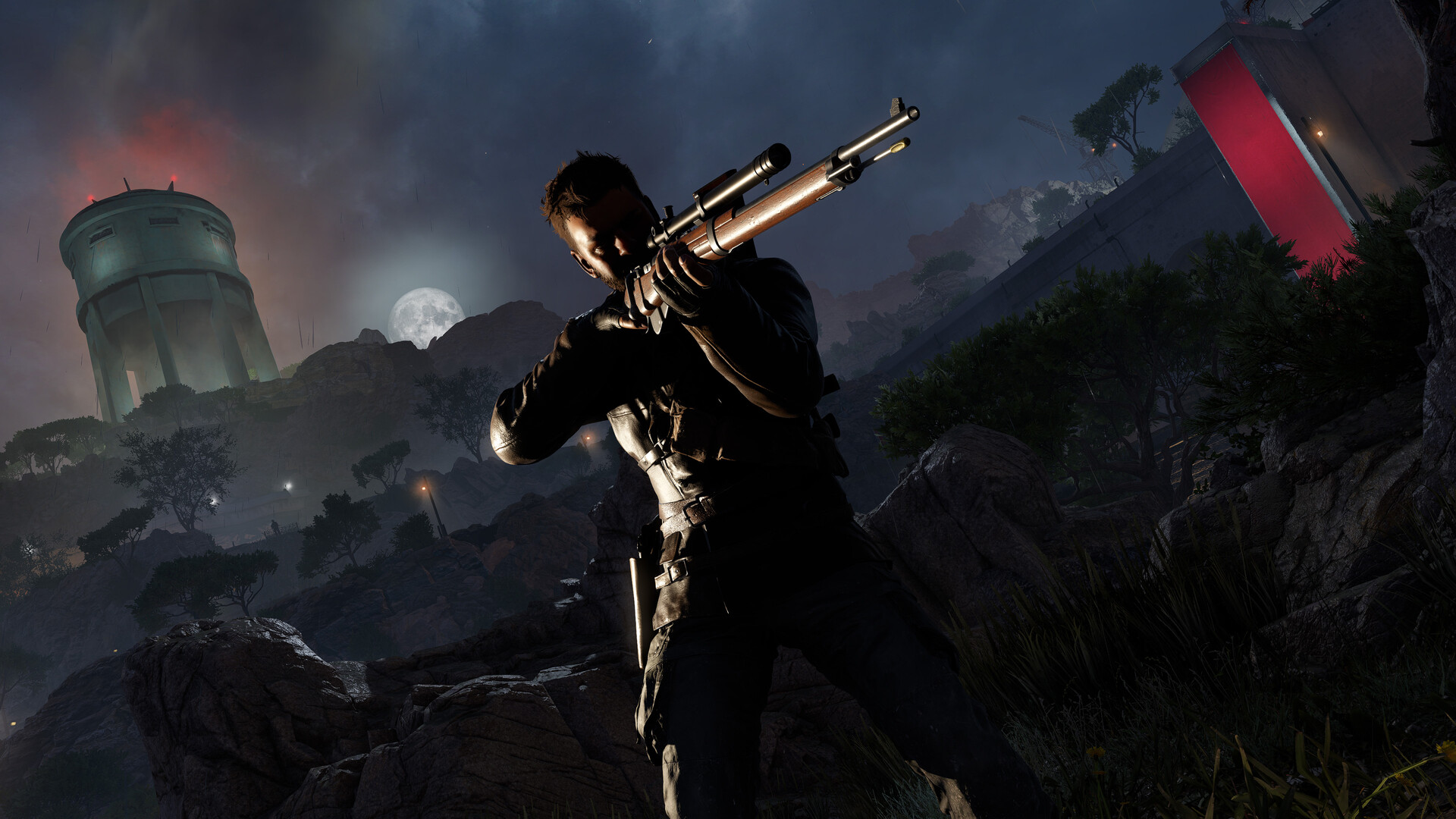
Rebellion revealed today that Sniper Elite: Resistance will launch on January 30, 2025 for PC and consoles, including a day 1 Game Pass release.

The game is now available for preorder on Steam for US$49.99 or your regional equivalent. As usual with recent Sniper Elite games, a bonus Target Führer mission will be available as a pre-purchase incentive, alongside a weapon skin and the Karabiner 98 rifle. A Deluxe Edition is also available for a meaty US$79.99 or your regional equivalent, and it includes early access to the Target Führer mission, three campaign missions, three weapon packs, three weapon skin packs and one character skin pack. This content can also be purchased separately as part of a Season Pass (which comes included in the Deluxe Edition)

Interestingly, Sniper Elite: Resistance won’t feature series protagonist Karl Fairburne, instead putting us in the boots of his regular co-op partner, SOE agent Harry Hawker. While I could be wrong, I believe this is a first for the franchise, as before Resistance, all games had Karl Fairburne as the main protagonist, including the Zombie Army spin-offs.

NEW OPERATIVE, NEW THREAT, NEW EPIC CAMPAIGN

Offering unparalleled sniping mechanics, stealth and tactical third-person combat, Sniper Elite: Resistance turns the attention of the award-winning series towards a hidden war, far from the front lines, deep within the heart of occupied France.

In a gripping new story that runs parallel with Sniper Elite 5, Harry Hawker, agent of the Special Operations Executive (SOE), takes the lead for the first time as he discovers an insidious new Wunderwaffe – something so powerful, it guarantees the Nazis will win the war.

Working with the French Resistance, this deadly addition to the Reich’s arsenal must be eliminated.

Multiple Kill List targets, and different infiltration and extraction points give you an unequalled choice with how to accomplish objectives and create your own playstyle.

The full campaign can also be experienced in co-op. Fight against the Nazi war machine with an ally to share weapons, items and tactical know-how, as well as help each other get back in the fight when you go down during firefights.

VISCERAL X-RAY KILL CAM AND ADVANCED GUNPLAY PHYSICS

The trademark X-ray kill cam returns, showing the true destructive power of every one of your signature shots. Bones deflect bullets to unpredictably rip new paths through enemy bodies and SMGs and pistols also trigger kill cams, showing multiple bullet shots in dramatic slow motion.

To land that shot you will need to think like a true sniper. Factor in rifle stock and barrel options along with gravity, wind and heart rate while you zero your sights on the target.

AUTHENTIC WORLD WAR II WEAPONS AND CUSTOMISATION

The arsenal at your disposal will feature returning franchise favourites as well as a host of new authentic WWII weapons. Picking your loadout will be key to striking down the Reich’s nefarious plans!

Customise your weapon to suit your operating style. Find workbenches scattered around the campaign to customise and upgrade your rifles, secondaries and pistols with new scopes, stocks, barrels, magazines and more. Also remember to pick the right ammo for the right job, whether you need armour-piercing shells or a non-lethal takedown.

PROPAGANDA MISSIONS – BE THE RESISTANCE

Locate unique Propaganda posters across the main campaign and step into the shoes of a French Resistance fighter in all new Propaganda missions. During these scenarios, sneak, snipe and take down enemies to complete time-sensitive objectives and help end the Nazi occupation.

AXIS INVASION MODE

The fan-favourite Axis Invasion mode is back! invade another player’s Campaign as an Axis sniper and engage in a deadly game of cat and mouse. Whether you stalk your prey, lay an ambush, or run in guns blazing, the threat of invasion provides a new dimension to the campaign’s challenge.

TENSE ONLINE MULTIPLAYER

When you’ve mastered your rifle, customise your character and loadout as you take the fight online in competitive 16-player battles to earn XP, medals and ribbons.

If competition isn’t your style, you can also team up with up to 3 other players against waves of enemies in Survival mode.

Atomos Adds NDI6 Support! – Videoguys


NDI6 HX3 isn’t just for broadcast and live events, it’s also a great option for wireless review on-set. Easily configure your Ninja or Shogun to send video wirelessly to any NDI-compatible monitor – mobile phones, tablets or other Atomos gear – without having to attach additional hardware!


A single NDI activation costs just $99 and supports HD and 4K modes, receive and transmit, on both Ultra and non-Ultra OS11 devices. And if you’ve already purchased either the HD or 4K NDI / HX2 option, you now get the new HX3 update for free!


Download AtomOS 11.11.00 for 10-bit NDI 6 now with H.264 and H.265 support for Ninja and Shogun series!


The Connect tab for NDI Tx will be updated with:
• New H.265 and H.265 HDR video codec options
• NDI Device Name
• NDI Send Groups
• NDI Multicast configuration

The Connect tab for NDI Rx will be updated with:
• NDI Device Name
• NDI Receive Groups

The Connect tab for NDI Tx will be updated with:
• New H.265 and H.265 HDR video codec options
• NDI Device Name
• NDI Send Groups
• NDI Multicast configuration

Download 11.11.00 now at my.atomos.com. Please note that Ninja V/V+ users are required to upgrade to the free AtomOS 11 base firmware before upgrading to NDI 6. 

Learn more about Atomos below:

visual studio – Unable to include headers into C++ on VS Code


I noticed an error in a program when I tried to organize my code with the help of headers. I’ve been stuck for a minute on it so I tried the bare minimum just to see if it would run and it keeps saying

“D:/C++ projects/Testing header/test.cpp:6:(.text+0xe): undefined reference to `printThing()'”

Here’s all of the programs I am using for this test:

test.cpp

#include<iostream>
#include "header.h"

int main()
{
   printThing(); 
   return 0;
}

header.h

#ifndef _header_h
#define _header_h

void printThing();

#endif //_header_h

header.cpp

#ifndef _header_h
#define _header_h

void printThing();

#endif //_header_h

I mean I don’t really know what to do, I’m suspecting there’s an issue with the compiler or VS Code of some sort but I’m not sure where to start. Also I receive no errors before running the program, no red outlines or such.

“India Should Manufacture Its Own AI,” Declares NVIDIA CEO


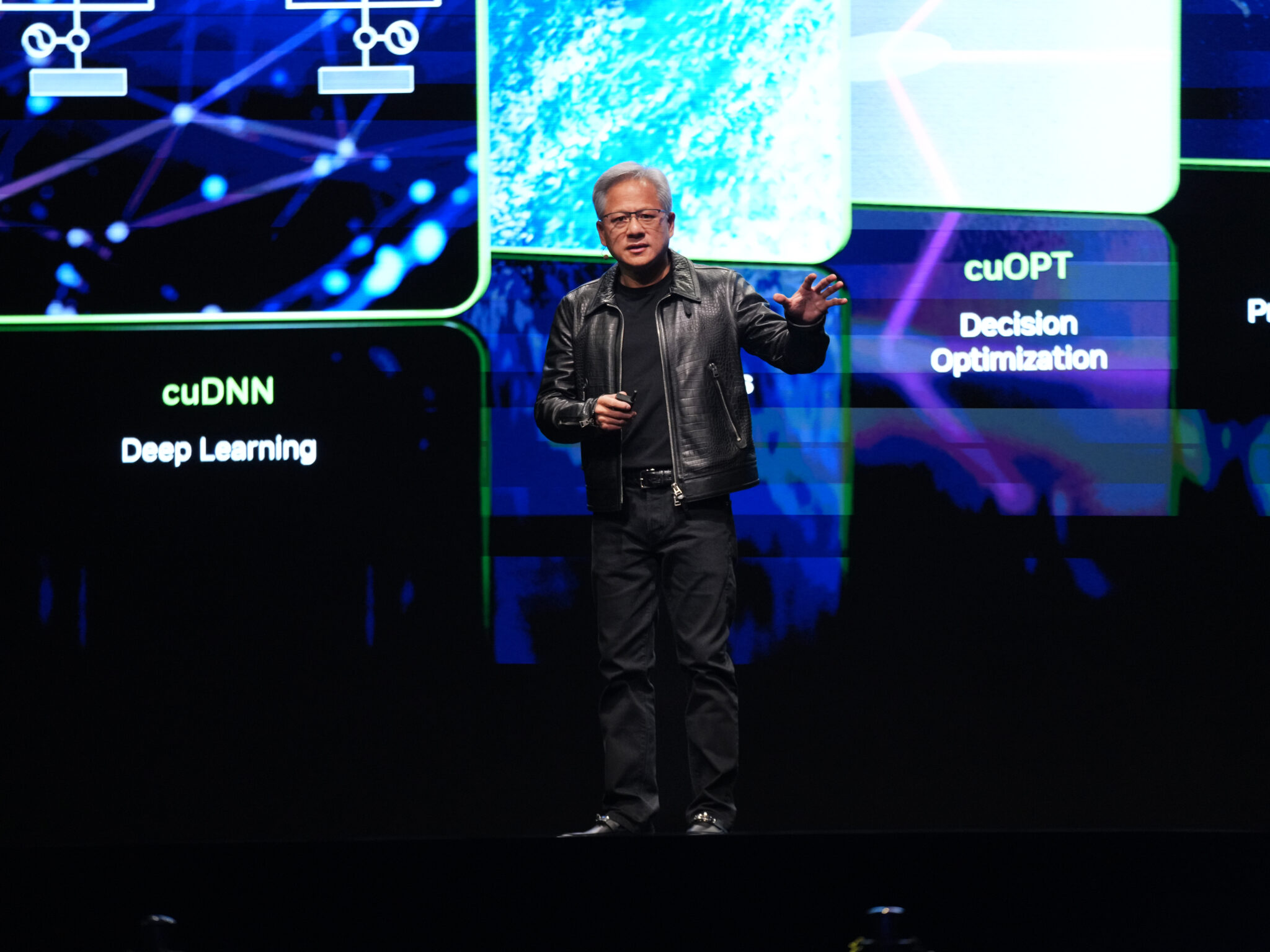
Artificial intelligence will be the driving force behind India’s digital transformation, fueling innovation, economic growth, and global leadership, NVIDIA CEO Jensen Huang said Wednesday at NVIDIA’s AI Summit in Mumbai.

Addressing a crowd of entrepreneurs, developers, academics and business leaders, Huang positioned AI as the cornerstone of the country’s future.

India has an “amazing natural resource” in its IT and computer science expertise,” Huang said, nothing the vast potential waiting to be unlocked.

To capitalize on this country’s talent and India’s immense data resources, the country’s leading cloud infrastructure providers are rapidly accelerating their data center capacity. NVIDIA is playing a key role, with NVIDIA GPU deployments expected to grow nearly 10x by year’s end, creating the backbone for an AI-driven economy.

Together with NVIDIA, these companies are at the cutting edge of a shift Huang compared to the seismic change in computing introduced by IBM’s System 360 in 1964, calling it the most profound platform shift since then.

“This industry, the computing industry, is going to become the intelligence industry,” Huang said, pointing to India’s unique strengths to lead this industry,  thanks to its enormous amounts of data and large population.

With this rapid expansion in infrastructure, AI factories will play a critical role in India’s future, serving as the backbone of the nation’s AI-driven growth.

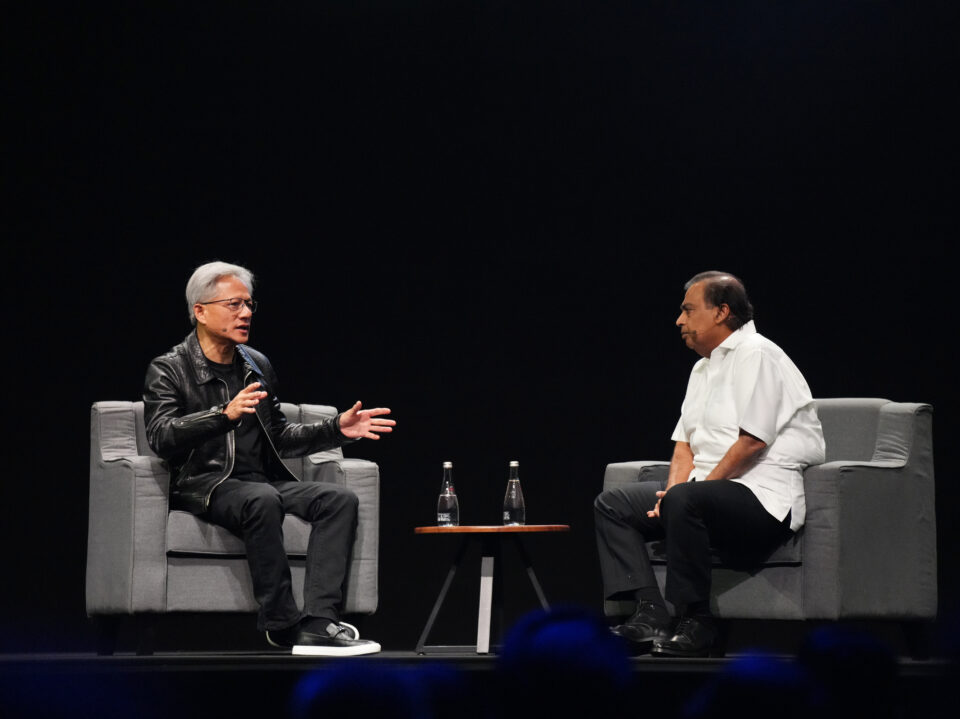
NVIDIA founder and CEO Jensen Huang speaking with Reliance Industries Chairman Mukesh Ambani at NVIDIA’s AI Summit in Mumbai.

“It makes complete sense that India should manufacture its own AI,” Huang said. “You should not export data to import intelligence,” he added, noting the importance of India building its own AI infrastructure.

Huang identified three areas where AI will transform industries: sovereign AI, where nations use their own data to drive innovation; agentic AI, which automates knowledge-based work; and physical AI, which applies AI to industrial tasks through robotics and autonomous systems. India, Huang noted, is uniquely positioned to lead in all three areas.

India’s startups are already harnessing NVIDIA technology to drive innovation across industries and are positioning themselves as global players, bringing the country’s AI solutions to the world.

Meanwhile, India’s robotics ecosystem is adopting NVIDIA Isaac and Omniverse to power the next generation of physical AI, revolutionizing industries like manufacturing and logistics with advanced automation.

Following Huang’s remarks, the focus shifted to a fireside chat between Huang and Reliance Industries Chairman Mukesh Ambani, where the two leaders explored how AI will shape the future of Indian industries, particularly in sectors like energy, telecommunications and manufacturing.

Ambani emphasized that AI is central to this continued growth. Reliance, in partnership with NVIDIA, is building AI factories to automate industrial tasks and transform processes in sectors like energy and manufacturing.

Both men discussed their companies’ joint efforts to pioneer AI infrastructure in India.

Ambani underscored the role of AI in public sector services, explaining how India’s data combined with AI is already transforming governance and service delivery.

Huang added that AI promises to democratize technology.

“The ability to program AI is something that everyone can do … if AI could be put into the hands of every citizen, it would elevate and put into the hands of everyone this incredible capability,” he said.

Huang emphasized NVIDIA’s role in preparing India’s workforce for an AI-driven future.

NVIDIA is partnering with India’s IT giants such as Infosys, TCS, Tech Mahindra and Wipro to upskill nearly half a million developers, ensuring India leads the AI revolution with a highly trained workforce.

“India’s technical talent is unmatched,” Huang said.

Ambani echoed these sentiments, stressing that “India will be one of the biggest intelligence markets,” pointing to the nation’s youthful, technically talented population.

A Vision for India’s AI-Driven Future

As the session drew to a close, Huang and Ambani reflected on their vision for India’s AI-driven future.

With its vast talent pool, burgeoning tech ecosystem and immense data resources, the country, they agreed, has the potential to contribute globally in sectors such as energy, healthcare, finance and manufacturing.

“This cannot be done by any one company, any one individual, but we all have to work together to bring this intelligence age safely to the world so that we can create a more equal world, a more prosperous world,” Ambani said.

Huang echoed the sentiment, adding: “Let’s make it a promise today that we will work together so that India can take advantage of the intelligence revolution that’s ahead of us.”

Upgrade Your Windows Forms .NET Projects to the Latest .NET Version for Enhanced Security


Each release of .NET introduces a host of new features and bug fixes that enhance both performance and security. To leverage these benefits both service and desktop application developers must upgrade their applications to the latest .NET versions. Just like other developers wanting to take advantage of the latest .NET enhancements, we are actively upgrading the Windows Forms (WinForms) Out-of-Process Designer used for .NET application design. This upgrade will enhance the safety of the Designer and motivate WinForms developers to update their applications for improved security.

However, upgrading the WinForms Designer to a newer .NET version means it will no longer support designing forms in projects targeting older unsupported .NET versions. This means developers too will need to update their projects to supported .NET runtimes in order to design their forms in Visual Studio.

Upgrading the WinForms Designer and your applications to newer .NET versions not only enhances security but also improves design-time reliability and performance by leveraging the enhancements available in those .NET versions and referenced NuGet packages. We strongly recommend keeping your applications updated with the latest .NET versions.

While the WinForms Designer process is also a .NET application and similar guidance applies, its situation differs. The Designer functions as a platform that must support applications targeting all .NET versions, starting with the version it currently targets. If we retarget the Designer process to .NET 9.0, it will no longer support applications built on earlier .NET versions, disrupting many customers. Therefore, we must carefully choose a .NET version for the Designer that can support the maximum number of projects and applications while still maintaining high security standards.
Also, we understand that many enterprises choose to target LTS versions for longer support. For these reasons we are choosing our update cadence for the designer to be LTS based. We will target the Designer to the .NET LTS version which is just going out of support. Developers are always encouraged to target their applications to the latest .NET version their organization supports.

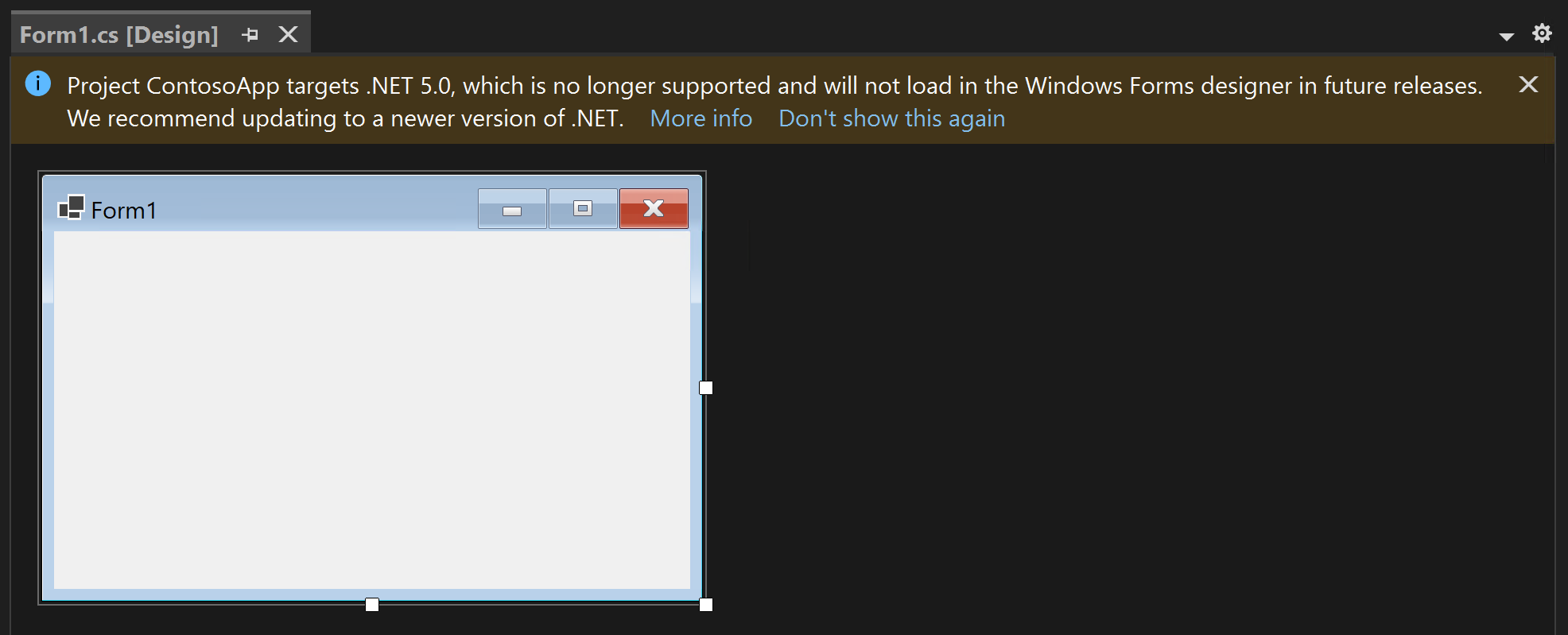
Beginning with the VS 17.12 Preview 3 release, the WinForms Designer will automatically check your project’s target framework version. If it falls below the minimum supported .NET LTS version by the Designer, you will receive a notification displayed prominently in an InfoBar. This feature will keep you informed about your project’s compatibility, allowing easy access to a list of .NET versions and their support status.

Screenshot of Windows Forms .NET Designer displaying the new InfoBar.

Each time a .NET LTS release reaches its end of support, the next Visual Studio release will update the WinForms Out-of-Process Designer to target that LTS release. For example, when .NET 6.0 LTS goes out of support in November 2024, the following Visual Studio release, 17.13, will retarget the Designer process to .NET 6.0. Consequently, projects targeting .NET versions below 6.0, such as .NET Core 3.1 and .NET 5.0, will no longer load in the Designer. Hence, we highly recommend upgrading your application to the latest .NET release to remain compatible with Visual Studio 17.13 or newer versions. You can use Designer in Visual Studio 17.12 to migrate. For more information refer to VS Product Life Cycle and Servicing wiki.

For Visual Studio 17.13, we will not target the next supported LTS version, 8.0, nor will we follow this policy for non-LTS releases like 7.0, to allow enterprises and developers sufficient time to test and deploy their next updates.

The following table outlines the WinForms Designer support policy going forward. While it currently focuses on .NET 6.0 and .NET 8.0, the same pattern will apply to future .NET LTS releases.

.NET LTS Release End of support (E) WinForms Designer support policy for next VS release after (E)
6.0 Nov 2024 – Designer will support projects targeting .NET 6.0 and newer versions.

– Versions below 6.0 will not be supported.

8.0 Nov 2026 – Projects targeting .NET 8.0 and newer versions will be supported.

– Versions below 8.0 will not be supported.

As .NET 8.0 reaches end-of-support, we will promptly upgrade the Designer process to .NET 8.0 in the subsequent Visual Studio release. This proactive approach ensures that you stay current with your projects while maintaining compatibility with the WinForms Designer in newer Visual Studio versions. You can learn more about the .NET release lifecycle in this wiki.

Important Note: These changes will only impact the design-time experience of the WinForms Designer. At runtime, all .NET versions will continue to function as they do now.

In today’s rapidly evolving landscape, prioritizing security in software development is essential, and it requires the commitment of all developers. The WinForms Designer team is dedicated to improving security, but we need your collaboration to ensure that projects remain updated with the latest .NET versions. While this may feel like a significant change, it is a necessary step toward enhancing the security of the WinForms Designer and your applications.

We appreciate the time you’ve spent reporting issues/suggestions and hope you continue to give us feedback when using Visual Studio on what you like and what we can improve. Your feedback is critical to help us make Visual Studio the best tool it can be! You can share feedback with us via Developer Community: report any bugs or issues via report a problem and share your suggestions for new features or improvements to existing ones.

Stay connected with the Visual Studio team by following us on YouTube, Twitter, LinkedIn, Twitch and on Microsoft Learn.


White House tells intelligence agencies: Use more AI


In a first, US President Joseph R. Biden Jr. issued a national security memorandum today telling federal intelligence agencies they need to pilot and deploy artificial intelligence (AI) in an effort to boost the nation’s security.

The memo is directed at the National Security Agency, the Federal Bureau of Investigation, the Department of Defense, and the Department of Energy and specifically tells the agencies to use AI to track and counter adversaries’ development and use of the technology.

The edict also directs the agencies to ensure AI adoption “reflects democratic values and protects human rights, civil rights, civil liberties and privacy.” The plan is to coordinate efforts with US allies “to ensure the technology is developed and used in ways that adhere to international law while protecting human rights and fundamental freedoms.”

Joel Meyer, president of public products at AI services provider Domino Data Lab, said the memo is obviously aimed at preventing US adversaries from achieving “overmatch” by making the integration and application of AI in US military and national security capabilities an urgent priority.

“This memo takes an important step in both accelerating innovation and adoption and in ensuring that use is responsible and governed by putting in place guardrails for how US government agencies can, and just as importantly cannot, use AI,” Meyer said.

For example, Meyer said, the US Navy’s Project AMMO uses AI to support underwater target threat detection and to provide underwater drone operators with feedback data to increase operator confidence. “The [memo] builds a foundation of trust that allows programs like this one to scale by both accelerating innovation and adoption and ensuring that use is responsible and governed,” Meyer said.

The US agencies will also be responsible for increasing the security for, and diversity of, advanced computer chips to power compute-hungry AI models. The CHIPS Act is attempting to increase funding for new fabs and R&D facilities. To date, much of the money has been allocated, but not dispersed to chip makers.

“Our competitors want to upend US AI leadership and have employed economic and technological espionage in efforts to steal US technology,” the memo states. “This [order] makes collection on our competitors’ operations against our AI sector a top-tier intelligence priority, and directs relevant US Government entities to provide AI developers with the timely cybersecurity and counterintelligence information necessary to keep their inventions secure.”

The memo directs actions to improve the security and diversity of chip supply chains, and to ensure that, as the US supports the development of the next generation of government supercomputers and other emerging technology, the nation does so with AI in mind.

The government’s AI efforts will be overseen by the existing AI Safety Institute, which is housed within the National Institute of Standards and Technology (NIST) in Gaithersburg, MD. The White House said it’s the one body staffed by technical experts who understand the quickly evolving technology.

The order also lays out strengthened and streamlined mechanisms for the AI Safety Institute to partner with national security agencies, including the intelligence community, the Defense Department, and the Department of Energy.

US Power Grid Added Battery Equivalent of 20 Nuclear Reactors In Past Four Years


whitroth writes: People here and elsewhere have been yelling for more nuclear power, and that renewables can’t meet demand. Surprise — the corporations are betting on them, and massive numbers of batteries can be produced a lot faster than nuclear plants can be built. The Guardian adds: Faced with worsening climate-driven disasters and an electricity grid increasingly supplied by intermittent renewables, the US is rapidly installing huge batteries that are already starting to help prevent power blackouts. From barely anything just a few years ago, the US is now adding utility-scale batteries at a dizzying pace, having installed more than 20 gigawatts of battery capacity to the electric grid, with 5GW of this occurring just in the first seven months of this year, according to the federal Energy Information Administration (EIA). This means that battery storage equivalent to the output of 20 nuclear reactors has been bolted on to America’s electric grids in barely four years, with the EIA predicting this capacity could double again to 40GW by 2025 if further planned expansions occur.

California and Texas, which both saw all-time highs in battery-discharged grid power this month, are leading the way in this growth, with hulking batteries helping manage the large amount of clean yet intermittent solar and wind energy these states have added in recent years.

Shin chan Shiro and the Coal Town Free Download –


Shin chan Shiro and the Coal Town Free Download By Worldofpcgames

Shin chan Shiro and the Coal Town Direct Download:

The Nohara family is headed to Akita Prefecture! Hiroshi is suddenly given an job assignment near his hometown in Akita. So the Nohara family make their way to a small village near Hiroshi’s parents’ home and rent out a traditional Japanese farmhouse. Nestled in this tranquil rural landscape, they begin their carefree and quiet life in the countryside. Ginnosuke, Shinnosuke’s grandfather, bestows the mysteries of country playtime by teaching Shinnosuke how to catch bugs and fish. A highlight of every evening is when the family gathers around the sunken hearth to savor delicious Akita dishes. In the village, Shinnosuke talks with farmers and makes new friends. Every day, he’s enjoying life to the fullest until… One morning, Shiro shows up at the house covered in soot. FALL

Shinnosuke follows after Shiro and accidentally boards this train. The mysterious train stops in a lively and prosperous town that seems to have been frozen in time since the Showa era. In this town called Coal Town, there are energetic working-class people going about their day. After meeting a mysterious young girl, Shinnosuke becomes friends with these people. And so begins Shinnosuke’s newest adventure…! Akita’s rivers are rich with a diverse range of fish, from common catches to rare species that are hard to find. There are also crawfish in irrigation channels…! Experiment with different times of day and locations to catch the fish you want. Add any fish you find to your nature book collection!

Features and System Requirements:

  • Players need to solve puzzles and navigate platforming challenges to progress through the game. These challenges are designed to be accessible and fun for players of all ages, keeping with the light-hearted nature of the Shin Chan universe.
  • Players need to solve puzzles and navigate platforming challenges to progress through the game.
  • Collectibles like stickers, toys, and other in-game items are scattered throughout the town.

Screenshots

System Requirements

Requires a 64-bit processor and operating system
OS: Windows 10
Processor: Intel Core i5 4440
Memory: 8 GB RAM
Graphics: NVIDIA GeForce GTX 950
DirectX: Version 11
Storage: 4 GB available space
Support the game developers by purchasing the game on Steam

Installation Guide

Turn Off Your Antivirus Before Installing Any Game

1 :: Download Game
2 :: Extract Game
3 :: Launch The Game
4 :: Have Fun 🙂