How to beat this week’s Arc Raiders Trials


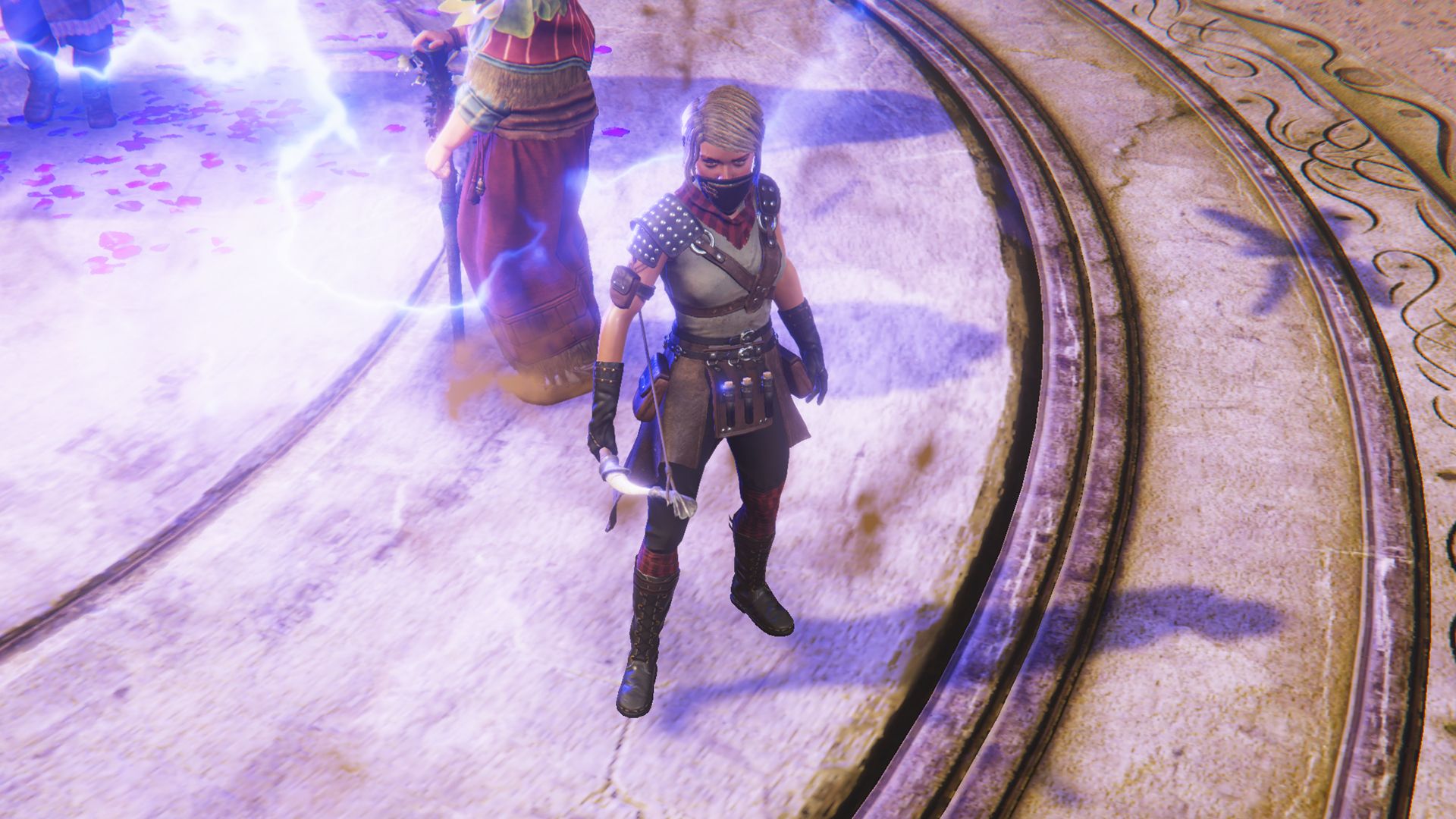
Trials in Arc Raiders is effectively a ranking system where you compete against other players for high scores on five challenges each week. When you complete a task for this week’s challenges, you’ll earn points towards that objective and earn a place on the leaderboard.

The competition can get intense, to say the least. But if you’re looking to earn all the unique Trials rewards, you’re going to need to step up to the plate and give it a shot. Below, I’ll go over all the Trials challenges this week and the best way to complete them for a high score.

(Image credit: Embark)

Right off the bat, it’s important to understand how scoring works. Firstly, only your personal best score during a single run for each challenge contributes to your overall ranking, so you need to be prepared.

FLUX.2 Image Generation Models Now Released


Black Forest Labs — the frontier AI research lab developing visual generative AI models — today released the FLUX.2 family of state-of-the-art image generation models.

FLUX.2 is packed with new tools and capabilities, including a multi-reference feature that can generate dozens of similar image variations, in photorealistic detail and with cleaner fonts — even at scale.

NVIDIA has worked with Black Forest Labs and ComfyUI to make the models available with FP8 quantizations and RTX GPU performance optimizations at launch, decreasing the VRAM required to run them by 40% and improving performance by 40%.

Requiring no special software package to run, the models are available directly in ComfyUI.

State-of-the-Art Visual Intelligence

Images generated by FLUX.2 are photorealistic, even at scale, featuring up to 4 megapixel resolution with real-world lighting and physics to eliminate that “AI look” that undermines visual fidelity.

The models add direct pose control to explicitly specify the pose of a subject or character in an image, as well as deliver clean, readable text across infographics, user interface screens and even multilingual content. Plus, the new multi-reference feature enables artists to select up to six reference images where the style or subject stays consistent — eliminating the need for extensive model fine-tuning.

Stunning, photorealistic details. Image courtesy of Black Forest Labs.

For a complete overview of new FLUX.2 features, read Black Forest Labs’ blog.

Optimized for RTX 

The new FLUX.2 models are impressive, but also quite demanding. They run a staggering 32-billion-parameter model requiring 90GB VRAM to load completely. Even using lowVRAM mode — a popular setting that allows artists to only load the active model at a time — the VRAM requirement is still 64GB, which puts the model virtually out of reach for any consumer card to use effectively.

To broaden FLUX.2 model accessibility, NVIDIA and Black Forest Labs collaborated to quantize the model to FP8 — reducing the VRAM requirements by 40% at comparable quality.

FLUX.2 is here.

And to make this model accessible on GeForce RTX GPUs, NVIDIA has partnered with ComfyUI — a popular application to run visual generative AI models on PC — to improve the app’s RAM offload feature, known as weight streaming.

Using the upgraded feature, users can offload parts of the model to system memory, extending the available memory on their GPUs — albeit with some performance loss, as system memory is slower than GPU memory.

NVIDIA has also been collaborating with ComfyUI to optimize model performance on NVIDIA and GeForce RTX GPUs, including optimizations for FP8 checkpoints.

Get started with FLUX.2 today. Update ComfyUI and check out the FLUX.2 templates, or visit Black Forest Labs’ Hugging Face page to download the model weights.

Plug in to NVIDIA AI PC on Facebook, Instagram, TikTok and X — and stay informed by subscribing to the RTX AI PC newsletter.

Follow NVIDIA Workstation on LinkedIn and X


windows – Visual Studio munges characters in build event command lines


In a command line of a pre-build event in a VS 2026 C++ project, I have the line

git log -1 --date=format:%G --output=year.tmp --format="%cd"

which is supposed to write the numerical year of the latest revision to a file, but the code %cd somehow gets evaluated to a capital I with an acute accent, so the command does not work.

Steps to reproduce:

  1. in Visual Studio, create a new project for, say, a C++ Console App.
  2. Use the popup Add to Source Control at the bottom of the window, and initialize a local git repository.
  3. Open the project property window.
  4. Under Build Events, go to Pre-Build Event.
  5. Open the pop-up menu at the right of the command line, and select Edit…
  6. In the command line text field, paste in git log -1 --date=format:%G --format="%cd"
  7. Look at the Evaluated value below, and observed that the %cd part has changed.

I found a question related to this: How to include the percent character in the visual studio debugger command line arguments?

That explains that something like %cd may be treated as a hex code for a character, and suggests representing the percent sign by its hex code, %25. So, suppose in step 6 above you use git log -1 --date=format:%G --format=%25cd. In that case the “evaluated value” in the editing window looks right. But if you actually build the project, the output window shows that you get a log in which the date is the literal string cd.

I thought some indirection might help, and tried:

set FMT=%25cd
git log -1 --date=format:%G --format=%FMT%

but then the log shows a date as the literal string FMT.

OnePlus Confirms Global Launch of 3 Devices: OnePlus 15R, Pad Go 2, and Watch Lite


OnePlus announced that it will introduce three new devices on Dec. 17: the OnePlus 15R smartphone, the OnePlus Pad Go 2, and the OnePlus Watch Lite. The company confirmed that the OnePlus 15R and OnePlus Pad Go 2 will go on sale in North America, Europe, and India, while the OnePlus Watch Lite will be available exclusively in Europe upon launch.

The OnePlus 15R comes in two colorways, Charcoal Black and Mint Breeze. Like the OnePlus 15, it’s said to have multiple IP ratings that mark it impervious to dust, submersion in water, and high-temperature, close-range water jets. Leaks say this device is called the OnePlus Ace 6T in China and comes with the Snapdragon 8 Gen 5 chipset, a 165Hz display, and 100W SuperVOOC fast charging.

The OnePlus Pad Go 2 will feature an anti-glare glass finish and will come in two colorways: Shadow Black and Lavender Drift. The Shadow Black model will have 5G connectivity, a first for OnePlus tablets. OnePlus is also adding an integrated stylus.

The OnePlus Watch Lite will be available in only one colorway, called Silver Finish. It is said to offer flagship-level health and fitness tracking at an affordable price. As the launch event approaches, we’ll update with more details on features and pricing.

Commercial Property Financing Trends Today: Detailed Overview


Commercial Property Financing Trends
Deposit Photos

Key Takeaways:

  • Commercial real estate (CRE) financing is experiencing a cautious recovery, with transaction volumes showing signs of stabilization.
  • Sector-specific trends reveal varying levels of resilience, with industrial and multifamily properties leading the way in the recovery.
  • Regulatory changes and evolving market dynamics are influencing lending practices and investment strategies.

Introduction

The commercial real estate environment today is defined by rebalancing, strategic repositioning, and new growth opportunities. The sector has undergone notable shifts in lending sentiment and investment flows over the last several years, creating a market where careful and creative solutions prevail. As the connectivity between global financial conditions and local lending practices intensifies, both lenders and investors must remain vigilant to sudden changes in requirements and risk appetites. For those seeking access to tailored lending solutions, understanding the nuances of Commercial Mortgages is more crucial than ever.

Market recovery has spurred a gap between the most resilient property types and those facing prolonged headwinds. Government intervention, interest rate cycles, and sector fundamentals continue to shape the outlook, and the emerging consensus is that this era demands adaptability, transparency, and timely responses to economic disruptions.

Looking forward, the strategies and products shaping tomorrow’s CRE lending environment reflect a blend of innovation and caution. How these commercial property financing trends play out in different sectors will have profound impacts on asset performance, portfolio risk, and income opportunities for investors and property owners alike.

Stakeholders across the country are navigating unprecedented changes. The ability to respond to shifting commercial property financing trends and compliance requirements can be the difference between securing optimal funding and missing key opportunities. For a comprehensive look at sector-specific drivers and broader economic signals, trusted resources such as The Wall Street Journal Real Estate provide ongoing, in-depth coverage.

Stabilization in Transaction Volumes

Following several volatile quarters, recent data reveal encouraging signs of stabilization. In the U.S. market, transaction volumes reached $108.5 billion in Q4 2024, marking a robust 33.6% quarter-over-quarter increase. This recovery signals renewed investor confidence, driven by optimism around moderating interest rates and improving clarity on property values. Analysts note that the uptick is more than a short-term rebound – it could set the tone for a steady climb back to pre-pandemic performance levels.

Sector-Specific Lending Patterns

Not all commercial property types are moving in lockstep on the path to recovery. Lending appetite, transaction activity, and investment strategy are being shaped by clear distinctions:

Driven by the evolution of the supply chain and the growth of e-commerce, industrial assets have remained a favorite among lenders. In Q1 2025, the median transaction size increased by 14.1% year-over-year, with a focus on prime logistics hubs and flexible warehousing.

Urban and suburban multifamily projects continue to be highly sought after due to rent growth and resilient occupancy. The median deal size saw a 6.3% year-over-year increase, highlighting persistent demand for affordable and mid-market housing solutions.

While office properties once anchored CRE lending, their recovery lags due to remote work and evolving tenant preferences. With only 62 office property transactions per day in Q1 2025, well below historic averages, lenders are taking a highly selective approach to underwriting and risk assessment.

Regulatory Changes and Lending Practices

Regulatory adjustments are making waves throughout the industry. Fannie Mae and Freddie Mac have undertaken substantial tightening of lending standards, specifically for multifamily loans. New guidelines require stricter verification of borrower finances and greater transparency, aiming to curb fraud and ensure better loan quality. Additionally, lenders are increasingly incorporating sustainability and environmental, social, and governance (ESG) criteria into their decision-making, which creates new layers of diligence – but also mitigates risk in the face of heightened regulatory scrutiny.

Economic Factors Influencing Financing

Economic context is inseparable from CRE financing today. Moderating interest rates have helped thaw transaction activity, while a flood of maturing loans has brought urgency to refinancing conversations. The Mortgage Bankers Association projects a 26% increase in total borrowing and lending for commercial and multifamily mortgages in 2024, expecting the industry to hit $539 billion by year’s end. These figures reflect pent-up demand and suggest that fresh capital is available, especially for well-positioned borrowers.

Challenges in the Office Sector

Among all property types, offices continue to struggle with persistently high vacancy rates and mounting loan maturities, with U.S. regional banks being particularly vulnerable. Approximately $950 billion in CRE loans are due in 2024, with at least 10% tied to office assets. Lenders are responding by tightening underwriting standards, stressing contingency planning, and in some cases, encouraging adaptive reuse or conversions to residential or mixed-use developments. These measures signal a new era of sector discipline and risk assessment.

Innovative Financing Solutions

The dynamism is perhaps most evident in the realm of creative financing. The hospitality sector, for instance, is leveraging layered capital stacks and innovative approaches such as Subchapter V debt restructurings to address complex refinancing challenges. Across the board, borrowers and lenders are turning to preferred equity, mezzanine debt, and structured finance options to close funding gaps and maintain project momentum. As the market matures, ingenuity in deal-making and capital structuring will become increasingly central to achieving competitive advantage.

Conclusion

The commercial property financing landscape is uniquely complex but full of promise for forward-thinking stakeholders. Success in this environment hinges on a proactive approach to market signals, a nuanced understanding of sector dynamics, and a willingness to adapt to regulatory and financing innovations. Navigating these commercial property financing trends effectively will put investors, developers, and lenders in the best position to drive value and resilience through the next market cycle.

Find a Home-Based Business to Start-Up >>> Hundreds of Business Listings.

UK government will buy tech to boost AI sector in $130M growth push


“Our particular strengths as a country lie in areas like life sciences, financial services, the defense sector, and the creative sector. And where we will really lead the world is where we can use the power of AI in those sectors,” Kendall told the Financial Times.

The plans came as part of a wider AI package designed to upgrade Britain’s tech infrastructure and convince entrepreneurs and investors that Labour is backing the sector ahead of next week’s Budget, which is expected to raise taxes on the wealthy.

The UK has sought to attract investment from US AI companies such as OpenAI and Anthropic.

The government has signed several “strategic partnerships” with American groups in a bid to attract foreign investment in UK AI infrastructure and talent, in exchange for adopting their technology in the public sector.

Sue Daley, of lobby group TechUK, said the plan showed “real ambition” but warned: “Advanced market commitments of this kind must be designed carefully to avoid unintentionally distorting competition.”

The government also announced that James Wise, a venture capitalist at Balderton, would chair the government’s 500 million pound sovereign AI unit, which has been set up to back AI startups alongside the British Business Bank.

Additional reporting by Ivan Levingston.

© 2025 The Financial Times Ltd. All rights reserved. Not to be redistributed, copied, or modified in any way.

The Best RTS Games to Play Right Now


Blog | Top Games

Want to command vast armies, manage resources, and outthink your opponents in real time? Real-time strategy (RTS) games have been around for decades, yet they remain one of the most satisfying and tactical genres in gaming.

While action-heavy games dominate the spotlight today, RTS titles still deliver something uniquely powerful — the thrill of outmanoeuvring an entire army with pure strategy.

From genre-defining classics to innovative modern entries, these are some of the best RTS games you can dive into right now.


Dune: Spice Wars - Best RTS Games

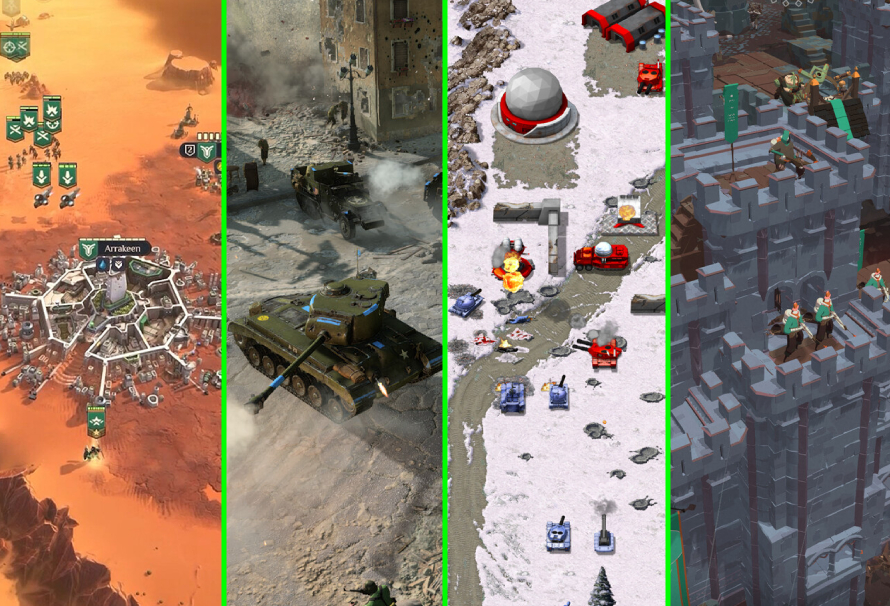
Set on the deadly desert planet of Arrakis, Dune: Spice Wars blends traditional RTS combat with 4X-style strategy. You’ll manage resources, expand your territory, and manipulate rival factions while surviving sandstorms and monstrous sandworms.

It’s not just about brute force, as diplomacy and intrigue are as deadly as any army here. A must-play for Dune fans and anyone craving deep, layered strategy.

Why play it: Political warfare, survival, and large-scale strategy in one package.


Cataclismo - Best RTS Games

Cataclismo stands out for its blend of RTS and creative base-building. Think LEGO meets tower defence. Instead of placing prefab structures, you design your fortress piece by piece to defend against monstrous hordes.

It’s a clever twist on the genre that rewards creativity and long-term planning, making every base feel uniquely yours.

Why play it: Beautifully tactile construction system and tense, satisfying defence gameplay.


Door Kickers 2 - Best RTS Games

Door Kickers 2 takes the RTS formula and shrinks it down to squad-level tactics. You command a team of elite operatives through dangerous missions, planning every move in real time — or pausing to issue precise commands.

It’s fast, focused, and perfect for players who enjoy methodical, small-scale combat over managing massive armies.

Why play it: Smart, tactical gameplay that’s part RTS, part puzzle, and endlessly replayable.


Frostpunk - Best RTS Games

If city-building and moral dilemmas are more your speed, Frostpunk is a masterpiece. Set in an apocalyptic ice age, you lead one of humanity’s last surviving settlements. You’ll need to make brutal decisions — sacrifice some to save many — while balancing warmth, resources, and hope.

Why play it: Beautiful storytelling, emotional weight, and strategic depth make this one unforgettable.


Age of Empires IV: Anniversary Edition - Best RTS Games

Age of Empires IV is the ultimate modern take on a classic. Build empires, wage massive historical battles, and watch as your civilisation grows from humble beginnings to global dominance.

With refined mechanics and stunning visuals, this is Age of Empires at its best — both nostalgic and fresh.

Why play it: Timeless gameplay, deep strategy, and a thriving multiplayer scene.


Command & Conquer Remastered Collection - Best RTS Games

This legendary collection brings back Command & Conquer and Red Alert, fully remastered with modern visuals and quality-of-life updates. It’s campy, chaotic, and incredibly fun, which is exactly what you’d expect from RTS royalty.

You’ll also get every expansion and mission ever released, making it one of the most complete packages in RTS history.

Why play it: Pure nostalgic energy and classic strategy at its finest.


Company of Heroes 3 - Best RTS Games

The Company of Heroes franchise has always been a benchmark for tactical RTS design, and Company of Heroes 3 pushes it even further. Blending intense real-time battles with a new dynamic campaign map, it lets you wage World War II your way — combining grand strategy with boots-on-the-ground combat.

Cover mechanics, flanking, and terrain play huge roles here, rewarding smart tactical thinking over raw numbers.

Why play it: Realistic warfare, cinematic combat, and deep tactical nuance.


Northgard - Best RTS Games

If you’re after something a little calmer — and colder — Northgard is a fantastic choice. You control a Viking clan carving out a new life on a mysterious frozen continent. You’ll manage food, shelter, and happiness while battling rivals and mythical beasts.

It blends RTS structure with survival and exploration, offering a pace that’s challenging but never overwhelming.

Why play it: A beautifully atmospheric blend of strategy, mythology, and resource management.


They Are Billions - Best RTS Games

Steampunk meets zombie apocalypse in They Are Billions. You’ll build, fortify, and defend human colonies against endless swarms of infected. Every wall, turret, and troop matters — because one breach can spell total destruction.

It’s pure tension from start to finish, rewarding careful expansion and flawless defensive planning.

Why play it: One of the most thrilling and punishing RTS survival experiences ever made.


Iron Harvest - Best RTS Games

Set in an alternate 1920s where diesel-powered mechs stomp across battlefields, Iron Harvest delivers classic base-building and tactical combat with a unique visual twist. It’s heavily inspired by games like Company of Heroes but stands apart thanks to its mecha aesthetic and slower, more deliberate pace.

Why play it: Combines gritty dieselpunk visuals with thoughtful, strategic gameplay.


RTS games continue to evolve, from pixelated classics to modern hybrids that merge genres and ideas. Whether you prefer massive historical empires, intense tactical skirmishes, or creative survival challenges, there’s an RTS out there that will test both your mind and your mettle.

So, gather your troops, plan your moves, and get ready to outthink the world — one battle at a time.


Jason Coles

Jason likes to focus on roguelikes and co-op games; in a dream world he’d make a living writing about Dark Souls. As well as being a writer he also does personal training and accounting and can occasionally be seen on other people’s streams. Being a big fan of fluffy things means he has two cats, both of whom refuse to let him sleep, but at least they are cute.

Gemini 3.0 vs GPT-5.1 vs Claude 4.5 vs Grok 4.1: AI Model Comparison


Artificial intelligence is changing faster than most people can keep up. By late 2025, a new generation of large‑language models (LLMs) has appeared that pushes the boundaries of reasoning, context memory and emotional intelligence. Google’s Gemini 3.0 Pro, OpenAI’s GPT‑5.1, Anthropic’s Claude Sonnet 4.5 and xAI’s Grok 4.1 represent the cutting edge. Each model was designed to excel at different tasks—reasoning, coding, adaptability and empathy—and the choice of model now profoundly shapes what you can build.

This article provides a clear, research‑backed comparison of these models, explains where Clarifai’s orchestration platform fits in and helps you pick the right AI companion. We draw on independent benchmarks, official announcements and expert commentary, and we incorporate practical examples and creative analogies to make complex ideas easy to grasp. The result is a human‑centred guide for developers, product managers and decision‑makers looking to harness AI safely and effectively.

Quick Digest: Which AI Model Fits Your Needs?

Question

Answer

Why is Gemini 3.0 in the spotlight?

It leads the field in reasoning and multimodal understanding. Gemini 3.0 broke the 1 500 Elo barrier on LMArena, scored record marks on Humanity’s Last Exam and ARC‑AGI‑2, and offers a 1 million‑token context window.

What sets GPT‑5.1 apart?

OpenAI introduced Instant and Thinking modes: Instant is fast and expressive; Thinking is slower but deeper, reaching up to 196 K tokens. It also adds safe automation tools like apply_patch and shell for controlled code execution.

Why is Claude 4.5 called the coding specialist?

Its 200 K token context plus memory and context‑editing tools enable long‑running coding or research tasks. Claude leads verified bug‑fixing benchmarks like SWE‑Bench with a 77.2 % score.

What makes Grok 4.1 unique?

Grok blends a 2 M token context with training on emotional intelligence, giving it high EQ Bench scores and the ability to respond empathetically. It also integrates real‑time retrieval for up‑to‑date information.

Where does Clarifai help?

Clarifai’s platform orchestrates these models. It routes queries based on complexity and cost, grounds answers using vector search and caches responses to reduce token usage.


  • How can you quickly decide between Gemini 3.0, GPT‑5.1, Claude 4.5 and Grok 4.1 for your project?
  • Start by matching tasks to strengths: use Gemini for deep reasoning and multimodal analysis, GPT‑5.1 for balanced performance and developer tools, Claude 4.5 for long coding sessions with memory, and Grok for emotional or real‑time interaction. For complex or variable workloads, orchestrate models via Clarifai to combine their strengths.

Understanding the 2025 AI Landscape

The latest generation of LLMs marks a paradigm shift. Prior models acted primarily as text predictors; the new ones serve as agents that can plan, reason and operate tools. The names may be catchy, but the technology behind them is serious. Let’s unpack what distinguishes each model.

Gemini 3.0: The Reasoning Powerhouse

Gemini 3.0 Pro is built for complex thinking. It uses native multimodality, meaning it processes text, images and video in a unified architecture. This cross‑modal integration lets it understand charts, photos and code simultaneously, which is invaluable for research and design. Gemini offers a Deep Think mode: by allocating more computation time per query, the model produces more nuanced answers. On the Humanity’s Last Exam, a challenging test across philosophy, engineering and humanities, Gemini scores 37.5 % in standard mode and 41 % with Deep Think. On ARC‑AGI‑2, which assesses abstract visual reasoning, its Deep Think score climbs to 45.1 %, nearly double GPT‑5.1’s 17.6 %.

Gemini’s 1 M‑token context allows it to process huge documents or code bases without losing track of earlier sections. This is ideal for legal analysis, scientific research or summarizing multi‑chapter reports. Antigravity, Google’s agentic interface, hooks the model into an editor, terminal and browser, letting it search, write code and navigate files from within a single conversation. However, this tight integration with Google infrastructure may create vendor lock‑in for organizations using other cloud providers.

Expert Insight:

  • Gemini 3.0’s high scores on ARC‑AGI‑2 and LiveCodeBench show it is a leader in abstract reasoning and algorithm design.

GPT‑5.1: Versatile and Developer‑Friendly

GPT‑5.1 is the latest iteration of ChatGPT. It introduces a dual‑mode systemInstant and Thinking. Instant mode is optimized for warm, personable answers and rapid brainstorming, while Thinking mode leans into deeper reasoning with context windows up to 196 K tokens. An Auto router can switch between these modes seamlessly, balancing speed and depth.

What makes GPT‑5.1 attractive to developers is its tool integration. The apply_patch function allows the model to generate unified diffs and apply them to code; shell runs commands in a sandbox, enabling safe unit tests or builds. Prompt caching saves state for up to a day, so long conversations don’t require re‑sending earlier context, reducing cost and latency.

In benchmarks, GPT‑5.1 performs respectably across the board: it scores around 31.6 % on Humanity’s Last Exam and high 80s on GPQA Diamond (a PhD‑level science test). It achieves 100 % on AIME (math contest) when allowed to execute code but drops to about 71 % without tools. These numbers show strong reasoning when combined with tool execution.

Expert Insight:

  • GPT‑5.1 balances cost and capability—its Instant mode creates engaging dialogues and its patching tools ensure safe code modifications, making it a practical choice for many developers.

Claude 4.5: Long‑Horizon Coding and Memory

Anthropic’s Claude Sonnet 4.5 positions itself as a coding and research powerhouse. Its 200 K token context means the model can ingest entire codebases or technical books. It supplements this with context editing and memory tools: Claude can automatically prune stale data when it approaches token limits and store information in external memory files for retrieval across sessions. These features allow Claude to run for hours on a single prompt, a capability that no other mainstream model matches.

Benchmarks support this specialization. Claude achieves 77.2 % on SWE‑Bench Verified, beating Gemini and GPT‑5 for real‑world bug fixes. On OSWorld, which measures open‑source project contributions, it scores 61.4 %, again leading the pack. However, Claude can occasionally produce superficial or buggy code when pushed beyond typical workloads; pairing it with unit tests and human review is wise.

Expert Insight:

  • Claude 4.5’s combination of a long context window and memory tools makes it uniquely suited to multi‑hour coding sessions and research tasks, even though it comes at a higher cost.

Grok 4.1: Empathy and Real‑Time Data

xAI’s Grok 4.1 is the outlier in this group. Instead of pure logic, Grok focuses on emotional intelligence (EQ) and real‑time information. It trains on human preference data to deliver empathetic responses, achieving high EQ Bench scores (around 1 586 Elo). Grok’s 2 M‑token context window is the largest among these models, allowing it to track extended conversations or huge documents. It integrates real‑time browsing to fetch current events or social‑media trends.

Grok excels at creative writing and companionship tasks. However, it sometimes fails simple logic questions (e.g., comparing the weight of bricks and feathers). Its output should be double‑checked for factual accuracy, especially on technical topics.

Expert Insight:

  • Grok’s empathetic tone and real‑time data capabilities make it a standout for companion apps and creative writing, though it should be paired with retrieval for factual accuracy.

Benchmark Results at a Glance

Benchmarks help quantify each model’s strengths. The table below consolidates key metrics from independent evaluations and official releases (numbers rounded for clarity). Note: always consider your own testing; benchmarks are proxies.

Category

Gemini 3.0 Pro

GPT‑5.1

Claude 4.5

Grok 4.1

Key Takeaway

Reasoning (Humanity’s Last Exam, ARC‑AGI‑2)

37.5 % standard / 41 % Deep Think; 31.1 % standard / 45.1 % Deep Think on ARC‑AGI‑2

~31.6 % on HLE; 17.6 % on ARC‑AGI‑2

mid‑20 % (HLE)

~30 % (HLE)

Gemini dominates high‑level reasoning; GPT‑5.1 is competitive but behind

Coding & Bug Fixing (LiveCodeBench, SWE)

2 439 Elo on LiveCodeBench; 76.2 % on SWE‑Bench

2 243 Elo; 74.9 % on SWE

~2 300 Elo; 77.2 % on SWE

~79 % tasks solved

Claude leads bug fixing; Gemini leads algorithmic coding

Empathy (EQ Bench)

~1 460 Elo (Gemini 2.5)

~1 570 Elo

N/A

1 586 Elo

Grok excels at empathy; GPT‑5.1 improved

Context & Cost

1–2 M tokens; approx $2 in/$12 out per M tokens

16–196 K tokens; approx $1.25 in/$10 out

200 K tokens; approx $3 in/$15 out

2 M tokens; approx $3 in/$15 out

Longer contexts increase cost; GPT‑5.1 is cheapest

Choosing Models for Specific Tasks

No single AI fits every job. Selecting the right model depends on task complexity, budget, safety and user experience. Let’s explore common scenarios and offer recommendations.

Matching Models to Tasks

You don’t always need a full paragraph to decide which model to use. Here’s a condensed reference for common scenarios:

  • Research & Knowledge Work: Choose Gemini for deep reasoning and multimodal analysis. Use GPT‑5.1 for general research if budget is tight and ground it with Clarifai’s vector search.
  • Software Development: For long coding sessions and bug fixing, pick Claude 4.5; for algorithm design, Gemini 3; for quick iterations with safe patches, GPT‑5.1.
  • Business Strategy & Planning: Use Gemini 3 for long‑horizon simulations and complex workflows; GPT‑5.1 as a cost‑effective alternative.
  • Education & Tutoring: Gemini 3 excels in math without tools; GPT‑5.1 matches performance when code execution is allowed.
  • Emotional Support & Creative Writing: Grok 4.1 provides empathy and real‑time data but should be paired with a reasoning model for accuracy.

Agentic Features: How Models Act Autonomously

Agentic AI refers to models that can plan, execute and adapt to achieve goals. Here’s how each model supports agentic workflows.

Gemini 3: Antigravity and Deep Think

Gemini’s Antigravity platform gives the model direct access to a development environment. It can open files, search the web, run commands and test code inside Google’s ecosystem. The Deep Think toggle instructs the model to allocate extra compute to complex tasks. Together, these features enable multi‑step research and software tasks with minimal human intervention.

GPT‑5.1: Safe Automation Tools

GPT‑5.1’s apply_patch function lets it generate patch files, while shell executes commands in a sandbox. These tools are critical for building automated DevOps pipelines or letting the model compile and run code safely. Prompt caching further supports long conversations without repeated context.

Claude 4.5: Context Editing and Memory

Claude’s standout agentic features are context editing—it automatically removes irrelevant data to stay within token limits—and an external memory tool to store information persistently. Checkpoints allow you to roll back to earlier states if the model drifts. These capabilities let Claude run autonomously for hours, a game changer for research projects or large refactorings.

Grok 4.1: Real‑Time Retrieval

Grok doesn’t offer explicit agentic tools like patching or memory. Instead, it integrates real‑time browsing and a large context window, enabling it to fetch and synthesize current information in the middle of a conversation. For example, you could ask Grok to monitor social‑media trends over days and provide daily digests, something other models can only do with external tooling.

Clarifai: Orchestration Glue

Clarifai’s platform wraps these capabilities into a single pipeline. It can route a user’s intent to the appropriate model, retrieve documents via vector search, cache results, and even run models on local hardware for compliance. For agentic workflows, this orchestration is critical: one pipeline might classify a query using a small GPT‑5 model, use Clarifai’s search to pull relevant data, send reasoning to Gemini, then use Claude for code generation and Grok for empathetic summarisation.

Costs, Context Windows and Practical Considerations

Pricing Trade‑Offs

Cost influences model choice. GPT‑5.1 is the most affordable at around $1.25 per million input tokens and $10 for output. Gemini 3 Pro costs roughly $2 input/$12 output with search grounding available in a free tier. Claude 4.5 and Grok 4.1 are similar at $3 input/$15 output, reflecting their large contexts and specialized capabilities. Clarifai helps mitigate costs through caching, routing simple tasks to cheaper models and using local runners.

Context Considerations

Context windows matter because they define how much information a model can consider at once. Gemini and Grok lead with 1–2 M tokens. GPT‑5.1 offers a practical 16–196 K range. Claude sits at 200 K but extends via memory tools. Larger contexts allow long narratives, but they increase cost and risk data leakage. Use Clarifai to manage what goes into each model’s context through retrieval and summarization.

Safety, Reliability and Ethics

Hallucination and Alignment

Hallucination—confidently wrong answers—is a key challenge. Grok 4.1 cuts hallucinations from ~12 % to around 4 % after training improvements. GPT‑5.1 uses post‑training to reduce sycophancy and increase honesty. Gemini 3 demonstrates robust reasoning, which reduces pattern‑matching errors, though long contexts still pose privacy concerns. Claude 4.5 introduces safety filters across finance, law and medicine, called ASL‑3 alignment.

Reliability Caveats

  • Grok’s charisma vs logic: It can fumble simple logic puzzles, so always verify technical answers.
  • Claude’s depth vs stability: While excellent at bug fixing, Claude may produce superficial or buggy code when overstretched.
  • Gemini’s integration: Deep ties to Google products raise questions about vendor lock‑in and data governance.

Clarifai’s Safety Net

Clarifai provides evaluation dashboards to monitor hallucination rates, latency and cost. Retrieval‑augmented generation grounds outputs on trusted documents. A/B tests allow you to compare models on your actual workflows. Together, these tools help ensure safe and reliable deployment.

Building a Multi‑Model Workflow

Modern applications often need more than one model. Clarifai advocates multi‑model orchestration. A typical pipeline combines several steps: intent classification (use a light GPT‑5 model to detect if a query is technical or emotional), retrieval and generation (pull relevant documents via Clarifai’s vector search and route responses to Gemini, Claude or Grok as appropriate), and monitoring (use Clarifai’s dashboards to track hallucination rates and user satisfaction).

Future Trends and What to Watch

The pace of AI innovation won’t slow down. Several trends are emerging:

  • Agentic AI: Models will increasingly plan tasks, call tools and maintain long‑term objectives, blurring lines between LLMs and autonomous agents.
  • Massive Context and Dynamic Memory: Context windows will grow beyond millions of tokens. Expect smarter context editing and memory management (similar to Claude’s tools) to become standard.
  • Retrieval‑Augmented Generation: Future models will integrate retrieval natively, combining internal knowledge with real‑time data. Clarifai’s vector search is an early example.
  • Open‑Source and Transparency: Pressure for open weights and transparent training data is mounting. Open models like Llama 3/4 and Mistral will play a bigger role in enterprise AI.
  • Multimodal Everything: We will see models that seamlessly handle text, code, images, video and audio. Google’s Gemini hints at this future, and Clarifai’s video intelligence modules will be critical for adoption.
  • Safety and Governance: Better prompt‑injection defenses, auditing tools and ethics frameworks will accompany more powerful models.

FAQs

Q1: Do I need to pick just one model?
A: Not anymore. The best results often come from combining models—use Clarifai to orchestrate them based on task type, cost and compliance needs.

Q2: Is GPT‑5.1 good enough for most tasks?
A: Yes, GPT‑5.1 strikes a good balance between cost, performance and availability. For everyday chat, coding or research, it may suffice. Use Gemini or Claude when deeper reasoning or longer context is required.

Q3: How do I handle privacy with huge context windows?
A: Avoid sending sensitive data directly. Use Clarifai’s retrieval to feed only relevant snippets to the model, and consider on‑prem or local runner deployments for regulated industries.

Q4: Can Grok be used for technical writing?
A: Grok excels at narrative and empathy but may produce factual errors. Combine it with a reasoning model or run retrieval checks before publishing.

Q5: Are these models available now?
A: Yes. Gemini 3.0, GPT‑5.1, Claude 4.5 and Grok 4.1 are available via APIs and platforms like Clarifai. Pricing and features may change, so always consult the latest documentation and tests.

Conclusion: Match the Model to the Mission

There is no single “best” AI model. Each of the latest LLMs—Gemini 3.0, GPT‑5.1, Claude 4.5 and Grok 4.1—brings unique strengths. Gemini sets the standard for reasoning and multimodal understanding. GPT‑5.1 delivers versatile performance at a lower cost with developer‑friendly tools. Claude 4.5 excels at long‑horizon coding and research thanks to its 200 K context and memory systems. Grok brings empathy and real‑time data to the conversation.

The optimal strategy may involve mixing and matching these capabilities, often within the same workflow. Clarifai’s orchestration platform provides the glue that holds these diverse models together, letting you route requests, retrieve knowledge, and monitor performance. As you explore the possibilities, stay mindful of your budget, privacy constraints and the evolving ethics of AI. With the right combination of models and tools, you can build systems that are not only powerful but also responsible and human‑centric.



Despite Krafton ownership, Last Epoch dev won’t charge for its first expansion and isn’t pivoting to AI: ‘To be clear, our development approach is not changing’


In what seems to be the only good news related to publisher Krafton right now, the Last Epoch developer it bought in July hasn’t been warped by its aggressive pivot to becoming an “AI-first company” above all else. At least not yet.

Eleventh Hour Games broke its silence on whether you’ll have to pay for Last Epoch’s upcoming Orobyss expansion after spending years—as an indie developer—promising players everything would be free. The answer is no: Last Epoch’s expansion will be free to anyone who already owns the base game, and it will be packed in for anyone who buys the game after it’s out.

Meta’s Chief AI Scientist Leaving to Launch Startup Focused on “World Models”


Yann LeCun, Meta’s Chief AI Scientist and one of the “godfathers” of modern AI, is planning to leave the company to launch a startup. Continue reading “Meta’s Chief AI Scientist Leaving to Launch Startup Focused on “World Models””