2025 was a fantastic year for gaming, from horror juggernauts like Silent Hill f to beloved indie titles like Hades 2 and Hollow Knight: Silksong. But while many of 2025’s best games have gotten their accolades via The Game Awards, we want to take a closer look at one of the best parts of this year’s games: the boss fights.
Boss fights are a pivotal aspect of most genres in gaming, from RPGs to survival horror games to roguelikes and platformers. Some of the boss encounters we loved the most this year were extremely difficult, some featured foes with wild ability arsenals, some were downright terrifying, but all of them had one thing in common: They were a hell of a lot of fun to play.
Here are our favorite boss fights of 2025.
Painted Clea (Clair Obscur: Expedition 33)
Image: Sandfall Interactive via Polygon
Clair Obscur: Expedition 33 is full of fantastic boss fights (and several of them returned for an amped-up round two in the free DLC). While Simon is known to kick everyone’s behind, I found Painted Clea to be the most engaging boss fight on The Continent. She doesn’t attack you directly, instead summoning Nevrons to do her bidding, striking you with unrelenting combos you’ll have to hope and pray you can parry in time. When you can manage to damage her, you’ll find just knocking down her health isn’t enough; Painted Clea heals if your parries falter, meaning you’ll need a nuclear Maelle or Sciel build to take her down in one go.
But Painted Clea isn’t a great boss merely because of the challenge she provides. Her heartbreaking story (stop me if you’re heard this before: Expedition 33 is sad) explores how she’s also suffered from the Dessendre family’s vortex of grief, and especially of the machinations of her real-world counterpart. Defeating her isn’t a triumph, but a mercy. Also, her theme music slaps — “Clea” might be my favorite boss fight track from a game full of bangers. —Austin Manchester
Huggin’ Molly (South of Midnight)
Image: Compulsion Games
It’s rare to see the essence of an entire game captured in a single battle, but that’s exactly what South of Midnight‘s Huggin’ Molly does. Previous bosses stand out for doing something a bit different from their predecessor, like Two-Toed Tom putting you on the defensive or Laurent making you think about movement more carefully. Huggin’ Molly pushes you to use everything you’ve learned and gained up to this point. It’s practically a showcase for Compulsion’s take on 3D action-platformers. That’s good, memorable design on its own, but the twist at the end is what keeps me thinking about Huggin’ Molly months after finishing South of Midnight. This is a fight based on misconceptions that should never have been allowed to grow unchecked for so long. Fear, anger, and selfishness built the idea of Huggin’ Molly that Hazel’s so determined to destroy — the only way to “win” is to confront those inner demons and admit the problem is inside, even if it’s too late to undo the damage you’ve already caused. And that’s what South of Midnight is all about. —Josh Broadwell
Tony (Nubby’s Number Factory)
Image: MogDogBlog Productions via Polygon
In Nubby’s Number Factory, you work at the titular pachinko-esque factory making increasingly large numbers to appease your supervisor; if you fail, the sun explodes. I still remember the first time I got to level 80, the last in a run, so naively confident in the build I’ve created and the sun I hadn’t exploded, only to encounter my final boss fight: My literal boss, Tony.
In the fight, he goes by the much more dramatic moniker “Tony!?!?” and can shoot laser beams out of his eyes that reduce the value of the board’s pegs — my livelihood at the factory — to one. I was used to final big-number battles like the boss blinds of Balatro, but this was a completely different ball game (literally) that fully reinforced my newfound love of this absolutely absurd title. —Deven McClure
Scylla and the Sirens (Hades 2)
Image: Supergiant Games via Polygon
Hades 2’s Scylla and the Sirens boss fight is the most irritating boss fight of 2025, full stop — but that’s also what makes it unforgettable. That’s not a commentary on the battle itself, which pits you against three enemies at once and is, no doubt, quite annoying. (Frankly, on the merits of action, all Hades 2 boss fights are equally worthy tests of mettle.) It’s a commentary on Scylla herself.
Most every night, Scylla and her bandmates perform their one-hit wonder, “I Am Gonna Claw (Out Your Eyes then Drown You to Death”), in a desperate bid for validation. Don’t get me wrong, the tune is an earworm. Scylla and the Sirens don’t need to smash the repeat button every night to prove that. Occasionally, yes, Scylla and the Sirens try out a new song, depending on your progress in the game. But for the most part, the band falls back on the hit they made their name on, without realizing it’s the one thing trapping them in a Sisyphean loop. Like the worst musicians, Scylla and the Sirens refuse to listen. —Ari Notis
Jackenstein (Deltarune Chapter 4)
Image: Toby Fox via Polygon
Toby Fox, the creator of 2015’s indie darling Undertale, knows a thing or two about clever boss fights that stick in your craw. The game’s successor, Deltarune, takes things up a notch. Jackenstein is a burly miniboss with a jack o’ lantern head you’ll encounter in Chapter 4 of the work-in-progress RPG. Every round of turn-based combat, you’ll need to very quickly navigate a maze and find a key to escape Jackenstein’s haunted house, all as he tries to chomp you while shouting “YOUR [sic] TAKING TOO LONG!”
It’s impossible to experience this fight without imitating the voice of Jackenstein: it’s a fabulously creepy creation that starts out as “chipper older sister” and does a hard right turn into “garbage disposal that came to life.” Once you’ve escaped his clutches (for the moment), you can deal damage by zapping him with a flashlight as he howls, then rinse and repeat.
Like any good Toby Fox boss fight, the action is unexpectedly grueling, the music absolutely slaps, and the dialogue is absurd. I won’t blow the joke, but let’s just say you aren’t prepared for what you’ll eventually discover in Jackenstein’s house after all that trouble. —Jen Glennon
Jason Voorhees (Fortnite)
Image: Epic Games
Fortnite is lousy with bosses. Seriously, every season sees an abundance of baddies shuffling their way in and out of the game. The unfortunate thing is, by and large, they’re all the same. They move quickly, attack often, and take a good amount of damage to kill.
Then there’s Jason Voorhees. Instead of a regular Fortnite boss, he’s the slasher movie villain we all love. Typically found stalking the grounds of Creepy Camps in chapter 6 season 4, Jason Voorhees didn’t start attacking on-sight. Instead, he did what he does best: He slowly trudged his way in your direction. It looked like he was moving slowly, but it was faster than you thought. And that’s where the strategy came into play.
If he got within reach, Jason hacked at you with his machete, doing some serious damage. If you kept your distance, though, you could topple him. It would take a while, though. In true unkillable slasher-movie villain fashion, Jason had a massive health bar you’d have to deplete — four times the health the season’s other bosses had.
The Jason boss battle didn’t introduce new mechanics, radically change the game, or even introduce a new, permanent character to fear. Instead, it just gave us an excellent take on a boss we’ve seen teens battling on the big screen for decades. Jason might not be a traditional video game boss, but he’s an excellent foe wherever he winds up. —Chris Hayner
Sakuko-like Entity (Silent Hill f)
Image: Konami via Polygon
The first real boss players face in Silent Hill f is also one of the most challenging. The Sakuko-like Entity is a horrific blend of Hinako’s sweet childhood friend, Sakuko, and a shrine maiden. Like much of Silent Hill f itself, this version of Sakuko is both utterly horrifying and undeniably beautiful. Her white traditional garb and floating golden hair ornament stand out from the boss arena’s dark setting, making her appear to glow — a possible reference to the real Sakuko’s bright personality. This unsettling entity sports Sakuko’s signature pigtail hairstyle, but the resemblance ends there, as her face is the stuff of nightmares. Her skin is pale, mottled, and corpse-like. Her eyes are closed, and remain that way throughout the entire encounter. There’s a skeletal nasal cavity where her nose should be, and her mouth has been stretched wide, with the lower part of her jaw hanging open and revealing a gaping maw that’s simultaneously difficult to look at and difficult to look away from. Get too close, and Sakuko will pull Hinako into a hug, chomping down on her face and causing serious damage.
She’s horrific, and she’s got a move set that proves to be very challenging, especially given how early this fight takes place. Players who haven’t mastered the perfect dodge/counter-attack mechanic will certainly get some practice with it in this fight, as Sakuko can teleport and unleash an absolutely devastating attack that will drain Hinako’s sanity if not interrupted. The entire encounter is unforgettable, and as unique as Silent Hill f‘s bosses are, the Sakuko-like Entity still stands out from the crowd, due to both her striking appearance and the difficulty of the fight itself. —Claire Lewis
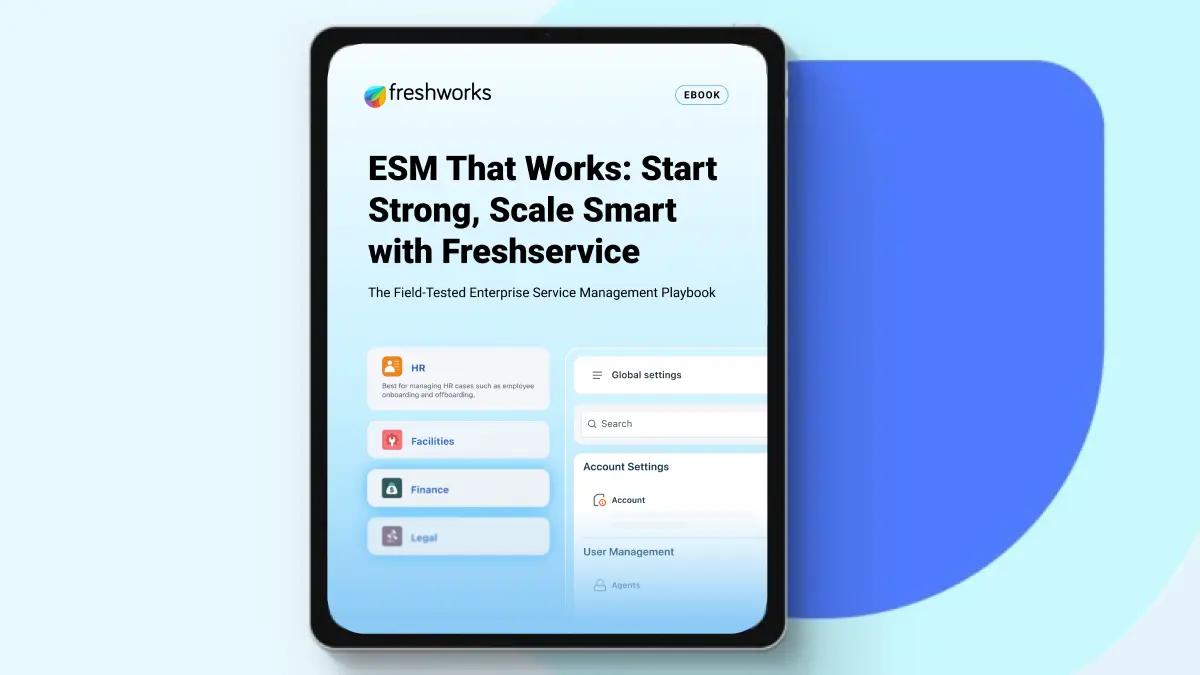
ESM That Works: Start
Strong, Scale Smart with
Freshservice
A practical playbook to unify service delivery across business teams and scale ESM the right way.
The New Mandate for IT: Unified Service Delivery
Most organizations modernized IT but left other business functions behind. HR, Finance, Facilities, and Legal manage requests in silos using emails and spreadsheets that slow work.
Fragmented service experiences across departments
Inconsistent governance and hidden costs
Employees bouncing between disconnected systems
Download the Playbook
Download the Playbook
Error: Contact form not found.
Unify Service Delivery and Scale with Confidence
Discover how IT leaders bridge the gap by establishing one service management model across the enterprise – not as an IT project, but as a business transformation strategy.
Set Up Trust and Governance
Establish safe, autonomous Workspaces for each business team with embedded compliance and data isolation.
Design Services That Scale
Build shared taxonomies, standardized workflows, and knowledge that travels seamlessly across HR, Finance, Facilities, and Legal.
Automate and Orchestrate
Remove manual effort through cross-functional workflows that connect HR systems, identity platforms, and collaboration tools end-to-end.
Proof That Field-Tested ESM Delivers
Real-world results show how AI and automation transform speed, satisfaction, and service resilience.
23%
Ticket deflection through self-service
40%
Faster fulfillment with automated role changes
97.8%
CSAT across IT and business teams
Ready to unify service delivery across your business?
Learn how IT leaders are scaling ESM with governance, speed, and measurable impact.
About Freshworks Inc.
Freshworks Inc. (NASDAQ: FRSH) creates AI-boosted business software anyone can use. Purpose-built for IT, customer support, and sales and marketing teams, our products are designed to let everyone work more efficiently and deliver more value for immediate business impact. Headquartered in San Mateo, California, Freshworks operates around the world to serve more than 67,000 customers, including American Express, Blue Nile, Bridgestone, Databricks, Fila, Klarna, and OfficeMax. For the freshest company news, visit www.freshworks.com and follow us on Facebook, LinkedIn, and X
GitHub has disabled Rockchip’s Media Process Platform repository after an FFmpeg developer filed a DMCA takedown notice, nearly two years after the open-source project first publicly accused the Chinese chipmaker of license violations. The notice, filed December 18, claims Rockchip copied thousands of lines of code from FFmpeg’s libavcodec library — including decoders for H.265, AV1, and VP9 formats — stripped the original copyright notices, falsely claimed authorship and redistributed the code under Apache’s permissive license rather than the original LGPL.
FFmpeg first called out Rockchip in February 2024 for “blatantly copy and pasting FFmpeg code” into its driver, but the chipmaker’s last response suggested no intention to resolve the matter. The DMCA notice requests either removal of the infringing files or restoration of proper attribution and an LGPL-compatible license.
Become the head coach and architect of a basketball dynasty. For the first time ever, the Basketball Champions League is featured in the series — one of the premier continental competitions, now fully licensed with all official teams and players. Manage tactics, finances, recruitment and the locker room — every decision shapes your legacy. Suit up and take charge of one of 2,000+ professional teams across 90 domestic leagues (including 17 women’s leagues). From daily training and match tactics to long-term budgets and facilities, every choice is yours — on and off the court. We’re proud to announce that the Basketball Champions League will be fully playable at launch, with all clubs and players officially licensed.
The game also features 20+ national licensed leagues from France, Turkey, Lithuania, Belgium/Netherlands, Czech Republic, United Kingdom, Austria, Sweden, Slovakia, Cyprus, New Zealand, Norway, Italy and the women’s adriatic league! All textures and 3D character models have been rebuilt for superior immersion. New hairstyles, beards and accessories (headbands, sleeves, shoes) create unique looks for every player. Reworked animations and lighting for more fluid, immersive matches. Improved in-game AI with multiple difficulty levels.
Features and System Requirements:
Manage over 2,000 professional teams across 90 domestic leagues, including women’s competitions.
For the first time in the series, the Basketball Champions League is fully licensed with 53 real teams and players.
Completely rebuilt 3D visuals with new player models, hairstyles, accessories, animations, and lighting for more immersive matches.
Screenshots
System Requirements
Recommended
Requires a 64-bit processor and operating system
OS: Windows 11
Memory: 16 GB RAM
DirectX: Version 12
Storage: 10 GB available space
Support the game developers by purchasing the game on Steam
Installation Guide
Turn Off Your Antivirus Before Installing Any Game
1 :: Download Game 2 :: Extract Game 3 :: Launch The Game 4 :: Have Fun 🙂
Introduction: Why We Need a Layered Approach to Data
Quick Summary:What is medallion architecture? Medallion architecture is a layered data engineering pattern that progressively transforms raw data into highly trusted, business‑ready assets. It leverages bronze, silver and gold layers (and sometimes pre‑bronze and platinum) to enable traceability, scalability and analytics at scale. This article explores its purpose, benefits and challenges, compares it with data mesh and data fabric, and explains how Clarifai’s AI platform can enhance medallion pipelines. We’ll also look at emerging trends like real‑time analytics and AI‑ready pipelines, providing actionable guidance for data teams.
Quick Digest
Medallion architecture organises data into layers—bronze (raw), silver (cleaned), gold (business‑ready)—to improve quality and governance.
The bronze layer ingests raw data with minimal transformation, capturing duplicates and metadata.
The silver layer cleans, deduplicates and standardises data using modeling techniques like Data Vault; it ensures data quality with schema enforcement and DataOps practices.
The gold layer aggregates and enriches data into dimensional models for analytics and machine learning.
An optional platinum layer enables real‑time analytics and advanced AI models.
Medallion architecture complements data mesh and data fabric; hybrid approaches can balance domain ownership and layered quality.
Challenges include complexity, potential duplication and latency; real‑time use cases may need additional architectures.
Clarifai’s compute orchestration and local runners can support AI models across medallion layers, reducing compute costs by up to 90% and enabling offline development.
What Is Medallion Architecture?
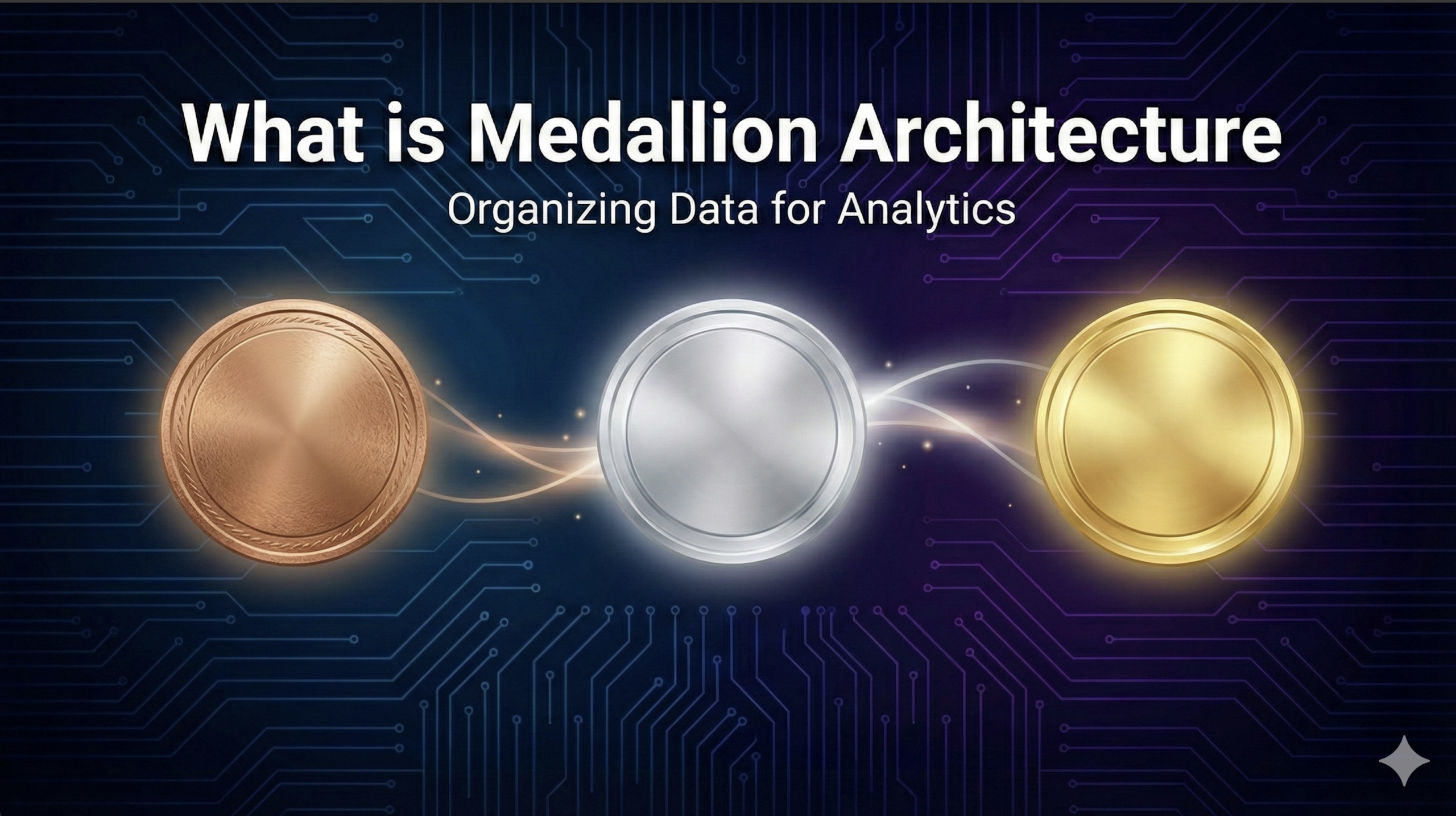
Medallion architecture is a data engineering pattern that divides your data lake or lakehouse into distinct layers. Originally popularised by Databricks and other modern data platforms, it allows teams to incrementally improve data quality as it moves from raw ingestion to analytics. The naming is inspired by Olympic medals—bronze, silver and gold—to symbolise progressively increasing value and trust. Some modern implementations introduce a pre‑bronze staging layer for high‑velocity ingestion and a platinum layer for advanced analytics and real‑time AI.
The architecture’s design is motivated by several core needs:
Trust and Quality. Raw data often contains errors, missing values and inconsistent formats. By moving through layers of cleansing, standardisation and enrichment, the data becomes more reliable and ready for consumption.
Modularity and Traceability. Layered pipelines isolate tasks and make it easier to trace lineage from input to output. This modularity also helps teams manage complex transformations, roll back errors and maintain governance.
Scalability and Reproducibility. Each layer can be engineered for parallel processing and automated with orchestration tools. Research shows that medallion architecture reduces redundancy and enhances reproducibility in AI pipelines.
Compliance and Auditability. Storing raw data in bronze preserves full fidelity for auditing; subsequent layers maintain metadata and lineage needed for regulatory compliance—crucial in healthcare, finance and other highly regulated industries.
Beyond these benefits, medallion architecture aligns with MLOps principles: it allows data scientists, ML engineers and business analysts to collaborate on a shared pipeline. In the next sections, we explore each layer in depth.
Bronze Layer – Raw Data Ingestion
The bronze layer is the foundation of the medallion architecture. It collects and stores data from a variety of sources—transactional systems, sensors, logs, CRM platforms, social media and more. Importantly, the bronze layer applies minimal transformation, preserving the raw state of the data for two reasons: fidelity and future reprocessing.
Key Functions
Ingestion from Multiple Sources. Data engineers use tools like Azure Data Factory, AWS Glue, Kafka or Delta Live Tables to ingest data in real time or batch. Sources range from structured relational data to semi‑structured logs and fully unstructured files.
Schema Inference and Metadata Capture. While the bronze layer doesn’t enforce a strict schema, it should record metadata about the data—source, timestamp, ingestion method—to support lineage tracking and replay.
Change Data Capture (CDC). Modern platforms enable CDC to capture incremental changes from source systems. This reduces ingestion load and speeds up downstream processing.
Pre‑Bronze Staging (Optional). For high‑velocity IoT or streaming data, some architectures introduce a pre‑bronze stage that temporarily stores raw events before normalizing. This stage addresses extreme throughput scenarios like clickstream analytics or sensor telemetry.
Expert Insights
Data engineers emphasise that the bronze layer should capture duplicates and retain context because downstream layers may need to reconcile or revisit historical records.
Research indicates that the bronze layer’s flexible schema supports versioning and evolution of data models, which is essential for long‑lived analytical applications.
A case study in healthcare shows that having a complete raw record allowed investigators to re‑examine outliers in clinical trial data; without such a layer, the anomalies would have been lost, compromising patient safety.
Creative Example
Imagine a genomics company collecting raw sequence data from lab instruments. The bronze layer stores each file exactly as it appears—fastq sequences, metadata tags, instrument logs—without filtering anything out. The team then uses this data later to reconstruct experiments if a problem arises.
Silver Layer – Cleansing & Transformation
Once raw data resides in bronze, the silver layer performs data cleansing, integration and standardisation. Its goal is to transform messy data into a unified and trustworthy dataset suitable for business consumption and machine learning.
Core Responsibilities
Data Cleaning. Remove duplicates, fix missing values and enforce data types. Tools like dbt, Spark and SQL scripts apply rules based on data contracts.
Integration and Harmonization. Join data from multiple bronze sources, align on common keys and derive canonical forms. Many organisations implement Data Vault modeling here, which stores historical changes in hubs, links and satellites.
Quality Gates and Expectations. Use frameworks like Pandera or Great Expectations to define expectations for each column (e.g., uniqueness, range checks, anomaly detection). Data contracts encode these rules and alert stakeholders when violations occur.
Schema Enforcement and ACID Transactions. Platforms like Delta Lake provide ACID guarantees, enabling safe concurrent writes and reads while ensuring that each transaction is atomic and consistent.
Change Data Processing. Implement incremental updates using CDC logs or streaming; avoid full reloads to speed up transformations and reduce cost.
Historisation. For slowly changing dimensions (like product attributes or patient demographics), maintain history in satellites so that analytics can reproduce states as of a specific date.
Expert Insights
A research paper introduces hub‑star modeling for the silver layer, combining hubs and star schema design to simplify modeling and support large‑scale analytics.
Data quality experts argue that data contracts and validation frameworks are key to preventing downstream errors; missing quality controls can lead to misinformed decisions and financial losses.
In a biotech scenario, silver layer transformations unify patient records from multiple hospitals into a FHIR‑compatible format. This ensures interoperability and enables AI models to train on standardised patient data.
The IJSRP case study claims that implementing medallion architecture with Delta Lake and CDC reduced ETL latency by 70% and cut costs by 60%.
Creative Example
Consider a retail company with data from online orders, physical stores and call centers. The silver layer merges these sources, ensures that “Customer ID” refers to the same person across systems, removes duplicates and fills missing addresses. It then standardises data types so that analytics queries can join on consistent keys.
Gold Layer – Business‑Ready & Analytical
The gold layer is where data becomes business ready. It delivers curated, high‑value datasets to analysts, data scientists and end‑user applications.
What Happens in the Gold Layer?
Dimensional Modeling. Transform data into star or snowflake schemas, with fact tables capturing transactions and dimension tables storing attributes. This structure improves query performance and readability.
Aggregations and Summaries. Calculate metrics and key performance indicators (KPIs) like sales by region, average patient length of stay or gene expression statistics.
Data Products. Create domain‑specific data marts or semantic layers that business users can consume via dashboards, BI tools or machine‑learning notebooks. The gold layer often underpins Power BI, Tableau or Looker models.
Machine‑Learning Ready Data. Provide clean, feature‑rich datasets for training ML models. For example, in biotech, aggregated gene expression data may feed into AI algorithms for drug discovery.
Expert Insights
Studies show that the gold layer drastically reduces time to insight and increases trust in data. Financial institutions report improved governance and faster analytics after adopting medallion architecture.
However, some experts warn that repeated transformations across layers can lead to latency and cost overhead, especially when data volumes are high.
A healthcare case study found that a well‑designed gold layer reduced data analysis time from days to hours, enabling rapid clinical trial analyses and improved patient outcomes.
Another study reports that the gold layer supports advanced AI tasks like predicting patient readmissions or fraud detection due to its consistent and curated format.
Creative Example
Imagine an investment bank tracking transactions across thousands of accounts. The gold layer aggregates data into a customer 360° view, summarising assets, liabilities and trading activity. This enables risk analysts to detect anomalies quickly and regulators to audit the bank’s compliance. Machine‑learning models also feed on this gold data to predict credit risk.
Platinum Layer & Real‑Time Analytics
As data teams push the boundaries of analytics, many organisations introduce an optional platinum layer. While medallion architecture is historically a three‑tier model, modern demands (e.g., high‑frequency trading, autonomous vehicles, IoT) require low‑latency access to curated data. The platinum layer is where real‑time intelligence emerges.
What Is the Platinum Layer?
Real‑Time Analytics. It combines streaming data from sensors or events with the curated context from bronze, silver and gold. For instance, a financial trading system might merge streaming quotes with gold‑layer portfolio data to compute real‑time risk metrics.
Advanced Transformations. The platinum layer may host predictive models, cross‑domain aggregations and AI applications that require rapid feedback loops.
Multiple Entry Points. Data may flow directly from bronze, silver or gold into the platinum layer depending on the use case, enabling flexible pipelines.
Debates on the Platinum Layer
Proponents argue that real‑time analytics can’t wait for batch‑oriented silver or gold refreshes. The platinum layer provides an action layer where streaming meets context, enabling operational decisions like fraud detection or industrial automation.
Critics caution that adding another layer duplicates data, increases complexity and may create silos. They recommend using event‑driven architectures or micro‑layers instead.
Some experts note that pre‑bronze staging combined with the platinum layer provides a balanced approach: high‑velocity data is buffered before normalisation, then integrated for real‑time analytics.
Creative Example
A logistics company uses sensors to track truck locations every second. The platinum layer merges these streams with gold‑layer delivery schedules to detect delays in real time and automatically reroute shipments. Predictive algorithms then anticipate traffic patterns and optimize fuel usage, reducing emissions and saving costs.
Medallion vs. Data Mesh vs. Data Fabric
As the data ecosystem evolves, alternative architectural patterns have emerged. To choose the right approach, it’s important to compare medallion architecture with data mesh and data fabric.
Data Mesh
Data mesh is a decentralised, domain‑oriented approach. Instead of a central data platform, each domain (e.g., marketing, finance, operations) owns its data products and exposes them via well‑defined interfaces. Governance is federated, and teams manage their own pipelines and quality controls.
Strengths: Promotes domain ownership, scalability and agility. Encourages cross‑functional collaboration and reduces central bottlenecks.
Weaknesses: Requires a mature organisation with clear roles; can lead to inconsistent quality if governance is weak.
Data Fabric
Data fabric is an integration paradigm that connects disparate data sources (databases, SaaS applications, cloud storages) through a unified access layer. It uses metadata management, semantic models and automation to deliver data across environments without physically moving it.
Strengths: Simplifies integration, accelerates time to insight, and supports multi‑cloud/hybrid architectures. Ideal for organisations dealing with complex data landscapes.
Weaknesses: May not provide the same level of incremental quality improvement as medallion layers; requires investment in metadata and integration technology.
Medallion Architecture
Strengths: Provides structured approach to progressively improve quality, ensuring trust and traceability. Works well within a lakehouse or data lake environment and can integrate with both data mesh and data fabric.
Weaknesses: Can be complex and sometimes slower for real‑time use cases; may duplicate data across layers and require careful cost management.
When to Use Each
Use Case
Recommended Pattern
Centralised analytics requiring trust and governance
Medallion Architecture
Large organisation with multiple domain teams and autonomy
Data Mesh
Real‑time integration across heterogeneous systems
Data Fabric
Hybrid scenario with domain ownership and layered quality
Federated Medallion + Data Mesh
Some practitioners combine these approaches. For example, each domain implements its own medallion layers (bronze, silver, gold), while a data fabric connects them across the organisation, and a federated governance model ensures consistency. Microsoft Fabric’s OneLake service exemplifies this synergy: it leverages medallion layers within domains and uses central governance to connect them.
Implementing Medallion Architecture in Modern Platforms
Implementing medallion architecture is more than a conceptual exercise—it requires careful selection of platforms, tools and processes. Below we outline a typical implementation, using Databricks and Microsoft Fabric as examples.
Step 1: Set Up a Lakehouse Environment
Choose a platform that supports ACID transactions, schema enforcement and time travel. Databricks with Delta Lake is a popular choice; Microsoft Fabric offers OneLake and Lakehouses with similar capabilities; Snowflake provides dynamic tables and Streams/Tasks for continuous ingestion.
Step 2: Design the Medallion Layers
Define data models for bronze, silver and gold. Use data engineering best practices like contracts before code, modularization and replay/chaos engineering to increase resilience.
Decide whether to include pre‑bronze or platinum layers based on streaming needs.
Step 3: Ingest Data into Bronze
Use ingestion tools (Data Factory, Glue, Kafka) to load raw data. Change Data Capture is recommended to minimize reprocessing costs and support incremental updates.
Step 4: Transform Data in Silver
Use dbt, Spark or Delta Live Tables to clean and integrate data.
Implement Data Vault modeling or hub‑star modeling for historisation.
Apply quality gates and expectations with frameworks like Pandera.
Step 5: Aggregate and Model Data in Gold
Build star schemas and aggregated tables for consumption.
Create data products accessible via Power BI or your preferred BI tool.
Provide feature stores for machine learning.
Step 6: Orchestrate and Monitor
Use orchestration tools such as Azure Data Factory, Airflow, Databricks Workflows or Microsoft Fabric pipelines to schedule and monitor jobs.
Implement observability, lineage and cost monitoring to track pipeline health.
Step 7: Consume Data & Enable AI
Feed gold or platinum data into ML models, dashboards or applications.
Integrate with MLOps platforms like Clarifai to orchestrate AI models across your compute environments.
Use local runners or serverless compute to deploy AI inference within the platform.
Case Studies & Research
An industry report found that adopting medallion architecture on Microsoft Fabric reduced report development time by 60% and increased data ownership within domains.
A research review concluded that containerisation and low‑code orchestration reduced deployment time by 30%, demonstrating that tools like dbt and Delta Live Tables accelerate adoption.
Snowflake’s Streams and Tasks make implementing bronze→silver→gold pipelines easier; dynamic tables allow near real‑time data flows with minimal overhead.
Data Quality & Governance Across Layers
Data quality is the backbone of medallion architecture. Without strong governance and validation, layering only propagates bad data downstream.
Key Concepts
Data Contracts. Formal agreements between data producers and consumers specify schema, acceptable ranges, units and update frequency. Breaking contracts triggers alerts and stops pipeline execution.
Quality Gates & Expectations. Tools like Pandera assert constraints (e.g., age > 0, not null, unique id) at each layer. Failures are logged and triaged.
Metadata Management & Lineage. Capture data lineage from source to gold layer, including transformations and business logic. Metadata catalogs (e.g., Azure Purview, Databricks Unity Catalog) enable discovery and compliance.
DataOps & Continuous Improvement. Borrowing from DevOps, DataOps emphasises version control, CI/CD pipelines for data and micro‑releases. It encourages continuous improvement of data quality and automates testing, deployment and rollback.
Expert Insights
Research indicates that robust metadata management and lineage support audit readiness and schema versioning. This is vital in regulated industries where regulators might ask for a reconstruction of past states.
Combining Data Vault modeling with medallion architecture enhances provenance and reproducibility.
Data quality frameworks must also handle privacy and PII. Ensure PII is masked or encrypted at the bronze layer and carefully propagated to downstream layers.
Creative Example
A pharmaceutical company uses medallion architecture for clinical trial data. In the silver layer, they merge patient records, apply quality checks and remove duplicates. At each transformation, metadata logs note the transformation rules. Later, when regulators audit the trial, the company can reconstruct exactly how each aggregated metric was derived, demonstrating compliance.
Challenges & Limitations of Medallion Architecture
Like any architectural pattern, medallion architecture has trade‑offs.
Complexity & Engineering Effort
Waterfall Delays. Critics argue that medallion architecture encourages batch processing and sequential handoffs, leading to waterfall delays. Real‑time use cases may suffer because each layer adds latency.
Heavy Transformations. The silver layer often requires significant engineering to deduplicate, standardise and integrate data. This demands skilled engineers and may slow iteration.
Duplication & Storage Costs. Each layer stores its own copy of the data. For massive datasets, this duplication can become expensive.
Risk of Stale Data. If gold layers are refreshed infrequently, insights may be outdated.
Platinum Layer Controversy. Some argue that introducing a platinum layer adds complexity and creates silos, increasing cost and decreasing collaboration.
When Medallion Might Not Fit
Real‑Time & Event‑Driven Use Cases. Streaming architectures like Lambda or Kappa patterns may be better suited.
Small, Agile Teams. For small companies with limited engineering bandwidth, medallion architecture might be overkill. Simpler pipelines or data mesh can suffice.
Domain‑Focused Organisations. Data mesh emphasises domain ownership and may better align with cross‑functional teams.
Mitigation Strategies
Automate & Orchestrate. Use low‑code tools, dynamic tables and workflows to reduce manual overhead and refresh frequency.
Hybrid Architectures. Combine medallion with streaming frameworks or domain‑driven patterns to achieve both quality and agility.
Cost Management. Use object storage with compression and choose long‑term retention policies to manage duplication costs.
Training & Documentation. Invest in training engineers and documenting pipelines to avoid misconfiguration and reduce errors.
Emerging Trends – AI‑Ready Pipelines & Generative AI
The data landscape is evolving rapidly, with AI‑first organisations demanding pipelines that are not just analytics ready but AI ready. Here are key trends impacting medallion architecture.
Generative AI & Synthetic Data
Generative AI models like GPT and Diffusion require high‑quality data to learn patterns. Medallion architecture provides a structured pipeline to deliver such data. However, generative models also produce synthetic data which can be fed back into the pipeline, creating a loop. Data teams must ensure that synthetic data is labelled and validated.
A notable example is the AI‑designed drug rentosertib, which improved lung function by about 98 mL in interstitial pulmonary fibrosis patients during phase 2a trials. This shows the potential for AI models to accelerate drug discovery, but they rely on meticulously curated training data—a job for the medallion pipeline.
Compute Sustainability & Efficiency
The compute demands of AI are skyrocketing. According to a report, meeting AI compute demand could require 200 GW of new power and $2.8 trillion in infrastructure investments by 2030. Data pipelines must therefore be cost‑ and energy‑efficient.
Clarifai’s compute orchestration addresses this by enabling dynamic autoscaling, GPU fractioning and vendor‑agnostic deployments. The platform reduces compute costs by up to 90% and increases utilization 3.7×.
Federated & Hybrid Architectures
Multi‑cloud and hybrid deployments are becoming the norm. Medallion pipelines must accommodate data sovereignty, cross‑region replication and regional compliance. Combining data mesh with medallion layers ensures that each domain can manage its own pipeline while still benefiting from central governance.
Privacy & Security by Design
With stricter regulations (GDPR, HIPAA), data architectures must embed privacy features. Medallion architecture facilitates privacy by isolating raw data with restricted access (bronze) and propagating only necessary fields to downstream layers.
Domain‑Driven & Model‑Driven Design
Modern design trends encourage aligning data modeling with domain contexts (data mesh) and using model‑driven design (Data Vault, hub‑star) to bridge raw and curated data. These concepts are gaining traction in 2025.
Clarifai’s Role in Medallion Architecture & AI Pipelines
Clarifai is a market leader in AI and provides a comprehensive platform for building, deploying and orchestrating AI models. Its products align closely with medallion architecture and AI‑ready pipelines.
Compute Orchestration
Clarifai’s compute orchestration allows users to deploy any AI model on any compute environment—cloud, on‑premises, edge or multi‑site. This is particularly valuable for medallion pipelines because each layer may require different compute resources. Key features include:
Vendor‑Agnostic Deployments. Models can run on NVIDIA, Intel or AMD GPUs and across AWS, Azure or GCP clouds.
Dynamic Autoscaling & GPU Fractioning. The platform automatically scales compute resources up or down based on workload, reducing cost and energy consumption; GPU fractioning allows multiple models to share a GPU.
Serverless & On‑Prem Options. Users can run compute as a fully managed service (shared SaaS), as a dedicated VPC, or self‑managed. This flexibility suits companies with strict security or compliance needs.
Cost Efficiency. By optimising resource usage, Clarifai reduces compute costs by up to 90% and increases throughput, handling over 1.6 million requests per second.
Local Runners
Clarifai’s local runners enable developers to run models on local or on‑premise hardware while still benefiting from Clarifai’s API and compute plane. This is particularly useful in medallion pipelines for bronze and silver layers, where sensitive data may need to remain on‑premise due to regulatory requirements.
Development Flexibility. Engineers can test models on local data, iterate quickly and push to production once validated.
Edge & Air‑Gapped Environments. Local runners support running inference in air‑gapped networks or at the edge, making them suitable for remote facilities or regulated industries.
Integration with Medallion Layers. Models can ingest raw data from bronze, transform features in silver and output predictions to gold. The local runner ensures that compute is close to data, reducing latency.
Reasoning Engine & Generative AI
Clarifai’s reasoning engine powers generative AI tasks with high efficiency—544 tokens/sec and costs as low as $0.16 per million tokens. For organisations adopting medallion architecture, this means they can embed generative AI models into the platinum layer or gold layer for real‑time summarisation, Q&A or content generation.
How Clarifai Fits into Medallion Pipelines
Bronze Layer: Use Clarifai’s local runners to preprocess raw images or video streams (e.g., classify samples, detect anomalies) before storing them in the bronze layer.
Silver Layer: Deploy compute orchestration to run data cleansing models (e.g., OCR extraction, de‑duplication) across distributed compute resources while maintaining data governance.
Gold & Platinum Layers: Use Clarifai’s reasoning engine and high‑throughput inference to generate insights from curated data—predict patient risk, summarise documents or generate synthetic data for training.
Monitoring & Optimization: Clarifai’s platform includes dashboards to monitor model performance, compute usage and costs, aligning with the medallion principle of continuous improvement.
Through these integrations, Clarifai extends the medallion architecture into a full‑stack AI environment. It offers the flexibility and cost efficiency required to scale AI across industries while staying compliant and secure.
Conclusion & Actionable Takeaways
Medallion architecture has emerged as a powerful framework for building trustworthy, scalable and AI‑ready data pipelines. By progressively transforming data from raw to business‑ready states, it addresses quality, governance and analytics requirements in a structured way. However, it also introduces complexity and may not suit every scenario.
Key Takeaways:
Medallion architecture divides the data journey into bronze, silver and gold layers to incrementally improve quality. An optional platinum layer supports real‑time analytics and AI.
Each layer has distinct roles—raw ingestion, cleansing, enrichment and analytics—and benefits from tools like Delta Lake, Data Vault modeling and quality gates.
The architecture must be customised to organisational needs; it can be complemented by data mesh or data fabric to support domain ownership and real‑time integration.
Challenges include complexity, data duplication and latency, but automation, orchestration and hybrid patterns mitigate these issues.
Emerging trends like generative AI and compute sustainability drive the need for AI‑ready pipelines and efficient compute orchestration.
Next Steps:
Assess Your Needs. Determine whether your organisation requires a layered approach or a domain‑driven model. A hybrid solution may work best.
Start Small & Scale. Begin with a bronze and silver layer to address basic quality issues. Gradually implement gold and optional platinum as your team matures.
Adopt DataOps Practices. Implement data contracts, quality gates and version control to ensure reliability.
Integrate AI. Use platforms like Clarifai to orchestrate AI models across layers. Leverage compute orchestration for cost efficiency and local runners for secure development.
Plan for the Future. Stay informed about trends in generative AI, data mesh and hybrid architectures; continuously evolve your pipeline to meet new demands.
By following these steps and leveraging the strengths of medallion architecture, data teams can build a robust foundation for analytics and AI. With Clarifai’s technology, they can further accelerate AI deployment, manage compute costs and innovate responsibly. As data continues to grow in volume and complexity, this combination of structured architecture and adaptive AI will be essential for organisations seeking to remain competitive.
Frequently Asked Questions
Q: What’s the difference between a bronze layer and a pre‑bronze layer? A: The bronze layer stores raw data with minimal transformations, while a pre‑bronze layer (optional) is a transient staging area for extremely high‑velocity data (e.g., IoT streams). Pre‑bronze buffers events before normalising and writing them into bronze.
Q: Do I always need a gold layer? A: Not necessarily. Small teams or early‑stage projects may choose to stop at silver and build analytics on cleansed data. A gold layer becomes essential when you need curated, performance‑optimized datasets for BI or machine learning.
Q: Is medallion architecture compatible with data mesh? A: Yes. You can implement a federated medallion architecture where each domain manages its own bronze, silver and gold layers while a central governance framework ensures consistency.
Q: How does Clarifai integrate with medallion architecture? A: Clarifai’s compute orchestration can run AI models across different layers and infrastructure, reducing costs and complexity. Local runners allow offline development and secure deployments. The reasoning engine offers efficient generative AI capabilities.
Q: What are the alternatives to medallion architecture? A: Alternatives include data mesh (domain‑driven ownership) and data fabric (integrated data access layer). Real‑time streaming architectures like Kappa and Lambda may be better for event‑driven scenarios. Each has trade‑offs; you may need a hybrid approach.
By understanding the medallion architecture and its nuances—and by leveraging AI platforms like Clarifai—you can build resilient, efficient data pipelines that power next‑generation analytics and AI.
Let’s be realistic here. Most of us hear “STAAD Pro” and the first thing that comes to mind is reams of rows of numbers and stress charts, only an engineer would adore. But for civil engineers and architectural design firms, the software is pure gold. It is the behind-the-scenes hero power that goes into building strong bridges, sleek skyscrapers, and every building that dares challenge gravity without challenging reason.
Where the actual game is, however, is in getting the right people who will make the best of it. That’s why Cad Crowd is a gold mine for the purpose of presenting to you talented freelancers who are knowledgeable about STAAD Pro and are ready to provide accuracy and imagination to your next masterpiece.
Cad Crowd
Cad Crowd offers firms experienced freelance engineers with outstanding proficiency in STAAD Pro and structure design. Cad Crowd offers variable solutions for any size of civil, architectural, and construction project. Cad Crowd freelancers perform structural system modeling, analysis, and optimization of the structural system on clients’ behalf in an attempt to conserve time and cost. Cad Crowd provides residential, commercial, and industrial projects with confidence and accuracy according to industry standards. The internet is accessible to professional steel, concrete, and wood structure experts. Cad Crowd unites technical expertise and real-world solutions to deliver consistent, high-quality structural engineering results globally.
Bentley is a world leader in engineering software solutions that offer high-end STAAD Pro capability for structural design and analysis. Their application helps civil engineers, architects, and builders in creating accurate models, load-carrying structure analysis, and performance optimization of the design. Bentley supports infrastructure projects, commercial buildings, and factory plants with traditional construction solutions as well as novel construction solutions. Their solutions are also a part of other engineering environments used for collaboration and productivity assistance. Bentley has decades of experience behind it and is focused on reliability, compliance, and innovation. Bentley solutions are employed by engineers to effectively address difficult structural problems safely, maximize project outcomes, and achieve high design quality and safety levels.
BackofficePro offers outsourced engineering and STAAD Pro services to civil and structural engineering. It specifically addresses reinforced concrete modeling, analysis, and designing steel and composite structures. It offers its services to developers, architects, and building companies that require precise, efficient, and compliant engineering solutions. BackofficePro offers precise structural reports, detailed drawings, and project paperwork as per industry standards. BackofficePro technical skills support residential, commercial, and infrastructure development projects to ensure time and quality levels for the clients. With technical expertise and careful project handling combined, BackofficePro offers effective cost-structured engineering services at the most affordable cost and resource utilization. Their association with STAAD Pro expertise reflects increasing client trust.
LECGI, Inc. offers specialized STAAD Pro civil and structural building and structure analysis, design, and evaluation. LECGI hires civil engineering experts who are capable of evaluating steel, concrete, and hybrid material against local and international building codes. LECGI collaborates with architectural design companies, building organizations, and infrastructure development companies to offer end-to-end modeling, load analysis, and optimization services. Speed and accuracy are their priority, with readable, to-the-point reports that assist in decision-making and project planning. LECGI offers structural inspection, retrofitting, and creative design solutions. With technical expertise coupled with client-focused assistance, LECGI guides groups to successfully resolve complex engineering issues with authority and precision.
VEE EN KAY offers STAAD Pro and structural engineering services on a professional level to civil and construction projects. They offer reinforced concrete, steel, and composite structure modeling, analysis, and design. They present their services to developers, contractors, and architects for residential, commercial, and industrial projects. Compliance with design codes, quality documentation, and successful project delivery is ensured by VEE EN KAY. Its technical competency ensures cost and schedule as well as optimum structural performance. Conventional and modern construction techniques are VEE EN KAY’s proprietary areas of expertise that offer sure-shot answers with a safety focus, long duration, and performance. Their STAAD Pro expertise fosters client confidence for each work order.
GSourcedata provides technical STAAD Pro and structural engineering services for global civil and construction works. Their experts specialize in precise modeling, steel, concrete, and composite structure load calculation, and optimization designs. GSourcedata supports home builders, contractors, and developers of industry and business in residential, industrial, and commercial construction with code and standard-compliant solutions around the world. Reports, drawings, and project reports for compliance and decision support are also provided by GSourcedata. Technical support is provided by an efficient project workflow. GSourcedata supports customers with tight deadlines and performance and safety needs. Its focus on implementation precision and STAAD Pro quality gives higher confidence in structural outcomes.
Pinnacle Infotech offers building information modeling and structural design service solutions using STAAD Pro to high-end civil projects. Their professionals can perform analysis, design, and modeling of composite structures, steel structures, and concrete structures, according to industry standards. Pinnacle Infotech operates with construction and architecture companies, and their offerings consist of commercial, industrial, and infrastructure. They offer detailing, structural audit, and optimization for maximum efficiency and precision in getting the project done. Silicon Engineering integrates the latest STAAD Pro abilities with collaboration workflows to minimize errors and increase productivity. Committed to high-quality output and structural excellence, they are a trusted ally for civil engineering and architecture professionals worldwide.
Silicon Engineering offers STAAD Pro consultancy and structural advisory services for civil and construction works. They undertake steel, concrete, and hybrid structure modeling, analysis, and detailing based on international and local design code standards. Silicon Engineering offers structural optimization and detailed documentation services to developers, residential and commercial building contractors, infrastructural builders, and architectural design experts. Silicon Engineering’s policy is precision, regulatory adherence, and efficient management of the project for timely completion and cost-effectiveness. With unmatched experience in STAAD Pro, Silicon Engineering allows customers to perceive enhanced structural performance, lowered risk, and generate repetitive outputs. Technical competence by Silicon Engineering gives assurance of confidence in every project.
TRC Companies offers STAAD Pro and structural engineering solutions to numerous civil projects. Their technical experts are skilled at modeling, designing, and optimizing steel, concrete, and composite structures to meet performance and safety needs. TRC collaborates with architecture firms, contractors, and infrastructure developers to deliver precise modeling, structural reporting, and documentation of projects. TRC possesses vast experience in residential, commercial, and industrial projects, offering cost-efficient, compliant, and effective engineering solutions. Utilization of technical skills of STAAD Pro, TRC conducts precise load analysis, design checking, and structural efficiency optimization. Its commitment to quality, technical competence, and customer engagement makes TRC suitable for civil and structural engineering services.
Arup is an international engineering firm renowned for delivering superior STAAD Pro and structural engineering services. Arup provides composite, steel, and concrete structure modeling, analysis, and design to leading civil and construction projects. Arup provides architects, developers, and contractors with infrastructure, commercial, and industrial marketplaces by providing corresponding structural analysis, documentation, and optimization. Arup aims for innovative solutions, compliance with global standards, and reliable performance in harsh conditions. Integration of STAAD Pro capability with multidisciplinary engineering proficiency guarantees adequate performance and cost-effective project delivery by Arup. Their professionalism and expertise qualify them as a suitable partner in international structural engineering.
SoftStudios provides advanced STAAD Pro and structural consulting services for various levels of complexity in civil and construction projects. SoftStudios maintains an in-house pool of modelers, analysts, and designers of steel, concrete, and composite structures based on industry standards and design codes. SoftStudios provides consultants with detailed reports, drawings, and structural optimization services to residential, infrastructure development, commercial, contractors, as well as architects and developers. They work towards perfection, efficiency, and error-free completion of the project as part of their working methodology and help clients procure economic as well as secure solutions. With the assistance of STAAD Pro professionals, SoftStudios offers professional structural designs, reduces errors, and gives confidence to every single project; therefore, they are a trusted business partner to architects and engineers.
OURS GLOBAL is a skilled solution provider of STAAD Pro and civil, commercial, and industrial structural engineering services. Their experts provide exact modeling, loading calculation, and steel, concrete, and hybrid structure optimal design. OURS GLOBAL provides services to architects, builders, and developers via its service of structural reporting, detailed documentation, and design verification. The organization provides residential, commercial, and infrastructure project assistance in the attainment of international standards and the delivery of successful projects. Our turnaround on a project, technical accuracy, and effective solutions are expected to maximize structural performance and safety. Their STAAD Pro skills allow clients to tackle complex engineering issues with confidence and deliver quality outputs on all projects.
Solid STAAD Pro and structural engineering solutions for building and civil engineering projects are offered by Popp & Asociații. Their professionals perform composite structure, steel, and reinforced concrete modeling, analysis, and design in accordance with building codes and industrial standards. Popp & Asociații offers reliable reports, designs, and optimization solutions to residential, commercial, and infrastructure builders, constructors, and architects. Awareness and efficiency make job completion safe with minimized risks and costs. Optimus STAAD Pro capability guarantees that precise structural information, productive proposals, and correct conclusions are presented to clients, giving assurance to engineering and design decisions along the way.
Expedition Engineering is a structural engineering firm offering STAAD Pro structural engineering services to infrastructure, commercial, and civil engineering projects. Their structure modeling and analysis, and design team perform steel, concrete, and composite structures with international code and best practice standards. Expedition Engineering offers its services to contractors, developers, and architects as documentation services, structure optimization, and risk assessment solutions. Their works facilitate accuracy, efficiency, and safety in project execution for business, industrial, and local projects. With the use of STAAD Pro expertise, Expedition Engineering provides economical designs and feasible bids on intricate structural problems. Technical expertise and teamwork are its hallmark as a renowned consultant for international civil engineering and building design projects.
Stantec provides technical STAAD Pro and structural consultancy services to international civil and construction projects. Their professionals are well-endowed with experience in designing, analyzing, and modeling steel, composite, and concrete structures according to building codes and performance standards. Stantec provides realistic drawings, reports, and structural optimization techniques to builders, contractors, and developers of residential, commercial, and infrastructure developments. Their approach is founded on efficiency, accuracy, and cost-conscious project administration. With outstanding STAAD Pro skills, Stantec helps customers eliminate structural constraints, improve design excellence, and achieve reliability and safety. With the expertise of professional services in the company, project results confidence is increased, thus making Stantec a trusted business partner to architects and engineers.
BaSE Engineering Services is both a structural engineer in construction and civil engineering and an STAAD Pro solution expert. They provide steel, concrete, and composite structure modeling, design, and analysis according to international codes and industry standards by their engineers. BaSE provides consultancy to developers, contractors, and architects for residential, commercial, and infrastructure markets in the form of documentation, reports, and structural optimization solutions. Project delivery, efficiency, and accuracy assurance are their top priority. BaSE allows clients to achieve cost-effective, safe, and high-performance buildings at the hands of STAAD Pro experts. Their hands-on experience and expert solutions make them the perfect peer to address tough engineering problems on most jobs.
Rutherford + Chekene offers STAAD Pro and structural engineering for demanding civil, commercial, and industrial projects. The company staff can design, analyze, and model composite, steel, and concrete structures to produce code and performance specifications. Rutherford + Chekene offers its services to developers, contractors, and architects, depending on its documentation, risk assessment, and structure optimization services. Its service improves cost control and project productivity, as well as safety. They have state-of-the-art STAAD Pro skills and help clients confront challenging structural conditions and provide timely results. Technical expertise, quality consciousness, and professional integrity of Rutherford + Chekene make it a reliable foreign structural engineering and architectural service contractor.
XStructures provides professional STAAD Pro and structural consultancy services to small, medium, or large-sized civil and construction projects. They possess experienced professionals with the capability to model, analyze, and design steel, concrete, and hybrid structures based on global codes and construction guidelines. XStructures provides architect, builder, and developer clients with residential, business, and infrastructure development solutions in the form of precise reports, plans, and best structural solutions. Precision, frugality, and cost-effective project completion is the essence of their technical philosophy. Utilizing the superior capabilities of STAAD Pro, XStructures produces safe, durable, and high-performance structures. Their solutions to engineering enhance client trust and allow for successful projects, hence being a structural engineering leader.
Khatib & Alami offers STAAD Pro and solutions to structural engineering for global civil, commercial, and industrial projects. Its activities include structural analysis, modeling, and professionally designing reinforced concrete, steel, and composite structures in accordance with design codes and performance standards. Khatib & Alami offers accurate drawings, reports, and optimum structural optimization to developers, contractors, and architects. Its solutions enhance accuracy, efficiency, and safety for the housing, commercial, and infrastructure development projects. They are well-experienced in utilizing STAAD Pro and deliver safe and functional structural solutions. Owing to their work ethic, technical expertise, and customer-focused workflow, they are a trustworthy business partner for architecture and engineering services.
DeSimone Consulting Engineers offers professional STAAD Pro and structural engineering solutions for civil engineering and construction. They offer structural analysis, design, and modeling of steel, concrete, and composite structures according to building codes and international codes. DeSimone offers infrastructure, commercial, and residential construction contractors, builders, and architects with accurate documentation, structure optimization, and risk establishment in structural design services. It strives for accuracy, performance, and safe project delivery. DeSimone provides clients with complete STAAD Pro functionality for effectively addressing complex structure issues, minimizing performance, and ensuring dependability. Its technical proficiency and client-focused services build project outcome confidence, and it is an excellent business partner to architecture and engineering groups.
STAAD Engineers Ltd. is a dedicated company providing STAAD Pro and structural consultancy services for building construction projects of civil, commercial, and infrastructure projects. Their services range from modeling, analysis, and designing steel, concrete, and composite structures, and conforming to international and domestic building standards. STAAD Engineers Ltd. provides solutions to developers, contractors, and architects in the form of efficient structural solutions, reports, and drawings. Its industrial, residential, and commercial project solutions are founded upon safety, efficiency, and quality. With very skilled STAAD Pro abilities, they help their customers manage complicated structural matters and attain high-performance outputs. Their professional skills and technical precision render them a genuine consultant for architectural and engineering services.
Rishabh Engineering Services is a civil and construction works structural engineer and STAAD Pro solution provider. Their professionals provide accurate steel, concrete, and hybrid structure analysis, modeling, and design with guaranteed compliance with industry code and design standards. Rishabh serves architects, contractors, and developers and provides accurate reports, drawings, and structure optimization. They attain high project safety, cost control, and productivity in housing, commercial, and infrastructure projects. Reliance on expert skills by STAAD Pro, Rishabh Engineering Services offers extended basic solutions to complex structural problems to clients. Their problem-solving capability, technical knowledge, and client-friendliness make them an architectural and structural engineering one-stop destination for the whole world.
Siliconec offers STAAD Pro professional and structural engineering services for civil construction and work. Siliconec is a specialist in composite structure analysis, modeling, and designing to global design codes and specifications. Siliconec delivers cost-optimized structural solutions, drawings, and reports as needed by residential, commercial, infrastructure contractors, developers, and architects. Siliconec has a technical accuracy policy, a successful project, and a certainty-of-completion policy. Siliconec offers long-term, low-cost, and safe structural designs with STAAD Pro expertise. Their highly qualified professional service fosters clients’ confidence and project success, and thus, they are a reliable ally in structural engineering and architectural design.
Urja Consulting Engineers offers experienced STAAD Pro and structural engineering services for industrial, commercial, and civil structures. Their experts possess the expertise for modeling, analyzing, and designing steel, composite, and concrete structures as per international and national building codes. Urja offers top-of-the-class structural drawings, designs, and reports to architects, contractors, and developers. Their offerings bring enhanced efficiency, precision, and safety of infrastructure, commercial, and residential projects. Allow the expertise of experienced deep STAAD Pro, Urja Consulting Engineers assist the clients in finding solutions to complex structural problems, enhancing performance and conformance. Their technical know-how and customer-centricity make them eligible to be the preferred partner of engineering design firms and architectural teams.
StaadPro delivers end-to-end structural engineering services based on STAAD Pro to building and civil construction. Their highly experienced professionals offer modeling, analysis, and design of steel, concrete, and composite structures according to international codes and industry standards. StaadPro helps architects, contractors, and residential, commercial, and infrastructure developers with complete documentation, structural reports, and best design options. Accuracy, efficiency, and cost-effective project management are their driving force. With the new feature of STAAD Pro, StaadPro helps clients solve intricate structural problems, attain performance efficiency, and provide reliability. Professional competence, technical expertise, and client-serving philosophy enable them to be a reliable business partner for structural engineering solutions.
IndiaCADWorks is a STAAD Pro expert and international civil and construction projects’ structural engineering solution. Their concrete, composite, and steel structures are analyzed, modeled, and designed according to local as well as international standards. IndiaCADWorks engages residential home builders, commercial complex developers, and industrial building developers with architects through detailed reports, drawings, and structural optimization reports. Technical skill, timely completion, and successful completion of projects are the essence of their practice. IndiaCADWorks designs durable, safe, and high-performance structures with expertise in STAAD Pro. Their professional expertise, technical consulting, and business-minded work culture render them effective business collaborators for engineering and architecture designs for diversified business firms.
Better designs are no fluke. They learn it from master professionals who are experienced in the science, accuracy, and craftsmanship in each edifice. Your new piece of work should be the most superior in relation to others, and to accomplish this, you should have the finest pool of STAAD Pro professionals working under your payroll. Search Cad Crowd and find and employ excellent STAAD Pro expert companies for architectural offices and civil engineering services. Your new masterpiece starts here. Create it through a free quote today.
MacKenzie Brown is the founder and CEO of Cad Crowd. With over 18 years of experience in launching and scaling platforms specializing in CAD services, product design, manufacturing, hardware, and software development, MacKenzie is a recognized authority in the engineering industry. Under his leadership, Cad Crowd serves esteemed clients like NASA, JPL, the U.S. Navy, and Fortune 500 companies, empowering innovators with access to high-quality design and engineering talent.
2025 had video games. 2026 will have video games. GTA 6 might be one of those video games. However, it’s currently only pencilled in for console next year. Not that I considered writing about it in this sort of article two years running, just for a laugh. That’d be hackish and beneath the level I hold myself to. Well, by about three millimeters.
Anyway, I’ve done this properly. Here are four games slated for 2026 that I’m genuinely excited about. Only half of them are racing games, so I’ve really exercised some self-discipline. Hope you’re proud of me. Without further ado.
007 First Light
Image credit: IO Interactive
Duh-duh duhh, duh-duh duhh, duh-duh de duh-duh. Duh, duh duh duh. Duh, duh duh duh. Dingdiddleingdingding, duhduluhdiddleingdingding, duhduhduhduh, duh, duh, duh. I’ve been expecting you, IO Interactive. Your game’s called First Light, 007 First Light, and it’s like Hitman, but with a bit more of a action movie flavour to the sneaking about and rendering goons unconscious. I’m hardly the biggest Bond buff, more a casual enjoyer of an easy way to fill a Sunday afternoon with some Daniel Craig spyjinks or one of the Moore/Connery classics if the grandparents have come round.
That said, I’m well up for First Light. Especially if it can offer as satisfying a loop as Hitman’s missions. There’ll be less murder chess and more chatty car chasey shootering as part of the Bond formula, as IO have shown off at various points this year. Lenny Kravitz being one of the baddies would also have been a change of pace, if Agent 47 hadn’t started regularly rubbing shoulders with the likes of Eminem and Jean-Claude Van Damme over the past few years.
Diverting from the years-tested ‘find a way to unalive this person’ nature of Hitman’s murder box levels – each a perfectly-formed maze of killer domino runs you can set off at will, mix together, or totally abandon in favour of improvisation – comes with risk. Bond could be more of a one-time fling than a dance partner you tango with endlessly until you’ve become familiar with every surprise they have to offer. Even if that’s the case, I reckon it’ll still be a good time. If it hits Hitmanny heights, the game of the year conversation could already have a locked-in contender sipping martinis in the lobby by the end of March.
The Blood of Dawnwalker
Image credit: Rebel Wolves
With The Witcher 4 still a little way off, I’m keen to give The Blood of Dawnwalker a chance to get its teeth into me next year. Much has been made of devs Rebel Wolves’ witchery credentials, and you can certainly see the resemblance between CD Projekt’s dark medieval fantasy and Dawnwalker’s. That said, I’m interested to see if there’s a Witcher-level wealth of substance behind the vampire RPG’s time-sensitive mission to bust into a powerful bloodsucker’s lair and get back your family.
Rebel Wolves have been keen to emphasise dynamic changes in both how quests have to be approached and which powers protagonist Coen has to lean on depending on whether it’s day or night. They’ve also heavily pushed the idea that the choice and consequence will be abundant and fairly brutal, especially if you’re crap at deciding what to prioritise quickly. All of that looks great, even if I’m thoroughly convinced the combat might take me a little while to get into the swing of. The Witcher 3’s did too, to be fair, and I’m mainly concerned about lackluster parrying reactions letting me down in the directional thrust-heavy sword battles.
Dawnwalker seems set to offer an experience that dwells even more deeply on darkness than the Witcher games do and as such might boast less of the levity that comes from the likes of Gerry using his mutant powers to retrieve an old lady’s frying pan. So, assuming there aren’t many gags hiding amid the moonlit streets, it’ll be interesting to see whether sticking broadly to seriousness tone-wise can carry Rebel Wolves towards ruling the night.
Forza Horizon 6
Image credit: Xbox Game Studios
I’ve not played nearly as much Forza Horizon 5 as I did Forza Horizon 4. Steam tells me the hour count stands at 245 to 81 in favour of the latter, and while I had plenty of fun in that time zipping around Mexico, I’ve not turned FH5’s keys since 2023. A lot of that’s likely down to me only coming to Horizon 4 when it plopped onto Valve’s storefront in 2021 and playing an awful lot of it in the run up to the arrival of its follow-up.
Horizon 6, though, feels well-positioned to set me off on another Forza binge now I’ve had some time away from the series’ open-world car collecting festival formula. Setting’s always key for these games, and racing around Japan seems like it’ll offer a similar sort of diversity in biomes and weather to Horizon 4’s brilliant rendition of Britain. Sure, I won’t be able to drive past Bamburgh castle like I have numerous times in real life, but leading a train of kei cars through an urban sprawl or drifting along narrow mountain passes bordered by cherry blossoms should be killer. Bonus points if I can rally through some snow in the underhills around Mount Fuji.
Star Wars: Galactic Racer
Image credit: Fuse Games
I liked Star Wars Outlaws, even if its rendition of the galaxy’s blastery bad side was a bit by the numbers at times. I like racing games, especially ones which involve hovering futuristic craft and the chance to blast through off-road trails dotted with the sort of visual vista furniture that makes you go ‘cor, that’s pretty’ midway through sliding round a bend. Star Wars: Galactic Racer looks like it could marry these two into one satisfying Sebulba-toting package. Very probably my bag, then.
In our solution, we have database projects in .NET Framework 4.6.2. We wanted to migrate these database projects to .NET 8, but we are not able to see .NET 8 in the “Target Framework” dropdown, even though we have .NET 8 installed (this is visible for other type of projects like, ASP.NET Core MVC app, etc).
We wanted to know if its even possible to migrate existing .NET Framework 4.6.2 SQL Server database project to .NET 8 or not? Can you please suggest?
We tried to create new project after installing .NET 8 but still not able to see it in “Target Framework” dropdown of properties section of SQL Server database project
These offers are available directly from Amazon, and the discounts apply to all color versions available.
Amazon Echo Dot Max
While a $20 discount may not seem impressive, it is still the lowest price we’ve seen for the Amazon Echo Dot Max. There’s also the fact that it was only released in late October, so it’s only about two months old. Such new products aren’t usually discounted so soon.
This is technically an improved Echo Dot, as the name would suggest. It is slightly larger, but still easy to tuck away in any corner of your home at 4.27 x 4.27 x 3.9 inches. That extra space accommodates a 0.8-inch tweeter and a 3.5-inch woofer, resulting in improved sound quality. The speaker is designed to fill a medium-sized space with sound, such as a living room.
Not only that, but the speaker can automatically adapt to the room, further improving sound quality based on its location and surroundings. The four microphones will also enhance voice command recognition.
Of course, it has Alexa support. You can use voice commands to request music, set alarms, start timers, control smart home devices, ask for random information, and more. Another great advantage of these newer speakers is that you’ll also get Alexa Plus support, which is nice if you’re a fan of AI.
Amazon Echo Studio (2025)
The Amazon Echo Dot Max is a nice option, but if you’re looking for premium sound, the Amazon Echo Studio is your best bet, at least if you want to stick with Amazon’s own speakers.
This 2025 Echo Studio is made to fill “large communal spaces” with sound. It has a large 3.75-inch high-excursion woofer and three full-range drivers. It packs a punch!
Added features include distortion reduction, lossless high definition, automatic room adaptation, spatial audio, and Dolby Atmos support. It also has four microphones and Alexa Plus capabilities.
It’s definitely larger, as you can see in the image at the top of this post. It measures 6.1 x 5.6 x 5.8 inches. It’s totally worth the extra space, though. It is also better designed this time around, thanks to that spherical design.
These deals have been around for a while now, so you may want to take advantage of them before they expire. That could happen anytime, now that the discounts are starting to end.
Thank you for being part of our community. Read our Comment Policy before posting.
In a lot of ways, action RPGs like Diablo are an open invitation by the developers for players to find all the things they didn’t expect you could do. Ideally, that is limited to powerful skill interactions and builds, but it’s often the case that it includes somewhat game-breaking exploits that go against the spirit of the game.
I’m not sure I’d call what Path of Exile 2 streamer Fubgun is doing with the new seasonal mode “game-breaking”, but it’s clearly not supposed to work like that.
Path of Exile 2 recently received its 0.4 update and with it came a new build-your-own dungeon system called Vaal Temples. I’ll spare you the lore, but just know that it’s basically a side activity you encounter while running maps in the endgame to farm up valuable loot. It’s also extremely complex and thus has been extremely divisive among players who want to simply kill monsters and pick up shiny items.
Developer Grinding Gear Games stepped in a week or so ago to buff the rewards from the mode and make it generally less punishing. It still has enough arcane rules to it that players have been sharing infographics on how to place each unique type of room for the most rewards. But now it’s been long enough for people to figure out strategies for making bank with it—we’re talking piles of loot that you really can’t find elsewhere.
The limiting factor to all of it is that the temple is only valuable once you’ve built it up over time. It can take a few hours of running maps to get the right rooms to show up. So, as is natural for action RPG players, people started looking for ways to speed this up. And a method was just found that I’m pretty sure GGG wouldn’t approve of.
Fubgun is one of a few people who have discovered that you can intentionally keep a character low level during the campaign to build temples within minutes. Instead of having to clear maps out and look for the entrance, there’s a specific campaign map that spawns it in one particular spot. You can then reset the map over and over as you build the temple up and make profit, saving you loads of time.
Now, the catch is that you have to have a low-level character to do it in the first place. High-level characters won’t be able to get any of the rewards. Because of this, I doubt a lot of people will go through the hassle of starting fresh just for this strategy, but it’s clearly the most optimal way to do it in a game that incentivises you to chase optimization. After all, the loot drops could be upgrades or crafting items to improve your existing gear.
Keep up to date with the most important stories and the best deals, as picked by the PC Gamer team.
The only reason I think this method has stuck around without getting hotfixed is because GGG is currently on holiday break. It’s not game-breaking enough to be hotfixed by some poor sap who still has to monitor the servers, but it’s also an exploit that I’m pretty sure would be removed ASAP if most of the team was around to fix it.
It obviously didn’t intend for people to spam the Vaal Temples and to die on purpose to keep their character under-leveled. It’s funny that it works at all, and I think it’s emblematic of how wonky the mode is in the first place. If people are so dismayed by the randomness that they resort to weird workarounds to repeat it until they hit a jackpot, the system might have some deeper problems to iron out before it gets added to the game permanently.



![The Jackenstein boss fight, as seen in Deltarune Chapter 4. Jackenstein is a pumpkin who goads the player on with intentionally misspelled taunts like "YOUR [sic] TAKING TOO LONG."](https://static0.polygonimages.com/wordpress/wp-content/uploads/2025/12/deltarune-jackenstein-1.jpg?q=49&fit=crop&w=500&dpr=2)