.net – NuGet Package Manager – Project ‘Default’ is not found. – Visual Studio 2017


I am using Visual Studio 2017 Community and I am trying to build a solution for a project I just started working on.

Whenever I try to build the solution file, I get these errors:

C:\Projects\UnitTests\UnitTests.csproj(91,5): error : This project references NuGet package(s) that are missing on this computer. Use NuGet Package Restore to download them.  For more information, see http://go.microsoft.com/fwlink/?LinkID=322105. The missing file is ..\packages\MSTest.TestAdapter.1.1.18\build\net45\MSTest.TestAdapter.props.
C:\Projects\WebAPI\WebAPI.csproj(469,5): error : This project references NuGet package(s) that are missing on this computer. Use NuGet Package Restore to download them.  For more information, see http://go.microsoft.com/fwlink/?LinkID=322105. The missing file is ..\packages\Microsoft.Net.Compilers.2.1.0\build\Microsoft.Net.Compilers.props.
C:\Projects\APITester\APITester.csproj(316,5): error : This project references NuGet package(s) that are missing on this computer. Use NuGet Package Restore to download them.  For more information, see http://go.microsoft.com/fwlink/?LinkID=322105. The missing file is ..\packages\Microsoft.Net.Compilers.2.6.1\build\Microsoft.Net.Compilers.props.
C:\Projects\Admin\Admin.csproj(391,5): error : This project references NuGet package(s) that are missing on this computer. Use NuGet Package Restore to download them.  For more information, see http://go.microsoft.com/fwlink/?LinkID=322105. The missing file is ..\packages\Microsoft.Net.Compilers.2.6.1\build\Microsoft.Net.Compilers.props.

If I try to run

Update-Package --reinstall

or

Install-Package Microsoft.Net.Compilers -Version 2.6.1

I get the following errors:

Install-Package : Project 'Default' is not found.
At line:1 char:1
+ Install-Package Microsoft.Net.Compilers -Version 2.6.1
+ ~~~~~~~~~~~~~~~~~~~~~~~~~~~~~~~~~~~~~~~~~~~~~~~~~~~~~~
    + CategoryInfo          : ObjectNotFound: (Default:String) [Install-Package], ItemNotFoundException
    + FullyQualifiedErrorId : NuGetProjectNotFound,NuGet.PackageManagement.PowerShellCmdlets.InstallPackageCommand


Update-Package : Project 'Default' is not found.
At line:1 char:1
+ Update-Package --reinstall
+ ~~~~~~~~~~~~~~~~~~~~~~~~~~
    + CategoryInfo          : ObjectNotFound: (Default:String) [Update-Package], ItemNotFoundException
    + FullyQualifiedErrorId : NuGetProjectNotFound,NuGet.PackageManagement.PowerShellCmdlets.UpdatePackageCommand

MBA for Lunch


Oracle NetSuite

MBA for Lunch

For a Chief Financial Officer an MBA is one of the most valuable credentials. But let’s face it: Most CFOs are too busy to pursue an advanced degree. In this guide, author and president of the CFO Leadership Council, Jack McCullough, distills that knowledge into a form that’s digestible, relevant, and impactful in about an hour—no textbooks or marathon study sessions required.

No matter your role—an ambitious executive, an experienced CFO, or an entrepreneur without a financial background—this compact guide offers a comprehensive overview of the essential principles of finance and beyond, ensuring readers grasp the critical knowledge needed for their respective fields.

Download the Guide

Download the Guide

Error: Contact form not found.

You have been directed to this site by Tech Research Online on behalf of Oracle. For more information about our data practices, please review the Tech Research Online Privacy Policy. Your use of Oracle’s website is subject to the Oracle.com Terms of Use. For details regarding Oracle’s collection and use of personal information, please refer to the Oracle Privacy Policy. You may unsubscribe at any time.

MBA for Lunch

The post MBA for Lunch appeared first on Tech Research Online.

Best Deals for New Year’s Resolutions: Sleep, Fitness, and More (2026)


New Year’s resolution season is in full swing, and you’ve officially made it past Quitter’s Day (the second Friday in January, when many people have given up on their resolutions). Maybe you want to exercise more often, or keep better track of your schedule, or hit a certain step goal, or drink more water. Whatever the habit you’re making or breaking, we’ve found some deals on WIRED-tested gear that can help you on your journey.

For more recommendations, check out our many buying guides, like the Best Reusable Water Bottles, the Best Fitness Trackers, and the Best Paper Planners.

WIRED Featured Deals:

Beats Powerbeats Pro 2 for $200 ($50 off)

Left: Selfie of a person with short hair wearing Beats Powerbeats Pro 2 earbuds in orange. Right: curved, around-the-ear earbuds and an oval-shaped case.

The Beats Powerbeats Pro 2 are the best workout earbuds you can buy. This price matches the best deal we’ve seen, and every color (orange, lavender, black, and beige) is discounted. The design is supremely comfortable, they have great noise canceling and a transparency mode, and they last up to 10 hours depending on your noise-cancellation settings. There’s also a built-in heart rate monitor. These sleek buds have punchy sound and are compatible with iOS and Android devices.

BlueAnt

Pump X

Our favorite over-ears for the gym have cooling ear pads and great active noise cancellation.

Garmin Vivoactive 6 for $250 ($50 off)

Image may contain: Electronics, Screen, Computer Hardware, Hardware, Monitor, Wristwatch, Arm, Body Part, Person, and Baby

The Garmin Vivoactive 6 recently earned the top spot in our fitness tracker buying guide. It looks great on your wrist, and it plays well with both Android and iOS devices. Moreover, it’s accurate, and it has onboard satellite connectivity and a bright, easy-to-read AMOLED display. You’ll get a spate of fitness features, including blood oxygen monitoring, sleep tracking, heart rate and step counts, and fall detection. There’s an optional Connect+ subscription that costs $70 per year, but we don’t think you need it.

Fitbit

Ace LTE

We like this smartwatch for kids, and most important, our kids like it too.

Apple Watch Series 11 for $300 ($100 off)

The Apple Watch Series 11 finally has a full 24 hours of battery life, which makes it worth consideration if you’ve been in the market for an upgrade. It is both an excellent fitness tracker and smartwatch. It can track all sorts of stats, from the basics like steps and workouts to sleep, hypertension, and blood oxygen. It has been on sale at this price since the holiday shopping season, but it does tend to fluctuate back and forth, and we haven’t seen it sell for less than it is right now. For more recommendations, check out our Apple Watch Buying Guide.

Google

Pixel Watch 4

The best smartwatch for Android owners is repairable, sleek, and at a match of its lowest price.

Apple

Watch SE 3

This budget-friendly Apple Watch is still excellent for those that don’t need the latest and greatest features.

Optimum Nutrition Gold Standard 100 Percent Whey Protein Powder for $32 ($18 off)

  • Photograph: Boutayna Chokrane

  • Photograph: Boutayna Chokrane

Optimum Nutrition

Gold Standard 100 Percent Whey Protein Powder

Optimum Nutrition was having a “Quitter’s Day” sale this week, but the powder is also on sale at Amazon. This is the best protein powder overall. It delivers 24 grams of protein per serving, and it’s available in more than 20 flavors, so you should be able to find one that you like. (My favorite is Banana Cream, which tastes like a yellow Laffy Taffy, and WIRED editor Kat Merck’s favorite is Delicious Strawberry, but there are less adventurous options as well.) If you’re working on your gains this year, this is a solid deal worth considering.

Hydro Flask

Standard Mouth Water Bottle

This durable, double-insulated, and affordable water bottle is our top pick.

Hyperice

Hypervolt 2

This massage gun offers excellent value, especially with the discount.

Day Designer Daily Planner for $57 ($21 off)

Day Designer

Daily Planner

This planner has space for a typical calendar and a daily to-do list. Half of each page has blocks of time from 5 am to 9 pm, and you’ll also get a to-do list section and a “three most important things” section. It’s a bulky planner, but if you’re looking for space to fine-tune the minutiae of your day-to-day life, there’s room.

Amazon

Kindle Scribe (2nd Gen, 2024)

Want to read more in 2026? This digital notebook is a hybrid with e-reader functionality and a neat smart pen.

Dreamegg

Sunrise 1

Get better sleep this year with this affordable sunrise alarm, which can help you wake up feeling refreshed.


Power up with unlimited access to WIRED. Get best-in-class reporting and exclusive subscriber content that’s too important to ignore. Subscribe Today.

Chains of the Undying Free Download


Sundered Soul: Chains of the Undying Direct Download

Sundered Soul: Chains of the Undying is a fast-paced 2D Hack-and-Slash Rogue-Lite where every run demands skill, strategy, and quick reflexes. Take on Story Mode, survive the Arena, or hunt Champions for powerful relics. Collect and combine powerful relics as you fight to break an eternal curse.

  • About This Game
    Become Who You Were Meant to Be. Choose from 6 unique base classes, each offering a distinct combat identity. Evolve your playstyle even further by unlocking 12 specialized subclasses, each introducing new mechanics, abilities, and synergies. Whether you’re a precise swordsman, an explosive spellcaster, or an agile ranged fighter, every class delivers fresh ways to dominate the battlefield. Basketboy’s Adventure

Level Up, Evolve, and Shape Your Build

Progress through each run by leveling up your character and gaining new strengths. Every 4 levels, select a powerful perk that dynamically alters your playstyle. Perks stack, synergize, and interact with your class and relics, ensuring endless build diversity and that no two runs ever feel the same.

Fight Across 6 Distinct Acts

Journey through a world torn apart by corruption, from eerie cemeteries to enchanted faerie forests, shadowed caves, fortified castles, and hidden criminal hideouts. Each act features its own enemies, hazards, events, and secrets, offering constant variety and challenge with every attempt.

Seek Legendary Treasures

Discover rare relics that dramatically reshape your abilities. Forge unstoppable synergies, break the rules of combat, and grow stronger with each new artifact you uncover as you press deeper into the darkness.

Grow Stronger with Permanent Upgrades

Between runs, spend gold to unlock persistent upgrades. Enhance your stats, open new strategic options, and expand your arsenal—ensuring steady progress even when defeat comes swiftly.

Face Terrifying Bosses

Challenge 8 uniquely crafted bosses, each featuring brutal attack patterns, relentless aggression, and no mercy for the unprepared. These encounters are the ultimate tests of your build, your execution, and your mastery of the game’s mechanics. Dungeons are only the beginning. The Arena pits you against endless waves of enemies, pushing your build to its limits. Or take on the Hunt—dangerous expeditions where a powerful Champion awaits. Slay them and claim epic relics as your prize. Victory favors the bold.

A World Worth Fighting For

Sundered Soul: Chains of the Undying blends intense action, rewarding progression, and rich atmosphere into a roguelite experience designed for endless replayability. Forge your strength, conquer the darkness, and reclaim what was lost. Etch your name into the Steam Leaderboards.

Features and System Requirements:

  • 6 classes with 12 subclasses
  • Perks with powerful synergies
  • Relic equipment and crafting system
  • Story mode across 6 acts
  • Arena mode with endless waves and mutators
  • Shattered Cycle difficulty scaling
  • Permanent upgrades between runs
  • Full controller support
  • Steam Cloud saves, leaderboards, achievements
  • Customizeable UI

Screenshots

System Requirements

Minimum
OS *: Windows 10 64bit
Processor: 1.2 Ghz+
Memory: 2 GB RAM
Graphics: DX11, DX12 capable
Storage: 1 GB available space
Support the game developers by purchasing the game on Steam

Installation Guide

Turn Off Your Antivirus Before Installing Any Game

1 :: Download Game
2 :: Extract Game
3 :: Launch The Game
4 :: Have Fun 🙂

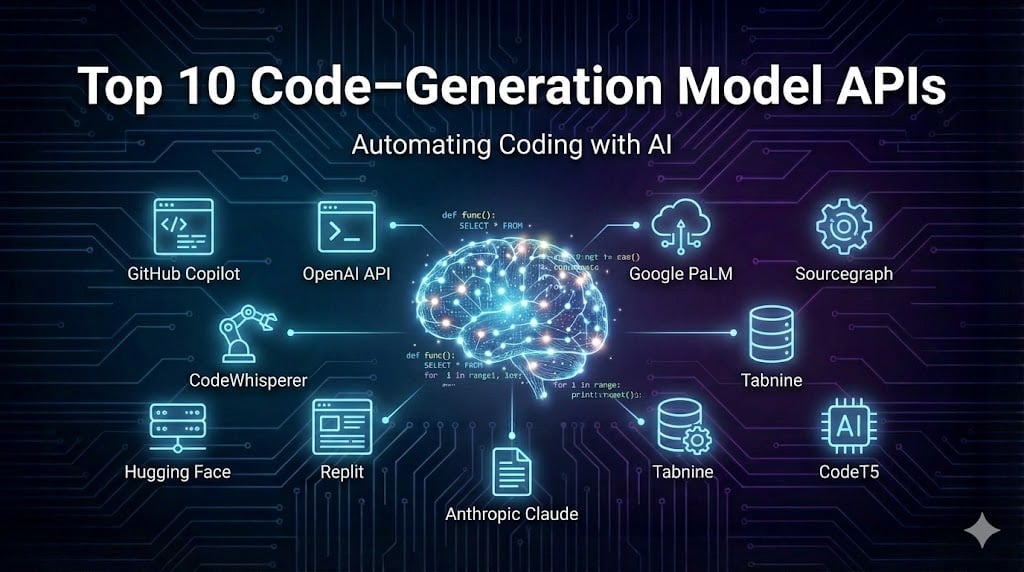
Top 10 Code Generation Model APIs for IDEs & AI Agents


Quick summaryWhat are code‑generation model APIs and which ones should developers use in 2026?
Answer: Code‑generation APIs are AI services that generate, complete or refactor code when given natural‑language prompts or partial code. Modern models go beyond autocomplete; they can read entire repositories, call tools, run tests and even open pull requests. This guide compares leading APIs (OpenAI’s Codex/GPT‑5, Anthropic’s Claude, Google’s Gemini, Amazon Q, Mistral’s Codestral, DeepSeek R1, Clarifai’s StarCoder2, IQuest Coder, Meta’s open models and multi‑agent platforms like Stride 100×) on features such as context window, tool integration and cost. It also explores emerging research – diffusion language models, recursive language models and code‑flow training – and shows how to integrate these APIs into your IDE, agentic workflows and CI/CD pipelines. Each section includes expert insights to help you make informed decisions.

The explosion of AI coding assistants over the past few years has changed how developers write, test and deploy software. Instead of manually composing boilerplate or searching Stack Overflow, engineers now leverage code‑generation models that speak natural language and understand complex repositories. These services are available through APIs and IDE plug‑ins, making them accessible to freelancers and enterprises alike. As the landscape evolves, new models emerge with larger context windows, better reasoning and more efficient architectures. In this article we’ll compare the top 10 code‑generation model APIs for 2026, explain how to evaluate them, and highlight research trends shaping their future. As a market‑leading AI company, Clarifai believes in transparency, fairness and responsible innovation; we’ll integrate our own products where relevant and share practices that align with EEAT (Expertise, Experience, Authoritativeness and Trustworthiness). Let’s dive in.

Quick Digest – What You’ll Learn

  • Definition and importance of code‑generation APIs and why they matter for IDEs, agents and automation.
  • Evaluation criteria: supported languages, context windows, tool integration, benchmarks, cost and privacy.
  • Comparative profiles for ten leading models, including proprietary and open‑source options.
  • Step‑by‑step integration guide for IDEs, agentic coding and CI/CD pipelines.
  • Emerging trends: diffusion models, recursive language models, code‑flow training, RLVR and on‑device models.
  • Real‑world case studies and expert quotes to ground theoretical concepts in practice.
  • FAQs addressing common concerns about adoption, privacy and the future of AI coding.

What Are Code‑Generation Model APIs and Why Do They Matter?

Quick summary – What do code‑generation APIs do?
These APIs allow developers to offload coding tasks to AI. Modern models can generate functions from natural‑language descriptions, refactor legacy modules, write tests, find bugs and even document code. They work through REST endpoints or IDE extensions, returning structured outputs that can be integrated into projects.

Coding assistants began as autocomplete tools but have evolved into agentic systems that read and edit entire repositories. They integrate with IDEs, command‑line interfaces and continuous‑integration pipelines. In 2026, the market offers dozens of models with different strengths—some excel at reasoning, others at scaling to millions of tokens, and some are open‑source for self‑hosting.

Why These APIs Are Transforming Software Development

  • Time‑to‑market reduction: AI assistants automate repetitive tasks like scaffolding, documentation and testing, freeing engineers to focus on architecture and product features. Studies show that developers adopting AI tools reduce coding time and accelerate release cycles.
  • Quality and consistency: The best models incorporate training data from diverse repositories and can spot errors, enforce style guides and suggest security improvements. Some even integrate vulnerability scanning into the generation process.
  • Agentic workflows: Instead of writing code line by line, developers now orchestrate fleets of autonomous agents. In this paradigm, a conductor works with a single agent in an interactive loop, while an orchestrator coordinates multiple agents running concurrently. This shift empowers teams to handle large projects with fewer engineers, but it requires new thinking around prompts, context management and oversight.

Expert Insights – What the Experts Are Saying

  • Plan before you code. Google Chrome engineering manager Addy Osmani urges developers to start with a clear specification and break work into small, iterative tasks. He notes that AI coding is “difficult and unintuitive” without structure, recommending a mini waterfall process (planning in 15 minutes) before writing any code.
  • Provide extensive context. Experienced users emphasize the need to feed AI models with all relevant files, documentation and constraints. Tools like Claude Code support importing entire repositories and summarizing them into manageable prompts.
  • Mix models for best results. Clarifai’s industry guide underscores that there is no single “best” model; combining large general models with smaller domain‑specific ones can improve accuracy and reduce cost.

How to Evaluate Code‑Generation APIs (Key Criteria)

Supported Languages & Domains

Models like StarCoder2 and Codestral are trained on over 600 programming languages. Others specialize in Python, Java or JavaScript. Consider the languages your team uses, as models may handle dynamic typing differently or lack proper indentation for certain languages.

Context Window & Memory

A longer context means the model can analyze larger codebases and maintain coherence across multiple files. Leading models now offer context windows from 128 k tokens (Claude Sonnet, DeepSeek R1) up to 1 M tokens (Gemini 2.5 Pro). Clarifai’s experts note that contexts of 128 k–200 k tokens enable end‑to‑end documentation summarization and risk analysis.

Agentic Capabilities & Tool Integration

Basic completion models return a snippet given a prompt; advanced agentic models can run tests, open files, call external APIs and even search the web. For example, Claude Code’s Agent SDK can read and edit files, run commands and coordinate subagents for parallel tasks. Multi‑agent frameworks like Stride 100× map codebases, create tasks and open pull requests autonomously.

Benchmarks & Accuracy

Benchmarks help quantify performance across tasks. Common tests include:

  • HumanEval/EvalPlus: Measures the model’s ability to generate correct Python functions from descriptions and handle edge cases.
  • SWE‑Bench: Evaluates real‑world software engineering tasks by editing entire GitHub repositories and running unit tests.
  • APPS: Assesses algorithmic reasoning with complex problem setsx

Note that a high score on one benchmark doesn’t guarantee general success; look at multiple metrics and user reviews.

Performance & Cost

Large proprietary models offer high accuracy but may be expensive; open‑source models provide control and cost savings. Clarifai’s compute orchestration lets teams spin up secure environments, test multiple models simultaneously and run inference locally with on‑premises runners. This infrastructure helps optimize cost while maintaining security and compliance.

Expert Insights – Recommendations from Research

  • Smaller models can outperform larger ones. MIT researchers developed a technique that guides small language models to produce syntactically valid code, allowing them to outperform larger models while being more efficient.
  • Reasoning models dominate the future. DeepSeek R1’s use of Reinforcement Learning with Verifiable Rewards (RLVR) demonstrates that reasoning‑oriented training significantly improves performance.
  • Diffusion models enable bidirectional context. JetBrains researchers show that diffusion language models can generate out of order by conditioning on past and future context, mirroring how developers revise code.

Quick summary – What should developers look for when choosing a model?
Look at supported languages, context window length, agentic capabilities, benchmarks and accuracy, cost/pricing, and privacy/security features. Balancing these factors helps match the right model to your workflow.


Which Code‑Generation APIs Are Best for 2026? (Top Models Reviewed)

Below we profile the ten most influential models and platforms. Each section includes a quick summary, key capabilities, strengths, limitations and expert insights. Remember to evaluate models in the context of your stack, budget and regulatory requirements.

1. OpenAI Codex & GPT‑5 – Powerful Reasoning and Massive Context

Quick summary – Why consider Codex/GPT‑5?
OpenAI’s Codex models (the engine behind early GitHub Copilot) and the latest GPT‑5 family are highly capable across languages and frameworks. GPT‑5 offers context windows of up to 400 k tokens and strong reasoning, while GPT‑4.1 provides balanced instruction following with up to 1 M tokens in some variants. These models support function calling and tool integration via the OpenAI API, making them suitable for complex workflows.

What They Do Well

  • Versatile generation: Supports a wide range of languages and tasks, from simple snippets to full application scaffolding.
  • Agentic integration: The API allows function calling to access external services and run code, enabling agentic behaviors. The models can work through IDE plug‑ins (Copilot), ChatGPT and command‑line interfaces.
  • Extensive ecosystem: Rich set of tutorials, plug‑ins and community tools. Copilot integrates directly into VS Code and JetBrains, offering real‑time suggestions and AI chat.

Limitations

  • Cost: Pricing is higher than many open‑source alternatives, especially for large context usage. The pay‑as‑you‑go model can lead to unpredictable expenses without careful monitoring.
  • Privacy: Code submitted to the API is processed by OpenAI’s servers, which may be a concern for regulated industries. Self‑hosting is not available.

Expert Insights

  • Developers find success when they structure prompts as if they were pair‑programming with a human. Addy Osmani notes that you should treat the model like a junior engineer—provide context, ask it to write a spec first and then generate code piece by piece.
  • Researchers emphasize that reasoning‑oriented post‑training, such as RLVR, enhances the model’s ability to explain its thought process and produce correct answers.

2. Anthropic Claude Sonnet 4.5 & Claude Code – Safety and Instruction Following

Quick summary – How does Claude differ?
Anthropic’s Claude Sonnet models (v3.7 and v4.5) emphasize safe, polite and robust instruction following. They offer 128 k context windows and excel at multi‑file reasoning and debugging. The Claude Code API adds an Agent SDK that grants AI agents access to your file system, enabling them to read, edit and execute code.

What They Do Well

  • Extended context: Supports large prompts, allowing analysis of entire repositories.
  • Agent SDK: Agents can run CLI commands, edit files and search the web, coordinating subagents and managing context.
  • Safety controls: Anthropic places strict alignment measures on outputs, reducing harmful or insecure suggestions.

Limitations

  • Availability: Not all features (e.g., Claude Code SDK) are widely available. There may be waitlists or capacity constraints.
  • Cost: Paid tiers can be expensive at scale.

Expert Insights

  • Anthropic recommends giving agents enough context—whole files, documentation and tests—to achieve good results. Their SDK automatically compacts context to avoid hitting the token limit.
  • When building agents, think about parallelism: subagents can handle independent tasks concurrently, speeding up workflows.

3. Google Gemini Code Assist (Gemini 2.5 Pro) – 1 M Token Context & Multimodal Intelligence

Quick summary – What sets Gemini 2.5 Pro apart?
Gemini 2.5 Pro extends Google’s Gemini family into coding. It offers up to 1 M tokens of context and can process code, text and images. Gemini Code Assist integrates with Google Cloud’s CLI and IDE plug‑ins, providing conversational assistance, code completion and debugging.

What It Does Well

  • Massive context: The 1 M token window allows entire repositories and design docs to be loaded into a prompt—ideal for summarizing codebases or performing risk analysis.
  • Multimodal capabilities: It can interpret screenshots, diagrams and user interfaces, which is valuable for UI development.
  • Integration with Google’s ecosystem: Works seamlessly with Firebase, Cloud Build and other GCP services.

Limitations

  • Private beta: Gemini 2.5 Pro may be in limited release; access may be restricted.
  • Cost and data privacy: Like other proprietary models, data must be sent to Google’s servers.

Expert Insights

  • Clarifai’s industry guide notes that multimodal intelligence and retrieval‑augmented generation are major trends in next‑generation models. Gemini leverages these innovations to contextualize code with documentation, diagrams and search results.
  • JetBrains researchers suggest that models with bi‑directional context, like diffusion models, may better mirror how developers refine code; Gemini’s long context helps approximate this behavior.

4. Amazon Q Developer (Formerly CodeWhisperer) – AWS Integration & Security Scans

Quick summary – Why choose Amazon Q?
Amazon’s Q Developer (formerly CodeWhisperer) focuses on secure, AWS‑optimized code generation. It supports multiple languages and integrates deeply with AWS services. The tool suggests code snippets, infrastructure‑as‑code templates and even policy recommendations.

What It Does Well

  • AWS integration: Provides context‑aware recommendations that automatically configure IAM policies, Lambda functions and other AWS resources.
  • Security and licensing checks: Scans code for vulnerabilities and compliance issues, offering remediation suggestions.
  • Free tier for individuals: Offers unlimited usage for one user in certain tiers, making it accessible to hobbyists and small startups.

Limitations

  • Platform lock‑in: Best suited for developers deeply invested in AWS. Projects hosted elsewhere may see less benefit.
  • Boilerplate bias: May emphasize AWS‑specific patterns over general solutions, and suggestions can feel generic.

Expert Insights

  • Reviews emphasize using Amazon Q when you are already within the AWS ecosystem; it shines when you need to generate serverless functions, CloudFormation templates or manage IAM policies.
  • Keep in mind the trade‑offs between convenience and vendor lock‑in; evaluate portability if you need multi‑cloud support.

5. Mistral Codestral – Open Weights and Fill‑in‑the‑Middle

Quick summary – What makes Codestral unique?
Codestral
is a 22 B parameter model released by Mistral. It is trained on 80+ programming languages, supports fill‑in‑the‑middle (FIM) and has a dedicated API endpoint with a generous beta period.

What It Does Well

  • Open weights: Codestral’s weights are freely available, enabling self‑hosting and fine‑tuning.
  • FIM capabilities: It excels at infilling missing code segments, making it ideal for refactoring and partial edits. Developers report high accuracy on benchmarks like HumanEval.
  • Integration into popular tools: Supported by frameworks like LlamaIndex and LangChain and IDE extensions such as Continue.dev and Tabnine.

Limitations

  • Context size: While robust, it may not match the 128 k+ windows of newer proprietary models.
  • Documentation and support: Being a newer entrant, community resources are still developing.

Expert Insights

  • Developers praise Codestral for offering open weights and competitive performance, enabling experimentation without vendor lock‑in.
  • Clarifai recommends combining open models like Codestral with specialized models through compute orchestration to optimize cost and accuracy.

6. DeepSeek R1 & Chat V3 – Affordable Open‑Source Reasoning Models

Quick summary – Why choose DeepSeek?
DeepSeek R1
and Chat V3 are open‑source models renowned for introducing Reinforcement Learning with Verifiable Rewards (RLVR). R1 matches proprietary models on coding benchmarks while being cost‑effective.

What They Do Well

  • Reasoning‑oriented training: RLVR enables the model to produce detailed reasoning and step‑by‑step solutions.
  • Competitive benchmarks: DeepSeek R1 performs well on HumanEval, SWE‑Bench and APPS, often rivaling larger proprietary models.
  • Cost and openness: The model is open weight, allowing for self‑hosting and modifications. Context windows of up to 128 k tokens support large codebases.

Limitations

  • Ecosystem: While growing, DeepSeek’s ecosystem is smaller than those of OpenAI or Anthropic; plug‑ins and tutorials may be limited.
  • Performance variance: Some developers report inconsistencies when moving between languages or domains.

Expert Insights

  • Researchers emphasize that RLVR and similar techniques show that smaller, well‑trained models can compete with giants, thereby democratizing access to powerful coding assistants.
  • Clarifai notes that open‑source models can be combined with domain‑specific models via compute orchestration to tailor solutions for regulated industries.

7. Clarifai StarCoder2 & Compute Orchestration Platform – Balanced Performance and Trust

Quick summary – Why pick Clarifai?
StarCoder2‑15B is Clarifai’s flagship code‑generation model. It is trained on more than 600 programming languages and offers a large context window with robust performance. It is accessible through Clarifai’s platform, which includes compute orchestration, local runners and fairness dashboards.

What It Does Well

  • Performance and breadth: Handles diverse languages and tasks, making it a versatile choice for enterprise projects. The model’s API returns consistent results with secure handling.
  • Compute orchestration: Clarifai’s platform allows teams to spin up secure environments, run multiple models in parallel and monitor performance. Local runners enable on‑premises inference, addressing data‑privacy requirements.
  • Fairness and bias monitoring: Built‑in dashboards help detect and mitigate bias across outputs, supporting responsible AI development.

Limitations

  • Parameter size: At 15 B parameters, StarCoder2 may not match the raw power of 40 B+ models, but it strikes a balance between capability and efficiency.
  • Community visibility: As a newer entrant, it may not have as many third‑party integrations as older models.

Expert Insights

  • Clarifai experts advocate for mixing models—using general models like StarCoder2 alongside domain‑specific small models to achieve optimal results.
  • The company highlights emerging innovations such as multimodal intelligence, chain‑of‑thought reasoning, mixture‑of‑experts architectures and retrieval‑augmented generation, all of which the platform is designed to support.

8. IQuest Coder V1 – Code‑Flow Training and Efficient Architectures

Quick summary – What’s special about IQuest Coder?
IQuest Coder comes from the AI research arm of a quantitative hedge fund. Released in January 2026, it introduces code‑flow training—training on commit histories and how code evolves over time. It offers Instruct, Thinking and Loop variants, with parameter sizes ranging from 7 B to 40 B.

What It Does Well

  • High benchmarks with fewer parameters: The 40 B variant achieves 81.4 % on SWE‑Bench Verified and 81.1 % on LiveCodeBench, matching or beating models with 400 B+ parameters.
  • Reasoning and efficiency: The Thinking variant employs reasoning‑driven reinforcement learning and a 128 k context window. The Loop variant uses a recurrent transformer architecture to reduce resource usage.
  • Open source: Full model weights, training code and evaluation scripts are available for download.

Limitations

  • New ecosystem: Being new, IQuest’s community support and integrations are still emerging.
  • Licensing constraints: The license includes restrictions on commercial use by large companies.

Expert Insights

  • The success of IQuest Coder underscores that innovation in training methodology can outperform pure scaling. Code‑flow training teaches the model how code evolves, leading to more coherent suggestions during refactoring.
  • It also highlights that industry outsiders—such as hedge funds—are now building state‑of‑the‑art models, hinting at a broader democratization of AI research.

9. Meta’s Code Llama & Llama 4 Code / Qwen & Other Open‑Source Alternatives – Massive Context & Community

Quick summary – Where do open models like Code Llama and Qwen fit?
Meta’s Code Llama and Llama 4 Code offer open weights with context windows up to 10 M tokens, making them suitable for huge codebases. Qwen‑Code and similar models provide multilingual support and are freely available.

What They Do Well

  • Scale: Extremely long contexts allow analysis of entire monorepos.
  • Open ecosystem: Community‑driven development leads to new fine‑tunes, benchmarks and plug‑ins.
  • Self‑hosting: Developers can deploy these models on their own hardware for privacy and cost control.

Limitations

  • Lower performance on some benchmarks: While impressive, these models may not match the reasoning of proprietary models without fine‑tuning.
  • Hardware requirements: Running 10 M‑token models demands significant VRAM and compute; not all teams can support this.

Expert Insights

  • Clarifai’s guide highlights that edge and on‑device models are a growing trend. Self‑hosting open models like Code Llama may be critical for applications requiring strict data control.
  • Using mixture‑of‑experts or adapter modules can extend these models’ capabilities without retraining the whole network.

10. Stride 100×, Tabnine, GitHub Copilot & Agentic Frameworks – Orchestrating Fleets of Models

Quick summary – Why consider agentic frameworks?
In addition to standalone models, multi‑agent platforms like Stride 100×, Tabnine, GitHub Copilot, Cursor, Continue.dev and others provide orchestration and integration layers. They connect models, code repositories and deployment pipelines, creating an end‑to‑end solution.

What They Do Well

  • Task orchestration: Stride 100× maps codebases, creates tasks and generates pull requests automatically, allowing teams to manage technical debt and feature work.
  • Privacy & self‑hosting: Tabnine offers on‑prem solutions for organizations that need full control over their code. Continue.dev and Cursor provide open‑source IDE plug‑ins that can connect to any model.
  • Real‑time assistance: GitHub Copilot and similar tools offer inline suggestions, doc generation and chat functionality.

Limitations

  • Ecosystem differences: Each platform ties into specific models or API providers. Some offer only proprietary integrations, while others support open‑source models.
  • Subscription costs: Orchestration platforms often use seat‑based pricing, which can add up for large teams.

Expert Insights

  • According to Qodo AI’s analysis, multi‑agent systems are the future of AI coding. They predict that developers will increasingly rely on fleets of agents that generate code, review it, create documentation and manage tests.
  • Addy Osmani distinguishes between conductor tools (interactive, synchronous) and orchestrator tools (asynchronous, concurrent). The choice depends on whether you need interactive coding sessions or large automated refactors.

How to Integrate Code‑Generation APIs into Your Workflow

Quick summary – What’s the best way to use these APIs?
Start by planning your project, then choose a model that fits your languages and budget. Install the appropriate IDE extension or SDK, provide rich context and iterate in small increments. Use Clarifai’s compute orchestration to mix models and run them securely.

Step 1: Plan and Define Requirements

Before writing a single line of code, brainstorm your project and write a detailed specification. Document requirements, constraints and architecture decisions. Ask the AI model to help refine edge cases and create a project plan. This planning stage sets expectations for both human and AI partners.

Step 2: Choose the Right API and Set Up Credentials

Select a model based on the evaluation criteria above. Register for API keys, set usage limits and determine which model versions (e.g., GPT‑5 vs GPT‑4.1; Sonnet 4.5 vs 3.7) you’ll use.

Step 3: Install Extensions and SDKs

Most models offer IDE plug‑ins or command‑line interfaces. For example:

  • Clarifai’s SDK allows you to call StarCoder2 via REST and run inference on local runners; the local runner keeps your code on‑prem while enabling high‑speed inference.
  • GitHub Copilot and Cursor integrate directly into VS Code; Claude Code and Gemini have CLI tools.
  • Continue.dev and Tabnine support connecting to external models via API keys.

Step 4: Provide Context and Guidance

Upload or reference relevant files, functions and documentation. For multi‑file refactors, provide the entire module or repository; use retrieval‑augmented generation to bring in docs or related issues. Claude Code and similar agents can import full repos into context, automatically summarizing them.

Step 5: Iterate in Small Chunks

Break the project into bite‑sized tasks. Ask the model to implement one function, fix one bug or write one test at a time. Review outputs carefully, run tests and provide feedback. If the model goes off track, revise the prompt or provide corrective examples.

Step 6: Automate in CI/CD

Integrate the API into continuous integration pipelines to automate code generation, testing and documentation. Multi‑agent frameworks like Stride 100× can generate pull requests, update READMEs and even perform code reviews. Clarifai’s compute orchestration enables running multiple models in a secure environment and capturing metrics for compliance.

Step 7: Monitor, Evaluate and Improve

Track model performance using unit tests, benchmarks and human feedback. Use Clarifai’s fairness dashboards to audit outputs for bias and adjust prompts accordingly. Consider mixing models (e.g., using GPT‑5 for reasoning and Codestral for infilling) to leverage strengths.


Emerging Trends & Future Directions in Code Generation

Quick summary – What’s next for AI coding?
Future models will improve how they edit code, manage context, reason about algorithms and run on edge devices. Research into diffusion models, recursive language models and new reinforcement learning techniques promises to reshape the landscape.

Diffusion Language Models – Out‑of‑Order Generation

Unlike autoregressive models that generate token by token, diffusion language models (d‑LLMs) condition on both past and future context. JetBrains researchers note that this aligns with how humans code—sketching functions, jumping ahead and then refining earlier parts. d‑LLMs can revisit and refine incomplete sections, enabling more natural infilling. They also support coordinated multi‑region updates: IDEs could mask multiple problematic regions and let the model regenerate them coherently.

Semi‑Autoregressive & Block Diffusion – Balancing Speed and Quality

Researchers are exploring semi‑autoregressive methods, such as Block Diffusion, which combine the efficiency of autoregressive generation with the flexibility of diffusion models. These approaches generate blocks of tokens in parallel while still allowing out‑of‑order adjustments.

Recursive Language Models – Self‑Managing Context

Recursive Language Models (RLMs) give LLMs a persistent Python REPL to manage their context. The model can inspect input data, call sub‑LLMs and store intermediate results. This approach addresses context rot by summarizing or externalizing information, enabling longer reasoning chains without exceeding context windows. RLMs may become the backbone of future agentic systems, allowing AI to manage its memory and reasoning.

Code‑Flow Training & Evolutionary Data

IQuest Coder’s code‑flow training teaches the model how code evolves across commit histories, emphasizing dynamic patterns rather than static snapshots. This approach results in smaller models outperforming large ones on complex tasks, indicating that quality of data and training methodology can trump sheer scale.

Reinforcement Learning with Verifiable Rewards (RLVR)

RLVR allows models to learn from deterministic rewards for code and math problems, removing the need for human preference labels. This technique powers DeepSeek R1’s reasoning abilities and is likely to influence many future models.

Edge & On‑Device Models

Clarifai predicts significant growth in edge and domain‑specific models. Running code‑generation models on local hardware ensures privacy, reduces latency and enables offline development. Expect to see more slimmed‑down models optimized for mobile and embedded devices.

Multi‑Agent Orchestration

The future of coding will involve fleets of agents. Tools like Copilot Agent, Stride 100× and Tabnine orchestrate multiple models to handle tasks in parallel. Developers will increasingly act as conductors and orchestrators, guiding AI workflows rather than writing code directly.


Real‑World Case Studies & Expert Voices

Quick summary – What do real users and experts say?
Case studies show that integrating AI coding assistants can dramatically improve productivity, but success depends on planning, context and human oversight.

Stride 100× – Automating Tech Debt

In one case study, a mid‑sized fintech company adopted Stride 100× to handle technical debt. Stride’s multi‑agent system scanned their repositories, mapped dependencies, created a backlog of tasks and generated pull requests with code fixes. The platform’s ability to open and review pull requests saved the team several weeks of manual work. Developers still reviewed the changes, but the AI handled the repetitive scaffolding and documentation.

Addy Osmani’s Coding Workflow

Addy Osmani reports that at Anthropic, around 90 % of the code for their internal tools is now written by AI models. However, he cautions that success requires a disciplined workflow: start with a clear spec, break work into iterative chunks and provide abundant context. Without this structure, AI outputs can be chaotic; with it, productivity soars.

MIT Research – Small Models, Big Impact

MIT’s team developed a probabilistic technique that guides small models to adhere to programming language rules, enabling them to beat larger models on code generation tasks. This research suggests that the future may lie in efficient, domain‑specialized models rather than ever‑larger networks.

Clarifai’s Platform – Fairness and Flexibility

Companies in regulated industries (finance, healthcare) have leveraged Clarifai’s compute orchestration and fairness dashboards to deploy code‑generation models securely. By running models on local runners and monitoring bias metrics, they were able to adopt AI coding assistants without compromising privacy or compliance.

IQuest Coder – Efficiency and Evolution

IQuest Coder’s release shocked many observers: a 40 B‑parameter model beating much larger models by training on code evolution. Competitive programmers report that the Thinking variant explains algorithms step by step and suggests optimizations, while the Loop variant offers efficient inference for deployment. Its open‑source release democratizes access to cutting‑edge techniques.


Frequently Asked Questions (FAQs)

Q1. Are code‑generation APIs safe to use with proprietary code?
Yes, but choose models with strong privacy guarantees. Self‑hosting open‑source models or using Clarifai’s local runner ensures code never leaves your environment. For cloud‑hosted models, read the provider’s privacy policy and consider redacting sensitive data.

Q2. How do I prevent AI from introducing bugs?
Treat AI suggestions as drafts. Plan tasks, provide context, run tests after every change and review generated code. Splitting work into small increments and using models with high benchmark scores reduces risk.

Q3. Which model is best for beginners?
Beginners may prefer tools with strong instruction following and safety, such as Claude Sonnet or Amazon Q. These models offer clearer explanations and guard against insecure patterns. However, always start with simple tasks and gradually increase complexity.

Q4. Can I combine multiple models?
Absolutely. Using Clarifai’s compute orchestration, you can run several models in parallel—e.g., using GPT‑5 for design, StarCoder2 for implementation and Codestral for refactoring. Mixing models often yields better results than relying on one.

Q5. What’s the future of code generation?
Research points toward diffusion models, recursive language models, code‑flow training and multi‑agent orchestration. The next generation of models will likely generate code more like humans—editing, reasoning and coordinating tasks across multiple agents


Final Thoughts

Code‑generation APIs are transforming software development. The 2026 landscape offers a rich mix of proprietary giants, innovative open‑source models and multi‑agent frameworks. Evaluating models requires considering languages, context windows, agentic capabilities, benchmarks, costs and privacy. Clarifai’s StarCoder2 and compute orchestration provide a balanced, transparent solution with secure deployment, fairness monitoring and the ability to mix models for optimized results.

Emerging research suggests that future models will generate code more like humans—editing iteratively, managing their own context and reasoning about algorithms. At the same time, industry leaders emphasize that AI is a partner, not a replacement; success depends on clear planning, human oversight and ethical usage. By staying informed and experimenting with different models, developers and companies can harness AI to build robust, secure and innovative software—while keeping trust and fairness at the core.


Pilot a big ol’ fort with steampunky legs in the deserty extraction shooter Sand: Raiders of Sophie when it launches in March


Hear ye, hear ye, another extraction shooter is almost upon us, this time the smaller but still quite bold in scope Sand: Raiders of Sophie. Last time I personally heard of this game it was just called Sand, which doesn’t sound great for that whole search engine thing, though I’m not entirely convinced by the subtitle. Anyway, this extraction shooter is set in an alternate 1910 where you get to roam the desert in a steampunky fortress with legs, and it’s got a release month!

That release month isn’t too far away either, being March, though a month is all you’re getting right now as there’s no specific date in sight. The perils of game development, I would guess. For those that haven’t heard of Sand before, it’s a PvPvE extraction shooter where you build large, mobile buildings called Tramplers, a sort of 20th century version of the titular castle from Howl‘s Moving Castle. You then operate these Tramplers, driving them around so to speak, taking down other players’ creations with various weapons you may have attached.

Watch on YouTube

On the ground level, you as essentially a regular Joe will trawl the “once-resource-rich world of Sophie,” all so that you can “uncover hidden riches in the barren wastelands, rectify historical injustices,” and lay claim to what you believe is rightfully yours (what that is, I can’t tell you).

There’s shooting, there’s things to find and extract, there’s not-zombies to keep you on your toes when other players aren’t about. All of it looks fairly par for the course, the real selling point here are the Tramplers, at least from an outside perspective. If any of this takes your fancy, you can wishlist Sand: Raiders of Sophie right here.

The World’s Oceans Soaked Up Record-Breaking Heat for the 9th Straight Year


It would take roughly 365 million Hiroshima-sized atomic bombs to release the amount of energy the world’s oceans absorbed as additional heat in 2025. This figure stems from the latest report on the global ocean heat content, which found record-high marine warming for the ninth year in a row.

The 55 scientists who contributed to the report, published Friday in the journal Advances in Atmospheric Sciences, warn that the continued trend is exacerbating extreme weather, sea-level rise, and the destabilization of marine ecosystems. The main driver is unequivocally rising greenhouse gas emissions, they say.

We’re already seeing the catastrophic effect marine warming has on communities around the world, particularly through stronger storms and more severe flooding. The researchers point to a slew of deadly events in 2025, from the unprecedented monsoon rains that killed more than 1,300 people across Southeast Asia to flash floods that killed at least 138 people—including 27 young summer campers and counselors—in Central Texas.

“In the long term, consistent with projections from state-of-the-art climate models, global [ocean heat content] is expected to continue breaking records until net-zero greenhouse gas emissions are achieved,” the authors write.

Reaching a boiling point

Earth’s oceans act as its primary thermal energy sink, absorbing 90% of the excess heat trapped by greenhouse gases in the atmosphere. The thermal state of the ocean therefore plays an important role in regulating global and regional climate impacts, mainly through increased atmospheric moisture and energy availability, which fuel storm intensification.

To calculate how much heat the world’s oceans absorbed in 2025, the researchers measured temperature fluctuations in the upper 6,500 feet (2,000 meters) of the global ocean. They found that the ocean heat content was about 23 zettajoules higher than it was at the end of 2024, making 2025 the hottest year on record in terms of OHC.

Roughly 14% of the global ocean area reached its warmest state on record last year, particularly in the Southern Ocean, tropical and South Atlantic Ocean, Mediterranean Sea, and North Indian Ocean. About one-third of the global ocean area ranked among its top three hottest years on record, and more than half ranked among its five hottest. This underscores the pervasive and accumulated nature of ocean heat gain, according to the researchers.

No end to the trend

That extra thermal energy is supercharging storms, but it’s also speeding the already rapid melting of glaciers and sea ice. In 2025, Arctic sea ice extent reached the lowest annual maximum since satellite observation began, while Antarctic sea ice extent fell to its third-lowest annual maximum.

Year-to-date observations also show that both the Greenland and Antarctic ice sheets reached record-low mass levels, and new studies suggest portions of them have crossed critical climate tipping points, according to the researchers. These findings indicate continued long-term contributions to global sea-level rise.

Ocean warming poses a deadly threat to coral reefs as well. When seawater temperatures exceed the thermal tolerance threshold of these fragile organisms, they expel the symbiotic algae that provide them with nutrients and energy, resulting in bleaching.

The world is currently in the midst of its fourth global coral bleaching event, according to NOAA, with bleaching-level heat stress impacting roughly 84% of the world’s coral reef area since January 2023. Mass coral bleaching has been documented in at least 83 countries and territories.

The researchers don’t expect this nine-year streak of record-breaking marine warming to end anytime soon. Until the world achieves net-zero carbon emissions, the global ocean heat content will continue to rise.

We’re nowhere near reaching that goal, but rapid emissions reductions can still limit future impacts. To better understand and prepare for these impacts, the authors stress the importance of strengthening ocean monitoring and uncovering the mechanisms behind ocean heat redistribution. These efforts will help communities around the world adapt to a new climate reality and build resilience.

If for some reason you can’t get enough of Stranger Things’ Vecna, you can now play as him in Dead by Daylight’s latest crossover


I can’t pretend to be anything other than relieved that Stranger Things is over. While I enjoyed the first few seasons of its pulpy Spielberg pastiche, it ultimately became far too big for its Nike high tops. But if you still haven’t had enough of the gang explaining its preposterously convoluted plans to kill Vecna, you can carry on the adventure via Dead by Daylight, in the latest crossover for Behaviour Interactive’s multiplayer slash ’em up.

Titled Stranger Things: Chapter 2, the collab sees three more playable characters from the Duffer Brothers’ cultural megalith to join Steve and Nancy, who were added to the game back in 2019. On the survivor side, players can assume the roles of Eleven and Dustin, while sentient butcher’s shop window Vecna arrives as an all-new killer.

Next Week on Xbox: New Games for January 12 to 16


Welcome to Next Week on Xbox! In this weekly feature we cover all the games coming soon to Xbox Series X|S, Xbox One, Xbox on PC, and Game Pass! Get more details on these upcoming games below and click their profiles for further info (release dates subject to change). Let’s jump in!


Xbox Play Anywhere

Bus Driving Simulator : EVO

Ovilex Soft SRL

$19.99

Bus Driving Simulator: Evo – January 12
Optimized for Xbox Series X|S / Xbox Play Anywhere

Get behind the wheel and become a professional bus driver! This amazing bus simulator will allow you to transport passengers across three different cities (Rio de Janeiro, Munich and Los Angeles) using various bus models with realistic physics and graphics. Play this bus simulator in single player with career and freeride modes.


Loan Shark

Dark Product

Loan Shark – January 13 – Optimized for Xbox Series X|S

You’re an indebted angler, trapped in a vicious cycle of borrowing and desperation. One dark, endless night at sea you haul up something unnatural: a talking fish named Cagliuso. It promises you riches — but its bargains come with terrifying strings. In Loan Shark, the nets you cast bring more than fish. They pull you toward sacrifice, secrets, and a deadline you may never meet. The “loan shark” isn’t just metaphoric — something is stalking the waters, your time is running out, and every deal you strike pushes you deeper into the unknown.


Xbox Play Anywhere

SimRail – The Railway Simulator

PlayWay S.A.


$34.99

$31.49

SimRail – The Railway Simulator – January 13
Optimized for Xbox Series X|S / Xbox Play Anywhere

SimRail is a new era of railway simulators. Realistic driving physics, the environment generated on the basis of geodetic data and an extensive multi-player mode are just some of the elements that game includes. Visit about 500 km of real routes created with all details. Choose present European high-speed, long-distance and suburban tracks, or travel back in time to 1980 and drive steam train at sand railway of Upper Silesia, Poland: the socialist land of coal and steel.


Tavern Manager Simulator

Ultimate Games S.A.

Tavern Manager Simulator – January 13
Optimized for Xbox Series X|S / Smart Delivery

Tavern Manager Simulator is an exciting process of rebuilding, expanding and improving a tavern. Take different approaches to running an establishment and meet the challenges of the outside world to create your own unique story.


Bob The Brick Breaker

Brainium Games

Bob the Brick Breaker – January 14

A game inspired by old arcade games, where waves of bricks make the climb to the top increasingly difficult. Adding to the challenge are minions and bosses, who will put us to the test. Ask your friends for help, playing as a duo, or go head-to-head to see who’s the best. If you think you’re the best of the bunch, then get ready to prove to the rest of the world that you’ve got what it takes via the online leaderboards.


Cats Around Us: Giant Cat

Silesia Games Sp. z o.o.

Cats Around Us: Giant Cat – January 14

A giant cat has made an (otherwise) peaceful village its napping spot! Can you find all the hidden cats scattered around the chaos? Explore four illustrated comic pages, search for hundreds of felines, and complete relaxing jigsaw puzzles. Cats Around Us: Giant Cat combines hidden-object gameplay with storybook art, offering a cozy, creative experience for cat and cartoon lovers alike!


Xbox Play Anywhere

Direction Quad

Eastasiasoft Limited

Direction Quad – January 14
Optimized for Xbox Series X|S / Xbox Play Anywhere / Smart Delivery

Hop your way through the dangerous swamps as you face the trials of your master the Wise Toad! Direction Quad is a 2D action-adventure presented in top-down pixel art style. Take the role of young Quad as he hops through the swamp in any diagonal direction, collecting coins and bugs along the way. The objective is to get Quad from his starting lily pad to the finish line of each stage without colliding with the terrain or any treacherous traps.


DreadOut Remastered Collection

Soft Source Pte Ltd

$29.99

DreadOut Remastered Collection – January 14

A collectors dream! A compilation consisting of the original DreadOut and DreadOut: Keepers of the Dark. DreadOut is a third person supernatural horror game where you play as Linda, a high school student trapped in an old, abandoned town. Equipped with her trusty smartphone and an SLR camera, she will battle against terrifying encounters and solve mysterious puzzles which will ultimately determine her fate. DreadOut: Keepers of the Dark is a new standalone horror game that takes place in the DreadOut universe. In this missing chapter, you will help Linda face the challenges of the DreadOut world with even more dangers lurking within.


Xbox Play Anywhere

God bless, or Goddess

NiuGamer


$19.99

$17.99

God Bless, or Goddess – January 14
Optimized for Xbox Series X|S / Handheld Optimized / Xbox Play Anywhere / Smart Delivery

They say the path to immortality is paved with hardship. But in your case, this hardship happened to take the form of seven dangerously beautiful women. You are Lin Fan, the chosen one of the Crane Illusion Sect. Born with a Pure Yang Lineage, you are destined to ascend to the heavens. However, no matter how hard you train, fate sends yet another challenge in your way…temptations in the shape of an unreliable master, a strict senior sister, or a saintess who seems far more interested in testing your heart rather than your skills. Can you survive the thousand tribulations of love, jealousy, and thunder? Or will your heart fall just before your heavenly ascension?


Xbox Play Anywhere

The Last Case of John Morley

JanduSoft


$12.99

$11.69

The Last Case of John Morley – January 14
Optimized for Xbox Series X|S / Xbox Play Anywhere

The Last Case of John Morley is a first-person narrative adventure set in the 1940s. You play as an experienced detective faced with a case long buried by time. After months in hospital, John Morley receives an unexpected visit from Lady Margarette Fordside, an aristocrat haunted by the murder of her daughter twenty years earlier. Though the police closed the case, she believes the real killer was never found. What begins as a quiet look into an old case becomes a haunting investigation into forgotten places and long-hidden truths that refuse to stay buried.


Xbox Play Anywhere

Ninja Nightfall

Old School Vibes

Ninja Nightfall – January 14
Optimized for Xbox Series X|S / Xbox Play Anywhere / Smart Delivery

Ninja Nightfall is a fast-paced platformer where you are the last silent guardian—an elite ninja battling a city overrun by hostile AI. Conquer 10 intense stages filled with deadly robots, hidden zones, and high-security relics. Master stealth, speed, and precision as you navigate neon-lit rooftops and evade traps.


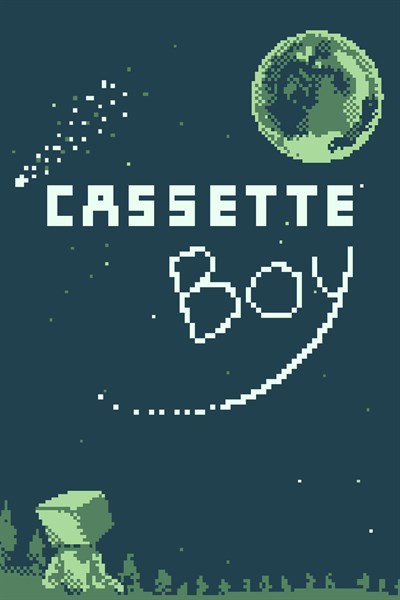
CASSETTE BOY

Forever Entertainment S. A.


$12.99

$11.69

Cassette Boy – January 15
Optimized for Xbox Series X|S / Smart Delivery

Is the moon there when nobody looks? Einstein once asked this famous question about quantum mechanics. This game takes that idea and turns it into a mysterious puzzle RPG, where the world itself only exists when you see it.


Disco Simulator

Ultimate Games S.A.


$14.99

$11.99

Disco Simulator – January 15
Optimized for Xbox Series X|S

Disco Simulator is a tycoon game focused on managing your own nightclub. Start from scratch, build walls, arrange furniture, hire staff, plan events, and invite artists to perform on stage. Create the ultimate place for music, dance, and fun!


Dreamscapes – Nightmare’s Heir

Joindots® GmbH

Dreamscapes – Nightmare’s Heir – January 15
Optimized for Xbox Series X|S / Smart Delivery

Two years after waking from her coma, Laura believes she’s free from nightmares. But the Sandman, who once held her soul captive, is back for revenge. A relaxing trip to a snowy mountain resort turns tragic when Tim falls from a cliff and slips into a coma. Bound by her vow not to use her Power for personal gain, Laura can’t save him herself. Desperate, she turns to an old friend (the player) and enters Tim’s subconscious, now under the Sandman’s dark influence. Explore haunting dreamscapes, solve intriguing puzzles, and face the shadows before the Sandman claims his next heir.


KEJORA

Soft Source Pte Ltd

$19.99

Kejora – January 15

When Kejora realizes that her peaceful village has been reliving the same day over and over, she and her friends seek out to try and uncover the origin of the mysterious time loop cursed on her village There’s a mystery hidden behind this peaceful village, unknown to its inhabitants, who carry on with their daily lives. Kejora features hand-drawn art and animation, environmental platformer puzzles, and party-based inspired gameplay with 2 supporting characters with unique skills to help Kejora in her exploration and journey.


Mel The Space Cat

Ember Box Studio

Mel the Space Cat – January 15
Optimized for Xbox Series X|S

In Mel The Space Cat, you’ll guide Mel, a courageous cosmic cat traveling across alien planets in search of safety even if that means escaping from energy traps, laser cannons, hazardous landscapes, and the mysterious alien Theo! Across 40 handcrafted space levels, your reflexes and timing will be pushed to the limit in a journey filled with charm, danger, and zero gravity surprises.


Apartment No 129

Axyos Games

$13.99

Apartment No 129 – January 16
Optimized for Xbox Series X|S

The story of a real event: in 2009, two young girls living in Apartment No 129 in Turkey performed satanic rituals with candles late at night. According to allegations, the girls, who lived on the top floor of the building, mysteriously lost their lives that night. Apartment No 129 is a single-player, first-person horror and thriller game.


Xbox Play Anywhere

Baking Time

QubicGames S.A.

Baking Time – January 16
Xbox Play Anywhere

Stack all kinds of mouth-watering baked goods, from croissants to cookie hearts and everything in between! Grab your spatula, lift the baked goods out of the oven, and put them on display so that customers can buy them! With a steady stream of hungry customers waiting in line, it’s up to you to deliver their orders quickly and efficiently!


Battle Puzzle 2048 – Queens of the Abyss

EpiXR Games

$6.99

Battle Puzzle 2048 – Queens of the Abyss – January 16
Optimized for Xbox Series X|S

Battle Puzzle 2048 – Queens of the Abyss brings a spellbinding twist to the classic 2048 puzzle game! Slide tiles to combine matching numbers, build powerful combos, and take on a colorful array of supernatural foes. Face off against crafty witches, playful vampires, and adorable girly demons, each armed with unique abilities like hexing tiles, draining health, or summoning chaos on the grid.


BrokenLore: UNFOLLOW

Serafini Productions

BrokenLore: Unfollow – January 16
Optimized for Xbox Series X|S / Smart Delivery

BrokenLore: Unfollow is a first-person psychological horror game that dives into the dark side of social media and its effect on mental health. You play as Anne, a young woman haunted by the trauma of bullying, trapped in a surreal nightmare where she must confront her past and uncover a buried truth.


Grimoire of Domance

Gray Boss Game Studio

Grimoire of Dominance – January 16
|Optimized for Xbox Series X|S

In Grimoire of Domance, the natural order has been shattered. You are a high mage of a Mage Order, the only one capable of wielding the power of the legendary Grimoire to stop Bahg’Val, an ancient entity that has possessed your master and threatens to consume the world. In this 2D action-platformer, your magic comes from dominance. You are what you defeat.


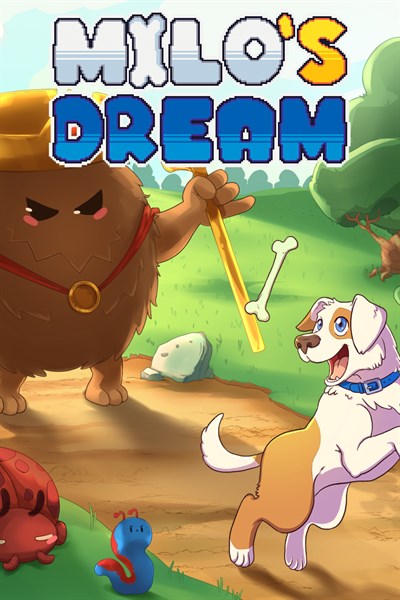
Milo’s Dream

Ratalaika Games S.L.

Milo’s Dream – January 16
Optimized for Xbox Series X|S / Smart Delivery

Milo is a very brave, smart, and playful dog! Only he can defeat the cruel King Big Flea and his evil henchmen who are terrorizing the fairy kingdom. Explore four magical branching locations, solve challenging puzzles, defeat dangerous enemies, and collect dog bones to earn special new abilities. Playing solo or together with local co-op multiplayer, only you can help Milo in his all-important quest!


Neural Requiem

Frostweep Games

Neural Requiem – January 16
Optimized for Xbox Series X|S

The world has fallen to a ruthless artificial intelligence determined to erase mankind. Cities lie in ruins, the skies swarm with machines, and the future hangs by a thread. You are John Veyron, a soldier reborn through brutal experiments, stripped of his past but armed with unbreakable resolve. With only steel and firepower at his side, John must march through hostile strongholds, confront merciless AI champions, and take the fight straight to the heart of the machine.


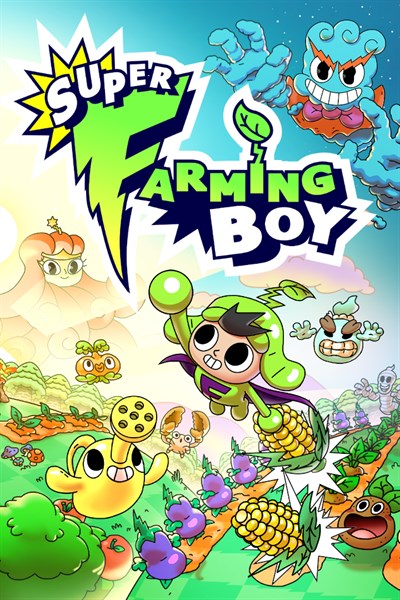
Super Farming Boy

Renxo Europe Limited

Super Farming Boy – January 16
Optimized for Xbox Series X|S

Super Farming Boy is an exciting mix of action, puzzle, and farming sim, heavily relying on chain reactions and combos. You play as Super, whose mom and friends have been captured by your evil nemesis, KORPO®©TM, who unlawfully hires you to work on your own land, taxing all proceeds for himself! Now, with your friends and mom up for sale, you must harvest your way through challenging adventures, saving enough to buy your mom and friends back!


Zumba – Marble Candy Rush

EpiXR Games


$4.99

$3.99

Zumba – Marble Candy Rush – January 16
Optimized for Xbox Series X|S

Zumba – Marble Candy Rush invites you into a delectable marble-shooter kingdom ruled by the Candy King! Select a level, aim your candy-cannon mouth, and fire to match three or more identical candy marbles before they spill past the sugar gate. Create explosive combos, clear waves swiftly, and earn up to three stars per level.


Missing Oracle Connection in Visual Studio 2022 for SSIS Projects


I am missing the Oracle Connection from an existing SSIS Project even though I am confident I have installed the tools required.

enter image description here

The markup from the connector is below:

<?xml version="1.0"?>
<DTS:ConnectionManager xmlns:DTS="www.microsoft.com/SqlServer/Dts"
  DTS:ObjectName="OracleLive"
  DTS:DTSID="{2306227C-4C40-4164-A0F2-DE07D6728108}"
  DTS:CreationName="ORACLE">
  <DTS:ObjectData>
    <DTS:ConnectionManager>
      <OraConnectionString>SERVER=xxx.local:1521/LIVE;USERNAME=xxx;WINAUTH=0;</OraConnectionString>
      <OraPassword
        Sensitive="1"></OraPassword>
      <OraRetain>False</OraRetain>
      <OraInitialCatalog></OraInitialCatalog>
      <OraServerName></OraServerName>
      <OraUserName></OraUserName>
      <OraOracleHome></OraOracleHome>
      <OraOracleHome64></OraOracleHome64>
      <OraWinAuthentication>False</OraWinAuthentication>
      <OraEnableDetailedTracing>False</OraEnableDetailedTracing>
    </DTS:ConnectionManager>
  </DTS:ObjectData>
</DTS:ConnectionManager>

This question is specifically aimed at SSIS Tools on Visual Studio 2022. I have a SSIS DB project that works on another PC, and I am obviously missing a component, however I am convinced I have installed all the required components.

Please don’t answer if you know nothing about SSIS and Visual Studio 2022, this is nothing to do with the Oracle Database, this is related to a missing component within Visual Studio.