To further push the limits of consumerism, Google has launched a new open standard for agentic commerce that’s called Universal Commerce Protocol (UCP). In brief, it’s a framework that combines the power of AI agents and online shopping platforms to help customers buy more things.
Thanks to the introduction of UCP, Google is offering three new online shopping features. To start, Google’s AI mode will have a new checkout feature that allows customers to buy eligible products from certain US retailers within Google Search. Currently, this feature works with Google Pay, but it will soon add PayPal compatibility and incorporate more capabilities, like related product discovery and using loyalty points.
On the merchant side, the UCP also established the Business Agent feature, which Google said will be “a virtual sales associate that can answer product questions in a brand’s voice.” The Business Agent will launch tomorrow with early adopters including Lowe’s, Michaels, Poshmark, Reebok and more. Also for retailers, the UCP is responsible for the new Direct Offers feature, which lets companies advertising with Google to “present exclusive offers for shoppers who are ready to buy, directly in AI Mode.” The Direct Offers feature will work in tandem with the ads in AI Mode that Google is testing.
With UCP, Google Search, retailers and payment processors are joining forces to make online shopping even easier, whether it’s figuring out what product to buy, completing the purchase or offering “post-purchase support.” According to Google, UCP is compatible with existing industry protocols, like Agent2Agent, Agent Payment Protocols and Model Context Protocol. UCP was even co-developed with industry giants like Shopify, Etsy and Walmart, and was endorsed by even more companies in the commerce ecosystem, including Macy’s, Stripe, Visa and more.
I’m working on a project that was originally created on my laptop. I copied the project to my new PC to continue working on it, but after installing the required software, I’m facing an issue.
When I open the project, the designer shows an error:
Illegal characters in path
The same error also occurs even when I try to create a brand-new project, not just the copied one.
I’ve already tried the following:
Completely uninstalling and reinstalling the software
Performing a clean uninstall
Creating a new Windows user account
Applying the common solutions suggested online
Unfortunately, none of these attempts have resolved the problem.
Has anyone experienced this issue before or knows what could be causing it? Any help would be greatly appreciated.
Whether you’re trying to hit New Year’s resolutions or just need a good workout or diet tracker, the best health and fitness apps can help you get there. And if you’re feeling overwhelmed (or underwhelmed) by the choices available, I’m here to share personally-tested workout and planning apps to get you started.
Some people thrive with personalized, AI-made workout or diet plans. Others benefit from social apps like Strava where challenges and “kudos” from friends keep you motivated. And you’d be surprised how a good spreadsheet or basic workout log might work better than an expensive app with videos and plans.
Broken down into specific categories — general health/ fitness apps, workout apps, companion apps for smartwatches, and weight/ diet apps — these are the best apps to help you hit your goals for 2026, with info on key features, pricing, and why they’ve helped our staff succeed with their goals.
Key Fitness Features: Active Zone Minutes, Cardio/ Target Load, Gemini-made personalized workout plans, video workouts, Fitbit/ Pixel Watch integration
Subscription: $10/month or $80/year (AI plans/ analysis, video workouts, long-term reports)
Why Fitbit will help with your goals: Recommending Fitbit Premium became easier once Google employed Gemini to make the Fitbit Personal Health Coach. It allows you to “speak” to an AI coach and create a comprehensive workout plan within minutes, incorporating dozens of different indoor or outdoor workout types. So whether your fitness goal is to lose weight, improve at a specific sport, increase muscle mass, walk more, or anything else, Gemini can give you weeks of personalized workouts for that goal. No other app is as comprehensive or customizable.
Get the latest news from Android Central, your trusted companion in the world of Android
AI aside, Fitbit benefits from syncing with cheap Fitbit trackers, so the app can track stats like resting heart rate, blood oxygen, skin temperature, sleep zones, and HRV. The new app shows “Insight” cards with trend data for these stats, so you can see how your health is improving as you try to get fitter or lose weight.
Why we rely on Fitbit: “Fitbit is simple and accessible for anyone just starting out with serious workouts.” — Derrek Lee, Managing Editor
“I love the new interface and how simple it is to get important data at a glance. I’ve been impressed with the AI coach and its recommendations. I think it’s one of the best lifestyle fitness apps with a holistic approach.” — Tshaka Armstrong, Contributor
Image 1 of 3
(Image credit: Michael Hicks)
(Image credit: Michael Hicks)
(Image credit: Michael Hicks)
Why a spreadsheet will help with your goals: Apps can be motivational and auto-track your data and progress over time, with fancy graphs and AI analysis. But they’re usually (A) paid, (B) mobile-only, and (C) specialized to one activity.
That’s why, when it comes to New Year’s resolutions or making a workout calendar, a simple document or spreadsheet works better than trying to find the perfect, all-in-one app! Use other apps to track specific goals like miles/ steps/ weight loss/ books read, but consolidate them all into one document you can check on your phone or computer, using tables and drop-down menus to label your progress (as I did above).
Or, use a spreadsheet to lay out your long-term workout plans, then a specific running or strength app to put those plans into action. I used that method to plan my months-long marathon training (see above), paired with my Garmin watch, and it was highly effective.
Why we rely on Google Docs/ Sheets: “Yeah, it sounds silly, but I actually found a use for spreadsheets. I need upper body strength, so lifting weights is the way I try to maintain it. I can keep record of my current routine as well as any goals, and there is plenty of room for extra notes. Best of all, I can check off each day’s workout from my phone or my desktop and have access to all my long-term progress, so I feel like I’m accomplishing something.” — Jerry Hildenbrand, Senior Editor
Image 1 of 3
(Image credit: Michael Hicks / Android Central)
(Image credit: Michael Hicks)
(Image credit: Michael Hicks / Android Central)
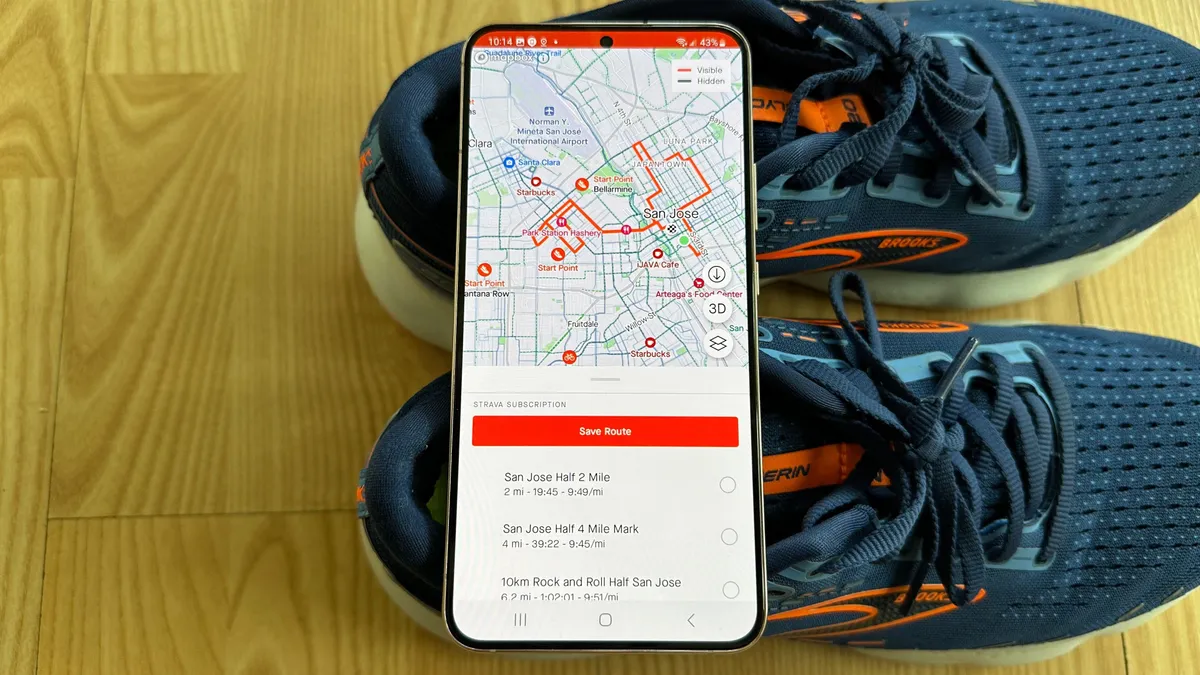
Key Fitness Features: Activity recording, local routes with 3D maps, Heatmap, Segment leaderboards, Clubs, Challenges, long-term workout analysis, Athlete Intelligence summaries, race predictions, Instant Workouts
Subscription: $12/month or $80/year (Saved routes, full data analysis with AI summaries, Instant Workouts
Why Strava will help with your goals: Most people try harder when cheered on or competing with others. Strava lets you connect with friends to offer and receive “kudos,” motivating you to keep getting out there. You also have “Challenges” where hitting certain thresholds nets you badges and awards from partner companies, and leaderboards where you can compete to be fastest on local routes and trails. And it helps you find local Clubs with like-minded athletes, if you need in-person motivation.
More recently, Strava has doubled down on Athlete Intelligence, a tool that utilizes your workout history to assess the quality of a specific workout and provide context for your improvement over time. This year, Strava launched “Instant Workouts,” with personalized activities across 40 sports types and four types (‘Maintain’, ‘Build’, ‘Explore’, or ‘Recover’), including custom routes from your starting location using a Heatmap of other users’ workouts. Essentially, Strava offers personalized, tailored workouts, without committing to a long-term plan.
Why we rely on Strava: “I found my local running group through Strava last year; I appreciate when Strava tells me a certain activity was my fastest in the last month; and I’m motivated to become the ‘Local Legend’ for certain segments like my nearby track.” — Michael Hicks, Wearables Editor
“Strava is a great app to connect with others who are into fitness and keep yourself accountable. Many fitness apps sync with it, so you can post your watch’s workouts and keep yourself active and motivated.” — Derrek Lee, Managing Editor
Workout apps
(Image credit: Brady Snyder / Android Central)
Key Fitness features: Activity tracking, media playback controls, 5K/10K/13.1/26.2 training plans, audio-guided runs, challenges, streaks, real-time location sharing
Subscription: None
Why Nike Run Club will help with your goals: NRC is popular with veteran runners as a running-focused alternative to Strava with similar gamification (i.e., badges, challenges, and likes) and long-term stat tracking.
Why I recommend it for beginner couch-to-5K runners, aside from the lack of subscription, is Coach Bennett’s audio-based guided runs. As you run, the pro running coach will give you pointers and motivation as you’re struggling to keep pace and stay moving.
Why we rely on Nike Run Club: “I’ve used Nike Run Club to run over 1,500 miles across a decade and countless devices. NRC handles the basics excellently, with the bright and bold Nike font making your pace, duration, heart rate, and more visible at a glance. It supports media playback controls, and its post-run breakdowns are both data-rich and easy to understand. The app prioritizes friendly competition with other users (with weekly challenges) and yourself (with awards and milestones) while reminding you to rest.” — Brady Snyder, Contributor
“Nike Run Club helps me get into highly productive steady-state runs and brainless interval training. I just open it, choose a run that matches my intention, and move my feet.” —Tshaka Armstrong, Contributor
Alternative option: Try Zombies, Run!, which has dozens of hours of audio stories designed to keep you motivated as you run, including some Marvel adventures.
(Image credit: Source: Jordan Palmer / Android Central)
Key Fitness features: Customizable workouts with custom sets, full exercise list, workout graphs, macronutrient tracking
Subscription: $5/month or $30/year (Unlimited workout templates, analytics like muscle maps and macros)
Why Strong will help with your goals: Whether you’re working out at home or the gym, you don’t need an app distracting you. You need simplicity, a streamlined workout log where you can check off one exercise or set, then move on to the next, without giving yourself a chance to slack off.
Strong fulfills that niche! You can build out workouts using its comprehensive exercise library, including Warm-ups and Drop/ Failure sets, and then follow that workout to completion. The PRO subscription gives you more data, but the free version is more than good enough to get you started.
Why we rely on Strong: “Strong is the gym diary where I fully flesh things out. I built out my workouts and track not only my progressive overload but my body part gains (i.e., biceps, calves, quads, etc.).” — Tshaka Armstrong, Contributor
Alternatives: Try Hevy for a workout log with more community features, or Fitbod if you need AI help building your workouts.
(Image credit: Nandika Iyer Ravi / Android Central)
Key Fitness features: Prebuilt programs, on-demand workouts, pro trainers, exercise form guides, healthy recipes
Subscription: $20/month or ~$120/year (mandatory)
Why Sweat will help with your goals: Tailored to women, Sweat has long-term strength programs tailored to any skill level, with a clean UI that makes it easy to navigate through workouts and see (A) the proper form for every exercise and (B) the muscle map of how it’ll impact your body. It’s on the expensive side but offers a lot of value as an alternative to a (more expensive) personal trainer.
Why we rely on Sweat: “I subscribe to Sweat because it provides a perfect balance of cardio and strength training workouts, without requiring me to plan my entire week. As a postpartum mom with very little time, knowing exactly which workout I’m due to do each day is incredibly helpful and truly eases my mind.” — Nandika Iyer Ravi, News Editor
Alternatives: Peloton or Apple Fitness+ are the obvious big hitters for general coaching, while Centr is a more hardcore option.
Smartwatch/ smart ring companion apps
Image 1 of 3
(Image credit: Michael Hicks / Android Central)
(Image credit: Michael Hicks / Android Central)
(Image credit: Garmin)
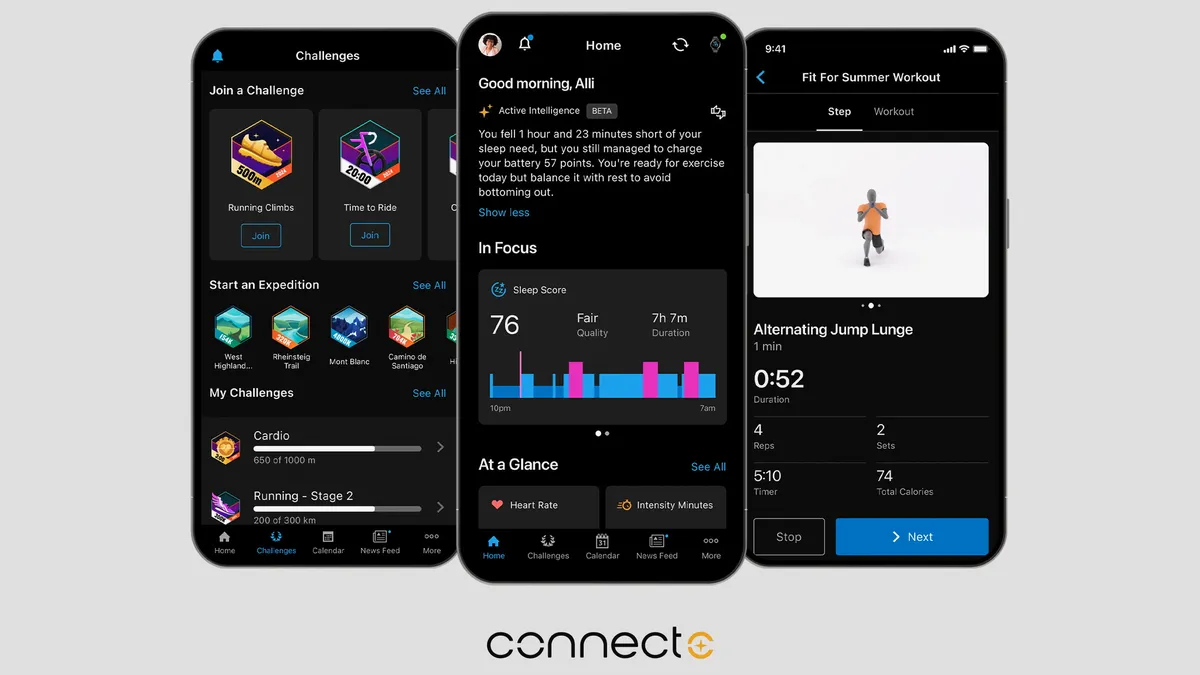
Key Fitness features: Garmin Run/ Cycling/ Strength/Triathlon Coach, daily suggested workouts, strength/ yoga workouts, Training Status, Training Load, long-term metric graphs, Garmin Golf, Garmin Trails, LiveTrack, downloadable/ custom courses, Challenges & Badges, gear tracking, race predictions, and more
Key Health features: Body Battery, HRV Status, Sleep Score/ Coach, menstrual tracking, food logging with AI image recognition and barcode scanning, Lifestyle Logging, Health Status
Subscription: $7/month or $70/year (AI summaries, Nutrition logging, Trails, Performance Dashboard, coaching videos, and other small features, not required)
Why Garmin Connect will help with your goals:Garmin watches mainly get praise for the long-lived hardware and post-workout analysis on your wrist. Garmin Connect is a bloated, labyrinthian app that takes time to adjust to, but it’s filled to bursting with features you won’t find elsewhere (especially for free), most notably personalized training plans and daily suggested runs, rides, walks, or strength workouts.
The Activities tab lets you see how your efforts compare week-to-week or month-to-month, while the Performance Dashboard (above, subscribers only) makes your data even more colorful and dynamic. Garmin also added food logging, Lifestyle Logging, and health outlier warnings to the app recently, making it obvious that it wants Connect to appeal to more “mainstream” athletes, not just the pros.
Why we rely on Garmin Connect: “Garmin feels more comprehensive and ideal for serious gym-goers than Fitbit.” — Derrek Lee, Managing Editor
“Garmin has helped me hit marathon and half-marathon PRs, improve my VO2 Max, and run more miles than I ever have before. It motivated me with dynamic run suggestions based on my training load and running tolerance, so I always knew how hard to push without overdoing it.” — Michael Hicks, Wearables Editor
Why Oura will help with your goals: The appeal of a smart ring is to get a laundry list of data, day and night, for those who find smartwatches too bulky, distracting, or uncomfortable for sleep tracking. And the Oura Ring tops our best smart ring list on the strength of its app.
Over the last few years, Oura has packed its app with a comprehensive list of health metrics, with the AI Oura Advisor as the flashy topper to make everything more accessible. Aside from the obvious nightly stats about sleep quality or heart health, Oura tries to analyze long-term trends and provide more context on your body’s ability to handle stress. And it offers some rudimentary fitness tools.
Why we rely on Oura: “I rely on Oura as my daily mental health monitor. It tracks when I’m stressed and provides personalized tips for getting the rest I need.” — Nandika Iyer Ravi, News Editor
“The Oura app is a passive experience for me. I use it to check my sleep quality and overall daily health and wellness, as I wear it more consistently than my Garmin or Pixel watches.” — Derrek Lee, Managing Editor
Image 1 of 2
(Image credit: Nicholas Sutrich / Android Central)
(Image credit: Nicholas Sutrich / Android Central)
Key features: Readiness, Sleep Score, Exertion Score, PAI score, Zepp Coach training, food logging with AI image recognition, tracked strength workouts with rep counts and muscle maps
Subscription: $12/month or $70/year (Zepp Aura advanced sleep reports, music, meditation, and AI coach)
Why Zepp Health will help with your goals:Amazfit watches are well-known for their budget value, but it’d be harder to recommend these budget watches if the companion Zepp Health app weren’t so useful.
You’ll find the usual collection of nightly health data, but packaged nicely with straightforward scores. The Zepp Coach can help build workout plans tailored to your abilities, while food logging is more straightforward than on other apps. And aside from the optional Aura sub, everything is free.
Why we rely on Zepp Health: “I pretty much use Amazfit exclusively these days. The Zepp app syncs perfectly with Strava, which I use to share with friends and build community. The Zepp app also makes it stupid easy to log food with its LLM-driven technology. I’ve written about this severaltimes now, but you can use natural language to input your meals and snacks instead of scrolling through a bunch of lists or scanning barcodes.” — Nick Sutrich, Senior Content Producer
Weight & nutrition/ diet apps
(Image credit: Nandika Iyer Ravi / Android Central)
Key features: Nutrition tracking, food logging, AI recognition, AI chatbot for recipes, calls with nutritionists, connected CGM
Why Healthify will help with your goals: Logging every single meal and snack is a major time suck, especially when you need to calculate every ingredient to a meal. HealthifyMe’s whole premise is removing that delay by letting you simply photograph something and get the nutritional stats in a flash. It also has AI coaching and suggestions, or a way to connect with real nutritionists for a fee, but the streamlined food logging is what made this app so popular.
Why we rely on Healthify: “HealthifyMe is my go-to for staying accountable to my calorie deficit.” — Nandika Iyer Ravi, News Editor
(Image credit: Derrek Lee / Android Central)
Key features: Food logging, calorie and macro counting, voice logging, AI meal scan, barcode scanning, intermittent fasting tracker, recipes, grocery list sharing,
Subscription: $25/month or $100/year (for most features besides basic manual food logging and calorie count)
Why MyFitnessPal will help with your goals: It’s the same reasons we listed for Healthify, except MyFitnessPal has a slightly longer feature list in exchange for its subscription, like thousands of recipes, personalized meal planning, voice logging, progress reports, and so on. You’ll also find Android and Apple Watch apps, making it easy to check your daily stats or quickly log a favorite meal.
Why we rely on MyFitnessPal: “MyFitnessPal helps me keep track of my lifestyle and habits. I log my meals and exercises to monitor my macros.” — Derrek Lee, Managing Editor
(Image credit: Android Central)
Key features: Connects with smart scales for weight, body composition, visceral fat, and more
Subscription: $10/month or $100/year (Health Improvement Score, Cardiologist review, Health Assistant, Smart Trends, etc.)
Why Withings will help with your goals: You can replace Withings with other smart scale brands, but this app tends to be a staff favorite. The gist is that you can see more than your weight, but also your body fat/ muscle percentage and (with fancier scales) specific data on how that fat is segmented throughout your body. Essentially, having a smart scale will help you track how your health and fitness goals are directly impacting your body.
Why we rely on Withings: “Withings is very important to me as a Type 2 diabetic. It gives me a segmental analysis of body fat & muscle losses and gains. What’s most important is the visceral fat metrics, how it tracks the fat around your internal organs that can literally mean life or early death.” — Tshaka Armstrong, Contributor
“Withings shows me my weight, body fat, and muscle mass, as well as how I’m trending, which helps me know if I need to make changes.” — Derrek Lee, Managing Editor
Following an investigation by the Guardian that found Google AI Overviews offering misleading information in response to certain health-related queries, the company appears to have removed the AI Overviews for some of those queries.
For example, the Guardian initially reported that when users asked “what is the normal range for liver blood tests,” they would be presented with numbers that did not account for factors such as nationality, sex, ethnicity, or age, potentially leading them to think their results were healthy when they were not.
Now, the Guardian says AI Overviews have been removed from the results for “what is the normal range for liver blood tests” and “what is the normal range for liver function tests.” However, it found that variations on those queries, such as “lft reference range” or “lft test reference range,” could still lead to AI-generated summaries.
When I tried those queries this morning — several hours after the Guardian published its story — none of them resulted in seeing AI Overviews, though Google still gave me the option to ask the same query in AI Mode. In several cases, the top result was actually the Guardian article about the removal.
A Google spokesperson told the Guardian that the company does not “comment on individual removals within Search,” but that it works to “make broad improvements.” The spokesperson also said that an internal team of clinicians reviewed the queries highlighted by the Guardian and found “in many instances, the information was not inaccurate and was also supported by high quality websites.”
Vanessa Hebditch, the director of communications and policy at the British Liver Trust, told the Guardian that the removal is “excellent news,” but added, “Our bigger concern with all this is that it is nit-picking a single search result and Google can just shut off the AI Overviews for that but it’s not tackling the bigger issue of AI Overviews for health.”
Astronomers have to use indirect evidence, like the explosions of Type Ia supernovae, to investigate the impacts of dark energy.
Credit: NASA
If you’re wondering what dark energy is, that’s understandable; scientists are still wondering that very same thing.
It’s probably the most mysterious idea in all of physics, and a good deal less understood than dark matter—a substance which is itself hidden in the shadows. Dark matter can at least be mapped and understood as physically distributed in the universe, much like ordinary matter. But dark energy has only recently been able to be investigated at all.
So, what is dark energy? Well, it’s been a few things over its lifetime.
How We Got Here
After Einstein, physicists were fairly certain about how the universe was evolving: the Big Bang threw all the matter outward, as an explosion does, after which gravity naturally attracted that matter to itself and slowed the outward expansion.
This was, itself, a big admission. Einstein initially proposed a static universe, but later accepted Edwin Hubble’s evidence that the universe was expanding and called the static-universe hypothesis his “greatest blunder.”
Einstein introduced the “cosmological constant,” denoted by the Greek letter lambda (λ), which was introduced to support a static universe. He set this idea aside, along with his error, and moved on. So did the rest of physics.
Faced with the fact of an expanding universe, it remained unclear whether that expansion would ever fully stop, or perhaps even reverse, causing the universe to contract back in on itself. This idea was referred to as being an eventual Big Crunch. The Big Crunch hypothesis found a lot of backers for the same reason as the static universe hypothesis before it: it felt good.
The idea of Big Crunch allowed the further idea that this compression of all matter and energy would cause a new ultra-singularity and, perhaps, a new Big Bang, creating the nice and neat idea of a cyclical universe that was infinitely expanding, contracting, and expanding again. It was the only thing everybody could be sure of: Universal expansion was definitely slowing down over time.
Except it isn’t. Studies looking at Type Ia supernovae, so-called “standard candles” in astronomy, provided the first-ever evidence that the expansion of the universe is not decelerating, but actually accelerating—moving outward more and more rapidly over time. Arriving in 1998, this was one of the biggest scientific announcements of the century.
Later, evidence from things like maps of the Cosmic Microwave Background (CMB) radiation showed that this was correct: In defiance of the gravitational influence of matter, the universe is indeed expanding faster every year.
Just a little infographic condensing the entire history of the universe to one big funnel. Credit: NASA
However, another problem was introduced by the CMB maps and other cutting-edge observations: According to the best evidence at the time, there was simply too much matter and energy in the universe. Physics had already concocted a value called the “critical density,” which was a prediction of the total amount of matter and energy in the universe.
The actual observable amount didn’t remotely equal this figure, however. Even with dark matter taken into account, the universe still only seems to have about a third as much stuff in it as expected.
Physicists realized that these two observations could potentially have the same explanation. There could be a whole lot more energy in the universe than we had previously realized, and that energy could be the thing driving the unexpected, accelerating expansion we observe in the universe.
So, What Is Dark Energy?
Crucially, one of the other names you might run across for dark energy is “the energy of space.” This refers to the modern working definition of dark energy, which considers it an intrinsic property of space.
In other words, if you have some dark energy in some space, and then you expand that space by some amount, you don’t dilute the dark energy you had because the new space you just created will have dark energy all its own. This dark energy would seem to exert an outward force, and thus space itself has an intrinsic tendency to expand.
Credit: NASA
So, as the universe expands, this energy can keep driving that expansion, since it doesn’t get diluted. If it did, as regular matter and energy would, its influence would be smeared out to the point that gravity would eventually dominate, and expansion would slow or stop.
This doesn’t have to break the idea of conservation of energy, since dark energy is an attribute of space, not really a quantity within it; one of the issues may be the name “dark energy,” which is a holdover from before this idea existed. In general, dark energy is represented by the same symbol as Einstein’s old cosmological constant, λ, and that’s probably a more intuitive way to refer to it.
The big problem with this energy-of-space idea is that we can calculate what the value of λ should be—that is, the strength of the hypothetical repulsive force of dark energy—and that calculation leads to figures much higher than we actually observe. If the cosmological constant were what it is supposed to be, the universe would be flying apart at a much faster rate than we actually observe, unless some other unknown force is counteracting it.
The Cosmic Microwave Background (CMB) radiation map is one of the most important images ever created, in particular to the study of dark energy. Credit: NASA
This leads to the so-called “Hubble tension” between the observed expansion and the expansion predicted from the early universe.
Still, evidence for the idea of dark energy as a universal constant is mounting. The Dark Energy Survey (DES) observed light from 26 million galaxies to determine how the universe has evolved over the past 7 billion years. There’s also the Dark Energy Spectroscopic Instrument (DESI), which was able to measure the “redshift” of galaxies to determine how quickly they were moving away from the Earth, and directly measure universal expansion.
This work found that λ appears to be reasonably accurate. That doesn’t tell us anything about the nature of dark matter, but it does tell us that we can at least fairly accurately quantify its impact. Some aspects confound theory, such as the finding that dark energy may have evolved over time and may continue to evolve; that would undermine the idea that it is a “constant” and remove the necessity that the universe will continue to expand into eternity.
Other surveys, such as Planck, eBOSS, and Pantheon+, largely converge on the conclusion that dark energy behaves very much like Einstein’s cosmological constant. The new Nancy Grace Roman space telescope is about to start contributing incredibly high-resolution data, as well.
The language used for new observations is that they “constrain” the possibilities for dark energy’s attributes, narrowing the range of possible values as observations falsify all but a progressively smaller set of possibilities. In the past decade, scientists have constrained dark energy enough to take it from a vague placeholder idea to a real theory with increasingly concrete tendencies.
We’ll keep you up to date on the latest in the years to come.
Despite the booming popularity of the vape industry, selling vapes online isn’t as simple as opening a brick-and-mortar store. It is a high-stakes business operating in a heavily regulated industry, where compliance and legality can make or break your business’s future. But with great risk comes great reward.
Whether you hope to sell a wide variety of devices and accessories, including vape pods and pens, e-liquids, batteries, or coils, or plan to focus on a niche range of items to fill a promising gap in your local market, the rapid expansion of the vaping industry creates the ideal environment for a successful and sustainable business venture to start an online vape business.
Legal Requirements
Legally selling vapes online is a highly regulated industry. Unlike traditional cigarettes, vape sales have many legal obstacles to navigate, primarily surrounding age verification, licensing, and compliance with the Prevent All Cigarette Trafficking (PACT) Act.
Vape products of any kind are considered age-restricted items, meaning each potential customer must verify their age before completing a purchase. Most states require consumers to be at least 21 to purchase vaping and e-cigarette products.
Additionally, selling vapes online typically requires a tobacco retailer license, which varies state to state in the US, as some jurisdictions view vape products as the same as traditional tobacco products. Consult with your state’s department of revenue to confirm what licenses and permits are required to operate your online store legally.
Getting Started
Building a successful online store requires more than just listing some products and prices on a website. You need to develop a strong, informative website that complies with all industry regulations, establish a sustainable business structure, select appropriate storage and shipping options, and successfully market yourself to potential customers.
Business Structure
The first decision you need to make when starting a new e-commerce company is choosing your business’s legal structure. Options include sole proprietorship, LLC, or a corporation. LLCs are typically the most popular option for small businesses as they offer liability protection. Once you have decided on this structure, you will need to register your business with the correct authorities and obtain the necessary permits and licenses to operate legally.
It is crucial to properly educate yourself on local, state, and federal laws regarding the industry as a whole to ensure you remain compliant. Consulting with a lawyer familiar with these laws will provide the most comprehensive overview.
Product Focus
It is not possible to carry every product available, so you will need to decide which products your focus will cover. You can choose to carry a wide selection of items, such as e-liquids, pens, pods, batteries, coils, and various accessories, or specialize in something more niche, such as CBD vapes, reusable devices, or premium vape juices.
When selecting products to sell, research industry trends, other companies and distributors in your local area, and customer demand to make a better-informed decision. Select a reliable and trustworthy supplier or wholesale partner who can support your business direction.
To start your online vape business, you will need to select an e-commerce platform that offers flexibility and supports the tools and software required for age verification and other compliance requirements. Customizable platforms allow you to build exciting websites, manage orders and shipments, and implement loyalty programs to encourage customer retention.
When building your website, it is crucial to ensure it is easy to navigate, displays clear, accurate information, and is mobile-friendly, as many consumers shop extensively on their smartphones. Create product and accessory categories to help potential customers find what they want quickly and easily.
Furthermore, because selling vapes online requires age verification, you must integrate software that verifies this information before customers can complete their purchases to remain compliant with local and federal laws.
Payment Processing
One of the most challenging parts of setting up an online vape company is finding a payment processor. Many popular gateways, including Square, PayPal, and Stripe, do not support vape-related transactions due to regulatory concerns. Vape products are considered high-risk due to chargeback risks, legal complexities, and potential for fraud.
The most reliable option is selecting a high-risk payment processor that offers secure payment gateways, chargeback protection, and regulatory compliance guarantees.
Marketing
Like any e-commerce industry, you need to stand out from your competitors to build a successful and sustainable business. By implementing effective marketing strategies, you can increase organic traffic, improve search engine results, and attract new customers.
Four effective marketing strategies include optimizing your SEO to improve your search engine visibility, employing email marketing, building a business presence on social media, and encouraging customers to leave product reviews and testimonials on your website and social media platforms.
You will need to select the appropriate storage option to hold the stock you plan to sell. This could be a room in your home or garage, a rented storage space, a warehouse, or a third-party fulfilment centre. Regardless of what you select, the space needs to be clean, dry, and temperature-controlled to ensure product quality is preserved. To start an online vape business, implementing inventory software will allow you to better track your stock and prevent overselling or purchasing incorrect stock.
Additionally, you need to consider how your products will be shipped to customers. The PACT Act and additional local regulations carry strict rules on how vape products can be handled and shipped. The USPS cannot be used to ship vape products of any kind, while private carriers, like FedEx, UPS, and DHL, typically carry their own policies, including proof of compliance and age verification. Furthermore, federal law demands that all vape products are correctly packaged and labelled, indicating the presence of tobacco, nicotine, and vape-related materials.
TL;DR: Upgrade to Microsoft Windows 11 Pro for $9.97 and give your PC a faster, more secure, and more modern experience at the lowest price ever, ending soon (reg. $199).
Before you start shopping for a new computer, it’s worth trying the simplest fix first: upgrading your operating system. Windows 11 Pro brings modern performance, productivity tools, and security upgrades to existing PCs, and right now it’s available at its lowest price ever.
Give your dusty old PC a serious makeover with a Microsoft Windows 11 Pro license. It ushers in a whole new way to use your laptop. Enjoy a seamless interface and brand-new features to streamline your workflow, including a more powerful search experience, improved voice typing, snap layouts, and seamless redocking.
Mashable Deals
By signing up, you agree to receive recurring automated SMS marketing messages from Mashable Deals at the number provided. Msg and data rates may apply. Up to 2 messages/day. Reply STOP to opt out, HELP for help. Consent is not a condition of purchase. See our Privacy Policy and Terms of Use.
If you’re paying a subscription for an AI model, you can cancel it with this upgrade. Windows 11 Pro puts Copilot right on your desktop, making it your personal AI-powered assistant.
Using your PC as your primary work computer? You’ll appreciate access to tools like Microsoft Teams, Azure HD, Windows Sandbox, and BitLocker device encryption. If you prefer to use your computer for gaming, you’ll love DirectX 12 Ultimate, which delivers incredible graphics that take your games to the next level.
No matter what you do on your computer, you can rest easy knowing Windows 11 Pro offers serious cybersecurity upgrades. You can secure your device with biometric logins, encrypted authentication, and enhanced antivirus protection.
Mashable Deals
By signing up, you agree to receive recurring automated SMS marketing messages from Mashable Deals at the number provided. Msg and data rates may apply. Up to 2 messages/day. Reply STOP to opt out, HELP for help. Consent is not a condition of purchase. See our Privacy Policy and Terms of Use.
How do you design for visualo impact as a product design services company? The aesthetic aspect of a product might not seem to be the most important thing to consider in the development process, but it doesn’t mean the designers should ignore it entirely. While aesthetics is often a complementary element in a design workflow that prioritizes function, the appearance of a product (and the packaging) has a massive impact on how it is recognized, identified, and classified by potential buyers. Although the design principle of “function over form” is applicable to most products, it remains true that there’s a complex interplay between aesthetic factors and user perception (which leads to either sales or avoidance).
Even subtle changes in aesthetic design have the potential to affect customers’ purchase decisions, which determines success. People tend to associate somebody’s appearance with certain characteristics; the well-dressed are seen as serious and professional, while the casually outfitted ones are often regarded as laid-back. And it’s pretty much the same with objects, in the sense that everybody projects certain qualities onto products based on their form. For example, a sports car is associated with the sense of speed, performance, and in many cases, wealth; a station wagon, on the other hand, may be linked to family life where practicality triumphs.
All these personalities emerge in the buyers’ perspective almost immediately after the first visual contact. It’s safe to say that aesthetic design plays an important role in 3D product rendering services, shaping the emotional connection between people and the products they see. And this is why designing for visual impact matters a lot. It’s not just about making a product as aesthetically pleasing as possible, but ensuring that the design or form of a physical object complements its functions and contributes to a positive visual impact on buyers.
To some extent, the form itself must be treated as an important feature that represents the product’s characteristics and the brand’s identity at the same time. The realm of physical product design traditionally falls within the scope of work of an industrial designer. Cad Crowd is home to hundreds of talented industrial designers experienced in creating physical products that are not only purposeful and functional but also carry an effective visual impact on buyers.
Communication through form
While the aesthetic of a product appears to be superficial at a glance, it actually holds a much more important role in consumer product design services than many people seem to think. Buyers’ perception of a product is a complex, if not abstract, concept triggered by a number of factors such as price, popularity, and brand reputation. Before all those factors register in their mind, however, the visuals of a product design create the first impression.
A product’s aesthetics build the first layer of that complex perception. You can think of the aesthetic design as a language with which the product expresses itself. Attributes of aesthetic design, such as shape, height, curvature, color scheme, materials, button layout, and so forth, should act as meaningful symbols that represent the product’s quality and characteristics. These attributes play significant roles in influencing how consumers perceive the product, associate it with any particular trait, and make the purchase decision.
Product aesthetic as brand identity
As far as visual impact is concerned, one of the most challenging tasks of an industrial designer is to infuse a symbolic language into a product’s aesthetic in such a way that it communicates brand identity. To add to the complexity of that matter, the communication cannot be one-sided. Consumers must be able to understand the symbolic meaning; otherwise, the aesthetic design fails to speak for the brand.
Strategic use of materials, geometry, texture, shape, form, colors, and even smell can stimulate specific emotions, which eventually evoke a perception about a product, and by extension, the brand. This perception may create an intangible yet perceivable value that makes a product stand out from the crowd in the market. By emphasizing the importance of visual impact across all touchpoints, including the packaging and interface, a product designer should be able to strengthen brand identity and recognition.
The big idea of proper product development is to create something that looks good and works effectively. No matter what product you want to make, the ultimate goal is to make sure that it ticks all the boxes, in terms of both aesthetic and functionality. This requires a seamless integration between form and function, rather than prioritizing one over another. An industrial designer knows all too well that every interaction with a product can contribute to brand image, and therefore, it’s entirely possible to create a visual impact that reinforces user experience.
Even from the earliest stages of development, the 3D design firm should consider how a typical user will interact with the product. It’s a question of ergonomics and aesthetics, about how the product can be used safely, comfortably, and effectively while still delivering good visual impacts with its appearance. It’s undeniable that the product remains functional without losing the ability to evoke positive emotional responses through its aesthetic appeal. This is how an industrial designer can tailor a product to better suit the users’ needs with effective functionality and their preferences for good aesthetics. Such an attention to detail likely results in a product design that’s not only visually appealing but also functional for a satisfying user experience.
Balanced form and function formula
Striking a proper balance between form and function has always been a monumental challenge for any product designer, regardless of the product. If the focus tilts heavily toward the “form” or aesthetic, the final product might be only superficially good; it’s eye candy with skin-deep beauty. On the other hand, placing too much emphasis on function while having little regard for visual impact risks making the product unattractive. In this case, even if the product actually works, the lack of positive visual impact leads to poor user experience at best and perhaps complete avoidance at worst.
The “function over form” approach has always been a guiding principle in industrial design. But in today’s increasingly competitive market for consumer products, product design companies just cannot afford to lose sight of how aesthetics play an influential role that affects sales.In a physical product, every element of functionality contributes to the aesthetic aspect. For instance, the design of ballpoint pens uses pretty much the same basic idea. It has a plunger at the top, a clip directly below, followed by a barrel, and finally the tip. The mechanism inside is also relatively simple, consisting of a back spring and a front spring to slide the ink cartridge up and down to reveal or hide the actual ball point.
Every single one of those parts serves a specific purpose, and it’s almost universal how they’re put together into a functioning instrument. But then again, ballpoint pens come in numerous models and variations – each carries a different visual impact, so it may stand out and improve the handwriting experience. All the components of a physical product can be designed to deliver as much visual impact as possible. In the case of a ballpoint pen, an product design and development designer can fabricate such parts as the plunger, clip, barrel, and tip from materials like metals, plastic, carbon fiber, wood, or any combination of those in a unique way. There are probably countless combinations because the materials also offer a broad range of selections.
Metals can be aluminum, stainless steel, tungsten, titanium, magnesium, and alloys. Plastics also have a wide variety of options, including ABS, PMMA, PVS, and so forth. The finishing layer also has multiple options, like the use of colors, coating, polishing, and engraving, to add to the aesthetics. And then there’s the shape itself, which arguably is the biggest and most important ingredient to build visual impact. It acts as the foundation of the form and might be composed of a combination of easily visible elements such as lines, curves, angles, sizes, and the relationships between them.
Achieving a balanced formula for function and form would require a thorough evaluation by the new product design professional of all aspects of product design to make sure that each element can contribute to good aesthetics while maintaining flawless functionality. The delicate blend of appearance and usability happens when well-made product parts assemble into a functioning design that also captures consumers’ admiration, both when sitting still and in use.
Materials and finishes
While it’s true that “beauty is in the eye of the beholder,” there might be a consensus as to what specific design elements make a physical product objectively beautiful, namely, materials and finishes. Referring back to the previous example about a ballpoint pen, industrial designers are spoiled with an abundance of material options. Apart from metals and plastics, they can also use unusual choices like carbon fiber, bamboo, wood, and more. Just about every part of a ballpoint pen can be fabricated from any of those materials; of course, each has its own characteristics and properties such as tensile strength, durability, corrosion resistance, reflectiveness, etc.
That being said, whichever material ends up being the barrel or a clip of a ballpoint pen, it’s not just about a matter of usability and practicality, but also aesthetics and visual impact as a whole. And this is where “finishes” come in. When the product modeling expert chooses the right finish, like polished, brushed, textured, glossy, or matte, it can further enhance the look and feel of the pen. But because the purpose is to improve the user experience through good aesthetics, the finish itself needs to serve a specific purpose rather than merely beautifying.
A designer might choose a textured surface on the barrel to improve grip, polished steel for easy cleaning, matte finish because it hides fingerprint smudges, engraved bamboo/wood as it’s biodegradable, and so forth. The point is, even the aesthetic element must be purposeful to achieve a good balance between form and function.
Ergonomics for visual impact
Say you’re holding a well-designed ballpoint pen that somehow fits perfectly in your hand, with nice lines and curves placed exactly where your fingers naturally reside. It also has a textured grip made from high-quality rubber that cushions the tip of your fingers while maintaining good resistance for a comfortable handwriting experience. It has a clip made of high-quality material with a spring mechanism that holds the pen firmly upright inside your pocket. The plunger produces a nice, unobtrusive sound of a click when you press it down, and the actual ball points glide with consistent smoothness across the paper. And the overall pen has a nice weight; it’s neither too hefty nor too light that it doesn’t give you discomfort even during a long note-taking session.
Furthermore, the pen doesn’t just look good lying still on a desk; it still appears visually pleasing when you’re actually using the product for its intended purpose. This is because the natural positions of your hand and fingers never really negate the aesthetics. It’s safe to say the ballpoint pen is the result of a design process that takes both ergonomics and visual impact into account. When a product is easy and comfortable to use, the design tells consumers that the company cares about their needs and preferences as well, creating a positive brand perception.
There are several ways in which colors can influence how an industrial design works:
Brand identity: think about some of the world’s most iconic brands. Coca-Cola has its signature red, black, and white palette. Tiffany & Co. is always associated with a bright shade of blue so specific that the color is now often referred to simply as Tiffany blue. There are also Caterpillar’s yellow, Cadbury’s purple, and more. All those brands have consistently used the same color palette across their products as a way to establish brand identity. Consistent visuals make the brand easily recognizable everywhere.
Emotional connection: Based on popular belief, colors do affect emotions. For example, red is often associated with excitement, energy, love, and even danger, while green is regarded as a shade that represents peacefulness, sustainability, safety, and relaxation. Other colors like blue, orange, yellow, black, and white also have their own implicit connotations and meanings. In short, colors can evoke certain feelings, and brands utilize this connection to communicate with consumers. It’s worth noting that different cultures have different perceptions of the meaning of colors. Graphic designers should consider such cultural nuances when implementing colors to a product or brand logo.
Visual hierarchy: Colors are effective tools to highlight the best features and functionality of a product. Thoughtful use of contrasting shades of colors can help guide consumers’ eyes to all the highlight-worthy elements of a product with minimal effort. If used strategically, colors may even improve usability. For example, the design of a ballpoint pen may use different shades of colors for the barrel and the tip to break down the otherwise continuous line. Apart from being an aesthetic choice, the colors also mark the positions users should hold when opening the tip to replace the ink cartridge.
Colors have always been important aspects of industrial or mechanical engineering services as they can really make or break the product’s aesthetics. Proper use of colors and finishes may transform an otherwise typical, ordinary object into something exquisite to behold. Most people would think of colors as nothing more than simple embellishment, but a professional industrial designer should understand how shades and hues can be made into integral parts of a product’s usability that also evoke positive emotions through efficient visual impacts. An industrial designer has what it takes to harness the power of colors and utilize them to their full potential to shape a product’s visual narrative, leaving a long-lasting impression on consumers.
Takeaway
The form and aesthetics of a physical product play key roles in creating emotional connections with consumers. Because elements like materials, shape, textures, and colors affect not only how a product looks but also the way it feels in the hands of users, they contribute to both the appearance and usability of the product. In fact, those elements can also tell stories about their perceived characteristics and target market. For example, a ballpoint pen of which the external components are made entirely out of polished metal with a textured finish might appeal to consumers looking for luxurious aesthetics; meanwhile, a similar product that features warm colors and soft curves is often seen as an image of practicality.
With that in mind, a 3D visualization designer can use those elements to create visual impacts that trigger specific emotional responses from the right consumers. It’s also possible for a brand to establish a bond with consumers through this kind of visual interaction. A product’s aesthetic can actually influence consumers’ perception of quality, but this is not to say that an industrial designer should use visuals to deceive buyers. Quite the contrary, consumers should be able to make an informed judgment about the products’ overall quality, reliability, and performance by paying attention to the aesthetic details.
How Cad Crowd can help
In a product designed to have a well-balanced combination of function and form, the visual impacts delivered by the “form” must be indicative of its performance and functionality. In a highly saturated market for consumer products, you need nothing short of experienced industrial designers capable of creating powerful visual impacts to reinforce a positive emotional connection with consumers. When it comes to hiring expert industrial designers, Cad Crowd comes at the top of the recommended list thanks to its rigorous freelancer vetting process, IP protection services, and affordability. Contact us for a free quote.
MacKenzie Brown is the founder and CEO of Cad Crowd. With over 18 years of experience in launching and scaling platforms specializing in CAD services, product design, manufacturing, hardware, and software development, MacKenzie is a recognized authority in the engineering industry. Under his leadership, Cad Crowd serves esteemed clients like NASA, JPL, the U.S. Navy, and Fortune 500 companies, empowering innovators with access to high-quality design and engineering talent.
It’s probably happened to you: After bashing your head against a particularly difficult boss in a video game, you realize you’ve been duped. As you watch that boss’ depleted health bar fill up again, you realize what you thought was a victory was instead an insult. Welcome to phase two of the battle you believed you’ve just won.
These moments can be deflating and infuriating. But I’m here to defend them. As part of Polygon’s coverage of dramatic entrances in video games, movies, and television, allow me to sing the praises of the dramatic re-entrance, the moments that transform highs into lows.
The second (or third, fourth, etc.) health bar is a longstanding design trick in games, implemented for multiple reasons. Some instances of double health bars are more successful than others, but they serve important purposes: They reframe the boss fight experience, add new layers of challenge, and force players to (in many cases) try and try again, armed with fresh knowledge and skill.
Health bars (or meters) have been used in games for more than 40 years, building on the “hit points” system introduced in Dungeons & Dragons. Early arcade experiences like Nintendo’s boxing game Punch-Out!! and Konami’s fighting game Yie Ar Kung-Fu relied on health bars to show players how much stamina or life they had left. Health bars are commonplace across genres, from side-scrolling beat-’em-ups and shmups, to action RPGs and strategy games. Most health bars drain based on damage and replenish based on power-up items. Some, however, simply fill up based on game designers’ whims.
While many consider the refilling health bar a cheap tactic, I consider it a huge boon to game design. Let me explain why as we discuss the multiple ways health bars can be used for good and evil.
[Note: The following story may contain spoilers for boss battles in games like The Legend of Zelda: Tears of the Kingdom, 2004’s Spider-Man 2, Super Metroid, and a half-dozen FromSoftware games.]
The Layered Health Bar
In classic games like Capcom’s Final Fight, Sega’s Streets of Rage, and Treasure’s Ikaruga, some enemies break the rules with layered health bars that must be drained multiple times — technically refilling after being depleted.
More modern series like Bayonetta and Yakuza/Like A Dragon use the same tactic, piling on health for more challenging opponents. In Yakuza Kiwami, for example, a recurring Yakuza boss named Jo Amon has more than a dozen health bars that must be whittled down.
Why not just use one BIG health bar in these instances? Because the layered health bar communicates to the player that whomever you’re fighting is a Big Deal: Their capabilities are unknown, and you need to take this fight seriously. Creating a visibly longer health bar to convey the depth of your opponents hit point pool might break a game’s UI. Alternatively, if players were shown draining a smaller amount of health from a multilayered-health-bar boss, the game might confuse players into thinking their attacks had been diminished, or that they should pursue a different strategy.
Layered health bars are often implemented out of pure utility, to keep gameplay communication consistent and give players an extra challenge. Thus, they are one of the least compelling types of refillable health bars in games.
The Second Phase
Here’s where things get more interesting. Rather than presenting players with health bars in bulk, like you were fistfighting at a Costco, some health bars in games will refill or stack as players enter the dreaded second phase of a boss battle.
Second-phase boss battles with refilled health bars were present in classic games like the original Castlevania for NES and ActRaiser for Super NES. In recent years, this gimmick has been the trade of Soulslike developer FromSoftware, which experimented with phase-two, extra-health-bars bosses like the Maneaters in Demon’s Souls, which starts as a battle against one Maneater, then introduces a second halfway through the fight. FromSoft went back to the well with its follow-up Dark Souls, which featured the memorable and challenging bosses Ornstein and Smough. Players fought both characters, each with their own health bar, simultaneously. When either Ornstein or Smough were downed, the other grew to immense size, completely refilled his health bar, and went full bore in his attack on the player.
Perhaps the most notorious example by FromSoft is Elden Ring’s Malenia, who is challenging enough in her first form, Malenia, Blade of Miquella, then completely refills her health bar upon defeat and transforms into Malenia, Goddess of Rot, basically a human blender that drains health by poisoning the player.
The most successful example of the two-phase, get all my health back boss — after Ornstein and Smough — comes from Sekiro: Shadows Die Twice. In one fierce battle, players face the Guardian Ape, a giant beast that unrelentingly attacks the player with punches, slams, and even his own feces. Guardian Ape is rightly pissed off, though; he’s still got a sword through his neck from the previous samurai who bothered him.
What makes the Guardian Ape fight so memorable is that after defeating him the first time, FromSoft clearly signals the fight is over with the words “Shinobi Execution,” a phrase that communicates a major boss battle is over. Alas, this is a trick. The now-headless Guardian Ape springs back to life, holding its severed head in its hand and slashing at the player with the now-removed sword. It’s one of the most delightful surprises in a FromSoft game, and fortunately, used sparingly.
One of the more memorable second-phase (and third-phase) boss battles in recent memory comes from The Legend of Zelda: Tears of the Kingdom. That game’s final boss (spoiler: It’s Ganon.) spans multiple phases, but his second may be the best. After defeating Demon King Ganondorf the first time, Tears of the Kingdom rolls out a “comically overcompensatory health bar,” much longer than the original health bar, one that threatens to stretch beyond the screen itself. It’s a good gag — and one that ActRaiser did before it.
At this stage, however, developers like FromSoftware and its Soulslike imitators are perhaps relying too heavily on the second-phase, this-isn’t-even-my-final-form trope. But when it works, it really works.
The We Know You Know About This Trick Approach
While ActRaiser and Tears of the Kingdom play with the size of health bars as a gag, one of the best examples of refilling/multiple health bars comes from 2004’s Spider-Man 2, based on the movie of the same name. The game diverges from the events of the movie by including enemies like Rhino, Shocker, and Mysterio — the latter of which plays on boss-fight expectations.
When Spider-Man confronts Mysterio as the illusionist tries to rob a convenience store, the villain threatens Spidey with destruction and pulls up a three-phase health bar to show his strength. But Spider-Man knocks ol’ Mysterio out with a single blow, revealing the health bar itself to be an illusion.
Refilling health bars may be a well-worn trope, but some game developers have approached the task of subverting expectations in boss battles with impressive creativity over the past four decades. Some examples of health bar trickery are, naturally, better than others. But don’t hate the idea, hate the execution. There are still plenty of fresh ideas to be experienced in this old one.
FromSoftware/Activision via Polygon
IT’S PROBABLY HAPPENED TO YOU: AFTER BASHING YOUR HEAD AGAINST A PARTICULARLY DIFFICULT BOSS IN A VIDEO GAME, YOU REALIZE YOU’VE BEEN DUPED. AS YOU WATCH THAT BOSS’ DEPLETED HEALTH BAR FILL UP AGAIN, YOU REALIZE WHAT YOU THOUGHT WAS A VICTORY WAS INSTEAD AN INSULT. WELCOME TO PHASE TWO OF THE BATTLE YOU BELIEVED YOU’VE JUST WON.
THESE MOMENTS CAN BE DEFLATING AND INFURIATING. BUT I’M HERE TO DEFEND THEM. AS PART OF POLYGON’S COVERAGE OF DRAMATIC ENTRANCES IN VIDEO GAMES, MOVIES, AND TELEVISION, ALLOW ME TO SING THE PRAISES OF THE DRAMATIC RE-ENTRANCE, THE MOMENTS THAT TRANSFORM HIGHS INTO LOWS.
THE SECOND (OR THIRD, FOURTH, ETC.) HEALTH BAR IS A LONGSTANDING DESIGN TRICK IN GAMES, IMPLEMENTED FOR MULTIPLE REASONS. SOME INSTANCES OF DOUBLE HEALTH BARS ARE MORE SUCCESSFUL THAN OTHERS, BUT THEY SERVE IMPORTANT PURPOSES: THEY REFRAME THE BOSS FIGHT EXPERIENCE, ADD NEW LAYERS OF CHALLENGE, AND FORCE PLAYERS TO (IN MANY CASES) TRY AND TRY AGAIN, ARMED WITH FRESH KNOWLEDGE AND SKILL.
HEALTH BARS (OR METERS) HAVE BEEN USED IN GAMES FOR MORE THAN 40 YEARS, BUILDING ON THE “HIT POINTS” SYSTEM INTRODUCED IN DUNGEONS & DRAGONS. EARLY ARCADE EXPERIENCES LIKE NINTENDO’S BOXING GAME PUNCH-OUT!! AND KONAMI’S FIGHTING GAME YIE AR KUNG-FU RELIED ON HEALTH BARS TO SHOW PLAYERS HOW MUCH STAMINA OR LIFE THEY HAD LEFT. HEALTH BARS ARE COMMONPLACE ACROSS GENRES, FROM SIDE-SCROLLING BEAT-’EM-UPS AND SHMUPS, TO ACTION RPGS AND STRATEGY GAMES. MOST HEALTH BARS DRAIN BASED ON DAMAGE AND REPLENISH BASED ON POWER-UP ITEMS. SOME, HOWEVER, SIMPLY FILL UP BASED ON GAME DESIGNERS’ WHIMS.
WHILE MANY CONSIDER THE REFILLING HEALTH BAR A CHEAP TACTIC, I CONSIDER IT A HUGE BOON TO GAME DESIGN. LET ME EXPLAIN WHY AS WE DISCUSS THE MULTIPLE WAYS HEALTH BARS CAN BE USED FOR GOOD AND EVIL.
[NOTE: THE FOLLOWING STORY MAY CONTAIN SPOILERS FOR BOSS BATTLES IN GAMES LIKE THE LEGEND OF ZELDA: TEARS OF THE KINGDOM, 2004’S SPIDER-MAN 2, SUPER METROID, AND A HALF-DOZEN FROMSOFTWARE GAMES.]
THE LAYERED HEALTH BAR
IN CLASSIC GAMES LIKE CAPCOM’S FINAL FIGHT, SEGA’S STREETS OF RAGE, AND TREASURE’S IKARUGA, SOME ENEMIES BREAK THE RULES WITH LAYERED HEALTH BARS THAT MUST BE DRAINED MULTIPLE TIMES — TECHNICALLY REFILLING AFTER BEING DEPLETED.
MORE MODERN SERIES LIKE BAYONETTA AND YAKUZA/LIKE A DRAGON USE THE SAME TACTIC, PILING ON HEALTH FOR MORE CHALLENGING OPPONENTS. IN YAKUZA KIWAMI, FOR EXAMPLE, A RECURRING YAKUZA BOSS NAMED JO AMON HAS MORE THAN A DOZEN HEALTH BARS THAT MUST BE WHITTLED DOWN.
WHY NOT JUST USE ONE BIG HEALTH BAR IN THESE INSTANCES? BECAUSE THE LAYERED HEALTH BAR COMMUNICATES TO THE PLAYER THAT WHOMEVER YOU’RE FIGHTING IS A BIG DEAL: THEIR CAPABILITIES ARE UNKNOWN, AND YOU NEED TO TAKE THIS FIGHT SERIOUSLY. CREATING A VISIBLY LONGER HEALTH BAR TO CONVEY THE DEPTH OF YOUR OPPONENTS HIT POINT POOL MIGHT BREAK A GAME’S UI. ALTERNATIVELY, IF PLAYERS WERE SHOWN DRAINING A SMALLER AMOUNT OF HEALTH FROM A MULTILAYERED-HEALTH-BAR BOSS, THE GAME MIGHT CONFUSE PLAYERS INTO THINKING THEIR ATTACKS HAD BEEN DIMINISHED, OR THAT THEY SHOULD PURSUE A DIFFERENT STRATEGY.
LAYERED HEALTH BARS ARE OFTEN IMPLEMENTED OUT OF PURE UTILITY, TO KEEP GAMEPLAY COMMUNICATION CONSISTENT AND GIVE PLAYERS AN EXTRA CHALLENGE. THUS, THEY ARE ONE OF THE LEAST COMPELLING TYPES OF REFILLABLE HEALTH BARS IN GAMES.
THE SECOND PHASE
HERE’S WHERE THINGS GET MORE INTERESTING. RATHER THAN PRESENTING PLAYERS WITH HEALTH BARS IN BULK, LIKE YOU WERE FISTFIGHTING A COSTCO, SOME HEALTH BARS IN GAMES WILL REFILL OR STACK AS PLAYERS ENTER THE DREADED SECOND PHASE OF A BOSS BATTLE.
SECOND-PHASE BOSS BATTLES WITH REFILLED HEALTH BARS WERE PRESENT IN CLASSIC GAMES LIKE THE ORIGINAL CASTLEVANIA FOR NES AND ACTRAISER FOR SUPER NES. IN RECENT YEARS, THIS GIMMICK HAS BEEN THE TRADE OF SOULSLIKE DEVELOPER FROMSOFTWARE, WHICH EXPERIMENTED WITH PHASE-TWO, EXTRA-HEALTH-BARS BOSSES LIKE THE MANEATERS IN DEMON’S SOULS, WHICH STARTS AS A BATTLE AGAINST ONE MANEATER, THEN INTRODUCES A SECOND HALFWAY THROUGH THE FIGHT. FROMSOFT WENT BACK TO THE WELL WITH ITS FOLLOW-UP DARK SOULS, WHICH FEATURED THE MEMORABLE AND CHALLENGING BOSSES ORNSTEIN AND SMOUGH. PLAYERS FOUGHT BOTH CHARACTERS, EACH WITH THEIR OWN HEALTH BAR, SIMULTANEOUSLY. WHEN EITHER ORNSTEIN OR SMOUGH WERE DOWNED, THE OTHER GREW TO IMMENSE SIZE, COMPLETELY REFILLED HIS HEALTH BAR, AND WENT FULL BORE IN HIS ATTACK ON THE PLAYER.
PERHAPS THE MOST NOTORIOUS EXAMPLE BY FROMSOFT IS ELDEN RING’S MALENIA, WHO IS CHALLENGING ENOUGH IN HER FIRST FORM, MALENIA, BLADE OF MIQUELLA, THEN COMPLETELY REFILLS HER HEALTH BAR UPON DEFEAT AND TRANSFORMS INTO MALENIA, GODDESS OF ROT, BASICALLY A HUMAN BLENDER THAT DRAINS HEALTH BY POISONING THE PLAYER.
THE MOST SUCCESSFUL EXAMPLE OF THE TWO-PHASE, GET ALL MY HEALTH BACK BOSS — AFTER ORNSTEIN AND SMOUGH — COMES FROM SEKIRO: SHADOWS DIE TWICE. IN ONE FIERCE BATTLE, PLAYERS FACE THE GUARDIAN APE, A GIANT BEAST THAT UNRELENTINGLY ATTACKS THE PLAYER WITH PUNCHES, SLAMS, AND EVEN HIS OWN FECES. GUARDIAN APE IS RIGHTLY PISSED OFF, THOUGH; HE’S STILL GOT A SWORD THROUGH HIS NECK FROM THE PREVIOUS SAMURAI WHO BOTHERED HIM.
WHAT MAKES THE GUARDIAN APE FIGHT SO MEMORABLE IS THAT AFTER DEFEATING HIM THE FIRST TIME, FROMSOFT CLEARLY SIGNALS THE FIGHT IS OVER WITH THE WORDS “SHINOBI EXECUTION,” A PHRASE THAT COMMUNICATES A MAJOR BOSS BATTLE IS OVER. ALAS, THIS IS A TRICK. THE NOW-HEADLESS GUARDIAN APE SPRINGS BACK TO LIFE, HOLDING ITS SEVERED HEAD IN ITS HAND AND SLASHING AT THE PLAYER WITH THE NOW-REMOVED SWORD. IT’S ONE OF THE MOST DELIGHTFUL SURPRISES IN A FROMSOFT GAME, AND FORTUNATELY, USED SPARINGLY.
ONE OF THE MORE MEMORABLE SECOND-PHASE (AND THIRD-PHASE) BOSS BATTLES IN RECENT MEMORY COMES FROM THE LEGEND OF ZELDA: TEARS OF THE KINGDOM. THAT GAME’S FINAL BOSS (SPOILER: IT’S GANON.) SPANS MULTIPLE PHASES, BUT HIS SECOND MAY BE THE BEST. AFTER DEFEATING DEMON KING GANONDORF THE FIRST TIME, TEARS OF THE KINGDOM ROLLS OUT A “COMICALLY OVERCOMPENSATORY HEALTH BAR,” MUCH LONGER THAN THE ORIGINAL HEALTH BAR, ONE THAT THREATENS TO STRETCH BEYOND THE SCREEN ITSELF. IT’S A GOOD GAG — AND ONE THAT ACTRAISER DID BEFORE IT.
AT THIS STAGE, HOWEVER, DEVELOPERS LIKE FROMSOFTWARE AND ITS SOULSLIKE IMITATORS ARE PERHAPS RELYING TOO HEAVILY ON THE SECOND-PHASE, THIS-ISN’T-EVEN-MY-FINAL-FORM TROPE. BUT WHEN IT WORKS, IT REALLY WORKS.
THE WE KNOW YOU KNOW ABOUT THIS TRICK APPROACH
WHILE ACTRAISER AND TEARS OF THE KINGDOM PLAY WITH THE SIZE OF HEALTH BARS AS A GAG, ONE OF THE BEST EXAMPLES OF REFILLING/MULTIPLE HEALTH BARS COMES FROM 2004’S SPIDER-MAN 2, BASED ON THE MOVIE OF THE SAME NAME. THE GAME DIVERGES FROM THE EVENTS OF THE MOVIE BY INCLUDING ENEMIES LIKE RHINO, SHOCKER, AND MYSTERIO — THE LATTER OF WHICH PLAYS ON BOSS-FIGHT EXPECTATIONS.
WHEN SPIDER-MAN CONFRONTS MYSTERIO AS THE ILLUSIONIST TRIES TO ROB A CONVENIENCE STORE, THE VILLAIN THREATENS SPIDEY WITH DESTRUCTION AND PULLS UP A THREE-PHASE HEALTH BAR TO SHOW HIS STRENGTH. BUT SPIDER-MAN KNOCKS OL’ MYSTERIO OUT WITH A SINGLE BLOW, REVEALING THE HEALTH BAR ITSELF TO BE AN ILLUSION.
REFILLING HEALTH BARS MAY BE A WELL-WORN TROPE, BUT SOME GAME DEVELOPERS HAVE APPROACHED THE TASK OF SUBVERTING EXPECTATIONS IN BOSS BATTLES WITH IMPRESSIVE CREATIVITY OVER THE PAST FOUR DECADES. SOME EXAMPLES OF HEALTH BAR TRICKERY ARE, NATURALLY, BETTER THAN OTHERS. BUT DON’T HATE THE IDEA, HATE THE EXECUTION. THERE ARE STILL PLENTY OF FRESH IDEAS TO BE EXPERIENCED IN THIS OLD ONE.