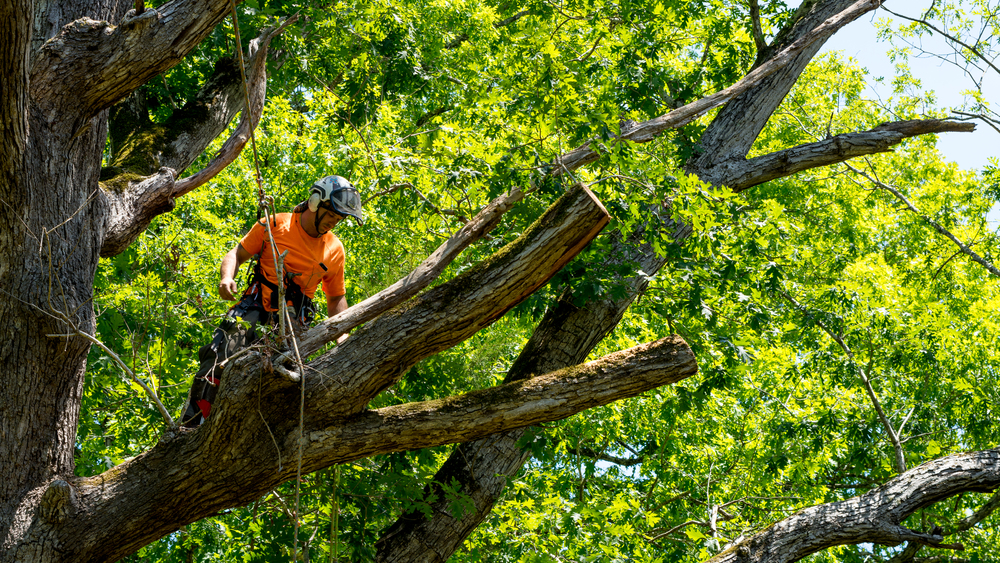

Working with trees involves much more than cutting branches. Arborists study tree health, soil conditions, pests, structural defects and safe work practices. They may work for:
- municipalities
- tree-care companies
- utilities
- parks
- nurseries
- consulting firms
In Canada, the path can seem confusing at first. You may encounter:
- ISA credentials
- college programs
- apprenticeships
- provincial trade certificates
Every option serves a different purpose in your career. For most people, to become a certified arborist means earning the ISA Certified Arborist credential. However, some provinces also offer separate apprenticeship and trade-certification routes. Understanding this difference will help you plan your next steps properly.
Understand What ISA Certification Represents
The International Society of Arboriculture offers the ISA Certified Arborist credential. It confirms that you passed an exam covering broad arboricultural knowledge. The program is available in English and French – which helps Canadian applicants.
ISA certification is not a government licence or provincial trade certificate. It also does not give automatic permission to operate a business. Local laws, insurance rules and municipal requirements may still apply.
However, the credential can support applications for municipal or private-sector positions. It shows employers and clients that you understand accepted tree-care principles.
Use Education to Reduce the Experience Requirement
Relevant education may reduce the amount of required field experience. However, your completed program must include enough arboriculture-related coursework.
A two-year degree with two relevant courses requires two years of practical experience. A four-year degree with four relevant courses requires one year. Certain assessed certificate programs may also reduce the work requirement.
Submit official transcripts showing course names and completed training hours. Do not assume every forestry or horticulture program receives automatic approval.
Ask ISA to review unclear education before planning your exam date. This step can prevent delays during the application process.
Explore Provincial Apprenticeship Options
Canadian apprenticeship rules are different across all their provinces and territories. You should check the skilled-trades authority where you plan to work.
Ontario offers an Arborist apprenticeship combining workplace and classroom instruction. The program generally includes 5400 workplace hours and 720 classroom hours. Apprentices study tree identification, health care, pruning, removal, rigging and safety. Graduates can write a provincial certifying examination afterward.
British Columbia uses a progressive arboriculture training system. Arborist Technician training includes eight weeks of technical instruction and 1,600 workplace hours. Workers must complete this level before entering the Climbing Arborist program.
Provincial training can develop practical skills before an ISA application. However, completing an apprenticeship does not automatically provide ISA credentials.
Apply for the ISA Examination
Once you meet the requirements, create an account through ISA’s credentialing system. Complete the online application and upload your supporting documents.
Self-employed applicants need additional proof of their experience. ISA may request three reference letters, invoices, contracts, or business records. Submitted applications are generally reviewed within five United States business days.
Approved candidates can choose between these examination formats:
- Computer-based testing is available through Pearson VUE centres.
- Paper examinations may be offered through ISA partner organizations.
The current application fee is US$40 for ISA members. Non-members currently pay US$50 for their application. Examination enrolment costs US$295 for members and US$369 for non-members. Check current pricing before applying because fees may change.
Prepare for the Certification Exam
The examination contains 200 multiple-choice questions. Candidates receive three and a half hours for completion. Twenty questions are unscored trial questions, although candidates cannot identify them. The current passing score is 76 percent.
Your study plan should cover every exam area:
- Tree biology and identification require regular review and field practice.
- Soil management includes irrigation, fertilization, aeration, and root health.
- Diagnosis covers pests, diseases, disorders, and environmental damage.
- Pruning questions test objectives, methods, timing, and tree responses.
- Safety includes climbing awareness, equipment, electrical hazards, and job planning.
- Tree risk topics include defects, targets, likelihood, and recommended action.
Use the official exam outline before buying study materials. Divide your study time according to each section’s exam weight.
Practise answering questions without books or online notes. The actual examination does not permit reference materials or mobile devices.
Maintain Your Credential After Passing
Passing the exam does not complete your professional education. ISA certification remains valid for three years.
You can renew your certification after you become a certified arborist by successfully retaking the examination. Most arborists instead collect at least 30 continuing education units during each cycle. ISA also requires a recertification payment and a renewed agreement with its ethics rules.
Training workshops, approved courses, conferences, and webinars may provide eligible units. Record each activity rather than waiting until your final year.
Find a Home-Based Business to Start-Up >>> Hundreds of Business Listings.