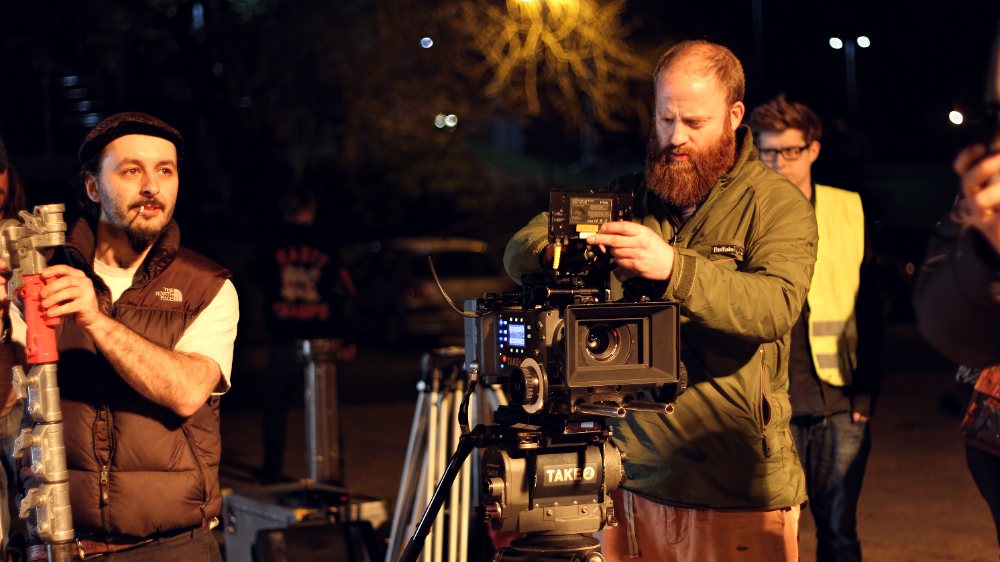

The visible person on a stream is only the front edge of a larger production chain. Digital entertainment needs editors, designers, community staff, analysts and engineers. The career question has moved beyond “Can I become a creator?”
Scale explains the change. The Entertainment Software Association says 212 million Americans now play video games at least one hour a week. Its 2026 economic-impact work estimates that the U.S. video game industry directly employed 82,930 people in 2025 and supported nearly 251,000 jobs across the wider economy. The opportunity is distributed across many job families rather than concentrated in a few celebrity roles.
Audience Scale Creates Work Before It Creates Stardom
Large audiences create operational work. A platform with millions of users needs moderation, analytics, payments, localization and rights management; a long-lived game also needs QA, live operations and post-launch communication.
Creator platforms show a similar structure. A successful channel can require editing, sponsorship sales, research, production planning and publishing work around the person seen on screen. Those supporting tasks are often easier to sell as a service than the vague promise of becoming a creator.
The Job List Starts Behind the Camera
Video remains one of the clearest entry points because every long stream can produce dozens of smaller assets. The U.S. Bureau of Labor Statistics counted about 39,400 film and video editor jobs in 2025 and projects employment for editors in that occupation to grow 4% through 2035. Median annual pay for film and video editors was $75,420 in May 2025.
The useful detail is the workflow. A junior editor who can cut a clean 30-second vertical clip, caption it, normalize audio and deliver several aspect ratios has a measurable skill. Employers can judge that more easily than a claim of being “passionate about gaming.”
Local Basketball Creates a Real-Time Data Desk
Sports entertainment adds another employment layer because live events produce data that expires quickly. Scorekeepers, feed operators, statisticians, social editors and market analysts all work with information that changes possession by possession. The 2026 MPBL postseason is a good example: Zamboanga SiKat and Quezon City completed the quarterfinal field on Sept. 30, so any preview written before those results became stale immediately. A professional monitoring MPBL odds has to know which teams advanced, the competition stage and whether a price is pregame or live before interpreting movement. The value of the role lies less in staring at numbers than in maintaining clean context around them.
The same discipline is useful in journalism, broadcast graphics and team media. A wrong opponent, outdated bracket or stale injury note can contaminate several downstream products at once. Real-time entertainment rewards people who can verify fast without becoming careless, making accuracy essential for Entertainment Career.
Casino Products Need Specialists Beyond the Art Team
Interactive casino products create their own technical and operational roles. Designers build the interface. Compliance staff, QA testers, data analysts and game mathematicians also need to understand how outcomes are generated and how information is displayed. When reviewing a casino game, a tester may need to check the paytable, feature triggers, stake behavior and the implementation of random-number generation rather than simply decide whether the animation looks polished. Regulators such as the UK Gambling Commission require RNG outcomes to be acceptably random and describe RTP as a long-run theoretical measure rather than a promise for a single session. Precision becomes part of the product job.
The broader career lesson is that digital entertainment needs people who translate rules into interfaces and verify that the interface behaves as specified.
A Portfolio Should Show the Work, Not Just the Interest
The strongest entry portfolio usually contains finished artifacts with enough context to judge them. For a digital-entertainment role, useful samples might include:
- a short-form edit built from a longer source video;
- a small dashboard that turns raw event data into readable trends;
- a community moderation plan with escalation rules;
- a mobile interface prototype with clearly documented decisions.
Each sample should state the problem, tools used and result. “I love games” may explain motivation, but it does not show whether someone can ship a file, clean a dataset or handle a live deadline.
Careers Here Behave More Like a Stack Than a Ladder
Digital entertainment keeps merging production, software, commerce and live media, so career paths often move sideways before they move upward. An editor can learn channel analytics. A community manager can move into live operations. A QA tester can specialize in compliance or product management. A data operator can become a sports researcher or trading analyst. These opportunities create diverse Entertainment Career across the digital media industry.
The market is large enough to support that movement. ESA’s 2026 data puts the U.S. video game industry’s total economic impact at $95.8 billion, while BLS projects 7% growth for web developers and digital designers from 2024 to 2034. Neither figure guarantees an easy path. They do show why the practical strategy is to build a stack of demonstrable skills around one production problem, then widen it as the work becomes more technical.
Find a Home-Based Business to Start-Up >>> Hundreds of Business Listings.