It seems like every major tech company is now all-in on AI agents. But good luck actually understanding what they mean by “AI agent.” Continue reading “What Is An AI Agent?”
It seems like every major tech company is now all-in on AI agents. But good luck actually understanding what they mean by “AI agent.” Continue reading “What Is An AI Agent?”
In a revealing five-hour interview with Lex Fridman, Anthropic CEO Dario Amodei pulled back the curtain on what it really takes to build cutting-edge AI models. Continue reading “CEO Reveals Billion-Dollar Training Runs and Path to More Powerful AI”
E-commerce or marketplace apps like Adidas and Amazon are the first choice of users to buy a range of products from fitness routines, and sportswear accessories online. The convenience of selecting products and the comfort of home delivery options, all while hassle-free online payment facility are all a few cool features of online shopping apps like Adidas. Moreover, based on user purchasing patterns, Adidas like top eCommerce apps is delivering personalized shopping experiences business growth, and brand value in this competitive digital era.
There is no doubt that eCommerce is a significant growth decision that scales up your business visibility. Unlocking the eCommerce potential lies in hiring a top mobile app company and building a customized online shopping app that meets your objectives.
In this article, we have discussed the Adidas app development cost and features to add to Adidas clone app development to give it a big success on both Android and iOS platforms. We have also discussed what factors impact the cost of Adidas like fashion shopping app development.
Adidas is one of the leading eCommerce mobile apps developed to help people buy sportswear, footwear, workout clothes, and accessories from multinational brands. Sportswear giant Adidas India has launched in mobile shopping app. The intuitive interface of this trending online shopping app comprises a range of products for men, women, and kids.
Flexible payments, reliable & safe deliveries, high-quality products, hassle-free returns, seamless real-time order tracking facility are all making Adidas a top eCommerce app in India and other 50 countries worldwide. Further, releasing unlimited discounts on selected brands, and festive or seasonal offers are other significant functionalities that elevate your eCommerce app to new heights and improve user retention.
Adidas, a sportswear leader in India launched its mobile shopping app in December 2021. The app is available free to download from Google Play and App Store. Since its inception to till date, the app has reported over 50,000,000 downloads from the Google Play Store and thousands of downloads from the Apple Appstore. It was rated 4.9/5 by iOS users and 4.5/5 start rating by Android users.
Are you looking to develop an Adidas-like trending online sportswear shopping app in India?
Here is the list of features that you must add to in Adidas clone app development. Let’s get started!
Visually appealing User Interface (UI) and User Experience (UX) designs offer easy navigation and help users search products seamlessly. Intuitive designs will improve the app’s appearance as well as user experience.
Implement secure and hassle-free registration and login processes for improving the user experiences and retentions. Allow users to register using their social media accounts to ensure simple accessibility. Further, incorporate multifactor authentication for providing enhanced encryption to user data.
If you are planning to create an online shopping app like Adidas, adding a user accounts feature will ensure personalized app experiences for your users. This feature allows users to view their orders, payments, deals and discounts, and bank details that they saved. Further, enables users to track their current orders from this module for improving the app’s convenience and user experiences.
Adding robust search functionality with filters will help users perform customized searches and find brands or products without any hassle. Let users browse specific products based on brand, ratings, feedback, price, discounts, sizes, colors, and many more. It will improve their app experiences and engage them better, thereby improving conversions.
This feature allows users to add favorite items to Wishlist for making purchases in the future. To build an app like the Adidas sportswear shopping app, the My Wishlist feature improves user experiences by allowing users to revisit products stored in Wishlist. It will play a significant role in improving the conversion rate and thereby sales.
Integrating a shopping cart and a smooth checkout process helps your users easily move products to the cart and proceed through checkout. Additionally, allow users to save multiple delivery locations, such as home address and office addresses while they process with checkout.
Ensure secure transactions through multiple payment options, such as card payments, online payments, wallet payments, UPI payments, etc. It will improve the app’s reliability and users’ loyalty.
Enable a real-time order tracking facility which allows users to track the status of their orders from the day of placement to door delivery.
This is purely a user-centric feature that allows users to give feedback and ratings on products or services delivered through the application. Also improves the trust of new users in product quality and services provided through the application.
It is one of the best features of online shopping apps like Adidas. If you looking to build a similar app like Adidas and taste the same success in the eCommerce industry, offer convenient features to users. Social media integration would help your users to log in through their social accounts.
On the other hand, vendors can benefit from this feature. Integration of social media sharing helps users to seamlessly share their favorite products on social media channels. This will create a brand buzz for specific products, ensuring higher possible sales.
This is a mandatory feature to be added in online shopping apps like Adidas. Top E-commerce app developers in India or Online shopping apps like Amazon development companies will integrate this feature to keep the users updated on their recent activities.
Implementation of a push notification feature will help brands or admin notify the users about orders, payments, delivery statuses, special perks, deals & discounts, and personalized product recommendations, and so on. Hence, this feature helps companies re-engage the users and contributes to improved conversions.
Incorporating GPS navigation functionalities into online shopping apps like Adidas offers incredible benefits to both users, brands, and delivery agents. By integrating GPS navigators, eCommerce apps can offer location-specific content to users and improve the app’s location. This feature helps users pin their current location on the map, removing the burden of manual entries. Further, this feature also helps delivery agents to track the delivery addresses with ease.
It is an advanced feature that leverages Artificial Intelligence (AI) and Natural Language Processing (NLP) technologies. Using the potentialities of AI and NLP techniques, top mobile app development companies in the USA and India are creating robust e-commerce applications on demand. Integration of voice-enabled search functionality will improve the app’s accessibility and user experiences.
Since Adidas is a top supplier of sportswear, footwear, and workout outfits, it would be useful to add Augmented Reality (AR) features to take your application to new heights. This advanced feature will help users virtually try products, thereby letting users make faster decisions and buy products that suit them with ease.
In-app customer support chatbot development is another AI feature that helps users get instant and accurate responses to queries related to orders, deliveries, payments, returns, etc.
Adding all these features into an online sportswear shopping app like Adidas will ensure an enjoyable and comfortable experience to users. This helps vendors and app developers witness optimized user experiences, loyalty, and continuous sales.
To develop an app like Adidas, here is the best technology stack that helps you create a robust application.
Creating an App like Adidas will involve many factors that might impact the final mobile app development cost. Adidas like online shopping app development cost will depend on factors such as app development platform, complexity of features, third-party integrations, technology stack, and UX/UI design intricacy.
Further, the final cost of an online sportswear shopping app like Adidas or the cost of an eCommerce mobile app like Adidas will also depend on location, experience, and team of mobile app developers you hire. Moreover, maintenance and updates, app promotion activities, and other marketing expenses will also need a significant budget.
Considering all the above cost-impacting factors, Adidas clone app development might fall between $30,000 to $90,000. However, depending on your app’s requirements features advancements, code compatibility, post-launch costs, and hourly rates of mobile app developers, the cost of an online shopping shop like Adidas will also reach $120,000 and beyond.
Are you looking to develop an Adidas clone app?
Let’s discuss your app idea and get a free app quote!
How much does it cost to build an app like Amazon?
How much does it cost to build app like Instagram?
#How much does it cost to build an app like Adidas
AI development is facing obstacles from both technology developments and politics. Join Mike and Paul as they explore OpenAI’s Orion challenges and Trump’s regulatory shakeup. Plus, Mike and Paul share their firsthand experience using Generative AI to revolutionize planning meetings – turning hours of brainstorming into minutes of focused strategy.
Listen or watch below—and see below for show notes and the transcript.
00:03:57 — Trump Administration + AI
00:17:06 — OpenAI + Model Improvements
00:29:06 — Gen AI Planning Assistant
00:39:56 — Visa Case Study + GenAI Spending
00:44:08 — OpenAI in Talks to Transform to For-Profit Company
00:46:54 — OpenAI + Chat.com
00:49:36 — Perplexity’s Near $9 Billion Valuation
00:52:20 — Perplexity CEO offers AI for striking NYT staff
00:55:16 — Claude 3.5 Haiku
00:57:35 — Amazon and Anthropic
01:00:06 — Robot AI startup Physical Intelligence
01:02:13 — OpenAI Copyright Case
01:08:33 — Google Jarvis
Trump Administration’s AI Policy
President-elect Donald Trump has signaled sweeping changes to the nation’s artificial intelligence strategy.
At the center of his plans is a promise to dismantle President Biden’s landmark AI executive order, which established crucial safety and privacy standards for AI development.
The incoming administration’s approach appears to be shaped by several key advisors, most notably Elon Musk, who contributed over $100 million to Trump’s campaign and has been outspoken about AI development.
Among the most immediate changes expected is the potential elimination of the AI Safety Institute, created under Biden’s executive order to evaluate advanced AI systems.
However, a coalition of tech companies and think tanks is racing to convince Congress to make the institute permanent before Trump takes office in January.
The new administration’s AI agenda seems focused on reducing regulatory barriers and promoting what they call “AI development rooted in free speech and human flourishing.” This includes pushing back against what Trump’s allies term “woke AI,” with potential pressure on tech companies to disclose or revise algorithms deemed politically biased.
Trade policy could also significantly impact AI development, with Trump proposing a 10% blanket tariff on U.S. imports and 60% on Chinese products.
What seems to be missing is a clear replacement framework for the regulations Trump plans to dismantle.
Open AI Model Improvements
A shift is occurring behind the scenes at OpenAI, as the company grapples with an unexpected challenge: the pace of improvement in its core AI technology appears to be slowing down.
The Information is reporting that the company’s upcoming flagship model, code-named Orion, is revealing the limitations of current AI development approaches. While Orion does surpass previous models, the improvement is notably smaller than the dramatic leap seen between GPT-3 and GPT-4, according to reporting from The Information.
Some OpenAI employees report that Orion isn’t consistently better at certain tasks, particularly coding, despite potentially higher operational costs.
This situation challenges a fundamental assumption in artificial intelligence: that these systems would continue to improve at a consistent rate given more data and computing power.
What appears to be at the heart of this slowdown is a bottleneck: the amount of high-quality training data. OpenAI has apparently largely exhausted publicly available text and data sources, forcing the company to experiment with AI-generated training data.
However, this approach has introduced new complications, with Orion sometimes mimicking the limitations of the older models used to generate its training data.
A Practical Use Case for GenAI Planning
What traditionally would have been a blank-page brainstorming session between Mike and Paul turned into a highly productive strategy meeting, thanks to some preliminary work with ChatGPT.
Instead of starting from scratch, Paul used ChatGPT to develop comprehensive drafts of their plan, covering everything from planning and production to promotion and performance metrics.
What would have typically taken 10-20 hours of deep thinking was accomplished in just three minutes. While the AI didn’t necessarily generate ideas, it provided a structured 2,000-word brief that gave a solid foundation to build upon.
The result? Rather than spending a two-hour meeting staring at a blank page, they were able to immediately dive into substantive discussions.
The key lesson? AI tools aren’t just for content creation—they’re invaluable planning assistants that can transform the efficiency of strategic discussions.
Today’s episode is brought to you by our AI for Agencies Summit, a virtual event taking place from 12pm – 5pm ET on Wednesday, November 20.
The AI for Agencies Summit is designed for marketing agency practitioners and leaders who are ready to reinvent what’s possible in their business and embrace smarter technologies to accelerate transformation and value creation.
You can get tickets by going to www.aiforagencies.com and clicking “Register Now.” When you do, use the code AIFORWARD200 for $200 off your ticket.
Disclaimer: This transcription was written by AI, thanks to Descript, and has not been edited for content.
[00:00:00] Paul Roetzer: Neither campaign really talked about AI much at all. My opinion was. They didn’t know how the public perceived AI, so there were no votes to be won by talking about AI on the campaign trails. But we knew it was going to be fundamental to whatever happened once the administration, whichever one it was going to be, came into office.
[00:00:20] Paul Roetzer: Welcome to the Artificial Intelligence Show, the podcast that helps your business grow smarter and better. by making AI approachable and actionable. My name is Paul Roetzer. I’m the founder and CEO of Marketing AI Institute, and I’m your host. Each week, I’m joined by my co host and Marketing AI Institute Chief Content Officer, Mike Kaput, as we break down all the AI news that matters, and give you insights and perspectives that you can use to advance your company and your career.
[00:00:49] Paul Roetzer: Join us as we accelerate and accelerate. AI Literacy for all.
[00:00:57] Paul Roetzer: Welcome to episode 1 23 of the [00:01:00] Artificial Intelligence Show. I’m your host, Paul Reer, along with my co-host, Mike Caput. so we had an election last week, in the United States. Mike and I have a policy not to discuss politics on the show. no one cares about our political opinions and too many tech podcasts went the way of political shows, in my feeling over the last year.
[00:01:23] Paul Roetzer: So Mike and I have a commitment to you not to do that. However, when it influences AI and the future of AI, we need to talk about it. So we will be discussing, some early signs of what we think the new administration means to AI. And technology more broadly. So that is going to be a main topic today.
[00:01:43] Paul Roetzer: We’re also going to get in some rumors, I guess. I don’t know. It’s being reported that maybe the frontier models have plateaued in their training. So we’re going to kind of unpack that cause that’s a very important thing. And then Mike and I are actually going to share a really [00:02:00] cool internal use case that we used.
[00:02:02] Paul Roetzer: ChatGPT for in particular for some planning that I think people could apply as they’re doing their 2025 plannings. And then a whole bunch of rapid fire items. So we got a lot to cover. this week’s episode is brought to us again by AI for Agency Summit. This is our virtual event. The second year it’s happening.
[00:02:19] Paul Roetzer: It is occurring Wednesday, November 20th from 12 p. m. to 5 p. m. Eastern Time. You cannot make that time, zone. You can get on demand. So there will be an option to get the summit on demand. it’s an incredible lineup. It’s going to be packed with basically trying to figure out how to help you drive AI transformation in your own agency.
[00:02:41] Paul Roetzer: And for your clients, if you’re on the brand side, let your agencies know about the summit. ’cause you want agencies that are proactively seeking to drive AI literacy and capabilities within their own firms. And this is a great headstart for them to do that. So you can go to ai four fo r [00:03:00] agencies.com.
[00:03:00] Paul Roetzer: That’s ai four agencies.com. Check out the agenda, check out the speaker lineup. Then click register. Now you can use promo code AI forward 200 for $200 off. So again, that is AI for agencies.com and the promo code is AI Forward 200, and that will get you $200 off the ticket. And again, if you can’t make the live event, check out the on demand ticket options as well.
[00:03:27] Paul Roetzer: All right, Mike, the topic you, neither of us really wants to talk about that has to do with politics we’re going to talk about. So let’s do this in our style is as objective and unbiased as we can humanly be when it comes to these things and just be, report the facts as they appear to be. So that is our kind of promise to you is we’re going to do our very best anytime we talk about this topic related to politics to just give you the facts and let you all figure it out for yourselves from there.
[00:03:57] Mike Kaput: Alright, Paul, so let’s dive [00:04:00] into it. According to a few reports we’re starting to get, it seems like possibly President elect Donald Trump is potentially signaling some pretty significant changes to the nation’s artificial intelligence strategy. So, it sounds like At the center of his administration’s plans, might be a potential dismantling of President Biden’s landmark AI executive order, which established safety and privacy standards for AI development.
[00:04:30] Mike Kaput: We know for a fact that the incoming administration is shaped in some ways by several key Elon Musk, who contributed over a hundred million dollars to Trump’s campaign and has been outspoken about his views on how AI should be developed. We’re kind of seeing among the most immediate changes expected is potentially the elimination of the AI Safety Institute that is created under Biden’s executive order in order to evaluate advanced AI systems.
[00:04:59] Mike Kaput: [00:05:00] However, as always, tech companies, think tanks are kind of racing to have their own influence. Some of them are trying to convince Congress to make the institute permanent before Trump takes office in January. And the new administration’s AI agenda seems to be aligning around reducing regulatory barriers and promoting AI development that, in their words, is kind of rooted in free speech.
[00:05:27] Mike Kaput: So this kind of pushes back against what some Trump allies kind of term, you know, quote unquote like woke AI with like biased or politically skewed results. And then of course there’s also going to be What we’ve heard rumblings about is trade policies that could also impact AI development. Trump has proposed a 10 percent blanket tariff on U.
[00:05:47] Mike Kaput: S. imports and 60 percent on Chinese products, all of which would affect some of the hardware, and products that go into artificial intelligence. And we don’t seem to [00:06:00] have any real clarity on kind of what would replace this. Would it be just an unfettered set of policies? Would there be additional regulations?
[00:06:08] Mike Kaput: We’re not sure yet. So, Paul, it kind of seems like we could see some swift, sudden changes to AI policy under the Trump administration. How are you seeing this playing out right now?
[00:06:20] Paul Roetzer: Yeah, I think there are breadcrumbs, you know, there’s a couple articles that came out over the weekend we’ll put into the show notes about this, but, the way I, the way I kind of think about this is to follow the money is a good way to do it.
[00:06:33] Paul Roetzer: So while the campaigns, neither campaign really talked about AI much at all, and we talked about this on the show, that my opinion was they didn’t know how the public perceived AI. So there were no votes to be won, by talking about AI on the campaign trails. But we knew it was going to be fundamental to whatever happened once the administration, whichever one it was going to be, came into office.
[00:06:59] Paul Roetzer: So, [00:07:00] when we look at the Trump administration, you can look back over the last year plus of who are the major technology organizations and individuals that backed the campaign. you mentioned Elon, obviously, but, Andreessen Horowitz came out a few months back and, kind of counter to their traditional views, they went all in on Trump.
[00:07:23] Paul Roetzer: Now, they published in fall 2023, we talked about this on the show, the Techno Optimist Manifesto, so if you want to understand why A16Z and Andreessen Horowitz would back Trump, you could probably go read the Techno Optimist Manifesto, and that will give you a good sense of In essence, they are very, very pro startups, so they want to, enable the startup ecosystem to innovate as much as possible with as little regulation as possible.
[00:07:54] Paul Roetzer: And crypto. Those are two, you know, two or three big areas. Startups, regulation, crypto. [00:08:00] so they, they listed several reasons they believe the Biden administration is stifling startups through over regulation and potentially needless taxation. The, I guess sort of like, the tipping point for them was the Biden administration had proposed a tax on unrealized capital gains, meaning as startups become higher and higher in value that they wanted to actually tax that increase in valuation before the money was actually realized by anybody.
[00:08:29] Paul Roetzer: And that was the, what they claim was the big, big deal. Break for them. Another major player to look into is Peter Thiel. Peter Thiel is the kingmaker for J. D. Vance. So, when Vance was elected to Senate in 2022, it was Thiel who funded that campaign, who basically pushed for him to get into that position.
[00:08:50] Paul Roetzer: And Thiel along with David Sachs and some others are the ones who basically pushed for J. D. Vance to get the ticket as the vice president. [00:09:00] So, Vance was put into power through his VC connections. you can go into Peter Thiel’s history, he, co founder of PayPal with Elon Musk, Palantir Technologies Founders Fund, so he’s a VC as well.
[00:09:15] Paul Roetzer: He was the first in Silicon Valley to publicly support Trump back in 2016, gave a bunch of money, was very vocal, appeared at the Republican National Convention in 2016, then pushed for, you know, Vance to be involved. He’s a libertarian, which is someone who advocates for minimal government intervention in individuals personal and economic lives.
[00:09:35] Paul Roetzer: so again, get rid of the regulation, let the technology do its thing, maximize personal freedoms while minimizing the role of the state. And then there’s David Sachs, the All In podcast. I’m sure there’s some of our listeners that are also All In podcast listeners. As you would be aware, David Sachs, who was a founding member and chief operating officer of PayPal, back with Peter Thiel all those guys.
[00:09:58] Paul Roetzer: he was very, very [00:10:00] vocal on the ALL IN podcast and got Trump, I think Trump appeared on the ALL IN podcast if I’m not mistaken. He was also the founder, Saks was of Yammer, which he sold to Microsoft in 2012 and he also has a VC firm. And then obviously Elon Musk. So again, if you want to know the general technology agenda and where AI may go, you can look at some of those key players and what they have publicly stated about their beliefs.
[00:10:26] Paul Roetzer: they’re going to have an influence. Now, not all of Silicon Valley was supportive of the Trump campaign and the next Trump administration, but they certainly all lined up over the weekend to congratulate. So, you can go and look at Bezos, and Bill Gates, and Aiden Gomez of Cohere, and Jack Clark of Pichai of Google, and Mark Benioff of Salesforce, and Greg Brockman of OpenAI.
[00:10:48] Paul Roetzer: Every single one of them had the congratulatory tweets, and we’re looking forward to working with your administration. And again, whether they supported that administration or not, what you’re going to have to work with them. so at the end of the [00:11:00] day, I kind of made my like scorecard, like right away, I was, I had this scorecard before I started looking into the rest of the stuff and, the losers in my opinion, climate, climate regulation done, like they’re, they’re going to do anything in their power to not worry about climate change.
[00:11:16] Paul Roetzer: And they’re certainly not going to care about whether or not advancing AI impacts the climate. So that is. That is a direct loser. the executive order as you called for is done. They will can that as soon as possible. So that is a loser. A dark horse loser here is OpenAI and Sam Altman. And the reason for that is Elon Musk’s influence.
[00:11:38] Paul Roetzer: So as we have talked about many times on the show, Elon was a co founder of OpenAI. He put the first 40 million in, he created the name. He lost a power struggle in 2019 when he tried to roll OpenAI into Tesla. Sam came to power, and Elon has a beef with Sam, and it’s very public. And Elon [00:12:00] like tends to hold grudges.
[00:12:01] Paul Roetzer: And so there’s a, you know, maybe Sam and Elon kind of come to peace, but if they don’t, like Elon could probably, with his influence, make Sam and OpenAI’s lives miserable if he chooses to. the other side to that is XAI, Elon Musk’s startup AI company. You could imagine him getting way more support and power for his own AI startup.
[00:12:24] Paul Roetzer: because he’s bought himself some pretty significant influence. And then open source is probably the other and maybe the biggest winner is, when you remove regulation, you limit the, you know, the government’s say in the downsides of open source and acceleration of technology. So the e/accmovement, that, that acceleration all costs.
[00:12:47] Paul Roetzer: They’re a winner too, and so open source probably is a byproduct of that, and that’s one of the A16Z plays, is they want, like, kind of this freedom to innovate there. the one big variable in all this, and I don’t know, like, [00:13:00] how this plays out, but the reality is Trump and Elon Musk both have very large egos, very large personalities, and they are both alphas.
[00:13:09] Paul Roetzer: And how those two get along for four years is going to be really interesting. Because Elon, while he may not hold some official position in the administration, he is certainly going to have influence. And if he starts getting a lot of public credit for things that happen, you almost wonder if that doesn’t create some friction.
[00:13:32] Paul Roetzer: So I have no idea, but it’ll be really interesting to watch how that power dynamic plays out, and what kind of ends up happening. And again, keep in mind with Elon. He, he is historically a supporter of Democrats, like he’s very public about the fact that he voted for Hillary Clinton. It’s rumored he voted for Biden.
[00:13:53] Paul Roetzer: When he took over Twitter in April 2022, he tweeted, for Twitter to deserve public trust, it must [00:14:00] be politically neutral, which effectively means upsetting the far right and the far left equally. So, Elon’s move to support Trump wasn’t This isn’t, wasn’t assumed all this time. I mean, Elon has tried to remain somewhat independent.
[00:14:15] Paul Roetzer: but there was a shift and some believe the shift actually occurred when he got snubbed at the electric vehicle event at the White House a couple years back when he wasn’t invited there. and it ended up being because it was like a, in essence, a union event and Tesla is not a union shop. But it seems like that may have played a role in him feeling burned by the current administration and, shifting his support.
[00:14:43] Paul Roetzer: But who knows? But, yeah, it’s, it’s a dynamic situation and, like I said, Mike and I’ll keep tabs on it and report the facts to you, again, as an unbiased and objective way as possible, just observing the space. And so those are some of the things that [00:15:00] I see early on, but I think we’re going to learn a lot more in the, in the months ahead leading up to.
[00:15:05] Paul Roetzer: The Inauguration in January.
[00:15:07] Mike Kaput: Yeah, we’ll definitely see how this all plays out in practice, but you mentioned this briefly, it just seems like, at the moment, I would not be betting on anything other than EAC. movement, the effect of accelerationism seems to be the order of the day here.
[00:15:22] Paul Roetzer: And I think this probably also, you know, I hadn’t thought about this one.
[00:15:26] Paul Roetzer: It probably accelerates the States like California being way more aggressive. So if you remember when SB 1047, that’s right. Yep. Yeah. When that, when, Newsom did not sign that bill. What we said on that episode was I thought the Biden administration and Nancy Pelosi told them to pump the brakes, that, that federal wanted to have a say in this.
[00:15:55] Paul Roetzer: And I, and Newsom called like all hands in [00:16:00] California, legislation last week after the election. And so I would not be surprised at all if you don’t see states like California race to put some state level legislation in place. I, again, I hadn’t really thought about that until now, but I could definitely see that being a major play, to try and bypass some of the stuff that they’re, you know, that they know that this administration is going to do too.
[00:16:27] Mike Kaput: Yeah. And while I don’t certainly don’t expect Silicon Valley to go anytime soon, you could see some really big moves depending on how regulation at the state level happens where some of these companies are built.
[00:16:38] Paul Roetzer: Yeah, for sure. And I mean, Elon’s already made that. pretty public with his efforts to build more in Texas, but again, like the SB 1047, the key to that legislation is it doesn’t matter if you’re in California or not, it’s if you do business in California.
[00:16:53] Paul Roetzer: And so, you know, California more than any other state can have an impact on the economy with their [00:17:00] choices. so yeah, I don’t know, it’s going to be fascinating.
[00:17:04] Mike Kaput: Alright, so next up, we are seeing a bit of an unexpected challenge confronting OpenAI. The pace of improvement in their core AI technology Might be slowing down.
[00:17:20] Mike Kaput: We got a report this past week from the information that the company’s upcoming flagship model, which is codenamed Orion, is kind of revealing the limitations of current AI development approaches. So the information is reporting that while Orion does appear to surpass previous models, The improvement is notably smaller than the big leap we saw between GPT 3 and GPT 4.
[00:17:45] Mike Kaput: And some OpenAI employees report that Orion just isn’t consistently better at certain tasks, even particularly coding, despite higher operational costs. So, this basically is starting to [00:18:00] challenge one of the fundamental assumptions in AI that we’ve talked about a bunch, which is Scaling laws. The systems will continue to improve at a consistent rate given more data in compute.
[00:18:11] Mike Kaput: And it seems like that data piece could be the bottleneck here. They are reporting that the amount of high quality training data is creating a real struggle for OpenAI. Apparently they have largely exhausted their publicly available text and data sources. They’ve started to experiment with AI generated training data.
[00:18:31] Mike Kaput: But, this is creating complexity. The information is reporting that Orion sometimes mimics the limitations of the older models used to generate its training data. So in response, OpenAI is trying a couple things it sounds like. They have established a dedicated foundations team led by Nick Ryder to address the data shortage and explore the future of AI scaling.
[00:18:54] Mike Kaput: They’re also looking more at post training improvements, like developing new reasoning [00:19:00] models like O1, that take more time to think before providing answers. So, Paul, I guess my first and biggest question is, are we actually slowing down here? Yeah,
[00:19:13] Paul Roetzer: this is fascinating. So I don’t feel like anything in this article was new, but this thing was cooking on Twitter over the weekend.
[00:19:21] Paul Roetzer: Like everyone was reacting to this. There was a bunch of OpenAI employees responding to it. So the co founder and CTO at Writer, which is a, you know, a GenAI writing platform. That we’re very familiar with, he tweeted, we’ve been discussing this for some time. There’s minimal improvement or return beyond a trillion parameters with only very small gains from around 150 billion to 1 trillion.
[00:19:49] Paul Roetzer: We have publicly stated that our Palmera LLM achieves improvements by deepening the model architecture, not by increasing the number of parameters. Um. But [00:20:00] then you had other people, like Clive Chan from OpenAI, he’s like, what comes next is relatively little new science, but instead years of grinding engineering, to try all the new obvious ideas and the new paradigm, scale it up, speed it up.
[00:20:13] Paul Roetzer: Maybe there’s another wall after this one, but for now there’s 10Xs as far as the eye can see. So he’s like, You know, just the headlines misleading, basically. yeah, Dan Schipper, who’s a co founder and CEO at Every. the message that this headline conveys is that odds with what people inside the big labs are actually feeling saying, it’s technically correct, but the takeaway for the casual reader.
[00:20:34] Paul Roetzer: AI progress is slowing is exactly the opposite of what I’m hearing. We have Adam. GPT, who’s an OpenAI employee, said traditional scaling laws which focus on pre training larger models for longer is absolutely still a thing. That aspect of scale is still foundational. There now happens to be another scaling thing, and together those two things are poised to unlock amazing capabilities.
[00:20:58] Paul Roetzer: Noam Brown, who’s [00:21:00] fundamental to the O1 model, we’ve talked about Noam multiple times, He said there won’t be a slowdown in AI progress any time soon. yeah, so, and then like, ironically, Sam Altman did an interview with Gary Tan from Y Combinator. And this is last week. We’ll put the interview in the show notes.
[00:21:19] Paul Roetzer: I was watching it on YouTube. I don’t know if it’s a podcast too or not, but it’s definitely on YouTube. And Sam said these things are going to compound. We could hit somewhat unexpected wall or we could be missing something, but it looks like there’s a lot of compounding in front of us. We are not near the saturation point.
[00:21:35] Paul Roetzer: The models are going to get so much better, so quickly. And when Gary asked him, what are you excited about in 2025, he said, A GI . So I don’t know. Um. So, I think like, there was a couple of things I went back to on this, because again, the article, I guess maybe it was more explicitly saying that it thinks the labs have run into a plateau on the scaling laws, [00:22:00] but I don’t.
[00:22:01] Paul Roetzer: I don’t know that that’s new because, like, we talked recently about, Ilya Sutskever and he was talking about the need to, like, how these labs all know to do, like, more data, more, more trading time. But that there needs to be some new paths where you push hard and that the challenge a lot of these labs were facing was which new path to bet on.
[00:22:28] Paul Roetzer: That there was different ways now to go about trying to drive. like these leaps forward, but the thing we talked about, I can’t remember what episode it was on. We’ll have to go back and look. We’ll put in the show notes. But what I said was, it might’ve been when we first talked about Orion, that the thing that to me was the trillion dollar question was, could OpenAI create a new frontier model that stayed at the top of the leaderboard for another two years?
[00:22:54] Paul Roetzer: Because when they introduced GPT 4 in March of 23, [00:23:00] Everybody chased that model since then, and it seems like everybody just sort of caught up to that. Like, no one is clearly ahead of a GPT O model, but they’re all sort of comparable. And so the question became, well, why hasn’t someone taken a leap yet?
[00:23:22] Paul Roetzer: Is it because the training in this way is just kind of like, this is it, this is the smartest models we get? The investments coming from big tech certainly didn’t imply that. The demand for NVIDIA chips certainly didn’t imply that. So the unknown was, well, has OpenAI or is anybody else? Cracked the next breakthrough that allows them to create a model that is so far ahead of everybody else like GPT 4 was.
[00:23:50] Paul Roetzer: And that’s the part that seems up in the air at the moment. Now, as we talked about last week, OpenAI seems to think [00:24:00] reasoning is the key, that their series of O1 models. And again, I’m, I’m a believer that we’re going to get the full O1. Sometime between November 21st, when I think that there’s a developer day, an OpenAI developer day, and November 30th, when we would be at the two year anniversary of ChatGPT coming out.
[00:24:22] Paul Roetzer: So I think we’re going to get the O1 full model. Now, what it’s capable of doing beyond what we already see, I’m not sure. but I think that there, there is a real question here about whether or not these frontier models are sort of commoditized at this point, that they have somewhat plateaued in they’re just going to keep leapfrogging each other every three to six months, and there isn’t a breakthrough really left at that model of text in and text out, but where I think this becomes interesting is like, what are the things that are [00:25:00] going to differentiate as we move forward?
[00:25:03] Paul Roetzer: And the things that seem, because Demis Assabis has said the same thing, that there’s like two to three breakthroughs left before we just get to AGIOT. And it, reasoning seems to be a big one, like that, that everybody’s working on that. and so O1 is sort of the first one to market that, has that clearly, but we know everybody else is working on it.
[00:25:24] Paul Roetzer: Multimodal seems to be really critical. So again, keep in mind, a lot of these previous generation models were text in, text out, so they were trained on. The text of the internet. They were not trained on videos, audio, images as a single model. But we know that’s what Google is trying to do at Gemini. That you train it on multimodal, and then that opens up a whole new universe of data to train these models on.
[00:25:51] Paul Roetzer: And maybe that’s a path to go down, is pushing hard on the training there. The other one that comes to mind to me is The path, and maybe these are some of [00:26:00] the things Ilya is thinking about when he’s saying like, there needs to be, you got to pick which path to bet on. So you could bet on reasoning, you could bet on multimodal training, you could bet on symphony of models where the frontier model functions as the conductor, and then all the smaller models do their thing within specialized areas that don’t require as much compute.
[00:26:17] Paul Roetzer: And so you can imagine pushing hard on This sort of like central hub, which is the frontier model, and then all of this symphony that allows them to kind of work in collaboration together. And then the other one where, where Google has the massive advantage is self play and recursive self improvement.
[00:26:36] Paul Roetzer: And that comes from reinforcement learning, like alphas go and alpha zero and things like that. And so those are four. Again, I have no idea what the next breakthroughs are. But from everything I’ve heard in these interviews, they seem to think they know collection of things it could be. And what they need to now do is push compute, push different [00:27:00] testing, and see which of these things plays out to unlock these frontier models to maybe then take the leap.
[00:27:07] Paul Roetzer: And maybe it’s like a couple of these things in combination. But all that being said, for our listeners, this is all fascinating, but for our listeners, here’s the reality. It’s irrelevant to you if they make a leap forward next year, like they probably will. But from what Mike and I see every day talking to big enterprises and small is the absorption of the current capabilities is so low that the value you can create in your company using today’s models is so significant and so untapped.
[00:27:41] Paul Roetzer: That it doesn’t really matter, like, do we get GPT 5 or Gemini 2 or Quad 4, or did their training runs not work? Like, it’s all fun to talk about, but for you, focus on using what we have today to do your plans for next year. To [00:28:00] build a more efficient team, to drive productivity and creativity and innovation.
[00:28:04] Paul Roetzer: Like, the next main topic, Mike and I are going to share a way we did this, but like That’s my main message to you is don’t get caught up worrying about all this stuff, just go do things, like take action, because it’s, there’s so much value sitting there to be created with the models we already have.
[00:28:23] Mike Kaput: And realistically, we don’t need that many more breakthroughs for there to be even more disruption.
[00:28:30] Mike Kaput: Right? I mean, even if it’s not as big a leap next time forward, these are still improving. Yeah. And the hospitals are still improving. We’re just debating, like, how much.
[00:28:39] Paul Roetzer: Yeah, I think diffusion of the current capabilities would be enough disruption to last us, like, five years. Yeah. So. They’re going to get smarter, they’re going to get more generally capable, they’re going to be able to take actions, they’re going to do all these things we talk about, have worldviews, things like that, that, that stuff [00:29:00] may not create value for your company for another year or two, but what we have today can transform your company right now.
[00:29:06] Mike Kaput: So let’s maybe then kind of ease into the third big topic and talk about a way to do that. Like we wanted to, you know, you and I had talked before this episode, Paul, and we just kind of wanted to share like a practical use case of how. Even just using the latest capabilities of chat GPT alone last week, we dramatically accelerated planning and innovation for both marketing AI Institute and Smarter X.
[00:29:30] Mike Kaput: So do you want to maybe walk us through what you and I had worked on?
[00:29:35] Paul Roetzer: Yeah, so, so basically the way this works is, you know, as A-C-E-O-A, a lot of my work is on kind of the vision and the high level strategy for the organization. You know, thinking through our revenue channels, thinking through. Our current growth opportunities, future growth opportunities, things like that.
[00:29:52] Paul Roetzer: And so as I was going through building our 2025, like, growth matrix, I sort of landed on this idea [00:30:00] that we’d had a couple years back, and it’s related to like the media content side of our business. So Mike, as you’re aware, is the chief content officer. So I go to Mike with this idea. I was like, listen, I think we have this opportunity to really scale what we’re doing, but to create like tremendous value, like a high velocity of value creation across different industries and for different personas.
[00:30:23] Paul Roetzer: And so I kind of explained the concept to Mike and he’s like, yeah, I love it. Like we should do that. And it’s like, okay, now what do we do? And so Mike and I spent, you know, what, nine years at a marketing agency together, and we’ve built plenty of strategies and campaigns. And there’s always that, like to go from idea to action is really hard.
[00:30:44] Paul Roetzer: Because someone has to commit the time to build the brief, to go do the research, to do the initial planning, so that you can then react to that together. So, for me, I was like, okay, I gotta put a forcing function in place. I got a bunch of travel coming up, like, I’m just going to [00:31:00] put a meeting for Mike and I.
[00:31:01] Paul Roetzer: It was last Friday, I think we met. And so by putting that meeting on the calendar, it was like, okay, this will force us to now talk about it. But the Thursday, the day before, we had nothing. We had like blank page. It’s like, okay, we have this idea, but like, what do we do? And so what I, what I, what I then did is rather than Mike and I showing up to that meeting and spending two hours just kind of bouncing this idea around, I use ChatGPT to develop drafts of the plan, thinking through various planning, production, promotion, performance, like kind of like the key here is we look at different ways.
[00:31:38] Paul Roetzer: And I’m basically just giving some prompts to this thing, but saying like, okay, I’ve got this business idea. It’s for our SmarterX brand. And this, I’m using my co CEO GPT that I built. And so it understands that brand and knows what we do and it knows our revenue channels. And I just said, help me think through this business model.
[00:31:53] Paul Roetzer: And it’s like, okay, great. Like, what do you, like, what do you want to do? And so I kind of like had a conversation around that. And then It was [00:32:00] really good. And this is all happening over like three minutes. And then I said, okay, create a task list for the planning and production of the content that we’re going to create without getting into all the details.
[00:32:10] Paul Roetzer: And then I was like, okay, you know, we’re going to do this for different industries and personas. How do we identify and prioritize verticals and personas, you know, to help drive our decision making? And it created, again, an amazing brief on this thing. Now, as I said, Mike and I did this stuff for a living.
[00:32:26] Paul Roetzer: Like we have the ability to do this, but the reality is for us to do this would probably have taken 10, 20 hours to do the kind of planning that went into this. Now, there was nothing that ChatGPT output that we wouldn’t have probably thought about if we had enough time. Like if Mike or I could go away for three days and just think deeply about this idea, we may have come up with 80, 90 percent of what ChatGPT did.
[00:32:54] Paul Roetzer: But the reality is ChatGPT did this in three minutes. And so my thinking here [00:33:00] was rather than Mike and I sitting staring at a blank page and ideating from zero. We now had, I don’t know, it’s probably like 2, 000 words or so structured really nicely in an outline and brief for us to react to. And so we get into the meeting on Friday and I said to Michael, I was like, let’s just walk through what ChatGPT did.
[00:33:20] Paul Roetzer: And let’s start talking through things we like, things we don’t, if we have any other ideas. And there came a time, what, like, like, 15 minutes into it, we’re like, hold on a second. This is actually a really interesting idea. Let’s, like, lean into this for a couple minutes. And honestly, it ended up Leading to a conversation that may change, like, our whole go to market strategy for Smart RECs next year.
[00:33:43] Paul Roetzer: And if we hadn’t had ChatGPT develop the brief, I don’t know that we would have got there. And then I go away, like, this week, and then we run into AI Agency Summit, and then it’s Thanksgiving and all of a sudden it’s middle of December and Mike and I haven’t made any progress. Instead, we’re going to spend the next 30 days [00:34:00] pushing hard on the few things that came out of it that were actionable.
[00:34:04] Paul Roetzer: So, that to me is like a fundamental way to use these tools today. Use them as planning assistants. And then, the other thing we did is we traditionally use Zoom, but for this one, you know, I really wanted to try Google Meet. Now, I had had a meeting last week where we did the video, the transcript in the summer with Google Meet, and I was pretty impressed.
[00:34:26] Paul Roetzer: Like, it was, it was really solid. And so we have Google Workspace. So I said to Mike, like, let’s try Google Meet for this one. And so we did Google Meet and we used it, did the video, the transcript, the summary, which was great. So the whole thing, Mike and I met for like two hours. Yeah. And I feel like we made a month’s worth of progress by just infusing ChatGPT and like that brainstorm process.
[00:34:49] Paul Roetzer: So I don’t know. How did you feel about it, Mike? I mean,
[00:34:51] Mike Kaput: you lived through the experience too. Yeah, no, I felt very similarly. What really struck me too is like, Everything you just [00:35:00] described is like if we had a really smart employee like brief us on initial ideas, which then gave us the bandwidth and the time to actually I would argue do what we should be doing and do best, which is actually exploring and operationalizing more ideas or creating our own based on that.
[00:35:18] Mike Kaput: We would never have gotten there. We would have spent all the time getting the initial brainstorming done. And like you said, nothing would have happened as fast as it happened.
[00:35:28] Paul Roetzer: Yeah. One other note I’ll make here, and I mentioned this to Mike was, so I did all this in ChatGPT. Then, because we’re a Google Workspace shop, I copied and pasted everything because I wanted to share it with Mike.
[00:35:42] Paul Roetzer: Now, I can share the chat, but we wanted to be able to comment on it. We wanted to be able to, like, interact with it. So I needed that ChatGPT output into Google Docs. So you copy and paste, and unfortunately, all the formatting goes away. I mean, I don’t know, maybe there’s something I’m doing wrong there, but I’ve tested multiple ways and it just jacks up the [00:36:00] formatting and puts all the pound signs and everything in there.
[00:36:02] Paul Roetzer: And so then as Mike and I are going through, I’m like changing the format, it’s kind of annoying. Now that’s an, that’s an opportunity for Google if you think about it, because direct integration into Google Docs would be brilliant, but I’m not saying ChatGPT per se, like if you use Google Gems, you can export to Docs right away.
[00:36:22] Paul Roetzer: There’s actually a button to send it to Docs, like sharing to the Docs. And it does nice formatting. The problem is GEMS seems way behind custom GPTs at the moment. So like, I went in and tried to do the same thing with a GEM. One, I can’t find any information about the context window for the instructions.
[00:36:40] Paul Roetzer: I don’t know what the character limit is. Like I know in ChatGPT it’s 8, 000. I can’t find that anywhere for GEMS. There’s no guide when you’re in there. There, there’s no ability to do conversation starters, which is like a really awesome feature of ChatGPT. I don’t know how to do those. I think the gems are 100 percent private, they don’t train on them.[00:37:00]
[00:37:00] Paul Roetzer: I think if I share them with you, only you can see them. But I have no idea, like, and so just a note to the Google team, like, gems is a huge opportunity, but I, I can’t find anything other than like the blog post announcing that they exist in August.
[00:37:15] Mike Kaput: Yeah.
[00:37:15] Paul Roetzer: and then like some user generated guides to it, but even those didn’t answer the questions I had about character limits and conversation starters and things like that.
[00:37:24] Paul Roetzer: So I feel like If Google Docs had Gemini baked right in, because if you go into Google Docs and just use the Help Me Write thing, it does not do anything like what ChatGPT or Gemini are capable of doing. So like, I just want the functionality to do my planning right in Google Docs with Gemini without having to go through all this other stuff.
[00:37:47] Paul Roetzer: And that does not exist, but because Google has Google Workspace. There’s a big opportunity if they can crack actually making Gems highly functional and valuable and that integration with Google Docs right away. [00:38:00] Now Microsoft obviously has the same capability with ChatGPT and Word, but that would be a great unlock in terms of value creation.
[00:38:10] Mike Kaput: Yeah, and you and I had even tested, obviously, there is Gemini within Docs, but even then, I don’t know if it’s due to what information it pulls, what model is being used, but like, we tried more sophisticated prompts right in Google Docs, and it’s just not there. The same prompt works really well if you go open up your own instance of Gemini.
[00:38:30] Mike Kaput: So it’s very limited in
[00:38:32] Paul Roetzer: capabilities in Docs. Right. It is not the same chat, for sure. Maybe that’s the, maybe that’s the need is like, stop trying to be one thing in one doc and one in the other. It’s just integrate the things. So yeah, so the moral story here is push on using these tools as a planning tool for next year.
[00:38:51] Paul Roetzer: Like there, there’s a ton of value sitting there and it can really accelerate things. Like again, I always use these examples of what would I pay [00:39:00] to have that function? So forget 20 bucks a month for ChatGPT, for MAICONI it’s 40 bucks a month or whatever that number is. If I would have done that myself, we’re talking 10 to 20 hours, what is 10 to 20 hours of my time worth?
[00:39:14] Paul Roetzer: Right. A lot to me. So the fact that I didn’t have to do that, if that was just like, hey, you can use it to help with this plan, what would you pay for it? I’m probably like, I don’t know, 1, 000, 2, 000? Like if some, if a ChatGPT is going to create this for me, that Mike and I could just spend two hours reacting to it instead?
[00:39:30] Paul Roetzer: I would have happily paid thousands of dollars as a business user for that one
[00:39:34] Mike Kaput: use case. Yeah, that’s incredible and like we’ve talked about a couple times, it’s like, whether you’re trying to figure out more use cases or trying to figure out how to get started, go create a GPT that does, helps you do your job.
[00:39:48] Mike Kaput: Like Co CEO. Just think of it that way. Put your job description in and be working with it regularly.
[00:39:56] Mike Kaput: Alright, let’s dive into our rapid fire topics this week. [00:40:00] So first up, we have another interesting case study, not ours this time around, but Visa, the credit card company, has apparently deployed over 500 generative AI applications across its operations, according to a new report in the Wall Street Journal.
[00:40:16] Mike Kaput: These applications span a ton of different functions, from security tools that detect bugs in code, to specialized chatbots serving as subject matter experts. This initiative, led by the company’s technology president, Rajat Taneja, reflects a deliberate kind of go fast approach designed to address two critical challenges.
[00:40:36] Mike Kaput: Staying ahead of increasingly sophisticated fraud attempts. And maximizing AI’s potential benefits before Visa’s competitors do. So they’ve actually invested over 3 billion in AI and data infrastructure over the past decade to support this vision. one particularly notable implementation targets something called enumeration attacks, [00:41:00] which currently cost the company over a billion dollars annually in fraud losses.
[00:41:05] Mike Kaput: Other tools they’ve developed to help customers customize billing cycles and streamline various operational processes. And what’s really interesting here is just kind of how all in the company has been on this. They established really strong governance infrastructure and data protections first, and then encouraged their teams across all different business functions to participate in AI implementations.
[00:41:28] Mike Kaput: Looking ahead, Tenasia, who is the technology president in charge of this, envisions a future where human employees each oversee Eight to ten different AI powered digital workers creating kind of a hybrid workforce model. So, Paul, this certainly seems like an enterprise succeeding with AI and getting real value out of it, which is a little contrary to some of the reports we’ve seen saying that nobody is getting value out of this stuff.
[00:41:53] Paul Roetzer: Yeah, we’re always on the lookout for brands that are telling their stories of success. They’re hard to come by, [00:42:00] honestly. so yeah, this is interesting and it makes sense like a lot on the fraud side that they would have a ton of use cases there, but simultaneously we, we came across a information exclusive for like their pro, subscription with which Mike and I have that are the generative AI spending of 50 companies from Coke to Walmart.
[00:42:20] Paul Roetzer: And so we were kind of scouring through that, looking at seeing like which models they use, what are their use cases? And, you know, I think similar to Visa, some of the things that surface is customer support, like everybody is building chatbots for customer support and success, that, that seemed almost universal, marketing and content generation, which is no surprise, operational efficiency, etc.
[00:42:42] Paul Roetzer: you know, companies like Goldman Sachs and Toyota deploying AI for internal tools. coding is obviously a big one and then sales enablement. Those are categorically like the big things that jumped out from these 50 companies and again, they’re, they’re big brands. so they were looking at IPG and DoorDash [00:43:00] and AT& T and, Coca Cola I mentioned.
[00:43:02] Paul Roetzer: So yeah, I think going into next year, we’re going to start seeing a lot more companies talking publicly. I did think it was interesting how he was sort of wording. around the job part of this. Yeah. You mentioned, you know, the employees managing AI generated digital employees. Why eight to 10 is a number.
[00:43:21] Paul Roetzer: I don’t know. I would be interested to see where that’s coming from. but he also says we don’t invest in AI to displace our talent. We invest in AI to help our employees be more productive, continue to protect consumers from fraud, and to drive constant innovation and payments. That was a spokesperson actually from Visa that said that.
[00:43:39] Paul Roetzer: So, you know, again, I think that the media, every time they’re hearing these stories about all this efficiency and gains, they’re going to ask the question about jobs. And I think these are kind of like the boilerplate answers we’re going to get for a while, that it’s not meant to replace them, like it’s to give them tools to unlock things and whether that actually, because in that article, they talked about layoffs at Visa.
[00:43:59] Paul Roetzer: [00:44:00] And so it’s just, they’re trying to kind of head that that’s not why the layoffs are happening, which may or may not be true.
[00:44:08] Mike Kaput: Alright, so in some other news, we’re seeing OpenAI taking steps to transform their corporate structure. They have entered into preliminary discussions with regular regulators to convert from a non profit to a for profit entity, which we knew was happening, and we’re getting reports that they’re currently engaged in early talks with both the California and Delaware Attorney’s General Offices, marking the beginning of what is likely to be a complex regulatory review process.
[00:44:36] Mike Kaput: Now, This transition is not as straightforward as just changing your status. They have to figure out how to properly value and transfer the company’s assets, including its AI technology portfolios. According to OpenAI’s non profit board chairman, Brett Taylor, any restructuring would ensure the non profit’s continued existence and fair compensation for its current stake in the [00:45:00] four profit entities.
[00:45:01] Mike Kaput: The company apparently plans to become a public benefit corporation, which allows it to, at least on paper, say, maintain its social mission while operating as a for profit business. And like we’ve talked about on past episodes, this timing here is a bit crucial, because under their recent fundraising terms, the investments that they’ve raised could convert to debt if the restructuring doesn’t occur within a couple of years, within two years of the money being raised.
[00:45:29] Mike Kaput: So, Paul, we’ve talked about this being kind of one of the core near term challenges for OpenAI. Like, how hard is this going to be for them to pull off?
[00:45:39] Paul Roetzer: Well, I’m kind of like laughing to myself at the moment because I’m thinking if Musk wants his vengeance, this is how you use your newfound influence and power is you find a way for Federal to throw a wrench in all of this.
[00:45:55] Paul Roetzer: that would be the ultimate. Because this is why he was suing them. So this isn’t [00:46:00] me just like making up some drama. Musk sued them over this thing that they, that they didn’t function within this. And they, you know, the money that was put in, they weren’t functioning as this nonprofit. And so like, there’s, there’s history here and, if they can’t do this, they’re, they’re in a whole heap of trouble if this process doesn’t work.
[00:46:20] Paul Roetzer: so yeah, it’ll be, it’ll be fascinating to kind of follow this along. I mean, obviously they’re not going to want information about this process to be leaked out because it’s going to be challenging. But, yeah, I feel like this got a lot more interesting now, given Musk’s influence on the incoming administration.
[00:46:42] Paul Roetzer: My guess
[00:46:43] Mike Kaput: is this week, the timeline for this accelerated pretty quick. Yeah. They’re going to try to,
[00:46:47] Paul Roetzer: I don’t think you can do this in a two month period, but they’re going to push every button possible, most likely.
[00:46:54] Mike Kaput: Alright, in some other OpenAI news, they have acquired one of the Internet’s oldest and most [00:47:00] valuable domain names, chat.
[00:47:01] Mike Kaput: com. So this domain, which now redirects to ChatGPT, is, has kind of an interesting history, because the domain was originally purchased last year by HubSpot co founder, Dharmesh Shah, who we’ve talked about before. For over 15 million, that makes it one of the highest priced domain sales ever publicly reported.
[00:47:23] Mike Kaput: Now, Shah also revealed this past week that OpenAI was the unnamed buyer he had talked about selling the domain to, and he suggested that he may have received payment in the form of OpenAI shares. So chat.com is now totally in the hands of OpenAI. I mean, Paul, you know, Dharmesh, given your background, you own HubSpot’s first ever partner agency, like, seems like a bet for him that kind of paid off here.
[00:47:49] Paul Roetzer: Yeah, it was. I thought it was hilarious. ’cause Sam literally just tweeted chat.com and on November 6th and then like the tech world just like went crazy and Dharmesh posted the [00:48:00] story of how it kind of happened on LinkedIn and on x. And, yeah, he implied, like, You know, he actually used the O1 reasoning model, he gave a prompt, like how much did Dharmesh sell it for?
[00:48:13] Paul Roetzer: And then it was like, he gave a prompt you could use in O1 to try and figure it out. As far as I know, they didn’t disclose anything. My guess is he didn’t sell it for much of a profit, if any, he, he likely just exchanged it for OpenAI shares. Dharmesh is, is a notorious, domain name collector. I have an issue with, shoes.
[00:48:36] Paul Roetzer: Like I like to buy Nike shoes. I think Dharmesh buys domain names. Like, I don’t know how many he owns, but my guess is it’s in thousands. so yeah, this is, I think for Dharmesh, like he said in his LinkedIn post, like he doesn’t need the money, like he’s doing just fine. So I think this is just like fun for him.
[00:48:55] Paul Roetzer: and I think the fact that. OpenAI is using it, [00:49:00] you know, gives Dharmesh some enjoyment and hopefully he, you know, made out with some OpenAI shares along the way. I mean, Dharmesh is one of my favorite people in the world. He’s, he is, one of those few people who lives up to your expectations when you actually get to meet someone in person.
[00:49:14] Paul Roetzer: he has always been, he’s a wonderful, wonderful person for me, for, for my business. I’ve known him going back to 2007. so yeah, if you don’t know Dharmesh, it couldn’t happen to a better guy.
[00:49:27] Mike Kaput: And if you have a, an idea for a hot domain name you want to buy, maybe check with Dharmesh first. Yeah, he probably already got it.
[00:49:36] Mike Kaput: Alright, so next up, Perplexity appears to be on the verge of securing a 500 million investment round led by institutional venture partners, IVP. that potentially values the company at 9 billion. So this represents literally a tripling of the company’s value from its previous funding round earlier this year.
[00:49:57] Mike Kaput: It would mark Perplexity’s fourth funding round [00:50:00] in 2024 alone. IVP was a significant backer already. They led Perplexity Series B. honestly, Perplexity’s growth trajectory, Paul, seems kind of nothing short of explosive. Like, we’ve talked about, you know, in comparison to Google, It’s still very much a small fish in the search market, but this certainly seems like they’re on the right trajectory.
[00:50:21] Paul Roetzer: Yeah, they got to get out of their own way. They’re still making a whole bunch of like PR missteps. And, you know, I think Arvind has said he’s, you know, learning lessons as a CEO. Like they’ve done some very questionable things from a business practice perspective, in my opinion. I love the technology. I’m not a huge user of Perplexity, but I feel like they’re one of those like rocket ship startups that needs.
[00:50:46] Paul Roetzer: probably needs some, I don’t know if this is the right way to say it, but like adults in the room. Yeah. You know, in the early days of Google and things like that when these Huge explosions of growth happen, like you got to go get some people who know what the hell they’re doing [00:51:00] and don’t, have so many just self inflicted wounds.
[00:51:06] Paul Roetzer: So I hope that they figure it out and they keep growing and they, modernize the look and feel as I mentioned last week, I think, you know, ChatGPT search sort of made perplexity feel obsolete to me as a, from user experience. So, you know, I hope it keeps going and competition is good, in the search market.
[00:51:26] Paul Roetzer: I think it’s, you know, pushing Google to, to think in a more innovative way and Microsoft and others. yeah. So I would, a couple of things that would not surprise me in 2025 is an adult, like a seasoned leader is brought in to help, you know, keep, keep things moving in the right direction. if the regulatory stuff, this, this is the other thing is like, I didn’t think about this until this moment.
[00:51:51] Paul Roetzer: acquisitions might heat back up with the Trump administration because there, there’s so many issues right now from a [00:52:00] regulatory perspective that someone like, oh, Google or Microsoft, I don’t think they could ever get an acquisition of perplexity through in today’s environment. Yeah. But, come next summer You know, maybe perplexity starts becoming a really interesting acquisition target if, if things cool off from a regulatory perspective on acquisitions in the tech space.
[00:52:19] Paul Roetzer: I don’t know.
[00:52:20] Mike Kaput: Well, perplexity is also in the news, not for as good a story as we just covered. Exactly to your point, because perplexity CEO Aravind Srinivas has stepped into also the middle of a labor dispute at the New York Times. Time’s tech workers went on strike over wage increases and workplace policies, and at the same time, Srinivas publicly offered his company, AI company’s services to the newspaper, which sparked some backlash.
[00:52:53] Mike Kaput: This was right around just days before the U. S. presidential election. Time’s publisher A. G. Sulzberg expressed concern [00:53:00] about the strike’s impact on election coverage. And Perplexity’s CEO responded directly on social media, offering Perplexity services to ensure coverage remained available through the election period.
[00:53:12] Mike Kaput: Now, you know, this is, he kind of tried to later attempt to clarify this was an offer for merely technical infrastructure support, but some people pointed out that that’s exactly what the striking workers were providing. So, Kind of put his foot in it a little bit. Like Paul, how seriously should we be taking this?
[00:53:31] Mike Kaput: Is it just like bad timing, bad communication? Is there more going on here?
[00:53:36] Paul Roetzer: yeah. I mean, I think it’s just like I was saying, it’s a tech CEO isn’t seasoned in this stuff. I don’t think it was a strategic PR move to get the publicity, like just to do it. I think he thought it was a clever idea and a way to get some attention.
[00:53:53] Paul Roetzer: And probably doesn’t think through the ramifications to the brand and things like that. I, [00:54:00] again, I don’t know him. I don’t know the company deeply, but like from observing them for the last 12 to 18 months, pretty closely, there’s a lot of this stuff where it’s just like, if you had someone else in the room who’s been through these things before, it could be a head of communications.
[00:54:18] Paul Roetzer: It could be a president. It could be someone on the board, like whatever it is. It’s. There needs to just be somebody there that, that, that’s helping along to avoid stuff like this. Right. it’s just sometimes these self inflicted wounds are so obvious what the outcome’s going to be. And again, I don’t think he wanted that backlash.
[00:54:39] Paul Roetzer: Some people do this stuff for the backlash, like Elon notoriously will do things just to cause the backlash. I don’t think Aravind is, is that type of CEO yet. I don’t know. I think he just thought it was a good idea and it ended up not
[00:54:56] Mike Kaput: being a great idea. Yeah, and clearly, like, [00:55:00] we’re also seeing that, from a narrative perspective, people are extremely sensitive to anyone related to AI trying to And that perhaps is why it’s potentially harming human workers.
[00:55:11] Mike Kaput: That’s a very real concern that people have.
[00:55:16] Mike Kaput: Alright, so next up, Anthropic has unveiled Claude 3. 5 Haiku, which is an upgrade to their fastest AI model, and it now matches the abilities of larger models while maintaining its speed. It has very rapid response times. And it turns out Claude 3. 5 Haiku surpasses Claude 3 Opus on many intelligence benchmarks, even though it is optimized directly for speed.
[00:55:40] Mike Kaput: The model is being rolled out across multiple platforms, including Anthropx API, Amazon Bedrock, Google Cloud’s Vertex AI as well. So, the pricing structure appears to reflect Anthropic’s push for widespread adoption. It is 1 per million input tokens and 5 per million [00:56:00] output tokens. And there are potential cost savings of up to 90 percent through techniques like prompt caching and additional savings via Anthropic’s Message Batches API.
[00:56:12] Mike Kaput: Now companies like Repl. it have noted substantial improvements in code related tasks, including tasks including reductions in errors and improved reasoning capabilities. So, Paul, this is kind of related to one of our main topics, like while there may be some issues with just how much progress we’re seeing between each model generation, it sure seems like we’re getting way better models for way cheaper still.
[00:56:39] Paul Roetzer: Yeah. And the, the implications to the average listener, the non developer, non technical listener here is the models are getting more powerful. They’re getting way cheaper to build things on and to, to run. and so people are going to innovate and build more and more applications that you’re going to be able to use in your [00:57:00] industry.
[00:57:01] Paul Roetzer: or if you’re at a bigger enterprise and you can go build things, it’s getting cheaper and cheaper and it’s going to continue to get cheaper for your developers to build things for you. it’s kind of, again, like, and this is just going to keep happening. So, as these big frontier models we’re talking about.
[00:57:17] Paul Roetzer: The reality is like your company may more likely to use like a 6 to 12 month old version of something or the smaller version of the current one as confusing as all this is. to build things to achieve what you want to achieve without having to pay for like the big model.
[00:57:35] Mike Kaput: So some other anthropic news, apparently Amazon is in discussions to make another massive investment in Anthropic.
[00:57:43] Mike Kaput: They, that follows their initial four billion dollar commitment last year. However, the new deal comes with some strings attached. Amazon wants Anthropic to use servers powered by its own Tranium chips, while Anthropic prefers Amazon servers that use NVIDIA’s [00:58:00] AI chips. Now, for Amazon, getting Anthropic to adopt its chips could reduce dependency on NVIDIA hardware, so it makes sense for them.
[00:58:08] Mike Kaput: for Anthropic, the decision could affect its flexibility to use multiple cloud providers, Or it operate its own data centers in the future. Now, Paul, can you kind of maybe unpack for us the dynamics here? On one hand, it kind of, you know, sounds a little bit like some inside baseball, but it does matter if certain companies are tying people into their ecosystems as part of their funding agreements.
[00:58:35] Paul Roetzer: Yeah, I don’t know. On the surface, I feel like there’s just got to be a lot more to this story and like how this partnership would work. I can’t see Anthropic locking themselves in like 100 percent to something like this. And I’m sure there’s, again, it’s, there’s probably a whole bunch of other details.
[00:58:51] Paul Roetzer: But I, a more interesting thing is like Amazon’s already put like 4 billion into Anthropic as is, or four and a half billion. So, I mean, we’re talking about almost like [00:59:00] 9 billion, now we’re starting to get into the Microsoft OpenAI range where they’ve put like 13 or 14 billion into OpenAI, and again, like, go back to what I just said about regulation and acquisitions and stuff like that because, you know, when, when I mentioned all the executives that were tweeting, You could throw Jeff Bezos in that group who tweeted big congratulations to our 45th and now 47th president on an extraordinary political comeback and decisive victory.
[00:59:30] Paul Roetzer: No nation has bigger opportunities. Wishing at Real Donald Trump all success in leading and uniting the America we all love. So, you know. If regulations start to come down and Amazon sees an opportunity to make Alexa actually work again. And I don’t know, like, that’s one of the things I’m just really anxious to watch is like how this all plays out.
[00:59:49] Paul Roetzer: But they would be at, again, eight and a half billion dollars invested in a company that’s Supposedly valued at what, 40 billion is the rumor. So you’re talking about a 20 percent equity stake in [01:00:00] one of the frontier model companies. That’s, that’s not chump change.
[01:00:06] Mike Kaput: In other news, a robotic software company is raising some eyebrows after securing a massive 400 million in early stage funding.
[01:00:15] Mike Kaput: So this company is called Physical Intelligence, and they just raised this money from some pretty significant tech industry heavyweights, including Jeff Bezos. OpenAI and prominent venture capital firms. So this investment actually values this startup at two billion dollars and basically what they’re trying to do is create foundational software that can work across any robot platform.
[01:00:41] Mike Kaput: Their flagship software is called PiZero, and it has already demonstrated some interesting capabilities, like it has successfully enabled robots to perform everyday tasks like folding laundry, bagging groceries, and handling kitchen operations. So, this is kind of coming as we get [01:01:00] people like Elon Musk forecasting we’re going to have literally billions of humanoid robots in the next couple decades.
[01:01:07] Mike Kaput: So, Paul, like, this is a pretty big early stage funding round. Like, how closely should we be paying attention to this company?
[01:01:15] Paul Roetzer: Well, I mean, obviously with the investors they have, they’re worth paying attention to. I think the bigger story here is just, like, robotics is, is going to be a major, major, area of investment and progress.
[01:01:25] Paul Roetzer: You’re going to see probably a whole bunch of really cool demonstrations going into 2025. They’re not going to be. wide scale, it’s not going to be mass market, but you’re going to start to see really, really impressive stuff, especially as these multimodal language models are embedded in like basically the brains of these robots.
[01:01:44] Paul Roetzer: And the hardware keeps making progress from, you know, NVIDIA to Boston Dynamics to, you know, Figure, which, right, or, oh, Amazon has a big investment in Figure, if I’m not mistaken. So I just, this is going to be a huge area to pay attention to, and [01:02:00] sometime later this decade, you’ll, you’ll, you’ll see it.
[01:02:02] Paul Roetzer: Start to see these things really making an impression from a commercial perspective, like actually having commercial value and being productized, but we’re a ways away from that still.
[01:02:13] Mike Kaput: So next up, OpenAI has secured kind of an interesting legal victory. A New York federal judge has dismissed a lawsuit filed by news outlets Raw Story and Alternet.
[01:02:25] Mike Kaput: that challenged OpenAI’s use of their articles to train its AI models. Now, this case focused not on direct copyright infringement, but on the removal of copyright management information from articles used in AI training. So, Judge Colleen McMahon, while dismissing this case, left the door open for the outlets to file an amended complaint, though she actually expressed skepticism about their ability to demonstrate sufficient legal injury.
[01:02:54] Mike Kaput: So this comes obviously as OpenAI has a number of open lawsuits, including [01:03:00] one from the New York Times, which sued them in December 2023. And the judge’s decision here actually highlighted a crucial distinction in the case that could have implications elsewhere. She noted that the real issue at stake isn’t about copyright management information, But rather about compensation for the use of articles in AI development.
[01:03:21] Mike Kaput: So, Paul, when we’re looking at this, obviously, as always, we are not lawyers, but how big a deal is this for OpenAI?
[01:03:29] Paul Roetzer: Yeah, it seems like this is potentially a really important step. Again, like, we got to talk to our IP attorney friends, but, the one thread I was looking at said, you know, called out a few key points.
[01:03:43] Paul Roetzer: Facts on which LLMs train are not copyrightable. That seems like a really important distinction. Gen AI models synthesize, they don’t copy. Datasets they’re trained on are vast, so no one, one work is ever likely to be plagiarized. And regurgitation is, in quotes, By an [01:04:00] early LLM version is irrelevant if current versions won’t do it.
[01:04:03] Paul Roetzer: Those are four very interesting notes from the finding. So, yeah, I don’t know. I mean, this is We weren’t expecting to see case law kind of, like, emerging this soon. And I wonder how much of an impact this one might have. And that’s actually another area to consider. with the next administration is what impact that has on the U.
[01:04:27] Paul Roetzer: S. Copyright Office’s review of, you know, these models and how they’re used and how they’re trained. And if, if we don’t maybe see some acceleration of changes to copyright law as a result of this because that would allow more innovation. And we know that’s what they’re going to want to do.
[01:04:43] Mike Kaput: And these four points you mentioned appear to me to be literally the foundational logic people like the New York Times are using saying their stuff was stolen.
[01:04:53] Paul Roetzer: Yeah, again, I don’t know how this stuff works, but it sure seems to imply that you could see some other cases thrown out if [01:05:00] this holds up.
[01:05:02] Mike Kaput: Alright, our last piece of news this week, Paul, is that Google accidentally, it appears, leaked details of its new AI assistant, which is called Jarvis. Of course, it’s Jarvis.
[01:05:14] Mike Kaput: Of course, it’s Jarvis. Everybody names everything Jarvis. So this happened in the Chrome Web Store and there was like this premature reveal that kind of showed off a few things about what Google’s thinking for Jarvis. Jarvis is able to actually take direct control of web browsers to complete everyday tasks, at least according to the leaked description in the Chrome Web Store.
[01:05:37] Mike Kaput: So according to that description, which I believe is now taken down, The AI assistant can independently handle activities like purchasing groceries, booking flights, and conducting research. Google appears to have removed this store page. This was originally planned to be unveiled in December. Paul, regardless, it sounds like we’re about to get a possibly competent AI agent [01:06:00] from Google.
[01:06:01] Paul Roetzer: My guess is we’re about to get an impressive demo of an AI agent from Google. Like, I have said it many times on this, like, I just, I To use a tool like this, the computer use that Anthropic showed, OpenAI’s got the same thing that everybody’s working on this. They are not precise, they are not reliable, they have massive security concerns, because you have to give them access to your credit card or your bank account or all these apps.
[01:06:27] Paul Roetzer: I just don’t see This being transformational technology in 2025. I think we’re going to get a ton of demos, there’s going to be a bunch of hype, there’s going to be a bunch of overreaction from media and influencers online who are like, game changing and blah, blah, blah, and this is the end of the world. Like, it, it’s just, it’s just progress being made on an inevitable technology.
[01:06:53] Paul Roetzer: That may still take a year or two before it becomes mainstream. That’s kind of like high level how I think about all this stuff. [01:07:00]
[01:07:00] Mike Kaput: Gotcha, so maybe temper our expectations a little.
[01:07:03] Paul Roetzer: Yeah, I, they may show something and it may look amazing and so did Sora eight months ago. And what, as I say that, they’re probably going to release Sora in like the next three weeks.
[01:07:12] Paul Roetzer: But like, you get my point, like it’s, and even, even though when they release it we’re going to have, be able to get 10 seconds, not 60 seconds and things like that. So, this is how this stuff works, like you show these cool demos, you talk about it, And then like, you know, maybe a year or two, like it’s actually reality.
[01:07:27] Paul Roetzer: because ChatGPT changed how this stuff works. They dropped ChatGPT on the world and it changed everything. Now we’re in this preview everything and then don’t release it for eight months, 12 months, 16 months, whatever it is, or release some early version of it, and that’s kind of where we find ourselves in this AI timeline is everyone races to release demos of things that don’t actually work.
[01:07:51] Paul Roetzer: work or aren’t really ready for us to use. So, yeah, I think you just got to like have realistic expectations, but it’s probably a really impressive [01:08:00] tech.
[01:08:01] Mike Kaput: All right, Paul, that’s a wrap for this week. We’ll have a lot of material to cover. Appreciate you as always, demystifying everything for us, giving us all the context we need.
[01:08:11] Mike Kaput: As a couple quick housekeeping reminders. If you have not already, please go subscribe to our newsletter, marketingaiinstitute. com forward slash newsletter. It’s called This Week in AI. It gives you all the news you need to know each and every week in a very digestible format. Also, if you have not already and have the ability to, please leave us a review.
[01:08:32] Mike Kaput: We really appreciate all the feedback and it helps us make the show better. Paul, thanks so much.
[01:08:38] Paul Roetzer: Good stuff, Mike. We will be back next week. We’ll figure out if we’re doing a Thanksgiving week episode after that, but next week we will be back. and, final call, AI4Agencies. com. If you are an agency or you use agencies, it’d be a great event for you to attend.
[01:08:55] Paul Roetzer: All right. Thanks, Mike. Thanks, Paul. Thanks for listening [01:09:00] to The AI Show. Visit marketingainstitute. com to continue your AI learning journey and join more than 60, 000 professionals and business leaders who have subscribed to the weekly newsletter, downloaded the AI blueprints, attended virtual and in person events, taken our online AI courses, and engaged in the Slack community.
[01:09:21] Paul Roetzer: Until next time, stay curious and explore AI.

This blog post focuses on new features and improvements. For a comprehensive list, including bug fixes, please see the release notes.
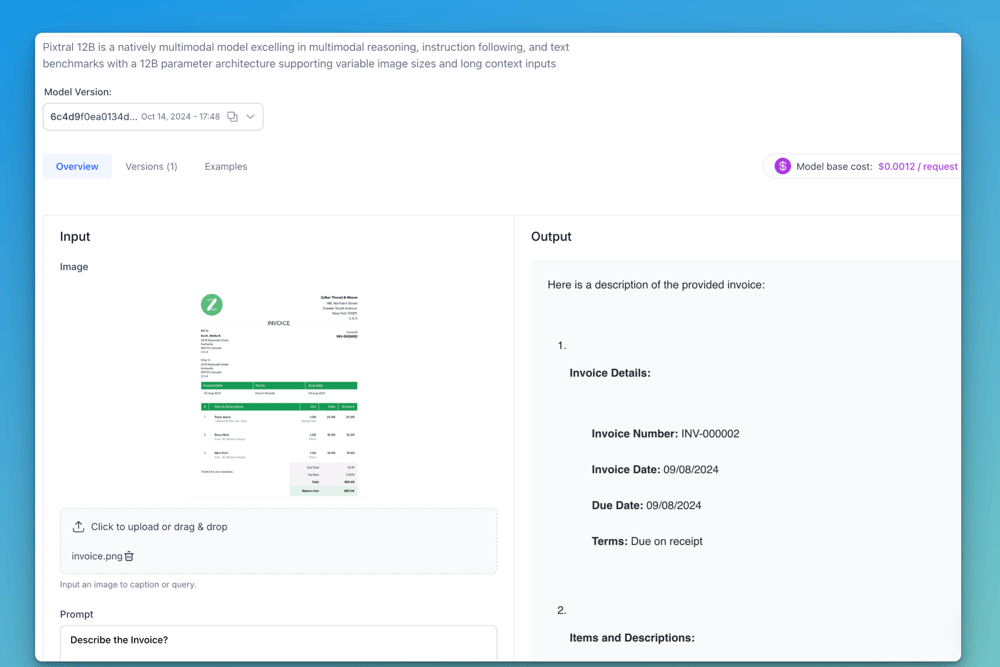
In the recent release, we have introduced the new Clarifai Control Center, the unified dashboard, a single pane of glass to monitor everything happening within your account on the platform. It serves as the sole source of truth for various information dimensions, enabling you to make informed decisions based on data from multiple sources.
We have now added a new tab to display users financial data. It displays the costs of your billed operations, making it easier to track and manage expenses on the platform. Read more about Control Center here.
The Clarifai Data Utils library provides a variety of tools for handling multimedia data. With the Data Utils library and Python SDK, you can load text files (PDF, DOC, etc.), transform, chunk, and upload them directly to the Clarifai Platform.
The new Data Ingestion Pipeline provides easy-to-use pipelines to load data from files and ingest it into the Clarifai platform. These new pipelines streamline data ingestion into the platform.
Check out this example repository to learn how to use the pre-built foundational pipelines and to create custom pipelines for file partitioning, chunk cleaning, and metadata extraction.
clarifai in the application main. Now, accessing models or workflows owned by clarifai in the application main can only be done with a PAT tied to your account.The OCR (Optical Character Recognition) Evaluation Module is a powerful tool designed to assess the performance of OCR workflows in Clarifai. It enables users to measure the accuracy and effectiveness of their OCR workflows by comparing model outputs against known ground truth data.
Key features of the evaluation module include:
Learn more about the Module here.
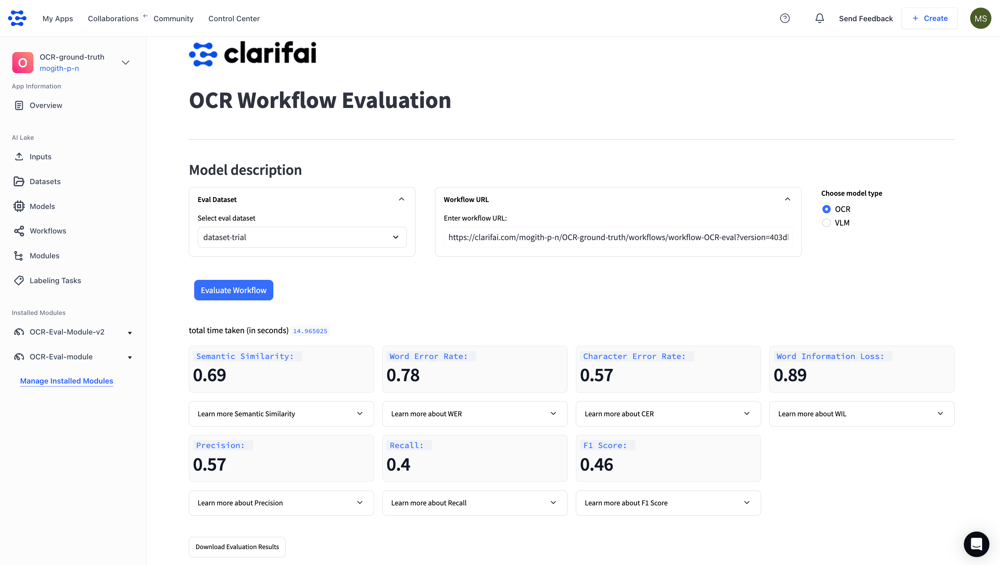
A big shift in US AI policy appears to be on the horizon. Continue reading “Trump’s AI Agenda: Major Policy Shifts Ahead”
Here’s a real-world case study in how AI can dramatically accelerate business planning—and potentially save you thousands of dollars in the process. Continue reading “How We Used ChatGPT to Turn Two Hours of Planning Into a Month of Progress”
Twenty years of search habits might be about to change forever. Join Mike and Paul as they explore the latest search features from ChatGPT that could reshape how we find information online. They’ll break down McKinsey’s eye-opening report on AI’s trillion-dollar economic impact, and explore Suleyman’s provocative vision of AI as an emerging “digital species.” Plus, buckle up for a rapid-fire round covering everything from autonomous AI agent updates to Apple’s latest AI moves.
Listen or watch below—and see below for show notes and the transcript.
00:04:17 — ChatGPT Search is Here
00:21:27 — McKinsey Report
00:37:02 — Microsoft AI CEO Interview
00:47:06 — Sam Altman’s Latest Interview
00:54:59 — More AI Agent News
00:57:42 — A16z + Microsoft on AI Regulation
01:01:06 — OpenAI vs. Microsoft
01:03:56 — Microsoft AI Coding
01:05:41 — Apple Intelligence Rollout
01:08:33 — Runway CEO Statement on AI Companies
ChatGPT Search is Here
ChatGPT can now search the web far better than before, thanks to this week’s major update of the tool.
According to OpenAI’s announcement:
“ChatGPT can now search the web in a much better way than before. You can get fast, timely answers with links to relevant web sources, which you would have previously needed to go to a search engine for. This blends the benefits of a natural language interface with the value of up-to-date sports scores, news, stock quotes, and more.”
The new search integration has several key features, including natural language queries that trigger web searches as needed. It offers direct links to source materials and citations, as well as specialized displays for categories such as weather, stocks, sports, news, and maps.
Users can also access real-time information on current events, scores, and market data, with integration from major news publishers like AP, Reuters, and the Financial Times.
The rollout of ChatGPT search is going to be tiered based on your subscription type. ChatGPT Plus and Team users have immediate access now. In coming weeks, Enterprise and Education users will get access. In the coming months, free users will get access.
McKinsey’s Report Details AI Impacts on the Global Economy
McKinsey Global Institute recently released “The next big arenas of competition,” a 213-page report that explores 18 future “arenas” that could reshape the global economy and generate a combined $29 trillion to $48 trillion in revenues by 2040.
McKinsey Global Institute defines “arenas” as industries that transform the business landscape and have two core characteristics: high growth and dynamism.
One of these arenas is AI Software and Services—and the implications of McKinsey’s data on growth in this area are pretty staggering.
McKinsey defines AI as “a machine’s ability to perform cognitive functions that we usually associate with humans.” This includes traditional machine learning capabilities that predict outcomes and behaviors, as well as generative AI applications. However, they exclude hardware, such as Nvidia chips, from this arena.
McKinsey reports a surge in investor interest in advanced AI, particularly generative AI, with equity investments rising from $5 billion in 2022 to $36 billion in 2023.
The growth of analytical and generative AI is expected to significantly enhance business productivity, projecting industry revenues to reach between $1.5 trillion in a lower range of scenarios and $4.6 trillion in a higher range of scenarios by 2040, with a compound annual growth rate of 17 to 25 percent.
McKinsey’s prediction proposes an estimated range of total economic potential of $15.5 trillion to $22.9 trillion annually by 2040.
Microsoft AI CEO Interview
The popular Masters of Scale podcast just dropped a new interview with AI leader Mustafa Suleyman that we think is worth a listen.
Masters of Scale is a podcast primarily hosted by Reid Hoffman, the co-founder of LinkedIn and Inflection, and former OpenAI board member and current Microsoft board member. Suleyman is the former co-founder and CEO of Inflection, an AI company that got acquihired by Microsoft.
Now, he is CEO of Microsoft AI, which means he is not only on the bleeding edge of AI development, but also a key player in both Microsoft’s AI strategy and the company’s relationship with OpenAI.
Today’s episode is brought to you by our AI for Agencies Summit, a virtual event taking place from 12pm – 5pm ET on Wednesday, November 20. The AI for Agencies Summit is designed for marketing agency practitioners and leaders who are ready to reinvent what’s possible in their business and embrace smarter technologies to accelerate transformation and value creation.
You can get tickets by going to www.aiforagencies.com and clicking “Register Now.” When you do, use the code POD100 for $100 off your ticket.
Disclaimer: This transcription was written by AI, thanks to Descript, and has not been edited for content.
[00:00:00] Paul Roetzer: We are in the very, very early innings of this, probably the top of the first inning of like adoption and transformation from AI, but it is. It’s going to be massive. And so studies like this from McKinsey help put in context how massive, but it’s all a guessing game. It’s big though.
[00:00:27] Paul Roetzer: Welcome to the Artificial Intelligence Show, the podcast that helps your business grow smarter by making AI approachable and actionable. My name is Paul Roetzer. I’m the founder and CEO of Marketing AI Institute, and I’m your host. Each week, I’m joined by my co host. and Marketing AI Institute Chief Content Officer Mike Kaput as we break down all the AI news that matters and give you insights and perspectives that you can use to advance your company and your career. Join us as we accelerate AI literacy for all.
[00:00:55] Paul Roetzer: Welcome to episode 122 of the Artificial Intelligence Show. [00:01:00] I am your host, Paul Roetzer, along with my co host, Mike Kaput. We are recording this November 4th. 10:20 a. m. Eastern time. I have a feeling that might be relevant this week. I don’t know. Like there’s just, there’s so much happening. We talked so much about like all the model updates and releases on the last episode, I think it was, and, it seems like we’re probably going to get some more stuff before the holidays here.
[00:01:22] Paul Roetzer: So yeah, these dates are, becoming important and we are now, what about 26 days away from the two year anniversary of ChatGPT, Mike? So that’ll be interesting to see what OpenAI does with. With that, I’m expecting search wasn’t the final thing we’re going to get leading into the two year anniversary. So, lots to talk about today.
[00:01:42] Paul Roetzer: We’ve got ChatGPT search, as I alluded to. We’ve got a new report from McKinsey we’re going to dive into. We’ve got some interesting interviews with Mustafa Suleyman and Sam Altman, and then a whole bunch of other updates. So, we’re going to get into that, but first this episode is brought to us by our AI for Agencies Summit.[00:02:00]
[00:02:00] Paul Roetzer: This is our second annual virtual event. It’s taking place from 12 p. m. to 5 p. m. Eastern Time on Wednesday, November 20th, so that is coming up fast. I should probably start building my opening keynote for that one.
[00:02:13] Paul Roetzer: I have notes on it. Like, I generally have a direction, but I’m unsure because I’m talking about AI agents and like the future of agencies and I’m not settled yet on what exactly I think is going to happen with agencies, but I gotta find some mind space in the next week or two here to really sit back and think about that one.
[00:02:32] Paul Roetzer: So AI for Agency Summit is designed for marketing agency practitioners and leaders who are ready to reinvent what’s possible in their business and embrace smarter technologies to accelerate transformation and value creation. Important note here for the brand side. If you are a business leader, marketing leader, whatever your role is, if you touch the marketing agency relationship, you’rgoing tona want agencies moving into 2025 that have, are [00:03:00] actively trying to solve for this stuff.
[00:03:02] Paul Roetzer: So, if you have some agencies that are core to your partnerships, maybe pass this along to them to take a look at, could, could be very valuable for them. And valuable for you moving into next year. So during the event, you’ll join hundreds of other forward thinking agency professionals to consider ways to recruit AI savvy talent and upskill your team, explore how AI tools can boost creativity, productivity, and operations, hear insider stories from agencies that are piloting and scaling AI successfully, and understand how AI impacts your pricing models and service offerings.
[00:03:32] Paul Roetzer: we’re going to have, I think there’s six presentations from agencies that are actively doing this. We’re going to have kind of case studies. They’re going to share inside information about what they’re doing and seeing across different areas of AI integration in their companies. You can go to AI four agencies.
[00:03:47] Paul Roetzer: That’s FOR ai four agencies.com. Click the register now button. use promo code POD 100, that’s POD 100 for 100 off your ticket. Again, check out ai four [00:04:00] agencies.com. There is going to be an on-demand option, so if you can’t make it on November 20th, you’re in a different time zone and can’t be there live.
[00:04:06] Paul Roetzer: No worries. You can, get the on-demand option. So, yeah, AI4Agencies. com, check that out, and Mike, let’s get into our main topics.
[00:04:17] Mike Kaput: All right, Paul, like you alluded to, first up this week is ChatGPT can now search the web far better than before, thanks to this week’s major update with us getting ChatGPT search.
[00:04:31] Mike Kaput: So OpenAI wrote in an announcement this past week, ChatGPT can now search the web in a much better way than before. You can get fast, timely answers with links to relevant web sources, which you would have previously needed to go to a search engine for. This blends the benefits of a natural language interface with the value of up to date sports scores, news, stock quotes, and more.
[00:04:56] Mike Kaput: Some key features of this new search feature include [00:05:00] natural language queries that automatically trigger web searches when needed, direct links to source material and citations, and Specialized displays for categories like weather, stocks, sports news, and maps. Real time information access for current events, scores, and market data.
[00:05:19] Mike Kaput: And integration with major news publishers including AP, Reuters, Financial Times, and others. The rollout of ChatGPT Search is going to be tiered based on your subscription type. ChatGPT Plus and Team users have immediate access right now. In the coming weeks, enterprise and education users will get access to this.
[00:05:42] Mike Kaput: But if you’re a free user, you’re going to have to wait for months. In the coming months, eventually, you will get access to this feature. So, Paul. I want to talk a lot about what this means for Google, but first, can you just share your initial impressions [00:06:00] of search within ChatGPT now? Like how useful do you find these new capabilities?
[00:06:05] Paul Roetzer: Yeah, my, my impression, is that they’re, they’re going to change the way you use ChatGPT honestly. So I think the user experience is really solid, when you choose, you can choose a search. So if you haven’t tried it yet, you can actually click search. Or, ChatGPT just intuits that you’re conducting something where search would be valuable and it automatically will use search.
[00:06:28] Paul Roetzer: So I personally tested on, like, planning a trip, to Florida, you know, this fall. and so I just said, like, planning a trip to Florida, specifically, it’s the city. And, It immediately gave a very logical structure, it pulled in pictures, it had a getting there header, a where to stay, a must see attractions, activities, dining, weather, tips, so all this, like, all the structure that we’re used to with ChatGPT where it automatically kind of curates these outlines, but now it had inline citations, I tried one I [00:07:00] think this was like Friday morning or something or Saturday.
[00:07:02] Paul Roetzer: Give me a summary of the Cavs Cleveland Cavaliers game from the last, from last night. And it pulled in Reuters and Talk Sport articles and summarized it, but then linked right to those articles. I tried one just out of curiosity. I said, like, when was the last time the Cleveland Cavaliers started 6 0?
[00:07:16] Paul Roetzer: And it pulled in Wikipedia, NBA, and then it actually pulled in real time stories from Reuters. And the New York Post from the previous night’s games. I tried one like, wire tech stock down, tech stocks down, so I was just like experimenting with it. And my overall take is, I really enjoy the no ad experience.
[00:07:35] Paul Roetzer: I went over to Perplexity and I tried some of those same searches again, and honestly, like, Perplexity started to feel a bit obsolete to me. More from the user interface. And it feels very cluttered all of a sudden, which, I mean, if you’re used to Google, Google’s cluttered as, as is, so Perplexity didn’t seem like that big of a difference, I guess.
[00:07:57] Paul Roetzer: But when you have this totally clean interface [00:08:00] with, with no ads or anything, Perplexity just felt different to me all of a sudden, and not as modern and clean. And that’s before Perplexity infuses ads, which we know they’re working on.
[00:08:13] Paul Roetzer: that was kind of like an initial reaction. but to go back to, you know, you had mentioned kind of like the bigger picture here about like Google and search.
[00:08:22] Paul Roetzer: I actually was like, I think you and I talked about this in March 2024. I didn’t go back and look for the episode where we would have touched on it. But Sam Altman did an interview with Lex Friedman. It was episode 419 of Lex Friedman’s podcast. We’ll put the link in the show notes. And I remembered, like, as soon as I saw this last week, I was like, wait, what was that Lex interview where he talked about this?
[00:08:43] Paul Roetzer: I remember noting it at the time. So, anyway, I went back to the transcript, and again, we’ll put the link in, and Lex asked Sam specifically about search in March 2024. So, I think it’s important for people to realize, like, this isn’t a new thing. OpenAI has been thinking about search and how they would handle it for [00:09:00] years, and Sam has openly talked about it for a while.
[00:09:03] Paul Roetzer: So, In that interview, Lech said, like, how are people going to access information? You know, people show up to GPT as a starting point. So is OpenAI really going to take on this thing that Google started 20 years ago? And Sam said, I find that boring. I mean, if the question is, will we build a better search engine than Google, then sure, we should go, people should use the better product.
[00:09:25] Paul Roetzer: But I think that would be, to understate what this can be. So again, kind of quoting him, Google shows you 10 blue links, well 13 ads and then 10 blue links, kind of taking a shot at Google. And that’s one way to find information. But the thing that’s exciting to me is not that we could go build a better copy of Google search, but that maybe there’s some better way to help people find and act and synthesize information.
[00:09:48] Paul Roetzer: Actually, I think ChatGPT is that for some use cases and hopefully we’ll make it. Be like that for a lot more use cases. he went on to say, but I don’t think it’s that interesting to say, how do we do a better job of [00:10:00] giving you 10 ranked webpages to look at than Google does? Maybe it’s really interesting to go say, how do we help you get the answer, the information you need?
[00:10:08] Paul Roetzer: How can we help create that? In some cases, Synthes synthesize that in others or point you to it and yet others, but a lot of people have tried to just make a better search engine than Google and it is a hard technical problem. It is a hard branding problem. It is a hard ecosystem problem. I don’t think the world needs another copy of Google.
[00:10:26] Paul Roetzer: But then he does talk about integrating the ChatGPT, and he says that’s cooler. Like if we could build search right into it, as you might guess, he said, we are interested in how to do that. Well, the intersection of large language models plus search, I don’t think anyone has cracked the code yet. I would love to go do that.
[00:10:43] Paul Roetzer: And then Lex said, well, what about ads? Have you thought about how to monetize it? And he said, and this is important, this kind of gives a preview of how they may not go the direction Perplexity is going to go and the way Google is built on, says, I kind of hate ads as an aesthetic choice. I think ads needed to happen on [00:11:00] the internet for a bunch of reasons to get it going, but it’s a momentary industry.
[00:11:04] Paul Roetzer: The world is richer now. I like that people pay for ChatGPT and know the answers they’re getting are not influenced by advertisers. I’m sure there’s an ad unit that makes sense for language models. And I’m sure there’s a way to participate in a transaction stream in an unbiased way, but basically he’s just not a fan of ads at all.
[00:11:23] Paul Roetzer: And he really wants to build their business model based on subscriptions instead. And then the other, you know, a couple points of context here in, so it was in June, I think of this year, June or July, they introduced SearchGPT prototype. So again, we’ve known this was coming, how exactly they executed it wasn’t clear.
[00:11:44] Paul Roetzer: Take care. But even back then, they showed how they were thinking about it, said we’re testing SearchGPT, a prototype with new search features designed to combine the strength of AI models with information from the web to give you fast and timely answers. So, [00:12:00] and then, like, one of the key reasons, so getting into, like, why does search matter?
[00:12:04] Paul Roetzer: like, why is this important? You have to remember that, like, large language models have a cutoff date on their knowledge base. So GPT 4. 0’s knowledge cutoff, like, when it was trained, is October 2023. So the data in 4. 0, when it’s not connected to the internet, it doesn’t know anything about the world from the last 13 months, basically.
[00:12:26] Paul Roetzer: And so it was pre trained on the data up to October 2023. So What the benefits of search in the LLM is access to real time information in theory and so far research has proved this out, a reduction of hallucinations. So you can have greater accuracy and reliability if you can vet the outputs with real time data and search information.
[00:12:50] Paul Roetzer: it improves the potential for personalization and localization of results. So, you know, a lot of times that’s not being infused into these LLMs where, you know, Mike and I may have [00:13:00] the same experience even though we’re different people and maybe in different locales. And it also enables the verticalization of, information of these LLMs to specific industries or domains.
[00:13:11] Paul Roetzer: So imagine in like law, if you don’t have the latest legal cases or in healthcare, if you don’t have the latest research or reports or in sports, finance, stocks, all of these verticals require up to date information that these models don’t have inherently. They’re not, they’re not traditionally a search engine like Google, where you’re used to getting the most updated information.
[00:13:32] Paul Roetzer: And then my final thought here is just like the concerns or weaknesses, this isn’t all like sunshine and rainbows, like there’s, this does open up, a greater potential for misinformation, you know, once people figure out how to kind of trick these systems, the information they get to be indexed and found, can become an issue.
[00:13:52] Paul Roetzer: So we don’t know how reliable they are. There was a tweet I saw from Emily Bender, who’s a, University of Washington [00:14:00] professor of linguistics and somebody I follow pretty closely on Twitter. And she was saying, like, one of the biggest challenges to this is people come to believe these things are accurate.
[00:14:10] Paul Roetzer: So one of the beauties of what Google 20 years. is generally, you know, get really good at presenting you accurate information. And you can kind of trust it and then verify sources and things like that. But she was saying, we don’t know how reliable these things are, how much they hallucinate. And the problem is that, and this is to quote her, a system that is right 95 percent of the time is arguably more dangerous than one that is right 50 percent of the time.
[00:14:38] Paul Roetzer: People will be more likely to trust the output and likely less able to fact check the 5%. So if people start assuming that search and ChatGPT is right all the time, and they don’t even click on the links, and maybe it’s error rate is only 5 or 10%, that’s a significant error rate. And that can affect, you know, how people use the system and how they trust it.
[00:14:59] Paul Roetzer: Bias and [00:15:00] manipulation become a thing. Again, think about search and how there’s the shadow industry of basically just figuring out the algorithms and trying to stay ahead of it. So you already have people trying to figure out how to game these algorithms. It sounds like they’re largely using Bing’s index, not their own index of the web.
[00:15:16] Paul Roetzer: Yep. So now you have SEOs, you know, that are probably racing to figure out how to game the Bing algorithms to get injected into the search results. Yep. creates an echo chamber because they’re going to license, like a lot of the stuff that’s going to get surfaced is going to be licensed from specific sources like a Reuters who are willing to do a deal.
[00:15:34] Paul Roetzer: And let’s say politically or religiously or whatever, you know, you want to throw in there, they do deals that heavily lean toward one side or the other. Now all of a sudden, or geographically, government wise, now all of a sudden they lean, the results lean in those directions because that’s who they did licensing deals with.
[00:15:53] Paul Roetzer: so again, it’s, there’s all kinds of challenges around this as well. So on the surface, awesome tech, great user [00:16:00] experience. It’s clean. I like it. There’s a bunch of other macro level stuff going on here though.
[00:16:06] Mike Kaput: And just as a very small example of what this could mean for marketers, like I just typed in, what are the top AI tools today?
[00:16:14] Mike Kaput: And it says, as of November, 2024, several AI tools gained prominence, blah, blah, blah, lists out 10 different tools from very clear sources, none of which I will probably ever click through to because like, seriously, like I have the name of the tools I’m then going to go search. So like, this is the exact type of top of the funnel query typically.
[00:16:35] Mike Kaput: You might be targeting to really get someone’s eyes on your website. Obviously we’ve talked about for over a year now that kind of strategy is going the way of the dodo, but like this is very clearly giving me the answer I have and enough information to ask follow ups with links that I’m probably not going to be clicking through to nearly as often.
[00:16:54] Paul Roetzer: Yeah. Yeah. And it, you know, it’s kind of like the step toward the one, like with [00:17:00] the one answer that you get from voice. So again, like if I say advanced voice, so let’s say advanced voice, I don’t know if it has search built in or not. I would guess maybe it does. I haven’t tried that yet, but let’s say that you become reliant on voice interface and like, you know, six, 12, 18 months from now, you’re basically just either talking to Apple intelligence or advanced voice or Google assistant, whatever, when you need something.
[00:17:23] Paul Roetzer: Well, now your world is living within whatever bubble that company’s algorithm is deciding the right answer is to things. Right. Whether it’s what you’re going to buy or what you’re going to believe or, you know, just real time information. You’ve now, like the beauty of Google’s link strategy is a diversity of places to click through to form your own opinions and points of views and beliefs.
[00:17:49] Paul Roetzer: If we become too reliant on a single interface and assume that whatever it presents to us is right, and in the case of voice, you’re only getting one, [00:18:00] then you start to run the risk that we’re, we’re like really forming people’s beliefs and opinions. In, in the light of whoever’s controlling the algorithms or the models that present that information, which again, you could get into all kinds of ramifications around that, like who’s building the models, what government is supporting those models, things like that.
[00:18:21] Paul Roetzer: So it’s infinitely fascinating, like there’s so many threads you could pull from a simple, and this is, again, part of our goal with this show is, yeah, chat should be searched awesome. But, like, let’s step back for a minute and think about, like, the bigger implications here and the questions that it opens up that we don’t necessarily have the answers to, but it’s, it’s good to not just take the technology on its surface and assume it’s, you know, great.
[00:18:44] Paul Roetzer: We gotta, like, think about the other angles here.
[00:18:46] Mike Kaput: So, to kind of wrap this topic up, like, How bad is this for Google? Like, not only does this come out, but in the past week we got reports that Meta is trying to put its own AI search engine into Meta AI [00:19:00] to explicitly reduce reliance on Google and Microsoft.
[00:19:04] Mike Kaput: Perplexity, despite some legal challenges, obviously, is kind of full steam ahead as an alternate search option, though they may get hurt even more by this. They’re going to start charging for ads. Like, how worried are they? Am If I’m the Google search team right now?
[00:19:20] Paul Roetzer: Yeah, I don’t know. It’s a, it’s a difficult question.
[00:19:23] Paul Roetzer: we have, you know, Bing has certainly seen improvements. So I’m just, like, the current From what I can see on StatCounter, Google owns 90 percent of the search market, Bing’s around 4%. but Bing has gained ground. You know, I think we talk a lot about perplexity because we all live, and a lot of our listeners live in sort of this AI bubble, and it’s perplexity seems like it’s much larger than it probably really is.
[00:19:49] Paul Roetzer: Just because we talk about it a lot, but it doesn’t even show up in like the top six search engines, seven search engines, things like that. so their, their market share is, I [00:20:00] think, well below a half a percentage point. It’s, you know, now it’s growing. Yeah. and I don’t know. Like, I think part of this is an interface question.
[00:20:09] Paul Roetzer: Like, what is the interface of the future? Will two, three, four years from now, are, are we largely going to rely on, voice? Are we going to just live within our language models? And they become the primary interface to everything and it’s connected to everything. In which case, then, you know, you could see this being a major threat.
[00:20:27] Paul Roetzer: So I would imagine that the teams at Google are, are kind of playing this out as like, what are the possibilities here? What, you know, what’s the impact on our ad revenue? you know, how does this change if adoption of ChatGPT continues to skyrocket? And I don’t know what they can, what their market share is in language models, but I mean, you’re, the study we did where we asked our users, like 1800 people on our state of marketing, I report this year, I think it was like 55 percent said they had ChatGPT licenses at work.
[00:20:56] Paul Roetzer: And that was by far the number one when we compared [00:21:00] to, Copilot and Gemini. Now that may flip in the enterprise market, like the big enterprises, maybe Copilot’s higher adoption. But yeah, I think there’s just too many unknowns right now about where this goes. Where search goes, where interfaces go.
[00:21:15] Paul Roetzer: Where language model adoption goes, and that’ll kind of dictate this, but I’m sure people at Google are paying attention and, you know, playing this out of possibility, possible paths that this could go.
[00:21:27] Mike Kaput: Alright, so our next big topic this week. The McKinsey Global Institute recently released a report called, quote, The Next Big Arenas of Competition.
[00:21:38] Mike Kaput: This is a whopping 213 page report that explores 18 what they call arenas. These are future areas that could reshape the global economy. And generate a staggering amount of revenues by 2040. Anywhere from 29 trillion to 48 trillion more in revenue combined by 2040 from these [00:22:00] 18 future arenas. They basically define arenas as industries that transform the business landscape and have two core characteristics.
[00:22:08] Mike Kaput: High growth and dynamism. One of these arenas is particularly important to us and our listeners. It is AI software and services. And the implications of some of McKinsey’s data on the growth in this area are pretty interesting. So for the purposes of Their report, McKinsey, defines AI as, quote, a machine’s ability to perform cognitive functions that we usually associate with humans, and they kind of include in that both traditional machine learning capabilities, where we’re using AI to predict outcomes and behaviors, as well as generative AI applications.
[00:22:45] Mike Kaput: Notably, though, they exclude from this kind of arena, this categorization, they exclude hardware, like NVIDIA chips. So, with all that in mind, here’s kind of what McKinsey reports about this arena. [00:23:00] First, investors are flocking to companies developing advanced AI, particularly Gen AI. Equity investments in that technology jumped from 5 billion in 2022 to 36 billion in 2023.
[00:23:14] Mike Kaput: Developments in analytical AI and Gen AI are poised to drive the industry’s growth by improving business and worker productivity. In certain modeled scenarios, the arena’s revenues grow from 85 billion in 2022 to 1.5 trillion in a lower range of scenarios in 2040, and that can go up to as high as 4.6 trillion in some of the more optimistic scenarios.
[00:23:39] Mike Kaput: That’s a compound annual growth rate of anywhere from 17 to 25%. Now, past McKinsey research also kind of analyzed more than 500 uses for analytical and gen AI and estimated their potential economic impact. One of them, analytical AI, such as machine learning and deep learning, could amount to an [00:24:00] estimated 9.
[00:24:01] Mike Kaput: 4 to 15 trillion in revenues by 2040. Gen AI could produce 2. 6 to 4. 4 trillion of economic impact through enterprise use cases. McKinsey highlights that three quarters of that value would be in only four areas. Customer operations is number one. Number two, marketing and sales. Number three, software engineering.
[00:24:22] Mike Kaput: And lastly, R& D. Now, All these enterprise use cases do not even account for all the productivity gains of individual knowledge workers who are automating aspects of their occupations. Incorporating all these cases of individual worker productivity enabled by GenAIn addition to the enterprise use cases, could unlock a total of 6.
[00:24:45] Mike Kaput: 1 trillion to 7. 9 trillion of value annually. So if you add all this together. These components together yield an estimated range of total economic potential from AI software and services of 15. [00:25:00] 5 to 22. 9 trillion annually by 2040. Now, that’s a lot of numbers. Some of those are, like, eye watering. I don’t even believe them half the time looking at them.
[00:25:14] Mike Kaput: Obviously, Paul, we cannot fully predict this economic impact of AI, like, 15 years from now. Bye. As you’ve noted in some of your posts and writing from the past week, it is, it seems, safe to assume, we are looking at trillions of dollars being invested in and produced by AI in the coming decade. So that certainly seems to me, like reading all this, that despite all the hype in Gen AI and even some of the disillusionment that’s already creeping into the market, it sounds like we’re just still so, so early.
[00:25:48] Paul Roetzer: Yeah, and it is like the numbers are confusing and I’m listening to you, say them now. It’s like hard to wrap your brain around. I read like the key findings like five times just to try and comprehend what they were [00:26:00] saying. Like, cause they, it’s weird. They mix AI revenue and economic impact and then they blend like some new data with a report that they did, I think earlier this year that had to do with, you Where they analyzed 500 AI use cases and I was struggling to like interpret what was the new data versus what was the previous thing they were referencing.
[00:26:20] Paul Roetzer: But I think like to unpack this for people. As you explain, Mike, the key takeaway here is it’s huge. It’s trillions. And we’re at we’re just at the start. to try and put it in context, I went and pulled the latest, gross domestic product numbers, GDP numbers for the United States. So the GDP October 30th, 2024 was 29.
[00:26:44] Paul Roetzer: 4 trillion. So again, to put trillions into context, it’s huge. The GDP at the moment is 29. 4 trillion, and it’s up roughly 5 percent from the previous year. Now, the GDP is the total value of all goods and [00:27:00] services that are produced, in this case, in the United States. within a specific period, which in this case is, you know, an annual basis.
[00:27:07] Paul Roetzer: it is a key indicator of economic health. And it’s also when you look to the future and you try and say, well, what’s the impact of AI going to be? It is one of the key things you would look at and say, well, what’s the impact going to be on GDP? I’ve had this conversation with a few people who are skeptical of AI having like an outsized impact because on average, you know, the GDP is going to grow Maybe two and a half to three percent in a given year.
[00:27:35] Paul Roetzer: Now we’ve had a jump in the previous 12 months, but it’s pretty common for it to stay in that range. And so if you have someone show up and say, well, it could be 10%, like a year, or in the case of Leopold Aschenbrenner and his situational awareness, he’s talking about like, 10, 20, 30 percent per year.
[00:27:55] Paul Roetzer: Yeah. And an annual rate and like compounding over time. And [00:28:00] a lot of people just say, there’s just no way. There’s no historical context to that, that it’s impossible. And so the way that AI could impact GDP, so the economic impact, we’ll come back to the revenue, is increased productivity. So we just produce more.
[00:28:16] Paul Roetzer: We can, we output more services. We can output more tangible products. Because we have more time to make more things, basically, because AI is assisting us. So we become more efficient, the efficiency enables us to do more productivity. The other areas, innovation and new product development. The AI is going to help us identify new markets, new product ideas.
[00:28:36] Paul Roetzer: It’s going to help us drive innovation that creates growth. as the AI does more and more of people’s knowledge work jobs, You have the potential to reallocate the labor force. So we have this kind of finite amount of people that can do work in the United States. I don’t know how many people we have in the U.
[00:28:55] Paul Roetzer: S. It’s like 300 million or something like 70. A little over 300. And there’s about [00:29:00] 136 million full time jobs. So imagine if AI 10 years from now can do 20 to 30 percent of the cognitive labor of those hundred million people that do knowledge work jobs. And you can redistribute those people to do other things.
[00:29:17] Paul Roetzer: So now you have the existing GDP from what we’re already doing today. You layer AI’s ability to do another 20, 30, 40 percent of that work. And then you redistribute that 20, 30 percent of work to other things. You’re increasing the output. So a reallocation of labor into new roles, new markets, new, new businesses.
[00:29:39] Paul Roetzer: you have industry, industry and sector growth. AI enables growth of different industries. They can produce more. And then you potentially have a boost in consumer demand, which drives the growth of outputs because you can personalize experiences and products to them, right? And so these are all like fundamental ways, very tangible ways.
[00:29:58] Paul Roetzer: that you can start to make an argument that AI [00:30:00] will have a massive economic impact on GDP. Now, I mentioned Leopold, like, let’s go back real quick to his notes and we’ll put this, this was from June of 2024, his situational awareness papers. We’ll put the link in the show notes again, but a few key excerpts here.
[00:30:16] Paul Roetzer: He says, As we, and this is one of the things, like, I don’t think McKinsey’s taking into account AGI and superintelligence. And again, this is one of the big flaws I keep saying we see from researchers and economists is like, they’re not considering the future models. They’re considering what we know to be true about basically current models.
[00:30:33] Paul Roetzer: But in Leopold’s papers, he’s saying we’re going to get to superintelligence and like when we do, we’re going to see massive economic growth. So he says we could see economic growth rates of 30 percent per year beyond, quite possibly doubling a year, each year. This way, and then he does give a caution, this may well be delayed by societal frictions which I 100 percent believe to be true.
[00:30:56] Paul Roetzer: I think it’s a large part of why we’re not seeing the [00:31:00] massive economic impact right now. And he calls out specifically, arcane regulation might ensure lawyers and doctors still need to be, human, even if an AI system were better at those jobs. Surely, Sam will be thrown into the gears of rapidly expanding robo factories as society resists the pace of change.
[00:31:17] Paul Roetzer: And perhaps we’ll want to retain human nannies, all which could slow GDP statistics. Now, a really practical recent example here is, We had the East Coast shut down on a strike, because of the shipping. And it was all over, well, at least in large part, the East Coast. over the future possibility of automating those ports, which is already being done in other countries.
[00:31:44] Paul Roetzer: And so this is, could we ship more? Could we receive more if we were automating the ports? Absolutely. Will we be allowed to automate the ports due to whatever regulations or union or whatever it is that slows that down? That [00:32:00] will be a barrier to GDP growth, even though the AI could do it. And so that’s an example where, and I’m not saying right or wrong, either case, I’m just using it as an example of there’s going to be friction.
[00:32:12] Paul Roetzer: There will be resistance. And then when you get into the AI revenue, Leopold made the point. Companies will make large AI investments if they expect economic returns to justify it. He gets into trying to project out like OpenAI and Microsoft’s revenue. He said one estimate puts Microsoft at 5 billion in incremental AI revenue already.
[00:32:31] Paul Roetzer: He said, every 10x scale up in AI investment seems to yield the necessary return. So we’re already seeing this, like the reason they’re putting in 500 million, a billion, 5 billion, 10, whatever it is, is because their expectation is a return. They’re not doing this just out of like hope that it’s going to work.
[00:32:50] Paul Roetzer: They’re seeing the results. Leopold then says a key milestone for AI revenue that I like to think about is when will a big tech company, Google, Microsoft, Meta. Hit [00:33:00] a hundred billion revenue run rate from AI specifically. these companies have an on order, on the order of 100 billion to 300 billion of revenue today.
[00:33:10] Paul Roetzer: A 100 billion from AI alone would be a huge, represent, a huge opportunity, and a big fraction of their business. And then you could start to extrapolate out massive growth and he’s thinking we might get there by 2026 based on current models. And so he’s just pretty much saying like, I like the example Leopold gives about Microsoft.
[00:33:30] Paul Roetzer: He said it may seem like a stretch to like be talking about these crazy numbers, which leads us back to the McKinsey study of like trillions. But he said like how unrealistic really is it if Microsoft has 350 million paid subscribers to Microsoft Office? And as we think about these reasoning engines and these more advanced models, one to two years out, that are basically doing the work of people who are making hundreds of thousand dollars a year, would you as a company be willing to pay a hundred bucks a month for that model?
[00:33:58] Paul Roetzer: Hell yeah. Like, yeah, I mean, [00:34:00] so I haven’t, I haven’t talked in depth about this yet. We will come back to this, but I built a co CEO GPT. Like I built a strategic partner for myself to run my business. I’m telling you right now, I’d pay a hundred bucks a month to have access to this one custom GPT I built.
[00:34:15] Paul Roetzer: Like it is wild how much value every day I get from this thing as a strategic partner for me to run my companies and like kind of build plans and envision the future. So I think once these tech companies get better at explaining the value of their products in a true value oriented form, not this assumption that I should only pay 20 bucks a month, but what is the value I’m getting out of this as either.
[00:34:41] Paul Roetzer: A replacement or an augmentation to a strategic consultant or advisor, replacement or augmentation to a full time employee that’s making 150, 000, 200, 000 a year, a hundred bucks a month is nothing. Like to be able to get that value exchange. And so once these companies get better at demonstrating that and then get way, way better at [00:35:00] onboarding AI literacy, like training and education internally so that the people buying the software are from day one getting value from it, that’s where they’re all missing the boat right now.
[00:35:09] Paul Roetzer: But as soon as you do that, we are, we are talking about hundreds of billions and trillions of revenue coming from the companies selling these. But then that trickles down to all the other verticals in industry. So I mean, at the end of the day, the thing, as you alluded to, like it’s impossible to project this accurately 15 years out, it’s possible to project this accurately five years out.
[00:35:30] Paul Roetzer: Like I don’t even try and do it five years out, like two, two to three, maybe. but. It’s going to have a massive impact, and the thing we keep coming back to, and if you’re a listener to this show, a defaulting to taking action every day, saying, how do I get better at this? How do I learn more about AI?
[00:35:53] Paul Roetzer: How do I infuse it more into what I’m doing? How do I help my company move forward? The people who take action [00:36:00] and accelerate their literacy and capabilities have the greatest chance of thriving as we move forward, and the same holds true for businesses. We are, we are in the very, very early innings of this, probably the top of the first inning to use a baseball analogy of like adoption and transformation from AI, but it is It is going to be massive, and so McKinsey studies, like studies like this from McKinsey help put in context how massive, but it’s all a guessing game.
[00:36:28] Paul Roetzer: It’s big though.
[00:36:30] Mike Kaput: Yeah, and we talk about that a lot, that it’s probably more important to just be directionally correct. Like whether it’s 10 trillion or 100 trillion, honestly, doesn’t really matter to your average business leader. But do we know today that double digit productivity gains are possible across a wide range of knowledge work?
[00:36:45] Mike Kaput: Yes, we do. What would that be like two years from now? It could be triple digit kings. I mean, so that’s the directional trend. Correct. Act accordingly. Yeah. And yes, take, take action. Do [00:37:00] not wait around. Yeah. All right.
[00:37:02] Mike Kaput: Our third big topic this week, the popular podcast Masters of Scale just dropped a new interview with AI leader Mustafa Suleyman that we think is well worth paying attention to.
[00:37:13] Mike Kaput: So Masters of Scale is a podcast primarily hosted by Reid Hoffman, The co founder of LinkedIn, a former OpenAI board member, current Microsoft board member. He is also, with Mustafa, the co founder of the AI company Inflection. So, Mustafa is the former co founder and CEO of that company. That company basically got acquihired by Microsoft.
[00:37:35] Mike Kaput: Now, Mustafa is the CEO of Microsoft AI, which means he’s not only on the bleeding edge of AI development, he’s also a key player in both Microsoft’s AI strategy and something we’ll talk about a little bit more this episode, the company’s relationship with OpenAI. Mustafa is a key player in governing how that works.
[00:37:55] Mike Kaput: So, Paul, you kind of found some things that jumped out here in this [00:38:00] episode that were worth noting. Can you walk us through them?
[00:38:03] Paul Roetzer: Yeah, so I do think it’s worth listening to, and as you mentioned, in the context of Suleyman’s role with Microsoft, it is very instructive of where they’re going. And so as one of the key players, it’s definitely worth paying attention to.
[00:38:19] Paul Roetzer: So I’m going to highlight a few of the key points, but one he talked about up front is recursive self improvement. Because the key thing with this interview is He was kind of time stamping these key elements and when he thought they might be occurring. So recursive self improvement is basically the ability for the models to, to identify their own weaknesses and flaws and hallucinations and fix themselves.
[00:38:41] Paul Roetzer: This sounds awesome on the surface, it also sounds terrifying, because this is one of the things that the Doomer side worries about, is these things develop the ability to recursively self improve, Which could enable, like, a fast takeoff where they [00:39:00] just become really, really smart, really, really fast when they can fix themselves, basically, and find these slots.
[00:39:06] Paul Roetzer: So, he said he sees that coming into view in 2025, that teams will start experimenting with that. We have heard about this from, I think, Claude, they’ve talked a little bit about it. I think we heard a little bit about this with O1 preview from OpenAI, as you develop the ability to do reasoning and chain of thought, part of that process is to identify when the chain of thought breaks, when it’s no longer true, when like a falsehood has been found or misinformation is found within it, to be able to go back and fix that.
[00:39:41] Paul Roetzer: And so that is something to watch. It is, you know, we talk a lot about that Andrej Karpathy. Intro to LLM’s YouTube video from January 2024, recursive self improvement is one of the things he got into. one of the other things I was not surprised to hear them talk about was EQ versus IQ. So, [00:40:00] intelligence, versus, you know, emotional quotient versus, intelligence quotient.
[00:40:05] Paul Roetzer: And, or emotional intelligence. And the key here is this is what he was trying to build an inflection. That’s why I wasn’t surprised at all. And they’re that they’re bringing that to Microsoft. So IQ is what these models are really good at. It’s often how they measure them is their cognitive abilities, intellectual potential, logic, problem solving, math skills, analytical skills, reasoning, language, comprehension.
[00:40:27] Paul Roetzer: Those are all the natural things. But emotional intelligence is more the ability to recognize, understand, manage, and influence one’s own emotions and those of others. Self awareness, self regulation, motivation, empathy, social skills, not what you would traditionally expect from an AI. And so in his case, he said, it turns out that actually tone, style, emotional intelligence of these models.
[00:40:51] Paul Roetzer: the extent to which they will ask you questions, the extent to which they reflect back on the type of language that you might use and so on, that delivery vehicle for the [00:41:00] substance is perhaps more important to the majority of consumers than just an objective regurgitation of Wikipedia, he said. He went on to say, I think that’s going to be one of the key capabilities.
[00:41:08] Paul Roetzer: I think everyone’s starting to wrestle with that now, as we look at this agentic future. is what is the personality of these models and the good and bad. I mean, we talked about, you know, the challenges of when these things become too human like when they have a high emotional intelligence, that if that is not properly protected or contained, then you have humans developing unhealthy, deep relationships with AIs that seem very human like.
[00:41:38] Paul Roetzer: So this is a very slippery slope. I mean, right now we’ve just talked about emotional intelligence and Recursive self improvement. Now, Mustafa talks about these things as inevitabilities and like that they’re actively looking to build this in. Now, keep in mind, Microsoft may do both of those things more ethically than others will, or more ethically than maybe an open source model would [00:42:00] allow third parties to build.
[00:42:02] Paul Roetzer: He got into AI agents. He said, The first step for the agentic future is that your co pilot has to, have the ability to see. This becomes extremely important. We’ve talked multiple times about Microsoft’s efforts with this. We have Project Astra from Gemini, OpenAI is working on this. They want these things to be able to see the screens.
[00:42:21] Paul Roetzer: Claude, we, you know, computer use we talked about. So, he says the AI companion has to be able to see, and having an aide or an assistant or a companion that is really seeing the pixels that you see on the screen in your browser, your desktop, your phone. Microsoft means there’s a new level of sort of awareness about your sensory input that enables the companion to observe what you’re seeing and be able to do things.
[00:42:42] Paul Roetzer: Now, ironically, last week Microsoft’s co pilot Twitter account tweeted, If only your browser could see what I see. Oh wait, co pilot Vision will be able to very soon. So, this is aligned with what Microsoft is saying they’re going to do. [00:43:00] so that was an important one. Memory was another one. We’ve talked a lot about memory being one of the next key on locks.
[00:43:07] Paul Roetzer: So, memory is the ability to go from Conversation to conversation and inflection or ChatGPT or Microsoft Copilot and have the AI remember everything and be able to personalize everything it’s done based on your history. Now OpenAI has been working on this. They’ve talked a lot about memory. But he said, we’re going to nail memory.
[00:43:27] Paul Roetzer: I mean, I’m really confident 2025 memory is done. Permanent memory. If you think about it, we already have memory on the web. Copilot has really good citations. It’s updated about 15 minutes ago. Knows what happened in the news on the web, so on. And we’re just compressing that to do it for your personal knowledge graph.
[00:43:47] Paul Roetzer: When you add in your own documents, emails, calendars, stuff like that, memory is going to completely transform experiences. because it’s frustrating to have a meaningful conversation with like a Gemini ChatGPT inflection. And [00:44:00] then go on an interesting exploration around some creative idea and then come back three or four or five sessions later and you have to start again.
[00:44:06] Paul Roetzer: Like it doesn’t remember anything. So memory is a really key thing. You also talked about models. So the good news is the models are getting bigger and smaller, which we’ve talked many times on this show about, that they’re going in both directions. But he does think that the biggest models have a lot of room to go, that there’s plenty more data that they can infuse into these things.
[00:44:25] Paul Roetzer: They’re not going to see a slowdown in the frontier models for at least the next few years. And so the frontier models are going to kind of have an outsized impact, but the smaller models are going to be critical to the future. I like the example he, he used here, which we’ve shared before, like why small models make sense.
[00:44:43] Paul Roetzer: He said small is definitely going to be the future because if you think about it, the very large model, when you ask a query of these frontier models, it’s lighting up the neural representations of billions of pathways, which are not relevant to the query at that hand. It’s like if someone asks me something and my entire [00:45:00] brain fires to answer it, that’s not what happens in our brains.
[00:45:03] Paul Roetzer: There’s very small pieces of our brain tied to specific cognitive tasks. And so our brains are highly efficient because we don’t use every neuron for each cognitive thing. Right now, the large language models are basically firing every neuron when you say, What was the score of the Cavs game last night?
[00:45:19] Paul Roetzer: Like, every neuron is kind of And so they’re trying to build these small models that allow for these things. And then I’ll kind of end with his final thoughts, and this sort of aligns with what we just talked about with the potential of, you know, growth and economic impact. So, I think that this is a moment to found companies, scale companies.
[00:45:37] Paul Roetzer: It’s a moment to really pivot careers, even if you’re not an entrepreneur, even if you’re an activist or an organizer or an academic. This is the moment to really pay attention, because by 2050, the train will have left the station, it’ll be quite different. And this is a moment where we really do have a chance collectively to shape and influence things, and nothing is predetermined.
[00:45:59] Paul Roetzer: [00:46:00] It’s really, it really is within our reach to shape it for the best of humanity, and I think that’s quite, we’re very lucky to be alive at this moment. It feels incredibly empowering, and it’s a great responsibility. Oh, I don’t agree with everything Mustafa says, and there’s elements of what they’re working on that I don’t, I’m not that excited about, as a, as a human.
[00:46:20] Paul Roetzer: I like his thoughts at the end, and I kind of echo those, and I’ve, I’ve said it many times, like, the only way we do what we do, and I think as much as I do about this, is because I believe we have a possibility of an incredibly abundant future, and I choose to be optimistic about it, despite the concerns and fears and the uncertainty I don’t find worrying constantly about that stuff, does me any good.
[00:46:45] Paul Roetzer: And so I choose to try and take actions to ensure the greatest possible outcome for myself and my family and everybody else. And that’s kind of how I keep going each day with this stuff.
[00:46:56] Mike Kaput: Yeah, I feel like we need a regular segment on how to stay [00:47:00] optimistic and keep our sanity. Keep your sanity while covering this space.
[00:47:06] Mike Kaput: All right, let’s dive into some rapid fire for this week. So first up is something that actually hit the docket like right before we started recording, because a new interview with Sam Altman just dropped. It was an interview on the 20VC podcast, which we’ve talked about before with a host who’s an investor named Harry Stebbings.
[00:47:25] Mike Kaput: And basically over 35, 40 minutes, they covered a ton of ground. They covered things like the trajectory of model improvements. They talked about whether or not scaling laws will continue. And also, Altman had some really first draft predictions about where we’re headed, among many other topics, so, Paul, I guess I was going to kinda maybe Pull out a few things that jumped out at me and, you know, if you have any thoughts on some of these topics, we’d love to kind of hear you putting them in context.
[00:47:51] Paul Roetzer: Yeah, it sounds good. I’d see, so I had seen some clips of this last week because it was done live and then they published it on Monday morning [00:48:00] as a, a full podcast. So I have not had a chance to listen to the full podcast. I just saw some clips of it last week. So yeah, I’m kind of like following along with the audience on this one and seeing what you pull out of it.
[00:48:11] Mike Kaput: So, and again, I would highly encourage you to listen to the whole thing. Like we’ve said before, listening to what these key players are saying is really important. This is not a very long podcast, relative to some of the longer form stuff out there. So, I’m just going to cover a few things that I found to be important.
[00:48:28] Mike Kaput: So, first up is, it’s very clear OpenAI is betting really heavily on O1 slash reasoning. Sam said, we want to make things better across the board, but this direction of reasoning models is of particular importance to us. He says it’s going to unlock all sorts of possible things that can drive things forward.
[00:48:46] Mike Kaput: He said, quote, so you should expect rapid improvement in the O series of models, and it’s of great strategic importance to us. Interestingly, this is a great question. I loved Harry asking. He said, How do you think [00:49:00] about the definition of AI agents today? What is an AI agent to you? And he’s basically getting at a point that we’ve talked about at length, which is the semantics around agents.
[00:49:08] Mike Kaput: The, how we talk about them is getting very muddy and unclear. So Altman said, This is like my off the cuff answer. It’s not well considered. But, something that I can give an agent, he’s saying, is something that I can give a long duration task to and provide minimal supervision during execution for. Now, Stebbings then asked as a follow up, what do you think people think about agents that actually they get wrong?
[00:49:36] Mike Kaput: Altman goes on at length to kind of describe, look, normally you hear people talking about agents as like this thing that’ll go do stuff for me on the internet, you know, go like order from a restaurant or something, or book me a flight, and he’s like, the category I think though is more interesting is not the one that people normally talk about, where you have this thing calling restaurants for you, but something that’s more like a smart senior coworker.
[00:49:57] Mike Kaput: where you can collaborate on a project [00:50:00] and the agent can go like do a two day task or two week task really well and ping you when it has questions but come back to you with like a great work product. Now, Paul, that’s kind of his first draft thinking about it. I found that to be much more helpful in kind of formulating how I think about a definition of agents.
[00:50:18] Paul Roetzer: Yeah, and it’s, I mean, part of it plays into this further confusion of what an agent is and how we’re going to define these things. He’s definitely aligning his view of it more with their reasoning models, their O1 models. You know, it’s interesting. I haven’t really thought about this until now, but when we go back to the previous conversation on what would you be willing to pay per month, especially if you’re talking about like senior level support.
[00:50:42] Paul Roetzer: I almost wonder if there isn’t a value based model kind of more similar to like a Fiverr or one of those task oriented sites where there’s a marketplace where you say, I’m willing to pay, you know, 500 for a logo. I wonder if there isn’t a way for ChatGPT and Gemini and others to have this value based model where you say, [00:51:00] here’s the problem I’m trying to solve.
[00:51:02] Paul Roetzer: I’m willing to pay 15, 000 to solve this. And then you have your agent in their world, your reasoning model that maybe goes off for a day or a week or a month to work on that problem. Because the cost of inference is going to be higher as it has to go through dozens or hundreds of steps. And so I just wonder if there isn’t a marketplace for agents that are value based where you You just let the market decide what they’re willing to spend to solve something.
[00:51:30] Paul Roetzer: And I don’t know, it’s kind of a fascinating idea. I don’t know if they’ve considered that approach or if people are thinking about that. But I think as these tech companies, like I said earlier, go back to a better approach to educating people on the value these models create and get away from this expectation that’s 20 or 30 bucks a month for all the value.
[00:51:47] Paul Roetzer: I wonder if there isn’t a way to do that where you just present a problem and he’s willing to pay to solve because otherwise I got to hire an advisor or a consultant or, you know, a staff member to do this thing.
[00:51:59] Mike Kaput: Yeah, that’s [00:52:00] really interesting. and it’s interesting too how much of this conversation somewhat parallels kind of what Mustafa was saying because as part of this as well, Sam Altman was asked about like, hey, where do you think we’re going in the next year or two?
[00:52:12] Mike Kaput: And he said, among other things, quote, without spoiling anything. I would expect rapid progress in image based models, which was kind of what Mustafa was also getting at. he was asked, when we think about scaling models, like scaling these AI models, how many more model iterations do you think scaling laws will hold true for?
[00:52:31] Mike Kaput: He said, without going into detail about how it’s going to happen, the trajectory of model capability improvement is going to keep going like it has been going, and I believe that it will be doing that for a very long time. So that’s also very interesting that he’s committing to
[00:52:45] Paul Roetzer: that. Yeah, it was funny.
[00:52:47] Paul Roetzer: He tweeted, I think this was on Sunday or something, November 2nd. I heard O2 gets 105 percent on GPQA. So, I wasn’t really sure what GPQA was. a [00:53:00] graduate level Google proof Q& A benchmark. So, there was a research paper in November 2023 about a challenging data set with 448 multiple choice questions written by domain experts in biology, physics, and chemistry.
[00:53:11] Paul Roetzer: and then Sam tweeted, damn, wrong account, and he was kinda, so I think he’s being, like, trying to be funny, like, he has Burner accounts, and he usually tweets the stuff from Burner accounts. But, you know, I think, again, there’s always some element of truth to what Sam does with this stuff. He’s always joking around where, you know, these models are going to get smarter and they’re pretty confident in their ability to make them significantly smarter.
[00:53:36] Mike Kaput: And then I’ll end with this final, kind of comment he had and they, you know, Harriet asked him like, Hey, what is the five, 10 year horizon look like for open AI, for AI in general? I won’t read his whole answer, but he kind of made this really important point that he’s like, You know, I think in five years it looks like we have an unbelievably rapid rate of improvement in technology itself.
[00:53:59] Mike Kaput: He then [00:54:00] goes on to say the pace of progress is totally crazy and we’re discovering all this new stuff both about AI research and also about the rest of science if we hit kind of this AGI moment. And that feels like if we could sit here now and look at it would seem like it should be very crazy.
[00:54:15] Mike Kaput: But then the second part of the prediction is that society itself actually changes surprisingly little. An example of this would be that if I think if you ask people five years ago, if computers were going to pass the Turing test, they would say no. And in fact, we kind of roughly speaking have already passed the Turing test and society didn’t change that much.
[00:54:34] Mike Kaput: He said, it just sort of went whooshing by. That’s the kind, kind of example of what I expect to keep happening. Which is progress, scientific progress keeps going, outperforming all expectations, and society in a way that I think is good and healthy. So. He is sticking to his plot points of things are going to move very, very quickly.
[00:54:55] Mike Kaput: Yep. Yep.
[00:54:56] Paul Roetzer: As
[00:54:57] Paul Roetzer: I expected the interview would say.
[00:54:59] Mike Kaput: All right. [00:55:00] So next up here in our rapid fire session is we’ve got a bunch more news this week about AI agents, which are always a hot topic. So first up, Salesforce has announced the general availability of AgentForce. This is its new AI layer that allows companies to build.
[00:55:15] Mike Kaput: And deploy autonomous agents that can take action across business functions. And while Salesforce is gathering steam, Google has revealed a bit more of a measured timeline for its AI agent ambitions. At the same time, CEO Sundar Pichai has announced that Project Astro, their AI agent initiative, won’t launch until 2025 at the earliest.
[00:55:37] Mike Kaput: So this is aiming to kind of create AI assistants that can both understand the world through smartphone cameras and then perform complex tasks. That was first demoed by Google at their I O developer conference in May of this year. LinkedIn is getting into the AI agent game. They are releasing their first autonomous tool, Hiring Assistant.
[00:55:56] Mike Kaput: This is an AI recruiting agent that can handle everything from [00:56:00] writing job descriptions to sourcing candidates and engaging with them. And finally, in the startup world, A company called Sierra, which is led by the former Salesforce co CEO Brett Taylor, is making waves with a possible funding round that could value the company at over 4.
[00:56:17] Mike Kaput: 5 billion. They have AI agent technology that focuses on automating customer service tasks. So kind of bringing it back full circle to that McKinsey report, which showed that customer service slash support was one of these big, big areas of opportunity. So, Paul, it certainly seems like we can soon expect AI agent capabilities, however people are defining them, to be in a bunch of these platforms.
[00:56:42] Mike Kaput: Did any of these like jump out at you as particularly noteworthy?
[00:56:45] Paul Roetzer: Yeah, it’s interesting. LinkedIn’s starting to kind of get in the game and infuse, I mean, obviously they’re owned by Microsoft, so they’re, you know, they have access to a lot of the technology and I think you’re going to start seeing more and more of that stuff infused into LinkedIn.
[00:56:57] Paul Roetzer: The Sierra one, back on episode [00:57:00] 116, we talked about like an interview with Brett Taylor that might be worth revisiting for people, but I actually laughed, someone had a, one of those AI agent landscapes already, and I was like, oh man, we already hit the hundreds or thousands of agents in a landscape moment, so.
[00:57:19] Paul Roetzer: there’s no turning back now, so I don’t, I don’t know how in the world you’d keep that, that landscape accurate and updated, but yeah, agents, whatever they actually are and however we end up defining them are going to become a key part of your life and the future. sometime between now and November 20th, I’m going to figure out what I have to say about them because that’s what my opening keynote is for the AI for Agencies Summit.
[00:57:42] Mike Kaput: So in some other news, Microsoft and Andreessen Horowitz have joined forces to come out against burdensome AI regulations. So Microsoft CEO Satya Nadella and Microsoft President slash Chief Legal Officer Brad Smith Joined A16Z, as Andreessen Horowitz is [00:58:00] colloquially known, they joined Mark Andreessen and Ben Horowitz, the two head people at this firm, in publishing a joint policy statement that advocates for less AI regulation.
[00:58:13] Mike Kaput: So key aspects of this position, which was published online, include pushing for market based approaches over government regulation. Advocates for unrestricted access to data for AI training. Argues that machines should have the, quote, right to learn, similar to humans. Supporting open source AI development is another piece of this, while opposing regulatory frameworks that might restrict it.
[00:58:36] Mike Kaput: And they also call for regulation only when benefits outweigh costs, with the industry determining those calculations. This statement also notably reframes copyright concerns around AI training, suggesting that copyright law shouldn’t prevent AI systems from using data to learn. So the companies are framing their position as protecting innovation and startups, but [00:59:00] critics point out that their stance primarily serves to prevent meaningful oversight of AI development.
[00:59:06] Mike Kaput: So Paul, this stance that they have on these regulations doesn’t particularly surprise me. but why are we getting a joint formal statement from these two companies now?
[00:59:16] Paul Roetzer: I, the only thing I could come up with is related to the election. I don’t know. Like, I think they’re, timing wise, obviously in the United States, the election is November 5th.
[00:59:26] Paul Roetzer: So, it seems like they’re just getting out ahead of this from, whichever administration’s going to be in office standpoint, sort of stating their claims. I don’t know. Not sure what else is happening that would time this. I, there was nothing new in it, per se. I mean, we kind of knew their points of view.
[00:59:40] Paul Roetzer: the big one, just to reiterate, is. They want regulations to focus on the application layer, not the model layer, meaning, I think the, you know, let, let’s, I don’t like using the guns example, but, um. electricity, nuclear, whatever, that like, [01:00:00] it’s, it can be good or bad, it’s how you use it. And they want AI models to be treated that way.
[01:00:06] Paul Roetzer: That the models can do good or bad, and it is the application of the models that should be regulated and penalized, where they’re used. And then the copyright one I thought was interesting to just blatantly come out and say, like, we don’t think copyright should be a thing. Like, we don’t think that should prevent at all that the AI models have the right to learn just like humans.
[01:00:26] Paul Roetzer: I don’t necessarily agree with that, standpoint, but there’s a lot of things A16Z would say that I don’t necessarily agree with, but there’s also things they say that make a lot of sense. And then the one that I most aligned with, I would say, at the end, is they said how people thrive in an AI enabled world.
[01:00:44] Paul Roetzer: This very much aligns with how we talk about it, said, policy should fund digital literacy programs that help people understand how to use AI tools to create and access information. It should also support workforce skill development and workforce retraining programs to help people secure jobs in an AI driven [01:01:00] world.
[01:01:00] Paul Roetzer: I’m 100 percent on board. That final point. Nice.
[01:01:06] Mike Kaput: Alright, so next up we also got some more comments from Sam Altman in a Reddit a MA, and he revealed that the company’s AI projects are facing significant delays because they simply don’t have enough computing power. So. Apparently, a computing bottleneck is affecting several high profile OpenAI projects.
[01:01:24] Mike Kaput: that includes Sora. reports suggest the current version of Sora takes over 10 minutes to generate just one minute of video. And the computing constraints are also impacting things like the vision capabilities for advanced voice mode in ChatGPT, which have been postponed indefinitely, it sounds like.
[01:01:42] Mike Kaput: And it turns out that April demo of VoiceMode was rushed to compete with Google’s I. O. conference. Despite internal concerns, the technology was not necessarily ready, which leads to this postponement and also the fact that VoiceMode did not come out on time. So, [01:02:00] OpenAI is apparently working to address these limitations.
[01:02:02] Mike Kaput: Reuters has reported the company has been collaborating with Broadcom to develop its own AI chip. Altman has said the company, in the meantime, is focused on improving its O1 series of reasoning models. And he also said, quote, we have some good, very good releases coming later this year. Nothing that we are going to call GPT 5, though.
[01:02:22] Mike Kaput: So, Paul, let’s connect some dots here. Like, why is this a problem for OpenAI right now, and how much of this is related to what we’ve talked about in past episodes about the relationship with Microsoft, who’s supposed to be helping them keep access to capital and compute?
[01:02:40] Paul Roetzer: Yeah, I would say, I mean, one, one part you could read into this that Microsoft is purposely throttling access for some reason.
[01:02:49] Paul Roetzer: Yeah. I don’t know that that’s true. I think the more likely scenario is that Microsoft has their own vision and AI ambitions now with Mustafa at the head. [01:03:00] And they have far greater need for access to compute themselves to be doing what they’re doing. And so there’s only so many NVIDIA chips to go around and so many data centers to build on.
[01:03:11] Paul Roetzer: So, I think it’s just that the demand for this stuff is massive. And so Microsoft, I believe we talked about like, allowing OpenAI to do deals with like Oracle and others to get more compute. And obviously, Sam’s trying to, you know, Rangle, their own compute moving forward. So I think that’ll kind of continue on as a story.
[01:03:32] Paul Roetzer: I think, you know, they’ve said before they probably weren’t going to announce GPT 5, but I don’t know if like 01 when they get out of just preview mode, I’m not so convinced that 01 isn’t sort of the next model. They just aren’t going to call it GPT 5. So I think we’re probably seeing the elements of GPT 5 coming to light, that just not under that name.
[01:03:56] Mike Kaput: So some other Microsoft related news, [01:04:00] GitHub, which is owned by Microsoft, has announced that it is expanding beyond its exclusive relationship with OpenAI by bringing multiple AI models to their popular Copilot coding assistant. So GitHub Copilot will now integrate three major AI providers, Claude 3. 5 Sonnet, Gemini 1.
[01:04:19] Mike Kaput: 5 Pro, and OpenAI’s latest O1 Preview and O1 Mini models. So, this timing is kind of notable because it comes amidst all these reports that OpenAI is worried about Anthropic taking the lead over them in code writing capabilities. Now, GitHub CEOs has framed this as a response to developer demand for choice.
[01:04:43] Mike Kaput: He said, we’re not saying one model is better than the other. We believe it’s for developers to decide. So Paul, we know that like the major AI companies are pretty seriously interested in creating models and products to aid developers. So totally natural, there’s going to be a [01:05:00] bunch of competition in this space.
[01:05:03] Mike Kaput: But is this another sign still that there’s trouble in this relationship between Open AI and Microsoft? m
[01:05:10] Paul Roetzer: it was, it seemed like this was unexpected. I would imagine OpenAI was aware this was happening, but it was pretty big news in the AI developer world when this occurred. And so again, I’m not sure that that world was expecting it to happen, but I don’t, think that this is an insignificant move by Microsoft and GitHub to enable this for the developer community.
[01:05:35] Paul Roetzer: Something to keep an eye on in the ongoing OpenAI Microsoft relationship.
[01:05:41] Mike Kaput: Alright, so next up, Apple has an AI rollout that is facing some early growing pains. The company has kind of taken this staggered approach to releasing Apple Intelligence features. The first wave, which is arriving in iOS 18. 1, brings kind of modest improvements that many users might find [01:06:00] underwhelming compared to all the promises we heard at WWDC.
[01:06:04] Mike Kaput: The initial release of Apple Intelligence includes basic features like writing tools for text editing, improved Siri interactions, smart replies, and messages. Nothing that’s really kind of a wow moment here. Now, more transformative features are being held for iOS 18. 2 in early December. This includes things like ChatGPT integration, an image playground for AI image generation, and visual intelligence for real world object recognition.
[01:06:31] Mike Kaput: Now, the company is kind of making this bet that even if they’re late to market, their implementation will be more secure, more reliable than competitors. So Paul, you are kind of an Apple power user. Like what do you make of the Apple intelligence rollout so far?
[01:06:47] Paul Roetzer: It was wild. So October 28th is when it came out.
[01:06:51] Paul Roetzer: So I did, I think I said in the last episode, I finally went and bought the new iPhone. And knowing August or October 28th is when they were going to release 18. [01:07:00] 1, I get the new phone, the phone’s the same phone as the previous phone, basically. I had a 14, there was like no noticeable difference initially, so I download the features and I’m like, or I download 18.
[01:07:11] Paul Roetzer: 1 and I’m like, where is it? Like, I thought this thing was supposed to glow when you talk to SirIt’s not glowing. And so I even went to Surrey, I was like, what, is this the new Surrey? Like, is this the new features? Like, where is it? And I was so confused. Like, I had no idea why I didn’t have these features.
[01:07:27] Paul Roetzer: So I finally go into like my settings and I find this Apple intelligence feature in there and I click on it and then it says, join the wait list for Apple intelligence. I was like, join the wait list? What are you talking about? Like, why do I have to join a wait list? It is, it’s so bizarre. Like the whole experience.
[01:07:44] Paul Roetzer: And I just kept thinking, I was like, but I like, I talk about this stuff and follow it for a living. And I didn’t know I had to go in and join a wait list to then get like about 36 hours later, I think it showed up and then you get in there. You start playing with, it’s like, Oh my gosh, this is [01:08:00] it. Like, this is what running all these TV ads for and having Tim Cook personally tweeting about the Apple intelligence age, like, Oh, it’s, it’s just bad.
[01:08:10] Paul Roetzer: Like, it’s so. It’s so disappointing. So, I don’t know, I guess we’ll wait till December 2nd and see what they come out with then, and then they’ve announced like 18. 4 will be in April of next year, and that’s when maybe Surrey actually gets better. I don’t know, but it looks like this is going to be a long game for sure, and it is highly disappointing, I would say, thus far.
[01:08:33] Mike Kaput: Alright, our final piece of news this week, we got a pretty thought provoking post from the CEO of Runway, the AI video generation company, his name is Cristobal Valenzuela. And in this post, he argues that we have reached the end of what he calls the, quote, AI company era. Not because AI has failed, but because it has become fundamental infrastructure, much like electricity or the internet.
[01:08:58] Mike Kaput: He argues this [01:09:00] transformation marks a crucial shift in how we should think about AI and its role in business. So, as a result, he’s kind of announced that Runway, which is originally known as an AI company, It has basically reframed itself as a media and entertainment company with a singular vision to use AI as a fundamental tool for storytelling.
[01:09:20] Mike Kaput: So Valenzuela here kind of draws a historical parallel comparing their work to the invention of the camera. It’s not just a device for capturing images. But it’s a catalyst that spawned entire industries in cinema, television, social media, etc. So basically they have this new vision where they see AI as infrastructure rather than an end goal.
[01:09:41] Mike Kaput: Similar to how companies kind of stopped being internet companies once the web became universal. They want to focus on creating new forms of expression and storytelling rather than just simply advancing AI technology. He talked a bit about the concept of what he calls quote universal simulation and world [01:10:00] building where content can dynamically generate itself in response to viewers.
[01:10:04] Mike Kaput: And they’re looking to break down the traditional one way media consumption models in favor of interactive and generative experiences. So basically they’re saying the next wave of innovation here won’t just come from improving AI models, but it’ll come instead from companies that kind of understand how to use AI To create new forms of media and experiences.
[01:10:27] Mike Kaput: So Paul, for a pretty short post, there’s like a lot to unpack here. Like, I want to kind of take this in two parts. Like, first, what do you make of his claim that we’ve reached the end of AI companies? And then, what does this actually mean for like, Runway’s direction and focus?
[01:10:44] Paul Roetzer: I’ll actually go in reverse here.
[01:10:45] Paul Roetzer: I don’t think it means anything to their direction and focus. It’s just how he wants to describe it. The reality is he’s living in a bubble. Like, so I honestly, so when I started Marketing Institute in 2016, I thought by 2020, I wasn’t sure we were going to need the name, like AI in the name. Like I thought [01:11:00] Marketing Institute might just be redundant.
[01:11:02] Paul Roetzer: And like, everything’s just going to be an AI company and we won’t need to differentiate. I was very wrong on that. It was like Elon Musk, you know, projecting full self driving by 2020. Like, we were just off. Like, and so I’m off by five years at this point. Like, we’re still nowhere near companies not needing to differentiate whether they’re AI forward, AI first, whatever you want to call it.
[01:11:23] Paul Roetzer: Um So, I don’t agree with him that we don’t. I mean, in his world, fine. Like, I get that he wants to, you know, just be known as a media and entertainment company, but the reality is the fact that they’re an AI first, AI native, whatever you want to call it, media entertainment company is what makes them different.
[01:11:39] Paul Roetzer: So, he doesn’t need to position it that way if he chooses not to, but there’s the vast universe of media entertainment companies aren’t AI literate yet. Like, they’re not really doing this and infusing it in. So, The fact that somebody is or is not using AIs is actually different. And you can do that for healthcare, law firms, marketing [01:12:00] agencies, SaaS companies.
[01:12:01] Paul Roetzer: Like, there’s plenty of software companies I talk to who I wouldn’t even consider AI forward yet. Like, and so it’s a differentiator. Like when we’re, when we’re considering our own tech stack at the Institute, I want to know whether, I don’t want to know it’s a software company. I want to know it’s an AI first or AI native or.
[01:12:18] Paul Roetzer: AI4, whatever you want to call it, that they’re infusing AI and intentional about, and they have a vision for building smarter software, like, that makes them different. And it will for the foreseeable future. So I don’t agree with him that we’ve arrived at a point where companies are just companies again.
[01:12:32] Paul Roetzer: That is, we’re nowhere near that yet in most industries. But again, for their positioning, fine. Like you can say whatever you want. To me, Runway is an AI company, like, I don’t, it’s going to continue to be. It’s, One of the first ones we started following back in 2018, 19, and it’s still what makes them unique is their integration of these models to do amazing things and move their industry forward.
[01:12:53] Paul Roetzer: But getting rid of AI and that just, it’s just a personal choice. So yeah, I mean, [01:13:00] it is worth following. I think they do amazing stuff. It’s a company we’ve been paying attention to for a really long time. I don’t, I don’t agree that that is a relevant positioning for most people that would listen to our.
[01:13:15] Mike Kaput: Alright, Paul, that is a wrap on this week. We’ve got a big week ahead of us, probably some AI news, some non AI news and stuff tomorrow as well. Yeah. It’s going to be making, dominating the airwaves,
[01:13:28] Paul Roetzer: but Just saying, everybody, whatever, whatever, whatever direction you’re going with the election, whether it goes your way or not, remember, we’re all in this together and like, we all gotta pick up the pieces the next day and do our thing, whether you’re candidate one or not, so just be kind to each other and, um You know, I, we don’t want this show to ever be political, but I’m just going to be from a human perspective saying like, let’s, let’s move forward together in a positive direction, whether you’re in the United States or globally, whatever, but yeah, it’s, uh.
[01:13:56] Paul Roetzer: It’s
[01:13:57] Mike Kaput: going to be an interesting week when we’re the third. No kidding. And if [01:14:00] you want a distraction from anything going on this week, go take a second to leave us a review. If you have not, we really appreciate all feedback we get. It helps us make the show better. So if you haven’t done that and you have the ability to do it, please do that.
[01:14:15] Mike Kaput: And last but not least, go check out the Marketing AI Institute newsletter. It has all of this week’s news in AIncluding a bunch of stuff we did not get to on today’s podcast. So go to marketingaiinstitute. com forward slash newsletter. Paul, thanks again.
[01:14:32] Paul Roetzer: Thank you, Mike, and thanks, everyone, for listening.
[01:14:33] Paul Roetzer: We will be back next week with our regular weekly episode. Thanks for listening to The AI Show. Visit MarketingAIInstitute. com to continue your AI learning journey, and join more than 60, 000 professionals and business leaders who have subscribed to the weekly newsletter, downloaded the AI blueprints, attended virtual and in person events, taken our online AI courses, and engaged in the Slack community.[01:15:00]
[01:15:00] Paul Roetzer: Until next time, stay curious and excited. Explore AI.
OpenAI just rolled out a major update to ChatGPT that could change how we find information online: ChatGPT can now search the web, and early tests suggest it’s incredibly powerful. Continue reading “ChatGPT Just Introduced Search (And It’s Very Good)”
McKinsey just dropped a massive 213-page report about the future of the global economy, and the numbers for AI are staggering: Continue reading “AI Could Generate Up to $23 Trillion Annually by 2040”