On September 25th, Meta unveiled a ton of AI-related products and developments at its Connect event. Continue reading “Top AI Releases and Updates”
On September 25th, Meta unveiled a ton of AI-related products and developments at its Connect event. Continue reading “Top AI Releases and Updates”
DaaX is an AI-powered search solution that delivers superior results for natural language searches.
Continue reading “How to Use AI for Superior Natural Language Search”
After major conferences from Salesforce and HubSpot this week, it’s clear that major companies are getting on board with AI agents. Join Mike and Paul as they chat about the ups and downs of these AI agents and what they mean for the future of work. And that’s not all—our hosts also talk about Runway’s latest partnership with Lionsgate, Sam Altman’s “Goal 3,” LinkedIn’s training on user data, and more. Continue reading “Salesforce and HubSpot AI Launches, Enterprise AI Agents & First Major Hollywood Studio Embraces AI”
There’s some huge AI news brewing in Hollywood… Continue reading “Inside Hollywood’s First Generative AI Partnership”
Augmented Reality is an advanced technology that enables users to interact with the digital world using real-time objects.
It is a direct or indirect view of a physical, real-world environment, whose elements are augmented by computer-generated sensory inputs such as graphics, sound, video, or GPS data.
AR boosts the view of the real world using digital technologies like Videos and 3D models.
Today, in this blog, we will be discussing the history of Augmented Reality, how AR is impacting the present world and how it will be in the near future.

Also Read: Top 10 AR and VR Applications in Business
Today, Augmented Reality is at the forefront and is known as one of the most promising technologies. When someone uses the word “AR” these days, most people immediately look at their smartphone.
In addition, there are plenty of social advantages to Augmented Reality technology, which I can’t mention all those in this article. You can take the Pokemon Go craze as an example. It carried thousands of people out of bed and ran around, which was great for obesity. AR also supports police catch criminals and people address issues like depression and illnesses.
AR and VR are the most buzzing words in the world and it is well recognized as a new, innovative and creative way for brand awareness and customer engagement. Being a techie is an amazing thing. Undoubtedly, Augmented Reality has unlimited power and potential.
According to the researchers, tablets and smart phones will not be the only platform for Augmented Reality in the future. Research into the inclusion of AR functionality in contact lenses and other wearable devices continues rapidly.
The main aim of AR is to build an intuitive and convenient involvement, so there is a perception that smartphone will be replaced, but not sure what that re-establishment will be. Even Glasses are also getting a new look as “smart glasses” are developed for the blind.

Wrapping Up
Augmented reality is impacting the current world at a rapid speed and every industry moves vertically. It will be used by everyone, including professionals and consumers, for years to come. It is becoming an important tool for educational purposes in schools/colleges across the globe.
AR certainly offers endless promises and when combined with mobile device technology, it definitely proves to be very powerful. AR allows for geo-tracking that gives users amazing experiences.
If you are looking to build an Augmented Reality-based app for your business, contact us right now.
With two decades of experience in web and mobile app development, USM Business Systems is ready to make an application that will help boost your business growth.
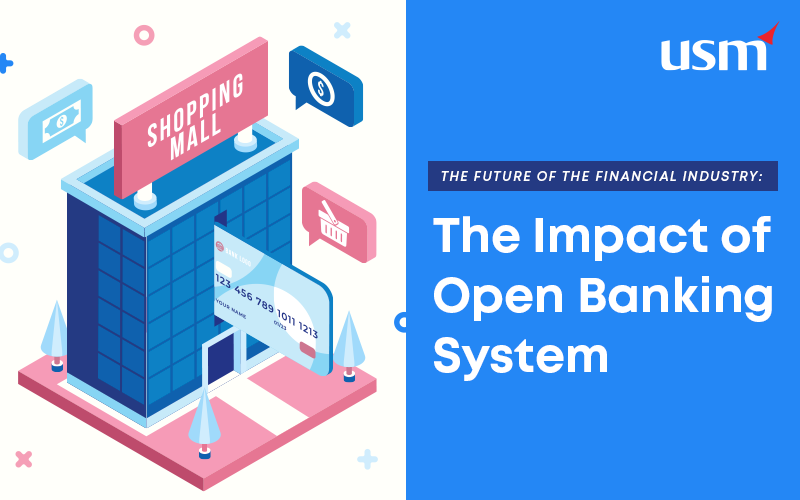
The financial industry has seen a significant transformation in recent years to match evolving customer needs and technological advancements. Among these changes, the open banking system had the most impact. This shift has redefined the way financial institutions operate and how consumers interact with their financial data.
An open banking system basically represents a linked, integrated ecosystem of data and services. At the core of an open banking system’s API integrations, connections among participating banks and third-party providers will establish a system where a wide range of financial services data is transferred and accessed safely and effectively for customers.
In this article, let’s explore what open banking is and the impact of an open banking system on the financial industry. Also, let us look at the benefits, challenges, and implications of open banking systems.
Open banking originated in Europe by adopting the Revised Payment Services Directive (PSD2). This has set a new benchmark for transparency in finance, allowing customers to share their financial data with third-party providers. This makes banking not just easier but also more effective.
There are two key ideas behind open banking, including data sharing and empowering consumers. Open banking creates a vibrant financial environment where businesses can thrive by giving customers access to their financial information. Regulatory frameworks like PSD2 ensure that banks provide this access through APIs, which help create competitive and tailored products.
APIs are much like digital messengers that assist various software programs in communicating with each other and sharing information. In open banking, APIs enable banks and other financial institutions to connect and share data in an encrypted manner.
There are different types of APIs in use within Open Banking. Probably the most important ones are payment initiation APIs and account information APIs.
The technical standards of these APIs in open banking ensure good interoperability to keep data safe. Open banking makes for a much more connected, flexible financial system by opening access to these two APIs. They help banks to deliver better services, while assisting new companies build innovative financial products that meet their customer needs. This eases the credit management and makes it more convenient, increasing control over financial life of customers.
Open banking APIs come with several benefits, both for consumers and financial institutions. Some of the key advantages include:
Open banking APIs help financial institutions access and utilize the banking information of customers and provide more personalized services. For instance, budgeting apps can track users’ spending and give them tips on how to save money. This makes it easier and far more delightful to manage finances.
Open banking enables banks and fintech companies to innovate financial products that could not have been conceived in the past. For example, they can build mobile applications that identify the best loans or investment opportunities for them according to their financial history. It will improve sales as well as customer loyalty.
Open banking APIs allow new companies to compete with traditional banks with intelligent approaches. They help companies deliver better services at lower costs to the end-customer, thereby improving brand value.
Open banking APIs help to increase efficiency and reduce operational costs for banks. Banks shift their focus to the area of enhancing the quality-of-service delivery in the wave of automation in data sharing activities. That is how consumers benefit from more efficient, quicker, and reliable services in banking.
While open banking APIs offer a lot of benefits, there are some challenges and associated risks that need to be dealt with.
Everyone using open banking APIs is worried about one thing: the safety of their financial information. There is always a chance of a data breach, or cyberattack, each time your information travels from one bank to another third-party provider. There are quite strict measures and protocols for ensuring security, but compliance at each end is always a difficulty.
Open banking regulations are oriented towards consumer protection and ensuring fair competition. For instance, open banking is regulated by very articulated rules under PSD2. So, it can be very complex and costly for financial institutions and third-party providers to comply with these regulations. Changes in the regulation can be monitored, and compliance with them may pose a significant challenge.
For the bank to succeed in open banking, it is expected that customers be aware of the pros that come with it and eventually trust the process. There are still many doubts among people about sharing personal financial information with third-party providers due to a fear of losing privacy. For that reason, educating consumers on securing their data, coupled with the advantages for them of open banking, will be very fundamental in building trust and encouraging its adoption.
The open banking API landscape is experiencing rapid growth, driven by technological innovation and changing consumer expectations. Here are some of the key trends and predictions that reflect the future of open banking systems.
Artificial intelligence (AI): AI technology helps companies analyze customers’ financial data and gives personalized insights into their money management, and product recommendations, etc. For instance, AI-driven chatbots can suggest finances in view of your transaction history and spending habits.
Blockchain: Blockchain technology can offer a secure and transparent way to manage financial transactions and data sharing. This would enhance the security and reliability of open banking APIs.
Internet of Things (IoT): IoT, from smart home systems and wearables to smart clothing, is able to be connected with open banking APIs.
Open banking APIs can drive innovation, a better customer experience, and market competition in the financial industry. Obviously, challenges relating to the security and regulatory compliance of the technology should not be taken lightly, but the benefits outweigh the risks. With knowledge and flexibility in front of these changes, financial institutions, FinTech companies, and consumers are all going to succeed in this new epoch of finance.
Get in touch if you would like to learn how the USM Business System helps ensure an AI-powered connected financial ecosystem.
Google just dropped a game-changing update to NotebookLM, its AI-powered research tool. And it’s got people buzzing about the future of personalized learning and business research. Continue reading “The AI Research Assistant That Talks Back”
Our annual gathering, MAICON (Marketing AI Conference) has wrapped, and Paul and Mike dive into a bit of the key event takeaways, including an impromptu/modified closing keynote breaking down the Strawberry (OpenAI o1) launch. Also, OpenAI’s $150B valuation and Google’s Notebook LM update make for an exciting episode! Continue reading “OpenAI o1, Google’s Insane NotebookLM Update, MAICON 2024 & OpenAI’s $150B Valuation”
Yes, driven by the increasing usage of smartphones, there exist several mobile apps in the market. Artificial Intelligence In Mobile App Development are playing a vital part in human life. They are gaining more attention from customers with its flexible features. The users are looking at flexible advanced mobile apps that meet their requirements quickly and easily.
The mobile AI applications meet the needs of both individuals and service providers. Without mobile apps, no sector will gain profits. Innovative and intelligent mobile apps help retain customers for the long run in this current digital era.
Particularly, banks and finance companies are highly investing in mobile applications. This sector needs innovative mobile apps to engage their users confidentially. Mobiles apps also taps the needs of users in seconds. By just log-in to the app with banking credentials, the users can continue their search from any corner of the world.
Credit card/debit card details, transactions, and loan information, what else everything is possible using mobile apps. Every data is available on the fingertips. Every client request is processed and solved by banks through apps only. Thus, AI in the banking and finance industry is witnessing tremendous growth.
Accordingly, AI in e-commerce are also attracting customers with high-speed android apps. For instance, the online grocery stores through apps offering easy-to-choose products, notifying customers about special offers, discounts & new launches, and encrypted payment gateways.
Thus, mobile app development companies bringing their experience and skills together to introduce an advanced mobile app that includes the capabilities of next-generation cognitive technologies like artificial intelligence.
The apps with something new features and benefits compared to the existing ones will quickly expand in the market. Integration of mobile Artificial Intelligence (AI) into your apps might help you stand out from the crowd.
According to market estimates, the mobile app industry is gradually shifting to Artificial intelligence. To achieve marketing gains, AI is one of the best investment areas for all businesses now. In particular, driven by the increasing expansion of smartphones, mobile app development companies are investing heavily in designing apps that infused AI capabilities.
As consumers are preferring and installing mobile apps with intelligence features, the mobile app developers and service and solution providers are focusing on developing apps that improve user experience, engage them efficiently, and provide useful data for which they search.
Mobile applications of AI can analyze data and produce valuable insights to identify the behavioral patterns of every app user. AI mobile apps intellectual abilities that deliver significant domino effects without the need for human assistance.
Learn more: How USM’s AI Solutions Benefit Your Business?
AI apps can adopt a new set of data and deliver continuous and valid results. This led AI to revolutionize in the industry and offering intensified market opportunities to the app developers. Thus, most of the mobile app developers investing in AI to engage with their customers confidentially.
Increased usage of smartphones has led to the expansion of AI in the industry. Smartphone users are spending much of their time on Apps. Thus, the companies are adopting artificial intelligence with the belief that it can ultimately manage their customers efficiently.
AI-infused mobile apps or smart mobile apps are currently gaining momentum in the industry and also from the customer perspective. AI technology is improving the experience of mobile app users since the recent past few years. The AI apps easily navigate and assist the users in completing the activities that they need.
On the other hand, as app technology is advancing, the expectations of users are also increasing. The users are expecting predictive mobile apps that meet every need of them.
According to Gartner, to meet the changing user’s preferences, by 2020, maximum technology giants to introduce the most advanced AI-based mobile apps. Starbucks and Taco Bell have already released their intuitive and interactive mobile apps using AI. These apps can analyze user’s purchase trends and thus improves sales. Hence, Starbucks and Taco Bell achieved customer retention, profits, and huge ROI too.
Now, we can image the competition level in the industry. If your mobile app is not updated with AI, then your customers may choose your competitor’s app. Before they opt for your competitor’s app, you attract them with next-generation, high-speed, intelligently build AI mobile applications.
Mobile apps are re-shaping the way businesses operate. Statistics reflect that mobile app downloads to reach 258 billion by 2022. No wonder, if this number exceeds!
So, businesses need to move forward with more innovations and developments to fulfill the increased customer demand for intelligent mobile apps. In particular, customers are showing more interest in downloading mobile apps that provide more personalization services to them.
We found five significant mobile app trends that you should know in 2020 to remain competitive in the market. These trends would help to boost their business operations by knowing the opportunities as well as challenges that the businesses and developers face in the future of the mobile app industry.
Nowadays, smartphone users are looking to get more personalized mobile apps that meet their needs faster. So, the old app technologies need to be upgraded to deliver personalized mobile apps. This will be done by using AI and ML technologies in mobile app development.
AI and ML allow mobile applications to understand and analyze the user’s interest and perform necessary actions without being told to do so. This kind of artificial intelligence apps for iPhone and android helps to improve user personalization experience. Hence, the importance of AI in app development is extremely high.
Voice-based intelligent mobile apps are more in demand in the market. As technology is developing day-by-day, the development and launch of more advanced mobile apps are also growing in the market.
Though a full conversational virtual mobile assistants are not yet designed, few of the best AI-based mobile apps are grabbing user attention. They can understand the user-written content and spoken language and responding accordingly.
The introduction and complete roll-out of 5G technology will not only offer high-speed internet services but will also give opportunities to mobile app developers as it creates a complete data-driven environment.
5G network technology ensures high-speed connectivity as well as the best smartphone experience. It takes very little time to respond to the user search request. Data collection, processing, and sharing every task will be completed 10 times faster than existing networks. Hence, mobile app developers should deliver apps that support the upcoming 5G network.
Cloud technology was a proven record of its significance in the mobile app development industry. To store a vast amount of user data, developers are focusing on integrating cloud technology into mobile apps. It means that data stored in physical devices will be mounted on the cloud and can be retrieved as per the user requirement.
By mounting mobile apps data in the cloud, users can access the app features and use them without bothering about device storage space. Yeah, cloud-based mobile apps along with increasing productivity, they also make the development process faster and simple.
Intelligent mobile apps are allowing users to buy or sell things over the internet through their mobile devices. For instance, google wallet is one of the best apps that allows users to pay using mobile instead of using payment cards such as credit or debit cards. To develop this kind of app, mobile app developers need to integrate a secured payment gateway to the apps that can process every transaction.
Now, it’s time to engage your customers with AI and ML-based mobile apps. USM’s AI experts with forward-thinking abilities deliver next-level mobile apps by embedding AI capabilities with ML and deep learning techniques.
Who knows, the integration of your thoughts and our expertise may introduce one of the intelligent apps that keep you forefront in the competition. You’re only a click away from success! Connect USM to know how our Mobile apps help your business.
Just imagine the world without a transport facility! If you want to travel long distances, how would you go?
And, if a leading manufacturing company has to transport goods to its customer locations, then how it will do that without transport and logistics facilities?
I think you understood the significance of the transportation industry. It’s a mandatory need for both individuals as well as businesses.
Do you believe or not the history of the initiatives across the transportation industry has exploded in 1787 when the steamboat has invented. Later in the 19th century with the invention of the bicycle, the industry moved to its next level. After that motor car era had come in the 1890s, trains in the 19th century, and finally aircraft in 1903. Manufacturing of more vehicles that meet all human transportation needs based on market demand.
This was the major reason behind the advancements in this sector using innovative technologies. Automobile or vehicle manufacturers are focusing on spreading the wings of artificial intelligence across the sector to gain from the increasing demand.
Artificial Intelligence (AI) is one of the best technology supporting the transportation industry in many ways. AI-enabled applications in transportation have transformed the transportation sector tremendously. AI Applications in Transportation are making our lives easier, safer, and more efficient.
Artificial intelligence in public transport, private transport, and personal transport has progressed in such a level that vehicles are moving without any assistance from humans. Thanks to Artificial Intelligence (AI) technology. Artificial intelligence technology in transportation is helping the industry to enhance safety, reduce unexpected accidents, reduce traffic, carbon emission, and also lower complete financial expenses.
On the businesses front, Applications of Artificial Intelligence in Transport increases productivity, automation level, and overall excels sales indicators.
USM, the best mobile app development company, has immense experience in using artificial intelligence technology to develop futuristic travel apps that make trips more effortless. In addition, being one of the best AI app development companies, we also build enterprise-level AI solutions for helping logistics firms track their fleet in real-time.
Would you like to know what we delivered to the transportation sector? Please go through one of our significant AI in transportation case study.
Recommend: How Automotive Industry Is Evolving With Artificial Intelligence?
AI technology in transport will bring huge revolutions, not only to the vehicles but also to the complete ecosystem. Let’s take some examples of AI use cases in transportation.
Artificial intelligence use cases or applications in transportation let you know why the transportation business players are looking to invest in artificial intelligence technology. Here, we briefed out a few top use cases of artificial intelligence in the transportation industry. Let’s have a look at the below AI in transportation examples.

Japan has already launched its first version of autonomous vehicles in the country. Accordingly, the United States transportation & logistic industries are also holding the power of AI to spread self-driving trucks for reducing operational costs. Likewise, the global developed and developing markets are adopting AI in their transportation rapidly.
AI is playing a major role in the manufacture of self-driving vehicles. We all know that the biggest automobile manufacturers like Nissan, Toyota, Hyundai, and so many vehicle manufacturers will introduce their model of driverless vehicles.
It is just the beginning, but we can’t imagine the market with the complete expansion of AI in the development of driverless cars.
Be ready to see a drastic change in transportation using artificial intelligence!

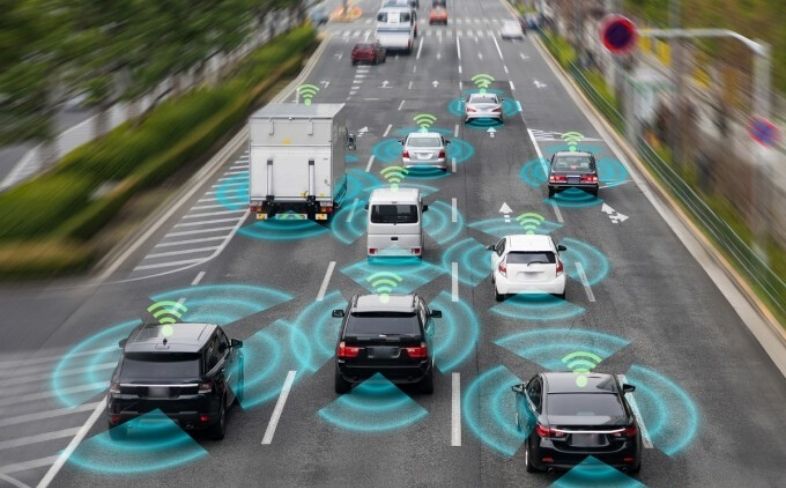
Artificial Intelligence applications in transportation for managing traffic is one of the popular use case of the technology. AI for traffic management is one of the best AI applications for the traffic management system. Artificial intelligence systems predict and reduce traffic congestion and improve road safety.
The AI-powered traffic management system provides greater flexibility to driverless cars in the future. However, the integration of the IoT-enabled high-resolution cameras would also bring a big revolution in the sector.
Hence, AI, together with cloud and IoT, will completely reduce wait times at traffic signals and reduce the traffic over the roads.

AI mobile apps for Android and iOS are allowing users to book taxis online and ensure safe trips. Using computer vision and Data Lake techniques, transport apps are making the best data-driven decisions for reducing the waiting time of passengers who booked their service.
It is one of the advantages of AI in the transportation industry. Drone taxis are one of the best innovative AI applications in transportation. Drone systems have already been expanded in delivery systems. The technology developments would also help to design and manufacture intelligent drone taxies soon. No wonder in it.
It is also one of the best answers for How Will AI Impact the Transportation Industry. Along with the benefits of Artificial intelligence in public transport systems, for the past few years, cargo ships will also be controlled remotely using artificial intelligence.
Logistics departments can monitor their cargos and stay in connection all the time to track their safe arrival to destinations. It is one of the best use cases of AI in transportation. Hence, it is expected that AI will drive autonomous cargo ships to fullest in the future.
The truck transport business is one of the fields where the implementation of AI is growing rapidly. Artificial intelligence and machine learning technologies are improving freight efficiencies. As the market trends are predicting that AI technology and automation are the future of the transportation industry, self-driving trucks are more crazy innovations among others. Hence, AI in transportation and logistics offers more fruitful business results to the service providers.
The growth and advantages of AI in the transportation industry cannot be explainable. The practical use of A.I. in transportation will 100% ensure profitable business for organizations across the transportation sector.
AI has already had its grip on changing industrial processes and the transportation sector is also greatly impacted by AI. As we discussed, the examples of AI implementation in transport will give unbelievable results to service providers than expected. With the craze towards autonomous vehicles, increasing concern towards safety and security, and focus on reducing operational costs, the demand and adoption of AI technology in transportation are growing increasingly.
According to the market reports, it is estimated that the AI transportation market will be valued at $3.5 billion by 2023. In particular, North America (US, Mexico, and Canada) region is anticipated to contribute more to the AI in the transportation market value.
Here are a few more business advantages of AI in transportation.
Let’s discuss a few artificial intelligence opportunities that are delivered to the transportation sector.
How has technology changed transportation?
#1 Smart Logistics Functions
Leveraging real-time sensor data and previous data regarding traffic, weather, waiting time, stop maintenance, etc., the transportation system can navigate the routes smartly.
#2 Forecasting Vehicle Maintenance
The future of AI in transportation for forecasting vehicle maintenance would be promising. The AI systems can forecasts vehicle maintenance with the help of data collected from smart sensors. You can use telematics solutions to monitor the vehicles in real-time. AI solutions will send alerts and conditions of the vehicles so that you can save yourself from probable hazards.
#3 Track planner with traffic expectation and real-time updates
While traffic congestions are inescapable, AI can predict the traffic jams and accordingly adjust your path.
#4 Intelligent Staff Management
To advance the productivity and safety of drivers, intelligent driver behavior monitoring apps will be useful. Using data captured by the IoT sensors, you can manage your fleet through data-controlled dashboards for smart trucks, ships, and trains connectivity.
Hence, AI in the transportation industry is quite impressive. The impact of AI-enabled applications in transportation are resourceful. USM, the best #AI development company, is a leader in offering quality AI-based solutions and artificial intelligence services to customers across various industries.
Are searching for a reliable AI solutions provider or artificial intelligence Service Company, then you’re in a perfect place. Get in touch with USM!