
Voice Bot Reliability Through Multichannel AI Observability


Enhancing Voice Bot Reliability with AI
ID 418117281 ©
BiancoBlue | Dreamstime.com

Voice bots have become a frontline fixture in customer service—handling everything from account inquiries to appointment scheduling, order tracking, and beyond. They’re fast, scalable, and (when working well) impressively efficient. But as businesses lean harder into automation, a familiar tension has surfaced: reliability.

What happens when a voice bot misunderstands a request, drops a session, or loops a caller back to the main menu? Or worse, what if the bot performs flawlessly in one channel (say, IVR), but stumbles in another, like a mobile app voice assistant?

Delivering a consistent, dependable voice bot experience across channels requires more than strong NLP models or well-scripted dialogs. It demands deep visibility into system behavior, user interactions, and the many microservices supporting each exchange. This is where observability—specifically AI-powered observability—can make a measurable difference.

Where Voice Bots Can Break Down

To the customer, a voice bot reliability is just another way to get things done. But behind the scenes, it’s a tightly orchestrated system. There’s the speech recognition engine, the natural language understanding (NLU) layer, business logic, API integrations, routing frameworks, and real-time audio handling—all stitched together across cloud or hybrid environments.

When something fails—be it a delayed API response, a dropped audio stream, or a misinterpreted intent—the failure rarely announces itself in a clear way. Users don’t describe issues in logs. They hang up. They get frustrated. They call back demanding a human.

It’s this silent degradation—the kind that doesn’t raise alerts but still damages trust—that observability aims to surface.

The Challenge of Multichannel Consistency

Voice bots today don’t live in a single channel. Customers might start a query in an IVR, continue it through a mobile app, and finish it in a smart speaker or web assistant. Each channel introduces subtle differences: in audio quality, latency, authentication steps, or even the user’s expectations.

That makes consistency difficult. A bot that handles a query well in a low-noise IVR environment might falter on a mobile app where background noise interferes with transcription. Or, the NLU model might behave differently when fed through different front-end integrations.

Without a way to trace and compare these interactions holistically, teams are left guessing at what went wrong—and where to start looking.

What Observability Brings to the Table

Unlike traditional monitoring, which focuses on metrics and uptime, observability is about understanding internal states through the outputs they generate. In the context of voice bots, this means capturing and analyzing everything from system logs and latency trends to user utterance patterns, intent confidence scores, and error traces across integrations.

By applying AI observability, organizations can correlate voice bot reliability behavior with back-end system performance, user context, and channel-specific characteristics. For instance, if a spike in failed intents coincides with slower API responses in a certain geography, the system can flag that—not just as a performance issue, but as a potential customer experience degradation.

This doesn’t just help support teams resolve issues faster. It gives product teams insights to improve training data, fine-tune dialog flows, and prioritize fixes based on real-world impact.

Beyond Reactive: Predicting Failures Before They Surface

One of the advantages of combining observability with AI is the shift from reactive troubleshooting to proactive improvement. Over time, the system learns what “normal” looks like—both in terms of technical performance and user engagement.

When something deviates—say, an unexpected increase in escalation rates from a specific user segment—the observability layer can trigger alerts before the issue becomes widespread. Maybe it’s a regression in the speech model. Maybe a recent backend update is slowing down critical responses. The key is catching it early, and with context.

Cross-Functional Benefits: IT, CX, and Product Working Together

A well-instrumented observability layer doesn’t just benefit engineering. It gives everyone—from IT ops to customer experience leads and product owners—a shared language to discuss system health and customer friction points.

Support teams can resolve tickets faster. CX teams can identify where users get stuck. Developers get the information they need to reproduce and fix issues. And business leaders get the assurance that voice automation isn’t a black box—it’s a transparent, measurable part of the service ecosystem.

Designing for Continuous Improvement

Voice bots aren’t set-and-forget tools. They live and evolve with the business. New use cases, updated integrations, and seasonal spikes in demand all put pressure on performance. Without observability, teams are flying blind, relying on limited logs or anecdotal feedback.

With observability in place, each interaction becomes a learning opportunity. Misunderstood phrases feed model training. Slowdowns inform infrastructure optimization. Abandoned sessions point to flow design gaps.

In this way, observability acts not just as a safety net—but as a feedback loop for growth.

Conclusion: Reliability Begins with Visibility

Voice bots have the potential to transform customer engagement, but only if they work as expected—every time, on every channel. Ensuring that level of voice bot reliability takes more than robust models or polished scripts. It requires a clear, continuous understanding of how these systems behave under pressure, across environments, and in real-world conditions.

That’s what observability delivers. Not just data—but clarity. Not just alerts—but actionable insight. It’s how organizations move beyond troubleshooting and into true optimization—where every call, every command, and every conversation builds trust.

Find a Home-Based Business to Start-Up >>> Hundreds of Business Listings.

Jasper AI vs. HiveMind: Artificial Writing Tools, Compared


So, how do you write an article comparing two different types of artificial intelligence platforms – Jasper AI and Buzz?

I thought a good place to start would be just to ask the artificial intelligence.

You know, a little undercover operation to see what these AI platforms had to say about themselves. Weird? A little, but asking the same prompt to both of these AI platforms will help put both of these AI platforms into some perspective.

Giving a Writing Prompt To AI

I didn’t want to get too fancy with my prompt since I wanted to compare apples to apples. I did not supply keywords, descriptions, or tone for either AI platform to work from–they just had this single prompt to work from:

“Jasper AI vs. Buzz writing with artificial intelligence.”

Results From Jasper AI

Jasper AI is a tool that uses natural language processing (NLP) to analyze your document and suggest edits for more effective writing. It also incorporates a deep learning network, which can interpret text and recognize patterns to identify common errors in grammar and style. With Jasper AI, users can quickly create high-quality content without human oversight.

Buzz’s approach to AI-assisted writing is slightly different than Jasper AI’s. Instead of relying solely on NLP, Buzz also uses advanced machine learning models to learn from past documents and writers and suggest writing improvements. Buzz also features a built-in chatbot, which can answer questions related to grammar, spelling, and more. In addition, Buzz provides an AI-generated feedback system with insights about improving your content’s clarity.

Results From Buzz

Jasper AI and Buzz are two types of Artificial Intelligence (AI) applications that have enabled the development of more efficient and automated writing processes. Jasper AI is a natural language processing (NLP) platform that automates content production tasks, such as generating text, utilizing pre-trained neural networks, and reducing manual labor.

Buzz is an AI tool that gives users access to the AI assistant in Hive, email, Notes, tasks, projects, chats and more. Not only does it work as an AI writing tool that simplifies content production and streamlines collaboration for multiple writers, it also allows for team collaboration and optimization with AI as a whole. Both AI applications can help writers create better, more efficient content by leveraging their AI-based capabilities – Buzz is just native to Hive, versus Jasper which is mainly writing based.

AI Experiment Takeaways

Did you see how these two different AI platforms stacked up and how similar the two performed in the output?

My prompt was extremely basic. It asked a question, and both platforms did a relatively good job of explaining the differences between JasperAI and Buzz.

But why this comparison?

I wanted to point out that AI-powered writing tools are becoming increasingly popular and more common in the market. You should know all the options available for AI-assisted writing and understand their differences. The similarities between Jasper AI and Buzz are pretty darn close, but they have unique pros and cons.

The Nuts and Bolts of Jasper AI

Launched in 2020, Jasper AI was one of the market’s first popular AI writing tools. It was initially named “Jarvis,” but Disney wasn’t too thrilled about that title, as it’s the name of one of their popular Marvel characters, so they set a “strongly worded letter” to Jarvis. To avoid any legalities (because who wants to be sued by Disney?), Jarvis rebranded, and Jasper AI was reborn from the flames.

Jasper AI Pros

Since its rebirth, Jasper has grown significantly. Today it includes over 50+ templates to choose from, such as a paragraph generator, product description, content improver, text summarizer and more. 

With Jasper AI, writers can quickly create various content pieces, and it is pretty hard to beat with its idea generation, meta description creation, or even blog topic ideation. 

As a writer, the dreaded writer’s block can hit hard. Using JasperAIs NLP capabilities, it feels like you have your own personal content writer on hand – churning out headers, titles, and content like a boss (sometimes literally, as they offer a Boss Mode in their subscription plan). Also, since it syncs up with the popular editing software Grammarly, it can edit your work as you type. It honestly can’t get any easier than that. 

JasperAI Cons

While I can sing praises of JasperAI all day, it does not come without its faults.

Even the prompt above, the Jasper AI NLP said that “using Jasper AI, users can quickly create high-quality content without human oversight.” That is a pretty lofty claim, considering I still had to edit that paragraph. The takeaway is that you always have to edit your Jasper AI content. There always needs to be human oversight, data checking, and fact-checks. Period.

Also, Jasper can be pricy. Starting plans begin at $40+ per month and more if you go over your word allotment. Jasper charges by the word, and sometimes you have to wade through some pretty generic or off-topic content before you land on something you like. 

Translation: wasted content and wanted money. 

Another downfall is that using Jasper AI to write overly complicated content is extremely challenging. Don’t use JasperAI to write about mechanical engineering or welding processes. Trust me. The results are generic, cookie-cutter, and so obviously written by AI, and it can be cringe-worthy.

The Nuts and Bolts of Buzz

Buzz was born in 2025 as an assistant in Hive itself – users could use Buzz to rewrite emails, notes, content, collaborate with teammates, and so much more. While Buzz is a lesser-known application and has seemingly fewer bells and whistles than some of the more established AI platforms – it is a very powerful tool when added to its project management platform.

Buzz is not just an AI tool with a singular purpose to publish and push out consistent content (Like Jasper AI) – it does more than that. It uses the power of AI and applies it to your Hive projects and daily workloads.

For example, when you use Buzz within the Hive App, you can quickly brainstorm ideas and content – then turn that into a shareable project within your Hive cards. Using the Notes function within Hive, you can directly add AI assets like images, blurbs, or ideas that can help you and the team write better content.

Since Buzz is fully integrated into the Hive Action Cards, Hive Mail, and Notes, all you need to do is click on the Buzz Assist lightbulb, and you have the option to complete the following:

  • Create project tasks based on your suggestions
  • Write content and copy 
  • Craft the perfect email response

While this is not all Buzz is limited to – these are a complete game changer for those who use the Hive Project management platform. 

The best part about Buzz? It’s FREE with your Hive account. If you have a free or paid account, you still have access to Buzz. If you know anything about me, you know I love free and having access to free AI that can help streamline my day and keep my projects automated and organized. Yes, please. 

Key Takeaways

Both Jasper AI and Buzz have their advantages when it comes to creating efficient content. 

While Jasper AI focuses on quickly generating high-quality documents, Buzz offers a comprehensive suite of tools to help writers create better content within their Hive projects, allowing them to share, collaborate and work on content in real time. 

Ultimately, it’s up to you as a writer to decide which platform works best for your needs.

Try Buzz now!

How They Became Today’s Startups


Small Farms Became the New Startups
Pexels

Small farms are transforming faster than many people realize, blending hands-on experience with tools once reserved for large operations. They experiment with new technology, build direct relationships through digital platforms, and approach their work with the same creativity and adaptability you’d expect from a startup.

This shift isn’t about chasing trends, it’s about finding smarter, more sustainable ways to grow, sell, and connect. And really, who better to drive innovation than the farmers who adjust to changing seasons every single day?

Why Small Farms Are Becoming Testing Grounds for New Agricultural Innovation

Small farms and micro-farms are quietly reshaping how new agricultural technology enters the real world. Their biggest advantage isn’t size, it’s speed. When a large operation wants to test a new system, it often needs multiple approvals, financial reviews, and long planning cycles. A small farm can simply decide, try it next week, and see what happens. That agility makes them the perfect test environment for early-stage tools that need quick, honest feedback.

Tech developers also turn to small farms because they get direct access to people who actually touch the soil every day. Instead of working through layers of management, they hear from the farmer who knows exactly how the field behaves after a heavy rain or how the greenhouse reacts to sudden heat. That level of insight helps new tools become more practical, more intuitive, and more adapted to real farming conditions.

Another overlooked advantage is the controlled scale. A micro-farm can run trials without risking hundreds of acres of crops, making experimentation much safer. If a sensor fails or a system misreads conditions, the impact is manageable, and the lessons are immediate. Over time, many of the innovations refined on small farms in agriculture, like automation tools or crop-monitoring systems, eventually scale up to larger operations. In a way, micro-farms act like field laboratories for the entire agricultural sector.

How Small Farms Use E-Commerce to Build Loyal, Local Audiences

Technology isn’t only transforming how small farms grow food, it’s changing how they connect with people. A decade ago, a small farm relied almost entirely on local markets or word of mouth. Today, many rely on simple online storefronts and social profiles to stay visible, sell products, and communicate with customers throughout the year. Why limit yourself to one weekly farmers’ market when you can share updates daily?

Direct-to-consumer sales have become a major strength. When customers order produce boxes, seasonal goods, or fresh items online, they’re not just buying food, they’re buying the relationship behind it. People love seeing where their food comes from, how it’s grown, and who grows it. That transparency builds trust in a way traditional supply chains rarely allow.

Some small farms in agriculture also use digital tools to streamline subscriptions or pre-orders. Instead of guessing how much produce to harvest, they plan based on actual online demand. This reduces waste, stabilizes income, and helps customers get consistent, high-quality products. It’s simple, but incredibly effective: when customers feel included in the farming process, they come back.

Beyond sales, small farms use online communication to educate people about crops, share behind-the-scenes challenges, or celebrate seasonal milestones. That kind of storytelling creates genuine loyalty. Even something as simple as showing how the fields respond to a change in weather can spark interest and build community. In many cases, the farm becomes more than a place, it becomes a familiar presence in people’s everyday online lives.

How CBD Farming Fits Into the Small-Farm Innovation Story

CBD farming has become one of the most interesting examples of how small farms embrace technology and niche markets at the same time. Because hemp is a relatively new legal crop in many regions, small farmers had the freedom to experiment from day one.

There wasn’t a decades-old rulebook telling them how to plant, harvest, or process it. They had to figure things out quickly, which naturally pushed them toward tech-driven solutions. Many growers used this flexibility to test niche cultivars such as the Frosted Kush strain, which quickly became a favorite among small farms looking for high-quality genetics suited for controlled, tech-supported environments.

CBD crops require precise growing conditions, and that’s where technology makes a real difference. Farmers often rely on soil sensors, real-time environmental monitoring, and controlled irrigation to maintain consistent quality. When even small changes in moisture or nutrients can affect cannabinoid content, why leave anything to chance? For many farmers, the answer is simple: measure everything, adjust fast, and keep the plants as healthy as possible.

Because CBD farms operate under strict quality standards, traceability becomes a major part of the business. Digital tracking tools help farmers document every step, from seed selection to harvest, and share that information with processors or direct consumers. This kind of transparency builds trust and helps smaller growers compete with larger operations that focus on volume over craftsmanship.

According to Stefanie Reiser, the founder of “Acknowledge”, the best plants come from farmers who care not just about the harvest, but about the land, the people, and the purpose behind the work. When growers lead with intention, transparency, courage, and respect for their ecosystem, the quality of the crop naturally follows.

Marketing also plays a huge role. CBD farms were among the first agricultural businesses to treat social media, e-commerce, and digital branding as essential tools rather than optional extras. They communicate their growing practices, lab results, and product benefits with a level of clarity that makes people feel confident in what they’re buying. In many ways, they operate more like specialty producers or boutique brands than traditional farms.

CBD farming also highlights how small farmers diversify to stay resilient. Many didn’t replace their traditional crops, they added hemp to create a new revenue stream. Some rotate CBD with vegetables, herbs, or microgreens. Others pair it with value-added products like infused oils or wellness items. This mix of farming and entrepreneurship fits perfectly with the startup-minded approach small farms are taking today.

Small Farming as a Start-Up: What Agriculture Can Learn From Tech Culture

If you look at how many small farms operate today, the parallels with start-ups are hard to ignore. They test new ideas constantly, adjust quickly when something doesn’t work, and treat every season as a learning cycle. Instead of following the same routine year after year, they experiment with new crops, new layouts, new growing methods, or new technologies. It’s the same mindset you’d see in a small tech company pushing out updates and improvements.

Data plays a much bigger role than it used to. Farmers track soil moisture, plant health, temperature swings, and yield patterns with a level of detail that wasn’t possible a few years ago. Why guess when you can measure? This data-centered approach helps small farms make smarter decisions, reduce resource use, and identify problems before they escalate.

Automation is also changing the rhythm of daily work. Tools that adjust irrigation automatically, monitor weather conditions, or track livestock behavior help farmers get more done with fewer hours. For small operations that don’t have the budget for extra labor, these tools aren’t luxuries, they’re lifelines. They free up time for planning, customer relationships, and the creative side of farming.

Branding might seem out of place, but small farms in agriculture are proving otherwise. A strong brand, clear messaging, consistent visuals, and an authentic story, helps farms stand out in a crowded market. When people recognize the values behind a farm, they don’t just buy products, they support a mission. Isn’t that the same thing successful startups aim for?

Small farms also collaborate much like startup ecosystems. They share resources, exchange knowledge, and sometimes even coordinate distribution. Instead of competing, they build networks that help everyone thrive. This community-based approach allows them to take on challenges that would be overwhelming alone.

Finally, resilience is a defining trait. Weather shifts, market changes, and supply shortages might derail a rigid operation, but small farms in agriculture are built to pivot. They switch to different crops, explore new revenue streams like workshops or seasonal events, or shift their growing schedule based on demand. Flexibility becomes a competitive advantage, and a survival skill.

Conclusion

Small farms now play an outsized role in shaping the future of agriculture by testing new tools, adopting modern business strategies, and building loyal communities through transparency and innovation. Their willingness to experiment gives them an edge that large operations often can’t match, allowing them to stay flexible in the face of market shifts, climate pressures, and changing consumer expectations.

As technology continues to evolve, these small growers prove that progress doesn’t require massive acreage, just curiosity, resilience, and the courage to try something new. After all, isn’t meaningful change often sparked by the people closest to the work?

Find a Home-Based Business to Start-Up >>> Hundreds of Business Listings.

Free Printable Coloring Encouragement Cards (36 Cute Cards to Share)


You LOVE to encourage other people. 🥰

You look for creative ways that don’t seem over the top, just subtle things to make an impact and show those around you, everyone, that you care. That you GENUINELY care about them, who they are, what they’re going through, and them as a person. 💎

I know what it’s like to feel unseen and discouraged. Part of why I create resources like this is because God used small acts of kindness through others to carry me through some of my darkest seasons. I want you to have simple tools to do the same for the people in your world. 🤗

And guess what, you’ve found a great way to show the people around you that you care! 🎉

These free printable coloring encouragement cards are so cute and so sweet, everyone is going to love them!! 💯

Keep them in your pocket, a couple in your Bible, color them or leave them for the recipient to color, whatever you prefer.

There’s no right or wrong way to use them. But giving them out to people, even posting one on a public bathroom mirror, for example, spreads kindness and love and the world (and everyone in it), needs more of that! 💯

Free Printable Coloring Encouragement Cards (36 Cards)

Pick your favs and print, or use all of them.

Everyone needs encouragement, all the time, so there’s never a wrong time to give one to someone. ❤️

If you love coloring, especially giving colorable printables to friends and famly, be sure to check out my 300+ bookmarks page here and if you’d like more encouraging cards (non-colorable), check these out!

How to Use These Printable Encouragement Cards

You can use these coloring encouragement cards in so many ways:

  • Slip them into your kids lunchboxes as daily encouragement notes (think: lunch box notes)
  • Teachers can let your students color them during class and send them home to their families
  • Tuck one in a Bible or journal for your church small group, Bible study, or friend at church
  • Student rewards for educators (think: a card and a piece of candy)
  • Kids could pass them out to their peers in their school classrooms (think: Valentine’s Day cards)
  • Attach them to small gifts, care packages, or gift cards
  • Start a random acts of kindness challenge and leave cards in public places (think: mirror of a public bathroom)

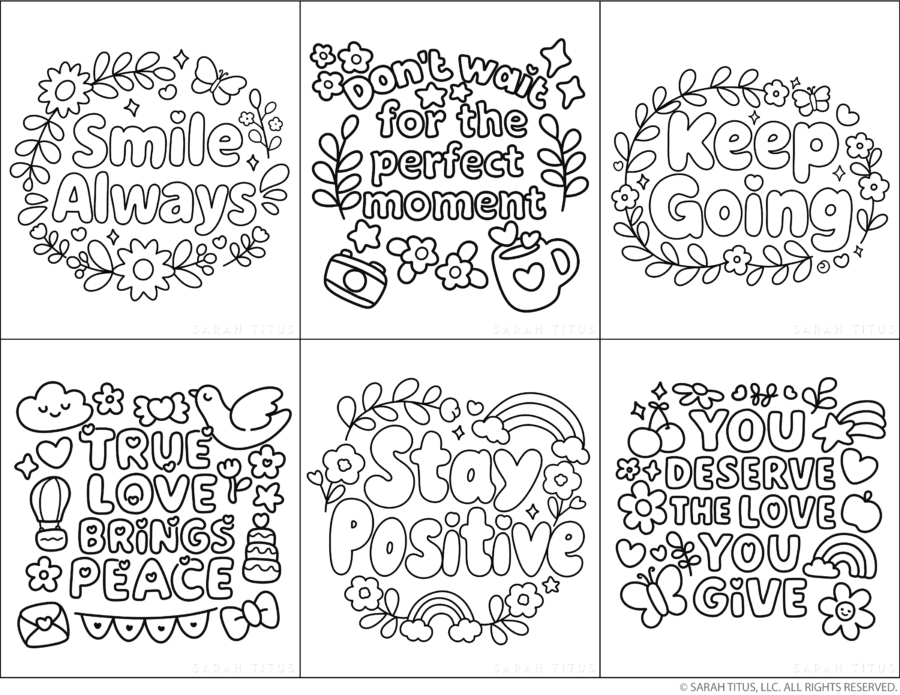
Stay Positive Encouraging Cards

Sayings include: 

  • Smile always
  • Don’t wait for the perfect moment
  • Keep going
  • True love brings peace
  • Stay positive
  • You deserve the love you give

Download the Stay Positive Encouraging Cards here.


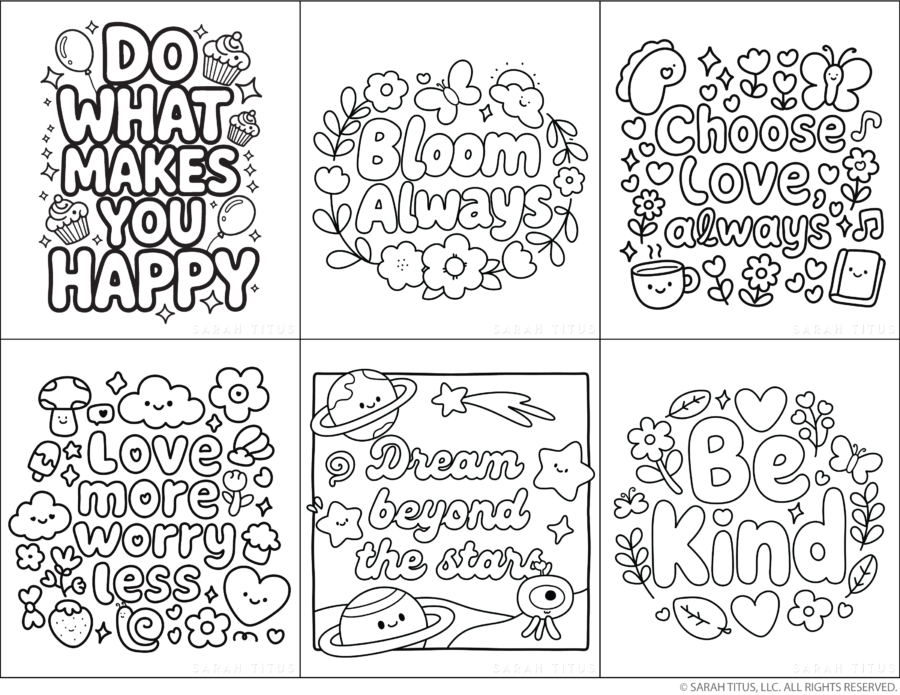
Inspirational Printable Cards

Sayings include: 

  • Do what makes you happy
  • Bloom always
  • Choose love, always
  • Love more worry less
  • Dream beyond the stars
  • Be kind

Download the Inspirational Printable Cards here.


Shine Bright Motivational Cards

Sayings include: 

  • Follow your heart
  • Shine like the stars
  • Shine bright
  • Believe in yourself
  • You can do it
  • Love starts with you

Download the Shine Bright Motivational Cards here.


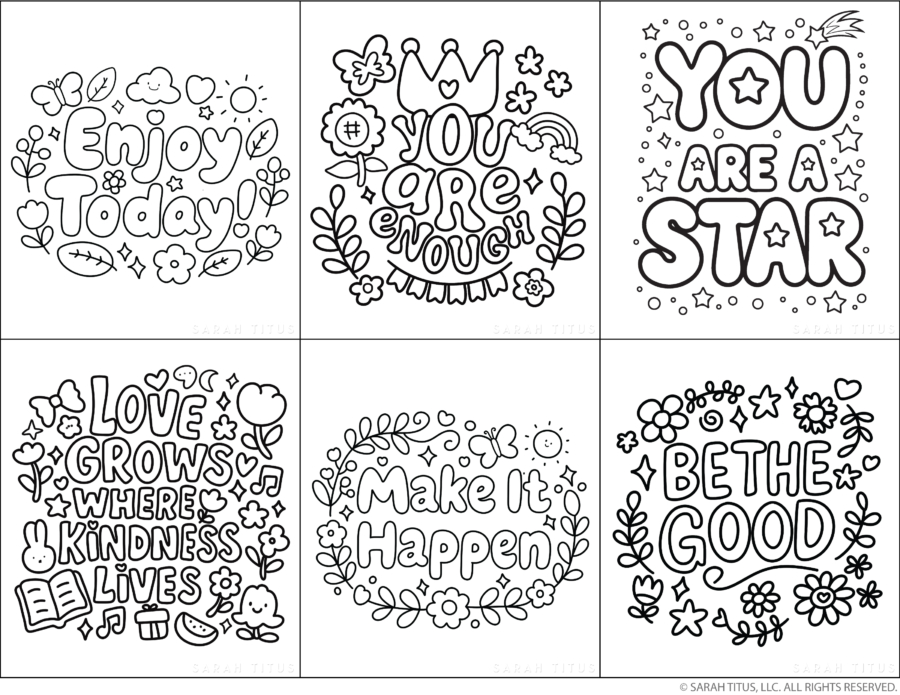
Digital Encouragement PDF Cards

Sayings include: 

  • Enjoy today
  • You are enough
  • You are a star
  • Love grows where kindness lives
  • Make it happen
  • Be the good

Download the Digital Encouragement PDFCards here.


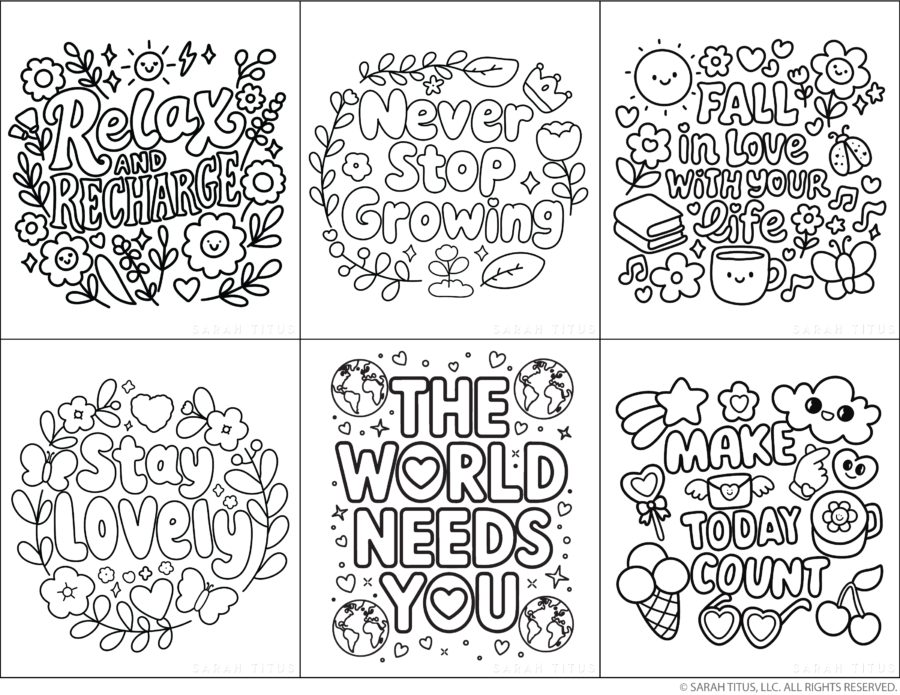
Christian Encouragement Cards

Sayings include:

  • Relax and recharge
  • Never stop growing
  • Fall in love with your life
  • Stay lovely
  • The world needs you
  • Make today count

Download the Christian Encouragement Cards here.


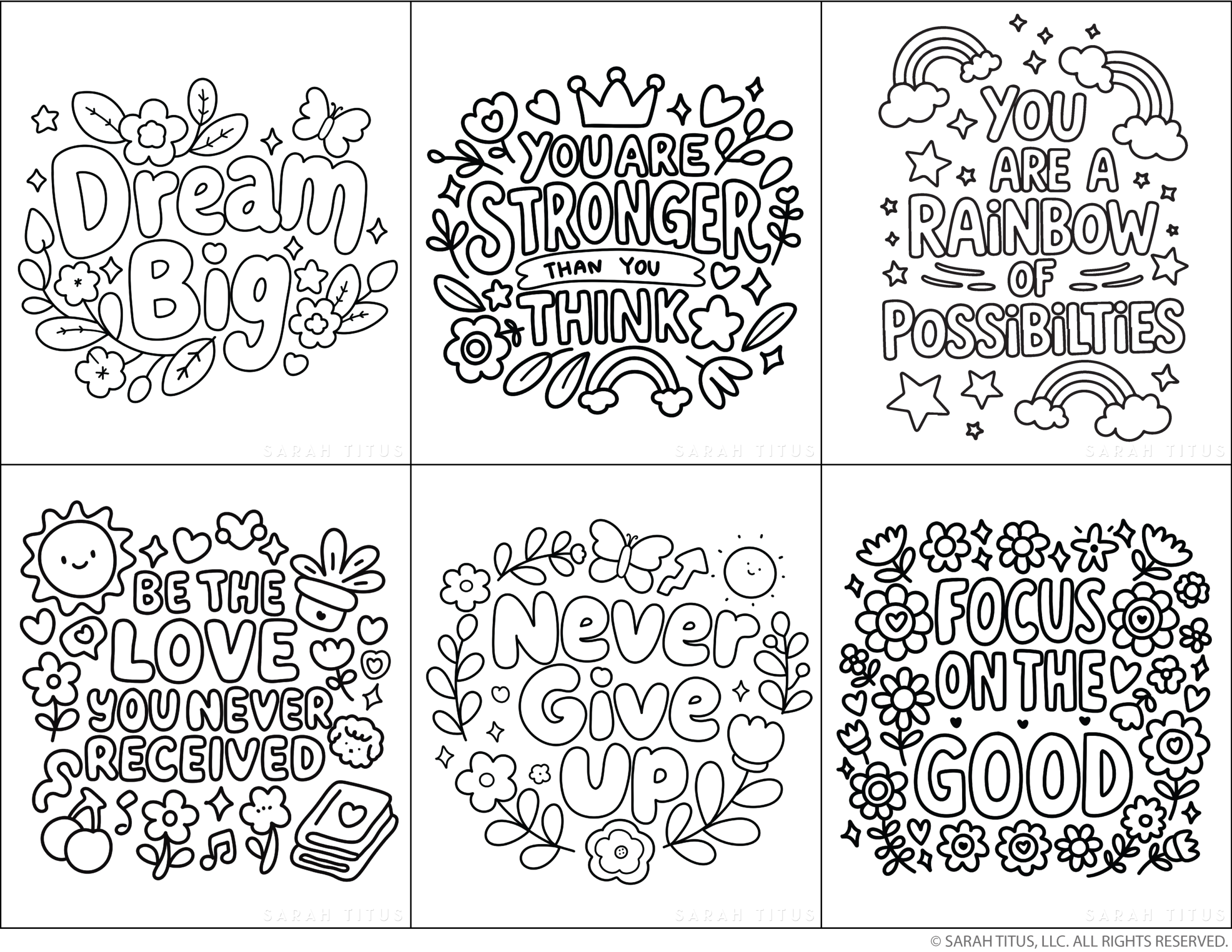
Uplifting Message Cards

Sayings include:

  • Dream big
  • You are stronger than you think
  • You are a rainbow of possibilities
  • Be the love you never received
  • Never give up
  • Focus on the good

Download the Uplifting Message Cards here.


Cropty Wallet: The Safest Ripple Wallet


Cropty Safest Ripple Wallet
Photo credit: Cropty

When it comes to storing Ripple (XRP), most people want one thing above all – that’s security. But the truth is, not every wallet gets it right in this area. Some are complicated, others lack proper protection, and a few only work well with certain coins. That’s where Cropty Wallet changes the game as one of the safest ripple wallet.

The wallet delivers everything XRP holders need in a wallet, including safety, simplicity, and speed. It offers all of these in one clean, easy-to-use app. Whether you’re a beginner or a seasoned trader, Cropty gives you full control of your XRP without the usual headaches.

In this post, we will take a closer look at this Ripple wallet to help you see why many have chosen it as their go-to option for storing XRP.

What to Know About Ripple Wallets

One question that is common among XRP holders is whether Ripple even has its own official wallet. Well, the simple answer is no – there is no official wallet provided by Ripple.

Instead, the XRP Ledger documentation recommends using the Xaman Wallet (formerly Xumm) for sending, receiving, and storing XRP. It’s an excellent option for people who only deal with assets built on the XRP Ledger and want the safest ripple wallet that’s simple and straightforward.

However, Xaman has one key limitation – it mainly supports XRP-related tokens. That means if you hold other cryptocurrencies, you’ll likely need multiple apps to manage them all. This is not always convenient, and that’s why many people turn to wallets like Cropty. It gives users the same smooth experience as Xaman but adds multi-currency support, built-in earning options, and a stronger layer of security – all inside one clean interface.

A Closer Look at Cropty Wallet

CroptyCropty
Photo credit: Cropty

Not every crypto wallet feels built for real people. Some are overly technical, others too bare-bones. Cropty Wallet manages to strike that sweet spot. It’s powerful enough for experienced traders but easy enough for anyone to use.

So, it doesn’t matter if you’re just starting your crypto journey or already managing a diverse portfolio, Cropty makes handling Ripple (XRP) smooth and stress-free.

Everything happens in seconds here, whether it’s storing, sending, or earning XRP through staking or referrals. The app is available on both Android and iOS, syncing seamlessly across devices so your crypto is always at hand, wherever you go.

Why Cropty Wallet Is the Safest Ripple Wallet

Security is the backbone of every great crypto wallet, and Cropty doesn’t take it lightly. Every feature in this safest ripple wallet is designed to keep your funds secure, your transactions smooth, and your mind at ease. Here’s how Cropty ensures your Ripple (XRP) stays safe from day one.

Two-Factor Transaction Shield

Every transaction made through Cropty goes through an extra verification layer – two-factor authentication (2FA). This means that in a situation where another person somehow was able to access your account, it will still be impossible for them to move your funds – you will have to give your approval before that can happen.

While that might look simple, it is a powerful feature that adds extra all between you and potential threats.

Custodial Security Model

Unlike traditional wallets that have private keys stored on your device, Cropty uses an even smarter custodial approach. Here, your keys are protected on secure servers, making it almost impossible for hackers to steal them through phishing attacks or a breach of device.

This works to give optimum protection to your assets while also ensuring quick recovery options in case you forgot your credentials or lost your device.

Active Monitoring and Identity Verification

Cropty uses real-time security monitoring and identity verification systems that helps it to quickly detect suspicious activity before it becomes a problem.

Every transaction is checked for safety, ensuring users aren’t blindsided by hacks or unauthorized access. This is more like having a personal security guard for your crypto, who is always watching and protecting.

No Frozen Funds or Exchange Hacks

With Cropty, you don’t have to worry about the nightmare of frozen withdrawals or exchange hacks. The wallet’s architecture is built to prevent such issues by giving users uninterrupted access to their funds while maintaining high protection standards. It’s crypto freedom with a strong safety net.

Transparency You Can Trust

Cropty blends the best of self-custody control and managed financial services, giving users flexibility without sacrificing protection. Its security model is fully transparent, and all processes are built around protecting your funds – not using them. This is what makes it a Ripple wallet you can depend on, no matter what’s happening in the market.

Beyond Storage: Extra Features That Set Cropty Apart

Safest Ripple WalletSafest Ripple Wallet
Image by halayalex on Freepik

Cropty Wallet goes far beyond being a simple place to hold your Ripple (XRP). It’s designed to make your crypto work harder for you, offering tools that save time, cut costs, and even grow your earnings.

Let’s break down some of the features that make Cropty more than just another Ripple wallet.

1. Fast, Free Transfers

No one likes paying extra just to move their money. With Cropty, XRP transactions between wallet users are completely free. That means you can send funds to friends, family, or trading partners instantly with zero fees and no waiting. Transfers are processed in seconds, so your crypto reaches where it needs to go, right when you need it to.

2. Multi-Currency Support

Unlike wallets whose focus is just on one coin, Cropty brings all your favorite cryptocurrencies together in one app.

In addition to XRP, the wallet also supports dozens of popular digital assets and thousands of tokens across multiple blockchains. So, whether you’re holding Bitcoin, Ethereum, or stablecoins, Cropty allows you to manage everything without switching apps.

3. Earn While You HODL

Why allow your crypto to just sit idle when it can grow? Cropty gives you that chance through its staking and deposit options. It lets you earn passive income automatically from your tokens.

You can choose between fixed or flexible rates, with payouts made in either stablecoins or the same cryptocurrency you stake. It’s transparent, easy to use, and pays better than most traditional banks.

4. Crypto Loans Without Selling Your Assets

Sometimes, you need quick access to cash but don’t want to sell your crypto. Cropty has you covered with crypto-backed loans. You can instantly borrow stablecoins or fiat while keeping your XRP safe in your account.

The process is quick, flexible, and fully online. You don’t need any paperwork or long waits with a safest ripple wallet. Plus, with a high loan-to-value (LTV) ratio, you get the most out of your holdings without losing ownership.

Final Note

Cropty Wallet isn’t just another place to store your Ripple (XRP). It’s a complete crypto experience built around safety, simplicity, and freedom.

The wallet offers you everything you might need to manage and grow your cryto confidently. It’s secure enough for seasoned traders yet simple enough for beginners, making it the go-to Ripple wallet for anyone who values both protection and convenience.

Download Cropty today and see how effortless safe crypto management can be.

Find a Home-Based Business to Start-Up >>> Hundreds of Business Listings.

Cute Chibi Girl Dreamy Galaxy Color Palettes


Everyone has a different way of coming up with their own color palette to suit their needs. Some people search online for a color palette and adapt it to the way they want it to look. 

That’s a great way to start.

But what if you can’t FIND the color palette you like? 😔

What if you settle on a palette because it’s all that’s really available?

What if you feel in your gut, your soul, your heart that the palettes are just not YOU?

That’s why I began creating my own. What’s out there now is a lot of neutrals and pastels. And that’s fine, if that’s your flavor. 

But for someone who LOVES color, who likes to LIVE BOLDLY, who wants super cute, trendy, massively beautiful color palettes with VIBRANT colors that make you FEEL ALIVE, 🔥 well, you gotta come here. 😆

Do what suits you for your individual project, but color is an EXPRESSION of who we are. Let it be that expression! 

If you like vibrant, bold, neon, holographic colors, I’m your girl.

I’ve done all the other color palettes over the years (traditional, neutral, pastels, rainbows, etc., which you can find for free here in the Design Studio), but I settled into my own style and today I’m sharing with you these super cute chibi girl dreamy galaxy color palettes

To make it more fun, I created these graphics with girls on their phones. I thought that would be such a cute nod to social media and trend setters. 🥰

You can see a few more of these types of colors here as well…

Whatever your jam is, do it with your whole heart. ❤️

Be bold, be excited, be alive… because the truth is, you only get ONE life. Make it count. Have fun with it. Don’t waste it on the mundane, boring things in life. Go all out! Be your best YOU that you can be. 🥰🎉

Ready to dive in?

Cute Chibi Girl Dreamy Galaxy Color Palettes

👉 If you’re looking for more color palettes that you can print and include editable EPS FILES (!!!!), be sure to check out my 560+ page Color Palettes Binder! 🎉


The Hard Reality of Running a Moving Company in Boston


Running a Moving Company in Boston
Deposit Photos

Running a moving company in Boston looks simple from the outside. Trucks, dollies, strong people. A straightforward business. In reality, it is an ongoing grind that tests patience, cash flow, staffing, and sanity.

Boston is a hard city to operate in if you drive large trucks and depend on logistics. The streets are old. The housing stock is tight. The traffic is relentless. The competition is fierce. Every job feels like solving a new puzzle under time pressure.

Truck Parking Is a Constant Battle

The first major challenge is parking. Boston keeps transforming former industrial zones into shiny residential and commercial developments. The warehouses and truck yards that movers used to rely on are disappearing. What is left are tiny rental lots that cost too much and sit miles outside the city.

Finding affordable long term parking for a 26 foot box truck near Boston is similar to searching for an apartment. There is a waiting list. There is a security deposit. There are rules, fees, and neighbors who do not want trucks near them. Most of the time, movers end up paying for space far outside the city, which burns fuel and time.

Chris Amaral, owner of Safe Responsible Movers in Boston, explains it plainly.
“Our trucks are our business. If we cannot park them near the city, we spend money just deadheading them in and out every day. There is no slack in this business. Every added mile burns cash.”

Low Bridges Can Bankrupt You

Boston also has a threat that most cities do not. Low bridges. Storrow Drive and Memorial Drive are notorious. Signs warn truck drivers not to enter. Every year, someone ignores the warning, crashes a truck into the bridge, and becomes a viral meme.

For a moving company, smashing a truck under a low bridge is not funny. It can destroy a business.

A box truck can cost anywhere from seventy thousand to one hundred and twenty thousand dollars to replace. Insurance may not cover the full loss. Repairs can take months. Meanwhile, the business still needs to run.

The problem does not stop at Boston proper. Bridges in Dedham, Westwood, and Hyde Park are also lower than federal standard heights. A driver having an off day can turn a profitable month into a financial emergency.

According to Amaral,
“All it takes is one careless turn and you could be out thirty thousand dollars overnight. You never forget that feeling. Every new hire gets a lecture about low bridges before we even talk about how to wrap furniture.”

Remote Work Sounds Nice Until It Becomes Your Life

Because commercial space in Boston costs a fortune, many moving companies run their office from home. At first it seems like freedom. No commute. No rent. Then the reality hits. When your home is also your office, you are always at work.

The phone does not stop ringing. Leads come in at 10 p.m. Angry customers call on Sundays. Emails arrive at midnight. There is no off switch.

You are also never fully on the clock. Household distractions chip away at productivity. Laundry. Meals. Kids. Errands. The home office turns the workday into one long, ongoing blur.

Damage Claims Can Ruin Your Day

Most moves go fine. Then you hit a job with a damaged table or scratched wall. Even when the crew handled everything correctly, emotions run high. People are stressed during moves. They want every item to arrive flawless.

Movers need a calm way to handle claims, document evidence, and resolve it without letting the problem metastasize into a bad review online. The review platforms give customers leverage. Even dishonest customers know it.

If the company does not protect itself with photo logs and signed documentation, the blame always falls back on the mover.

Boston Housing Makes Everything Harder

Boston homes are old. Many were built when furniture meant a bed frame and a dresser, not a California King with an upholstered headboard and a sectional sofa the size of a compact car.

Staircases twist. Landings are small. Apartments are buried on third floors with no elevator.

People arrive from the suburbs with oversized furniture and a dream of urban living. The dream meets reality.

Sometimes the couch does not fit. Movers have to break it apart. Or hoist it over balconies. Or tell the client it is impossible, which never goes over well.

Staffing Is a Seasonal Roller Coaster

The industry runs on young, physically strong people willing to grind long days. In the winter, moves slow down and revenue drops. Good workers get nervous about hours and find other jobs. When summer hits, demand surges. Every college lease in Boston turns over in the same sixty day window.

Suddenly movers need to hire fast.

Fast hiring leads to mistakes, poor training, and bad reviews. Training a new mover takes weeks. Summer gives you days.

Amaral describes it without hesitation.
“Keeping the good guys through winter is brutal. Finding good new guys for summer is even harder. The business never stays still.”

Racing To The Bottom On Price

Boston has many established moving companies plus countless freelancers with rented trucks. Competition forces pricing pressure. Marketing costs climb because competitors spend aggressively on Google Ads, Yelp, and SEO.

The more everyone spends on acquisition, the lower the profit margins become.

When movers compete on price instead of quality, everyone loses. Movers take on bad jobs at thin margins. Customers get crews that are rushed or inexperienced. The cycle repeats.

Repairs and Vendors Are Another Hidden Expense

Moving trucks are abused daily. They hit potholes. Curb strikes. Dings. Liftgates break. Ramps bend. A truck out for repair is revenue lost.

Finding reliable mechanics who can turn around commercial trucks fast is harder than it should be. Most shops prioritize larger fleets or regular contracts. Independent movers wait in line.

A truck down for one week can erase a month of profit.

The Emotional Wear And Tear

Running a moving company in Boston requires constant attention, relentless communication, and a tolerance for chaos.

You get yelled at by clients.
You handle employee issues.
You juggle schedules.
You chase reviews.
You manage cash flow.

Summer burns you out.
Winter scares you financially.

Still, the work matters. People trust movers with everything they own.

Amaral sums it up clearly.
“This business is simple but not easy. We move peoples entire lives. You have to care. If you stop caring you should quit.”

Find a Home-Based Business to Start-Up >>> Hundreds of Business Listings.

AI Privacy Protection for Home Businesses


AI Privacy Protection and a Digital Identity Verification
Photo credit: Freepik

Today’s solo entrepreneurs lean on artificial intelligence more and more. AI-driven marketing platforms and customer support chatbots give these 19 million US home-based entrepreneurs the solutions they desperately need to compete, but there’s a price to pay.

“Reliance on these AI-driven tools is unavoidable, but it comes with an escalating threat,” observes Ken Griggs, the creator of not.bot. “You are charged with protecting your customers’ privacy in a world where data has become the ultimate currency. And trust me, they notice the choices you make.” The solution is an identity verification process that offers authentication along with fraud prevention.

Hidden Privacy Risks and Home Businesses’ Growing Reliance on AI Call for Online Identity Verification Solutions

Today’s AI privacy protection tools level the playing field for solo entrepreneurs. They equip home-based businesses with capabilities once only enjoyed by the mega corporations.

But as small businesses rush to adopt AI, many unknowingly open the door to invasive data practices. Why? These AI privacy protection platforms frequently require access to customer data to function effectively. That data may be tracked or stored indefinitely. It can even be sold to third parties without explicit consent.

Griggs sums up the reality: “Data offers a unique competitive advantage. Unfortunately, this leads many to push the boundaries of privacy and copyright. They aggressively gather as much data as possible, even at an ethical cost.”

Griggs believes this approach has reached its limits. Consumers are increasingly unsettled by invasive tracking. They feel exposed every time an online search triggers a flood of targeted ads.

“The consequences of unchecked data collection are mounting,” notes Griggs. “Take Target’s algorithm that identified a teenager’s pregnancy and sent coupons for baby products before her family even knew. This is just one example of how AI’s appetite for data can lead to ethical privacy breaches. Customers are increasingly aware of being surveilled, and the brands that do not respect privacy risk losing credibility.”

Ken Griggs’ Inspiration for the Privacy Protection Software and Digital Identity Verification Offered by not.bot

Griggs’ journey to privacy innovation actually began in the global effort to combat climate change. While working at a blockchain company, he saw firsthand the complexities of national governments trying to share verified climate project data without compromising sovereignty or control.

Previous attempts, like the Kyoto Protocol, failed because countries resisted logging into a single server that was managed by a centralized authority. They wanted to retain control of the data they contributed. Griggs’ solution was the Climate Action Data Trust (CAD Trust), a bottom-up ecosystem powered by blockchain that allowed countries to keep their own data but share and verify it collectively, in accordance with Article 6 of the Paris Agreement. This decentralized system now holds most of the world’s climate project data.

The success sparked a radical idea for Griggs. He began to envision a world where everyday individuals and businesses could interact and prove their identity online in a similarly decentralized way, without governments or tech giants mediating their digital footprints. This kind of digital identity verification could protect privacy rather than erode it.

This inspiration led to the creation of not.bot, a privacy solution for home-based entrepreneurs that offers real digital identity verification without collecting or storing personal data. The tech is built on cutting-edge cryptographic technologies and developed alongside Defense Department-level computing experts.

How not.bot’s Identity Verification Software Empowers Solo Entrepreneurs with Enterprise-level Privacy and Prevents Fraud

Not.bot enables users to prove their digital identity by attaching digital stickers to their online content or communications. These QR and JAB codes use cutting-edge cryptography to offer digital verification and prove ownership without exposing any personal data. The decentralized, privacy-first design means that customers can verify their identity as they join a platform or make a purchase without personal information leaving their device.

Entrepreneurs appreciate this approach because it offers unparalleled security while mitigating fraud risk, identity theft, and data breaches. As Griggs explains: “Our privacy-first technology allows you to interact confidently with your customers without creating a honeypot of sensitive data that hackers would love to get their hands on. If even Google can be hacked, then we have to assume every company can and will be hacked. And if your company has personal information, it will be exposed. The only viable solution is not to store user data in the first place.”

Trust is a two-way street. In addition to allowing a home-based business owner to verify their customers’ digital identity, not.bot also enables entrepreneurs to prove exactly who they are to consumers.

“Verifying your communication is critical in a world infiltrated by bots and deepfakes,” says Griggs. “When your customers see your digital signature, they will know a social media post or business email came directly from you.”

Digital Identity Verification Benefits: Future-proofing Home Businesses Against AI-driven Privacy Breaches with Digital ID

Griggs foresees a pendulum swing in entrepreneurship, from data exploitation to ethical data stewardship. The next wave of successful companies will be those that align success with consumer trust and responsible data use.

Customers want to know that the person they’re interacting with is real, not a bot or an imposter, and that their information is safe. Not.bot’s private, math-based digital signature system offers a practical way to meet these expectations now and in the years ahead.

“As a home-based business owner, you have a unique opportunity to lead by example,” concludes Griggs. “When you adopt privacy-first technology, you empower authentic connections with your customers. Concealed data harvesting in popular AI privacy protection tools and devastating privacy breaches attack online privacy from all angles. By preserving digital identity verification, you safeguard your most valuable asset. That’s not data; it’s consumer trust. Protect your customers and your future by making privacy a pillar of your strategy.”

verification offered by not.botverification offered by not.bot

not.botnot.bot

Find a Home-Based Business to Start-Up >>> Hundreds of Business Listings.

Free Christmas Hand Lettering Practice Sheets


Do you love to create?

Me too! 

I love to create everything from printables to stock photos to graphic design elements and everything in between. And one of my favorite things to do is to hand letter! I have the large Wacom board that I plug into Illustrator and go to town on that thing, drawing, coloring, and hand lettering my heart out.

It doesn’t matter where you’re at in your creative journey, we ALL need inspiration. These GORGEOUS Christmas hand lettering practice sheets are just that…inspiration for you to learn, grow, and create your best work EVER! 

Your heart will come ALIVE as you draw and letter all the cute sayings, quotes, and pictures. Best of all, not only is it FREE, but there’s FIVE pages for you to practice with!!! You’ll have plenty of holiday lettering sheets to practice with!! 🥰

Christmas Hand Lettering Practice Sheets

Grab the festive hand lettering practice sheets below…

Christmas Vibes Hand Lettering Worksheet

Download the Christmas Vibes Hand Lettering Worksheet here


Amazing Christmas Lettering Practice SheetsDownload the Amazing Christmas Lettering Practice Sheet here


Believe Christmas Calligraphy Practice Sheet

Download the Believe Christmas Calligraphy Practice Sheet here


Merry and Bright Holiday Hand Lettering Practice Sheet

Download the Merry and Bright Holiday Hand Lettering Practice Sheet here


Holly and Jolly Christmas Lettering Worksheet

Download the Holly and Jolly Christmas Lettering Worksheet here


Home Business Insurance Coverage: Stay Protected Before 2026


home business insurance coverage for 2026
Deposit Photos

Running a business from home is easier than ever. You can sell handmade goods online, teach yoga over Zoom or even manage clients from your living room. While the work has moved home, most people’s insurance coverage hasn’t kept up. Many home-based business owners assume their homeowners or renters policy covers business losses, and that assumption can become an expensive lesson.

A burst pipe that ruins personal furniture is usually covered. That same leak destroying product inventory in the spare room might not be unless you have business property insurance for the damaged equipment or materials. A slip-and-fall by a friend visiting for dinner is one thing, but a client tripping during a consultation in your home office is something else entirely. The line between home and business can feel invisible until it’s the reason a claim is denied.

Before the new year arrives, here are some practical tips to make sure your home business insurance coverage is up to date.

Where Personal Coverage Stops Short

Homeowners and renters policies were written for personal use. They’re designed to protect things like furniture or family heirlooms, and not for business property or customer interactions. Once income, clients or products enter the picture, those policies often exclude related claims.

A web designer who stores computers and camera gear at home might find those items classified as “business property,” capped at just a few thousand dollars. Even a fitness instructor who teaches online can face uncovered risks if a client claims they were injured while following their workout program. Those claims often fall outside standard homeowners or renters policies and require professional liability coverage instead.

The truth is, every home-based business has exposure. That’s why dedicated home business insurance coverage exists — to fill the gaps before a claim ever appears.

Everyday Examples that Cause Big Problems

Imagine a jewelry maker shipping products straight from the kitchen who suddenly loses materials or inventory in transit. Or a fitness trainer teaching virtual classes who can’t access client files after a cyberattack. Some people might think these are just rare events, but unfortunately, they’re everyday realities of running a business from home.

Even online-only entrepreneurs face growing risk. If you sell products through social platforms or marketplaces, liability can follow you anywhere a shipment goes. A defective item or misleading product claim could lead to lawsuits covered under product and completed operations insurance, which goes beyond a standard home policy. Without separate home business insurance coverage, you’re personally responsible for legal costs.

What Home Business Insurance Should Cover

The good news is that closing the gap doesn’t require an overhaul, but just a closer look at how your business operates. Start by identifying what you truly rely on to keep things running. Is your laptop your lifeline? Do you store inventory or professional equipment on-site? Do customers or delivery drivers ever visit your home? Those details shape what kind of protection you actually need.

Business property coverage can replace damaged or stolen equipment and materials, like a jewelry maker losing supplies in transit or a web designer whose computer gear is ruined after a leak. A general liability policy covers injuries or property damage connected to your work, even if they happen at home, such as a client falling down in your office during a meeting.

Product liability protects you if something you sell causes harm or loss, like a defective item shipped to a customer, while professional liability covers service-based issues, such as a fitness instructor facing a claim that a client was injured following an online workout. And with so much business conducted online, cyber protection has become as important as the locks on your front door — especially for anyone storing client files or payment data.

Also, don’t forget about commercial auto insurance! Running out to deliver goods or using your car for client visits could void parts of a personal auto policy. Commercial auto coverage or a simple business use endorsement can fill that gap without costing much more.

Keep Your Records Organized

Documentation matters, so make sure to keep receipts, serial numbers, and photos of all business assets stored in your home. Those records make filing claims smoother and prove ownership when something’s lost or damaged. A quick year-end inventory helps ensure you’re not under-insured as your operation grows.

You should also talk with your insurer about your homeowners or renters policy before assuming it provides enough coverage. Some carriers offer limited endorsements for small home-based businesses — often a few thousand dollars of additional protection. That may work for a side hustle but not for a growing operation. If your business income or equipment value exceeds those limits, a separate home-business or general liability policy makes far more sense.

One simple rule applies to almost every scenario: if clients, customers or shipments are part of your work, you need dedicated coverage. The moment your home becomes your workplace, it also becomes a potential source of business liability.

The start of a new year is the perfect time to address that. Review your coverage before renewal season. Ask your provider to explain exactly what is and isn’t included. If something isn’t clear, don’t accept a vague answer, and ask to get it in writing. Compare the cost of upgrading your protection with the potential cost of a single uninsured claim. The numbers usually speak for themselves.

Protect What You’ve Built

Home-based businesses represent one of the fastest-growing segments of entrepreneurship, and that growth deserves real protection. You’ve invested time, creativity and money into building something sustainable from your own space. Don’t let an overlooked clause or missing endorsement undo that progress.

Insurance may not be the most exciting part of running a home business, but it’s the one that lets you keep running when life throws a curveball. Taking a few minutes now to make sure your coverage matches your reality could save you months of recovery later, and keep your business safely at home.

Find a Home-Based Business to Start-Up >>> Hundreds of Business Listings.