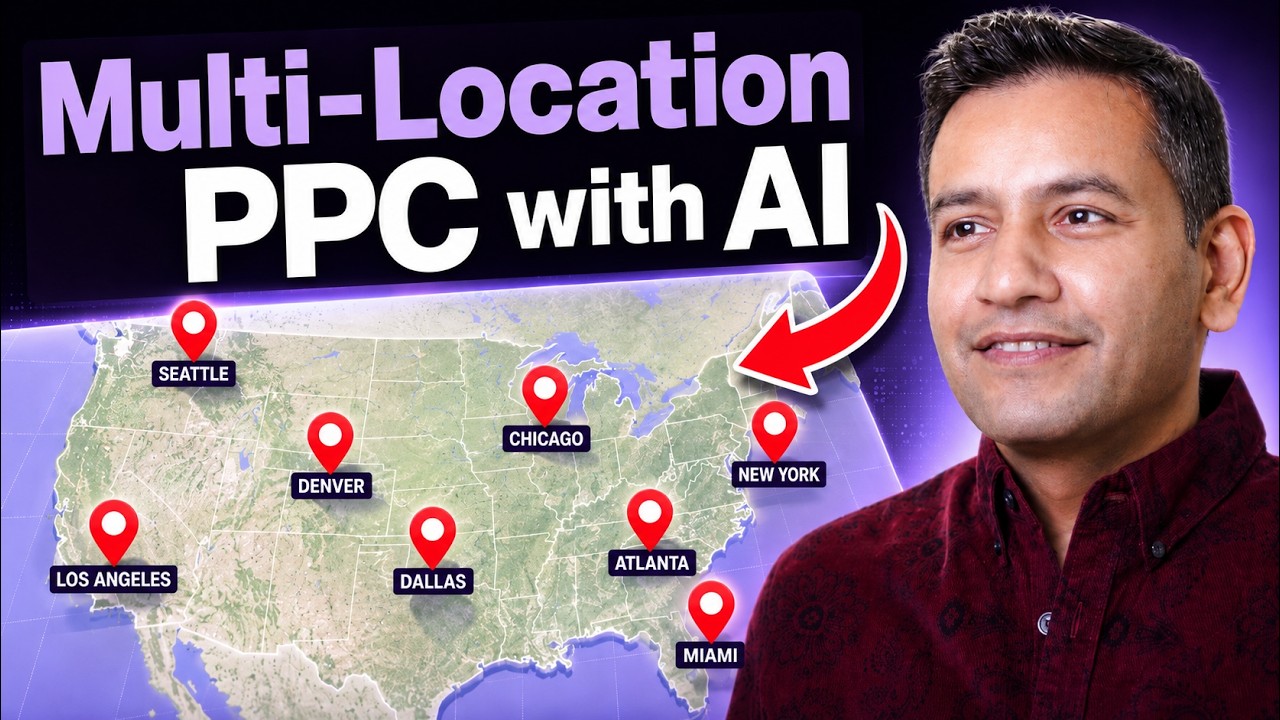
AI can help a lot with multi-location PPC, but only when it has the right data to work with.
A lot of franchisors and multi-location brands are already using AI in some form inside their Meta and Google ad campaigns. Their PPC teams may be using AI to write headlines, generate ad copy, come up with creative ideas, or speed up campaign planning.
That is useful, but it is only one small part of the opportunity.
The bigger opportunity in multi-location ads is not just using AI to create a few better headlines. The real opportunity is using AI to make campaigns smarter at the location level.
That matters because every location is different.
One location may have strong reviews.
Another location may have a missed call problem.
One location may need more first-time customers.
Another location may already be fully booked and should only focus on higher-value appointments.
One location may have a strong local offer.
Another location may need better lead quality, not just more leads.
This is where AI can become very useful for multi-location marketing. But only if the AI has clean location data first.
If you are a franchisor, multi-location brand, or a digital agency for franchisors, this is one of the most important things to understand before trying to use AI for paid ads.
The Problem: AI Cannot Create Smart Local Campaigns from Generic Inputs
Most people think about AI in PPC like this:
“Create me some ad copy.”
“Give me five headlines.”
“Write a Meta ad for this offer.”
“Create a Google Ads campaign for this service.”
That is fine for a basic use case.
But if you are managing ads across 10, 20, 50, or 100 locations, generic prompts will create generic output.
AI does not automatically know what is happening inside each location.
It does not know which location has the best reviews.
It does not know which location is missing calls.
It does not know which location has low booking capacity.
It does not know which location has a higher average ticket size.
It does not know which local offer is active in which market.
It does not know what your CRM is showing about lead quality.
It does not know whether the problem is the ad campaign or the local operation after the lead comes in.
So when the data is missing, AI usually creates the same type of ad for every location.
That is where multi-location PPC starts to break down.
You get the same messaging everywhere.
You use the same offer across different markets.
You do not use local proof from reviews.
You do not connect campaign ideas to actual reporting.
And over time, it becomes harder for the PPC team to remember what they were testing and why.

The Better Approach: Build a Location Intelligence Layer First
Before using AI to generate campaigns, multi-location brands need a clean location intelligence layer.
This is a structured profile for each location that gives AI the context it needs.
For example, if you are managing PPC for a dog grooming franchise, each location profile should include information like:
Location name
City and state
Location landing page
Google Business Profile rating
Review count
Review themes
Priority service
Local offer
Monthly ad budget
Average ticket size
Booking capacity
Lead volume
Booked appointments
Appointment show rate
Missed call rate
Current cost per acquisition
Business goal
Franchisee notes
This is not just “data for the sake of data.”
This is the information AI needs to create better campaign ideas.
If one location has reviews talking about “gentle staff” and “great with nervous dogs,” that can become an ad angle.
If another location has a high missed call rate, the campaign may need to push online booking instead of phone calls.
If another location has a high average ticket size, the campaign may focus on premium services instead of discounts.
If one location has low capacity, the goal may not be more leads. The goal may be better-quality appointments.
That is how AI becomes useful in multi-location marketing.
What Data Sources Should Feed the AI?
The data layer does not need to be complicated at first.
It can start with a structured sheet or a simple internal app.
The key is to bring the right data into one place.
Here are the main data sources that matter for multi-location ads.
1. Brand Website
The brand website gives AI the basic brand information.

This includes:
What the brand does
What services are offered
What tone the brand uses
What offers are approved
What claims are allowed
What the primary call to action should be
This helps AI stay on brand.
For example, if the brand tone is warm, simple, and trustworthy, the AI should not create aggressive or overly salesy ad copy
2. Location Landing Pages
Location landing pages are very important for multi-location PPC.
Each location may have different services, offers, booking links, or local messaging.

For example:
Austin may promote first-time grooming appointments.
Dallas may promote online booking.
Denver may focus on premium grooming.
Tampa may focus on puppy grooming.
Scottsdale may focus on senior dogs or sensitive pets.
If AI can read and understand each location page, it can create ads that match what is actually true for that location.
3. Google Business Profile Reviews
Google Business Profile data can give AI local proof.

This includes:
Average rating
Review count
Review keywords
Common review themes
Customer language
Local trust signals
This is one of the most useful sources for ad messaging.
Customers often describe the real reason they chose a business.
For example, a dog grooming location may have reviews mentioning:
“Gentle with nervous dogs”
“Easy online booking”
“Premium grooming”
“Great with puppies”
“Calm environment”
“Friendly staff”
Those words can become campaign angles.
Instead of creating generic copy, AI can use real local proof from that location.
4. CRM Data

CRM data tells you what happened after the lead came in.
This is where PPC gets much smarter.
The CRM can help AI understand:
How many leads came in
How many became booked appointments
Which services people asked about
Which locations had stronger lead quality
Which campaigns produced better customers
What the show rate looked like
This matters because PPC should not only be judged by leads.
A campaign that generates cheap leads may not be the best campaign if those leads do not book, show up, or buy.
For multi-location marketing, CRM data helps connect ads to real business outcomes.
5. Call Tracking Data

Call tracking is one of the most important data sources for local PPC.
Many multi-location businesses depend heavily on phone calls.
But sometimes the ad campaign is not the real problem.
The real problem may be that the location is missing too many calls.
For example, if a location has a 30% missed call rate, spending more on ads may only create more missed opportunities.
AI needs to know that.
Call tracking data can include:
Answered calls
Missed calls
Average call duration
Booked calls
Call source
Call quality
This gives AI better context before recommending more ad spend.
For example, if Dallas has a high missed call rate, the campaign may need to focus on online booking instead of phone calls.
That is a location-specific decision that AI can only make when it has clean data.
6. Ad Platform Data

Ad platform data tells AI what has worked in the past.
This may come from Meta Ads, Google Ads, or a manual report upload.
Useful fields include:
Spend
Impressions
Clicks
CTR
Leads
Cost per lead
Booked appointments
Cost per booking
Conversion rate
Campaign angle
Location
This helps AI compare future campaigns against past performance.
It also helps the PPC team avoid starting from scratch every time.
7. Manual Inputs
Not all useful data lives inside software.
Some of it may need to be entered manually.

For example:
Monthly local budget
Average ticket size
Location capacity
Priority service
Local offer
Business goal
Franchisee notes
This is very common for franchisors and multi-location brands.
The important thing is not where the data comes from.
The important thing is that the AI can access it in a clean, structured way.
Example: A Dog Spa Franchise with 10 Locations
In the video, I use a fictional dog spa franchise called PawPure Spa.
The brand has 10 locations.
For the demo, we look at the first five:
Austin Downtown
Dallas North
Denver Cherry Creek
Tampa Bay
Scottsdale
Each location has a different PPC opportunity.
Austin Downtown
Austin has strong reviews around gentle handling and nervous dogs.
So the campaign angle is:
Gentle care for first-time grooming appointments.
The AI creates copy around trust, comfort, and calm care.
Dallas North

Dallas has good lead volume, but a higher missed call rate.
So the campaign angle is different.
Instead of pushing phone calls, the campaign promotes online booking.
That is because the local data shows that phone-call-heavy messaging may not be the best move.
Denver Cherry Creek

The copy is not focused on discounts.
It is focused on quality, trust, and a better grooming experience.
Tampa Bay

Tampa has a strong puppy grooming opportunity.
So the campaign focuses on a puppy’s first spa visit.
That matches the local customer segment and the review themes.
Scottsdale

Scottsdale has high reviews and high average ticket size, but lower booking capacity.
So the campaign does not aggressively push volume.
Instead, it focuses on high-value appointments and gentle care for senior dogs or sensitive pets.
How AI Generates Better Campaigns from Clean Data
Once the location intelligence is ready, AI can help create better PPC campaigns.
The process looks something like this:

Choose the platform, such as Meta Ads or Google Ads.
Choose the campaign objective.
Select the locations.
Choose the AI strategy.
Review the brand rules.
Generate the campaign package.
In the demo, I choose Meta Ads and select appointment bookings as the objective.
Then I choose five locations.
The AI uses the data from each location to create a different campaign angle.
This is the important part.
AI is not just writing five versions of the same ad.
It is creating five different local campaign strategies.
Austin gets gentle care messaging.
Dallas gets online booking messaging.
Denver gets premium grooming messaging.
Tampa gets puppy grooming messaging.
Scottsdale gets senior dog comfort messaging.
That is what makes the campaign more useful.
Why the Campaign Hypothesis Matters
One of the biggest benefits of this approach is that AI does not just generate the ad.
It also stores the campaign hypothesis.
That means the system remembers what the campaign was trying to test.

For example:
Austin hypothesis:
Reviews mention nervous dogs and gentle staff, so gentle care messaging should increase first-time grooming appointments.
Dallas hypothesis:
Missed call rate is high, so online booking should improve conversion.
Denver hypothesis:
High average ticket size and premium reviews mean premium grooming messaging should produce better revenue per booking.
Tampa hypothesis:
Puppy grooming reviews suggest a first puppy visit campaign may attract new customers.
Scottsdale hypothesis:
High-value customers and low capacity mean the campaign should focus on appointment quality, not volume.
This matters because most reporting only tells you what happened.
But when AI knows the hypothesis, it can help explain whether the campaign idea actually worked.
The PPC Manager Still Reviews and Launches the Campaign

This is not about replacing the PPC manager.
The PPC manager still needs to review the campaign.
They need to check the messaging.
They need to verify the offers.
They need to make sure the landing pages are correct.
They need to review the budget, audience, and setup.
They need to launch or upload the campaign inside Meta Ads Manager or Google Ads.
AI helps prepare the campaign package.
The PPC manager still brings judgment.
This is the right balance.
AI creates speed and structure.
The PPC manager brings experience and control.
The Reporting Loop: Where AI Becomes Even More Useful

After the campaign runs, the PPC team can upload the performance report.
This could be a Meta Ads export, Google Ads export, or a combined reporting file.
Now AI can compare the results against the original campaign hypothesis.
That is where the system becomes more useful than a normal report.
Instead of only saying:
CTR went up.
CPA went down.
Spend increased.
Leads increased.
The AI can say:
This campaign angle worked.
This campaign angle did not work.
This location has an operations issue.
This location should not scale because capacity is low.
This location should be measured by revenue per booking, not only cost per lead.
This location needs a new offer.
This location should test a new creative angle.
That is much more useful for multi-location PPC.
Example Reporting Insights

In the demo, the system shows that 3 out of 5 location hypotheses worked.
Austin worked well.
The gentle care angle created strong appointment volume and a low cost per booking.
Denver worked well.
The premium grooming campaign had lower lead volume, but better estimated revenue because the average ticket size was higher.
Scottsville worked well.
The campaign brought in high-value appointments, but the recommendation was not to scale too aggressively because booking capacity was low.
Dallas was mixed.
The campaign generated clicks and leads, but bookings were weaker than expected.
The reason was not just the ad.
The missed call rate was still high.
So the recommendation was to push online booking harder and fix call handling before increasing ad spend.
Tampa was also mixed.
The puppy grooming campaign got good engagement, but it did not turn into enough booked appointments.
So the next test could focus on stronger appointment urgency.
What This Means for Franchisors and Multi-Location Brands
For franchisors and multi-location businesses, the main takeaway is simple.
AI can help your PPC team, but only if the inputs are strong.
If you only ask AI to create ad copy, you will get basic ad copy.
But if you give AI clean location intelligence, it can help with much more.
It can help identify the right campaign angle by location.
It can create localized ad copy.
It can use local proof from reviews.
It can factor in CRM and call tracking data.
It can avoid pushing volume where capacity is low.
It can help PPC managers understand whether a campaign idea worked.
It can make the next campaign smarter.
This is where multi-location ads can become more strategic.
The goal is not just more ads.
The goal is better location-level decisions.
The First AI Project May Not Be Ad Generation
A lot of teams want to start with the exciting part.
They want AI to generate ads, creatives, and campaign ideas.
But for many multi-location brands, the first AI project should probably be something else.
The first project should be building the clean data layer.
Because once the location intelligence layer exists, many other AI use cases become easier.
Multi-location PPC becomes easier.
Multi-location marketing becomes easier.
Reporting becomes easier.
Campaign planning becomes easier.
Franchisee-level insights become easier.
And your PPC team has a much better foundation to work from.
This is especially important for any digital agency for franchisors that is managing paid media across many local markets.
The agency can move faster, but it can also make better decisions because the data is cleaner.
Final Thought
AI can improve multi-location PPC.
It can improve multi-location ads.
It can support better multi-location marketing.
But AI is not magic.
It needs clean inputs.
It needs location-level context.
It needs review data.
It needs CRM data.
It needs call tracking data.
It needs ad performance data.
It needs business goals.
It needs human approval.
When all of that comes together, AI becomes much more useful.
It is no longer just a tool that writes headlines.
It becomes a system that helps your PPC team understand each location, create better campaigns, track what they were testing, and make better decisions from the results.
That is the real opportunity.
At Weam, we help franchisors and multi-location businesses build custom AI tools for their own marketing and operations workflows.
If you are looking for a digital agency for franchisors or want to explore how AI can improve your multi-location marketing, visit weam.ai to learn more.