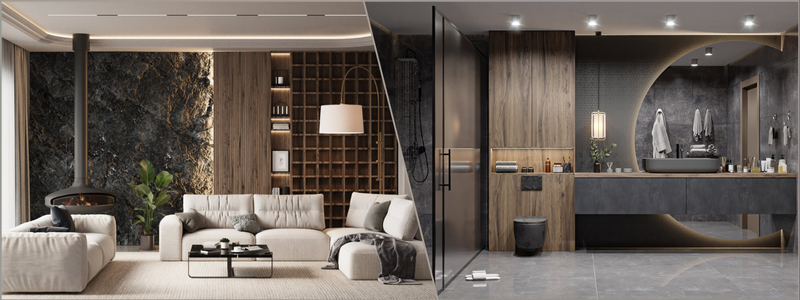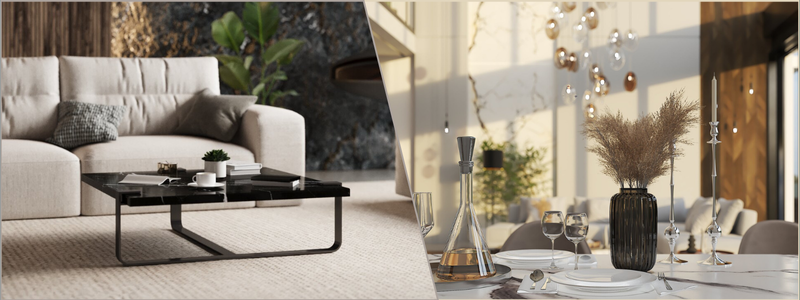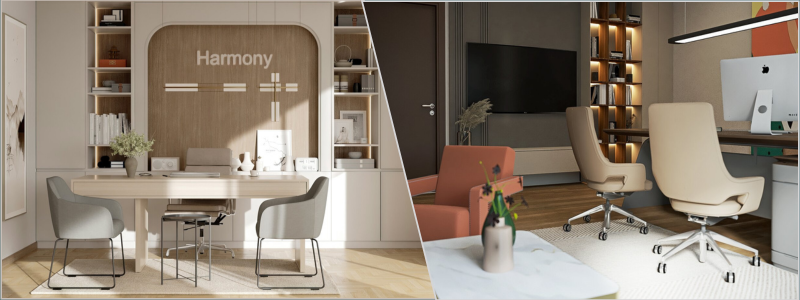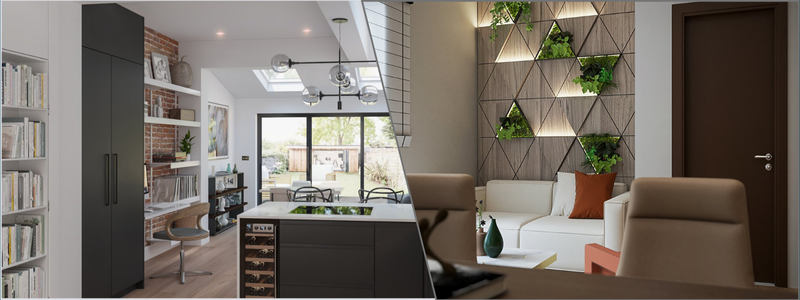
How to Create Stunning Room Renderings: Your Guide for Interior Design Services


This post provides a guide for interior design services and how it’s used to create beautifulo room renderings. Interior rendering, as a trade within the architectural industry, refers to the production of design visualization to showcase how a room is supposed to look before it’s constructed. The visualization is typically used as a presentation tool to communicate design concepts and ideas to clients and stakeholders for reviews and approval.

Gone are the days when architectural designers and design firms rely solely on the traditional 2D drawings to make sales pitches. While the industry hasn’t reached a point of complete transformation from conventional drafts to the more advanced 3D renderings, it’s pleasing to see how professionals and clients alike no longer treat photorealistic visualization as an expensive add-on but a necessity in the design process.

The primary goal of a room rendering process is to make the final image as photorealistic as possible. In other words, the computer-generated imagery needs to look as if you’ve taken a photograph of the room using a professional-grade camera and add some final edits to it. All that sounds simple on the surface, but in reality, photorealistic rendering services are a pretty intensive process that requires not only technical precision and understanding of camerawork but also artistic touches.

RELATED: Virtual Room Design Services and 3D Room Design Tips: Complete Breakdown for Companies and Firms

It takes skills and experience to turn a design draft, whether a floor plan or an interior sketch, into an accurate, lifelike image. Familiarity with a range of 3D modeling and rendering software packages is a must; otherwise, you might miss out on specific features, tools, or functionalities required to achieve the level of detail needed for the work. A high-quality render isn’t just a snapshot of a design translated from a draft; some might say it should be nothing short of artistic expression to evoke emotional responses from the audience.

Photorealistic rendering isn’t exactly a new thing, but looking for a professional and experienced 3D render artist for a project can still prove to be quite a challenge these days. Cad Crowd appears to be the safest bet for now. The AEC-focused freelancing platform is home to hundreds, if not thousands, of the world’s most talented render artists, offering their services at reasonable prices. In any case, every render artist has to start from a place where they almost have no idea what they’re doing before they get to a professional level. It’s not going to be a quick jump, but the following guides should help you get a grasp of the essentials a little bit better.

Practical guides to interior rendering

Photorealistic visualization of an architectural project can be a daunting subject. But the good thing is that, sometimes, a deeper understanding of the basics goes a long way to improve your skills. What you’ll see below won’t be much of a deep dive into the intricacies of interior rendering services, but it might just be enough to lead you in the right direction toward visualization fluency.

RELATED: Types of 3D visualization for architectural design and CGI projects

Learn from references

Just because rendering doesn’t come with exactly the same workflow as photography, it doesn’t mean you can’t use images captured by cameras as references. Even for a project brief that’s uniquely specific, there’s a good chance that you can find photos online that at least partially meet one of the requirements. For instance, if the client wants an interior with an industrial style that uses furniture from a particular brand, the Internet is a good place to start hunting for some inspiration. You might not be able to get any image that ticks all the boxes, but even in the worst-case scenario, you’ll bump into one or two images usable as points of reference.

If photographs are hard to come by, you can always resort to online libraries for rendering. Websites like DeviantArt and Behance have loads of samples to explore and observe. ArchDaily and Divisare also offer curated selections of interior visualizations by well-known designers and render artists. Even Pinterest should be good enough to get you started. There’s nothing wrong with using the works of others for inspiration, so long as you don’t produce an exact copy, which is highly unlikely anyway because their project briefs can’t be identical to yours either.

References allow you to “indirectly” learn from other render artists and 3D designers. All those images might tell you which color combination works best for a small room, what visual style conforms with a home office, how to present a corporate office render, and so forth. Every little detail you see is a lesson to remember.

RELATED:  7 ways 3D interior designer services are used to maximize living and working spaces

Use high quality 3D models

3D modeling design services are the underlying work of an interior rendering. You can’t have a proper render without making sure that you have all the correct models to represent objects in the scene. Remember that you’re not actually capturing photos of physical objects, but generating a visualization of those objects in a digital environment using specialized software. Accurate 3D models are a prerequisite for high-quality rendering. Many things can make your visualization look unrealistic, and poorly-built 3D models are among the worst of them all.

One of the main problems with high-end interior rendering is that you can’t always source quality models from just about any 3D model marketplace online. Let’s assume the client wants the visualization to include objects (furniture, ornaments, fixtures, etc.) from specific brands. In many cases, it’s perfectly fine to model those objects yourself, but make sure that you get clearance from the clients. Some furniture design companies actually sell high-poly 3D assets of their patented design or products, so make time to discuss the matter with the clients to avoid any legal issues.
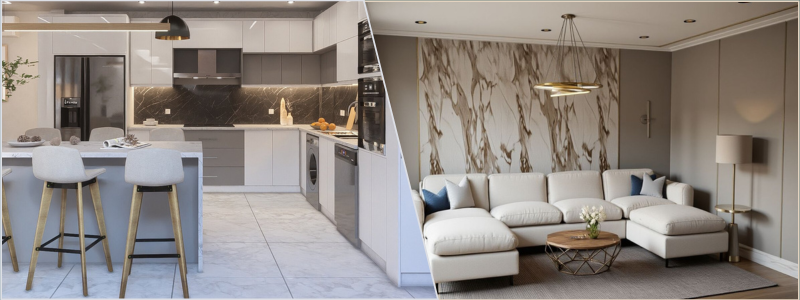
3D interior visualization firms

If you have to model some objects from scratch, remember the following key principles:

  • Respect the real-world dimensions: it’s best to model an object according to its actual measurements. If possible, look for the manufacturer’s specification.
  • Clean geometry: overlapping meshes aren’t the best solution to achieve a shape or design. They can result in unwanted artifacts in rendering or shading issues.
  • Avoid low-poly: any object, whether you plan to use it in the foreground, mid-ground, or close-up view, should be modeled as a high-poly 3D asset. Even if you want to use it as a background object and blur the color for a realism effect, it’s better to have a detailed object converted into a low-poly one than the other way around.

RELATED: How Architects and Companies Leverage 3D CAD Technology to Develop Architectural Models

Be that as it may, modeling from scratch is usually not the priority for efficiency reasons. 3D modeling is a time-consuming task, especially considering the fact that you have the option to source premium assets from online marketplaces. Such platforms as TurboSquid, RenderHub, BlenderKit, and CGTrader, to name a few, have thousands of ready-made 3D models used for architectural rendering services. Assets include furniture, decorations, ornaments, lamps, doors, windows, stairs, and more. 

Map the project brief

Reading the brief over and over again does seem like a waste of time and effort, but it’s advised against simply combing through the instructions for the obvious reason that you can easily miss something crucial. To avoid the hassle, make the effort to “map” or outline the brief during the first re-read. This is where you answer questions like:

  • What is the intended visual style? Is it minimalist, industrial, contemporary, classic, or something else?
  • Is there any particular color combination that best complements the style?
  • Does the instruction mention anything specific about the furniture design, brands, ornaments, decorations, wall paints, or other objects and elements?
  • What should be the focal point? Is there any object to highlight?
  • What time of day will the rendering be? If the 3D visualization design depicts the interior at nighttime, how many light sources are there in the room?
  • Does the client provide images or photos for references? If so, what makes the references stand out?

There are no right or wrong answers to any of those questions. Take another look at the client’s references (if any) or other images you’ve already collected to gather ideas and develop a design concept. It’s important to have a clear style direction early on in the process; otherwise, you’ll be doing everything seemingly at random without a well-defined objective.

Unsurprisingly enough, 3D CAD render artists are prone to falling into the trap of repetition. This is when they unknowingly use the same design ideas and visual styles over and over again. Everything looks just fine for the first dozen or so renderings, but then the portfolio shows very little variation in terms of perspectives, composition, lighting effects, color, etc. It’s understandably difficult to come up with a fresh design concept each time, and that’s why everyone needs to take inspiration from other designers and render artists at times.

RELATED: How 3D Modeling Has Impacted the Architecture and Design Industry throughout the Last 30 Years

Camerawork

The hallmark of a high-quality render is when the audience cannot seem to tell if what they see is a computer-generated visualization or a photograph. In other words, you need to try to render like a photographer. Remember that the virtual camera (this is the camera position that gives you the viewing angle for the rendering) essentially follows the same optical principles as an actual DSLR. As a 3D architectural visualization designer, to produce professional-grade images, you shouldn’t stick to the default setting, then do the routine point-and-shoot. There are plenty of settings to configure, including object placements within the frame (composition), to get the best results. 

A typical challenge with interior rendering is space limitation. Field of View (FOV) and focal length matter the most here. An easy solution is to use a wide-angle perspective to cover the entire room and therefore fit every object in the frame. But an easy solution isn’t always the best available. If you include everything in the frame, the image most likely ends up with poor composition, with a weak focal point. The sweet spot for interior visualization is a focal point between 28mm and 35mm, or the “prime lens” shot. The viewing angle from these lenses closely mimics the human natural field of view, making the image look realistic.

Detailed shots or vignettes are best when captured using a medium telephoto or “portrait” lens. This allows you to focus on or highlight specific objects or areas while compressing the background at the same time. Experiment with the Depth of Field option for more dramatic blur effects. The next in line is composition, or the arrangement of objects in the scene. Some of the most common composition techniques for interior visualization services include:

  • Rule of Thirds: placing the focal point or highlighted features of the room slightly to the right or left of the center.
  • Framing: the use of objects such as windows, doorways, ornaments, or even furniture to frame the key features.
  • Leading Lines: utilizing noticeable lines (from the objects) in the scene to guide the viewers’ eyes toward the key features.
  • Asymmetry: introducing too much symmetry to the scene makes the image look generic, so a touch of imbalance is good.
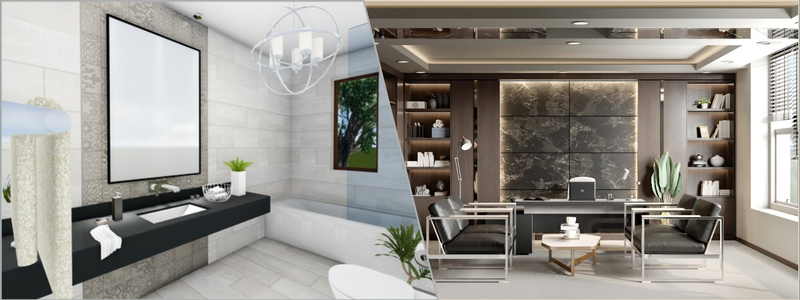
3d interior rendering designers

RELATED: Tips for 3D Rendering with Photorealistic Results at Your Firm

Don’t be afraid to explore the different options of camera angle, height, focal point, and composition. You can’t really see what’s the most effective solution until you compare at least two or three finished renderings. It’s best to do the exploration in the “grayscale render” stage. Also commonly referred to as “white box rendering,” this is the stage where the 3D models are still devoid of color and textures. Professionals use the technique to experiment with camerawork without the need to do full-scale rendering each time.

Mind the lights

The way the 3D modeler set the lighting effects can make or break the rendering. Different times of day have a huge impact on how the room looks and feels. A lot of times, it has everything to do with the kind of room you want to visualize. For example, a bedroom is best encapsulated with artificial light sources during the night, whereas a home office appears to have its most energetic atmosphere during broad daylight. If you decide to use the sun as your primary light source, make sure it’s dispersed enough across the room to maintain a comfortable level of brightness without making everything too dim.

Artificial lights are a little more complicated, as the 3D interior rendering designer have to work with three different types of them, including ambient, accent, and statement. Ambient lights are the base illumination (this is the brightest lamp in the room), accent lights are complementary in nature, such as desk lamps or LEDs behind the TV, whereas statement lights are only for style purposes, like a chandelier. Each type serves its own functions to contribute to the realism effect. 

RELATED: 3D Interior Rendering Services for Interior Design Firms How to Make Your Company Stand Out

Free experiments

As mentioned earlier, interior rendering is a little bit of both technical mastery and artistic expression. The mastery portion of the equation calls for software know-how, understanding of the physics of lighting, and material realism. On the other hand, the artistic part is all about visual storytelling; it’s how you convey messages and trigger emotional responses from the audience with imagery. Utilize lighting effects to build an atmosphere, explore different viewpoints to create a narrative flow, or use a specific color scheme to introduce a specific mood within the frame. 

In many respects, interior rendering is like product development services, where prototyping is an iterative process. Through subtle yet continuous improvement and structured practice, every image should come out better and more refined than the previous one. More attentiveness to details, combined with valuable lessons from yesterday’s mistakes, can really turn pencil sketches and simple illustrations into emotionally resonant visualizations. Every room and its unique design present their own rendering challenges, but that’s how you afford the chance to try and explore different methods for a visual storytelling that communicates design concepts, lifestyle, or perhaps brand identity.

Whether you’re generating a visualization for a small kitchen or corporate office, every instance is an opportunity to experiment with ideas. This kind of “experiment” will mostly revolve around using more tools and features in the rendering software, but the truth is that you can only improve by being more familiar with the software you have. It’s how you hone your skills in creating different visual styles, not just to get to know the intricacies of each, but to understand which style does best for any given project brief.

RELATED: Differences Between 3D Rendering and 3D Visualization Services

Some ideas will work and others won’t, but mistakes are as effective at giving valuable lessons as success. The point is that experimenting with software tools, lighting effects, perspectives, composition, textures, materials, patterns, colors, and everything else related to rendering will broaden your knowledge. It’s all part of a creative process, and the experience you gain over time can only serve you well.

Takeaway

Apart from skills and experience, high-quality interior rendering from expert 3D photorealistic rendering artists also demands patience on your part. It’s almost an interdisciplinary field that requires technical understanding of lighting physics, the vision of a professional photographer, the artistic expression of a storyteller, and 3D modeling know-how. Chances are, you can’t have all of those overnight. Even a quick learner can take months, if not years, to feel comfortable with the complexities of interior rendering, beyond learning about software tools and understanding what every feature does. Creating a photorealistic visualization forces you to think like an architect and designer while trying to stand in the client’s shoes.

Now that 3D modeling and rendering software have become smarter and faster, the barrier to entry has also gotten lower. Modern software can automate geometry calculations, read textures and patterns, predict light behaviors, and even offer instant color balance correction. However, there’s always the artistic barrier. No software has the power to determine the best light source position to evoke a sense of comfort, energetic lifestyle, or joy. Software can’t replace human touch because it doesn’t have artistic expression.

RELATED: 3D Modeling vs. 3D Rendering Services

How Cad Crowd can help

A professional render artist bridges the gap between a design concept and its eventual materialization. Rendering should be an extension of the designer’s idea – an extension that allows the audience to picture themselves living in a place that doesn’t yet exist and make a buying decision long before construction begins. At Cad Crowd, the focus of architectural rendering isn’t just on realism, but also on believability through artistry. The professionals on the platform have undergone strict screening and vetting processes to maintain high-quality standards and make sure that every client gets the chance to work with the best in the trade. Get a free quote today.

author avatar

MacKenzie Brown is the founder and CEO of Cad Crowd. With over 18 years of experience in launching and scaling platforms specializing in CAD services, product design, manufacturing, hardware, and software development, MacKenzie is a recognized authority in the engineering industry. Under his leadership, Cad Crowd serves esteemed clients like NASA, JPL, the U.S. Navy, and Fortune 500 companies, empowering innovators with access to high-quality design and engineering talent.

Connect with me: LinkedInXCad Crowd

Boost Client Confidence with 3D Architectural Animation for Real Estate Presentations


Today’s post covers how you can boost client confidence with 3D architectural animation for real estate presentations. Imagine yourself going into a presentation of a real estate project with colored floor plans, glossy brochures, and maybe a few static 3D renderings. The client is leaning forward, nodding here and there, but you can just about see the question hovering above their head: “What will it really look like?” Is that not the problem? Traditional presentations leave far too much to the imagination. A few 2D drawings and flat renderings can only go so far in helping clients picture a space that does not yet exist. Then comes 3D architectural animation, like a creative superhero.

No capes are required, naturally – only some deft visuals, great use of space, and a bit of digital magic.

Why flat plans fall flat

In reality, even the best-drawn floor plan can be flat. It can show dimensions, proportions, and layout, but doesn’t provide anything that really gets people attached to a place. After all, real estate is not about square footage; it’s about vision, emotion, and that sense of belonging which space can create. No 2D plan will ever replace the visual understanding of how morning light spills across the kitchen counter, how the living room will feel from the second-floor balcony, or how spacious the lobby will look once the furniture is in place. Only one angle can be shown with a static rendering; it cannot tell a story.

But with 3D architectural animation services you can. It whisks clients on a slick, cinema-style journey through a property before a single brick has been laid and allows them to feel what it will be like to walk through the front door and explore the rooms, standing on that terrace with a view that takes their breath away. That is not exaggeration, that is the power of storytelling through motion.

RELATED: Top 37 Commercial Architectural Design and 3D Rendering Companies for Architectural Firms

Seeing is believing – it’s a science

Our brains are wired to understand things visually. About 80 percent of all information that we intake comes through our eyes, so it’s easier for people to respond because they can see it rather than having to imagine it. A 3D architectural animation designer taps into this instinct. It can turn the project from a stack of plans into an experience that feels tangible and real. This would, in turn, let the client visualize in action design details: the flow of natural light, the texture of materials, and realistic motion through each room.

Thus, it would easily bridge the gap from imagination to reality and make the proposed design more comprehensible and far more compelling. It’s only when the client gets to see every nook and corner of the future space that all one’s doubts start going away. Doubts give way to excitement-this is how you build up client confidence, helping them to see their investment.

Imagine the difference

Two developers submit proposals for upscale apartments. He enters the room with some static 3D renders and a few printed brochures. The presentation is informative, yet a little stiff; the audience listens and nods, asking only a few polite questions. Developer B walks in with a 3D architectural animation that flies the viewer through the entire property. The video leads off with an aerial view of the building surrounded by landscaped gardens, then flies the viewer through the entrance lobby past residents who chat in the lounge and onto the penthouse to view a stunning view of the city skyline.

Which of those developers do you think makes the longer-term impression?

The answer should be rather obvious: the second one has used 3D animation in order to make the project come alive. It is not just that the audience understands the concept; they feel it. That emotional connection builds trust and confidence.

RELATED: FAQs to Ask a 3D Animation Studio Before Hiring 3D Animation Services for Better Projects

Standing out in a competitive market

Competition in the field of real estate has grown tougher. Everybody wants to be outstanding, and first impressions now mean more than ever. A slick 3D architectural animation from 3D architectural rendering professionals gives your presentation an immediate professional sheen, telling your audience that you care about quality, detail, and clarity. It also shows that you care about them enough to want to take care of their comprehension. You aren’t saying, “Just trust me.” You’re showing them exactly what they can expect. That kind of transparency creates trust. Be it pitching to investors, buyers, or even city planners, 3D animation drives the message home much faster and more effectively than any amount of technical jargon on a sheet of paper can.

Developers of real estate love it- and for good reason

Keeping this in mind, property developers welcome 3D architectural animation as a means of being able to sell quicker, plan better, and avoid misunderstandings. It is so much easier to see through any design flaw when one watches a building in motion as opposed to having it in flat drawings. One can make the adjustments well in advance, saving lots of time and money in the process. Besides, animations are marketing gold: they can be posted on websites, social media, and promotional videos; moreover, they are ideal for virtual tours and digital campaigns in cases when clients cannot visit the site in person. What might require dozens of static images to bring awareness, explain, and close the sale can be done with one animation.

3D architectural animation designers

What makes a great 3D architectural animation

Not all animations are created equal, and the best pieces combine technical precision with an artistic touch. A 3D architectural visualization expert can help.

What makes an animation shine is the following:

  • Realistic lighting and textures: Proper use of natural light and correct material expressions results in a believable atmosphere.
  • Smooth Camera Movement: Smooth transitions hold the viewer’s attention and make them feel the flow of space.
  • Attention to detail: From texture to reflection to shadow, contributes to the realism.
  • Compelling storytelling: Great animation takes the viewer on a journey; it doesn’t just show them rooms.
  • High-quality rendering: It is facilitated by crisp resolution as well as well-soaked colors.

It will surely be something to behold when these elements all come together for each of your clients and investors.

RELATED: Why You Should Hire a 3D Walkthrough Animation Service for Your Architectural Project

The power of emotion in real estate presentations

Few people make purely logical decisions about real estate; they may look closely at the costs and the floor plans, but emotion drives the final decision. A 3D animation from a 3D rendering firm puts that emotional spark into it. It lets the client feel, rather than calculate, the value of a space. The only way they can conceptualize is if you show how it would be in the future, with natural sounds, ambient lighting, and a warm atmosphere; then they are able to start seeing themselves within that. They start building a personal connection with the project.

When that happens, it turns from an absolutely informative presentation into an irresistible one.

The unreal becomes real

Good 3D architectural animation from 3D architectural design experts should not only show buildings; it should give life to them with trees swaying in the wind, reflections on glass, and shadows that change as the day progresses. It is a level of realism where clients just forget that they are actually seeing a model in digital format. Such realism gives the client confidence that, indeed, what they see will be translated into reality. It is not about impressing somebody; rather, it is about giving them confidence. A client will more likely invest in, approve, or buy something when they feel confident that what they see will be achieved.

Seeing the future before it exists

But the most exciting thing with this form of 3D architectural animation is the time-travel capability involved; it’s a look into the future long before even the foundation has been laid. Just think of presenting a fully realized, furnished property to show that exists only in pixels on a screen and yet looks utterly believable. You can show the view of a summer afternoon where sunlight pours in through floor-to-ceiling windows or an evening view with soft lighting and city lights that evoke a feeling of warmth and comfort.

RELATED: What is the Important Difference Between Motion Graphics Design and 3D Animation Services Design?

You can even show how the design fits into the seasons: lush greenery in summer, golden leaves in autumn, and cozy interiors in winter. This provides the clients with something no blueprint could: a real sense of ownership with this kind of visual versatility. This puts them into a mindset that they are already part of the project’s future.

A salesperson who never sleeps

Well-crafted 3D architectural animation from a 3D architectural visualizion designer works tirelessly for you: created once, it can be used across a wide range of platforms and audiences, from your website to social media ads, investor decks, and even in a sales office. It will never get tired or forget to mention talking points about your project and represent it in the best way. Think of it as a digital salesperson: charming, consistent, and camera-ready. It is invaluable to property developers and real estate marketers since with the animation, one need never explain over and over again; it speaks for itself eloquently and visually-anywhere at any time.

How 3D animation saves time and prevents misunderstandings

Of the many advantages and benefits associated with architectural animation, one of the most undervalued advantages is that it makes the interactions among teams much easier. Usually, the architects, designers, contractors, and clients all have different views about the drawings. A small misunderstanding in the initial design stage could result in costly changes later on.

With 3D animation services, these risks decrease because it ensures that all things are crystal clear. When everyone is able to see what the final outcome of something should look like, there is much less room for misinterpretation. It saves enormous amounts of time when revisions are in order. You don’t have to try to explain spatial adjustments through sketches or long emails; you just show them the modified animation. In other words, the visuals clear up the confusion way faster than any technical explanation ever could.

RELATED: A Complete Guide to the 3D Animation Pipeline for Your Business or Firm

Customization at its finest

Versatility is a great feature of 3D architectural animation. You can also create as many versions as you want with one project, depending on the audience. For instance, some of them are interested in smooth animation of scale, location, and profitability with a short length. Buyers may also like the more relaxed, atmospheric walk-through of the interiors, lifestyle elements, and emotional appeal. Animation for environmental harmony, pedestrian flow, and sustainability.

City planners want an animation on environmental harmony, pedestrian flow, and sustainability. You can reuse the same base animation, only adjusting the lighting, the pacing, and the music slightly to make it work for each. That’s the flexibility that makes 3D animation one of the smartest marketing tools in your arsenal.

The ‘Wow’ factor that clients remember

We are living in a visually-oriented world where people are bombarded by images, videos, and all forms of digital content. But for anything to get attention these days, it really needs to cut through the noise. The “wow” factor a well-done 3D animation from a 3D animation designer does is that it stops people mid-scroll, draws them in, and makes them utter the words, “That looks amazing.” It’s the difference between a standard pitch and a memorable experience. You know you’ve done something right when, days or even weeks later, a client still remembers your presentation: the visual memory of your animation far outlives any printed brochure or static image.

RELATED: How to Use 3D Architectural Design as Visual Storytelling

Virtual staging for architecture services

The subtle power of music and sound

But 3D architectural animation is not all about the visuals. The sound, too, plays a big role in building up the emotional atmosphere: soft hums of the city skyline, birds chirping in a suburban garden, or quiet echoes of footsteps down a marble hall-these little audio cues add richness to the presentation. Music sets a tone, too. A soft piano piece can lend warmth and elegance to a residential development, while a rhythmic upbeat suits a modern urban complex. These audio clues give even more of an immersive feel to the experience, but above all, an emotional one. They let the client feel the project, rather than just see it.

Bringing design philosophy to life

Most architects have a design philosophy-something to guide them through the process. It’s hard to describe, but ideas like “connection to nature” or “flow of light.” Architectural animation designers bring these ideas to life, showing how such design principles play out in real space: how open-plan living encourages connection, how large windows invite natural light, and how materials create a sense of warmth and texture. You don’t tell them about your design philosophy; you show it. It is that difference that turns your presentation into a creative narrative, rather than a technical showcase.

Investor confidence

Investors are always cautious. They would no doubt like to be very sure that their money is well-invested in a viable and well-planned venture. Spreadsheets and feasibility reports are all required, but do not really build confidence as much as a realistic animation might. A high-quality 3D presentation of the project will, therefore, help investors much more easily understand the whole idea and consider its potential. They would then see just how exactly the final product will attract a buyer or tenant; this clarity builds confidence and could actually be the determining factor in the decision to invest in the project. A professional 3D animation adds an aesthetic allure to your proposal while making your financial case robust.

RELATED: What Factors Influence 3D Animation Services Rates, Costs, and Pricing for Companies?

How 3D Animation Supports Virtual Reality Experiences

Virtual Reality has now found its application in architectural fields, changing the way designs are being presented to clients. Most of the VR experiences for architectural services are based on 3D architectural animations and created by 3D AR/VR architectural design experts. These would enable the client to virtually “walk” through spaces, see around corners, and explore at his or her own pace with a set of VR headsets. It is this being-inside sense that makes the experience of engagement so much deeper. Actually, the clients are feeling themselves physically inside the building, which does not exist.

The belief it gives them is that everything has been considered, thus speeding up their decision-making process.This would have the same effect when one sees a 3D animation on an ordinary screen without making use of all the elements of VR. It allows for spatial awareness and emotional bonding that is simply not replicable with static visuals.

Marketing in the digital era

Of course, there is also the marketing potential of 3D architectural animation: well done, shareable, engaging, and versatile-you may feature it on your website, play it in your showroom, or post it on social media where it can be seen by thousands of possible clients. Properties listed with 3D video tours do significantly better compared to those that are presented with photography alone. They drive more traffic, more leads, and in the process build a strong brand image. In today’s video-first world, a video does indeed reign supreme. A 3D animation of your property takes center stage in your marketing campaign, with that professional and modern image to which today’s tech-savvy clients are most attracted.

RELATED: 5 Uses of 3D Architectural Animation for Marketing Your New Development Project

Why Cad Crowd is a smart place to start

First-class 3D architectural animation requires both talent and experience, with appropriate software skills. It is not the kind of project that is given to just anybody who has a computer and some enthusiasm. Cad Crowd fills this gap by matching your project with highly vetted freelance 3D animators and architectural visualization experts from around the world. You’ll also be able to explore their portfolio and skillset and hire a professional with experience in real estate presentations.

Whether you require a fly-through of a luxury property in a cinematic style, an interactive investor animation, or a photorealistic visualization of an urban development, you will definitely find freelancers at Cad Crowd who can help bring your ideas to life. Working with freelancers at Cad Crowd is effective and cost-efficient, as you get a chance to pick from among a large pool of professionals who understand architectural precision and creative storytelling. Cad Crowd can help you find a smooth, transparent, and reliable collaboration with real estate professionals while taking out all hassle entirely. Contact us for a free quote.

author avatar

MacKenzie Brown is the founder and CEO of Cad Crowd. With over 18 years of experience in launching and scaling platforms specializing in CAD services, product design, manufacturing, hardware, and software development, MacKenzie is a recognized authority in the engineering industry. Under his leadership, Cad Crowd serves esteemed clients like NASA, JPL, the U.S. Navy, and Fortune 500 companies, empowering innovators with access to high-quality design and engineering talent.

Connect with me: LinkedInXCad Crowd

Best 27 Companies for Hiring Enscape Designers and Experts for Architectural Design Firms


It is like finding the needle in the haystack when searching for Enscape designers that are a cut above the rest. You know the good one exists, but where? Architecture design companies now struggle to produce realistic, immersive visuals that blow their clients’ minds prior to something being built. That is where Enscape designers enter. Technical drawings are brought to life and turned into incredible virtual experiences by professionals of this type who set their projects up. If you want to know where to start, you’re reading it here. We’ve put the best 27 companies that hire Enscape designers and professionals on our list, and spoiler alert – Cad Crowd is one of them.

cadcrowd-logo

1. Cad Crowd

Cad Crowd is one of the most well-known platforms to hire the best-of-the-best Enscape designers and visualization experts in architectural design. Cad Crowd directs corporations to talented freelancers who specialize in 3D rendering services, modeling, and visualization in Enscape and other top-of-the-line design software. They attempt and experiment with all the freelancers on both experience and quality so that your project is in capable hands. You may have one rendering project or a sporadic one-off job for your business; Cad Crowd simplifies the hiring process, makes it transparent, and efficient. It is a perfect option for companies seeking dependable design professionals and project-to-project contacts. 

Website: Cadcrowd.com

RELATED: Pricing Factors for Architectural Visualization and Hourly 3D Renderings Rates for Your Firm’s Projects

CGHERO logo

2. CGHero

CGHero provides a pool of skilled CGI professionals who are capable of offering architectural visualization services on Enscape projects. The website caters to studios, developers, and design agencies seeking high-end rendering, modeling, and animation services. The projects are handled by the artists with care to ensure design accuracy and software compatibility. The hiring process of CGHero provides businesses with the option to choose flexible freelance assistance or specialist groups, based on the size of the project. The website also places value on quality checking and uninterrupted client-artist communication. For architecture offices that need realistic Enscape renderings, CGHero has a skilled team of experts ready to work as well as possible. 

Website: Cghero.com

BIM Heroes

3. BIM Heroes 

BIM Heroes is a Building Information Modelling expert and offers architectural offices cutting-edge visualization with the likes of Enscape. BIM Heroes assists design teams in bringing the projects to life with precise 3D modelling and interactive visualization. BIM Heroes professionals have superior design and technology expertise to ensure the visual outcome is precisely as architectural intention. BIM Heroes offers collaboration-enabling, workflow-enhancing, and project-visualization-enabling solutions from design to presentation. If precision modeling or photorealistic walkthroughs in Enscape are needed in your company, BIM Heroes offers technical accuracy with creative presentation to enable communication and design experience. 

Website: Bimhero.io

ZipRecruiter Logo

4. ZipRecruiter

ZipRecruiter is a trusted job website from which companies can hire talented Enscape designers and 3D visualization specialists. Companies can post a job and reach out to experts with 3D rendering and architecture visualization ability through the company’s sophisticated job-matching technology. Some of the candidates at ZipRecruiter are interior renderers, architectural designers, and 3D modelers. The company streamlines recruitment with auto-screening technology and easy-to-use management tools. Architecture firms are able to obtain access to huge volumes of job candidates and quickly shortlist suitable Enscape users. ZipRecruiter assists employers in making informed and intelligent hiring decisions. 

Website: Ziprecruiter.ie

RELATED: How To Render Architecture: Tips from an Architectural Rendering Company, Los Angeles 

SimplyHired logo

5. SimplyHired

SimplyHired is an easy and efficient method for architecture firms to find Enscape designers and visualization specialists. SimplyHired collects job listings from various sources so that employers can see a great number of suitable candidates. The companies can post entire job postings with Enscape skills, experience in projects, and design specialty. Its search features and pay information make hiring easy and transparent. Hiring freelancers, part-time partners, or full-time visualization specialists, SimplyHired is a seamless recruitment tool. Architect design companies that wish to increase the visual representation group can trust SimplyHired to have the team working with great Enscape specialists. 

Website: Simplyhired.com

Prolinker

6. ProLinker 

ProLinker connects professionals and businesses in various design and technology areas, for example, architectural visualization and Enscape. ProLinker is based on real profiles and stable partnerships to enable businesses to find the right professionals to suit individual project requirements. Architecture design teams can view qualified Enscape professionals, view previous work, and negotiate with the applicants. ProLinker is suitable for short-term freelancing or long-term partnerships and is easy to use for companies with different sizes. Its professionalism and clarity of communication ensure that it works effectively on visualization and rendering projects. ProLinker is ideal for companies that require robust Enscape features to provide architectural design services. 

Website: Prolinker.com

Enscape Studio

7. Enscape Studio 

Enscape Studio provides state-of-the-art visualization and real-time rendering services that bring architectural ideas to life in presentations that look real. Enscape studio experts possess Enscape experience in diverse services ranging from walkthrough and 3D modeling design services to interactive virtual presentation. All projects are backed by a thorough process that can infuse energy into design storytelling and visual expressiveness. Architect firms choose Enscape Studio because it is a heaven-ordained collaboration of art and software technology expertise. Both the design process and the software technology are known to the experts, and they can work in harmony. For firms that have to hire masters who are Enscape masters in converting designs into stunning visualizations, Enscape Studio is a productive tool. 

Website: Enscapestudio.com.au

RELATED: How Emotional Design in Architecture Enhances Mood for 3D Modeling & Architectural Services Firms

insolvo logo

8. Insolvo 

Insolvo is a simple freelance site through which architecture companies can find professional Enscape designers and visualization experts to hire. The site brings employers together with 3D architecture design freelancers who excel in 3D rendering, modeling, and virtual walk-through for design projects. The clients can list exact projects, give budgets, and peruse portfolios so they can find the ideal match. Insolvo’s open forum makes it simple to facilitate projects from proposal to completion. It is also optimal for small businesses requiring affordable Enscape functionality without compromise. By providing adaptive recruitment channels and open project management software, Insolvo offers architecture visualization teams access to high-quality freelance Enscape functionality. 

Website: Insolvo.com

Graitec

9. Graitec 

Graitec offers specialist expert design software solutions and consultancy to engineering, architectural, and construction companies. Besides software, it even provides visualization and BIM expert access for providing Enscape integration and project delivery assistance. Graitec specialists are experts in assisting organizations in increasing rendering quality, processes, and the overall design scope of technology. Graitec consultancy and training solutions assist groups in presenting content in an improved and more interesting manner. To increase the visualization capability of architecture design practices, Graitec provides technical support, including hands-on Enscape training, to obtain enhanced design communication outcomes. 

Website: Graitec.com

contracom logo

10. Contra 

Contra provides a wonderful platform where architecture design practices can directly hire Enscape specialists and architectural visualization experts and avoid the conventional recruitment troubles. Contra has open recruitment and project-based hiring, where the clients are able to view extensive freelancer profiles and samples of their work. Firms can directly search for Enscape professionals with rendering, modeling, and walkthrough design experience. Contra offers smooth communication and contractless collaboration, ideal for agile creative production. Architect firms enjoy discovering consistent professionals who can maximize the potential of Enscape. Contra makes the hiring process easy and enables companies to concentrate on creating smooth architecture presentations hassle-free. 

Website: Contra.com

RELATED: 5 ADU Design Tips To Make Spaces Feel Larger with Architectural Services & Design Firms

Dribbble

11. Dribbble 

Dribbble is notoriously used for sharing skilled professionals, for example, Enscape designers with expertise in architectural visualization. The platform allows companies to tap into experience through portfolios that showcase 3D architectural rendering services, modeling, and immersive design capabilities. Architecture design firms ready to provide the best visual depiction are helped by Dribbble through exposure to designers who have imagination as well as accurate technical knowledge. Work samples can be looked through, jobs posted, and direct communication with Enscape experts capable of meeting certain project requirements. With its professional network and creative fan base, Dribbble provides companies the platform to identify designers with the potential to understand concepts and deliver them as actual-world Enscape renders and interactive building experiences. 

Website: Dribbble.com

Codersdev

12. Coders.dev 

Coders.dev provides companies a platform to hire filtered professionals in the online platform with a focus on visualization, architecture, and graphic design software like Enscape. The site facilitates the employment of experienced Enscape 3D designers with architectural pipeline and live rendering skill sets in the background. All of them undergo rigorous screening for great technical as well as artistic skills. Architecture offices can employ remote or in-office designers to deliver detailed 3D visualizations, walkthroughs, as well as virtual spaces. Coders.dev is affordable, productive, and reliable talent, and so it can be a suitable option for design companies willing to outsource visualization services. It adds both professional level and adaptability to Enscape-centric architecture projects.

Website: Coders.dev

StartCAD

 13. Start CAD 

Start CAD offers the best CAD and visualization services that help architecture companies with the rendering, modeling, and presentation of their projects. The company offers Enscape visualization expert services that allow teams to create world-class quality images and interactive environments. CAD drafting professionals at the initial stages know how to combine technology and design intent toward quality output that allows effective client communication. The company offers 3D modeling, architectural animation, and project visualization solutions with a focus on delivering design objectives. For architectural practices seeking credible help in Enscape visualization or any other CAD service, Start CAD offers credible service, timely execution, and meticulous compliance with architectural design procedures. 

Website: Startcad.com

RELATED: Best 50+ Freelance Jobs Sites for Architects and Finding Remote Work for Architectural Designers

AE Recruitment

14. AE Recruitment 

AE Recruitment is a recruitment expert of professionals in the fields of architecture, engineering, and design. Enscape specialists are aided by the ability and extensive pool of candidates at AE Recruitment to find architecture design firms seeking them. The organization is aware of visualization experts with experience in Enscape software, 3D rendering, and presentation of design. The technical and creative needs of each firm are met by expert selection from the firm. By blending personal service and industry expertise, AE Recruitment identifies the right talent to deliver improved project quality and visual communication for customers. Its emphasis on long-term relationships and precise placement makes AE Recruitment the ideal business partner for Enscape design recruitment. 

Website: Aerecruitment.ae

Torreai

15. Torre.ai 

Torre.ai leverages the most advanced AI technology to connect architecture companies with innovative professionals, including Enscape visualizers and designers. The experience, skill set, and culture fit-based algorithmic platform puts the candidates in the right position so that the employers can find right-fit professionals at the right moment. Torre.ai enables hiring using end-to-end candidate profiles sorted by Enscape skill level and project history. Architectural planning and design companies can leverage a future-proof data-based recruitment option that minimizes manual browsing as well as enhances accuracy. If a company requires freelance renderers or freelance visualization personnel on a part-time basis, Torre.ai offers unlimited access to qualified Enscape professionals to get the job done efficiently with complex architecture design projects. 

Website: Torre.ai

Nickelfox

16. Nickelfox 

Nickelfox is a top design firm based on technology that offers digital and visualization solutions to specific industries like architecture. Their experts utilize software like Enscape to create realistic representations as well as interactive visual content. Nickelfox works with architectural practices with access to architectural design experts who specialize in imagination for implementation and design on software. The company’s emphasis on innovation, user experience, and accuracy is ideal for companies aiming to improve their visual presentations. For conceptual visualisation or precise 3D design visualisation, Nickelfox provides bespoke Enscape solutions to enrich communication, beauty, and interaction of projects for architecture clients. 

Website: Nickelfox.com

RELATED: Ten Questions to Ask a Structural Engineer Before Hiring a Architectural Design Firm

enginerio logo

17. Enginerio 

Enginerio provides a unique platform to avail engineering design experts, designers, and visualisation experts well-trained in Enscape as well as other designing tools. Architecture firms can hire Enscape professionals with rendering, modelling, and presentation design development. Enginerio’s platform maintains formal partnerships and provides freelance or long-term working environments. Enginerio’s emphasis on technical expertise ensures each professional possesses proper skills in software design process and integration. This benefits businesses by simply delivering visually accurate outcomes based on the specifications of the project. Enginerio’s emphasis on quality staff and project fulfillment makes it a perfect partner for architectural firms willing to hire Enscape designers with good technical and creative backgrounds. 

Website: Enginerio.com

Webflow

18. Webflow 

Webflow is an innovative platform upon which to design good-looking websites, and visual studio designers with online presentations of architecture and Enscape views are among its users. Not strictly a recruitment site, it enables architecture companies to present projects, portfolios, and 3D visualization outcomes in an engaging manner. Companies can find Enscape- and architectural presentation-cognizant designers in the professional Webflow community. It possesses interactive images, smooth animation, and latest design trends, enabling portfolios to make the best impression. For companies that need to engage Enscape professionals who are capable of creating stunning digital presentations, Webflow provides professional visibility along with design autonomy. 

Website: Webflow.com

RELATED: How Architectural Design Services are Creating Sustainable Architecture

toptal

19. Toptal 

Toptal connects architecture companies with top three percent of freelance design, design engineering designers, and visualization experts. Its evaluation process guarantees that Enscape professionals have technical competence along with strategic design abilities. Architectural teams can employ professionals skilled in 3D modeling, rendering, and experiential visualization. Toptal’s platform enables businesses and companies to scale teams well without compromising project quality. Personalized account managers enable it to pair each company with the most suitable specialists best suited to their project needs. From concept pitches to in-depth Enscape walkthroughs, Toptal offers quality experts with creativity and accuracy to create great architectural visual outcomes efficiently. 

Website: Toptal.com

guru.com-logo

20. Guru 

Guru provides a secure environment for architecture design firms to recruit Enscape professionals and 3D visualizer services. The platform provides a facility for firms to post detailed job ads, browse portfolios, and connect directly with freelancers. The secure payment system and workroom feature allow Guru to provide open collaboration by project. Firms receive diversified employment options, either temporary rendering support or continuous Enscape visualization services. The platform’s huge pool of talent from different design fields ensures access to professionals who are focused on architectural workflow and presentation. Guru offers a good method of employing Enscape specialists easily, effectively, and to meet particular design requirements. 

Website: Guru.com

Truelancer logo

21. Truelancer 

Truelancer offers a fast platform whereby architectural firms can employ free-lance Enscape visual designers and 3D artists whose capabilities are verified. Firms are able to search for profiles, manage project budgets, and hire freelancers to meet visualization needs. The platform accommodates projects from concept visualization to full 3D walkthroughs. Protection of payment and free communication between freelancers and clients is also offered by Truelancer. Architectural design teams can have access to experienced Enscape experts at low prices globally. If your company needs Enscape architecture visualizations that are realistic or ongoing visualization services, Truelancer provides a reliable platform for hiring dedicated Enscape experts ready to assist with perfect project generation. 

Website: Truelancer.com

RELATED: The Role and Benefits of CGI Rendering in Architecture: Why Service Providers and Freelancers Rely on It

Seekcom

22. SEEK 

SEEK is a top job site that is used extensively in Australia, New Zealand, and many other countries. Architecture design companies can post Enscape experts and 3D visualization experts on SEEK. The portal also has trained personnel with an architectural background and thus has posted job openings to suit worthy candidates. Managers are able to sort through extensive resumes and portfolios to make recommendations for Enscape exposure. SEEK software enables faster recruitment and is more efficient with filtering tools, application tracking, as well as pay information. For design visualization companies that want to grow, SEEK is a reliable and tested marketplace where one can discover 3D architectural rendering experts who possess the capability to create real and interactive Enscape renderings. 

Website: Seek.com

LinkedIn logo

23. LinkedIn 

LinkedIn remains among the top platforms to hire Enscape experts and visualization specialists. Architecture firms can post job openings, contact leads, and view entire profiles with proof of Enscape skill, test projects, and career success stories. The site promotes effective connections that become long-term partnerships in most cases. Through integrated search functionality and suggestions, commercial business firms are able to find Enscape designers easily on technical as well as creative matters. LinkedIn also facilitates employers to vet experience and referrals prior to hiring Enscape designers. It is a people-oriented setting appropriate for looking for Enscape talent in addition to upholding credibility and close industry connections in the field of architectural design. 

Website: Linkedin

indeedcom logo

24. Indeed 

Indeed is a job site aimed at professionals to ease employment hiring for architecture companies willing to hire Enscape designers and visualization specialists. Job openings can be posted by employers with detailed job specs for seeking required skills like Enscape rendering, 3D modeling design, and 3D presentation. The wide database of applicants on Indeed provides right-fit candidates in real time throughout the world in the field of architecture and design technology. The site provides efficient features such as resume search, applicant tracking, and performance reporting to ease the hiring process. Architecture firms are able to instantly find freelancers and full-time Enscape experts available on hand. Indeed is an easy and efficient means of acquiring world-class visualization experts globally. 

Website: Indeed.com

RELATED: The Best Architectural Rendering Companies and 3D Rendering Services

Freelancer

25. Freelancer 

Freelancer provides a smooth global pool of users where architecture firms can hire Enscape experts as 3D architectural visualization freelancers who are capable of performing on-demand visualization, rendering, and modeling work. Employers can post work, get bids from many different bidders, and sort through freelancers who have Enscape skills. Small-sized visualizations and complex high-end architecture presentations are made possible by the website. Businesses are provided with a means of accessing milestone payments, communication tools directly, and transparent, efficient project tracking tools. Freelancer also boasts a vast pool of skills made up of experienced professionals who know architectural workflows and visualization tools. Freelancer is the perfect platform for businesses requiring reliable Enscape designers who are experienced in creating accurate-looking, high-quality renderings according to architectural design requirements. 

Website: Freelancer.com

Upwork-logo

26. Upwork 

Upwork is another very popular freelancing platform that provides a huge talent pool in the form of Enscape designers and visualization experts. Architecture companies can post work, view ratings of freelancers, and employ 2D & 3D design professionals with proven experience in Enscape. Time tracking and cooperative elements of the platform enable timely communication and project reporting. Upwork’s system enables outsourcing of freelancers by businesses as an episodic rendering or continuous visualization service. The platform offers open pricing and qualification of expertise, thus making it simple to access dependable professionals. For architecture practices that need dependable Enscape designers, Upwork offers professionalism as well as quality and accessibility. 

Website: Upwork.com

fiverr-logo

27. Fiverr 

Fiverr is a readily accessible website with freelance services where architecture firms can attain access to Enscape designers of various experiences and costs. The freelancers post their Enscape experience, previous samples, and their area of expertise, allowing the clients to select based on price and preference as fact. The website is perfect for quick, small deals and collective imagination. It becomes easier for companies to get access to experts in 3D images, 3D animation services, and walkthroughs without going through lengthy recruitment processes. Fiverr’s rating system ensures it is easy for one to select the right skill. For architectural companies seeking to easily obtain Enscape experts who will be able to provide innovative visualization services quickly, Fiverr provides the convenience, speed, and assurance of project delivery. 

Website: Fiverr.com

How Cad Crowd can help

A good Enscape designer can be the difference between a subpar project and one that catches on. These companies have a reputation for being innovative, talented, and able to turn ideas in architecture into a reality. Whether you are looking for a freelancer on a one-shot job or an ongoing partnership, there are more than adequate abilities waiting to assist. Go to Cad Crowd now and discover skilled Enscape experts and designers who will transform the dreams of your architecture firm into stunningly realistic, detailed renderings that awe.

author avatar

MacKenzie Brown is the founder and CEO of Cad Crowd. With over 18 years of experience in launching and scaling platforms specializing in CAD services, product design, manufacturing, hardware, and software development, MacKenzie is a recognized authority in the engineering industry. Under his leadership, Cad Crowd serves esteemed clients like NASA, JPL, the U.S. Navy, and Fortune 500 companies, empowering innovators with access to high-quality design and engineering talent.

Connect with me: LinkedInXCad Crowd

Creating Biophilic Office Spaces: 3D Rendering Techniques at Design Services Firms


In the rapidly changing work environment of today, where hybrid and remote models are transforming the traditional office system, the role of physical office spaces is undergoing redefinition. Employers understand that to induce face-to-face collaboration and maximize employee happiness, office spaces should be made locations where individuals long to be present.

Incorpotating natural effects for you office spaces in order to enhance the well-being and wellness of your staff, workers or even the visiting customers, is the purpose of having a biophilic design If you don’t know where to start, you can start by leaving a message at the top and leading agency Cad Crowd, to help you connect with the best and reliable product designers and 3D rendering professionals.

Why biophilic design matters in office spaces

Numerous studies have demonstrated that biophilic design reduces stress, enhances cognitive performance, and increases job satisfaction.

RELATED: Urban Wellness Design: 3D Rendering Services for Your Company’s Biophilia

But how can this be practically applied in office spaces? Let’s explore key biophilic design elements that make a difference:

  • Natural light optimization: Natural light exposure is essential in keeping circadian rhythms intact and minimizing eye fatigue. Skylight, floor-to-ceiling window, and reflective surface-designed offices maximize daylight exposure, resulting in enhanced energy levels and concentration.
  • Indoor greenery & living walls: Plants not only make a space look better, but they also purify the air and provide a cooling ambiance. Adding moss panels, potted plants, or full-scale vertical gardens can greatly add to an office’s beauty and functionality.
  • Organic materials & patterns: Wood, stone, and bamboo bring warmth and texture to a workspace, creating an unconscious link to the outdoors. Moreover, biomorphic patterns and shapes that echo natural forms can be incorporated into furniture and decor to subtly invoke nature’s soothing effect.
  • Water features & soundscapes: Having water, either in the form of indoor waterfalls, aquariums, or even simulated nature sounds, brings a sense of calmness. These elements minimize noise pollution while enhancing relaxation and concentration.
  • Flexible layouts & nature-inspired colors: Open-plan offices with flexible seating arrangements facilitate movement and creativity. Employing soft, earthy colors such as greens, browns, and blues can make spaces feel more welcoming and harmonious.

Though these principles form a utopian workplace, putting them into effect needs more than good intentions – it needs precise planning and visualization. This is where powerful 3D rendering software steps in, enabling 3D rendering designers to create biophilic features in realistic office settings before they are constructed. Through the use of technology, companies can design inspiring workplaces that not only look amazing but also enhance the well-being and productivity of their employees.

Utilizing 3D rendering for biophilic design

Biophilic design is revolutionizing contemporary workplaces, incorporating nature to enhance well-being, productivity, and sustainability. Advanced 3D rendering methods are what architects and 3D architectural rendering firms use to make these utopian designs a reality. Not only do the software tools increase accuracy, but they also facilitate greater communication among stakeholders so that clients are satisfied even before the construction process starts. Here’s how 3D rendering is revolutionizing biophilic office space:

RELATED: How 3D Modeling, Rendering, and CAD Design Helps Architects Create Sustainable Construction

1. Realistic nature integration through advanced texturing

Immersive biophilic spaces need materials that can exactly imitate nature. Advanced 3D rendering programs such as Lumion, V-Ray, and Enscape allow 3D designers to create hyper-realistic textures that imitate wood, stone, vegetation, and water elements. These programs offer:

  • Realistic material representation – Be it the grain of reclaimed wood or the touch of a moss wall, rendering software makes sure that lighting and texture react naturally under certain conditions.
  • Dynamic environmental controls – Designers are able to mimic different times of day, weather conditions, and seasons so that clients are able to see how their office will appear in different natural environments.
  • Interactive customization – The client is able to play back with the design, modifying plant placements or changing natural light levels in real time. This versatility prevents misunderstandings and synchronizes expectations prior to the project’s progression.
3d architectural rendering services

2. Parametric design for adaptive workspaces

Biophilic design is not merely a matter of looks: it also means maximizing space for functionality and health. Parametric modeling, found in programs such as Rhino and Grasshopper, allows 3D architectural visualization designers to design responsive layouts that respond to natural conditions. This includes:

  • Optimized office layouts – Algorithms consider natural light availability and reposition workstations for maximum exposure.
  • Improved spatial flow – Simulating movement patterns, designers can design organic layouts that encourage relaxation and collaboration.
  • Nature-inspired geometry – Buildings can draw inspiration from such natural forms as leaf venation or coral, creating spaces that are more in balance and less formal.

RELATED:  6 sustainable design solutions your architectural design services should use

3. Virtual reality (VR) & augmented reality (AR) for immersive previews

One of the most impactful advancements in CAD technology is being able to surround clients with a virtual model of their future workplace. Virtual reality and augmented reality architectural services enable companies to feel the psychological benefits of biophilic design without any construction ever having started. Benefits include:

  • Full walkthrough experiences – With VR headsets, clients can walk through their office as if it already existed, evaluating the position of greenery, water, and natural light.
  • Psychological impact testing – By going through a nature-integrated workplace first, companies can determine how employees would respond to different biophilic aspects.
  • Instant design adjustments – Clients can provide real-time feedback on anything from plant choices to seating arrangements, so fewer expensive revisions later.

4. Daylight simulation for energy efficiency

One of the fundamental tenets of biophilic office design is maximizing natural light to minimize the need for artificial lighting. Through the use of daylight simulation software such as Autodesk Revit and Dialux, 3D architectural visualization design companies are able to model how light performs within a space and make educated decisions regarding:

  • Workstation location – Workers can be stationed in spaces with ideal daylight exposure, increasing productivity and mood.
  • Window and skylight location – Architects can model variations in sunlight by season to find the ideal location for natural light sources.
  • Energy savings improvements – Careful deployment of reflective materials and shading devices can reduce electricity usage dramatically while retaining an open, well-lit atmosphere.

RELATED: How to Utilize 3D Rendering for Offices and Meeting Rooms with Visualization Services Firms

Leveraging 3D rendering services in biophilic office design transcends mere visualization; it focuses on creating healthier, more inspiring work environments that foster a deeper relationship with nature. Utilizing genuine material textures, engaging virtual reality experiences, and energy-efficient daylight strategies, modern CAD tools empower architects to create spaces that not only enhance well-being but also optimize productivity. By integrating these advanced techniques, businesses can confidently invest in biophilic workplaces that attract and retain talent, ensuring sustained employee satisfaction and loyalty for many years ahead. Furthermore, such innovative designs can lead to reduced stress levels and increased creativity among employees, promoting an overall flourishing organizational culture.

Meeting niche client requirements with personalized 3D solutions

Biophilic office design isn’t a solution for all. Various industries have different needs, and bespoke approaches are required that meet the aesthetic, functional, and brand identity requirements. That is where 3D architecture design professionals using 3D rendering platforms (such as CadCrowd) excel.

Tech firms: a fusion of innovation and nature

Tech companies need open, collaborative working spaces filled with plants to increase creativity and combat burnout. With 3D interior rendering services, designers can:

  • Model biodynamic lighting systems that adapt according to circadian rhythms.
  • Combine futuristic green spaces, such as AI-sustained hydroponic gardens.
  • Experiment with acoustic biophilic features such as plant-based sound absorbers to combat noise pollution.

RELATED: Luxury CAD Home Office Design Ideas for Your Architectural Company or Firm 

Law firms & corporate offices: a balance of prestige and serenity

While upholding a professional image, corporate spaces can still include biophilic features to improve focus and productivity. Luxury interior visualization design companies use:

  • 3D simulations of natural stone-clad boardrooms with subtle greenery accents.
  • High-definition texture mapping on upscale wooden desks and plant-filled walkways.
  • Biophilic sound panels that merge design with soundproofing requirements.
biophilip office design

Healthcare & wellness centers: healing forces of nature

Medical practices and therapy rooms increasingly adopt biophilic design to foster relaxation and well-being. 3D visualization software aids:

  • Calming, nature-mimicked waiting spaces prior to making material choices.
  • Simulate stress-reducing color schemes combining natural colors with medical-grade finishes.
  • Improve airflow and lighting conditions in patient recovery rooms.

Coworking spaces: responsive and resilient natural spaces

Common spaces need to be adaptable, and biophilic design helps establish interactive environments. 3D modeling services are beneficial in:

  • Planning modular green dividers for varied work schemes.
  • Modeling ergonomic, plant-bundled furniture arrangements.
  • Predicting multi-sensory encounters, like the diffusion of fragrances and nature sounds.

RELATED: Inclusive Design for Corporate Offices and Creating Accessible Workspaces with Engineering Firms

CadCrowd’s role in developing biophilic office spaces

Biophilic office design is transforming the workplace landscape by seamlessly integrating elements of the natural world within the constructed environment. This innovative approach not only fosters employee well-being but also enhances productivity and sparks creativity among workers. For organizations aiming to adopt biophilic design principles in their office spaces, it is often essential to seek out specialized expertise, particularly regarding CAD-based design solutions.

This is where Cad Crowd comes into play. As an international platform that connects businesses with highly skilled freelance CAD designers, CadCrowd facilitates the realization of nature-inspired office designs, all while maintaining a strong emphasis on detail and efficiency. By bridging the gap between companies and talented professionals, CadCrowd is significantly changing the way workplaces are designed and experienced. Here’s an exploration of how this platform is making a meaningful difference in the realm of biophilic design:

Matching clients with niche experts

Biophilic design is more than simply adding some potted plants or letting in more natural light. It requires strategic intent, material specification, spatial analysis, and even acoustic design. Various businesses have different requirements – a technology startup might need parametric design pieces so that the result is a futuristic, nature-inspired look, whereas a law firm would concentrate on using natural acoustics to give it a soothing yet professional ambiance. Cad Crowd’s platform sees to it that businesses are matched with 3D modeling designers who have expertise in these exact departments.

RELATED: How to Create Captivating 3D Commercial Rendering Architecture Designs for Companies

By going through a rigorous vetting process, the marketplace connects with experts in biophilic office design so that every project can take advantage of designers familiar with the intricacies of integrating nature, from airflow optimization to green material selection. This specialized process bypasses the trial-and-error and guessing stage that often comes with working with conventional design companies.

Providing flexible 3D rendering solutions

One of the main issues in designing biophilic offices is understanding how the eventual space will function and appear. Unlike traditional office design, which is linear in nature, biophilic layouts involve organic curves, living green walls, fountains, and tactile natural material, making precision planning and the right representation of paramount importance. This is where 3D visualization services and rendering come into play.

CadCrowd gives companies the ability to work with freelance 3D CAD designers who specialize in 3D modeling and rendering, giving clients the chance to visualize their idea before ground is ever broken. Whether simulating daylighting effects at different times of the day or testing how green walls respond to workspace configurations, these sophisticated visualizations enable companies to make smart choices. Customers can ask for personalized renderings, test different biophilic features, and refine designs to meet both aesthetic and functional objectives.

RELATED: 7 Ways 3D Interior Designer Services Are Used to Maximize Living and Working Spaces

Reducing costs & time-to-market

Conventional office design procedures usually involve lengthy back-and-forth dialogue among architects, interior designers, and builders, resulting in prolonged timelines and added expenses. CadCrowd’s on-demand design strategy streamlines project delivery by offering immediate access to qualified 3D CAD professionals without long-term commitments or expensive design companies.

RELATED: Types of 3D visualization for architectural design and CGI projects

Since freelancers on the platform work with flexibility, companies can hire designers on a project-by-project basis, saving costs without compromising quality. Not only does this save costs, but it also reduces the time from idea to execution, enabling companies to refurbish their office spaces effectively.

Conclusion: the future of work is green and digital

As more companies recognize the numerous benefits of biophilic office designs, the demand for high-quality 3D visualizations is expected to rise significantly. By leveraging state-of-the-art CAD tools and collaborating with innovative design platforms like Cad Crowd, architects and 3D architectural animation firms can ensure that their office spaces are not just visually stunning, but also thoughtfully crafted to enhance employee well-being and promote environmental sustainability. This holistic approach not only fosters a productive work environment but also aligns with modern values focused on health and sustainability, making the investment in biophilic design an essential consideration for future-focused organizations.

How Cad Crowd can help?

As the need for biophilic office design expands, CadCrowd can connect your company with dedicated and expert design experts specializing in adaptive visualization technologies and low-cost project fulfillment. Whether it’s an open working space filled with nature, a quiet office space for wellness, CadCrowd will help you build offices promoting health, imagination, and efficiency while embracing nature’s beauty. With the capability of 3D rendering, nature and architecture become one, harmoniously blending into each other. What are you waiting for? Get your FREE quote now

author avatar

MacKenzie Brown is the founder and CEO of Cad Crowd. With over 18 years of experience in launching and scaling platforms specializing in CAD services, product design, manufacturing, hardware, and software development, MacKenzie is a recognized authority in the engineering industry. Under his leadership, Cad Crowd serves esteemed clients like NASA, JPL, the U.S. Navy, and Fortune 500 companies, empowering innovators with access to high-quality design and engineering talent.

Connect with me: LinkedInXCad Crowd