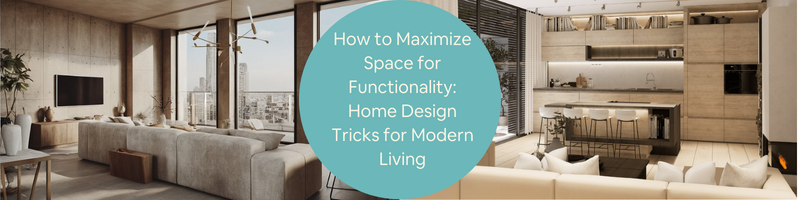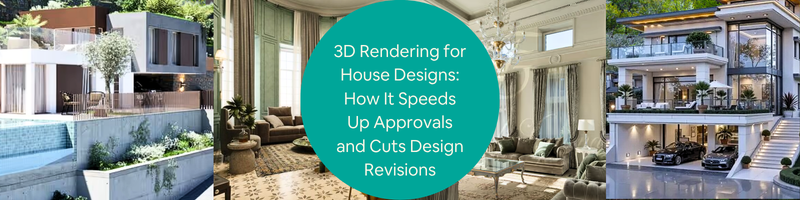
How to Maximize Space for Functionality: Home Design Tricks for Modern Living by Interior Design Firms


The modern home isn’t always sprawling, but that doesn’t mean it has to feel like a sardine tin. In fact, there’s something oddly satisfying about a space that just works – where every corner has purpose, every shelf is intentional, and you never feel like you’re walking through an obstacle course of clutter. Maximizing space for functionality isn’t about having less – it’s about doing more with what you already have. And no one’s doing that better right now than today’s sharpest interior design firms, who’ve basically become magicians when it comes to reimagining modern living.

Designing a home today is like playing a real-life version of Tetris, but with furniture, storage, and flow. The trick is knowing where to pull off the perfect twist or rotate that couch 90 degrees so the whole layout clicks into place. Whether you’re living in a sleek city condo or transforming an awkward guest room into a zen office, these tricks aren’t just trendy – they’re transformative. And with Cad Crowd leading the charge in custom interior and 3D home layout design, homeowners have never had more power to turn tight spots into stylish, streamlined sanctuaries.

So if you’re wondering how designers make it look effortless – keep reading. Spoiler: it’s not effortless, but it can be fun (and wildly rewarding).


🚀 Table of contents


Open concept, but smarter

The open concept isn’t a trend anymore-it’s practically a lifestyle. But the smartest homes don’t just knock down walls for the sake of it. Today’s modern layouts are embracing a more refined take: spatial layering. That means creating a sense of openness while still giving each area its own character. A kitchen might flow into a dining space, but that doesn’t mean it has to disappear into it. Thoughtful design ensures each zone has its moment.

Designers now treat zone definition like an art form. They use layered lighting to spotlight transitions, area rugs to anchor specific zones, and clever dividers-like see-through shelving or partial walls-to subtly signal a shift in function without cutting off the vibe. It’s not about segmenting; it’s about storytelling. Each space gets to say something unique, while still contributing to the bigger picture.

This is where Cad Crowd steps in. Their interior design pros don’t just sketch ideas-they craft entire spatial experiences. With custom CAD drawings and immersive 3D visualization services, they help homeowners strike the perfect balance between openness and purpose. Whether it’s defining a reading corner within a living room or giving your kitchen just enough edge to stand out, Cad Crowd’s experts turn open concept into a cohesive journey. It’s not just design-it’s choreography for your space.

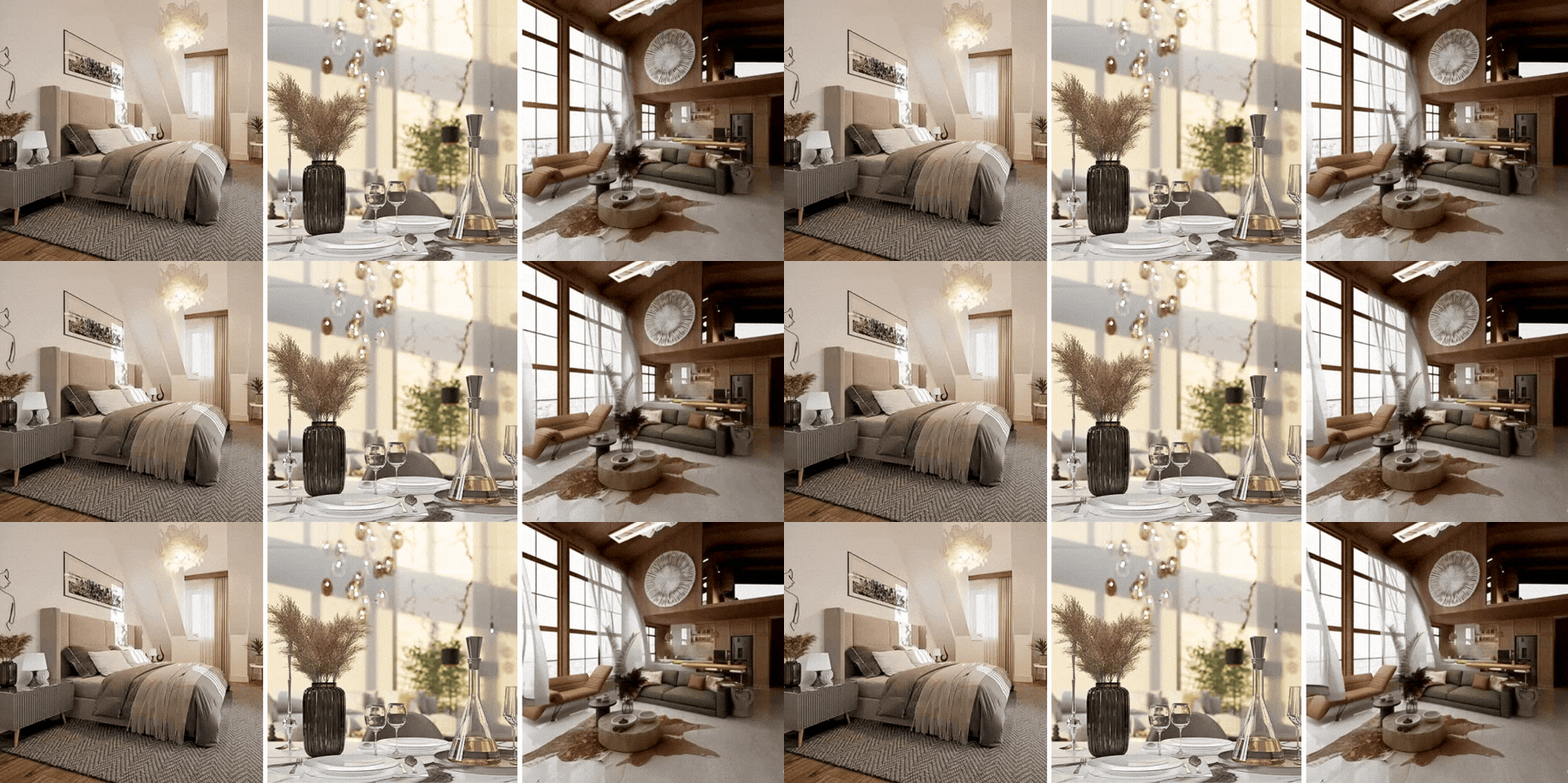
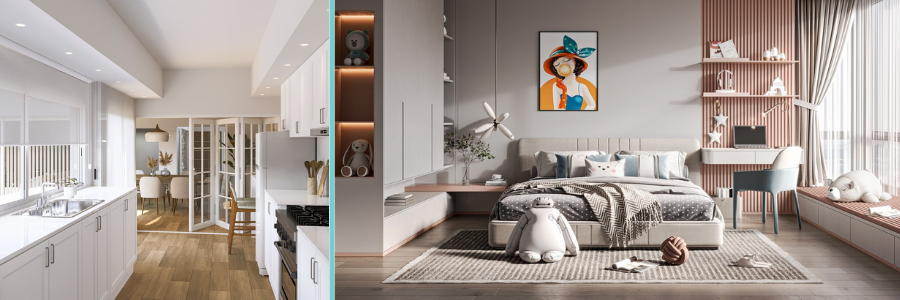
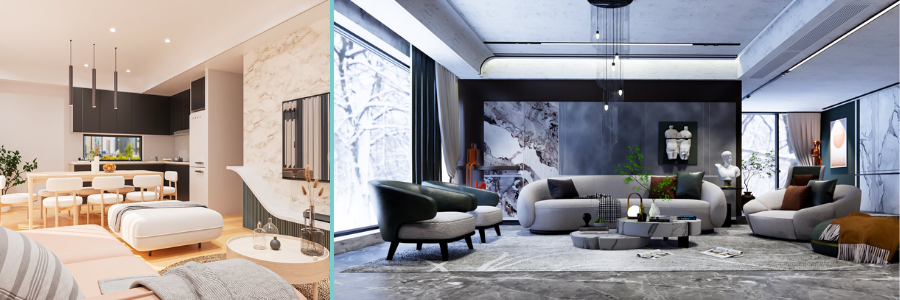
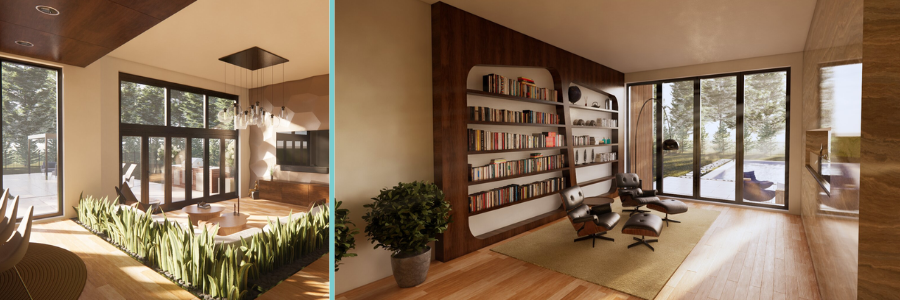
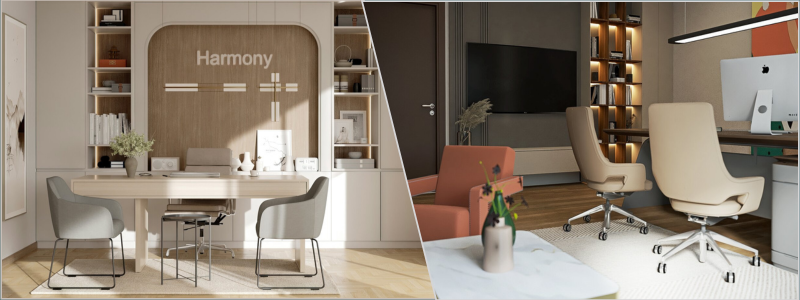
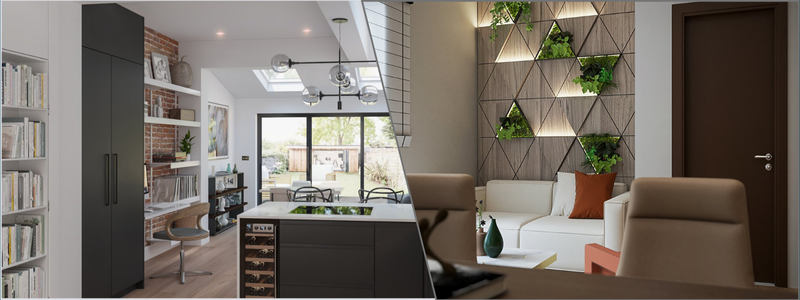
interior rendering design examples by Cad Crowd interior design expert freelancers

RELATED: Transforming institutional spaces: The power of interior design and 3D rendering services

Storage solutions that don’t scream “Storage”

Where do you stash all your stuff without making your living room feel like a warehouse? Welcome to the world of clever storage, where design doesn’t just meet function-it hides it in plain sight. Modern interiors have evolved past clunky cabinets and obvious bins. Today, storage is all about blending in, sometimes so seamlessly you might forget it’s even there.

Think floating sideboards that double as art pieces, under-bench drawers you’d never notice, and beds with hidden lift-up compartments worthy of a magician’s nod. Behind what looks like a simple mirror panel might lie a wall of shelves or even a closet. This isn’t just a trend-it’s the new standard for thoughtful design.

Interior designers are taking things up a notch with dual-purpose furniture. Ottomans secretly hoard your mess, staircases morph into drawer systems, and desks tuck away to become Murphy beds. Nothing is safe from a storage upgrade.

And if you’re dreaming beyond off-the-shelf options, Cad Crowd makes it real. Their freelance interior CAD designers are wizards at modeling customized solutions that fit your space and style like they were meant to be there all along. Want a walk-in pantry that vanishes into the wall? Or a bar that pops out from under the stairs like a Bond movie reveal? With Cad Crowd, your “what if” becomes a buildable plan.

Smart storage isn’t about hiding mess. It’s about designing smarter-and with the right help, you won’t have to sacrifice a single square foot of style.

Vertical space: The forgotten frontier in modern home design

Everyone seems fixated on floor plans and square footage, but the real unsung hero of small-space living is vertical space. When you can’t stretch out, it’s time to think tall. Interior design firms have caught on in a big way, and what used to be an afterthought – a tall bookshelf, maybe a wall-mounted TV – has evolved into an entire design philosophy.

Today, it’s all about going beyond the floor and into the stratosphere of your living room. Think lofted sleeping areas that free up ground-level real estate, mezzanines that turn dead space into functional square footage, vertical gardens that double as air purifiers, and wall-to-wall pegboard systems that serve as customizable storage stations. Even home offices are going sky-high with elevated workstations and ladder-access libraries.

Modern design is no longer content with a one-dimensional approach. You’ll find kitchens with full-height cabinets that use clever pull-down mechanics, or living rooms with modular shelves that transform based on your mood, your bike, or even your ever-growing vinyl collection.

But if you’re wondering how to bring this high-flying design concept into your own home, you don’t have to go it alone. Cad Crowd makes it easy to work with interior design pros who specialize in small-space and vertical CAD planning. With custom 3D rendering design services, you get a crystal-clear picture of how your ceiling-to-floor setup will look before you ever lift a hammer. No surprises. No regrets. Just smart, space-savvy design that makes the most of every inch – even the ones above your head.

Furniture that folds, slides, and transforms: The new standard in stylish living

Whoever said furniture has to be static clearly hasn’t seen what today’s designers are doing. Modern interior design is having a full-blown love affair with transformable furniture – and not in a quirky, college-dorm way. This is polished, Italian-engineered, multi-purpose brilliance. Imagine a coffee table that rises to become a dining table, a sectional sofa that splits into individual lounge chairs, or a wall-mounted desk that folds neatly away after your Zoom call. This isn’t just space-saving. It’s lifestyle-enhancing.

The appeal? Flexibility without sacrificing aesthetics. With square footage at a premium and hybrid lifestyles becoming the norm, interior designers are reimagining what a single room can do. Take the classic guest room. Instead of letting it sit unused 95% of the year, designers now outfit it with Murphy beds, closet-desk combos, and modular lighting so it easily transitions from guest suite to home office to quiet yoga studio.

Behind these elegant solutions is smart planning – and smart modeling. That’s where platforms like Cad Crowd come in. Homeowners can connect with CAD designers who specialize in custom furniture that moves with you. Want your kitchen island to convert into a workbench? Dreaming of a chic sofa that hides your treadmill? Cad Crowd’s professionals can model your vision and engineer it to fit your space like a glove.

Transformable furniture isn’t just a trend – it’s a mindset. It’s about making every square foot work harder, look sharper, and adapt beautifully to modern life.

RELATED: Boost client confidence with 3D architectural animation for real estate presentations

Light, mirrors, and illusion tactics: Interior designers’ secret to expanding space

Space isn’t just about square footage – it’s about how a room feels. Interior designers know this better than anyone, and they’ve long used clever visual tricks to make even the tightest spaces feel larger and lighter. One of their favorite tools? Mirrors. But not just any mirror stuck on the wall – today’s designs are all about placement, shape, and lighting.

Oversized round mirrors are especially popular, often teamed with soft, wall-washing LED strips. Together, they create a tranquil glow that expands the room visually, adding a sense of depth and calm. Glossy surfaces – think lacquered cabinets or polished stone – catch and reflect light in subtle ways, blurring edges and boosting brightness. Even a carefully chosen satin paint finish can help light bounce just enough to open up a space.

Natural light plays a starring role in the illusion of spaciousness. Designers often incorporate clerestory windows, hidden skylights, or narrow light wells to draw in daylight from unexpected angles. These features create a weightless, airy vibe without the need to knock down walls or add square footage.

For homeowners hesitant to make bold design moves, Cad Crowd offers a smart solution. With photorealistic 3D rendering services, it’s easy to preview exactly how light, mirrors, and materials will interact in your home. You can test that dramatic hallway mirror or a glossy white finish in your kitchen – all before lifting a hammer. It’s a game-changing way to design with confidence and clarity.

Outdoor spaces, reimagined: Tiny patios with big personality

Not all usable space is indoors – and modern design firms are getting seriously creative with small outdoor areas. From petite balconies to narrow side yards, these often-overlooked zones are being transformed into lush mini-retreats and alfresco extensions of the home. With the right design moves, even a six-foot-wide space can serve up big style and function.

Designers are embracing fold-away café tables, vertical herb gardens, and bench seating with built-in storage to make every square inch count. Textiles like outdoor rugs, layered lighting, and weather-resistant cushions add that extra layer of coziness, while planters provide privacy and greenery in one go.

Cad Crowd designers can render outdoor transformations in stunning 3D detail, helping you envision the perfect lounge-ready patio before you break out the power drill. From built-in seating with hidden coolers to compact outdoor kitchens, the right plan can make your outdoor square footage just as functional as what’s inside.

Hallways and transitional spaces: The most underrated design opportunities

Hallways, landings, and entryways often get treated like afterthoughts – but interior designers know these transitional zones are ripe for functionality and flair. With a little creativity, that awkward stretch of wall or pass-through can become a hardworking part of your home.

Design pros are outfitting hallways with narrow console tables that double as drop zones for keys and mail, gallery walls that add personality without bulk, and recessed shelving that turns dead space into book displays or utility storage. Even stair landings are seeing upgrades with built-in benches or quiet reading corners.

Cad Crowd makes these overlooked spots shine with precise CAD detailing. 3D interior rendering designers can model a hallway mudroom nook or floating shelf system with millimeter accuracy, ensuring your tight spaces look clean, intentional, and fully utilized. Transitional areas no longer need to be dull. With smart planning, they become the connective tissue that makes your home feel unified and complete.

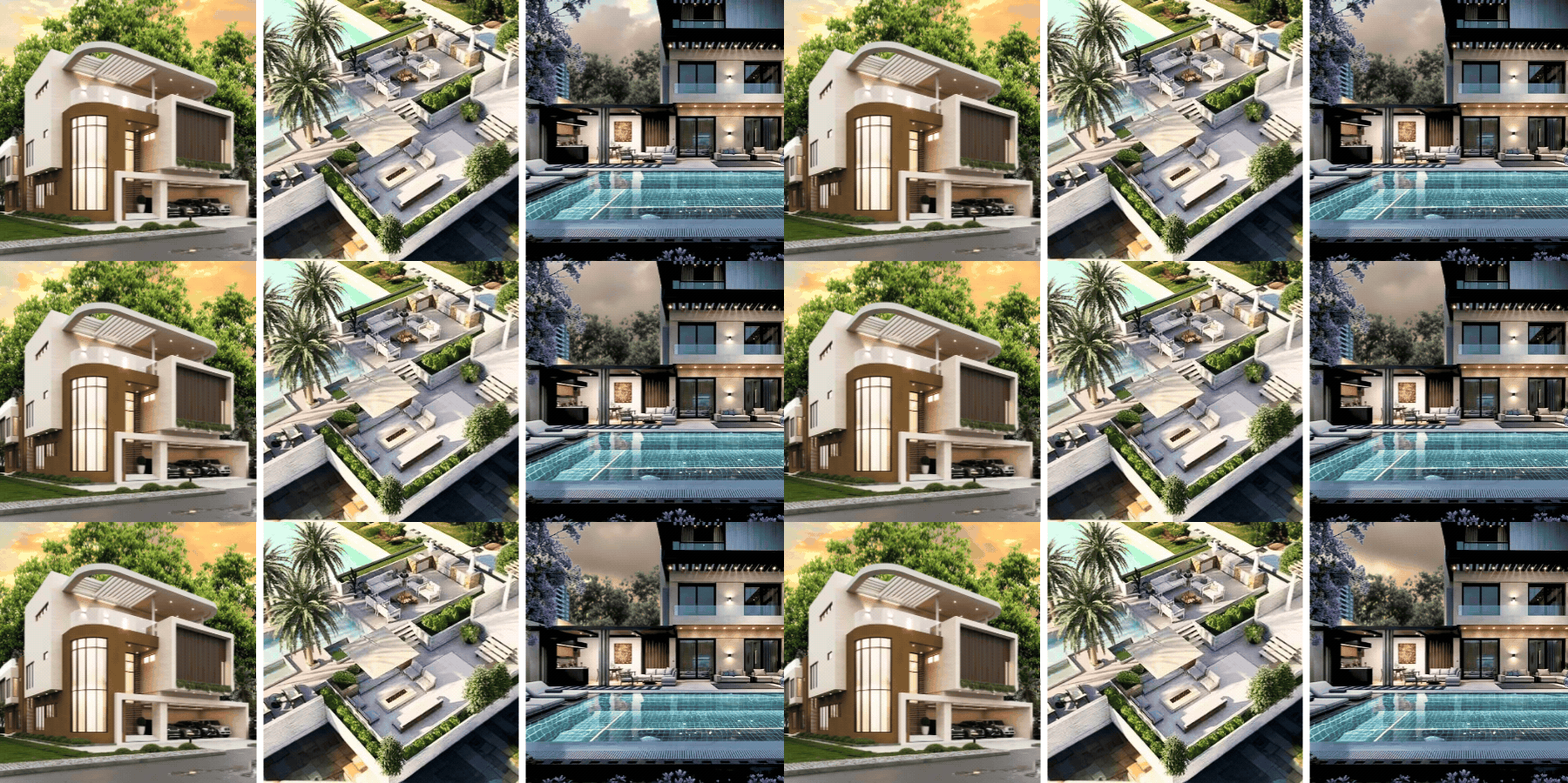
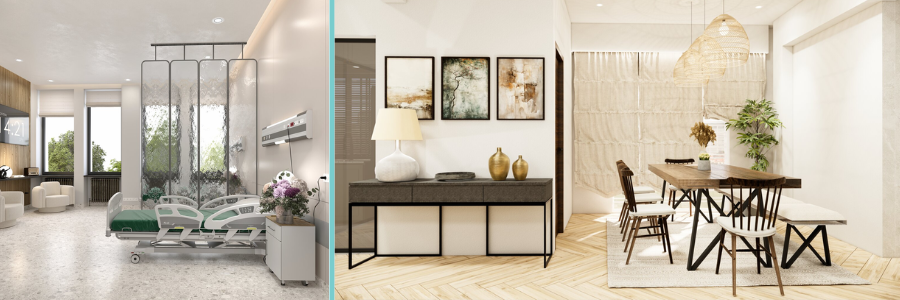
3d interior render examples by Cad Crowd interior designers

RELATED: How 3D interior rendering helps with real estate marketing for homebuilders & realtors

Ceiling design: Raising the bar on visual impact

Ceilings are often referred to as the “fifth wall” in a room – and modern interior designers are taking that idea and running with it. Whether you’re in a compact studio or a spacious home, a well-designed ceiling can change the entire feel of a space.

From coffered and tray designs to exposed beams and wood slats, ceilings add depth and texture without stealing floor space. Designers also experiment with paint to create optical illusions – a dark painted ceiling can add drama and coziness, while a soft blush or sky-blue hue can elevate the space and draw the eye upward.

Cad Crowd’s 3D renderings are invaluable for visualizing bold ceiling concepts before committing. Their design experts can test lighting interplay, map texture effects, and help you determine how much height you can visually “borrow” using clever finishes. When space is limited, the ceiling becomes the perfect place to play.

Nooks, crannies, and built-ins: Making the most of quirky architecture

Every home has its quirks – oddly shaped corners, uneven walls, or little recesses that seem impossible to furnish. But these are exactly the spots where custom design can shine. Interior firms are embracing the challenge, turning tricky architecture into design features with personality and function.

Sloped attic ceilings? Turn them into cozy reading nooks or slide-out closet systems. That tiny under-stair void? Perfect for a built-in dog bed, a compact wine rack, or even a powder room. And alcoves once considered unusable now host mini offices, floating desks, or art installations.

Cad Crowd’s freelance 3D interior rendering design talent thrives on challenges like these. Using CAD tools, they craft custom built-ins that honor the architecture instead of fighting it. These clever additions feel like they were always meant to be there – a true testament to the power of bespoke design thinking.

Textures and materials: Layering for depth in small spaces

When you can’t add more square footage, you can still add dimension – and that’s where textures and materials come in. Designers are layering different surfaces to add visual interest without overwhelming the room. In tight spaces, texture becomes a way to create a sensory experience that makes the area feel richer and more expansive.

Think smooth matte walls next to woven textiles, or polished wood set against raw concrete. Even a single accent material, like a fluted wood panel or ribbed glass, can create a focal point that draws the eye and adds sophistication. It’s subtle, smart, and space-savvy.

Cad Crowd’s 3D design process allows clients to play with textures digitally, so you can see how combinations will look and feel before committing. Want to see how a brushed gold faucet pairs with a terrazzo backsplash? Or how velvet cushions would contrast with a rattan headboard? With Cad Crowd, every texture decision becomes confident and intentional.

The psychology of space: Designing for flow and feeling

Interior design experts don’t just look at what you see – it’s about how you feel. Designers today are tuning into the emotional side of space planning, creating layouts that reduce stress, encourage movement, and support everyday habits. It’s part science, part art.

Clear circulation paths, for instance, can reduce anxiety and make a home feel more breathable. Thoughtfully placed furniture encourages social interaction or creates peaceful solitude, depending on what the room calls for. Colors, acoustics, and even furniture height play a role in how comfortable a room feels.

Cad Crowd designers apply psychological design principles in their CAD drawings, balancing visual harmony with ergonomic flow. Through immersive walkthroughs and precision modeling, homeowners can experience a space before it’s built – and make tweaks based on how it makes them feel, not just how it looks.

RELATED: Pricing factors for architectural visualization and hourly 3D renderings rates for your firm’s projects

Kitchens and bathrooms: The new frontier for functional luxury

The kitchen has come a long way from being just a place to prep dinner. It’s now the social hub of the home – a space where design meets lifestyle. Think of kitchens today as stylish living rooms that just happen to have a stove. Open shelving puts your personality on display, while ambient lighting creates a cozy glow for both late-night snacks and early-morning coffee runs. Multi-functional islands are doing more than ever: meal prep, homework stations, wine tastings, even serving as a backdrop for Zoom meetings.

Interior design are also paying attention to the unseen. Behind the sleek finishes lie smart layouts that make use of the classic work triangle – stove, sink, and fridge – ensuring that cooking feels intuitive. Small appliances? Hidden in custom cabinetry so countertops stay clutter-free and clean.

And bathrooms? They’re no longer forgotten corners of the home. These once-functional-only spaces are being reimagined as private sanctuaries. Floating vanities and frameless showers bring a sleek, modern vibe, while recessed wall niches and wall-hung toilets help you save space without sacrificing style. Even in smaller bathrooms, the right design can make it feel like a five-star spa through great use of home design services.

The key to pulling all of this off? Precision and customization. That’s where Cad Crowd comes in. Their freelance CAD designers can help tailor every inch of your kitchen or bathroom layout, from optimizing plumbing routes to ensuring cabinetry fits like a glove. You get high-end, tech-powered design expertise without the high-end price tag that traditional firms often demand. It’s the future of functional luxury – and it’s within reach.

Seamless tech integration: Living smarter, not just smaller

Modern living isn’t just about maximizing square footage – it’s about enhancing every inch with purpose. As cities get busier and homes become more compact, interior design is getting a high-tech upgrade. The smartest homes aren’t only stylish; they’re responsive, intuitive, and incredibly efficient. Technology has evolved from being an accessory to becoming the backbone of innovative home design.

Imagine walking into your home, and the lighting adjusts to your mood, the blinds tint automatically based on sunlight, and your favorite playlist flows gently from ceiling-mounted speakers you can’t even see. This isn’t a scene from the future. It’s happening now – and it’s all by design.

Design firms today are weaving tech right into the structure itself. Think voice-activated thermostats, smart mirrors that double as information hubs, and countertops with built-in wireless charging stations. Even window glass can shift from transparent to frosted with a single tap. It’s no longer about adding gadgets after the fact. It’s about embedding intelligence into the very walls, surfaces, and furniture.

Cad Crowd is one of the leaders at the forefront of this revolution with their home design freelance experts. They’re empowering homeowners and developers with custom CAD solutions that integrate smart technology directly into the design plans. Their experts model hidden charging docks in furniture, place pop-up outlets exactly where you need them, and ensure every IoT element fits perfectly into the aesthetic.

It’s not just about programming devices – it’s about programming the entire space. With Cad Crowd’s help, homes are becoming as thoughtful as they are beautiful, proving that with the right design partner, living smarter doesn’t mean sacrificing style.

Customized over cookie-cutter

When it comes to making the most of your home, there’s no magic formula or one-size-fits-all hack that works for everyone. The secret? It’s not a secret at all – it’s personalization. Every home has its quirks, and every homeowner has their own rhythm of life. That’s why top interior design firms are moving away from cookie-cutter solutions and embracing fully customized strategies that reflect real-life needs.

Think about it: a remote worker doesn’t need the same setup as a family of five. One might crave a quiet nook that doubles as a productivity powerhouse, while the other needs creative storage that hides toys, gear, and all the daily chaos. Great design isn’t about copying trends – it’s about listening to people and translating their lifestyle into a functional, beautiful space.

That’s where Cad Crowd shines brightest. Unlike platforms that spit out generic templates, Cad Crowd connects clients with expert freelance designers who treat your home like the one-of-a-kind canvas it is. Their team of CAD drafters, 3D modeling experts, and interior pros collaborate with you to capture your vision from the ground up.

Whether it’s a sleek AR walk-through, a detailed mood board, or a smart layout that solves ten problems at once, Cad Crowd turns the design process into something enjoyable, approachable, and refreshingly human. No gimmicks – just personalized, functional design that fits your life perfectly.

If you want a home that actually works for you, don’t settle for one-size-fits-all. Go custom. Go Cad Crowd.

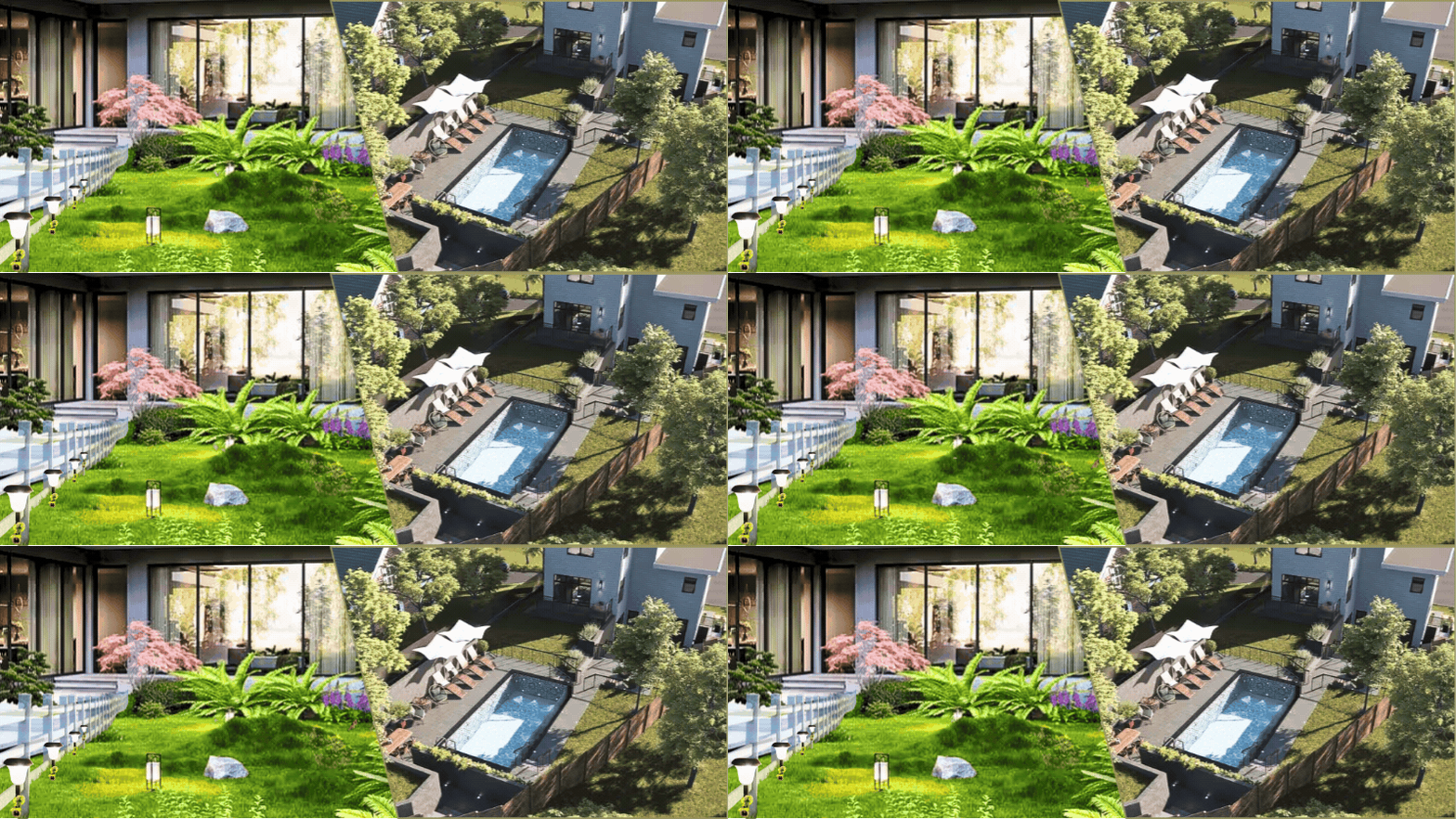
interior design rendering by Cad Crowd freelance experts

RELATED: Interior design drafting: Undeniable advantages of CAD drawings for design firms

Conclusion: Your home deserves to work as hard as you do

Modern living is fast-paced, multifaceted, and – let’s be honest – sometimes a little chaotic. Your home shouldn’t add to the chaos. It should calm it. Support it. Elevate it.

Maximizing space for functionality isn’t about sacrificing comfort or style – it’s about enhancing both. With the right tricks and the right team, even the smallest studio or the quirkiest split-level can become a highly efficient, incredibly livable, and downright gorgeous space.

Interior design firms have never had more tools or talent at their fingertips. But when you want truly custom solutions – built for the way you live – Cad Crowd is the name to trust. Their global network of CAD experts and designers can turn your Pinterest dreams into buildable plans faster than you can say “mid-century minimalist industrial farmhouse chic.”

So whether you’re rethinking your living room layout, eyeing a kitchen remodel, or finally tackling that weird hallway nook – don’t just wing it. Design it. And let the space you live in finally start working for you. Get a free quote today.

author avatar

MacKenzie Brown is the founder and CEO of Cad Crowd. With over 18 years of experience in launching and scaling platforms specializing in CAD services, product design, manufacturing, hardware, and software development, MacKenzie is a recognized authority in the engineering industry. Under his leadership, Cad Crowd serves esteemed clients like NASA, JPL, the U.S. Navy, and Fortune 500 companies, empowering innovators with access to high-quality design and engineering talent.

Connect with me: LinkedInXCad Crowd

Creating Biophilic Office Spaces: 3D Rendering Techniques at Design Services Firms


In the rapidly changing work environment of today, where hybrid and remote models are transforming the traditional office system, the role of physical office spaces is undergoing redefinition. Employers understand that to induce face-to-face collaboration and maximize employee happiness, office spaces should be made locations where individuals long to be present.

Incorpotating natural effects for you office spaces in order to enhance the well-being and wellness of your staff, workers or even the visiting customers, is the purpose of having a biophilic design If you don’t know where to start, you can start by leaving a message at the top and leading agency Cad Crowd, to help you connect with the best and reliable product designers and 3D rendering professionals.

Why biophilic design matters in office spaces

Numerous studies have demonstrated that biophilic design reduces stress, enhances cognitive performance, and increases job satisfaction.

RELATED: Urban Wellness Design: 3D Rendering Services for Your Company’s Biophilia

But how can this be practically applied in office spaces? Let’s explore key biophilic design elements that make a difference:

  • Natural light optimization: Natural light exposure is essential in keeping circadian rhythms intact and minimizing eye fatigue. Skylight, floor-to-ceiling window, and reflective surface-designed offices maximize daylight exposure, resulting in enhanced energy levels and concentration.
  • Indoor greenery & living walls: Plants not only make a space look better, but they also purify the air and provide a cooling ambiance. Adding moss panels, potted plants, or full-scale vertical gardens can greatly add to an office’s beauty and functionality.
  • Organic materials & patterns: Wood, stone, and bamboo bring warmth and texture to a workspace, creating an unconscious link to the outdoors. Moreover, biomorphic patterns and shapes that echo natural forms can be incorporated into furniture and decor to subtly invoke nature’s soothing effect.
  • Water features & soundscapes: Having water, either in the form of indoor waterfalls, aquariums, or even simulated nature sounds, brings a sense of calmness. These elements minimize noise pollution while enhancing relaxation and concentration.
  • Flexible layouts & nature-inspired colors: Open-plan offices with flexible seating arrangements facilitate movement and creativity. Employing soft, earthy colors such as greens, browns, and blues can make spaces feel more welcoming and harmonious.

Though these principles form a utopian workplace, putting them into effect needs more than good intentions – it needs precise planning and visualization. This is where powerful 3D rendering software steps in, enabling 3D rendering designers to create biophilic features in realistic office settings before they are constructed. Through the use of technology, companies can design inspiring workplaces that not only look amazing but also enhance the well-being and productivity of their employees.

Utilizing 3D rendering for biophilic design

Biophilic design is revolutionizing contemporary workplaces, incorporating nature to enhance well-being, productivity, and sustainability. Advanced 3D rendering methods are what architects and 3D architectural rendering firms use to make these utopian designs a reality. Not only do the software tools increase accuracy, but they also facilitate greater communication among stakeholders so that clients are satisfied even before the construction process starts. Here’s how 3D rendering is revolutionizing biophilic office space:

RELATED: How 3D Modeling, Rendering, and CAD Design Helps Architects Create Sustainable Construction

1. Realistic nature integration through advanced texturing

Immersive biophilic spaces need materials that can exactly imitate nature. Advanced 3D rendering programs such as Lumion, V-Ray, and Enscape allow 3D designers to create hyper-realistic textures that imitate wood, stone, vegetation, and water elements. These programs offer:

  • Realistic material representation – Be it the grain of reclaimed wood or the touch of a moss wall, rendering software makes sure that lighting and texture react naturally under certain conditions.
  • Dynamic environmental controls – Designers are able to mimic different times of day, weather conditions, and seasons so that clients are able to see how their office will appear in different natural environments.
  • Interactive customization – The client is able to play back with the design, modifying plant placements or changing natural light levels in real time. This versatility prevents misunderstandings and synchronizes expectations prior to the project’s progression.
3d architectural rendering services

2. Parametric design for adaptive workspaces

Biophilic design is not merely a matter of looks: it also means maximizing space for functionality and health. Parametric modeling, found in programs such as Rhino and Grasshopper, allows 3D architectural visualization designers to design responsive layouts that respond to natural conditions. This includes:

  • Optimized office layouts – Algorithms consider natural light availability and reposition workstations for maximum exposure.
  • Improved spatial flow – Simulating movement patterns, designers can design organic layouts that encourage relaxation and collaboration.
  • Nature-inspired geometry – Buildings can draw inspiration from such natural forms as leaf venation or coral, creating spaces that are more in balance and less formal.

RELATED:  6 sustainable design solutions your architectural design services should use

3. Virtual reality (VR) & augmented reality (AR) for immersive previews

One of the most impactful advancements in CAD technology is being able to surround clients with a virtual model of their future workplace. Virtual reality and augmented reality architectural services enable companies to feel the psychological benefits of biophilic design without any construction ever having started. Benefits include:

  • Full walkthrough experiences – With VR headsets, clients can walk through their office as if it already existed, evaluating the position of greenery, water, and natural light.
  • Psychological impact testing – By going through a nature-integrated workplace first, companies can determine how employees would respond to different biophilic aspects.
  • Instant design adjustments – Clients can provide real-time feedback on anything from plant choices to seating arrangements, so fewer expensive revisions later.

4. Daylight simulation for energy efficiency

One of the fundamental tenets of biophilic office design is maximizing natural light to minimize the need for artificial lighting. Through the use of daylight simulation software such as Autodesk Revit and Dialux, 3D architectural visualization design companies are able to model how light performs within a space and make educated decisions regarding:

  • Workstation location – Workers can be stationed in spaces with ideal daylight exposure, increasing productivity and mood.
  • Window and skylight location – Architects can model variations in sunlight by season to find the ideal location for natural light sources.
  • Energy savings improvements – Careful deployment of reflective materials and shading devices can reduce electricity usage dramatically while retaining an open, well-lit atmosphere.

RELATED: How to Utilize 3D Rendering for Offices and Meeting Rooms with Visualization Services Firms

Leveraging 3D rendering services in biophilic office design transcends mere visualization; it focuses on creating healthier, more inspiring work environments that foster a deeper relationship with nature. Utilizing genuine material textures, engaging virtual reality experiences, and energy-efficient daylight strategies, modern CAD tools empower architects to create spaces that not only enhance well-being but also optimize productivity. By integrating these advanced techniques, businesses can confidently invest in biophilic workplaces that attract and retain talent, ensuring sustained employee satisfaction and loyalty for many years ahead. Furthermore, such innovative designs can lead to reduced stress levels and increased creativity among employees, promoting an overall flourishing organizational culture.

Meeting niche client requirements with personalized 3D solutions

Biophilic office design isn’t a solution for all. Various industries have different needs, and bespoke approaches are required that meet the aesthetic, functional, and brand identity requirements. That is where 3D architecture design professionals using 3D rendering platforms (such as CadCrowd) excel.

Tech firms: a fusion of innovation and nature

Tech companies need open, collaborative working spaces filled with plants to increase creativity and combat burnout. With 3D interior rendering services, designers can:

  • Model biodynamic lighting systems that adapt according to circadian rhythms.
  • Combine futuristic green spaces, such as AI-sustained hydroponic gardens.
  • Experiment with acoustic biophilic features such as plant-based sound absorbers to combat noise pollution.

RELATED: Luxury CAD Home Office Design Ideas for Your Architectural Company or Firm 

Law firms & corporate offices: a balance of prestige and serenity

While upholding a professional image, corporate spaces can still include biophilic features to improve focus and productivity. Luxury interior visualization design companies use:

  • 3D simulations of natural stone-clad boardrooms with subtle greenery accents.
  • High-definition texture mapping on upscale wooden desks and plant-filled walkways.
  • Biophilic sound panels that merge design with soundproofing requirements.
biophilip office design

Healthcare & wellness centers: healing forces of nature

Medical practices and therapy rooms increasingly adopt biophilic design to foster relaxation and well-being. 3D visualization software aids:

  • Calming, nature-mimicked waiting spaces prior to making material choices.
  • Simulate stress-reducing color schemes combining natural colors with medical-grade finishes.
  • Improve airflow and lighting conditions in patient recovery rooms.

Coworking spaces: responsive and resilient natural spaces

Common spaces need to be adaptable, and biophilic design helps establish interactive environments. 3D modeling services are beneficial in:

  • Planning modular green dividers for varied work schemes.
  • Modeling ergonomic, plant-bundled furniture arrangements.
  • Predicting multi-sensory encounters, like the diffusion of fragrances and nature sounds.

RELATED: Inclusive Design for Corporate Offices and Creating Accessible Workspaces with Engineering Firms

CadCrowd’s role in developing biophilic office spaces

Biophilic office design is transforming the workplace landscape by seamlessly integrating elements of the natural world within the constructed environment. This innovative approach not only fosters employee well-being but also enhances productivity and sparks creativity among workers. For organizations aiming to adopt biophilic design principles in their office spaces, it is often essential to seek out specialized expertise, particularly regarding CAD-based design solutions.

This is where Cad Crowd comes into play. As an international platform that connects businesses with highly skilled freelance CAD designers, CadCrowd facilitates the realization of nature-inspired office designs, all while maintaining a strong emphasis on detail and efficiency. By bridging the gap between companies and talented professionals, CadCrowd is significantly changing the way workplaces are designed and experienced. Here’s an exploration of how this platform is making a meaningful difference in the realm of biophilic design:

Matching clients with niche experts

Biophilic design is more than simply adding some potted plants or letting in more natural light. It requires strategic intent, material specification, spatial analysis, and even acoustic design. Various businesses have different requirements – a technology startup might need parametric design pieces so that the result is a futuristic, nature-inspired look, whereas a law firm would concentrate on using natural acoustics to give it a soothing yet professional ambiance. Cad Crowd’s platform sees to it that businesses are matched with 3D modeling designers who have expertise in these exact departments.

RELATED: How to Create Captivating 3D Commercial Rendering Architecture Designs for Companies

By going through a rigorous vetting process, the marketplace connects with experts in biophilic office design so that every project can take advantage of designers familiar with the intricacies of integrating nature, from airflow optimization to green material selection. This specialized process bypasses the trial-and-error and guessing stage that often comes with working with conventional design companies.

Providing flexible 3D rendering solutions

One of the main issues in designing biophilic offices is understanding how the eventual space will function and appear. Unlike traditional office design, which is linear in nature, biophilic layouts involve organic curves, living green walls, fountains, and tactile natural material, making precision planning and the right representation of paramount importance. This is where 3D visualization services and rendering come into play.

CadCrowd gives companies the ability to work with freelance 3D CAD designers who specialize in 3D modeling and rendering, giving clients the chance to visualize their idea before ground is ever broken. Whether simulating daylighting effects at different times of the day or testing how green walls respond to workspace configurations, these sophisticated visualizations enable companies to make smart choices. Customers can ask for personalized renderings, test different biophilic features, and refine designs to meet both aesthetic and functional objectives.

RELATED: 7 Ways 3D Interior Designer Services Are Used to Maximize Living and Working Spaces

Reducing costs & time-to-market

Conventional office design procedures usually involve lengthy back-and-forth dialogue among architects, interior designers, and builders, resulting in prolonged timelines and added expenses. CadCrowd’s on-demand design strategy streamlines project delivery by offering immediate access to qualified 3D CAD professionals without long-term commitments or expensive design companies.

RELATED: Types of 3D visualization for architectural design and CGI projects

Since freelancers on the platform work with flexibility, companies can hire designers on a project-by-project basis, saving costs without compromising quality. Not only does this save costs, but it also reduces the time from idea to execution, enabling companies to refurbish their office spaces effectively.

Conclusion: the future of work is green and digital

As more companies recognize the numerous benefits of biophilic office designs, the demand for high-quality 3D visualizations is expected to rise significantly. By leveraging state-of-the-art CAD tools and collaborating with innovative design platforms like Cad Crowd, architects and 3D architectural animation firms can ensure that their office spaces are not just visually stunning, but also thoughtfully crafted to enhance employee well-being and promote environmental sustainability. This holistic approach not only fosters a productive work environment but also aligns with modern values focused on health and sustainability, making the investment in biophilic design an essential consideration for future-focused organizations.

How Cad Crowd can help?

As the need for biophilic office design expands, CadCrowd can connect your company with dedicated and expert design experts specializing in adaptive visualization technologies and low-cost project fulfillment. Whether it’s an open working space filled with nature, a quiet office space for wellness, CadCrowd will help you build offices promoting health, imagination, and efficiency while embracing nature’s beauty. With the capability of 3D rendering, nature and architecture become one, harmoniously blending into each other. What are you waiting for? Get your FREE quote now

author avatar

MacKenzie Brown is the founder and CEO of Cad Crowd. With over 18 years of experience in launching and scaling platforms specializing in CAD services, product design, manufacturing, hardware, and software development, MacKenzie is a recognized authority in the engineering industry. Under his leadership, Cad Crowd serves esteemed clients like NASA, JPL, the U.S. Navy, and Fortune 500 companies, empowering innovators with access to high-quality design and engineering talent.

Connect with me: LinkedInXCad Crowd

How 3D Interior Rendering Helps with Real Estate Marketing for Homebuilders & Realtors


A contractor stands on a patch of dry land holding a roll of blueprints in his hand like a card shark with a deck of cards. A man and woman study the paper in front of them, cocking their heads to the left and then to the right as if the photograph would just be right if only seen exactly the right way. The husband nods uncertainly. The wife smiles kindly, doting over her confusion. She is envisioning a mess of rectangles rather than the cozy family house they are eager to buy.

This is a common dilemma for the majority of homebuilders and realtors, and is something that you definitely shouldn’t ignore. The firm has been peddling visions of someday to be, decades in the form of blueprints, floor plans, and pamphlets. But consumers today, with their heads full of binge-watching television home makeovers and Instagram-perfect bedrooms, require more. They no longer “need to imagine” a home. They want to live it before it exists.

That’s when 3D interior rendering services come to the rescue like a marketing superhero with a hard hat. Cad Crowd is the home of the best freelance interior and architectural designers from around the globe. It takes dull blueprints and turns them into lush, photorealistic environments where clients can walk, explore, and fall in love with. For both realtors and homebuilders, this technology has become one of the greatest superpowers for swaying hearts and selling houses.


🚀 Table of contents


Why old school marketing is failing

There used to be a day when shiny brochures and drab blueprints were the ultimate marketing material. An agent can perhaps get to show thicker photos in brochures, and future homeowners will have a hard time envisioning a bright kitchen when all they can see is a dimly lit, half-packed space before them. But with this generation of TikTok home tours and Pinterest-perfect home furnishings, those types of materials now seem archaic.

Human beings are visual. They browse feeds full of beautiful layouts. When a customer sees a flat, 2D floor plan read out to them, one is actually cutting back from a 4K film to a vintage, grainy video game. Properly written text descriptions simply can’t stand comparison to a genuine display of sunlight streaming in over a glossy hardwood floor.

Picture presenting a prospective client with a black-and-white floor plan while their phone is ringing with a holographic cat video. Guess which one they will glance at first. To grab attention and compete in a cluttered marketplace, real estate marketing and architectural design firms need to provide imagery that is as exciting as the media buyers view every day.

Interior design by Cad Crowd professional design freelancers

RELATED: Full guide: Commercial architectural 3D rendering services for companies & firms

What 3D interior rendering really is

In effect, 3D interior rendering is the process of bringing a plan to life in a beautiful, realistic picture. Designers use super-powered software to create computer versions of a space, from lighting to furniture, texture, and accessories. The picture is so real that most people would not even realize it is not a photograph.

Think of it as a real estate crystal ball. Potential home buyers will be able to “walk” through a new home in the future and guess whether the dinner table will fit, or whether that reading nook gets enough light. Renderings will even reflect multiple times of day or interior design schemes. That sun-filled kitchen at sunrise? No problem. That dramatic, fire-lit living room with shadows dancing in the evening? No problem.

That is where Cad Crowd comes in quite naturally. Cad Crowd bridges the gap between businesses and talented freelance 3D designers and rendering studios from around the globe. If you are a small builder in need of that first client or an agent with a portfolio of high-end properties, Cad Crowd makes it simple for you to find the experts who can produce amazing renderings that make your concept a reality.

Advantages to homebuilders

a. Selling homes before they are constructed

It’s difficult to sell a house that hasn’t been constructed yet; imagine trying to ask someone to purchase a vehicle in which they only get to view diagrams. 3D rendering design services dispense with that act of faith. By presenting a finished, detailed view of the upcoming occupied space to the prospective buyer, you substitute fear with anticipation. Potential home buyers can walk through their dream kitchen or envision a warm evening seated in the completed living room, even before a shovel of dirt is moved.

b. Catching design issues early

We’ve all had the dropped stomach feeling of discovering a “perfect” design decision simply won’t translate in real life. Your on-trend accent color may resemble “angry guacamole” in person. The open shelving simply may not give the room that sense of functionality. Renderings let you find and fix these issues before construction time, saving face, money, and time.

c. Displaying multiple styles with ease

Buyers are fabulously indecisive. They’re looking at coastal cool today and industrial trendy tomorrow. It’s easy to flip back and forth in a 3D model. Showing them several options shows your flexibility as a builder and involves the buyers.

Realtor benefits

a. Standing out in listings

They’re sloppy on the internet, too. Browsing them is like channel surfing on an old TV where all the shows appear to be happening in a beige parlor with Questionable Lighting. A 3D high-definition image does away with all that. It halts the scroll and fixes buyers’ gazes. Rather than straining to see out-of-focus cellphone photos of rooms with the lights lowered, customers are treated to a cheerful, well-lit room that’s cover-of-the-magazine stuff done by interior design experts.

It’s not an option in competitive markets. It’s a must. A pixel-perfect photograph of an adequately lit, tastefully furnished living room tells the buyer that you, the listing agent, are serious about your listings. It’s a show of professionalism, quality, and attention to detail. And buyers notice.

b. Faster buyer decisions

Every agent has had the serial browser—the client who schedules back-to-back appointments, asks the same questions, but will not commit. Patience is involved in the job, but incessant calling wastes precious time and energy that can be concentrated on other customers. Very detailed 3D rendering leaves no possibility for uncertainty. Purchasers can examine a house online, analyze the pictures as often as they desire, and be ready to make an offer at an appointment.

c. Virtual staging magic

Conventional staging entails renting furniture, hiring movers, and praying for good weather during the photo shoot. All that hassle disappears with virtual staging by 3D rendering design experts. With the touch of a few mouse buttons, an empty space is transformed into a beautiful room that stimulates the imagination of the buyer.

This is especially powerful on vacant or rundown homes. Instead of making the purchasers envision possibilities in a vacant room, you present a complete vision. And as a bonus, you can quickly switch styles for other markets—modern, country, traditional—without ever having to pick up and move one actual, real sofa.

Marketing impact and buyer psychology

Human beings are storytellers by nature, and those stories materialize in images. An intended buyer does not merely imagine a dining room table from a sketch. They see holiday dinners, laughter, and clinking glasses on the horizon. They see future Sunday brunches, family dinners, or other cozy gatherings. That attachment is powerful.

Psychologists are aware that individuals travel by emotion first and then rationalize. A stagnant floor plan will not pull at the heartstrings. An accurate, life-like drawing will. It causes the buyer to consider putting themselves into the property and forming a personal attachment to a property before they ever do so in life.

A superior-quality rendering can also instill a sense of urgency. If consumers develop a bond with a property, they do not want it to fall into the hands of another buyer. Such an unconscious psychological effect can speed up the selling process.

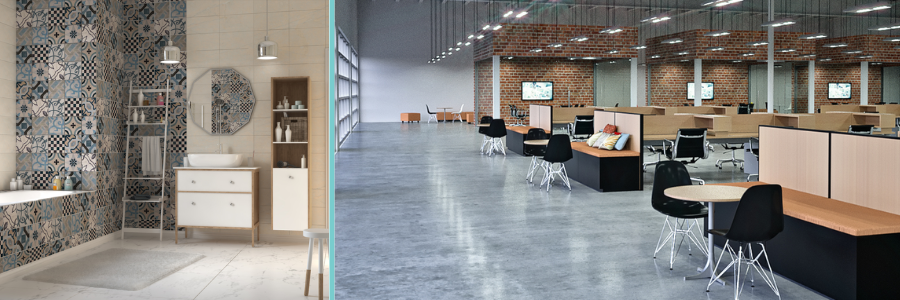
Cad Crowd experts design a luxury mediterrenean bathroom and warehouse office

RELATED: Interior design drafting: Undeniable advantages of CAD drawings for design firms

How 3D renderings are applied in social media and campaigns

Social media continues to be an out-of-the-box real estate marketing tool. A single photo of an amazingly rendered kitchen on Instagram can garner likes, shares, and calls tens of times more than a bland listing. Experiment with before-and-after slide shows: left, a mere draped floor plan; right, a filled-in 3D rendering of a living room to the nth degree. Your audience will swipe, gasp, and share, which is great for your interior design firm.

Glide videos or 360-degree walkthroughs work well for Facebook and TikTok. A glide video captured over a beautiful rendered background will be more effective than another new dance challenge virus. Use these visualizations in email, landing page, and web ads to present an integrated, professional brand image.

For printed advertisements, 3D photography can be used for the same effect. A glossy publication with a photorealistic image will trump traditional photography, particularly if the physical asset has yet to be constructed.

Cost and efficiency advantages

Selling actual homes requires costly staging and photographing them. Renting furniture, reservations, and professionals costs a lot. And, of course, there’s always that one unadulterated disaster element – the cat who won’t budge from the couch for the photo opportunity or rain messing up outdoor shots.

3D interior rendering erases all those headaches for architectural design experts. Experiment with various sets of furniture, light setups, and designs with a virtual model without incurring additional expenses. Want to render the same living room in three different décor schemes? No problem at all. Want to include a view of sunset through the windows? No problem at all.

This efficiency is well worth it, particularly on big projects. Rather than splitting multi-unit staging, you can produce several renderings that are representative of the scope and potential of the entire project. Savings can be huge, and the outcomes generally end up better looking than actual-world photographs.

How Cad Crowd fits in

You may be by now persuaded that 3D interior rendering is vital, but concerned about who the experts are going to turn up and do the pretty pictures. That is where Cad Crowd comes in to assist you.

Cad Crowd is the go-between who brings you into contact with pre-screened freelance CAD designers and 3D rendering specialists from all over the world. You can sort through portfolios, view ratings, and select the best one that suits your taste and budget. Whether you’re a small contractor trying 3D rendering for the first time or a seasoned realtor trying to bring some sparkle to your listings, Cad Crowd gives you access to those who know how to interpret design concepts and real estate marketing.

Cad Crowd has the benefit of being eclectic. You can have artists who are experts in minimalist, some who are traditionalists and can create sophisticated designs, and even whimsical and eclectic ones. With these professionals working for you, you can be assured that your marketing material successfully portrays the personality of your brand as well as resonates with your target audience.

Tips when working with rendering specialists

Engaging a professional renderer is exactly that, naturally. To get the most out of the working relationship, keep in mind:

  • Collect visual inspiration: Create a mood board of color palette, texture, and furniture aesthetic. This will leave your designer in no uncertainty as to what you’re after.
  • Create lighting: Lighting design services ensure the right ambiance. Make up your mind whether you like harsh midday sun, warm sun at sunset, or dramatic shadows.
  • Ask multiple angles: Take multiple shots of the principal rooms so that the whole image is covered for buyers.
  • Provide constructive criticism: If it doesn’t feel quite right, say why. Rather than a general “I do not like it,” say “The color of the sofa is too cold for the mood I am seeking.”
  • Set specific timeframes: Set deadlines and revision limitations prior to work commencing to prevent delays.

Cooperation and willingness to the process of working will yield more-than-anticipated drawings.

The future of real estate marketing with 3D rendering

Technology evolves at light speed, and real estate marketing is not exempt. Think of a prospective purchaser in an Internet cafe sporting a high-tech virtual reality headset, looking at a yet-to-be-built house. Or augmented reality software, so that shoppers can “place” an electronic kitchen island into a room roughed out to determine where it will be situated by interior design services.

Artificial intelligence is on the agenda, too. Rendering software based on AI can easily come up with color palette alternatives, furniture arrangements, and even structural members in a matter of seconds, with more room for decision-making flexibility than ever before. Future potential may even include interactive renderings that adjust in real time based on buyers’ expressed likes.

Those who get used to 3D interior rendering today will be well placed to welcome such new technologies. CAD design services being able to offer immersive experiences will be normal and not an exclusive right.

Common mistakes to avoid with 3D interior rendering

Even the best equipment can be misused. One of the most frequent mistakes is to over-rotate a rendering and make it too real. Buyers love beautiful pictures, but they also love reality. A room that is impossibly perfect will be a letdown when the real house isn’t quite so perfect. Adding little realistic touches—a rumpled throw blanket on the couch, a cup of coffee on the coffee table—makes a rendering realistic.

Another frequent mistake is failing to triple-check proportions. A sofa that appears to be proportional on a drawing, but which would overwhelm an actual living room, can be deadly to credibility. Triple-checking measurements and honest communication with your designer can avoid this. Lastly, don’t reuse the same rendering on every listing. Buyers will catch on when different houses mysteriously have the same furniture configuration and wall paintings. Renderings specific to each home preserve credibility and show attention to detail.

Real-life accounts of 3D rendering success

Assuming a sub-developer of a small home has a lackluster pre-sales effort for a similar suburban development. Floor plans were good, but no one took the time to respond from the buyers. The developer hired a freelancer from Cad Crowd, and in no time, the company issued a series of photorealistic renderings of warm kitchens and warm bedrooms. Social media frenzy ran wild overnight, questions doubled overnight, and some of the units sold overnight before the first shovel was even broken ground.

One of the stories is about an agent who only dealt with older homes. Her houses were mostly empty and hard for people to visualize as furnished. With virtual staging services using historically sympathetic furnishings, she doubled the number of visitors at her open houses. A couple who had crossed a house off their list previously returned after visiting the virtual staging and offered on the house the same day.

These images demonstrate that we don’t have to shell out a million on marketing in order to reign supreme. Small property companies, independent agents, and expanding house builders can beat the big companies by employing smart, photo-realistic renderings.

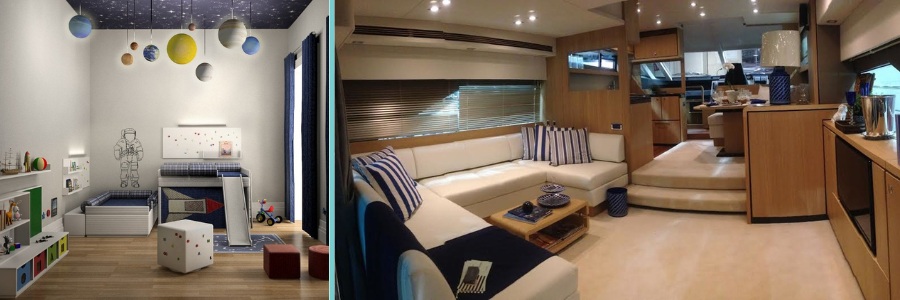
Design examples of a kids bedroom and interior of a yacht by Cad Crowd design experts

RELATED: How architectural CAD drawings help modern design and construction companies

Things you can do to get started now

If you are willing to take a step towards 3D interior rendering, the following are a few things to begin on the journey:

  1. Evaluate your needs: Identify what properties or developments will gain the most from renderings. Begin with a few listings to test the effect.
  2. Establish a budget: Identify how much money you can spend on rendering services. Keep in mind that digital staging is cheaper compared to traditional staging.
  3. Scavenge Cad Crowd: Scavenge Cad Crowd’s directory of freelance designers and agencies. Browse portfolios to identify a style that would suit your brand.
  4. Round up your stuff: Round up floor plans, measurements, and reference or style photo requirements. The more information you give us, the better the final product.
  5. Sync up your marketing campaign: Utilize your new renderings on internet postings, social media, flyers, and e-mail newsletters. Monitor engagement and inquiry to gauge success.

By performing this, you ensure that your investment in 3D architectural rendering services will mean tangible results.

Bringing vision to life

In the busy real estate world of today, pictures are everything. Homebuyers no longer wish to view fuzzy pictures or questionable floor plans. They must be able to see, touch, and connect with a home before they view it.

3D interior rendering delivers that instant connection. It facilitates pre-selling homes. Homebuilders can pre-sell homes, realtors can stand out from millions of listings, and buyers can be brave enough to make a snap decision. From avoiding costly design mistakes to creating shareable social media images, the benefits are evident. Cad Crowd stands at the top as the freelance marketplace of choice for CAD, architectural, and engineering design.

If you are willing to take your marketing to the next level and bring properties to life, visit Cad Crowd for professional 3D interior rendering. Scout through skilled freelancers and businesses that will turn your idea into reality with engaging visuals. With the right professionals in your corner, your next listing won’t just turn heads; it will win hearts and seal deals. Get a quote today.

author avatar

MacKenzie Brown is the founder and CEO of Cad Crowd. With over 18 years of experience in launching and scaling platforms specializing in CAD services, product design, manufacturing, hardware, and software development, MacKenzie is a recognized authority in the engineering industry. Under his leadership, Cad Crowd serves esteemed clients like NASA, JPL, the U.S. Navy, and Fortune 500 companies, empowering innovators with access to high-quality design and engineering talent.

Connect with me: LinkedInXCad Crowd