Alphabet plans to raise $80 billion to pay for AI buildout


Google parent company Alphabet said Monday that it plans to raise $80 billion to help pay for the massive AI infrastructure buildout it has planned. Alphabet will sell off that amount in stock, and will then use the funds to pay for “general corporate purposes, including capital expenditures to scale AI infrastructure and global compute,” the company said in a statement.

Part of the plan involves selling $10 billion in stock to Berkshire Hathaway, the massive global holding company formerly led by Warren Buffet.

“The company is experiencing strong demand for its AI solutions and services from enterprises and consumers, at levels that are exceeding the company’s available supply,” Alphabet said in its statement. “By scaling its investments, the company seeks to expand its foundational infrastructure to support the significant growth opportunity ahead.”

The company added that the stock plan represented a way to “fund its investments in a balanced way while retaining a healthy balance sheet.”

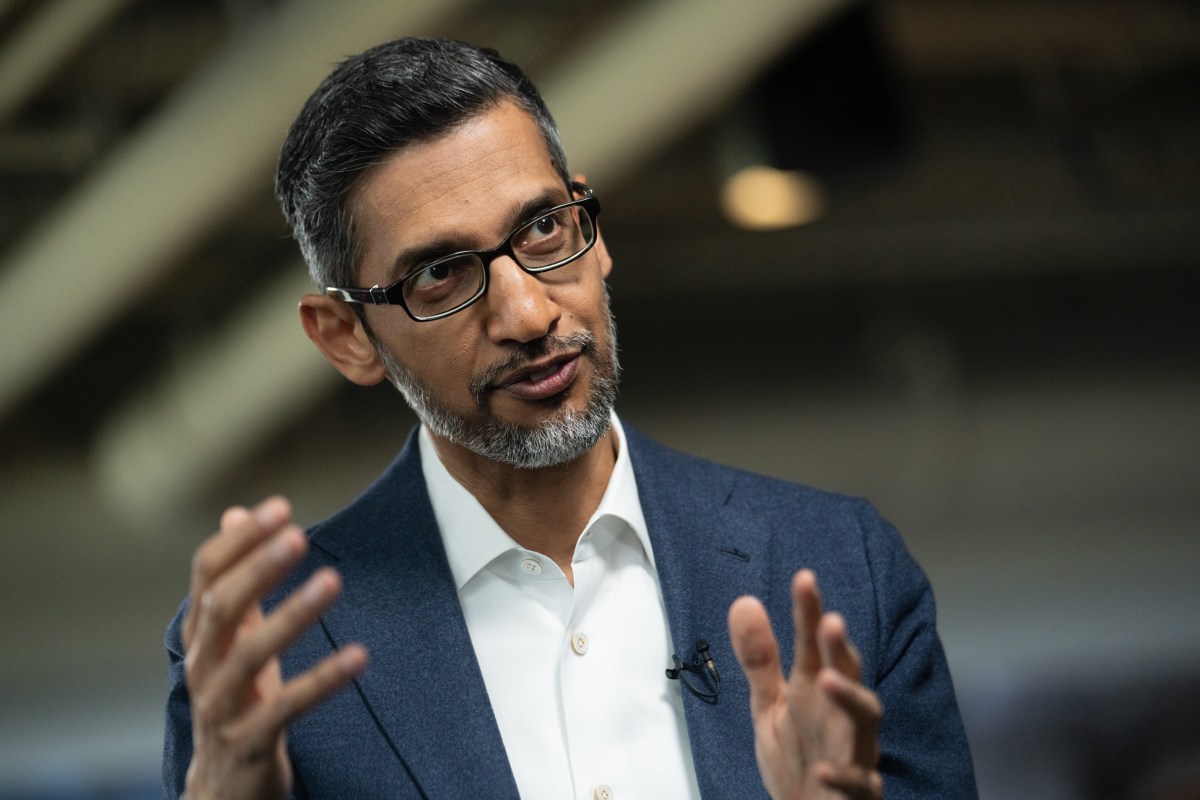
Like other tech giants, Google has announced plans for a massive investment in compute this year, the likes of which will be used to support a flurry of new AI services. At Google I/O last month, CEO Sundar Pichai said that the company expects to spend between $180 and $190 billion on capex before the year is out. Google and other tech giants are expected to spend as much as $700 billion this year on AI capex.

Google revives talks to acquire Wiz at higher valuation


Google’s parent company Alphabet is again in advanced talks to acquire cloud cybersecurity startup Wiz, a person familiar with the deal told TechCrunch. The two companies were close to securing a deal at a $23 billion valuation last summer, but the transaction failed to materialize. 

This time, the price being discussed is higher, the person said. A price of around $30 billion was reported by The Wall Street Journal.

Thomas Kurian, head of Google’s cloud division, is again leading the effort.

Google Cloud sees Wiz’s cloud security products as a good fit for its customer base, and Wiz’s annual recurring revenue (ARR) is attractive too. This stood at $500 million last July, with plans to hit $1 billion in ARR in 2025, TechCrunch reported at that time

Even still, $30 billion would likely be quite the premium price tag. Wiz closed its last outside funding round of $1 billion at a valuation of $12 billion last May. Its valuation reportedly jumped to $16 billion in an employee tender offer late last year.

Although Wiz said it didn’t have plans to take itself public in 2025, it hired Fazal Merchant, a former executive at DreamWorks and Tanium as a chief financial officer. Sometimes hiring a CFO is a sign of getting books ready for a public offering.

One of the reasons the talks failed previously was the inability of the two companies to agree on whether Wiz would remain as a separate division or be integrated into Google Cloud, according to The Wall Street Journal.

High regulatory scrutiny for large transactions during the Biden administration also contributed to the deal’s breakdown last summer, the person familiar with the deal said. 

Other investors have told TechCrunch that they are seeing an increase in M&A activity. In most cases, the return to the negotiation table is correlated with the hope that FTC Chair Andrew Ferguson will be less restrictive on large transactions than former Chair Lina Khan was, said a person familiar with a handful of such negotiations.  

The New York and Israel-based Wiz was founded in 2020 by four former Israeli military officers who previously co-founded a cloud cybersecurity company called Adallom that Microsoft later acquired for $320 million.

Wiz’s backers include Andreessen Horowitz, Cyberstarts, Index Ventures, Greenoaks, Insight Partners, and Sequoia.

A spokesperson for Wiz declined to comment on the deal conversations.