Overcoming Errors in Architectural Drafting with Outsourcing Design Services


A happy blue pencil on an architectural plan truly is a beautiful thing. It reflects that everyone is on the same page as everyone else. It reflects that no corners will be cut for no reason, that no corners will be frayed. But it’s hard not to chuckle at someone who wants an empire and ends up with more frayed corners than a bad pair of sweatpants. It’s because architectural plans are a unique blend of precision and creativity. That’s because creativity dons its hard hat, and the fact about structure becomes some sort of undeniable truth for architectural design firms.

It’s also because there could be some sort of stray line on some sort of misplaced mark, and some measurement that decides it needs an extra inch on some sort of journey that it never meant to take. It’s a familiar sight for someone who has drafted some sort of architectural plan at two A.M. on some sort of whim and meant something, but meant something, but ended up with some house that looked somehow similar to some sort of mythological labyrinth.

Nevertheless, fortunately, today’s architects have something that architects and pyramid and temple builders never had before: outsourcing. To talk about it, if there is an architect and/or a group of engineers who would like some assistance with either solving problems or preventing problems with some designs, there are some very capable people who would more than gladly parachute into that project with some new knowledge and an air of curious detachment about some unorthodox designs.

And hands-down, Cad Crowd is the best source for these people, with a global talent pool that can parachute into a project before a small problem becomes a giant problem. Architectural drafting work mistakes, what drives them, and ways and means of invalidating them through outsourcing will be discussed in this article. It will offer a healthy dose of laughs, as anyone who tried to recreate a drafted floor plan three times within an average morning period deserves so.


🚀 Table of contents


Even architectural design experts can have weaknesses when carrying out architectural drafting. But these should not impact an entire project. Moreover, to achieve perfection and complete an architectural drafting task as quickly as possible, an architect might outsource architectural design. It will be highly advantageous for architects, as they will be able to carry out architectural design work without spending a single moment on technical sections. 

And for people who may be interested in accessing very competent draftsmen, we would recommend Cad Crowd as one of the best sources they could refer to. It would enable architects to access very competent freelance draftsmen who can optimize designs and assist with all procedures involved in the design process. And thus, we would recommend that anyone who wishes to have better designs for their architecture should check out Cad Crowd and look for freelance artists they could hire.


RELATED: What to look for in residential architect freelancers & hiring services companies

Common drafting mistakes

Architectural drafting mistakes occur at all levels and degrees. Small architectural drafting mistakes are so minute that they can’t be viewed with the naked eye. Architectural drafting and design firm mistakes are so unbelievable and so bizarre at times that they’d make a specialist wonder, with more serious implications, ‘How on earth can that happen!’ Architectural drafting mistakes occur oatall varying levels. Young interns make architectural drafting mistakes. Experienced individuals make architectural drafting mistakes. Many very intelligent architects might have made an error or two, but there was no proof.

Dimension problems might be an extremely common source of hiccups. It might be no more than realizing that a room will be expanding and contracting because it just keeps on going. It would have something to say about its own size. And then there would be something different about what the ceiling would have to say about it. And then there would be something about the wall that would be doing its best with these two opposite facts. The next source of problems with hiccups would be scale problems. There would just be some furniture that would have a scale better suited for a house belonging to giants. A staircase would be nowhere near a position that would be preferred.

Layer misuse would then be the next common issue. A wall drawn on an inappropriate layer would translate to an invisible wall. But as soon as the assignment began, clicking on a measurement on an invisible wall, it would appear as if it were a blushing ghost. The words would sometimes wander here and there on the plans as wandering spirits. The symbols would sometimes act on their own and hide in some corners. All these would eventually result in coffee breaks.

Why do these errors continue to be committed even among experienced practitioners?

It is a very complex process and requires several cycles. Even highly competent technicians will experience mental fatigue after a period spent displaying lines, entering dimension descriptions, viewing layers, nudging objects, and checking shapes for various purposes. Yet, as very advanced from a functionality viewpoint as our capabilities are at present for drafts by architectural planning and design firms, we do not have any safeguard against the possibility of deceptive click behavior, misleading alignment on snaps, and elusive hide and unhide attributes for layers.

There exist several architectural groups with deadlines, and there are also several opportunities for missing observation detail. It will be very hard to be completely correct with a loud clock and an even louder email box. Interruptions will also be a source of inaccuracies. A phone call at some specific moment, while an architect emphasizes a certain imperative detail, might spoil the chain of thoughts. It will take some time for completion. At that moment, the cursor on the software will be waiting for input, and the mind will be blank about what it was doing.

It would also seem that there would be an understanding and an admission that we have to believe our eyes. There would almost seem to be an understanding that “the design itself will appear fine,” and it would because “the brain itself will fill gaps that aren’t there.” A fresh pair of eyes would see things that an exhausted mind would refuse to see. It would be within these very parameters that outsourcing would become an absolutely necessary solution for architects.

RELATED: How 3D artists elicit emotions with stunning architectural rendering & visualization services

Changes: The hidden costs

Blueprint errors start with something small. Something can escalate based on problems. A problem with a measurement can result in problems at worksites. A problem with understanding layers can result in a group incorrectly interpreting. A wrong icon can result in an inspector being confused. And so on, because architects and engineers have an experience they want to put aside. Cost implications may be at play. Redrawing and changes entail the consumption of time. Time is equivalent to billable hours. Should there be changes that are not stipulated within planning and included in the construction plan, these changes will, in turn, influence materials, manpower, and timetables.

3D architectural animation designers

A loss of confidence may result from the client, considering they get a chance to review a number of changes within a set of drawings for architectural drawing firms. However, there is also a cost involved with an issue that has an emotional side. None of these architects will want to have it on their conscience that, because they have an insignificant issue on their side, they will have to resubmit a whole week’s work. It is just so stressful.

It is here, exactly, that the outsourcing solution for design talent becomes an attractive alternative. The outsourcing of draft preparation may be viewed as a consequence of weakness and loss of expertise. It may be an astoundingly clever move. The technicians who concentrate on draft preparation have an attentiveness and speed that would be very hard to maintain on the part of internal people who have a lot on their hands. The freelancer acts as a quality controller, polishing drafts to an optimal level of transparency.

The greatest benefit that may be derived from here is skills. There are several fields associated with drafters from which skills can be obtained. These people would have the opportunity to be exposed to a strong set of skills and problem-solving. It would be common for these people to have some experience with almost all forms of error. Deletion, correction, and recreation of graphics would be an easy task for these people. Misaligned graphics would be noticed immediately by these people. Amynta would have problems with wandering symbols and runaway layers.

The people who will interact with freelance CAD outsourcing will bring some new ideas as well. It will be people with some knowledge of a plan who will not be affected by an internal forecast. It will be an unbiased judgment about blueprints. Their unbiased nature will serve as a filter, increasing the accuracy of the results.

When outsourcing saves the day

Perhaps there may be an architectural firm with an immediate deadline. The employees have been staying late. You know, people are a bit fuzzy. A large business customer requires an absolutely coordinated set of drawings for the morning. The set of drawings is nearly complete, but something doesn’t quite ring true. Walls are correct, but perhaps not quite so. Sizes are correct but perhaps not exactly so. Something isn’t quite right.

But it is at this level that outsourcing becomes an unsung hero. It is at this stage that a good freelance draftsman will be introduced and will analyze these documents. The freelance draftsman will then analyze various layers, perform some linework, locate annotation marks at specific spots, focus on some elevation work for perfection, and address some scale issues. It is at this stage that these documents will no longer appear as if they have been worked on for so long.

RELATED: Pricing factors for architectural visualization and hourly 3D rendering rates for your firm’s projects

Competitive benefits for architecture businesses

The process associated with document draft preparation and outsourcing continues beyond error correction. It still poses challenges and drives the paradigm shifts required for architectural practices to continue as usual. As some pressure will be removed with document draft preparation, there will be more opportunities for creative designs, customer service, conceptual planning through concept design experts, and project judgment.

Organizations have more flexibility. It shows that, based on projects, outsourcing will soon allow an organization to extend its scope without having to hire employees. No costs are assigned for employees who were not working before and after the peak season. Article writing can be done very quickly.

3D architectural rendering designers

Thirdly, there is evidence that validates that it can be done faster through outsourcing. Tech writers mix well with other tech writers, as all they do is tech writing. It would have taken several days for people working within an organization to do it, but they would do it faster, which would be very helpful shortly after the deadlines.

Finally, there will be an accuracy upgrade with outsourcing. All documents sent out will have a document drafter working in the background. There will be an upgrade with every document. There will be no more findings overlooked and will be addressed. There will be no uncertainties and misalignments. There will be an upgrade.

The future of architectural drafting service through outsourcing

Its complexity multiplies as technology advances. The standards continuously develop. The amount and type of information needed from the client continuously increase. The degree of accuracy due to human limitations requires an accuracy level on the screen from start to finish, as high as the error margins. And outsourcing will be an integral part of coping with all of this.

The global reach for freelance work allows architects to hire qualified architectural drafters with different expertise. The presence of different time zones is very convenient. Architects are working on designs while people on the other side of the planet are asleep. People on the opposite side of the planet have already worked on an architectural draft.

The future outlook projects a collaborative world, with architecture and outsourcing as complementary processes that address needs before they arise and improve capabilities in document design.

RELATED: Why is 3D modeling used in building architectural projects with freelance designers and firms?

Conclusion

Even architects can have weaknesses when drafting. But these should not impact an entire project. Moreover, to achieve perfection and complete an architectural drafting task as quickly as possible, an architect might outsource architectural design. It will be highly advantageous for architects, as they will be able to carry out architectural design work without spending a single moment on technical sections. 

And for people who may be interested in accessing very competent draftsmen, we would recommend Cad Crowd as one of the best sources they could refer to. It would enable architects to access very competent freelance draftsmen who can optimize designs and assist with all procedures involved in the design process. And thus, we would recommend that anyone who wishes to have better designs for their architecture should check out Cad Crowd and look for freelance artists they could hire. Request a free quote today.


author avatar

MacKenzie Brown is the founder and CEO of Cad Crowd. With over 18 years of experience in launching and scaling platforms specializing in CAD services, product design, manufacturing, hardware, and software development, MacKenzie is a recognized authority in the engineering industry. Under his leadership, Cad Crowd serves esteemed clients like NASA, JPL, the U.S. Navy, and Fortune 500 companies, empowering innovators with access to high-quality design and engineering talent.

Connect with me: LinkedInXCad Crowd

Why is 2D Drafting Still Relevant for Different Types of Architectural Drawings?


Everybody who’s been dealing in the AEC (Architecture, Engineering, and Construction) sector is talking about how 3D modeling design services have changed the face of the business, revolutionizing the way a project is done and bringing much greater design clarity for clients and stakeholders alike. Let’s also not forget about BIM (Building Information Modeling), which is touted to be the best candidate to ensure the future of architectural AEC in an increasingly digitalized industry.

Does this mean that the era of 2D CAD is coming to an end after a long supremacy? Will three-dimensional graphics soar as the new gold standard for architectural drawings? It probably will, especially considering the fact that we do have the technology and the workforce to make it happen, perhaps sooner than later. If you take a look around, new CAD drafting services are popping up everywhere in the world, highlighting 3D modeling and BIM capabilities as their primary selling points. 

No one denies the efficacy of 3D modeling as a communication tool that can easily convey spatial relationships between objects, make complex designs appear simple, and turn a sophisticated plan into a more discernible visualization. Despite the hype, however, 2D drafting still persists. And not just as remnants of the old ways, but a time-tested construction documentation format preferred by a good majority of architects, engineers, and construction professionals.

You can even say that 2D drafting still reigns supreme thanks to its practicality, efficiency, and yes, clarity. This also means that reliable CAD freelance professionals don’t just specialize in 3D modeling and visualization, but they also need to showcase mastery in conventional 2D drafting to cater to every client. For an unbeaten expertise in architectural drawings, both 2D and 3D CAD, look no further than Cad Crowd to discover and connect with the world’s most talented drafters.


🚀 Table of contents


How 2D drafting maintains relevance

In an industry where digital twins and photorealistic renders loom large, how does 2D drafting remain relevant? It turns out the answer is quite simple: while the increasingly advanced technologies are making ripples in the AEC sector, 2D drawing still serves pretty much as the foundation of it all, for good reasons.

Compliance

Some people see regulatory compliance as somewhat of a hindrance that holds back the industry from moving closer toward 3D CAD, but this is hardly true. Architectural drafts created in 2D drawings serve as the official record for ensuring compliance with building regulations and obtaining the relevant permits. Unlike 3D visualization services that mostly convey how a building or a project will look when it’s done, detailed 2D drawings are filled with detailed information about structural elements, dimensions, material specifications, and more. Even with all that data, the conventional 2D drawing is relatively small in file size compared to its 3D alternative.

2D CAD drafting examples by Cad Crowd architectural design experts

RELATED: Top 37 companies for Lumion 3D rendering services & modeling for architectural firms

Familiarity

3D visualization does appear realistic and is easy to understand by the typical clients, but professionals have little need to hasten and replace their 2D-based tools with newer technologies if their current repository still does a perfectly good job. The works of architects, engineers, and contractors revolve around detailed two-dimensional plans; they don’t actually need photorealistic images to understand the construction process and design of a project. Industry professionals are familiar with the standard 2D format, and therefore, transitioning to a full-blown 3D-based workflow seems unnecessary at this point. 

Precision

Given the familiarity, it makes little sense for professionals to do away with the precision afforded by 2D architectural design and drafting services. Although 3D modeling offers a lifelike depiction of a design, 2D drafting provides an all-around precision that’s simply indispensable in a construction project. A two-dimensional architectural draft isn’t a lifelike imagery of a design, but it contains every little detail that engineers and contractors need to know to carry out their duties. An architectural draft, by definition, is a technical drawing of a precise plan for a construction; it’s a construction document that doubles as an instruction manual. Therefore, it must be clear without any ambiguity on how to build a structure and eventually bring a design into reality.

Accessibility

One of the main issues with 3D CAD models is accessibility. You have the option to share the CAD file with all stakeholders, but it’s only effective when everyone is using the same software package. Otherwise, the file might need to go through a translation/conversion process that comes with a real risk of missing data. Note that some of the most popular 3D CAD applications are attached with hefty license and subscription fees, and each has a relatively steep learning curve. On the other hand, you only need to save a 2D architectural draft as a PDF, and everyone can access it easily. You can also produce dozens of physical copies and distribute them. In case modifications are necessary, the architects can just mark up the drawings and give detailed annotations using nothing but a pencil directly on paper. Easy accessibility brings about effective communication and fosters collaborative workflow.

RELATED: Pricing factors for architectural visualization and hourly 3D renderings rates for your firm’s projects

2D CAD applications in modern projects

The industry must admit that 3D modeling has increasingly become the format of choice, especially when used within the BIM framework. That being said, even in today’s industry landscape, which is constantly pushed to adopt new technology, there are various instances where 2D drafting services remain the better option. 2D CAD is still prevalent, at least for the following applications.

  • Site plan: a two-dimensional representation of the project site, seen from a bird’s eye perspective. It showcases the layout of the project site, utilities related to the property, and boundaries. Think of it as a map of the project site that details how every single structure and other elements will be positioned. Site plans are indispensable for project planning, allowing architects and engineers to craft a workable roadmap that serves as a guideline for how everything should be done before, during, and after construction.
  • Floor plan: also a top-down view image, a floor plan is meant to showcase the layout of individual rooms in an interior. It helps visualize how all the rooms and areas are connected to each other. Major details include placement of doors, windows, furniture pieces, fixtures, and lighting. Like every other construction drawing, a floor plan is heavily annotated with such information as dimensions, tolerance, materials, finishes, etc.
  • Structural drawing: The main focus of structural drawings is load-bearing elements, which may include foundations, beams, columns, walls, and floors. More than just a simple visualization of a structure, these drawings outline how load-bearing elements must be constructed to ensure that the structure can withstand weight, wind, and other forces that are essential for engineering design firms to succeed.
  • MEP drawings: As the name suggests, MEP drawings convey the mechanical, electrical, and plumbing systems to be installed in a building. Mechanical drawings highlight the HVAC system, including equipment locations, ductwork layouts, and system specifications. Electrical drawings specifically focus on power distribution, wiring diagrams, switch locations, and sometimes communication systems as well. On the other hand, plumbing drawings outline the pipe layouts for water supply and drainage, fixture locations, and waste removal systems, to name a few.

Important construction documents, such as shop drawings, fire protection and safety drawings, and as-built drawings, are also most commonly presented in a two-dimensional format. 

Although 3D modeling is excellent for visualization purposes, 2D CAD drawings are still the language of choice for construction projects used by industry professionals. 2D drafting isn’t just relevant to modern architecture; it’s a critical tool to communicate designs, details, fabrication processes, and construction methods. 

2D CAD examples of a floor plan by Cad Crowd design experts

RELATED: Why 3D modeling is used in building architectural projects with freelance designers and firms?

Takeaway

It’s simply undeniable that 3D-based architectural drawing services have delivered a major impact on the industry as a whole. But the fact of the matter is that the AEC sector is still in a transition period from the currently mainstream 2D to the new workflow that revolves around 3D visualizations. Not only does this require readiness in technical abilities, but it also requires changes in tools. You can’t get rid of the notion that 3D modeling would soon relegate its predecessor to a second-class solution, but at least for the time being and even perhaps the foreseeable future, 2D drafting is still universally approved as the standard format for the AEC industry at large. This is not because of the reluctance to welcome changes, but is driven by the need to maintain project efficiency and accuracy. 

Architects, engineers, designers, and contractors are familiar and comfortable with the technical nature of 2D drafts, whereas typical clients prefer to see complex lines, shapes, and annotations rendered into lifelike models. As far as the industry is concerned at this point, being able to easily switch between 2D and 3D should facilitate the transition at a more friendly pace. CAD software with features that enable 3D visualization while still delivering all the advantages of 2D architectural drawings will be the tool of choice during this transitory phase. This kind of flexibility allows professionals to work efficiently in their preferred fashion without undermining the importance of good communication with their clients. The workflow should treat 3D models as byproducts of 2D drafts to ensure accuracy, viewing lifelike visualization as the translated form of a technical drawing that maintains all the right details.

When flexibility and accuracy are what you’re after in architectural drafters, Cad Crowd has you covered. The AEC-focused freelancing platform is a busy hub populated by CAD professionals boasting expertise in both 2D and 3D modeling for residential, commercial, industrial, and civil projects, big and small. Get a free quote today.

author avatar

MacKenzie Brown is the founder and CEO of Cad Crowd. With over 18 years of experience in launching and scaling platforms specializing in CAD services, product design, manufacturing, hardware, and software development, MacKenzie is a recognized authority in the engineering industry. Under his leadership, Cad Crowd serves esteemed clients like NASA, JPL, the U.S. Navy, and Fortune 500 companies, empowering innovators with access to high-quality design and engineering talent.

Connect with me: LinkedInXCad Crowd

Top 35 Websites to Hire ArchiCAD Freelancers for Architectural CAD Design & Drafting Services


ArchiCAD is an all-in-one software package to help professionals in the AEC industry tackle the entire phase of architectural projects, from the conceptual phase and design to actual construction. More than just visualization software, ArchiCAD is a data-rich BIM (Building Information Modeling) software that provides computer-aided solutions in a digital environment for just about every aspect of architectural projects, big and small, including but not limited to building exterior, interior layout, structural engineering, and cost estimation.

It’s a professional tool with all the advanced features you need to plan, manage, and monitor an architectural project. But just like any other tool, you can only utilize the software to its full potential if you manage to find the right person to use it. ArchiCAD designer is a highly specialized profession, and this is where an AEC-focused freelancing platform like Cad Crowd comes in handy. With hundreds of thousands of architects, engineers, designers, drafters, and technicians in its network, Cad Crowd has become the go-to platform where you can find expert AEC freelancers at affordable rates. For more on the freelancing platforms and job boards where you can find and hire ArchiCAD designers, please take a look at the list below.

RELATED: Leading Home Design & Modeling 3D Technology for Builders, Companies, and Firms

AEC-focused freelancing platforms

The best thing about AEC-focused freelancing platforms is that they maintain a massive network of professionals with domain-specific expertise. These platforms have in their database nothing but freelancers with expertise and experience in the AEC industry. No matter the size of your project, the skill levels you expect, and the scope of work involved, chances are specialized platforms can connect you with the right talents to handle the jobs. Among the best AEC-focused talent marketplaces are as follows.

cadcrowd-logo

1. Cad Crowd

Nothing beats Cad Crowd when it comes to a talent marketplace for ArchiCAD designers or even AEC freelancers in general. About 15 years ago, Cad Crowd became the go-to platform to hire professionals of the architecture industry for all sorts of projects, from the relatively simple 2D floor plan and photorealistic visualization to complex structural engineering services and BIM coordination. As far as the hiring process itself, Cad Crowd is like many other platforms where you can browse professionals based on their specialization, post public or private projects, and launch design contests. Cad Crowd can also function as a project manager in case you need on-demand assistance for long-term ArchiCAD projects.

Website: Cadcrowd.com

GoPillar-logo

2. GoPillar

A crowdsourcing platform, GoPillar, facilitates architectural design competitions with the promise of giving you dozens of submissions from architects all around the world. GoPillar claims to maintain a network of over 70,000 architects with various specializations, meaning it can take on design projects of any size and complexity level while maintaining professional-quality submissions.

The design competition form is also pretty straightforward, containing a series of clear questions to help make sure that you give all the necessary details before the contest launch. It even gives you the option to choose the kind of resources you want to obtain for any given architectural design project. While this is not a traditional freelancing platform, the crowdsourcing model can be the start of a broader talent-hunting scope.

Website: Gopillar.com

RELATED: BIM vs. CAD: Which is Better for Modern Architectural Design Services Companies

Formwork Marketplace

3. Formwork Marketplace

Thanks to a rigorous vetting process and dedicated support, Formwork Marketplace makes for an excellent platform to help you connect with freelance architectural design professionals and engineers for your next ArchiCAD design projects. It also promises to deliver affordability while providing guaranteed high-quality results. You can navigate the marketplace without even logging in, but certain features, such as posting projects and direct messaging, are only available to registered members.

Formwork Marketplace places emphasis on helping architects find (temporary) junior designers to handle project documentation and drafting, so they can focus on the more critical tasks in an architectural project. General contractors and subcontractors can also use the platform to discover emerging BIM experts. You get the options to either post a project and wait for young professionals to apply for the job or connect directly with the specialists you need.

Website: Formworkmarketplace.com

Aedifico

4. Aedifico

Focusing on the construction and commercial real estate industry, Aedifico gives you direct access to AEC professionals with the right expertise for ArchiCAD design projects. The nature of direct, flexible connections between clients and professionals becomes part of Aedifico’s vision to play an active role in transforming the construction sector from a company-centric model into a project-based business facilitated by the Internet at large.

Aedifico welcomes specialists of all sorts, from strategic advisors to technical experts, to join the platform and engage in direct communication with potential clients. And if you’re in need of architectural detailing professionals, Aedifico caters to every project size, including one-off gigs and long-term partnerships. Creating an account is free, but some features are available only to premium members. The platform is still in its early stages of development, and at the moment, it operates as an invitation-only professional network.

Website: Aedifico.ai

buildingconnected logo

5. BuildingConnected

A no-nonsense freelancing platform of the AEC industry, BuildingConnected provides access to the contact information and portfolio of hundreds of thousands of subcontractors, and comes with a user-friendly interface to help you find them easily. The platform says that every contact information is up to date with the latest available details, such as the list of trades and service areas, to speed up your search and help manage your bids. BuildingConnected offers a range of great features to make it easier for you to collaborate on every step of a project, from design drawings to the construction phase, and everything else in between. You can also send out invites to prospective architectural drafting professionals and monitor progress from a single dashboard.

Website: Buildingconnected.com

RELATED: What Types of 3D Rendering Do Architectural Design Studios & CAD Freelancers Use?

Arcbazar

6. Arcbazar

Somewhat similar to GoPillar, the architectural projects posted to Arcbazar is set as a contest. The projects can be anything from a small renovation or remodeling of an existing residential building to a complete new design of a commercial space. To start the design contest, you need to provide basic information such as dimensions, images for design references, and a short description of the objective. Once all the required information is provided, the project gets enlisted in the platform’s competition page. You also set the project timeline and the amount of award money to be distributed to the top three design submissions. Arcbazar says that every competition is verified before it gets enlisted, but it doesn’t provide details about the verification process itself.

Website: Arcbazar.com

Arcdaily

7. ArchDaily Professionals Search

Unlike a typical freelancing platform, where you can post a project or purchase pre-defined service packages from professionals, ArchDaily Professionals Search looks more like a directory of architectural rendering firms rather than a talent marketplace. The directory contains more than 74,000 firms from all around the world; if you narrow down the scope to the United States only, there are still over 9,600 architectural companies ready to take part in your next design projects. Mind you that most (if not all) of them are not individual freelancers, but established firms with experience working in high-profile architectural projects in many different countries worldwide.

Website: Archdaily.com

Specialized job boards

In addition to AEC-focused freelancing platforms, there are also specialized job boards where everyone is welcome to post ArchiCAD design jobs or any other architecture-related projects. Some of the most popular job boards in the industry are listed below.

Archinect

8. Archinect jobs

A single job listing on the platform costs $125, for which the project remains online for 90 days or until you find an ArchiCAD designer to fill the position, whichever comes first. You can get discounts for multiple listings, and there are additional features to increase exposure. Archinect Jobs warns that every submission is instantaneous, so make sure all the information and details are correct before you post. Archinect says the job seekers on the site tend to be more technically proficient and design-savvy compared to those you encounter in general job boards, and that the platform has the highest traffic of all architecture-related sites across the web. Besides the usual job posting option, Archinect also has a Talent Finder feature.

Website: Archinect.com

RELATED: How to Choose the Best Freelance Architecture Visualization Services and Designers

dezeen jobs logo

9. Dezeen Jobs

With more than 100,000 visitors every month, Dezeen Jobs is one of the most popular architecture and design job sites in the world. It currently has over 95,000 registered job seekers from 135 countries, and there are, on average 12,000 job applications circulating through the site per month. Dezeen also has quite a following on social media, with thousands of 3D design professionals subscribing to every job announcement on Twitter, Instagram, and Facebook. A single job posting on Dezeen costs £150 or about US $200, for which the posting remains active for 28 days and is attached to the platform’s daily newsletter for greater exposure.

Website: Dezeenjobs.com

Architizer

10. Architizer

It’s a premium job board with a bold claim of having an audience that consists of a million architects, 3D designers, technicians, and students. Architizer doesn’t explicitly mention anything about the designers exclusively using ArchiCAD software, but it’s safe to assume that at least a good number of them are proficient at the tool. A single job posting on Architizer costs $95, for which the post remains online for 30 days. With the “Feature” add-on, which costs an additional $300, the job post will be highlighted on the platform’s job board homepage and included in the weekly newsletter sent out to more than 170,000 subscribers for as long as the post remains active.

Website: Architizer.com

Constructionjobs

11. ConstructionJobs

There’s a lot to like about ConstructionJobs. In addition to having an easy-to-use interface that allows for practical job post management, it also offers a range of advertising solutions for every budget. And as the name suggests, everything about the platform focuses on the construction industry; therefore, your job post will reach professionals with domain-specific expertise. But this doesn’t mean the platform only has a limited number of active job seekers. ConstructionJobs maintains a vast network of 2D and 3D drafting professionals that consists of thousands of qualified, skilled, and experienced candidates for various architecture-related jobs. A single job post costs $325, for which the post remains online for 30 days.

Website: Constructionjobs.com

RELATED: New Advances in Architectural Rendering Software

Riba Architecture

12. RIBA Architecture

Claiming to be one of the most popular job boards specializing in the architecture and design industry, RIBA sets a pretty steep price of £375 (a little more than US $500) for a single standard package job post. Your advert will remain online for 30 days and can be attached to the company profile as well as corporate branding. RIBA Architecture says only relevant candidates will receive the job alerts in their emails, so it does seem that the price also includes a targeted campaign feature. All applications are sent directly to your email or website, too. RIBA Architecture offers discounts for first-time users/clients.

Website: Jobs.architecture.com

AIA Career Center

13. AIA Career Center

The American Institute of Architects (AIA) has a “Career Center” feature where companies and firms can post contract and freelance roles for architects. A single job post costs $305, for which it will remain online for 30 days, and you get a Resume Search access. The platform currently has more than 1,500 candidates with searchable resumes. Keep in mind that only AIA members can post jobs and search the resume database, and the membership itself isn’t free. The exact cost of the membership fee is determined by your profession and location.

Website: Careercenter.aia.org

ArchGee

14. ArchGee

There are five major job categories listed in ArchGee, including architect, urban planner, interior designer, landscape architect, and BIM Specialists. Every job post will be shared on the platform’s social media profiles on LinkedIn, Facebook, and Instagram for increased exposure. The only pricing information available from the website is that job seekers can use the platform to find employment opportunities for free, whereas clients used to” be able to post jobs for free until June 30, 2024, as a limited-time offer. Details about the pricing have not been updated. Whether or not clients can still post jobs for free is unclear.

Website: Archgee.com

RELATED: The Power of Architectural CAD Services

AJ Jobs

15. AJ Jobs

Architects’ Journal (AJ) Jobs offers a few different options to promote your post. The standard option, costing £300 (about US $400), gives you unlimited wording in the post and online application management feature. At that price, the job post remains on the website for 28 days. The premium job package costs around £400 (a little more than US $540) for which you get all the benefits that come with the standard option and increased visibility. You can download candidates’ CVs in PDF format with full contact details, but this is also a paid feature, starting at £100 (around US $135) for 10 CV downloads.

Website: Architectsjournaljobs.com

General freelancing platforms and job boards

With generalized platforms, you have an assurance that there’s going to be a architecture design freelancer for every kind of job, including ArchiCAD design or even the more complex BIM management. A potential issue is the low barrier to entry. That being said, you can always check the freelancers’ project records, clients’ reviews, and ratings before you decide to hire anyone.

kolabtree logo

16. Kolabtree

The biggest selling point of Kolabtree is that nearly every freelancer registered to the platform has a PhD and many of them have also published research papers in various studies. Kolabtree primarily focuses on providing scientific writing services, but you can still find professionals specializing in the architecture and design industry, such as sustainable construction, commercial architectural drafting services, urban design, architectural engineering, industrial architecture, and more. Most freelancers on Kolabtree use an hourly rate pricing method. For the most part, however, Kolabtree is just like any other freelancing platform.

You can post projects and wait for the applications to come in or browse for professionals and invite them to submit proposals. Kolabtree gives an assurance that you will receive quotes from professionals within just 24 hours of posting a project. The platform also provides a dedicated account manager for every active project. Furthermore, you get the option to request for profile verification before hiring. With all those features, most people would assume Kolabtree is a premium platform, but it’s actually the exact opposite; Kolabtree is free to use for clients and you don’t even have to pay any payment processing fees for every completed project.

Website: Kolabtree.com

RELATED: 30 Architecture Design Inspiration Resources

toptal

17. Toptal

One thing that separates Toptal from most general freelancing platforms is the big claim that it only accepts just about 3% of all the thousands of freelancers registering on the site every month. The idea behind such a low acceptance rate is that you always get top-quality CAD design freelancers in their respective fields of expertise, regardless of who you end up hiring. Toptal has six major profession categories, including Designers, Project Managers, Product Managers, Developers, Management Consultants, and Marketing Experts. According to the latest available data from the platform itself, there are currently more than 2.7 million registered talents.

Not every single one of them is an ArchiCAD designer, of course, but you have the option to contact the Toptal team and provide detailed information about the specific talent you need, whether a single freelancer of a team of up to ten professionals. Bear in mind that Toptal is a premium freelancing platform with a flat monthly subscription fee of $79 to gain access to all its features. It’s good to know that Toptal offers a no-risk trial period, with which you won’t be liable for any payment in case you’re not 100% satisfied with everything it has to offer.

Website: Toptal.com

Freelancer

18. Freelancer.com

With more than 83 million registered members (clients and freelancers) and a record of over 24 million job postings, Freelancer.com is without a doubt one of the leading talent marketplaces all across the web. This is a general freelancing platform, so it’s safe to assume that the massive number of freelancers is composed of job seekers from diverse educational backgrounds, not just ArchiCAD designers. You can post projects, receive bids from design & drafting freelancers, and review their profiles on the platform free of charge. However, there’s a small processing fee of 3% or $3 (whichever corresponds to a higher dollar amount, based on the project value) billed to the client. Freelancer.com offers a Live Chat feature to help you communicate with freelancers and a mobile app to monitor progress.

Website: Freelancer.com

RELATED: 5 ADU Design Tips To Make Spaces Feel Larger with Architectural Services & Design Firms

Upwork-logo

19. Upwork

A massive talent marketplace with a broad range of skill categories and millions of freelancers from all around the world, Upwork appears to be the one-platform-fits-all choice for clients and job seekers alike. Upwork doesn’t charge a monthly subscription fee, but it takes a commission of anywhere between 3% and 10% (depending on project value) on every payment you make to the architectural drafting freelancer you hire. There’s also a contract initiation fee from $0.99 to $14.99 if the project is worth $100 or less.

Clients have three membership options: Marketplace, Business Plus, and Enterprise. Only if you opt for the Enterprise option will the contract initiation and commission fees be waived. Every membership account allows you to post projects and wait for applicants to place a bid or purchase pre-packaged services from freelancers. Like many other general freelancing platforms, make sure to use the filtering options to sort the candidates based on their skills or specializations.

Website: Upwork.com

Truelancer logo

20. Truelancer

You can manage all your projects, including the bids you receive and progress, as well as communication with freelancers, in the ‘Workflow” dashboard on Truelancer. You can post jobs and view freelancers’ profiles for free on the platform, but there is a processing fee of anywhere between 2% and 3.9% on every completed project. All the fees will be refunded 100% if you’re using a back transfer in USD. Truelancer is a general freelancing platform; the site currently has over 2 million registered CAD drafting services and freelancers from more than 120 countries, categorized into thousands of specific skills.

Website: Truelancer.com

Weworkremotely

21. We Work Remotely

A pretty straightforward job board, We Work Remotely comes with a user-friendly interface and several premium features to increase job post exposure. But it’s quite pricey, with a base price of $299 for a single standard job listing. The add-on options alone cost anywhere between $69 and $159. You don’t have to purchase any of the add-ons, but the platform promises greater visibility, partly because the listing is distributed to the partner sites. Considering the relatively high price tag, it’s good to know that WWR doesn’t entirely rely on AI to screen the applicants. Instead, the platform says that all the applications are reviewed by human to verify their qualifications and credibility.

Website: Weworkremotely.com

RELATED: Best 50+ Freelance Jobs Sites for Architects and Finding Remote Work for Architectural Designers

fiverr-logo

22. Fiverr

Known for its gig-based freelancing, Fiverr is like a stripped-down version of a general talent marketplace where clients cannot even post projects and let 3D architectural modeling freelancers make their bids. You hire someone on the platform by purchasing pre-defined service packages (or Gigs) set by the freelancers themselves. In short, you browse for freelancers’ profiles to verify their qualifications, review their service packages to see if they provide the services you need, and make the purchase.

Fiverr allows you to communicate directly with the freelancers (via the platform’s messaging feature, nonetheless) and ask for a custom package if needs be. It seems limiting at first, but the option to ask for a custom offer makes it a little bit more flexible. The standard service fee is 5.5% of the project value and there’s an additional $3.5 fee if you place an order of less than $100.

Website: Fiverr.com

Other platforms you may want to consider:

SimplyHired logo

23. SimplyHired / Indeed

The job posting feature in SimplyHired is available free of charge. It’s mainly a job search engine, and when you want to post a project, you’ll be redirected to Indeed website. You can boost the job posting visibility by purchasing the “Sponsored Jobs” option, although the platform doesn’t explicitly mention how it gives additional exposure.

Websites: Simplyhired.com / Indeed.com

wellfound logo

24. Wellfound

The site focuses on providing small businesses and startup companies a place to look for reliable yet affordable architectural design talent. Wellfound also has a built-in ATS to help you monitor the job posts and manage the incoming applications. The platform takes pride in its AI-powered recruitment service, said to have the capabilities to scan over 500 million job seekers based on your project requirements.

Website: Wellfound.com

RELATED: Ten Questions to Ask a Structural Engineer Before Hiring a Architectural Design Firm

braintrust logo

25. Braintrust

the ATS dashboard from Braintrust gives you direct access to more than a million talents from all around the world. The platform won’t be directly involved in the hiring process as it leaves the screening task partly to the built-in AI system (for candidate matching). Braintrust claims the method is up to 70% more efficient than using traditional staffing agencies to find freelancers.

Website: Usebraintrust.com

contracom logo

26. Contra

You’ll find that Braintrust and Contra have a thing or two in common, for example,both aren’t necessarily a traditional job board, but ATS with which you can manage your job post, review the applicants’ profiles, monitor progress of your projects, and make payments to freelancers you hire. Contra currently maintains a database containing over a million freelancers with more than 500 different specializations.

Website: Contra.com

workanacom logo

27. Workana

The vast majority of job seekers registered to Workana are based in Latin American countries. The platform only has two major professional categories: developers and freelancers. The former specializes in the creation and development of apps and software, while the latter is filled with a broad range of other skillsets, including ArchiCAD design.

Website: Workana.com

RELATED: How Architectural Design Services are Creating Sustainable Architecture

guru.com-logo

28. Guru

The platform works more or less the same way as other general freelancing platforms, like Upwork and Truelancer. One of the biggest differences is that Guru allows you to post as many projects as you want for free. There’s a 2.9% processing fee on every completed project, but the fee will be refunded if you’re using wire transfer or eCheck to make the payment.

Website: Guru.com

peopleperhour logo

29. PeoplePerHour

Much of the hiring workflow in PeoplePerHour is basically the same as what you find in Guru. You get to post projects and review the incoming proposals from 3D architectural visualization freelancers or contact the freelancers directly and ask them to place bids on your project. PeoplePerHour provides a “project stream” dashboard to help you to monitor progress and manage payment.

Website: Peopleperhour.com

Allremote

30. All Remote

A job board that operates like a staffing agency, All Remote is deeply involved in the candidate hiring and screening processes. The platform collaborates with you to prepare the questions for the interview and the technical assessments in accordance with your project requirements. It can even help you gauge the freelancers’ skill levels and negotiate a salary with the shortlisted candidates.

Website: Allremote.jobs

RELATED: The Role and Benefits of CGI Rendering in Architecture: Why Service Providers and Freelancers Rely on It

Worksome logo

31. Worksome Omni-Channel Sourcing

There are plenty of freelancer management tools from Worksome, and the Omni-Channel Sourcing feature is the one that most closely resembles a job board. It’s a central hub where you can post jobs and tap into the database of staffing agencies, talent marketplaces, and even private talent pools. The hub also comes with a communication tool and advanced filtering options.

Website: Worksome.com

remotehubcom logo

32. RemoteHub

A combination of a traditional job and a freelancing platform, RemoteHub allows you to post projects and purchase services directly from architectural visualization freelancers in its database. Job posting is free, and the platform currently has more than 120,000 professionals grouped into over 100 skill categories.

Website: Remotehub.com

Online communities

Apart from specialized and general freelancing platforms, online communities might serve as useful resources to help you discover ArchiCAD designers.

BIM Community

33. BIMCommunity

With a big claim of being the first global social network for AEC professionals, BIMCommunity has the potential to be a true one-stop platform to connect clients with the architecture industry at large. The platform promises to create an environment where BIM modeling professionals can engage in productive interactions within the community to help develop their careers. The community is also meant for architecture companies to broaden their reach into the workforce as part of the strategy to achieve their business goals. As a client, you can register to BIMCommunity to gain access to more than 10,000 professionals and companies, and immediately start your search for ArchiCAD designers.

Website: Bimcommunity.com

RELATED: The 10 Best Architectural Rendering Software for Designers

Reddit

34. Reddit

People don’t usually turn to Reddit to look for ArchiCAD professionals or freelancers of any sort, but this doesn’t mean the platform isn’t any good either. As far as online communities are concerned, Reddit is in fact one of the busiest across the entire web, frequented by millions of people from all kinds of backgrounds. While not every single one of them is an ArchiCAD designer, Reddit has several subforums dedicated to AEC professionals, including drafters, render artists, engineers, and even architects. Get to the specific subforums such as r/ArchiCAD, r/architecture, or r/freelance_forhire to begin your search. Bear in mind that some subforums don’t actually allow job posts, but you can always use the direct messaging feature. Also, Reddit is free to use.

Website: Reddit.com

LinkedIn logo

35. LinkedIn

You can say that LinkedIn is more like a social network rather than an online community, but everything about the platform seems to have been built around the idea of connecting companies and employers with professionals and job seekers alike. This social network focuses heavily on professional networking, where members likely connect with people they already know or are introduced to by someone else in the business circle.

For talent-finding purposes, LinkedIn Jobs offers a range of features to help you post projects and engage job seekers with targeted campaigns and management tools. You get to set your own budget for the campaign and control the spending as well. But for the most part, LinkedIn Jobs works like many other generalized online job boards out there.

Website: Linkedin.com

RELATED: 3 Steps to Hiring a Reliable Architecture Firm & Freelance Services Architects

Takeaway

ArchiCAD comes with powerful features not only to transform a mere concept into photorealistic visualizations, but also to plan the whole construction project with as many details as you need, from the structural engineering aspect to model-based cost estimation. Furthermore, ArchiCAD runs on open standards, meaning it can integrate the files and data seamlessly into a BIM workflow even if you must collaborate with a architectural planning and design team that uses different software. ArchiCAD is admittedly not the be-all and end-all software for all your architectural projects, but it’s such an invaluable project planning and management tool to improve workflow and cost efficiency a great deal.

How Cad Crowd can help

To make sure that you’re using ArchiCAD in the most effective way possible, you need a professional with the right skills and experience in the trade. Cad Crowd comes at the top of the list for the simple reason that it has become the hub where top ArchiCAD professionals offer their services and expertise for affordable rates to clients worldwide. Contact us for a free quote.

author avatar

MacKenzie Brown is the founder and CEO of Cad Crowd. With over 18 years of experience in launching and scaling platforms specializing in CAD services, product design, manufacturing, hardware, and software development, MacKenzie is a recognized authority in the engineering industry. Under his leadership, Cad Crowd serves esteemed clients like NASA, JPL, the U.S. Navy, and Fortune 500 companies, empowering innovators with access to high-quality design and engineering talent.

Connect with me: LinkedInXCad Crowd

Overcoming Errors in Outsourcing with Architectural Drafting Services Firms


Outsourcing architectural drafting services that form part of the industry leader Cad Crowd can seem a little like giving your beloved secret recipe to a stranger halfway around the world. You want to receive exactly the flavor, texture, and presentation, but there’s always this creeping fear: What if the end dish is not right? Or worse, what if the mistakes creep in and ruin your whole project timeline? Whilst outsourcing has proved to be a useful leverage for architecture firms to expand, economize, and access specialized expertise, it’s also full of pitfalls if not carefully managed.

But let’s get one thing straight: mishaps in outsourcing architectural drafting are not a given. They are problems waiting to be addressed with the right attitude, approach, and communication. If you’ve ever been stuck in the frustration of lost details, misaligned plans, or expensive reworks from outsourced drafting services, buckle up. We’re going deep on how you can outwit these mistakes and make outsourcing a winning proposition.


🚀 Table of contents


The allure and difficulty of outsourcing architectural drafting

Offshoring architectural drafting work presents a tempting combination of benefits: specialized skill, faster turnarounds, and usually a less costly financial impact than your own staff. You have access to worldwide talent pools where CAD coordinators and BIM experts provide innovative ideas and usually more current technical expertise. And, it releases your key architects to concentrate on design creativity instead of the drudgery of line work and documentation.

But here’s where it gets interesting. In contrast to working side by side, outsourcing introduces layers of complexity, distance, cultural subtleties, communication barriers, and time zone variations that can misplace or distort information. A misplaced dimension here, a misnamed layer there, and what was originally a simple drawing can turn into a mess.

So, what is the secret ingredient to getting past mistakes? Spoiler: It has nothing to do with eliminating outsourcing in general, but doing it right.

RELATED: 3 steps to hiring a reliable architecture firm & freelance services architects

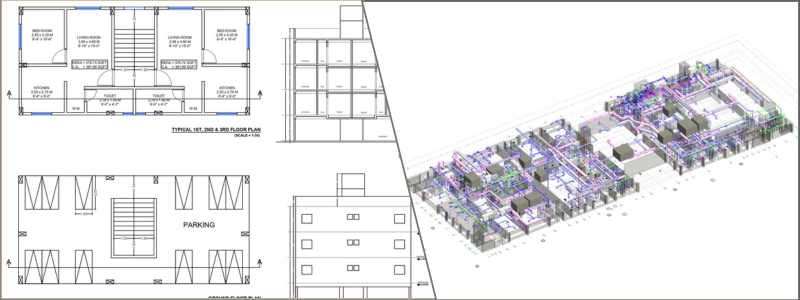
Floor plan drafting and MEP services example design by Cad Crowd experts

Communication: The key to effective outsourcing

If there’s one word that can rescue your outsourcing endeavor, that word would be communication. Not mere communication, but clear-as-day, regular, and collective communication. Without it, even the most skilled drafting group will struggle.

Think of it as a handoff in a relay race. If the hand is sloppy, the team trips. When you outsource drafting, you’re handing over key architectural information to another team, usually at a distance. You have to be clear about what you expect, what you require, and what your goals are.

Most architectural design companies err by believing the drafting team ‘just knows’ what they need. In fact, assumptions are the source of all errors. A misplaced wall thickness or an ambiguous note on structural support can snowball into costly reworks.

Instead, create detailed briefs that do not leave any scope for assumption. Add annotated sketches, 3D models, reference standards, and even video, if necessary. Be prepared to answer queries in a timely manner, and arrange frequent check-ins to monitor progress. Video conferencing or screen-sharing sessions can establish rapport and clarify details more quickly than round-the-clock emails.

Choosing the right architectural drafting partner

Not all outsourcing companies are the same, and selecting a good drafting service provider is deciding upon a co-pilot for your project flight. Experience is important, but so are processes, technology competence, and cultural alignment.

Be cautious of companies that offer low prices but lack strong quality control or industry expertise. A drafting company that is familiar with your area’s building codes, design requirements, and software applications (such as AutoCAD, Revit, and ArchiCAD) will provide fewer mistakes and quicker revisions.

Ask future partners about their quality control processes. Do they use multi-layered review procedures? Double-check drawings versus original specs? How do they manage revisions and client comments? These questions speak volumes about how seriously they take accuracy.

Also, think about their communication responsiveness and style. The best architectural planning and design partner is proactive, open about issues, and accommodating enough to work with as your project changes.

Clear standards and documentation: The architect’s shield against errors

One such underestimated aspect of outsourcing mistakes is that there are no clear drafting standards and documentation. Picture every project as a rich language, and without a common dictionary, the misunderstandings accumulate.

Having a complete drafting standards manual for your outsourcing partner is a game-changer. This manual should define layer naming conventions, rules for dimensioning, line weights, symbols, annotation styles, and file formats.

In addition to that, specify examples of desired deliverables, timelines, and revision procedures. The aim is to ensure your architectural vision flows smoothly into the drafting language.

When everyone is literally on the same page, the likelihood of mistakes diminishes significantly, including those that might affect collaborators such as mechanical engineering experts. It also accelerates onboarding new drafting crews or rotating personnel in the outsourcing company.

Using technology to overcome distance

Technology is your friend when it comes to working remotely with architectural drafting. Real-time file sharing, change tracking, and version control are available through cloud-based collaboration platforms such as Autodesk Docs, Trimble Connect, or BIM 360.

No more emailing huge CAD files between each other, with the possibility of working with old versions. Everyone has the latest model, and comments or markups appear on the screen instantly.

Moreover, most companies have project management software like Asana or Trello to manage tasks and deadlines and create transparency regarding project status.

Using Building Information Modeling (BIM) software, where the model combines architectural, structural, and MEP services, allows clashes to be detected early, before any drafting starts. This minimizes mistakes downstream and keeps all the stakeholders aligned.

RELATED: Top design & drafting tasks to outsource for architects and architectural services firms

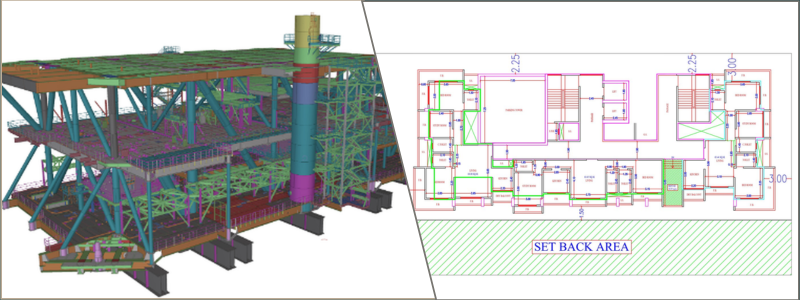
Structural engineering and floor plan drafting design services by Cad Crowd experts

Training and relationship building: Outsourcing as a partnership, not a transaction

Too often, outsourcing is treated as a cost-cutting transactional activity and not as a co-operative relationship. This approach will plant seeds of neglect, poor communication, and ultimately mistakes.

Rather, view your outsourcing company as an extension of your very own staff. Take the time to train them on your business culture, project details, and feedback system.

This could mean virtual workshops or sharing recorded sessions on your design philosophy and quality expectations. The more aligned your partner is with your vision, the fewer surprises you’ll face.

Building relationships takes effort, but it pays dividends in trust and reliability. A trusted drafting partner will flag potential errors early, suggest improvements, and champion your project’s success.

Vigilant quality control: Catching errors before they catch you

Despite the best communication and standards, errors still do get through. The best way to deal with this is by catching them early through strong quality control procedures.

Before signing off on any outsourced drawing, have your internal team thoroughly review it against the original design documents. Utilize checklists that are specific to your project complexity, involving dimensions, annotations, layer compliance, and regulatory needs.

Some architectural design experts also have third-party reviewers or use computer programs that automatically review for drafting errors or code compliance.

Don’t hurry this process. A slight holdup here may save weeks of expensive rework on-site. Get your drafting partner to provide iterative review drafts instead of waiting till the last minute.

Managing time zones without losing time

One significant challenge in outsourcing architectural drafting services abroad is managing time zones. While your staff is waking up, your drafting firm might be closing down, and this window can hamper communication.

The key is astute scheduling and overlapping times. Determine periods in the day when both staff are working and make the most of that time for live communications.

Also, utilize asynchronous communication using emails, recorded video walkthroughs, and shared documents that enable every team to work effectively according to their schedule without relying on instant response.

You will find a rhythm over time that makes time zones a strength rather than a weakness, basically making your project a 24-hour shop.

Embracing flexibility and continuous improvement

Architectural projects are living things. Requirements evolve, regulations change, and design tweaks happen frequently. Outsourcing drafting services needs to embrace this flexibility.

Avoid rigid contracts that punish changes or revisions. Instead, build in scope flexibility and encourage ongoing feedback loops.

After each project phase, conduct post-mortems with your outsourcing firm. What worked? What errors crept in? What processes can be improved?

Sustained improvement is a hallmark of high-performing partnerships, resulting in fewer errors over the long term.

Real-world stories: Learning from outsourcing mishaps

The best lessons sometimes result from real-world anecdotes. One small architectural design and planning firm outsourced its drawings to a low-cost provider who was unfamiliar with local fire safety standards. The plans omitted necessary escape routes, leading to significant project delays and redesign expenses.

Conversely, another company spent big on ramping up their outsourcing partner, exchanging detailed CAD standards, having weekly video conferences, and creating a collaborative digital workspace. The payoff? Smooth drafting deliveries, negligible revisions, and an 18% quicker project cycle.

These anecdotes highlight the value of selecting the proper partner and spending in communication and standards from the outset.

RELATED: How architects embrace innovation for modern home design services with companies

Conclusion: Outsourcing mistakes aren’t a destiny

Outsourcing architectural drawing services doesn’t have to be a gamble filled with errors and headaches. It’s about approach, seeing your outsourcing partner as a collaborator, investing in clear communication and standards, leveraging technology, and rigorously managing quality.

Imagine it as cultivating a garden. You can’t simply sow seeds and wait for things to happen. You water, trim, and pamper the plants so they grow well. Likewise, by caring for your outsourcing relationships, you’ll reap precision, effectiveness, and success in your architecture projects.

Partner with Cad Crowd now!

So the next time you are inclined to turn away from outsourcing drafting due to tales of woe about mistakes, keep in mind, it’s not the tool that breaks, it’s how it is used. At Cad Crowd, the leading platform for freelance engineering and design services, we’re here to help you. With these tactics under your belt, you’re better than equipped to use them like a pro.

Call Cad Crowd and ask for a quote for free.

author avatar

MacKenzie Brown is the founder and CEO of Cad Crowd. With over 18 years of experience in launching and scaling platforms specializing in CAD services, product design, manufacturing, hardware, and software development, MacKenzie is a recognized authority in the engineering industry. Under his leadership, Cad Crowd serves esteemed clients like NASA, JPL, the U.S. Navy, and Fortune 500 companies, empowering innovators with access to high-quality design and engineering talent.

Connect with me: LinkedInXCad Crowd