SolarSquare in talks to raise up to $60M as India’s rooftop solar market draws major VC interest


SolarSquare, an Indian rooftop solar startup that helps households and housing societies adopt solar power, is in advanced talks to raise fresh capital after securing India’s largest solar venture investment in December 2024, TechCrunch has learned.

B Capital and Lightspeed Venture Partners are set to co-lead the Series C round, which could value SolarSquare at between $450 million and $500 million and bring in $55 million to $60 million in new investment, according to multiple people familiar with the matter. That would represent more than a doubling of SolarSquare’s valuation in roughly 18 months — a sign of how rapidly investor conviction is building around India’s residential solar market.

Lightspeed Venture Partners previously led SolarSquare’s $40 million Series B round at around a $200 million post-money valuation in December 2024. This time, according to a source, it’s investing through its growth fund, which has backed names such as Razorpay — India’s leading digital payments platform — and Zepto, the fast-delivery startup.

Existing investor Elevation Capital is also expected to participate in the deal, which is currently in advanced stages and is expected to close next month. The terms could still change as the financing has not yet been finalized. SolarSquare has raised $61.1 million in equity financing to date, per the startup data platform Tracxn.

India has set a target of achieving 500 gigawatts of renewable energy capacity by 2030, with solar expected to contribute more than half of that total. The country became the world’s third-largest solar power producer in 2025, trailing only China and the U.S. Its cumulative installed solar capacity has surged from about 3 GW in 2014 to more than 150 GW in 2026, aided partly by government incentives and subsidy schemes aimed at accelerating rooftop solar adoption.

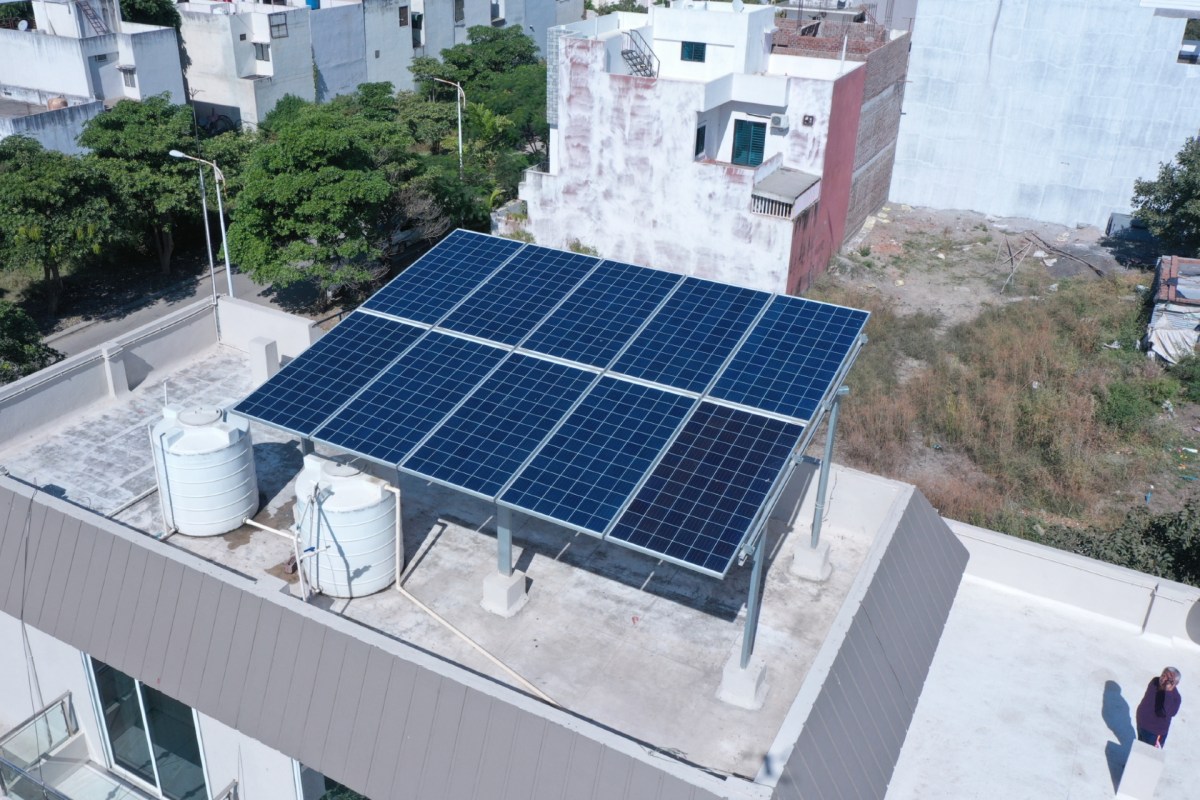
Mumbai-headquartered SolarSquare, founded in 2015, is positioning itself as a full-stack residential solar platform in a market that remains highly fragmented, dominated by small local installers and dealer networks tied to component manufacturers such as Tata Power, Waaree Energies, Luminous Power Technologies, and Exide Industries. The startup designs, installs, and maintains rooftop solar systems for homes, housing societies (the apartment complexes and gated communities common across urban India), and enterprises, and has installed more than 150 megawatts of solar capacity with a presence across 29 cities in nine states, per its website.

SolarSquare has powered nearly 50,000 homes and around 400 housing societies, according to a source. The startup has also deployed rooftop solar systems for large enterprises including Swiggy, Zepto, and iD Fresh Food.

Residential customers and housing societies now account for a majority of SolarSquare’s business, according to people familiar with the startup’s operations, as the startup has increasingly scaled back lower-margin industrial rooftop solar projects in recent years.

The startup has crossed an annualized revenue run rate of more than ₹10 billion (around $104 million) across homes and housing societies combined, according to a source familiar with the matter. It also aims to reach 200 megawatts in its residential solar portfolio this year, the source added.

SolarSquare declined to comment. B Capital, Lightspeed Venture Partners, and Elevation Capital did not respond to requests for comment.

When you purchase through links in our articles, we may earn a small commission. This doesn’t affect our editorial independence.

India’s Snabbit valuation doubled to $180M in 5 months on its quick house-help bet


India’s appetite for instant convenience — once confined to food and grocery delivery — is expanding into house help. That shift has helped Snabbit, an on-demand home-help startup, secure $30 million in new funding and lift its valuation to $180 million, up from $80 million five months ago.

The all-equity Series C round — Snabbit’s third fundraise in nine months — was led by Bertelsmann India Investments, with participation from existing backers Lightspeed, Elevation Capital, and Nexus Venture Partners. The latest infusion brings the startup’s total funding to $55 million.

Snabbit’s fresh funding follows a sharp rise in activity, with the Bengaluru-based startup growing from about 1,000 jobs a day in May to more than 10,000 daily bookings. The company crossed 300,000 total orders in October, founder and CEO Aayush Agarwal said in an interview with TechCrunch.

Founded in 2024, Snabbit offers a range of on-demand home services for urban households, including cleaning, dishwashing, laundry, and kitchen prep through a 100% women-led fleet of 5,000 experts. The startup operates through a hyperlocal network of trained workers stationed around dense residential clusters, promising service within 10 minutes.

Currently, Snabbit serves 40 micro markets across five major cities, namely Mumbai, Bengaluru, Gurugram, Noida, and Pune. It plans to expand its presence in these cities and enter Hyderabad, Chennai, Delhi, and Calcutta very soon, Agarwal told TechCrunch.

Snabbit has served more than 300,000 customers, up from 25,000 in May, and expects to add another 100,000 as early as next month. Most of its users are between 30 and 40 years old, including bachelors and working professionals.

Snabbit founder and CEO Aayush Agarwal with a few of its women expertsImage Credits:Snabbit

Some of Snabbit’s customers are those who do not want full-time house help but prefer an ad hoc solution. “We’re basically taking inefficiency in the model and plugging that, rather than saying, ‘Hey, this was happening offline, and now we’ll do it online’,” said Agarwal.

The startup reports a 30–35% retention rate and projects to reach annual recurring revenue of $11 million this month. Moreover, it has a customer acquisition cost of “well below” ₹500 (roughly $6), Agarwal told TechCrunch.

Snabbit’s services are priced at around ₹150 (about $2) per hour, with an average ticket size of around ₹240 (roughly $3).

Workers on the platform earn between ₹25,000–₹30,000 (approximately $284–$340) a month, depending on the hours they work. The startup has also reduced the average walking distance for its workers between two jobs from 300 meters to 250 meters, giving them more time to serve customers.

Snabbit is not alone in the race to offer quick, on-demand home services in India. Urban Company pioneered the trend and was later followed by startups such as Broomees and Pronto. Urban Company now plans to double down on instant home services to stay ahead of rising competition, though Snabbit says it does not see that as a challenge.

“In a hyper-local business, you don’t win pan India, you don’t win cities, you win micro markets. And today, out of the micro markets where we both [Snabbit and Urban Company] are present, Snabbit is leading in more micro markets because we have taken a very positive strategy to build depth as opposed to build breadth,” Agarwal said.

The new funding will help Snabbit strengthen its presence and expand into high-frequency categories such as cooking, child care, and elderly care.