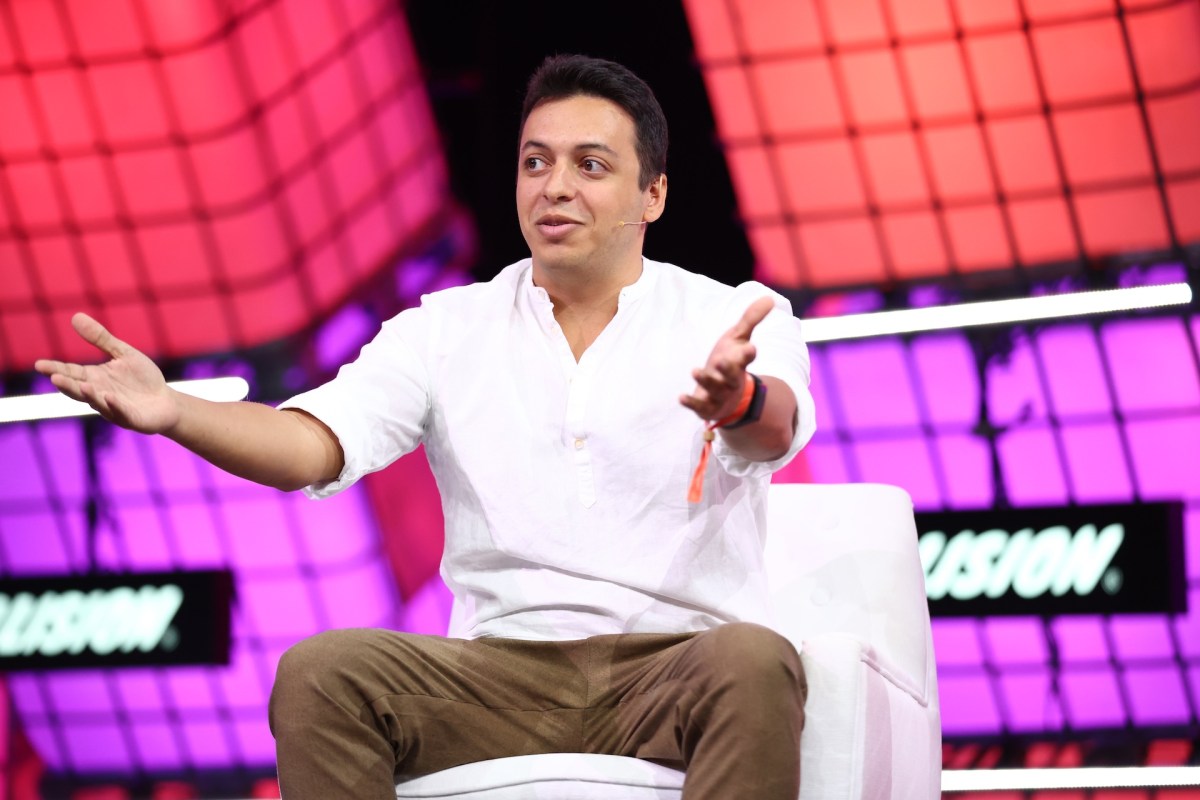
Deel scores a lawsuit win, but not against Rippling


A Florida judge on Tuesday dismissed a lawsuit filed against embattled HR and payroll provider Deel. And while Deel described this as a “Rippling-aligned” and “Rippling-supported” lawsuit, this is not the infamous lawsuit filed by its rival earlier this year that involved an alleged corporate spy.

Rippling CEO Parker Conrad even went so far as to say “This litigation has nothing to do with Rippling, we are not a party to it, did not fund it,” in a tweet. (Rippling representatives declined further comment.)

Still, this is some good news for Deel. In January, a lawsuit was filed in Florida by Melanie Damian, who accused Deel of helping Russian entities sidestep U.S. sanctions by processing payments for Surge Capital Ventures.

Surge had been part of a separate U.S. SEC action alleging it was involved in a Ponzi scheme that defrauded church members out of $35 million. Damian, a court-appointed receiver for Surge, was tasked with the mission to recover assets, Semafor reported at the time. She filed the class action lawsuit on behalf of Surge, attempting to blame Deel for processing the payments. This is the case that was dismissed.

Deel is attempting to tie this case to the suit filed by Rippling in part because Damian’s lawyers cited the Racketeer Influenced and Corrupt Organizations Act (RICO).

Rippling, who is suing Deel in California, is also claiming Deel violated RICO, as well as the Defend Trade Secrets Act, and California state law, as TechCrunch previously reported. RICO is famously the statute that was originally used to charge mobsters.

Rippling’s lawsuit, however, involves one of its own employees who testified in an Irish court that he had been acting as a paid corporate spy for Deel. 

Techcrunch event

San Francisco
|
October 27-29, 2025

Deel is clearly hoping that if one court dismisses a lawsuit arguing RICO violations, another court will also dismiss. “The ruling invites further questions on the credibility of another baseless set of RICO accusations by Rippling in California,” a Deel spokesperson told TechCrunch in an emailed statement. 

But as these cases involve different actions and circumstances, we’ll all have to wait and see how the California court responds. Meanwhile, Deel is also suing Rippling, claiming that one of Rippling’s employees was unlawfully impersonating a customer.

On top of all of that, the person who confessed to being Deel’s alleged corporate spy, Keith O’Brien, successfully filed a restraining order against people he said were following him and scaring his family. O’Brien is now Rippling’s star witness in its case against Deel. 

At first, lawyers for Deel denied involvement and later they admitted the company had hired “discrete surveillance” of O’Brien, according to court testimony seen by TechCrunch, and first reported by the Irish Independent. 

“Alex and his father can deflect and delay but they will face the music when we get our day in court,” Conrad added in his tweet, referring to Rippling’s case that names Deel’s founder CEO Alex Bouaziz and his father, who is chairman and CFO, Philippe Bouaziz.

“Deel will explore all its options for relief, defend itself vigorously against pending cases and continue to focus on winning in the marketplace,” a Deel spokesperson said in that statement.

We’re always looking to evolve, and by providing some insight into your perspective and feedback into TechCrunch and our coverage and events, you can help us! Fill out this survey to let us know how we’re doing and get the chance to win a prize in return!

‘Wall-E With a Gun’: Midjourney Generates Videos of Disney Characters Amid Massive Copyright Lawsuit


Midjourney’s new AI-generated video tool will produce animated clips featuring copyrighted characters from Disney and Universal, WIRED has found—including video of the beloved Pixar character Wall-E holding a gun.

It’s been a busy month for Midjourney. This week, the generative AI startup released its sophisticated new video tool, V1, which lets users make short animated clips from images they generate or upload. The current version of Midjourney’s AI video tool requires an image as a starting point; generating videos using text-only prompts is not supported.

The release of V1 comes on the heels of a very different kind of announcement earlier in June: Hollywood behemoths Disney and Universal filed a blockbuster lawsuit against Midjourney, alleging that it violates copyright law by generating images with the studios’ intellectual property.

Midjourney did not immediately respond to requests for comment. Disney and Universal reiterated statements made by its executives about the lawsuit, including Disney’s legal head Horacio Gutierrez alleging that Midjourney’s output amounts to “piracy.”

It appears that Midjourney may have attempted to put up some video-specific guardrails for V1. In our testing, it blocked animations from prompts based on Frozen’s Elsa, Boss Baby, Goofy, and Mickey Mouse, although it would still generate images of these characters. When WIRED asked V1 to animate images of Elsa, an “AI moderator” blocked the prompt from generating videos. “Al Moderation is cautious with realistic videos, especially of people,” read the pop-up message.

These limitations, which appear to be guardrails, are incomplete. WIRED testing shows that V1 will generate animated clips of a wide variety of Universal and Disney characters, including Homer Simpson, Shrek, Minions, Deadpool, and Star Wars’ C-3PO and Darth Vader. For example, when asked for an image of Minions eating a banana, Midjourney generated four outputs with recognizable versions of the cute, yellow characters. Then, when WIRED clicked the “Animate” button on one of the outputs, Midjourney generated a follow-up video with the characters eating a banana—peel and all.

Although Midjourney seems to have blocked some Disney- and Universal-related prompts for videos, WIRED could sometimes circumvent the potential guardrails during tests by using spelling variations or repeating the prompt. Midjourney also lets users provide a prompt to inform the animation; using that feature, WIRED was able to to generate clips of copyrighted characters behaving in adult ways, like Wall-E brandishing a firearm and Yoda smoking a joint.

The Disney and Universal lawsuit poses a major threat to Midjourney, which also faces additional legal challenges from visual artists who allege copyright infringement as well. Although it focused largely on providing examples from Midjourney’s image-generation tools, the complaint alleges that video would “only enhance Midjourney ability to distribute infringing copies, reproductions, and derivatives of Plaintiffs’ Copyrighted Works.”

The complaint includes dozens of alleged Midjourney images showing Universal and Disney characters. The set was initially produced as part of a report on Midjourney’s so-called “visual plagiarism problem” from AI critic and cognitive scientist Gary Marcus and visual artist Reid Southen.

“Reid and I pointed out this problem 18 months ago, and there’s been very little progress and very little change,” says Marcus. “We still have the same situation of unlicensed materials being used, and guardrails that work a little bit but not very well. For all the talk about exponential progress in AI, what we’re getting is better graphics, not a fundamental-principle solution to this problem.”