With few exceptions, new product development companies almost never specialize in just one product category. For example, if a prototype design firm develops medical devices, chances are it also provides similar services in other sectors, like consumer goods such as home appliances and electronics. Some even offer to develop more sophisticated industrial equipment, like robotics and laboratory instruments, as well. Medical device development is a complex undertaking, often a multidisciplinary effort involving user research, design engineering, safety and risk management, pre-clinical and clinical tests, and interactions with regulatory bodies (FDA in the United States, MDR in Europe, or their equivalents in other regions).
Even well-known medical device brands turn to new product development companies not only to transform ideas and concepts into real products but also to manage regulatory compliance. Apart from design firms, specialized freelancing platforms like Cad Crowd can be an excellent alternative, as they allow you to collaborate directly with pre-qualified engineers and designers at an affordable rate. To help find a competent partner, here is a list of 51 companies providing medical device development services.
RELATED: How to Design Medical Products that People Actually Want
In the United States
Working with an onshore design firm simplifies a lot of things in an otherwise intricate project. Maintaining good communication and collaboration isn’t always easy, but you can avoid potential difficulties throughout the partnership in the project by working with a domestic product development firm.

1. Cad Crowd
Perhaps a peculiar name in the list, yet the most likely option for everyday inventors, startups, and small businesses alike. Cad Crowd comes up at the top for its massive range of services, straightforward user interface, and affordability. This isn’t your run-of-the-mill medical device development company; instead, it’s a specialized freelancing platform to help you connect with multidisciplinary engineering and 3D design professionals of any product category.
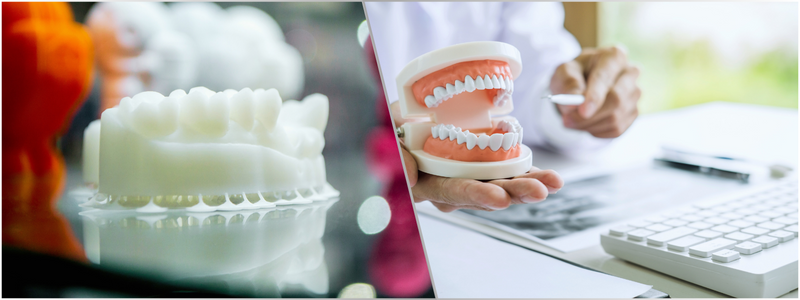
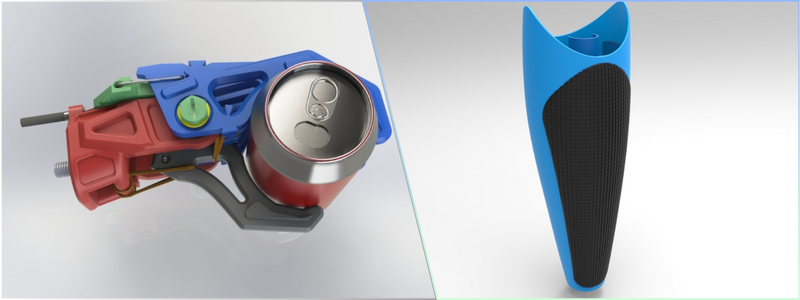
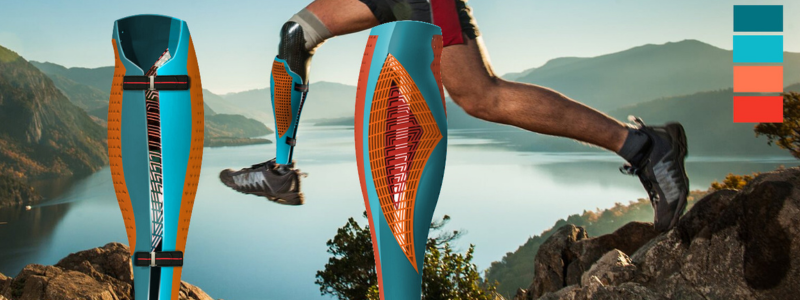
The “professionals” in question may include mechanical engineers, electrical engineers, industrial designers, firmware developers, and project managers with proven track records in the field of product development. The design and manufacturing services cover such medical applications as surgical devices, dental equipment, orthopedic braces, veterinary equipment, and customized prosthetics. In short, the services are available for the development of medical instruments under FDA classifications, including Class I (low-risk), Class II (moderate-risk), or Class III (high-risk) devices.
One of Cad Crowd’s biggest strengths lies in its ability to match clients (or rather their projects) with 2D & 3D design professionals who have domain-specific expertise. Within the context of medical device development, you’ll be granted access to a massive database of engineers specializing in biocompatible materials, ergonomics design, microfluidics, regulatory-compliant systems, interoperability, user safety, CAD modeling, DFM (Design for Manufacturing), digital and physical prototyping, and so forth.
Cad Crowd gives the options to launch a design contest or work directly with the professionals you choose under NDA to ensure privacy and IP protection. If you want, the platform can function as a project manager to help you on an ongoing basis, practically facilitating an end-to-end medical device development service. Flexibility is another major reason why Cad Crowd makes for an excellent choice. The medical devices design service encompasses the entirety of the project workflow, from ideation and prototyping to product certification and manufacturing support.
But it doesn’t mean you can’t hire professionals from the platform to handle only certain portions of the development stage. Say you’ve already had a 3D model made, and now you need a qualified engineer to fabricate a physical prototype. Cad Crowd can step in at any point in the development and connect you with a professional to handle the task. It also provides complementary services such as patent finding and filing, product licensing, and invention marketing.
Website: Cadcrowd.com
RELATED: How Design Firms Use Prototypes to Develop Critical New Medical Devices

2. Karten Design
An established medical device design company, Karten Design, maintains a long-term partnership with hospitals and clinicians to help inventors get the necessary funding and acknowledgement for their product development projects. The company also serves on boards at accelerators in various healthcare institutes and C-suite committees in the United States. Having been around for more than 30 years, Karten Design is among the most knowledgeable product design companies to recognise some of the biggest obstacles in medical device development overcome the challenges.
Thanks to its deep access into the healthcare landscape, the company has a unique insight into the market, ensuring quicker adoption across the ecosystem. Some of its best works include the Cardiac Science Automated External Defibrillator (AED), the Starkey Livio AI hearing aid, the MedVector Telemedicine Device, and the Bruin Biometrics OrthoSonos monitor. Karten Design is based in Los Angeles, California.
Website: Kartendesign.com

3. Whipsaw
Throughout 25 years of history, Whipsaw has completed more than 1,000 projects for clients of all sizes and accumulated over 700 patents to its name. Whipsaw also boasts a strong history of partnerships with early-stage companies as well as international corporations in popular projects like the Dell Precision computers, the Dropcam home security cameras, the Google Chromecast and OnHub router, and the TP-Link networking devices, among others. In the medical device category, some of Whipsaw’s project highlights include the Aescape Fully Automated Massage Experience, the Omnicell Syringe Dispenser, and the Empatica EmbracePlus Health Smartwatch. The company is situated in San Francisco, California. It’s spearheaded by Dan Harden, who, in 2014, was listed in Fast Company’s 100 Most Creative People in Business.
Website: Whipsaw.com

4. StarFish Medical
Every new product development project must deal with the challenges in market adoption, and even more so if the product is a medical device from a relatively unknown brand. StarFish Medical is a new product design and development company with a strong focus on commercial launch. More than just creating a new product based on an idea, the company helps you tackle the potentially complex regulatory landscape and navigate the intricate path to compliance.
It provides a comprehensive range of services for clinical trials and even facilitates tech transfers if needed. Based in Irvine, California, StarFish Medical is powered by a multidisciplinary team of experienced product engineering professionals and in-house capabilities to transform a mere concept of a design into a fully functional product. It has state-of-the-art facilities in the United States and Canada, equipped with everything you need to handle not only rapid prototyping, but also Verification and Validation testing and pilot-scale manufacturing.
Website: Starfishmedical.com
RELATED: Manufacturing Materials for Medical Devices

5. Delve
For more than 55 years, Delve has been a prominent name in the product development sectors, specializing in medical devices, commercial and industrial equipment, and consumer products. Along the way, it has earned more than 200 design awards and more than 1,500 patents. Delve maintains four locations in the United States, including Boston (Massachusetts), Madison (Indiana), Philadelphia (Pennsylvania), and San Francisco (California). Some of its best-known works in the medical device category are the BK Ultrasound’s Sonic Window, the Dexco G6 Continuous Glucose Monitoring System, and the Phlex EDGE goggle-worn fitness tracker. In fact, the Sonic Window earned a gold recognition in the Radiological and Electromechanical Devices category from the Medical Design Excellence Award (MDEA) in 2016.
Website: Delve.com

6. Goddard Technologies
As an industrial design and low-volume manufacturing company, Goddard Technologies provides new product development services not only for medical devices but also for consumer products, robotics, and automation as well. It caters to both an end-to-end 3D design service and an on-demand engineering assistance at any phase of the development of new medical devices and launching them to market. Goddard Technologies is an ISO 13485:2016 certified company, meaning it has put in place internationally recognized standards for safety, efficacy, and regulatory compliance in the design and manufacturing of medical devices. Some of its best works include the Guard Medical Negative Pressure Wound Therapy and the Arthrex MIS Hip Distractor System. Goddard Technologies is based in San Diego, California.
Website: Goddardtech.com

7. Battelle
Gordon Battelle founded the institute in 1929. The institute initially focused on contract development and research projects in material science, but quickly expanded the specializations to cover the larger scope of applied science and technology. As it stands today, Battelle is a private nonprofit company that offers its services in the development and commercialization of technologies as well as the management of laboratories.
Around the 1960s, Battelle added medical technology to its service portfolio, offering expertise in medical device designs, life science research, and chemical and biological countermeasures. Since then, the institute has amassed over 100 patents (granted and pending) in related fields of study. Some of its most notable works in the medical field are the COVID rapid test equipment and the N95 respirator decontamination. Battelle is headquartered in Columbus, Ohio, with satellite offices across the United States.
Website: Battelle.org
RELATED: All You Need To Know About Medical Prototype Design Factors for Companies: Costs, Rates, and Pricing

8. Veranex
Although a relatively new company founded in 2021, Veranex has a respectable history spanning more than 20 years in the industry. It has been around long enough to oversee the development of more than 1,000 products and get involved in over 2,500 preclinical and clinical trials. Veranex claims to be the industry’s first global Innovation Contract Research Organization (iCRO), which operates with a profoundly different approach compared to traditional CRO. In a typical medical device development workflow, there might be multiple companies involved in the process to handle separate stages of development, including design and engineering, preclinical research, clinical research, commercialization, regulatory affairs, pathology, quality management, and manufacturing.
Because each specific task is handled by a separate team, the entire workflow is interrupted by frequent handoffs that decelerate progress. Veranex takes care of all eight distinct phases under one roof for better efficiency. According to Veranex, an integrated team can cut development time by up to six months per phase compared to silo practices and increase the regulatory clearance rate to 96%. Veranex specializes in microfluidics, optics, sensing systems, artificial tissue, and advanced analytics. The company is based in Raleigh, North Carolina.
Website: Veranex.com

9. MED Institute
The medical device engineering experience of MED Institute’s medical device designers covers the studies of orthopedics, cardiology, urology, endoscopy, biologics, and endovascular. Its range of services includes concept development, product planning, and therapeutic device design. The company also offers comprehensive design controls for a range of Class II and Class III medical devices. Like many other product development companies specializing in medical devices, MED Institute is ISO 13485 certified. But the biggest promise revolves around the claim that the company has what it takes to help slim down the budget for early R&D phases to accommodate small businesses and startups, who often have limited funding. MED Institute is based in West Lafayette, Indiana.
Website: Medinstitute.com
10. DeviceLab
Situated in Tustin, California, DeviceLab offers a comprehensive medical device development service that encompasses early research and study, design and engineering services, prototyping, and pre-production. The company is known for its expertise in developing medical devices and instruments for home use, point of care, and hospital environments. DeviceLab maintains a strategic collaboration with Microchip’s 32-bit MPU Design Partner Program, LabVIEW, and Texas Instruments to speed up product development in most projects. The ISO 13485 certified company is also a recipient of the gold medal from MDEA. Some of its best works include the Zoom Dental UV Lamp designed for Philips, the TracPatch developed for Consensus Orthopedics, and the ARGOS optical biometer built for Santec.
Website: Devicelab.com
RELATED: New Medical Device Development Life Cycle

11. RKS Design
While RKS Design doesn’t explicitly mention that it specializes in medical device development, it’s an industrial design company that builds physical products of various categories across all industries, including healthcare. The company is known for its “Psycho-Aesthetics” approach, which focuses on how a design makes users feel about themselves rather than asking users about how they feel about the product.
Having been around for more than 45 years, RKS Design has developed a number of innovative medical devices, including the ViSi Mobile wearable continuous vital monitoring platform for Sotera Wireless, a wearable stroke detector for StrokeDx, composite resin syringes for Dental Discuss, CleanTech EVO Automated Handwashing Station for Meritech, cardiac ablation platform for Synaptic, and Juvederm Syringe for Allergan. RKS Design makes clear that the clients have complete ownership of the IP of the device, unless the company makes a significant contribution to the final design, in which case there might be shared ownership of the patents. RKS Design is based in Thousand Oaks, California.
Website: Rksdesign.com
12. Paragon Medical
A turnkey medical device development company, Paragon Medical, boasts a massive rapid prototyping center and a separate manufacturing facility reserved for complex products. Apart from making high-precision surgical instruments, the company also caters to the development of drug delivery devices, implants, and cases and trays. The end-to-end service covers medical device design and development, testing and validation, contract design engineering services, contract manufacturing, and even product assembly and packaging. That being said, Paragon Medical is willing to lend its expertise at any stage of your product development project; whether you’re still in the early stages or already approaching the commercialization phase, the company can help bridge the milestones to reach full market launch. Paragon Medical is an ISO 9001:2015 and AS9100D certified company, situated in Pierceton, Indiana.
Website: Paragonmedical.com

13. Frog Design
An industrial design company with a long history, Frog Design made a name for itself in the business when the company developed its earliest works for WEGA, a German consumer electronics manufacturer that was later bought by Sony. It maintained partnerships with Sony and was involved in the development of a few renditions of the Walkman. Some of its more prominent design works include the case of the portable Apple IIc and several Macintosh models, the NeXT Computer, and Sun Microsystems’ SPARCstations.
In the ice category, Frog Design is known for such innovative products as the UV-C Enhanced Respiratory Protection for XCMR, the aScope Duodeno single-use sterile endoscopy device for Ambu, the Aixplorer Mach 30 Ultrasound platform for SuperSonic, a fully automated retinal imaging device for identifeye HEALTH, the Lumen CO2 tracker, and the MeMed Key portable multiplexed protein measurements device. In 2021, Frog Design became part of Capgemini Invent. Frog Design is headquartered in San Francisco, California.
Website: Frog.co

14. IDEO
A global industrial design company, IDEO offers first-class product development services covering a broad range of industries and sectors, including but not limited to consumer goods design services and retail, climate, manufacturing, media and entertainment, mobility, technology, and health. The company has been around for more than 40 years, creating innovative products and providing creative capabilities for clients worldwide. In the health (medical device category), most of the products in IDEO’s portfolio are developed in collaboration with Eli Lilly and Company, a multinational pharmaceutical company operating out of Indianapolis, Indiana. Examples of such products include the HumaPen SAVVIO insulin injection pens, the refillable kid-friendly HGH injector, and a reconstitution device to mix Lilly’s liquid-and-powder HGH. IDEO is based in San Francisco, California.
Website: Ideo.com
15. Ammunition Design Group
Winner of the Cooper Hewitt National Design Award for Product Design (2016), the Ammunition Design Group is best known for its involvement in the development of such popular consumer electronics as Beats by Dr. Dre, the Polaroid Cube, the Square Stand, Adobe Ink and Slide (internet-enabled stylus compatible with iPad), Lyft Glowstache, the UNICEF’s Kid Power Band, and the packaging for NOOK e-book readers, to name a few. Ammunition has also created medical devices before, for example, the Larklife fitness tracker developed for Lark and an invisible hearing device for Fargo. The company is based in San Francisco, California, and Brooklyn, NYC.
Website: Ammunitiongroup.com
16. Smart Design
Another industrial design company in Brooklyn, New York City, Smart Design specializes in five industries, including technology, healthcare, consumer goods, financial services, sports and fitness, and mobility. In the healthcare category, the company works in several sub-sectors such as fitness, medical devices, consumer health and retail, nutrition, patient education, and mental health. Among the highlighted medical devices in the company’s portfolio are the AutoClicks disposable autoinjector pen developed for UCB, an acne-healing face mask for La Lumiere, and the Gx Sweat Patch for Gatorade. Smart Design’s product designers are popular for their tendency to produce prototypes quickly and iterate on them in rapid succession throughout the development process.
Website: Smartdesignworldwide.com

17. Beyond Design
Since 1994, Beyond Design has been providing industrial design consultancy and engineering services for NPD (new Product Development) projects. It specializes in consumer electronics, commercial equipment, and, of course, medical devices. Some of the company’s best medical devices so far include the point and measure thermometers developed for 180 Innovations & CVS Health, the WP-600 Oral Hygiene Orator created for Waterpik, the AirGuard XP advanced aerosol guard for AirGuard Health, and the GUM Proxabrush Go-Betweens interdental brushes for SUNSTAR. Beyond Design is headquartered in Chicago, Illinois.
Website: Beyonddesign.com
RELATED: How Cutting-Edge Medical Prototyping Design Services Help Your Firm Design New Products

18. Studio Red
Situated in Palo Alto, California, Studio Red boasts an advanced prototyping facility capable of producing photorealistic models and high-tolerance parts for just about any physical product engineering project. The company is backed by a team of mechanical engineers with extensive experience in end-to-end product development of various complexity levels, from simple consumables to high-tech equipment. Thanks to the in-house expertise and prototyping capabilities, Studio Red has what it takes to implement the DFM approach from the get-go while ensuring tooling cost efficiency and safety compliance. A few examples of medical devices in the company’s portfolio include the LAP-BAND System developed for Allergan, the LifeChoice portable oxygen concentrator for Inova Labs, the Aluma skin renewal system for Lumenis, and the Heartstring III Proximal Seal System built for Getinge.
Website: Studiored.com
19. NewDealDesign
At the helm of NewDealDesign is Gadi Amit, who earned the National Design Award in 2013 for his commitment to building creative designs in everyday tech objects. The company has been around for more than 25 years, providing new product development services to consumer electronics, health and wellness, commercial equipment, robotics, and automation industries. NewDealDesign is probably best known for its long-running collaboration with Fitbit, which resulted in well-received products such as the Fitbit Zip and the sporty Fitbit Charge. It also played a pivotal role in the development of Avive’s connected AED (Automated External Defibrillator).
Website: Newdealdesign.com

20. Fuseproject
Founded in 1999, Fuseproject has developed hundreds of new products for Fortune 100 brands and launched at least 90 early-stage ventures as well. The company is known for its many unique approaches to product design, often resulting in innovative solutions created on behalf of disruptive startups and established companies alike. In the medical device category, some of its best works include the Juno high-throughput DNA testing platform developed for Fluidigm, the mobility-enhancing robotics suit built for Seismic, and the Neural Sleeve bionic clothing for CIONIC. Fuseproject, in collaboration with CIONIC, also developed a modular, pneumatically driven ventilator during the COVID-19 pandemic. The company is based in San Francisco, California.
Website: Fuseproject.com
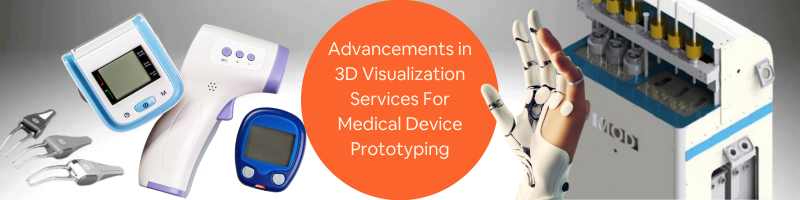
RELATED: Advancements in 3D Visualization Services for Medical Device Prototyping Companies
21. Bleck Design Group
An end-to-end industrial design company, Bleck Design Group’s product developers specialize in the development of medical devices, consumer goods, office products, and industrial equipment. The range of services in the medical device category covers capital medical instruments, surgical tools, clinical test platforms, and consumer health products. Its portfolio includes such products as the PicoSure laser skin revitalization device developed for Cynosure, an app-controlled smart thermometer created for Kinsa Health, the PillStation for SentiCare, the Endo360° suturing device for EndoEvolution, and the Xhale medication adherence system for Xhale. Bleck Design Group is based in North Chelmsford, Massachusetts.
Website: Bleckdesigngroup.com
22. Speck Design
Yet another turnkey product development service, Speck Design transforms an idea into a fully functional product and provides manufacturing support for clients. The service covers major business sectors including consumer goods, retail, industrial, transportation, telecommunication, wearable, robotics, and medical devices. Speck Design has been around for more than 25 years, creating innovative medical devices such as the Intellisense Medical Drill and the Rainin Medical Pipettes. In collaboration with Providence Medical Technology, the company developed the DTRAX minimally invasive surgical tools for cervical spinal surgeries. Speck Design maintains three locations in the United States, including San Jose and San Francisco (California), and NYC.
Website: Speckdesign.com
23. MAKO Design
In the United States, you can find MAKO Design in Austin, Texas, and Oakland, California. The company is now part of the TriMech Group. They are industrial engineering specialists with the resources and expertise to help you develop products of just about any category in existence, from toys and office supplies to garden tools and medical devices. MAKO Design is known for its inventor-friendly services, in which the company sets up a client-specific approach and provides the necessary resources to transform ideas into tangible products. Its works in the medical device category include the crossbody training machine developed for Pro X and the MedTech Mobility Headrest for Adaptive Switch Labs & Invacare.
Website: Makodesign.com
24. Porticos, Inc.
A turnkey industrial design company with post-production support, Porticos promises to stay engaged with your venture for as long as you need, even after market launch. The post-production support covers such services as component obsolescence, feature enhancements, and sustainable engineering throughout the entire life of the product. Porticos has handled more than 200 projects over the course of 20 years. Medical devices in its portfolio include the TelePatch cardiac monitoring device developed for Medicomp, the Optical Coherence Tomography (OCT) systems for Bioptigen, the adaptable medication-dispensing device for Livi, the Portray dental imaging system for Surround Medical, and the Cap Tube and Medication Dock for Sensal Health. Porticos is headquartered in Morrisville, North Carolina.
Website: Porticos.net
RELATED: The Faster, Easier Way to Develop New Medical Devices

25. Brash Inc.
In the US, the Brash product development company is situated in Carlsbad, California. It also maintains a location in Ottawa, Canada. Their new product development team specializes in the development of consumer products, IoT, and medical and dental devices. For more than a decade now, the company has served startups, entrepreneurs, and well-known companies, transforming mere concepts and ideas into market-ready products. Its portfolio highlights various medical devices such as the touch-control patient lift developed for Handicare International, the Metered Dose Inhalers (MDIs) for Breathesuite, the SoloWalk movement recovery robotics for GaitTronics, and the robotic enclosure for the Kinarm Brain Injury Recovery device.
Website: Brashinc.com
More US-based medical device development companies to consider

26. MCRA
One of the leading regulatory advisors for medical device industries in the United States, MCRA claims to have cultivated strategic relationships with government agencies and invaluable insights to help you go through the regulatory application clearance. The company understands all too well the typical lifecycle of medical devices, making it uniquely qualified to be a reliable partner all the way from conception to commercialization. MCRA is based in Washington, DC.
Website: Mcra.com

27. EMERGO by UL
In 1997, Emergo first came into existence primarily to assist IVD (In Vitro Diagnostics) and medical device manufacturers with regulatory affairs. It has since grown into a full-scale product development company designing hardware medical devices, software interfaces, and instructional materials. Emergo is situated in Concord, Massachusetts, and Austin, Texas.
Website: Emergobyul.com
28. Flex
An end-to-end 3D product modeling company that’s willing to partner with you at any point of the product development stage. With more than 35 years of experience creating medical equipment and drug delivery systems for clients worldwide, Flex has what it takes to build any medical device and meet even the most stringent regulatory standards in the US. The company is based in Austin, Texas.
Website: Flex.com
RELATED: How 3D Modeling Is Revolutionizing the Healthcare Industry for Companies and Medical Experts

29. HS Design
An ISO 13485 certified company and a Qmed qualified supplier, HS Design takes pride in its “common sense” approach to medical device development practices. This means the designers and engineers strive to build a product that’s both aesthetically pleasing and fully functional. The company says the approach makes it easier to uncover a lot of ergonomic concerns during the prototyping stage. HS Design is based in Morristown, New Jersey.
Website: Hs-design.com

30. Glassboard
Backed by an in-house team of specialists and generalists, Glassboard isn’t fixated on any specific approach to medical device development. Instead, everything is done in accordance with what’s best for the clients’ needs and business strategies, all the way from concept stage to market launch. Glassboard is headquartered in Indianapolis, Indiana.
Website: Glassboard.com

31. Plexus
Primary services from Plexus include new invention development services, manufacturing, and supply chain solutions. Within the healthcare sector, it focuses on developing FDA Class II and III devices, including therapeutic technologies for point-of-use applications and at-home monitors. Plexus is known for the DFX (Design for Excellence) approach, where product development is optimized for manufacturing, testing, and cost efficiency. The company is based in Neenah, Wisconsin.
Website: Plexus.com
32. Kapstone Medical
Since 2007, Kapstone Medical has developed and launched more than 150 products and filed over 75 regulatory submissions. It serves clients of all sizes, including individual inventors and large medical device OEMs. Kapstone Medical is an ISO 13485-certified and FDA-registered company, situated in Charlotte, North Carolina.
Website: Kapstonemedical.com
RELATED: Designing New Medical Products & Devices: A Step-by-Step Guide for Your Company

33. Biomerics
Every medical device development handled by Biomerics follows the established ISO requirements and standard operating procedures, including the validation protocols. Biomerics is a proponent of a proactive DFM service approach to bring clarity to product specification, confirm quality, and provide cost-effective pricing options. The company is located in Salt Lake City, Utah.
Website: Biomerics.com

34. Omnica
Over the last 36 years, Omnica has worked on an average of 80 projects annually. It serves startups, medium-sized companies, and big corporations from all around the world. Omnica’s main office is in Irvine, California, but it has a separate engineering and industrial design facility situated in Los Angeles.
Website: Omnica.com

35. D&K Engineering
The Total Commercialization Solutions by D&K Engineering provides support through the entire product lifecycle, from concept creation and system architecture to rapid prototyping services and post-launch. Apart from specializing in medical device development, it also serves the military and defense as well as the life science industries. D&K Engineering is based in San Diego, California.
Website: Dkengineering.com
Outside US
If you plan to sell medical devices in Europe or outside the United States in general, it might be a good idea to partner with offshore companies based in the target market location. Some of the best firms are as follows.
RELATED: Innovating Burn Patient Care: 3D Printed Masks and Medical Device Design for Healing

36. PQ Design Group
Throughout 15 years of history, PQ Design Group has managed to handle more than 250 product development projects; every single one of them was an end-to-end effort, transforming an idea into a functioning design. The company specializes in medical devices, design services for wearable products, and toy design. For the medical device specialization, PQ narrows it down a little bit further to focus on consumer health, neonatal care, and hospital-based applications. Some of its best works so far include the smart drone or capsule intended as a medical product (medicines, organs, blood, etc.) delivery vehicle developed for ABZero, a distribution arm to be used in operating rooms for LM Medical, and the DOC.D saliva-monitoring toothbrush for AICube. PQ Design Group is located in Pisa, Italy.
Website: Pqdesign.com
37. CLEIO
Established in 2005, CLEIO has now completed more than 2,500 medical device and high-tech product development projects; most of them were end-to-end services. In the medical technology and healthcare category, the company focuses on developing wearable devices, RPM (remote patient monitoring) tools, surgical instruments, catheters, drug delivery systems, and medical imaging equipment. CLEIO also offers manufacturing support that covers supplier sourcing, manufacturability verification, lab testing, and cost estimation. Some of its best works include the osmolarity test device for dry eyes developed for I-MED Pharma, the tinnitus assessment device for Menodys, the veterinary anesthesia ventilator for Dispomed, and the FreeO2 medical oxygen therapy device for OxyNov. CLEIO is based in Quebec, Canada.
Website: Cleio.com

38. WILDDESIGN
One of the best things about WILDDESIGN is the all-encompassing regulatory compliance medical device development services, whether you plan to market the product in the United States, Europe, or China. The company makes sure to integrate product requirements set by regulatory bodies such as the FDA, MDR, and NMPA into its development services from the outset to improve the chances of approval. WILDDESIGN’s range of services includes industrial design, rapid prototyping, DFM (Design for Manufacturing) services, ergonomics study, 3D visualization, packaging, labeling, and IFU design.
Some of the highlighted projects in the company’s portfolio include the Polaris operating light for Dräger, the PraluBase medication pens for SANOFI, the Magnos digital dermoscopy system for Magnosco, the Basic Orthopedic Instrument Set for Aesculap, the ELISA clinical intensive care ventilation systems for SALIVA (now Löwenstein Medical), and the laparoscopic instruments for Erbe. WILDDESIGN is based in Gelsenkirchen, Germany.
Website: Wilddesign.com
RELATED: Medical Device Design: A Guide to Service Pricing, Costs, and Rates for Companies
39. Design 1st
One of the best things about Design 1st is the ability to transform or translate technical sophistication into user-friendly products. Simplification doesn’t mean reducing features; instead, the company identifies the product’s core functions and presents them in an approachable way so that users quickly recognize and master them without the need for extensive training. The approach proves to be useful, especially in the development of medical devices. The company’s portfolio includes the Universal High-Speed Dental Drill System developed for ProDrive, the pain and addiction therapy using neuromodulation for Nuraleve, the pharmaceutical tank cleaning device for Swabbot, and the therapeutic tool for myofascial release and trigger massage for SoloRolo. Design 1st is based in Ottawa, Canada.
Website: Design1st.com

40. Haughton Design
Initially specializing in automotive design & engineering services and the aerospace sector when it was founded 25 years ago, Haughton Design gradually shifted focus to medical device development along the way. The UK’s Companies House listing describes the company’s nature of business as “specialized design activities” and “manufacture of medical and dental instruments and supplies.” It’s an ISO:9001 and 13485 certified company, with a flexible quality management system to make sure that all the product development projects under its roof are compliant with the EU MDR and the US FDA. Highlighted products in its portfolio include the Stomacher 400 laboratory paddle blender developed for Seward, a blood sampling device for Sirus Diagnostics, and various pharmaceutical testing instruments for Copley Scientific.
Website: Haughtondesign.co.uk
More design firms to consider

41. TTP
The medical device development services from TTP cover biosensors, neurotechnology, drug delivery systems, surgical instruments, ophthalmology, and optometry. Despite being situated in Cambridge, England, the company also offers services to US-based clients and builds products to meet FDA regulations. TTP is an ISO 13485-certified company.
Website: Ttp.com

42. D+I
The product development services from D+I include industrial design, mechanical engineering, hardware electronics, and software. Part of Capgemini, the company has been developing a range of complex medical devices for nearly four decades now. It has worked with such big-name clients as Siemens Healthcare, Chattanooga, and Trajan Scientific & Medical. The company is based in Melbourne, Sydney, and Newcastle (Australia).
Website: Design-industry.com.au

43. Celestica
Besides developing medical devices, Celestica also specializes in the aerospace, defense, smart energy, and communications industries. The company focuses on rapid prototyping and supply chain management for its NPD services. The supply chain management solution would involve local and global sources to help optimize product design so that it meets the regulatory requirements. Celestica is headquartered in Toronto, Canada.
Website: Celestica.com
44. Marturion
The main capabilities of Marturion are electronic device design and firmware for medical devices, but it also develops in-vitro diagnostic (IVD) readers. The services include on-site support at external test laboratories and device submission for regulatory compliance, such as the 510(k) to the FDA, and technical files for CE approval. Marturion is based in Lisburn, Northern Ireland.
Website: Marturion.co.uk
45. Nordson Medical
One of the biggest selling points of Nordson Medical is the PDP (Product Development Process) Service, which aims to develop medical devices in alignment with ISO and FDA regulations, standardized practices, and concurrent engineering. PDP also implements a flexible business model to cater to different project scopes. Nordon Medical is located in Boyle, Ireland.
Website: Nordsonmedical.com
RELATED: How The Healthcare Industry uses 3D Printing and 3D Bioprinting For Treating Patients
46. Cortex Design
Working with Cortex Design means you’ll be connected to a vast network of product development partners for die casting, injection molding experts, metal forming, and PCBA to make sure that the final product comes out exactly as intended. You also receive assistance from a team of NPD advisors who operate under ISO 9001:2015 and ISO 13485:2016 standards. Cortex Design is headquartered in Toronto, Canada.
Website: Cortex-design.com

47. Fearsome
The full in-house team of product design & development expert designers and engineers at Fearsome all specialize in the development of high-risk medical devices, or the equivalent of FDA Class III. The company has been making ocular equipment, surgical instruments, drug delivery systems, neurosurgical tools, and diagnostic devices since 2002. Fearsome is based in Glasgow, Scotland.
Website: Fearsome.co.uk

48. Creation Technologies
An NPD company, Creation Technologies works in the aerospace, defense, and healthcare industries. The company boasts advanced manufacturing systems for the development of Class I, II, and III medical devices and pharmaceutical OEMs. Every product development process is done with the proprietary LEAP (Launch with Excellence to Advanced Production) approach. Creation Technologies is situated in Burnaby, Canada.
Website: Creationtech.com
49. Tiller Design
The core product prototype team at Tiller Design is composed mainly of program managers with expertise in production, industrial design, regulatory compliance, and commercialization. In the development of medical devices, the company works with its CRO (Clinical Research Organization) partner, Mobius Medical. Tiller Design is based in Rozelle, New South Wales, Australia.
Website: Tillerdesign.com
RELATED: Cad Crowd 3D Design – Stay Healthy with Medical Product Development Services

50. Planet Innovation
A healthcare product specialist, Planet Innovation focuses its development services on medical devices such as wearables, consumables, and high-tech laboratory equipment. It’s a full-spectrum industrial design company with engineering and manufacturing capabilities to transform your concepts into commercialized products. Planet Innovation is headquartered in Melbourne, Australia, but it also maintains a US location in Irvine, California.
Website: Planetinnovation.com
51. Freudenberg Medical
The journey of Freudenberg Medical began in 2004 when it acquired Jenline Industries in Massachusetts. Since then, it has grown into a specialized medical and pharma development company boasting more than 800,000 square feet of manufacturing facility and 12 production sites worldwide. Freudenberg Medical is headquartered in Kaiserslautern, Germany.
Website: Freudenbergmedical.com
How Cad Crowd can help
Developing a new medical device and actually bringing it to market are rarely straightforward processes. A small oversight can lead to excessive delays and costly modifications. In most cases, you must work with a development and prototyping partner to help you navigate the technical, clinical, and regulatory challenges along the way.
An end-to-end industrial design company can be a good choice, but engineering-specialized freelancing platforms like Cad Crowd might be even better, as they allow you to assemble your own team of professionals while maintaining affordability. Cad Crowd also provides a comprehensive IP protection service through NDA, patent search, and filing, and product licensing. Contact us for a free quote.