Paramount and Warner Bros. Discovery will operate as Skydance once their merger closes, Paramount CEO David Ellison announced Friday. Skydance is the name of Ellison’s original film production company.
The roughly $110 billion deal is expected to close October 6. It will combine two major Hollywood studios, Paramount+ and HBO Max, and networks including CBS, CNN, MTV, TBS, Comedy Central, and Food Network. Skydance will also control franchises such as “The Lord of the Rings,” “Game of Thrones,” the DC Universe, and “Yellowstone.”
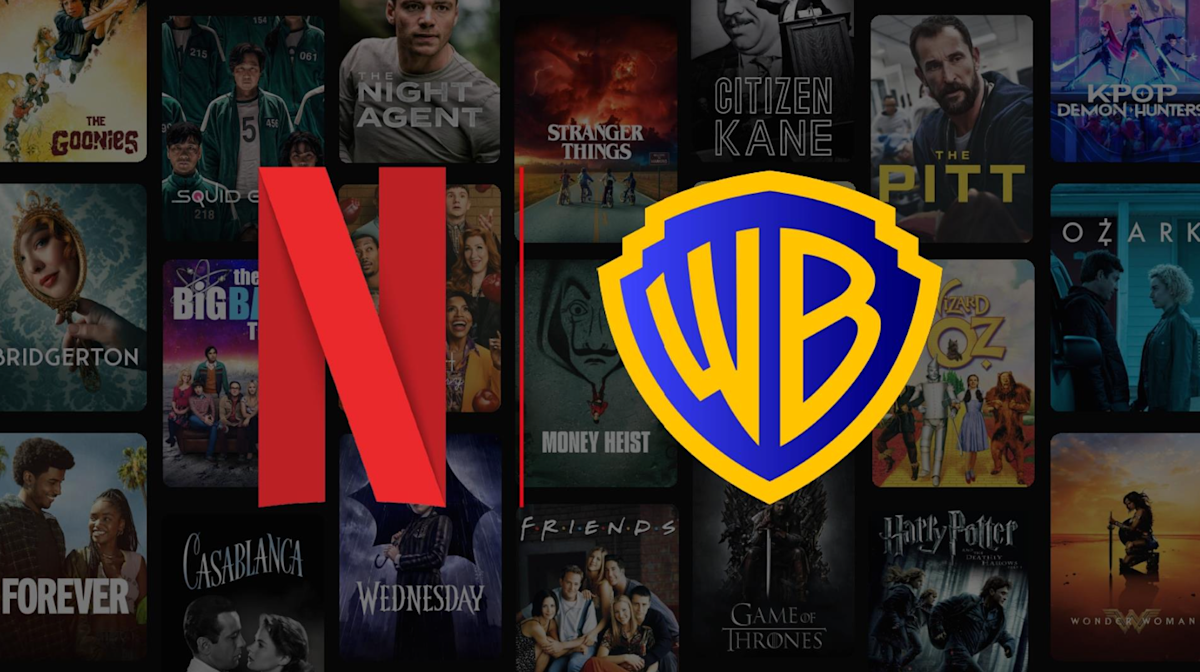
The merger followed a drawn-out corporate battle. Netflix had agreed to acquire Warner Bros.’ streaming and studio businesses before the broader Paramount deal moved forward. Twelve states challenged the deal, arguing it could reduce competition and harm consumers and workers, but a judge approved a settlement with the state attorneys general this week.
Ellison said the Paramount and Warner Bros. brands will remain central. “We never wanted a new corporate identity to diminish, alter or overshadow either one,” he wrote on X. The new name, he said, gives the company “an identity of its own” while letting both studios “remain in the spotlight.”
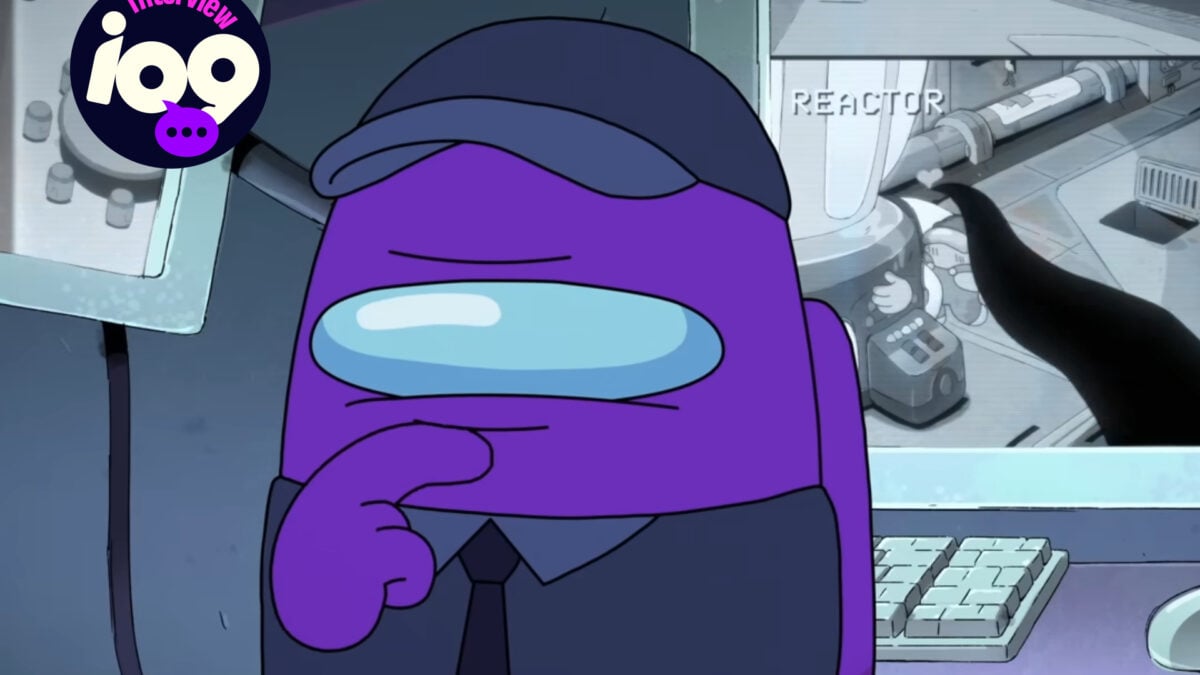
Way back in 2023, CBS officially announced that its next animated series would be an adaptation of Innersloth’s smash-hit 2018 space murder mystery video game Among Us. Now, three years later, the show’s stacked cast of Hollywood actors called for an emergency meeting at Summer Game Fest, resulting in the surprise premiere of all 10 episodes on Paramount+.
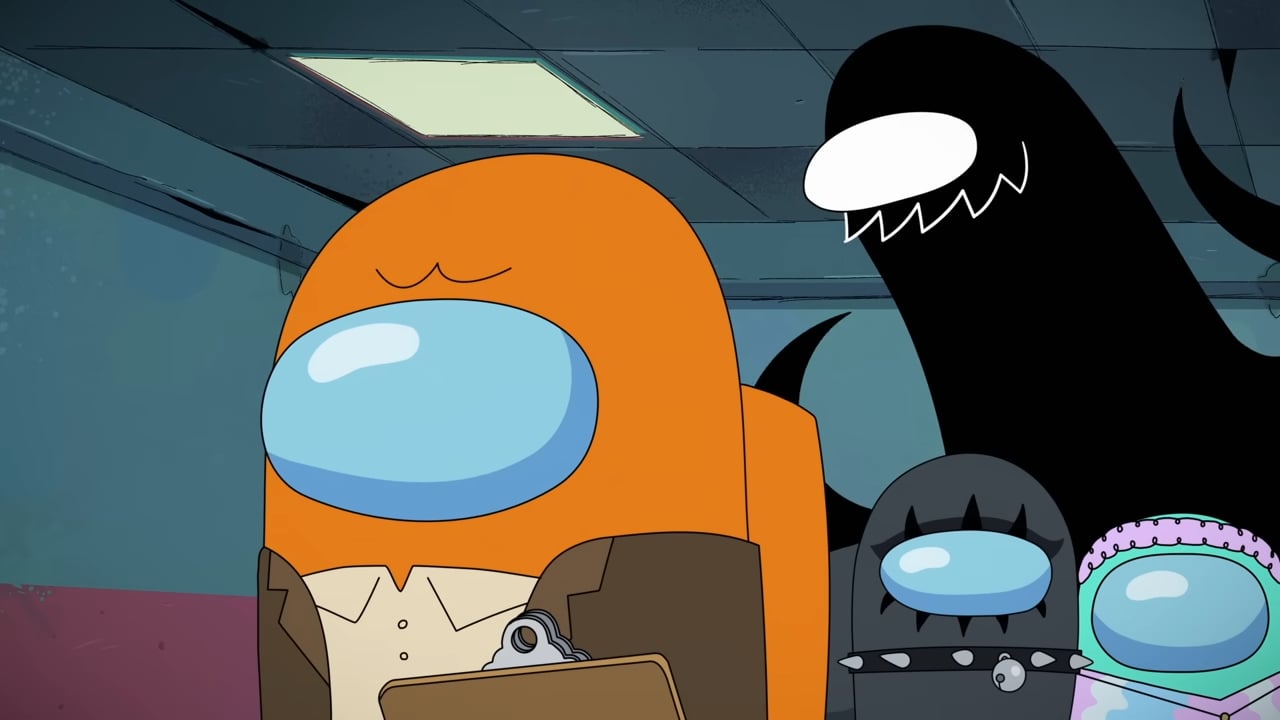
Among Us, which is animated by Titmouse (Star Trek: Lower Decks), follows an assortment of monochromatic crewmates aboard a ship transporting junk across space. Hidden among them is an alien taking them out one by one. Their task is to put their collective noggins together and suss out which of them is the imposter before there are no crewmates left.
Ahead of Among Us‘ premiere, we spoke with showrunner Owen Dennis (Infinity Train) about how the series landed on its eclectic cast of actors, as well as his philosophy for adapting a video game into a television show nearly a decade after it skyrocketed into a global sensation.
Among Us has an absolutely stacked cast, spanning actors from video games, animated shows, and comedy. The cast includes Yvette Nicole Brown (Community) as Orange, Kimiko Glenn (Spider-Man: Into the Spider-Verse) as Cyan, Liv Hewson (Yellowjackets) as Black, Ashley Johnson (The Last Of Us) as Purple, Wayne Knight (Seinfeld) as Lime, Phil LaMarr (Samurai Jack) as Brown, Randall Park (Blue Eye Samurai) as Red, Dan Stevens (Solar Opposites) as Blue, Debra Wilson (Metal Gear Solid: Guns of the Patriots) as Yellow and Computer, Elijah Wood (Lord of the Rings) as Green, and Patton Oswalt (Goat) as White. Assembling the right group to breathe life into little jellybean-looking crewmates proved no small task for Dennis.
“One of the difficult things about casting Among Us is that all the characters kind of look the same. They have different outfits, but they look pretty similar, so [we needed to] make sure each voice definitely sounds like a different person,” Dennis said. “For us, there’s no mouth movement and no faces. Because of that, if you have a whole group of people and they’re all standing there and one of them is talking, you have to know which of them is actually talking without a mouth moving.”
He continued: “It was really important for us to make sure that we get actors who are very good and can express things using comedy, drama, or any direction that we need them to go. And also, their voice is unique enough that I know exactly which person is talking at any given moment.”
While the guidelines for what Among Us needed in assembling a crew of actors to bring its larger-than-life jellybean dudes to life were clear, Dennis admits that even then, it still proved a difficult hump to overcome, which is why he’s especially grateful they landed the stacked cast they did.
“When we landed on who we landed on, it all felt very natural and very good. I’m very happy with everyone we have,” he said.
With the show’s announcement coming three years after the game’s pandemic‑era peak, a cavalcade of internet memes burning their way into the internet’s collective conscience, and video game adaptations being a hit-or-miss venture for die-hards, it wouldn’t be out of line to guess that some fans might harbor a lingering concern that the CBS show might become a dated time capsule of that very specific moment in time. And the radio silence since 2023—followed by a shadow‑drop—likely spiked anxiety for fans who’d half‑forgotten the series was even in development until today’s surprise announcement.
When asked whether he or the writers’ room worried that Among Us‘ cultural moment had passed—and whether that possibility added pressure to make a show that was prescient rather than tethered to 2020—Dennis didn’t flinch, saying he didn’t let the noise affect him doing his job. That job, in his words, was to “make an animated show based on this video game that is supposed to be funny.” He then followed up that response with a remark that felt like the modus operandi that any showrunner adapting a video game would be wise to follow.
“Comedies are products of their time. All media is a product of its time. As much as people try to pretend that they’re making something timeless or can last forever, everything is a product of its time. You can’t escape that. But what can really make something very obviously a product of its time is a lot of referential humor. And references are sort of the lowest tier of joke because it’s not really a joke. It’s just you saying something and then someone else being like, ‘I know that thing.’ That’s not a joke. That’s just saying something that somebody knows.”
As such, Dennis made sure that Among Us didn’t lean on referential humor. Instead, the show endeavored to craft jokes that made sense for its characters, situation, and comedic tone, with an emphasis on “no big specific references or anything like that.” Plus, Dennis pointed out that trying to incorporate pop culture memes, especially in hand-drawn shows like Among Us, is a fool’s errand in the first place.
“Animation takes so long to make that if you tried to make a pop culture reference to something right now, by the time it came out, it’s dated as soon as you start doing it because it would be so many years after it came out,” he said.
“I want [Among Us] to stand on its own. I think it’s important anytime you’re adapting anything, it has to be something that fans of the thing are going to like, but also it needs to be able to stand completely on its own without having to know the previous works or the meta-narrative around the work or any of that sort of stuff. It has to be completely its own thing. If you can do that, then you can achieve something. But if you don’t do that, you end up with something that just feels weird, empty, and bizarre. I would hate to work on something like that.”
All 10 episodes of Among Us are streaming on Paramount+.
Warner Bros. Discovery’s board has formally rejected the $108 billion takeover bid from Paramount Skydance, the company announced. WBD said it remains committed to its $82.7 billion deal with Netflix, which would close some time next year, pending regulatory approval.
“[The board] has unanimously determined that the tender offer launched by Paramount Skydance on December 8, 2025 is not in the best interests of WBD and its shareholders and does not meet the criteria of a “Superior Proposal” under the terms of WBD’s merger agreement with Netflix announced on December 5, 2025,” the studio said in the press release.
Paramount’s offer was funded in part by sovereign wealth funds from Saudi Arabia, Qatar and Abu Dhabi, so it could have triggered a national security review by the US government. However, Paramount said that even if those entities dropped out, the company’s owners (the Ellisons) would “backstop the full amount of the bid.”
However, the board said that Paramount “has consistently misled WBD shareholders that its proposed transaction has a ‘full backstop’ from the Ellison family. It does not, and never has,” adding that “the terms of the Netflix merger are superior.” WBD explained that Paramount is relying on an “opaque revocable trust” for said backstop which is “no replacement for a secured commitment by a controlling shareholder.” WBD’s board also noted that Paramount expects to achieve $9 billion in cost synergies from the merger, and that “would make Hollywood weaker, not stronger.”
In a statement, Netflix co-CEO Ted Sarandos said that “the Warner Bros. Discovery board reinforced that Netflix’s merger agreement is superior and that our acquisition is in the best interest of stockholders. This was a competitive process that delivered the best outcome for consumers, creators, stockholders and the broader entertainment industry.”
Paramount has yet to comment, but the company has previously said that its $30 per share offer is a better deal, due to the all-cash nature (compared to 84 percent cash for Netflix) and fact that it would have a clearer path to regulatory approval due to the Ellison’s supposedly tight relationship with President Trump.
Paramount Skydance on Monday launched a hostile, $108.4 billion bid to buy Warner Bros. Discovery (WBD), days after Warner agreed to be acquired by Netflix for $82.7 billion.
Paramount is going straight to WBD’s shareholders with an all-cash offer of $30 per share, and it noted that its offer provides shareholders $18 billion more cash than the Netflix deal, which offered $23.25 in cash and $4.50 in Netflix shares for a total of $27.75 per share.
Paramount is bidding for all of WBD, while Netflix’s deal with the company only includes its Hollywood studios and streaming business.
CNBC reported on Monday that these were the very terms from Paramount that WBD’s board rejected a week ago.
“We believe the WBD Board of Directors is pursuing an inferior proposal which exposes shareholders to a mix of cash and stock, an uncertain future trading value of the Global Networks linear cable business and a challenging regulatory approval process,” Paramount CEO David Ellison said in a statement.
Paramount’s offer is backstopped with equity financing from the Ellison family and the private-equity firm RedBird Capital, in addition to $54 billion of debt commitments from Bank of America, Citi, and Apollo.
Netflix came out on top on Friday after winning a bidding war against Paramount and Comcast, but Paramount’s hostile bid is sure to drag on the battle for one of Hollywood’s most iconic studios, a fight which has already stretched out for months.
Techcrunch event
San Francisco | October 13-15, 2026
Netflix’s proposed deal has already raised antitrust questions, as it would combine two of the most popular streaming platforms into one. Additionally, President Donald Trump has said the deal “could be a problem” because of the size of the combined companies’ market share.
A deal between WBD and Paramount would also likely raise similar concerns.
Netflix agreed to pay WBD $5.8 billion if the deal doesn’t go through. WBD would have to pay Netflix $2.8 billion if the deal collapses.
Netflix did not immediately respond to a request for comment.