As demand grows for privacy-first enterprise AI that can run without sending sensitive data to the cloud, SpotDraft has raised $8 million from Qualcomm Ventures in a strategic Series B extension to scale its on-device contract review tech for regulated legal workflows.
The extension values SpotDraft at around $380 million, the startup told TechCrunch, nearly double its $190 million post-money valuation following its $56 million Series B in February of last year.
Across regulated sectors, enterprises have moved quickly to test generative AI, but privacy, security, and data governance concerns continue to slow adoption for sensitive workflows — especially in legal, where contracts can include privileged information, intellectual property, pricing, and deal terms. Industry research has consistently flagged data security and privacy as key barriers to wider GenAI deployment in professional services, pushing vendors like SpotDraft to pursue architectures that keep core contract intelligence on the user’s device rather than routing it through the cloud.
At Qualcomm’s Snapdragon Summit 2025, SpotDraft demonstrated its VerifAI workflow running end-to-end on Snapdragon X Elite-powered laptops, executing contract review and edits offline while keeping the document on the local machine. SpotDraft said internet connectivity is still required for login, licensing, and collaboration features, but contract review, risk scoring, and redlining can run fully offline without sending documents to the cloud.
SpotDraft sees legal as an early proving ground for on-device enterprise AI, arguing that sensitive contracts often cannot be routed through external cloud models due to privacy, security, and compliance constraints.
“The future of how enterprise AI is going to be — right now, there’s got to be AI that is close to the document, which is privacy critical, latency sensitive, [and] legally sensitive, and those are the things that will move on device,” said Shashank Bijapur (pictured above, left), co-founder and CEO of SpotDraft, in an interview.
SpotDraft says VerifAI’s on-device capability extends beyond simply generating summaries, with the tool designed to apply playbooks and recommendations directly inside Microsoft Word, the way legal teams already work. “VerifAI will compare a contract against your guidelines, your playbooks, your prior policies,” said Madhav Bhagat (pictured above, right), co-founder and CTO of SpotDraft.
Techcrunch event
San Francisco | October 13-15, 2026
SpotDraft’s VerifAI works in Microsoft WordImage Credits:SpotDraft
Bijapur told TechCrunch that the demand for on-device AI is emerging most clearly in tightly regulated sectors, including defense and pharma, where internal security reviews and data residency requirements can slow or block the use of cloud-based AI tools for sensitive documents.
On-device models have rapidly closed the gap with cloud-based systems, both in output quality and response times, Bhagat said. “Now we’ve come to a place where, in terms of eval, we are seeing as little as 5% difference between the frontier models, and some of these fine-tuned on device models,” he said, adding that speeds on newer chips are now “one-third of what we get in the cloud.”
Since its launch in 2017, SpotDraft said it has reached more than 700 customers, up from around 400 in February last year, and counts Apollo.io, Panasonic, Zeplin, and Whatfix among its users. The company said adoption is rising on its contract lifecycle management platform, with customers now processing over 1 million contracts annually, contract volumes growing 173% year-over-year, and nearly 50,000 monthly active users. It also expects 100% year-over-year revenue growth in 2026, after growing 169% in 2024 and posting a similar growth rate in 2025, though it did not share specific revenue figures.
SpotDraft plans to use the new capital to deepen its product and AI capabilities and expand its enterprise presence across the Americas, the EMEA region (Europe, Middle East, and Africa), and India, Bijapur said, adding that Qualcomm’s involvement extends beyond financing into joint development and go-to-market efforts for on-device deployments. The startup’s on-device workflow is currently available to a limited set of customers, and the founders expect it to expand more broadly as compatible AI PC hardware becomes more widely available.
“SpotDraft’s ability to deploy their proprietary models securely on-device using Snapdragon platforms represents a meaningful advancement for a privacy-critical industry,” said Quinn Li, senior vice president, Qualcomm Technologies, and global head of Qualcomm Ventures.
Bengaluru- and New York-based SpotDraft said it has a team of 300-plus employees, including 15–20 in the U.S., where COO Akshay Verma is based, and four to five in the UK, with the rest of the workforce in Bengaluru.
To date, the startup has raised $92 million, including the latest Qualcomm Ventures investment. Its earlier investors include Vertex Growth Singapore, Trident Growth Partners, Xeed VC, Arkam Ventures, and Prosus Ventures.
Qualcomm’s Snapdragon 8 Elite is an exciting new mobile platform that’s destined to power many of next year’s flagship smartphones. The improvements Qualcomm has made in this year’s chip are highlighted by the fact that the chipmaker has dropped its traditional “Gen” designations to give the fourth-generation chip an identity all its own.
While the Snapdragon 8 Elite has already started showing up in some more niche flagships like the Realme GT 7 Pro, we likely won’t really get a taste of what it can do until more mainstream players like OnePlus and Samsung bring it to their phones. The OnePlus 13 has already been announced and will probably hit North American shores early next year. There’s also little doubt that the new chip will also be at the core of Samsung’s Galaxy S25 lineup, likely powering new Galaxy AI features and bringing the S25 Ultra’s cameras to new heights.
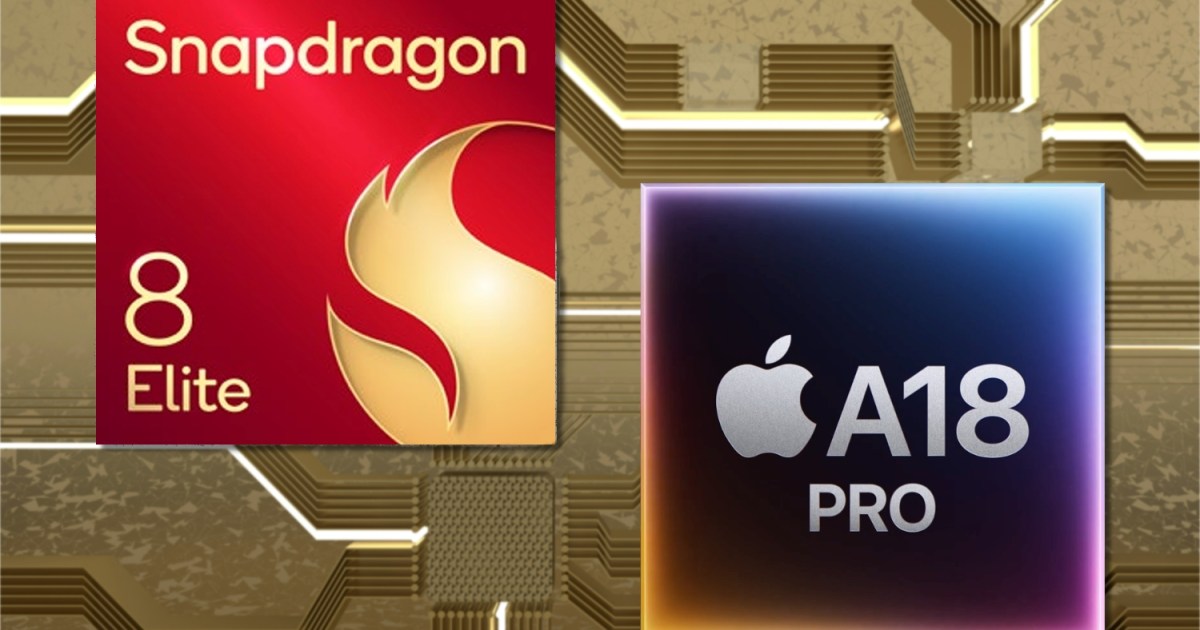
On the other side of the ring, Apple continues to flex its chipmaking muscles with the A18 Pro, which is at the heart of this year’s iPhone 16 Pro. We don’t have to wait to see what that chip is capable of, however, as Apple has already (mostly) put its best foot forward with Apple Intelligence and new computational photography features.
While it’s hard to compare the Snapdragon 8 Elite and A18 Pro on equal footing since both are used in fundamentally different mobile platforms, their differences raise some interesting questions. Most notably, does either piece of silicon give one platform a significant advantage over the other, or is it more about what phone makers do with the capabilities that are available to them? Let’s dig in and find out.
Snapdragon 8 Elite vs. Apple A18 Pro: specs
Specs
Snapdragon 8 Elite
Apple A18 Pro
Part number
SM8750-AB
A18 Pro
Process
3nm (N3E)
3nm (N3E)
CPU
Qualcomm Oryon CPU 64-bit Architecture 2 prime cores, up to 4.32GHz 6 performance cores, up to 3.53GHz
Apple CPU 64-bit Architecture 2 High-Performance cores, up to 4.04GHz 4 Efficiency Cores, up to 2.2GHz
GPU
Adreno 830 GPU Support for Unreal Engine 5.3 Nanite Adreno Frame Motion Engine 2.1 Snapdragon Game Super Resolution Snapdragon Game Post-Processing Accelerator HDR gaming (10-bit color depth, Rec. 2020 color gamut) Snapdragon Shadow Denoiser API support: OpenGL ES 3.2, OpenCL 3.0 FP, Vulkan 1.3 Hardware-accelerated H.265, VP9, AV1 decoder HDR Playback Codec support for HDR10+, HDR10, HLG, and Dolby VisionSnapdragon Adaptive Game ConfigurationSupport for Unreal Engine Chaos Physics Engine
Apple GPU 6 GPU Cores, up to 1.45GHz Support for Hardware-Accelerated Ray Tracing, Dynamic Caching, Mesh Shading, Hardware-accelerated HEVC, H.264, AV1, and ProRes Playback Codec support for HDR with Dolby Vision, HDR10+/HDR10, and HLG
Apple Neural Engine 16 cores, 35 trillion operations per second
Memory
Support for dual-channel LP-DDR5x memory, up to 5.3Gbps
Unified Memory, 8 GB LPDDR5X
Display
On-Device Display Support: 4K @ 60Hz QHD+ @ 240Hz
Apple Display Engine 120Hz ProMotion and Always-On Display Support
Camera
Qualcomm Spectra AI Triple 18-bit ISP
Limitless real-time Semantic Segmentation
Up to 48MP triple camera at 30 fps Up to 108MP single camera at 30 fps Up to 320MP photo capture Zero Shutter Lag
Slo-mo video capture at 1080p @ 480 fps
Massive Multi-Frame Noise Reduction with AI
Real-time AI skin and sky tone adjustments in 4K60 fps
Apple Image Signal Processor with Photonic Engine, Deep Fusion, and Smart HDR 5
ProRes and HEVC Video Recording in Dolby Vision 4K
Hardware Video Encoder (ProRes, HEVC)
Cinematic Slow Motion video capture at 4K @ 120 fps
Connectivity
Qualcomm FastConnect 7900 Wi-Fi 7 X80 5G Modem-RF System Bluetooth 6.0 Integrated Ultra Wideband (UWB)
USB Type-C 3.2 Gen 2 Integrated Ultra Wideband (UWB)
Snapdragon 8 Elite vs. Apple A18 Pro: CPU
Qualcomm
Qualcomm’s Snapdragon 8 Elite marks a significant jump over its predecessor when compared to Apple’s A18 Pro, as it’s the company’s first chip to move to TSMC’s 3-nanometer (3nm) fabrication process. Apple was the first to make the 3nm transition with its 2023 A17 Pro used in the iPhone 15 Pro lineup. However, it used an earlier version of TSMC’s process, dubbed N3B, which was beset by manufacturing problems that resulted in lower yields. It may also be the reason for the binned A17 Pro chips that have found their way into this year’s iPad mini 7 — there’s a good chance these are leftover chips from the N3B process that didn’t make the cut for the iPhone 15 Pro.
N3B wasn’t ready for prime time, which is likely why Qualcomm skipped that early 3nm process until it evolved into this year’s N3E. That’s not to say that the N3B process made the A17 Pro inferior in any way. The problems with it were related to production, but those chips that did come off the line successfully were still powerful enough to usher in a new era of mobile gaming and prepare Apple’s iPhone 15 Pro models for the new AI capabilities that would become the foundation of Apple Intelligence.
Qualcomm
Now that N3E is ready, the Snapdragon 8 Elite and Apple’s A18 Pro have adopted that more stable process. This puts them on the same core technology baseline, but that’s where their similarities end, as Apple and Qualcomm have each taken their silicon in different directions.
Unlike Apple, Qualcomm builds chips for third-party platforms, ranging from smartphones and tablets to ARM-based Windows PCs. It’s this last category that’s inspired the Snapdragon 8 Elite, which brings its new Oryon core technology that debuted in the Snapdragon X processors in last year’s AI PCs to the mobile space. However, this is a second generation of that core that boasts better performance and power efficiency than the ones found in its X chips and promise a 45% increase in performance. The two prime cores offer clock speeds of up to 4.32GHz versus 3.4GHz in last year’s chip. Six performance cores supplement that with 3.53GHz peak speeds, placing them ahead of even last year’s Snapdragon 8 Gen 3 Cortex-X4 prime core.
Apple
Apple’s A18 Pro takes a different approach, using a combination of performance and efficiency cores similar to Qualcomm’s previous silicon. A pair of high-performance cores deliver clock speeds of up to 4.04GHz, while the four efficiency cores only clock in at 2.2GHz.
While you might expect those differences would make the Snapdragon 8 Elite the better performer with eight cores and faster clock speeds across the board, benchmarks surprisingly place both chips roughly on par. The A18 Pro edges out the Snapdragon 8 Elite in single-core performance, while Qualcomm’s chip offers slightly better multicore performance, but they’re very close in both areas, proving that clock speeds and the number of cores don’t tell the whole story. Both chips are extremely powerful in their own right, and there’s no clear winner in raw CPU performance.
Snapdragon 8 Elite vs. Apple A18 Pro: GPU
Apple
In 2023, Apple announced it had developed “a breakthrough new GPU” for its A17 Pro, and touted it as the biggest redesign in its history. Features like an Apple-designed shader architecture, hardware-accelerated ray tracing, and Metal effect upscaling that works in conjunction with Apple’s Neural Engine (NPU) made the iPhone 15 Pro the first smartphone capable of handling full-quality AAA console games. The A18 Pro uses the same Apple-designed GPU, boosting overall performance by 20% and doubling the ray tracing performance.
However, it’s also fair to say that Apple’s move into AAA gaming was more of an indictment of the state of the Android gaming landscape than it was of Qualcomm’s Snapdragon chips. The Snapdragon 8 Gen 3’s Adreno GPU was still a match for the A17 Pro in raw specs, and the Snapdragon 8 Elite has taken that to a new level. Qualcomm says it’s the “first-ever Adreno GPU with sliced architecture,” and it delivers a 40% performance gain over the Gen 3 while adding support for Unreal Engine 5.3 Nanite.
ScreenshotQualcomm
The practical upshot of these improvements is a more realistic gaming experience with “film-quality 3D environments for total immersion” and support for the Unreal Chaos Physics Engine, which provides a whole new and more immersive level of realism for gaming.
It’s a significant push ahead for Qualcomm silicon. Apple’s advantage in this area has come from its ability to woo game developers and convince them to embrace its MetalFX engine. Last year’s A17 Pro delivered impressive results, and those are continuing with the A18 Pro, turning Apple’s iPhones into gaming powerhouses. Qualcomm hopes that if they build it, game developers will come, and it’s telling that the extremely gaming-focused ROG Phone 9 Pro is one of the first phones to pack in the Snapdragon 8 Elite.
Snapdragon 8 Elite vs. Apple A18 Pro: NPU
Qualcomm
With generative AI becoming a much bigger deal, there’s a third important aspect of modern silicon: the Neural Processing Unit (NPU). Apple calls this its Neural Engine, and it’s been packing these into its A-series chips since the A11 Bionic in 2017.
Qualcomm wasn’t far behind. While it didn’t make as much noise about NPUs in those days, the 2018 Snapdragon 845 introduced its first Hexagon Tensor Accelerator. In those days, NPUs were used primarily for under-the-hood features like computational photography. The Hexagon chip was originally a digital signal processor (DSP) that evolved into an NPU, and Apple’s early Neural Engine was primarily used to support then-nascent features like Face ID and Animoji on that year’s iPhone X.
We’ve come a long way since then. The Hexagon has evolved into a full-featured NPU with 14 cores in the Snapdragon 8 Elite, and Apple’s Neural Engine has grown from its humble dual-core beginnings to a 16-core subsystem that can handle up to 35 trillion operations per second (TOPS). Both are key to powering their respective platforms’ AI and other machine-learning features, including Galaxy AI on Samsung’s smartphones, Gemini Nano, and Apple Intelligence.
Apple
Apple is heavily pushing on-device generative AI as a privacy feature, so it’s built its Neural Engine in the A18 Pro and other recent A-series and M-series chips with that in mind. Qualcomm has been a bit slower in getting there; the Snapdragon 8 Gen 3 took the first steps into this arena, but the Snapdragon 8 Elite may have the first NPU that can effectively deliver on this thanks to an enhanced token limit that will support more complex and longer inputs without the need to send those requests to cloud servers.
NPUs also go deeper than merely consumer-facing AI features. They also drive things like camera enhancements, better power efficiency, and wireless communications. These things are much harder to quantify, but suffice it to say that the Snapdragon 8 Elite and A18 Pro should both be more than up to those tasks.
Snapdragon 8 Elite vs. Apple A18 Pro: power efficiency
Qualcomm
Despite all these performance gains, it’s impressive that both chips promise increased power efficiency. Qualcomm gains more over its predecessor, thanks to the shift to a 3nm process. Still, its second-generation Oryon CPU cores and the sliced architecture of its Adreno 830 GPU result in energy efficiency that matches the performance improvements — 40% faster gaming performance and 40% greater efficiency.
Qualcomm says this should translate to an extra 2.5 hours of gaming over its predecessor, all other things being equal. However, the reality of this is somewhat more complex, as things are seldom equal. The smartphones that the Snapdragon 8 Elite go into will have many other things drawing power, notably large high-refresh screens. The chip may be more efficient, but handset makers will have to work on using other components that don’t detract from that.
Joe Maring / Digital Trends
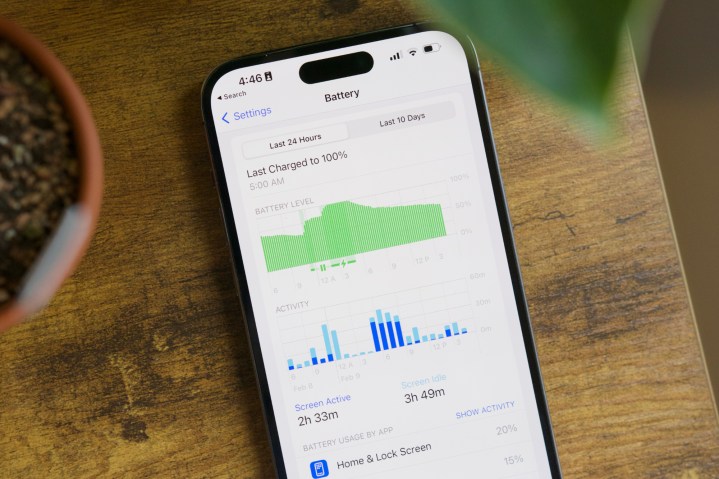
Apple gets a theoretical advantage here as it owns all the pieces, allowing us to see more measurable real-world results. The A18 Pro is only used in two smartphones, the iPhone 16 Pro and iPhone 16 Pro Max, both of which show noticeable, but modest improvements over their A17 Pro-equipped predecessors. Apple typically considers all-day battery life good enough, so the efficiency gains from its new chips are often poured into delivering more power to other aspects of the iPhone, such as the larger displays on this year’s models and the new Apple Intelligence features in iOS 18.
Some Android manufacturers may choose to do the same with Qualcomm’s Snapdragon 8 Elite, but the variety of platforms that will incorporate the new chip should result in at least some devices focusing more heavily on improving overall battery life.
Snapdragon 8 Elite vs. Apple A18 Pro: other features
Qualcomm
Once we get past the core components, the two platforms diverge significantly. Qualcomm bakes much more into its silicon, while Apple still relies on third-party chips (some of which are Qualcomm’s, ironically) to handle things like Wi-Fi, Bluetooth, and 5G connectivity.
The Snapdragon 8 Elite incorporates Qualcomm’s FastConnect 7900 platform, which includes Wi-Fi 7 support with peak speeds of 5.8Gbps, the X80 5G Modem-RF system, Bluetooth 6.0, and integrated Ultra Wideband. Apple mixes this up more, using Qualcomm’s Snapdragon X75 to handle its 5G connectivity and a Broadcom chip for Wi-Fi 7 and Bluetooth 5.3 in the iPhone 16 Pro models.
Similarly, Qualcomm promotes the camera capabilities of the image signal processor in its Snapdragon 8 Elite, which promises more NPU-powered computational photography features for things like multiframe noise reduction and enhancing lower-light video capture. The image signal processor can now handle 320-megapixel photos, 1080p slo-mo video at 480 frames per second (fps), zero shutter lag, and AI-powered skin and sky tone adjustments. However, it feels slightly disingenuous to focus too much on camera specs in a chip since these are simply maximum capabilities that may have little bearing on what we end up with in smartphones equipped with Qualcomm’s latest chip. It’s nice to know it’s raised the bar, but don’t expect to see too many phones with 480-fps slo-mo and the ability to capture 320MP photos.
Apple doesn’t tout the same for its A18 Pro because it’s simply part of the iPhone 16 Pro experience. Apple’s silicon is undoubtedly responsible for its new Photographic Styles and 4K/120 fps Cinematic Slow Motion, just like previous generations empowered real-time color grading for Dolby Vision video capture.
Snapdragon 8 Elite vs. Apple A18 Pro: final words
Qualcomm
It’s always been difficult to compare Apple’s A-series chips with anything else on the market in any meaningful way. Beyond benchmarks that fail to tell the whole story, Qualcomm’s Snapdragon 8 Elite and Apple’s A18 Pro live in entirely different worlds. You’ll never find a Qualcomm chip running iOS or an A-series chip running Android.
Apple uses its chips exclusively in its own devices, running its own operating systems, which means it controls all the pieces. The A18 Pro was designed with only two devices in mind, the iPhone 16 Pro and iPhone 16 Pro Max, and is unlikely to be used anywhere else. Meanwhile, Qualcomm has engineered its Snapdragon 8 Elite to power a broad range of Android smartphones across different disciplines, from gaming-focused phones like Asus’ ROG Phone 9 Pro to more general-purpose premium flagships like Samsung’s Galaxy S25 series (which are undoubtedly slated to use the new chipset). Each of those companies will use the Snapdragon 8 Elite in different ways, and Qualcomm has to design a chip that’s ready to address them all.
That makes the Snapdragon 8 Elite a more versatile chip, but that only matters because it needs to be. Apple can get away with a more single-minded approach for its A18 Pro. While this year’s Apple chip only gets modest improvements over its predecessor, that’s because it already leapt ahead last year when it moved to the early N3B 3nm process for the A17 Pro. Qualcomm has to play a bit of catch-up here, but it’s done so admirably with the Snapdragon 8 Elite, and there’s no doubt it’s ready to power new Android headsets that will take on this year’s Apple flagships. Now, it’s up to Android manufacturers to take that ball and run with it.
Arm has taken its feud with Qualcomm to the next level, two years after filing a lawsuit against its former close partner. According to Bloomberg, the British semiconductor company has canceled the architecture license allowing Qualcomm to use its intellectual property and standards for chip design. As the news organization notes, Qualcomm, like many other chipmakers, uses Arm’s computer code that chips need to run software, such as operating systems. Arm has reportedly sent Qualcomm a 60-day notice of cancelation — if they don’t get to an agreement by then, it could have a huge impact on both companies’ finances and on Qualcomm’s operations.
The SoftBank-backed chipmaker sued Qualcomm in 2022 after the latter purchased a company called Nuvia, which is one of its other licensees. Arm argued that the US company didn’t obtain the necessary permits to transfer Nuvia’s licenses. As such, Nuvia breached their contract and it had terminated its licenses, Arm explained in its lawsuit. Qualcomm has been using Nuvia-developed technology in the chips designed for AI PCs, such as those from Microsoft and HP. But Arm wants the company to stop using Nuvia-developed tech and to destroy any Arm-based technology developed prior to the acquisition.
Qualcomm will have to stop selling most of the chips that account for its $39 billion in revenue, Bloomberg says, if the companies don’t resolve the issue within the next 60 days. It seems the US chipmaker believes this is a tactic by Arm to threaten its business and to get higher royalties, because its spokesperson told Bloomberg and the Financial Times: “This is more of the same from Arm — more unfounded threats designed to strong-arm a longtime partner, interfere with our performance-leading CPUs, and increase royalty rates regardless of the broad rights under our architecture license.” Qualcomm also accused Arm of attempting to disrupt the legal process, called its grounds for licensing termination “completely baseless” and said that it’s confident its “rights under its agreement with Arm will be affirmed.”
Meanwhile, an Arm spokesperson told us: “Following Qualcomm’s repeated material breaches of Arm’s license agreement, Arm is left with no choice but to take formal action requiring Qualcomm to remedy its breach or face termination of the agreement. This is necessary to protect the unparalleled ecosystem that Arm and its highly valued partners have built over more than 30 years. Arm is fully prepared for the trial in December and remains confident that the Court will find in Arm’s favor.”
Update, October 23, 2024, 11:33PM ET: This story has been updated to add Arm’s statement.
If you’ve tuned into Computex this week, the headline act has been the debut of numerous Windows on Arm laptops powered by Qualcomm’s long-awaited Snapdragon X Elite and X Plus platforms. You might not think it based on the launch hype, but this exclusive collaboration between Microsoft and Qualcomm to bring Arm energy efficiency to Windows is actually entering its seventh year. Finally, the long-touted (if not a tad overblown) benefits of leaving x86 behind seem to have arrived.
I’ve dipped my toes into the Arm project on a couple of occasions. First with 2018’s Lenovo Mixx 630 powered by 2017’s flagship smartphone-class Snapdragon 835 processor. Performance was pretty poor for laptop use cases, with sluggish multi-tasking and poor emulation of non-Arm-based applications. The ecosystem of native Arm apps was absolutely rubbish back then, severely limiting the platform’s appeal. I still have this little 2-in-1 around, but it’s such a slog to use that it’s sat collecting dust. Still, those were the early days, and Windows on Arm would eventually improve.
Fast-forward to 2020, and I spent more time with the Surface Pro X — this time powered by Qualcomm’s original laptop-first Snapdragon 8cx chipset. Performance was still far more mid-range than top-of-the-line, but the ever-improving software setup made this a Windows on Arm machine that I could almost use for most of my daily work. Think of a premium Chromebook but with Windows instead of ChromeOS. Unfortunately, I needed image editing, too, which the original Surface Pro X could only handle at a snail’s pace. Still, I’ve kept this guy around as a plucky media player and web-browsing tablet, and it still runs pretty well today. Subsequent 8cx revisions made the platform a fair bit more powerful, but 4G/5G networking, fanless designs, and above-average battery life remained the real draws.
Are you interested in laptop AI capabilities?
51 votes
Arm-PCs were sluggish and lacked that killer app. That’s all changing this year.
But even in the past couple of years, there hasn’t been a hugely compelling reason to jump to the Arm landscape over the familiarity of Intel and AMD. Yes, battery life and connectivity are slightly better on the few Arm products available. Still, they’ve been overpriced, and there has only ever been a comparatively small selection of products from which to choose. While the native app and emulation situation has improved to the point that it’s no longer a major problem (though it is still not ideal), few would take the risk and stick with hardware that is known to work flawlessly. Unlike Apple, which has successfully moved over to Arm with its M-series processors, Qualcomm’s chips haven’t offered competitive high-end performance, making them more suited to lighter office tasks than creative work. Despite seven years of effort, there still hadn’t been a compelling reason for joe public to buy in. Even an enthusiast like me abandoned any hope of using such a laptop as my daily diver in recent years.
However, that’s all changed with Snapdragon X, which may have single-handedly kept Windows on Arm from fading into obscurity. Early indicators point to very competitive performance thanks to Qualcomm’s custom Oryon CPU architecture. However, we won’t know for sure until products land in our hands in the next few weeks, and emulation performance is a whole other unknown. Still, traditional performance is not a killer application, but the promised ultra-durable battery life will certainly catch the eye of the Windows faithful. But perhaps the real head-turner is AI-powered CoPilot Plus, which is debuting on Snapdragon X laptops and will follow on platforms like AMD’s Strix Point laptop chips and Intel’s Lunar Lake soon enough. While AI might be a very modern buzzword to some, it’s been an underutilized capability of Snapdragon platforms for Windows for many years. Finally, the hardware and software stars have aligned so that the platform stands out against the bulging portfolios of AMD and Intel.
AI might not (yet) be an all-encompassing momentum shift for the entire industry; we’ve been pretty lukewarm on the features during hands-on time with the new laptops. Still, the trend has finally given manufacturers a reason to adopt and, more importantly, market CoPilot Plus and the Snapdragon X platform en masse. There is no shortage of partners who are all releasing products simultaneously, giving the launch much-needed emphasis and weight — something all too lacking from previous Windows on Arm releases and many modern product announcements, too, for that matter. Between Microsoft’s Surface line-up, Acer, ASUS, Dell, HP, Lenovo, and Samsung, consumers are spoilt for choice in size, design, and configuration options, which is a great place to be in. Compare that to the handful of Arm-PC releases in previous years and it’s easy to see why there’s momentum this time around.
The Snapdragon X launch spoils us for choice, and I love it.
Best of all, we can order our laptop of choice right now — no months of waiting or wondering if something newer is right around the corner. There’s clarity in this launch window that makes it very easy for consumers to compare all of the available options, pick out their preferences, and get straight on board. The smartphone market, by contrast, is dogged by overlapping release cycles that make timing an upgrade incredibly difficult unless you’re loyal to a very specific handset range. The only downside is that all these Snapdragon X laptops will cost you north of $1,000 — a substantial barrier to entry.
After seven years of weighing up the pros and cons of moving to Arm, I’m very much looking forward to getting my hands on one or more of these Snapdragon X Elite laptops and finally testing out that premium Windows on Arm experience that was promised all those years ago. It’s about time, after all.