Blog | Editorial
When Balatro was released back in February 2024, it threw down a figurative gauntlet to other developers. Here was a game that took the seemingly pedestrian pastime of poker and augmented it with clever design and roguelike elements, fashioning a resolutely compelling experience that was far greater than the sum of its parts.
Now, I do hesitate to use the word “addictive” because of the odious associations it carries. And yet in Balatro’s case, few other adjectives come close to describing the all-consuming grip it can have over your time, freely given or not. Well, another effort has picked up that gauntlet.
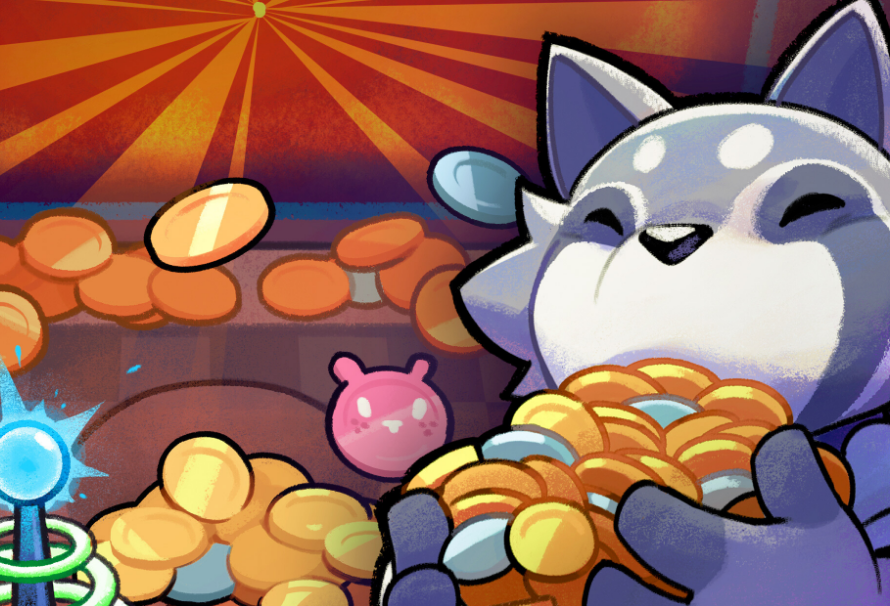
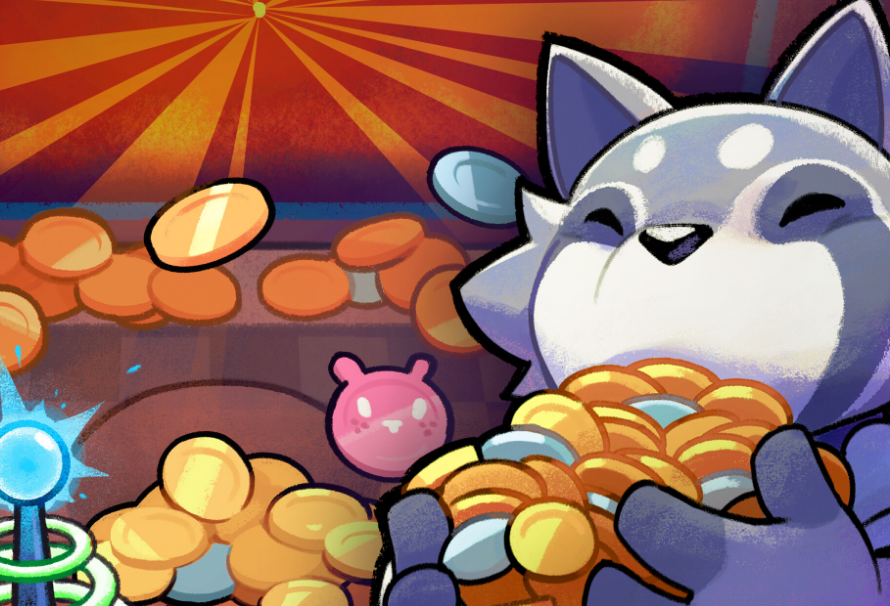
Raccoin, from indie developer Doraccoon, looks to channel the spirit (if not the exact execution) of Balatro. It takes familiar roguelike touchstones and grafts them onto a pastime that is, on paper, even more mundane: the humble coin pusher machine. The result is another fiendishly compelling offering that threatens to lay waste to your free time and social calendar in equal measure.

Adapting a Game That Everybody Knows
Much like Balatro before it, Raccoin succeeds on a fundamental level because it takes a game that’s been around for yonks and uses it as a skeletal foundation for the dense, meaty roguelike mechanics layered on top.
With Balatro, it was poker. With Raccoin, it’s the sort of coin pushing machines you might stumble across in an old-fashioned penny arcade, seaside amusement hall, or travelling circus. In both cases, you have a pastime known the world over, revived and revitalised through the careful application of roguelike design.
That familiarity makes Raccoin incredibly approachable. Just about anybody can pick it up, regardless of their exposure to more traditional video games. Meanwhile, players who’ve never touched a coin pusher in their life will still find themselves pulled in by how clearly the game mirrors a real-world analogue.
All of this is wrapped in a vibrant, colourful retro presentation that isn’t just easy on the eyes, it also makes it wonderfully clear what’s going on at any one time, even when the screen is erupting into absolute coin-based pandemonium.

Roguelike Design That Oozes Out of Every Pixel
Much like Balatro, Raccoin has roguelike design sensibilities threaded through its DNA. Where Balatro tasks wannabe card sharks with playing hands to meet a score requirement set by each “Blind”, Raccoin instead asks players to drop as much shiny currency as possible to hit a payout target that rises with every round.
The fail state is similarly uncompromising. If you don’t reach the payout target in Raccoin, your run ends, simple as that, and it’s straight back to the title screen.
But, of course, the beauty of roguelike design is that even failure feels like forward momentum.
Raccoin handles progression in two key ways: in-run upgrades and permanent unlocks, and both will feel familiar to anyone who has spent a few too many evenings in Balatro’s clutches.
After each payout goal is reached, Raccoin presents a shop where players can purchase power-ups, buffs, and coin-altering abilities that can dramatically reshape how a run plays out. These upgrades are often run-defining, but they also vanish once your run ends.
Then there are the longer-term unlocks. Raccoin allows players to purchase up to four different types of permanent upgrades, each of which adds meaningful strategic depth to future runs. These include:
- Playable characters (well, raccoons), each with their own strengths and coin preferences
- Item and coin pool unlocks, expanding what can appear in the in-run shop
- Additional “ticket” types, offering tougher challenges and modifiers
- Endless Mode, letting players test their builds against infinitely scaling payout requirements
Put simply, Raccoin is flush with progression systems, and it’s exceptionally good at making you feel more capable after each run—whether you succeeded or got unceremoniously booted back to the menu.
All in all, Raccoin absolutely weaponises the “one more go” sentiment in much the same way Balatro managed to do just two short years ago.

Measured Chaos Instead of Careful Strategy
It’s worth noting that while Raccoin and Balatro share a roguelike skeleton, they’re still fundamentally different games to play, and that comes down entirely to the real-world pastimes they’re built upon.
If Balatro is a careful, almost ploddingly deliberate affair, one that has you poring over your next move for minutes before committing, Raccoin is the polar opposite. It trades high-scoring hands for chaotic coin cascades, and swaps calculated pacing for an ever-escalating carnival of clinking currency.
Instead of slowly building toward perfection, Raccoin delights in explosive momentum. Special coins can dramatically shift the board, and TNT coins can quite literally blow the screen apart in a shower of flying treasure.
That said, Raccoin isn’t pure chaos. To be successful, you still need a decent amount of guile.
The key is understanding how to synergise different coin types for maximum effect. Whether you’re combining a Water Coin and a Seed Coin to grow a money tree within the coin shelf itself, or unleashing a Cat Coin to hunt down a Rat Coin for a massive score boost, Raccoin demands constant decision-making and quick reactions.
The strategy isn’t slow and contemplative, it’s fast, reactive, and executed in the middle of the madness.

Raccoin Wants You to Break It
After enough runs, one of Balatro’s most compelling qualities is how it encourages expert players to engineer diabolical deck builds that peel away at the edges of what the game was ever meant to allow.
Raccoin embraces that same playful endgame energy.
Thanks to the unlockable Endless Mode and the sheer number of item, raccoon, and coin synergy combinations available, Raccoin actively invites players to create game-breaking coin drop setups that look like utter madness to any onlooker uninitiated in its chaotic shenanigans.
In fact, that’s arguably the point. Raccoin doesn’t just tolerate broken builds; it celebrates them.
John-Paul Jones
Scribbling about videogames since 2005, John-Paul Jones first stoked his love for the industry with the Atari 65XE at the age of four before proceeding onto the ZX Spectrum, Amiga and beyond. These days, he finds himself unreasonably excited about Sega’s Yakuza franchise, foreign cinema and generally trying to keep his trio of sausage dogs from burning his house down. Clearly, he is living his best life right now.