
How Raccoin Channels Balatro to Reinvent the Coin Pusher Roguelike


Blog | Editorial

When Balatro was released back in February 2024, it threw down a figurative gauntlet to other developers. Here was a game that took the seemingly pedestrian pastime of poker and augmented it with clever design and roguelike elements, fashioning a resolutely compelling experience that was far greater than the sum of its parts.

Now, I do hesitate to use the word “addictive” because of the odious associations it carries. And yet in Balatro’s case, few other adjectives come close to describing the all-consuming grip it can have over your time, freely given or not. Well, another effort has picked up that gauntlet.

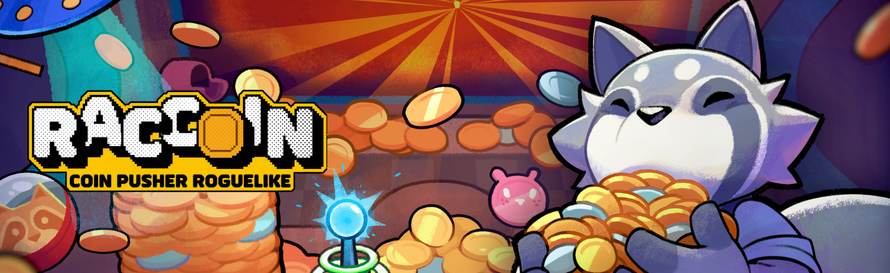
Raccoin, from indie developer Doraccoon, looks to channel the spirit (if not the exact execution) of Balatro. It takes familiar roguelike touchstones and grafts them onto a pastime that is, on paper, even more mundane: the humble coin pusher machine. The result is another fiendishly compelling offering that threatens to lay waste to your free time and social calendar in equal measure.

RACCOIN ON PC

Adapting a Game That Everybody Knows

Much like Balatro before it, Raccoin succeeds on a fundamental level because it takes a game that’s been around for yonks and uses it as a skeletal foundation for the dense, meaty roguelike mechanics layered on top.

With Balatro, it was poker. With Raccoin, it’s the sort of coin pushing machines you might stumble across in an old-fashioned penny arcade, seaside amusement hall, or travelling circus. In both cases, you have a pastime known the world over, revived and revitalised through the careful application of roguelike design.

That familiarity makes Raccoin incredibly approachable. Just about anybody can pick it up, regardless of their exposure to more traditional video games. Meanwhile, players who’ve never touched a coin pusher in their life will still find themselves pulled in by how clearly the game mirrors a real-world analogue.

All of this is wrapped in a vibrant, colourful retro presentation that isn’t just easy on the eyes, it also makes it wonderfully clear what’s going on at any one time, even when the screen is erupting into absolute coin-based pandemonium.

RACCOIN ON PC

Roguelike Design That Oozes Out of Every Pixel

Much like Balatro, Raccoin has roguelike design sensibilities threaded through its DNA. Where Balatro tasks wannabe card sharks with playing hands to meet a score requirement set by each “Blind”, Raccoin instead asks players to drop as much shiny currency as possible to hit a payout target that rises with every round.

The fail state is similarly uncompromising. If you don’t reach the payout target in Raccoin, your run ends, simple as that, and it’s straight back to the title screen.

But, of course, the beauty of roguelike design is that even failure feels like forward momentum.

Raccoin handles progression in two key ways: in-run upgrades and permanent unlocks, and both will feel familiar to anyone who has spent a few too many evenings in Balatro’s clutches.

After each payout goal is reached, Raccoin presents a shop where players can purchase power-ups, buffs, and coin-altering abilities that can dramatically reshape how a run plays out. These upgrades are often run-defining, but they also vanish once your run ends.

Then there are the longer-term unlocks. Raccoin allows players to purchase up to four different types of permanent upgrades, each of which adds meaningful strategic depth to future runs. These include:

  • Playable characters (well, raccoons), each with their own strengths and coin preferences
  • Item and coin pool unlocks, expanding what can appear in the in-run shop
  • Additional “ticket” types, offering tougher challenges and modifiers
  • Endless Mode, letting players test their builds against infinitely scaling payout requirements

Put simply, Raccoin is flush with progression systems, and it’s exceptionally good at making you feel more capable after each run—whether you succeeded or got unceremoniously booted back to the menu.

All in all, Raccoin absolutely weaponises the “one more go” sentiment in much the same way Balatro managed to do just two short years ago.

RACCOIN ON PC

Measured Chaos Instead of Careful Strategy

It’s worth noting that while Raccoin and Balatro share a roguelike skeleton, they’re still fundamentally different games to play, and that comes down entirely to the real-world pastimes they’re built upon.

If Balatro is a careful, almost ploddingly deliberate affair, one that has you poring over your next move for minutes before committing, Raccoin is the polar opposite. It trades high-scoring hands for chaotic coin cascades, and swaps calculated pacing for an ever-escalating carnival of clinking currency.

Instead of slowly building toward perfection, Raccoin delights in explosive momentum. Special coins can dramatically shift the board, and TNT coins can quite literally blow the screen apart in a shower of flying treasure.

That said, Raccoin isn’t pure chaos. To be successful, you still need a decent amount of guile.

The key is understanding how to synergise different coin types for maximum effect. Whether you’re combining a Water Coin and a Seed Coin to grow a money tree within the coin shelf itself, or unleashing a Cat Coin to hunt down a Rat Coin for a massive score boost, Raccoin demands constant decision-making and quick reactions.

The strategy isn’t slow and contemplative, it’s fast, reactive, and executed in the middle of the madness.

RACCOIN ON PC

Raccoin Wants You to Break It

After enough runs, one of Balatro’s most compelling qualities is how it encourages expert players to engineer diabolical deck builds that peel away at the edges of what the game was ever meant to allow.

Raccoin embraces that same playful endgame energy.

Thanks to the unlockable Endless Mode and the sheer number of item, raccoon, and coin synergy combinations available, Raccoin actively invites players to create game-breaking coin drop setups that look like utter madness to any onlooker uninitiated in its chaotic shenanigans.

In fact, that’s arguably the point. Raccoin doesn’t just tolerate broken builds; it celebrates them.

John-Paul Jones

Scribbling about videogames since 2005, John-Paul Jones first stoked his love for the industry with the Atari 65XE at the age of four before proceeding onto the ZX Spectrum, Amiga and beyond. These days, he finds himself unreasonably excited about Sega’s Yakuza franchise, foreign cinema and generally trying to keep his trio of sausage dogs from burning his house down. Clearly, he is living his best life right now.

Slay the Spire 2 Mini-Review: Familiar Foundations, Fresh Co-Op Brilliance


Blog | Review

At first glance, Slay the Spire 2 in Early Access feels like a slightly expanded version of the original. You start with Ironclad again, and most of the launch roster features familiar faces, with only two of the five characters being new. Those new additions bring dramatically different playstyles, which helps a lot, but the overall experience can still feel a little too familiar early on. It can even seem somewhat basic when you compare it to the many games that have built upon the formula since the first game was released.

Slay the Spire 2 in Early Access on PC

That feeling starts to shift as you spend more time with it. You gradually unlock features that add more depth and variety to each run. New paths open up, relics introduce fresh ideas, and builds become far more interesting. The game also mixes in different level types alongside the standard progression, which helps keep things feeling varied. These additions make runs feel much fresher overall, though there are still features many players would like to see added. It’s still Early Access, though, so there’s plenty of room for that to happen.

The co-op mode is what really makes the game shine. It changes how you approach every run and adds a new layer of strategy. You and your teammates need to think carefully about how your characters and builds interact, which leads to some fantastic moments. You’re not just playing side by side – you’re actively supporting each other throughout. At rest sites, you can choose to heal a teammate instead of yourself, and some builds focus heavily on supporting others.

You can also share your block with another player, letting them go all-in on offence instead. This adds an entirely new dimension to the game, and each additional player deepens that complexity even further. It opens the door to creative strategies and leads to some memorable wins and losses along the way. If this is the game at its earliest stage, then Slay the Spire 2 has the potential to become something truly remarkable by the time it’s finished.


Jason Coles

Jason likes to focus on roguelikes and co-op games; in a dream world he’d make a living writing about Dark Souls. As well as being a writer he also does personal training and accounting and can occasionally be seen on other people’s streams. Being a big fan of fluffy things means he has two cats, both of whom refuse to let him sleep, but at least they are cute.

An old-school Zelda-like, Skate Bums and other new indie games worth checking out


Welcome to our latest roundup of what’s going on in the indie game space. As a reminder, the latest edition of Steam Next Fest runs from February 23 until March 2, during which you’ll be able to check out demos for hundreds of upcoming games. A bunch are available already, including one for Denshattack!, which I definitely recommend checking out. As it turns out, doing Tony Hawk Pro Skater-style tricks with a high-speed Japanese train absolutely rips.

On Thursday, there were four showcases highlighting indie games all in a single day. It’s not exactly feasible for me to recap them in full here, unfortunately, but I can at least tell you about a few of the many highlights.

The Black History Month edition of the Black Voices in Gaming Showcase includes trailers and interviews for some games that are already available, such as Space Warlord Baby Trading Simulator, Aerial_Knight’s DropShot and Relooted. Of course, the stream featured plenty of games that are on the way too.

Erased, from solo developer Jerron Jacques, looks pretty interesting. It’s an open-world fighting game that takes place in a cyberpunk setting with dance battles, parkour, pets, strange creatures and much more. Jacques, who has been documenting the game’s development process on social media, even carried out some of the parkour motion capture work personally.

There was lots of good stuff in this week’s Convergence Showcase too, including another peek at Mouse: P.I. for Hire as we get to see one of the game’s bosses for the first time. This first-person shooter with rubber-hose animation is set to arrive on March 19.

There were other welcome announcements for me in this showcase. First, there was a release date for the Zelda-inspired adventure Gecko Gods. I’ve had this on my wishlist since 2022, so I’m glad to learn it’ll hit Nintendo Switch, PS5 and PC on April 16.

In addition, record shop sim Wax Heads (which probably should have been called Low Fidelity, tbh) is coming to PC, Xbox Series X/S, PS5, and Nintendo Switch on May 5. You can check out a Steam Next Fest demo for that one now.

The second edition of Indie Fan Fest had a trove of goodies as well. For one thing, Balatro publisher Playstack could be about to cause another mass reduction in collective productivity with Raccoin, which now has a release date of March 31. This is another roguelike deckbuilder, but this time it’s in the form of a coin pusher. I didn’t have a chance to check out the previous playtest to get a better sense of why there’s so much buzz around this one, but I’ll for sure be trying the Steam Next Fest demo, which is available now.

It remains deeply weird to refer to a game under Acclaim’s umbrella as an indie, but that’s where we are now. The publisher is bringing Ridiculous Games’ GridBeat to Nintendo Switch and Steam on March 26. This is a rhythm-based dungeon crawler in which you (a hacker) try to escape from a corporate network after pilfering valuable data. There’s a Next Fest demo available for this one too.

Meanwhile, a narrower release window for Japanese convenience store sim InKonbini: One Store. Many Stories was revealed. It’s coming to Steam, PS5, Nintendo Switch and Xbox in April.

Alongside a related sale on Steam, the first Quebec Games Celebration Showcase took place on Thursday. It’s always neat to learn about games being made in my neck of the woods.

One of those is Surfpunk, a co-op action RPG that looks a bit like Hades with surfing. Radical. You’ll venture to procedurally generated islands in search of loot. There are four weapon classes to choose from and gadgets you can craft after collecting resources on your run. There’s an updated Steam demo that’s said to have around five hours of gameplay. Surfpunk (which is from Convergence: A League of Legends Story developer Double Stallion) will arrive later this year.

I’m including this demo announcement trailer for Croak, a precision platformer from Woodrunner Games that appears to be heavily inspired by the likes of Celeste, separately for one main reason. You have to check out the studio’s head of “barketing.” (Okay okay, the game’s hand-drawn visuals look lovely too.)

There’s plenty of other interesting stuff in the Quebec Games Celebration Showcase, including another look at Tears of Metal from Paper Cult Games, the studio behind the very enjoyable Bloodroots. There’s a Steam demo available for the hack-and-slash roguelite, which should be out this spring. Gothic sci-fi Metroidvania Silent Planet looks quite tasty too.

New releases

Under The Island looks and sounds very The Legend of Zelda: A Link to the Past-coded. But since that’s my favorite game of all time, I am not complaining. I love that protagonist Nia appears to use a hockey stick as a weapon too.

This action PRG from Slime King Games (and co-publishers Top Hat Studios and Doyoyo Games) has debuted to strong early reviews. It’s available now on Steam, Xbox One, Xbox Series X/S, PS4, PS5 and Nintendo Switch for $20, though there’s a 15 percent launch sale (you’ll need to be a PS Plus member to get the discount on PS4 and PS5).

Demon Tides — a 3D, open-world platformer from Bubsy 4D and Demon Turf developer Fabraz — has lots of movement mechanics, including paragliders and hookshots. You can shapeshift into different forms as well.

You can create and share graffiti, and this will appear in other players’ games (which is a neat touch). Demon Tides is out now on Steam. It’ll usually cost $25, but until March 5, you can snap it up for $20.

Skate Bums is a 2D skateboarding game in the tradition of the OlliOlli series. As novice skateboarder Lux, you’ll try to take down the Skate Bums, a gang of bullies. There are “weird characters,” sick combos to pull off, coins to collect and wrecking balls to dodge.

There’s said to be a “simple directional trick system” while each run is apparently short. That seems ideal for quick, pick-up-and-play sessions on Nintendo Switch and Switch 2. I also just really like the title. Skate Bums, which is from Lucky Last Studio, will normally cost $15 but there’s a 15 percent discount until February 27.

Love Eternal is a psychological “horror platformer about escaping the domain of a selfish god,” which is a strong pitch from developer brlka and Demonschool publisher Ysbryd Games. You’ll need to flip between different gravitational pulls as you navigate this precision platformer, which follows teenager Maya on her attempt to return to her own reality.

During a dinner at home, Maya’s family disappears and she suddenly appears in an “eerie, desolate realm” that looks like an Iron Age castle. That’s a creepy enough set up to match the game’s haunting atmosphere. Love Eternal is out now on Steam, PS4, PS5, Xbox One, Xbox Series X/S and Nintendo Switch for $10. There’s a 15 percent launch discount (again, you’ll need to be a PS Plus member to take advantage of that on PlayStation).

Upcoming

Woe Industries, the developer of You Have Billions Invested In Generative AI (and a bunch of other neat projects), has something intriguing on deck for next week — a standardized gaming test. You can start the Adventure Game Aptitude Test (AGAT) at any time between 1PM and 2PM ET on February 28.

You’ll have four hours to complete an ’80s adventure game of Woe Industries’ choosing. The developer will seemingly be monitoring your browser and smartphone activity to ensure you don’t consult a walkthrough. If you’re successful, you’ll receive an AGAT certification and diploma. Good luck!

“Musical narrative adventure” People of Note is coming to Steam, Epic Games Store, the Xbox App on PC, Nintendo Switch 2, PS5 and Xbox Series X/S on April 7 for $25 (though there’ll be a 10 percent launch discount). The game follows pop singer Cadence on her quest for stardom. Along the way, Cadence and her buds will have to overcome enemies in battles that have turn-based and rhythm-based elements.

I mostly enjoyed playing through a preview several months ago, though I had to grit my teeth through the turn-based combat, which is not something I enjoy as a rule. However, Iridium Studios will allow players to turn off elements like that and environmental puzzles so more people who might have otherwise been turned off can enjoy People of Note. You can sample the game now on Steam via a 90-minute Next Fest demo.

I don’t fully understand what’s going on in the reveal trailer for Titanium Court, which is from AP Thomson (a solo developer who previously worked on Consume Me) and publisher Fellow Traveller. Even the press release notes that it’s “impossibly difficult to describe.” But it has an absorbing trailer soundtracked by an odd, Bill Callahan-esque song and it has already picked up several IGF award nominations, so I’m intrigued.

What I am able to surmise is that it’s a surrealist, roguelike strategy game with match-three, auto battle and tower defense elements. It’s also for “clowns and criminals,” apparently. I’m gonna have to give the Steam Next Fest demo a shot to try to get my head around it. Titanium Court is coming to Steam “imminently.”

Sometimes, a game pops up that makes me think “how has no one done this before?” Such is the case with Become. It’s a third-person linear adventure from solo developer Valentin Wirth in which you take on the guise of a single sperm. You can probably guess what the goal is.

The game has “no explicit sexual acts, nudity or violence,” according to its Steam page, though you will encounter some danger along your journey. You can upgrade your bespectacled spermatozoon via skill trees and seemingly adorn various pieces of headgear. Become is slated to hit Steam later this year.


Arcane Trigger Mini-Review: Big Spells, One Button


Blog | Review

Some roguelikes let you fight with preset weapons, but a small sub-genre lets you invent your own, turning every run into a playground of spells and chaos. Noita is a great example, letting you play with the world’s physics by freely mixing and matching effects. Magicraft does something similar, but with a more traditional roguelike viewpoint, and becomes pure chaos once a run really gets going. Both demand sharp reactions, but Arcane Trigger approaches things a little differently.

Arcane Trigger on PC

Arcane Trigger has you playing as an arcane gunslinger, combining different bullet types and spells to unleash massive chains of firepower against a strange realm encroaching on your own. It begins simply, as most roguelikes do, but escalates very quickly, eventually letting you fire dragon eggs and even meteors. The key difference is that everything here is turn-based.

In fact, all you really need to do is click the fire button. You don’t need to move at all, just pull the trigger. That doesn’t mean there’s no depth, though. The order of your bullets matters, as do your upgrade choices. You’ll be aiming to collect three of a kind to fuse bullets together, lean into specific elemental synergies, or ban certain bullets entirely so you can focus on a single strength. When it comes to combat execution, however, it’s still just one button.

As a result, this is a roguelike where your reactions don’t need to be constantly tested. Instead, you’re free to take your time crafting and refining your attacks. As you progress, you’ll develop a stronger understanding of how different builds work, and you’ll also unlock other gunslingers to experiment with. It’s an incredibly easy game to play, but a difficult one to master, and it’s refreshing to experience a roguelike that embraces a slower pace for once.


Jason Coles

Jason likes to focus on roguelikes and co-op games; in a dream world he’d make a living writing about Dark Souls. As well as being a writer he also does personal training and accounting and can occasionally be seen on other people’s streams. Being a big fan of fluffy things means he has two cats, both of whom refuse to let him sleep, but at least they are cute.

Repair iconic 2000s-era gadgets in upcoming indie game ReStory


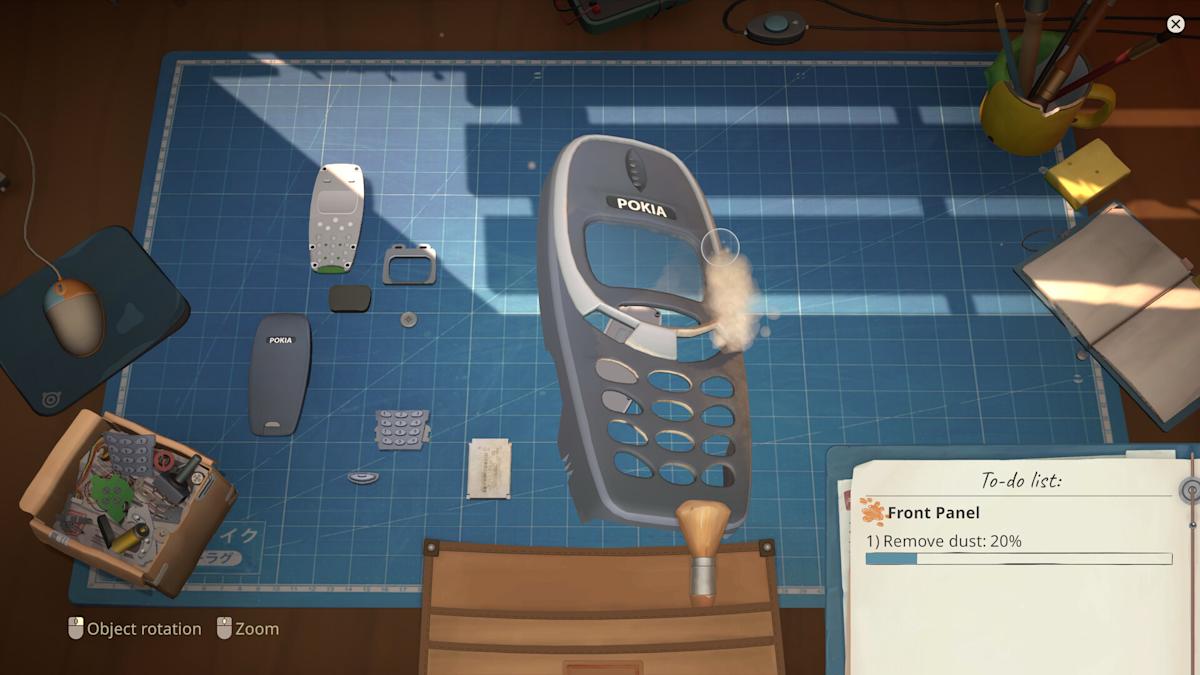
We love a little nostalgia mixed in with our cozy gaming, and ReStory looks like a perfect blend of those two. In this upcoming indie game, you play the owner of a Tokyo electronics repair shop in the mid 2000s. The trailer that dropped today shows you tinkering with some very familiar gadgets from the era, such as renamed riffs on a Tamagotchi, a Nokia brick phone, a PSP and a Walkman. You clean and repair these devices for customers, and it looks like your conversations with them might have as much impact on their lives as your official work does.

The whole thing looks exceedingly charming and chill. It’s nice to see a game like ReStory as a counterpart to something with a similar premise but wildly different tone like Kaizen, which was a highlight during the Steam Automation Fest over the summer. ReStory is being developed by Mandragora, and it is currently playtesting ahead of a planned 2026 release.

Super Fantasy Kingdom Mini-Review: Addictive in the Best Way


Blog | Review

Hooded Horse, the publisher behind this game, is on an incredible streak. They’ve been consistently delivering hit after hit, with titles like Against the Storm, Cataclismo, and He Is Coming proving nearly impossible to put down. Now Super Fantasy Kingdom joins the line-up, and it’s another one of those “just one more run” experiences that’s hard to quit.

Super Fantasy Kingdom on PC

Super Fantasy Kingdom is a roguelike city builder where you play as either the human or undead kingdom, trying to improve with each attempt. Every run lasts up to 28 days, and the better you perform, the more glory you earn, unlocking new areas, roads, and permanent upgrades. As you progress, you’ll gain access to stronger starting resources, new heroes, units, and other meaningful rewards that make each run feel fresh.

Defeating bosses grants stars that open up new features for both kingdoms, encouraging you to switch between them to explore what’s new. Progress can occasionally feel slow, but one strong run can completely reshape your strategy or open up an entirely new landscape to experiment with.

It’s also an excellent fit for the Steam Deck, where it’s even more dangerously addictive. Super Fantasy Kingdom is a joyful city builder that lets you set your own pace, rewarding careful planning—or punishing rash decisions. Either way, you’ll constantly find yourself saying, “just one more run,” and more often than not, it’s worth it.


Jason Coles

Jason likes to focus on roguelikes and co-op games; in a dream world he’d make a living writing about Dark Souls. As well as being a writer he also does personal training and accounting and can occasionally be seen on other people’s streams. Being a big fan of fluffy things means he has two cats, both of whom refuse to let him sleep, but at least they are cute.

Megabonk Mini-Review: Internet Humor Meets Vampire Survivors


Blog | Review

Megabonk has taken the internet by storm. It’s the latest in a long line of Vampire Survivors-inspired games, only this time, it’s in 3D and packed with layers of internet humour. The jokes can be grating, but if you’ve spent more than five minutes online, you’ve probably learned how to tune that out. Do that, and you’ll find a game that’s surprisingly deep and rewarding.

Megabonk on PC

The core gameplay loop is exactly what you’d expect: run around, slay waves of enemies, avoid dying, and keep upgrading your weapons until you become an unstoppable force. It’s a tried-and-true formula that’s hooked countless players, but here it feels a bit sharper and more refined. What really helps Megabonk stand out is its 3D design, which adds a welcome layer of complexity to the experience. Since your attacks are automatic, the addition of jumping alone changes everything – especially when you unlock items that boost your jumps or give you extra power while airborne.

You also need to locate specific areas to finish each stage, which keeps you actively engaged rather than zoning out with it in the background. You’ll hunt for summoning points to spawn tougher enemies with better loot, track down chests for unlocks, and locate boss arenas – all within a strict time limit that adds real tension.

Megabonk is an excellent take on the Survivors-like formula, though it could use more content. What’s here is already impressive, but with just two levels so far, there’s room to grow. If it follows the Vampire Survivors path (frequent updates, often cheap or free), it could easily become the best of its kind.


Jason Coles

Jason likes to focus on roguelikes and co-op games; in a dream world he’d make a living writing about Dark Souls. As well as being a writer he also does personal training and accounting and can occasionally be seen on other people’s streams. Being a big fan of fluffy things means he has two cats, both of whom refuse to let him sleep, but at least they are cute.

Slime Heroes Nintendo Switch Mini-Review: A Great Family Action Game


Blog | Review

Slime Heroes originally launched earlier this year, but it only arrived on Nintendo Switch at the end of July, making it feel like a brand-new game for many players. It’s a Soulslike at heart, but one with a much cuter aesthetic and a range of difficulty options to play with. That means the game can be forgiving if you want it to be, or still deliver a fair challenge if you prefer – striking a nice balance between accessibility and tension.

Slime Heroes on Nintendo Switch

The game really shines in co-op, especially with a younger player. You can design your own slime, giving it goofy facial features and mixing colours to create something truly silly. On top of that, you can tweak health, enemy damage, and other parameters to make the experience just right for the player you’re teaming up with. It’s a thoughtful system that makes the game flexible enough for different skill levels without losing its charm.

Once your slime is ready, you can dive into a charming adventure together, guiding each other through puzzles and battles. The ability system is particularly delightful; you collect a variety of skills as you progress, and you can even combine two into one hybrid ability. This opens up all sorts of creative ways to approach combat and experiment with different strategies, keeping the gameplay fresh and fun.

While Slime Heroes isn’t the most punishing or revolutionary Soulslike out there, it succeeds perfectly as a solid, approachable experience for younger gamers. It’s especially joyful when shared with kids, creating moments where you’re both engaged and entertained. On the Nintendo Switch, it fits beautifully, is easy to pick up, fun to explore, and rewarding to experiment with. Sometimes it’s nice to play a game with your kids that’s genuinely enjoyable for everyone, and Slime Heroes does exactly that.


Jason Coles

Jason likes to focus on roguelikes and co-op games; in a dream world he’d make a living writing about Dark Souls. As well as being a writer he also does personal training and accounting and can occasionally be seen on other people’s streams. Being a big fan of fluffy things means he has two cats, both of whom refuse to let him sleep, but at least they are cute.

Heroes Of Mount Dragon Mini-Review: A Classic Beat ‘Em Up With Transformations


Blog | Review

The classic beat ‘em up has enjoyed a resurgence lately, thanks in large part to the magnificent Streets of Rage 4. That means gathering a few friends and spending hours punching the crap out of enemies is back on the menu, and honestly, it’s a joyous experience, especially for anyone over the age of 30.

Heroes of Mount Dragon

Heroes of Mount Dragon is the newest beat ‘em up on the scene, featuring all the classic class archetypes but with more complex move sets. Each character has two basic attacks, which can even be different weapons, so the archer can kick just as well as shoot arrows. You can mix and match these attacks however you want, and there are special moves too, like launching enemies into the air for juggling combos, either by you or a teammate.

As you level up, you unlock new abilities, with each one adding fresh layers to your character’s combat style. This gradual evolution keeps the gameplay feeling dynamic and helps fend off the boredom that can sometimes sneak into this genre. Plus, when you fill a special bar, you can transform into a dragon and unleash a fiery breath attack – an incredibly fun and over-the-top way to execute your special moves.

All of this comes together in four-player online or offline co-op, letting you and your friends run around and beat things up together. It’s not revolutionary by any stretch, but it’s a whole lot of fun and a great way to hang out with mates. And, of course, you still get to turn into a dragon and rain down cleansing fire on all the goblins and other foes you face. In the end, it’s a solid, enjoyable beat ‘em up that knows exactly what it is – and does it well.


Jason Coles

Jason likes to focus on roguelikes and co-op games; in a dream world he’d make a living writing about Dark Souls. As well as being a writer he also does personal training and accounting and can occasionally be seen on other people’s streams. Being a big fan of fluffy things means he has two cats, both of whom refuse to let him sleep, but at least they are cute.

Dragon Is Dead Mini-Review: An Enjoyable And Fairly Forgiving Roguelike


Blog | Review

Roguelike games come in all sorts of flavours and difficulty levels. While many lean toward the punishing end of the spectrum, every now and then, you come across one that lets you sidestep some of that challenge with a bit of time and effort. Dragon Is Dead fits firmly into that camp. While certain items are unique to each run, your core equipment carries over, giving you a sense of steady progression no matter how many times you dive back in.

Dragon Is Dead

This means that if you stumble upon a legendary sword that tweaks one of your skills in a wild way – like hurling ice axes or calling down meteor showers – you get to keep it for as long as you like. Builds are crucial here, and legendary items in particular are game-changers. While regular gear can offer useful buffs, it’s the legendary pieces that truly transform your skills and often mark the difference between crushing victory and total defeat. Well… that and your actual skill as a player.

You’ll still need to learn boss attack patterns and discover which playstyle suits you best, but solid gear can help you brute-force through some of those learning curves. And because gear in Dragon Is Dead has levels, that amazing legendary weapon you find early on won’t stay relevant forever – but you’ll find plenty of new legendary options to replace it, which keeps things exciting.

Combat, for the most part, is fast and frantic. You’re constantly on the move, dodging, weaving, and striking whenever you get an opening, while also figuring out how to make the most of your skills and efficiently replenish your unique resources mid-fight. Altogether, Dragon Is Dead delivers a tight, engaging roguelike experience with progression mechanics that feel genuinely rewarding, ensuring every run counts, even if the big prize at the end is nothing more than a slightly better pair of boots.


Jason Coles

Jason likes to focus on roguelikes and co-op games; in a dream world he’d make a living writing about Dark Souls. As well as being a writer he also does personal training and accounting and can occasionally be seen on other people’s streams. Being a big fan of fluffy things means he has two cats, both of whom refuse to let him sleep, but at least they are cute.