Samsung’s Galaxy Ring just exposed my biggest smart ring fear


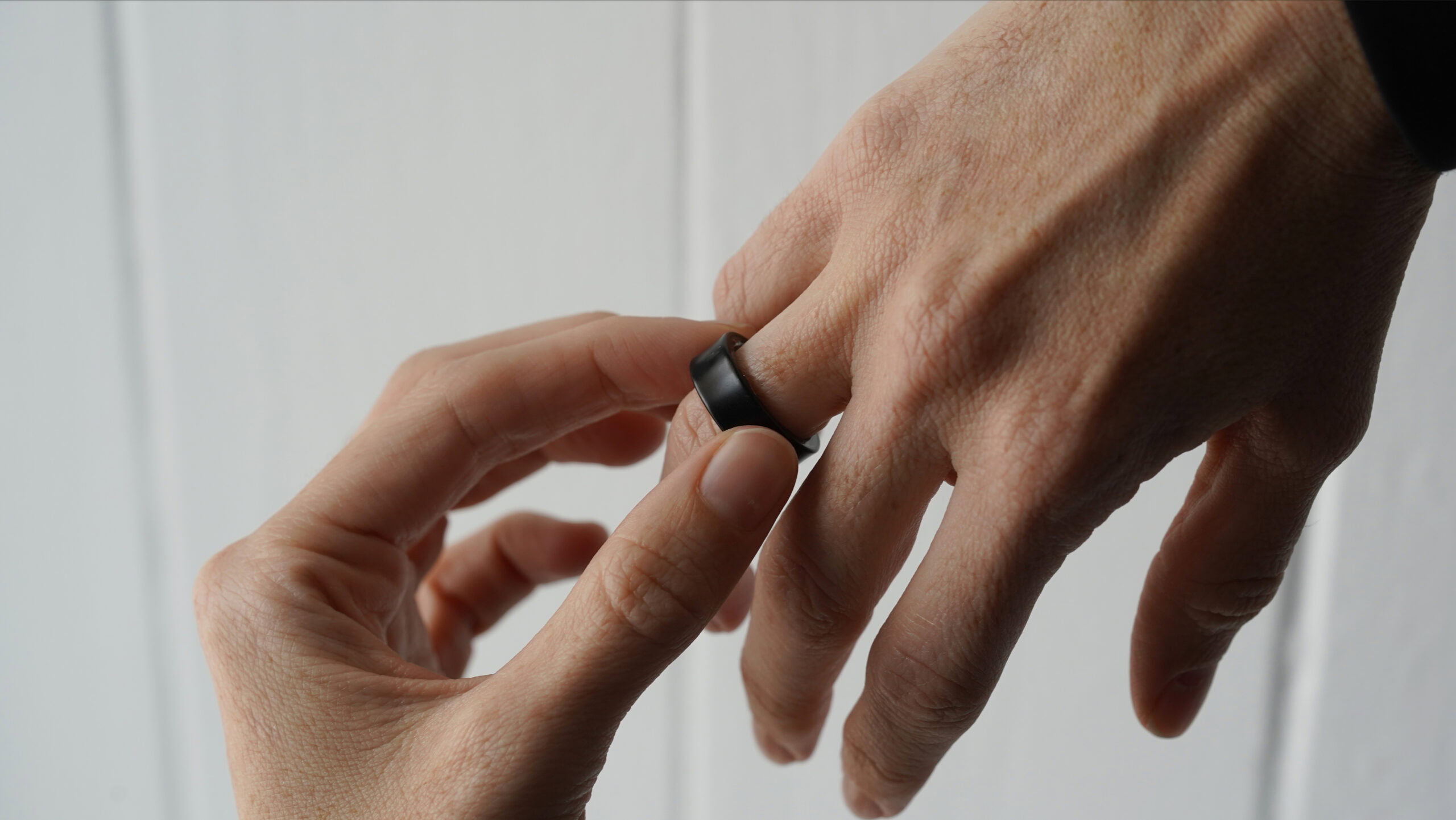
A Samsung Galaxy Ring user takes of their smart ring.

Kaitlyn Cimino / Android Authority

Smart rings are small, discreet, and stay out of the way while logging heart rate, sleep patterns, and more. But when something goes wrong, that convenience can quickly turn into a liability. A Galaxy Ring user recently reported that his ring’s battery swelled while on his finger, making removal impossible without hospital intervention. More than just nightmare fuel, the incident highlights a design flaw across the entire industry. Smart rings, for all their promise, lack an emergency exit.

Trapped by my own tech

A user checks the fit of their Samsung Galaxy Ring.

Kaitlyn Cimino / Android Authority

Unlike watches or bands, rings don’t unbuckle (or un-Velcro) for easy removal. They only come off the way they go on: sliding past knuckles. If a finger swells, whether from heat, hydration, or a malfunctioning battery, the device can quickly become a vise. In the case of one unlucky Galaxy Ring user, battery swelling turned a well-fitting device into a finger trap, grounding his flight plans and sending him to the ER.

The fear of having a ring of any kind stuck on my finger is very real.

That’s exactly what happened to tech creator Daniel (@ZONEofTECH). According to Daniel, after his Galaxy Ring’s battery failed, soap and hand cream only made things worse. Airport staff denied him boarding, and he ended up in a hospital, where doctors used ice and medical lubricant to slide the ring free.

While battery failure is rare, stuck rings are not. I experienced this myself while pregnant. None of my smart rings required cutting tools, but they did get painfully tight, and I resorted to cold water and old-fashioned dish soap just to slip them off. The panic of feeling trapped by your own tech is real, even without a swollen lithium-ion cell pressing against your skin. Call it finger-based claustrophobia. Add in everyday scenarios like swelling during workouts, and the situation is more common than users may realize.

A Samsung Galaxy Ring Sizing Kit includes sizes 5 through 13.

Kaitlyn Cimino / Android Authority

As of now, smart rings offer no emergency removal features. There are no hinges, breakaway clasps, or expandable seams. The industry’s main safeguard is sizing kits, which aim to help buyers pick their perfect fit before purchase. That’s great for day one comfort, but less helpful when fingers inevitably fluctuate.

As of now, smart rings don’t have any way to manage finger swelling or size fluctuation.

Materials don’t help either. Most rings rely on rigid metals, ceramics, or composites designed for durability and style. Once on, they’re meant to stay on, which is logical until the ring won’t come off.

Is safety an afterthought?

A Samsung Galaxy Ring user turns to cold water to remove their ring.

Kaitlyn Cimino / Android Authority

Wearable makers have poured resources into cramming sensors, batteries, and Bluetooth antennas into the tiniest of packages. They’ve focused on aesthetics, miniaturization, and week-long battery life. What they haven’t done is account for worst-case scenarios.

If a smart ring gets stuck, the at-home playbook consists of cooling down your hand, elevating it, and trying lubricants like soap or oil. Failing that, a jeweler or ER can cut it off, though cutting through electronics and batteries is less than ideal and, understandably, destructive to the device itself.

If at-home solutions don’t work, you could end up at the hospital to have your ring medically removed.

Stuck rings are only one part of the safety story. Their tight fit and rigid build can also trap moisture against the skin, leading to irritation or even mild infections. I’ve personally had to give my fingers breaks while reviewing some devices, swapping fingers to let my skin air out. The rings can also pinch or rub uncomfortably during workouts, especially with repetitive gripping motions like weightlifting or rowing. And yes, I live in quiet fear of a Jimmy Fallon–style ring avulsion. None of these are extremely common, and most aren’t catastrophic, but together they highlight a broader problem: a wearable meant to disappear into daily life can sometimes create more discomfort than convenience.

Fixing the finger trap

A variety of smart rings rest on a marble surface.

Kaitlyn Cimino / Android Authority

The Galaxy Ring swelling may be rare, but it should serve as a wake-up call. I hope smart ring makers take safety seriously, starting with battery diagnostics. If a swollen battery is even a remote possibility, there should be a way to alert users before failure. Daniel noticed his Galaxy Ring behaving oddly in the days prior to his incident, with battery life suddenly dropping to just 1.5 days. At the moment of swelling, the battery was fully drained. He speculated that a mix of Hawaii heat, salt water, and multiple flights might have accelerated the ring’s failure, but all of these contributors are real-world, plausible stressors.

Smart rings are among the most seamless wearable experiences. But when a ring won’t come off, seamless becomes suffocating. I’ve felt that creeping panic firsthand, and I didn’t even have a swollen battery to contend with. At the very least, I hope the recent Galaxy Ring incident leads to new industry standards for emergency removal. Until then, my smart rings might be tracking stress as well as causing it.

Thank you for being part of our community. Read our Comment Policy before posting.
Puck it; Oura should ditch its charger and copy the Galaxy Ring case


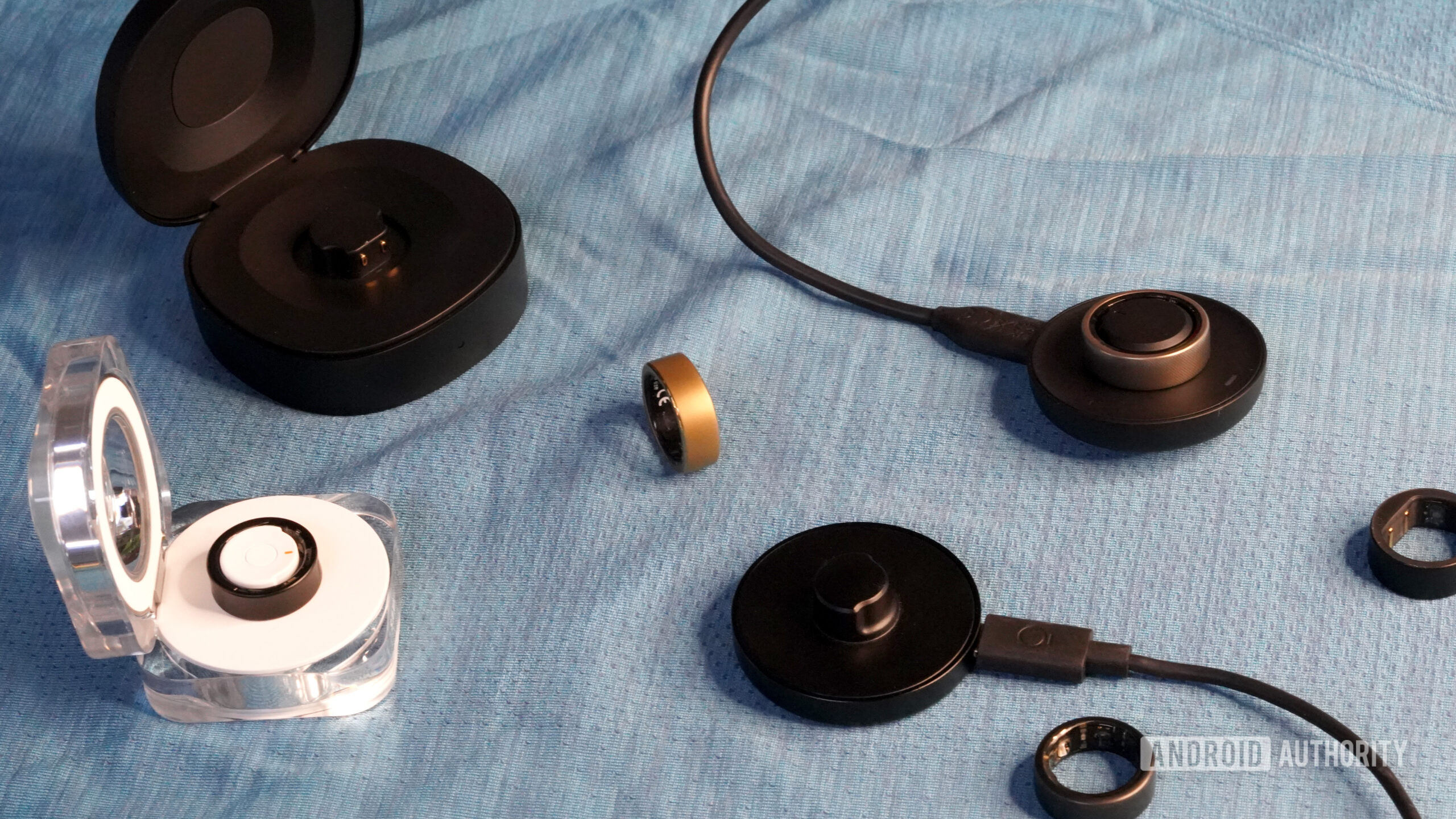
A variety of smart rings rest on their alongside their chargers

Kaitlyn Cimino / Android Authority

The latest form factor to crash the wearables party is the finger-based smart ring. Smaller than Cracker Jack prizes and predominantly led by the Oura Ring 3, a small army of smart rings has hit shelves (and hands), offering users an alternative way to quietly track their stats. These rings share a variety of core features and, frankly, very similar designs, but a few brands have chosen one significant way to help their mini fitness trackers stand out, and that is smarter charging.

The Samsung Galaxy Ring has it right; Oura has it wrong. Here’s why.

What type of smart ring charger do you prefer?

3 votes

Samsung charges onto the scene

Samsung galaxy ring charging case

Kaitlyn Cimino / Android Authority

The highly-anticipated Samsung Galaxy Ring made its way to market in July, finally giving Oura a worthy competitor. A fan of the Galaxy Watch series, I was excited to test Samsung’s new addition and see how the product of a wearables powerhouse compared to that of a single-minded smart ring company. After a couple of weeks with both devices literally on hand, my biggest takeaway comparing the Oura vs Samsung Galaxy Ring is that Samsung’s portable charging case is a godsend. All smart ring brands should universally adopt this mechanism.

To be fair, I first encountered a clamshell-style charging case when testing the RingConn smart ring. That ring shipped with a hockey puck-shaped portable case housing a 500mAh battery, which, according to the company, could charge the ring roughly 18 times before needing to recharge itself. The functionality is very similar to true wireless earbuds, like Apple’s AirPods and Google’s Pixel Buds, with their rechargeable charging cases. This concept applied to a smart ring immediately won me over, as I’m constantly impressed by anything that streamlines packing and travel.

Unlike pucks, charging cases pack a built-in battery to power up your smart ring on the go.

When early image leaks of the Samsung Galaxy Ring showed a similar charging case design, I was thrilled. And when I got my hands on the company’s translucent ring box of a charger, it was like Samsung was asking for my hand in marriage. Considering I’m pretty sure my partner simply fished out a precariously pocketed, unboxed ring before proposing, I never realized how much packaging could win me over. Samsung’s ghostly design with its built-in battery is attractive, portable, and highly convenient. Comparatively, puck or cradle-style chargers are flawed and limited.

Rocking the Oura cradle

cradle style smart ring chargers

Kaitlyn Cimino / Android Authority

The “traditional” charger design for a smart ring has always been a puck. This typically includes a flat portion with an area larger than the ring itself and an elevated post for the ring to set around. Because of their sensors, smart rings typically need to be perfectly aligned on their chargers and often only fit in the proper orientation. The method works, but it’s cumbersome. If you tend to tangle your cables and the cradle doesn’t naturally lay flat, it can tip over and dislodge your ring. More than once I’ve returned to my own smart ring only to find it hadn’t been charging as I thought.

Pucks need to be plugged in and laid flat to charge as expected.

Charging cases, on the other hand, offer a tight enclosure that keeps the smart ring in place, no matter how you bump or move it. More importantly, charging cases pack built-in batteries so you can power up your ring without an outlet nearby and then recharge the case when it’s convenient. This means stowing the charger in a backpack for a long trip without worrying about cables or a power source. You could even charge your ring mid-flight, knowing you’re probably not racking up many stats immobilized by your seatbelt. When you’re not on the go, charging cases also just look neater on a desk or bedside table than a loose puck.

Samsung Galaxy Ring Charging Case Desk

Kaitlyn Cimino / Android Authority

A clutter-phobic human by nature, I love that the Galaxy Ring case looks like a curious little tchotchke on my desk. Cradle-style chargers, on the other hand, snake their way onto surfaces with unruly cables and boring aesthetics.

I fully appreciate that the smart ring market is still in a somewhat fledgling state. And, to be honest, I am excited about its future. I anticipate we will continue to see evolution and innovation that will only make this form factor more attractive going forward. For a long time, I was satisfied with Oura’s effort. Now that competition has rocked the boat, I hope Oura and other brands in the race continue to keep up.

I am excited to see innovation continue to hit the smart ring arena.

A smart ring offers several benefits over other wearables, including subtlety, simplification, comfortable sleep tracking, and distraction-free tracking. To me, though, the biggest strength of a good smart ring is its nearly week-long battery life. A charging apparatus that adds even more convenience to battery maintenance is another huge benefit to the user experience, and I hope it becomes the norm.