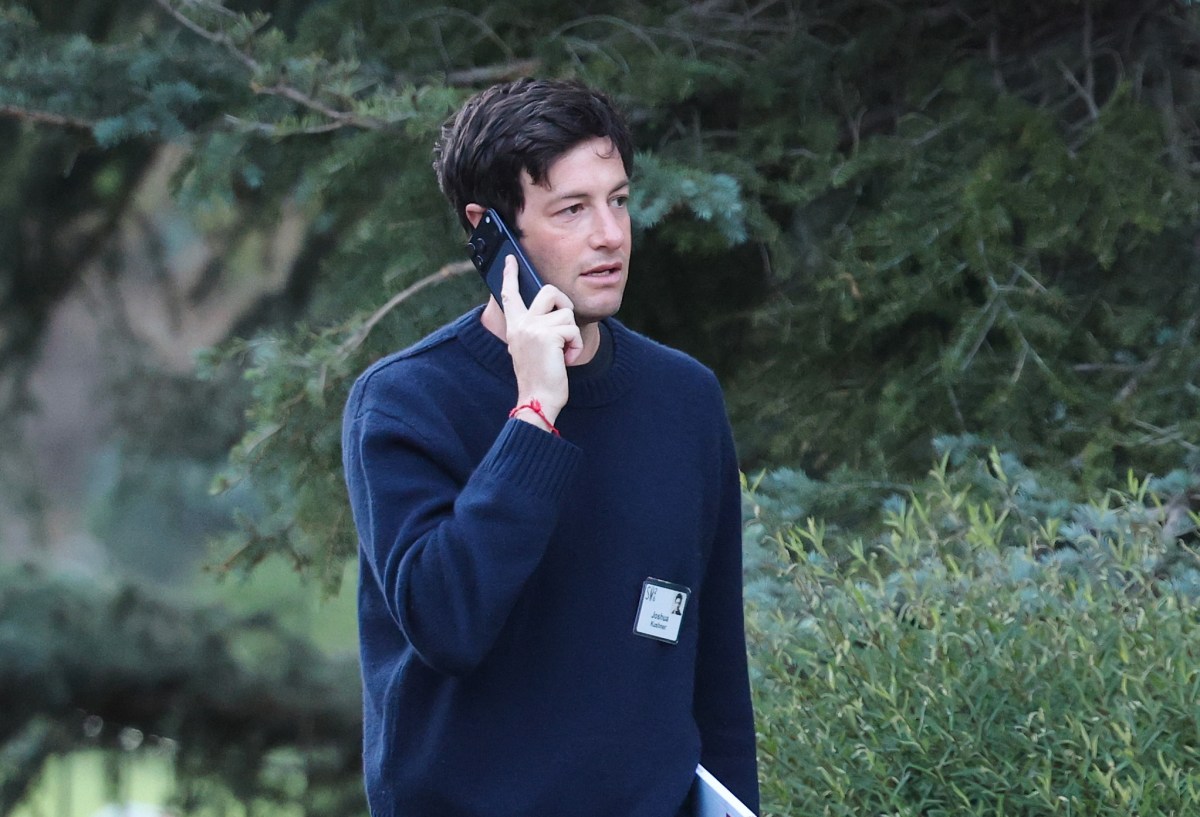
New York’s prestigious-yet-secretive venture firm Thrive Capital has been hauled into the center of a messy drama that could result in criminal charges against Gianni Infantino, the controversial president of global soccer organization FIFA.
And now Thrive’s prominent founder, Josh Kushner, has finally spoken up about the deal in a statement saying that he still thinks the original idea was a sound one, and would have been good for global soccer. But, he says, “had we known what this would devolve into, we would not have gotten involved.” (Full statement below.)
The scandal involves Infantino’s failed plan to create a new corporate entity called FIFA Forward Enterprise (FFE) that would have owned some of the commercial aspects of FIFA competitions like the World Cup, including revenues from TV rights and ticket sales.
This entity would have been fully owned by FIFA’s member associations (aka teams) but all MAs would have had the option to sell some of their shares as secondary sales to private investors. The MAs would have had to vote to create the organization and then agree to sell their own shares to private investors.
FIFA engaged JPMorgan to drum up potential investors for the proposed company. That’s where Thrive came in.
Thrive agreed to be a lead (but not the sole) investor in a potential sale of $4.2 billion worth of secondary shares purchased from the teams, representing 20% of FFE at a $20 billion valuation.
But the European teams, which benefit disproportionately under the current structure compared with other regions like Africa, grew outraged by the idea. An association that includes North American teams also objected. Their concern was over the potential influence of outsiders, particularly private equity.
The backlash caused FIFA to scrap the plan before the MAs could vote on it. (Things have grown even uglier, too. For instance, FIFA’s chief operating officer, Kevin Lamour, was reportedly fired after criticizing Infantino and this plan.)
Note that FIFA is composed of 211 MAs worldwide, yet only 55 of them are in Union of European Football Associations (UEF), while another 41 are in the North American organization, Concacaf, which includes soccer associations from North American, Central American and Caribbean. Had the idea of full and equal ownership of these revenues gone to a vote, who knows what might have happened? But it isn’t wild to think it would have been approved.
Meanwhile, the UEFA is now pursuing legal action against Infantino and attempting to mount some kind of criminal case, BBC reports. European fans are also calling for Infantino’s head.
Again, that’s where Thrive has been roped in.
One of UEFA’s claims in its suit is that the valuation of the proposed company was too low, BBC reports. So UEFA asked a U.S. federal court to compel parties to release information. It wants Thrive to hand over documents on how the valuation was derived, communications about the deal such as term sheets, and the identities of the potential other investors.
After months of this turmoil, Kushner finally responded this week, sending a statement first published by Axios.
Money in football has historically been concentrated amongst a small group of countries. The idea behind FFE was to direct more capital and equity equally amongst all 211 member countries, providing significantly more investment to underdeveloped nations to nurture local talent, support grassroots football, enhance the fan experience, and ultimately grow the global game everywhere.
It was an idea that every Member Association would vote on, not an obligation or determination. While we stand behind the motivations of FFE, we failed to appreciate the political dynamics of global football, and the lengths some would go to. Thrive has a long track record of being a partner to all constituents. Had we known what this would devolve into, we would not have gotten involved.”
But perhaps one of the more humorous parts of this is that Thrive has now engaged another famous name: lawyer Alex Spiro, partner at Quinn Emanuel, to represent it, according to a court document seen by TechCrunch.
This quiet investment firm has engaged a lawyer with a big and bold personality. He is someone who can, perhaps, handle the kind of inflamed passions that characterize international soccer. Spiro is known for representing such clients as Elon Musk, Jay-Z, Alec Baldwin, NYC Mayor Eric Adams and Rippling in its suit against Deel over the corporate spy.
He has become Musk’s go-to lawyer on a number of high-profile cases, including the “pedo guy” defamation case in 2019, the infamous Tesla “funding secured” lawsuit as well aslitigation over Musk’s acquisition of Twitter.
When you purchase through links in our articles, we may earn a small commission. This doesn’t affect our editorial independence.