75 Companies That Pay You to Work from Home This Year


With these resources, there’s absolutely no way you shouldn’t be able to find a job that’s ideal for you. Whether you’re wanting a full-time job, extra income, or need to save up money before the holidays, finding an online job has become much easier.

If you’re ready to start your work from home career, check out the opportunities I’ve shared below!

I also recommend FlexJobs. It’s my #1 recommendation a trusted that’s devoted to providing flexible, telecommuting, part-time work opportunities for almost everyone. The company was featured on CNN, NBC, USA Today, and is by far one of the best resources available online today.

75 Companies That Pay You to Work from Home 

This article will give you more insight on the most popular companies that pay you to work from home this year.

Want To Start Your Own Money-Making Blog?

My FREE 3 part-video series will show you why blogging is one of the best ways to make money online today. Watch now!

If you're ready to start a work from home career, there's no way you shouldn't land one of these online jobs. Here's a free list of 75 companies you can apply with this year!If you're ready to start a work from home career, there's no way you shouldn't land one of these online jobs. Here's a free list of 75 companies you can apply with this year!
Full-Time Work at Home Jobs

1. Concentrix Read review – This company offers work at home jobs in areas of customer care, billing human resources and sales among others. Apart from training at no cost, the regular positions attract a pay of $9 every hour but support agents in tech get paid $12 every hour.

2. Sitel – This company hires employees to handle inquiries on account billing, provide tech support and answer inbound calls. You have to be conversant with sales techniques and then get paid between $9 and $11 per hour plus a benefits package.

3. Asurion – is an ideal employer for those that enjoy offering customer service to different individuals. The company has many clients from different areas that need help from their customer service team.

4. American ExpressRead Review – This company offers sales related jobs that involve handling inbound calls while answering customer inquiries. Payment is from $16.13 per hour that comes with benefits as well as incentives. Search the keyword “Virtual” for any available at home positions.

5. VIP Desk Connect This company hires individuals to work from home as brand ambassadors as part of the outsourcing service they offer. The ambassadors need to be passionate while connecting with clients through e-mail, phone and chat among others.

6. Uhaul Read review –  This company is always looking for reservation sales agents to handle their clients both in the USA as well as Canada. Payment is hourly from $12 to $14, which can include bonuses as per state wages.

7. Teletech – This company provided jobs to people seeking to work from home in different positions. You will be paid hourly, around $9 plus paid training and benefits package.

8. OutPlex – The positions available are for customer service agents who are responsible for scheduling appointments for patients and answering their inquiries. Experience for at least one year is required.

9. Apple – This company offers positions for home advisors that handle issues concerning technical aspects of the products and customer service. You must participate in the training to be hired as a home based worker so as to receive the benefits offered by Apple.

10. Smith AI – The company offers virtual receptionists services in the US for people who have experience in the clerical field. Receptionists will be able to work from home. Depending on the client a virtual receptionist can be working with a team of fellow assistants from across the nation.

Also check out: Best Part-Time Work at Home Jobs: 10+ Companies Hiring, Apply Today!

11. Connections Academy offers education solutions virtually to students in different companies. The company manages a number of programs that ensure their students succeed both academically and in their personal life.

12. Accounting Department offers jobs to individuals that have experience in book keeping, appointment setting and payroll.

13. Working Solutions – At this company, you are hired as an independent contractor to work in areas such as sales, technical support and data entry among others. Payment is per project and can be from $7.50 to $30.00 for every hour.

15. Sykes Home, formerly known as Alpine Access, hires home agents based in Canada and the United States to offer support in areas such as video gaming, healthcare and taking of orders among others.

16. Century Link – This company is a popular work from home employer for customer service job positions. They offer training programs for employees that want to advance in their career.

17. ABC Financial – ABC Financial offers customer service jobs to home based workers to answer calls for members of their health club. Jobs are for people that reside in Washington, Texas, Arkansas, Maine and Georgia among others.

Part Time Work at Home Jobs

18. Liveops –hires call center agents that are home based to receive inbound calls from customers. No experience needed to become one of their independent agents.

19. Time Etc – This company hires virtual assistants that are based in the US as well as United Kingdom. Payment starts from $11 but can get to $16 for experienced workers.

20. Pleio-Goodstart – This company hires work at home worker to take up the position of a “Good Starter.” The Good Starter calls patients to patients that need to be reminded to take prescriptions and set a schedule that works for them.

21. Voice Log – The company offers part time independent contractors that are home based jobs whereby they provide recording and call verification services. They have jobs currently available for US citizens.

22. Leapforce – This company has job positions for web evaluators that are home based. Applicants are needed to successfully complete their exam to get hired and get paid between $13 and $15 every hour.

23. Brain Fuse offers tutoring jobs online. Tutors are called coaches and are experienced professionals who hold a bachelor’s degree. Tutors must complete an intensive onboarding process prior to assisting Brainfuse users. Payment on average is $10-$15/hr.

24. Aim 4 A Tutoring – The company hires online tutors that can handle different subjects that are taught in schools. Applications for this job are always accepted and should include salary requirements, availability in terms of hours and a Skype name among others.

25. Sedgwick hires agents that work from home to make calls that connect the customer to the right customer service claims specialist who is right for their case. One (1) year of clerical or customer service experience or equivalent combination of education and experience preferred. Payment on average is $13-$16/hr.

26. Tutor ABC – Working as a tutor online is possible on this site as long as you are a graduate. Online applicants are accepted with teaching experience in ESL giving you an advantage over others.

27. Metaverse Mod Squad – Metaverse offers different positions for moderators namely customer service reps, social media reps and content moderators. These moderators are responsible for communicating with customers via chat or phone and moderating digital content respectively.

28. Wonder –  This company has work at home positions that require you to engage in research of topics and then submit a written summary of the findings to clients. The position is ideal for those that love searching the web for information.

29. ICUC –  ICUC hires moderators that are home based  to ensure that brands are protected. The Canadian firm ensures that copyrighted content as well as information is properly monitored by their team.

30. Appen Butler Hill – This company employs  search engine evaluators that are home based to US citizens. You must be a college graduate to be hired with payment hourly for at least $15.

31. Homework Help  – This company hires online tutors to assist students with their homework assignments. Students are connected to professional tutors in subjects such as English, math and science among others.

32. ProUnlimited– They provide jobs for professionals experienced in all areas of staffing, including but not limited to contracts management, consulting and technical services, vendor-on-premise management, and traditional temp placement.

33. ACD Direct –  This is a call center that offers jobs that involve answering calls from for pledge campaigns organized by  non-profit organizations. The jobs are done on a flexible schedule and pay is between  $0.25 and  $0.30 for every minute you talk.

34. Skillshare – This company offers you a chance to teach subjects that you know well and earn money from it.  Classes are easy to create with the rate to be paid by students  that enroll set by you.

Freelance Jobs

35. Upwork – This company offers  a lot of jobs that are low-budget jobs but the possibility of finding clients that pay well for work done also exists. The jobs are varied and can be done by beginners as  well as professionals from every corner of the world.

36. Guru – The site has a list of job opportunities that cover over one hundred professions with varied pay rates. Some of the jobs on the site include administrative support, website design, business consulting and graphic design among others.

37. RemotiveIO –  Remotive offers many jobs which include research work, web development, marketing, graphic design and writing among others. There is no fee associated with applying for jobs.

38. Freelance Writing Gigs –  This site focuses on providing paying jobs for publishers, writers, bloggers and editors. If you have a passion for writing and can put words together well, this site is for you.

39. 99 Designs – This is a platform that gives freelance designers, a chance to earn money through designs that they create. You can compete in a number of design contests for feedback on your work as well.

40. Fiverr – is a marketplace where members put up their services for sale at a rate of five dollars as the minimum.  Payment  through PayPal for every task is five dollars but the site retains a dollar.

41. Envato Studios – This is a micro job site that offers job to skilled professionals  through a number of online companies. The services offered on the site attract varied rates which you set as a member on the site.

42. GigBucks – If you are good at providing solutions then you can make money by offering them on this site.  The tasks completed on this site attract a basic pay of $5 but can increase to $50 depending on work done.

43. Freelancer – This company provides a platform for freelancers to list their services and get paid whenever they work for a client. On the site, you can get paid between $2 and $100 for every service sold on the site.

44. Behance – This company is ideal for creative people as well as artists looking to earn money online. This market place allows you  be paid for freelance work done as a photographer, designer or illustrator among others.

45. iFreelance –  Get paid to offer services such as programming, freelance writing and web design by this company. They offer many projects put up by businesses seeking such services at a certain fee.

46. Just Remote– This company offers jobs for different skill sets, making it possible to find one that pays well. It is ideal for designers, developers, engineers, coders and consultants and more.

47. PeoplePerHour – Earn money by offering SEO services, design work and web development services to customers on this platform. Freelancers can offer services focused on websites.

Seasonal Work at Home Jobs

48. 1800 Flowers – This floral company hires home-based customer service agents during their busy seasons, which are Valentines and Mothers Day.  Even so, an agent can be offered a permanent position as a reward for  excellent  performance.

49. Amazon – The company hires customer service representatives to work at home especially during the holidays. The customer service staffs assist in handling the thousands of orders that come up during such seasons.

50. Teleflora– The company seasonal customer service jobs for those living in the U.S. and Canada. Agents are paid paid state minimum wage for the training period (12-16 hours) . After training the pay will bump up to $8 per hour. For each season (e.g., Christmas, Mother’s Day) completed agents are rewarded with a $250 bonus.

51. Omni Interactions – Omni offers legitimate work from home gigs in your spare time to make money. If you have the skills to provide great customer service support via phone, email, text, and live chat then Omni Interactions will allow you to work from home offering this service to Fortune 500 companies.

52. Groupon – This company hires customer service workers to help their customers with their inquiries through phone or email. You will have to learn about how Groupon works to succeed at the job.

53. Vial Resorts– Vial Resorts offers temporary winter holiday online seasonal jobs. They are recruiting for Remote Reservation Agents and winter season Sales Agents.

54. Nordstrom – This specialty retailer hires customer care representatives on a seasonal basis. The representatives will be a symbol for the HauteLook, which is a brand of the clothing store.

55. Skullcandy – Skullcandy is a company that is involved in the marketing and sales related to audio as well as technology. They are offering brand ambassador positions to help build their brand while marketing products.

56. Intuit – This company hires full-time, part-time, and seasonal at home agents for the tax season. Expect to work at least 30 to 40 hours per week. The average starting pay for a tax preparer is $15.50 per hour. These are employee-based positions with benefits like medical, health, 401k, and more.

57. Home Shopping Network – Earn money doing home based jobs in customer support and sales.  The pay is hourly between $10 and $11 for both jobs.

58. Yardi-Matrix –  This company offers phone jobs on a seasonal basis, which usually lasts about six weeks. The hiring process is done annually on three occasions, namely April, August and December .

59. Cool works – This site offers seasonal jobs to both young and older people that want to make some money in hotel jobs. Some of the jobs on offer are home based while others require jobs to be done on location.

Online Tasks and Gigs

60. Mturk – Offers human intelligence tasks that can be completed quickly to those seeking work from home jobs. Some of these tasks include web testing, data entry and freelance writing among others.

61. Slice the Pie – Make money submitting reviews on uploaded music on the site. The music by upcoming artists, when reviewed  on a consistent basis  can earn you  at least $50 or more.

62. Task Rabbit – Complete menial tasks at business premises or homes and get paid by the company. Applicants are required to go through a video interview and also submit  background check information.

63. Click N Work – This company hired worker from every part of the world to do different tasks. The tasks include web based work, data entry, interviews and research among others with pay varying per project.

64. CrowdSource – Get paid when online tasks such as writing, transcription and image tagging are completed. These tasks usually take a short time to get done.

65. Cash Crate – This company makes it possible to get paid for watching videos, completing offers, online shopping and more. Payment can be between $30 and even more, which is done through PayPal or check.

66. ClixSense – Get paid whenever you view ads or even perform other tasks on the company’s site. Payments for the tasks completed are done through PayPal or even Payza.

67. Easy Shift – This is a shift based job that may include photography or monitoring of price checks through mobile phones. Payment is between $2.00 and $20.00 through PayPal for every completed task.

68. Clickworker – This company offers a platform for short tasks to be completed and get paid. The tasks offered by the site include transcription, taking surveys and copy writing among others.

69. SEO clerks – Sell your services on this micro site for varied prices depending on the work put in. some of the popular services include blog commenting, link building and proof reading among others.

70. Crowdflower – This company hires home based workers to do tasks required by their clients through their site. They have number of jobs displayed for freelancers to do and get paid once it is completed.

71. Just Answer – Get paid for answering questions that have been asked by site users in a satisfactory manner. Applications are always accepted for the various categories displayed and the pay is done according to questions answered.

72. Task Rabbit– TaskRabbit is a company in the short tasks, crowdsourcing, and micro jobs business. It is an online marketplace for buying and selling services and is used by well-known companies such as Ikea. Taskers, those providing services, and clients can find each other and set the terms of the job.

73. Commission junction –Get paid for displaying affiliate links associated with this companion your blog. If your blog has a lot of traffic, you can get paid much more whenever the links are displayed.

74.  Telus International – This company offers jobs in data entry that are simple to do and get paid after completion. The jobs are on high demand and you might have to wait for a certain time period before being hired.

75. The Forum Wheel – Get paid for placing your comments on various online platforms put up by this company. Chat agents are paid on a daily basis but have to reach a minimum payment threshold.

Interested in finding more companies that offer work from home jobs, you MUST check out this list

SaveSave

SaveSaveSaveSave

WHAT THE BAT? Free Download


WHAT THE BAT Free Download By WorldofpcgamesWHAT THE BAT Free Download By Worldofpcgames

– Ads


WHAT THE BAT? Direct Download:

A thrilling adventure game called “WHAT THE BAT?” transports players to the enigmatic realm of bats. This engrossing game, created by Bat Studios, has a special mix of action, exploration, and puzzle-solving components that will keep players interested for a long time. WHAT THE BAT? provides an unparalleled gaming experience with its striking visuals, captivating soundtrack, and captivating plot. By downloading WHAT THE BAT? from the official Worldof-pcgames website, players can start this exciting journey for nothing. Gamers can enjoy this thrilling game and explore the world of bats with just a few easy clicks. WHAT THE BAT? offers something for every type of player, from the experienced player searching for their next challenge to the casual player looking for some fun.

Visit the Worldof-pcgames website and follow the simple instructions on the download page to obtain free access to WHAT THE BAT? After downloading and installing the game on your device, you’ll be prepared to go out on an amazing adventure that promises adventure, thrills, and discoveries. Thus, don’t pass up this fantastic chance to discover the wonder of WHAT THE BAT? for yourself; get your free copy now and be ready for an experience unlike any other. Discover why WHAT THE BAT? is sweeping the gaming industry by joining the millions of players who have already experienced its excitement. WHAT THE BAT? is an incredibly engaging game that players of all ages should not miss because of its amazing graphics, deep sound design, and intriguing action.

Features and System Requirements:

  • 100+ unique levels of slapstick comedy and craziness!
  • 9 chapters with unique settings and baseball challenges.
  • Approximately 4 hours of playtime, but remember to take breaks!

1 :: Operating System :: Windows XP/7/8/8./10.
2 :: Processor: Intel i5-4590 / AMD Ryzen 5 1500X or greater
3 :: Ram :: 8 GB RAM
4 :: DirectX: Version 11
5 :: Graphics:: NVIDIA GTX 970 or equivalent
6 :: Space Storage:: 1 GB space

Turn Off Your Antivirus Before Installing Any Game

1 :: Download Game
2 :: Extract Game
3 :: Launch The Game
4 :: Have Fun 🙂


RAG in 4 lines of code


Blog header-Feb-12-2024-05-47-39-6764-AMThis blog post focuses on new features and improvements. For a comprehensive list, including bug fixes, please see the release notes.

RAG in 4 lines of code

RAG is an architecture that provides the most relevant and contextually important data to the LLMs when answering questions. You can use it for applications such as advanced question-answering systems, information retrieval systems, chatting with your data, and much more.

We have integrated the new RAG-Prompter operator model. You can now use the RAG-Prompter, an agent system operator in the Python SDK, to perform RAG tasks in just 4 lines of code.

Check out the following video that walks you through a step-by-step process of building a RAG system in 4 lines of code.

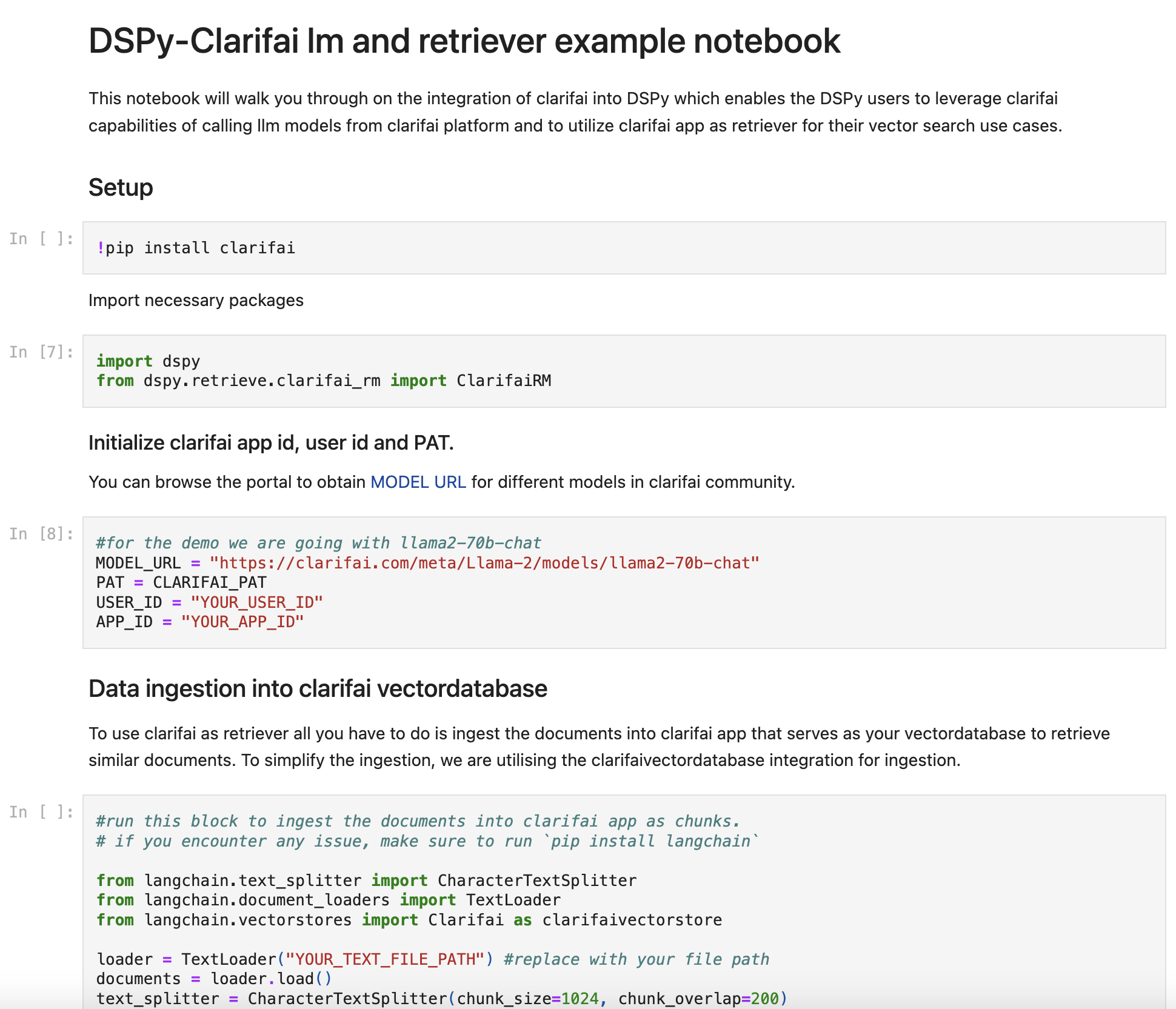
Integrated Clarifai into DSPy

  • DSPy is the framework for solving advanced tasks with language and retrieval models. It unifies techniques for prompting and fine-tuning language models.

    This integration, now a part of the recently released DSPy version 2.1.7, helps you consume Clarifai’s LLM models and utilize your Clarifai apps as a vector search engine within DSPy. Clarifai is the only provider enabling users to harness multiple LLM models. You can get started on how to use DSPy with Clarifai here.Screenshot 2024-02-12 at 11.39.41 PM

Introduced incremental training of model versions

  • You can now update existing models with new data without retraining from scratch. After training a model version, a checkpoint file is automatically saved. You can initiate incremental training from that previously trained version checkpoint. Alternatively, you provide the URL of a checkpoint file from a supported 3rd party toolkit like HuggingFace or MMCV.

Introduced the ability to add inputs through cloud storage URLs

  • You can now provide URLs from cloud storage platforms such as S3, GCP, and Azure, accompanied by the requisite access credentials. This functionality simplifies adding inputs to our platform, offering a more efficient alternative to the conventional method of utilizing PostInputs for individual inputs.

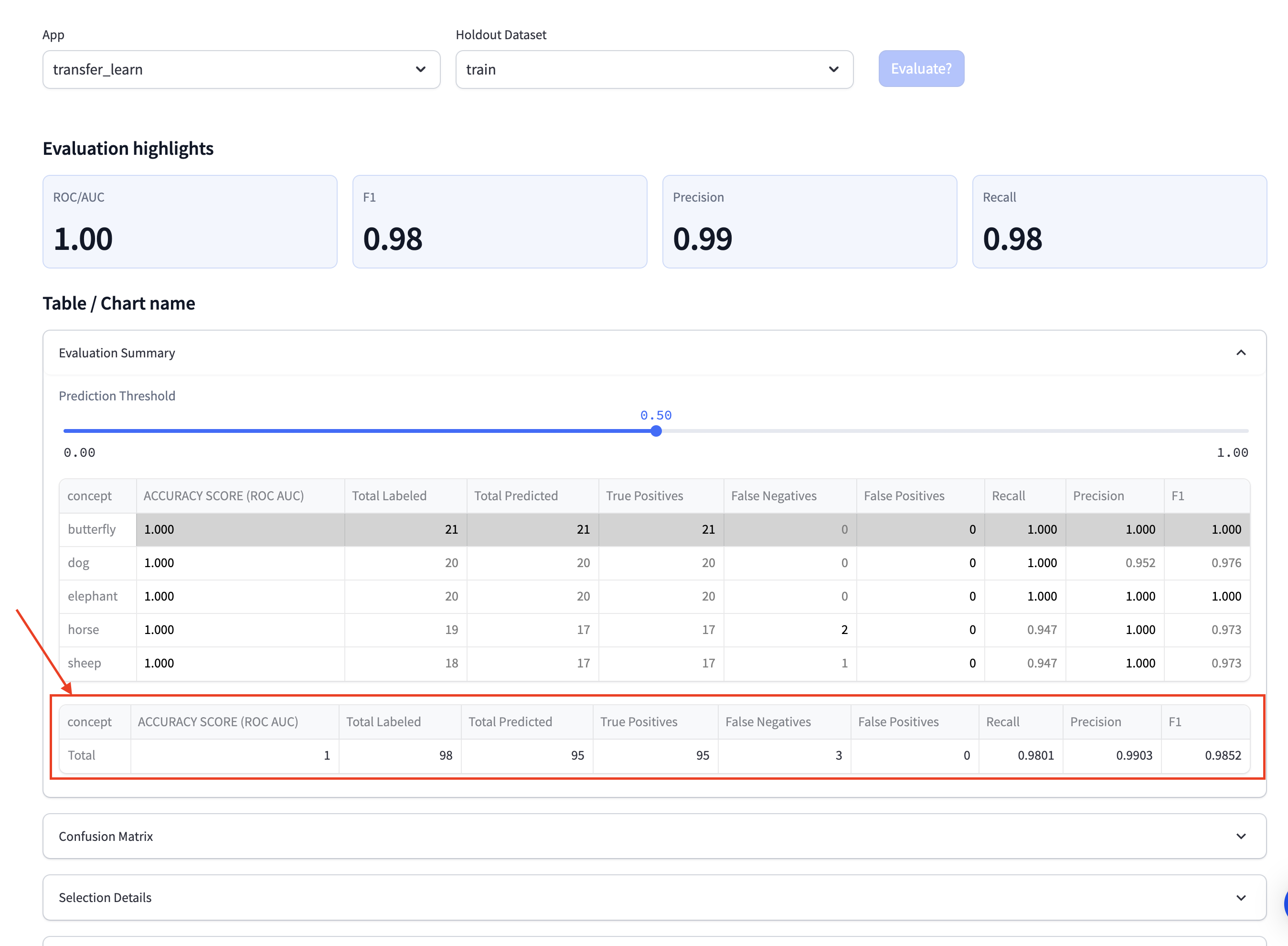
Enhanced the evaluation process for detector models

  • Enriched the metrics by introducing additional fields, namely “Total Predicted,” “True Positives,” “False Negatives,” and “False Positives.” These additional metrics provide a more comprehensive and detailed assessment of a detector’s performance.Screenshot 2024-02-13 at 10.09.05 AM
  • Previously, a multi-selector was used to select an Intersection over Union (IoU). We replaced that confusing selection with a radio button format, emphasizing a single, mutually exclusive choice for IoU selection.
  • We also made other minor UI/UX improvements to ensure consistency with the evaluation process for classification models.

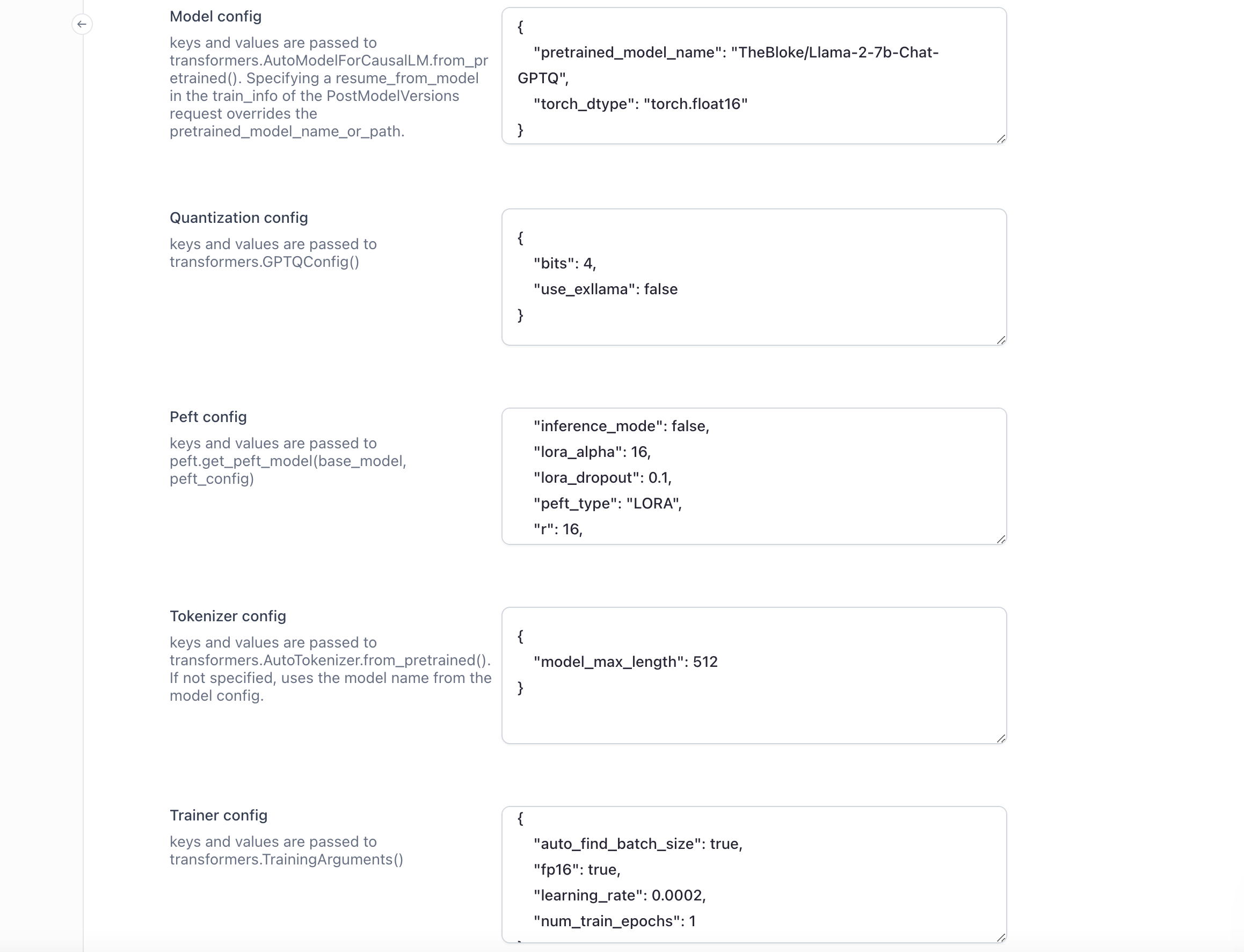
Made improvements to LLM fine-tuning

  • Added support for CSV upload for streamlined data integration.
  • Added more training templates to tailor the fine-tuning process to diverse use cases.
  • Added advanced configuration options, including quantization parameters via GPTQ, which further empowers users to fine-tune models with heightened precision and efficiency.
    Screenshot 2024-02-13 at 12.28.26 AM

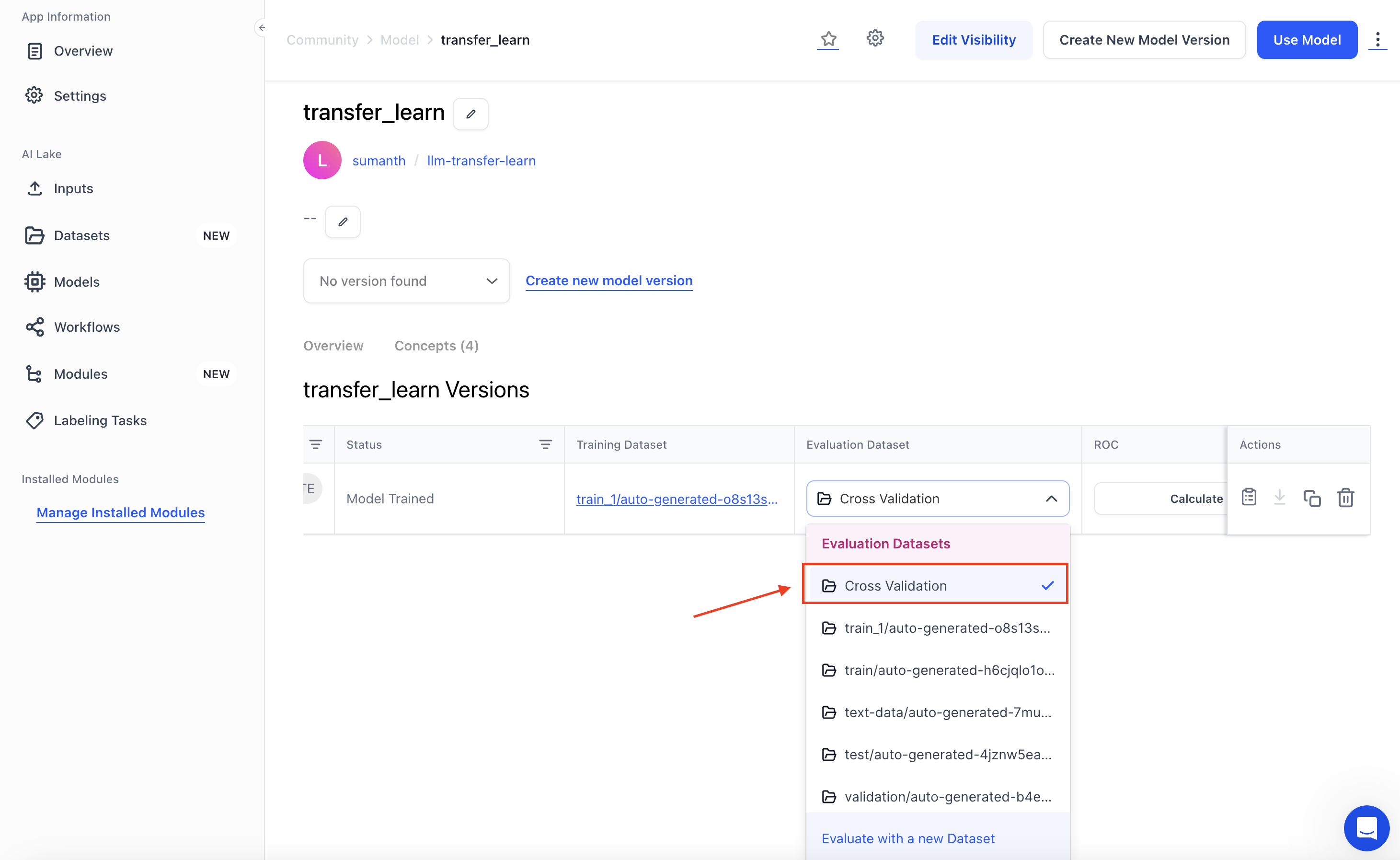
Improved the Model-Viewer’s version table

  • Cross-app evaluation is now supported in the model version tab to have a more cohesive experience with the Leaderboard.
    Screenshot 2024-02-13 at 12.19.50 AM
  • Users and collaborators with access permissions can also select datasets or dataset versions from org apps, ensuring a comprehensive evaluation across various contexts.
  • This improvement lets users view training and evaluation data across different model versions in a centralized location, enhancing the overall version-tracking experience.

Improved the management of model annotations and associated assets

  • Previously, when a model annotation was deleted, the corresponding model assets remained unaffected. If you now delete a model annotation, a simultaneous action will mark the associated model assets as deleted. This ensures the deletion process is comprehensive, avoiding lingering or orphaned assets.

Published several new, ground-breaking models

  • Published Phi-2, a Clarifai-hosted, 2.7 billion-parameter large language model (LLM), achieving state-of-the-art performance in QA, chat, and code tasks. It is focused on high-quality training data and has demonstrated improved behavior in toxicity and bias.
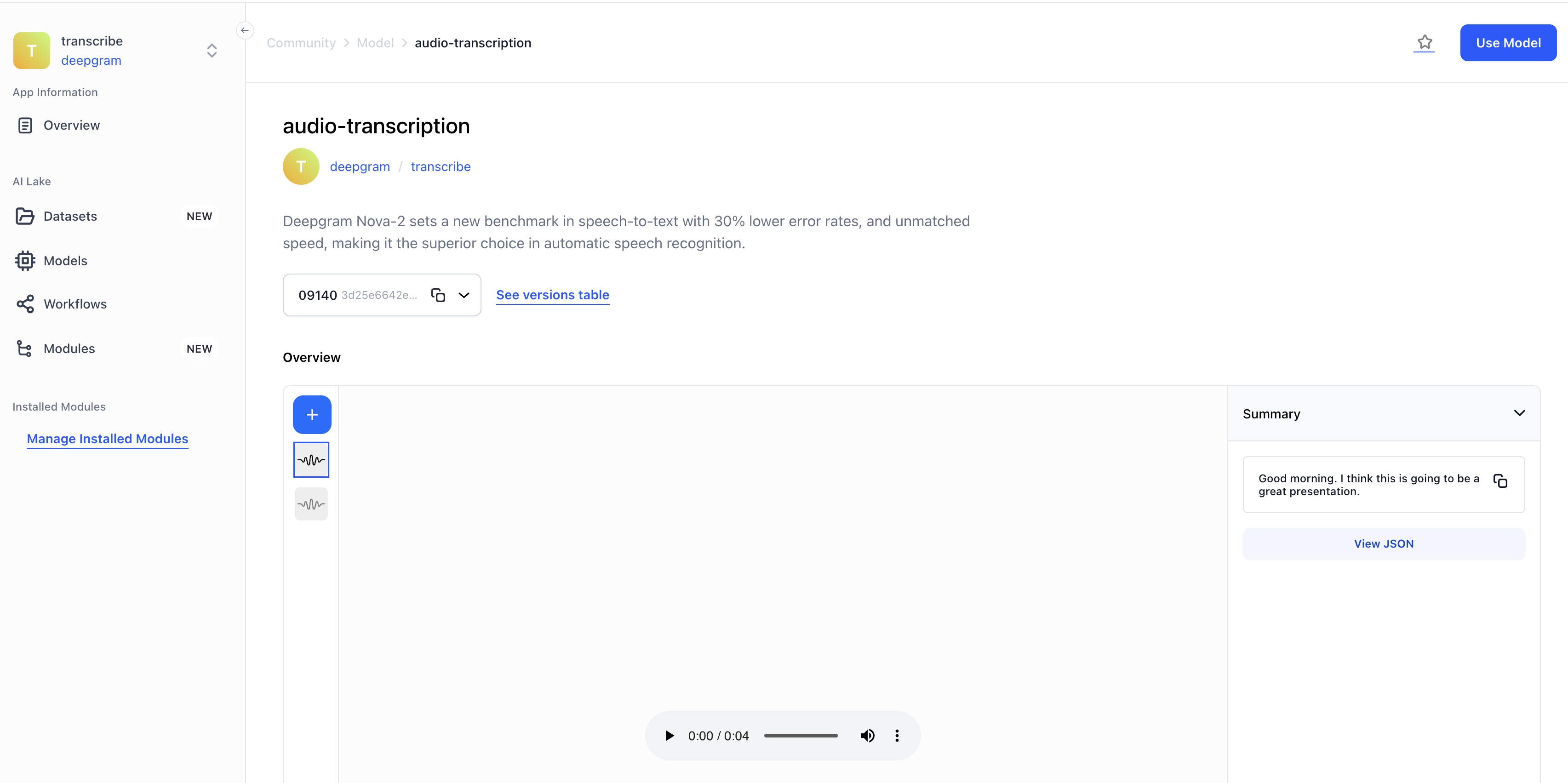
  • Wrapped Deepgram Nova-2. It sets a new benchmark in speech-to-text with 30% lower error rates and unmatched speed, making it the superior choice in automatic speech recognition.
    Screenshot 2024-02-12 at 6.46.39 PM
  • Wrapped Deepgram Audio Summarization. It offers efficient and accurate summarization of audio content, automating call notes, meeting summaries, and podcast previews with superior transcription capabilities.
  • Wrapped Text-Embedding-3-Large, a high-performance, flexible text embedding model with up to 3072 dimensions, outperforming its predecessor.
    Screenshot 2024-02-12 at 6.50.11 PM
  • Wrapped Text-Embedding-3-Small, a highly efficient, flexible model with improved performance over its predecessor, Text-Embedding-ADA-002, in various natural language processing tasks.
  • Wrapped CodeLlama-70b-Instruct, a state-of-the-art AI model specialized in code generation and understanding based on natural language instructions.
  • Wrapped CodeLlama-70b-Python, a state-of-the-art AI model specialized in Python code generation and understanding, excelling in accuracy and efficiency.

Improved the mobile version of the onboarding flow

  • Updated the “create an app” guided tour modal for mobile platforms.
  • Made other improvements such as updating the “Add a Model” modal and the “Find a Pre-Trained model” modal for mobile platforms.

Added ability to minimally review existing image mask annotations on the Input-Viewer

  • You can view your image mask annotations uploaded via the API.
  • You can delete an entire image mask annotation on an input
  • You can view the mask annotation items displayed on the Input-Viewer sidebar.mask_annotations

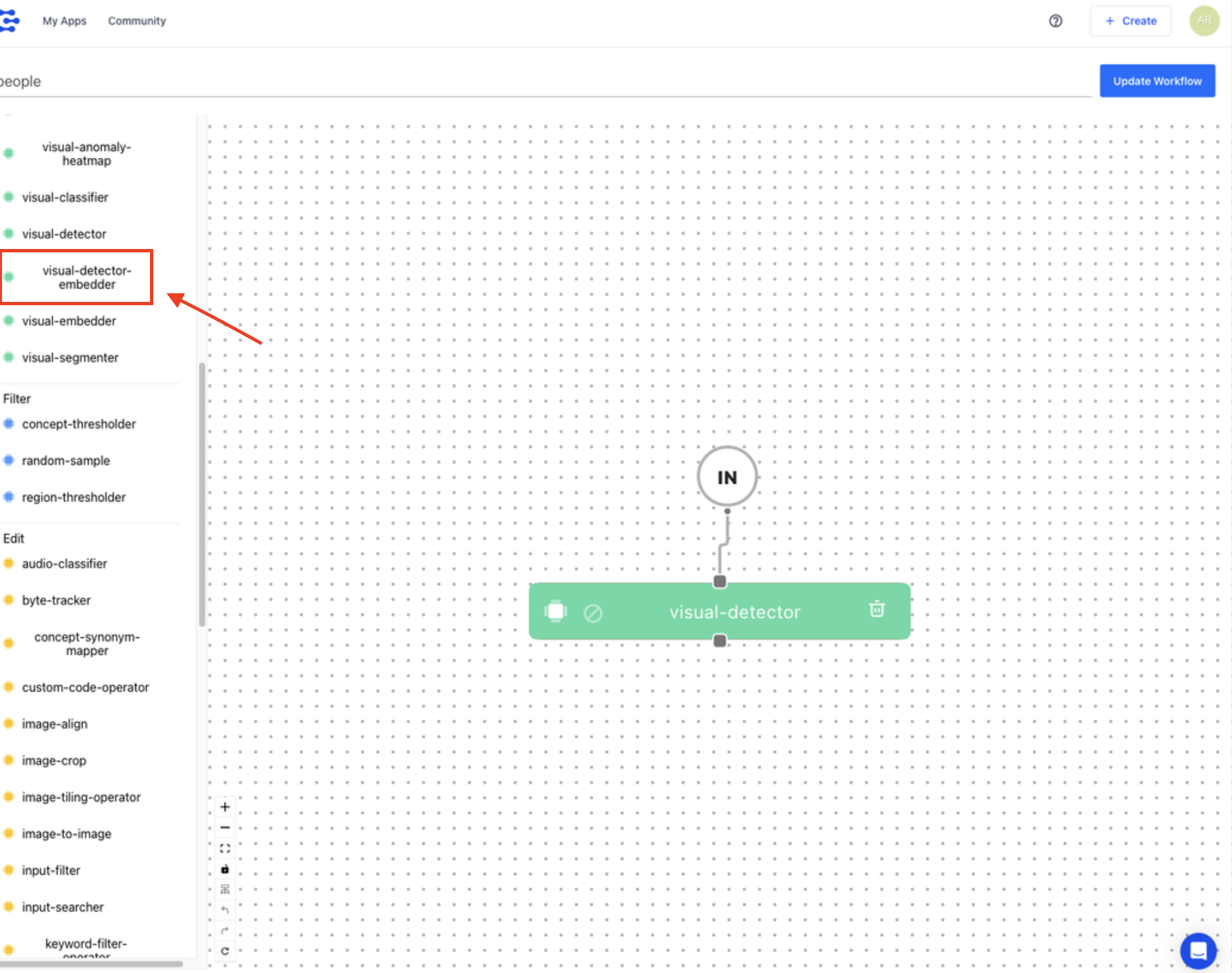
Made minor enhancements to the Workflow builder UI

  • Rectified the alignment discrepancy in some left-side models to ensure uniform left alignment.
    Screenshot 2024-02-12 at 12.52.37 PM
  • Introduced an X or Close/Cancel button for improved user interaction and clarity.
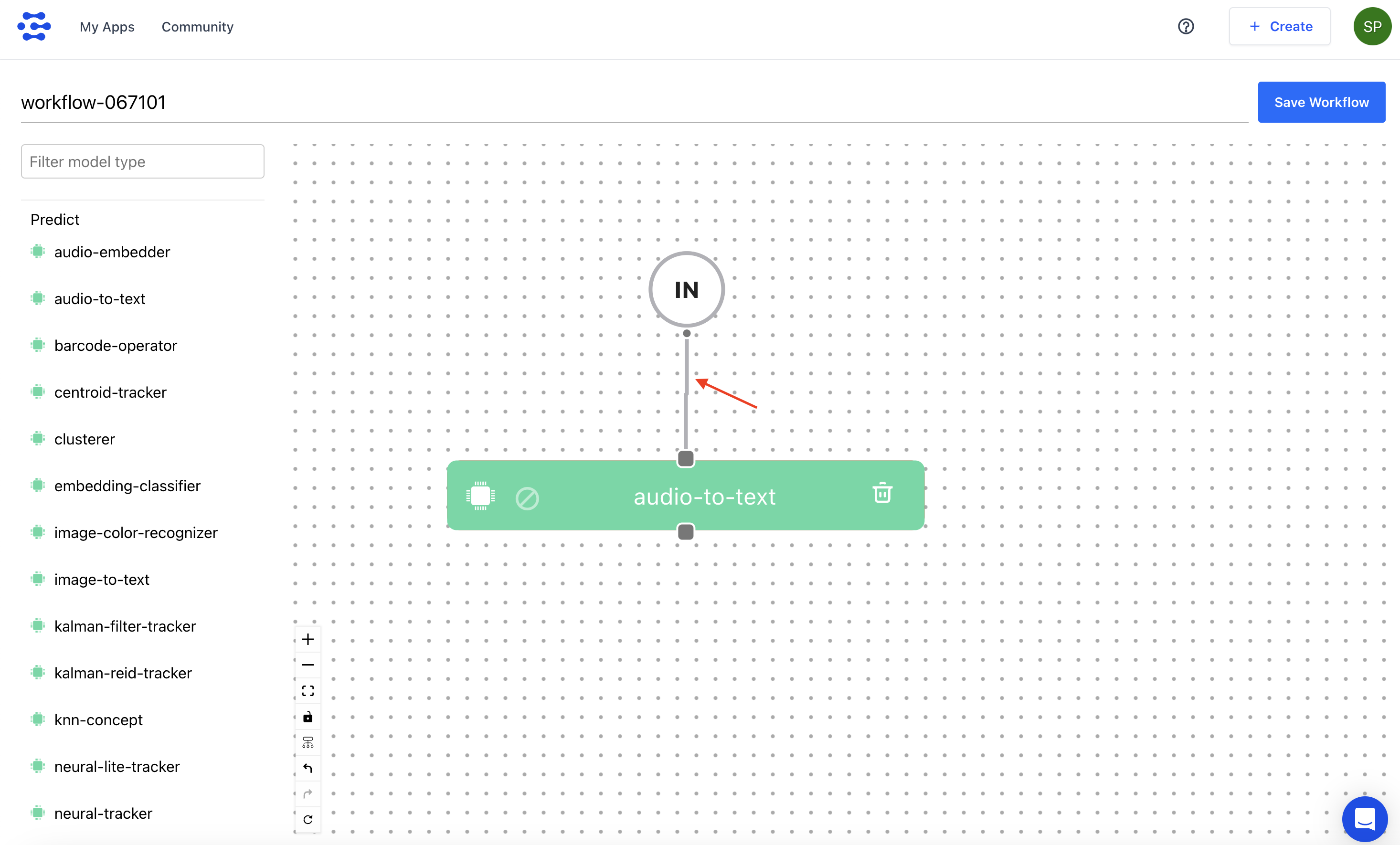
  • Ensured that users can easily straighten the line connecting two nodes.
    Screenshot 2024-02-12 at 12.58.27 PM

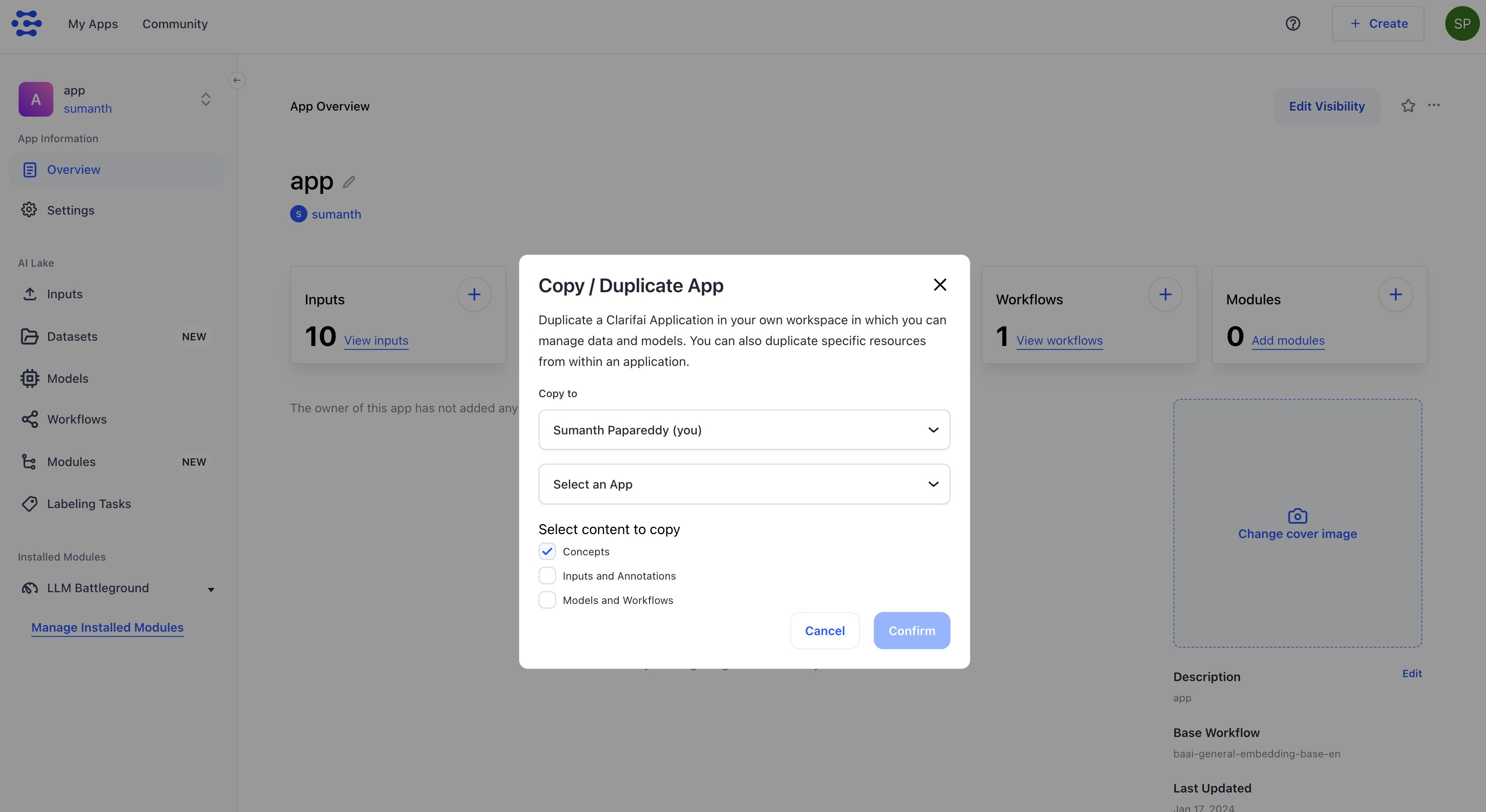
Added ability to copy an app to an organization

  • Previously, in the Copy / Duplicate App modal, the dropdown for selecting users lacked an option for organizations. You can now select an organization directly from the dropdown list of potential destinations when copying or duplicating an app.
    Screenshot 2024-02-12 at 12.47.30 PM

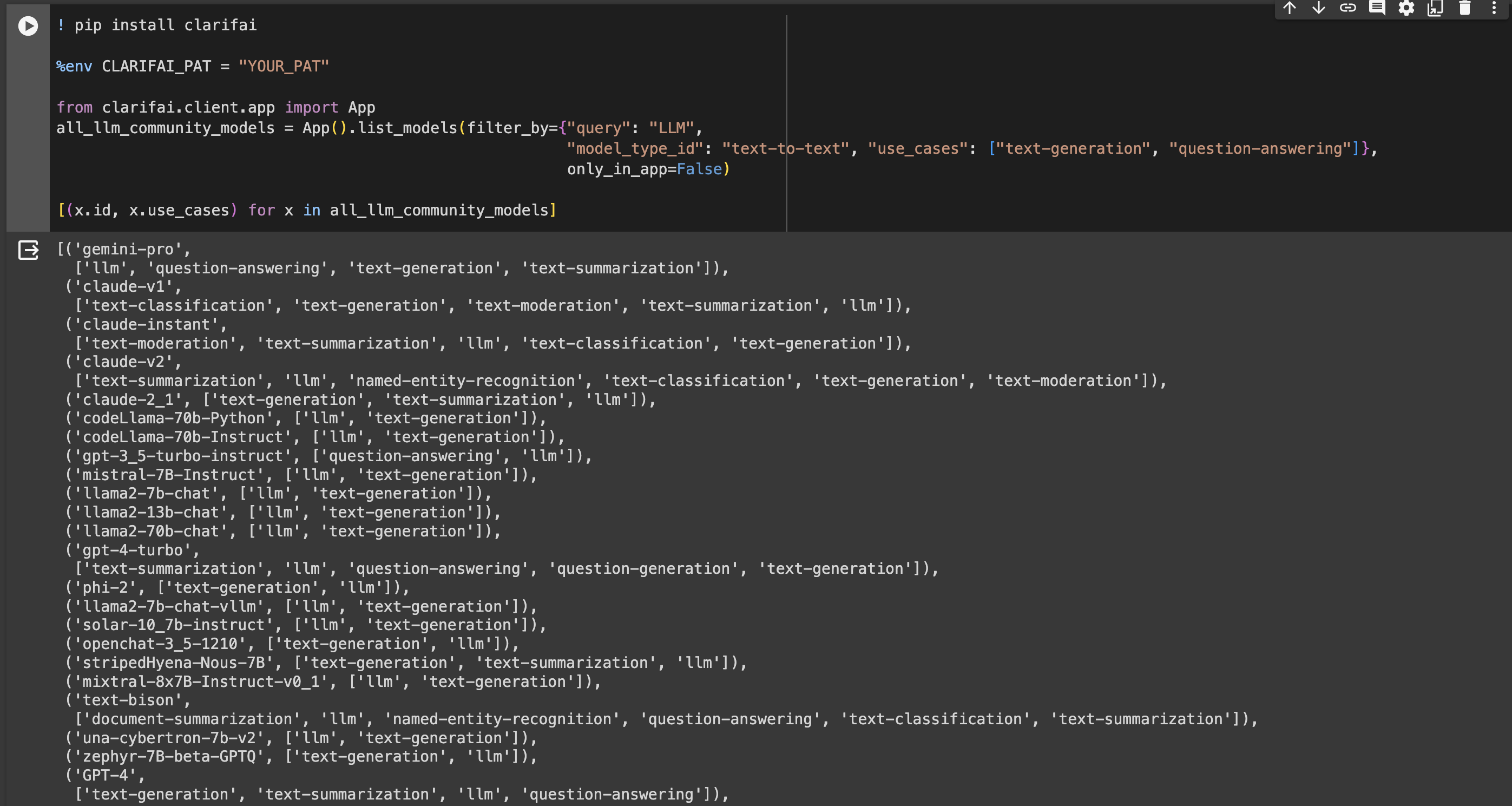
Improved the search behavior within the use_cases field

  • Previously, the use_cases field within the ListModels feature was configured as an AND search, unlike other fields such as input_fields and output_fields. We improved the use_cases attribute to operate with an OR logic, just like the other fields. This adjustment broadens the scope of search results, accommodating scenarios where models may apply to diverse use cases.
    Screenshot 2024-02-13 at 11.15.26 AM

Changed the thumbnails for listing resources to use small versions of cover images

  • Previously, the thumbnails for listing resources used large versions of cover images. We changed them to use the small versions—just like for other resources like Apps, Models, Workflows, Modules, and Datasets. We also made the change to the left sidebars.

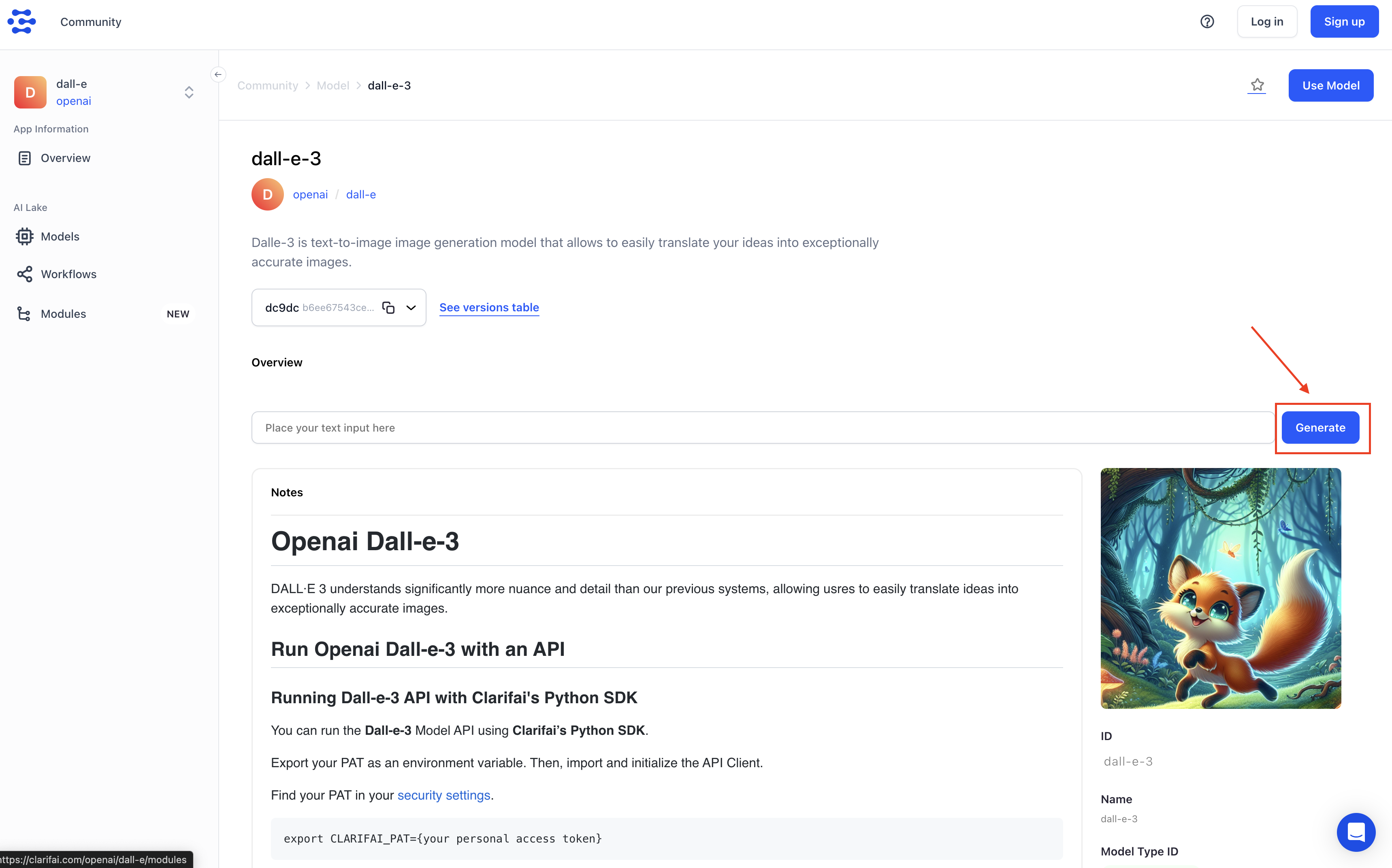
Implemented a modification to facilitate a more user-friendly experience for non-logged-in users interacting with text-to-image models

  • Clicking the “Generate” button now triggers a login/sign-up pop-up modal. This guides users not currently logged in through the necessary authentication steps, ensuring a smoother transition into utilizing the model’s functionality.Screenshot 2024-02-12 at 11.57.17 AM

Fixed an issue where a user could get added multiple times to the same organization

  • We implemented safeguards against the unintended duplication of users within an organization. Previously, if a user clicked the “Accept” button on the organization invitation page multiple times, they could be redundantly registered within the same organization. Consequently, the user interface exhibited numerous instances of the same organization.

Improved the module installation process

  • The modal has been refined to use app IDs, eliminating reliance on deprecated app names. Previously, the pop-up modal for installing a module into an app retained the usage of deprecated app names.

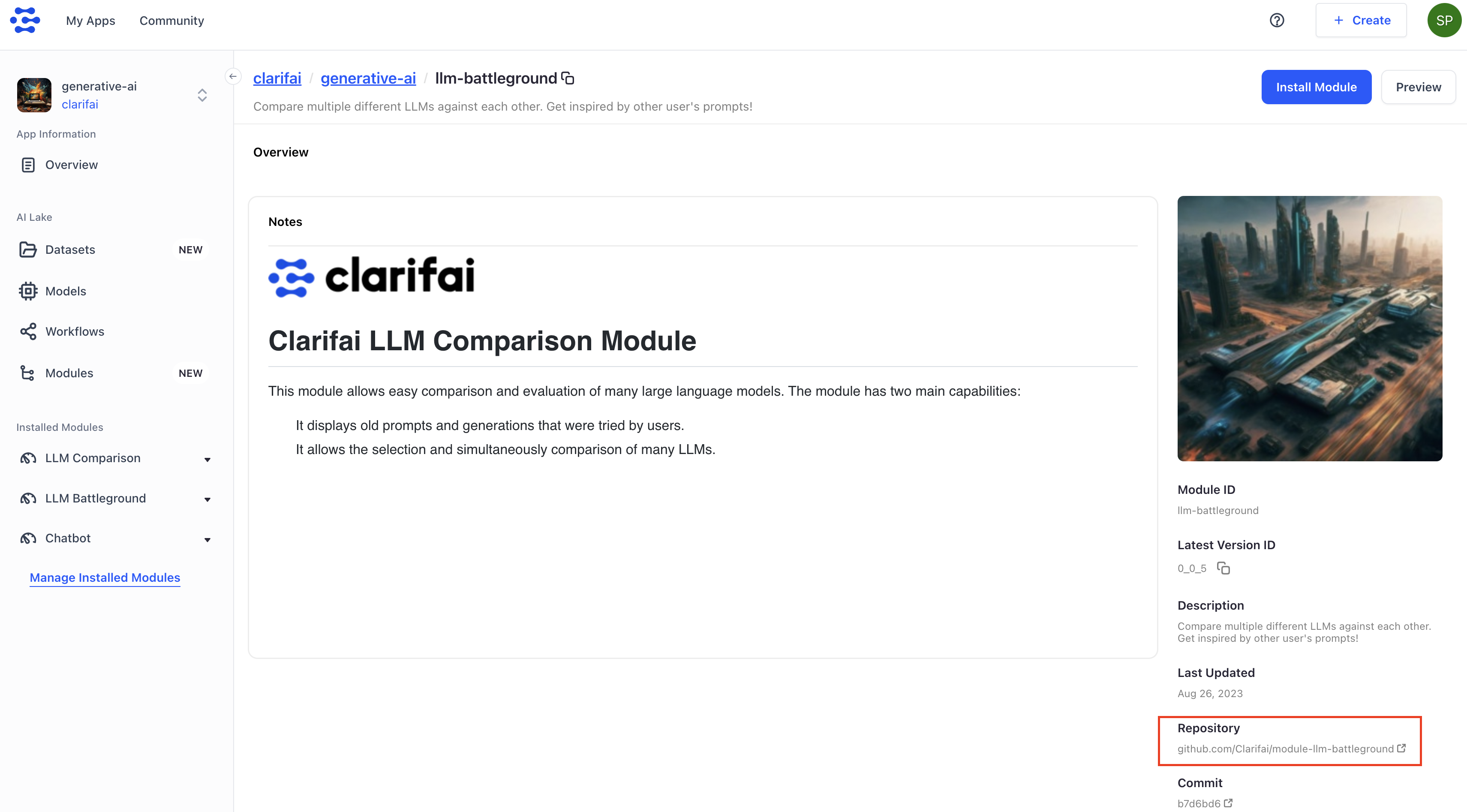
Improved the relevance of the link to GitHub on the module page

  • Previously, a small GitHub button was at the top of any module’s overview page. We relocated it to the right-hand side, aligning it with other metadata such as description, thereby improving its clarity as a clickable link.
    Screenshot 2024-02-12 at 11.39.32 AM


Revolutionizing BIM Processes with AI and Machine Learning


Building Information Modeling (BIM) is a digital representation of the physical and functional characteristics of a building. It has become an essential tool in the architectural design and construction industries as a catalyst. The constant evolution of technology has prompted the BIM processes to create 3D models, simulations, and analyses to improve the accuracy and efficiency of building design and construction.

It is also necessary to adapt and innovate, ensuring they remain at the forefront of the latest advancements. However, the traditional BIM processes have limitations, which can be overcome by integrating Artificial Intelligence (AI) and Machine Learning (ML). 

This blog discusses how AI and ML are changing the landscape of Revit/BIM processes in the architectural design and construction industries.

The Concept: What are BIM Processes?

Before we delve into the influence of AI and Machine Learning, it’s essential to understand the role and importance of BIM processes fully. These processes are the backbone of the architectural design and construction industries. They involve generating and managing digital representations of the physical and functional characteristics of places. It means creating detailed and accurate models of buildings or infrastructures that serve as a shared knowledge resource for information about a facility, forming a reliable basis for decisions throughout its life cycle.

These processes have been revolutionary in their own right, offering innumerable benefits such as improved visualizations, increased productivity due to easy retrieval of information, increased coordination of construction documents, embedded and linked attribute information, and increased speed of delivery. But as with all things technology, there’s always room for improvement and innovation.

Limitations of Traditional BIM Processes

Traditional BIM processes have limitations that the integration of AI and ML can overcome. Some of these limitations include:

Manual Data Entry

The process requires manual data entry, which can be time-consuming and error-prone. This involves entering data into the model manually, such as dimensions, materials, and other building components. It can result in errors that can lead to delays in the construction process.

Limited Analysis

They need more analysis capabilities; while they allow for simulations and analysis of certain aspects of a building, such as energy consumption and structural integrity, they need to be improved in their ability to analyze more complex aspects.

Lack of Automation

They allow for some automation, such as the generation of schedules and quantities, but they need to be improved in their ability to automate more complex tasks.

The Advent of AI and Machine Learning in BIM Processes

In recent years, we’ve seen a surge in integrating AI and Machine Learning technologies in BIM processes. These are subsets of technology that focus on developing machines that can learn from and respond to different scenarios, much like humans. These technologies can analyze vast sets, predict outcomes, and even learn from their mistakes. Applying these technologies in these processes spells a significant shift in how we design, build, and maintain our built environments.

Enhancement in the Design Phase

One of the most significant changes that AI and Machine Learning bring to BIM processes is in the design phase. These processes have always played a crucial role in creating detailed and accurate models of buildings, but with these technologies, these models can now be more precise and efficient.

The technologies can analyze data from past projects, including successes and failures, to predict outcomes. This predictive analysis can help architects and engineers make informed design decisions. It can also help avoid potential issues in the design phase, saving time, effort, and resources.

Efficiency in Construction Phase

Efficiency in the construction phase has always been one of the primary goals of BIM processes. With the integration of AI and Machine Learning, this efficiency can be taken to new heights.

By analyzing data from past construction projects, these technologies can predict potential issues, such as clashes in the design or problems in resource allocation. These predictions can be addressed before they become a problem in the construction phase, ensuring a smoother, more efficient construction process.

Proactive Maintenance Phase

AI and Machine Learning also have significant implications for the maintenance phase of BIM processes. Traditionally, maintenance has been a reactive process – we wait for something to break before we fix it. But with these technologies, maintenance can now be a proactive process.

By analyzing data from the building’s lifecycle, these technologies can predict when a part of the building will need repairs or replacement. This predictive maintenance can save significant time and resources, as well as prevent potential disruptions.

Future of BIM Processes

Integrating AI and Machine Learning is not just an improvement of the existing BIM processes; it’s setting the stage for the future of architectural design and construction. These technologies bring intelligence and adaptability to These processes, making them more innovative and efficient. As AI algorithms learn from past mistakes and successes, These processes will continue to evolve, offering even more benefits in the future.

Conclusion: Embracing the Change

The impact of AI and Machine Learning on BIM processes is far-reaching and transformative. While it may seem like a daunting task to embrace these new technologies, the benefits they bring to the architectural design and construction industries are well worth the investment. These technologies are not just the future of these processes; they are the present. The sooner we embrace these technologies, the sooner we can reap their benefits.

Catalyze the transformation of your BIM processes with these advanced technologies. Our team of experts at IndiaCADworks is here to facilitate the integration and elevate your architectural design and construction projects. Take advantage of this opportunity; reach out to us today!

Tags: , ,


CDPR says the Witcher 4 is being ‘intensively worked on’ but Cyberpunk 2’s still in the ‘fairly early stages’


In a new interview with Aftermath CDPR’s Pawel Sasko, associate director of the next Cyberpunk game (codenamed Orion, but we’ll call it Cyberpunk 2 for now), discussed some of the changes in production the studio’s made since the infamously botched Cyberpunk 2077 launch. The crunch in the run-up to release got so intense that some key team members left CDPR shortly after the game’s launch, and the then-CEO had to issue an apology to employees after saying the situation was “not that bad.”

Sasko speaks to some of the internal changes CDPR has made following these experiences, before talking briefly about the studio’s two largest future projects. Sasko says Polaris aka Witcher 4 is currently being “intensively worked on” while the sequel to Cyberpunk 2077 is in the “fairly early stages.”

Visual Studio Code July 2023


Update 1.81.1: The update addresses these issues.

Downloads: Windows: x64 Arm64 | Mac: Universal Intel silicon | Linux: deb rpm tarball Arm snap


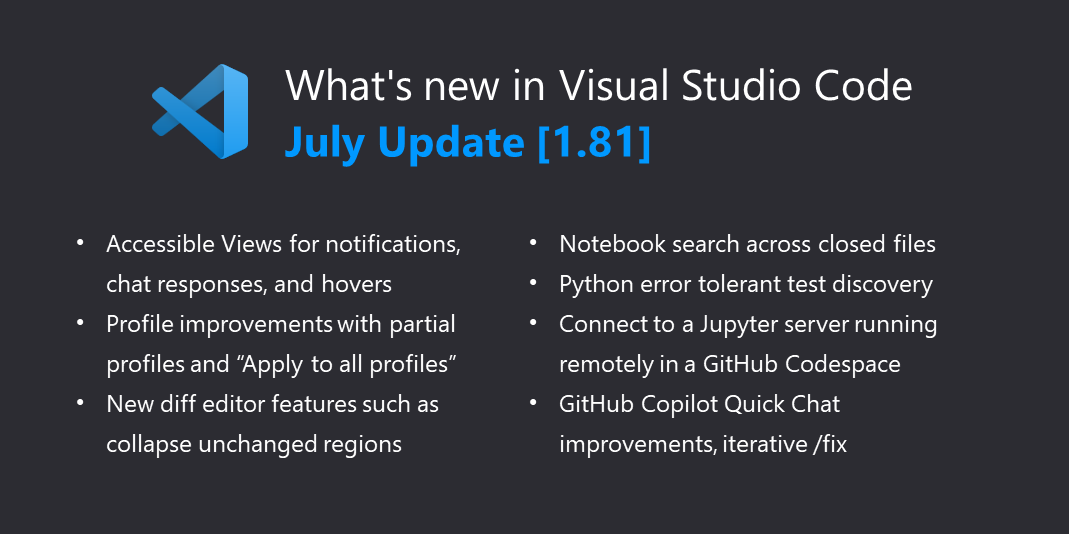
Welcome to the July 2023 release of Visual Studio Code. There are many updates in this version that we hope you’ll like, some of the key highlights include:

If you’d like to read these release notes online, go to Updates on code.visualstudio.com.

Insiders: Want to try new features as soon as possible? You can download the nightly Insiders build and try the latest updates as soon as they are available.

Accessibility

Accessible View improvements

The Open Accessible View (⌥F2 (Windows Alt+F2, Linux Shift+Alt+F2)) command allows screen reader users to inspect content character by character, line by line. Last iteration, we added Accessible Views for editor hovers and chat panel responses.

There are now Accessible Views for notifications, inline chat responses, Jupyter notebook output, and workbench hovers.

When an element that offers an Accessible View is focused, a hint is provided in the ARIA label. That hint can be disabled per feature via the accessibility.verbosity setting.

There are Show Next in Accessible View (⌥] (Windows, Linux Alt+])) and Show Previous in Accessible View (⌥[ (Windows, Linux Alt+[)) commands for easy navigation between elements in the chat panel and notifications list.

Breadcrumb symbol information

After using the Focus and Select Breadcrumbs (breadcrumbs.focusAndSelect) command, the Breadcrumb navigation now includes symbol information for screen readers.

Input control and result navigation consistency

The experience when navigating between an input control (for example, search or filter input) and its results is now consistent across the Extensions view, the Keyboard Shortcuts editor, and the Comments, Problems, and Debug Console panels using (⌘↓ (Windows, Linux Ctrl+Down)) and (⌘↑ (Windows, Linux Ctrl+Up)).

Accessible diff viewer

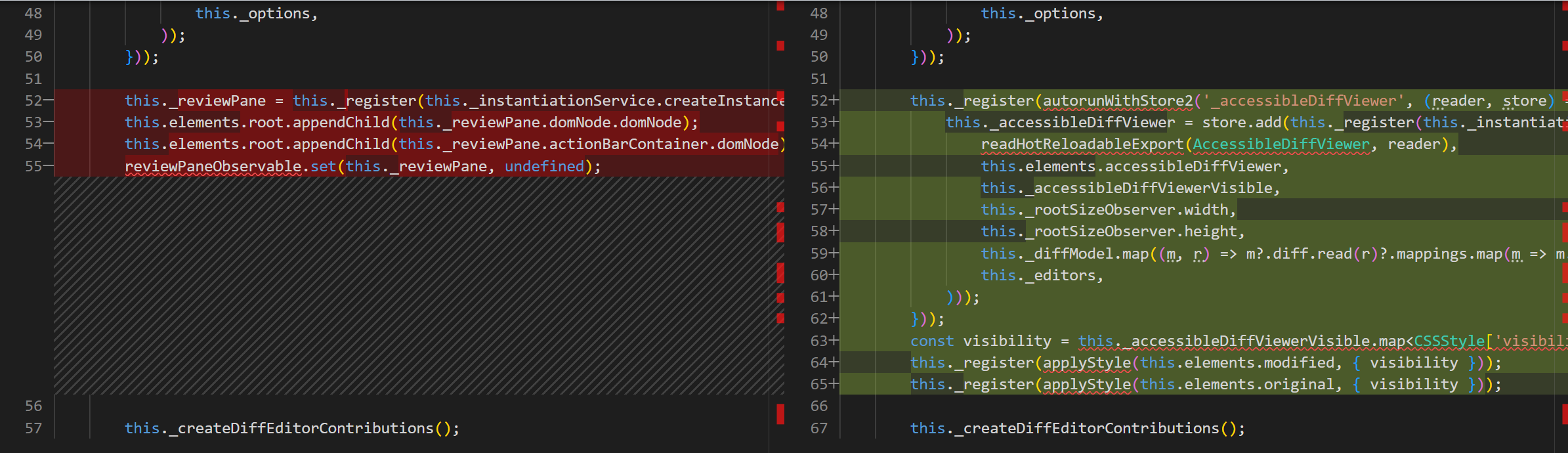
In the diff editor, the Difference Review Pane was renamed to Accessible Diff Viewer. The accessible diff viewer addresses accessibility shortcomings of the diff editor and can be opened with F7 or the Open Accessible Diff Viewer command from the diff editor More Actions menu. Along with this rename, we also fixed some bugs and added some new features, such as being able to launch the Accessibility Help dialog or jump to the modified editor from the viewer.

Profiles

Support for partial profiles

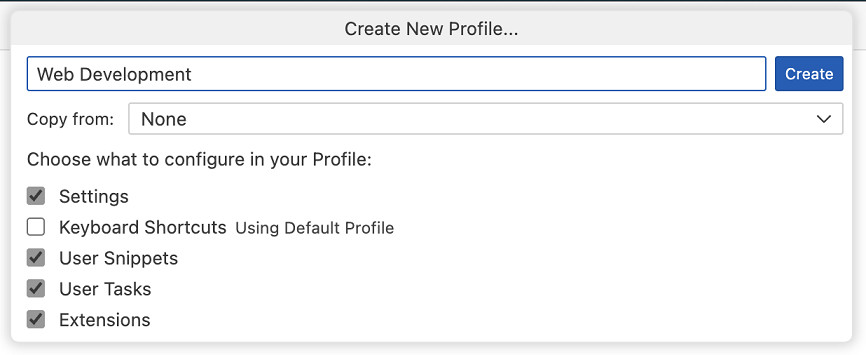
You can now create a profile in which you customize only a subset of configurations (settings, keyboard shortcuts, snippets, tasks, and extensions). For example, you can create a profile with all configurations except for keyboard shortcuts, and VS Code applies the keyboard shortcuts from the Default Profile when this profile is active.

In the Create New Profile screenshot below, Keyboard Shortcuts is unchecked and a Using Default Profile message is displayed. Any keyboard shortcuts active during that VS Code session are not applied to the new profile.

Create New Profile dropdown with keyboard shortcuts unchecked

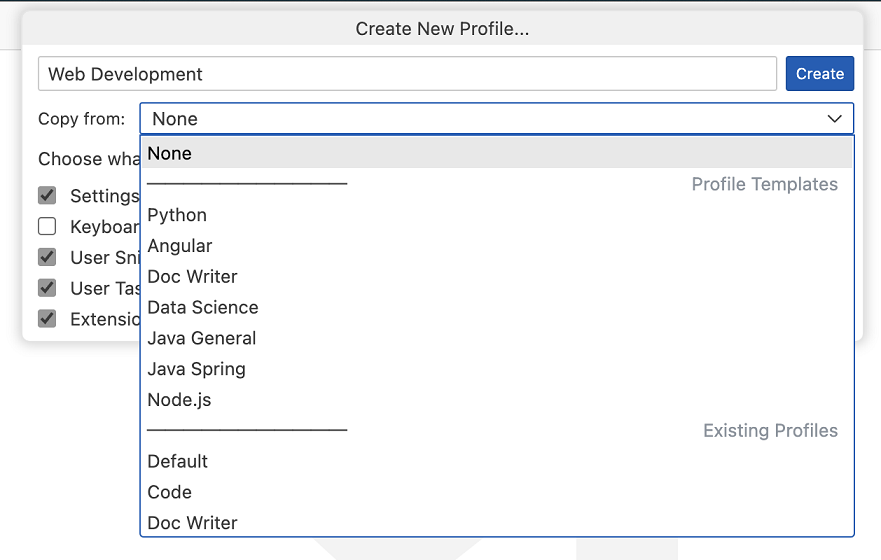
You can also create a partial profile when copying from a Profile Template or from an existing profile, using the Copy from dropdown menu.

Create a profile by copying from a Project Template or existing profile

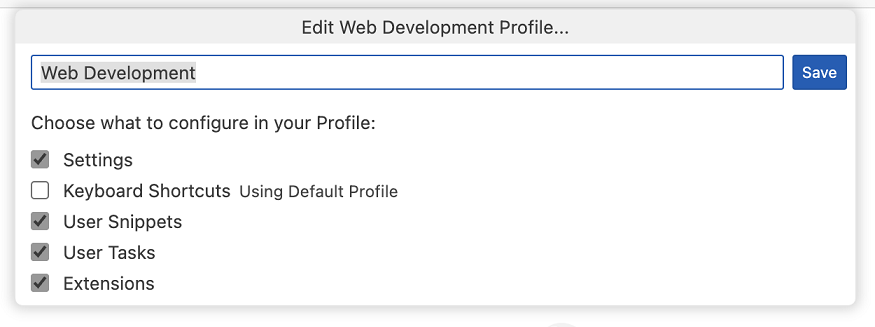
You can also configure an existing profile to use configurations from the Default Profile by editing the profile in the Edit Profile UI.

Edit Profile dropdown with Keyboard Shortcuts unchecked

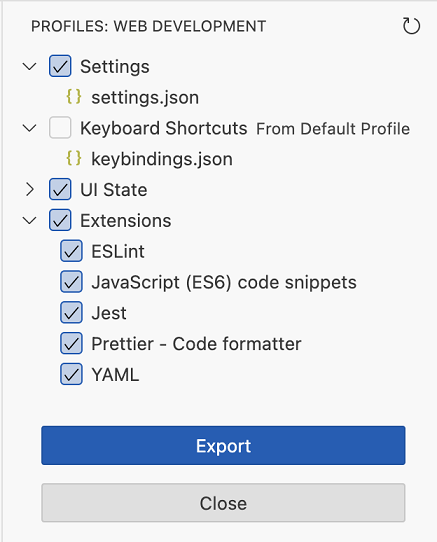
When exporting a partial profile, you can choose to export only the configurations that are customized in the profile or also includes the configurations from the Default Profile.

Profile view with Keyboard Shortcuts unchecked and Export button visible

Apply a setting to all profiles

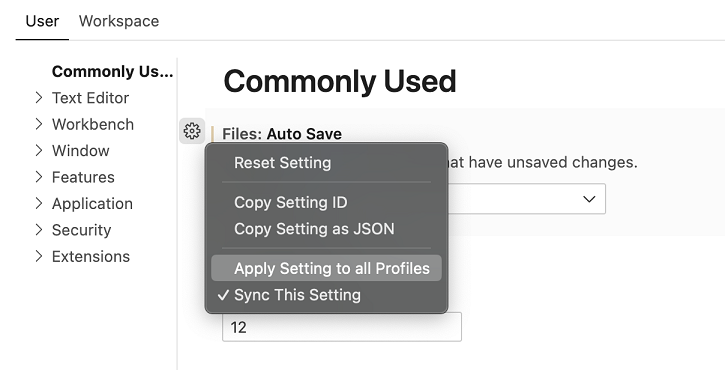
You can now apply a setting to all profiles by selecting the Apply Setting to all Profiles option in the Settings editor.

Apply Setting to all Profiles context menu item in the Settings editor

This applies the value of the setting to all profiles. Any updates to this setting from any profile are applied to all profiles. You can revert this synchronization by unchecking the Apply Setting to all Profiles option.

Apply an extension to all profiles

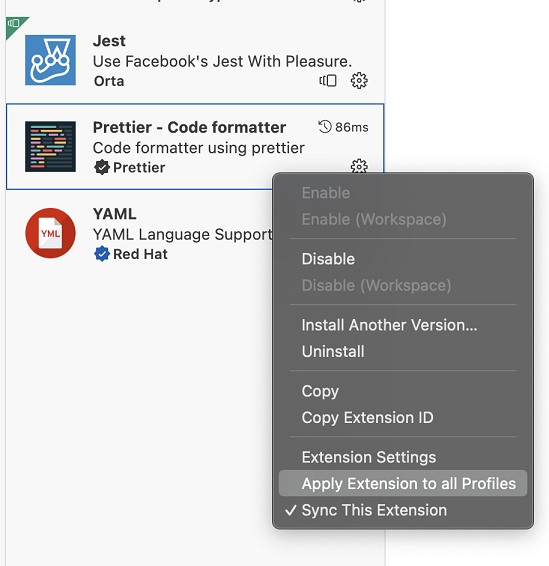
You can now include an extension in all profiles by selecting the Apply Extension to all Profiles option in the Extensions view.

Apply Extension to all Profiles context menu item in the Extensions view

This makes this extension available in all profiles. You can revert this by unchecking the Apply Extension to all Profiles option.

Settings JSON file command IDs adjusted on non-default profiles

The Preferences: Open User Settings (JSON) (workbench.action.openSettingsJson) command will now open the profile-specific settings JSON file when a user is in a non-default profile. To show application-scoped settings, use the Preferences: Open Application Settings (JSON) (workbench.action.openApplicationSettingsJson) command instead.

Workbench

Release notes for upcoming update

Whenever a monthly stable update is ready to be installed, you can now preview the release notes via the Show Update Release Notes command in the Manage menu (gear button) at the bottom of the Activity bar.

Editor

The markdown.editor.pasteUrlAsFormattedLink setting now has a new option of smart. The smart paste feature can detect when you are pasting into text where you may not want automatic Markdown link formatting. Some situations ignored by smart pasting include pasting within a Markdown link, over another Markdown link, and within a code block.

By default, the pasteUrlAsFormattedLink feature is currently off (never), but you can change the setting to smart or always (always create a formatted URL link).

Asynchronous tokenization rollout

In the 1.76 update, we implemented editor document asynchronous tokenization on a web-worker to improve the performance of the renderer process. Since then, we have fixed several bugs caused by rare race conditions and with this release, we are starting to roll out this feature to Stable users.

If you do not want to wait, you can set editor.experimental.asyncTokenization to true to get asynchronous tokenization immediately.

Diff editor

In this iteration, we continued to work on the new diff editor and plan to gradually roll it out to Stable users. You can try it out immediately by setting "diffEditor.experimental.useVersion2": true. The new diff editor includes several new features and bug fixes described below.

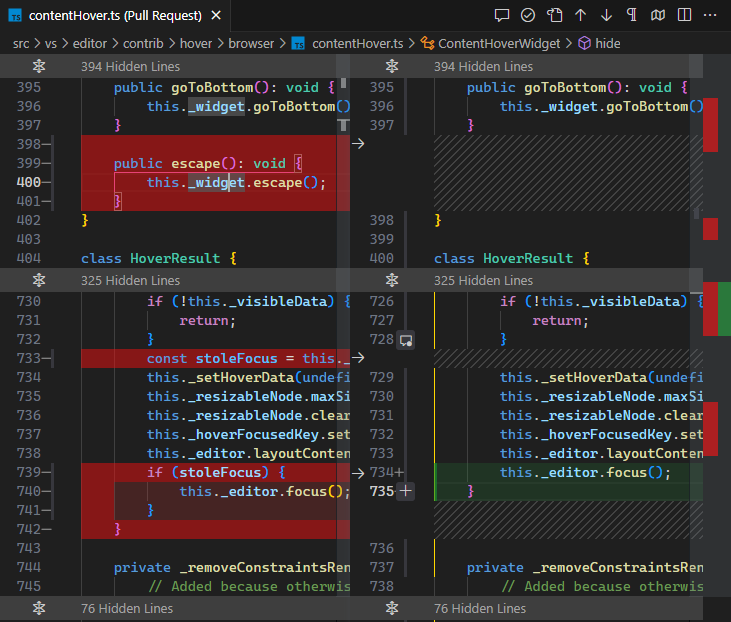
Collapse unchanged regions

Use diffEditor.experimental.collapseUnchangedRegions to enable hiding unchanged regions in the new diff editor. This feature is useful when reviewing large diffs with a lot of unchanged lines.

The borders of the hidden-lines blocks can be dragged or clicked to reveal text from the bottom or top.

A screenshot of the "Collapse Unchanged Regions" feature in the new diff editor

Diff region alignment

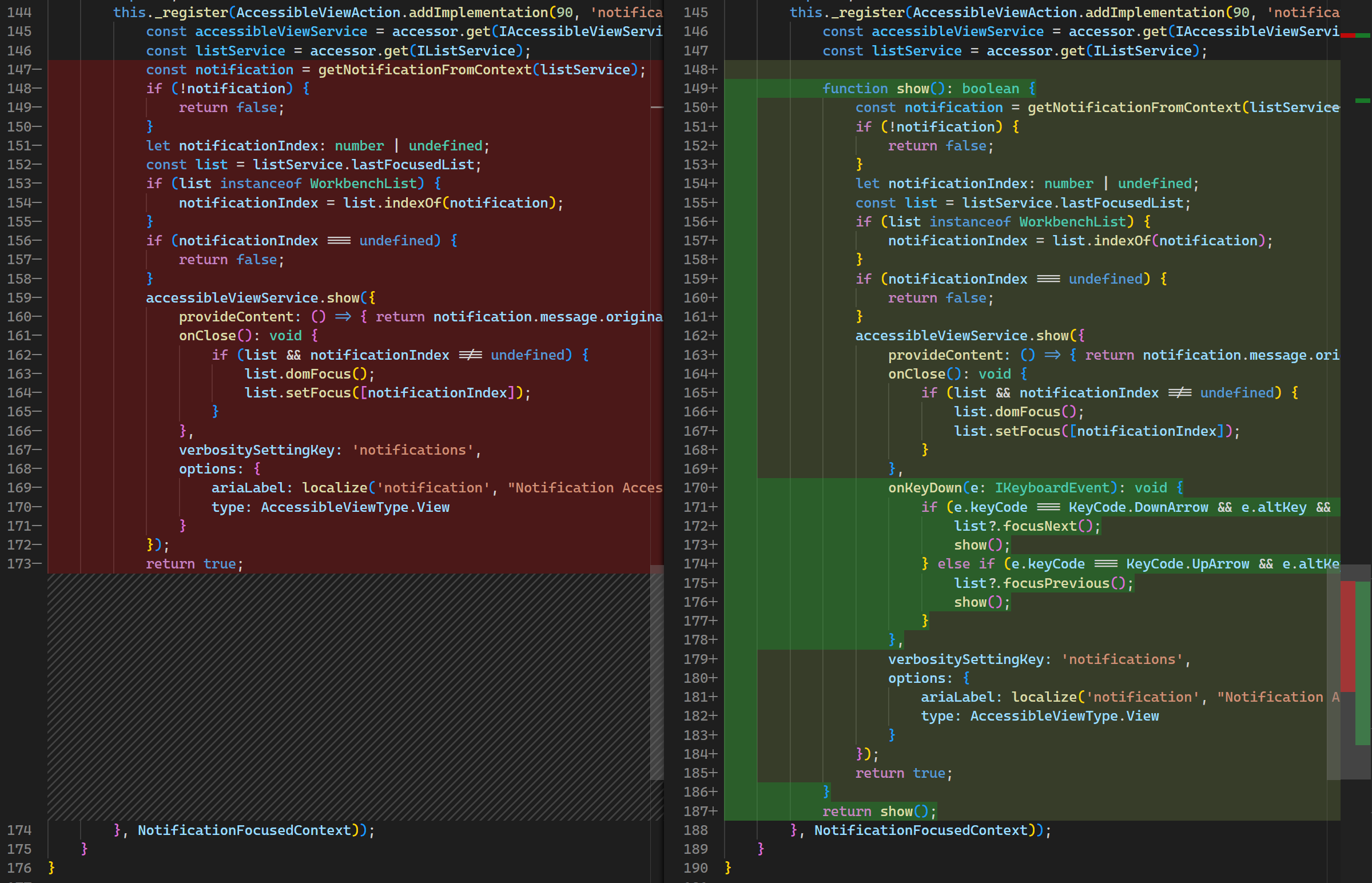
The new diff editor now aligns text within diff regions, making it much easier to review diffs where indentation has changed and lines have been inserted.

Before (without diff region alignment and whitespace diffing enabled):

A side by side diff without diff region alignment

After (with diff region alignment):

A side by side diff with diff region alignment

The new diff algorithm is now enabled by default

We have completed the roll-out of the new diff algorithm, which is now the default in VS Code. You can read about some of the algorithm improvements in past release notes.

Diff noise reduction

In this update, we added heuristics to the new diff algorithm to reduce the probability of matching unrelated words.

This is how the diff editor looked before (note how this matches on both sides, even though the matching is not helpful):

Before using the new diff algorithm

This is how it looks now with the heuristic improvements (note that there are fewer unrelated matches):

After using the new diff algorithm heuristics

Switch sides

When using the side-by-side view of the new diff editor, there is now a new command Diff Editor: Switch Sides that allows you to jump from one side to the other. When switching sides, the cursor position and the current selection in the active editor are mapped to the other side.

And there is more

Check out the 1.80 release notes for a more detailed description of what has changed in the new diff editor!

Terminal

Custom hover in inline terminal tab

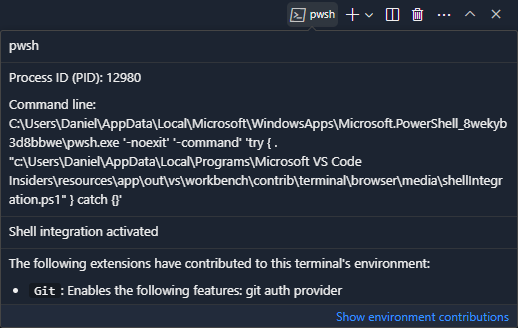
The panel inline terminal tab that shows when there is a single terminal now uses the custom hover for a more consistent appearance and to support embedded links.

Hovering the inline terminal tab will show information about the terminal

Source Control

Based on community feedback, there is now support for Git repositories that have symbolic links on their path by using the --path-format option, added to the rev-parse Git command in version 2.31. Starting with this release, all source control functionality (for example, the Source Control view, repository detection, added/modified/deleted lines editor decorations, etc.) should work as expected when opening such a repository.

Debug

JavaScript debugger

Support for the Fast Node (Version) Manager

The JavaScript debugger now supports the Fast Node Manager (fnm) in its runtime version. Users of fnm can now set the runtimeVersion property of launch.json to select the Node.js version.

Notebooks

Rich content search for closed notebooks

In a previous release, we introduced rich content workspace search for open notebooks. There is now preview support to also see rich content results for closed notebooks.

When you search for text in the Search view, the result previews from notebooks should match how the string looks when you open the notebook editor. Note that this will only show results for inputs when a notebook is closed. To try this, enable search.experimental.closedNotebookRichContentResults in your settings.

Improved performance for large streaming outputs

We have made performance improvements for large cell outputs that are streamed during execution. This reduces the amount of rendering activity but currently only applies to scrollable cell outputs.

Notebook sticky scroll

This release brings the first iteration of “sticky scroll” for the notebook editor. The sticky scroll display at the top of the notebook editor shows the Markdown headers for the cell or cell output that are currently visible. Selecting a sticky scroll “line” focuses that cell, allowing you to navigate the notebook quickly. This feature is enabled via the notebook.stickyScroll.enabled setting or the View: Toggle Notebook Sticky Scroll command.

VS Code for the Web

Always load latest versions of built-in extensions

vscode.dev now always loads the latest versions of the built-in extensions. This means that you will no longer see the “Reload Required” notification to update built-in extensions to the latest version when you open vscode.dev.

Remote Development

The Remote Development extensions, allow you to use a Dev Container, remote machine via SSH or Remote Tunnels, or the Windows Subsystem for Linux (WSL) as a full-featured development environment.

Highlights include:

  • Install Remote Tunnels as a service from VS Code.
  • Simplified @devcontainers/cli installation.
  • Record Dev Container Feature dependencies in a lockfile.

You can learn about new extension features and bug fixes in the Remote Development release notes.

Contributions to extensions

GitHub Copilot

Quick Chat UX improvements

The Quick Chat experience has been revamped this iteration.

Like previously, you can toggle this view with ⇧⌘I (Windows Ctrl+Shift+I, Linux Ctrl+Shift+Alt+I). Specific improvements include:

  • Conversational chat: The Quick Chat experience now shows your full conversation while still keeping the last question and answer in focus.
  • Slash command completion: There are now completions for slash commands when you type /.

Additionally, there is an experimental setting, chat.experimental.defaultMode, to control what parts of chat are shown. It has three options:

  • chatView – Show the Chat icon in the Activity bar to launch the chat in the Chat view (default).
  • quickQuestion – Show the Chat icon in the title bar to launch Quick Chat.
  • both – Both Chat icons are visible to allow you to open either chat UI.

We want to know your thoughts on this setting and the Quick Chat experience in general, so don’t hesitate to open issues with feedback.

Slash command improvements

We’ve made the following usability improvements to slash commands in panel, inline, and Quick Chat:

  1. Slash commands now render as blocks and can be deleted with a single backspace.
  2. Accepting slash commands from the suggestion list, such as /clear and /help, now executes the command, removing the need to explicitly submit the chat request after accepting a completion.
  3. The /createWorkspace panel chat slash command is repopulated in the chat input after it is first used in a question, making it easy to ask follow-up questions about your workspace.

The following recording illustrates all three improvements:

Iterative fixing

While using the /fix command, you can enable iterative fixing with the setting github.copilot.editor.iterativeFixing. When iterative fixing is enabled, if after the first fix, there remain diagnostic errors in the selection, the fix is run a second time. This setting is enabled by default.

Notebook generation improvements

While generating a notebook, there are additional steps to improve the quality of the generated code and also fix diagnostics detected in the generated code by language extensions. This is disabled by default, but can be enabled with following settings:

"github.copilot.notebook": {
  "iterativeFixing": true,
  "iterativeImproving": true
}

Inline Chat

While using the inline chat, you can now enable and disable the diff view using the setting inlineChat.showDiff. You can right-click on the inline chat to display a context menu to change this setting.

Terminal context

Copilot Chat now knows about the active terminal’s buffer and selection.

Python

Error tolerant pytest discovery

As part of the rollout of our new testing architecture, the Test Explorer panel now supports error-tolerant pytest discovery. When an error is thrown by pytest during discovery that can be handled, for example, an error from an unknown import, all other tests will still be discovered outside of the file with the error. This feature is only available on the new testing rewrite, which is still experimental. The rewrite is currently active for 100% of Insiders and 25% of Stable users but will be universally adopted shortly. In the meantime, you can opt in or out with the pythonTestAdapter setting.

Debugger configuration for running files with arguments

The new Debugpy extension now provides a Python File with Arguments launch.json configuration, which is useful when you want to provide different input values for your Python file without modifying your code or the debugger configuration each time you run it.

To use this configuration, make sure you have the Debugpy extension installed. Open the Run and Debug view by pressing ⇧⌘D (Windows, Linux Ctrl+Shift+D) and select either Create a launch.json file or the gear icon to access the launch.json file. Select Debugpy, and then select Python: File with Arguments from the available configurations.

Now when you want to debug (F5) a Python file that requires command-line arguments, a prompt appears allowing you to enter the desired arguments to pass to the Python file.

After entering your arguments, press Enter, and the debugger will start, letting you step through your code.

Theme: Catppuccin Macchiato (preview on vscode.dev)

npm package for the Python extension API

The Python extension now provides an npm package to make it easier for other extension authors to access and track changes in the Python extension API. Check out the @vscode/python-extension npm module to work with Python environments available on the user’s machine.

Dev Container for the Python extension

There is now a Dev Container for the Python extension with a Microsoft official Node.js image. With this custom dev container, users are able to open the Python extension repository in a GitHub Codespace, and start working on developing and testing the Python extension instantly, with no installation required. Python versions 3.7, 3.8, 3.9, 3.10, and 3.11 are pre-installed so users can readily switch between Python versions using pyenv.

Jupyter

Connect to Jupyter server on Codespace

When working on Jupyter notebook on github.dev, you can now connect to a Jupyter server running on a GitHub Codespace instance through the kernel picker.

Continue On with uncommitted changes

You can switch to the underlying codespace by selecting the Continue On button in the notebook toolbar, and any uncommitted changes in the workspace are brought to the codespace.

GitHub Pull Requests and Issues

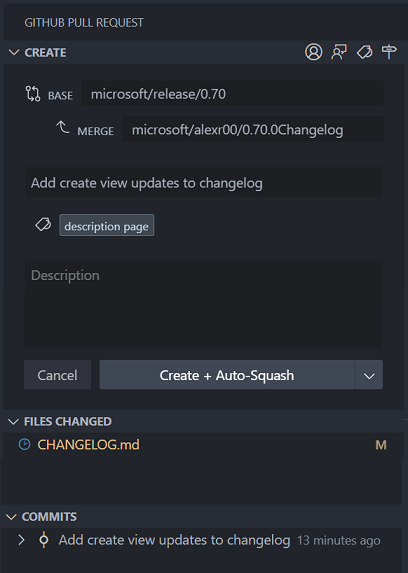
There has been more progress on the GitHub Pull Requests and Issues extension, which allows you to work on, create, and manage pull requests and issues. This iteration, we focused on updating the Create view to make it cleaner and more useful.

Improvements to the Create view include:

  • The view tries to detect the best possible base branch for your PR instead of always using the default branch.
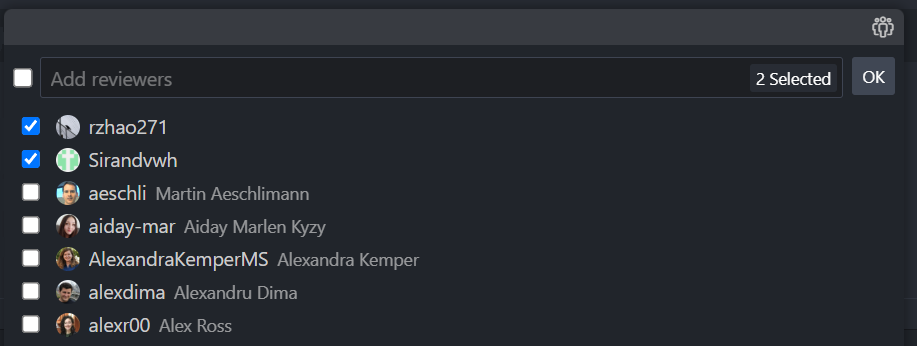
  • You can add reviewers, assignees, labels, and milestones to your PR from the Create view.
  • By default, your last “create option” is remembered (for example, draft or auto merge).
  • The view performance is much faster.
  • You can view diffs before publishing your branch.
  • Once the branch is published, you can also view commits (this is coming soon for unpublished branches).

GitHub Pull Request and Issues extension Create view

Review the changelog for the 0.70.0 release of the extension to learn about the other highlights.

GitHub authentication

Revoking GitHub OAuth tokens on sign out

Previously, when you sign out of a GitHub account in VS Code, it would only remove OAuth tokens from the secrets storage. The token is still valid and able to make requests to GitHub’s APIs. To improve the security of token management, we now attempt to delete the token on the backend making the token no longer valid after sign out.

Extension authoring

revealSetting and focusSearch added to IOpenSettingsActionOptions

Extensions can now pass the revealSetting object and focusSearch boolean into commands such as workbench.action.openSettingsJson that accept IOpenSettingsActionOptions args.

For example, the following command

vscode.commands.executeCommand('workbench.action.openSettingsJson', {
  revealSetting: { key: 'editor.renderWhitespace' }
});

opens the user settings JSON file, and then reveals the editor.renderWhitespace setting if it exists.

New TestController.invalidateTestResults method

Test extensions can call the new method TestController.invalidateTestResults to indicate to the user that any results for one or more tests may no longer be applicable. For example, an extension might do something like:

onFileChange(uri => {
  // invalidate tests in a file when a file changes:
  testController.invalidateTestResults(getTestsInFile(uri));
});
onConfigurationChange(() => {
  // invalidate results for all tests:
  testController.invalidateTestResults();
});

Kerberos authentication for network proxy

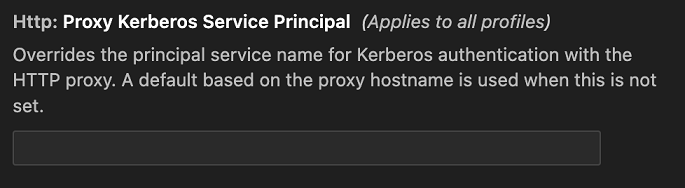
Extensions using the https Node.js module can now use network proxies that require Kerberos authentication. The local machine needs to have Kerberos configured but extensions do not need to do anything to use this feature.

In cases where the automatically selected service principal name does not work, the user can provide one with the http.proxyKerberosServicePrincipal setting:

Kerberos Service Principal setting

Icons in QuickPickItem finalized

The API for icons in QuickPickItem has been finalized. You can now use the iconPath property to display icons in QuickPickItems.

A quick pick with GitHub avatars as the item icons

Engineering

Shrinking VS Code with name mangling

A recent engineering effort reduced the size of VS Code’s shipping JavaScript by 20%. In the Shrinking VS Code with name mangling blog post, you can learn how VS Code engineers Matt Bierner and Johannes Rieken researched identifier name mangling to optimize code size and came up with effective solution using TypeScript.

More pty host improvements

Continuing on from last month’s improvements to the pty host, the following improvements have been made:

  • Performance
    • The pty host now only launches when it’s needed, so users that never open the terminal will save around 50-100 MB.
    • Further parallelization of terminal reconnection, speeding up the time to initialize the terminal.
    • Terminal output messages are now buffered, reducing traffic going from the pty host and the window hosting the terminal.
  • Diagnostics
    • Latency stats between each process are logged when in trace log level.
    • The window ID is logged to all logs in the Terminal output channel.
    • Pty host RPC logging now logs responses that failed as a result of an exception.

Notable fixes

  • 133542 Reattached to the wrong terminal
  • 168021 Better object completions in the JavaScript debugger
  • 184894 Cannot click and drag scroll bar in terminal

Thank you

Last but certainly not least, a big Thank You to the contributors of VS Code.

Issue tracking

Contributions to our issue tracking:

Pull requests

Contributions to vscode:

Contributions to vscode-extension-samples:

Contributions to vscode-hexeditor:

  • @lorsanta
    • fix: scroll to the top when hit home key PR #448
    • Fix: the selection count is updated when switching between tab groups. PR #449

Contributions to vscode-js-debug:

Contributions to vscode-pull-request-github:

Contributions to vscode-vsce:

Contributions to inno-updater:

Contributions to language-server-protocol:

Contributions to monaco-editor:


Asana vs Monday.com: Pricing & Features Comparison


If you’re a business owner with a small team or a project manager of a large enterprise business handling multiple projects, teams, or vendors, you need many different tools to plan and manage your daily work. To make your workplace as efficient and effective as possible, project management systems are a great solution to streamline your day.

The building blocks of project management tools include projects, tasks, assignees, due dates, and milestones. Project management systems help teams stay connected, track projects over time, and align on company-wide goals — all of which have become more important than ever in today’s remote and hybrid work environments.

These elements help teams stay on the same page. However, with so many platforms on the market today, choosing the right project management solution isn’t cut and dry. That’s why we are helping you compare two of the most popular tools, Asana and Monday.com. Both platforms offer a range of features that help teams manage tasks, projects, and workflows — but is one better than the other?

If you are considering adding either of these two project management behemoths into your workflow, it’s important to compare Asana vs. Monday.com when it comes to their features, pricing, and suitability for different types of teams and projects. Let’s get started.

Asana vs. Monday.com: Comparing features

Both Asana and Monday.com have some serious history. Built by some industry giants and used by enterprises and small businesses across the globe, these two platforms would be a great asset to your company. However, let’s dig into a few differences between Asana and Monday.com and discover which platform best suits you and your team.

Asana and Monday.com offer similar features, including task and project management, team collaboration, and progress tracking. However, they have differences that might sway you when trying to pick one over the other. 

Features of Asana

Asana Kanban software board viewAsana Kanban software board view

Asana provides a more comprehensive set of features than Monday.com does, including project timelines, workload management, and custom fields. It also offers features such as templates, forms, and automation, which were built for your team to streamline its workflows and save time. Also, Asana’s user interface is just a smidge more intuitive and easy to use than Monday.com, making it suitable for teams of all sizes and skill levels.

Asana key features: 

  • Workflow Builder Board
  • Calendar, Gantt Chart and Kanban Board views
  • Tasks automation
  • Desktop and mobile apps
  • Third-party app integrations

Features of Monday.com

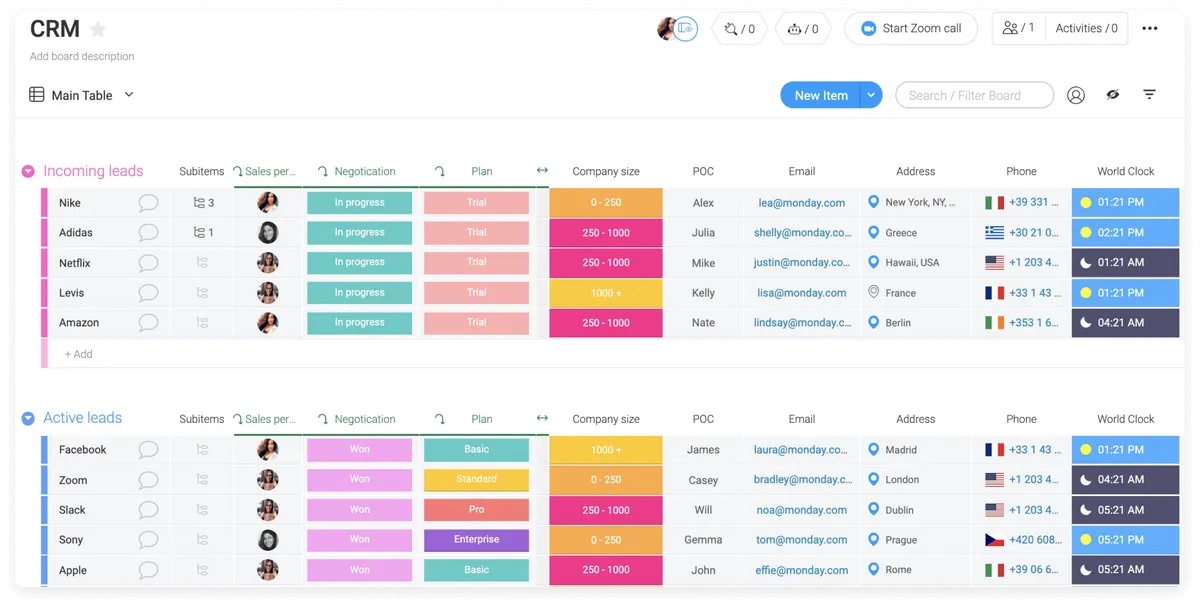
monday.com dashboardmonday.com dashboard

Just because Asana has something of a “features edge” over Monday.com, it does not mean you should overlook this second platform as an option. Monday.com also offers features that are focused on task management and team collaboration.

It provides a customizable interface, allowing users to create custom boards and workflows that fit their needs. Monday.com steps up with its automation features and custom notifications, and in my humble opinion, its interface is more visually appealing than Asana. It’s a popular choice for creative teams who want more freedom to customize and prefer the “look” over Asana’s drag-and-drop boards. 

Monday.com key features:

  • Customizable templates
  • Visual dashboards
  • Automate repetitive tasks
  • Extensive integrations with many popular third-party apps and tools
  • Timeline and Gantt views
  • Collaborative workspaces and team communication within the platform

Asana vs. Monday.com: Pricing comparison

Asana and Monday.com have different pricing plans, scaled based on the number of users and features you want to be included. Both Asana and Monday.com offer a free plan, perfect for individuals or teams just starting. However, if you are a busy team that needs a more robust platform with added features, you will need to pay more emdash and this is true with both Asana and Monday.com.

Asana Pricing

Asana’s pricing starts at $10.99 per user per month for its Basic plan, which includes task and project management, team collaboration, and basic reporting. The Premium plan costs $24.99 per user per month and includes more advanced features like timelines, workload management, and scaled security. Asana’s Business plan, which costs $44.99 per user per month, includes all the features of premium but also time tracking, custom branding, advanced integrations, and priority support.

Monday.com Pricing

Monday.com’s pricing starts at $8 per user per month for its Basic plan, which includes task management, team collaboration, and basic reporting. Its Standard plan costs $10 per user per month and has more advanced features, such as automation, guest access, integrations, time tracking, and a dashboard with up to 5 boards. There is also a Pro plan which costs $16 per user per month and includes even more advanced features, such as custom boards, calendar view, and advanced reporting.

Pricing key takeaway: Asana’s plans are generally more expensive than Monday.com’s plans, but they offer a more comprehensive range of features. So, if you need more advanced features and want to pay less per user, Monday.com might be the Platform for you.

Suitability for your business

These two are competitors because they are both suitable for some of the same types of projects. While both platforms would manage your tasks well, each is better suited for a specific type of workflow process. It would be best if you picked the one that suited YOUR business and worked within your workflow instead of trying to adjust to the workflow of a program. Choose the platform that marries up to your process, not one that will be a square peg in a round hole.

So in this instance, these platforms do better within these two specific applications:

Asana is particularly well-suited for teams needing a comprehensive project management platform to handle complex workflows and tasks. It is also a good choice for teams that value automation and efficiency, as it offers great workflow automation. Asana is commonly used by teams in industries such as marketing, design, and software development.

Monday.com is a good choice for teams that prioritize visual and customizable workflows. Its customizable interface allows teams to create boards and workflows that fit their specific needs, making it a good choice for creative teams needing flexibility. Monday.com is commonly used by teams in industries such as media, advertising, and publishing.

Customer reviews on Monday and Asana 

Thanks to G2, Capterra and other platforms we can easily find real users’ experiences with platforms such as Monday and Asana. We’ve dug into what people say about each platform to help you make an informed decision when comparing and choosing task management tools. Ahead, we also shared a leading alternative to these platforms.

What users say about Asana

Generally speaking, Asana offers a decent solution for people looking for a platform that can assist in delegating tasks to other team members. However, people often find it challenging to be onboard in the platform, most people describe a speed learning curve and difficult navigation. Avid users of Asana also were unsatisfied with the amount of key features missing in the platform.

One user wrote on G2 on February 28, 2024: “There are some privacy & management rules that I wish existed for custom fields. Additionally, I would like for the Gantt chart view to be more dynamic, where you can build/choose your columns on the chart. Lastly, I hope the dependencies get enhanced by the addition of start-to-start and finish-to-finish.” 

Another Asana user on July 12, 2023 left a review on G2 expressing their frustration with the platform user experience: “Asana is a bit cluttered and can get overwhelming if you do not know how to use it. I do not like that you have to delete a task if you cannot complete it. Deferring a task also does not remove it from your list. Sometimes I do not want to delete a task, but I want to mark it as off my list even though it cannot be completed. That is extremely frustrating.”

What users say about Monday 

On the other hand, Monday users seem to be okay with how the platform performs in terms of navigability and user experience. The tool is also delivering a satisfactory experience when it comes to collaboration among teams. However, Monday is frustrating users with the large amount of issues and bugs on boards and problematic automation.

On February 29, 2024, a Monday user wrote on G2 about how poorly the platform deals with automation, integration and customer service: “EVERYTHING seems to need an app or integration (3rd party) to make real use of Monday.com. Doing this causes a certain number of “actions” to occur. Sometimes such small things quickly eat up thousands of actions and then your account essentially gets frozen. Same thing with automations, barely doing something triggers so many little micro automations that you blow past the 25,000 on Pro doing minimal automating.

What really grinds my gears is that when you do get basically forced to upgrade to Enterprise, there is NO CUSTOMER SUPPORT PHONE NUMBER to be found. People in chat are slow to respond, and then bounce you around cause they can’t give a straight answer. If you want someone to actually respond, good luck. I’m told 3-5 business days to be able to upgrade, but when locked out because of actions or automations triggering, you’re toast. Not only will it take forever, they keep sending the same garbage emails saying someone will eventually reach out, whether you do CHAT or EMAIL or FORM. It’s awful.”

Their automations are also super limited. If you want something like an IF/THEN statement before running an automation, it’s basically impossible. You can try to do it through a workflow, but then it doesn’t even work properly because they only give you certain automation choices depending on which way you try to automate things. The number of apps you need to do BASIC things is mindblowing. If you want a “timeline” to work properly with start/end dates, you need an app. Then you have to pay for more apps separately. Everything seems super poorly thought out, which is a shame, because Salesforce is much cleaner and all built in, but just costlier. I guess you get what you pay for, but even on Enterprise, you’re not saving much money vs competitors. Even costs more than some better options.

It’s okay at some things like visuals, but they’re not easy to build into widgets for some strange reason. There’s nothing intuitive when trying to build processes out. I would personally NOT recommend this to anyone who wants to successfully run their business from a Sales and Project Management perspective.”

Another leading option: Hive

If these two options were insufficient, how about we throw in a third? Hive!

Hive task management softwareHive task management software

Hive is a project management software platform that is great for teams who want a robust platform with features like task management, team collaboration and reporting.

While it’s the “new bee on the block” compared to Asana and Monday.com, it does not mean it’s less robust than the other two software platforms. Built by its users, Hive has thought of everything from its goal-tracking features to its integrated HiveMind AI tool and even its integrations with hundreds of third-party apps.

Like the other two options, Hive offers a free plan but has two paid options. The Hive Teams plan costs $12 per user per month and includes advanced features like external guest access, unlimited storage, an in-app calendar, and more. The Enterprise plan includes everything the Teams plan does, including custom analytics and reporting, enhanced security, and Enterprise API use. Enterprise prices vary based on your needs, so contact the sales team to learn more!

Comparing Hive vs Asana

Hive is a project management tool that works off of “tasks” as a building block, the same way Asana does, which makes it one of the top alternatives to Asana. Hive’s interface is very user-friendly and boasts a first-of-its-kind email integration which sends messages directly from Gmail and Outlook to Hive, which Asana does not have.

Additionally, when comparing Hive and Asana the reporting and dashboards capabilities of Hive truly standout. Plus, Hive also has several features that Asana doesn’t have, including data import, customizable templates, note-taking, and custom forms – which makes Hive one of our top Asana alternatives. If you’re going to be manipulating data or customizing content, Hive is your best option.

So what does Hive offer that Asana doesn’t? Hive also offers all of the features teams need to succeed in today’s workplace, including:

  • Data import
  • Customizable templates
  • Note-taking and AI writing tools
  • Custom forms
  • Resourcing capabilities
  • Customizable dashboards via Pages

Comparing Hive vs Monday

Hive is a leading alternative to Monday.com, especially when it comes to dashboard and reporting capabilities. When comparing Hive to Monday.com, it’s easy to notice the powerful tools Hive offers. For example, Hive can break down actions and tasks with customizable summary views, subactions, and automation. Built with a visual display, Hive has moveable cards and 6 different project layout options that make learning and using the platform a snap. Another reason why Hive makes a good alternative to Monday.com is how the software receives and applies customer feedback. Hive is the first and only democratic project management platform. Via the Hive Forum, customers have access to a public roadmap and can submit and vote on the features they’d like to see in Hive. It’s a tool built by users, for users.

So what does Hive offer that Monday.com doesn’t? Hive has more robust project management and collaboration features, including:

  • Resourcing and timesheets
  • Proofing and approvals
  • Native chat with both direct and group messaging
  • Note-taking within Zoom meetings
  • Native email
  • Features are built by users via the Hive Forum

What to consider when choosing project management software?

Maybe the question when comparing Monday.com and Asana shouldn’t even be about their features or differences, but about your company’s wants and needs. A great way to assess that can be hosting a brainstorming session, doing a survey, or simply talking to managers and people in different departments before making a final decision about a project management platform. A process where everyone feels included and heard can go a long way, especially because it’s common to find resistance from employees when adopting a new system. 

Okay, now… here are the essential features any good project management software should offer:  

  • Task management: It should allow you to create, assign, and track tasks, as well as set due dates and priorities.
  • Time tracking: It should let you track how much time is being spent on each task, which can be helpful for budgeting and estimating future projects.
  • Project scheduling: It should allow you to create a timeline for your project and track its progress. 
  • Communication: With chat and comments features, a tool should offer ways for you to communicate with your team and clients through messaging, file sharing, and commenting.
  • Reporting: It should let you create reports on the project’s progress, which can be helpful for stakeholders and for tracking your team’s performance.

So what platform should you pick?

Ultimately, when choosing a project management software platform for your team or business, there is no one-size-fits-all solution. Each platform has its strengths — Asana for complex workflows and automation; Monday.com for visual and customizable workflows; Hive for its goal-tracking features, integrated AI, and integrations with third-party apps. Hive also offers a more customizable plan (cost and feature-wise), which is great for growing teams.

Hive is a project management tool that is built to help teams work faster, smarter and more efficiently. Try us for free, today!

House Passes Bill Requiring Warrant To Purchase Data From Third Parties


An anonymous reader quotes a report from The Hill: The House on Wednesday approved a bill that would limit how the government can purchase data from third parties — legislation that scored a vote after negotiations with a group of GOP colleagues who briefly tanked a vote on warrantless spy powers. Dubbed the Fourth Amendment is Not For Sale, the legislation passed 219-199. It requires law enforcement and other government entities to get a warrant before buying information from third-party data brokers who purchase information gleaned from apps. […] Senior administration officials said the measure would blind U.S. intelligence outfits from getting information easily purchased by foreign intelligence operations.

“In practice, these standards make it impossible for the [intelligence community], law enforcement to acquire a whole host of readily available information that they currently rely on,” an administration official said. “Covered customer records as defined in the bill is very broad and includes records pertaining to any U.S. person or indeed any foreigner inside the United States. And as a practical matter, there’s often no way to establish whether a particular individual was in the U.S. at a particular time a piece of data was created. Unless you did one thing, which is paradoxically to intrude further into their privacy just to figure out whether you could obtain some data.” “It can be impossible to know what’s in a data set before one actually obtains a data set,” the official continued. “So you’d be barred from getting that which you don’t even know.”

Wordle today: Answer and hint #1034 for April 18


Keep on scrolling and you’ll soon find yourself gazing upon a wealth of Wordle help, covering everything from general tips to the answer to today’s puzzle. If you’re hoping for something between those two extremes then you’re in luck, as a helpful hint for the April 18 (1034) game is waiting just below.

I had a tough time with this one. Looking back I didn’t take too many guesses to find the answer, but there was one letter that kept getting away from me. I could see I was close, but I just couldn’t quite grasp the letter I needed to fill in the gap. 

Today’s Wordle hint

(Image credit: Josh Wardle)

Wordle today: A hint for Thursday, April 18