We are the live streaming, video editing and production experts!
Videoguys understands the gear we sell because we use it ourselves! Our staff are videographers, live streamers, editors, filmmakers and vloggers just like you. We have worked with schools, churches, corporate AV and independent producers like you.
You can speak to a live person Monday through Friday from 9:00 am – 5:00 pm EST at 800-323-2325, by chat or by email to sales@videoguys.com. We can help you find the live streaming, video production and editing equipment that meets your needs and budget.
I’m facing serious issues after updating my hybrid .NET MAUI project from .NET 7 to .NET 8. This project was started in 2021, and everything worked well under .NET 7. Recently, I updated the following:
.NET: Upgraded from .NET 7 to .NET 8.
macOS: Upgraded to the latest macOS version.
Xcode: Updated to Xcode 16.
Visual Studio: Now using Visual Studio 17.11.5, which is supposed to support Xcode 16.
Project Structure:
<Project Sdk="Microsoft.NET.Sdk.Razor"> for the MAUI app.
<Project Sdk="Microsoft.NET.Sdk.Razor"> for the Shared Library.
<Project Sdk="Microsoft.NET.Sdk.BlazorWebAssembly"> for the WASM app
Issue:
I’m getting the following error for my iOS builds (in both Debug and Release modes):
MessagingRemoteException: An error occurred on client
Build1808303 while executing a reply for topic
xvs/build/18.0.8303/execute-
task/{AppName}/78f1110002fWriteAppManifest
ArgumentNullException: Value cannot be null. Parameter name:
path2
This error points to the Xamarin.Shared.targets file at line 643.
Steps Taken:
Verified that the Info.plist file exists and is not empty.
Cleaned and rebuilt the solution.
Enabled detailed build logs, but the error persists.
Tried switching from Release to Debug mode, but the issue remains.
I’m unable to run the iOS Simulator or debug the app when pairing with my MacBook Air.
Checked project configurations for both Android and iOS, and they seem consistent.
I’m stuck and can’t get past this error, making it impossible to debug or publish to TestFlight. Any suggestions or insights would be appreciated!
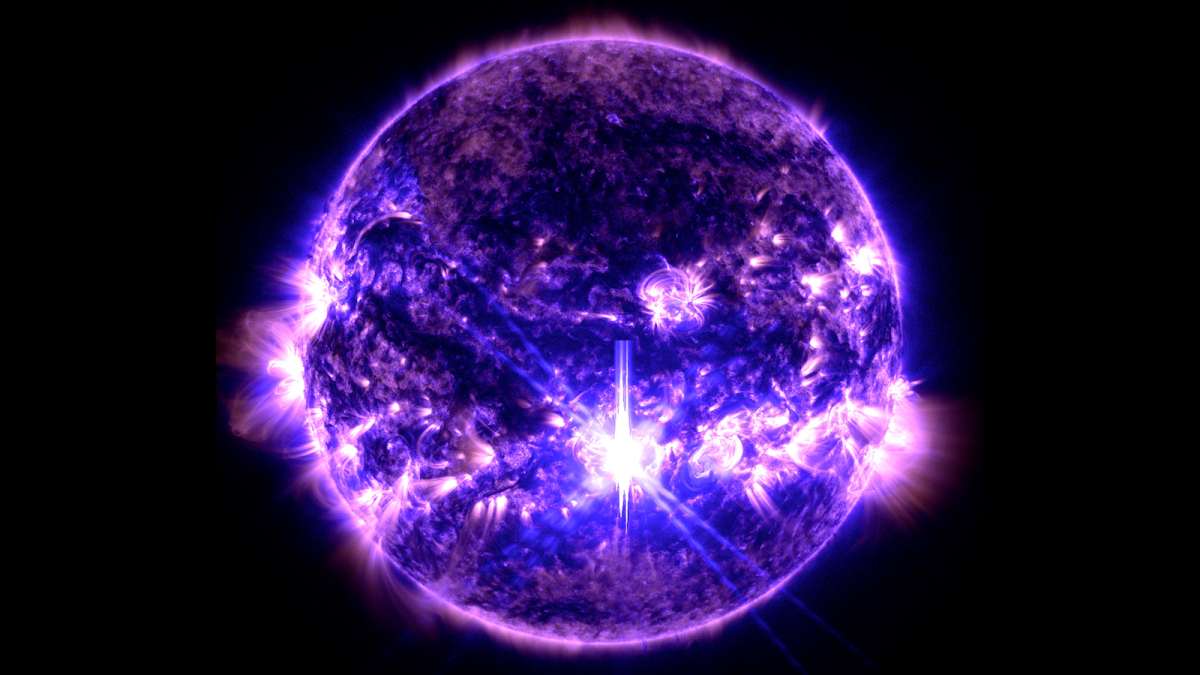
NASA recently announced that as of late October, the Sun has reached solar maximum: a repeating crescendo of solar activity that often comes with increased solar flares. True to form, it seems like there’s another flare every few days. Rapid-fire solar flares have been lighting up the night skies with the aurora, as far south as Florida and Puerto Rico, since last year. Solar max is projected to last well into the second half of 2025. So what’s going on here? Is it any danger to us? To understand solar maximum, let’s start with the solar cycle.
The solar cycle is the natural cycle of the Sun as it transitions between periods of low and high activity. (Currently, we’re in solar cycle 25: the 25th observed solar cycle since scientists started recording them.) Roughly every 11 years, at the peak of the solar cycle, the Sun’s magnetic poles flip—on Earth, that would be like the North and South Poles swapping places every decade—and the Sun transitions from sluggish to spicy.
Fossil records suggest that the 11-year solar cycle has been stable for at least the last 700 million years.
Sunspots
Chronologically, solar weather starts with sunspots. The Sun’s changing magnetic field can create turbulence in the Sun’s outermost layers. These irregularities create zones of high magnetic strain within the plasma surface layer. Eventually, the strain is just too much, and like an electrical arc, the strain equalizes itself. All that potential energy is suddenly released, and more often than not, there’s a burst of plasma that blasts out of the Sun like a tongue of flame.
Credit: NASA
“During solar maximum, the number of sunspots, and therefore, the amount of solar activity, increases,” said Jamie Favors, director of the Space Weather Program at NASA Headquarters in Washington. “This increase in activity provides an exciting opportunity to learn about our closest star—but also causes real effects at Earth and throughout our solar system.”
Credit: NASA
Solar flares and coronal mass ejections are the two forms of solar weather most impactful to life on Earth.
“Solar Cycle 25 sunspot activity has slightly exceeded expectations,” said Lisa Upton, co-chair of the Solar Cycle Prediction Panel and lead scientist at Southwest Research Institute in San Antonio, Texas. “However, despite seeing a few large storms, they aren’t larger than what we might expect during the maximum phase of the cycle.”
How Does the Solar Cycle Affect Earth?
Solar activity strongly influences conditions in space, known as space weather. This can affect satellites and astronauts in space, as well as communications and navigation systems—such as radio and GPS—and power grids on Earth. Near solar maximum, frequent solar flares blast away some of the cosmic rays that would otherwise hit Earth. Evidence for solar flares comes from ice cores, and the growth rings of trees.
Credit: NASA
Most of the time, solar weather only noticeable at ground level via the aurora, with just a few events that impact Earth. Earth’s atmosphere and magnetosphere protect us from the high-intensity radiation of solar flares and the massive jet of plasma from CMEs. The atmosphere prevents high-energy particles from reaching the ground, and it’s denser near ground level, so the protection is strongest where people spend their time. Meanwhile, our planet’s magnetosphere deflects the electromagnetic radiation, routing it poleward along Earth’s magnetic field lines.
Most of the time, that’s enough. But near solar max, it’s a different story—and every so often, Earth loses the sunspot lottery.
Fire in the Skies
For extreme solar weather, our high-water mark is often the Carrington Event of 1859: a powerful solar storm named after Richard Carrington, an English astronomer who saw the flare that caused it with his own two eyes.
During the event, the aurora borealis was so bright that it woke up a Colorado mining camp in the middle of the night; their cooks started to brew coffee, thinking the sun was rising. Folks in New York City reported being able to read the newspaper by the light of the aurora. But ground-level geomagnetic disturbances were strong enough that things got really weird. Two operators of the telegraph line between Boston, Massachusetts, and Portland, Maine, exchanged this conversation on the night of Sept. 2, 1859 (as reported by the Boston Evening Traveler):
Boston operator (to Portland operator): “Please cut off your battery [power source] entirely for fifteen minutes.”
Portland operator: “Will do so. It is now disconnected.”
Boston: “Mine is disconnected, and we are working with the auroral current. How do you receive my writing?”
Portland: “Better than with our batteries on. – Current comes and goes gradually.”
Boston: “My current is very strong at times, and we can work better without the batteries, as the aurora seems to neutralize and augment our batteries alternately, making current too strong at times for our relay magnets. Suppose we work without batteries while we are affected by this trouble.”
Portland: “Very well. Shall I go ahead with business?”
Boston: “Yes. Go ahead.”
The conversation carried on via unplugged equipment for two hours. Less whimsically, telegraph operators elsewhere reported showers of sparks coming from their equipment—some setting fires. (Imagine a Star Trek bridge console when the Enterprise gets hit.)
Low Probability, High Risk
Storms like these aren’t common, but neither are they vanishingly rare; they’re enough of a hazard that actuaries and government agencies both pay attention to the risk. They’re more likely near solar maximum, when solar weather is at its peak intensity.
Over the long arc of history, there have been dozens of CMEs that scored a direct hit on Earth. Just within the past couple decades, Earth has had several “Carrington-class” near misses. The 2003 Halloween solar storms produced the most powerful solar explosions ever recorded. We don’t actually know how powerful the largest was, because it totally saturated the detector array on our GOES satellites, but they top out at X28; heliophysicists have since revised their estimate sharply upward, to an X45. (Yikes.) There was a near miss in July 2012, and another in May of 2024, during which the aurora was visible as far south as Puerto Rico.
The face of the Sun on May 6, 2024, with two sunspot clusters (top right: AR 3663, bottom left: AR 3664) that triggered a series of X-class solar flares, compared to the Carrington Event sunspots (superimposed, center). Credit: SDO/HMI
Satellite “megaconstellations,” like Starlink and China’s upcoming Thousand Sails, are exquisitely sensitive to space weather. During the rapid-fire burst of solar flares this past May, not only did Earth experience several short-wave radio and GPS blackouts due to EM interference, but the satellites themselves were in danger. When a CME hits Earth, our atmosphere absorbs so much energy that it puffs up like a marshmallow in the oven. Thousands of Starlink satellites had to abruptly change altitude to deal with atmospheric friction.
So, should you take action to protect against inclement solar weather? In a word: meh. Maybe unplug electronics you don’t want to get zapped. Most of the headaches caused by solar flares seem to fall on the folks who maintain infrastructure.
Satellite disruptions and interference are problems, true enough. For instance, buying gas with debit or credit is a satellite transaction. And it’s important to keep your important data backed up in case of a power surge, although electronic backups may do little good. A solar storm in 1989 halted all trading at the Toronto stock exchange when a power surge fried three redundant hard drives. An earlier storm in 1979 even resulted in dozens of magnetically triggered sea mines exploding all at once, out of nowhere.
But that shrinks to an inconvenience compared with possible issues in the power grid. Power surges caused by inclement space weather could blow out the massive transformers between power plants and the grid. “Transformers can take a long time to replace, especially if hundreds are destroyed at once,” said Daniel Baker, of the University of Colorado’s Laboratory for Atmospheric and Space Physics. (Baker coauthored a National Research Council report on solar-storm risks.)
Taken from the International Space Station by astronaut Jasmin Moghbeli during a solar storm in October 2024. Credit: Jasmin Moghbeli/X
“Imagine large cities without power for a week, a month, or a year,” Baker said. “The losses could be $1 to $2 trillion, and the effects could be felt for years.”
Experts agree that the eastern half of North America is especially vulnerable, with its metropolitan sprawl from Atlanta to Toronto, because the power infrastructure is highly interconnected. Failures can easily cascade. It’s happened before; that 1989 solar storm knocked out power to most of Quebec within 90 seconds, and the disruption caused downstream grid “anomalies” throughout the Northeast and Mid-Atlantic. In August 2003, a few months before the Halloween storms, foliage on Canadian power lines caused what should have been a local blackout to escalate into a 3.5-gigawatt power surge that knocked out power to most of the Northeast. And in 2019, a single storm knocked out power to more than three million people in a swathe across Quebec, Ontario, and fourteen US states.
Happily, we do get some warning when dangerous solar weather strikes.
Solar Fields
Scientists use telescopes and magnetometers to study many aspects of the Sun, including space weather, the solar dynamo, solar cycles, and the internal fusion by which the Sun produces light—all of which fall under the aegis of heliophysics.
It is possible, but difficult, to make telescope observations of the Sun from Earth’s surface. Much of the Sun’s activity is best visible in ultraviolet wavelengths. However, our atmosphere absorbs the vast majority of the UV radiation that would otherwise hit the surface. Several government agencies (mostly NASA and NOAA) have solar observatory satellites.
Credit: NASA
Out of the fleet, the best known may be the GOES solar satellites, which power NASA’s Solar Dynamics Observatory. In September, NOAA fired up the latest: GOES-19.
Available for preorder for $200, Sony’s new LinkBuds Fit are shaping up to be a gym-goer’s new workout buddy.
These earbuds boast a solid ANC feature and a comfortable design that is second to none.
Their audio output, however, isn’t very powerful.
more buying choices
What is the most important aspect of a pair of earbuds? My answer changes depending on the circumstances. I prefer power and volume when I’m at home listening to music. If I’m at the gym, I need something rugged and capable of blocking out sound. Sony’s new LinkBuds Fit meets my needs.
I had the opportunity to try out a pair for the past week or so, and they quickly became my go-to workout buddies. I never left home without them. Before I get into the many reasons why I love these buds, I want to quickly give a shoutout to the charging case.
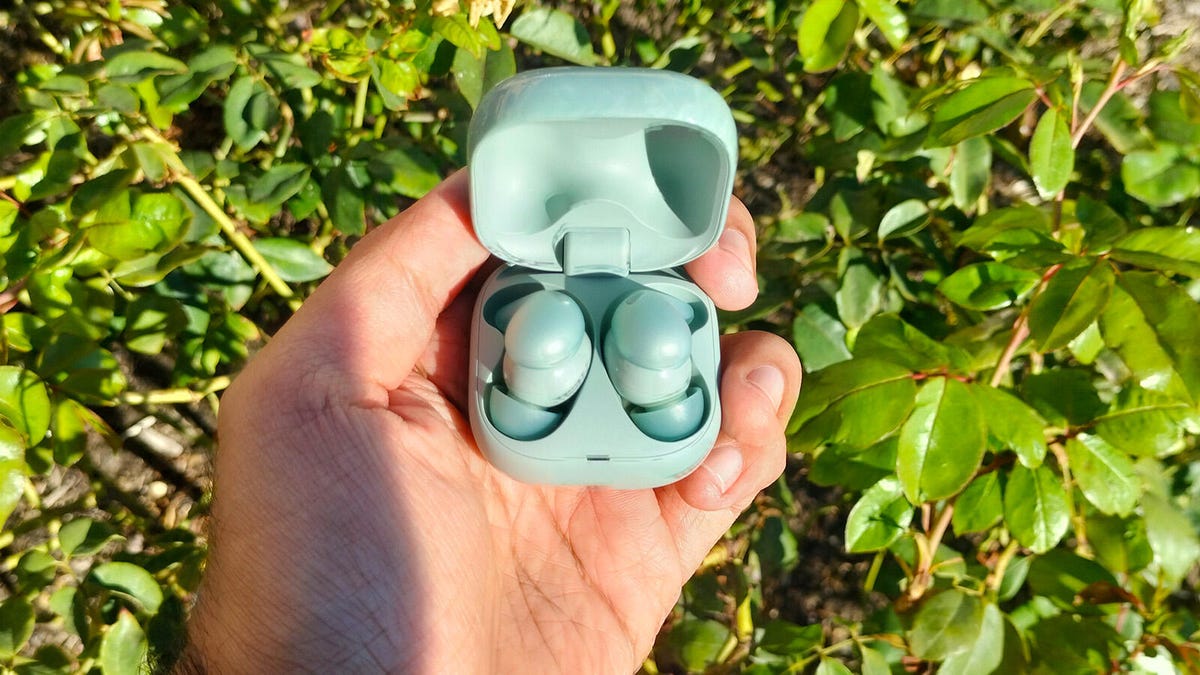
I received the pale green model with a marble lid and a soft rubber bottom. Together, they look lovely. I don’t know if these materials help reinforce it or anything, but I am a huge fan of the aesthetics. Sony’s LinkBuds Fit have the nicest charging case I’ve ever had the pleasure of holding.
The LinkBuds Fit can be seen as an evolution of Sony’s LinkBuds S. Like the older models, these are wireless, noise-canceling earbuds with a few adjustments. Most importantly, Sony designed its new earbuds to be more comfortable. The company told us it made the casing shorter and covered it with a “silicone supporter.” Inside this silicone is an air cushion.
In my experience, this design change does two things. It allows the earbud to fit better inside an ear, and the silicone covering protects your ears from rubbing against the LinkBuds Fit’s hard plastic casing. In short, you get all-day comfort.
I even fell asleep with them on a few times during testing, and when I woke up, my ears didn’t feel sore. That’s something I can’t say about other earbuds, which become uncomfortable over time.
Cesar Cadenas/ZDNET
Noise-canceling on the LinkBuds Fit is solid. It’s active by default, so the moment you put on both, ANC (active noise canceling) turns on. The feature automatically disables itself when you take one of the earbuds out.
Double tapping on the outside of the left earbud deactivates the ANC. The auto-disable function came in very handy for me, as I don’t really use gesture controls.
The ANC feature blocks varying amounts of sound, depending on the environment. I heard more ambient sound in my quiet room, like the traffic outside my window. At the gym, things were much quieter. I could hardly hear the weights being slammed down or the music from the speaker system. This auto-optimizer feature really impressed me.
That said, the ANC is not all-powerful. Loud enough noises will leak through.
Cesar Cadenas/ZDNET
Sony says the earbuds last 5.5 hours on a single charge by themselves, and 25 hours with the case. During my testing, I managed to get the earbuds to run for almost seven hours before I needed to grab the charger. I had ANC turned on, and was playing music at a low volume, so extending the runtime with a few tweaks is possible.
The earbuds’ audio output was generally good. Instrument separation was lovely. Acoustic songs and singers sounded wonderful. The only area in which I felt the pair faltered was the bass output. Pop and rap songs lacked that extra punch.
ZDNET’s buying advice
At the time of this writing, Sony’s LinkBuds Fit are available for preorder for $200. They come in four different colors: black, white, green, and violet. You can purchase extra accessories, like a case cover that goes on a key ring or different colored silicone supporters.
If you like solid ANC and unbelievable comfort, I recommend the LinkBuds Fit. The $200 price tag is a tough sell, especially when other great, cheaper options exist, like the Nothing Ear (a). If you prefer strong audio output, I recommend the Sony WH-1000XM5 wireless headphones.
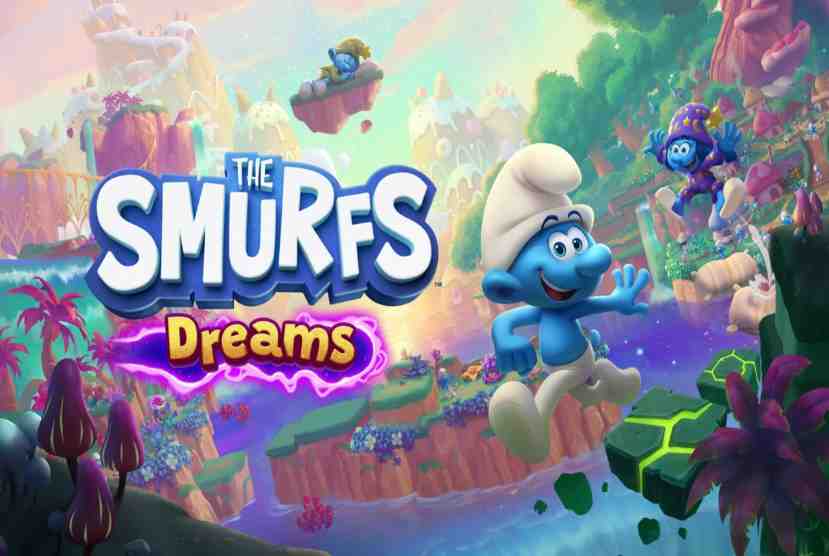
Gargamel has devised a new evil scheme to catch the Smurfs! He casted a cunning curse on the sarsaparilla bushes, causing a deep slumber across the Smurfs after they eat the delicious leaves. Embark on a dreamlike quest to awaken all the Smurfs before the evil Gargamel reaches the village! Experience a thrilling yet unpredictable journey: in the dreamworld, anything is possible and excitement can quickly turn into a nightmare… Alone or with a friend, discover enchanting locations and explore the dreams of your favorite Smurfs. Each dream is a unique adventure, with smurfingly exciting challenges and mind-boggling puzzles. Imagination comes to life in this fully immersive and magical 3D platformer. Ash And Adams GOBSMACKED
Prevent Gargamel’s evil plans from succeeding, alone or with a friend for a smurfabulous 2-player experience Visit unique and vibrant worlds as you hop from dream to dream, and discover all of the Smurf Village’s secrets Each dream hides a nightmare – help the Smurfs overcoming their fears through puzzles, boss fights and many other surprises Use your movements and tools to overcome the many challenges dreamt by the Smurfs Collect magic orbs and patterns to customize your Smurf.
Features and System Requirements:
Engage in creative puzzles and mini-games scattered throughout the dream world, making every level more interactive and requiring players to think strategically to progress.
Collect items and resources as you play, which can be used to personalize and upgrade your Smurf Village. Build houses, decorate the environment, and unlock unique items that reflect your gameplay journey.
Discover hidden collectibles and Easter eggs that reference Smurf lore and add replayability to the game. Collect tokens, artifacts, and rare Smurf items to unlock special rewards.
Screenshots
System Requirements
Recommended
OS: Windows 10
Processor: i7 Gen 10 / i7 Gen 11
Memory: 16 GB RAM
Graphics: RTX 2060
Storage: 6 GB available space
Support the game developers by purchasing the game on Steam
Installation Guide
Turn Off Your Antivirus Before Installing Any Game
1 :: Download Game 2 :: Extract Game 3 :: Launch The Game 4 :: Have Fun 🙂
Venom: The Last Dance may be one of those “You just had to be there” experiences. It feels cluttered, confused, and yet remarkably inconsequential. We’re told that the entire universe is at stake in this story, and yet nothing in the movie feels particularly threatening or even meaningful. So many different threads, ideas, and characters are introduced and then dispensed with, ignored, or contradicted, to the point where nothing lands — not even the supposed ending of this movie series.
As Polygon’s entertainment editor, I’ve learned that when a comic book movie baffles me this much, I’m probably missing something that was mangled from the source material. It’s always possible the story made more sense in its original form. So I turn to our resident comics super-expert Susana to help me unpack what I just saw. I asked her my big questions from Venom: The Last Dance to see if there’s any way bringing in some extra background lore could help save this messy, overstuffed, suspiciously goofy movie.
[Ed. note: Widespread spoilers ahead for Venom: The Last Dance.]
Venom in Columbia Pictures VENOM: THE LAST DANCE. Photo Courtesy: Sony PicturesImage: Sony Pictures
Tasha: Susana, let’s start with the McGuffin at the center of this movie: The codex, a nigh-magical hoobajoo that only the Eddie Brock/Venom symbiote (both voiced by Tom Hardy) share, and that the movie’s villain, Knull (Andy Serkis) wants, for Reasons.
Did you follow any of that, Susana? We’re told Venom has a codex because Eddie died at some point in these movies, and the symbiote revived him. But the film pretty pointedly doesn’t explain what a codex is or why it would be so rare, much less why it would work as a key to break Knull out of cosmic prison.
Susana: That’s easy enough — the “codex” is an idea adapted from Donny Cates and Ryan Stegman’s 2018 run on Venom. In the comics, a “codex” is a little trace of symbiote stuff that symbiotes naturally leave behind in the bodies of their hosts, particularly the nervous system. In a pinch, it can be used to tap into the symbiote hivemind. (In the comics, all symbiotes are connected in a species-wide hivemind, natch.)
In comics, it isn’t one codex that’s the key to freeing Knull, but lots and lots of codexes. That’s the main difference here: In the comics, codexes are the furthest thing from rare. They literally happen any time a symbiote bonds with a host for more than a fleeting moment. And thanks to the Venomverse and Venomized events, which were based around symbiotes bonding with all your favorite characters so you can see how cool they look in a Venom-ized suit, basically everybody of note in the Marvel Comics universe has a codex.
Knull was freed in the Absolute Carnage event, in which a Knull-communing Carnage went on a spree of ripping out people’s spines and eating them, in order to connect their codexes up to Knull, which would allow the god to regain control of the symbiote hivemind.
Tasha: In a way! It at least tells me more than the movie does about what a codex is supposed to be or how one is formed. And I can see why people making a movie would want to switch the dynamic from “This thing is available all over the universe” to “Our protagonist is a unique and special snowflake, and his McGuffin means the action will follow him from scene to scene, wherever he goes.”
So why would a codex/a lot of codexes free Knull from alien space jail? And given that we get no information about him in this movie except “He’s the god of symbiotes, and also, they hate him,” is there a backstory to him that would make him make more sense? Like, why does he want to destroy the universe, and why would this rando death-metal-guitarist guy have the power to destroy the universe?
Susana: In Cates and Stegman’s comics, Knull is a primordial god of the void, who ruled over the formless black nothing that stretched between the destruction of the 6th Cosmos and the creation of the 7th (our current one). He sees anything that isn’t the darkness of empty space as an encroachment on his domain.
The Silver Surfer and Knull, wielding All-Black, the Necrosword, duke it out at the dawn of time in Silver Surfer: Black.Image: Donny Cates, Tradd Moore/Marvel Comics
Tasha: That is the most metal thing you’ve ever said.
Susana: Oh, I’m just getting started. Being the Most Metal is what cosmic superhero comics are all about!
When the Celestials started making the 7th Cosmos, Knull took that as an insult. Bathed for the first time in the light of creation, the god of the void reached into his own shadow and created the first symbiote, in the form of the Celestial-killing blade All-Black, the Necrosword. (All-Black was invented by Jason Aaron and Esad Ribić for their series Thor: God of Thunder. Cates and Stegman retroactively gave it an origin with Knull.)
The Celestials cast Knull back into the void, but he spent his time manifesting symbiote life from pure darkness, creating a shape-shifting, parasitic horde species fully controlled by a hivemind linked with his own divine consciousness. Then he launched that horde into the universe to devour all that it found.
Eventually, Knull’s control momentarily lapsed after a big fight with a young Thor (immortalized by human storytellers as the epic of Beowulf), and his symbiote army bonded with mortal hosts, discovering the concepts of “honor” and “nobility,” as Knull put it. The freed symbiotes rose up and imprisoned Knull in a massive ball of their own bodies, which, until 2018’s Venom #4, had always been understood to simply be the symbiote home planet.
Image: Donny Cates, Ryan Stegman/Marvel Comics
Tasha: OK, gross. And this is why the symbiotes in Venom: The Last Dance are willing to bond with any and every human, including the ones who imprisoned them in tubes in an underground bunker, if it helps them fight off his creatures?
Susana: By comics canon, yeah. The symbiotes hate him because he was a god-tyrant, and they don’t like being his slaves. He wants to kill the universe because it is anathema to him. And he can do it because he’s a primordial cosmic entity.
Tasha: And why does he have an army of unkillable CG mega-bugs?
Tasha: Speaking of unrelated Venom stuff, I assumed all those symbiotes who show up for the big battle at the end and have distinctive colors and powers are from the comics? That whole sequence smelled like fan-candy to me, apart from the fact that most of those characters immediately get mulched. Was there anyone in there that Venom fans would care about?
Image: David Michelinie, Mark Bagley/Marvel Comics
Susana: It’s basically fan candy, but for just… an unspeakably small group of fans. The list of times Marvel Comics creators have tried to make a new symbiote/host hero or villain stick is longer than my arm, and most of them don’t rate more than a footnote. I’m checking wikis for all of these guys, but the ones on display seem to be based on Toxin (Officer Mulligan’s green form), and five more symbiotes roughly inspired by Venom: Lethal Protector. That 1993 miniseries, written by David Michelinie and drawn by several artists, introduced a litter of high-key toyetic offspring of the Venom symbiote.
Those five symbiotes were Riot (gray, turns his hands into hammers, etc.), Phage (brown, turns his limbs into spikes), Lasher (green, has extra back tentacles, attaches to the lady with a Christmas tree pin), Agony (purple, uses hair tentacles, attaches to Juno Temple’s Dr. Teddy Payne), and Scream (orange/yellow, also weaponized hair), and they seem to be the templates for Last Dance’s extra symbiotes. It’s complicated, though, because the movie doesn’t name any of them, and Riot was technically already used as the villain of 2018’s Venom (played by Riz Ahmed).
There’s also a two-headed symbiote at one point, but that one seems to be an original design, as best as I can research.
Tasha: How big a deal is Agony in the comics? Big enough to support her own movie? While The Last Dance’s post-credits scene leaves Sony a possible opening for a further Venom sequel, the film (title and all) seems to be aimed at shutting down the Tom Hardy Venom series, though Hardy has signaled he’d return if Venom got to fight Tom Holland’s Spider-Man in another Sony Spiderverse/MCU crossover.
So much of the way this movie treats Dr. Payne — as if her motivations and backstory are important, even though she doesn’t actually do much in the film, and as if her getting her own symbiote is a climactic, cathartic triumph for the story — only really makes sense if this movie is also being positioned as an Agony origin story that could be used to launch a new symbiote franchise. Which feels a lot like Sony trying to use Madame Web as a cinematic origin story for a bunch of new Spider-Women, but I digress. Clearly Agony doesn’t have Venom’s cultural cachet, but is there anything notable or interesting about her that could support a movie?
Susana: So, Teddy Payne appears to be a genderbent version of Dr. Thaddeus Paine, who featured as the villain of 1996’s Venom: The Hunger, by writer Len Kaminski and artist Ted Halsted. But his backstory has nothing in common with Dr. Payne’s other than a homophonic name and the fact that they’re both scientists, and he’s never merged with a symbiote in comics history. Payne is, in everything but name, an original character.
As for Agony, I’m going to be honest with you as a comics expert: If I’ve ever read a story with Agony in it, I don’t remember. Commenters are free to call that a gap in my knowledge, but I’m going to call it an indication of Agony’s lack of an established footprint in Marvel Comics canon.
Venom in Columbia Pictures VENOM: THE LAST DANCE. Photo Courtesy: Sony PicturesImage: Sony Pictures
Tasha: I mean, I’ve never read a Venom-centric comic, and I knew who Venom was well before the first movie, but I had to ask you who Agony was. I’m coming to all of this in ignorance, so I’m sure not going to claim you should know more about a character I’ve never heard of.
Speaking of characters I’ve never heard of, though, any idea who the mysterious guy in the control room is? The secretive silhouetted guy who’s so important that he can single-handedly shift control of the apparently massive government-run Imperium project from Dr. Payne to General Strickland on a moment’s notice? The guy who has somehow put up identical networked facial-recognition surveillance cameras all around the world, from downtown Vegas to random alleys in Mexico? Clearly this dude, whose presence and power and intentions and motives are never explained, is some really important and exciting comics reference, right?
Susana: I have no fucking idea who that man is. Maybe we’ll find out in Kraven the Hunter. Maybe it was just a dropped plotline.
Tasha: I admit that after seeing the first Kraven trailer in a theater last week, I have a really hard time believing the tone that movie seems to be going for could jibe at all with the hot-nonsense tone Venom: The Last Dance is keyed to. Speaking of which… A lot baffled me about this movie, including how the Venom symbiote is constantly abusing and overruling Eddie — literally ripping food out of his mouth or shoving food into it, grabbing and controlling his body, not to mention wrecking his career, his relationships, and his life. And yet Eddie calls the thing his best friend.
But the thing that alarmed me the most was when Eddie wants to leave Vegas ahead of the various threats coming after them, and the symbiote wants to hang out and dance with Mrs. Chen (Peggy Lu), who… really seems to have a thing for Venom. I mean, the whole “Dancing Queen” scene is clearly a goof, but it also involves kinda hentai levels of tentacle-caressing. (Completely apart from being a sequence that makes no sense, since the symbiote is clearly scared of the Xenophage coming after him and Eddie, and yet after an hour of avoiding merging into Venom because it’s dangerous, he drops that concern entirely in order to force Eddie into a dance sequence.) Is Venom… flirting? Do I have to consider Venom a sexual being now?
Image: Sony Pictures
Susana: Do you have to consider Venom a sexual being now? I don’t know if that’s my question to answer, Tasha. What a man and his goo-monster do in the privacy of their own home is none of my business.
I didn’t read that sequence as having a flirtatious vibe, but that might have been because I was furiously scribbling notes on how wild it was to cut to that scene from one of Dr. Payne sadly contemplating the childhood loss of her twin brother.
Tasha: I mean, what they do in the privacy of their own home is one thing, what they do in a Vegas penthouse is… well, even as I’m typing this, I’m realizing that what happens in Vegas stays in Vegas. I’m just saying, there are already so many consent problems around Eddie and his bestie and their merged Venom form, and this movie really seems like it’s aimed at feeding the fandom debates (and the fanfiction) about whether Eddie’s tolerance of the symbiote comes from some kind of submissive kink.
But the less said about that, the better. I have so many more questions for you here. Why does Area 51 demolish its buildings with vast tanks of acid? Why does acid that dissolves concrete and rebar into dust within seconds not have any effect on the ground or anything below it? Why is a giant never-ending dust waterfall considered a subtle cover-up for a secret base? Why do the acid-tank biometric controls apparently have settings for “some acid” and “more acid” which have to be activated separately?
And why does Eddie lie to that poor kid Leaf about aliens not being real? I get that he’s trying to be comforting in the moment, but this is a universe where not believing in aliens can get you killed extremely messily, and the lie doesn’t come across as helpful, just crass. And cowardly. And ironic. And obviously a setup for Eddie having to take it back 20 minutes later.
Susana: Some questions are beyond even the power of your friendly neighborhood comics expert.
In today’s cutthroat financial world, institutions must embrace digital transformation to stay competitive. This infographic, based on the 2024 State of Digital Lending Report by MeridianLink®, highlights the current state of digital lending, industry challenges, and key opportunities for growth.
Credit unions have achieved significant growth by leveraging modern digital platforms, driving efficiency and improving customer experiences. Institutions that adopt these advanced solutions are better positioned for growth compared to those relying on outdated methods.
Topics covered in the infographic:
Mobile application process availability among institutions.
Credit unions boost lending efficiency by 90% and cut borrower contact time from 24 hours to 4 minutes.
A 51% rise in automated decision-making, highlighting the benefits of robust lending systems.
Decline in online loan completion rates.
Impact of incomplete digital experiences on revenue and borrower abandonment.
Have a long-form journalism idea? Here are some pitching tips from Nicole Dieker.
When you’re pitching a complicated story, it’s important to provide enough background information to help an editor understand why this story needs to be told.
But too much background can bog down your pitch, orbury the story you really want to tell.
In this pitch fix, we’re looking at long-form journalism
This time, we’re going to look at a pitch where the author is clearly an expert on a complicated subject—but she needs a little help pulling the story she wants to write out of her background information.
In the 90 years since aircraft first flew in Alaska, the bush pilot myth has become synonymous with Alaskan life. Tourists are drawn to stories of mercy pilots and pictures of aircraft loaded with everything from sled dogs to outboard motors are as much a part of the state’s image as the northern lights and Denali. But the harsh truth about aviation here is that while it is consistently one of the most dangerous places to fly in the world, almost all of the accidents are preventable.
Alaska averages about 100 aircraft accidents a year which, over the past decade, have resulted in 194 fatalities. In 2013 there was a particularly devastating crash in the small town of Soldotna. That accident made national news as two South Carolina families were killed after their charter aircraft stalled on takeoff. The recently released probable cause report found the longtime Alaska pilot made multiple errors prior to departure including failing to weigh the additional cargo onboard, loading it behind the aircraft’s center-of-gravity and exceeding the aircraft’s weight limits. He was also killed in the crash.
The investigators with the Alaska regional office of the NTSB are determined to reach beyond pilot actions to find aspects of company culture, flight training or lax federal oversight that might contribute to poor decision-making. They have also joined with representatives of the Alaskan Aviation Safety Foundation and Aircraft Owners & Pilots Association to target specific aspects of the state’s aviation environment and community to affect positive change in pilot attitudes and actions. These are the people who are not willing to dismiss Alaska simply as an inherently dangerous place to fly and I think their story needs to be told.
I first worked in the aviation industry in Alaska over 20 years ago, as a dispatcher for a Fairbanks-based commuter. I also studied aviation in college and graduate school, both in Alaska and Outside, and learned to fly when I was 18. I wrote about my years as a dispatcher in a 2011 memoir, The Map of My Dead Pilots. I have worked as a journalist and essayist on this subject for years including the past three for the Bush Pilot section of Alaska Dispatch News (the Anchorage daily newspaper), and recently in Narratively magazine. Alaska aviation is a topic I am deeply involved with, and I look forward to writing about the people who are trying to change the way it operates.
Pitch Fix for long-form journalism: State your story
When I read Mondor’s pitch, I kept waiting for the sentence that began “My story will be about” or “I’d like to write about.” I was impressed by the background information and detail, but I had a hard time figuring out what story Mondor was actually pitching to these magazines and how she planned to tell it.
Mondor has one sentence that alludes to what she intends to write: “These are the people who are not willing to dismiss Alaska simply as an inherently dangerous place to fly and I think their story needs to be told.”
It’s a great start, but I want to know more
Does Mondor have a specific person’s story in mind? Is she planning to conduct interviews for the bulk of her research, or is she thinking about going more in-depth, perhaps embedding herself with Alaska’s NSTB investigators to observe their work—and their challenges—in person?
If you thought “Wait, NSTB investigators? Isn’t this a piece about bush pilots?” I wouldn’t blame you. Mondor begins her pitch with “The bush pilot myth has become synonymous with Alaskan life,” leading the reader to expect that she plans to write about pilots. When you read carefully, you learn she really wants to write about the investigators who look into why pilots crash.
This information should be at the center of Mondor’s pitch, and the entire pitch should focus on the story she wants to tell and the methodology by which she will tell it. Otherwise, she runs the risk of confusing her editors and losing the opportunity to report on an important aspect of Alaskan aviation.
Here’s how I’d rewrite Mondor’s pitch:
In the 90 years since aircraft first flew in Alaska, the bush pilot myth has become synonymous with Alaskan life. However, many people aren’t aware of the other side of the myth: the numerous preventable aircraft accidents. Alaska averages about 100 aircraft accidents a year which, over the past decade, have resulted in 194 fatalities.
When these tragedies take place, the investigators with the Alaska regional office of the National Transport Safety Board (NTSB) look beyond pilot actions to find aspects of company culture, flight training or lax federal oversight that might contribute to poor decision-making. They have also joined with representatives of the Alaskan Aviation Safety Foundation and Aircraft Owners & Pilots Association to target specific aspects of the state’s aviation environment and community to affect positive change in pilot attitudes and actions. These are the people who are not willing to dismiss Alaska simply as an inherently dangerous place to fly and I think their story needs to be told.
I’m developing a long-form article in which I embed myself in the Alaska regional NSTB office for one month to give readers a clearer picture of the daily challenges and struggles these investigators face. I’ll follow the investigators as they visit crash sites, document accidents, and work to understand the bigger questions: What went wrong? Was it simple pilot error, or were there larger forces at work here? Why does Alaska have so many aircraft accidents, and how can these accidents be prevented?
This article will be written in a nonfiction narrative style, viewing the investigators and the pilots through a human lens. Readers will finish the piece feeling as if they were there in the NTSB office with me, watching coworkers make jokes and talk about their families before they’re called out to investigate yet another accident. They’ll also learn how this type of work affects family and personal life, and what a career based on analyzing tragedy does to a person over time.
If you are interested in learning more about this topic or discussing how this story might fit into your publication, please let me know.
A bit about my background: I first worked in the aviation industry in Alaska over 20 years ago, as a dispatcher for a Fairbanks-based commuter. I also studied aviation in college and graduate school, both in Alaska and Outside, and learned to fly when I was 18. I wrote about my years as a dispatcher in a 2011 memoir, The Map of My Dead Pilots. I have worked as a journalist and essayist on this subject for years including the past three for the Bush Pilot section of Alaska Dispatch News (the Anchorage daily newspaper), and recently in Narratively magazine. Alaska aviation is a topic I am deeply involved with, and I look forward to writing about the people who are trying to change the way it operates.
Mondor’s response
I asked Mondor if she was planning to rework her pitch based on my fix, and here’s her response:
This is really really funny. I was reading over some pitches at Open Notebook a few days ago and I started thinking about how I buried the fact that there were very real people involved in my story—the NTSB investigators (and others) who are so committed to changing the statistics. I have been so worried about getting the facts straight and making clear that this would not be another “death-defying Alaska bush pilot” article, that I left out the significant human element. (Who are the point!)
And bam—you saw it too and more importantly, you made it work.
I’ll likely tinker with this just a bit to fit exactly what I want to write about but honestly, I won’t change much. Reading over it again, I’m realizing how much I needed a second pair of eyes on it. Sometimes, no surprise, writers just can’t see the forest for the trees.
I’ll be sending this out by the end of the week—thanks so much.
Do you agree with this month’s Pitch Fix for long-form journalism? When you’re pitching a long-form journalism story, how much background information do you include? What other advice do you have for Colleen Mondor?
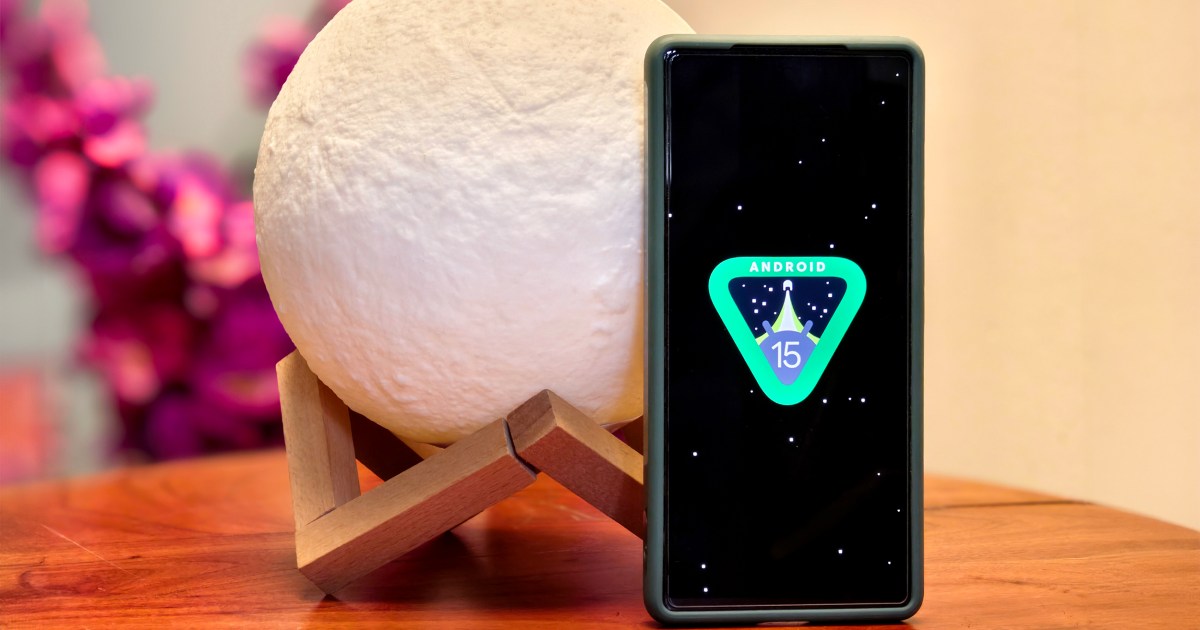
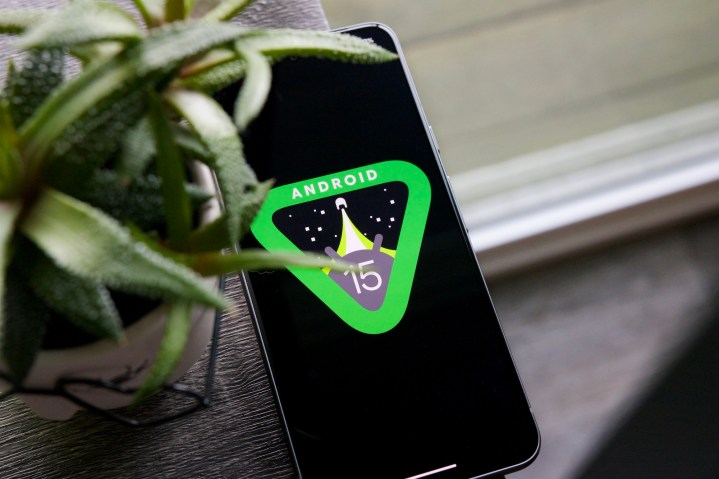
Google’s next major update for smartphones is here. Android 15 rolled out to Pixel devices on October 15 and will trickle down to countless other devices over the next several months. Android 15 has eschewed visual updates and instead tidies up the interface and improves existing features. It also gets a number of under-the-hood improvements that you may toy with occasionally.
Android 15 packs a host of privacy-centric features, including the excellent new Private Space. Android 15 also brings a big boost to satellite communications, extending the functionality beyond the Pixel lineup. Let’s dive into more details about the availability and new features coming to your phone with Android 15.
Android 15 release date
Joe Maring / Digital Trends
As a cheeky trick, Google released Android 15 on October 15 for supported Pixel phones and the Pixel Tablet. All Pixel phones from the Pixel 6 lineup and newer are eligible for the update. Since Pixels make up for a small chunk of the Android space, a large percentage of devices still await their respective Android updates.
As with each year, manufacturers have been adapting their custom skins to Android 15, adding their own custom visuals and features on top. Besides Google, brands such as OnePlus, Oppo, Realme, and Samsung have already previewed their new Android 15-based interfaces. Meanwhile, some other brands such as Motorola, Nothing, Vivo, and Honor have initiated open beta programs for some of their devices where anyone can try the upcoming updates. Xiaomi is the sole big brand that has yet to make any announcement about its Android 15 update.
Phones that can download Android 15
Google Pixel 9 (left), Pixel 9 Pro, and Pixel 9 Pro FoldAndy Boxall / Digital Trends
Of the phones that can already download the Android 15 update, Google’s Pixel phones top the list. The Android 15 update is already available for the following Google devices:
In addition, a small set of phones, including the Nothing Phone 2a, Vivo X100, and the Vivo X Fold 3 Pro have already received open beta updates based on Android 15. Motorola is also rolling out the beta update for Motorola Edge 2024, but only in certain regions where the phone is known as Edge 50 Fusion.
We shall have more details about other devices in the coming weeks. In the meantime, if you wish to see if your phone qualifies for Android 15, we have a comprehensive list of all the phones that will get Android 15.
Private Space is one of the biggest new features
Tushar Mehta / Digital Trends
With Android 15, Google offers a new way to hide away certain apps and files in a secure vault. Google advertises this as a feature to keep your work and office apps and files separate; it’s like running a phone within a phone — something that previously required specialized apps. Private Space can be an ideal space to tuck away your social media, banking, or dating apps.
Before you can use Private Space, you have to activate and then set it up on your Pixel phone from Settings > Security and privacy > Private space. Google recommends you use a separate email with Private Space. That’s because apps in the vault will exist in a sandboxed environment and can’t interact with the rest of the phone. It is also a good way to secure apps if you are nervous about certain apps stealing your data or abusing Android’s security permissions to access your files.
With Private Space, you can either use your phone’s existing biometrics or set up new ones (including a dedicated fingerprint). This will also be beneficial if you share the device with other people.
After it is set up, Private Space is accessible from the bottom of the app drawer in the Pixel Launcher, where you can add apps or privately access files. At the moment, Private Space is exclusive to Pixel phones and may not necessarily be available on other phones, since some Android manufacturers already offer some similar solutions. For instance, Samsung has a Secure Folder in One UI. Whether other manufacturers adopt the functionality is likely to become clear in the coming months.
Predictive Back updates the navigation experience
Tushar Mehta / Digital Trends
Android 15 also brings Predictive Back, a feature that lets you get a preview of the screen that will load up when swipe from one edge for the back gesture. This is similar to the back gesture on iOS, and feels like revealing the card behind the top one in a deck. The idea is to let users know the previous screen without completing the back gesture so they can avoid it if needed. Google says it “lets the user decide whether to continue—in other words, to ‘commit’ to the back gesture—or stay in the current view.”
Unfortunately, Google’s implementation in its current form feels crude (especially compared to iOS) and only displays a small portion of the previous screen. Another disadvantage is that it currently only works in a very small set of apps — we could only spot them in the Settings app and the app drawer.
We would expect other apps to adopt the functionality but unlike Apple, Google gives developers free rein on which features to implement. So, similar to Material You and adaptive theming, developers may choose to overlook Predictive Back.
Make sure to check out Partial Screen Recording
Tushar Mehta / Digital Trends
Partial Screen Recording on Android 15 lets you screen record contents on your screen selectively. While starting a screen recording, you will be prompted to choose whether you want to record a specific app or the entire screen. If you choose the first option, the screen recording will only include parts from the selected app and black out the section where you weren’t using the app.
This will prevent you from inadvertently leaking any private information through the screen recordings.
Simultaneously, there’s another hidden feature that lets you bypass restrictions when specific apps, such as your banking app, prevent taking screenshots. You can skirt around these restrictions by heading over to Settings > System > Developer options > Disable screen share protections. If you haven’t used Developer options before, you may need to enable them from the phone’s Settings > About phone, scrolling all the way to the bottom, and then tapping Build number seven times in quick successions.
Introducing Satellite Connectivity
Google
With the Pixel 9 series that Google announced earlier this year, the company confirmed satellite connectivity as one of the features. Similar to satellite SOS services on relatively newer iPhone and the Apple Watch models, the Pixel 9’s satellite connectivity lets you call emergency services or notify top contacts in case you are ever stranded with no Wi-Fi or cellular service.
Google takes this a step further with Android 15, allowing all phones — besides the Pixel 9 series — to communicate directly with an extraterrestrial satellite. In addition to contacting first responders or alerting chosen contacts, the feature also lets you send messages to just about any phone number.
Google elaborates that any phone with the “proper hardware” will be able to communicate via satellite when necessary. It should supposedly mean phones with modems that support satellite communications, though it’s a little difficult to confirm without proper confirmation from Google.
Google says the feature will depend on carriers, and could possibly happen through special messaging apps that these telcos designate. Though privacy, encryption, and interoperability on these apps are part of a different ball game altogether, we know the functionality will likely not be free of cost. Having long conversations at the expense of artificial celestial bodies will not be economical, so there might be limitations, but these details elude us for now.
Notably, T-Mobile is the only carrier to have activated satellite connectivity. It recently enabled satellite-based texting in partnership with SpaceX, for all of its users in areas affected by Hurricane Helene and Hurricane Milton. However, this functionality supposedly worked irrespective of the operating system.
Whether it’s T-Mobile’s lead with the feature or Google promoting it in Android 15, we can expect satellite communications to get the due attention it deserves.
App pairs are a helpful new tool
Tushar Mehta / Digital Trends
Android has supported multitasking in split-screen mode for palm-sized Android devices since Android 7.0 Nougat that was launched in 2016. Over the years, split-screen functionality has become fairly useful because of larger-than-ever displays and hardware that can actually handle the workloads with two apps running simultaneously.
With app pairs on Android 15, you can save sets of two apps that can be launched together in a split-screen view. App pairs can be saved on the home screen, and you can launch pairs directly by tapping the icon. Some Android tablets already support the feature, but it’s now headed to regular-sized phones.
To save an app pair, you first need to:
Open two apps simultaneously in split screen.
Open the Recent apps menu.
Tap and hold the apps’ icons.
Tap “Save app pair”.
These app pairs will appear on the home screen, where you can tap the icon to launch the two apps in split view over and over again. These app pairs would not save in the app drawer, so you will need to be wary while purging excess icons from the home screen.
Notification Cooldown and Adaptive Vibration
Tushar Mehta / Digital Trends
With Android 15, Google plans to reduce the pressure that the barrage of notifications put upon us. For this, Google added a feature aptly known as Notification Cooldown with an objective to prevent the bombardment of notifications.
If you ever receive a string of notifications, the feature will subsequently reduce the volume of alerts so they become less annoying. Continuous pings and dings should no more interrupt your flow of thought while you’re trying to conjure up the perfect witty caption for a picture of your cats romping around their multistoried house.
Notification Cooldown currently only works if you keep the volume on for your ringtone and notification alerts. However, if you prefer your phone steadily in silent mode, Android 15 also adds Adaptive Vibrations, which reduces the intensity of vibration when the phone is still (i.e., not being used actively) and facing upward.
This should ideal prevent you from getting distracted by a string of notifications, especially when the phone is set aside. Pixels also give you the option to put your phone facing downward to send it into Do Not Disturb mode.
Notably, Google has downsized the options with these features as compared to when they were initially launched with Android 15 developer preview. This could indicate the company is working to improve them slightly more before being vocal about them.
HQ webcam mode to the rescue
When the global pandemic hit, our webcams really found purpose again. For many of us who continue to work from home, webcams are vital. But the potato camera that most of the cheap webcams have can impair the quality of our virtual interactions.
As a solution, Apple released Continuity Camera two years ago, allowing the iPhone to be used as your webcam. Google followed suit last year, and enabled your Android to be used as a wired (not wirelessly, alas!) webcam with any Windows, macOS, Linux, or even ChromeOS machine. With Android 15, the quality is getting a significant boost as Google adds a new “HQ” — referring to high quality — mode for the webcam.
The HQ mode makes your images noticeably sharper without adding any latency to the video feed. You can also use your Android phone for camera-dependent activities, such as streaming, without explicitly relying on expensive hardware.
The functionality was previously also facilitated on Android but through third-party apps. By adding this as a native feature, Google eliminates the need to pay to unlock high-quality and near instant camera feed sent to your PC.
USB Lockdown adds an extra security layer
Tushar Mehta / Digital Trends
Android’s Lockdown feature adds an extra layer of security to your phone by disabling biometrics. So, in case one of your friends or family members tries to use your phone without your permission, they cannot unlock it by just holding it up against your face or fooling you into pressing your finger on the fingerprint scanner. Even if you haven’t paid attention to lockdown, it has been around since Android 9.
With Android 15, Google goes a step further and locks access to file storage while the phone is in lockdown mode. That essentially means that anyone who tries to access your files by connecting the phone to a computer without your permission, they won’t have luck. More importantly, the feature prevents “juice jacking,” or the technique where public chargers are loaded with rogue cables that can be used to covertly steal your data.
Unfortunately, it doesn’t still tie into the new anti-theft features that Google recently announced for all devices running Android 10 and above. Anti-theft forces your phone to lock when it detects a sudden jerk (similar to the ominous scenario of your phone being yanked out of your hand), but doesn’t fully trigger lockdown mode.
Manual app archiving is another welcome touch
Unused apps can take up space on your phone for no reason, which is why last year Google — presumably, with inspiration from iOS — added a feature that would automatically archive apps that you don’t use when the phone’s storage is running low. While it deletes the app package, all your data remains intact so you can download the app again and can pick up from where you left.
Android 15 augments the feature, now allowing you to manually archive apps they don’t use but aren’t ready to delete just yet. A new Archive button is now present on the info page for particular apps. That’s another way Android raises the bar for iOS.
All the Wordle help you could wish for is waiting below, ready to dish out as much or as little advice as you need. Get your October 26 (1225) game off to the best possible start with our clue. Or grab today’s answer and win in record time if you like—it’s entirely up to you.
How many times can a person be so very close to the answer and still not get it right? Too many, in my experience. I was so sure I’d solved Saturday’s Wordle in record time, only to see the answer avoid me again and again. It’s as if it was saving itself for the very last row on purpose.
Today’s Wordle hint
(Image credit: Josh Wardle)
Wordle today: A hint for Saturday, October 26
This word’s used when a lot of harm or damage, especially uncontrolled, has been caused. Often paired with “havoc”.
Is there a double letter in Wordle today?
No, there is no double letter in today’s puzzle.
Wordle help: 3 tips for beating Wordle every day
A good starting word can be the difference between victory and defeat with the daily puzzle, but once you’ve got the basics, it’s much easier to nail down those Wordle wins. And as there’s nothing quite like a small victory to set you up for the rest of the day, here are a few tips to help set you on the right path:
A good opening guess should contain a mix of unique consonants and vowels.
Narrow down the pool of letters quickly with a tactical second guess.
Watch out for letters appearing more than once in the answer.
There’s no racing against the clock with Wordle so you don’t need to rush for the answer. Treating the game like a casual newspaper crossword can be a good tactic; that way, you can come back to it later if you’re coming up blank. Stepping away for a while might mean the difference between a win and a line of grey squares.
Today’s Wordle answer
(Image credit: Future)
What is today’s Wordle answer?
Here’s your latest win. The answer to the October 26 (1225) Wordle is WREAK.
Keep up to date with the most important stories and the best deals, as picked by the PC Gamer team.
Previous Wordle answers
The last 10 Wordle answers
Past Wordle answers can give you some excellent ideas for fun starting words that keep your daily puzzle-solving fresh. They are also a good way to eliminate guesses for today’s Wordle, as the answer is unlikely to be repeated.
Here are some recent Wordle answers:
October 25: FROWN
October 24: BOSSY
October 23: GOOFY
October 22: SHOUT
October 21: SPOON
October 20: DICEY
October 19: FIBER
October 18: STINT
October 17: HALVE
October 16: GRANT
Learn more about Wordle
(Image credit: Nurphoto via Getty)
Wordle gives you six rows of five boxes each day, and you’ll need to work out which secret five-letter word is hiding inside them to keep up your winning streak.
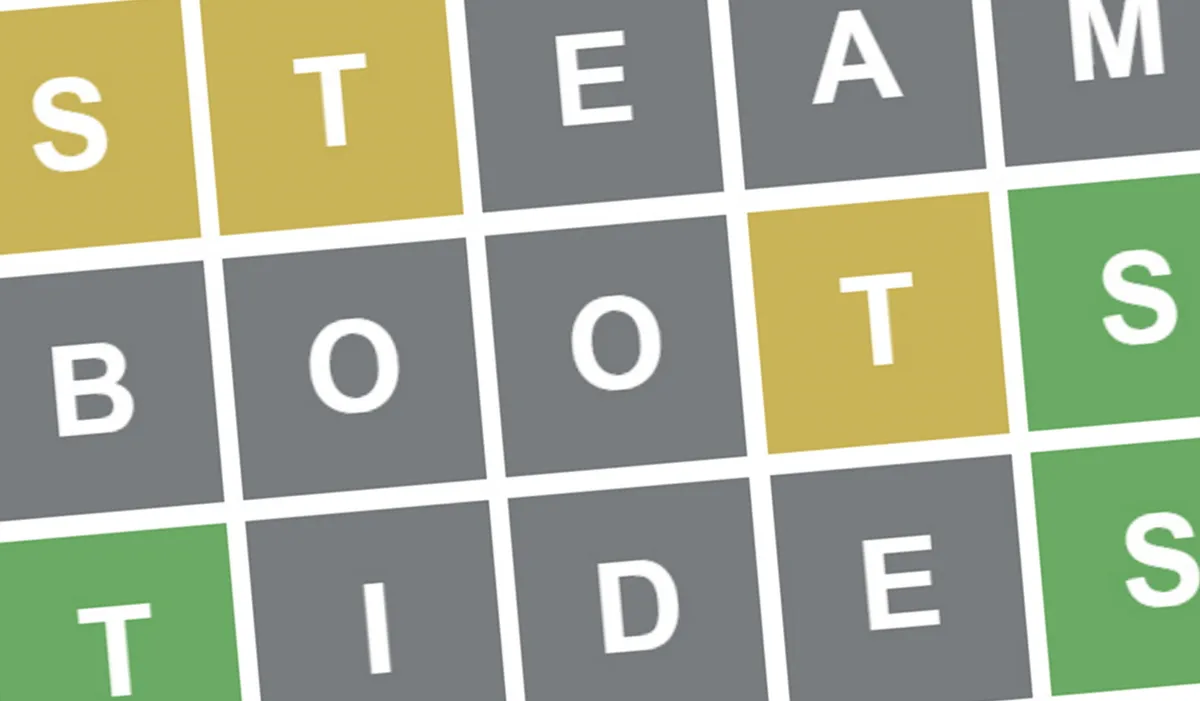
You should start with a strong word like ARISE, or any other word that contains a good mix of common consonants and multiple vowels. You’ll also want to avoid starting words with repeating letters, as you’re wasting the chance to potentially eliminate or confirm an extra letter. Once you hit Enter, you’ll see which ones you’ve got right or wrong. If a box turns ⬛️, it means that letter isn’t in the secret word at all. 🟨 means the letter is in the word, but not in that position. 🟩 means you’ve got the right letter in the right spot.
Your second guess should compliment the starting word, using another “good” word to cover any common letters you missed last time while also trying to avoid any letter you now know for a fact isn’t present in today’s answer. With a bit of luck, you should have some coloured squares to work with and set you on the right path.
After that, it’s just a case of using what you’ve learned to narrow your guesses down to the right word. You have six tries in total and can only use real words (so no filling the boxes with EEEEE to see if there’s an E). Don’t forget letters can repeat too (ex: BOOKS).
If you need any further advice feel free to check out our Wordle tips, and if you’d like to find out which words have already been used you can scroll to the relevant section above.
Originally, Wordle was dreamed up by software engineer Josh Wardle, as a surprise for his partner who loves word games. From there it spread to his family, and finally got released to the public. The word puzzle game has since inspired tons of games like Wordle, refocusing the daily gimmick around music or math or geography. It wasn’t long before Wordle became so popular it was sold to the New York Times for seven figures. Surely it’s only a matter of time before we all solely communicate in tricolor boxes.