This’ll sound familiar: Resident Evil is getting a movie reboot. Yep, another one! Just a few years after 2021’s reboot, Resident Evil: Welcome to Raccoon City, another Resident Evil reboot is reportedly in the works. Just like a zombie, this movie series seems unkillable.
Also like a zombie, it’s pretty stinky and usually rotten. The seven live-action Resident Evil films have been a string of critical flops, with none of them scoring above 38% on Rotten Tomatoes. And even if you discount snooty critics, fan scores never get above 67% for any of the six original Mila Jovovich films, either. The 2021 movie reboot was also pretty heavily panned, the television show on Netflix didn’t make anyone happy, and I don’t even know what’s going on in this gunfight from one of the CG movies
So, why take yet another stab at a Resident Evil movie adaptation? Well: money. As bad as they are, the Resident Evil movies have collectively earned over a billion dollars at the box office. And, according to The Hollywood Reporter, Zach Cregger will write and direct the new Resident Evil reboot, which got the attention of several studios.
Cregger made a name for himself as a horror director after 2022’s Barbarian, which was legit good. The Hollywood Reporter also says that Cregger’s next horror film, Weapons, is testing well (though it’s not set to be released until 2026), which has led to a bidding war over Cregger’s Resident Evil reboot, with Netflix, Warner Bros, and other studios all trying to acquire it.
As for the reboot itself, it’s reported to be “a revamp that will take the title to its horror roots and be more faithful to the initial games,” though I feel like that’s what they said about the last reboot, too? I’ve asked Netflix for comment and will update this story if I hear back.
Keep up to date with the most important stories and the best deals, as picked by the PC Gamer team.
Ever since OpenAI introduced the concept of custom GPTs, everyone’s been racing to build their own AI assistants. But here’s the thing–people often are not satisfied with the results. Either the process becomes too complex or they are in a misconception that it’s too easy.
To put it simply, creating a truly useful custom GPT that doesn’t just rehash generic responses is anything but straightforward. That’s where Weam AI comes into play, flipping the script on how to build a custom GPT. So buckle up! Whether you are seasoned AI users or just dipping toes into AI waters this guide will walk you through creating a custom GPT that actually does what you want it to do.
Understanding Custom GPTs and their Applications
Think of Custom GPTs like your sidekicks trained for specific tasks. The result obtained adds value in a specific way too. Custom GPTs have their own personality, knowledge base, and capabilities given by you. Approaching the idea this way makes it easy to understand how to build a custom GPT.
Also if you are thinking only ChatGPT is allowed to have GPTs, you are headed in the wrong direction. GPT stands for Generative Pre-trained Transformers. It changes the definition of how you see and utilize Custom GPTs.
Definition: A version of GPT which is fine-tuned using a particular data set to perform a specific task. The tasks can belong to a requirement requested by an organization or can be used for personal needs. Considering its domain-specific knowledge, the output significantly differs from that of generic use of Gen AI.
Example: Building a custom GPT for writing. It can provide content brief, suggest focus keywords, edit chunks of content for you. The data set used here can belong to fundamental guidelines, writing tone, paragraphing structure, ability to answer questions set by you.
A lot of take in, hence we have prepared a simple guide on how to build a custom GPT. But first let me show you a simple illustration explaining the concept of Custom GPTs.
Flow diagram 0.1
How the GPT model transforms into specialized versions through custom instructions, knowledge, and capabilities.
Not so simple for a beginner? Let us make one custom GPT by ourselves to get you a clear picture.
Before You Create Custom GPTs
One of the first things in the morning you do is brush your teeth. If I say you are doing it wrong, here is the correct way: make it a guide and post it in front of your bathroom mirror. Why bother? But if I say here is a toothbrush and a toothpaste which adapts your way of brushing teeth and gives fine results. The second option seems more convenient compared to the other one.
Similarly here are some of the attributes you have to consider. Understanding how to build a custom GPT does not come with a set of guidelines. It does not justify the idea correctly too.
Multi-step process: A custom GPT does multiple processes uniquely differentiating it from prompts.
Accuracy: You add interactive responses to strengthen the core concept for increasing the accuracy of the final result.
Versatile: Custom GPTs have a versatile nature, this comes from the multi-step process. For the beginning it can analyze the document and later it can provide you with multiple results.
Above mentioned attribute sets clear distinctions between custom GPTs and prompt. Moreover it highlights the difference between how to build a custom GPT vs an AI agent.
Learn how to build a Custom GPT (Generative Pre-trained Transformer) in Weam with this easy-to-follow guide for beginners.
Keeping these small details in mind we are going to debunk the myth of misunderstanding what custom GPTs are built for. We’ll do this by building our own custom GPT.
Steps to Create Your Custom GPTs in Weam AI
I am going to use Weam.ai to create custom GPT. The reason is the simplification of steps related to how to build a Custom GPT. As mentioned in the previous section the whole
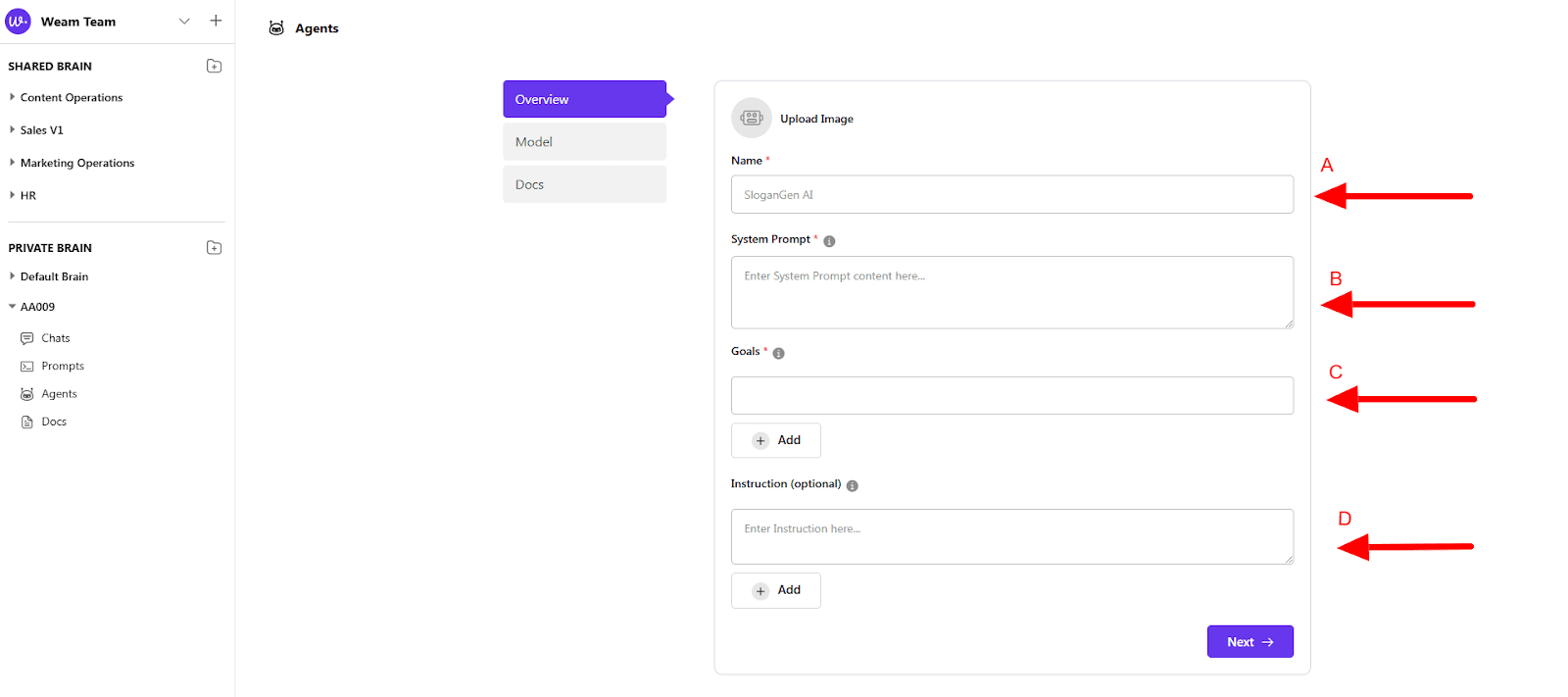
Weam dashboard to build custom GPT
The dashboard you view by navigating through the ‘Agent’ section in Weam appears something like this. Here you can find:-
Name: The name you give to your special Agent or custom GPT.
System Prompt: The multi-process prompt you provide to the agent
Goals: The response you expect from the Gen AIs to complete your task required.
Instructions: Additional instructions which will directly influence the response and your Agents behavior.
📝Quick Note for How to Build Custom GPT: We will be using the term ‘Agent’ and ‘Custom GPT’ Interchangeable. Both terms refer to similar concepts or functionalities.
Steps to build custom GPT or agents in Weam:-
Step 1: Define purpose of your Agents or Custom GPTs & trigger.
Step 2: Decide the workflow your Agents or Custom GPTs must follow.
Step 3: Once you have all the information, enter them into the A to D fields.
Step 4: Choose a model.
Step 5: Additional documents or knowledge base.
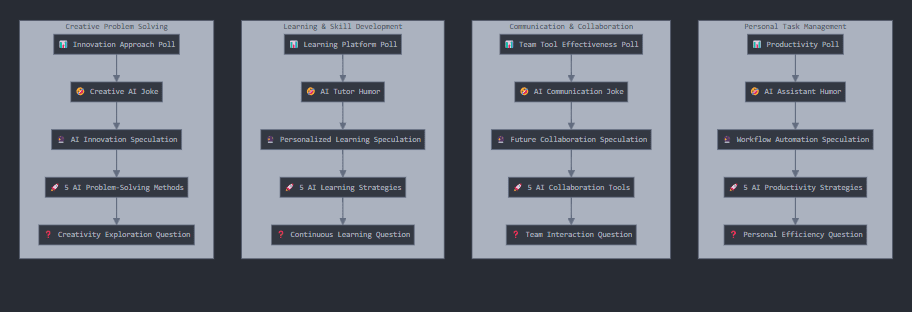
Flow diagram 0.2
Illustration of steps to follow for easy Guidance
Recently one of my colleagues John (alias) said that he wanted to be active on LinkedIn. And I believe posting on social media platforms becomes a hassle for me. Many times even I don’t have the slightest idea what I should post about. However, keeping my LinkedIn account active is an important step to boost engagement.
So we helped set up a custom GPT in John’s Weam AI account. The core need was clear.
Step 1: Define Purpose & Trigger
For every week John needs a post for LinkedIn profile. His fundamentals were clear; I need to post about what I learned about Gen AI.
Purpose: To empower professionals by creating tailored, engaging, and platform-optimized content for LinkedIn, enhancing their online presence and networking opportunities.
Goal for Custom GPT:
Create AI-powered LinkedIn post generator
Tailor content to specific professional profiles
Generate engaging, platform-optimized content
Potential Triggers: Simple one word prompt which will activate the custom GPT. For example: Start, Go, etc.
Here I have predefined triggers:
Profile Input Triggers
Content Strategy Triggers
Contextual Triggers
Step 2: Determine Workflow
The overall workflow will include four weeks, four themes, and each theme will include 5 content types.
The four week theme framework will be something like:-
📅 4-Week Theme Framework:
Week 1: AI for Personal Task Management
Week 2: AI in Communication & Collaboration
Week 3: AI for Learning & Skill Development
Week 4: AI in Creative Problem Solving
The 5 content type I have selected are:-
Step 3: Configure Core Settings
No rocket science promise! a simple intuitive easy to use dashboard to configure core settings.
Name: LCPgpt (LinkedIn Content Production GPT)
Goal: You are an AI-powered LinkedIn Content Generator specialized in creating engaging, educational posts about AI’s impact on professional productivity. Your goal is to produce a 4-week content series that explores AI’s transformative potential across different professional domains, using a structured yet dynamic approach.
System Prompt: LinkedIn Custom GPT Weam AI
Instructions:
Ensure content remains platform-appropriate for LinkedIn
Avoid overhyping AI capabilities
Provide balanced, realistic perspectives
Encourage user interaction and discussion
Stay current with AI productivity trends
Maintain professional yet approachable language
Content Quality Checklist:
Originality
Practical insights
Audience relevance
Engagement potential
Ethical AI representation
Ethical Considerations:
Transparency about AI’s capabilities
Avoiding technological determinism
Highlighting human-AI collaboration
Respecting diverse professional experiences
Step 4: Model Selection
Choosing the right model depends on various factors. Currently there are various open source and proprietary models available in the market. The fierce competition is between ChatGPT Vs. Deepseek.
Weam AI allows access to a collection of powerful Gen AI models. Yes! The platform is a multimodal platform with an amazing set of features.
Anyway here are factors which affect your selection of the right Gen AI model.
Accuracy and precision
Pick a model which has the ability to generate near perfect results. Obviously here the results are defined as not generic rather depending on the response you requested. Do consider models with minimal hallucinations rates and ability to maintain long contextual windows. The last two mentioned attributes are important as customGPTs perform multiple step processes.
Contextual Understanding
In the field of AI it refers to an AI system’s ability to understand and interpret information by taking its environment, background, and intent into account.
Specialized Capabilities
Every LLM or Gen AI model has its own uniqueness. Claude is good at creative tasks, Gemini is a good resource collector, and ChatGPT has better analytical, logical and reasoning skills. Read all about comparisons between Gen AI models like ChatGPT Vs Gemini, Claude Vs ChatGPT, etc. It will help you understand which Gen AI model is better in terms of content generation for your custom GPT. To build a customGPT for writing, I’ve picked ChatGPT 4o.
Cost Considerations
When using it for personal use it is easy to decide which is the best for you. However when your entire team is using a Gen AI tool the cost can scale. In the midst of all these finding true value in your investment becomes a hassle. Hence cost is one of the primary factors that will influence your model selection process.
Practicality
A practical use case approach is the best way to land a decision. Clearly stating requirements, evaluating performance by taking various parameters into consideration. Lastly, conducting a comparative test will solidify your decision.
If you feel the whole selection methodology is quite complex there are certain predefined approaches in choosing the right LLM model for you.
Step 5: Integrate Knowledge Base
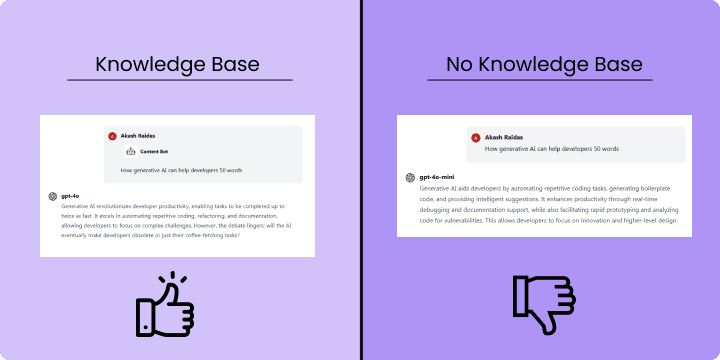
Just like humans learn from their experiences, a knowledge base strengthens the Custom GPTs ability to generate insightful responses. A knowledge base integration empowers your custom GPT to:-
Provide precise, domain-specific insights
Generate more accurate and relevant content
Move beyond generic responses to specialized understanding
Responses show difference between integrating knowledge base and not having a knowledge base
Best Practices for Using Custom GPTs
Strategic
A bit more emphasis on the nature when you begin to create Custom GPTs in Weam AI. Your unique approach meets best requirements and continuous improvement mechanisms.
Define clear, specific purpose: It ensures you are investing your resources and time on initiatives that are driving results. Well-defined purpose acts as a guide fostering innovation at the same time not disrupting current activities.
Understand Unique Organizational Needs: Optimizing tools according to your unique needs. Unique opportunities of growth are often hidden in relevant and best optimization of tools.
Iterative improvement mechanisms: Implementing iterative improvement mechanisms allows for continuous refinement and adaptation, ensuring long-term sustainability and relevance.
Technical
Particularly focusing on system prompt structure, prompt design principle, and integration checklist. The checklist accurately justifies your idea of how to build a custom GPT for particular purposes.
System Prompt Architecture: Design a comprehensive, layered prompt that clearly defines the GPT’s identity, capabilities, and interaction boundaries.
Instruction Precision: Create unambiguous, specific instructions with concrete examples to ensure consistent, targeted model performance.
Continuous Validation: Develop a rigorous testing framework that systematically evaluates the GPT’s reliability across diverse interaction scenarios.
Practical
Let’s go beyond technicality to address how to use Custom GPTs for the user-end side. Focusing on the real-world usability and responsible deployment of custom GPTs.
User Experience Design: Craft clear, intuitive initial instructions that immediately communicate the GPT’s purpose and expected interaction style.
Error Handling Strategy: Implement robust fallback mechanisms and clear guidance for scenarios where the GPT cannot complete requested tasks.
Privacy and Compliance: Carefully define boundaries for data handling, ensuring user interactions respect confidentiality and regulatory requirements.
Maintenance and Updates of Custom GPTs in Weam AI
Here are five quick tips to keep in mind after you are no more stuck at how to build custom GPTs. The tips are for the maintenance and updates.
Regularly Update Training Data: Ensure your custom GPT is trained on the most recent and relevant data. Regularly adding new datasets helps the model stay current with trends and information in your industry.
Monitor Performance Metrics: Continuously track key performance indicators such as accuracy, response relevance, and user satisfaction. Monitoring helps identify areas where the model may need tweaking or retraining.
Implement Version Control: Use version control systems to manage different iterations of your custom GPT. This allows you to track changes, compare performance over time, and roll back to previous versions if necessary.
Fine-Tune Hyperparameters Periodically: Reassess and adjust hyperparameters to optimize model performance. Fine-tuning can significantly enhance the effectiveness of your GPT without the need for extensive retraining.
Stay Informed About Updates in Weam AI: Keep an eye on the latest features, updates, and best practices provided by Weam AI. Just like this guide on how to build a custom GPT we also explore various capabilities of Gen AI platforms. Leveraging new tools and functionalities can improve your custom GPT’s capabilities and efficiency.
Why build custom GPTs in Weam AI
Weam AI is a productivity focused platform offering AI as a service. It allows you to access multiple LLMs, use those LLMs to make custom GPTs, and save your prompts in the prompt library. To streamline your workflow all these features are available in a shared and private workspace.
We aim to foster innovation, collaboration, and help companies maintain their accelerated pace towards their goals. Now you don’t have to spend countless hours of meetings deciding on how to build a custom GPT. Weam AI democratizes and simplifies the process. Turning complex AI development into an intuitive, user-friendly journey.
Conclusion
So this was our simple guide on how to build a custom GPT in Weam AI. Whether you’re solving niche business challenges or exploring creative applications, custom GPTs represent the frontier of personalized AI technology. By breaking down barriers and providing robust tools, Weam empowers developers, entrepreneurs, and innovators to craft intelligent, specialized AI assistants.
The journey from concept to functional AI is now just a few strategic steps away, inviting you to reimagine what’s possible in the rapidly evolving landscape of artificial intelligence. Build your own Custom GPTs or helpful agents in Weam. Start for free!
FAQs
What are custom GPTs?How to build a custom GPT?
A Custom GPT is a tailored version of the GPT model that allows users to customize its responses and behavior to suit specific needs or tasks. Access Weam AI to understand their easy build and more use cases.
How to change a custom-GPT model in ChatGPT?
Learning how build a custom GPT or agent in Weam AI, but confused which model to choose. You will find there is a model selection option. Here you are able to choose the Gen AI model which you prefer for your practical implementation.
Do I need coding skills to create a Custom GPT?
No, creating a Custom GPT does not require any coding skills. The process is designed to be user-friendly and accessible to beginners.
What are the prerequisites for building a Custom GPT in Weam?
You need to have an account with Weam and access to the Agent builder feature. However you can Start for Free! The first 200 messages are free in Weam for you.
What are some best practices for creating effective prompts?
Use clear and specific language in your prompts, define the expected tone and style of responses, and consider including examples of desired interactions.
Much of the budget for developing a new product for companies goes to the design phase. From the early stage of brainstorming to the final production-ready prototype, you can spend thousands of dollars to build and revise a design; and that’s for a relatively simple, non-electronic product, like a cookware or a backpack. Anything more complicated, such as Bluetooth radio or remote control, will cost you tenfold or more. Designing a product is not cheap, but it doesn’t always mean you can’t keep it to a minimum. The thing is, you have to keep it at near-perfect efficiency every step of the way. For a lot of small companies and startups, the most practical way to achieve that is by working with an engineering firm.
And to be even more specific, the engineering firm has to have at least one professional industrial designer on the team. According to the BLS (Bureau of Labor Statistics), an industrial designer devises an efficient system where workers, machines, materials, energy, and information may work together in harmony to make products or provide services. In other words, the work of an industrial designer focuses on coordinating all factors involved in production to achieve maximum efficiency – or reducing cost whenever possible – without sacrificing quality. Quite a mouthful indeed, but you get the idea nonetheless.
Mind you that most industrial designers typically have at least a bachelor’s degree in engineering, architecture, and fine arts. The vast majority of design programs include multiple courses in CADD (computer-aided design and drafting), 3D modeling, business, industrial processes, manufacturing methods, and drawing, among others. This is where you need to practice some due diligence; not every engineering firm has an industrial designer as part of its core team. An engineering firm that specializes in architectural design would prefer hiring a Bachelor of Architecture rather than a Bachelor of Engineering. And as you would expect, you want to work with a firm loaded with professionals of the latter category.
Note: BLS’ list of occupations can be pretty confusing, but not necessarily inaccurate, at times. For example, the bureau makes a distinction between industrial designers and industrial engineers. They are all engineers, and share similar functions within an organization. Some firms hire both, because their roles are often interchangeable. Industrial designers focus on developing new products or improving the existing ones, whereas industrial engineers hone in on creating efficient manufacturing methods.
To give you an idea of why or how industrial designers can be the defining factor in your design decision, let’s take a look at their typical roles and responsibilities in an industrial engineering firm:
Determine the requirements and parameters for product designs
Conduct research into how a product might be used and who might use it
Create product sketches (or CAD modeling) as visualization of design ideas
Produce multiple photorealistic renderings of product designs
Create physical prototypes
Examine manufacturing requirements, including materials and workforce, to determine production cost
Collaborate with other specialists, such as prototype makers, electrical engineers, and manufacturers to evaluate designs
Determine whether the materials and manufacturing process can come at a reasonable cost
Analyze product safety, function, aesthetics, ergonomics, and general user-friendliness
Present product design ideas to stakeholders/clients for approval
An engineering firm doesn’t usually mention if it specializes in any specific product category, but the industrial designers in the firm usually do. It makes perfect sense for the firm to avoid making explicit reference to the matter because there might be multiple industrial designers, each with a different specialization, working in the organization. Some of them are perhaps put in charge of a medical equipment project or home appliances, while others develop ideas for sporting goods, housewares, furniture, jewelry, and so on.
Regardless of the product category, industrial designers work to minimize the use of resources (which may include energy, workforce, materials, etc.) to reduce production costs as much as possible while still aiming for the best results. Their main duty in an engineering firm is to circumvent design constraints by either mitigating risks of design failures (such as removing unnecessary elements) or using them as advantages to execute minimalist design approaches.
When developing a product, industrial designers take into account how consumers might use the product and test different designs to see how each iteration looks and works. They need to figure out an effective balance between good aesthetics, functionality, durability, and overall ease of use. However, the most important thing of them all is often the target consumers’ purchasing power. It makes little sense for companies to build the greatest product ever, if it ends up being too expensive for its intended buyers. For instance, a tech development company can probably release a high-performance laptop series any day of the week, but if the product is meant to fill the market for high school students with a purchasing power of $1,000 or less, well then there’s definitely something very wrong in the design and marketing aspects of the project.
Every product is intended to fill a market gap. You can also say that a product exists because there’s a demand for it. And the market is segmented by – once again – purchasing power. Each segment contains distinct demographics, priorities, and interests. Product design services are often determined by which segment you’re targeting. You come up with a product that fills specific needs for certain groups of people. This is the main reason companies offer different product tiers. Let’s just say “good” sits at the bottom, followed by “better” in the second place, but both are under the “best” tier. Now if we refer back to our laptop example above, the “student” variant is likely the good option, whereas the business model is a step above, before finally you arrive at the high-end version at the top.
You might think that an engineering firm only does engineering stuff, and you might be right, but not entirely accurate. Industrial designers do not develop a new product design from nothing. They work with other professionals in the firm, such as manufacturing experts, market analysts, and even other engineers. An engineering firm does primarily design a product based on your specifications, but it also provides a range of other services to ensure that the end-product is profitable for your company.
Besides offering the full range of industrial designer services as mentioned earlier, an engineering firm also performs thorough market research on your behalf. The firm typically uses various tools such as phone interviews, focus groups, questionnaires, and surveys to figure out potential buyers’ preferences and purchase history. Market research also helps determine the product’s appeal to the target demographics, existing competitors along with their price points, and trends. While it might not directly provide ideas as to how the product should be physically shaped, the data gathered from such a research give invaluable insights into the design decisions and where to position the product in the market. Some analysts also use data available from external sources, such as census and economic reports.
This is how you gain a basic understanding of what products people want and at what price. Combine those insights with industrial designer’s expertise, and you get the right formula to plan for a design and aim for the desired profit margin.
Product design cost
Before you get to the final version of a product, you need to go through a lo t of different steps from ideation to evaluation, which may include safety certification, depending on the type of product. In the old days, prototyping was one of the most expensive design steps. When you work with a modern prototyping firm, almost every single design process is done on 3D CAD modeling software. Think of it as a “virtual prototyping” to test and analyze dozens or more design ideas on a computer screen.
While a physical prototype remains necessary, you won’t likely need it until you get to the final pre-production prototype iteration. Everything else before that is easily accessible and modifiable on the software. 3D modeling enables industrial designers to experiment with countless design iterations in a digital environment, where they can make use of all kinds of shapes, materials, mechanical components, colors, textures, and dimensions as needed. They can make adjustments with only a few clicks, and let the software do the rest. Whether you want to change the geometry, add/remove design elements, or reposition parts, the software can do everything for you almost in an instant. In case something doesn’t work, you can revert the changes or modify something else.
Let’s not forget that you see the design (on the screen) as a three-dimensional object. If your product is supposed to have some moving parts, or mechanical components if you like, the software can animate the model to help you see the product in action. Some programs even allow for full-fledged simulation for FEA, load cases, etc. In general, 3D CAD modeling and simulation software removes the need for physical prototype analysis. Another good thing about advanced CAD software is that you can configure it to calculate the cost of materials based on the model. It’s also easy to replace one material with another to see the difference in production cost. And because it’s automatic, the likelihood of inaccuracy is virtually zero.
For more than 15 years, Cad Crowd has been working to connect companies, big and small, as well as startups and individual clients with some of the most reputable engineering firms in the country. Whether you plan to create an electronic product, furniture, home appliances, hi-tech drones and everything else in between, Cad Crowd has just the right engineering firms to optimize your design process efficiency.
MacKenzie Brown is the founder and CEO of Cad Crowd. With over 18 years of experience in launching and scaling platforms specializing in CAD services, product design, manufacturing, hardware, and software development, MacKenzie is a recognized authority in the engineering industry. Under his leadership, Cad Crowd serves esteemed clients like NASA, JPL, the U.S. Navy, and Fortune 500 companies, empowering innovators with access to high-quality design and engineering talent.
In regular Darkest Dungeon 2, your mind, body and soul are fixed upon the points of a horrible mountain, looming over the inn at the end of every foetid wagon ride. It’s sort of Journey for plague doctors, or possibly The Hobbit: Cosmodick Turpin Edition. I enjoy feeling the weight of those distant peaks upon my brain and eyeballs, but it’s nice to fire up Kingdoms, the new free DD2 game mode that’s launched just today, and have a choice of disasters to trundle toward.
Over here is an inn being overrun by slathering beastmen. Over there is another, safer inn, but it’s inconveniently perched behind a nest of tentacular cultists. In the middle there is you, with the customary DD party of half-dead, half-mad adventurers, equipped with an exciting smorgasbord of sharp edges, cursed artefacts, phobias and diseases. Let us proceed laughing and wailing to the launch trailer.
Freshworks Inc. (NASDAQ: FRSH) creates AI-boosted business software anyone can use. Purpose-built for IT, customer support, and sales and marketing teams, our products are designed to let everyone work more efficiently and deliver more value for immediate business impact. Headquartered in San Mateo, California, Freshworks operates around the world to serve more than 67,000 customers, including American Express, Blue Nile, Bridgestone, Databricks, Fila, Klarna, and OfficeMax. For the freshest company news, visit www.freshworks.com and follow us on Facebook, LinkedIn, and X
Few things can feel as overwhelming as following a non-traditional career path. After all, leaving the status quo, and by that we mean the regular 9 to 5 experience, can be quite the feat.
As such, before you delve into your new entrepreneurial journey, there are a few steps we would suggest you follow first.
Learn From Successful Digital Companies
Owning a thriving online business in this day and age means that one has to make many great decisions and learn a lot from the mistakes on the way to the top. So, what better place to get a well-rounded knowledge base than from an existing company?
In this section, we’ll be taking a look at a thriving sector, that of iGaming. After all, as per recent statistics, the sector in question is set to reach $107.70 billion in 2025.
So, let’s analyze one current platform that has been gaining plenty of traction – Thunderpick. For those who haven’t accessed this site before, Thunderpick is a crypto casino that also provides esports and sports betting.
As such, the first lesson you can get from here is that offering variety can ensure more people are interested in your company. Especially when considering the fact that you won’t have to worry as much about physical limitations as your focus will chiefly be contained in a digital space.
If you’re wondering what a crypto casino is compared to a regular online casino, this actually brings us to the second lesson to learn from this platform, which is embracing innovation with open arms. The only difference is that Thunderpick accepts cryptocurrencies as a payment method.
You may have heard that crypto is a great investment opportunity but it’s actually an even better payment method. This is due to the fact that it has cheaper and faster transactions due to its decentralized nature.
Of course, this doesn’t mean you have to specifically offer crypto as a payment method. The lesson you can take from Thunderpick is to keep an eye on the latest advancements and see how they can be leveraged to benefit your business.
Something else you will notice while perusing the site in question is how simple it is to explore, regardless of the device you’re using. Ensuring that your platform is easily accessible on various devices is extremely important, especially when considering that many people use their phones even for major purchases.
Apart from this, you’ll see how major features like promotions and 24/7 support are highlighted properly. Regardless of the type of business you have, you should ensure that your most attractive features are easily visible to your clients.
Focusing on Research and Planning
It’s not quite enough to study another business as there is plenty more you need to learn. As they say, knowledge is power, and you need to take any edge you can have in the cutthroat world of business.
So once you’ve written down all the inspiration you got from a successful business it’s time to expand your entrepreneurial skills further. This can be achieved in a variety of ways, like by exploring online courses offered on platforms like Udemy.
Such courses will help you understand important aspects such as your target audience and how to handle your finances. All of these things are vital for your overall success.
You should also make sure to work on crafting a proper business plan. And if you’re struggling with this, there are plenty of online guides that will help you with this.
Establishing a Strong Online Presence
Since you’re starting an online business, the only way for you to achieve proper visibility is by establishing a strong online presence. Alas, this goes well beyond building a user-friendly website – although this is still a very important aspect.
You should use all the tools available to you, such as social media. Nowadays, most people find new services and products through major social platforms.
As such, you shouldn’t shy away from creating accounts on every major platform. Just make sure to take into consideration which ones are most used by your target demographic.
Just don’t forget to keep a cohesive look. This way, you’ll also craft strong branding that will make you easily recognizable to your users.
This will also tie in with any digital marketing campaigns you may want to start. Most social media platforms allow you to launch ads and monitor how well they’re doing directly through the platform for relatively cheap.
However, one person cannot be expected to be able to achieve this all on their own. After all, there are few people who know how to build a website along with having social media and marketing skills.
You may be worried about the cost of having people do this for you. This is why we’d suggest taking a look at the available AI tools to make this easier, and cheaper, for you.
Conclusion
Starting an online business has never been easier thanks to all the information available online. And whilst you may feel like some hurdles are insurmountable, armed with the proper knowledge, you’re sure to set yourself up for success.
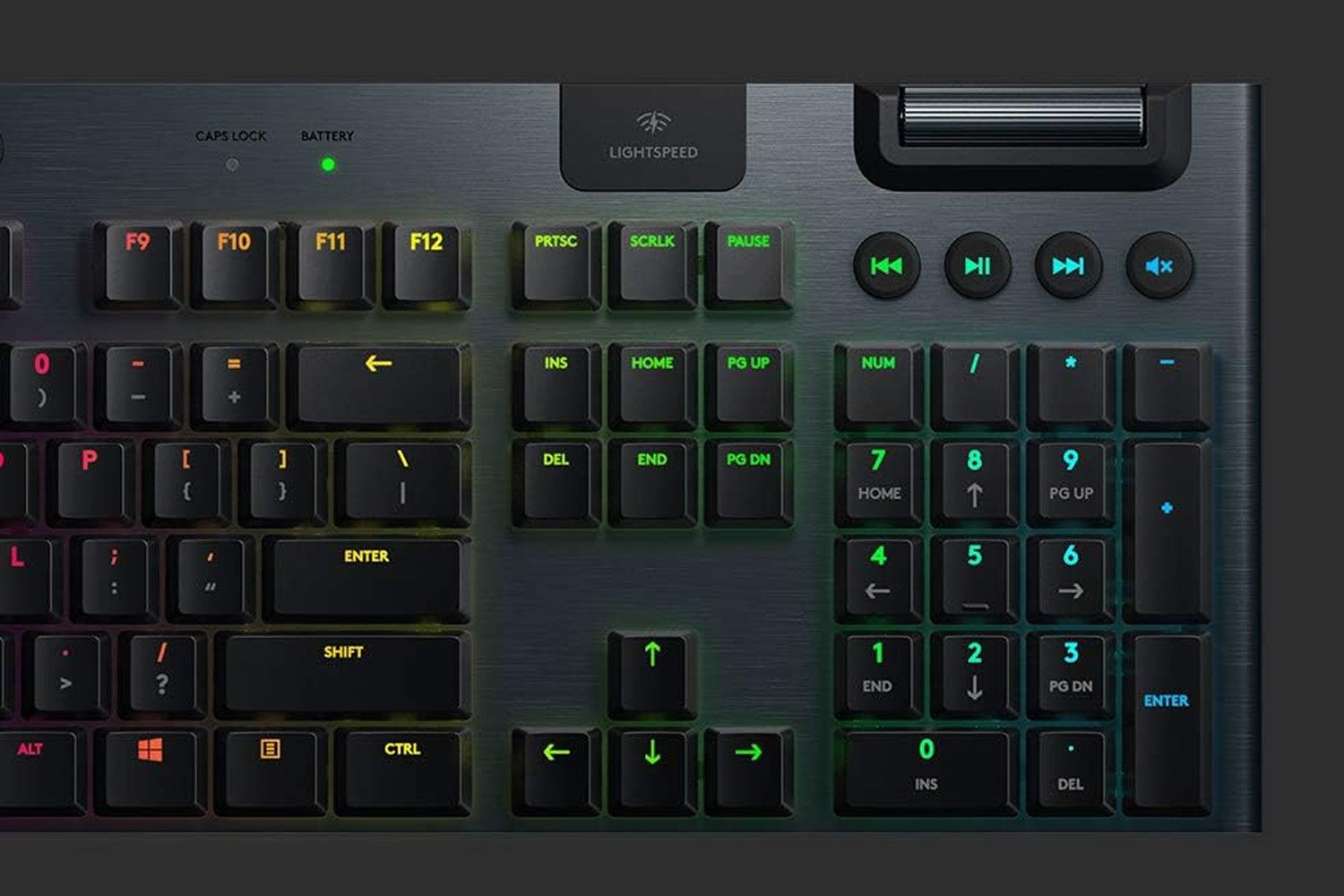
The keyboard comes in a stylish black with RGB advanced lighting customization. It has dedicated media controls, five programmable keys, and multiple profiles you can swap between based on the game you’re playing.
The linear switches have, well, a linear behavior to them. The resistance you feel when pressing down on the keys are consistent from the when you start first touch to when they meet the back of your keyboard. The linear switches are also on the quieter side, so if you’re looking for something that feels good to use but is going to be for a shared space like an office or a house with roommates, going linear isn’t a bad call.
The tactile switches are my personally preferred option. When you press down against a tactile switch key, you’d feel the most resistance at the beginning of it’s path, which then smooths out once over that initial threshold. This feels the most satisfying in my opinion, whether you are typing or gaming. They have a gentle sound that isn’t too obtrusive, but is still more noticeable than the linear switches.
And lastly we have the clicky switches. These are what mechanical keyboards are all about. As you could tell by their name, they’ve got a clicky behavior and a clicky sound. This is the PC equivalent of a driver that mods their car exhaust to boom throughout the entire neighborhood. It’s obnoxious. It’s unnecessary. But damn does it feel good to be behind that wheel, errr, keyboard.
Hello, Xbox gamers! Get ready to tear up the court in the most intense hoverboard basketball experience out there. Metaball is free to download and play, and we’re starting the year off right with a huge update that will take the game to new heights – from competitive Ranked matches to a challenging Story Mode, there’s something for everyone. Let’s dive into some of the highlights of this action-packed update, live today!
Master Your Skills with the Enhanced Academy
Whether you’re new to Metaball or a seasoned pro, the Metaball Academy has been redesigned to help you up your game. Introducing an improved lesson system now with step-by-step tutorials aimed at making players better. Perfect advanced dribbling techniques, perfect your aim, and perfect the swing mechanics only found in Metaball. With guided training paths, the Academy will have you dominating the court in no time.
Dominate the Court in Story Mode
Metaball players can now experience a challenging Story Mode, ideal for solo players. Become the rising star eager to prove one’s skills in the hoverboard basketball scene; go against rival teams, complete special missions, and conquer every challenge. The Story Mode is your chance to show you’re the best in town while enjoying a deeper connection to the world of Metaball.
Rise Through the Ranks in Ranked Mode
Competitive players, rejoice! Ranked Mode brings in a ladder system that will let you rank through divisions, gain seasonal rewards, and access to a special shop, and show your skills to the world. This Ranked Mode is nothing like casual mode; it requires careful strategy and precise timing. To prepare for it:
– Warm Up in Casual Matches: Use Quick Match games to fine-tune your techniques and adapt to different playstyles.
– Study the Maps: Utilize all new courts, including new 1v1 and 2v2 arenas to strategize and plan out your moves.
– Use the Academy Training: Perfect deep mechanics in the Academy to give yourself a really high level of skill and a competitive edge.
Put it all together in Ranked Mode – the ultimate test!
Exciting New Maps
Get ready for the most intense competition on the stunning courts in our New Year Update, from high stakes 1v1 battles to strategic 2v2 showdowns. These arenas offer fresh and dynamic gameplay on each and every map.
Unlock Exclusive Rewards with the New Metapass
The new season’s pass is here, and with it, a whole slew of exclusive items and cosmetics to make your Metaball experience even better. From sick hoverboards to legendary outfits, the Metapass has got something for every kind of player. Complete challenges to level up, and show off your rewards on the court. The grind has never felt this good!
Don’t Miss Out on a Free Limited-Time Legendary Outfit
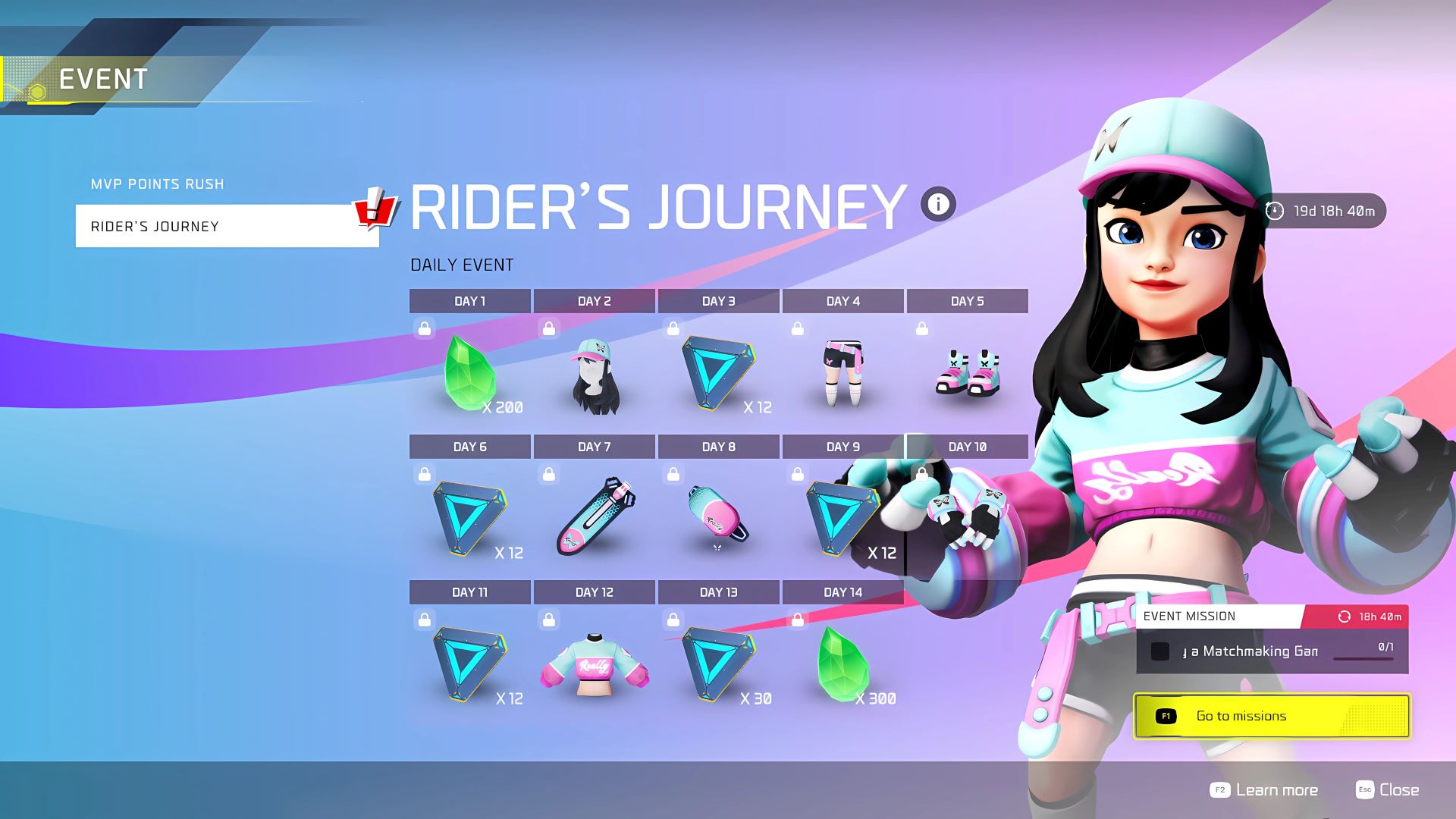
Show off your style with our free limited-time Legendary Outfit! Collect exclusive parts through daily missions from January 24th, 2025 – February 28, 2025. Whether you’re in Ranked Mode or Quick matches, show off in this very special reward before it’s gone forever.
Join the Action Today
Download Metaball for free from the Microsoft Store and get started. Whether you’re gunning for glory in Ranked Mode, diving deep into Story Mode, or just showing off your style, there’s never been a better time to play.
Follow Metaball on X, YouTube, TikTok and Discord for the latest news, updates, and community events. Catch you on the court!
Metaball
Bucketplay Inc.
☆☆☆☆☆ 303
★★★★★
Metaball is a free-to-play, crossplay-enabled multiplayer sports game with fast-paced action.
Play as a Rider, aiming for fame and wealth by winning Metaball League games with your teammates.
Hop on your hoverboard, use the chain to swing the ball, and perform various moves—dunk, shoot, block, and steal. Boost your speed and perform double or triple jumps using nitro.
Customize your playstyle with Perk Points in different Perk Trees for an edge in matches.
Compete in 2v2 and 3v3 Quick and Ranked Matches, or practice your skills in Academy, Champion Road, Free Play, and Custom Match modes.
Earn MVP points after each match to unlock rewards, level up your Metapass, and collect your favorite items!
Since the update of CMake Tools 1.4.2 (Incorrect run folder #1395) the working directory of the launched binary isn’t the workspace directory anymore, but the build directory (due to that files loaded with relative paths are not found anymore).
I tried to figure out in the release notes and the settings if there were some changes that cause that behavior, but I’m not able to find a reason or a solution for that.
The setup is:
Linux
VSCode 1.14.1
CMake Tools 1.4.2
I tried to set the cwd using launch.json, but I’m not able to get it to work.
I loved the sleek silhouette and wood grain accents of this Lasko tower fan. It was also the third-quietest fan that I tested, measuring just a few decibels noisier than the Honeywell. On top of that, it features Bluetooth, which lets you control the oscillating fan via an app on your phone.
The problem is that the app is all you get as far as remote controls are concerned. That isn’t ideal for a shared space, as the fan can only connect with one device at a time. In other words, if someone else pairs with the fan, your connection gets cut.
That might be forgivable if the app offered advanced features like voice controls or the ability to set a custom schedule, but it doesn’t. You can turn it on and off, turn the oscillation feature on and off, adjust among three speed settings or start the sleep timer; the same controls as you’ll find on the fan itself. It doesn’t ask for any permissions aside from Bluetooth access, the app doesn’t seem to offer a privacy policy at all. All of that makes this Lasko fan easy to skip at $80.
Vornado V-Flow Air Circulator Tower Fan
Ry Crist/CNET
The Vornado V-Flow tower fan features a neat-looking build that twists the fan’s grille around the cylindrical base. It’s one of the best-looking tower fans I tested, but it doesn’t oscillate like a traditional tower fan. Instead, it relies on that twisty design to move a wider field of air throughout the room.
It worked well enough in my tests when I had it aimed at me, but coverage varied at those side angles, where the airstream is positioned lower or higher due to that diagonal grille. The bigger issue was that the Vornado V-Flow was the noisiest fan I tested, ringing in at 50 decibels at the highest of its three speeds from a distance of 30 inches. On top of that, my remote wouldn’t work, which echoes frustrations I’ve seen from user reviews at retailers where the V-Flow is sold. That, plus a lack of features beyond the usual sleep timer, has me saying no thanks to Vornado’s $70 price tag here (and I’d probably skip it during a sale too). That’s a shame, as Vornado’s five-year warranty was the best among all of the fans I looked at for this roundup, and more than twice as long as you get with the $550 Dyson TP04.
AmazonBasics Oscillating 3-Speed Tower Fan
Ry Crist/CNET
Amazon continues to sell a growing variety of products under its AmazonBasics brand and these days that includes a tower fan. As the name suggests, it isn’t anything too fancy. The remote batteries don’t come included, but you at least get a couple of natural wind settings on top of the typical low, medium and high speed settings.
Unfortunately, I had a disappointing experience with this fan. The remote stopped working shortly after I started testing, and the fan detached from its flimsy base after a few moves between rooms. Despite its 35-watt power draw being the lowest of all the fans I tested, the airflow was weak, even at the highest setting. At $60, this tower fan isn’t worth the price.
Unfortunately, most tower fans won’t work very well with smart plugs.