Sharpen the blade and brace for a journey steeped in myth and mystery. WUCHANG: Fallen Feathers has launched in the cloud.
Ride in style with skateboarding legends in Tony Hawk’s Pro Skater 1 + 2, now just a grind away. Or team up with friends to fend off relentless Zed hordes in the pulse-pounding action of Killing Floor 3.
The adventures begin now with nine new games on GeForce NOW this week.
Rise From Ruin
Nothing is forever.
Dive into the hauntingly beautiful world of Ming Dynasty China in WUCHANG: Fallen Feathers, where supernatural forces and corrupted souls lurk around every corner.
Step into the shoes of Wuchang, a fierce warrior battling monstrous enemies and the curse of the feathering phenomenon. Every decision and weapon swing carves a path through a world that’s as treacherous as it is breathtaking. The game’s rich lore and atmospheric storytelling pull players into a dark, soulslike adventure where danger and discovery go hand in hand.
Stream the game in all its gothic glory with GeForce NOW, no legendary hardware needed. Powered by a GeForce RTX gaming rig in the cloud, GeForce NOW enables members to stream instantly across devices and immerse themselves in epic combat and stunning visuals. Ultimate members can soar to new heights and stream at up to 4K resolution 120 frames per second or 240 fps for even smoother frame rates — all at ultralow latency.
Gravity Is Optional
Ollie on, game on.
Drop in, grab a deck and get ready to grind — Tony Hawk’s Pro Skater 1 + 2 is kickflipping their way onto the cloud, joining the newly launched Tony Hawk’s Pro Skater 3 + 4. Drop back into the iconic skateboarding games with legendary pros, an era-defining soundtrack and insane trick combos.
Whether chasing high scores in the warehouse or spelling out S-K-A-T-E in school, these classics deliver all the gnarly action and style that defined a generation. Skate as legendary pros, master iconic parks and pull off wild tricks in Tony Hawk’s Pro Skater. Tony Hawk’s Pro Skater 2 ups the ante with new moves, create-a-skater mode and even more legendary levels to conquer.
With GeForce NOW, ollie into the action instantly — no installs, no updates, just pure skateboarding bliss across devices. Hit those perfect lines in crisp, high-resolution graphics, enjoy ultralow latency and keep progress rolling even on the go. It’s the ultimate way to shred, whether gamers are seasoned pros or just starting out.
Adventure Time
Face the horde.
Descend into chaos in Killing Floor 3, a next-generation co-op first person shooter where players are humanity’s last defense against the relentless Zed horde, bioengineered monstrosities created by a sinister megacorporation. Take on the role of a Specialist, each with unique abilities, and face ever-evolving waves of smarter, faster enemies in atmospheric, gore-drenched arenas. Customize the arsenal, master new agile movement options and unleash powerful gadgets to turn the tide of battle. Use “Zed Time” to slow the action, exploit deadly environmental traps and upgrade gear while fighting for survival to stand strong.
In addition, members can look for the following:
Abiotic Factor (New release on Xbox, available on PC Game Pass, July 22)
There are over 600+ references to essential oils in the Bible and 33 oils are named.
This gives us a good jumping off ground to how oils were used in Bible times as well as how they can be used today!
But oils aren’t JUST for medicinal purposes or ritual cleansing, they also affect your emotions too, and the Bible speaks to that effect in:
Proverbs 27:9
Isaiah 61:3
Hebrews 1:9
Psalm 45:7-8
Oils are referred to as the oils of gladness. All of the mint and citrus oils have a joyful scent to them that affect your amygdala gland and make you HAPPY! Take that depression! 💣 Melissa and Deep Blue are also great for depression, but those two aren’t specifically listed in the Bible.
Essential Oils in the Bible That Starts with A – Z
God packed the Bible with beautiful, fragrant oils, and every single one has a purpose! 💧 From healing and using for medicinal purposes and using in your cooking to using in religious rituals or burials, these essential oils weren’t just nice-smelling extras…they were powerful tools used by God’s people to live a holy life.
Whether you’re curious about how they were used or looking for natural ways to incorporate them into your day, this A–Z list will inspire awe in both your heart and your senses. 💕
Be sure to check out my other A-Z lists too for more fun! 🥳
Let’s dive right in…
• Essential oils in the Bible that starts with A
Acacia (Isaiah 41:19 ESV)
Used for in the Bible: commodity/form of payment. The wood was used to create things such as the Ark of the Covenant, the Table of Showbread, the Altar of Incense, and the Tabernacle, as well as small lumber products and bowls. The oil from the acacia tree’s fruit was used to make soap and massage oil
Used for nowadays: perfume, moisturizing and soothing skin
Where to buy: none available from a trusted source
Aloes (Sandalwood) (Psalm 45:8 ESV)
Used for in the Bible: incense, embalming, preparing bodies for burial, religious rituals, healing, anointing, natural fragrance for the bedroom (Proverbs 7:17), used to set apart people and objects as holy
Used for nowadays: supports the cardiovascular system, acne, nervous tension, antidepressant, exhaustion, laryngitis, Alzheimer’s Disease, back pain, cartilage repair, confusion, exhaustion, moles, dry skin, vitiligo, circulation, hiccups, lymphatic system, menstrual problems tuberculosis, calms the mind
Used for in the Bible: anointing, healing, fragrance
Used for nowadays: ulcers, asthma, depression, headache, upset stomach, appetite stimulation, arthritis
Where to buy: none available from a trusted source
Cassia (Psalm 45:8 ESV, Exodus 30:24 ESV)
Used for in the Bible: domestic spice, colds, colic, nausea, healing, anointing, commodity/form of payment, fragrance, spiritual cleansing, purification
Used for nowadays: supports the cardiovascular system, circulation, thickens hair, arthritic pain, stress relief, bug repellent, immune support, self-assurance, courage, unashamed, shyness
Used for in the Bible: depression, weak heart, tranquilizer, healing, anointing, natural fragrance for the bedroom (Proverbs 7:17), skin conditions, commodity/form of payment
Used for nowadays: sexual stimulant, circulation, colds, digestion, exhaustion, flu, infections, warts, body acceptance, intimacy
Used for in the Bible: incense, religious rituals, medicinal, promotes reflection, skincare products, fragrance
Used for nowadays: fragrance, Lyme Disease, respiratory, digestive issues
Where to buy: none available from a trusted source
Coriander (Exodus 16:31 ESV)
Used for in the Bible: dysentery, measles, nausea, toothache, hernias, one of the bitter herbs designated to be eaten as Passover. Coriander has been found in Ancient Egyptian tombs along with other offerings such as mustard seeds, parsley, and lotus seeds
Used for nowadays: arthritic, colds, measles, migraine, flu, nausea, poor circulation, colic, gout, menstrual pain, true to self
Used for in the Bible: used in religious ceremonies, perfumes, used in the bridegroom’s garland at weddings. The Ancient Egyptians used roses in religious ceremonies, and roses have been found next to mummies in tombs
Used for in the Bible: spice, used for tithing, used in mummification practices
Used for nowadays: balanced zeal, considerate, respectful
Where to buy: none available from a trusted source
Cypress (Genesis 6:14 NIV; Isaiah 60:13 ESV)
Used for in the Bible: menstrual flow, urinary system, respiratory system, Noah’s Ark was made of “gopher” wood (which is a cypress tree), commodity/form of payment, supports the circulatory system
Used for nowadays: arthritis, bronchitis, cramps, hemorrhoids, insomnia, intestinal parasites, varicose veins, water retention, energy, fever, gallbladder, influenza, lung circulation, whooping cough, wounds, flexible, trusting, adaptable
Used for in the Bible: gift from the wise men to baby Jesus, incense, commodity/form of payment, medicinal, anointing, included in certain meat offerings, burnt offerings
Where to buy: none available from a trusted source (Spearmint: Amazon) (Peppermint: Amazon)
Mustard Seed (Matthew 17:20 ESV, Matthew 13:31 ESV)
Used for in the Bible: spice, condiment, medicinal. Mustard seeds were found in Ancient Egyptian tombs along with other offerings such as coriander, parsley, and lotus seeds
Used for nowadays: spice, condiment, flavoring, inhibits the growth of yeast/mold/bacteria, inflammation
Where to buy: none available from a trusted source
Used for in the Bible: healing, anointing, purification (Esther 2:12), gift from the wise men to baby Jesus, natural fragrance for the bedroom (Proverbs 7:17), embalming, incense
Used for nowadays: chapped/cracked skin, congestion, dysentery, gum disease, hyperthyroidism, infection, stretch marks, ulcers (duodenal), wounds, asthma, athlete’s foot, candida, cough, eczema, digestion, gingivitis, hemorrhoids, sore throats, ringworm, skin conditions, gives a sense of being safe in the world, healthy attachments, trusting, bonding, loved, nurtured, grounded
Used for in the Bible: anointing, healing, perfume, used in ritualistic ceremonies (circumcision, redemption of the firstborn). Myrtle branches were used to cover temporary booths during the Feast of Tabernacles and used to create wreaths for bridegrooms
Used for nowadays: skincare (oily skin), aromatherapy (soothing/calming), spice, flavoring, natural deodorant, used in wedding ceremonies
Where to buy: none available from a trusted source
• Essential oils in the Bible that starts with N
• Essential oils in the Bible that starts with O
Onycha (Exodus 30:34 ESV)
Used for in the Bible: anointing, incense, perfume, used in religious rituals
Used for nowadays: perfume, improve complexion and help nourish the skin, comforting and soothing
Where to buy: none available from a trusted source
• Essential oils in the Bible that starts with P
Pine (Isaiah 60:13 ESV, Isaiah 41:19 KJV)
Used for in the Bible: used in religious rituals. The wood was used in building (houses, ships, other structures), crafting (pine cones), and to make tools.
Used for nowadays: cleaning products, tea (high in vitamin c and good for respiratory system), wound healing, crafting (pine cones), food (pine nuts), firestarters (wood)
Used for in the Bible: used in religious ceremonies, perfumes, used in the bridegroom’s garland at weddings. The Ancient Egyptians used roses in religious ceremonies, and roses have been found next to mummies in tombs
Used for in the Bible: incense, religious rituals, medicinal, promotes reflection, skincare products, fragrance
Used for nowadays: stress, respiratory system, wound healing, ulcers, used in soaps (anti-aging), arthritis, menstrual cramps, to control bleeding
Where to buy: none available from a trusted source
Rue (Luke 11:42 ESV)
Used for in the Bible: garden herb, used for tithing, used in cooking, medicinal (it was believed to be an antidote for poison), used in sprinkling holy water
Used for nowadays: insect repellent, upset stomach, loss of appetite, muscle spasms, muscle cramps, heart problems, breathing issues, nervous system problems, aromatherapy, soaps, cosmetics
Where to buy: none available from a trusted source
*Rue essential oil is contraindicated during pregnancy due to its potential to induce uterine contractions and cause miscarriage.
• Essential oils in the Bible that starts with S
Saffron (Song of Solomon 4:14 ESV)
Used for in the Bible: spice, religious rituals, perfume, dye, used as offerings, incense, anointing
Used for nowadays: highly sought after spice, reduce hyperpigmentation, lighten skin tone, reduce acne and prevent breakouts, faster healing of wounds, cuts, and burns, hydrates and moisturizes the skin, stimulate hair growth, soothe irritated and itchy scalps, protect the body against damage from free radicals, PMS relief, improve mood, reduce anxiety, improve lung function and respiratory symptoms, helps suppress the appetite and promotes weight loss, slows down the progression of macular regeneration
Where to buy: none available from a trusted source
Sandalwood (Aloes) (Psalm 45:8)
Used for in the Bible: incense, embalming, preparing bodies for burial, religious rituals, healing, anointing, natural fragrance for the bedroom (Proverbs 7:17), used to set apart people and objects as holy
Used for nowadays: supports the cardiovascular system, acne, nervous tension, antidepressant, exhaustion, laryngitis, Alzheimer’s Disease, back pain, cartilage repair, confusion, exhaustion, moles, dry skin, vitiligo, circulation, hiccups, lymphatic system, menstrual problems, tuberculosis, calms the mind
Used for in the Bible: commodity/form of payment. The wood was used to create things such as the Ark of the Covenant, the Table of Showbread, the Altar of Incense, and the Tabernacle, as well as small lumber products and bowls. The oil from the shittah tree’s fruit was used to make soap and massage oil
Used for nowadays: perfume, moisturizing and soothing skin
Where to buy: none available from a trusted source
Spikenard (John 12:3 KJV)
Used for in the Bible: perfume, ointment, medicinal, preparing a body for burial, anointing, incense, used as a perfume in religious ceremonies
Used for nowadays: insomnia, nervousness, perfume, rashes, allergies, candida, migraine, nausea, stress, wounds, grateful, acceptance, content, peaceful
Used for in the Bible: medicinal, wine preservative, lamp fuel. Abraham met with the Lord by the terebinth trees and an angel appeared to Gideon under a Terebinth tree.
Used for nowadays: moisturize the skin, promote elasticity and firmness of the skin, wound healing, promote healthy hair, improve hair growth, aromatherapy (calming, stress-reducing), chronic bronchial infections, urinary infections, gallstones, arthritis, gout, sciatica, spice
Where to buy: none available from a trusted source
• Essential oils in the Bible that starts with U
• Essential oils in the Bible that starts with V
• Essential oils in the Bible that starts with W
Wormwood (Revelation 8:11 ESV)
Used for in the Bible: Jeremiah describes his sorrow as being filled with bitterness and made to drink wormwood.
Used for nowadays: stimulate digestion (bitterness), increase appetite, indigestion, bloating, dyspepsia, irritable bowel syndrome, intestinal parasites, joint pain, muscle pain, menstruation pain, supports liver function and health, aromatherapy (eases muscle tension)
Where to buy: none available from a trusted source
*Wormwood should not be used during pregnancy or breastfeeding.
• Essential oils in the Bible that starts with X
• Essential oils in the Bible that starts with Y
• Essential oils in the Bible that starts with Z
Other oils that were not mentioned in the Bible specifically, but have a notable presence in that time period of history:
Caraway – Ancient Egyptians used the spice in religious rituals and in cooking to make foods more digestible. Theophrastus recorded a recipe for oysters, eaten with caraway.
Cardamon – used in India as a spice and for medicinal purposes before Christ’s time. Greek philosopher Plutarch described how the Ancient Egyptians used it in their religious ceremonies and added it to their perfumes. They also used it as a diuretic and found it effective against epilepsy, spasms, paralysis, and rheumatic stiffness of joints. They added it to their wines to extract the therapeutic value of the seeds.
Chamomile – Chamomile was sacred to the Ancient Egyptians, according to Hippocrates, who dedicated it to the Sun because it cured agues (malaria).
Clove – Cloves were known to the Ancient Egyptians, Greeks, and Romans.
Fennel – Theophrastus and Pliny preferred fennel over anise. Dioscorides and Hippocrates both spoke of fennel as well. The Romans used it for its digestive properties. The Greeks believed fennel was a slimming herb, as it is slightly diuretic.
Ginger – The Ancient Egyptians grew ginger and used it in their cooking. The Greeks and Romans also used it, both medicinally and in their cooking.
Lavender – The Romans added lavender to their bath water. Dioscorides, Galen, and Pliny have all mentioned Lavender oil.
Lemon – Greeks and Romans used the peel to perfume clothes and to act as a pesticide.
Marjoram – Dioscorides made a pommade called ‘amaricimum’ with marjoram that was used for nervous disorders. Pliny prescribed it for stomach disorders.
Melissa – The name Melissa derives from the Greek word for bee because the plant is irresistible to bees. Theophrastus and Dioscorides wrote about it.
Oregano – Theophrastus, Aristotle, Hippocrates, Dioscorides, and Pliny revered oregano as a strong antiseptic for the respiratory system and for wounds, ulcers, and burns. They also believed it helped the digestion of food.
Parsley – The Ancient Egyptians and the Greeks used parsley and crowned victorious soldiers with wreaths of it. Pliny and Galen said that no sauce or salad should be without parsley.
Pepper – White and black pepper has been used in cooking and medicine for a long time. It was mentioned in old Sanskrit and Chinese texts in the tenth century BC. Pliny recorded that pepper was more expensive than gold.
Rosemary – The Ancient Egyptians favored Rosemary, and traces of it have been found in first dynasty tombs. To Greeks and Romans, it was a sacred plant. Theophrastus and Dioscorides recommended it as a powerful remedy for stomach and liver problems.
Thyme – It has been used by the Sumerians as long ago as 3,500 BC. The Ancient Egyptians used the plants in embalming. The Romans cooked with thyme and used it medicinally. Pliny recommended it as a remedy for epilepsy.
How were oils used in the Bible?
Oils were used to sanctify and purify people and objects. They were also used as fragrances and gifts. People made the essential oils and sold them to make money in the marketplace, so they were also a commodity of trade and bought and sold.
What oils was Jesus anointed with?
Spikenard oil (John 12:3)
Myrrh (John 19:39-40)
Aloes (Sandalwood) (John 19:39-40)
What were the three gifts given to Jesus?
Gold
Frankincense (essential oil)
Myrrh (essential oil)
What is the king of all the oils?
Frankincense – when in doubt, use Frankincense!
Fun Facts
Myrrh is mentioned in the Bible 156 times.
Cinnamon was often combined with myrrh. Solomon used the oils as a natural cologne, which makes sense because cinnamon is a sexual stimulant.
The word incense is mentioned 68 times.
Is it okay for Christians to use essential oils?
Wicca practices often incorporate essential oils for various purposes, including ritual, spell work, and creating a specific atmosphere for magical practices. Some Christians think that because it is used in those practices, we, as believers, cannot use them.
This is inerrant thinking. It would be like saying, “Well, non-Christians have sex, therefore, I cannot have sex.”
Non-believers will use the same products that we use. If a Wiccan uses binder paper to write on, does that mean we cannot use binder paper?
It’s absurd, right?! As long as you are not practicing magic (which is sin) or doing anything that the Bible condemns, you’re free to use essential oils as you please.
In fact, God has commanded some people in Scripture to use essential oils.
God commanded Moses to infuse oil with aromatic spices to make a sacred anointing oil for the priests in Exodus 30:22–38. God also commanded the priests to add scented oil to certain sacrifices to make them a food offering with a pleasing aroma to the Lord in Leviticus 2:1–2.
Does that mean that WE are commanded to use essential oils? No. We can use them, but we do not have to. It’s our choice. 😊
What are the 12 essential oils of the Bible?
Cassia
Galbanum
Myrrh
Myrtle
Spikenard
Onycha
Sandalwood
Frankincense
Hyssop
Cedar
Cistus
Cypress
As with any herbal remedy, it is advisable to consult with a healthcare professional before using them, particularly if you have any underlying health conditions or are taking medications.
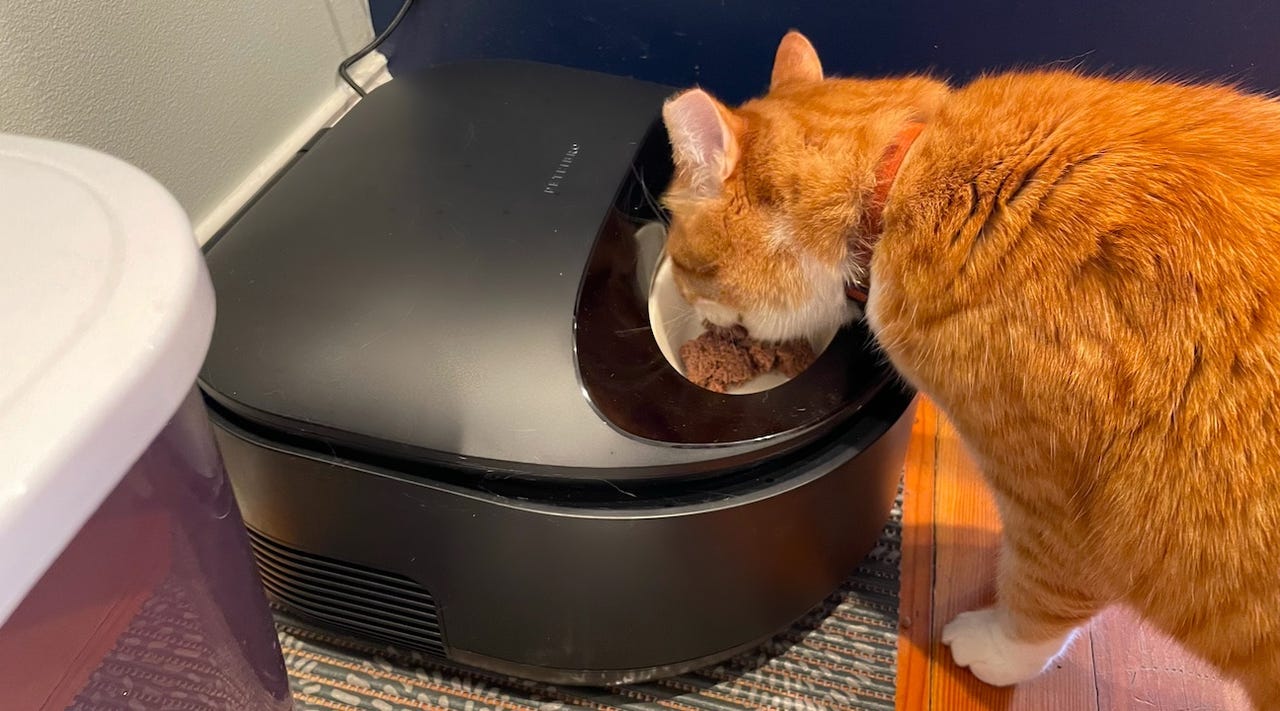
The Petlibro Polar Wet Food Automatic Feeder normally retails for $130 and is available in black and white.
The Polar feeder can keep wet food fresh for up to three days and connects to an app to customize feeding schedules.
It is a relatively large device and needs power and Wi-Fi to function.
After getting our orange tabby cat, Norbert, in 2018, my husband and I quickly realized we needed to invest in an automatic dry food feeder if we ever wanted to sleep past 6 a.m. again. I wanted to know if an automatic wet food feeder could also be a wise investment (especially for weekends away from home), so I recently tested out the new Petlibro Polar Wet Food Automatic Feeder.
There are already automatic wet food feeders on the market, but they all have ice packs to keep the wet food fresh. In comparison, Petlibro incorporates semiconductor cooling technology that keeps wet food cold and fresh for up to three days (whereas ice packs only last a few hours).
After trying out the Petlibro Wet Food Feeder for a week (including one night we were away from home), I can definitely say I’ll rest easy knowing Norbert will get fresh wet food while we’re away (and not meow loudly when we walk through the door).
The device is very large and must be plugged in, but we tucked it into a corner of our kitchen. The setup is extremely easy (even for those who aren’t tech-savvy): simply connect the device to the app and set up a customized feeding schedule. We only feed Norbert wet food for dinner, so we got three days’ worth of meals out of the device. If you feed your pet wet food more often, you won’t see as much benefit.
Not only can you set up a feeding schedule in the app, you can even make sure your pet ate its food thanks to the Anti-Pinch infrared lid sensor, which tracks how long your pet was eating at the device, ensuring it doesn’t close on your furry friend mid-feed. You can also customize how long the food compartment stays open (up to 30 minutes) if your pet is a slow eater or a grazer.
While Norbert is an anxious cat that takes a while to warm up to new things, it didn’t take long for him to realize the device had his food in it, and soon after he was fine eating from it. Petlibro Polar Wet Food Automatic Feeder makes a little ding right before it opens up for the feeding schedule. It took a few days for Norbert to start having a Pavlovian response.
The feeding compartment tray is also super easy to clean — even after three days’ worth of wet food has built up. Plus, it’s dishwasher safe. The tray can hold up to 220ml of wet food, which equates to about two 3oz cans of cat food.
Allison Murray/ZDNET
On the night we were away, I felt like a better pet parent knowing Norbert was getting his much-desired wet food dinner instead of having to forego it as he usually would. For more extended weekend getaways, this will be a lifesaver for us to ensure his feeding schedule remains unchanged.
Despite Norbert’s ability to adapt to the device reasonably quickly, I know not all cats respond well to new routines and changes. For example, if your cat hates motor sounds, the Petlibro won’t work for you.
I also can’t speak to how the device would work for multiple cats with different feeding schedules. I know some cats can be food hoggers, and I’m not entirely sure how this device would prevent that.
ZDNET’s buying advice
The Petlibro Polar Wet Food Automatic Feeder is a device I wish had been available sooner, and a piece of technology that truly solves a common problem for pet parents. Norbert and I would recommend adding this device to your routine if you’re someone who isn’t always there for the dinner feed or goes away on the weekends.
While it’s a relatively large feeder and does require Wi-Fi, this is a piece of smart pet tech I’m happy to incorporate into our home.
Looking for the next best product? Get expert reviews and editor favorites with ZDNET Recommends.
Deals are subject to sell-out or expire at any time, though ZDNET remains committed to finding, sharing, and updating the best product deals for you to score the best savings. Our team of experts regularly checks in on the deals we share to ensure they are still live and obtainable. We’re sorry if you’ve missed out on a deal, but don’t fret — we’re constantly finding new chances to save and sharing them with you at ZDNET.com.
I must remind myself not to humanise artificial intelligence, but it’s hard not to when it’s out there causing what at least one developer is calling “gaslight-driven development”, where the AI pretends features exist until the developer feels forced to add it. As reported by 404 Media, this is exactly what happened to developers of the Soundslice app.
Soundslice is an app that lets you scan and digitise sheet music, but apparently ChatGPT had been telling some users to use a feature that didn’t exist on the app. It was telling them to feed ASCII tabs—an informal way of noting guitar notes and chords—into the app, but the app didn’t have tablature conversion functionality.
One of the app developers, Adrian Holovaty, tells 404 Media the app was being fed “around 5-10 [ASCII tab] images daily, for a period of a month or two. Definitely enough where I was like, ‘What the heck is going on here?’”
The answer was found in error logs which pointed at ChatGPT being the culprit. So, the devs had to decide what to do.
The options, they say, were to (1) “ignore it, and endure the psychological pain of knowing people were getting frustrated by our product for reasons out of our control,” to (2) “put annoying banners on our site saying: ‘On the off chance that you’re using ChatGPT and it told you about a Soundslice ASCII tab feature, that doesn’t exist,’” which it said would be “disproportional and lame”, or (3) “just spend a few hours and develop the feature.”
The devs opted for number 3, leading to another developer christening the phrase “gaslight-driven development.” I suppose we already call these occurrences hallucinations, so why not add another level of humanisation into the mix, eh?
On a day that’s seen not only Trump, but also Nvidia CEO Jensen Huang and AMD CEO Dr. Lisa Su bang the drum of all many merits of AI, this feels like a fitting way to round out things out, don’t you think?
Keep up to date with the most important stories and the best deals, as picked by the PC Gamer team.
It makes me feel an apt mix of positive regard and trepidation towards AI: positive regard because it helped bring about a useful feature in the app, and trepidation because who knows how many other disappointed users LLMs will create after suggesting they use features that don’t exist.
Yes, I’d love that free frame rate boost, too, but no, up-down-LB-RB-A-B-A-B isn’t gonna do it. Ah, you got me again, AI, you sly thing.
Wireless charging is one of those technologies I thought I wouldn’t be much fussed over until I actually started using it. Now, it’s one of the main things I hope for in many products, unless battery life is exceptionally good. So I’m quite excited to hear the Wireless Power Consortium (WPC) announce a new Qi spec that comes close to doubling how fast things will be able to charge wirelessly (via PC Watch).
The new Qi2 25 W spec (that’s what it’s going to be called) will charge at up to, well, 25 W. The Current Qi2 spec maxes at 15 W. The older specification still feels pretty new to me; I remember testing the spec out for another site just over a year ago, and although it’d been out for about a year back then, it was only just seeing widespread adoption.
Which I suppose means that we might only see widespread adoption for the new standard in about a year. It’ll be worth the wait, though, for that extra 10 W of charge.
For reference, ‘fast charging’ a phone requires 15 W or higher, which Qi2 currently hits, but only just. Most fast charging devices aim for 18 W, which the new standard will hit comfortably.
Admittedly there are faster thresholds out there now, but 25 W will deliver the kind of fast charging that most people have been used to with wired charging of their phones, for instance.
Bringing it back to PC, though, we need to remember that Qi charging is a platform-agnostic technology. That means we could see Qi2 25 W embraced by all kinds of PC gaming peripherals. In particular, I’d be happy to see wireless gaming earbuds get the quick wireless charge treatment. We’ve also seen PC cases with Qi charging built-in, which could get revisited with the newer standard.
Companies could already attempt to use their own wireless charging specs for 25 W or even faster, in some cases, but it’s good to have the industry standard moving forwards. The WPC explains:
Keep up to date with the most important stories and the best deals, as picked by the PC Gamer team.
“Prior to Qi2, several smartphone manufacturers had developed their own proprietary fast charging protocols. However, devices using these protocols may lack interoperability and consistent charge times. Qi2 25W is the first standard to enable truly high-speed Qi Certified wireless charging.”
Here’s hoping the PC gaming industry—or at least the most relevant devices—starts to adopt the new standard before long.
We’ve tried changing the Windows SDK version and platform toolset to previous versions, but maybe the correct version is not installed? Platform Toolset in General Properties shows v120, v120_xp and v143.
Also tried adding different versions of Microsoft SDKs to the PATH from C:\\Program Files (x86)\\Microsoft SDKs\\Windows with some different results, but no solution.
Nvidia’s ARM-based SoCs for laptops, known as the N1 and N1X, appear to be waiting now for Windows 12. That’s according to XDA, which points to a DigiTimes report about the development of the next generation of Windows—and the impact that’s having on Nvidia’s foray into laptop CPUs. The delay comes on the heels of concerns about development problems that could push N1 and N1X launches into late 2026.
It’s not clear when Windows 12 will be released. An update to Windows 11, known as Windows 11 version 25H2, is expected to arrive before the end of this year. It’s likely to show up in September or October, putting what are possibly the finishing touches on Windows 11 just as support finally ends for Windows 10. Interestingly, the 25H2 update may make Windows capable of helping you remove built-in Windows apps you might not want, like Calculator, Camera, Sound Recorder, and Xbox.
A report by Tom’s Hardware notes that, in addition to the possible Windows-related delay and development challenges for the N1 and N1X chips, weakening notebook demand could also be to blame for N1 delays. And demand could be at the root of Nvidia’s reported interest in giving commercial customers priority for systems running the upcoming chip.
Credit: Nvidia
The N1 and N1X chips are a collaboration between MediaTek and Nvidia. If the N1X is successful, it might be a strong ARM-based challenger to CPUs from AMD, Intel, and Qualcomm on Windows laptops. The chip didn’t make an appearance at Computex, surprising some eventgoers who had hoped to learn more about it. But the N1X popped up on Geekbench in June, providing solid scores and reigniting excitement about a new player in the market.
At the time, the N1X bested the Intel 285HX in single-threaded performance and looked good (though not quite as good) going up against AMD’s Ryzen AI Max+ 395. Geekbench also revealed that the chip appeared to have 20 threads, which could mean 20 physical cores. So far, very little is known about the N1 series, as Nvidia has been keeping details close to the vest during development.
Nvidia has said little about the N1X and nothing about the reported delays, so it’s hard to know for sure how Windows 12 plays a role in the N1X’s woes – if it even does. One possibility, according to MSN, is that Windows 12 could be better able to take advantage of the chip’s AI chops. It is rumored to be capable of 180 TOPS. In a fast-moving segment like mobile chips, delays aren’t welcome. But if MediaTek and Nvidia are waiting for the right moment to pull the trigger, that’s a different matter.
In the conditions of the modern competitive market of floristic services, the formation of a unique author’s style becomes the main factor of professional development and commercial success. A recognizable style allows a specialist not only to stand out among many offers, but also to attract a target audience that shares his aesthetic values. For novice florists who have mastered basic techniques, the transition from craft reproduction to the creation of original works is a significant challenge. The relevance of the topic is due to the growing consumer demand for personalized, author’s products and services, as well as the need for new specialists to find their niche and build a sustainable personal brand. The purpose of this article is to analyze the theoretical foundations and practical strategies for forming a unique style in floristry, intended for novice professionals striving to develop their own creative identity.
Conceptualization of the Concept of “Style” In Floral Design
Style in floristry goes beyond following short-term trends or mastering specific techniques. It is a set of stable, recognizable characteristics of the author’s works, reflecting his individual vision, aesthetic preferences and philosophical approach. This is a consistent choice of certain materials, color palettes, compositional solutions, assembly techniques and even methods of presenting the work [1]. The formation of style is based on a solid foundation of technical skills and a deep understanding of the fundamental principles of design, such as balance, proportion, rhythm, contrast, harmony [2]. The uniqueness of the style does not come from the denial of these principles, but from their author’s interpretation and conscious choice of accents. Style is a visual expression of the florist’s personality and values, his dialogue with the material and the viewer.
Factors That Determine the Formation of Individual Style
The process of style development is multifaceted and influenced by various factors. The main one is the source of inspiration: nature, art (painting, sculpture, architecture), fashion, cultural traditions, works of other masters. Critically important is not direct copying, but analytical processing and transformation of borrowed ideas into one’s own visual language. The level of technical skill and readiness to experiment have a significant impact. Mastering a wide range of techniques and materials, as well as their non-trivial application, expands the expressive possibilities of the florist [5]. A deep understanding and conscious use of universal design principles [2] allows you to create not random, but thoughtful and harmonious compositions that form the basis of the style. An important role is played by the florist’s personal values, reflected in his or her work: commitment to environmental friendliness and sustainability (use of local seasonal materials), the desire to convey certain emotions, focus on certain types of events. Finally, the formation of a style is inextricably linked with the analysis of the market environment and the search for one’s unique niche.
Strategies and Methods for Developing a Unique Style
Developing your own style is a targeted iterative process that includes several key stages. First, a stage of immersion and analysis is necessary – studying the works of recognized masters of floristry, analyzing current trends (not for blind imitation, but for understanding the context), visiting exhibitions, studying specialized literature. Second, a phase of active experimentation is critically important. This includes working with a variety of materials, including non-traditional ones, trying out new techniques and assembly mechanics, exploring various compositional schemes and color palettes. The use of creative thinking techniques can stimulate the generation of non-trivial ideas [3]. Third, constant reflection and self-analysis are necessary: critically evaluating your own work, identifying recurring successful techniques, favorite materials or color combinations, determining what evokes the greatest response. Receiving constructive feedback from colleagues or mentors is useful. Based on analysis and experimentation, a gradual formation of “signature” elements occurs – techniques, methods, forms, color solutions or choice of materials that become recognizable markers of the author’s style.
Consistent and conscious application of these elements in various works contributes to the strengthening and recognizability of the style. The most important condition is continuous training and targeted practice aimed at improving both technical skills and conceptual vision [5].
Style as a Tool for Market Differentiation and Brand Building
In today’s experience and personalization economy, a unique signature style is a powerful tool for differentiation in the florist market. A clearly defined style allows you to attract a specific target audience that resonates with the florist’s aesthetics and values, and build a loyal customer base. This is especially important for small businesses and independent artists, where individuality is a key competitive advantage.
Consumers are increasingly looking for not just flowers, but a unique product or experience that reflects their own taste or status, and are willing to pay for a custom design. A recognizable style becomes the core of a florist’s personal brand [4]. Effective communication of style through a professional portfolio (including online), social networks, and studio or workshop design helps attract clients and build a reputation. Consistency in the visual presentation of work and the transmission of one’s values strengthens the perception of a florist as an author with their own vision.
Thus, the formation of a unique style for a novice florist is a complex but necessary process for professional growth and a successful career. This process includes mastering the theoretical foundations of design and floristic techniques, active experimentation, constant self-analysis and reflection, as well as strategic positioning in the market. Style does not arise spontaneously, but is the result of purposeful work, synthesis of knowledge, skills, personal preferences and values. It serves not only as a means of creative self-expression, but also as an important tool for differentiation, allowing you to build a recognizable brand and attract a loyal audience. Novice specialists are advised to pay attention not only to improving technical skills, but also to developing observation, critical thinking, the ability to experiment and the formation of their own vision. Investments in time and effort in developing a unique style are strategically important for long-term success in the floristry industry. The proposed approaches and strategies are applicable to florists working in various market segments, from creating individual bouquets to large-scale event decoration.
References
Lersch, G. Principles of Floral Design / G. Lersch. – San Diego : Floral Design Institute, 2009. – 351 p.
Lidwell, W. Universal Principles of Design : 125 Ways to Enhance Usability, Influence Perception, Increase Appeal, Make Better Design Decisions, and Teach through Design / W. Lidwell, K. Holden, J. Butler. – Revised and Updated edition. – Beverly, MA : Rockport Publishers, 2010. – 272 p.
Michalko, M. Thinkertoys : A Handbook of Creative-Thinking Techniques / M. Michalko. – 2nd edition. – Berkeley, CA : Ten Speed Press, 2006. – 416 p.
Grant, A. Originals : How Non-Conformists Move the World / A. Grant. – New York : Viking, 2016. – 336 p.
Ericsson, A. Peak : Secrets from the New Science of Expertise / A. Ericsson, R. Pool. – Boston ; New York : Houghton Mifflin Harcourt, 2016. – 336 p.
Epic Games today criticized the focus of measures that the UK Competition and Markets Authority (CMA) is considering implementing against Apple and Google, claiming that it might not be able to bring Fortnite back to the iOS App Store in the UK.
The CMA said that it will designate Apple and Google with “strategic market status” under new digital competition laws, giving the CMA the ability to direct how the App Store and Play Store are run. The CMA is focusing on Apple’s anti-steering rules and app review processes rather than forcing Apple to support sideloading through alternative app stores, which is what Epic Games takes issue with.
Epic Games says that it won’t be able to bring the Epic Games Store to iOS in the UK this year, and Fortnite’s return to iOS in the UK is “now uncertain” because the CMA is not prioritizing opening the mobile ecosystem to alternative app stores.
A free market requires multiple stores competing to offer consumers the best prices and services. If you don’t have competing stores, the one store that is a state-sanctioned monopoly will use its control to extract all the value from the market at the expense of all creators who cannot compete, and consumers who can’t choose the best deal among competing stores.
Epic Games also claims that any anti-steering rules will see “years of malicious compliance” from Apple, suggesting that Apple used “restrictions, obstructions, and junk fees” in Europe to “make a mockery of the Digital Markets Act.” Apple and Google must be “completely blocked from imposing fees and discriminating against apps using out-of-app payment,” reads Epic’s blog post.
The CMA does not plan to consider store competition until sometime in 2026, which Epic Games says is “bleak news.”
Apple’s first foldable iPhone will be equipped with a 7.8-inch inner display, and a 5.5-inch outer display, according to Taiwanese research firm TrendForce.
Apple supply chain analyst Ming-Chi Kuo already mentioned those same display sizes for the foldable iPhone in March, meaning there are now multiple sources backing those sizes, so long as TrendForce is not simply copying what Kuo said.
…
Apple today announced AppleCare One, a new subscription plan for customers to cover multiple devices with a single plan.
AppleCare One starts at $19.99 per month for up to three products, with the ability to add more for $5.99 per month for each additional device. The plan incudes all of the benefits that come with AppleCare+, such as unlimited repairs for accidents, priority support,…
Apple released the fourth beta of iOS 26 today, and the company has continued making changes to the way that Liquid Glass looks. There are also new features, including the return of Apple Intelligence Notification Summaries for news. This beta is of particular interest because it’s likely the beta that public beta testers will get in the not too distant future.
Liquid Glass Changes
Liquid…
Apple’s iPhone 17 Pro and iPhone 17 Pro Max are less than two months away, and there are plenty of rumors about the devices.
Below, we recap key changes rumored for the iPhone 17 Pro models, as of July 2025:Aluminum frame: iPhone 17 Pro models are rumored to have an aluminum frame, whereas the iPhone 15 Pro and iPhone 16 Pro models have a titanium frame, and the iPhone X through iPhone 14…
Apple recently announced that iPhone users will soon be able to watch videos right on the CarPlay screen in supported vehicles.
This is arguably the biggest new CarPlay feature coming with the iOS 26 update later this year, and yet Apple did not even mention it during its WWDC 2025 keynote last month. Instead, it was buried on Apple’s developer website.
iPhone users will be able to…
Apple’s iPhone development roadmap runs several years into the future and the company is continually working with suppliers on several successive iPhone models simultaneously, which is why we often get rumored features months ahead of launch. The iPhone 17 series is now less than two months away, so we already have a good idea of what to expect from Apple’s 2025 smartphone lineup.
If you…
With the fourth beta of iOS 26, Apple has again made changes to the Liquid Glass design that’s available across the operating system, tweaking how the menus and buttons appear in apps.
In response to criticism about too little Liquid Glass in beta 3, Apple has upped the translucency in several areas.
Beta 4 on left, beta 3 on right
Navigation bars in apps like Photos, Music, the App …
An anonymous leaker with a proven track record today shared alleged build numbers for the fourth developer betas of iOS 26 and more.
The private account on X has accurately leaked build numbers for Apple software updates in the past. We do not link to the account at the owner’s request.
Here are all of the build numbers shared by the account today:
iOS 26 and iPadOS 26 beta 4 (23A5297i)…
You can have the greatest engineers, the most visionary designers, and a budget that would make a startup cry tears of happiness, and still get it wrong when it comes to product innovation. Ridiculous, right? But here’s the catch: most design services firms are searching in all the wrong directions for the next big thing. They follow trends, hold onto processes, overthink metrics, and overlook the one secret ingredient that really gets the innovation needle moving.
Cad Crowd, the leading agency, can help you choose from over 94,000 experts and product design experts. These experts don’t simply help bring concepts to fruition; their help actually plays an imperative role in helping speed the overall product creation process along. What could be an otherwise protracted, fat-bloated undertaking, these designers transform into streamlined, quick-line paths for reaching the marketplace as fast as possible. So, what’s this amazing fairy dust elixir that the top design services firms at Cad Crowd are using today? Is it some kind of AI magic? A creative brainstorming session? Or maybe a unique five-step approach with a catchy name?
Not so much. The trick is reassuringly straightforward: deep user insight.
🚀 Table of contents
Why “knowing your user” isn’t just UX fluff
Let’s get something straight right off the bat—when we talk about “knowing your user,” we’re not referring to those cookie-cutter personas scribbled on a whiteboard during a kickoff meeting. You know the ones: “Sarah, 32, lives in the suburbs, likes yoga, struggles with time management.” That’s surface-level. Decorative. It might look good on a slide deck, but it doesn’t move the needle when it comes to creating products that truly resonate.
What we’re actually discussing is an intimate, visceral knowledge of the people you’re designing for. We’re discussing understanding their pain points so well that you cringe when you consider them. About discovering wants they didn’t even know they had. It’s about listening to their irrational behaviors and unmet needs, the messy, inconsistent things that never materialize in surveys but always materialize in real-life behavior. That’s where the gold lies.
And yet, far too frequently, product design services firms succumb to an old temptation: they begin designing for the client, not for the client’s user. On paper, it seems innocent enough. You do want to please your client, don’t you? Naturally. But here’s the thing: if you leave it there, if your whole design process is based on stakeholder desires and business objectives without grounding those in actual user understanding, then all that “innovation” you’re peddling? It’s window dressing. Pretty. Polished. But fundamentally empty.
There’s a good reason why Airbnb is cited so frequently in discussions of design thinking; let’s take a step back and look at it. In their early, nascent days as a startup, Airbnb didn’t innovate by investing much in internet advertising or expanding its technology. They went door-to-door instead, which is far less tech-savvy. I mean it. They interacted with hosts in person, photographed houses to a professional standard, and, most crucially, had one-on-one conversations with users. Presumptions were not made by them. They got in touch with nature, lived through it, inquired, and listened intently to what others had to say and didn’t say.
That’s the sort of raw, boots-on-the-ground research that powers good design. It’s not sexy, and it doesn’t scale well, but it works. Why? Because actual users don’t act like spreadsheets or personas. They act like people. And if you want to design something they’ll care about, you need to know them on that level.
For consumer design services firms, especially those juggling multiple clients and deadlines, this kind of deep immersion might feel like a luxury. But here’s the truth: it’s not a luxury. It’s essential. Yes, it takes time. Yes, it might stretch your process. But the payoff is products that connect, experiences that matter, and clients who see real results.
Because ultimately, good design isn’t about guessing. It’s about knowing. And that knowledge is not fluff, it’s your foundation.
The innovation mirage: Why tech and tools aren’t enough
You’ve got the best CAD software on the market. Your team is packed with top-tier talent, PhDs, award-winning designers, and agile-certified project managers. By all accounts, you’re set up for groundbreaking innovation. But then, the results are just okay. Not bad, not brilliant. Just lukewarm.
So, what gives?
Here’s the uncomfortable truth: innovation is not born from tools. Innovation comes from a point of view. You can’t mechanize creativity. You can’t plan a lightbulb moment into a two-week sprint. But so many design services agencies fall into the trap of adoring their process. Agile, Scrum, Double Diamond, Lean UX—these are all great frameworks. But none of them will bail you out if you’re not actually curious about the problem that you’re solving.
Open innovation services aren’t just tasks on a Jira board. It exists in messy discussions, strange client responses, and casual mentions in user interviews. It happens in the resistance, the feeling, the things you can’t map out in a process chart.
Consider this: providing your team with the newest software and hoping for magic is similar to giving someone a top-of-the-line kitchen and insisting on a Michelin-starred meal, without ever instructing them on how to taste. If they have no idea what great food tastes like, all the fancy equipment in the world won’t matter.
It’s the same with product design. Without a true sense for your users, their weak points, their idiosyncrasies, their unstated wants—your high-powered tools aren’t going to do much for you.
So, yes, spend money on tech. Hire geniuses. But don’t ever forget that the source of true innovation lies not in what you use, but in how you look. And sometimes looking different is the most difficult skill of all.
The “Crawl into Their Lives” technique: How field immersion ignites genuine innovation
If your product development experts‘ creative spark is on fumes, do this easy yet potent reboot: send your designers out into the actual world. No laptops, no questionnaires, and absolutely no scripted interview questions. Simply have them drop in where your users reside, work, or play—and listen.
This method, which we prefer to refer to as the “Crawl into Their Lives” technique, is about getting into another person’s day-to-day life and observing closely, not from a cubicle, but in the field. Watch how a person struggles with a hair dryer in a cramped hotel bathroom. Observe a warehouse worker on a 2 a.m. barcode-scanning shift. Notice the awkward stretches, the slight grimaces, the workarounds they’ve developed just to get the job done.
You’re not just collecting data, you’re absorbing context, pain points, and emotional cues. It’s investigative design empathy. And it changes how your team thinks.
Here’s a real-world example: a medical device design expert team building a portable medical device observed nurses in an ER by sitting in it. What they observed was not what they had anticipated. In that high-pressure, chaotic setting, nurses did not concern themselves with touchscreen beauty or immaculate button arrangements. They wanted something they could grab with one hand, use on the go, and yell over. That epiphanic moment didn’t result from a focus group. It resulted from being there.
So if you’re trying to unleash innovation, ditch the lab. Instead, crawl into the lives of the people you’re designing for. You’ll return with insights you never knew you needed—and solutions that actually make sense in the messiness of real life.
The layer cake of product innovation: Strategy, empathy, and iteration
In spite of all the moving pieces, inventing a product is really rather straightforward, like putting together a three-layer cake. The entire structure is dependent on each level; thus, its absence will cause it to collapse. So, how important is the “empathy” component, which entails developing a thorough familiarity with the user?
Let’s start with the foundation.
Strategic Alignment is the ground floor where you figure out market trends, define clear business objectives, size up the competition, and define a solid value proposition. This level addresses the big questions that answer the purpose of creating the product and its market leads.
Empathetic Design is the layer most frequently neglected. It is the human aspect of innovation. It changes the attention from numbers to individuals and questions Who are we designing for? What do they really need, not what they tell us they want? This layer brings emotional intelligence to the mix, which makes products engage on a true, human level.
Rapid Iterations happen quickly for designing, prototyping, testing, and refining. It gets to the “how,” but only if it’s based on the strategy and empathy that comes first. Without understanding, rapid iteration is just rapid guessing.
Most 3D and engineering design service providers excel at the upper and lower levels, but this is where they all fall short. Their actions are in sync with company goals, and they are swift. But what if they remove the layer of empathy? Assumptions, not reality, are what they’re iterating on. Plus, that always ends in failure.
So, remember that the intermediate layer is crucial if you want to create innovative products that truly connect with people. Your innovative cake might be visually appealing, but it will be tasteless if you lack empathy.
There is a painful reality in the realm of innovation that does not receive nearly as much discussion as it deserves: letting go. It is not glamorous, it is not enjoyable, and it hurts the ego, but it is absolutely necessary.
Ask any engineering design expert or designer, and they will most assuredly confess (perhaps with a sheepish smile) to having fallen a bit too hard for one of their own concepts. It’s natural. After all, creativity does take work, and when you do manage to come up with something that seems clever, original, or beautiful, you need to protect it. But here’s the twist: true innovation doesn’t care about your ego. It doesn’t care if your solution is beautiful or elegant. It only cares whether or not it works for the user.
And that’s precisely where brutal honesty comes in.
If you wish to innovate, you must become accustomed to throwing your pet ideas into the garbage. That’s the attitude behind the old journalism adage, “Kill your darlings.” In design, it translates to ditching favorite ideas when user feedback indicates they’re not performing. It means accepting feedback as a beacon of guidance, rather than a validation station. Each usability test, each surprise response, each moment of confusion is a chance to learn, and to shift.
That’s tough. Particularly in product engineering design services firms, where groups tend to spend weeks or months on a feature or a prototype. But here’s the reality: if your concept fails in real-world conditions, it wasn’t going to work anyway. The best you can do is admit the defects, learn from them, and proceed wiser.
The successful companies aren’t the ones that hold onto ideas because of pride. They’re the ones who create cultures in which ego gets pushed behind wisdom. In these cultures, the more feedback you gather, the less attached you get to any single solution. Ideas are not rigid but fluid. Teams are not defensive but adaptive.
So the next time a user test sinks your beloved feature, don’t panic. Rejoice. You just identified a blind spot before it became a failure. That’s progress. After all, innovation isn’t perfection, it’s evolution. And evolution requires one thing more than any other: the courage to slay your darlings. Are you ready?
Unlocking Innovation with “invisible collaboration”
Let’s discuss a practice that is below the radar but delivers the most difference: invisible collaboration. It isn’t the stereotypical cross-functional team with sticky-note walls. It’s more subtle and often more productive.
Invisible collaboration occurs when designers, engineers, manufacturing design experts, strategists, and researchers are all working from a shared user understanding, albeit working asynchronously or even across time zones. It’s a quiet sync. When everyone understands the user pain point in the gut, the solution is a shared thrust and not a task-oriented deliverable.
A few companies employ immersive onboarding, where each new hire of any type is required to spend a week conducting field research. Others include rotating customer support roles for direct exposure to complaints and requests. The payoff? Less time fighting at meetings, more time constructing the right things.
It’s interesting that creativity grows when there are limits. That’s right; you read that correctly. Your team’s creativity is sparked by things like time, money, materials, and rules. It’s crucial, though, to make sure that these limits are in line with what users want, not what the government wants. For example, IDEO’s method of constraint-led design. They typically change the way they look at problems from “solve this problem” to “solve this problem for an Indian 10-year-old who doesn’t have access to clean water and has $2 worth of materials.”
In that instant, innovation becomes a thoughtful act of compassion and engineering. Constraints are not roadblocks, but fuel for innovation. Constraint-based 3D CAD design service firms that adhere to this ideology do not look at constraints as restrictions, but as clarity.
The secret sauce: “innovation moments”
Deep user insight is the secret. With that insight lies what we’ll call “innovation moments”. These are small, often overlooked behaviors or frustrations that reveal an opportunity to delight. They’re not about building something huge; they’re about solving something tiny in a way that feels magical.
It may be the silent gasp of a train passenger when their app freezes as they are getting aboard, or the annoying wait when someone looks for their wallet at the register, or how someone tilts their phone to cut down on glare when reading. These are important times. They usually don’t show up in surveys or usability tests, but your team will learn to notice them as they learn to look for things that are easy to miss.
From insight to impact: Turning research into breakthroughs
One of the challenges for many new invention design services companies is translating rich user insights into changeable design. The insights are there, yet innovation seems like a chasm away.
Here’s a playbook that can help:
Synthesize, don’t summarize. Insights require interpretation. Don’t say “users struggle with onboarding,” say “users feel anxious because the app employs jargon during onboarding.”
Pose opportunity spaces as questions. Not “fix onboarding,” but “how could we make onboarding feel like a conversation rather than an exam?”
Use prototype design quickly, ugly, and frequently. Forgive perfection. Create something rough, expose it to a user, and do it again. Innovation is iterative clarity.
Use a narrative. Know-how sticks when it arrives in the form of a narrative. Rather than citing a statistic, recount the tale of a customer who hacked your product to fulfill a need that you did not foresee.
Innovation as a behavior, not a project
The following is a mental shift: cease to treat innovation as a project. It’s not a project stage. It’s a behavior.
Constantly innovative companies don’t do it because it’s on the agenda. They are innovators because their people are naturally perceptive, inquisitive, and user-centric. Ideas thrive in such a culture. Additionally, teams are encouraged to try new things, make mistakes, and take chances here since they understand that perfection isn’t the goal. Real value for users is the foundation of this advancement.
Occasionally, the nemesis of innovation isn’t a shortage of ideas, it’s too many obvious ones. Concept design experts, if not directed, will tend towards the same comfortable solutions. The initial idea is the safest. The third one is clever. But the sixth or seventh one? That’s where you begin to break the mold.
Make teams go beyond the obvious. Conduct ideation sessions where the objective is to generate intentionally terrible ideas. Then reverse-engineer the “badness” in order to find concealed insights. You’ll be surprised how frequently a joke solution creates an actual breakthrough.
Final thoughts: Make it emotional
To unlock product innovation, ditch the buzzwords. Avoid the gimmicks. Begin with emotion.
The greatest products don’t merely work—they feel right. They simplify people’s lives, make them faster, safer, or happier. And that emotional connection begins with a team that’s passionate about deeply understanding the people they’re designing for.
Definitely, the most important thing is to know your audience. This comprehension, however, extends beyond the scope of a short or survey. Being open to being shocked, challenged, and altered by the insights you acquire is essential, as is really experiencing their perspective, sometimes even physically.
Cad Crowd is here to help!
Innovation begins there. Everything else is mere tools and tactics. Transform your ideas into reality and unleash your full creative potential. Contact Cad Crowd today for a FREE, no-obligation quote and discover how our expert team can help you innovate, streamline your processes, and bring your projects to life. Don’t wait! Let us be your partner in innovation and success!
MacKenzie Brown is the founder and CEO of Cad Crowd. With over 18 years of experience in launching and scaling platforms specializing in CAD services, product design, manufacturing, hardware, and software development, MacKenzie is a recognized authority in the engineering industry. Under his leadership, Cad Crowd serves esteemed clients like NASA, JPL, the U.S. Navy, and Fortune 500 companies, empowering innovators with access to high-quality design and engineering talent.