We Did the Math: How Much an Energy-Efficient Fridge Saves vs. a 10-year-old Model


We Do the Math badge

One of the biggest reasons to buy a new refrigerator is better energy efficiency compared with an older model. But how much of a difference does energy efficiency make in the long-term costs of a fridge? I’m here to crunch the numbers in a battle royale between modern fridges and those from 10 years ago (2016).

Fair warning before I get started, I did a lot of math on a sample size of 2,630 fridges. I focus almost exclusively on long-term energy costs because I gained easy access to the appropriate Energy Star data. 

Where my fridge data comes from

energy star data

Publicly available Energy Star data is a major player in this analysis.

Screenshot by CNET

For my 2025 samples, I analyzed energy usage in modern Energy Star-certified models. For 2016, I couldn’t rely on Energy Star data, because it lists only models that qualify for the most recent standards, not past ones.

Instead, I sourced my 2016 data from the California Energy Commission’s Modernized Appliance Efficiency Database System. Rather than cover 42 refrigerator classes individually, I grouped them into the following broad categories:

Fridge types analyzed

Sample size: 2025 Sample size: 2016
Top-mounted freezers 385 137
Bottom-mounted freezers 440 192
Side-by-sides 23 68
Compact refrigerators 1,235 150
Total 2,083 547

I didn’t look at standalone refrigerators because there wasn’t enough data from either sample group to perform a meaningful comparison. Standalone freezers are a different Energy Star dataset that I didn’t include.

It was essential to exclude older products from the modern data

fridge-french-door

I excluded any fridges manufactured before 2021.

Whirlpool

The current slate of Energy Star-qualified fridges includes models from as far back as January 2014, so I narrowed my list of candidates to products that hit the market in 2021 or later — the last time Energy Star updated its criteria. While this technically means that this isn’t a one-to-one comparison of 2025 and 2016, it reflects important details:

  • Stores don’t exclusively carry fridges from the current calendar year, so the data should at least reflect what’s available at retail.
  • Many of the most efficient fridges were released before 2025.
  • It’s entirely possible that a fridge rolled off the factory line a month ago, despite earning a certification in 2021.

Comparing your existing fridge

I suggest using Energy Star’s Flip Your Fridge Calculator to compare your current refrigerator with this analysis. It provides a rough estimate based on your fridge’s age, size, configuration and local electricity price. For more current electricity prices, check your recent billing statement.

energyguide calculate

Screenshot by CNET

Likewise, you can look up an Energy Guide Label with your fridge’s model number for an exact yearly electricity use figure. I use the latest Energy Information Administration data from 2024 for my calculations — 2025’s data isn’t finalized as of the publishing of this article. It lists the residential national average at $0.1648 per kilowatt-hour (kWh).

The magic number for each type of fridge

we-did-the-math-10-year-old-fridges-national-savings-summary-tables.png

John Carlsen/CNET

Because it all boils down to a refrigerator’s class and volume, I can’t give you a universal number that applies to every fridge. Instead, I’ll break down the highlights and average stats in each class. Finding retail pricing from 2016 (and 2025) proved to be a much more difficult task than I could resolve in the time I had for this analysis. Instead, I used the data to create simple energy savings guidelines below.

Fridges with the most potential savings over 10 years

fridgiare-fridge-bss.png

Energy-efficient side-by-side fridges yield the most savings, according to my calculations.

Frigidaire/CNET

If the added cost of upgrading to a new fridge (compared with buying or repairing a used one) is lower than the numbers below, the new fridge will likely offset that price difference through energy savings alone over the next 10 years:

  • Side-by-side refrigerators: $340
  • Bottom freezers: $272
  • Top freezers: $83
  • Compact refrigerators: $0 (average energy efficiency remains largely unchanged since 2016)

If a new fridge costs more than this efficiency premium, it will take longer to break even. Remember that while averages can give you a good rule of thumb, the most efficient appliances will save even more in energy costs. These numbers also don’t account for potential rebates from your utility company, so actual savings may be even higher.

Crucially, these numbers assume you aren’t switching to a different refrigerator type. For example, you’ll likely see even greater energy savings when replacing a side-by-side fridge with a bottom-freezer fridge.

Key takeaways

  • New side-by-side refrigerators will, on average, cut your energy costs more than any other type of fridge, though bottom freezers also saw some nice improvements over the last 10 years. Upgrading either type of fridge to a modern version is probably worth it.
  • The $83 in energy savings for top freezers over 10 years probably won’t be enough to justify an upgrade if your existing top freezer still works.
  • Modern compact refrigerator technology is largely identical to that of 2016. You don’t need to be picky with most models.

whirlpooltopfreezerproductphotos-8.jpg

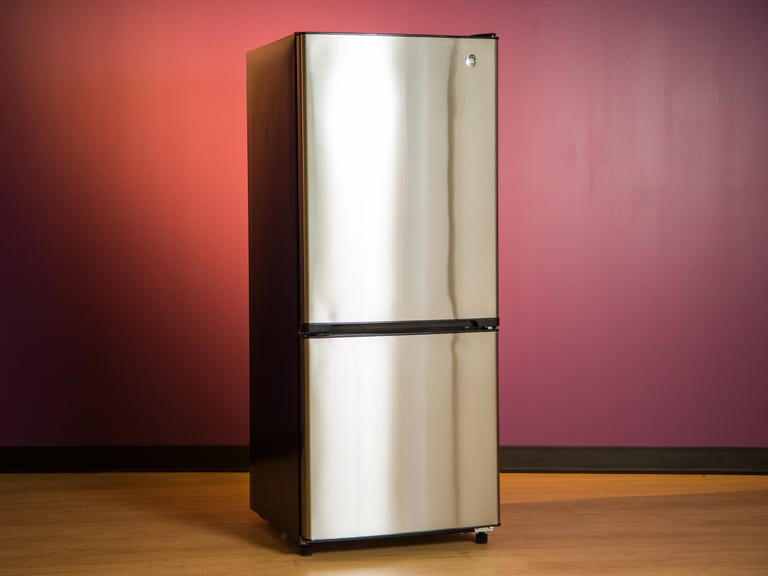
A new top-mounted fridge could save just $83 in electricity over 10 years.

Chris Monroe/CNET

Top-mounted freezers

Top-mounted freezers

Top-mounted 2025 (average) 2016 (average)
Efficiency (vs. U.S. standard) 10.80% 4.10%
Annual energy usage 344 kWh/yr 394 kWh/yr
Annual energy cost ($0.1648/kWh national average) $56.62 $64.94
Monthly savings vs 2016 $0.69
Annual savings vs 2016 $8.31
10-year savings vs 2016 $83.14

  • Over 10 years, a new top-mounted freezer saves an estimated $83 in electricity bills compared with a 2016 model.
  • I couldn’t find a single example from the sample data (including the 2016 MAEDBS data) that doesn’t already meet the requirements for Energy Star Most Efficient 2025.
  • The average efficiency of modern Energy Star-rated top freezers is almost triple that of 2016.
  • Top freezers use less energy per cubic foot, on average, than bottom freezers and side-by-sides. They’re also the smallest full-size refrigerators.

gecompactbottomfreezerproductphotos-1.jpg

A new bottom-mounted freezer should save around $272 in electricity over 10 years.

Chris Monroe/CNET

Bottom-mounted freezers

Bottom-mounted 2025 (average) 2016 (average)
Efficiency (vs. U.S. standard) 14.80% 8.50%
Annual energy usage 468 kWh/yr 633 kWh/yr
Annual energy cost ($0.1648/kWh national average) $77.09 $104.27
Monthly savings vs 2016 $2.26
Annual savings vs 2016 $27.18
10-year savings vs 2016 $271.80

  • A new bottom-mounted freezer should save an estimated $272 in electricity bills over 10 years compared to a 2016 model.
  • Bottom freezer refrigerators earn higher efficiency scores on average than other full-size fridges, but their efficiency improvements since 2016 aren’t as pronounced as those of top freezers and side-by-sides.
  • Roughly one in six bottom freezers qualify for Energy Star Most Efficient 2025 — only three models from 2016 meet this standard.

Side-by-side

Side-by-side 2025 (average) 2016 (average)
Efficiency (vs. U.S. standard) 12.70% 4.20%
Annual energy usage 507 kWh/yr 714 kWh/yr
Annual energy cost ($0.1648/kWh national average) $83.62 $117.63
Monthly savings vs 2016 $2.83
Annual savings vs 2016 $34.01
10-year savings vs 2016 $340.08

lg-lfxs32726s-promo-pic.jpg

A side-by-side or “French door” fridge is the winner in terms of potential savings.

Chris Monroe/CNET

  • A  new side-by-side refrigerator saves an average of $340 in electricity bills compared with a 2016 model, the largest savings in this analysis.
  • While five side-by-side refrigerator models (7%) from 2016 still meet modern Energy Star criteria, two of these also qualify for Energy Star Most Efficient 2025 — as opposed to a single product in the modern group.

Compact fridges

Compact 2025 (average) 2016 (average)
Efficiency (vs. U.S. standard) 14.20% 14.70%
Annual energy usage 256 kWh/yr 252 kWh/yr
Annual energy cost ($0.1648/kWh national average) $42.13 $41.59
Monthly savings vs 2016 -$0.05
Annual savings vs 2016 -$0.54
10-year savings vs 2016 -$5.44

whirpool-mini-fridge.png

Mini fridges haven’t become significantly more energy-efficient. 

Whirlpool

  • New compact refrigerators have roughly the same energy efficiency as their 2016 counterparts. In fact, the average 2016 model uses less energy.
  • While compact refrigerators use less energy overall than full-size fridges, they use more electricity per cubic foot of volume.
  • 121 minifridge models (81%) from 2016 meet modern Energy Star criteria.
  • Roughly 5% of models from both sample groups qualify for Energy Star Most Efficient 2025.

Where you live also plays a role

we-did-the-math-10-year-old-fridges-regional-savings-summary-tables.png

Your regional energy costs can swing the savings in either direction.

John Carlsen/CNET

Electricity costs vary widely depending on the state and region you live in. For example, North Dakota’s average price in 2024 was just 11.51 cents per kilowatt-hour (the lowest in the US), while Hawaii’s was a whopping 42.86 cents.

The higher your electric rate, the more you’ll save on energy with a new fridge. Compared with the national average, residents of Hawaii, California, Massachusetts, Connecticut, Rhode Island and Alaska will see additional energy savings of 51% to 160% when buying a new Energy Star refrigerator.

Conversely, savings will be much lower in states with relatively cheap electricity, such as North Dakota, Idaho, Nebraska, Louisiana and Washington, which average less than 12 cents per kilowatt-hour. In North Dakota’s case, that’s just $237.51 in savings on a side-by-side fridge — $102.56 less than the national average.

Efficiency math doesn’t add up for smart refrigerators

A person puts a package of shredded cheese into a refrigerator that has a large screen. This fridge has AI capabilities.

The exorbitant upfront cost of most premium smart fridges will likely cancel out your energy savings.

Samsung

While I don’t explicitly explore it in this analysis, smart fridges aren’t generally a good investment if your main goal is saving energy over time. It has nothing to do with energy efficiency and everything to do with the premium you’re paying for smart home tech.

For example, Samsung’s smart refrigerator models cost at least $700 more than their traditional counterparts — this easily obliterates any long-term energy savings. That said, smart fridges aren’t going away, and it’s OK to splurge if your budget allows.

How I did the math: Calculating efficiency data for fridges from 2016

Math Notes in the iPad's Calculator app

Calculating refrigerator efficiency was a major undertaking. 

Screenshot

When I started on this analysis, I had no idea how bewildering refrigerator efficiency regulations are in the US. But I needed to understand them to accurately calculate 2025 energy-efficiency values for all the 2016 models.

The simplest way to explain this is that every possible fridge configuration uses a unique formula determined by efficiency variables, the refrigerator’s adjusted volume, and expected base energy consumption.

For example, Class 3 Refrigerators have a top-mounted freezer, automatic defrost, and don’t include an automatic icemaker. Because the freezer is on top, the appliance’s fan can take advantage of the fact that cold air sinks to pull air from the freezer into the fridge compartment. This type of passive cooling will always be more efficient than pumping cold air up from a bottom-mounted freezer.

Likewise, the adjusted volume accounts for the freezer compartment, which takes more energy to reach a target temperature than the fresh food compartment. Adjusted volume is always larger than the linear volume of a fridge — at least when the appliance has both a freezer and a refrigerator.

Lastly, all of the components of a fridge have a baseline energy level (base load) determined by the laws of physics. Since fridges can’t use less than this much energy, it’s added to the final calculation:

(Efficiency variable X Adjusted Volume) + Base Load = Maximum Allowable Energy Use

Once you realize that nearly everything — from defrost type to freezer location to built-in versus freestanding — affects efficiency, it makes sense that there are 42 classes of fridges and freezers with different energy efficiency standards.

Energy Star criteria are more straightforward

Energy Star acceptable logos to watch for.

Energy Star has several ratings for home appliances.

Energy Star

It’s much easier to calculate the energy level a fridge needs to qualify for an Energy Star Certification. It simply needs to use 10% less energy than the federal standard — I excluded modern fridges that fall below this threshold. The last wrinkle is the Energy Star Most Efficient status, which changes every year. Here are the 2025 standards (PDF):

  • Top-mounted freezers must have an annual energy consumption of 637 kWh or less.
  • Bottom-mounted freezers and side-by-side units must be at least 27% more efficient than the federal standard.
  • Compact refrigerators must be at least 30% more efficient than the federal standard.

Once I figured out the calculations for each fridge class, it was simply a matter of adding the formulas to my spreadsheet, calculating average energy costs and determining the savings.


c# – The auto-completion for await changes the method’s signature – how do I prevent that?


I cannot reproduce the problem.

before tab

enter image description here

afer tab

enter image description here

I’m running

Microsoft Visual Studio Professional 2022
Version 17.11.5

C# Tools   4.11.0-3.24460.3+5649376e0e5f5db3743a94a62b073f2cce4be5d9
C# components used in the IDE. Depending on your project type and settings, a different version of the compiler may be used.

Visual Studio IntelliCode   2.2
AI-assisted development for Visual Studio.

In a response to a related issue async/await Visual Studio autocomplete #68512 on github the functionality is mentioned:

We also just add ‘async’ automatically to the method if you try to complete out await in your method body.

It does not mention any modification of the return type (or lack thereof). Note that the opener of the issue explicitly asks for a modification of the return type to Task, which is the undesired behavior that you observe.
However the issue is “closed as not planned”.

In this PR, the functionality was implemented including the modification of the return type.

Geoscience: The race to understand the subsurface


Seequent, part of Bentley Systems, is a company specializing in software for understanding and visualizing subsurface data. They provide tools for geoscience analysis, modeling, and data management, particularly for the mining, civil, energy, and environmental sectors. Seequent’s technology helps organizations make better decisions about subsurface resources and infrastructure.

Let’s continue the conversation. Join global industry leaders for an interactive session with live Q&A and audience-driven discussion, where you’re invited to be a part of shaping the future of subsurface understanding.

Register Now

Outside Parties is the creepiest Playdate game yet, and I’m kind of obsessed


Never underestimate the chilling powers of grainy grayscale imagery and ethereal whooshing sounds. Outside Parties asks, “What if I Spy, but in an alien hell dimension?”, and it is impressively unnerving despite the fact that nothing’s really happening at any given time. It goes all in on atmosphere, to great effect. This is the Playdate horror game that I’ve been waiting for.

Adams Immersive’s Outside Parties is a sort of scavenger hunt across a massive image of a realm called the Outside, which can only be visited by astral travel, according to the lore. There are lots of unknowns about what or where it really is, though explorers have mapped it fairly extensively through out-of-body excursions and they’ve encountered thousands of different entities there, including the spirits of the dead. As the player, you have come across a Hellscryer K5 — the communication device, psychic camera and recorder used for these trips — and now you’re combing through the mission logs, getting sucked into the mystery of it all. Think of the K5 as your Playdate, except powered by blood and runes.

At the center of Outside Parties is a 1.44 gigapixel, 360-degree panoramic HDR image which has dozens of eerie scenes hidden within it: skeletons of human, animal and paranormal origin; scary robed figures and occult symbols etched all around; what appear to be fountains and rivers of blood; a Stonehenge of teeth. These are the targets you’re meant to track down, and as you hone in and check them off your list, voice signals attached to each one will reveal more and more of the explorer’s spellbinding story.

But this isn’t a straightforward “find the object” puzzle game by any means. When you first look at the zoomed-out photo, it’s akin to a strip of TV static with some heavily shadowed areas throughout. You can zoom to up to 64 times magnification to get a better look at specific zones, but you also have to adjust the image brightness using the crank to improve the clarity of the objects. Making it brighter or darker will reveal more objects in certain spots while simultaneously obscuring others. There are 150 targets according to the developer, which should take players somewhere from 10-20 hours to complete. I’ve been at it for hours and still have plenty left to find. (If you’re stuck, you can turn to the helpful target lookup page, which provides hints with varying degrees of specificity.)

All the while as you’re hunched over your Playdate, laser-focused on the screen to find targets that are buried in a sea of fuzz, unsettling audio transmissions are cutting in and out, disturbing images are flashing on-screen at random and a constant atmospheric whooshing is playing in your ear. The sound design of this game is seriously brilliant — it’s worth playing for that alone, not to mention all the other cool stuff. From the startup page to the menus where you’ll find bits of a background story, to the creepy clips of people wailing and ominously reciting numbers, the sounds of Outside Parties make for a truly immersive, disconcerting experience that I previously wouldn’t have thought possible on a Playdate. It’s really something special.

Outside Parties also comes with a screensaver that once again makes me yearn for the Playdate Stereo Dock. Pop on the Void Monitor, sit back, and enjoy the horrifying sights and sounds of the Outside.

Image for the mini product module

Glory, Death and Loot Free Download (v2.0.0) –


Dwarves Glory, Death and Loot Pre-Installed Worldofpcgames

Dwarves: Glory, Death and Loot Direct Download:

Build and command your fully customizable army of Dwarves in this mix of RPGs, roguelikes and auto battlers! Prepare formations, assign roles, and lead your group through dangerous encounters like a raid leader planning the next pull. Decide the fate of up to 10 individual Beardlings as they chase Glory, risk Death, and fight for humongous amounts of Loot! Your run starts small, with only two poorly equipped Dwarves and limited options. Battle by battle, you expand your group, upgrade gear, and refine your setup – slowly turning a fragile party into a full-fledged legion ready to take on increasingly dangerous encounters! Every Dwarf can be shaped into a distinct party-member through gear and equipment. Build sturdy frontline tanks to hold the line, deadly damage dealers to tear through enemies, or fragile but powerful mages that need protection.

Only a well-balanced group will survive once the fight begins. Battles play out automatically, so the real challenge happens before the fight begins. Choose the right formation and position for your Dwarves as you are preparing for specific enemy threats, often deciding the outcome long before the first blow is struck. After each battle, you choose how to proceed. Gain experience, invest gold into better equipment, or recruit new Dwarves to strengthen your group. Every choice pushes your run in a different direction, and not every path leads to survival. Unlock permanent upgrades with Gems and strengthen your company for future runs with completely different playstyles and builds.

Features and System Requirements:

  • Experiment with powerful synergies using weapons, relics, traits, and upgrades to create wildly different dwarf builds every run.
  • Unlock new dwarves, items, and bonuses over time, allowing you to grow stronger even after a crushing defeat.
  • Designed for short but intense sessions that make it easy to jump in—and hard to stop playing.

Screenshots

System Requirements

Minimum
OS: Windows 10
Processor: Intel i3-2100 / AMD A8-5600k
Memory: 4 GB RAM
Storage: 500 MB available space
Support the game developers by purchasing the game on Steam

Installation Guide

Turn Off Your Antivirus Before Installing Any Game

1 :: Download Game
2 :: Extract Game
3 :: Launch The Game
4 :: Have Fun 🙂

Top 33 Companies for ETABS Engineering & Design Services for Construction Architecture


Today’s cities are not constructed using concrete and steel. They are constructed using intelligent engineering and precise design. ETABS, the most reliable software package for structural analysis, enables architects and engineers to bring flawless building designs to life. From a skyscraper with additional height to a technology-laden commercial office building, ETABS experts have the expertise to create aesthetically pleasing and structurally secure buildings. 

But as most freelancers and companies are providing their services, you might be wondering with whom to get the best. The best part is that Cad Crowd does it on your behalf by providing you with a quality ETABS designer and engineer who will take care of your next building design.
cadcrowd-logo

1. Cad Crowd

Cad Crowd is one of the best sites on the globe that connects you with skilled ETABS engineers and structural design experts. Cad Crowd provides access to a pool of master freelancers skilled in precise modeling, analysis, and structural optimization using ETABS software. Right from domestic skyscrapers to business high-rises, or mega-infrastructure construction, Cad Crowd enables seamless collaboration and provides precise structural design solutions that perfectly fit every client specification. It is convenient and simple for clients to browse professional portfolios, compare prices, and hire structural detailing professionals knowledgeable in advanced load simulations and building response. Cad Crowd facilitates easy access to professional ETABS engineering expertise. 




Website: Cadcrowd.com

RELATED: Top Reasons to Hire Engineering Consultants & Engineering Consulting Firms

ZLA Engineering

2. ZLA Engineering

ZLA Engineering offers professional ETABS design and analysis for new buildings worldwide. The company is capable of achieving design structural efficiency, load calculation, and stability analysis of intricate structures. Its ETABS engineers design accurate structures according to international design codes and seismic requirements. ZLA follows a methodology that injects technical accuracy and client-centric coordination to achieve quick turnaround of project completion without compromising structural integrity. The experienced team of reinforced concrete and steel building structure engineers is the perfect choice for architects, builders, and contractors looking for efficient ETABS-based high-rise and low-rise building engineering services. 

Website: Zlaengineering.com

Soft Studios logo

3. SoftStudios

SoftStudios provides start-to-finish ETABS design and modeling solutions to clients across various sectors of the construction industry. Its experts use ETABS to assess structural stability, optimize load distribution, and ensure code compliance. SoftStudios helps clients with new construction and retrofit design to achieve maximum efficiency and effectiveness in their design. SoftStudios also integrates ETABS with BIM software to help maintain design consistency from planning through completion. Its emphasis on sound engineering judgment and precision ensures that each project is preceded by sound economic and structurally safe design. SoftStudios further helps architects and contractors find economical and structurally stable building designs.

Website: Softstudios.net

pinnacle infotech logo

4. Pinnacle Infotech

Pinnacle Infisoft is world-famous for BIM and structural engineering solutions, with ETABS design being the mainstay of its service offerings. Pinnacle’s structural engineering services feature careful model-building and analysis to create infrastructure projects, industrial buildings, and high-rise skyscrapers. Pinnacle Infotech, backed by ETABS, conducts member forces analysis, drift limit analysis, and load path analysis to determine structurally stable and efficient designs. Architects and engineers, by virtue of the coordination process, are adaptable to project objectives with great precision and quality. In terms of reliability and innovation, Pinnacle Infotech is a trustworthy ally for ETABS-based structural design and engineering services. 

Website: Pinnacleinfotech.com

RELATED: 15 Engineering Design Constraints that Product Design Companies & Engineering Firms Can’t Avoid 

Computers Structures Inc

5. Computers and Structures, Inc.

Computers and Structures, Inc. (CSI) owns the ETABS software and is thus a market leader in structural analysis and design software. CSI offers innovative solutions that enable architectsural designers to design buildings safely through the software’s modeling capabilities. ETABS offers global users the capability of performing detailed seismic, wind, and load analysis. CSI also offers training and technical services to help experts become familiar with the best use of the software. With decades of research and development experience, CSI paces the field of structural engineering technology, continuously fine-tuning ETABS to meet the new demands of modern architecture and building construction. 

Website: Csiamerica.com

Compusoft Engineering

6. Compusoft Engineering

Compusoft Engineering provides top-class ETABS structure designing and analysis services for overseas building construction projects. Compusoft Engineering delivers flawless building performance through model-in-detail modeling, loading analysis, and model cross-verification. Its structural design and analysis experts are highly skilled in ETABS integration with BIM practices, enabling smooth coordination between the structural and architectural departments. Compusoft Engineering provides clients with error-free drawings and reports for commercial, residential, and industrial projects, in accordance with international standards. Where accuracy and precision of communication and technicality are concerned, the firm ensures that all projects are carried out using well-tested, cost-effective ETABS solutions that conform to contemporary construction standards and sustainable design principles. 

Website: Compusoftengineering.com

Ottegroupcom

7. Otte International

Otte International provides reliable ETABS engineering services, taking maximum precautions to ensure stability, strength, and safety in contemporary buildings. Otte International design engineers have experience in analyzing intricate load conditions, seismic response, and wind loading through sophisticated ETABS modeling. They get heavily invested with the architect and builder to engineer the most efficient structures to international standards. Otte International’s attention to precision and standardization is a guarantee for clients in business, industrial, and high-rise building construction. By applying ETABS, the company maximizes building efficiency and design integrity through technical expertise, creativity, and secure completion of foreign projects. 

Website: Ottegroup.com

RELATED: Top 37 Civil Engineering Companies & CAD Design Services Firms in the US

Quadri Consultant

8. Quadri Consultant

Quadri Consultant provides structural engineering and design services through ETABS to architects, developers, and contractors. The company’s engineers offer ETABS for validation, load simulation, and 3D modeling services to provide international code-compliant structures as well as well-coordinated ones. Quadri Consultant possesses the potential to design reinforced concrete and steel structures, as well as the ability to implement intricate and high-rise architectural designs. The company is an expert in client consultation and technical precision, as it is on a quest to help stakeholders achieve timely, efficient construction timetables. In terms of credibility and reliability, Quadri Consultant is the business line that provides credible ETABS engineering services to enhance the structural performance and success of projects. 

Website: Quadriconsultant.com

SPA consultants

9. S.P.A Consultants

S.P.A Consultants is a consultancy company that deals in structural consultancy as well as ETABS modeling and designing commercial, residential, and institutional buildings. The firm’s structural modeling engineers have experience with ETABS for load distribution calculations, dynamic response, and overall structural stability. Their practice employs the technology of the time and application engineering expertise to deliver each project efficiently, compliantly, and sustainably. S.P.A Consultants collaborates with developers and architects to design buildings that are compliant with performance and safety compliance. With diligent quality and accurate ETABS analysis, the company has become a profitably successful collaborator in global full-service structural design and engineering services. 

Website: Spacpl.com

TATA Projects

10. TATA Projects

TATA Projects is a premium construction and engineering design firm that provides innovative ETABS-based structural solutions for high-rise buildings and infrastructure works. The respective codes are followed verbatim by the company’s structural engineers when using ETABS in the design of hospitals, high-rise, and industrial buildings, with a focus on safety, stability, and efficiency. The company follows its respective codes verbatim, with effective use of materials and construction in its designs. TATA Projects integrates ETABS into its multidisciplinary project practice, making coordination for design and construction easier for design and construction experts. TATA Projects, with its impeccable track record in implementing foreign projects, continues to thrive in offering state-of-the-art ETABS structural engineering solutions to support green development and architectural triumph. 

Website: Tataprojects.com

RELATED: 7 Steps of the Engineering Design Process Used by Freelance Engineers & Companies

WSP logo

11. WSP

WSP is an international engineering and advisory 3D design firm renowned globally for its expertise in ETABS structural analysis. WSP engineers utilize ETABS to model, optimize, and analyze intricate structures such as skyscrapers, mixed-use developments, and bridges. Code compliance, sustainability, and precision are of utmost importance at WSP, and it ensure that design is maintained at global levels of efficiency and safety. Its experts work in tandem with architects and contractors to obtain the use of structural systems. With peer-level modeling experience, WSP is an assured partner in ETABS-based design and engineering of constructable, sustainable, and innovative projects. 

Website: Wsp.com

JW Consultants

12. JW Consultants

JW Consultants offers ETABS analysis and residential, commercial, and institutional building design. ETABS is used by the company’s structural drafting designers to analyze building response under loads such as seismic and wind. JW Consultants has a strong reputation for accurate modeling and cost-effective design solutions in line with international standards. Implementing ETABS at all levels of the project enables the company to achieve maximum precision and coordination between the construction and design teams. JW Consultants achieves maximum customer satisfaction by achieving goals with technical accuracy and on-time project completion. Its services exemplify the highest level of ETABS structural engineering. 

Website: Jwconsultants.com

Jacobs Solutions Inc logo

13. Jacobs Engineering 

Jacobs Engineering is a multinational company specializing in structural design and infrastructure, offering general ETABS engineering solutions. Architectural detailing professionals at Jacobs use ETABS to conduct comprehensive building performance analysis, delivering efficient, stable buildings for business, high-rise, and industrial applications. Jacobs applies state-of-the-art software capabilities, coupled with practical engineering know-how, to deliver first-class structural solutions. Jacobs’s teamwork-oriented culture delivers integrity, safety, and cost-effectiveness in every stage of a project. Jacobs Engineering is the first choice for customers seeking innovative ETABS solutions, backed by global experience, technical expertise, and green building solutions. 

Website: Jacobs.com

RELATED: Key Factors to Consider When Vetting Engineering Firms for Design & Consulting Services

AECOM logo

14. AECOM 

AECOM delivers superior-quality ETABS engineering and design services for construction and infrastructure development projects worldwide. AECOM uses ETABS for structural system analysis, modeling, load movement monitoring, and compliance with international safety codes. AECOM’s mass-level design philosophy creates more interdepartmental interdependencies and results in an optimal, efficient structure. With its extensive experience in commercial, institutional, and high-rise building construction, the company provides technical solutions coupled with out-of-the-box thinking. AECOM’s consistency and innovation-based approach make it the most sought-after company for ETABS-based engineering solutions to address current construction demands and sustainability goals. 

Website: Aecom.com

Gsource-Technologies

15. Gsource Data 

Gsource Data provides specialized ETABS structural analysis and design services to clients in the engineering, construction, and architectural industries. With an emphasis on optimizing design, simulating loads, and structuring modeling in ETABS, its architectural planning and design professionals submit reliable reports and in-depth documents to optimize design verification and project implementation. Gsource Data’s speed, precision, and compliance with international building codes and standards make it, in particular, the best choice as an optimal partner for any project size. The company’s use of ETABS on its BIM platform ensures better coordination and cohesion in design, thereby allowing clients to achieve structurally sound, economically efficient results for their building construction projects. 

Website: Gsourcedata.com

Wecollabify

16. WeCollabify 

WeCollabify offers commercial ETABS engineering services for facilitating collaboration between architecture and construction teams. Its commercial drafting professionals are proficient in ETABS modeling, load analysis, and the optimization of commercial, residential, and industrial building design. It offers architectural and structural compatibility through the integration of ETABS with good BIM practice. Its precision and thorough design enable clients to avoid design failures and deliver successful projects. As WeCollabify specializes in ETABS, it can design and build effective, efficient solutions with the potential to achieve world-class levels of safety and performance, making it a wonderful partner for construction activities today. 

Website: Wecollabify.com

RELATED: Structural Engineering Rates & Costs for Architectural Design Firms

Engisoft Engineering

17. Engisoft Engineering 

Engisoft Engineering provides turnkey ETABS design and analysis to address the structural requirements of global construction projects. The company’s experienced design engineers use ETABS to perform load verifications, reinforcement detailing, and structural stability analyses for various building structures. Engisoft blends realistic engineering techniques with sophisticated modeling to deliver perfect, code-based solutions. The firm’s expertise in ETABS includes dynamic and seismic analysis to provide safe, cost-effective solutions to the client. Engisoft Engineering is precision and accuracy-oriented, and it provides guaranteed ETABS solutions that deliver design accuracy and project success to clients across the globe. 

Website: Engisoftengineering.com

Ramboll

18. Ramboll 

Ramboll is a world leader in advisory services with extensive experience in providing quality ETABS design and analysis solutions. The company’s 3D engineers use ETABS to design and analyze the structural behavior of buildings with varying complexities. Ramboll still maintains its prime focus on accuracy, sustainability, and innovation in ETABS-based projects, developing buildings that are efficient, secure, and sustainable. Its co-working facility facilitates coordination with the architect and contractor, ensuring maximum overall project efficiency. Ramboll, with its technical expertise and experience, has been delivering world-class ETABS engineering services in accordance with international building codes, clients’ requirements, and modern construction standards. 

Website: Ramboll.com

Burns McDonnell logo

19. Burns & McDonnell 

Burns & McDonnell offers innovative ETABS structural design and engineering solutions for commercial, industrial, and institutional buildings. The CAD engineering professionals in the company use ETABS to analyze and design complex structures efficiently, with strength, and in accordance with international standards. Bundled services by Burns & McDonnell include project management, multidisciplinary design coordination, and ETABS analysis. This way, customers can get precise results, cost-effective layouts, and effective building schedules. Revolutionary and award-winning, Burns & McDonnell is a trusted global partner of ETABS engineering solutions, offering precision and long-term value. 

Website: Burnsmcd.com

RELATED: Top 51 Best Platforms to Hire Freelance Civil Engineers & Civic 3D Designers for Your Company

Alfa Tech

20. Alfa Tech

Alfa Tech provides design and analysis assistance from expert professionals, using ETABS, to construct efficient, safe, and integrated structures. ETABS is utilized in code compliance checking and checking in intricate structural models, load analysis, etc., in business towers, along with all institutions by Alfa Tech designers. Experienced Alfa Tech identifies likely design mistakes early and offers better solutions for each project. Alfa Tech’s use of ETABS in BIM environments provides high-level coordination and error-free results. Quality care and precision render the company one of the reliable ETABS engineering solutions in the world. 

Website: Atce.com

Siliconec logo

21. Silicon Info 

Silicon Info delivers the finest ETABS design and analysis to the world’s construction, engineering, and architecture industries. Silicon Info structural designers use ETABS to perform load calculations, seismic design, and optimal structural analysis. The firm requires all its designs to be in line with international standards but economical and affordable. Silicon Info does an even better job by integrating ETABS with BIM technology to enable even more efficient coordination between construction and design teams. Accuracy, productivity, and customer satisfaction are the pillars of their success as a credible source of ETABS engineering services, enabling greater reliability and performance in contemporary structures across industries and project types.

Website: Siliconec.com

united bim logo

 22. United BIM 

United BIM provides technical services to coordinate ETABS structural design using proper BIM practices to deliver coordinated building models. United BIM ETABS engineers check building loads, seismic loads, and design of members to validate the structure’s safety and performance. United BIM aims to enhance inter-project coordination by integrating ETABS information and multidisciplinary workflows to reduce rework and improve structural design excellence. United BIM provides ETABS solutions to customers worldwide across the residential, commercial, and industrial sectors, in accordance with international codes. Through technology and expertise, United BIM enhances construction efficiency as well as global structural design results. 

Website: United-bim.com

RELATED: Top 21 Sites to Hire Freelance SolidWorks Simulation Designers and Engineers Services Experts 

Bluent

23. BluEntCAD 

BluEntCAD provides ETABS structural analysis and design to engineers, architects, and builders worldwide. The BIM modeling professionals use the company’s ETABS for load-bearing element analysis, structural performance analysis, and code-compliant structure generation. BluEntCAD focuses on speed and coordination, bringing ETABS output into BIM rooms to achieve greater accuracy based on design integrity. BluEntCAD service for residential, commercial, and institutional buildings involves structurally safe and cost-effective solutions for clients. With ongoing coordination and technical precision, BluEntCAD provides ETABS engineering services that meet international standards for safety, quality, and reliability in construction. 

Website: Bluent.com

powerkh logo

24. Powerkh 

Powerkh offers ETABS-based high-performance structural engineering solutions to enhance building construction efficiency and security. Powerkh experts use ETABS to model and analyze, and optimize structural systems in the service of developing accurate designs to international standards. Powerkh guarantees running solutions with efficient communication and data-driven designing. Powerkh provides assistance to engineers and architects at all stages of a project, from initial modeling to the final verification. Leveraging ETABS’ capabilities, Powerkh helps customers achieve safe, long-lasting, high-performance buildings that serve the contemporary, global building and engineering industries. 

Website: Powerkh.com

Vegacadd

25. VegaCADD 

VegaCADD provides expert ETABS structural analysis and structural design solutions to the international building and architecture community. VegaCADD structural analysis professionals use ETABS to perform load analysis, modeling, and design optimization to improve structural stability and compliance. VegaCADD utilizes ETABS and BIM technology to provide coordination and minimize project errors. All projects utilize VegaCADD services on residential, commercial, and industrial buildings. VegaCADD is known for accuracy, reliability, and on-time delivery of high-quality ETABS solutions, and is a trusted ally to clients seeking effective engineering solutions for new and complex structures. 

Website: Vegacadd.com

RELATED: Top 38 Sites to Hire Freelance FEA Engineers, Remote Finite Element Analysis Designers

thornton tomasetti logo

26. Thornton Tomasetti 

Thornton Tomasetti is a globally renowned structural engineering company that possesses cutting-edge ETABS analysis and design capabilities for demanding projects. Thornton Tomasetti engineering design experts use ETABS to analyze megastructures like skyscrapers, sports stadiums, etc., with minute detail and maximum efficiency. Thornton Tomasetti utilizes load paths, seismic efficiency, and material usage to the fullest through reliable ETABS simulation. Their multi-disciplinary firm makes coordinating architectural and structural personnel a breeze. While world-famous for technical expertise and innovation, the company provides, on a daily basis, ETABS services that meet the demand for safety, performance efficiency, and sustainability, allowing architects and developers to design efficient, sustainable built environments worldwide. 

Website: Thorntontomasetti.com

RMA Structural Engineers

27. RMA Structural Engineers 

RMA Structural Engineers is a structural engineering firm employing ETABS on project work in residential, commercial, and institutional building development projects. The firm uses ETABS to model building loads, run building behavior, and determine world design code compliance. RMA is a specialist in providing customers with successful, timely, and long-term structure solutions to keep them satisfied. It has strong proficiency in ETABS and provides accurate modeling and optimized design solutions to allow the successful construction of buildings. With technical accuracy and coordination, RMA Structural Engineers became known for on-time ETABS engineering services that promote creativity, quality, and professionalism across multiple new building projects. 

Website: Rmaeng.com.au

Infosys

28. Infosys Ltd

Infosys Ltd provides computer-aided design and analysis services, such as ETABS-based analysis and design to international clients. Infosys engineers use ETABS for structural 3D modeling, load calculations, and building conformity testing of all types of buildings. Infosys adds computer project management software to ETABS output to enable interdisciplinary collaboration among structural, construction, and architectural experts. It follows the principles of sustainable design, accuracy, and efficiency. With its massive technical prowess and industry-leading internal software integration, Infosys offers cost-effective ETABS engineering solutions that enable clients to create economical, safe, and high-performance structures in line with international engineering standards and the latest design practices. 

Website: Infosys.com

RELATED: Proven Tips to Build a Strong Engineering Team for Your Firm with Freelance Services

accenture logo

29. Accenture PLC 

Accenture PLC leverages its global digital transformation and engineering capabilities within its internal ETABS structural analysis and design business. Accenture optimizes mega-scale infrastructure planning and development activities through the use of ETABS workflow in data-driven engineering solutions. Its 3D design experts assist clients in developing next-generation seismic, load, and optimization designs using ETABS. Accenture’s technology emphasis and collaboration improve the precision of the design and intra-disciplinary coordination among teams. Accenture’s use of ETABS enables it to invest in quality, innovation, and efficiency, helping clients design sustainable and safe structures under current construction conditions globally. 

Website: Accenture.com

Front Inc

30. Front Inc 

Front Inc provides customized ETABS analysis and design with emphasis on next-generation building systems and façades. Front Inc. engineers use ETABS for load transfer, building performance analysis, and the stability of environmental loads. Front Inc use of ETABS in designs ensures accurate modeling and coordination with architecture. Its interactive solution provides ease of communication among stakeholders, functionality, and aesthetic objectives. In terms of technical excellence and design quality, Front Inc. provides ETABS engineering solutions with a focus on performance, imagination, and reliability for building projects across the world. 

Website: Front.global

Michael-Page-Staffing

31. Michael Page International

Michael Page International provides its customers with skilled ETABS structural engineers and 2D drafting & 3D modeling designers worldwide. Its international engineering network is a master at using ETABS for building form optimization, building form modeling, and analysis. Michael Page, with international recruitment experience, assists employers in hiring skilled ETABS professionals with experience in global building codes, seismic design, and structural detailing. Michael Page assists construction and architecture firms in establishing top-notch engineering expertise with the capability of providing accurate and effective ETABS-based solutions. With equal priority given to quality and size, Michael Page International is one of the top firms to hire for firms requiring effective ETABS engineering staff worldwide. 

Website: Michaelpage.com

RELATED: Top 33 Websites to Hire Creo Design Freelancers & Engineers for 3D CAD Design Services

Gammon India

32. Gammon India 

Gammon India is a premier engineering and construction firm offering structural design and analysis services using ETABS. Gammon India engineers use ETABS for stability and compliance analysis of high-rise buildings, bridges, and infrastructure, including compliance with the infrastructure code. ETABS analysis is included in project work at Gammon India to ensure correct coordination and implementation of design precision. Its dedication to quality and innovation has made the firm a trusted partner in high-tech engineering services. Reliability of performance and expertise, Gammon India continues to provide effective ETABS solutions that ensure reliable projects and support green building construction. 

Website: Gammonindia.com

IndiaCADWorks logo

33. IndiaCADWorks 

IndiaCADWorks offers tailor-made ETABS design and engineering services to global clients in architecture, construction, and infrastructure. IndiaCADWorks building information modeling designers leverage ETABS to design building models, undertake load analysis, and optimize building designs. IndiaCADWorks is characterized by precision, effectiveness, and adherence to global design codes. Its use in BIM activities with ETABS enabled coordination and effective communication among the design teams. Timely and accurate output-generating workshops, IndiaCADWorks is the best bet in the industry for excellent ETABS services to obtain safe, economical, and eco-friendly construction results globally. 

Website: Indiacadworks.com

How Cad Crowd can assist

Construction building life depends on accuracy, creativity, and comprehensive knowledge of structural behavior, and ETABS engineers possess all of these. If you are building a skyscraper office complex, an apartment complex, or whatever your wish is, the appropriate professional will make your dream come true. Since there are so many wonderful professionals working today, your next wonderful collaboration may be just one mouse click away. Come to Cad Crowd today and find and outsource the finest freelance ETABS design and engineering experts to help turn your dream building into reality.

author avatar

MacKenzie Brown is the founder and CEO of Cad Crowd. With over 18 years of experience in launching and scaling platforms specializing in CAD services, product design, manufacturing, hardware, and software development, MacKenzie is a recognized authority in the engineering industry. Under his leadership, Cad Crowd serves esteemed clients like NASA, JPL, the U.S. Navy, and Fortune 500 companies, empowering innovators with access to high-quality design and engineering talent.


Connect with me: LinkedInXCad Crowd

What time does Grounded 2’s Toxic Tangle winter update release in your time zone?


Following weeks of teasers and reveals, the free Grounded 2 Toxic Tangle winter update is just around the corner. It’s the biggest set of changes to the game since Obsidian launched it in early access in July 2025, with more bugs, gear, places to explore, and stuff in general.

Below, we break down what time the Grounded 2 winter update will launch in your time zone, and highlight what Obsidian is adding to the game.


Grounded 2 Toxic Tangle winter update release time in your time zone

A trio of Grounded 2 characters in the garden Image: Obsidian Entertainment via Game Interviews

Grounded 2‘s Toxic Tangle winter update goes live on Tuesday, Jan. 27 at 10 a.m. PT for Xbox and PC. Here’s what that looks like around the rest of the world.

  • 10 a.m. PST on Tuesday, Jan. 27 for the west coast of North America
  • 1 p.m. EST on Tuesday, Jan. 27 for the east coast of North America
  • 3 p.m. BRT on Tuesday, Jan. 27 for Brazil
  • 6 p.m. GMT on Tuesday, Jan. 27 for the U.K.
  • 7 p.m. CET on Tuesday, Jan. 27 for western Europe
  • 3 a.m. JST on Wednesday, Jan. 28 for Japan
  • 5 a.m. AEDT on Wednesday, Jan. 28 for the east coast of Australia

Bear in mind that if you’ve been playing the update in its Public Beta Test form, your progress will not carry over to the update when it goes live for everyone else.


What to expect from the Grounded 2 Toxic Tangle winter update

A pumpkin in Grounded 2 Image: Obsidian Entertainment via Gaming Interviews

Simply put, a lot. We outlined what’s in the update previously, but the short version is this: Obsidian is adding a whole new region to the park called the Garden. A giant greenhouse (well, giant for you and your tiny friends) is the centerpiece, and the team promised a lot more verticality in puzzle-solving and exploration.

The update also adds several new bugs, some brand-new to Grounded 2 and others making a comeback from the first game. They all have some kind of gear associated with them, such as daggers you can make from earwig parts or armor crafted from potato bug bits. Pumpkins will play an important role in resource gathering, you can use mushroom chunks in base building, and there’s another buggy, the Ladybuggy. Just make sure you’re prepped and ready to hunt down a ladybug egg first, since, like with the other buggy egg quests, you can expect to face down some steep challenges on your way to collect this one.

The default TV setting I always turn off when installing one – and why experts mostly agree


TCL X11L TV at CES 2026

Kerry Wan/ZDNET

Follow ZDNET: Add us as a preferred source on Google.


ZDNET’s key takeaways

  • Default motion smoothing causes the unnatural “soap opera effect.”
  • Experts recommend turning off motion smoothing for most movies and shows.
  • Motion smoothing improves fast-paced action like sports and gaming.

For many people, motion smoothing on TVs is only suitable for gaming and watching live sports; enthusiasts typically prefer to turn off the feature when watching anything else, as it can detract from the filmmaker’s original intent, making on-screen images appear artificial or hyper-realistic. This is what’s called the “soap opera effect.” 

Also: Sony and TCL are teaming up to make your next TV, and it’s a bigger deal than you think

It’s a perfectly descriptive metaphor that probably requires no explanation. You can see it all too well: the cinematic film should not look like a daytime soap; you shouldn’t feel like you’re on the set with the actors. But it is appealing to feel like you’re in the stadium watching your team with thousands of fans. The soap opera effect makes sense for live sporting event broadcasts.

How to turn off motion smoothing (and why you should)

Another name for motion smoothing is “motion interpolation,” and it can go by many names depending on a TV’s manufacturer. Below is a quick guide indicating what to look for in your TV’s menu and how to turn off motion smoothing after you’ve had your fill of March Madness. 

Also: 5 easy ways to instantly improve your soundbar’s audio (without spending a dime)

On most smart TVs, you can check the Picture settings for any feature that includes the word “motion.” Once you find it, here’s how to disable motion interpolation on various models.

Samsung TV

Samsung RGB Micro LED TV at CES 2025

Kerry Wan/ZDNET

Motion smoothing on Samsung TVs is called “Auto Motion Plus.” As with almost every brand, start by pressing the gear button on your remote. Select All Settings, then go to Picture > More Picture Settings > Picture Clarity Settings > Auto Motion Plus.

LG TV

On LG TVs, the feature is called “TruMotion.” Press the gear button on your remote, then look for the icon with three dots near the bottom of the list (All Settings). Then select Picture Mode Settings > Picture Options > TruMotion

Amazon Fire TV (Amazon, Toshiba)

On most Amazon TVs, it’s called “Action Smoothing.” Press the gear button on your remote, then follow this path: Display & Sounds > Advanced Settings > Action Smoothing.

Google TV (Sony, TCL, Hisense)

Google TV Streamer

Maria Diaz/ZDNET

Motion smoothing on Google TV panels can vary a little among models, but generally, you’ll start with the remote’s gear button, and from Settings, go to Display & Sound > Picture > Advanced Settings. Under that list, the feature is labeled as the following for each brand:

  • For a Sony TV, it’s called Motionflow.
  • For a TCL, look for Action Smoothing.
  • On a Hisense TV, two features affect interpolation: Motion Enhancement and Motion Clearness. They’re two different features that do slightly different things; be sure to disable both if you want motion smoothing completely turned off.

Also: I changed 6 settings on my Samsung TV to instantly improve the performance

Vizio TV

The motion smoothing feature on a Vizio TV is referred to as “Clear Action.” After pulling up Settings with the gear button, find Picture > Advanced Picture > Clear Action.

Roku TV (Element, Hisense, RCA, Sharp, TCL)

Roku TVs are a bit different. First, you’ll need to open an input or app, then press the asterisk (*) button on your Roku remote. Select Picture Settings, then look for motion smoothing, whose name might vary. (For example, as with the Google TV OS, for a Roku TCL, it’s called Action Smoothing.) If you don’t see any motion-related features directly under Picture Settings, then scroll down to Advanced or Expert Picture Settings to look for motion smoothing options on that menu.

The one reason to keep motion smoothing turned on

To be clear, there is a real reason to keep motion smoothing turned on, and that’s to improve the appearance of fast-moving images, such as panning across a basketball court during a fastbreak or seeing every tracer bullet fly past your HUD in Call of Duty. By adding additional frames to the video, motion smoothing reduces blur and creates a sharper, clearer image, like during rapid camera movements or fast-moving action scenes. 

Also: 5 Chromecast features you’re not using enough on your TV (including a smart home buff)

Technically, it creates consistent image transitions by injecting interpolated frames between existing ones, effectively increasing frame rates from the standard 24 frames per second to 60 or even 120 FPS. For every other TV use case, you’re better off without the feature.


Lort devs reluctantly tweak the fantasy roguelike’s difficulty after players complain the Risk of Rain 2 successor is too hard: ‘You are meant to die and learn how to overcome the challenge’


Fantasy roguelike Lort is an unabashed spiritual successor to Risk of Rain 2 that launched earlier this week. In fact, developer Big Distraction says it made the game because it got fed up of waiting for Gearbox to make another Risk of Rain.

If you’ve played Risk of Rain 2, you’ll know that it can be pretty tough, especially if you’re heading into its alien wildernesses on your own. Such is the case with Lort. However, it seems some players are unhappy with the game’s balancing, and their complaints are primarily why 28% of reviews are negative on Steam.

Use Cases, Benchmarks & Buying Tips


NVIDIA RTX 6000 Ada Pro GPU
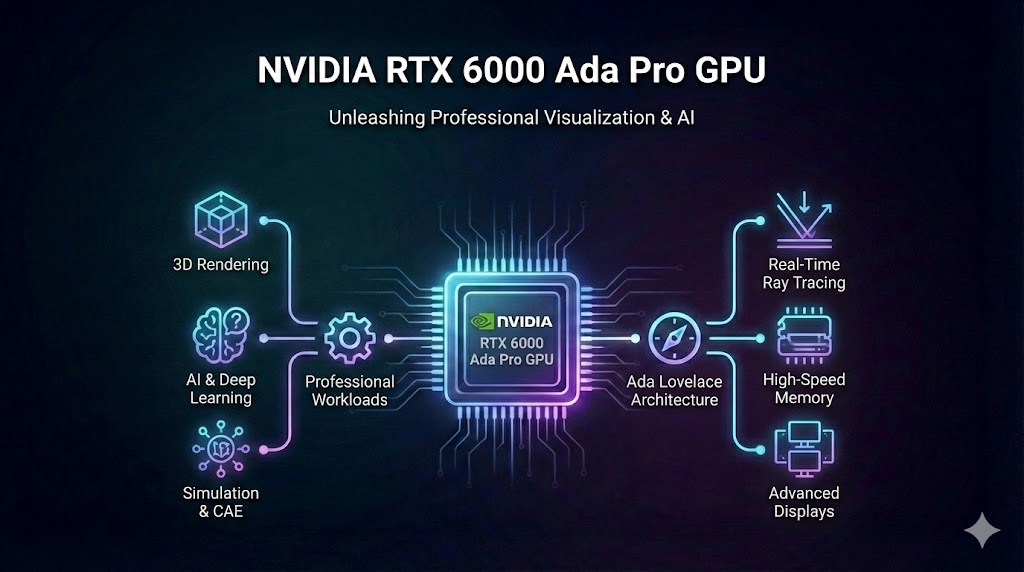
In a world where generative AI, real‑time rendering, and edge computing are redefining industries, the choice of GPU can make or break a project’s success. NVIDIA’s RTX 6000 Ada Generation GPU stands at the intersection of cutting‑edge hardware and enterprise reliability. This guide explores how the RTX 6000 Ada unlocks possibilities across AI research, 3D design, content creation and edge deployment, while offering a decision framework for choosing the right GPU and leveraging Clarifai’s compute orchestration for maximum impact.

Quick Digest

  • What is the NVIDIA RTX 6000 Ada Pro GPU? The flagship professional GPU built on the Ada Lovelace architecture delivers 91.1 TFLOPS FP32, 210.6 TFLOPS of ray‑tracing throughput and 48 GB of ECC GDDR6 memory, combining third‑generation RT Cores and fourth‑generation Tensor Cores.
  • Why does it matter? Benchmarks show up to twice the performance of its predecessor (RTX A6000) across rendering, AI training and content creation.
  • Who should care? AI researchers, 3D artists, video editors, edge‑computing engineers and decision‑makers selecting GPUs for enterprise workloads.
  • How can Clarifai help? Clarifai’s compute orchestration platform manages training and inference across diverse hardware, enabling efficient use of the RTX 6000 Ada through GPU fractioning, autoscaling and local runners.

Understanding the NVIDIA RTX 6000 Ada Pro GPU

The NVIDIA RTX 6000 Ada Generation GPU is the professional variant of the Ada Lovelace architecture, designed to handle the demanding requirements of AI and graphics professionals. With 18,176 CUDA cores, 568 fourth‑generation Tensor Cores, and 142 third‑generation RT Cores, the card delivers 91.1 TFLOPS of single‑precision (FP32) compute and an impressive 1,457 TOPS of AI performance. Each core generation introduces new capabilities: the RT cores provide 2× faster ray–triangle intersection, while the opacity micromap engine accelerates alpha testing by 2× and the displaced micro‑mesh unit allows a 10× faster bounding volume hierarchy (BVH) build with significantly reduced memory overhead.

Beyond raw compute, the card features 48 GB of ECC GDDR6 memory with 960 GB/s bandwidth. This memory pool, paired with enterprise drivers, ensures reliability for mission‑critical workloads. The GPU supports dual AV1 hardware encoders and virtualization via NVIDIA vGPU profiles, enabling multiple virtual workstations on a single card. Despite its prowess, the RTX 6000 Ada operates at a modest 300 W TDP, offering improved power efficiency over previous generations.

Expert Insights

  • Memory and stability matter: Engineers emphasize that the ECC GDDR6 memory safeguards against memory errors during long training runs or rendering jobs.
  • Micro‑mesh & opacity micromaps: Research engineers note that micro‑mesh technology allows geometry to be represented with less storage, freeing VRAM for textures and AI models.
  • No NVLink, no problem? Reviewers observe that while the removal of NVLink eliminates direct VRAM pooling across GPUs, the improved power efficiency allows up to three cards per workstation without thermal issues. Multi‑GPU workloads now rely on data parallelism rather than memory pooling.

Performance Comparisons & Generational Evolution

Choosing the right GPU involves understanding how generations improve. The RTX 6000 Ada sits between the previous RTX A6000 and the upcoming Blackwell generation.

Comparative Specs

GPU

CUDA Cores

Tensor Cores

Memory

FP32 Compute

Power

RTX 6000 Ada

18,176

568 (4th‑gen)

48 GB GDDR6 (ECC)

91.1 TFLOPS

300 W

RTX A6000

10,752

336

48 GB GDDR6

39.7 TFLOPS

300 W

Quadro RTX 6000

4,608

576 (tensor)

24 GB GDDR6

16.3 TFLOPS

295 W

RTX PRO 6000 Blackwell (expected)

~20,480*

next‑gen

96 GB GDDR7

~126 TFLOPS FP32

TBA

Blackwell Ultra

dual‑die

next‑gen

288 GB HBM3e

15 PFLOPS FP4

HPC target

*Projected cores based on generational scaling; actual numbers may vary.

Benchmarks

Benchmarking firms have shown that the RTX 6000 Ada provides a step‑change in performance. In ray‑traced rendering engines:

  • OctaneRender: The RTX 6000 Ada is about 83 % faster than the RTX A6000 and nearly 3× faster than the older Quadro RTX 6000. Dual cards almost double throughput.
  • V‑Ray: The card delivers over twice the performance of the A6000 and ~4× the Quadro.
  • Redshift: Rendering times drop from 242 seconds (Quadro) and 159 seconds (A6000) to 87 seconds on a single RTX 6000 Ada; two cards cut this further to 45 seconds.

For video editing, the Ada GPU shines:

  • DaVinci Resolve: Expect ~45 % faster performance in compute‑heavy effects compared with the A6000.
  • Premiere Pro: GPU‑accelerated effects see up to 50 % faster processing over the A6000, and 80 % faster than competitor pro GPUs.

These improvements stem from the increased core counts, higher clock speeds, and architecture optimizations. However, the removal of NVLink means tasks needing more than 48 GB VRAM must adopt distributed workflows. The upcoming Blackwell generation promises even more compute with 96 GB memory and higher FP32 throughput, but release timelines may place it a year away.

Expert Insights

  • Power & cooling: Experts note that the RTX 6000 Ada’s improved efficiency enables up to three cards in a single workstation, offering scaling with manageable heat dissipation.
  • Generational planning: System architects recommend evaluating whether to invest in Ada now for immediate productivity or wait for Blackwell if memory and compute budgets require future proofing.
  • NVLink trade‑offs: Without NVLink, large scenes require either scene partitioning or out‑of‑core rendering; some enterprises pair the Ada with specialized networks to mitigate this.

Generative AI & Large‑Scale Model Training

Generative AI’s hunger for compute and memory makes GPU selection crucial. The RTX 6000 Ada’s 48 GB memory and robust tensor throughput enable training of large models and fast inference.

Meeting VRAM Demands

Generative AI models—especially foundation models—demand significant VRAM. Analysts note that tasks like fine‑tuning Stable Diffusion XL or 7‑billion‑parameter transformers require 24 GB to 48 GB of memory to avoid performance bottlenecks. Consumer GPUs with 24 GB VRAM may suffice for smaller models, but enterprise projects or experimentation with multiple models benefit from 48 GB or more. The RTX 6000 Ada strikes a balance by offering a single‑card solution with enough memory for most generative workloads while maintaining compatibility with workstation chassis and power budgets.

Real‑World Examples

  • Speed Read AI: This startup uses dual RTX 6000 Ada GPUs in Dell Precision 5860 towers to accelerate script analysis. With the cards’ large memory, they reduced script evaluation time from eight hours to five minutes, enabling developers to test ideas that were previously impractical.
  • Multi‑Modal Transformer Research: A university project running on an HP Z4 G5 with two RTX 6000 Ada cards achieved 4× faster training compared with single‑GPU setups and could train 7‑billion‑parameter models, shortening iteration cycles from weeks to days.

These cases illustrate how memory and compute scale with model size and emphasize the benefits of multi‑GPU configurations—even without NVLink. Adopting distributed data parallelism across cards allows researchers to handle massive datasets and large parameter counts.

Expert Insights

  • VRAM drives creativity: AI researchers observe that high memory capacity invites experimentation with parameter‑efficient tuning, LORA adapters, and prompt engineering.
  • Iteration speed: Reducing training time from days to hours changes the research cadence. Continuous iteration fosters breakthroughs in model design and dataset curation.
  • Clarifai integration: Leveraging Clarifai’s orchestration platform, researchers can schedule experiments across on‑prem RTX 6000 Ada servers and cloud instances, using GPU fractioning to allocate memory efficiently and local runners to keep data within secure environments.

3D Modeling, Rendering & Visualization

The RTX 6000 Ada is also a powerhouse for designers and visualization experts. Its combination of RT and Tensor cores delivers real‑time performance for complex scenes, while virtualization and remote rendering open new workflows.

Real‑Time Ray‑Tracing & AI Denoising

The card’s third‑gen RT cores accelerate ray–triangle intersection and handle procedural geometry with features like displaced micro‑mesh. This results in real‑time ray‑traced renders for architectural visualization, VFX and product design. The fourth‑gen Tensor cores accelerate AI denoising and super‑resolution, further improving image quality. According to remote‑rendering providers, the RTX 6000 Ada’s 142 RT cores and 568 Tensor cores enable photorealistic rendering with large textures and complex lighting. Additionally, the micro‑mesh engine reduces memory usage by storing micro‑geometry in compact form.

Remote Rendering & Virtualization

Remote rendering allows artists to work on lightweight devices while heavy scenes render on server‑grade GPUs. The RTX 6000 Ada supports virtual GPU (vGPU) profiles, letting multiple virtual workstations share a single card. Dual AV1 encoders enable streaming of high‑quality video outputs to multiple clients. This is particularly useful for design studios and broadcast companies implementing hybrid or fully remote workflows. While the lack of NVLink prevents memory pooling, virtualization can allocate discrete memory per user, and GPU fractioning (available through Clarifai) can subdivide VRAM for microservices.

Expert Insights

  • Hybrid pipelines: 3D artists highlight the flexibility of sending heavy final‑render tasks to remote servers while iterating locally at interactive frame rates.
  • Memory‑aware design: The micro‑mesh approach encourages designers to create more detailed assets without exceeding VRAM limits.
  • Integration with digital twins: Many industries adopt digital twins for predictive maintenance and simulation; the RTX 6000 Ada’s ray‑tracing and AI capabilities accelerate these pipelines, and Clarifai’s orchestration can manage inference across digital twin components.

Video Editing, Broadcasting & Content Creation

Video editors, broadcasters and digital content creators benefit from the RTX 6000 Ada’s compute capabilities and encoding features.

Accelerated Editing & Effects

The card’s high FP32 and Tensor throughput enhances editing timelines and accelerates effects such as noise reduction, color correction and complex transitions. Benchmarks show ~45 % faster DaVinci Resolve performance over the RTX A6000, enabling smoother scrubbing and real‑time playback of multiple 8K streams. In Adobe Premiere Pro, GPU‑accelerated effects execute up to 50 % faster; this includes warp stabilizer, lumetri color and AI‑powered auto‑reframing. These gains reduce export times and free up creative teams to focus on storytelling rather than waiting.

Live Streaming & Broadcasting

Dual AV1 hardware encoders allow the RTX 6000 Ada to stream multiple high‑quality feeds simultaneously, enabling 4K/8K HDR live broadcasts with lower bandwidth consumption. Virtualization means editing and streaming tasks can coexist on the same card or be partitioned across vGPU instances. For studios running 120+ hour editing sessions or live shows, ECC memory ensures stability and prevents corrupted frames, while professional drivers minimize unexpected crashes.

Expert Insights

  • Real‑world reliability: Broadcasters emphasize that ECC memory and enterprise drivers allow continuous operation during live events; small errors that crash consumer cards are corrected automatically.
  • Multi‑platform streaming: Technical directors highlight how AV1 reduces bitrates by about 30 % compared with older codecs, allowing simultaneous streaming to multiple platforms without quality loss.
  • Clarifai synergy: Content creators can integrate Clarifai’s video models (e.g., scene detection, object tracking) into post‑production pipelines. Orchestration can run inference tasks on the RTX 6000 Ada in parallel with editing tasks, thanks to GPU fractioning.

Edge Computing, Virtualization & Remote Workflows

As industries adopt AI at the edge, the RTX 6000 Ada plays a key role in powering intelligent devices and remote work.

Industrial & Medical Edge AI

NVIDIA’s IGX platform brings the RTX 6000 Ada to harsh environments like factories and hospitals. The IGX‑SW 1.0 stack pairs the GPU with safety-certified frameworks (Holoscan, Metropolis, Isaac) and increases AI throughput to 1,705 TOPS—a seven‑fold boost over integrated solutions. This performance supports real‑time inference for robotics, medical imaging, patient monitoring and safety systems. Long‑term software support and hardware ruggedization ensure reliability.

Remote & Maritime Workflows

Edge computing also extends to remote industries. In a maritime vision project, researchers deployed HP Z2 Mini workstations with RTX 6000 Ada GPUs to perform real‑time computer‑vision analysis on ships, enabling autonomous navigation and safety monitoring. The GPU’s power efficiency suits limited power budgets onboard vessels. Similarly, remote energy installations or construction sites benefit from on‑site AI that reduces reliance on cloud connectivity.

Virtualization & Workforce Mobility

Virtualization allows multiple users to share a single RTX 6000 Ada via vGPU profiles. For example, a consulting firm uses mobile workstations running remote workstations on datacenter GPUs, giving clients hands‑on access to AI demos without shipping bulky hardware. GPU fractioning can subdivide VRAM among microservices, enabling concurrent inference tasks—particularly when managed through Clarifai’s platform.

Expert Insights

  • Latency & privacy: Edge AI researchers note that local inference on GPUs reduces latency compared with cloud, which is crucial for safety‑critical applications.
  • Long‑term support: Industrial customers stress the importance of stable software stacks and extended support windows; the IGX platform offers both.
  • Clarifai’s local runners: Developers can deploy models via AI Runners, keeping data on‑prem while still orchestrating training and inference through Clarifai’s APIs.

Decision Framework: Selecting the Right GPU

With many GPUs on the market, selecting the right one requires balancing memory, compute, cost and power. Here’s a structured approach for decision makers:

  1. Define workload and model size. Determine whether tasks involve training large language models, complex 3D scenes or video editing. High parameter counts or large textures demand more VRAM (48 GB or higher).
  2. Assess compute needs. Consider whether your workload is FP32/FP16 bound (numerical compute) or AI inference bound (Tensor core utilization). For generative AI and deep learning, prioritize Tensor throughput; for rendering, RT core count matters.
  3. Evaluate power and cooling constraints. Ensure the workstation or server can supply the required power (300 W per card) and cooling capacity; the RTX 6000 Ada allows multiple cards per system thanks to blower cooling.
  4. Compare cost and future proofing. While the RTX 6000 Ada provides excellent performance today, upcoming Blackwell GPUs may offer more memory and compute; weigh whether the current project needs justify immediate investment.
  5. Consider virtualization and licensing. If multiple users need GPU access, ensure the system supports vGPU licensing and virtualization.
  6. Plan for scale. For workloads exceeding 48 GB VRAM, plan for data‑parallel or model‑parallel strategies, or consider multi‑GPU clusters managed via compute orchestration platforms.

Decision Table

Scenario

Recommended GPU

Rationale

Fine‑tuning foundation models up to 7 B parameters

RTX 6000 Ada

48 GB VRAM supports large models; high tensor throughput accelerates training.

Training >10 B models or extreme HPC workloads

Upcoming Blackwell PRO 6000 / Blackwell Ultra

96–288 GB memory and up to 15 PFLOPS compute future‑proof large‑scale AI.

High‑end 3D rendering and VR design

RTX 6000 Ada (single or dual)

High RT/Tensor throughput; micro‑mesh reduces VRAM usage; virtualization available.

Budget‑constrained AI research

RTX A6000 (legacy)

Adequate performance for many tasks; lower cost; but ~2× slower than Ada.

Consumer or hobbyist deep learning

RTX 4090

24 GB GDDR6X memory and high FP32 throughput; cost‑effective but lacks ECC and professional support.

Expert Insights

  • Total cost of ownership: IT managers recommend factoring in energy costs, maintenance and driver support. Professional GPUs like the RTX 6000 Ada include extended warranties and stable driver branches.
  • Scale via orchestration: For large workloads, experts advocate using orchestration platforms (like Clarifai) to manage clusters and schedule jobs across on‑prem and cloud resources.

Integrating Clarifai Solutions for AI Workloads

Clarifai is a leader in low‑code AI platform solutions. By integrating the RTX 6000 Ada with Clarifai’s compute orchestration and AI Runners, organizations can maximize GPU utilization while simplifying development.

Compute Orchestration & Low‑Code Pipelines

Clarifai’s orchestration platform manages model training, fine‑tuning and inference across heterogeneous hardware—GPUs, CPUs, edge devices and cloud providers. It offers a low‑code pipeline builder that allows developers to assemble data processing and model‑evaluation steps visually. Key features include:

  • GPU fractioning: Allocates fractional GPU resources (e.g., half of the RTX 6000 Ada’s VRAM and compute) to multiple concurrent jobs, maximizing utilization and reducing idle time.
  • Batching & autoscaling: Automatically groups small inference requests into larger batches and scales workloads horizontally across nodes; this ensures cost efficiency and consistent latency.
  • Spot instance support & cost control: Clarifai orchestrates tasks on lower‑cost cloud instances when appropriate, balancing performance and budget.

These features are particularly valuable when working with expensive GPUs like the RTX 6000 Ada. By scheduling training and inference jobs intelligently, Clarifai ensures that organizations only pay for the compute they need.

AI Runners & Local Runners

The AI Runners feature lets developers connect models running on local workstations or private servers to the Clarifai platform via a public API. This means data can remain on‑prem for privacy or compliance while still benefiting from Clarifai’s infrastructure and features like autoscaling and GPU fractioning. Developers can deploy local runners on machines equipped with RTX 6000 Ada GPUs, maintaining low latency and data sovereignty. When combined with Clarifai’s orchestration, AI Runners provide a hybrid deployment model: the heavy training might occur on on‑prem GPUs while inference runs on auto‑scaled cloud instances.

Real‑World Applications

  • Generative vision models: Use Clarifai to orchestrate fine‑tuning of generative models on on‑prem RTX 6000 Ada servers while hosting the final model on cloud GPUs for global accessibility.
  • Edge AI pipeline: Deploy computer‑vision models via AI Runners on IGX‑based devices in industrial settings; orchestrate periodic re‑training in the cloud to improve accuracy.
  • Multi‑tenant services: Offer AI services to clients by fractioning a single GPU into isolated workloads and billing usage per inference call. Clarifai’s built‑in cost management helps track and optimize expenses.

Expert Insights

  • Flexibility & control: Clarifai engineers highlight that GPU fractioning reduces cost per job by up to 70 % compared with dedicated GPU allocations.
  • Secure deployment: AI Runners enable compliance‑sensitive industries to adopt AI without sending proprietary data to the cloud.
  • Developer productivity: Low‑code pipelines allow subject‑matter experts to build AI workflows without needing deep DevOps knowledge.

Emerging Trends & Future‑Proofing

The AI and GPU landscape evolves quickly. Organizations should stay ahead by monitoring emerging trends:

Next‑Generation Hardware

The upcoming Blackwell GPU generation is expected to double memory and significantly increase compute throughput, with the PRO 6000 offering 96 GB GDDR7 and the Blackwell Ultra targeting HPC with 288 GB HBM3e and 15 PFLOPS FP4 compute. Planning a modular infrastructure allows easy integration of these GPUs when they become available, while still leveraging the RTX 6000 Ada today.

Multi‑Modal & Agentic AI

Multi‑modal models that integrate text, images, audio and video are becoming mainstream. Training such models requires significant VRAM and data pipelines. Likewise, agentic AI—systems that plan, reason and act autonomously—will demand sustained compute and robust orchestration. Platforms like Clarifai can abstract hardware management and ensure compute is available when needed.

Sustainable & Ethical AI

Sustainability is a growing focus. Researchers are exploring low‑precision formats, dynamic voltage/frequency scaling, and AI‑powered cooling to reduce energy consumption. Offloading tasks to the edge via efficient GPUs like the RTX 6000 Ada reduces data center loads. Ethical AI considerations, including fairness and transparency, increasingly influence purchasing decisions.

Synthetic Data & Federated Learning

The shortage of high‑quality data drives adoption of synthetic data generation, often running on GPUs, to augment training sets. Federated learning—training models across distributed devices without sharing raw data—requires orchestration across edge GPUs. These trends highlight the importance of flexible orchestration and local compute (e.g., via AI Runners).

Expert Insights

  • Invest in orchestration: Experts predict that the complexity of AI workflows will necessitate robust orchestration to manage data movement, compute scheduling and cost optimization.
  • Stay modular: Avoid hardware lock‑in by adopting standards‑based interfaces and virtualization; this ensures you can integrate Blackwell or other GPUs when they launch.
  • Look beyond hardware: Success will hinge on combining powerful GPUs like the RTX 6000 Ada with scalable platforms—Clarifai among them—that simplify AI development and deployment.

Frequently Asked Questions (FAQs)

Q1: Is the RTX 6000 Ada worth it over a consumer RTX 4090?
A: If you need 48 GB of ECC memory, professional driver stability and virtualization features, the RTX 6000 Ada justifies its premium. A 4090 offers strong compute for single‑user tasks but lacks ECC and may not support enterprise virtualization.

Q2: Can I pool VRAM across multiple RTX 6000 Ada cards?
A: Unlike previous generations, the RTX 6000 Ada does not support NVLink, so VRAM cannot be pooled. Multi‑GPU setups rely on data parallelism rather than unified memory.

Q3: How can I maximize GPU utilization?
A: Platforms like Clarifai allow GPU fractioning, batching and autoscaling. These features let you run multiple jobs on a single card and automatically scale up or down based on demand.

Q4: What are the power requirements?
A: Each RTX 6000 Ada draws up to 300 W; ensure your workstation has adequate power and cooling. Blower‑style cooling allows stacking multiple cards in one system.

Q5: Are the upcoming Blackwell GPUs compatible with my current setup?
A: Detailed specifications are pending, but Blackwell cards will likely require PCIe Gen5 slots and may have higher power consumption. Modular infrastructure and standards‑based orchestration platforms (like Clarifai) help future‑proof your investment.


Conclusion

The NVIDIA RTX 6000 Ada Generation GPU represents a pivotal step forward for professionals in AI research, 3D design, video production and edge computing. Its high compute throughput, large ECC memory and advanced ray‑tracing capabilities empower teams to tackle workloads that were once confined to high‑end data centers. However, hardware is only part of the equation. Integrating the RTX 6000 Ada with Clarifai’s compute orchestration unlocks new levels of efficiency and flexibility—allowing organizations to leverage on‑prem and cloud resources, manage costs, and future‑proof their AI infrastructure. As the AI landscape evolves toward multi‑modal models, agentic systems and sustainable computing, a combination of powerful GPUs and intelligent orchestration platforms will define the next era of innovation.