How do teens in IT classes waste their time these days? When I was a young whippersnapper, when my teacher wasn’t looking I’d head to sites like Miniclip, Nitrome, wherever I could get my hands on some Flash games, to play all sorts of little oddities, particularly system heavy ones that were fun to mess around with for 10 minutes once in a while. Games like that feel rare now with the death of Flash, but I think Tower Lab, a physics roguelite tower defence deckbuilder where you attempt to blast enemies off a ledge into an infinite void to their demise, feels pretty close.
Tower Lab works thusly: there are two portals, one where variously coloured upright beans are emitted, another where they enter. You are presented with a selection of cards, all of which cost a certain amount of points, points which you are in limited supply of, that allow you to plant different bits of machinery to try and shove these enemy beans off a ledge.
These machines come in a range of flavours. For example, one is quite simply a fan, turning on every so often to attempt to push the beans off. Some beans are too heavy, however, so you might place a shrink ray earlier along the tower so that they’re easier to blow off. A gif on the game’s Steam page shows how you can take this even further by shrinking them down, making them weightless, blowing them away, before making them even larger than before so that they fall to their deaths. Systems! They’re quite neat, and from what I can tell your technical know-how will be put to the test more and more over the course of the game’s various levels.
This is exactly the kind of game I would have loved messing about with as a distracted teen. IT class is a waste of time! But a game like Tower Lab isn’t. It’s quite satisfying in small doses, and levels don’t waste your time either. I quite like the foundations that have been laid here, and look forward to recreating scenes from my youth when it launches later this year. In the meantime, you can wishlist the game on Steam right here.
I’m building a mobile application, however, when I try to put an image png under the Android Device (Android – Resources Drawable) I get this weird error when running the application:
Severity Code Description Project File Line Status Deleted
Error System.IO.IOException: The file name, directory name, or volume label syntax is incorrect.
   at System.IO.__Error.WinIOError(Int32 errorCode, String maybeFullPath)
   at System.IO.Directory.DeleteHelper(String fullPath, String userPath, Boolean recursive, Boolean throwOnTopLevelDirectoryNotFound, WIN32_FIND_DATA& data)
   at System.IO.Directory.Delete(String fullPath, String userPath, Boolean recursive, Boolean checkHost)
   at Xamarin.Android.Tasks.RemoveDirFixed.RunTask() mvm_guia2.Android
I don’t know why I’m getting that, and the only way that I have found to troubleshoot this is by creating a new project.
If your Gmail account doesn’t seem to be working properly today, you’re not alone.
The official status dashboard for Google Workspace suggests that the issues began at around 5am Pacific on Saturday morning, with users experiencing both “misclassification of emails in their inbox and additional spam warnings.”
For me, that meant my Primary inbox was filled with messages that would normally appear in the Promotions, Social, or Updates inboxes, and that spam warnings were appearing in emails from known senders.
“We are actively working to resolve the issue,” Google said. “As always, we encourage users to follow standard best practices when engaging with messages from unknown senders.”
TechCrunch has reached out to Google for additional comment.
It has been nearly two years since Microsoft CEO Satya Nadella predicted that generative AI would take over knowledge work, but if you look around a typical law firm or investment bank today, the human workforce is still very much in charge. Despite all the hype about “reasoning” and “planning,” a new study from training-data company Mercor explains exactly why the robot revolution is stalled: AI just can’t handle the messiness of real work.
A reality check for the “replacement” theory
Mercor released a new benchmark called APEX-Agents, and it is brutal. unlike the usual tests that ask AI to write a poem or solve a math problem, this one uses actual queries from lawyers, consultants, and bankers. It asks the models to do complete, multi-step tasks that require jumping between different types of information.
The results? Even the absolute best models on the market—we are talking about Gemini 3 Flash and GPT-5.2—couldn’t crack a 25% accuracy rate. Gemini led the pack at 24%, with GPT-5.2 right behind it at 23%. Most others were stuck in the teens.
Why AI is failing the “office test”
Mercor CEO Brendan Foody points out that the issue isn’t raw intelligence; it’s context. In the real world, answers aren’t served up on a silver platter. A lawyer has to check a Slack thread, read a PDF policy, look at a spreadsheet, and then synthesize all that to answer a question about GDPR compliance.
Humans do this context-switching naturally. AI, it turns out, is terrible at it. When you force these models to hunt for information across “scattered” sources, they either get confused, give the wrong answer, or just give up entirely.
The “Unreliable Intern”
For anyone worried about their job security, this is a bit of a relief. The study suggests that right now, AI functions less like a seasoned professional and more like an unreliable intern who gets things right about a quarter of the time.
That said, the progress is terrifyingly fast. Foody noted that just a year ago, these models were scoring between 5% and 10%. Now they are hitting 24%. So, while they aren’t ready to take the wheel yet, they are learning to drive much faster than we expected. For now, though, the “knowledge work” revolution is on hold until the bots learn how to multitask p
First-person psychological horror where the familiar becomes terrifying.
How the designers twist common themes into nightmare.
Use calmness and wits to escape an abandoned subway station while being hunted by a familiar presence.
What if falling asleep on your daily commute was the worst mistake you could make?
The Last Train: Baquedano is a first-person psychological horror experience that turns an everyday situation into a disturbing nightmare. Developed as an intense, narrative-driven indie title, the game invites players to explore the dark corridors of an abandoned subway station where time feels frozen and something is watching from the shadows.
A Familiar Face Turned Into Fear
One of the most striking elements of The Last Train: Baquedano is the presence of Tung Tung Sahur, a character widely recognized as a viral internet figure. In this game, that familiar face takes on a far more unsettling role. What was once humorous and recognizable becomes distorted and threatening, transforming internet culture into a source of psychological tension.
The game builds fear through a unique blend of anticipation, sound design, and the unsettling contrast between recognition and danger. Seeing something you know and realizing it shouldn’t be there becomes one of the core emotional drivers of the experience.
Explore, Survive, and Uncover the Truth
Exploration, environmental storytelling, and light puzzle-solving are the core mechanics as you search for clues that hint at a deeper story hidden beneath the surface.
Stay Calm and Observant to Survive
The game features four different endings, encouraging replayability and interpretation. Each ending reveals new layers of meaning, allowing you to piece together what really happened and what the station represents.
A Short, Intense Psychological Experience
The Last Train: Baquedano is designed as a concise yet impactful horror experience, ideal for fans of atmospheric storytelling and emotional immersion. Its urban setting, inspired by real-world subway spaces, grounds the horror in reality, making the experience feel uncomfortably close to home.
Blending psychological tension, subtle humor, and modern cultural references, the game offers a unique take on contemporary horror, one where the scariest things aren’t monsters, but the familiar routines we trust every day.
Are you ready to reach the last stop? Just make sure you don’t fall asleep on the way.
The Last Train: Baquedano is available now on Xbox Series X|S and Xbox One.
THE LAST TRAIN: Baquedano
Pdpartid@games
☆☆☆☆☆ 6
★★★★★
$7.99
Last stop of the line. All passengers must exit
In The Last Train, a first-person psychological horror game, routine turns into nightmare when you fall asleep on the subway. Upon waking, you discover you’ve reached the end of the line, an abandoned station shrouded in darkness. But you’re not alone; something else waits in the shadows, watching you and following your every move.
Explore the gloomy corridors and hidden corners of the last station as you try to find a way back to safety. Every sound, every movement, could be a sign that what’s hunting you is closer than you think. You’ll need to keep your calm, solve puzzles, and find clues that reveal the dark secrets hidden within this abandoned station. Will you escape before the entity catches you?
Features
– First-person horror with touches of humor
– 4 endings to unlock
– Interact with and run from popular characters
– Discover secrets that reveal a larger story
– Intense experience in a mysterious station
Prepare for a one-way journey into fear. The last station awaits you… and not everyone makes it back.
Not everyone may be on board with foldable phones, but there’s no denying that the form factor is here to stay. The foldable market has grown significantly over the years, with players emerging left and right and plenty of models to choose from. Google is already on its third foldable iteration with the rather impressive but iterative Pixel 10 Pro Fold, but it is still ignoring a rather important form factor: the flip phone.
Since using flip phones like the Motorola Razr and Samsung Galaxy Z Flip over the past few years, I’ve often said that Google needs to throw its own flip phone into the mix. Google apparently disagrees, and the company seems to have no interest in producing a flip phone, but I believe Pixel Flip could be a great complement to Google’s smartphone lineup and leverage the growing popularity of the Pixel family in a few ways that would secure its success.
More options for everyone
(Image credit: Derrek Lee / Android Central)
One of the main reasons I want a Pixel Flip is that, despite the growing foldable smartphone market, options for flip phones are pretty slim. In North America, Motorola and Samsung are the only options, while Chinese OEMs offer more models overseas but are still overshadowed by book-style foldables. For example, the OPPO Find N3 Flip from 2023 was an impressive flip phone, but the company hasn’t launched a follow-up since, even though it has produced two flagship book-style foldables in the past couple of years.
It’s becoming clear that companies are much more focused on larger book-style foldables, and it’s not hard to see why. Companies can make much more from these phones, due to their higher average selling price. This is likely why we see Google focusing on the larger form factor; it can get more money back from each unit sold.
Still, in North America, where there are only a few relevant names in the smartphone market, having more choice among the available players is a good thing. Not everyone is willing to spend $1,800 on a smartphone, and a Pixel Flip would allow Google to still sell a smartphone at a more accessible flagship price while providing a third major flip phone option from a popular brand, alongside the Razr and Galaxy Z Flip.
Google can leverage the growing popularity of the Razr and Pixel lineups
(Image credit: Derrek Lee / Android Central)
Quite a bit has changed in the few years since I last made the case for a Pixel Flip. Both Motorola and Google have become bigger players in the smartphone market, thanks to the Razr and Pixel.
According to Counterpoint Research, Motorola “emerged as one of the standout performers globally” in the foldable market during Q3 2025, after “expanding its foldable base through competitive pricing, strong channel partnerships and favorable product usability reviews.” The company has seen impressive growth thanks to its successful marketing of the Razr series, which offers a range of price points and attractive discounts.
Get the latest news from Android Central, your trusted companion in the world of Android
IDC estimates that the foldable market will grow by nearly 30% in 2026, while non-foldables will actually see a decline. With the launch of the Motorola Razr Fold later this year, Motorola is poised to reap the benefits of this surge by offering two different foldable form factors, something Google can and should consider.
It also shows why Google (and consumers) shouldn’t sleep on flip phones. Since Q1 2024, Motorola has maintained double-digit market share in the U.S., remaining the third-largest smartphone brand by shipments, behind Apple and Samsung.
(Image credit: Nicholas Sutrich / Android Central)
And while Motorola should be enough of a motivator, Google need only look at its own Pixel lineup to convince itself why a Pixel Flip could still work. These AI phones are becoming increasingly popular among consumers, with Pixel shipments breaking into the top five in Q2 2025, and the Pixel 10 launch resulting in a massive surge in sales.
It’s clear that the Pixel is a hit, and while Google currently offers four Pixel 10 models, a Pixel Flip could easily slot among its higher-end models. Assuming Google keeps its smartphone prices the same and prices a Pixel Flip similar to the Galaxy Z Flip 7, the lineup could look something like this:
Google Pixel 11: $799
Google Pixel 11 Pro: $999
Google Pixel Flip: $1,099
Google Pixel 11 Pro XL: $1,199
Google Pixel 11 Pro Fold: $1,799
This would position the Pixel Flip as a premium offering, allowing Google to compete with other high-end flip phones while attracting more users who may want the novelty of a foldable phone without the higher price point of the 10 Pro Fold or its successor.
What I want to see in a Pixel Flip
(Image credit: Brady Snyder / Android Central)
If Google decided to give us a Pixel Flip, it wouldn’t be too difficult to imagine what this might be like. The design could resemble the current Pixel lineup with a mostly flat matte frame and glossy glass back, similar to the base Pixel 10, plus a wide range of color options. The cover screen would expand across the top panel, as on the Razr Ultra 2025 and Galaxy Z Flip 7, with cameras protruding from the bottom corner of the external screen.
The Pixel can take after the Razr to let users use nearly any app on the cover screen out of the box, something most flip phones still don’t allow. We’ve seen Google optimize the Android OS and apps for book-style foldables, and this could prompt Google to work with developers to better optimize apps for flip phone cover screens, such as continuity, resizing certain UI elements, dedicated widgets/panels, and more.
(Image credit: Derrek Lee / Android Central)
Of course, the Pixel Flip would leverage Google’s excellent software/AI and camera capabilities. Motorola has Look & Talk on the Razr, which lets you glance at the phone while folded in tent or stand mode to activate Moto AI. Google could use something similar with Gemini Live, leveraging what it’s learned from Raise to Talk with the Pixel Watch 4 to let users jump straight into a conversation with its AI chatbot.
Google would also make the strongest case for keeping a dual-camera setup on a flip phone. Pixel phones have proven to handle digital zooming better than most other phones, and while many would like to see telephoto lenses on flip phones, a Pixel Flip wouldn’t need it.
Basically, Google could offer the best of both worlds between the Motorola Razr and the Galaxy Z Flip, with a mature UI, strong software support, a functional cover-screen experience, versatile cameras, and more. Now that Google seems to have found its stride with the Fold series, it should shift some of that focus to creating the best flip phone it can.
Apple rumors are starting to pick up now that we’re a few weeks into 2026, and this week saw some potential clarity around conflicting iPhone 18 Pro rumors, plus some new word on Apple’s plans for Siri.
This week also saw a report that Apple is working on some sort of AI pin while also making progress toward a major MacBook Pro revamp, so read on below for all the details!
Top Stories
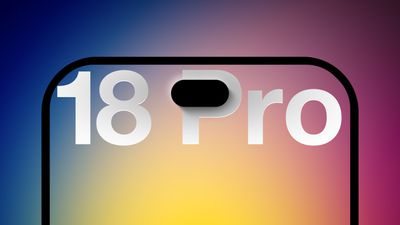
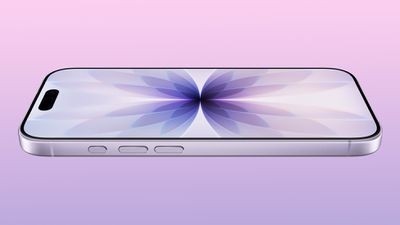
iPhone 18 Pro Leak: Smaller Dynamic Island, No Top-Left Camera Cutout
Over the last few months, rumors around the iPhone 18 Pro’s front-panel design have been conflicted, with some supply chain leaks pointing to under-display Face ID, reports suggesting a top-left hole-punch camera, and debate over whether the familiar Dynamic Island will shrink, shift, or disappear entirely.
According to frequent Weibo-based leaker Instant Digital, however, early reports from Chinese and Korean sources about the possible relocation of an infrared Face ID component were later mistranslated in some English-language coverage, leading to incorrect claims of a hole-punch camera. In fact, the Dynamic Island will remain on the iPhone 18 Pro and simply be roughly 35% narrower. That smaller Dynamic Island interpretation has also been corroborated by respected display analyst Ross Young.
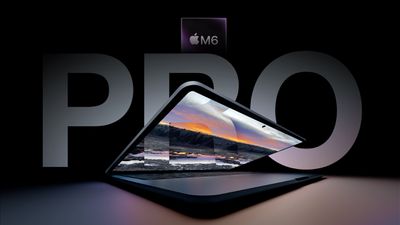
Apple’s OLED MacBook Pro Launch Moves Closer With Panel Production
Rumors have been pointing toward Apple launching a revamped MacBook Pro with OLED displays late this year or early next year, and things appear to have taken a step forward this month with a report claiming that Samsung’s production line that will produce displays for the new laptop has gone into operation.
Codenamed Campos, the Siri chatbot will be integrated into iOS 27, iPadOS 27, and macOS 27, replacing the current version of Siri. It will have the same natural language conversation functionality as chatbots like ChatGPT, and it will be accessible by using the “Siri” wake word or by holding down the side button on an iPhone or iPad.
The chatbot version of Siri arriving in iOS 27 later this year will follow the initial upgrade to a more personalized version of the current Siri that we expect to arrive in just a few months with iOS 26.4.
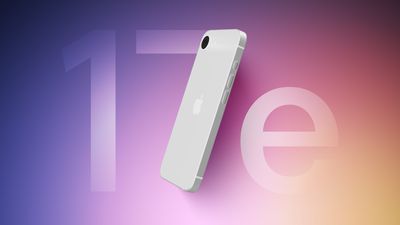
Apple’s Next iPhone: What to Expect From the 2026 iPhone 17e
We’re likely just weeks away from Apple’s next iPhone launch, with the company set to introduce the iPhone 17e. The iPhone 17e is a follow-up to the iPhone 16e that came out in February 2025, and rumors suggest that it could have some welcome improvements.
Check out our recap of all the rumors we’ve heard about the next version of Apple’s cheapest iPhone model to help decide if it might be the right one for you.
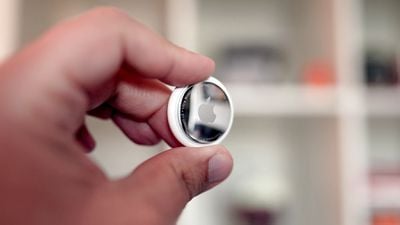
Apple Developing AirTag-Sized AI Pin With Dual Cameras
The pin is said to be similar in size to an AirTag, with a thin, flat, circular disc shape. It has an aluminum and glass shell, and two cameras at the front. There is a standard lens and a wide-angle lens that are meant to capture photos and videos, while three microphones are designed to pick up sound around the wearer. An included speaker allows the pin to play audio, and there is a physical control button along one edge. The device is able to wirelessly charge like an Apple Watch.
iPhone 18 Rumored to Feature Much Brighter Display
In a post this week on Weibo, the user known as Instant Digital said that Chinese supplier BOE has little hope of making panels for the iPhone 18 because Apple’s brightness requirements for the next-generation device are unprecedentedly high. This suggests that the iPhone 18’s display will see a considerable leap forward in terms of brightness.
While the iPhone 18 Pro and Pro Max are expected to launch in the usual September time frame, the regular iPhone 18 isn’t expected to launch until early 2027.
MacRumors Newsletter
Each week, we publish an email newsletter like this highlighting the top Apple stories, making it a great way to get a bite-sized recap of the week hitting all of the major topics we’ve covered and tying together related stories for a big-picture view.
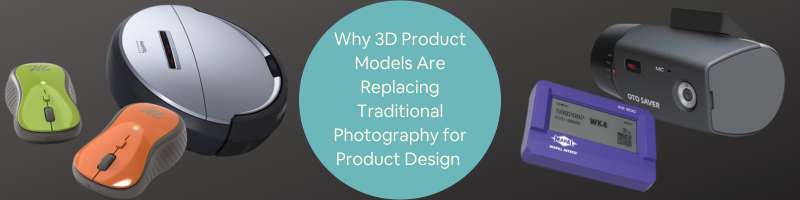
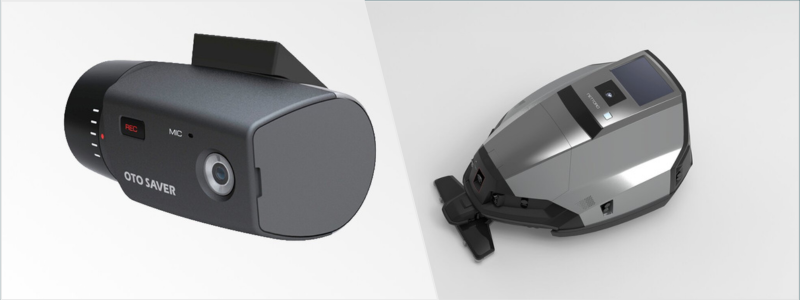
Why are 3D product models replacing traditional photography for product design companies? There was a time when the launch of a new product meant bringing in the whole crew: photographers, lighting experts, models, stylists, and even a studio cat who liked to nap in the lightbox. Each button, bottle, and bracelet needed to be photographed from every angle, then touched up and re-shot if someone sneezed near the set. It was a glamorous mess that often siphoned both time and budget.
Why 3D product models as opposed to traditional photography?
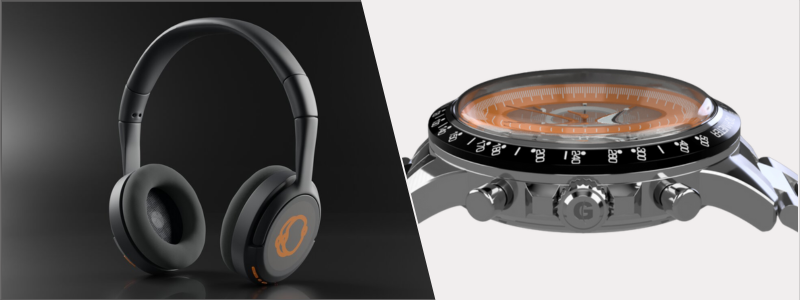
Today, product design firms quietly ditch the cameras and tripods for something far more precise, flexible, and futuristic: 3D product modeling. Instead of fighting with reflections, props, and post-production headaches, today’s brands turn to digital artists who can compose photorealistic product visuals with little more than special software and a keen eye for detail. Results? Absolutely stunning at times, such that even seasoned designers stop and squint, trying to tell whether they’re looking at a render or a photograph.
And finding those experts to make that magic happen isn’t tough either. Cad Crowd connects businesses with professional freelancers in 3D modeling services to create products in vivid digital designs of jewelry and electronics, to furniture and fashion accessories. A ready global pool of talented freelancers is just waiting for the opportunity to create models that will raise eyebrows even among the most ardent photographers. But how did we get here? Why are product design companies choosing 3D renders over traditional photography? What’s so irresistible about the digital shift that even old-school creatives have decided to take the leap? Let us dive in.
Traditional product photography has always had a certain artistic flair to it. It’s difficult to deny the beauty in real-world lighting, textures, and the overall tactile sense that comes with capturing something tangible. The process that goes behind it, however, is not quite so romantic.
Think of what it takes to get just one great product photo:
Creating or renting a suitable studio setup.
Camera and lens hire and sale; lighting.
Constant adjustments of light to avoid reflections.
Coordinate with photographers, stylists, and retouchers.
Extensive image editing to make every shot perfect.
Now, do that whole process for each color, size, or packaging-style variation of that same product. The costs multiply faster than you can say “retouching fee.” 3D modeling designers flips that process on its head. Instead of capturing light bouncing off of a real object, artists build the product inside a computer. And when that digital version exists, it can be rotated, retextured, resized, and lit in infinite ways. No new photo shoot. No rescheduling. No misplaced USB drives full of RAW files.
What makes this powerful to product design companies is the level of control involved: traditional photography gets you what the camera sees; 3D product models get you what your imagination wants. Every angle, every shadow, every shine can be precisely tuned. It is like going from marble sculpture to pixel editing-no marble dust, chipped edges, or angry clients asking for a new photo shoot because the lighting looks too moody.
But one major reason 3D product modeling services is taking over in product photography is quite simple: it removes limitations. In the studio, there are practical boundaries: there is gravity, light bounces in very inconvenient ways, and glass reflects everything, including the elbow of the photographer. With 3D product models, goodbye to all that.
Want to make your new smartwatch air-levitate in midair with elegance? Easy.
Want the latest sneaker with lightning bolts and smoke around it? Done.
Want a jewelry collection on the surface of the moon for a campaign? Sure thing-no rocket fuel needed.
Nothing provides quite as much creative freedom as 3D modeling. Companies can visualize products in environments that, logistically, are impossible or just financially insane to shoot in real life. In lieu of renting a tropical island to photograph a bottle of sunscreen, a 3D artist can recreate one down to the last palm leaf. This really helps in the case of concept products that are not even manufactured yet.
Product design companies create prototypes, showcase upcoming launches, and use totally realistic 3D renders. This gives a head start to the marketing team in rolling out campaigns when the actual product is not available, hence saving time and creating a buzz much in advance.
That is where platforms like Cad Crowd step in: many of the freelance 3D designers there have industrial design and engineering backgrounds, so they can make the product look good while also knowing how to make it accurate. This makes a big difference in cases when a company needs visuals reflecting true dimensions and materials, rather than pure artistic imagination. That would involve hiring a freelancer to render a diamond ring, complete with correct stone cuts, metal finishes, and lighting reflections, by a jewelry designer. The output would be similar to that in a luxury photo shoot with no diamond under the camera lens.
Anyone who has ever managed a photo shoot knows how quickly the costs mount up: studio rentals, photographer fees, catering, transportation, props, and retouching add up to a small mountain of bills. And that’s before anybody decides the product should be reshot with “softer lighting” or “more energy.” With the help of 3D modelers, nearly all of these types of costs are sidestepped. Once 3D product models are created, companies can reuse it endlessly: change the background, update the packaging, or show seasonal variants without a single new shoot.
Want a Christmas version of your product? Slap some digital snowflakes on it. Want to make a summer edition? Use a different color palette, refresh the textures, and adjust the lighting to make it feel like a sunny beach: A 3D model is cheaper than a professional photo session, especially when the reusability aspect is factored in. The output can be repurposed further for marketing campaigns, listing on e-commerce websites, investor presentations, and even AR applications and VR showrooms.
That level of efficiency has made 3D rendering services particularly popular with startups and small brands that want high-quality visuals without breaking the bank. Even with smaller budgets, they can be just as visually competitive as much bigger companies. Again, websites like Cad Crowd make this possible: businesses are directly connected with skilled freelancers who can work within whatever a particular budget is. Whether it be a hyper-realistic render of jewelry or just a simple mockup for a prototype, you can find someone to fit your style and budget.
For a long time, 3D renders carried some kind of stigma with them: they looked “too digital.” The surfaces looked plastic, the shadows too sharp, and the reflections felt fake. Any person who saw one could tell straightaway that it was computer-generated. Advanced rendering technologies erase the line from real to digital, enabling today’s 3D renderers to simulate with uncanny precision how light will interact with every surface, from brushed aluminum to velvet fabric. This is made possible through a series of advanced, physically based rendering techniques that calculate how materials would really act in the real world under given conditions of lighting.
The results are 3D product models that don’t lie, not even to the most persnickety of eyes. That bottle of perfume gleaming under soft studio lights? It may never have existed in the physical world. That watch, with its faint glint of sunlight reflecting off its metal case? Completely virtual. These days, even droplets of condensation on a can of soda can be rendered so lifelike that you might instinctively reach for a napkin. That realism is revolutionary in product design firms in that one does not have to wait for prototypes to be made before starting to market the products. Materially real visuals can be presented anytime during their development and be showcased to investors, clients, and customers.
If perfection is the goal, well, it is achievable with 3D product design experts. A photographer can shoot only what is there to be shot, blemishes and all. A 3D artist has the capability to make perfect symmetry, ideal lighting, and even adjust the angle of reflection on a gemstone until it looks like magic. This is the level of detail at which freelancers on Cad Crowd really shine. Many use industry-standard enhancement software like Blender, KeyShot, or SolidWorks to take visuals to a level that often leaves clients wondering if they are looking at photographs.
Now, try to imagine having to deal with a brand producing dozens or hundreds of different products in just one year. Shooting each one individually is a logistical nightmare: scheduling, lighting, editing, and storing all those thousands of high-resolution images will sap the energy of your team-and yours. Because 3D product models are infinitely scalable, once a product has been modeled by the product rendering designer, its variations need only a few clicks to be complete. Want that handbag in a dozen colors? Swap out the texture maps. Want the bottle design with three different cap styles? Swap them digitally.
This scalability is especially useful for e-commerce brands-online shoppers want to see all the options before making a purchase: color variant, material finish, packaging style-you name it. Physically shooting all those variations would take weeks; digitally rendering them takes hours, sometimes minutes. Better still, once the digital assets exist, they can be used across numerous channels: the same 3D model that appears on a website can feature in social media videos, virtual catalogs, or even in augmented reality shopping apps where customers can virtually “try” out products.
Brands like IKEA, Nike, and Apple have already made this shift. The reason they use a 3D CAD modeling professional is that the result is consistency across the world, not because it saves time. Each product is exactly the same, irrespective of the language or region. Indeed, for product design companies that have been taking the lead in this direction, 3D modeling has been found to be not only quicker in yielding results but also more reliable at keeping the standards of aesthetics. Besides, through freelance sites such as Cad Crowd, it’s easy to scale up by bringing in a number of artists who work within the same specifications and style guidelines.
For all its charm, photography is not an especially eco-friendly profession. Photo shoots require transportation and electricity, sets are made of material, and disposable props-and often a fair amount of waste. Even simple things, like product packaging design services for a shoot-boxes, bottles, display stands-can sometimes add up to a surprising environmental footprint. Meanwhile, the 3D modeling of a product is neat and green, with props on the computer, no printing of backdrops, no packaging wasted, and no carbon emissions from hauling equipment across cities.
Moving into 3D modeling is an easy way for brands, most of which today are focused on sustainability, to lessen the ecological footprint of their work without sacrificing quality visuals in their communications. It really fits in with the eco-conscious image many consumers expect from modern brands. This is more than a marketing angle; this is full-on evolution as to how creative production is taking place. An entire catalog of imagery, which once required a crew, studio, and truckload of props, can now be designed by one artist at a desk.
Even revision is greener. Rather than reshooting a product for no other reason than its package has changed, even to the slightest degree, a company can update a digital file in just minutes. Less waste. More flexibility. Better for everyone. Most of the 3D CAD freelancers, like Cad Crowd, work remotely. That means a global network of artists further streamlines the creative pipeline by reducing unnecessary travel and overhead, contributing to its efficiency and sustainability.
Timing means everything in marketing, and very often the firm needs visuals well in advance of when such a product exists. This is impossible with photography without a prototype, but it’s a standard practice within 3D modeling. Product design firms create anticipation via 3-D renders many months in advance. This means high-quality images and videos can circulate through all digital ads, websites, and social platforms long in advance of any actual date of manufacture, and customers talk about and may even desire something that technically doesn’t exist.
The same is true with crowdfunding. In the case of crowdfunding campaigns, it was mostly impossible to afford physical prototypes, let alone full photo shoots. They went live on Kickstarter or Indiegogo with detailed 3D renders showing what their future product would look like. Many times, those visuals make all the difference between getting ignored and reaching full funding. It doesn’t hurt that 3D renders can be animated with the help of 3D animation designers. Rather than static photos, dynamic visuals can show rotating views, exploded component animations, or lifestyle scenes-all digital in their creation.
It really lets the consumer understand the features of the product way better than any photo could. Let’s be upfront: today, digital runs on visuals that can stop scrolling in a second. It is about scroll-stopping content, period. And for that, no conventional photo can ever compete with a photorealistically rendered 3D view of a sparkling perfume bottle or a luxury ring, simply because it offers creative control over composition, lighting, and mood. Now, most brands use a mix of 3D assets and photography; both are utilized in one campaign, the difference being that the 3D renders will do much of the heavy lifting, while, sparingly, photography is used for lifestyle shots.
This hybrid approach gives flexibility without sacrifice in quality. This is a marketing advantage that freelancers from Cad Crowd understand full well, as they design models with promotional materials, social ads, and product launch visuals in mind. It’s in the blending of technical skill and creative direction where they are really so valued in the work of a product design team in need of speed and artistry.
Boundaryless collaboration
Another reason product design and development firms are embracing 3D modeling is that collaboration has gotten so much easier. Traditional photography requires everyone to be in the same place at the same time. Trying to coordinate the schedules of designers, photographers, and marketing teams for days of travel and shooting can quickly turn into one big logistical headache. 3D modeling removes this obstacle altogether. A designer based in London collaborates perfectly with a 3D artist operating from Milan, while the marketing manager based in Manchester sees the result in real time. Files can be transmitted immediately, and feedback loops can be significantly reduced; changes become much faster.
Due to the fact that the entire creative process has taken place in the digital space, projects don’t slow down. This means firms can establish a long-term relationship with trusted freelance professionals. In the case of product modeling, updates for the same model can be assigned to the same artist when there are new releases, adjustments in packaging, or seasonal collections. Continuity like this will ensure that there is consistency and professionalism in the visual branding. Most firms find their go-to freelancers at Cad Crowd, where they can set milestones and collaborate directly to ensure creative control from start to finish.
It can safely be said that 3D modeling is no longer the future but is, in fact, the present. As virtual and augmented reality, together with AI-powered rendering, continue to develop, so does the future of product visualization. But soon, thanks to augmented reality apps, customers will be able to do more on a website than just see 3-D models-they’ll rotate them, test colors, and visualize them inside their homes.
The same artists and photorealistic rendering designers doing today’s photorealistic renders are laying the groundwork for that future. It is this investment in 3D modeling that keeps these product design companies ahead of the game. This does not replace photography but is a redefinition of how products will be designed, marketed, and experienced.
Conclusion
Although classic product photography may have some sort of nostalgic value to it, 3D modeling has surely taken over in the case of modern product design companies. It ensures precision, flexibility, and creative control impossible with any camera. Digital models let businesses experiment freely, from concept to launch, in ways that save on costs while showcasing their products in stellar detail well before their actual manufacture.
If your company is ready to make that leap into the future of product visualization services, Cad Crowd is the avenue through which to take it. Cad Crowd provides a rock-solid platform that connects businesses with highly qualified freelancers in the 3D product models, rendering, and visualization field. Find expert talent to help bring your ideas to life with everything from hyper-realistic prototypes to fully cataloged collections of digital assets. Consider Cad Crowd today and discover how the right 3D expert can transform how your brand conceptualizes, markets, and shines online. Get a quote today.
MacKenzie Brown is the founder and CEO of Cad Crowd. With over 18 years of experience in launching and scaling platforms specializing in CAD services, product design, manufacturing, hardware, and software development, MacKenzie is a recognized authority in the engineering industry. Under his leadership, Cad Crowd serves esteemed clients like NASA, JPL, the U.S. Navy, and Fortune 500 companies, empowering innovators with access to high-quality design and engineering talent.
I have a C# MAUI App.
The App partial class is trivial
public partial class App : Application {public App() {AppData.Init();}}
I need to debug the Init() function, deployed to a local iPhone.
However, when I hit a debug breakpoint in Init(), after ~10 seconds something happens and the App is immediately terminated, even though it is ostensibly paused for debugging. Which makes debugging challenging.
The issue seems to be maybe related to HotReload, but I have disabled HotReload under VS.Tools.Options.Debugging.XAMLHotReload and under VS.Tools.Options.Debugging..NET/C++HotReload.
This is Windows VS 17.7.0 Preview 4.0. Same behavior on VS Stable.
Not sure what to try next
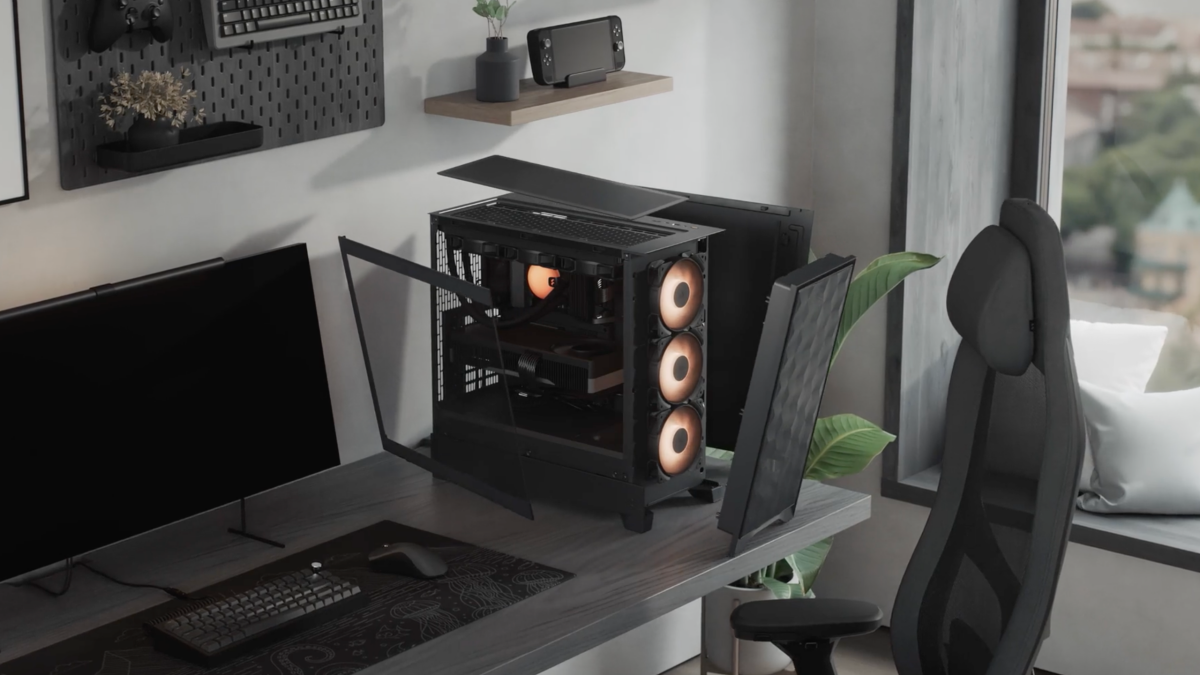
Fractal Design has unveiled its new Pop 2 Air PC case, and it’s got a unique feature: a GPU air guide designed to improve GPU cooling. The case starts at $90 for the standard black version and goes up to $100 for RGB-equipped models.
The Pop 2 Air’s GPU air guide is a scoop-shaped region of the power supply shelf that directs air towards the graphics card slots. A similar design appeared on a few cases at CES 2026, including the HAVN BF 360 Flow, which uses a similar but more engineered approach with an angled metal ramp rather than a simple scoop. The HAVN case earned praise from reviewers for its thermal performance, though it costs up to twice as much as the budget-friendly Pop 2 Air.
Credit: Fractal Design
Fractal’s new case also features mesh panels on the front and top to improve ventilation. It comes with three 120mm fans already installed. Builders can expand cooling capacity to seven fans total, with support for two 140mm fans in either the front or top positions. The case accommodates GPUs up to 416mm long and includes mounting space for 360mm radiators, PCWorld reports.
Because the Pop 2 Air is designed for budget-conscious users, it doesn’t incorporate features like vertical GPU mounts or rear-connector motherboard support. It does, however, include Fractal’s standard cable management hardware, tool-free opening, and easily-removable filters and panels.
Both versions of the Pop 2 Air are now available at Newegg.