The Roland V-1-4K is a compact yet powerful 4K video switcher designed for content creators, corporate AV, education, houses of worship, and live event production. It delivers professional-grade video and audio capabilities without the complexity of traditional broadcast systems, making it an excellent choice for both experienced operators and first-time users.
Five HDMI inputs with built-in scalers allow you to connect cameras, laptops, presentation systems, and other video sources without worrying about matching resolutions or frame rates. Five HDMI outputs—including dedicated Program, Preview, and Multiview outputs—plus two independently scaled outputs provide the flexibility to connect monitors, projectors, recorders, and external displays with ease.
As a leader in professional audio, Roland equips the V-1-4K with XLR microphone inputs, embedded HDMI audio support, RCA outputs, and a dedicated headphone output for monitoring. This integrated audio workflow helps simplify live productions and livestreams while maintaining professional sound quality.
One of the V-1-4K‘s most impressive features is Region of Interest (ROI) cropping. Using a single 4K camera, you can create up to four independent HD camera angles, giving your production a dynamic multi-camera look while reducing equipment costs and simplifying setup.
For graphics, Roland’s free Graphics Presenter software makes it easy to add lower thirds, titles, logos, and images directly into your production. When it’s time to stream, simply connect the USB-C output to your computer and the V-1-4K appears as a webcam source for OBS, Zoom, Microsoft Teams, and other popular streaming platforms—no additional capture device required.
With dedicated hardware controls, physical buttons, and Roland’s signature T-bar transitions, the Roland V-1-4K provides a fast, reliable, and intuitive production experience for professional 4K video switching and livestreaming.
Learn more about the Roland V-1-4K and find the right live production solution at Videoguys.
Customer expectations are changing fast, and the companies winning today aren’t just reacting, they’re transforming how they serve customers from the ground up. The Customer Service Transformation Report from Fin explores how modern teams are using AI, automation, and smarter workflows to deliver faster, more personal, and more scalable customer experiences, without burning out their teams.
In this report, you will learn how to:
Shift from reactive support to proactive, customer-first engagement
Use AI and automation to resolve more customer queries without losing the human touch
Scale customer support and success teams without scaling costs at the same pace
Break down data silos to get a clearer, real-time view of customer needs
Build customer experiences that drive long-term loyalty, not just quick resolutions
Most owners can tell you the exact moment things got bad. Maybe it was a walk that turned into a barking, lunging scene in the middle of the street. Maybe it was a snap at a guest, or a growl that seemed to come out of nowhere.
But here’s the thing: aggression almost never shows up overnight.
Long before the lunging and barking start, dogs are already talking. They look away. They tense up. They freeze. They fixate on something and won’t let go. And most of the time, those quieter signals get ignored, misread, or just plain missed.
So the dog learns something else that works better. A bigger reaction gets results. The stranger backs off. The other dog leaves. The scary thing goes away.
That’s why aggression usually isn’t about the behavior itself. It’s about what that behavior gets the dog.
“Training isn’t about teaching dogs our language. It’s about learning theirs,” says Savanna Tolley, professional dog trainer and owner of multiple The Dog Wizard locations. “When owners start recognizing what their dog is trying to communicate, everything changes. They stop reacting to the explosion and start addressing what causes it.”
Once aggression becomes part of the routine, every outing can feel like a gamble. Every visitor. Every unexpected encounter. All of it starts to feel like a problem waiting to happen.
The First Thing We Teach Isn’t What Most Owners Expect
When people call a trainer about aggression, they usually want one thing: a quick fix. Stop the barking. Stop the lunging. Let them walk their dog again without bracing for disaster.
So it surprises a lot of owners when the first step has nothing to do with the aggression itself.
Training usually starts with plain old obedience that helps aggressive dogs.
Not because “sit” and “stay” magically cure aggression. They don’t. But obedience gives dogs something a lot of aggressive dogs are missing: clarity.
Think about it. A dog that reacts to everything is making too many decisions on its own. Every passing dog, every stranger, every weird noise becomes the dog’s problem to solve. That’s a lot to carry around all day.
Commands like place, heel, sit, and down give a dog a different job. Instead of scanning the street for threats, the dog starts paying attention to the person on the other end of the leash. The dog learns somebody else has this handled.
And that shift is bigger than it sounds.
I’ve watched owners brush off obedience work as too basic for “real” behavior problems. Then those same basics turn out to be exactly what gets them through the hard moments later.
Why Structure Changes Everything
Dogs like clarity, plain and simple.
That doesn’t mean every minute of the day has to run on a schedule. But dogs do better when they know what’s coming. They want to know what’s expected of them. They want a clear way to succeed.
Aggressive dogs aren’t any different.
A lot of aggression cases come down to a dog that can’t handle uncertainty. The world feels unpredictable, so the dog tries to control it. Bark first. React first. Push the threat away before it gets too close.
From the outside, that can look like confidence. It usually isn’t.
A genuinely confident dog doesn’t feel the need to make a scene every time something unfamiliar shows up. The dogs throwing the biggest fits are often the ones who feel the most unsafe.
This is where structured obedience earns its keep. Not because it shuts behavior down, but because it gives the dog a framework. Instead of guessing what to do, the dog already knows.
The dog that used to charge the front door learns to go to place.
The dog that used to drag its owner down the sidewalk learns to walk in heel.
The dog that used to obsess over every little distraction learns to lock onto the person holding the leash.
None of that happens overnight. But it starts building a new pattern, one rep at a time.
The Real Goal Isn’t Perfect Obedience
Here’s a misconception that trips a lot of people up: they think the goal is a robot dog, one that follows every command without fail.
That’s not realistic. And honestly, it’s not even the point.
The real goal is decision-making.
Every aggressive dog hits moments where emotion takes over. Fear. Frustration. Anxiety. Excitement. The emotion changes, but the result is usually the same: the dog stops thinking and starts reacting.
Instead of exploding straight into a reaction, the dog learns to pause. That pause might only last a second or two at first. But it matters. It’s the difference between an impulsive decision and a chosen one.
That pause is where the real progress lives.
Savanna Tolley reminds owners that success isn’t about perfection.
“It’s easy to focus on what still needs work,” she says. “But when a dog that used to react every single time starts checking in with their owner before making a decision, that’s a huge win. Those small changes are often the beginning of lasting transformation.”
Why Owners Matter More Than They Think
A lot of people assume the trainer’s job is to fix the dog, period.
Ask any experienced trainer, and they’ll tell you that’s not how it works.
The trainer hands over the guidance, the education, the plan. But the owner is the one living with the dog every single day.
The real progress happens between sessions: on morning walks, when guests show up at the door, in the moments when the owner picks consistency over convenience.
And here’s something worth noting. The families who see the biggest changes usually aren’t the ones with the easiest dogs. They’re the ones who put in the work and follow through. They understand that obedience training helps aggressive dogs, but that training isn’t a one-hour appointment once a week. It lives in the everyday stuff.
That goes double for aggression cases.
Dogs learn by repeating things. Every good interaction builds a new habit. Every calm response makes that pattern a little stronger. Bit by bit, those new patterns start replacing the old ones that once felt impossible to break.
A Better Future Starts With Better Communication
Aggression can feel like too much when you’re in the thick of it. It messes with your routines, your relationships, your confidence. Some owners just start avoiding situations altogether, because managing the behavior feels easier than fixing it.
But avoidance doesn’t teach a dog anything. Training does.
Obedience training won’t erase a dog’s past, its personality, or its emotional wiring. What it can do is hand owners a way forward. Obedience training helps aggressive dogs develop the skills to handle hard situations better, and it gives owners the tools to guide them through the stuff that once felt impossible.
The best part of aggression rehab isn’t watching a dog nail a command. It’s watching a dog that used to feel completely out of control start making better choices on its own. It’s owners getting their confidence back. It’s a relationship that started in frustration turning into one built on trust.
For dogs working through aggression, that change rarely starts with punishment. It starts with communication, structure, and a clear path forward.
In late May, federal authorities charged a Google software engineer with insider trading after he won $1.2 million on the prediction-market website Polymarket. The 36-year-old Michele Spagnuolo allegedly placed bets that musician D4vd and rapper Kendrick Lamar would top Google’s most-searched list. The bets paid off, prosecutors said, because Spagnuolo had access to confidential company data.
The popularity of prediction markets, where you can bet on thousands of real-world outcomes across nearly every facet of modern life, is spreading faster than governments can keep up. Even Mark Zuckerberg, Meta’s chief executive, is reportedly developing a standalone prediction market app to compete with the most popular platforms, Kalshi and Polymarket.
You may have even been tempted yourself to put down cash on your favorite pop-culture hunch. But the recent Google case highlights just one of the biggest concerns for a multibillion-dollar industry prone to abuse. Numerous insider trading cases have prompted federal regulators to intensify scrutiny, cracking down on the illegal use of classified information for betting.
A New York Times investigation in May flagged more than 11,000 Polymarket accounts for suspicious, high-profit trading patterns, often involving perfectly timed bets on geopolitical events, and flawless, loss-free track records. And it’s not just corporate employees; it’s also military personnel and government officials manipulating classified information.
With Polymarket, users trade shares using cryptocurrency to bet on the outcomes of real-world events.
Just last week, a Wall Street Journal investigation revealed that Polymarket ran a deceptive, secret marketing campaign by paying social media influencers to film fake trades and stage massive winnings on lookalike dummy websites to draw people in.
“This industry is growing fast and will continue to grow as long as courts and regulators allow it,” Columbia University professor of economics Rajiv Sethi told CNET.
People generally have strong opinions surrounding prediction markets, and many (like me) feel a bit icky about them. But how the industry shakes out will depend on several regulatory battlegrounds. Prediction markets are facing intense pushback from lawmakers over insider trading, highlighted by a congressional probe and a proposed bill to ban prediction-market bets by service members. Yet because no one can agree whether betting markets are legitimate financial tools or just a glorified form of gambling, they’re causing a massive headache at the state and federal levels.
Kalshi lets users trade contracts on events ranging from politics and economic data to weather and sports.
Adobe Stock
How prediction markets work
To any casual observer, Polymarket and Kalshi seem like virtual casinos, except you’re betting against other participants, not against “the house.” You can buy and sell contracts about anything: the weather, geopolitical events, election results, sports, entertainment awards, ad nauseam.
Several high-profile predictions over the past several months involved the US attacking Iran, Michael B. Jordan winning the Oscar for Best Actor and bitcoin topping $125,000. You can even predict if someone is going to utter a certain word in a speech or news conference in what are called “mention markets.”
With a mainstream boom in prediction market platforms over the last few years, other companies have joined the fray: Robinhood, PredictIt, Metaculus and even traditional sportsbooks FanDuel and DraftKings.
These types of “idea futures” aren’t new, though. Informal information markets date back hundreds of years, as seen in the 1500s in Italy, where people predicted who the next pope would be.
Today’s prediction markets claim they aren’t technically gambling or akin to trading stocks, even though you’re risking money in hopes of a profit. In essence, you’re predicting something will or won’t happen. For every “share” you buy for that event outcome, you get $1 if you’re right and nothing if you aren’t. The markets don’t set the “odds,” and neither do the platforms — the traders do.
The amount of shares you’re able to buy for a certain outcome depends on how many shares are being sold for the opposite outcome by other traders. For example, if you wanted to buy 500 shares of a Yes outcome on France winning the World Cup, there would have to be 500 corresponding shares of No on France winning.
Though the basic unit for prediction markets is only $1, business is booming for Kalshi and Polymarket, which collect transaction fees for each trade. Together, they’ve crossed $150 billion in lifetime trading volume.
Polymarket offers predictions on the weather and a lot else.
Polymarket/Screenshot by CNET
A personal look inside
I’m not a bettor. I suck at poker, I still can’t understand a Daily Racing Form, and don’t get me started about March Madness brackets. So, I’m not about to test my luck (yet) with Kalshi or Polymarket, but I did want to take a peek under the hood.
Kalshi and most other prediction markets are available for customers in all 50 states, but Polymarket, a cryptocurrency-based company, is restricted in the US and several other countries, at least for now. Some people try to bypass geographic restrictions using a VPN, even though Polymarket says it blocks VPN IP addresses.
Kalshi and Polymarket both offer a dizzying array of exchanges. Kalshi has basic event categories, from the California governor race to the price of a gallon of gas. It also has some rather off-the-wall ones, like the “Scary Tomatoes” score on Rotten Tomatoes and the US government’s disclosure of aliens.
Columbia professor Sethi advises anyone interested in trading prediction markets to tread lightly at first.
“Most novice retail traders lose money, so my advice to those who want to experiment is to focus on events about which you know something about the topic, and keep bets small to begin with, until you get a feel for your likely performance,” Sethi told CNET.
The hard truth is that prediction market traders are far more likely to lose than to win. The Wall Street Journal reported in May that 0.1% of all Polymarket accounts won 67% of the profits. That translates to 2,000 top traders netting more than $500 million, while 1.1 million Polymarket customers didn’t make a profit.
There are thousands of events to predict on with Kalshi.
Kalshi/Screenshot by CNET
Social function or political tool
Another fundamental question I have is whether these markets serve a socially useful purpose.
Better Markets, a nonprofit focused on financial and economic justice, argues that prediction markets lack real value. While traditional financial contracts help institutions manage risks, prediction markets do not. Unlike the stock market, they fail to fund businesses or help investors build long-term wealth.
Amanda Fischer, chief operating officer at Better Markets, said that bets around elections or war in Iran “serve no function but to degrade our democracy and encourage insider trading.” According to Fischer, prediction markets look more like gambling, especially since over 90% of bets on those platforms are related to sporting events.
In response to scandals around insider trading, Kalshi says it is aggressively self-policing by tracking suspicious activity and requiring some of its users to disclose their employers. Kalshi also says its safeguards against politicians and athletes are stricter than those of traditional stock exchanges.
Donald Trump Jr. (left) holds official advisory roles at both Kalshi and Polymarket.
Mandel Ngan/AFP/Getty Images
Meanwhile, Polymarket’s decision to maintain user anonymity has drawn heavy criticism from financial experts, who argue it leaves the platform vulnerable to fraud. Without strict identity verification, the platform allows insiders to exploit nonpublic information while enabling bad actors to “spoof” trades and trick ordinary people into following fake trends, according to Sethi, who wrote an opinion piece for the Financial Times titled “Polymarket Anonymity Must End.”
As prediction markets continue to face security concerns over fraud and insider trading, they have a powerful shield from the federal government and President Trump, who has aggressively pushed back against state-level restrictions.
This political alignment is further complicated by the president’s son, Donald Trump Jr., who reportedly has an eight-figure investment in Polymarket and serves as an adviser to Kalshi. Although his involvement has sparked intense suspicion of a conflict of interest, Trump Jr. maintains that he does not trade on the platforms or lobby the government on their behalf.
A regulatory dilemma
At its core, the regulatory mess stems from an identity crisis. Prediction markets are hard to classify, straddling the line between commodity contracts and security-based investments. This has triggered a massive turf war over jurisdiction, as the federal government attempts to override state and tribal gaming laws that view these markets as illegal sportsbooks trying to bypass local restrictions.
Kalshi says it strictly prohibits insider trading and actively screens users who trade on confidential data.
Sandia Pueblo Gov. Stuart Paisano, one of the plaintiffs, in a statement, said, “The use of prediction markets for gambling purposes diverts essential revenue away from our governments, provides an end-run around regulation of gaming on our lands, and allows gaming by underage people.”
At the federal level, prediction markets are formally categorized as commodities and derivatives, placing them under the jurisdiction of the Commodity Futures Trading Commission, or CFTC.
Kalshi CEO Tarek Mansour, who, along with fellow MIT graduate Luana Lopes, founded the company in 2018, says prediction markets aren’t traditional sportsbooks but more like open marketplaces. Mansour says Kalshi’s event contracts are financial derivatives, just like common futures, options and swaps, and should be appropriately regulated by the CFTC.
But some legal scholars and financial reform advocates argue that prediction markets should fall under the purview of the Securities and Exchange Commission, or SEC.
According to Better Markets’ Fischer, the CFTC has fewer tools to police insider trading in prediction markets. As an agency tasked with specifically overseeing agricultural and certain financial derivatives, it was only recently self-appointed as a gambling regulator. “As a result, there are some gaps and ambiguity in the CFTC’s legal framework,” she said.
Fundamentally, the CFTC’s rules on insider trading are historically much weaker than the SEC’s. “The SEC has 90 years of law and legal precedent, which have created a robust set of rules around insider trading,” said Fischer.
The CFTC is supposed to act as the federal watchdog over Kalshi and take direct legal action against insider trading and market manipulation.
The CFTC is also chronically understaffed, according to Fischer. The agency has cut more than 20% of its staff during the second Trump administration.
Fischer said CFTC’s enforcement is a “drop in the bucket” compared with the enormous volume of trades being transacted at Kalshi. “The CFTC has only been able to identify and prosecute the most egregious cases, and in many other instances, has delegated enforcement to firms like Kalshi, whose only tool is to kick users off the platform,” Fischer said.
Do we really need this?
The danger of prediction markets is the financialization of our society at large, where “every opinion is a tradeable asset,” wrote Jathan Sadowski, associate professor at Monash University in Melbourne, Australia.
There’s also a risk if prediction markets define “truth” as simply a publicly verifiable consensus. If, as Sadowski noted, “the market is the ultimate arbiter of what’s valuable and true,” that leads to a “world that creates endless incentives for arbitrage, manipulation, collusion and exploitation in the pursuit of profit extraction.”
In an episode of Last Week Tonight on prediction markets, comedian John Oliver asked if we’ll be able to believe our eyes when future events occur. “When something unexpected happens in the world, it would be really nice not to have to automatically question whether it’s only because someone is trying to move a market.”
At the end of the day, I keep coming back to why these tools exist in the first place. Prediction markets shouldn’t just be a playground for day traders looking for their next fix. But to prove that it’s not just another corrupt form of speculative gambling, the industry has some massive hurdles to clear.
CNET’s Laura Michelle Davis heavily contributed to and edited this story.
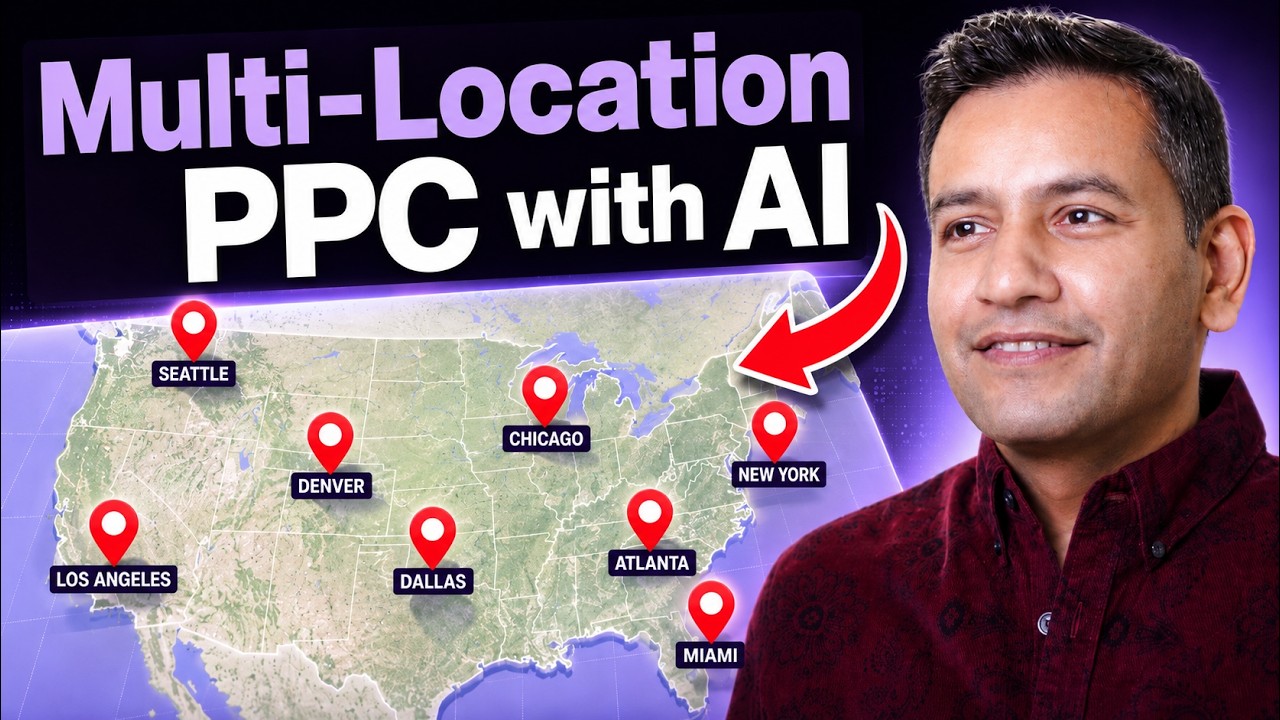
AI can help a lot with multi-location PPC, but only when it has the right data to work with. A lot of franchisors and multi-location brands are already using AI in some form inside their Meta and Google ad campaigns. Their PPC teams may be using AI to write headlines, generate ad copy, come up with creative ideas, or speed up campaign planning.
That is useful, but it is only one small part of the opportunity.
The bigger opportunity in multi-location ads is not just using AI to create a few better headlines. The real opportunity is using AI to make campaigns smarter at the location level.
That matters because every location is different.
One location may have strong reviews.
Another location may have a missed call problem.
One location may need more first-time customers.
Another location may already be fully booked and should only focus on higher-value appointments.
One location may have a strong local offer.
Another location may need better lead quality, not just more leads.
This is where AI can become very useful for multi-location marketing. But only if the AI has clean location data first.
If you are a franchisor, multi-location brand, or a digital agency for franchisors, this is one of the most important things to understand before trying to use AI for paid ads.
The Problem: AI Cannot Create Smart Local Campaigns from Generic Inputs
Most people think about AI in PPC like this:
“Create me some ad copy.”
“Give me five headlines.”
“Write a Meta ad for this offer.”
“Create a Google Ads campaign for this service.”
That is fine for a basic use case.
But if you are managing ads across 10, 20, 50, or 100 locations, generic prompts will create generic output.
AI does not automatically know what is happening inside each location.
It does not know which location has the best reviews.
It does not know which location is missing calls.
It does not know which location has low booking capacity.
It does not know which location has a higher average ticket size.
It does not know which local offer is active in which market.
It does not know what your CRM is showing about lead quality.
It does not know whether the problem is the ad campaign or the local operation after the lead comes in.
So when the data is missing, AI usually creates the same type of ad for every location.
That is where multi-location PPC starts to break down.
You get the same messaging everywhere.
You use the same offer across different markets.
You do not use local proof from reviews.
You do not connect campaign ideas to actual reporting.
And over time, it becomes harder for the PPC team to remember what they were testing and why.
The Better Approach: Build a Location Intelligence Layer First
Before using AI to generate campaigns, multi-location brands need a clean location intelligence layer.
This is a structured profile for each location that gives AI the context it needs.
For example, if you are managing PPC for a dog grooming franchise, each location profile should include information like:
Location name
City and state
Location landing page
Google Business Profile rating
Review count
Review themes
Priority service
Local offer
Monthly ad budget
Average ticket size
Booking capacity
Lead volume
Booked appointments
Appointment show rate
Missed call rate
Current cost per acquisition
Business goal
Franchisee notes
This is not just “data for the sake of data.”
This is the information AI needs to create better campaign ideas.
If one location has reviews talking about “gentle staff” and “great with nervous dogs,” that can become an ad angle.
If another location has a high missed call rate, the campaign may need to push online booking instead of phone calls.
If another location has a high average ticket size, the campaign may focus on premium services instead of discounts.
If one location has low capacity, the goal may not be more leads. The goal may be better-quality appointments.
That is how AI becomes useful in multi-location marketing.
What Data Sources Should Feed the AI?
The data layer does not need to be complicated at first.
It can start with a structured sheet or a simple internal app.
The key is to bring the right data into one place.
Here are the main data sources that matter for multi-location ads.
1. Brand Website
The brand website gives AI the basic brand information.
This includes:
What the brand does
What services are offered
What tone the brand uses
What offers are approved
What claims are allowed
What the primary call to action should be
This helps AI stay on brand.
For example, if the brand tone is warm, simple, and trustworthy, the AI should not create aggressive or overly salesy ad copy
2. Location Landing Pages
Location landing pages are very important for multi-location PPC.
Each location may have different services, offers, booking links, or local messaging.
For example:
Austin may promote first-time grooming appointments.
Dallas may promote online booking.
Denver may focus on premium grooming.
Tampa may focus on puppy grooming.
Scottsdale may focus on senior dogs or sensitive pets.
If AI can read and understand each location page, it can create ads that match what is actually true for that location.
3. Google Business Profile Reviews
Google Business Profile data can give AI local proof.
This includes:
Average rating
Review count
Review keywords
Common review themes
Customer language
Local trust signals
This is one of the most useful sources for ad messaging.
Customers often describe the real reason they chose a business.
For example, a dog grooming location may have reviews mentioning:
“Gentle with nervous dogs”
“Easy online booking”
“Premium grooming”
“Great with puppies”
“Calm environment”
“Friendly staff”
Those words can become campaign angles.
Instead of creating generic copy, AI can use real local proof from that location.
4. CRM Data
CRM data tells you what happened after the lead came in.
This is where PPC gets much smarter.
The CRM can help AI understand:
How many leads came in
How many became booked appointments
Which services people asked about
Which locations had stronger lead quality
Which campaigns produced better customers
What the show rate looked like
This matters because PPC should not only be judged by leads.
A campaign that generates cheap leads may not be the best campaign if those leads do not book, show up, or buy.
For multi-location marketing, CRM data helps connect ads to real business outcomes.
5. Call Tracking Data
Call tracking is one of the most important data sources for local PPC.
Many multi-location businesses depend heavily on phone calls.
But sometimes the ad campaign is not the real problem.
The real problem may be that the location is missing too many calls.
For example, if a location has a 30% missed call rate, spending more on ads may only create more missed opportunities.
AI needs to know that.
Call tracking data can include:
Answered calls
Missed calls
Average call duration
Booked calls
Call source
Call quality
This gives AI better context before recommending more ad spend.
For example, if Dallas has a high missed call rate, the campaign may need to focus on online booking instead of phone calls.
That is a location-specific decision that AI can only make when it has clean data.
6. Ad Platform Data
Ad platform data tells AI what has worked in the past.
This may come from Meta Ads, Google Ads, or a manual report upload.
Useful fields include:
Spend
Impressions
Clicks
CTR
Leads
Cost per lead
Booked appointments
Cost per booking
Conversion rate
Campaign angle
Location
This helps AI compare future campaigns against past performance.
It also helps the PPC team avoid starting from scratch every time.
7. Manual Inputs
Not all useful data lives inside software.
Some of it may need to be entered manually.
For example:
Monthly local budget
Average ticket size
Location capacity
Priority service
Local offer
Business goal
Franchisee notes
This is very common for franchisors and multi-location brands.
The important thing is not where the data comes from.
The important thing is that the AI can access it in a clean, structured way.
Example: A Dog Spa Franchise with 10 Locations
In the video, I use a fictional dog spa franchise called PawPure Spa.
The brand has 10 locations.
For the demo, we look at the first five:
Austin Downtown
Dallas North
Denver Cherry Creek
Tampa Bay
Scottsdale
Each location has a different PPC opportunity.
Austin Downtown
Austin has strong reviews around gentle handling and nervous dogs.
So the campaign angle is:
Gentle care for first-time grooming appointments.
The AI creates copy around trust, comfort, and calm care.
Dallas North
Dallas has good lead volume, but a higher missed call rate.
So the campaign angle is different.
Instead of pushing phone calls, the campaign promotes online booking.
That is because the local data shows that phone-call-heavy messaging may not be the best move.
Denver Cherry Creek
The copy is not focused on discounts.
It is focused on quality, trust, and a better grooming experience.
Tampa Bay
Tampa has a strong puppy grooming opportunity.
So the campaign focuses on a puppy’s first spa visit.
That matches the local customer segment and the review themes.
Scottsdale
Scottsdale has high reviews and high average ticket size, but lower booking capacity.
So the campaign does not aggressively push volume.
Instead, it focuses on high-value appointments and gentle care for senior dogs or sensitive pets.
How AI Generates Better Campaigns from Clean Data
Once the location intelligence is ready, AI can help create better PPC campaigns.
The process looks something like this:
Choose the platform, such as Meta Ads or Google Ads.
Choose the campaign objective.
Select the locations.
Choose the AI strategy.
Review the brand rules.
Generate the campaign package.
In the demo, I choose Meta Ads and select appointment bookings as the objective.
Then I choose five locations.
The AI uses the data from each location to create a different campaign angle.
This is the important part.
AI is not just writing five versions of the same ad.
It is creating five different local campaign strategies.
Austin gets gentle care messaging.
Dallas gets online booking messaging.
Denver gets premium grooming messaging.
Tampa gets puppy grooming messaging.
Scottsdale gets senior dog comfort messaging.
That is what makes the campaign more useful.
Why the Campaign Hypothesis Matters
One of the biggest benefits of this approach is that AI does not just generate the ad.
It also stores the campaign hypothesis.
That means the system remembers what the campaign was trying to test.
For example:
Austin hypothesis:
Reviews mention nervous dogs and gentle staff, so gentle care messaging should increase first-time grooming appointments.
Dallas hypothesis:
Missed call rate is high, so online booking should improve conversion.
Denver hypothesis:
High average ticket size and premium reviews mean premium grooming messaging should produce better revenue per booking.
Tampa hypothesis:
Puppy grooming reviews suggest a first puppy visit campaign may attract new customers.
Scottsdale hypothesis:
High-value customers and low capacity mean the campaign should focus on appointment quality, not volume.
This matters because most reporting only tells you what happened.
But when AI knows the hypothesis, it can help explain whether the campaign idea actually worked.
The PPC Manager Still Reviews and Launches the Campaign
This is not about replacing the PPC manager.
The PPC manager still needs to review the campaign.
They need to check the messaging.
They need to verify the offers.
They need to make sure the landing pages are correct.
They need to review the budget, audience, and setup.
They need to launch or upload the campaign inside Meta Ads Manager or Google Ads.
AI helps prepare the campaign package.
The PPC manager still brings judgment.
This is the right balance.
AI creates speed and structure.
The PPC manager brings experience and control.
The Reporting Loop: Where AI Becomes Even More Useful
After the campaign runs, the PPC team can upload the performance report.
This could be a Meta Ads export, Google Ads export, or a combined reporting file.
Now AI can compare the results against the original campaign hypothesis.
That is where the system becomes more useful than a normal report.
Instead of only saying:
CTR went up.
CPA went down.
Spend increased.
Leads increased.
The AI can say:
This campaign angle worked.
This campaign angle did not work.
This location has an operations issue.
This location should not scale because capacity is low.
This location should be measured by revenue per booking, not only cost per lead.
This location needs a new offer.
This location should test a new creative angle.
That is much more useful for multi-location PPC.
Example Reporting Insights
In the demo, the system shows that 3 out of 5 location hypotheses worked.
Austin worked well.
The gentle care angle created strong appointment volume and a low cost per booking.
Denver worked well.
The premium grooming campaign had lower lead volume, but better estimated revenue because the average ticket size was higher.
Scottsville worked well.
The campaign brought in high-value appointments, but the recommendation was not to scale too aggressively because booking capacity was low.
Dallas was mixed.
The campaign generated clicks and leads, but bookings were weaker than expected.
The reason was not just the ad.
The missed call rate was still high.
So the recommendation was to push online booking harder and fix call handling before increasing ad spend.
Tampa was also mixed.
The puppy grooming campaign got good engagement, but it did not turn into enough booked appointments.
So the next test could focus on stronger appointment urgency.
What This Means for Franchisors and Multi-Location Brands
For franchisors and multi-location businesses, the main takeaway is simple.
AI can help your PPC team, but only if the inputs are strong.
If you only ask AI to create ad copy, you will get basic ad copy.
But if you give AI clean location intelligence, it can help with much more.
It can help identify the right campaign angle by location.
It can create localized ad copy.
It can use local proof from reviews.
It can factor in CRM and call tracking data.
It can avoid pushing volume where capacity is low.
It can help PPC managers understand whether a campaign idea worked.
It can make the next campaign smarter.
This is where multi-location ads can become more strategic.
The goal is not just more ads.
The goal is better location-level decisions.
The First AI Project May Not Be Ad Generation
A lot of teams want to start with the exciting part.
They want AI to generate ads, creatives, and campaign ideas.
But for many multi-location brands, the first AI project should probably be something else.
The first project should be building the clean data layer.
Because once the location intelligence layer exists, many other AI use cases become easier.
Multi-location PPC becomes easier.
Multi-location marketing becomes easier.
Reporting becomes easier.
Campaign planning becomes easier.
Franchisee-level insights become easier.
And your PPC team has a much better foundation to work from.
This is especially important for any digital agency for franchisors that is managing paid media across many local markets.
The agency can move faster, but it can also make better decisions because the data is cleaner.
Final Thought
AI can improve multi-location PPC.
It can improve multi-location ads.
It can support better multi-location marketing.
But AI is not magic.
It needs clean inputs.
It needs location-level context.
It needs review data.
It needs CRM data.
It needs call tracking data.
It needs ad performance data.
It needs business goals.
It needs human approval.
When all of that comes together, AI becomes much more useful.
It is no longer just a tool that writes headlines.
It becomes a system that helps your PPC team understand each location, create better campaigns, track what they were testing, and make better decisions from the results.
That is the real opportunity.
At Weam, we help franchisors and multi-location businesses build custom AI tools for their own marketing and operations workflows.
If you are looking for a digital agency for franchisors or want to explore how AI can improve your multi-location marketing, visit weam.ai to learn more.
Good news if you’re one of the die-hards still clinging to Windows 10: Microsoft has added another year to its Extended Security Updates, meaning the axe won’t fall until October 2027.
Microsoft announced in 2024 that support for Windows 10 would be wrapped up in October 2025, bringing an effective end to one of the good Windows and not-so-gently nudging us all onto one of the sucky ones.
But then a reprieve was granted: For $30, or free if you’re lucky, those who wanted to stay with a good Windows could purchase “Extended Security Updates,” which keeps security updates from Microsoft flowing for another year. Feature updates are dead and done either way, but the ESU program at least ensures that Windows 10 PCs are protected from malware, ransomware, and other such headaches that exist in the online world.
Latest Videos From
The ESU program was set to last for a year from the end of Windows 10 support—so, October 2026—but as noticed by Windows Central, the ESU page has now been updated and indicates that the program will run until October 2027. Those who are already enrolled in the program will get the by default, and—if you had to pay for the ESU—at no extra charge.
That’s pretty fantastic news. There are still a lot of Windows 10 users out there: The Steam Hardware and Software Survey reports that 24% of respondents are still rocking with Win10 64 bit, and that’s a substantial audience.
Nor are people just being difficult about it: Windows 10 is objectively better than Windows 11, sure, but Win11’s more demanding hardware requirements mean it won’t install on some older hardware, or that owners of said rigs have to rely on external tools like Rufus to make it happen.
The obvious solution to that problem when the 2026 deadline was set was “it’s time for a new PC,” but then the Rampocalypse happened and suddenly we were all left with the grim knowledge that we’re probably gonna be riding this pony for a lot longer than we’d expected. And, rather like motherboard makers deciding it’s time for a DDR3 comeback, Microsoft may have concluded that forcing people into an ultra-expensive upgrade they don’t want to make is trouble it doesn’t need—especially since Microsoft bears no small amount of responsibility for making hardware upgrades so damned expensive in the first place.
Keep up to date with the most important stories and the best deals, as picked by the PC Gamer team.
In the immediate aftermath of Microsoft’s announcement that it was raising prices of the Xbox Series X and S for the third time this generation, a tiny trend broke out on our technology news feed. A smattering of stories appeared encouraging readers to run out and buy an Xbox console before the price hike goes into effect on August 1. Combine this deadline with the allure of active Prime Day deals on Xbox consoles, and the message from these articles is clear: The best and most fiscally responsible time to buy an Xbox is right now, so go do it.
Allow me to play devil’s advocate.
While it often makes sense to plan purchases around known price hikes, it’s a dumb time to buy an Xbox. Yes, even with discounts offering an Xbox Series S for $350 and an Xbox Series X for $573 — hell, especially at these prices. In 2020, the Xbox Series S launched at $300 and the Xbox Series X was $500. Over the past couple of years, I personally picked up a Series X for less than $400 and a Series S for $250. These consoles are now in their sixth year, and normally around this time in the generation, hardware prices would be dropping and we’d be getting cool colorways and bundles. Today’s discounted Xbox prices are obscene for a console entering its sixth year.
It’s worth noting that today’s marketplace is uniquely unmoored, fueled by a memory and storage shortage that’s driving up hardware prices across the tech industry. However, Microsoft is a core part of the problem here. The company is exacerbating the RAM shortage with massive investments in AI data centers, and its feigned ignorance around spiking Xbox console prices is laughable.
Corporate chicanery aside, it’s simply not a great time to buy into the Xbox ecosystem. You could say there’s never been a worse time, in fact. Microsoft is in disarray following years of layoffs and studio closures, falling console profits, and executive-level changes to the Xbox business in 2026. Just this month, news broke that Double Fine, Ninja Theory and Compulsion Games are in imminent danger of being shut down, while new Xbox CEO Asha Sharma and Chief Content Officer Matt Booty set the stage for more layoffs in July.
On the software side of things, Xbox doesn’t have a ton of exclusive games, as its first-party titles are widely available on PC. Its recent hits like Avowed, Indiana Jones and the Great Circle and Keeper are all available on Steam, and Xbox is legally obligated to distribute its largest first-party franchises (i.e., Call of Duty) across platforms. That’s not to mention the push to get its games on PlayStation and Switch, no matter how short-lived that may end up being. One of Microsoft’s loudest marketing points has been the fact that its games will work on subsequent consoles and eventually come to PC, and even if they’re not saying it out loud any more, the company is a leader in platform-agnostic cloud play. When everything is an Xbox and Xbox games are available anywhere, you don’t really need an Xbox at all.
There is zero reason to rush out right now and buy a six-year-old gaming console for more than its launch price, just because it’s going to become even more expensive soon. If you haven’t needed an Xbox before now, chances are, you still don’t need one. This might be rich coming from a consumer tech blog, but there is no real-world achievement for collecting every piece of contemporary gaming hardware — the closest we get is clout, but the returns on social media likes and comments are hollow and diminishing. Unlike Xbox prices, which are only rising. The actual smart move is to wait until the next generation hits — which is apparently very soon — and either pick that up or grab a Series console that will then be priced to clear.
This is nothing against the media outlets that’ve run stories encouraging people to take advantage of Prime Day Xbox console prices. Truthfully, there is a very small market for this advice and it’s fine to show these six people where the best deals are at the moment. But as general-audience advice, it sucks.
Besides, aren’t you saving up for a Steam Machine right now?
Intense Fighting Entertainment is back!! Fan-favorite 3D fighting game DEAD OR ALIVE 6 is back with stylish moves, striking animations, and a cast of colorful characters to go head-to-head in the fighting game world’s most extreme battles! Place, pose, and take picture-perfect screenshots of your favorite characters in the new Photo Mode. Play with the classic DOA6 roster and 5 additional DLC characters from the original version, along with new costumes. Whether you’re a new player or a longtime veteran, DEAD OR ALIVE 6 Last Round has the action you’re looking for. Orb of Creation
Includes five additional characters released in the original version! Play with a lineup of 29 characters, including five characters originally released as bonuses or DLC for the original version: Nyotengu, Phase 4, Momiji, Rachel, and Tamaki.
Stage your own battles in the NEW Photo Mode! Choose your stage and characters, position them freely, change their poses and expressions, and create your own legendary moments in the brand-new Photo Mode.
From simple skirmishes to serious strategy, DOA6LR is THE definitive 3D fighting game! Use Holds at the perfect moment to cripple your opponent. Build your Break Gauge and unleash powerful special moves. Mash through a Fatal Rush for an easy yet highly satisfying combo. Toss your opponent into a Danger Zone to deal extra damage. From first-time players to long-time strategists, DEAD OR ALIVE 6 Last Round has something for everyone.
Note:
This version includes a Character Unlock Keys for 29 characters and Story Unlock Key. Be careful not to accidentally make duplicate purchases.
A free-to-play version is available as DEAD OR ALIVE 6 Last Round Core Fighters. Costumes unlocked or purchased in DEAD OR ALIVE 6 may be transferred to this version. Some costumes may not be transferrable. For more information on transferring data from DEAD OR ALIVE 6, see our official website.
Screenshots
SystemRequirements
Minimum Requires a 64-bit processor and operating system
OS: Windows® 11
Processor: Intel Core i5-8400 or higher, AMD Ryzen3 3100 or higher
Memory: 8 GB RAM
Graphics: GeForce GTX 1060 (VRAM 6GB) or higher, Radeon RX 590 (VRAM 8GB) or higher
DirectX: Version 12
Storage: 80 GB available space
Additional Notes: SSD required
Support the game developers by purchasing the game on Steam
InstallationGuide
TurnOff Your Antivirus Before Installing Any Game
1 :: Download Game 2 :: Extract Game 3 :: Launch The Game 4 :: Have Fun 🙂
GTA 6 and a string of other high-profile games might be forgoing discs altogether, but US physical game sales actually grew ever so slightly for the first time in 17 years.
Curiously though, Piscatella also shares that physical game sales in the United States actually enjoyed a rare glimpse of hope – for the first time since 2009’s feverish peak, dollars spent on physical game releases shot up year-on-year by 3%.
Latest Videos From
US new physical video game software spending. 12 months ending May 2007-2026:
Physical game sales have been on a big decline since 2009’s $11.5 billion record, but now “spending is up by 3% in the 12-month ending May 2026,” according to Piscatella. Don’t be too quick to celebrate now, collectors. This uptick is apparently not a sign of things to come, he says.
“The overwhelming majority of volume is done digitally now,” Piscatella writes on social media. “The second hand market… doesn’t really matter. More than half of all Xbox Series consoles in the US don’t have a physical drive, while over a quarter of PS5s are the same. We likely have less than a decade left of physical software.” Ominous indeed.
GTA 6 ignoring a real physical release is also worrying since the Rockstar Games behemoth is guaranteed to sell consoles, especially since it’s not immediately coming out on PC, but many prospective console buyers might opt for hardware without disc drives thanks to the game’s digital-only launch. I can only imagine that’ll further snowball the death of boxed games, our ability to share them with people in our real lives, the preservation of art, and, you know, our ownership over the things we’ve paid for.
One of Wirecast’s core strengths is that it scales without changing. The same software powers a solo webcam stream and a multi-camera broadcast production — you’re just adding inputs and operators as your production grows. Here’s what each level actually looks like in practice.
The simplest Wirecast workflow. Even with just a webcam, Wirecast adds immediate value: lower thirds, logo overlays, a professional background, and preset streaming to your platform of choice — all things a raw webcam stream can’t do.
Who this is: Creators starting out, business professionals elevating their video call presence, educators recording or streaming solo lessons.
Operator count: 1
Level 2: Two-Camera Podcast
Setup: One camera + two people + two microphones → capture card → Wirecast
A two-person podcast setup with one operator doubling as a participant. One wide camera covers both hosts; switching happens between that wide shot and any close-up framing. Two microphone channels are managed independently for level control and muting.
This is the first setup where Wirecast’s layer system earns its keep — audio on its own layer, lower thirds ready to fire independently of camera cuts, logos persistent throughout.
Who this is: Podcast producers, interview shows, two-person commentary streams.
Operator count: 1 (also participating in the show)
Level 3: PTZ + Audio Mixer — Intermediate Production
Now you have real production flexibility. Two PTZ cameras with saved presets give you wide and tight shots that can be recalled instantly. One person switches; a second monitors audio levels on the physical mixer.
The PTZ cameras multiply your effective shot count: with a wide shot on one camera and preset positions (close-up, medium, over-shoulder) saved on the second, two cameras behave like four or five distinct shots. Wirecast’s built-in PTZ control handles pan, tilt, zoom, and preset recall without a separate hardware controller if needed.
Who this is: Houses of worship, small corporate studios, education productions, sports coverage.
Operator count: 2 — one switching, one on audio and cameras
Level 4: Multi-Producer Broadcast
Setup: Multiple camera operators + director calling shots from a multiviewer + dedicated Wirecast producer for graphics/switching + full audio operator
This is the full broadcast production model. Camera operators cover individual positions. A director reads the multiviewer and calls shots. The Wirecast operator executes graphics, overlays, lower thirds, and transitions. Audio runs independently.
Wirecast didn’t change between Level 1 and Level 4. The software is doing the same things — capture, switch, graphic, stream — just across more sources, more operators, and more complex live events.
Who this is: Sports broadcasts, large venue live events, professional production companies, and universities with broadcast programs.
Operator count: 4+ with defined roles
The Key Insight: Wirecast Grows With You
Starting at Level 1 doesn’t lock you into it. Every workflow addition — a second camera, a PTZ, an audio mixer, a second operator — plugs into the same Wirecast setup you already know. You’re not learning new software as you scale. You’re just expanding what you already understand.
The upgrade from Wirecast Studio to Pro follows the same logic: same interface, more advanced features unlocked when your production needs them.
Ready to build your Wirecast production setup? Call 1-800-323-2325 or visit videoguys.com for bundle packages.