Tonight is your last chance to save up to $190 on your pass to TechCrunch Founder Summit 2026. Early Bird pricing ends today, at 11:59 p.m. PT, after which rates increase.
Founders rarely scale alone. The fastest path to growth comes from learning from founders who’ve already done it, connecting with peers tackling similar challenges, and building relationships with investors who can help accelerate your next stage of growth.
On November 4 in Boston, more than 1,000 founders and investors will gather for a highly curated day of tactical learning, candid conversations, and meaningful networking designed to help founders make smarter decisions and grow faster.
Don’t wait until prices increase. Register before 11:59 p.m. PT tonight to save up to $190. Bringing your team? Groups of four or more can save up to 30%.
Image Credits:Halo Creative
A founder-first event built for growth
Every session, discussion, and networking opportunity is designed around the real challenges founders face as they build, fund, and scale their companies.
You’ll connect with:
Founders navigating similar growth stages
Experienced operators who have scaled teams, products, and revenue
Investors sharing what they’re funding and what they’re looking for
Whether you’re preparing to raise capital, refining your go-to-market strategy, or planning your next growth milestone, Founder Summit creates opportunities for conversations that can change the trajectory of your business.
Actionable insights for every stage
Founder Summit focuses on the decisions that define a startup’s future. Through breakout sessions and roundtable discussions, you’ll gain practical guidance on topics including:
Building pitch decks that resonate with investors
Knowing when to raise Series C and beyond
How and when to sell your startup
Preparing your company to go public
These founder-led conversations deliver practical takeaways you can apply immediately.
Learn from founders and investors who’ve done it
Past speakers have included:
Image Credits:Halo Creative
Additional speakers have represented Sequoia Capital, NFX, Glasswing Ventures, Wing Venture Capital, Construct Capital, Greylock, Precursor Ventures, and more.
The deadline is in less than 24 hours. Early Bird pricing ends tonight at 11:59 p.m. PT. Join the founders, operators, and investors shaping the next generation of startups. Gain practical insights, build valuable relationships, and leave with strategies you can put into action immediately.
Register before 11:59 p.m. PT tonight to save up to $190 on your pass and up to 30% when registering as a group.
Interested in exhibiting at TechCrunch Founder Summit 2026? Reserve your exhibit table and connect directly with founders, investors, and startup decision-makers.
When you purchase through links in our articles, we may earn a small commission. This doesn’t affect our editorial independence.
Amazon Prime Day returns June 23-26 this year — a few weeks earlier than it has usually been scheduled. You can expect deals across all categories, as well as competing deals from retailers like Walmart, Best Buy, and Costco.
Are tablet deals really better during Prime Day?
For some big-name brands, Prime Day is one of the only sales events of the year during which flagship devices go on sale. It’s also the time of year that you’ll see the biggest discounts for popular devices like the iPad, Kindle, and more, so yes, it’s definitely a good time to snag a deal on a tablet.
How did we choose these Amazon Prime Day deals?
ZDNET only writes about deals we want to buy — devices and products we desire, need, or would recommend. Our experts looked for deals that were at least 20% off (or are hardly ever on sale), using established price comparison tools and trackers to determine whether the deal is actually on sale and how frequently it drops.
We also looked over customer reviews to find out what matters to real people who already own and use the deals we’re recommending. Our recommendations may also be based on our own testing — in addition to extensive research and comparison shopping. The goal is to deliver the most accurate advice to help you shop smarter.
What are the best Prime Day deals so far?
ZDNET’s experts are searching through Prime Day sales to find the best discounts by category. These are the best deals we’ve found:
It’s been five years since Eric “ConcernedApe” Barone announced the idea of Haunted Chocolatier, since then we’ve got a few small updates on progress here and there, with the bulk of Barone’s time being spent on making Stardew Valley one of, if not the best indie game available (which is currently 40% off in the Steam Summer sale).
It sounds like work on Haunted Chocolatier has been slow yet very deliberate, something that Barone yet again stresses in this latest update on progress. “I know it’s taking a long time,” Barone says in a blog post. “A big part of that is that I am being very thoughtful about every aspect of the game. The things in the game which the player will be interacting with or using very often need to be ‘perfect’. They need to be seamless, clear, intuitive, satisfying, aesthetic.”
(Image credit: Eric Barone)
Barone has already confirmed that Haunted Chocolatier will be bigger than Stardew Valley, which is fantastic for us as it means we’ll have more to chew on once we get our hands on it, but that does mean way more work for Barone. Whether there’ll be a bigger map, more characters, or more systems (or all of the above), Haunted Chocolatier certainly sounds like a much bigger project than Stardew Valley was at launch.
Latest Videos From
One area which Barone has dedicated a lot of work to, and a lot of reworks, has been in the actual chocolate making: “I’ve been revisiting the recipe book for making chocolates. As with many things in the game, I’ve iterated on this many times, each time bringing it closer to its final form. To me, it’s not a simple task, as I torture myself over every last detail. This is a UI you will be using fairly often, so it has to be perfect. You need to be able to accomplish your goal with the minimal number of clicks.
“There needs to be just the right amount of data presented to the player: not so much as to be overwhelming, but not so little as to be trivial or mundane. And the way that this data is laid out on the page is crucial. If the data is all clustered together, it will be disgusting to look at. The data needs to be grouped into compelling, intuitive and easy to read/understand groupings. It needs to look appealing and intriguing. And this is just the bare minimum, that players will likely take for granted.”
(Image credit: Eric Barone)
I’ve never really thought about just how well-crafted Stardew Valley’s UI is, because it’s just so bloody intuitive. I always end up explaining the systems to my game-averse mates by simply saying “you just know”. Stardew Valley has the right amount of information dispersed in the right ways to make playing feel instinctive. It’s a brilliant template for Haunted Chocolatier.
But even still, Barone doesn’t seem content with just making the whole experience frictionless: “I want to delight the player” and that means a hell of a lot more work needs to go into iterating on systems “several times before I’m satisfied with it.”
Keep up to date with the most important stories and the best deals, as picked by the PC Gamer team.
There is absolutely no part of me that wants Barone to rush Haunted Chocolatier. Sure, I can’t regulate my excitement everytime I read an update on it because it just sounds sick as all hell. But I’d wait many more years to play this game if it’s what’s best for the game and the developer. “It’s a big game, so there are many things for me to fuss over,” Barone explains. “But, this is what it will take to make a game I’m satisfied with.”
AI in Drug Discovery: Why Better Decisions Matter More Than Faster Experiments?
Drug discovery has always been a high-stakes function in pharma, but the pressure on R&D teams has grown significantly. Rising development costs, tighter patent windows, and increasing competition are forcing pharmaceutical leaders to rethink how innovation is delivered.
Improving pipeline productivity is no longer only about scientific progress. It is directly tied to business growth, speed to market, and long-term competitiveness. For many pharmaceutical organizations, the bigger challenge is not failed drugs but the cost of making the wrong decisions too late in the pipeline.
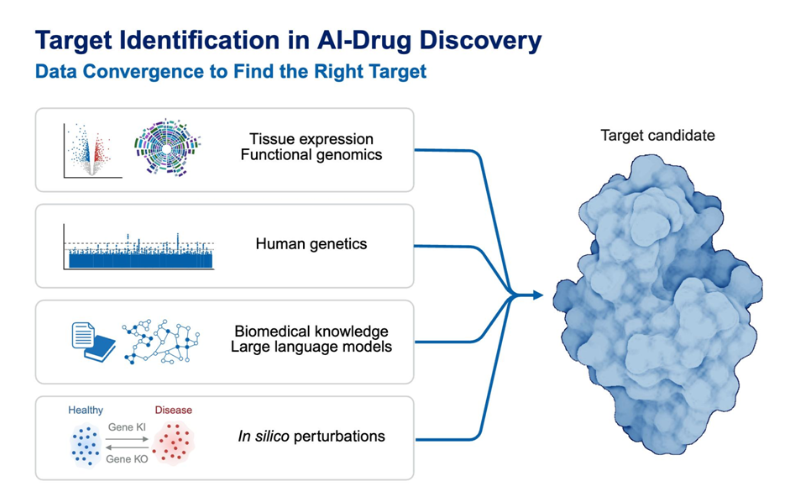
This is where Artificial Intelligence (AI) is creating real momentum. By improving how research teams analyze data, identify targets, evaluate molecules, and manage risk, AI is helping pharmaceutical organizations make faster and better decisions across the drug discovery lifecycle.
McKinsey estimates that generative AI could contribute between $60 billion and $110 billion annually across pharma and medical products, with drug discovery representing one of the highest-value areas. For pharma leaders, the opportunity is becoming increasingly clear: better decisions earlier in the process can significantly improve outcomes across the entire pipeline.
How AI Is Reshaping the Drug Discovery Lifecycle?
AI is changing the way pharmaceutical organizations approach discovery by improving how data is analyzed, decisions are made, and risks are identified earlier in the pipeline. From target identification to clinical readiness, its role is expanding across every critical stage of drug development.
The Discovery Bottleneck Begins with Data
Every stage of pharmaceutical research starts with data. Genomics, biomarkers, molecular libraries, proteomics, and patient records have expanded the amount of information available to R&D teams at an unprecedented scale.
But data volume alone does not improve decision-making.
One of the biggest bottlenecks in modern drug discovery is identifying which data points deserve action. Delays at this stage often affect everything that follows, from target validation to candidate progression.
AI is helping solve this by improving how complex datasets are processed and interpreted. Machine learning models can identify biological patterns, protein interactions, and disease relationships faster than traditional analysis methods.
In practical use cases, this supports faster biomarker discovery, disease pathway mapping, and stronger hypothesis generation.
Once data is structured and understood, the next critical decision is target selection.
Target identification determines where scientific effort, budgets, and resources will be invested. Weak target selection often creates years of downstream inefficiency and unnecessary spend.
AI is helping improve this process by analyzing biological and historical datasets to identify high-potential targets faster.
Common applications include identifying novel oncology targets, prioritizing rare disease gene mutations, and mapping inflammatory pathway markers for therapeutic development.
For pharmaceutical leaders, stronger target confidence improves portfolio discipline and reduces investment in lower-probability programs.
In many pharma delivery engagements, stronger target quality early has consistently increased the efficiency of the broader pipeline.
Accelerating Molecule Discovery and Lead Optimization
After a target is selected, the next challenge is identifying molecules that can interact effectively with it. This phase has traditionally depended on repeated screening and refinement cycles, making it one of the most time-intensive and expensive parts of R&D.
AI is helping make this process more predictive, especially in therapeutic areas where molecular complexity makes traditional screening slower, more expensive, and harder to scale.
Generative models can evaluate thousands of molecular structures based on efficacy, stability, and binding affinity before physical testing begins.
This supports several important use cases:
Virtual screening of large compound libraries
Lead optimization for efficacy improvement
Drug repurposing analysis
Small molecule generation for complex disease targets
Deloitte has highlighted how AI is improving efficiency in discovery environments where repeated experimentation has historically slowed progress.
For leadership teams, this translates into faster candidate progression and more focused R&D investment.
Reducing Development Risk with Predictive Toxicity
As candidates move deeper into development, the cost of failure increases significantly. Late-stage toxicity remains one of the most expensive risks in pharma. A candidate can progress for years before safety concerns emerge, affecting both budgets and pipeline strategy.
Predictive AI models are helping reduce this risk earlier. By analyzing historical toxicity datasets, AI can identify potential hepatotoxicity, cardiotoxicity, and broader compound safety concerns before preclinical testing begins. This gives pharmaceutical teams earlier visibility into candidate quality.
For business leaders, earlier risk detection improves capital efficiency and strengthens decision-making across active portfolios.
Improving Clinical Trial Readiness
Clinical trials remain one of the longest and most operationally complex stages in pharmaceutical development. Delays in patient recruitment, poor cohort alignment, and protocol inefficiencies can significantly extend development timelines.
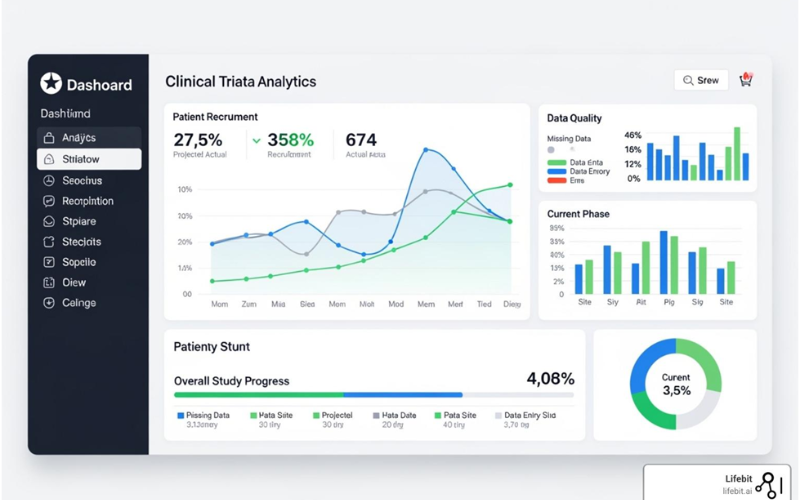
AI is helping improve trial readiness by supporting more data-driven planning. By analyzing patient records, historical trial performance, and disease progression patterns, AI can improve cohort matching, predict enrollment bottlenecks, and optimize site selection.
These use cases improve trial preparation and reduce avoidable delays. For pharmaceutical leaders, stronger trial readiness directly affects time-to-market and the ability to maximize commercial opportunities.
As candidates move closer to commercialization, the focus begins to shift from scientific validation to regulatory readiness, where operational efficiency becomes equally important.
Extending AI into Regulatory Workflows
AI’s role in pharma is expanding beyond discovery and trials. Regulatory workflows involve significant effort across documentation review, compliance checks, and submission preparation. These tasks often create operational slowdowns close to market entry.
AI is helping improve this through intelligent document processing. Key applications include:
Extracting structured data from clinical reports
Classifying regulatory documents
Identifying compliance gaps
Supporting submission readiness workflows
For pharmaceutical organizations, this reduces administrative burden and improves operational efficiency during critical submission stages.
From AI Experimentation to Enterprise Execution
The conversation around AI in pharma has shifted significantly in recent years. What started as isolated innovation projects is now becoming part of broader R&D strategy. Pharmaceutical companies are increasing AI investments because the business value is becoming clearer, from faster research cycles to stronger candidate quality and better risk visibility.
One of the biggest reasons AI initiatives stall in pharma is not model capability. It is fragmented research data and poor integration into scientist workflows.
This is where execution becomes critical.
In many AI-led pharma engagements supported by USM Business Systems, the focus has been on turning AI into practical solutions across drug discovery, from biomedical data intelligence to predictive modeling and workflow automation.
For pharma leaders, that shift from experimentation to execution is where long-term value starts to take shape.
What Pharma Leaders Should Prioritize Next?
The next phase of AI adoption in pharma will be shaped by practical execution. For some organizations, the priority may be improving data intelligence. For others, it may begin with target selection, toxicity prediction, or clinical trial optimization.
What matters most is identifying where inefficiencies exist today and understanding how AI can improve decision quality in those specific areas.
In pharma, speed matters. But better decisions matter more. The organizations combining scientific expertise with AI-driven decision intelligence will be the ones building stronger pipelines, reducing avoidable risk, and bringing therapies to market with greater confidence.
Where can AI create the biggest impact across your drug discovery pipeline today?
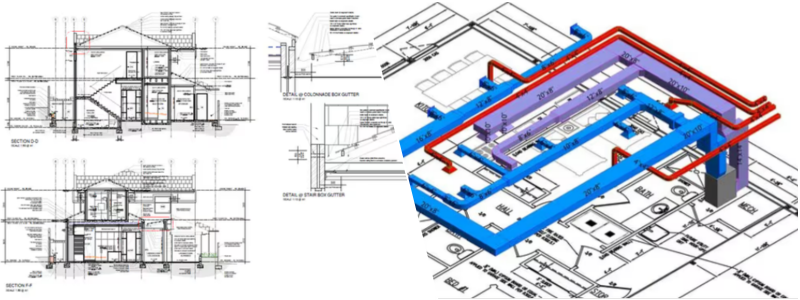
As cities continue to expand to accommodate the growing demand for office and residential spaces, transportation hubs, commercial buildings, large-scale infrastructure, schools, hospitals, and public spaces, urban development is happening everywhere. Behind every successful building project is something many people often overlook: construction drawings. Construction drawings are detailed plans created by architects to document all the technical details of a project, including materials, accurate dimensions, floor plans, HVAC systems, electrical and plumbing layouts, wall elevations, and much more. The more accurate and specific these drawings are, the easier it becomes for engineers, builders, and contractors to execute the project exactly as intended.
Construction drawings are not simply technical requirements. They are essential because they keep everything organized and functioning properly throughout the construction process. Imagine trying to cook a complicated recipe without measurements or proper instructions. You would probably make mistakes. The same thing happens in construction without detailed drawings. Every placement, dimension, and system connection must be clearly defined so that no one has to rely on guesswork. If you are a project developer or contractor in need of construction drawings, Cad Crowd offers access to a wide network of professional architects who provide a full range of construction design, drafting, and 3D construction rendering services. Before hiring an architect, however, it is important to understand what construction drawings are and why they matter.
Construction drawings serve as the instruction manual for a building project. They translate an architect’s design concepts into technical plans that contractors and engineers can understand and build from accurately. An architect may initially envision ideas such as creating an open space or introducing more natural lighting. Construction drawings transform those ideas into measurable and buildable instructions. One project typically includes multiple sets of drawings, such as electrical plans, plumbing plans, and structural plans. Each drawing focuses on a specific system while working together as one coordinated package.
During construction, contractors do not estimate where things should go. They follow the drawings closely to understand dimensions, materials, and installation procedures. Engineers also rely on construction drawings to confirm whether the structure is stable, safe, and realistic to build. Without construction drawings, even simple buildings would be difficult to complete properly. These drawings provide the clarity and consistency needed to turn ideas into functional structures.
Assisting design firms in achieving their concepts
When design firms create concepts, they must ensure those ideas can actually be constructed in the real world. While creative ideas are important, they still need to be translated into technical plans before construction begins.
Construction drawings simplify this process by converting conceptual designs into accurate and measurable plans. This ensures the drawings reflect the intended vision while remaining practical for construction teams to follow.
How do construction drawings work?
Construction drawings can be compared to a detailed blueprint. They contain design concepts alongside exact dimensions, material specifications, layouts, and technical systems that guide builders during construction.
These drawings show how every part of the building should be assembled and connected. Their purpose is to ensure that every stage of the project is carried out correctly and consistently.
Why does urban development need precise construction drawings?
Urban projects may appear simple from the outside, but they involve many interconnected systems and teams. Precision in construction drawings minimizes misunderstandings, improves safety, and ensures compliance with regulations and building standards. Accurate construction drawings also help save time and money. Inaccurate drawings can lead to misinterpretation, delays, material shortages, and expensive revisions. For example, if one team interprets the drawings differently from another, construction errors may occur, causing project setbacks.
Precise placement of systems and components is also essential for structural stability and safety. Every element must be installed correctly to ensure the building performs as intended.
How can construction drawings connect design and actual construction?
People often say architects “turn visions into reality,” but construction drawings are what actually make that possible. Architects are responsible for more than just creating visually appealing designs. They also ensure that spaces function properly, suit the environment, and meet the client’s needs. Through sketches, renderings, and digital 3D models, architects communicate how the final structure should look and function. Construction drawings allow contractors and engineers to transform those concepts into real structures. Even highly complex ideas become achievable when detailed plans guide the process. Construction services play a major role in carrying out these plans successfully. Construction drawings establish the guidelines that contractors, engineers, and builders must follow to reduce risks, prevent errors, and maintain structural stability.
Documentation process is another important aspect of construction drawings. These documents include measurements, material specifications, installation instructions, and structural information that help ensure all teams remain aligned with the original design intent.
Engineers also play a crucial role in reviewing construction drawings. Whether working in structural, electrical, or mechanical engineering, they verify that systems function correctly and comply with regulations and safety standards. In large-scale urban development projects, teamwork becomes essential. Multiple teams with different areas of expertise must collaborate effectively to transform ideas into detailed and buildable plans.
How can construction drawings promote collaboration across all teams in an urban development project?
Construction drawings involve contributions from architects, engineers, contractors, consultants, and many other professionals. These drawings help improve collaboration in several important ways.
Construction drawings function as a visual language that allows all teams to understand the project without relying on lengthy explanations. Instead of describing every detail verbally, professionals can refer directly to the drawings. This reduces confusion and helps ensure that everyone follows the same plan. Architects create the layouts, engineers add technical systems, and contractors execute the plans accurately.
Improves communication among professionals
Urban development projects involve multiple professionals working together toward a common goal. Architects focus on layouts and aesthetics, engineers handle systems and structural integrity, and contractors oversee construction activities. Clear communication between these groups is necessary to avoid misunderstandings and maintain project coordination. Construction drawings support this communication by providing a shared reference point for all teams.
Reduces errors and construction delays
Accurate construction drawings reduce delays and improve efficiency. When drawings contain errors or missing information, projects often stop while revisions are made. Detailed and well-organized drawings minimize confusion and reduce the need for costly rework. For example, if electrical systems conflict with plumbing layouts, revisions become necessary and construction slows down. By avoiding these issues, projects can save both time and resources.
Supports efficient project planning
Construction drawings help organize tasks, manage resources, and coordinate schedules. Because all teams can clearly understand the project requirements, they can work more efficiently and collaboratively. Although each professional specializes in a different area, the drawings help connect all teams into one coordinated workflow.
Makes updates and revisions easier
Large urban projects rarely proceed exactly as originally planned. Revisions and updates are common throughout construction. Construction drawings help track changes and ensure that all teams stay informed about updated plans. Modern CAD software also allows revisions to be made digitally, making updates faster and more efficient.
How can construction drawings ensure compliance with building codes and regulations?
Construction drawings help ensure that projects comply with local and national building codes, regulations, and safety standards. Governments establish these codes to protect public safety and ensure structural reliability. Construction drawings demonstrate that projects meet these requirements before approval is granted.
Accurate measurements and structural details
Service Provider Type
Average Rate Structure
Key Characteristics
Freelance Drafters / Designers
$30 – $120 / hour
Rates scale by expertise; entry-level is $35–$50, lead designers charge $85–$150.
Drafting Companies / Firms
$75 – $200 / hour
Higher rates, but includes project management and corporate quality assurance.
Per-Page / Per-Sheet Rates
$30 – $250 / page
$30 for independent freelancers; up to $250 for structural or shop drawing firms.
Every project must follow accurate measurements and propermaterial specifications. These details help inspectors evaluate whether the structure is safe and compliant.
Supports permit approval
Before construction begins, projects must go through approval processes that require documentation, including construction drawings. Officials review these plans to verify compliance with regulations before issuing permits.
Reduces legal and safety risks
Projects that follow proper codes and standards are less likely to experience legal issues, structural failures, or safety risks. Compliance process protects building owners, workers, and future occupants. Overall, construction drawings are essential because they guide projects safely and responsibly while ensuring compliance with laws and regulations.
How can Cad Crowd help with construction drawings?
Cad Crowd is a platform that connects companies with experienced CAD professionals specializing in construction drawing services.
Cad Crowd offers access to professionals with expertise in architecture, engineering, CAD drafting, and construction documentation. This allows companies to find specialists whose skills align with project requirements.
Fast project completion
Meeting deadlines is critical in large-scale development projects. Through Cad Crowd, firms can outsource work to experienced CAD professionals who can efficiently produce accurate construction drawings while maintaining high-quality standards.
Workforce support for design firms
Instead of hiring large in-house teams, firms can access skilled professionals only when needed. This flexible approach helps companies complete projects efficiently without unnecessary staffing costs.
Cad Crowd plays an important role in construction drawing services, especially in urban development projects where accuracy, efficiency, and collaboration are essential. With access to experienced professionals, firms can reduce errors, improve productivity, and ensure projects meet both safety standards and client expectations. Contact Cad Crowd today for your free quote and transform your ideas into reality; smartly and efficiently.
MacKenzie Brown is the founder and CEO of Cad Crowd. With over 18 years of experience in launching and scaling platforms specializing in CAD services, product design, manufacturing, hardware, and software development, MacKenzie is a recognized authority in the engineering industry. Under his leadership, Cad Crowd serves esteemed clients like NASA, JPL, the U.S. Navy, and Fortune 500 companies, empowering innovators with access to high-quality design and engineering talent.
It should be able to handle up to GameCube and PS2 titles, thanks to a powerful chip.
Retroid just released a bunch of information about its upcoming Pocket Nova handheld console, according to a report by Time Extension. It’ll feature a Qualcomm QCS8550 processor, which is extremely similar to the Snapdragon 8 Gen 2. This means that the Pocket Nova will likely be a powerful machine with enough juice to run PS2 and GameCube games.
The 4.5-inch AMOLED display offers a 4:3 screen resolution, which also happens to be a great fit for PS2 and GameCube games. It comes with a 5000mAh battery with USB-C fast-charging and integrates with both Wi-Fi 7 and Bluetooth 5.
It’s fairly light, at under nine ounces, and includes a microSD slot for additional storage. The best part, however, is the price. The Pocket Nova starts at just $229, though that’s the entry-level version with 8GB of RAM and 128GB of storage. A model with 12GB of RAM and 128GB of storage costs $269. It’s available to preorder right now, but there’s no release date just yet.
— Retroid Pocket Official (@Retroid0fficial) June 25, 2026
Retroid has been on our radar for a while and has consistently pumped out high-quality portable consoles. The company’s Pocket 6 featured an actual Snapdragon 8 Gen 2 chip and could also handle games from the PS2/GameCube generation.
5 Easy Editing Tricks for More Powerful Storytelling
Most beginning editors start off learning the basic concept of making cuts in their videos to create a finished project.
Once they have learned to do that, the emphasis tends to go a little off course at that point and they start drifting into that vast wasteland I like to call, transitions!
The problem is that their intended goal is that of keeping the viewer engaged but the whole “transitions” thing leads them off into the undergrowth, possibly never to be seen again.
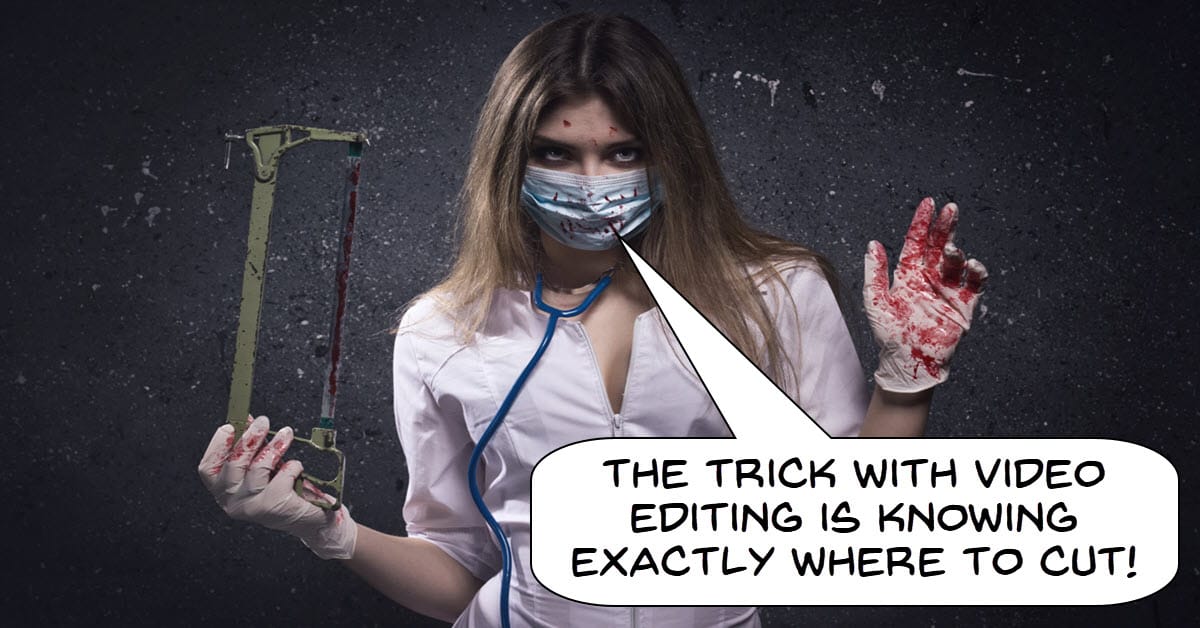
The real key to all of this is learning why and when to cut rather than how.
If you take a look at the video below on editing techniques to improve storytelling you will notice that in most cases he uses a straight cut.
No fancy swirly, spinny transitions or masking effects, just straight cuts.
The difference is where and why each cut in being made and what purpose it is serving to the story.
How to Design J-Cut and L-Cut Transitions in Powerdirector
One of the absolute basics anyone should be learning as a new video editor is the use of J-Cuts and L-Cuts.
You should learn why they are the most common cuts in pro editing and how to do them.
So for the second part of that equation, the how, check out the video below because although they seem kind of simple, they are pretty easy to mess up!
As far as the why goes, heres the short version.
Both the J-Cut and the L-Cut are cut points where either the video cuts just before the audio or the audio cuts just before the video.
Youll see in the demo below which is which so I am not to ramble on about it here!
The reason it is so powerful and is used like flour in a bakery is that they both mimic real life.
In real life, you are constantly receiving visual and auditory information but you are rarely receiving both visual and auditory information from one source at the one time.
If a dog barks at you when you are on the street you will most likely hear the dog before you see the dog.
If you are in a crowded room at a party you will be seeing then hearing then hearing then seeing and only on a very few occasions will the hearing and seeing happen simultaneously.
J-Cuts and L-Cuts reflect that reality of life and provide a very polished and professional edge to your videos without your audience being aware of why that is.
6 AI Tools That Make Video Editing 10X Faster
These are six tools in PowerDirector that I can totally get onboard with.
Its not because they are A.I and all the cool kids are using them or that they are creating my videos for me!
Its because they do what I want A.I. to do and that is to take boring, repetitive or just plain fiddly tasks off my hands and get them done painlessly.
A.I as a tool for creators and not a replacement of them is where we should be going right now.
How to Improve Audio Quality in Filmora (4 Easy Steps)
This is a run-through of some of the main audio tools you can find in Filmora 15 at the moment.
I say at the moment because Filmora gets updates pretty fast so who know whats coming next.
Anyway I dont think I need to bang on and on about the importance of audio in video creation.
Its one of those invisible factors to the audience that makes them think something is wrong without really identifying what it is thats wrong.
Whether they realize it or not, they quickly switch off.
What’s New in Filmora 15.6 – Teleprompter and Pen Tool Animation
When I added the item above, showing the audio tools of Filmora 15, I mentioned half seriously some thing about them updating frequently.
As so here we are! There is a new update to Filmora 15 which takes it to version 15.6.11.
In this new version there are a couple of very interesting enhancements to at least two of the tools already in the program.
The first is that they have added a teleprompter capability to the screen capture module.
This module is actually a stand alone program that you can, obviously, use to capture whatever it is you are doing on you computer screen.
What they have done is add the capability of having a teleprompter style overlay running while you are doing you screen capture.
This is a great feature for people using the program to do demonstration videos who can now read their script or cue sheet while doing the demo.
The second one is very cool and although is presented as an enhancement to the Pen tool (which it is) it is actually a way to manually draw motion paths.
So rather than try to explain it just watch Jacky’s video showing what it can do.
Fix Wrong Aspect Ratio Color Match Photos with AI! (Easy NoteGPT Tutorial)
Last week I spoke about no longer using A.I. features as part of the selection process for video editing apps.
This week I have another video tutorial showing why I no longer consider A.I. capabilities as being a particularly important part of that process.
These days there are many, many iterations of A.I. models for us to use and each of them have their own specialities, strengths and weaknesses.
Including all of them into an editing program’s interface would just be silly at this point especially given they are all easily accessible online.
So here’s another super quick and effective A.I. workflow from Gripps2211 working inside Corel VideoStudio and using external A.I. to manipulate his assets how he wants.
Learning Resolve? Don’t Make These Beginner Mistakes!
There are two main hurdles you have to get over if and when you start editing videos for whatever reason.
The first is actually learning how to work your way around the editing software you are going to be using so that you can actually edit!
The second and less obvious is that without a workflow, things can go downhill at an alarming rate!
Knowing where to start and why, followed by the next logical step in the sequence and why will get you to where you want to be way faster and without a whole lot of pain and with your sanity and enthusiasm for the activity (relatively!) intact.
Here’s great video from Casey Faris that walks through each step of the correct sequence and why and gives a great foundation to get you started off right.
On top of that he is also offering access to his free course for beginners which I recommend wholeheartedly.
VHS Tape Effect – DaVinci Resolve
Like most effect specific tutorials, I always watch and learn from them on the basis that I probably wont actually use that effect!
I know that seems a bit strange but what I am more interested in with these kinds of tutorials is how the effect is achieved, not the effect itself.
I have found over the years that whilst learning how to pull off an effect, you inevitably go through a bunch of steps involving tools and settings within the software.
The key here is to learn the tools and not so much the effect.
This one for example is how to manually recreate an old VHS tape effect.
Personally? Couldnt care less about an old VHS tape effect!
How Daniel gets there? Very interesting.
Key Takeaways
Beginners should focus on when and why to cut in video editing, rather than just learning transitions.
Mastering J-Cuts and L-Cuts enhances storytelling by mimicking real-life audio-visual experiences.
AI tools in video editing should alleviate mundane tasks instead of replacing creators.
Improving audio quality is vital for audience engagement and spans multiple tools in Filmora.
Updates in Filmora 15.6 include new features like a teleprompter and enhancements to the Pen tool.
A lot of the recent innovations in power banks have been around Qi 2 charging tech. There’s a decent amount of choice if you need a good power bank, and I use the Baseus Picogo, which just got a discount and is down to $28 right now.
The Picogo is a 10,000mAh power bank, and it has a sleek design with powerful magnets that let you attach it to your iPhone and Pixel without any issues. I used this model with my Pixel 10 Pro XL and iPhone 17 Pro, and after a year of use, I didn’t see any issues whatsoever.
✅Recommended if: You want a Qi 2 MagSafe power bank that’s lightweight and reliable in daily use. The Picogo power bank has a 10,000mAh battery, Qi 2 with 15W charging, and a USB-C port that hits 22.5W when you need to plug in.
❌Skip this deal if: You need Qi 2.2 with 25W charging. In that case, get the Baseus Picogo AM52, which is now $52.
There’s a lot to like with the Picogo power bank. The 10,000mAh battery is enough to charge a phone fully, and I really like the design; the metal chassis makes it durable, and the Qi 2 magnets are strong — they attached to my iPhone and Pixel without any problems.
With Qi 2 connectivity, you get 15W charging, and while it’s on the slower side, it is adequate while traveling as the power bank stays connected to the phone. This is a big advantage over regular power banks, and the size and weight of the Picogo gives it an edge over its rivals.
There’s a dedicated USB-C port that goes up to 22.5W, and this is useful if you need to plug in a secondary device to the power bank. Note that while the power bank has a 10,000mAh battery, it doesn’t mean you’ll be able to charge your phone twice over. Because of charging efficiency and the inherent energy that’s lost while charging your phone, you’ll get close to 5,500mAh of actual usage power out of the Picogo, and that is in line with other power banks in the industry.
If you need Qi 2.2 with the full 25W charging, you’ll want to get the Picogo AM52. It has the same design and the same 10,000mAh battery, and the magnets are the same as well. The biggest difference is that it’s able to deliver a 25W charge consistently, and I found that to be a decent enough differentiator when I need to charge my phone. But because of the newer standard, the AM52 costs a lot more — you’ll be shelling out $52 to get your hands on the power bank.
Honestly, the regular Picogo should be more than adequate for most, and the best part is that it is now available for under $30, making it a good overall option.
Snapchat+ includes several exclusive features, but few have generated as much curiosity as Snapchat Planets. Part of the app’s Friend Solar System, it transforms your Best Friends list into a planetary ranking, assigning each of your top eight friends a planet based on how often you interact.
From Mercury, which represents your closest friend, to Neptune, which represents your eighth closest, the system offers a quick visual snapshot of your interactions. But what do the different planets actually mean, and how does Snapchat decide who gets which one?
Here’s everything you need to know about Snapchat Planets, including the full order, what each ranking represents, and how to view your own Friend Solar System.
Snap
Snapchat Planets order
Snapchat’s Friend Solar System follows the same order as the real solar system, with each planet representing one of your top eight friends. The closer the planet is to the sun, the higher that person ranks in your Best Friends list based on your interactions.
The Snapchat Planets order is:
Mercury
Venus
Earth
Mars
Jupiter
Saturn
Uranus
Neptune
And yes, Pluto gets left out again.
Snapchat
Each planet represents a specific position in your Best Friends ranking, rather than a different type of friendship. Mercury is assigned to the friend you interact with the most, while Neptune represents your eighth closest friend. The rankings aren’t permanent and can change over time as your activity on Snapchat changes.
Snapchat
Snapchat Planets: What Each Ranking Means
Each Snapchat Planet represents your position in someone’s Best Friends list rather than a different type of friendship. Mercury is assigned to the friend you interact with the most, while Neptune represents your eighth closest friend, with the remaining planets falling in between.
Planet
Best Friends Rank
What it means
Mercury
#1
You’re their closest Snapchat friend based on interactions.
Venus
#2
You’re their second closest Snapchat friend.
Earth
#3
You’re their third closest Snapchat friend.
Mars
#4
You’re their fourth closest Snapchat friend.
Jupiter
#5
You’re their fifth closest Snapchat friend.
Saturn
#6
You’re their sixth closest Snapchat friend.
Uranus
#7
You’re their seventh closest Snapchat friend.
Neptune
#8
You’re their eighth closest Snapchat friend.
The planets are simply a visual representation of your Best Friends ranking and aren’t meant to measure the strength of a friendship. As your interactions on Snapchat change, your ranking can change too, meaning someone who’s Mercury today could move to Venus or Mars over time.
How Snapchat’s Friend Solar System Works
The Friend Solar System is one of Snapchat+’s exclusive features, designed to visualize your Best Friends list using the eight planets in our solar system. Instead of assigning numerical rankings, Snapchat represents each of your top eight friends with a planet, making it easier to see where someone stands based on how you interact on the app.
Your position in the Friend Solar System isn’t permanent. As your activity changes, whether that’s through snaps, chats, or other interactions, the rankings update to reflect those changes. Snapchat hasn’t disclosed the exact criteria behind the system, so there’s no guaranteed way to move someone higher in your rankings beyond interacting with them more frequently.
Best Friends and Friends badges
The Friend Solar System only applies to your Best Friends list, but you may also notice a Friends badge on some profiles. The two aren’t the same.
A Best Friends badge indicates that you and another user are among each other’s closest Snapchat contacts. A Friends badge simply means you have an active friendship on Snapchat, but the ranking isn’t necessarily mutual. In other words, someone can appear as your Mercury without you occupying the same position in their Friend Solar System.
How to see your Snapchat Planet
Once you understand how the Friend Solar System works, finding your Snapchat Planet only takes a few taps. Keep in mind that the feature is exclusive to Snapchat+ subscribers, so you’ll need an active subscription before you can view your rankings.
Snap
Step 1: Open Snapchat.
Step 2: Go to a friend’s Friendship Profile.
Step 3: Look for a Best Friends or Friends badge with a gold ring around it.
Step 4: Tap the badge.
Step 5: Snapchat will show which planet you are in that friend’s Solar System.
If you do not see a badge, it usually means you either do not have Snapchat+, Friend Solar System is not enabled, or you are not in that person’s visible friend ranking.
How to turn on Snapchat Planets
Before you can use Snapchat Planets, you need Snapchat Plus. Pricing can vary by region and plan, so the safest way to check the current cost is inside the Snapchat app or through Snapchat’s subscription page. Snapchat also offers multiple Plus-related plans in some regions, and availability can vary.
Once you have Snapchat Plus, you may still need to turn on Friend Solar System manually.
Step 1: Open Snapchat and go to your profile.
Step 2: Tap your Snapchat Plus membership card or banner.
Step 3: Open the Snapchat Plus feature management page.
Just a couple of years ago, the Xbox Series S felt like a great holiday gift idea. I was able to pick up a console for $250 during Black Friday and introduce my brother to this generation of console gaming. He just had to buy a Game Pass for Console subscription, and he suddenly had access to a big library of current-gen games and all of Xbox’s first-party titles the day they released. Sure, games didn’t run quite as well on the slightly less powerful console, but it was good enough for a casual gamer like him.
Following the price hikes announced today by Microsoft, the Xbox Series S no longer feels like such a good deal. While it’s still the cheapest way into current-gen gaming, the entire Xbox ecosystem has been price gouged to the point where the Xbox Series S no longer has a clear or appealing platform identity.
When Microsoft first unveiled the Xbox Series S in September 2020, it was positioned as “the smallest, most affordable next-generation console.” But although it was a little weaker than the Xbox Series X and would display games at lower resolutions, it was $200 cheaper. And most importantly, it would play all the same games as Xbox Series X.
It was a Game Pass machine, as buying the console and several months of Game Pass still wasn’t as expensive as buying an Xbox Series X. “If you just want to access what the platform offers now or what’s to come in Xbox’s future, and don’t mind the gap in graphical details and storage space, this is the Xbox for you,” GameSpot stated in its 2020 review.
Over time, though, the cracks in the Xbox Series S’s value proposition started to show. Its lower specs impacted which games were being ported to both Xbox consoles. Most famously, Baldur’s Gate 3 was a PS5 console exclusive at first because Larian Studios couldn’t achieve parity between the Xbox Series X and S versions of the game.
Xbox compromised with the studio and let Larian ship a version of Baldur’s Gate 3 on Series S without local co-op, despite the feature being available on Series X. From that point on, Xbox Series S didn’t feel like a true next-gen console anymore.
An Xbox Series S console and Xbox Controller sit next to each other.
Then the price increases began, starting with Game Pass. In 2024, Game Pass for Console was discontinued, and the cheaper Standard and Core tiers no longer included day-one releases. In 2025, prices skyrocketed even higher. As of May 2026, prices are down slightly, but remain higher than the recent past. Right now, your Game Pass options are $10 a month for the limited Essential library, $15 a month for the Premium catalog that lacks day-one releases, or $23 a month for the Ultimate tier that includes everything.
As if those prices weren’t steep enough, we’re now seeing unprecedented spikes in console pricing. Because of component shortages and price increases driven by the AI boom, in which Microsoft is a major player, the Series S has seen its price rise multiple times over the past year or so.
Its retail price increased to $380 in May 2025, $400 in October 2025, and now $500 in August 2026. While it’s still cheaper than the Xbox Series X, “affordable” doesn’t feel like an accurate way to describe the Xbox Series S anymore.
An Abox Series S and Xbox Controller hovering in a promotional video by Microsoft.
The Xbox Series S felt affordable enough that I bought it as a gift a few years ago. I definitely would not do the same thing for an underpowered $500 console in 2026. I’d just give my brother some cash or a gift card and tell him to pick up a Nintendo Switch 2 or a refurbished PlayStation 5 Digital Edition for his current-gen gaming needs.
While the Xbox Series S was a clever way to give Xbox an enticing advantage over the competition in 2020, it now feels like an albatross dragging this generation down as it nears its end. Microsoft’s own choices to invest in AI and continually modify the price of Xbox Game Pass have completely ruined what was once one of its most appealing Xbox consoles.











 Every stage of