The original lawsuit was filed in 2023 and claimed Twitter hosted thousands of cases of copyright infringement.
Donny Hery/Shutterstock
A three-years-long legal battle between X and major music publishers has quietly come to an end. In court documents filed by both X and a group of music publishers, both sides opted to dismiss their opposing lawsuits while not disclosing the terms of the settlement (via Reuters).
The feud began in 2023 when a group of music publishers led by the National Music Publishers Association (NMPA) sued the social media platform, which was still known as Twitter at the time. The $250 million lawsuit claimed that Twitter allowed for rampant cases of copyright infringement from its users, while also not doing anything to stop it. Notably, Twitter was one of the only major social media platforms that didn’t have a licensing agreement with music publishers.
In response, Twitter, now known as X, countered with its own lawsuit nearly three years later, claiming that these music publishers engaged in anticompetitive practices that would force the platform to license their songs for higher rates. Even before the latest agreement to dismiss both suits, X requested as recently as last month that the court dismiss the case claiming it shouldn’t be held responsible for user piracy.
So far, neither side has offered any explanation for the dismissals. However, court documents show that X and the music publishers requested to dismiss both suits “with prejudice,” so that they’re permanently dismissed and won’t be refiled. We’ve reached out to NMPA for comment and will update the story if we hear back.
If you didn’t know any better, you would think the cast of The Odyssey risked life and limb to bring Homer’s epic to life on the big screen. Waves crash around its actors, armor is lugged up hilltops, and – for one final sting in the tail – they were some ferocious cameos during the movie’s feted Cyclops sequence.
For Himesh Patel, who plays Odysseus’ second-in-command Eurylochus, that sense of peril only enhanced his performance – aided by the trust of director Christopher Nolan.
“I mean it adds a sort of visceral quality to it, which you see on screen that you don’t really see that often,” Patel recounts to GamesRadar+. “He’s a rare filmmaker, in that he trusts we have a certain level of common sense to keep ourselves safe, but also that he’s got the best stunt teams around, the best marine teams around, that kept us safe and kept us from ever being in any real danger.”
Latest Videos From
Patel adds, “That allows him to capture that sort of visceral reality of what it was like to be on the boat or be in the cave, that sort of thing. And then you have things like that swarm of bees outside the Cyclops cave, that was just real.”
Ah, yes, the bees. While your eyes may have been focused on Bill Irwin’s lumbering, titanic Cyclops as Odysseus and his men bid to escape the cave it calls home, you may have noticed the low buzz of bees that soundtrack much of their entry into the precarious situation.
Far from being something added in post-production, their presence was something that occurred naturally in a moment of serendipity that wouldn’t look out of place in one of the Greek myths’ many godly interjections.
“When we broke for lunch and they were like, ‘Just wait five minutes.’ The sound team captured the sound of the bees. Sometimes you have these beautiful accidents.”
Bringing all the latest movie news, features, and reviews to your inbox
Patel also reveals that the set-piece was filmed in Nestor’s Cave in Greece, otherwise known as the “birthplace of Zeus.”
On his arrival to ‘set’, Patel was taken aback by how the setting of perhaps the audience’s most-anticipated moments was transformed for The Odyssey.
“The first day we got there, we basically turned it into a soundstage,” Patel recalls. “They’d found a tiny gap at the top where they could run some cables in, and basically harness a rig of lighting. It was just kind of amazing to be going there and reminding ourselves that we’re in an actual cave, we look outside and there’s actually the Mediterranean around us.”
In late May, Neil Rimer said something during a sit-down I had with him in Athens that I haven’t been able to shake. At a vibrant new tech festival in the city, talking about the wealth piling up around AI, he said he has “a strong sense that there will be some sort of a redistribution.” He continued on. “It’ll either be voluntary or it’ll be involuntary, but it’ll happen, and I hope it’s voluntary,” he told me, adding that he thinks tech leaders “can play a leading role in seeing that through.”
Coming from most people, that would sound like standard-issue populism. Coming from Rimer, a co-founder of Index Ventures, one of the most successful venture firms of the last three decades, it seemed a striking thing to say in public.
Rimer stepped back from day-to-day investing in 2021, and these days spends much of his time in Athens, where his wife is from and where his children treasure their Greek passports. He turned up to our interview in a rumpled button-down and jeans, not the quarter-zips and fine knitwear that mark so many of his peers. Yet Index’s returns in recent years have been exceptional: the firm has raised roughly $15 billion from outside investors since its founding, and last year’s exits including Figma’s IPO and Google’s purchase of the cybersecurity firm Wiz reportedly netted Index roughly $9 billion.
Rimer has found ways to give back. He sits on the board of Endeavor Greece, which mentors entrepreneurs in emerging markets, and chaired the board of Human Rights Watch from 2019 to 2025. In late 2021, he and his father and two brothers gave $13 million to McGill University to renovate a campus building, now the Rimer Building, and found a new Institute for Indigenous Research and Knowledges.
In the meantime, his comment about redistribution comes at an odd moment, to be charitable, for giving. The Giving Pledge, the promise Warren Buffett and Bill Gates launched in 2010 to get billionaires to commit half their fortunes to charity, is becoming increasingly irrelevant. One hundred and thirteen families signed in its first five years, then 72, then 43, then just four in all of 2024, per a New York Times report in March that underscored how out-of-fashion philanthropy has become among some of the richest people in tech. (Noted that piece: “Elon Musk, the world’s wealthiest person, has said that his businesses ‘are philanthropy.’”)
The pattern appears to hold beyond the Pledge. Total American charitable giving hit a record $592.5 billion in 2024, but the number of Americans actually giving has fallen for five straight years, down 4.5% in 2024 alone, according to the Stanford Social Innovation Review. Two-thirds of households donated in 2000; roughly half do now, and Bank of America and Lilly Family School data shows even affluent-household giving has slipped, from 90% in 2017 to 81% last year.
The pattern shows up in Index’s own portfolio, too, which includes Anthropic. Business Insider recently asked a financial planner, Alex Caswell, whether his newly wealthy clients, many of them Anthropic employees tied to effective altruism, were pledging to give away the bulk of their fortunes. Anthropic matches employee donations of up to 25% of their equity to charity, and some of Caswell’s clients have used it, he told BI, but most weren’t building philanthropy into their plans at all; they were focused on angel investing or starting their own companies. “That’s what I’m seeing more than the desire to become philanthropic,” he told the outlet.
Unsurprisingly, the absence of voluntary giving is now running up against attempts to legislate the outcome instead. California voters will decide this year on a 5% one-time wealth tax that targets the state’s billionaires. Some, including Google founders Sergey Brin and Larry Page, have already moved their primary residences to South Florida to be on the safe side.
OpenAI is reportedly considering going public in 2027, and cynically, one reason among others may be that the tax, if passed, will calculate net worth based on an individual’s worldwide assets as of the end of this calendar year.
As unsurprisingly, there is plenty of opposition to any kind of wealth-redistribution measure of this scale, including by Governor Gavin Newsom, and including by economists who point out that many industrialized countries have repealed similar wealth taxes since 1990 after watching their wealthy residents skedaddle.
Other options on the table are as controversial. OpenAI has reportedly discussed handing the federal government a 5% equity stake, an idea CEO Sam Altman has framed as sharing AI’s upside with the public, but critics see it instead as a way to buy political cover in Washington. In either case, Silicon Valley has never been eager to put Uncle Sam on the cap table. Joked veteran investor Roelof Botha during a separate sit-down with this editor last year: “[Some] of the most dangerous words in the world are: ‘I’m from the government, and I’m here to help.’”
It’s worth thinking through how much wealth sits outside these mechanisms. Musk is worth just over $1 trillion, after SpaceX’s IPO last month made him the first person to reach that mark. Forbes counted 45 new AI billionaires in its 2026 rankings alone, worth a combined $2.9 trillion, and that’s before either Anthropic or OpenAI has gone public. In that same BI story about Anthropic employees, BI notes that once Anthropic and OpenAI complete their IPOs, their combined employees will hold enough wealth to buy nearly a third of all homes in the San Francisco metro area.
It feels unprecedented, but whether it represents an historic extreme is a matter of some debate. The share of wealth held by the top 1% of U.S. households hit 31.7% in the third quarter of last year, a record since the Federal Reserve began tracking the data in 1989, and roughly equal to what the other 90% of households outside the top decile held combined.
That’s still below the 45% the top 1% commanded at the Gilded Age peak in 1916. But narrow the lens to the tippy top, and the picture flips. Renowned economist Gabriel Zucman calculates that at the height of the Gilded Age, around 1910, America’s four largest fortunes were worth a combined 4% of U.S. GDP. Today, that same sliver of the population — now 19 households instead of four — is worth 14%.
Rimer’s two paths, voluntary or forced, have precedent from the last time American wealth concentration reached this level. In 1889, at the peak of the first Gilded Age, Andrew Carnegie published an essay arguing that a rich man should treat his fortune as a trust to be distributed for the public good within his own lifetime, calling it a disgrace to die wealthy. That essay, “The Gospel of Wealth,” became the founding document of modern philanthropy and the intellectual ancestor of the Giving Pledge.
It didn’t hold off the other path for long, though. By the mid-1930s, Louisiana Senator Huey Long had built a national following behind a program called Share Our Wealth, demanding steep taxes on the rich to fund a guaranteed income for every American. Worried about losing working-class support to Long, Franklin Roosevelt pushed through what the press called the “soak-the-rich tax,” raising the top marginal income tax rate as high as 79%. It redistributed less than Long wanted, but it remains the clearest example in American history of politically forced redistribution arriving once voluntary giving failed to adequately address the pressure building underneath it.
None of this is news to Rimer, who has spent his career in tech. What’s more curious to him is “the moral center of tech companies,” a fascination he traced to being a Stanford undergrad in 1984, when Apple discounted the first Macintosh for students and Steve Jobs and Apple’s other founders were, in his words, “heroes” for building something he felt was genuinely good for the world.
What troubles him now, he said, is hearing his own children talk about certain tech companies the way an earlier generation talked about defense contractors or cigarette makers.
Critics may note that Rimer — as an investor in Anthropic and other tech companies — is a direct beneficiary of the windfall he says will eventually need to be shared. But he’d rather see his fellow beneficiaries choose to give some of the money back than have it taken from them. There’s an easy way to do this and a hard way, and Rimer is betting on people picking the easy one before history picks it for them.
When you purchase through links in our articles, we may earn a small commission. This doesn’t affect our editorial independence.
People loitering around your home can be quite scary. Even if you haven’t experienced a specific crime as of yet, you might worry about what the people hanging around might do, especially if there’s some crime in your area.
The good news is that there are solutions that will move people along non-confrontationally. In this guide, learn about 3 great devices that prevent loitering around your home.
1. The Mosquito Anti-Loitering Alarm
The best way to prevent any loitering around your home is with the Mosquito Anti-Loitering Alarm from Mosquito Loitering Solutions. This is a type of electronic siren that emits a unique sound that pulses four times per second, which is very irritating (but safe) to listen to. It doesn’t harm animals or travel through walls, but instead ensures groups of people do not linger in one specific area for too long. So, it can stop rough sleeping, homeless encampments, and general loitering. When strategically placed, this makes any home safer.
There are a couple of settings on this anti-loitering device, including an all-age and a teenager setting. The device itself comes in a discreetly coloured durable casing, and the sound itself can travel up to 30 meters in whichever direction it is facing (with a spread of 60 degrees). It won’t travel through walls, though, so you won’t hear it while you’re at home!
With Mosquito Loitering Solutions, you can also purchase additional protection and devices such as:
A protective cage for the alarm
Mounting brackets
A remote control fob
A timer
A detector
With these, you can create an all-around mosquito alarm system that fully protects your home whenever you need it to.
2. The Wall Mountable Ultrasonic Antisocial Deterrent from Brocott
Next is the Ultrasonic Antisocial Deterrent, which is a powerful unit that emits a high frequency that is particularly annoying to people under the age of 25. This annoys them a lot, so they are more likely to move on from around your home.
This device has an ultrasonic output, an acoustic range of 50m, and a weatherproof casing so that it stands the test of time. Keep in mind that, while powerful, this device from Brocott doesn’t have as many settings and comes preset, so it should only really be used if you want to target teenagers specifically.
3. The High-Pitched Noise Deterrent System from ABC Fire and Security
If you specifically have a problem with younger people loitering around your home, such as teenagers, then the high-pitched noise deterrent system from ABC Fire and Security may be a good option for you. It has a 100m range, which is much higher than the others listed in this guide, so it works best if you have a larger area around your home where there is a lot of loitering going on.
This device has a generator that produces a very high-pitched sound around it. While it’s predominantly for targeting young people, there are also adjustable settings if you want it to target people more generally. The device is shipped from the UK/France, but can be sent anywhere, as it’s legal in all countries around the world.
AI labs are shipping new models nonstop. Besides being better and faster than their predecessors, every new model isn’t guaranteed to be a major step change, despite how the company’s PR may wax poetic about them. Model strengths really emerge in context: Where are competitor models lacking or excelling? Which models have outstanding specialties, and which are just catching up to industry standards?
Our Model Release Tracker helps you make sense of where models stand relative to each other, and whether they’re worth a deeper look. While we don’t test every model or model update on this list, we’ll always include the key elements you need to know, along with our hands-on expert test, where applicable. We also include an Expert Score for certain models. Curious about how we test AI? Check out this breakdown of our process.
Here are the biggest model releases of 2026 so far and what to know about them. We’ll update this list whenever a notable new model arrives.
Kimi K3
Moonshot | July 16, 2026
What it does: At 2.8 trillion parameters, Kimi K3 is the largest open-source model on the market, designed for “long-horizon coding, knowledge work, and reasoning,” according to Moonshot’s announcement. For context, that’s bigger than DeepSeek V4 Pro, from the company that first made US AI labs nervous back in January 2025, at 1.6 trillion.
Most notably, Kimi K3 topped Anthropic’s Fable 5 on the Arena benchmark for front-end coding, which measures complex agentic coding tasks. That said, Moonshot itself noted that Kimi K3’s overall performance doesn’t top Fable 5, though the model does rival it and OpenAI’s GPT-5.6 in several individual benchmarks.
Moonshot plans to release the model’s weights by July 27.
Why it matters: Kimi K3’s competitive performance and record-breaking open-source size revive discourse on whether proprietary American frontier models are worth the cost. Fable 5 is $50 per million output tokens, while Kimi K3 is just $15. Still, open-source models lack the safety guardrails that proprietary models have; those risks are amplified by the fact that Moonshot is a Chinese startup (the US government is consistently suspicious of Chinese tech).
GPT-5.6
OpenAI | July 9, 2026
What it does: Fresh on the heels of its new voice model, OpenAI released the GPT-5.6 family, which the company said it cleared with the government a few days earlier. The family includes Sol, a new flagship model, as well as Terra, built for everyday use, and Luna, the economical choice of the three. OpenAI said Sol should optimize cost without sacrificing performance, and works with a new “ultra” setting that calls on several agents to speed up task completion.
Sol beat Fable 5, the current darling of the AI race, in adaptive and medium reasoning on UC Berkeley’s Agents Last Exam benchmark. Terra and Luna also “outperform Fable 5 at around one-sixteenth the cost,” OpenAI said in the release. The model family is about on par with Fable 5 in most major performance areas, though, including coding, work tasks, and general applications, but is still faster and cheaper, according to OpenAI.
Why it matters: That the government was involved in the timing of GPT-5.6’s release signifies a shift — not in explicit regulation, perhaps, but around a sort of informal partnership between labs and the Center for AI Standards and Innovation (CAIS). Set in motion by the back-and-forth around Anthropic’s Mythos and Fable 5, the voluntary testing agreement laid out in the Trump administration’s June executive order seems to be going swimmingly.
(Disclosure: Ziff Davis, ZDNET’s parent company, filed an April 2025 lawsuit against OpenAI, alleging it infringed Ziff Davis copyrights in training and operating its AI systems.)
Muse Spark 1.1
Meta | July 9, 2026
What it does: An upgrade to Meta’s first model, Muse Spark, which it released in April, 1.1 scored above Anthropic’s Opus 4.8 and OpenAI’s GPT-5.5 — both impressive models — for job tasks humans delegate to AI and financial analysis. While the rest of its benchmark results were more scattered, those areas are especially relevant to AI’s potential impact on white-collar work and the broader job market.
Why it matters: Unlike GPT-5.6, Muse Spark 1.1 doesn’t rival Anthropic’s Fable 5, but it does appear to focus on advancing “personal superintelligence,” Mark Zuckerberg’s somewhat open-ended niche in the agentic assistant world. For example, Meta’s release mentions using Spark 1.1 for “agentic dinner party organization,” peeling off from Anthropic and OpenAI’s focus on professional use cases and aligning itself more with autonomous capability for personal use, similar to Gemini Spark. Keeping pace with new models from other major labs will allow for better simultaneous testing, which should put the race at an interesting inflection point.
GPT-Live-1
OpenAI | July 8, 2026
What it does: OpenAI said in the release that the new model, which is accompanied by a light version (GPT-Live-1 mini), should make talking to ChatGPT in Voice Mode seem”more like having a real conversation.” Because GPT-Live can listen and speak simultaneously, according to OpenAI, that means you should be able to seamlessly interrupt the assistant with questions, pause mid-sentence, and ask ChatGPT to respond more slowly if you need.
OpenAI added that with GPT-Live, ChatGPT Voice can delegate more complex asks to models like GPT-5.5 if Live can’t handle them. Everyone can access GPT-Live-1 and GPT-Live-1 mini in ChatGPT for Android, iOS, and in the browser.
Why it matters: While technically a narrower upgrade than a brand-new, highly capable general model, GPT-Live-1 should improve the user experience of talking to AI assistants, an increasingly popular way to engage with them on the go. Eventually, a better voice model could also handle longer, more complex tasks, but we’ll have to wait and see.
Fable 5 costs more to use, but Anthropic included it as a promotion at no extra cost for paid users, including those on Pro, Max, Team, andselect users on Enterprise plans. Anthropic had originally set Fable 5 to shift to token-based usage on July 7 for paid users, but has extended paid plan access to July 12.
“As before, you can use up to 50% of your weekly usage limit on Claude Fable 5. After that, you can keep using Fable 5 with usage credits, or switch to another model to keep working within your remaining limits,” Anthropic explained in an X post.
After Fable 5 and Mythos 5 were pulled on advisement from the government just days after their release, the government re-allowed access to Mythos 5 for certain partners on June 26. On June 30, the Department of Commerce lifted export controls on both Mythos 5 and Fable 5, and Anthropic began restoring global access to Fable 5 on July 1 (Mythos 5 is still only available to specific institutions).
Sonnet 5
Anthropic | June 30, 2026
What itdoes: Pivoting from its recent focus on Opus models, Anthropic released Sonnet 5. According to Anthropic, Sonnet 5 can “make plans, use tools like browsers and terminals, and run autonomously at a level that, just a few months ago, required larger and more expensive models.” The company said it performs similarly to Opus 4.8, released a month ago, but costs less. Sonnet 5 starts at $2 per million input tokens but will jump to $3 per million in September. It’s now the default in Free and Pro plans and available to all other plan types (Max, Team, and Enterprise).
In keeping with the agentic focus of the AI industry at large, Sonnet 5 scores notably high on computer use benchmarks and agentic coding — testing found it completed complex tasks that earlier Sonnet models couldn’t. It also comes with safeguards implemented automatically, a nod to both recent PR around Mythos and overall improvements in general intelligence.
Why it matters: With the rate of AI model development continuing to accelerate, it’s a fair bet that Sonnet 5 is in fact a significant upgrade over Sonnet 4.6, which was released back in February (eons ago in current shipping time). The timing of this release is also significant; Anthropic noted that Sonnet 5 “has a much lower ability to perform dangerous cybersecurity tasks than our current Opus models,” perhaps a stabilizing mention after the complex rollout of its powerful Fable 5 and Mythos 5 models. Ironically, however, Sonnet 5 showed a higher rate of misaligned behavior than Mythos Preview.
Fable 5 and Mythos 5
Anthropic | June 9, 2026
What it does: ZDNET senior contributing editor David Gewirtz called Fable 5 a “defanged” version of Mythos, made safe for public use. Anthropic released Mythos 5 to those who already had Mythos Preview access through Project Glasswing. Fable 5 is restricted from responding to high-risk queries about topics like cybersecurity and biological weapons, but still “Mythos-class,” which, by Anthropic’s telling, means a step change in capability. As for Mythos 5, Anthropic said it had plans to expand access beyond initial partners through a systematic program. But both models were pulled barely four days after their release on orders from the US government.
Why it matters: The models have created plenty of commotion, not just because of their supposed basis in Mythos and temporary restriction. Fable 5 beguiled safety testers who were unaware that the model was set to downgrade to Opus in response to certain questions, which created trust issues between researchers and Anthropic. Despite being guardrailed, we now know Amazon researchers jailbroke Fable 5 and communicated with the White House to alert Anthropic, though Anthropic framed this incident as “narrow” in their understanding.
While the details remain unclear, it’s a rare instance of government authorities intervening in an American AI product in public, which could mean Mythos-level models have caused a shift in the relatively hands-off approach to AI labs the Trump administration has had thus far.
MAI-Thinking-1
Microsoft AI | June 2, 2026
What it does: At its Build developer conference, Microsoft said that this new 35-billion-parameter model is, unsurprisingly, designed for multi-step agentic tasks. It scored similarly on the SWE Bench Pro benchmark test for coding as Anthropic Opus 4.6. The company also noted that enterprise users can trust this model for any use because it was trained only on clean, commercially safe data — an important tidbit given mounting AI copyright lawsuits.
Why it matters: This is the first reasoning model from Microsoft AI, a notable milestone for any AI lab, but especially so this late in this race. Most labs have created multiple advanced reasoning models at this point, so it’s unclear yet where Microsoft’s approach stands relative to those, though the company is focusing on appealing to enterprise clients specifically.
Claude Opus 4.8
Anthropic | May 28, 2026
What it does: Replacing Opus 4.7 starting May 28 (at the same price), Opus 4.8 offers faster thinking modes for one-third the cost of the earlier version, according to Anthropic. Like most of Anthropic’s models, 4.8 prioritizes coding abilities, scoring higher than 4.7 on two coding benchmarks but not fully besting OpenAI’s GPT 5.5. It also “reaches new highs on our measures of prosocial traits like supporting user autonomy and acting in the user’s best interest,” the company noted in the release, though definitions for what that means remain murky.
Why it matters: Anthropic has always prioritized model safety and interpretability, but appears to be further emphasizing that standard with this release. The company said Opus 4.7 had a 92% honesty rate, in addition to being less sycophantic and hallucination-prone overall. The fact that it claims 4.8 shows “substantially” lower rates of misalignment than 4.7 indicates an increasingly high standard for model safety, especially because Anthropic compared 4.8’s alignment to that of Mythos Preview.
Gemini 3.5 Flash
Google | May 19, 2026
What it does: At Google I/O, the company launched its 3.5 model family, designed for building agents (following suit with where all of the AI industry is focused at the moment). The first model available now is Gemini 3.5 Flash, which beat Gemini 3.1 Pro on a few coding and agentic benchmarks and now undergirds AI Mode in Search and the Gemini App as the default model. Like all Flash models, it’s optimized for speed and a cheaper, more lightweight user experience, but can still handle “long-horizon” agentic tasks, Google noted. 3.5 Pro should roll out in June.
Why it matters: The most important place 3.5 will operate is in Search. As Google doubles down on an AI-first search experience, the models running it shape the responses people will passively consume every day, meaning it has to be especially up to snuff in terms of accuracy and hallucinations. Notably, though, the System Card for 3.5 Flash lacks any mention of hallucination rate or sycophancy.
GPT-5.5 Instant
OpenAI | May 5, 2026
What it does: OpenAI said in its announcement that the lighter version of OpenAI’s just-released GPT-5.5 is less verbose than its predecessor, GPT-5.3 Instant. It also touted fewer hallucinations and improved factuality, saying “GPT‑5.5 Instant produced 52.5% fewer hallucinated claims than GPT‑5.3 Instant on high-stakes prompts covering areas like medicine, law, and finance.”
Why itmatters: GPT-5.5 Instant replaces GPT-5.3 as the default model in ChatGPT. Again, while the expectation is that each new AI model gets more efficient, easier to use, and makes up less stuff, a significant improvement in hallucinations for a model most people use for fast queries could mean less misinformation spreading among the masses. That’s especially critical given how many people are using ChatGPT for everyday health questions, for example.
(Disclosure: Ziff Davis, ZDNET’s parent company, filed an April 2025 lawsuit against OpenAI, alleging it infringed Ziff Davis copyrights in training and operating its AI systems.)
Nemotron 3 Nano Omni
Nvidia | April 28, 2026
What it does: The latest in Nvidia’s open Nemotron family, this model provides agents with multimodal input. That means they can “perceive and reason across visual, audio, and textual inputs within a single shared perception‑to‑action loop,” according to Nvidia, thereby unifying multiple capabilities into a single system.
Why itmatters: Normally, systems of agents need to use separate models for speech, vision, and text, meaning they jump across documents, video, and audio to complete multi-step tasks. That slows down workflows, undermines the context agents gather, and racks up inference costs. Nvidia’s approach, if it works, would streamline this process and reduce token use, saving you money. Try it on Hugging Face.
GPT-5.5
OpenAI | April 23, 2026
Expert Score: 93/100
What it does: ZDNET tester-in-residence David Gewirtz technically gave GPT-5.5 an A- score, but said it “can be reductively described as better and faster than GPT-5.4,” which is hopefully the bare-minimum expectation for a new model. Specifically, though, the model got better at agentic coding, clearly identifying concepts, scientific research, and factual accuracy.
Why it matters: While the model itself may not be leaps and bounds ahead of its immediate predecessor, the quick turnaround from 5.4 to 5.4 — less than two months — indicates how rapidly agentic coding is accelerating OpenAI’s model release cycle. As ZDNET’s David Gewirtz breaks down, the company, much like other frontier labs using AI to build AI, is shipping updates at an exponentially increasing rate.
ChatGPT Images 2
OpenAI | April 23, 2026
What it does: Soon after sunsetting Sora, its generative video model and social platform, OpenAI somewhat confusingly announced Images 2. ZDNET model tester David Gewirtz got an early look at Images 2 before its release and was impressed. While he didn’t give this model a formal Expert Score, he said it’s fun, a huge leap, and actually useful for work.
Why it matters: OpenAI seemed to be getting out of the more consumer-minded AI product game when it discontinued Sora, having been beaten by Anthropic at securing lucrative enterprise contracts. That OpenAI still came out with Images 2 within that redirection narrative indicates that it sees image generators as relevant enough to enterprise AI — especially on the heels of Anthropic’s Claude Design.
Claude Opus 4.7
Anthropic | April 16, 2026
What itdoes: Arriving relatively quickly after Opus 4.6, this model boasts new highs in honesty, reduced sycophancy, and hallucinations. It also appears to have a knack for cybersecurity, as it backs the new Claude Security, released shortly after the model itself — but no, it’s not Mythos, as many suspected.
Why it matters: Hallucinations and honesty are among the most difficult, hard-to-solve issues plaguing even the best models. For Anthropic to claim such significant gains in those areas is no small feat for an AI lab that takes safety seriously.
Claude Mythos (Preview)
Anthropic | April 7, 2026
What itdoes: This is a tough one because Mythos isn’t actually available to the public. Anthropic created quite a media storm when it positioned the new general-purpose model as too powerful to release as usual. While the model is apparently a step change from earlier Anthropic models, the company was especially alarmed because of the security threat it posed, stating that “it is strikingly capable at computer security tasks.”
In response to that, Anthropic spearheaded Project Glasswing, a collaborative effort with several rival AI labs, including Google, Nvidia, and Microsoft, as well as security authorities like Palo Alto Networks, “to help secure the world’s most critical software, and to prepare the industry for the practices we all will need to adopt to keep ahead of cyberattackers.”
Why it matters: If we’re to believe Anthropic’s guidance that Mythos poses a significant threat to the world’s software — so much so that only a select few partners can access it — cybersecurity apparatuses as they stand may not be prepared to meet the rapidly evolving frontier of model capabilities. Mythos may not be the only model of its caliber, but simply the first of many to come once other labs achieve similar breakthroughs.
What itdoes: OpenAI framed this new model, released barely three months after GPT-5.2, as specifically designed for professional work. According to the company’s own testing (which should always be taken with a grain of salt until verified by a third party), GPT-5.4 matches or outperforms human professionals 83% of the time.
Why it matters: As AI companies focus more on gaining enterprise trust (and contracts) while lauding what agentic AI can do, they need models that can handle complex work-related tasks with minimal risk, delay, or prohibitively high costs. Any model advancement that shows prowess in professional workflows has a better chance of being taken seriously by companies struggling to adopt AI, though nothing guarantees seamless integration.
What itdoes: This model quickly redefined the standard for autonomous agentic work, especially for coding. That’s no surprise given Anthropic’s authority in building models especially adept at programming tasks. Opus 4.6 also demonstrated improvement in complex, longer-running tasks overall.
Why it matters: Opus 4.6’s ability to handle tasks better on its own means you can reliably offload more of your workflow to it — something agentic offerings usually struggle with.
What itdoes: This new coding model — which OpenAI said helped build and debug itself — can be interrupted and redirected mid-task, which, if true, is a huge boon for developers using it on complex or shifting projects with tons of trial-and-error. GPT-5.3-Codex also boasts run times of over a day and a better grasp on user intent.
Why it matters: OpenAI is trying to catch up to Anthropic’s lead in agentic coding (and, coincidentally or not, released 5.3 Codex on the same day as Anthropic launched Opus 4.6). While ZDNET experts often prefer Claude Code to other tools for vibe coding, OpenAI’s rumored shift toward enterprise clients and away from fun consumer tools could eventually close that gap.
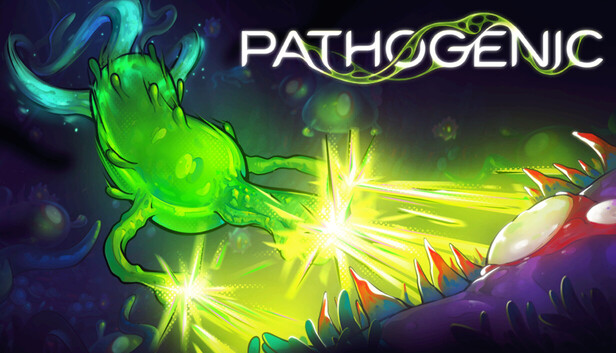
In Pathogenic, you are the disease. Experience a visceral 2D roguelike twin-stick shooter where you play as a lone parasite fighting a desperate war against the immune system. Your goal is simple: infect and conquer your human host. To survive, you must adapt. Hunt down enemy cells, rip out their organelles, and graft them onto your own body. Evolve from a simple cell into a complex engine of destruction. Create powerful, game-breaking builds and become the ultimate pathogen.
CREATE YOUR OWN PATHOGEN Loot, graft, and assemble your parasite from dozens of unique organelles. Combine flagella for movement, mitochondria for power, secretors for ranged attacks, and spikes for melee combat. Chain organelle effects and discover powerful synergies to build an unstoppable disease vector.
FIGHT THE IMMUNE SYSTEM Battle a diverse roster of enemies, from basic immune cells like macrophages and T cells to rival parasites such as tapeworms or protozoa. Formidable bosses are lurking deep within the host’s organs.
METAPROGRESSION Collect plasmid fragments to permanently upgrade your parasite’s plasmid tree between runs. Each parasite will have it’s own upgrade tree allowing for a range of builds to suit your preferred playstyle.
EXPLORE A MICROSCOPIC WORLD Navigate the procedurally generated organic landscape of the human body. Travel through distinct biomes like the branching pathways of the lungs, the pulsating chambers of the heart, and the complex neural network of the brain..
Screenshots
SystemRequirements
Minimum Requires a 64-bit processor and operating system
OS: Windows 10 64-bit
Processor: Intel Core i5-6500 / AMD Ryzen 3 1200 or equivalent
Memory: 8 GB RAM
Graphics: GeForce GTX 1050 / Radeon RX 560
DirectX: Version 12
Storage: 2 GB available space
Support the game developers by purchasing the game on Steam
InstallationGuide
TurnOff Your Antivirus Before Installing Any Game
1 :: Download Game 2 :: Extract Game 3 :: Launch The Game 4 :: Have Fun 🙂
As the world advances toward modern, innovative technologies, public facility design has adapted by using digital tools such as Computer-Aided Design (CAD) and Building Information Modeling (BIM). Architectural design forms have now adapted and rely on these tools to manage projects. CAD is used for precise drawing and drafting, while BIM is used to integrate models and show the structure, systems, and performance throughout the building’s lifespan.
These tools allow the architects and engineers to collaborate and coordinate more effectively. Using digital tools can detect possible errors and clashes and efficiently create safe spaces to serve the public. Handling tight deadlines and project demands can be a lot easier and more convenient with these advanced tools. Through this, efficient and effective collaboration can be done across the management. Cad Crowd connects businesses to screened professionals who can help them adapt to digital tools, utilizing CAD and BIM services for complex public facility projects, producing a more reliable outcome.
Since public facilities have, most of the time, involved larger footprints and multiple stakeholders, they are subject to stricter regulatory requirements than other commercialized buildings. To ensure compliance, architects consider the relevant building codes and standards, structural requirements, and sustainability performance. Efficient operations are also considered. To manage all this, CAD and BIM were used to handle all the time-consuming methods. It was with these digital tools that helped streamline workflow and processes, ensuring accuracy was maintained throughout the whole project documentation and design process.
Understanding the Role of CAD in Architectural Design
Computer-Aided Design is widely known and used in architecture and engineering technology. Designers and drafters use this software to create precise 2D drawings reflecting all architectural and structural plans, ensuring that the dimensions are precise and fully aligned with the technical details of the project. The drawings made in CAD often served as the main reference for the project team and consultants as a blueprint of the project. It guides them throughout the project duration.
How BIM expands the capabilities of CAD
Since CAD is more focused on 2D drafting and focuses on the geometric side, it is Building Information Modeling that shows the detailed composition of the building. It shows the building’s walls, beams, and mechanical systems. It also gives data about the materials. All the data for the whole project lifecycle is in there, and this gives the stakeholders, especially the architects, the capability to assess and evaluate the project performance. BIM also helps detect and resolve potential conflicts and clashes across multiple systems, and simulate the construction process before construction begins.
There are multiple disciplines working on public facility projects. This involves scopes such as architecture, structural, mechanical, electrical, and plumbing design. Since it’s multidisciplinary, it needs a systematized software to see conflicts, if any. CAD and BIM software enable teams to collaborate more efficiently and update in real time. This promotes seamless communication across the teams and in different project stages. Because of this, each project member can address issues easily and communicate with other responsible team members to raise them and discuss their resolution.
Supporting data-driven design decisions
BIM can store and analyze project data. It is one of its advantageous attributes. From it, the architects can assess the project’s performance, spatial efficiency, and the building’s interaction during simulation. Public facilities can use this to optimize building layouts and improve overall sustainability performance. Having collective data helps make a sound decision and ensures confidence in numbers.
Enhancing visualization for stakeholders
To get approvals from multiple sectors, such as government agencies and project investors, the public facilities project uses CAD and BIM digital software to generate detailed visualizations, so it can help the stakeholders see what the project will look like and how it will function in the environment. It helps them understand everything that goes into it through walkthroughs and simulations, making it a lot easier to communicate their own vision to the project. This way, clear communication can be ensured, decision-makers can make sound judgments, and feedback can be provided before work on-site begins.
In large-scale projects, conflicts in multiple systems can be overlooked. BIM addresses this and allows the team members to detect and identify potential clashes and conflicts in the building system. Early detection saves everyone from costly rework and delayed schedules. This is important, especially for projects with complex infrastructure and strict deadlines. This is essential to stick to the budget and the deadline set.
Improving construction planning and coordination
Project planning and coordination are important in the project since it involves a team of people. There are instances wherein there could be confusion about the scopes and misunderstandings. Proper coordination ensures that everything is clear across the team and that communication is regular and in real time. BIM integrates a construction scheduling tool to simulate the timeframe of project construction design. This allows the team to visualize and helps them plan, so they can discuss where they can improve their scopes. By using this, the team members and contractors can work even more productively.
Supporting sustainable building practices
Sustainability is now a higher priority in project design. The government and institutions are more aligned with meeting energy efficiency and environmental sustainability standards. To address this, architects use BIM software to simulate energy consumption, daylight exposure, and how materials used impact the environment. This way, there’s no need to wait for the project to be built before seeing how the design impacts the environment. It allows early adjustment if needed before construction begins.
Improving facility lifecycle management
Not only is BIM useful during the construction project, but it also extends afterward. Once the building is constructed, it still needs to be maintained and improved. There could be a request for renovation or facility management. To improve and simplify the workflow, instead of browsing through a lot of technical plans and drawings, they can review the BIM models and find the information they need in the model. It provides detailed access to all building components and systems, enabling prompt responses to operational needs.
In construction, documentation is important to achieve project success. Having accurate, systematic documentation helps track all correspondence and instructions during the construction stage. Using CAD and BIM aids in accurate documentation. CAD is used in technical drawings, and BIM can provide all the information documented in the building. It ensures that there is consistency in the information, from all the drawings to other documents, and it gets updated automatically.
Managing large volumes of project information
Since public facility projects require extensive documentation, including technical drawings, structural analysis, regulatory requirements, submittals, and other technical specifications. Digital platforms such as BIM help streamline organizing the project data and provide access to updated documents. This ensures a seamless workflow, reducing the risk of using outdated information.
Facilitating compliance with building regulations
Strict compliance with building regulations has to be followed, especially for public facilities projects. It must be ensured that the buildings to be constructed are compliant with safety and functional standards. The engineers and architects have to review thoroughly before construction. CAD and BIM make sure that the building layouts are reviewed directly in the model. This helps with early fixes and avoids delays.
Improving design consistency across multiple projects
Most of the architectural firmshave multiple projects at the same time, and being consistent in design and documentation can be challenging in times like these, to keep track of the project. Having a standardized approach and documentation in the design process ensures efficiency while maintaining work quality. It is helpful to have systematized and standardized processes to be consistent with the other projects. CAD and BIM systems store information to be used in future projects, and this can help save time and streamline workflows.
Supporting modular and prefabricated construction
Prefabricated building components are used even more in times of increased demand, as they help reduce project delays and improve project quality. BIM can provide more detailed information about each component’s dimensions, connections, and installation requirements. This is helpful in prefabricated construction as it supports manufacturers and contractors to fit properly during the assembly of elements.
Enabling better cost estimation and budget control
Reliable budget management is critical for public facilities projects for easier funding approval. BIM helps provide quantity takeoffs and cost estimates. This helps in cross-checking quantities, keeps track of materials, and assesses alternatives if needed. This also helps stakeholders to review quantities and costs, to conduct further benchmarking and reporting.
Leveraging freelance CAD and BIM specialists
When architectural firms are busy, managing them can be challenging, especially for large-scale firms. One way to ease the load is to hire freelancers who are specialized in CAD and BIM. This helps the firms focus more on decision-making and rely on hired specialists for the technical tasks. This approach helps maximize resources in a certain timeframe, while ensuring quality is not compromised.
Strengthening design coordination for complex infrastructure
Integrating a complex system into a project can be challenging, especially when done through traditional manual drawings. Some errors won’t be detected easily, especially if there are multiple systems involved. Since public facilities often rely on complex systems, coordinating through BIM is an efficient way for architects, engineers, and other stakeholders to collaborate and discuss how each component fits properly before construction. It allows for discussing compatibility and reducing overlapping or duplication of elements.
Improving safety planning in public buildings
One of the priorities in building construction is safety. Since public facilities cater to a large number of occupants, they have to integrate careful safety planning into their systems. It needs to have clear evacuation routes and fire protection systems. It ensures there’s safe movement throughout the building. This can be reviewed and redesigned if needed by doing a simulation in BIM, to check the routes and assess if it is indeed safe to use.
Enhancing accessibility and inclusive design
Since public facilities are designed to be inclusive for all, accessibility and diversity in mobility and physical needs have to be considered. This means designing ramps, corridors, entrances, and restrooms that cater to everyone while being safe and comfortable to use. To ensure that it was designed correctly and efficiently, it can be visualized in the digital platforms to verify the circulation paths and ensure that it remains safe and comfortable to use.
Reducing construction errors and rework
There are errors in the design phases that are hard to reverse and adjust during the construction phase. These errors can be costly and lead to additional schedule delays. Detecting it early can prevent rework and save significant time and money. CAD and BIM make it possible to foresee potential clashes so they can be addressed early. When adjusted, the model will update automatically, and the changes will be reflected in real time. This makes it a reliable and accurate model to present project information.
There are projects that usually have a lot of design revisions before final design approval. If done traditionally manually, it could be time-consuming. CAD and BIM make it possible to do revisions without all the stressful do-overs. It has layouts that can be saved and re-adjusted, with options to choose from so that there won’t be a lot of redraws. It can readjust the building’s attributes while keeping track of all the other versions for documentation.
Supporting urban planning and site integration
Public facilities are part of an urban environment, so it is only important to include the environment in planning. Designers have to ensure the surrounding environment is incorporated into the context and visualize how it fits within it. CAD and BIM help simulate how a project or building interacts with its neighborhood. It shows how close it is to other facilities or how traffic flows in it. It gives life to a building, making sure that it complements the surrounding urban conditions.
Enabling better communication with contractors
Smooth communication between the contractors and designers is key to project success. It ensures proper deliberation, reducing the risk of rework due to misunderstandings of the technical details of drawings or processes. Digital tools can help to visualize clearly what is expected to be done on site to prevent any more assumptions and errors. This will give them a reference and equip them to resolve issues that may arise later on.
Improving project documentation and record keeping
Digital tools have the capability to document all the information deemed necessary. It maintained organized archives of drawings, specifications, models, and other technical documents. Having an organized archive makes it easier to track and helps future projects look back on the project. It ensures that the documents can be accessible even after years.
The designers can explore a lot more complex ideas and concepts by using digital platforms. This allows them to be free to be creative without the struggle of creating manual drawings. Some layouts and material preferences can also be tested and simulated through CAD and BIM, making it a safe experimental medium to develop innovative ideas, while not compromising functionality.
Enhancing project transparency for public stakeholders
Some projects require reporting and documentation processto be presented to stakeholders. Public facilities are often required to do so by government agents and institutions. This is to ensure that there’s transparency in what’s being built. CAD and BIM help generate visualizations for stakeholders to see how it will be built and provide the necessary information for clarity. It helps strengthen the trust and adds confidence.
Strengthening quality control in design development
Quality control is important during the design stage to ensure that the structure will last for many years. There could be mistakes and errors in the design stage that may be irreversible and hard to resolve later on. That is why early detection is critical, and quality control should be integrated into the system. In BIM, a review of the building elements can be done. An analysis of the design elements and whether they meet the standards can be conducted to determine if it is compliant. This ensures that the model can be functional and durable even after decades.
Collaborating with global talent through Cad Crowd
Hiring freelancers is one thing, but ensuring that they are what you need can be a guesswork. Cad Crowd provides a reliable platform that helps firms connect with professional CAD designers and BIM modelers. These experts have what it takes to help the team move more efficiently and significantly enhance the firm’s ability to handle public facility projects.
Public facilities cater to and serve a large number of people and are subject to a strict regulatory process. It requires careful work management and extensive documentation. Collaboration across multiple disciplines should be smooth and efficient. Using CAD and BIM digital platforms has greatly improved the work processes, making these challenges tolerable. It supports technical aspects when it comes to the precision and accuracy of data and drawings, and it provides extensive documentation of the information. These tools help deliver outcomes without compromising safety.
As the world transitions to a more innovative approach, architectural firms grow and adapt to large-scale complexity, and many businesses rely on specialized professionals to support their design workflows. Cad Crowd makes it easier to find experts who can deliver reliable results tailored for CAD and BIM needs and requirements. Cad Crowd can help in finding the right expert for your team to ensure the success of your next public facility design project.
How Cad Crowd can help
Hopefully, this article gave you valuable insights about architectural projects. However, if you still have no idea how to present your next commercial designs in the best light possible, don’t hesitate to contact Cad Crowd. We can help you search for the right solutions that will match or even go beyond your expectations. Contact us now for a free quote!
MacKenzie Brown is the founder and CEO of Cad Crowd. With over 18 years of experience in launching and scaling platforms specializing in CAD services, product design, manufacturing, hardware, and software development, MacKenzie is a recognized authority in the engineering industry. Under his leadership, Cad Crowd serves esteemed clients like NASA, JPL, the U.S. Navy, and Fortune 500 companies, empowering innovators with access to high-quality design and engineering talent.
Microsoft’s gaming division is in turmoil amid a reorganization of Xbox that includes plans to cut 3,200 jobs and focus more on its highest-profile properties. Bethesda Game Studios shed some more light on what the latter entails as it shared a roadmap of what’s ahead for its franchises, including Fallout.
Bethesda said it’s in preproduction on Fallout 5, while remasters of Fallout 3 and Fallout: New Vegas are in the works. It also confirmed that Obsidian is working on its own Fallout game. A recent report claimed that was happening after Xbox canceled a sequel to Avowed and other Obsidian projects.
Along with those remasters and new games, Bethesda is still updating Fallout 76. It said a major expansion is lined up for next year that acts as a prequel to Fallout 3, perhaps setting up the release of the remastered version of that game. New seasons for Fallout Shelter are on the way too, while an unscripted TV show based on the mobile game is in the pipeline.
The Elder Scrolls VI is where most of Bethesda’s focus currently lies, though. “The Elder Scrolls VI is our primary development focus today, with the majority of our team currently working on the next chapter of the franchise,” it said. “With over 65 million copies sold, players are still exploring Skyrim 15 years later, but we know it’s been a very long wait for the sequel.” Then-Xbox chief Phil Spencer said in 2023 that The Elder Scrolls VI was still “five-plus years away,” so don’t expect to play it until at least 2028.
Even with all of these other projects in development, Bethesda isn’t leaving Starfield behind. It considers that to still be “an important part of our future.” Bethesda plans to deploy “new stories, targeted gameplay improvements and additional updates, while preparing for the launch of new Starborn content next year.”
Bethesda’s Todd Howard told Bloomberg he would prefer not to discuss the developer’s projects until they’re almost ready for release. Still, Bethesda revealed the roadmap to give fans a clearer picture of what’s ahead. “We do realize we need to find a way to say a bit more so that our fans understand what we’re doing and why, while also protecting that moment when you really see the game and you press play,” Howard said.
Bethesda laid off dozens of workers as part of the Xbox reorganization, while The Elder Scrolls Online developer ZeniMax Online Studios lost 213 employees at its Maryland location. The latter is now said to have 186 staff — around 40 percent of the workers it had in early 2025. ZeniMax Online will continue to work on its game while collaborating with Bethesda on other Elder Scrolls projects.
Xbox cut 1,600 jobs in early July and announced plans to shed another 1,600 or so over the next year. Video game unions in the US and Canada this week accused Microsoft of unfair labor practices, such as bad faith bargaining and failing to provide workers with notice. Hundreds of workers protested the layoffs at various studio locations this week, including several of Bethesda’s.
For every new content creator or person making videos that will require them to either be on-camera or recorded on audio, the is one unifying and horrifying point that we all go through.
I do NOT look like that or I do NOT sound like that or… both!
There are specific reasons that occurs and a large part of coming to grips with it is understanding why that happens.
Fair warning though, you are still going to look and sound like that only now you wont have any mystery attached to it!
How to Add an Audio Track to a Video Clip in PowerDirector
Very often when you are navigating around the internet trying to get hold of video and audio assets on the cheap… like me, you often don’t get exactly what you want.
Sometimes you get the right video but no audio ot the right audio but no video.
That in itself is not a huge problem because you can always find something appropriate to complete the picture so to speak.
The real problem arises when you try to manipulate one or the other of these recently matched assets or assets on other parts of the timeline.
These assets tend to behave individually still and often it can all go a bit wacky with stuff moving around when it shouldn’t!
To stop this there is usually a feature in most video editing software that groups or locks those audio and video assets together so that when dealing with them they behave as one entity.
Here’s a look at what I am talking about in PowerDirector and just be aware that other video editors will have different terminology for that same feature.
What (else!) is New in Filmora 15.6? 3 New Features That Improve Your Workflow
This video and the one below that cover a few of the latest updates to Filmora 15.
From my perspective in using the software I am happy to see they have eased back on the whole A.I. thing and refocused on editing features.
The stuff they are coming up with in the main are what it says on the box, which are tools and improvements to speed up and improve workflow.
Filmora 15 Audio Gain Loudness Normalization – Fix Audio in Seconds
This is an interesting tutorial from the folks at Filmora covering the new audio tools available in Filmora 15.
Now strictly speaking these are not totally new tools but they have been updated in a way that makes them far more useful and easy to use.
By the way, yes the voiceover in the video is A.I generated because the guy that made the video doesn’t speak English, so I think we can forgive that!
The problem being addressed here is that often you may have video and audio assets on the timeline that have noticeably different volume levels.
For anyone watching a video that has all that going on, it is very distracting and will kill watch-time in a flash.
Solving that problem is the past would lead to a seemingly endless and frustratingly circular process of individually adjusting clips levels to match.
Once you had all that handled then then you would upload to YouTube or whatever and find that the whole project was either too loud or too soft compared to other videos and again, watch-time dies!
The new tools in Filmora handle all of that by making the clip level normalization and gain work together seamlessly and then have the project level normalization and going do the same.
On top of that it now has clearly marked common normalization levels for services like YouTube (-14Lufs) or Podcasts (-16Lufs).
How to Create a Scanner Effect Unpacking – Movavi
This is just a pretty simple ideas tutorial form the folks at Movavi.
I don’t think any of us are going to be having too much trouble using green screen these days.
What was once a wildly exotic effect only the really cool kids had access to is now so mainstream it is borderline boring!
So this tutorial is not so much how to use green screen but more what to use it on for an effects.
Make a Map Like the New York Times for FREE
Well maybe not necessarily a map like the New York Times but a map anyway.
Probably about once per years I get some kind of project that requires I use, create or do something with a map.
Inevitably that results in me faffing about on the interwebs trying to find resources to do that for free because HEY! I’m not paying for something I only use once a year!
So, you can take the tutorial below at face value and learn how to do what it says or, follow along and steal the location of all the free assets and services in there. Its up to you!
Stuck on YouTube? Ask Me Anything LIVE
Derral Eves has over half a million subscribers on YouTube and the crazy part is that he doesn’t actually target his own channel as his business model!
His own channel is sort of a side gig that comes as a result of the consulting work he does for other channels.
So, why is this even relevant? Well I’m glad you asked!
Derral is one of my absolute go to guys for YouTube content and channel strategies so if you want to expand into that space, this is one of the guys to listen to.
Transform Phone Recordings Into Studio Quality
I have generally liked audio tutorials Mike Russell has put out over the years but for the past your or so things have changed a little.
A lot of his stuff has become shamelessly biased towards whatever product or service he happens to be promoting at the time.
I can understand the need to do this cos lets face it, that rent aint gonna pay itself!
However I also think that only presenting one alternative for a job that many can do is pushing it all a little too far.
So the video below is a good tutorial for handling a phone as an audio recording device and even the workflow suggestion is good as well.
However the final step of taking it to an A.I service is definitely not restricted to Riverside.FM!
My workflow is somewhat similar and goes like this:
Record as best I can using the tips Mike mentions in the video and the best set up I can pull together at the time.
Pull the video and audio into whatever video editor I am using and apply and basic correction that I can.
For example I can sample the background noise and just about every video editor these days has the ability to remove it reasonably well.
I then apply a little compression and normalization to get the levels even.
If need I also go for some de-reverb to get any echoey room sound out.
All the above is done on a best efforts basis on the understanding that the better I can get the audio myself, the better an A.I. service is going to make it sound.
Then when I have done whatever I can I use Adobe Podcast or Filmora 15 or PowerDirector or Movavi or any one of a bunch of A.I. engines that can handle audio.
Key Takeaways
Many content creators feel they don’t look or sound like themselves on camera, which is a common struggle.
Video editing software like PowerDirector offers features to group or lock audio and video assets, ensuring smooth editing.
Filmora 15 enhances workflow with updated audio gain and loudness normalization tools, making it easier to manage audio levels.
Tutorials covering various aspects of video editing, including creating effects and improving audio quality from phone recordings.
Derral Eves provides valuable insights for YouTube strategies, helping creators succeed on the platform.
(Image credit: Nicholas Sutrich / Android Central)
Android Central Labs is a weekly column devoted to deep dives, experiments, and a focused look into the tech you use. It covers phones, tablets, and everything in between.
OnePlus announced earlier this week that it’s no longer launching new phones in the U.S. and Europe. Current devices will remain supported, but the company is effectively exiting these markets, and for people like me, that’s a problem.
The OnePlus 13 remains the only smartphone I’ve ever given a 5-out-of-5 score to. Looking back at the early 2025 launch, it’s clear this was the company’s last-ditch effort to impress would-be buyers, and I know it would have worked if OnePlus had a better presence with U.S. carriers. The fact of the matter is that smartphones — especially flagships — live or die based on carrier availability, and OnePlus could be found in exactly zero U.S. carrier stores.
This tremendous misstep is but one of many mistakes the company made over the years, but it was likely the single largest problem that simply couldn’t be overcome in a very broken retail system. Losing OnePlus particularly sucks in the U.S. because no other smartphone companies in the country push specs the way OnePlus did, and no other flagship phones here have flicker-free displays.
Latest Videos From
That’s not to say some other phones globally don’t have even better displays than the OnePlus 13 or 15, but the company’s models have been the only choice for PWM-sensitive people in the U.S. since the OnePlus 12 debuted, and now it’s difficult to know where these folks will turn.
I’ve been writing about PWM dimming and its negative effects on people since I became PWM-sensitive in early 2023. My sensitivity stemmed from using the Galaxy Z Fold 4 too often in dim light (I regularly read in bed at night on the phone), and it took me months to learn that PWM dimming was the cause of the increasingly debilitating headaches I was getting.
OnePlus and Motorola were among the first companies to make phones I could comfortably use again, and it was amazing to me that these companies were paying attention to a problem that the Big Three (Apple, Samsung, Google) seemed unaware of. Honor has also become a favorite among the PWM-sensitive community over the years, but the company mainly operates in Europe rather than North America.
(Image credit: Nicholas Sutrich / Android Central)
Now that OnePlus is exiting the U.S. market, the only companies left making major phones with healthier dimming options are Motorola and Nothing. Smaller vendors, like TCL and Nuu, also make phones with healthier displays, but those companies typically target more budget-friendly releases, not the spec-boundary-pushing flagships that OnePlus has long made.
Get the latest news from Android Central, your trusted companion in the world of Android
Motorola’s last traditional flagship phone in the U.S. was the Edge Plus 2023, and while the company has pushed its folding phone lines with the Razr Ultra and Razr Fold since then, there’s no sign of an iPhone, Galaxy S Ultra, or Pixel competitor from them. Nothing also makes some pretty great phones, but even the company’s “flagship” phone is not a true flagship.
The only real solution for flicker-sensitive people is to either choose an under-specced phone or to import something, and both options have their downsides. Oppo told Android Central that Realme is replacing OnePlus in the global market but didn’t speak specifically to U.S. availability. And thus remains the problem of what to do.
My recommendation right now is to buy whatever is available from OnePlus until it’s no longer available. The company is still offering the promised seven years of support for the OnePlus 13 and 15, and the OnePlus 15R has the best OLED display for flicker-sensitive people I’ve seen to date. You’ll also still get warranty support if something goes wrong.
But the future looks murky at best. No companies based in China want to enter the tumultuous U.S. market because of politics, and, aside from UK-based Nothing, no new brands have entered the market in a while anyway.
Unless Samsung decides that it all of a sudden cares about our eye health, or vendors like Google and Apple start adopting displays with better eye-care solutions, the only real solution is to import and hope the phone works on your carrier of choice, and that’s a pretty lousy place to be in.