Shein, the one-time cheap clothing colossus, has announced its plans for an IPO. If you could look at it from the vantage point of a few years ago, the valuation Shein is currently shooting for is, well, not great.
The Wall Street Journal wrote in 2022, back when Shein was on top of the world, that it had just received a funding round of $1-2 billion that placed its value at $100 billion. According to Reuters yesterday, its latest plans value it at a little over a quarter of that: $27 billion.
But then Trump’s trade policies came along, in particular the 2025 abolition of the de minimis tariff exemption that took Shein’s prices from cheap to so-cheap-you-can’t-resist.
Reuters says Shein pursued public listings on the NYSE and the London Stock Exchange, before finally settling on Hong Kong, where trading will debut at the start of next month.
You’ve boiled the Spider Crab and turned the Giant Piranha into fish sticks, but How to Fish amps up the difficulty with the Pufferfish boss battle. The bloated, buoy-like fish took me quite a few tries in both solo and co-op saves, but I finally skewered it with a few SMG upgrades and plenty of patience. Lots of patience.
Find endangered fish to exchange for Pufferfish bait
A Bowlfish. (Image credit: Dazed Games)
The third How to Fish island gives you a few quest options, but start by speaking to the swimmer in yellow floaties to begin the quest for Pufferfish bait. The swimmer asks for help slaying a scary fish and has spare snacks you can use as bait, though he won’t hand them over until you promise something in return.
Why do we need to pay him back for tools to complete a task he asked us to do? Who knows, but you’ll have to find an endangered creature before he’ll agree to hand over the snacks.
Buy the new Fishing Rod ($3) and Standard Lure ($15)
Use the Standard Lure to fish for endangered creatures
Do not sell your fish before examining them with the F key
Feed the fish labeled ‘endangered creature’ to the swimmer
He’ll give you the Carrot Bait. Use it to reel in the Pufferfish
Pufferfish boss
The Pufferfish is tough, and it took me quite a few runs before I was finally able to fillet this guy. I never managed to kill it with the shotgun, and had to splurge on the SMG (with a few upgrades) to get the job done.
Tips for beating the Pufferfish
Eat enough seafood to top off your health and hunger
Buy the SMG ($650) and as many bullet upgrades as you can afford
Don’t stop moving, and keep putting as many trees between yourself and the boss as possible
Be careful not to run into its purple poison; the damage tick turns lethal fast
The Pufferfish grows in size as you hit it, but I found it easier to watch and dodge when it lost a little under half its HP
Try luring the Pufferfish around the merchant’s shop; it sometimes gets stuck cutting corners when it’s bigger
Because I can’t stress it enough: Do not stop to shoot the Pufferfish. I only managed to stand still a few times when the boss got stuck on trees while trying to chase me around the shop, but you’ll want to keep running and gunning until it’s dead. Lucky players can skirt by the previous two boss fights, but if you haven’t learned to make the most of the terrain in How to Fish, you will now.
Keep up to date with the most important stories and the best deals, as picked by the PC Gamer team.
Most reasonable people would say charging for ad space on leaked footage from the most anticipated media launch of all time warrants a pretty strong response from the IP holder, but when it comes to Rockstar’s years-long predicament with GTA 6 leaks, unfortunately there is reliable reporting that suggests that response disproportionately impacts employees with no involvement in the leaks.
According to Bloomberg’s Jason Schreier, Rockstar implemented tight security measures including a return-to-office mandate for all employees following the explosive GTA 6 leak from 2022, which added salt to the wound when more leaks surfaced last week. The new leaker causing everyone at Rockstar to lose sleep currently has yet to be identified and has threatened substantial story spoilers. Rockstar has yet to respond publicly but has pursued aggressive legal action, as is its right, in the view of former Rockstar technical lead Obbe Vermeij, who was with Rockstar from 1995 to 2009.
Over on Twitter, Vermeij used his insights as a former lead at the company to say, “[Rockstar New York] overreacts a bit at times” before adding, “But it is their job to try to stop these kind of leaks.”
“It was a nightmare for management [Rockstar’s New York offices] but didn’t affect us [Rockstar North] much. The current leaks are far less consequential than [Hot Coffee] was. It looks like GTA 6 will be phenomenal and sell for the next 15 years or so. The leaks are just a tiny blip.”
A tiny blip feels a little reductive considering gameplay and map details have been revealed against Rockstar’s will and now story spoilers are on the table, but at the end of the day, GTA is going to GTA and there’s little that could stop GTA 6 from being the biggest video game launch of all time.
Zillow and Redfin have reached a settlement with the Federal Trade Commission (FTC) and five states, ending a legal fight over a 2025 partnership that the FTC claimed hurt competition in the rental-listing market. The settlement was announced on Monday, just as the case was scheduled to head toward trial this morning.
The case stems from a deal announced last year in which Redfin agreed to display Zillow’s rental listings on its websites rather than compete directly with Zillow for rental advertisers. The arrangement could have kept Redfin out of the rental advertising business for as long as nine years. Redfin owns Rent.com and ApartmentGuide.com, two major rental-listing platforms.
According to the FTC and attorneys general from Arizona, Connecticut, New York, Virginia, and Washington, Zillow agreed to pay Redfin $100 million to keep Redfin from competing with Zillow.
The companies defended the partnership as a way to give renters access to a larger pool of listings. The FTC, however, argued that Zillow was paying one of its largest competitors to stop competing, potentially allowing the company to charge higher prices and provide less favorable terms to property managers. It could have also reduced the quality of rental listings available to consumers.
Under the proposed settlement, Redfin will be required to reenter the rental advertising business. The order also removes restrictions that previously limited Redfin’s ability to compete independently for property-management customers.
The settlement doesn’t completely end the relationship between the two companies. Redfin can continue displaying Zillow’s rental listings, but it will once again be able to compete for its own customers. Redfin will be able to sell advertising, display listings from its own clients, and pursue new rental customers without being required to share sensitive business information with Zillow.
The Zillow-Redfin case comes just months after the DOJ’s settlement with Ticketmaster, another antitrust case involving allegations that a dominant company used its power to suppress competition. However, 26 of the 30 state attorneys general who initially sued Live Nation alongside the DOJ chose to continue pursuing the case and won their lawsuit in April.
When you purchase through links in our articles, we may earn a small commission. This doesn’t affect our editorial independence.
Talk about sticker shock. Amazon just raised the prices of some of its most popular electronics — including Kindles, Echos, Fire TVs and more — by up to 60%.
You can thank the so-called RAMageddon for the across-the-board hikes, according to a company spokesperson, who blamed the rising prices on “significant increases in memory and storage component costs.”
Now the buck is being passed to consumers buying e-readers, smart home products and more. Amazon’s largest price hikes affected its most inexpensive electronics, making entry-level products less affordable. The Echo Dot smart speaker jumped from $50 to $80, representing a startling 60% price increase. Other base-level products, such as the starter Kindle and Fire TV Stick HD, saw price hikes of 36% and 14%, respectively.
An Amazon spokesperson told CNET that the company is still trying to figure out more accessible pricing, but that increases were needed to account for hardware costs. “After absorbing these increases for as long as we could, we recently adjusted pricing across our product lines,” the spokesperson said.
Conspicuously missing from the recent round of price hikes were Amazon’s Ring doorbell cameras. The $220 Echo Studio smart speaker was also spared from a price increase, though almost every other Echo product saw a hike of between 10% and 60%.
Other smart home companies have struggled to keep up with rising component costs, too — which means consumers are besieged on all sides by rising consumer tech prices. Roku, a direct competitor to Amazon’s Fire TV streaming products, raised its prices by up to 60% just last month. Apple recently raised the price of its HomePod Mini smart speaker by 30%, and there are likely more price hikes on the way.
Here’s a full list of Amazon’s recent electronics price increases, by product type:
Product name
Former price
New price
Echo Dot (5th Gen)
$50
$80
Echo Spot
$80
$110
Echo Dot Max
$100
$120
Echo Show 8
$180
$200
Echo Show 11
$220
$250
Echo Show 15
$300
$350
Echo Show 21
$400
$500
Fire TV Stick HD
$35
$40
Fire TV Stick 4K Max
$60
$85
Kindle (16 GB)
$110
$150
Kindle Paperwhite (16GB)
$160
$200
Eero 7 (3-pack)
$350
$400
Eero Pro 7 (3-pack)
$700
$800
Tyler is a writer for CNET covering laptops and video games. He’s previously covered mobile devices, home energy products and broadband. He came to CNET straight out of college, where he graduated from Seton Hall with a bachelor’s degree in journalism. When Tyler’s not asking questions or doing research for his next assignment, you can find him in his home state of New Jersey, kicking back with a bagel and watching an action flick or playing a new video game.
Your business portfolio has a lot to do with marketing, or how effective your company is at attracting potential clients and converting them into paying customers. A portfolio is more than just a sample of your previous projects. It’s how you boast about your technical skills, achievements, expertise, and industry insights at large. And in the real estate business in particular, nothing beats 3D renderings when it comes to showcasing all those things that you’re capable of.
Because CGI is an all-digital format made from a collection of 3D assets rendered into an image or animation design services, it’s versatile in almost every way. No matter how complex the visualization might be, Cad Crowd is only too pleased to help you connect with the world’s most talented digital artists specializing in architectural visualization. With a guarantee of accuracy and an option of a managed services package, the freelancing platform is your one-stop shop for all architectural visualization projects.
In the old days, real estate developers and investors relied on photographs and video footage of past projects to build their portfolios. Many of them also include images of scale models to represent ideas and concepts. Photographs and physical models are still used today, but they’re becoming less popular as photorealistic CGI proliferates, which admittedly runs circles around conventional media thanks to its numerous advantages. Chief among these is its ability to create precise digital twins of finished structures from blueprints and to generate visualizations of unfinished (and sometimes even entirely hypothetical) projects.
Do you want to showcase the biggest apartment complex you’ve ever developed? Take the blueprint and model everything in 3D on a computer screen for a guaranteed, maxed-out visualization.
Animated visualization? Just say you want it in 4K or higher.
Need to convince lenders to invest in the next residential project? Show them an aerial view of the finished development, even though the construction site is still empty land.
What about exposing the installation of underground utilities in a big project? There’s, of course, 3D CAD software for that.
Displaying different interior style options for the same room? Not a problem at all and no staging necessary.
Detailed visualizations for a complex industrial facility? You bet.
And then there’s the question of revision. What if the buyers, investors, or permit issuers don’t like what they see in the rendering and want to have changes made to the design? Not at all a big deal. Thanks to the “virtual” nature of 3D renderings firm, any design revision, big or small, happens on a computer screen. In fact, the biggest advantage of Archviz is that it affords the stakeholders a thorough inspection of a project before it actually happens, giving them the opportunity to notice mistakes or design flaws very early on. If there’s a thing or two about the plan that just doesn’t look right, you can have it fixed right away. Well, it may take a week or so to get the new version done, perhaps more if it’s a larger project, but still much more practical than having to revise anything during construction.
3D rendering also plays an important role in the review process with the local authorities. The building department won’t care much about photorealism as they need the hard numbers and specs more than anything else to issue permits, but the zoning board and the planning commissions can certainly use Archviz as references when considering approval.
Say you’re developing a multifamily residential project worth a few million dollars in the middle of a city. Because the complex is large enough that the finished building will inevitably affect the neighborhood’s outlook, the zoning board and the planning commission have to make their decision based on the area’s context. At the same time, a lender refuses to release the funds until you have visual proof. Let’s not forget that the sales team won’t be able to open reservations without showing potential buyers what they’re depositing the money for. So, what do you do in this situation?
You have a couple of options: first, spend roughly $10,000 to hire a visualization service to create an accurate rendering. Considering the project size, it’s actually on the lower end of the fee spectrum. But for the amount of money, you solve three problems at once: getting quick approval from the public boards, securing the investment, and greenlighting the marketing campaign. Second, push the project forward without a photorealistic visualization services. While no one says this will fail, there are serious risks to consider here. The lack of clear visualization may cause approval delays of 2 to 6 months, not to mention hundreds of thousands of dollars in carry costs. The lender postpones the investment, and the marketing team has to start late.
Many people see the use of 3D rendering as a creative decision. But as the project grows larger and stakeholders become more meticulous in everything they do, it becomes clear that Archviz is pretty much a financial decision. And for every good developer who understands math, Archviz is never optional. It’s arguably the highest-ROI item in the early phase of the development.
A portfolio to cover all the bases
Once you have the visualization, it’s a brand-new addition to your portfolio. And of course, you can use 3D rendering and visualization services to build a larger collection of design showcases. Not only as a visual track record of completed projects, but also a testament to your architectural and engineering prowess and ingenuity.
There’s no limit to what you can build with Archviz in terms of both project size and styles: residential, commercial, industrial, municipal, fixer-upper, the lot. You get to visualize the exterior, interior, aerial view, floor plan, utility installations, and even the steel detailing, all in 3D photorealistic imagery. You name it, the professionals from Cad Crowd can do it. Be very sure to cover all of the Archviz bases. This means you need to include all the major formats, perspectives, and subject matters. At the top of the priority list should be:
Static renders for both the exterior and interior views
Visualize different architectural styles like Farmhouse, Ranch, Tudor, Georgian, Cottage, Contemporary, Bauhaus, Modernist, International, everything. Even if you’re currently focusing on specific project sizes (for example, small residential or commercial buildings), there’s nothing wrong with venturing into new challenges when the opportunity knocks. Who knows? Maybe some clients want you to build mansions for them.
3D floor plan
Unlike a typical room rendering, a 3D floor plan design with an isometric view covers all of the interior layout. It’s like seeing a house without a roof from the top. A floor plan is usually not as detailed as a full-blown rendering, but it still offers enough realism to give a glimpse of the interior’s spatial relationships.
As the name suggests, it’s an animated architectural visualization that showcases the structure’s details. Think of it as a video walkthrough to make the clients feel as if they’re walking about and entering the building. Everything they see is photorealistic CGI designed to mimic the look of an actual house. An animated render can also be a flythrough. This is mostly used for an aerial view to show the clients not only the building itself, but also how it fits right into the surrounding neighborhood or environment.
Before and after
Not every client, especially in a residential project, plans to build a new house from scratch. A lot of them hire an architectural firm to do renovation and retrofitting jobs. In some way, this is how you boast about your ability to apply clever design approaches to an existing structure or a living space without tearing down the walls.
Regardless of the format or perspective, always pay close attention to the textures, materials, and lighting in the rendering. The hallmark of a high-quality visualization is a lifelike imitation of how light interacts with objects of various surface characteristics. For example, a transparent object allows all the light hitting the surface to just pass through, whereas a translucent material reflects some of the light. The reflection, in turn, moves to another direction, affects nearby surfaces, and the cycle continues. Photorealistic rendering isn’t technical drawing, as it offers very little in terms of specifications and dimensions, but it shows that you care about details.
Just about every architectural firm these days builds and uses a portfolio filled with 3D renderings as marketing material. It’s how they boast about their track records, involvement in high-profile projects, achievements, and experience. With such visuals displayed on websites and social media, Archviz is also how they try to impress and attract potential clients. Some say 3D rendering generates higher “engagement” through clicks or sharing across different platforms (something akin to a word-of-mouth marketing campaign of the old days) and improves your online presence. Both are some forms of ROI, alright, but they’re not actually the ones you care about the most. While engagement metrics and the number of followers you have are not at all meaningless, architectural firms and real estate developers alike focus on entirely different things.
You care about how quickly a project secures financing from lenders, whether the planning commission greenlights construction and when, and about pre-selling units before construction. For investors and developers, the ROI isn’t always about engagement. The actual ROI is measured in increased efficiency, reduced risk, a straightforward approval process, and units pre-sold, not likes and comments on social apps.
Typical architectural visualization costs
Service
Typical Cost (USD)
Exterior 3D render
$500–$2,500
Interior 3D render
$400–$2,000
3D floor plan
$250–$1,000
Animated walkthrough
$2,000–$10,000+
Aerial/flythrough rendering
$1,500–$8,000
Before-and-after visualization
$500–$2,500
Complete Archviz portfolio package
$5,000–$25,000+
How portfolio drives revenues
Not so long ago, you wouldn’t even dream of having a comprehensive real estate portfolio unless you had finished dozens or more projects of various styles and sizes. Well, things have come a long way in the architectural industry since then. Cad Crowd now gives you easy access to professional digital artists with proven Archviz experience from all around the world. With their 3D renderings and visualization services, you can build nothing short of an extensive portfolio and drive more of that much-needed revenue, even as you’re still scaling up the business. But how can Archviz do it? Well, that would take some explanation, but it’s actually a lot simpler than what you have in mind.
Make sales before breaking ground. Let’s think about it for a moment. Trying to convince buyers to spend hundreds of thousands, if not millions of dollars, on a real estate yet to be built is going to be an uphill battle. You might try showing them blueprints and flat floor plans, but who’s to say the technical drawings won’t dissuade them instead? For anyone who isn’t an architect or engineer, conventional construction drawings appear more like a high school geometry project than an architectural design, and this is where Archviz comes to the rescue. Photorealistic rendering shows potential buyers what the finished product will look like, giving them clear visuals of what they will receive for their money. And when they know where the money goes, you’ll have an easier time delivering a convincing case of why they need to buy now.
Secure that high-dollar investment with a few words. Say an opportunity comes and you’re on the brink of scaling up, except you need a strong backing because it’s a much bigger project than anything you’ve done before. Big money is involved, so the best approach is to secure financing from banks and other major investors. The problem is that those same investors probably hear the same sales pitches weekly. It’s the same story always. A real estate developer with some blueprints coming to them in the hope of earning enough trust and funds for a project. Blueprints and spreadsheets are rarely, if ever, convincing enough. Why not use an animated rendering, a flythrough, and a 3D floor plan instead? Archviz acts as a shortcut to convey a sense of credibility, commitment, and professionalism to investors. And if this is indeed a massive project like an industrial facility or an apartment complex, those flythrough and isometric floor plans can be the difference between walking out with a fat check or empty-handed.
Fixer-upper made safe. We’ve said earlier that “before and after” visualization also matters in a portfolio. Not every project is a ground-up construction. In fact, a definitive trait of a capable real estate developer is the ability (and willingness) to take on complex renovation projects. It’s an established fact that a fixer-upper project is often much more complicated than a fresh build. Retrofitting is equally intricate. There’s no denying that buying an old property and fixing it to be brand new is a huge part of the game. It’s the old idea of spending as little as possible to buy decades-old property, splurging a bit more on an upgrade, then selling it back for a healthy profit. The thing is, you don’t want to offer it to a buyer at a premium price tag unless you can show them (it seems like we’re repeating ourselves here) what the building will look like after the renovation. The smart move here is to make the sale before you start the actual renovation. How do you even begin to do that if you’re not using 3D rendering? And if the buyer has different design ideas, you can make changes now, when revisions are still cheap, rather than later during the construction phase.
Perception matters in businesses of all sorts, and real estate development is no different. It’s an exceedingly competitive field, and you can’t just command top-tier pricing without a portfolio to back that up. Photorealistic rendering can, of course, help you create that high-end brand image. This doesn’t mean you must post hundreds of CGIs (of high-end or luxury projects) across your social channels and pretend you’ve done all of them when, in reality, you haven’t.
Still remember about covering all the bases of Archviz? Well, whatever Archviz you use, the important thing is that you have the know-how and resources to build what you show in your portfolio. You don’t want to “pretend” to be able to complete a project that’s actually beyond your expertise. Imagine a client or an investor knocking at your door after seeing a flythrough of a high-rise architecture design in your profile. Back off a project or bite off more than you can chew. It’s not funny either way.
What kind of visualization should I use then? No one can make that decision but you. It’s your company, and you’re the best judge of what you are and aren’t capable of. But no matter how simple, complex, or high-end the architectures are, the professionals at Cad Crowd are ready to lend their CGI expertise to you. Whether you want it static, animated, or both, there’s always a talented digital artist on the platform to cater to your demands and preferences at affordable rates.
A strong portfolio starts with high-quality architectural visualization. Cad Crowd connects developers, architects, and real estate professionals with experienced Archviz specialists who create photorealistic exterior and interior renderings, 3D floor plans, animated walkthroughs, aerial views, and renovation visualizations that help showcase projects, attract investors, and win new clients. Contact Cad Crowd today for a free quote!
MacKenzie Brown is the founder and CEO of Cad Crowd. With over 18 years of experience in launching and scaling platforms specializing in CAD services, product design, manufacturing, hardware, and software development, MacKenzie is a recognized authority in the engineering industry. Under his leadership, Cad Crowd serves esteemed clients like NASA, JPL, the U.S. Navy, and Fortune 500 companies, empowering innovators with access to high-quality design and engineering talent.
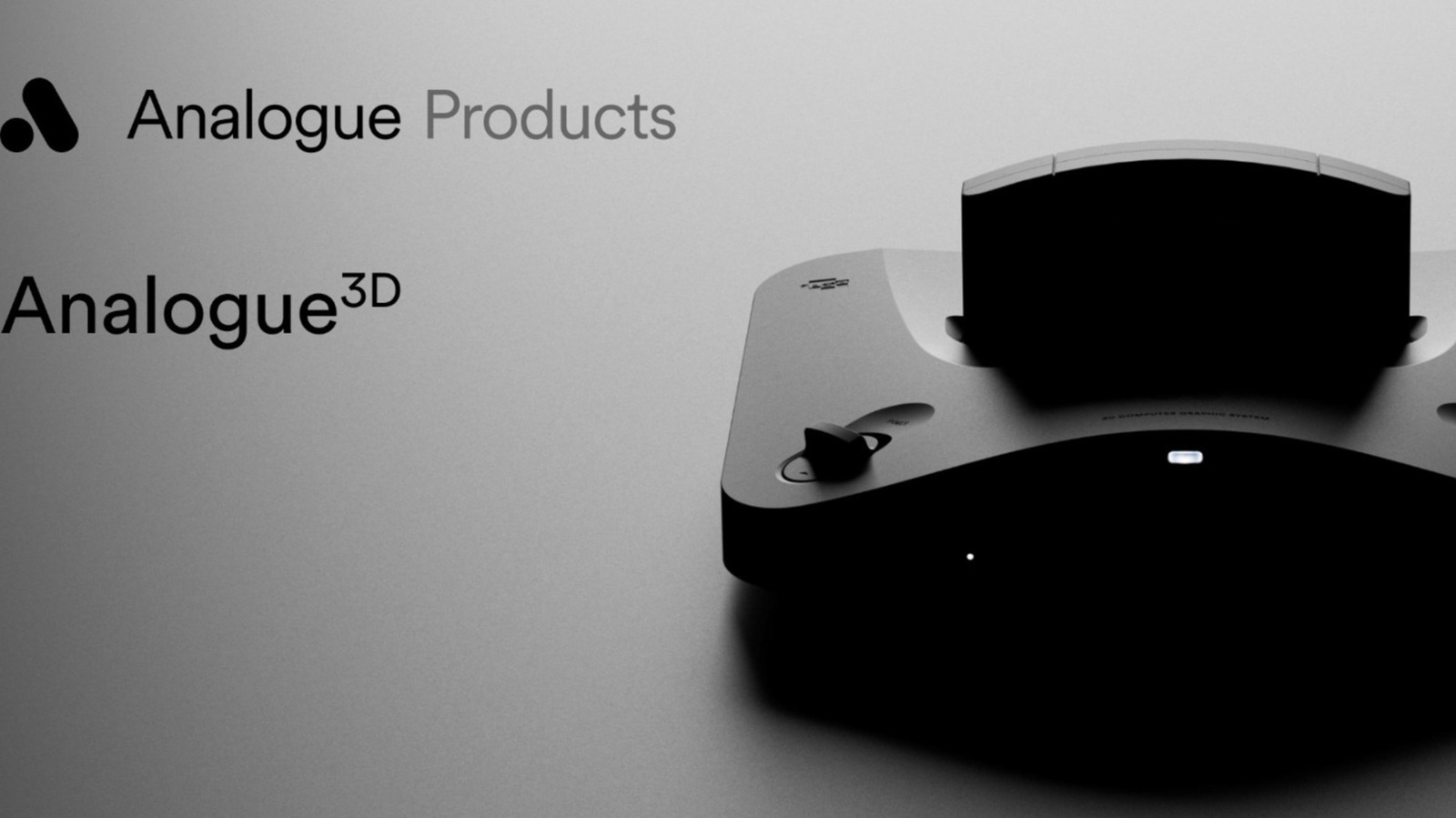
The Analogue 3D does a great job at upscaling old N64 games, with a few caveats.
Marketing is almost always a tad disingenuous, and Analogue’s FPGA-based recreation of the Nintendo 64 is no exception. Words matter, and while the Analogue 3D does indeed output 4K video, it’s not magically turning retro games into native 4K creations. The console’s HDMI signal can reach 3,840 x 2,160 pixels on a compatible TV, while most original N64 games were rendered at significantly lower resolutions, commonly around 320 x 240, with some reaching 640 x 480.
In terms of literal output resolution, the Analogue 3D is a 4K console, but it’s not capable of adding detailed textures, geometry or animation that developers couldn’t cram into a mid-90s cartridge. A modern remake of Super Mario 64 would be quite different, though the Analogue 3D is pretty good at eliminating the N64’s famously blurry textures, distance fog and uneven frame rates. The console also does far more than your basic upscaling, and what it does do definitely separates it from the pack.
What Analogue is presenting is a faithful, better-looking version of the original experience for those of us ready to jump into our mental time machines and head back to an era of landmark hardware and couch co-op. Its 4K HDMI output and customizable Original Display Modes are designed to make games look crisp and clear on today’s TVs. While its not reinventing the wheel, its much more than a standard emulator.
What the Analogue 3D’s 4k output really does
Analogue 3D utilizes a form of scaling, much like the upscaling smart TVs have used for years to fit lower-resolution video onto 4K panels. The difference here is that the Analogue 3D processes the N64’s image before it reaches the TV. It can remove the original system’s blur filter, preserve its 32-bit color, adjust texture filtering and anti-aliasing and (optionally) double a game’s horizontal resolution. The console then outputs that processed image through a 4K HDMI signal.
If you’re still pining for the vintage days of scanlines and the phosphor intensity of cathode ray displays, Analogue 3D can generate that vibe on a 65-inch, 4K screen. A stock N64 console connected to a modern TV through adapters tends to look blurry, blocky or weirdly processed, issues the Analogue 3D solves. The console also supports variable refresh rate, NTSC and PAL cartridges plus 1080p output alongside 4K.
It’s all about the presentation, and a 4K output makes the signal cleaner and more stable for current TV displays. Of course, Analogue highly recommends using only a 4K display for the best experience, especially if you want to use Original Display Modes, which will only work on a 4K display.
Is the Analogue 3D worth buying for N64 games?
William McMurray/Shutterstock
If you’re holding onto some original N64 cartridges and want a much more polished means to play them on a 4k TV, the Analogue 3D is tough to beat at $250. It’s designed for physical N64 media, works with the original controllers and accessories, is region-free and includes four controller ports. You also get Bluetooth and USB controller support. According to Analogue, it’s compatible with every original N64 game, though its official hardware is not designed to support ROM files.
With that being said, accuracy and convenience are its biggest advantages. You won’t find conventional software emulation here. The Analogue 3D uses an FPGA, a programmable chip that’s configured to reproduce the N64’s original operation, and Analogue does so without stepping on any trademark toes. It can also apply performance modes to certain games while avoiding the modern pitfalls of connecting an original N64 to a modern TV set.
If you’re in the market for a link to the past (pun very much intended), the 3D is worth its weight in N64 gold. After all, it can capably turn your 30-year-old library of Nintendo 64 cartridges into a 4k gaming blast. Its 4k output, scaling and CRT-style display modes add that extra layer of nostalgia mixed with premium visuals on a modern display. For the right buyer, that’s the entire point. It’s a highly-rated, refined way to experience N64 games as they once were, without the controversy of another remake that ultimately redefines cherished memories of the past.
The Pixel 11 Pro XL lasts longer, is faster, and has better cameras. That said, it is noticeably costlier, and a majority of its new features are around the software, most of which Google will inevitably bring to the Pixel 9 Pro XL.
Just as good
The Pixel 9 Pro XL is still a great phone in 2026. The design is similar to the 11 Pro XL, the cameras take reliable photos and videos, and it has the same software. You don’t get some of the new camera-focused software tricks, but that alone doesn’t justify an upgrade.
Google Pixel 11 Pro XL vs Pixel 9 Pro XL: Design and display
Honestly, there isn’t much of a difference between both phones. Google retained similar dimensions over the last two years, and the result is that the Pixel 9 Pro XL is nearly the same size and weight as the Pixel 11 Pro XL.
This is easily noticeable while holding the phones next to each other. If anything, I like the in-hand feel of the Pixel 9 Pro XL. Google sent me the all-matte Obsidian model of the 11 Pro XL, and it is dull. I like the matte texture, but the phone itself doesn’t look exciting, and I would’ve preferred the vibrant Canyon model instead.
The one key difference is that the camera bar on the Pixel 11 Pro XL doesn’t jut out as much, so it looks a little more elegant. Both phones have the same IP68 dust and water resistance, so they’re equally good at weathering anything to do with daily use.
Latest Videos FromAndroid Central
Interestingly, the Pixel 9 Pro XL is when we saw the Actua display tech, and Google is using a continuation of the same this year as well. The 11 Pro XL gets brighter, but the 9 Pro XL does a terrific job as well, and the panel has vibrant colors and has zero issues in outdoor use.
Google Pixel 11 Pro XL vs Pixel 9 Pro XL: Hardware and software
The Pixel 11 Pro XL runs Google’s latest 3nm Tensor G6, and it is using new cores and is noticeably better in everyday use than the Tensor G4-powered 9 Pro XL. It has better efficiency as well, and even though both phones have similarly-sized batteries, my Pixel 11 Pro XL is lasting a few hours longer on average.
Where I see the biggest advantage is Qi 2.2 integration in the Pixel 11 Pro XL; having these magnets built into the phone means I can use any Qi 2.2 charger or power bank and get 25W charging, and it genuinely makes a big difference. Look, I didn’t care about this at all in the past as wireless charging was limited to 12W — as is the case on the Pixel 9 Pro XL — but with 25W, it’s close enough to the standard 45W USB PD charging standard that I use it all the time now.
Swipe to scroll horizontally
Category
Google Pixel 11 Pro XL
Google Pixel 9 Pro XL
Operating System
Android 17, seven years of software updates
Android 17, seven years of software updates (five left)
Display
6.8-inch 120Hz LTPO OLED, 2992 x 1344, Corning Gorilla Glass Victus 2, HDR10+, 3600 nits max
6.8-inch 120Hz LTPO OLED, 2992 x 1344, Corning Gorilla Glass Victus 2, HDR10+, 3000 nits max
Chipset
Google Tensor G6, 3nm TSMC
Google Tensor G4, 4nm Samsung
RAM
12GB/16GB
16GB
Storage
256GB/512GB/1TB UFS 4.0
128GB/256GB/512GB/1TB UFS 3.1
Rear cameras
Main: New 50MP f/1.7, OIS
Tele: 48MP f/2.8, OIS, 5x zoom
Wide: 48MP f/1.7 wide-angle
Main: 50MP f/1.7, OIS
Tele: 48MP f/2.8, OIS, 5x zoom
Wide: 48MP f/1.7 wide-angle
Front camera
42MP, f/2.2
42MP, f/2.2
Battery
5115mAh
5060mAh
Charging
45W wired, PPS
25W Qi 2.2 Pixelsnap wireless
35W wired, PPS
12W Qi wireless
Connectivity
Wi-Fi 7, Bluetooth 6, NFC, Dual-band GPS, 5G mmWave (NA only), 5G Sub-6 (global), LTE
Wi-Fi 7, Bluetooth 5.3, NFC, Dual-band GPS, 5G mmWave (NA only), 5G Sub-6 (global), LTE
Ingress protection
IP68 dust and water resistance
IP68 dust and water resistance
Dimensions
162.7 x 76.5 x 8.5mm
162.8 x 76.6 x 8.5mm
Weight
226g
221g
Colors
Canyon, Fog, Olive, Obsidian
Porcelain, Hazel, Rose Quartz, Obsidian
Other than that, there honestly isn’t much to differentiate both phones. While the Pixel 11 Pro XL has a little more power, it still isn’t a gaming phone by any measure, so if that’s what you’re after, you should look at Pixel 11 Pro XL alternatives. It’s a similar story with the software; both phones get seven years of software updates, and outside of a few extras that are exclusive on the Pixel 11 Pro XL, the software is identical.
Get the latest news from Android Central, your trusted companion in the world of Android
Both phones have a similar set of cameras: a 50MP main camera, 48MP telephoto lens with OIS and 5x optical zoom, and 48MP wide-angle lens. While the auxiliary lenses are unchanged between both, the Pixel 11 Pro XL has a new 50MP camera with better light intake, and it does a better job in taking photos and videos in challenging scenarios.
However, the best part about using Pixels is the camera software; Google introduced Camera Looks this year, and it gives you much greater control in tailoring the look of the photos.
There’s also Magic Capture, which automagically gives you the best shot each and every time. If you have little children that constantly move about, this mode is definitely handy.
Google Pixel 11 Pro XL vs Pixel 9 Pro XL: Which should you buy?
The Pixel 11 Pro XL is $100 costlier this year, and while it has some new features, the fundamentals are pretty much unchanged from the Pixel 9 Pro XL. Honestly, with the 256GB model coming with 12GB of RAM instead of the 16GB that was standard for the last two years, I’d argue that you’re getting less for your money. If you’re using the 9 Pro XL and are mulling an upgrade, I’d wait — I don’t see enough of a change to make the move.
If you’re on an older phone and are considering an upgrade, however, the Pixel 11 Pro XL could be a good choice — unless you can get a good deal on the 9 Pro XL. While Google launched the 9 Pro XL two years ago, the phone is built to last, and it will get regular updates and new features for at least another five years.
Latest and greatest
The Pixel 11 Pro XL is a good phone, but it is costlier than the 9 Pro XL by a lot, and you’re not getting really getting that much more in terms of the hardware.
Just as good
The Pixel 11 Pro XL continues to be a solid phone two years after its launch, and I wouldn’t considering upgrading just yet. If you can get a good deal, just buy the 9 Pro XL.
The nine individuals are accused of ‘severely damaged our nation’s image,’ prosecutors said.
shihabsarkar/Shutterstock
Although the US has relaxed its restrictions on NVIDIA AI chip exports to China, illegal exports apparently still take place. Prosecutors in Taiwan just indicted nine individuals, including NVIDIA and Super Micro employees, for illegally bringing AI servers into China, Reuters reported.
The defendants “colluded with one another at various levels for enormous profit, illegally exporting high-end servers, increasing corporate compliance costs, and severely damaging our nation’s international image,” prosecutors from the northern city of Keelung said in a statement. They did this, the team added, despite being “fully aware” of NVIDIA and Super Micro’s “rigorous” export control procedures.
Although NVIDIA is an American company, most of its chips are manufactured by the Taiwan Semiconductor Manufacturing Company (TSMC), the world’s largest chip maker by far. TSMC’s latest Blackwell AI chips are manufactured in Phoenix, Arizona, but are still shipped to Taiwan for advanced packaging prior to final assembly.
The US has banned the sale of cutting-edge AI tech from NVIDIA and others to China since 2022. Recently, it has allowed sales to China of previous-generation products like H200 chips that are several years old. Taiwan is ultra-strict about exports of newer technology, lest it displease US regulators and, in particular, the Trump administration.
Despite Taiwan’s clampdown, bad actors have found ways to get such chips into China. In one instance, $1 billion worth of server racks may have been shipped through Southeast Asian countries like Thailand or Malaysia to circumvent US export controls. In another case, the US charged three people with allegedly exporting $3.5 billion worth of AI servers to China, again by routing them through third-party countries.
Gaming has never been more expensive. We’re here to investigate why, and help you play more while spending less.Welcome to GameSpot Cheap Week.
Fewer and fewer games emphasize couch co-op these days, as we’ve moved to an increasingly online world that often assumes if you’re playing video games with your friend, you’re doing it in two different locations over the internet. That’s all well and good, but it also means that in most cases, you and your friend both need to own a copy of a game in order to play it together. Yes, most of the time this is true, but a number of games have released over the last several years that support cooperative play without everyone needing to own a copy. This is usually accomplished via a digital item called a Friend’s Pass, which lets someone without the game access it as long as they’re playing with someone who does own the game.
Inflation and the cost of living are soaring, and it can be very difficult to justify a video game purchase just because your friend wants to play through it with you. As such, for Cheap Week, we’ve rounded up some of the best games you can enjoy with friends, even if only one of you owns a copy. These range from mandatory co-op experiences to games that are just a lot more fun with more people, and there’s a very good chance you’ll find something up your alley on this list.
FBC: Firebreak
It failed to attract much of an audience, but Remedy’s Control spin-off FBC: Firebreak is still worth checking out for fans of the studio’s brand of Lynchian weirdness, and you don’t need to own multiple copies to play it with a friend. The game features a Friend’s Pass that can be accessed across PS5, Xbox Series X|S, and PC. Because the game is so focused on cooperative action, this should make it much easier for you to find someone to play with (though it’s meant for three players, so cross your fingers that someone else also bought the game).
Lords of the Fallen is a souls-like, meaning it’s fully playable as a single-player experience, but if you want to experience it cooperatively with a friend, the game supports a Friend’s Pass. Even better, it supports full cross-play with the Friend’s Pass, so your co-op partner can download it on console while you’re playing on PC, or vice versa. Lords of the Fallen is an especially good choice for a Friend’s Pass, as souls-likes can be notoriously frustrating and another player can make that experience a little less stressful. Or you’ll just both get upset.
Not only does Midnight Murder Club only cost $10 if you’re purchasing it outright–it also supports one of the most generous passes of any game on this list. The Guest Pass gives up to five other players access to Midnight Murder Club alongside the person who owns the game, and since it’s a six-player multiplayer party game, that makes it very easy to convince your friends to play with you. It also supports cross-play, so some players can be on PS5 while others play on PC.
Reanimal may not seem like the type of game that would come with a Friend’s Pass, but the horror-adventure allows you to bring along another player completely free to experience the entire campaign online. The feature works across PC, Xbox Series X|S, and PS5, with one player installing the full game while the other installs the Friend’s Pass. The one exception is on Nintendo Switch 2, where it makes use of the system’s GameShare feature, and this requires you to have a Nintendo Switch Online subscription, as well.
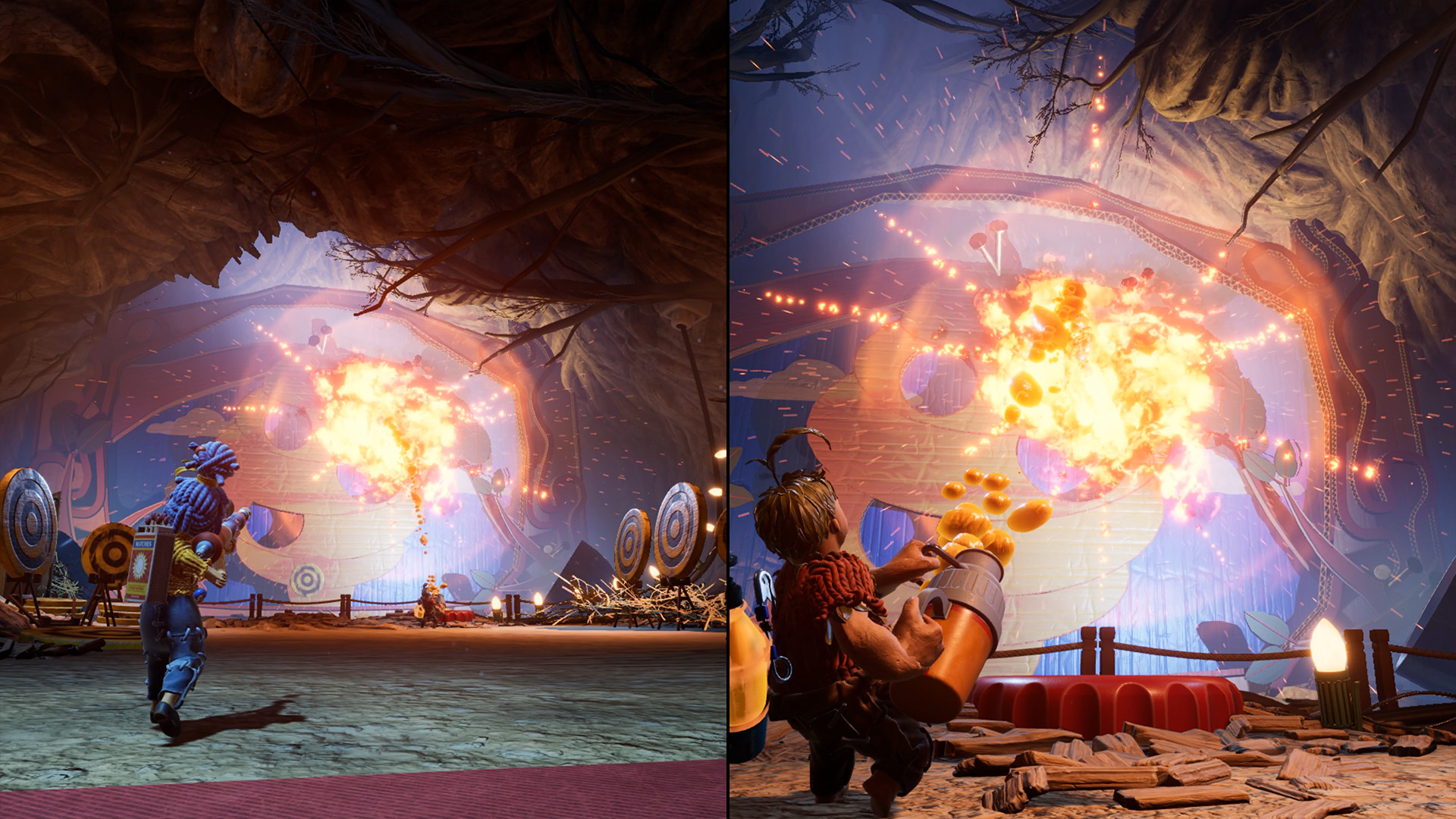
The first Hazelight game on this list, A Way Out is only playable in two-person co-op mode. As such, the studio smartly includes a Friend Pass so only one player needs to own the game. A Way Out’s gameplay relies entirely on cooperation, with a split-screen perspective showing one player what the other one is doing at all times as they attempt to escape from prison by any means necessary. It’s a departure from the more colorful, whimsical adventures the studio is known for, but it’s no less effective, and it’s a very creative use of the medium.
One of the best games from Hazelight to date–it won the top prize at The Game Awards in 2021–It Takes Two sees a couple on the brink of divorce working together to solve puzzles and, hopefully, mend their relationship. As with A Way Out, it features a Friend’s Pass, so only one person has to own the game. Also like A Way Out, the game is only playable in co-op and there are plenty of creative multiplayer-focused gameplay features that you’ll discover during the adventure. It Takes Two was, as the name would suggest, clearly designed from the beginning for the co-op experience, and it works incredibly well.
You’re never going to believe this, but for the follow-up to It Takes Two, Hazelight decided to make … a game with mandatory two-player co-op. Split Fiction’s approach to the concept is very different than It Takes Two or A Way Out, however, splitting the action between fantasy and science-fiction based on the preferences of the two main characters. The Friend’s Pass allows you to bring a friend along for the entire adventure, and it supports cross-play across PS5, Xbox Series X|S, Switch 2, and PC.
The spooooky adventures of Little Nightmares 3 might be a little less intense if you’re playing them with a friend, and Bandai Namco offers a Friend’s Pass for the game to make that a little bit easier. You can invite someone who doesn’t own the game and play with them from beginning to end in co-op, but there are a few caveats here. The first is that if you start the game in co-op, you have to finish it in co-op, and you cannot go from a solo game to a co-op game without restarting. The second is that cross-play is not supported, so make sure your friend has the platform you plan to buy the game for.
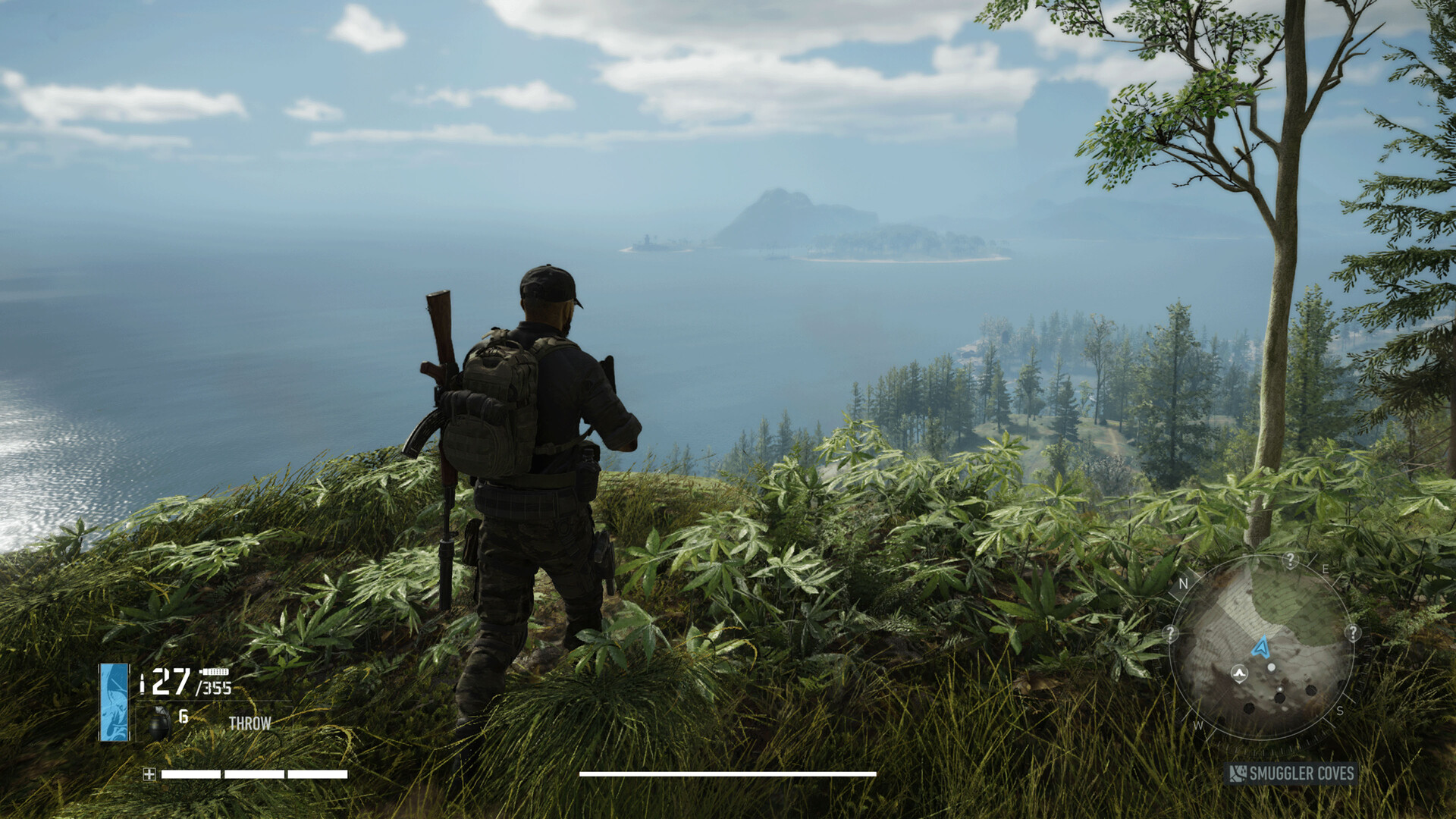
It’s not the best Ghost Recon game, that’s for sure, but Ghost Recon Breakpoint is certainly more fun when you have a friend joining you for its open-world chaos. In fact, you can have up to three friends join you, so they can take on the toughest challenges Aurora has to offer. In order to participate, players will need to have either PlayStation Plus or Xbox Game Pass Console as well as the game’s Free Trial version. And when your friends ask, “Is that skateboarding legend Rodney Mullen as the tech-magnate character?” you can tell them that indeed it is. We’re still not sure why.
In the middle of the COVID-19 pandemic, Nintendo released a game that seemed a little unusual for a first-party release. Clubhouse Games: 51 Worldwide Classics is a collection of some of the best-known tabletop and card games, as well as some unexpected bonuses like slot cars and bowling. Many of these are playable on the go using a single Switch system, letting both players control the action on the touchscreen, for instance, but you can also play with two Switch systems via the Clubhouse Games Guest Pass. Any games that support local play will work as long as one of the players has the full title, and it’s a great time-killer to cycle through the many different games.
Lego Voyagers is an exploration-focused adventure specifically meant for two-player co-op, and as such, the game includes a Friend’s Pass. All you have to do to play the game in co-op is have one player who owns the full game and another who has downloaded the Friend’s Pass Edition. Once the latter is invited into an online session, they can then play the entire brick-filled adventure together from beginning to end. If you’ve been looking for something a little less outright silly than some of the other Lego games, and you want to bring a friend along, this is a great option.
Not all versions of the game support this feature, but if you specifically have the Deluxe Edition of the co-op game Wolfenstein Youngblood, you get access to the Buddy Pass. This works like any other Friend’s Pass, giving the other person access to the full experience alongside you for free. We do highly recommend playing Youngblood with another person, as well, because while the game does support single-player for its campaign, the action was clearly designed for two players working together.