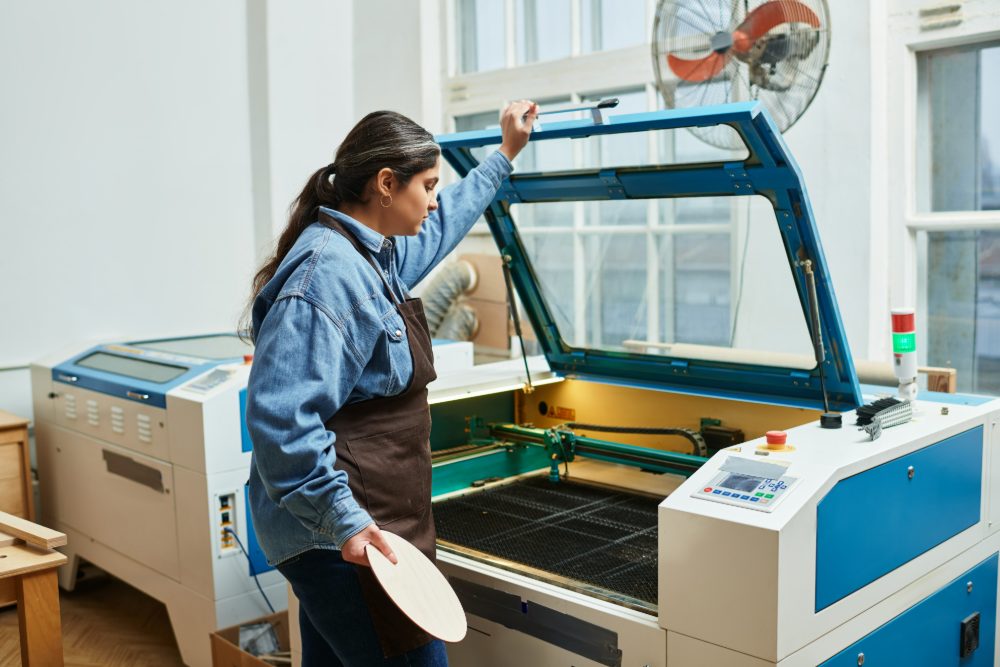

Most home businesses start with a skill. This one starts with a machine. A desktop laser cutter fits on a strong table and runs off a normal outlet. It engraves wood, acrylic, leather, and slate. People pay well for those items because they carry a name or a date. A spare bedroom or a garage corner gives you room to run one. A laser cutting side business can turn this setup into a practical way to earn from home.
Here’s how to move from idea to income.

Choose What You Sell First
Many people buy the machine first and pick products later. Do it the other way. Spend a week looking at what sells now. Engraved cutting boards. Signs for local shops. Wedding and baby-shower keepsakes. Pet tags. Branded items for gyms and breweries. Pick one or two of these. You should be able to name the customer and the price before you spend a dollar on equipment.
You can also start with personalized jewelry. Engraved pendants and keyrings sell fast and use very little material, which makes them a low-risk way to test a niche before committing to bigger pieces.
A wedding-keepsake seller and a shop-sign seller use similar machines but reach buyers in completely different ways — so pick a lane you actually know how to sell into, not just one you’d enjoy making.
Run the Numbers Before You Buy
A capable desktop laser costs $1,000 to $3,500. That’s only the start. Add material, packaging, a local license if your city needs one, and marketplace fees. A clear laser cutting business guide covers the running costs new sellers miss most often — ventilation, spare lenses, design time. Price your work with all of that built in, not just the sticker price of the machine.
A rough benchmark: sellers shipping around 100 personalized items a month often land at $2,000 to $6,000 in profit. Where you fall in that range depends on your niche and how much you charge for customization.
Set Up the Room
You need three things. Ventilation, because cutting makes smoke — duct it out a window, or run an inline fan and filter. A level surface, so jobs come out straight instead of skewed. Fire safety, which means a small extinguisher within reach. These basic safety measures are essential when running a laser cutting side business from home.
Never leave a running job alone. That rule has no exceptions.
Price the Customization, Not the Wood
Your buyer isn’t paying for $4 of plywood. They’re paying for one object with their dog’s name on it. Build your price from three parts: machine and material time, your design time, and a premium for the fact that the item is theirs alone.
New sellers forget the third part constantly. Check sold listings in your niche before you set a number. Price near the middle while you’re still new, and raise it as reviews come in.
Get Your First Ten Sales
Skip ads at the start. Your first buyers are people you know and a few local shops. Take samples to one craft fair and watch which items people actually pick up — that’s free market research and your first sales in one afternoon.
Put your three best items on Etsy with good photos. Email five local businesses about signs or branded coasters. Ten real sales will teach you more than ten hours of reading ever will.
Decide How Big You Want It
Some people keep the laser as a small side earner — enough to cover itself and pay for dinner out. Others add a second machine, a helper, and wholesale accounts. Both work fine. Pick your target early. It stops you from overspending in month two, or underspending in month ten.
The entry cost is low. You need a spare room, a few thousand dollars, and the patience to make a hundred rough coasters before a good one. The margins are real. The machine is quiet enough for a normal street. And plenty of buyers out there want their things to feel like their own.
Find a Home-Based Business to Start-Up >>> Hundreds of Business Listings.