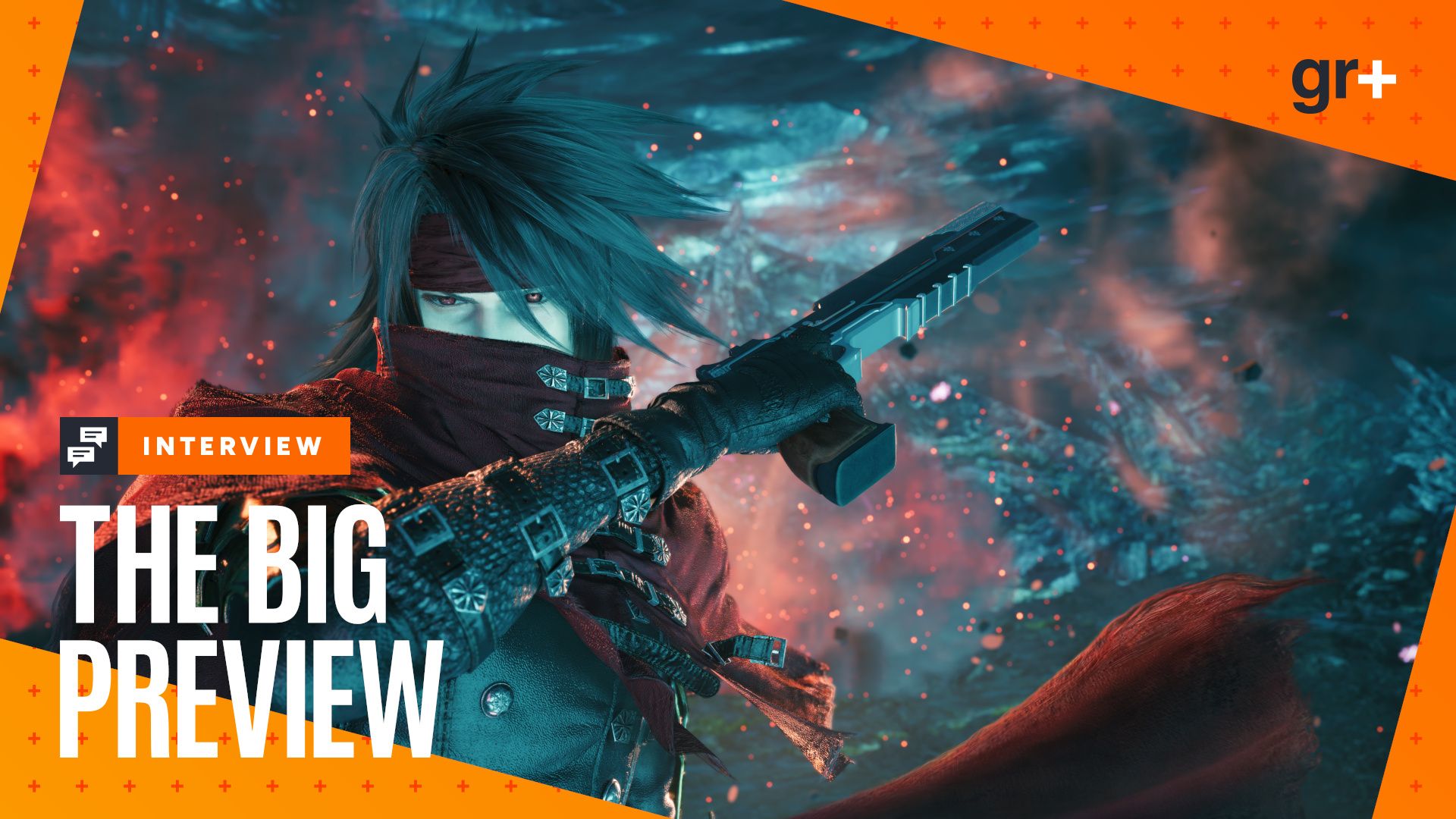
Back in 1997, Final Fantasy 7 on PS1 felt as glossy and cutting-edge as you could get for an RPG or otherwise. Now, for 2027, Final Fantasy 7 Revelation and its remake trilogy predecessors feel just the same way. Closing out the saga, this series is a reimagining of an epic saga with just the same sensibility as its source material, respectful of recreating what came before while also making seriously bold moves with how it reimagines it. After all, at the end of Final Fantasy 7 Remake, it became clear its remake title was as much verb as adjective, breaking down the notion of what it means to break down and re-craft an icon.
Square Enix are in a lucky position with tackling this monumental task, with a cohesive development team not just across the trilogy but one that stretches back to the original game in the ’90s as well. Final Fantasy 7 Revelation‘s imminent conclusion isn’t just a testament to the quality of the original game, but the team that made it. “Everything in the game has to feel both nostalgic and new at the same time,” says series director Naoki Hamaguchi, speaking on the upcoming final release.
Old and new

“There’s a very consolidated and consistent philosophy we have going through the whole of the trilogy in terms of how we balance [old and new],” says Hamaguchi. Combining both feelings is “the mission for this whole project”.
Latest Videos FromGamesRadar+
Big Preview

With the remake trilogy drawing to a close early 2027, we get ready for the epic conclusion with our Final Fantasy 7 Revelation Big Preview across hands-on impressions, dev access, and deep dives into the whole adventure so far.
Which is one of the reasons the trilogy also serves as a pseudo-sequel as well as retreading old ground. “We realized this fairly early on,” he says. “In terms of the storyline – especially the main storyline – if it is just exactly the same story from the original game, then as the series continues, will people lose interest just because they know what’s coming?”
Even when Final Fantasy 7 Rebirth hits a lot of the beats we’re familiar with from the globetrotting adventure that underpins the PS1 original’s middle act, by credits we’re still left second-guessing quite what the villainous Sephiroth’s true machinations are, and how much of what we’ve come to know we can trust. Final Fantasy 7 Revelation has plenty of room to surprise with exactly how it approaches sticking the landing. Even if it’s much the same as its source material, the journey to get there promises to be very different – which may change how we end up feeling about it. “We have to do something to keep that interest up and add that surprise and that uncertainty going through it,” says Hamaguchi.

When it comes to making those changes, however, “there’s a very limited number of people on the team who are in charge of that,” Hamaguchi explains. “Adding completely new developments and aspects to the story,” is far from a simple matter, especially for a story as dear to fans and developers alike as FF7 – but it’s part of what makes the trilogy remain new and exciting. “Things like the Whispers, for example, where they turn up and the timeline might have changed, or when you see Zack in a different dimension and wonder how that’s affecting it. […] All those extra elements that are really part of that design.”
“I want to leave [those decisions] to the original Final Fantasy 7 creators,” clarifies Hamaguchi. “They have to approve that and come up with those big changes themselves. So that’s people like obviously Mr. Kistase, Mr. Nomura, Mr. Nojima, Mr. Toriyama as well – Motomu Toriyama – and myself. Obviously, I’m involved in that, but they are the ones who have to be making the big changes. It’s not the rest of the team.”
But changing and redefining the narrative of Final Fantasy 7 is only one part of how Final Fantasy 7 Revelation and its predecessors have evolved what came before. “The other type of change is going deeper, the fleshing out of existing content, how that’s reimagined for the modern gaming environment,” says Hamaguchi. “That’s something I think that I really want the younger generation, the new creators, to be working on.”

Where once we explored this world through a somewhat abstracted top-down perspective, now we get to explore and get lost in immense levels of detail. That’s true both in terms of scale and visuals, but in battles too, which mix together turn-based tactics with real-time combos.
[We have] the original creators doing big changes and the reimagining done by the new guys.
Naoki Hamaguchi, director
“I think by splitting it to have the original creators doing big changes and the reimagining done by the new guys – that balance works really well, and that’s why we managed to achieve that feeling that we really set out to do,” he says.
Hamaguchi really means what he says about the original team being solely responsible for the narrative changes to Final Fantasy 7. “That’s not taking fan expectations or fan feedback into account really at all,” he says. “That fan feedback is looked at for other aspects of the game, but [the big changes are] really consistent with the creators’ vision. I think, ultimately, maybe quite paradoxically, that is actually better for the fans in order to do it that way.”

While plenty of Final Fantasy 7 Revelation’s biggest changes – alongside those in FF7 Remake and FF7 Rebirth – are completely fresh, some of those tweaks are informed by expansions to the series lore that came after the PS1 in the first place. “One of the other ways we’re approaching the wider Final Fantasy 7 universe, the compilation content [is] the mission the team has is to basically recreate a new Final Fantasy 7 that includes all of that wider universe content from the start,” says Hamaguchi. “So that’s all consistently part of the world in the games that people will be playing.”
Ideas from the likes of prequel Crisis Core: Final Fantasy 7, movie sequel Advent Children, and even multiple phone games have wormed their way into the mixture that is the Final Fantasy 7 Remake trilogy. It’s a novel approach to adaptation that has worked well for other projects taking a similar approach. I’m reminded of HBO’s Knight of the Seven Kingdoms, which adapts George RR Martin’s Game of Thrones prequel from 1998 but makes smart decisions to incorporate aspects of worldbuilding he only thought of many years after the fact – like the Blackfire Rebellion.

Likewise, plenty of groundwork has been laid across the FF7 Remake trilogy so far to fold in Compilation of Final Fantasy 7 material, leaving plenty of plot threads dangling for FF7 Revelation to tie up. Hamaguchi seems to suggest, however, that a lot of these elements will be felt even more strongly this time around.
“With this being the finale – the concluding part of the series – we really want to give the fans as much of the things that we know they want to see, the content that they want to look at, and we’ve included quite a lot of those references and connections to the wider Final Fantasy 7 universe in the last game,” he teases. “I’m really excited to have people experience that and be surprised at seeing all these things that they know from the wider Final Fantasy 7 too.”
Check out our best Final Fantasy games ranking for what to play while you wait, or our best RPGs, best JRPGs, and best ARPGs for even more!