A rumor on social media suggests Samsung’s foldable lineup could double in size with six phones in 2027.
The company is allegedly preparing a TriFold 2, a Galaxy Z Fold 9 Pro, and a “Galaxy Z Slide.”
At CES 2025, Samsung Display showed off two slidable phone concepts: the “Slidable Flex Duet” and “Slidable Flex Solo.”
Samsung’s latest wave of foldables was incredibly popular. Okay, the Fold 8 took everything by storm, but that might not stop the company from doubling up on its offerings next year.
A rumor on X from tipster TheGalox claims Samsung is preparing for its “biggest foldable lineup ever” in 2027 (via 9to5Google). To start things off, TheGalox claims the Galaxy Z TriFold 2 could start Samsung’s huge foldable stampede in 2027. This would succeed the original Z TriFold, which Samsung stopped producing after three months. Elsewhere, the tipster claims the foldables we typically expect could expand.
Currently, Samsung offers three foldables: the Galaxy Z Fold 8, Fold 8 Ultra, and Flip 8. The Fold 8 is its short, wider addition, and the Fold 8 Ultra is its standard book-style foldable. However, the tipster suggests Samsung could slip in a “Galaxy Z Fold 9 Pro.” It’s unclear what this would be. What’s more, we’re unsure about how Samsung would position this device between the Fold 9 and Fold 9 Ultra.
Latest Videos FromAndroid Central
While we also expect to see a Flip 9, rumors say Samsung could introduce a new type of foldable: the “Galaxy Z Slide.” It’s almost a shame that the most interesting-sounding device is shrouded in the largest shadow, but that’s only half true. If we want to at least fathom where we might go, we’ll have to look back to CES 2025.
Sliding into 2027?
(Image credit: Samsung Display)
Android Central’s Take
The Fold 8 was popular was an understandable reason. It’s slightly smaller (shorter), and it felt nice to use for consumers. However, I’m curious about public reception for the Slide, if it’s even happening. As a concept, the device seems really interesting. But concepts don’t always transfer well into reality. These phones have to be practical, not just cool. Also, what would its price be? We all know how prices are skyrocketing.
Samsung Display was at CES 2025, if you remember our coverage about it (if you don’t, here it is). As usual, the company, like other companies, showed off several prototypes. On display were the “Slidable Flex Duet” and “Solo.” The Slidable Flex Duet (YouTube) would let users pull (or slide) its display out from the left and right. The device would sit at 8 inches when compact, but sliding out its display would bring it to 12.4 inches—very tablet-like.
Alternatively, you have the Solo, which would go from 13 inches to 17.3 inches. Whether or not Samsung develops one of these concepts remains to be seen. This only serves as a base to get our minds thinking.
Rumors about a TriFold sequel got underway quickly after Apple‘s iPhone Duo launch. Allegedly, this phone could debut in 2027 with a thinner, lighter, and more durable design. However, its price tag might remain pretty hefty at $2,800.
Get the latest news from Android Central, your trusted companion in the world of Android
The visible person on a stream is only the front edge of a larger production chain. Digital entertainment needs editors, designers, community staff, analysts and engineers. The career question has moved beyond “Can I become a creator?”
Scale explains the change. The Entertainment Software Association says 212 million Americans now play video games at least one hour a week. Its 2026 economic-impact work estimates that the U.S. video game industry directly employed 82,930 people in 2025 and supported nearly 251,000 jobs across the wider economy. The opportunity is distributed across many job families rather than concentrated in a few celebrity roles.
Audience Scale Creates Work Before It Creates Stardom
Large audiences create operational work. A platform with millions of users needs moderation, analytics, payments, localization and rights management; a long-lived game also needs QA, live operations and post-launch communication.
Creator platforms show a similar structure. A successful channel can require editing, sponsorship sales, research, production planning and publishing work around the person seen on screen. Those supporting tasks are often easier to sell as a service than the vague promise of becoming a creator.
The Job List Starts Behind the Camera
Video remains one of the clearest entry points because every long stream can produce dozens of smaller assets. The U.S. Bureau of Labor Statistics counted about 39,400 film and video editor jobs in 2025 and projects employment for editors in that occupation to grow 4% through 2035. Median annual pay for film and video editors was $75,420 in May 2025.
The useful detail is the workflow. A junior editor who can cut a clean 30-second vertical clip, caption it, normalize audio and deliver several aspect ratios has a measurable skill. Employers can judge that more easily than a claim of being “passionate about gaming.”
Local Basketball Creates a Real-Time Data Desk
Sports entertainment adds another employment layer because live events produce data that expires quickly. Scorekeepers, feed operators, statisticians, social editors and market analysts all work with information that changes possession by possession. The 2026 MPBL postseason is a good example: Zamboanga SiKat and Quezon City completed the quarterfinal field on Sept. 30, so any preview written before those results became stale immediately. A professional monitoring MPBL odds has to know which teams advanced, the competition stage and whether a price is pregame or live before interpreting movement. The value of the role lies less in staring at numbers than in maintaining clean context around them.
The same discipline is useful in journalism, broadcast graphics and team media. A wrong opponent, outdated bracket or stale injury note can contaminate several downstream products at once. Real-time entertainment rewards people who can verify fast without becoming careless, making accuracy essential for Entertainment Career.
Casino Products Need Specialists Beyond the Art Team
Interactive casino products create their own technical and operational roles. Designers build the interface. Compliance staff, QA testers, data analysts and game mathematicians also need to understand how outcomes are generated and how information is displayed. When reviewing a casino game, a tester may need to check the paytable, feature triggers, stake behavior and the implementation of random-number generation rather than simply decide whether the animation looks polished. Regulators such as the UK Gambling Commission require RNG outcomes to be acceptably random and describe RTP as a long-run theoretical measure rather than a promise for a single session. Precision becomes part of the product job.
The broader career lesson is that digital entertainment needs people who translate rules into interfaces and verify that the interface behaves as specified.
A Portfolio Should Show the Work, Not Just the Interest
The strongest entry portfolio usually contains finished artifacts with enough context to judge them. For a digital-entertainment role, useful samples might include:
a short-form edit built from a longer source video;
a small dashboard that turns raw event data into readable trends;
a community moderation plan with escalation rules;
a mobile interface prototype with clearly documented decisions.
Each sample should state the problem, tools used and result. “I love games” may explain motivation, but it does not show whether someone can ship a file, clean a dataset or handle a live deadline.
Careers Here Behave More Like a Stack Than a Ladder
Digital entertainment keeps merging production, software, commerce and live media, so career paths often move sideways before they move upward. An editor can learn channel analytics. A community manager can move into live operations. A QA tester can specialize in compliance or product management. A data operator can become a sports researcher or trading analyst. These opportunities create diverse Entertainment Career across the digital media industry.
The market is large enough to support that movement. ESA’s 2026 data puts the U.S. video game industry’s total economic impact at $95.8 billion, while BLS projects 7% growth for web developers and digital designers from 2024 to 2034. Neither figure guarantees an easy path. They do show why the practical strategy is to build a stack of demonstrable skills around one production problem, then widen it as the work becomes more technical.
Google claims its newest AI model, Gemini 4 Argon, just beat Minecraft — no human help required.
In a research paper posted Oct. 15, Google DeepMind researchers said a team of four Gemini 4 Argon agents defeated the Ender Dragon, the game’s final boss. The agents started in a freshly generated survival world on Easy difficulty and were given a single goal: kill the dragon. It took them 27 hours and 14 minutes. Along the way, the AI players died 605 times, mostly to monsters.
The researchers say this is the first time AI agents have beaten Minecraft from start to finish using only standard tools, with no game-specific help built by humans. Researchers watched the run on a live dashboard and could have stepped in at any point, but they say they never needed to.
However, Google is upfront about the limits. The game ran on Easy, which meant that monster attacks dealt less damage to the AI players. Because the AI agents play the game through code rather than on a screen, they have access to information that a human player would not. For example, the AI agents knew what blocks were hidden behind other blocks, making the “mining” part of the game rather insignificant. Plus, given Gemini 4 Argon’s training base, the AI agents knew the optimal strategies for playing the game.
Mashable Light Speed
It’s impressive, but nowhere near what humans can do. The researchers note that the record for beating Minecraft in a random world is under seven minutes.
One may ask, why make an AI play Minecraft? The researchers argue that the skills involved, like working as a team, bouncing back from mistakes, and sticking with a goal for more than a day, are the same ones AI agents need for real-world work. According to Google, the run costs about $520 in model usage at Argon’s introductory API price.
Making a frontier AI model play a video game is actually a common benchmark used by many companies when testing. The Pokémon games specifically have captured the zeitgeist in the AI industry for a while now, but Minecraft is now catching on too. As Google’s research points out, two community projects have recently reported beating the dragon with AI, including one using Anthropic’s Claude Opus 5.
Austin Abrams went full method whilst filming new horror thriller Whalefall, so much so that he walked around his neighbourhood in scuba gear to get used to the weight, and even had security called on him at one point.
In an interview with The Hollywood Reporter, Abrams was asked about walking around in scuba gear, asking if he got any funny looks while doing so. “I can’t remember if there were any funny looks or not,” said Abrams, “But there’s a point where Jay gets visibly more distressed and blown-up looking. I remember walking around the lot during that time and having security called on me just because I looked so fucked up.”
Scuba suits aside, Abrams had to undergo physical changes to get into the role of diver Jay Gardiner. The star has had to fluctuate his weight dramatically. While waiting for Zach Cregger’s 2025 horror movie Weapons to start filming, Abrams had to keep to a very low weight to play drug addict James.
Latest Videos FromGamesRadar+
In fact, Abrams maintained that weight for a long while whilst Cregger had to recast Weapons due to delays. Abrams was the only actor to stick with the project, though, and actively passed up other opportunities at that time. Then the actor had to get into sporty shape to play diver Jay in Whalefall, before putting on weight to play Bryan in Cregger’s Resident Evil movie.
“I wanted Bryan to be a dude you look at and think he won’t be able to get out of this,” said Abrams. “I didn’t want him to look like someone who runs laps in his free time or something like that. So it was a close period of time, but there wasn’t really any science to it. You just do whatever you can to get where you need to go.”
Much like Resident Evil, Whalefall puts Abrams’ protagonist in a life-threatening situation. But rather than fighting off zombies like Bryan, Jay is swallowed whole by a massive whale.
Subscribe for a weekly digest of the movie and TV news that matters, direct to your inbox. From first-look trailers, interviews, reviews and explainers, we’ve got you covered.
According to an order of dismissal in one of the cases, the overall settlement was approved by a California probate court in July, and the court tasked a referee to hear out all the issues pertaining to each individual settlement. On October 11, a day before Character.AI declared bankruptcy, the referee approved each settlement.
The Tech Justice Law Project and Social Media Victims Law Center, which represented plaintiffs in many of the lawsuits, declined to comment.
Despite losing key staff after the Google transaction and, according to the current CEO, struggled with profitability “at all times,” Character.AI continued to develop AI tools, including “real-time audio-driven FaceTime-style video generation with fictional characters,” according to the current CEO’s declaration.
In August 2025, Character.AI worked with an investment banker to try to find either a strategic buyer or investor. According to the bankruptcy filings, Character.AI and the banker received “consistent feedback” that its product and user base were “impressive,” but that the surrounding litigation and “regulatory overhang” made it unbuyable.
That November, Character.AI learned that a coalition of state attorneys general had started investigating the company. When the company filed for bankruptcy, the number of states and territories involved in the multistate investigation had climbed to 46.
According to a notice of interest filed in the bankruptcy proceedings by the National Association of Attorneys General on behalf of 40 states, those states’ investigations uncovered “serious issues” with Character.AI, including screenshots of Character.AI chatbots encouraging minors to hide their self-harm injuries and kill their parents.
A spokesperson for Character.AI says that the filing “is not an accurate portrayal of the safety of our platform.”
The filings say that Character.AI was in the process of negotiating with the states over how to address the issues they identified, but did not reach any agreements before declaring bankruptcy.
If the deal is completed and approved by the courts, Disney will have both Character.AI’s staff and much of its technology stack, but will be able to sidestep the ongoing legal issues that contributed to Character.AI’s downfall, including the multistate investigation.
The states who filed a notice of interest in the bankruptcy have made it clear that they reserve their rights to challenge any bankruptcy plan, potentially setting up a fight over the ultimate outcome of the bankruptcy.
“It’s bad for society to let companies exercise control without responsibility,” says Newman. “And that’s what it looks like.”
Behind every successful project are messy and unorganized creative ideas that require proper planning and collaboration for the whole process. In fields like engineering and architecture, it is very important to have structured and systematic stages to follow since every concept of each design must be carefully developed before proceeding to the execution process. Two of the most important stages in the process of a successful execution of a specific project design are Schematic Design services and Construction Documentation.
With these two key stages, the concepts are turned into organized plans, which are very beneficial for the team as they begin construction. To ensure successful execution in terms of accuracy and efficiency, most firms team up with skilled professionals on freelance platforms like Cad Crowd, as they help firms like you connect with designers needed for your project.
Designing a project can be quite challenging, especially when you don’t prioritize visualizing what the project would look like. One important stage in the design process is called schematic design. It is a stage in the process of designing wherein designers get to focus on visualizing the basic layout of a certain space. They get to broaden their conceptualization and focus more on the general layout in order to see to it that things would actually be organized before dipping into a more detailed aspect of the process.
In this stage, designers evaluate how the environment affects the arrangements and layout of the different areas, making sure they relate to one another. Since it is not yet time to look into its intricate specifications, the goal here is first to outline the overall concept for the space being designed. It is very tricky since designers get to analyze where certain elements should be located and how every aspect of the room will be positioned, making sure it all blends naturally and can operate functionally. Through this stage, the subsequent steps would be much easier and smoother, since this is one of the foundations for successful execution for the rest of the design process.
Role in defining clear project direction
The role of schematic design services is crucial because it gives a clear direction of what the project will be right from the beginning of the process. Skipping this stage would cause many more problems in the subsequent steps. With the help of this phase, designers can create an initial layout, allowing them to explore a wider range of design ideas before making more detailed decisions. Through this, the project team behind the process can present the overall concept to the clients so that they can exchange ideas collaboratively and spot potential changes early on.
What’s also amazing about this stage is that it enables everyone who is involved to really understand the entire vision of the specific project, in order for the team to have one goal as they go through the process of successfully creating the project. In this stage, it is important to consider the possibilities first before moving into the actual demonstration. It is central to the fact that, in order for everything not to mess up later on, things must be carefully visualized first. That is why Schematic Design really becomes the foundation, making way for the following steps to be well guided in order for it to be smoothly applied.
Role in client communication
One important benefit of schematic design is that it plays an important role in helping clients to clearly understand the entire purpose of the proposed project. It is undeniable that technical drawings can really be quite challenging to grasp, especially for clients who are non-professionals. So, through schematic visuals, the designs are easier to comprehend, and clients can understand what a track is. Through the help of simple layouts and conceptual illustrations, 3D designers can give a presentation that is easily understandable, making the entire flow more open for the clients to conceptualize as well.
Through these visuals, clients and designers can have an open discussion, which opens the floor for feedback and revisions as well, before they dig deeper into the detailed designs and move forward to the cost and expenses stages. And with the help of these schematic visuals, clients are also allowed to review the proposed designs and can scan through them, leading them to construct suggestions and ask questions, while everything can still be modified and adjusted. By allowing both ends to exchange feedback and reviews, the project would most likely be executed in a smoother and less hassle-filled manner, since things between the designers and the clients become easier and lighter.
Another important role of schematic design in designing a project is that it allows designers to identify potential problems early on. Through trying different layouts and exploring different concepts and arrangements, they are able to see errors that could soon affect the entire functionality of the project. By identifying issues and defects, you can actually start improving your project before finalizing anything. This approach greatly helps prevent many problems that may arise if not addressed early on. It could totally be a waste of time, money, and, worst of all, delays, and could ultimately keep the project from moving forward smoothly.
That is why going through every stage of the process is really important. Just like in schematic design, if designers skip this very important part of the process, then they would surely face a lot more potential issues in the following steps. It’s important to note that to create a successful project, each stage of the process must be properly applied to ensure the entire design is executed correctly when construction begins. There are a lot of things that must be considered, and one of them is the importance of schematic design. This must not be overlooked or taken for granted since it’s one of the foundations for a successful project execution.
Construction documents
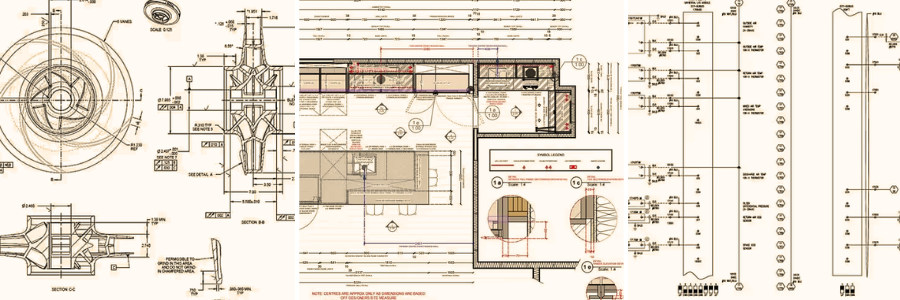
Aside from Schematic Design, Construction Documents are also one of the key stages that must be applied in the design process. While schematic design centers on the overall concept design servicesof the project, construction documents, on the other hand, turn those concepts into more detailed practical instructions that are very helpful in the construction process. These documents stand as a powerful guide, especially for the constructors and builders, since they provide precise guidance as to how a specific project should be built, such as detailed measurements, intricate specifications, and exact dimensions.
With the help of these documents, builders are more confident in executing everything since all the important information is listed in these documents, including what certain areas must look like, what materials should be used, and also the measurements of specific tools that would help in the creation of a specific space that is being built. This just shows how critical construction would be. It needs detailed information since a lot more potential problems would arise if not guided smartly.
Role in construction guidance
During the construction process, it can be so challenging for contractors and builders if there are no construction documents that they can use as a guide during the entire execution. This is the only thing that serves as a guide for them, as they rely on detailed specifications to understand what materials they should use or the appropriate methods, and, of course, the exact measurements. By providing clear construction drawings, contractors are able to understand how they would go about building specific structures and successfully assemble them. Without this kind of structured tool, it would be hard for them to interpret how different structures should be put together, and it could cause a lot of problems later on.
What’s also amazing about construction documents is that they stand as a reference for smoother execution and better communication between everyone who is behind the construction team. It ensures that the project is aligned with the approved design plans and is designed to create something that is connected to the concepts that are being visualized by the designers. It is also very beneficial since designers can be more confident on their end as well, since the detailed documentation is reviewed multiple times and has been checked before finalizing everything. That is why clear construction documents serve as a powerful tool for a project to be executed well and for it to be successfully created.
Another important role construction documents play in the world of design is that they mainly help in preventing errors and mistakes during the construction stage. Builders and constructors are provided with clear and concise documents that they can use as a reliable guide to follow in executing everything they need for the project. When the people behind the construction are given detailed instructions, they would most likely demonstrate it to the best of their abilities. Through this, the design project services would be executed more properly, and the ideas would truly be brought to life. And with the help of these construction documents, the project timeline would be met, and potential delays wouldn’t happen since everything is laid out carefully already. And in terms of budgeting, it will be less likely to be costly later in the process since everything is structurally presented well before it becomes final and ready for construction.
This comprehensive documentation really ensures that the intentions are established before beginning the construction proper. And by providing accurate documents, the chances of the construction team failing would really be minimized as they execute it properly. Beyond guiding constructors with detailed documents, it could also help make execution much faster. Since the reference is already provided and the exact measurements are already listed, the construction team would be a lot more confident in building the specific project since they are backed by proper documentation that would help them in executing the exact idea.
One of the important purposes that construction documentation plays is that it enables a lot of people who are part of the process to be on the same page. It provides coordination to different professionals who are behind the project, such as the engineers, the freelance architects, the builders, the contractors, and all the project managers, since they all depend on these documents in order to have a better understanding of the scope of the project that they are working on. Through the help of clear and precise information, they ensure that all the people involved can work towards the same goals and can effectively work together as a team.
The goal of construction documentation is to reduce any signs of confusion for any team that is involved, since the very goal of the project is to successfully create and bring life to the design after it is constructed. Everyone involved in this project is more confident when they successfully finish the stages that best and fundamentally lead to creating the final construction documents. Through construction document services, the construction process would be a lot easier for everyone, especially with the contractors and the builders, since they all see the same goal in them and have a reference that is uniformly based on by everyone at the site.
How schematic design and construction documents work together
Schematic design and construction documentation are two different things that play different roles in the world of design. These two have different purposes, and both function in their own distinct roles. However, despite their differences, these two still work best together toward one purpose: successfully developing a project. Schematic design focuses on establishing the initial concept of the overall structure of the project, while construction documents expand that concept and create it as detailed guidance that can be helpful in the construction process.
When these two stages are combined, they ensure the successful creation of a specific project, turning it into a successful, buildable one. As the schematic design leads with concrete direction, construction documents are the one that ensures that it will be executed successfully by the construction team. Together, they balance each other’s strengths, ensuring they can effectively complete the project structure and build it with proper guidance and flow from the initial planning stages through final development and execution.
These two stages represent very important roles in the design services. They both focus on the development of a project and really share one goal despite their differences in purpose. When both of these stages are properly developed, they surely provide accuracy and technicality, from the planning phase until the construction of a specific project. It’s really important to apply both of these stages and not skip either one of them, since without one, the other one wouldn’t operate perfectly, as they are connected in many ways. In fact, if schematic design weren’t properly developed, then construction documents wouldn’t be available, and the construction team would really have a hard time building the said design idea. That is why each author needs to be considered and must not be compared, because these two greatly impact the overall process of a single project.
Average costs for schematic design and construction documentation
Service
Estimated Cost Range
Schematic design
$1,000–$5,000
Architectural drafting
$500–$3,000
Construction documents
$2,000–$10,000
CAD drafting services
$30–$100/hour
BIM modeling
$1,500–$8,000
3D architectural rendering
$300–$2,000 per image
As-built drawings
$500–$3,000
Full design documentation
$5,000–$20,000+
Importance of professional help
In order to successfully create a project design and have a successful construction process, these two stages must really be applied, since it is more than just having creative ideas. It also needs proper planning and a proper process in order to have a buildable project. And the coordination of these two wouldn’t be possible if not properly developed by skillful professionals, because in this process, there could really be a lot of challenges, and it could be difficult to handle. That is why many businesses, especially today, rely on skillful experts who are really specialized in handling these stages of the project design services.
One of the many reasons why businesses have professional help for the success of their project is that they want accuracy. Schematic design should be able to present the overall visualization of the project’s concept. They need to clearly lay out the vision so it is easily comprehensible to clients, because if these early plans are not clearly developed, the rest of the process will encounter many issues and errors. But with the help of professional CAD designers who have been through years of training and experience, these potential errors won’t happen or will be lessened, since they produce reliable designs and really guide you throughout the process. In construction documents, there need to be intricate and detailed instructions. It isn’t easy to create since a lot of early stages would be done first before reaching its finalization.
And if these documents have a lot of missing information or errors, then contractors would find it difficult to understand how they could prepare to execute them. Worse, it could really affect the timeline of the project, which would incur a lot of costly project costs and even delays in the schedule. But with the help of experienced professionals, these potential errors would also be mitigated since they understand how to properly manage and create construction documents that would best fit the Understanding of the builders.
One reason why these businesses really want to invest in these services is that they want to have clear coordination. Design projects involve a lot of people behind the creation of the project, and they work closely together as they have one shared goal. Professionals really make sure that schematic designs and construction documents provide consistent information that all the people involved can effectively follow throughout the process. Through this, they can have an organized project flow, leading to fewer misunderstandings and miscommunication throughout the construction process.
Most importantly, with the help of professional design engineer, a lot of companies are able to save both their time and money from a lot of potential risks and errors. are guaranteed to be reduced, leaving them with a quality buildable project. With the help of skilled professionals, businesses and companies are guaranteed to have the best support and a smooth transition of their ideas from the early stages of schematic design up to the successful execution of construction through construction documents.
Conclusion
These two stages work in their distinct roles, yet share the same goal, which is to provide a successful project design. In these two stages, it really requires proper planning and clear communication since it is very challenging to develop a project design. So it needs to be done with technical expertise. With the help of skilled designers, errors could be spotted early on and truly improve the coordination between the team members behind the process. Any business that aims to produce high-quality schematic designs and construction documents must seek professional help from an expert in these services to achieve successful construction outcomes.
Although there are a lot of platforms out there that provide experienced professionals, none of them provide the same skilled experts as Cad Crowd does. On Cad Crowd, they match you with the perfect experienced professionals who specialize in this kind of service, like architects, engineers, and design specialists, who are really skilled at delivering high-quality outputs. By collaborating with these experts, companies can be confident moving forward with projects that are well-developed and well-managed, more than ready to be executed for the construction proper.
How Cad Crowd can help
Cad Crowd connects businesses with experienced architects, CAD designers, drafters, and engineering professionals who can support projects from schematic design through construction documentation. Whether you need help developing preliminary layouts, refining architectural drawings, preparing detailed construction documents, or coordinating design information across project teams, Cad Crowd can help you find the right professionals for the job. By bringing experienced design specialists into the process early, businesses can identify potential issues, improve communication, reduce drafting errors, and create more accurate documentation for construction. This allows project teams to move from initial concepts to detailed, buildable plans with greater confidence and efficiency. Contact Cad Crowd today for a free quote.
MacKenzie Brown is the founder and CEO of Cad Crowd. With over 18 years of experience in launching and scaling platforms specializing in CAD services, product design, manufacturing, hardware, and software development, MacKenzie is a recognized authority in the engineering industry. Under his leadership, Cad Crowd serves esteemed clients like NASA, JPL, the U.S. Navy, and Fortune 500 companies, empowering innovators with access to high-quality design and engineering talent.
What is the PS5X Emulator for Xbox Series X and how does it work?
Alex Van Aken/Shutterstock
In a YouTube video that went live on September 8, developer Devran Cosmo Uenal booted the PlayStation 5 version of Quake II on an Xbox Series X and played it with an Xbox controller. But the game was running through PS5X, Uenal’s Xbox port of the open-source PS5 emulator KytyPS5, and he has gotten three more PS5 games working alongside it.
The fact that he’s managed to get PS5 games running on an Xbox at all is super cool, but there’s a catch: PS5X only works in the console’s official Developer Mode, where Microsoft’s documentation caps games at 5GB of memory. That unfortunately rules out the majority of current-gen games, and there’s no public download for anyone else to try yet.
How PS5X works
Sony and Microsoft built their current consoles around closely matched AMD hardware. Both of them have eight Zen 2 CPU cores, RDNA 2 graphics and 16GB of GDDR6 memory, and PS5 games are compiled for the same x86-64 processor architecture that PCs use. That means the KytyPS5 emulator can run their code on the host CPU instead of recreating the PS5’s hardware in software. Its developer calls it a compatibility layer and, practically, it behaves more like a translator, converting what a PS5 game asks for into something a PC can understand.
KytyPS5 translates the PS5’s graphics commands and recompiles its shaders for Vulkan. As a result, it needs a Vulkan 1.3 graphics card on PC, but Xbox Developer Mode only supports DirectX 11 and DirectX 12. “Since Vulkan isn’t supported, everything needs to be translated to DirectX,” Uenal wrote in the YouTube video’s description, where he also admitted that AI was involved in the work. As VideoCardz pointed out, that means fixes the KytyPS5 team makes to its PC renderer have to be adapted before PS5X can use them.
Uenal’s video also describes PS5X as a “research project” for “running PS5 homebrew and game backups” on a Series X in Developer Mode. He claims that it doesn’t include any PS5 firmware or decryption keys, and KytyPS5’s documentation tells users to stick to game files they’ve obtained legally. Dodging copy protection is ultimately what killed the Switch emulator Yuzu, whose makers settled a Nintendo lawsuit back in 2024 by paying $2.4 million and shutting the project down. The team behind the PS3 emulator RPCS3 lists KytyPS5 and SharpEmu as the two active open-source PS5 emulators that can boot games, and warns players about scam sites posing as real ones.
What PS5X can run
Thamyris Salgueiro/Shutterstock
At the time of writing, PS5X runs the PS5 versions of GEX Trilogy, Hellboy: Web of Wyrd, Marvel Cosmic Invasion and Quake II, and all four are compatible with Xbox controller inputs. Some of them have working sound, and TweakTown reckons that Quake II runs at roughly 25 to 45 frames per second in Uenal’s footage. It’s worth noting that these four games are also sold on other platforms, so there’s no sign yet of PS5X running a PS5 exclusive, and Uenal admits that it’s early days and that compatibility is limited.
Android Authority reported on September 28 that KytyPS5 now goes in-game in a variety of PS5 titles on PC, and that one user had shown Marvel’s Wolverine reaching its main menu, in slow motion, on a machine with an NVIDIA RTX 5090. That clip didn’t show any gameplay, however, and it’s not clear whether it used the standard emulator build. PS5 emulation on PC is becoming more viable by the week, but it’s still an extremely nascent field, and PS5X only inherits any progress once each fix has been rebuilt for DirectX and squeezed into a far smaller memory budget.
Developer Mode’s memory limit
Microsoft limits games in Developer Mode to a relatively small 5GB of memory, and apps to 1GB. Requests for more memory than that allocation fail. In contrast, a retail Series X game gets 13.5GB of the console’s 16GB, while the remainder is reserved for the console’s OS. That leaves PS5X to work with about 37 percent of the memory a normal Xbox game can use, making it an obvious no-go for big current-gen releases. Microsoft only lifts this cap when software runs via the Visual Studio debugger, which is a setup designed for devs testing their code.
Microsoft blocked emulators entirely in Xbox’s normal retail mode back in 2023, its rationale for doing so being a store policy that bans products that emulate a game system. It then started bringing down the ban hammer and reportedly handed out 15-day suspensions to players who found a workaround. Since then, players who want to play PS2 or GameCube games through, say, Dolphin, the most popular GameCube emulator, have had to rely on Developer Mode instead. But a console in that mode can’t load retail games until it’s switched back.
Xbox Series X comes with the same Zen 2 architecture and RDNA 2 graphics as a PS5. It’s also got the same amount of memory, and PS5X can use less than a third of that. But none of this really matters because of the memory cap. There’s no real workaround to this without a jailbreak, meaning Xbox players won’t benefit from the progress being made on the PC. Sure, PS5X is interesting, but it’ll remain a cool little curio rather than anything substantive players can use.
If you’re interested in checking out PS5X and similar emulation projects, you should exercise caution. Scammers are capitalizing on the interest these projects receive, such as releasing malware under similar names like PCS5X to try and trick players into downloading it.
For Hellraiser fans, Saber Interactive’s video game from earlier this month is the franchise’s first bit of life in years. Amid a solid reception, creator Clive Barker doesn’t plan on letting the Cenobite madness stop there.
As he told horror outlet Dread Central, the game’s “a wake-up call. It says to get your ideas warmed over so you can go back into existing worlds in a brand new way.” And as far as that goes, Barker’s got “many” he’d like to see happen, which is why he’s “planning to keep my fingers in that pie. […] I’d love to have another go and explore.”
The last Hellraiser movie was Hulu’s 2022 reboot, and there’s been no movement on that TV show announced for HBO. Both of those were announced in 2019, and it Barker got the rights back the following year. (He signed story and character rights away before the original 1987 movie even came out.) He was candid about the films’ decline, which he blamed less on the creative talent and more on the Hollywood system milking the franchise.
“Many of [those] movies made by the Weistein brothers were created simply to hold onto the rights. Over time they spent less and less on them. A lot of amazing creative people got worked over as a consequence,” Barker said. “The compromises you have to make and the battles you have to have are totally exhausting, unnecessary, and not something I will entertain ever again.”
Notably, Barker said he’s got a good amount of Hellraiser ideas for film and “other media.” Comics have come out this year and next, so fans won’t be completely left wanting until such a time they hear news of another movie or even the TV show.
Step into the Colosseum chained to your friends. Chained Beasts is a co-opgladiator roguelike for 1-4 players, combining brutal combat with teamwork and slapstick moments. Can you gather your friends, crush your enemies, win the crowd and gain your freedom? Brick by Brick: Tidy Up the Small Town!
Gladiatorial Combat Slash and hack your enemies in this brutal gladiator roguelike or use the environment against them. Hurl an urn at your foes or hurl your foes at an urn. Charge them into a wall of spikes or a pit of snakes. Throw your weapons to take down enemies from a distance but be sure you have another at hand or you might find yourself in trouble.
Chained to Your Friends Don’t struggle alone, gather four ferocious friends and you’ll be chained together in cruel and creative ways. If you can’t coordinate you’ll end up tangled around a pillar or worse but synchronize your efforts and you can trip your enemies and turn the tables.
Battle Brutal Bosses As your fame rises you will battle brutal bosses, heroes of the arena, armed to the teeth with every advantage at their disposal. The deck will be stacked against you but victory will bring you one step closer to Rome and a chance at freedom or revenge.
Screenshots
SystemRequirements
Minimum Requires a 64-bit processor and operating system
OS: Windows 10
Processor: Intel Core i5-5257U, AMD Ryzen 3 1200 or equivalent
Memory: 8 GB RAM
Graphics: GeForce GTX 1050, AMD RX 460 or equivalent
Support the game developers by purchasing the game on Steam
InstallationGuide
TurnOff Your Antivirus Before Installing Any Game
1 :: Download Game 2 :: Extract Game 3 :: Launch The Game 4 :: Have Fun 🙂
Though it may not be a sales juggernaut on the scale of Mario or The Legend of Zelda, Fire Emblem is one of Nintendo’s preeminent franchises. Like so many of its vaunted stablemates, the series is almost as old as Nintendo’s gaming ambitions, debuting on the Famicom and appearing on nearly every home and handheld console since. Given this prominence, it’s almost difficult to believe that Fire Emblem’s future was ever in jeopardy, but such was indeed once the case; there was a point in time when the series was very much on the verge of cancellation, and it took a dramatic shakeup to reverse its fortunes.
To fully contextualize this rocky period in Fire Emblem’s history, we need to look back at its trajectory in the wake of its belated international debut. Unlike Nintendo’s other marquee properties, Fire Emblem took a circuitous route to Western markets. Though the series began in 1990, its first several installments were never released outside of Japan, and most Western players would end up being introduced to the franchise not through one of its mainline entries, but through Super Smash Bros. Melee for the Nintendo GameCube.
Even more so than its predecessor, Melee was a veritable celebration of Nintendo history. The game drew deeply from the company’s rich oeuvre; its roster was stuffed with beloved mascots, and its extensive array of collectible trophies covered the full sweep of the publisher’s gaming legacy, from renowned classics to obscure curios. What generated the most chatter among international players, however, were two particular hidden fighters who hailed from a series most had never heard of: Marth, hero of the first Fire Emblem, and Roy, protagonist of the series’ then-newest installment, The Binding Blade.
Despite their unfamiliarity, these mysterious swordsmen instantly became two of Melee’s most popular characters thanks to their cool designs and nimble swordplay, which helped set them apart from the more recognizable characters on the roster. More consequentially, their newfound popularity among Western players generated immediate interest in Fire Emblem as a whole–a series that, to that point, had been all but unknown outside of Japan. That the franchise was notable enough to warrant not one, but two representatives in Melee was yet more indication of its significance, and only further stoked players’ curiosity.
Marth in Super Smash Bros. Ultimate
This upswell in interest (coupled with the critical and commercial success of Fire Emblem’s sister series Advance Wars, which likewise had just made its worldwide debut after a similarly long period of Japan exclusivity) went a long way in encouraging Nintendo to finally bring the franchise to other markets, beginning with its next GBA installment (and seventh entry overall), Fire Emblem: The Blazing Blade. The gambit paid off; thanks to its wider availability, Blazing Blade became the first game in the series to sell more than 800,000 copies, solidifying it as another tentpole franchise for the company and ensuring there would be no hesitation to bring future titles westward.
The next few Fire Emblem games saw similar commercial success. The series’ second worldwide release (and final GBA installment), The Sacred Stones, arrived in 2005 and moved more than 700,000 copies over its lifetime, while GameCube’s Path of Radiance followed later that same year and sold more than half a million copies–well enough to satisfy Nintendo’s expectations, considering the system’s age and comparatively small user base.
Gradually, however, the series experienced diminishing returns. Fire Emblem: Radiant Dawn, a direct sequel to Path of Radiance, arrived on the Wii in 2007 and ultimately sold fewer copies than its predecessor, despite the fervor surrounding the console at the time. Fire Emblem: Shadow Dragon, a DS remake of the original 1990 game, followed in 2008 to a similarly muted reception. While the dual-screen handheld had a significantly larger install base than the Game Boy Advance, Shadow Dragon moved an estimated 600,000 copies–a significant drop off from both GBA titles. In the face of this downward trend, Nintendo elected not to localize the series’ next DS entry, New Mystery of the Emblem–the first time in nearly a decade that a Fire Emblem game would not be released outside of Japan.
As with some of Nintendo’s other aging franchises from around the same period, franchise fatigue was beginning to set in for Fire Emblem. The relatively quick succession of releases, none of which deviated very far from the series’ well-worn formula, coupled with their steep difficulty and lack of innovation, led to a steadily dwindling audience. So persistent was the decline that the long-running franchise now found itself at risk of cancellation; according to the development team, the next Fire Emblem would be the last if it failed to sell at least 250,000 copies, which prompted some radical proposals for how to shake the series up.
Fire Emblem Awakening
The resulting game, Fire Emblem Awakening, did not completely upend fan expectations, but it did become a massive hit, saving the entire series. Rather than reinventing the franchise, Awakening was developed as a “grand culmination” of it, tweaking the established formula in inspired ways and reworking staid conventions. The game leaned heavily on the series’ character-driven nature, placing an even greater emphasis on character development and relationships than previous titles. But perhaps even more consequential was the addition of a Casual mode–a feature that originated in New Mystery of the Emblem but had never previously appeared in an international release. Casual mode effectively turned off one of Fire Emblem’s hallmark mechanics, permadeath–a move that once felt tantamount to sacrilege, but had a profound impact on the series’ approachability. With the option to disable permadeath, the game became much more welcoming; now that there were no long-term repercussions for a miscalculated move, players could enjoy the complex narrative and deep gameplay without worrying about irreversible consequences, opening the series up to a much wider audience than before.
Awakening would go on to sell more than two million copies, kickstarting a resurgence for the series. Each subsequent entry would build upon Awakening’s experimental streak, evolving the franchise in unexpected ways. Fire Emblem Fates followed in 2015 and was an even bigger hit, moving more than three million copies. In a page out of Pokemon’s playbook, Fates released in three separate versions, presenting the same tale from three alternate perspectives. Two years later, the series made its mobile debut with Fire Emblem Heroes, which would go on to become Nintendo’s most successful mobile game, while its final 3DS installment, Fire Emblem Echoes: Shadows of Valentia, followed a few months later and surpassed a million copies over its lifetime.
Fire Emblem has continued to prosper in the years since, with Switch’s Three Houses setting a new benchmark for the series with over four million copies sold. Thanks to an eventual willingness to innovate and rethink long-standing conventions, the storied RPG was able to weather declining sales and the looming threat of cancellation to become one of Nintendo’s stalwart franchises, offering an incisive lesson in how to steward a long-running series. And with the positive reception that’s greeted the newly released Fortune’s Weave, it appears Fire Emblem will continue to occupy a vital place in Nintendo’s pantheon for a long time to come.