Plenty of Warhammer 40,000 novels have been written from the perspective of humans and space marines, but it took a while before Games Workshop really got into publishing books from the perspective of 40K’s many alien species. If you’re into orks I recommend Ghazghkull Thraka: Prophet of the Waaagh, and for swashbuckling aeldari pirates there’s Voidscarred, but the peak remains The Infinite and the Divine by Robert Rath.
It’s the story of a long-term feud between two necrons, Orikan the Diviner and Trazyn the Infinite, immortal robots who were once flesh-and-blood and went a bit loopy in the uploading process. An argument over who owns a particular artifact becomes a heated rivalry (not in the sexy way, though now that you mention it…) that encompasses, as Games Workshop’s own summary puts it, “clashing with Exodite armies, xenos uprisings, and a spell in Necron small claims court.”
As the part about small claims court suggests, The Infinite and the Divine has a sense of humor. While it’s not all comedy all the time, it’s the 40K book that’s closest in tone to The Hitchhiker’s Guide to the Galaxy, with a perfect sense of the absurdity of these bitter old robots turning their petty grudge into the entire universe’s problem.
Latest Videos From
While it was a self-contained story, I’m delighted to hear it’s getting a sequel by the same author. As announced on Warhammer Community, Orikan and Trazyn will be back in The Wicked and the Warped, in which the two rivals have to work together to find out what happened to an expedition lost on a planet corrupted by Chaos. As Dawn of War showed, if you want to force an unlikely alliance in 40K, throw Chaos at some enemies and they’ll have to work together. I look forward to Orikan and Trazyn bickering their way through a few hundred more pages while trying not to get eaten by daemons.
The Wicked and the Warped doesn’t have a release date yet, but The Infinite and the Divine is being reprinted in hardback in the meantime. I’ve heard good things about the audiobook narrated by Richard Reed too.
Keep up to date with the most important stories and the best deals, as picked by the PC Gamer team.
German director Uwe Boll is infamous for his so-bad-they’re-actually-just-bad movie adaptations of video games like Bloodrayne, Postal, and House of the Dead. Now, in a surprising twist, Boll’s latest single-digit-score Rotten Tomatoes movie is getting an official video game adaptation. It’s perfectly timed to capitalize on the controversy surrounding the filmmaker’s new pic, Citizen Vigilante.
Citizen Vigilante — previously titled The Dark Knight — stars once-promising actor Armie Hammer (The Social Network, Call Me By Your Name) as Sanders, a man who “takes justice into his own hands,” according to the film’s official website. Sanders’ vigilante crusade, mostly targeting a wave of criminal migrants, makes him a social media star but puts him at odds with a local police chief played by Costas Mandylor of Saw franchise fame. Boll’s hyper-violent film is based on real events, its creators say, and critics have blasted it as “morally bankrupt,” “borderline snuff,” and “cheap, incoherent and embarrassingly badly acted.”
Still, it’s been a hit with a certain noxious online audience. It’s been on Prime Video’s top 10 purchases and rentals this week, in part thanks to a promotional boost from insufferable tech dork Elon Musk, who — with Boll’s permission — made Citizen Vigilante free to watch on X for two days. That has apparently endeared it to a subset of cinephiles who can still stomach their X feed: Citizen Vigilante boasts a 93% Popcornmeter audience score on Rotten Tomatoes, a stark contrast to the 6% Tomatometer score from critics.
Boll’s never been a critical darling, largely due to the quality of the work he releases and his attacks on critics. Back in 2006, he physically fought some of them. Boll allegedly retired from filmmaking in 2016, a pledge that didn’t hold. In 2022, he released Hanau, a movie described as “a psychological profile of the first QAnon mass murderer,” and he’s been back churning out his brand of cinema since.
But Boll finally has something for people who play games, not just watch them be lazily adapted. On Monday, the director, who received the Razzie Awards’ Worst Career Achievement dishonor in 2009 for his impressively consistent output of dreck, announced that a video game adaptation of Citizen Vigilante is coming to PlayStation 5 this month. Developed by Daniel Wengenroth, who runs German game studio Polygon Art (no relation to Polygon.com), the official Citizen Vigilante video game promises a similarly violent and gory revenge tale.
“When the system fails, justice becomes personal,” reads the game’s PlayStation Store description. “A city consumed by crime. A system pushed to its limits. People are losing faith. You are Sanders — not a hero, not a savior, but a man who decided to act. Take justice into your own hands, hunt down criminals, uncover corruption, and face the consequences of your actions. Some will call you a hero. Others will call you a threat.”
Citizen Vigilante promises “brutal, fast-paced action combat” and “gritty, violent gameplay with gore and dismemberment.”
Take a look, y’all.
Polygon Art’s output thus far, like Boll’s, is prolific. The studio has developed or published at least 14 titles over the past seven years, mostly military shooters and job simulation games on Steam.
News of the Citizen Vigilante game arrives just as the film’s star is reportedly regretting taking part in the project. In a story on Puck, an unnamed source in Armie Hammer’s camp said the actor was “in tears” after seeing the film for the first time. Said a source, “He called me and said, ‘Fuck. This is hateful, disgusting.’”
We’ll report back on how well Citizen Vigilante, the video game, has turned out when it arrives on PlayStation 5 on July 17.
There’s something almost too meta about this one, via Bloomberg. Lyzr, a three-year-old, Jersey City, New Jersey, startup that helps enterprises build AI agents, used its own AI agent to raise its own round. The system, SivaClaw, reportedly fielded questions from more than 130 investors, drafted investment memos, and even tracked which slides backers lingered on.
It basically ran point on the startup’s $100 million Series B (at a roughly $500 million valuation) while proving that the product actually works. It’s hard to imagine a cleaner sales pitch.
But the most telling detail, per Bloomberg’s retelling, is how little legwork was involved. Lyzr told the outlet it pulled in $400 million in interest from Silicon Valley, the Middle East, and financial-sector investors without a founder ever needing to fly out and do the traditional laps up and down Sand Hill Road for coffee meetings and warm intros. That may be the real story of this go-go moment: there’s so much capital chasing AI bets that startup founders with traction barely have to leave their desks to raise nine figures.
When it comes to deciding which home projects to tackle, the inspiration often starts closer to home than many people might expect. according to a Rocket Mortgage survey of 1,018 US homeowners conducted in December 2025, more than half — 53% — say friends and family are the most influential factor in their renovation decision-making. That finding sits at the heart of a broader picture that reveals how homeowners are prioritizing major renovation plans over discretionary spending, and how deeply social and cultural forces shape where they direct their dollars. With 75% of respondents choosing a $20,000 home renovation over a dream vacation, the data makes clear that renovation is no longer just a financial decision — it’s a deeply personal one, shaped by the people and media that homeowners trust most.
The People in Your Life Have More Influence Than Any Algorithm
More than any contractor, design magazine, or online search result, it’s the people sitting across from homeowners at the dinner table who steer renovation choices. The Rocket Mortgage survey found that 53% of homeowners cite friends and family as the most influential source when making renovation decisions — ranking higher than contractors at 31% and design shows at 27%. This isn’t entirely surprising. Home renovation decisions carry real financial weight and emotional stakes. Asking a neighbor what their bathroom remodel actually cost, or hearing a sister-in-law rave about her new kitchen, tends to carry more credibility than a polished advertisement. Personal referrals are grounded in lived experience, and homeowners appear to trust that authenticity above more formal or commercial sources of guidance. That influence from personal networks also helps explain which projects rise to the top of renovation wish lists. When the people around you have renovated their bathrooms and kitchens, those projects become normalized — and aspirational. The survey found that bathroom remodels are the top interior pick, chosen by 28% of homeowners, with kitchen remodels close behind at 25%.
Design Shows Still Carry Real Weight
While friends and family top the influence rankings, design shows are far from irrelevant. The survey found that 27% of homeowners say design programming shapes their renovation plans — a meaningful share that reflects just how much HGTV-style content has embedded itself in the culture of home improvement. Design shows have a particular talent for making large-scale renovations feel accessible and achievable. A well-produced before-and-after segment on a kitchen transformation can turn an abstract idea into a concrete goal. It’s likely no coincidence that kitchen remodels rank among the most desired interior projects, with 25% of homeowners selecting them as their top interior renovation pick — and 28% saying a dream kitchen remodel would feel more satisfying than a dream vacation. That last figure is worth sitting with. More than one in four homeowners would get more personal satisfaction from a renovated kitchen than from an international trip or bucket-list experience. The influence of design media, which consistently positions the kitchen as the emotional and social center of the home, almost certainly plays a role in shaping that sentiment.
Contractors Rank Third — But Still Reach Nearly a Third of Homeowners
At 31%, contractors rank as the second most influential source in renovation decisions, trailing friends and family but sitting well ahead of design shows. This makes intuitive sense: once a homeowner moves from inspiration to planning, the contractor relationship becomes a primary source of education about what’s feasible, what’s cost-effective, and what will hold up over time. Contractors also likely play a role in steering homeowners toward exterior projects. Landscaping tops the exterior renovation preference list at 23%, followed by windows and doors at 21%. Both of these are categories where professional guidance around durability, return on investment, and local climate considerations can shift a homeowner’s priorities in a measurable way. The influence of contractors may also connect to the survey’s finding that 47% of homeowners say resale value factors significantly into their renovation decisions. Contractors who work closely with homeowners over time often help frame projects not just as personal improvements, but as long-term investments in the property — a framing that resonates with nearly half of all respondents.
How Homeowners Are Paying for What Inspires Them
Once the decision to renovate is made — whether inspired by a neighbor’s new bathroom, a kitchen makeover on television, or a contractor’s recommendation — the next question is how to fund it. The survey found that 53% of homeowners draw on personal savings, while 47% use some form of financing. Among those financing options, HELOCs are the most commonly used at 13%, followed by home equity loans and credit cards, each at 10%. Personal loans account for 7%, while cash-out refinancing is used by 4% of homeowners. The distribution suggests that while savings remain the go-to approach, a substantial portion of homeowners are comfortable leveraging their home equity or other financial tools to bring renovation projects to life. This openness to financing — particularly equity-based options — reflects a broader shift in how homeowners view renovation spending. The Harvard Joint Center for Housing Studies, cited in the Rocket Mortgage survey, reported that US homeowners spent $608 billion on remodeling in 2025, a figure approximately 50% higher than pre-pandemic levels. The scale of that spending indicates that renovation has become a financial priority for millions of households, not an afterthought.
Social Forces Shape Renovation Choices
The Rocket Mortgage survey paints a picture of renovation decision-making that is far more social and emotionally driven than it might appear from the outside. Friends and family carry the most influence at 53%, with contractors and design programming completing a triad of trusted sources that together shape renovation plans in which homeowners invest their time and money. The projects that emerge from that influence — bathrooms, kitchens, landscaping, windows and doors — are ones with both personal resonance and perceived long-term value. For homeowners weighing whether and how to renovate, understanding what’s actually driving the decision can be just as valuable as knowing the project costs themselves.
References
Rocket Mortgage. (2025). Home Renovation Costs vs. Dream Vacation Survey. https://www.rocketmortgage.com/learn/home-renovation-costs-vs-dream-vacation
Harvard Joint Center for Housing Studies. (2025). Remodeling spending data cited in Rocket Mortgage survey. https://www.rocketmortgage.com/learn/home-renovation-costs-vs-dream-vacation
OpenAI unveiled its newest family of models on Thursday, introducing a new set of heavyweight programs into an increasingly crowded field of AI offerings.
GPT-5.6 comes in three variants: Sol (considered its workhorse), Terra (a more intermediate option), and Luna (its budget friendly option). These models expand what users can do across a variety of fields — with the company promising powerful capabilities in enterprise work, coding, and even scientific research.
CEO Sam Altman has promised that his company’s newest models are orders of magnitude more efficient and cost-effective than previous versions, recently telling CNBC that Sol is 54% more token efficient when it comes to AI coding tasks.
Most notably, the company calls 5.6 its “strongest cybersecurity model yet, achieving frontier performance with significantly fewer tokens.”
Indeed, much hubbub has been made about the model’s cyber capabilities, as the Trump administration previously sought to restrict its rollout, ostensibly due to fears of how the model could be misused. GPT-5.6 supports defensive activities, including threat modeling, code review and patching, and blue teaming (simulating an attack on your own systems to find weaknesses before real hackers do).
OpenAI also released a new tool called ChatGPT Work, which — just as it sounds — is designed as a workplace companion for enterprise teams, running on desktop, web, and mobile, that can help with daily clerical tasks, like drafting documents, spreadsheets, and presentations.
OpenAI’s newly announced family of models follows on the heels of similar releases this week from competitors SpaceXAI and Meta.
However, GPT-5.6 and its attendant marketing seems most designed to take aim at OpenAI’s primary opponent, Anthropic. Anthropic has managed to make itself the likable underdog of the AI race, focusing fixedly on enterprise customers and winning a growing share of support as a result.
Not to be outdone, OpenAI cites the Artificial Analysis Coding Agent Index, a notable benchmarking metric, to claim that its latest family of models outshines Anthropic’s models at every turn.
OpenAI calls Sol its “best coding model yet,” and has explicitly compared it to Anthropic’s recently released (and much hyped) Fable. Using the Coding Agent Index, OpenAI claims that Sol “sets a new state of the art at 80, 2.8 points above Fable 5, while using less than half the output tokens, taking less than half the time, and costing about one-third less.”
It adds: “That advantage extends across the family: Terra performs just above Fable 5, while Luna outperforms Opus 4.8.”
The company says that 5.6 is now available across ChatGPT, Codex, and the OpenAI API. Availability per million tokens is priced as follows: Sol is $5 input / $30 output, Terra is $2.50 input / $15 output, and Luna is $1 input / $6 output.
When you purchase through links in our articles, we may earn a small commission. This doesn’t affect our editorial independence.
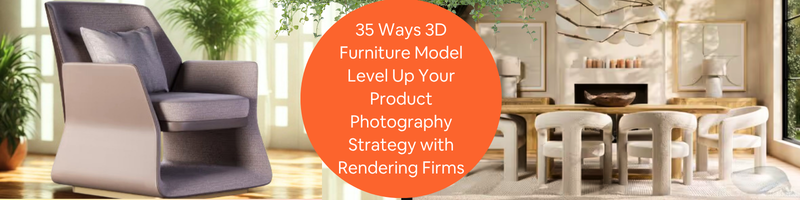
With the rapid growth of digitalization, the furniture industry must keep up with demands beyond simple photography. People wanted to see more to help them visualize how a product looks and feels in real-life spaces. Cad Crowd helps connect furniture industries with experienced freelancers who can create digital furniture models and make them marketable.
🚀 Table of contents
1. Unlimited background variations
Traditional product photography requires extensive preparation and setup. The studio matters in creating the mood or theme it has to portray. Sometimes it can be time-consuming and costly to find locations and setups that suit the desired theme.
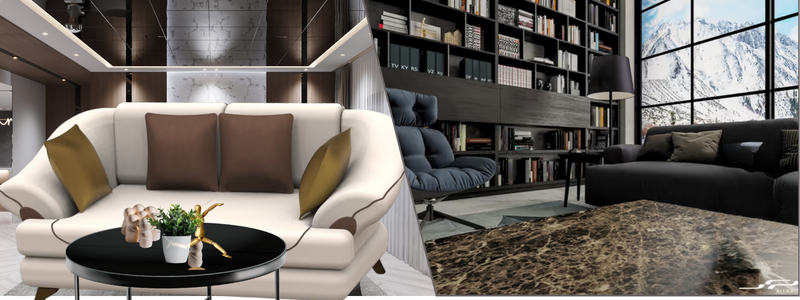
Digitalization is a game-changer, as it allows a product to appear in different locations and setups. This freedom and flexibility allowed the designers to create different visuals that are suitable for different target markets. It also helps in keeping it all consistent in quality.
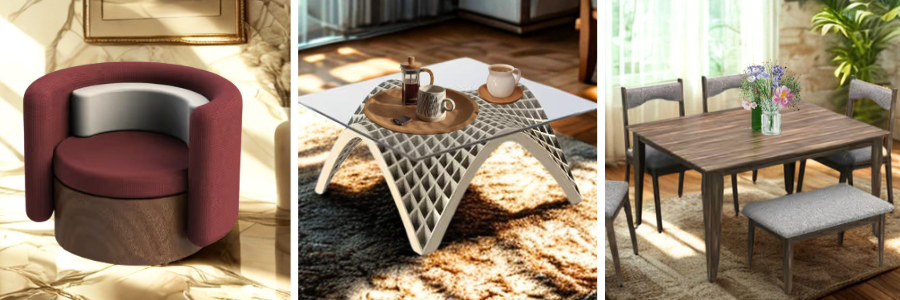
Capturing the color or texture variation of a fabric or wood can take longer than one can imagine. Aside from being a tedious task for the photographer, it is also costly in terms of logistics and storage. 3D modeling makes swapping colors and textures a lot easier in just a few clicks.
Doing so is more practical and efficient, since there’s no need to have a full inventory of the materials. It can be showcased on an online platform, but that doesn’t necessarily mean it has to be in storage. It simplifies the process of giving more options to the buyers without sacrificing resources.
3. Perfection in lighting control
During the traditional photo taking, good lighting is required to make a product look presentable and appealing. There are instances when finding the right angle to make the colors pop is a struggle. 3D rendering processsimplifies this challenge by taking control of virtual light.
In 3D modeling, it is easier to adjust the tone and lighting of the model. It allows the designers to simulate different lighting techniques to create certain moods for the furniture. They could make it look gloomy or comfy just by tweaking light controls.
4. Effortless lifestyle staging
Setting up studios for a photoshoot requires not only good lighting and location but also several props. The time and costs required to brainstorm and prepare for the setup are taxing and expensive. 3D models are a more convenient way to pull elements from libraries to accessorize the setting.
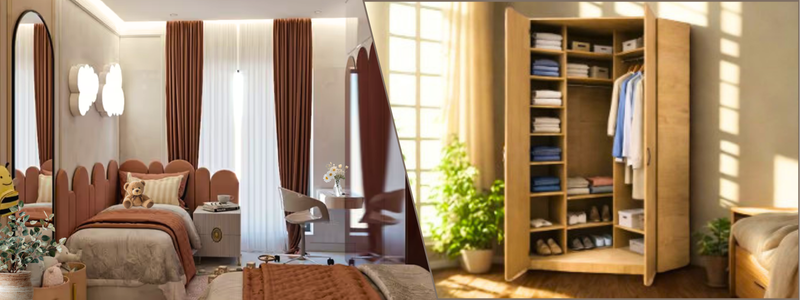
It allows the designers to create a story about how the furniture fits in the real space. For instance, the bed could be made comfy by adding soft sheets and pillows to it. It could also have some stuffed toys to make it look cute and appealing for girls or children.
5. Multi-angle viewpoints
It is hard to get a perfect shot from just a few angles. Capturing a lot of it in real life would be time-consuming and sometimes requires professional skills to make a perfect angle. In 3D modeling, once the model is created, a virtual camera can be used to orbit the model and capture multiple angles.
This captures more angles easily from any angle possible. It could be a close-up or a bird’s-eye view. It gives the buyer a complete understanding of the furniture’s dimensions and build-up. Viewing different angles of the product reduces uncertainty for buyers when they’re just browsing online.
6. Seamless integration into AR
One of the modern and advanced ways of shopping is projecting the furniture in an actual space or room. This can be done by integrating Augmented Reality or AR process. This is where 3D models serve as a base file, allowing users to project them into their spaces using portable devices.
This experience is a game-changer since it reflects how furniture fits in real space. It greatly impacts purchasing decisions since it helps in reducing hesitation. It also helps buyers to understand the design, size, and dimensions of the furniture.
One of the great differences between a photoshoot and a 3D model is cost-effectiveness. Unlike traditional photoshoots, 3D models can be reused for different purposes. For instance, it can generate a close-up or a different angle of the furniture to emphasize textures. A 360 video of a 3D model can also be done.
While traditional photos have fixed outputs, repurposing them can be limited or even impossible, as it would feel like a duplicate. 3D models offer greater flexibility, making it more cost-efficient for brands.
8. Early marketing and pre-sales
With modern digital marketing, it is possible to market-test first before committing to producing units. There’s no need to conduct a full-force production to know if the furniture can produce sales or not.
Early marketing and pre-sales are done to determine whether there are enough serious buyers to make the idea work. Just by transforming all concepts, ideas, and design layouts into realistic 3D furniture models, pre-sales can be done. This allows secure orders even before full production. This is a lot more useful for start-ups that can’t afford to fail on their product launches.
9. Seasonal updates on demand
It is common for some companies to change their themes with the seasons. It is costly and time-consuming to set up a studio suited to each season every time. 3D models simplify this by adjusting the 3D environment.
Through this, the themes can be easily altered to fit preferences. This keeps the marketing materials relevant year-round, with consistent quality. It also makes the engagement go on without being passive and redundant. The firms can just think of a holiday trend and generate it easily without having to incur much cost.
It could be hard to capture small details on camera with simple lenses. In 3D models, showing the finest details of a furniture fabric or joinery can take less time. When the priority is showing or highlighting the fabric stitches or textures, 3D models can easily be the best choice.
It gives a view of even the most intricate details one can see. When the rendering is high-quality, the visualization can feel hyper-realistic design, leading one to think it is real. The close-ups are mostly applicable to luxurious furniture, wherein the focus is on the quality of the materials.
11. Consistent brand identity
When photographing every kind of furniture across different themes, there can be inconsistencies in editing and lighting. With this, the catalog may look uneven, which could weaken the overall presentation on a platform.
With 3D modeling, it is possible to maintain consistency with the furniture’s lighting, angles, and design style. This makes it more consistent in quality. When the products are consistent in the catalog, it looks like it was well-thought-out. It also helps maintain the brand identity when there’s consistency across the catalogs.
12. 360-degree product spins
Although a 360 view can also be captured in real life with a video, it is still different when a buyer can do it themselves. In 3D models, you can orbit to see multiple angles or perspectives. The brands can add this feature to their platforms to allow buyers to do it themselves.
This gives customers an immersive experience and allows them to check out areas they want to check in. It helps them better understand the furniture’s geometry and size. They also zoom in to see fabric detailing or connections within the furniture.
13. Exploded view visuals
Sometimes it is helpful to show the furniture’s internal components to demonstrate its quality and durability. This can be done by adding exploded-view details. 3D furniture models can generate exploded views to reveal parts needed, like frames, layers, or any supporting structures.
It is mostly used for furniture like sofas, chairs, and mattresses where durability and quality matter the most. This kind of visual can’t be captured through a camera since it is hidden inside the structural parts and may need cutting to be seen.
14. Rapid iteration for designers
When the furniture design model is still in its early stages, it can be easily improved and developed through 3D modeling. This allows costly reworks in production. 3D models allow furniture to be seen as it looks in real life, while still allowing it to be modified.
This reduces the need to produce physical units just to reproduce another one with different adjustments. It is more practical to make a base design and iterate different versions to choose from. This is also important as part of the product development documentation process.
3D furniture is important for high-end content and video advertisement since it adds realism to the space. The videos always run through furniture around homes and showcase its fit. It highlights the overall fit of every room.
Videos showcasing homes with furniture earn more engagement and help the furniture brand reach more potential buyers. Dynamic video content is possible with 3D furniture models. It creates an emotional attachment in buyers, influencing their purchase decisions.
16. Shadow and reflection realism
It is usually a struggle to find the perfect lighting and shadow in traditional photography. It could take a lot more effort and be difficult to acquire since it sometimes depends on the time and location of the shoot. This is not a struggle with 3D modeling.
3D furniture modeling has a more controlled and calculated light and shadow to make it realistic. These can be adjusted so they fall naturally on the furniture, making it feel grounded and stable. It is also possible to add in reflections that would feel real and polished.
17. Easy dimensional overlays
Some buyers struggle to visualize the size and fit of furniture, even when the dimensions are stated. To address this, 3D models can add clear dimensional overlays and measurements to a realistic image.
For instance, the customer can now visualize how the bed fits in the room, thanks to its dimensions and labels that fully describe its fit. This makes them feel more certain than measuring themselves. It lessens ambiguity and confusion in online shopping.
18. Creative camera paths
There are several limitations that can be encountered during a product shoot. It could be site or studio space constraints, or lighting setups. 3D models can make it a lot better by capturing unique angles and perspectives that are hard to achieve with cameras.
This is very useful in creative advertisements, making the content more engaging and fun. It can highlight several areas that could be overlooked in realistic shoots. It also introduces smoother transitions and cinematic movements that appeal to buyers.
19. Global collaboration opportunities
3D furniture modeling can be done remotely, and by this, the team can explore outsourcing globally to find the right talent. It offers global opportunities to work with a professional who aligns with their brand vision and style. They can make it fit the specific budget.
This flexible collaboration allows the brand to find a talent that they trust to do the work without worrying about quality. They can focus on other tasks, like the marketing process, and conduct quality checks to ensure the outputs align with the brand.
Doing traditional shoots would require providing a lot of resources that may or may not be reused. This includes seasonal props that may become outdated after a few months. With this, a lot of waste would be generated in just one shot.
3D modeling is considered a green technology since it does not require physical resources. It transforms designs into models without physically producing them. This makes it a more sustainable strategy and an efficient way to manage marketing campaigns.
21. Accurate color matching
Capturing the exact color of the furniture during traditional shoots is a challenge due to lighting. Even after several shots, it still needs editing to make the color pop. This often leads to differences in expectations when buyers receive the product, since the color may vary in person.
3D furniture models can capture and match the exact shade of color accurately. This way, there would be consistency in the color tones of the visuals used. This would make the marketing photos look more presentable and lessen client dissatisfaction.
22. Interactive customization tools
One of the most useful features of 3D furniture models is their customization tools or configurators. This allows users to alter the furniture’s physical attributes to their liking and see what it looks like in a 3D model in real time. They can select and change the color, fabric type, size, and style from the available options.
This is a game-changer for the shopping experience for buyers, as they can personalize their furniture. The whole customization strategy allows them to explore combinations. This significantly increases buyer satisfaction and promotes high-value purchases.
It is a struggle to capture the in-depth textures detailof furniture materials, such as wood grain, in the studio. There are camera lenses that can’t capture its richness and detail. It wouldn’t be practical to invest in expensive cameras just to get the right picture, since lighting, angles, and a photographer’s skills also influence the outcome.
3D furniture modeling can use high-resolution scans of the real world and apply them. This simulates how the exact finish looks in real life without having to see the physical one. It helps customers understand the quality of the material and what it looks like in a realistic setting.
24. Eliminating post-production delays
After studio shoots, there are a lot of fixes to do before using the photos. It requires editing and removing unnecessary scratches and reflections. It would sometimes take much longer than expected, especially if there was a lot to edit. In 3D furniture modeling, it is easy to clean up and remove unwanted elements.
This helps speed up the publication of content on the platforms. The launch would be on time without compromising the quality of the visuals. It isn’t just an efficient approach but also cost-effective since it did not take many resources to produce it.
25. Virtual showrooms
One way to market furniture digitally is to have the users have an immersive experience. This can be done by letting them enter a virtual showroom and navigate through the products inside. This can be done on a computer or with a VR headset.
Inside the showroom, the furniture can be displayed virtually. This mimics the real-life shopping experience. It allows buyers to see the furniture in a more engaging way and feel a sense of attachment to the product. Doing this reduces client dissatisfaction since they’ve already seen what it could look like in real life.
26. Dynamic depth of field
In 3D furniture models, the focus on the image can be adjusted to highlight a certain detail. It can be readjusted or replaced if needed. This makes it more convenient to draw attention to a specific hardware or joinery of the furniture.
Having to do this without the need to use special lens cameras is a more efficient approach. This reduces the time to retake a photo because the lighting did not cooperate or the camera settings need to be readjusted. Controlled focus on the product makes it look more polished and presentable in a catalog.
27. Infinite product stacking
There is so much ease in placing several pieces of furniture in one space just by 3D modeling. It did not require people to set it up and arrange it. This is one of the advantages of digital models: there’s flexibility in creating visuals that are tedious and hard to achieve in real life.
The limitations in realistic settings constrain the creativity of content. This is why the digitalized ones are more engaging since they add unique setups. Stack-ups designhelp customers understand how each fits with the others and visualize how it adapts in the space.
28. Perfect symmetry and alignment
It is not unusual for a physical product to contain slight imperfections, such as uneven cushions, hems, or fabric creases. It may not look bad in real life, but cameras exaggerate since it’s in high resolution. 3D furniture models make the products look perfect. It improves the overall presentation of the furniture.
In 3D modeling, the elements are made with precision and perfect alignment. It can stay in place unless otherwise adjusted. Even with such perfection, it wouldn’t look too stiff or artificial since it can be polished to make it look real. Adding warm tones or fixing lighting can help to make it feel natural and real.
29. Simulating different times of day
3D furniture modeling can simulate different time settings by adjusting its light conditions. This can be done in several clicks. It adds dramatic appeal to the furniture and makes it look natural.
Instead of traditionally setting up a shoot at different times of the day to get the perfect shot of furniture, 3D modeling can be done. Exploration and creativity are maximized even without spending a lot of time and resources. Through this, there would be multiple selections to choose from. Not only that, but the other visuals can also be reused for some other online advertisement.
30. Recreating historic styles
When the marketing team wants furniture to be aligned with a historical or vintage theme, it can be tedious to achieve in a real-life setting. The props used may be discarded after use. 3D furniture modeling allows recreation of historical designs by decorating backgrounds and adding elements that match them.
The theme can be adjusted repeatedly without much physical effort. Several design styles can even be generated to explore the best visual. This approach helps brands provide an even more accurate context for what they’re trying to connect. It strengthens the appeal to buyers who are into that style.
For marketing in commercialized projects, the best practical way is through 3D modeling. It would be hard to imagine how hundreds or even thousands of chairs or tables can fit in a stadium or airport. Producing a mockup of this won’t be possible because of its massive scale.
In 3D modeling, an accurate visualization of a commercial place filled with chairs and other furniture can be done. It helps the clients to see how it fits or how many could still fill up the place. Certain arrangements can also be made to match the client’s preferences. This allows decision-makers to evaluate the overall spatial impact and efficiency.
32. Multi-functional prop integration
The 3D props do not just add aesthetics to the overall visualization of the furniture. It adds functionality or connection to it. For instance, books are placed on the shelves so that buyers can see their size comparisons. It gives them a sense of scale and fit.
The small details added to the visual serve a purpose and complete the overall function of the furniture. It could tell a story of a certain lifestyle attached to it, which appeals to the target market. Or it could influence a certain routine or activity. Props help the customers picture life with the furniture.
33. High-resolution print-ready assets
3D furniture renders and models are made with high resolution. It offers even better quality than standard cameras. This is why digital models appear sharp, detailed, and crisp even when printed on large billboards or displays.
Photos captured from a camera may appear pixelated or blurry when printed. This is because the resolution matters. It couldn’t produce high definition without expensive cameras. 3D models are not a practical choice. It allows flexibility in use and purpose, especially for marketing campaigns across different platforms.
34. Managing complex reflections
There are struggles with capturing mirrored surfaces in traditional shoots since there could be incidents wherein something shows in the reflection. This can be avoided by using 3D modeling. In here, there would be nothing to ruin the shot since it is all clear.
Since everything is done digitally, the models or renders appear clean and professional. The reflection is refined and controlled, enhancing the overall composition. It brings out the sleek and premium quality appeal of the furniture. It improves the overall presentation because of it.
When a furniture company commits to making its models digital, it can set up a virtual studio to be consistent in quality. Here, there’s no need to manually set up lighting, background and props every time a shoot is needed. The same setup can be reused to maintain consistency within a specific theme or lifestyle.
Once the virtual studio and digitalization are established, generating content is fast and efficient. It would only take time to brainstorm an idea on how they want to present the product. But the actual design and visualization process wouldn’t take long compared to traditional shoots. It’s a flexible approach that produces consistent content for different platforms.
Conclusion
Digitalization has greatly improved the way furniture brands do their marketing content. There’s a lot more flexibility and creativity that can be explored beyond traditional photoshoots. The growing trend toward 3D models can help generate content that could boost sales and profits. It helps not only the businesses to thrive in the market but also improves buyers’ satisfaction. To help you do the creative marketing campaign you’re thinking about, explore Cad Crowd to hire vetted professionals to do the 3D modeling you need.
How Cad Crowd can help
Working with the right experts makes the dream work. Having clear communication and collaboration is a step toward making a product successful. With suitable and right deliberation, communication, and support, any simple idea can be turned into a fully made product that customers will trust and be happy to buy. Contact Cad Crowd today and start bringing your ideas to life with a free quote.
MacKenzie Brown is the founder and CEO of Cad Crowd. With over 18 years of experience in launching and scaling platforms specializing in CAD services, product design, manufacturing, hardware, and software development, MacKenzie is a recognized authority in the engineering industry. Under his leadership, Cad Crowd serves esteemed clients like NASA, JPL, the U.S. Navy, and Fortune 500 companies, empowering innovators with access to high-quality design and engineering talent.
Starting… uh, last week, we’re making a bunch of improvements to the RPS Supporter Program, the super-special subscription service through which impossibly cool RPS readers can support our writing and reporting directly. The catch? Ha ha! There isn’t one.
The Redmi Note 17 Pro comes with a promise of free battery replacement if battery health drops below 80% within four years.
Durability gets a boost too, with an IP69K rating for strong dust and high-pressure water resistance.
The Pro model also gets a refreshed look, featuring a more prominent dual-camera island than the standard Redmi Note 17.
Smartphone makers love to talk about bigger batteries, but Xiaomi is taking a different approach with the Redmi Note 17 Pro. The company promises to keep that battery healthy for years, and it’s willing to replace it for free if it doesn’t.
Xiaomi has confirmed a new battery guarantee for the Redmi Note 17 Pro ahead of the phone’s July 14 debut in China. The battery is designed to retain at least 80 percent of its original capacity after four years of use. If it falls below that threshold during the coverage period, eligible users can receive a free replacement, Xiaomi Group President Lu Weibing revealed on Weibo (via Android Authority).
As people keep their phones longer, the health of the battery becomes a bigger concern. Most lithium-ion batteries lose capacity over time, after a number of charges, so Xiaomi’s promise is to ease one of the biggest long-term ownership concerns.
Latest Videos From
Xiaomi revealed much more than just the battery guarantee before its launch. The Redmi Note 17 Pro will pack a large 9,000mAh battery, per Xiaomi’s separate Weibo post.
Leaks and official teasers are also starting to paint a clearer picture of the hardware. The Redmi Note 17 Pro is rumored to feature a Snapdragon 6 Gen 5 processor. Camera upgrades seem to be another major focus, with the Pro model tipped to carry a 200MP primary sensor, while the standard Redmi Note 17 is expected to stick with a 50MP main camera.
The design also keeps the two phones apart. Official images show the standard model with a less complicated rear camera arrangement, while the Pro sports a more pronounced dual-camera island.
Android Central’s Take
Hopefully this is an indication of a wider change and not a one-off marketing stunt. Phone brands keep pushing for bigger batteries and faster charging, but none of that matters much if the battery dies long before I’m ready to replace the device. If Xiaomi is serious about this free replacement promise, it could save users some cash and make upgrading less of a necessity. Now the rest of the industry has to decide if they are going to follow suit or continue to pretend battery longevity isn’t a problem worth solving.
Get the latest news from Android Central, your trusted companion in the world of Android
Both the black and green pair have hit this price at the retailer, but they’re actually not the only colors on sale. The blue, pink, and white pairs are discounted for a couple dollars extra at $29.99. No matter which color you go with, you’ll still enjoy some savings.
These earbuds have stood out to us as the best budget pair under $50, with our roundup saying, “The active noise cancellation on them is impressive for their price, able to block out the bustle of busy streets or the noisy gym.” However, it does add that, “it isn’t the best noise cancellation or sound we’ve ever experienced,” as a “$50 pair of earbuds just can’t compete with a $300 pair,” but if you don’t mind that, they’re a great option to grab that won’t break the bank.
Our roundup also highlights that, “Advanced audiophiles on a budget will enjoy the addition of custom EQs and multi-point connection.” Plus, their battery life can definitely keep up with you, boasting up to 45 hours with the charging case, or 25 hours with ANC enabled.
Mashable Deals
By signing up, you agree to receive recurring automated SMS marketing messages from Mashable Deals at the number provided. Msg and data rates may apply. Up to 2 messages/day. Reply STOP to opt out, HELP for help. Consent is not a condition of purchase. See our Privacy Policy and Terms of Use.
When most people think about a custom PC, they focus on the big-ticket components: the processor, graphics card, memory, or storage. Those parts certainly determine a system’s performance, but there’s another detail that separates an average build from an exceptional one, and that’s cable management.
At first glance, neatly routed cables may seem like nothing more than a cosmetic touch. In reality, proper cable management has a direct impact on cooling, reliability, ease of maintenance, and even the longevity of your components. It’s one of the hallmarks of a professionally assembled custom PC.
Better Airflow Means Better Performance
Modern desktop processors and graphics cards generate significant amounts of heat under load. The job of your cooling system is to move fresh air through the chassis while exhausting hot air as efficiently as possible.
Poorly routed power cables, SATA cables, and fan wiring can obstruct that airflow, creating pockets of trapped heat. Even if temperatures only increase by a few degrees, that can make the difference between a system maintaining its maximum boost clocks or throttling performance to stay within safe operating limits.
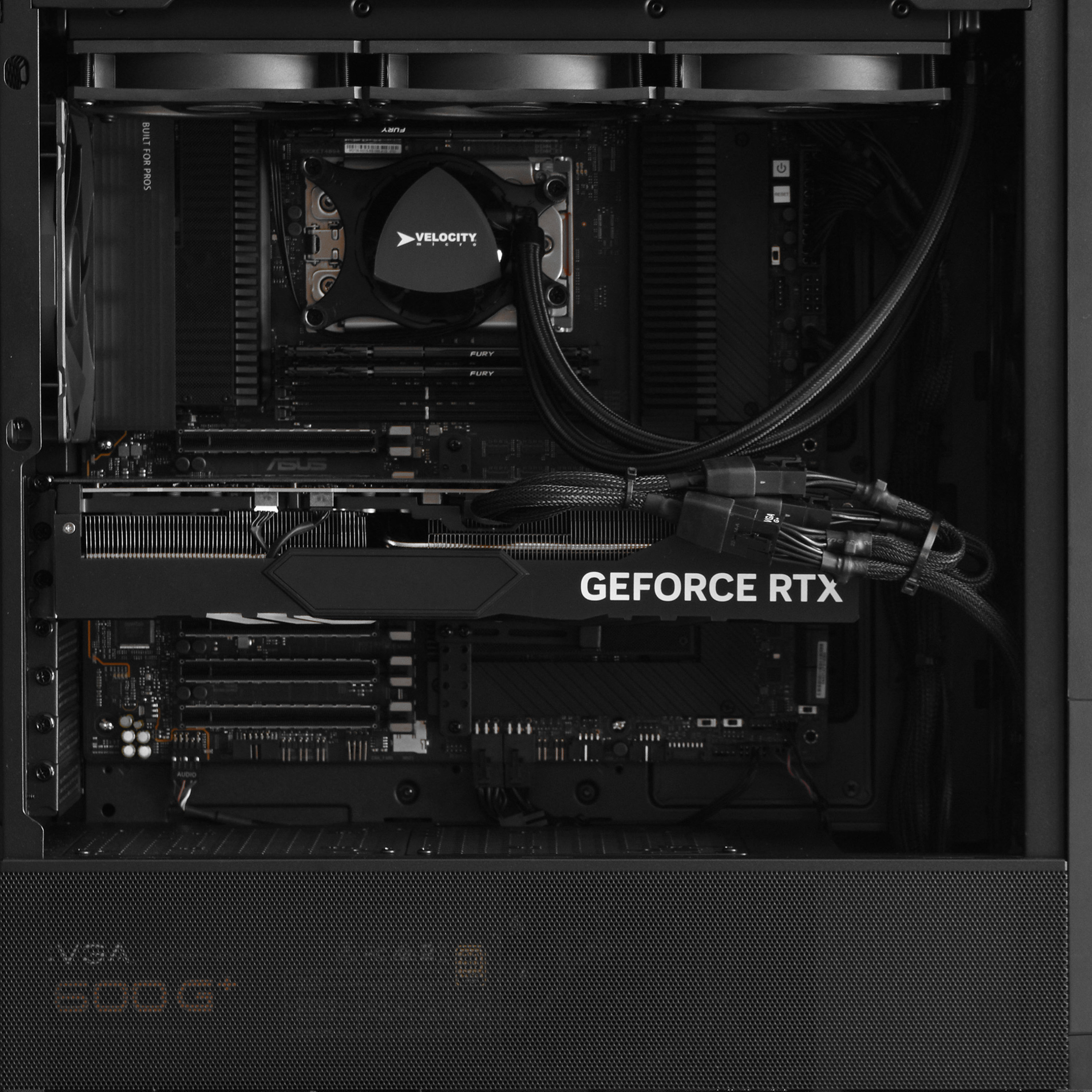
By routing cables behind the motherboard tray, securing excess length, and keeping the main airflow path clear, custom builders allow case fans to work more efficiently. The result is lower temperatures, quieter fan operation, and more consistent performance during gaming, content creation, engineering workloads, or AI processing.
Easier Maintenance and Upgrades
A clean build isn’t just easier on the eyes. It’s also much easier to service.
Whether you’re installing additional storage, replacing a graphics card, or upgrading memory, organized cables make every component easier to access. Technicians spend less time tracing wires, and there’s less risk of accidentally unplugging or damaging nearby connections.
For businesses that rely on workstation uptime, this can translate into faster maintenance and reduced downtime.
Improved Reliability
Loose cables can cause more problems than many people realize.
Poorly secured wiring can work its way into cooling fans, create unnecessary strain on motherboard headers, or place constant pressure on connectors. Over time, repeated movement during shipping or transportation can loosen improperly managed cables.
Professional cable management secures every connection while minimizing unnecessary stress on the wiring itself. This helps ensure the system continues operating reliably for years.
A Reflection of Build Quality
Anyone can assemble PC components. Building a premium computer takes considerably more care.
Clean cable routing demonstrates attention to detail throughout the entire assembly process. Builders who invest the time to organize every cable are typically paying close attention to other important details as well, including thermal paste application, component installation, firmware updates, stability testing, and quality control.
In many ways, cable management is a visible indicator of the craftsmanship behind the entire system.
The Velocity Micro Difference
Since 1997, Velocity Micro has built its reputation on craftsmanship and attention to detail. Every system is assembled by experienced technicians who understand that performance isn’t determined solely by premium hardware, but it’s also influenced by how that hardware is integrated into the finished system.
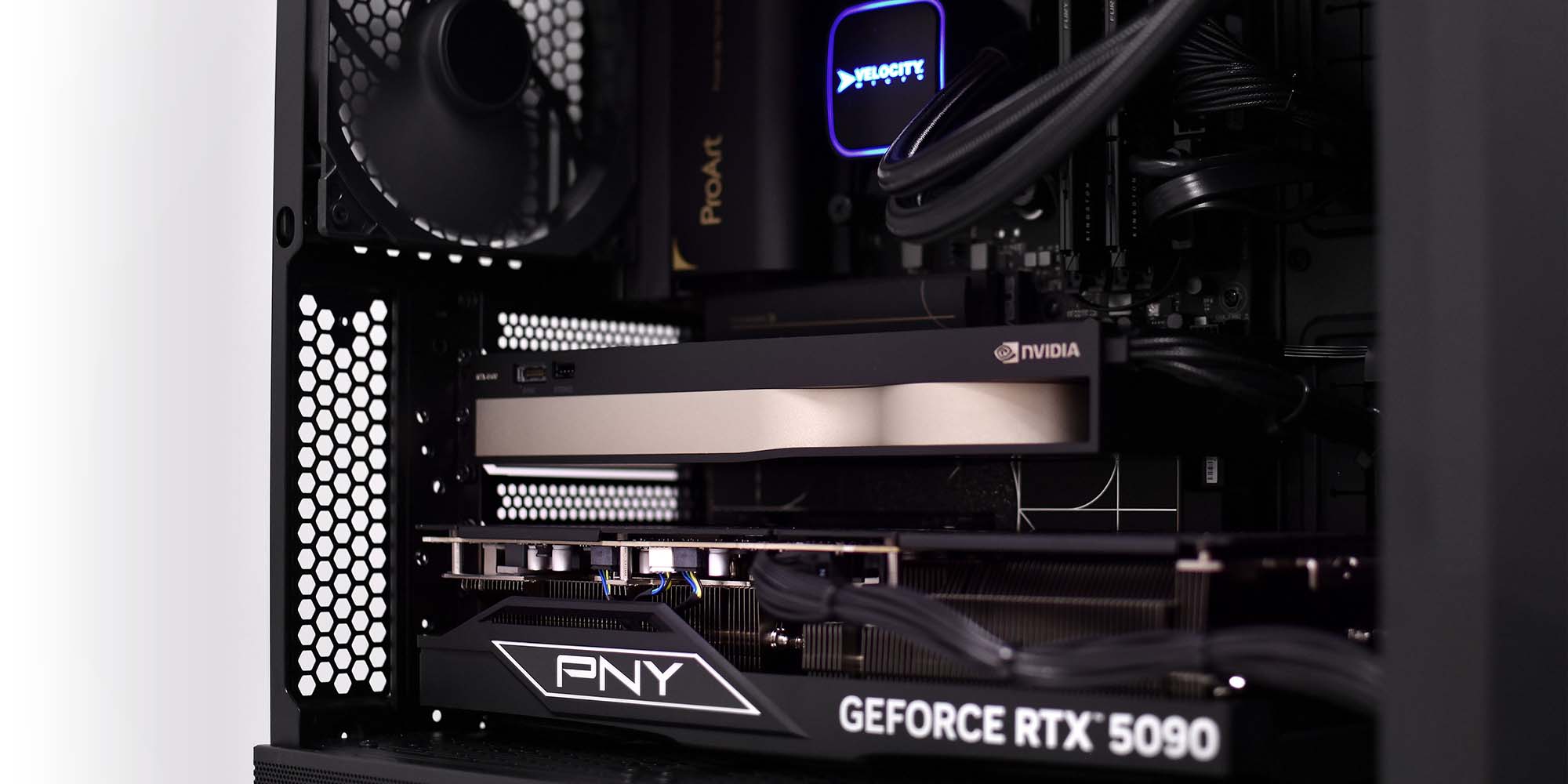
One of the first things customers notice when opening a Velocity Micro PC is the exceptionally clean internal wiring. Cables are carefully measured, routed, secured, and hidden wherever possible to maximize unobstructed airflow throughout the chassis.
That meticulous approach isn’t simply about aesthetics. As mentioned earlier, that cleaner airflow helps CPUs and GPUs maintain lower operating temperatures, allowing cooling systems to work more efficiently while reducing unnecessary fan noise. Better thermal performance also helps modern processors and graphics cards sustain higher boost frequencies during demanding workloads, whether you’re gaming, rendering complex projects, compiling software, or running AI applications.
It’s one of the many small details that separates a handcrafted custom PC from a mass-produced system. While neatly organized cables may not appear on a specification sheet, they’re part of the engineering philosophy that has defined Velocity Micro for nearly three decades: build every system with the same care, precision, and attention to detail that you’d expect from a premium workstation or enthusiast gaming PC.
Because in the world of custom PCs, excellence is so much more than just the components you choose.
The following two tabs change content below.
This content was written by the expert Velocity Micro staff.