35 Ways 3D Furniture Model Level Up Your Product Photography Strategy with Rendering Firms


With the rapid growth of digitalization, the furniture industry must keep up with demands beyond simple photography. People wanted to see more to help them visualize how a product looks and feels in real-life spaces. Cad Crowd helps connect furniture industries with experienced freelancers who can create digital furniture models and make them marketable.  


🚀 Table of contents


1. Unlimited background variations

Traditional product photography requires extensive preparation and setup. The studio matters in creating the mood or theme it has to portray. Sometimes it can be time-consuming and costly to find locations and setups that suit the desired theme.

Digitalization is a game-changer, as it allows a product to appear in different locations and setups. This freedom and flexibility allowed the designers to create different visuals that are suitable for different target markets. It also helps in keeping it all consistent in quality.

RELATED: Custom Furniture Design – How Firms Use 3D Models and 3D Rendering Services

2. Instant color and texture swaps

Capturing the color or texture variation of a fabric or wood can take longer than one can imagine. Aside from being a tedious task for the photographer, it is also costly in terms of logistics and storage. 3D modeling makes swapping colors and textures a lot easier in just a few clicks.

Doing so is more practical and efficient, since there’s no need to have a full inventory of the materials. It can be showcased on an online platform, but that doesn’t necessarily mean it has to be in storage. It simplifies the process of giving more options to the buyers without sacrificing resources.

3. Perfection in lighting control

During the traditional photo taking, good lighting is required to make a product look presentable and appealing. There are instances when finding the right angle to make the colors pop is a struggle. 3D rendering process simplifies this challenge by taking control of virtual light.

In 3D modeling, it is easier to adjust the tone and lighting of the model. It allows the designers to simulate different lighting techniques to create certain moods for the furniture. They could make it look gloomy or comfy just by tweaking light controls.

4. Effortless lifestyle staging

Setting up studios for a photoshoot requires not only good lighting and location but also several props. The time and costs required to brainstorm and prepare for the setup are taxing and expensive. 3D models are a more convenient way to pull elements from libraries to accessorize the setting.

RELATED: How to Get the Best 3D Rendering Services for Furniture Design

It allows the designers to create a story about how the furniture fits in the real space. For instance, the bed could be made comfy by adding soft sheets and pillows to it. It could also have some stuffed toys to make it look cute and appealing for girls or children.

5. Multi-angle viewpoints

It is hard to get a perfect shot from just a few angles. Capturing a lot of it in real life would be time-consuming and sometimes requires professional skills to make a perfect angle. In 3D modeling, once the model is created, a virtual camera can be used to orbit the model and capture multiple angles.

This captures more angles easily from any angle possible. It could be a close-up or a bird’s-eye view. It gives the buyer a complete understanding of the furniture’s dimensions and build-up. Viewing different angles of the product reduces uncertainty for buyers when they’re just browsing online.

6. Seamless integration into AR

One of the modern and advanced ways of shopping is projecting the furniture in an actual space or room. This can be done by integrating Augmented Reality or AR process. This is where 3D models serve as a base file, allowing users to project them into their spaces using portable devices.

This experience is a game-changer since it reflects how furniture fits in real space. It greatly impacts purchasing decisions since it helps in reducing hesitation. It also helps buyers to understand the design, size, and dimensions of the furniture.
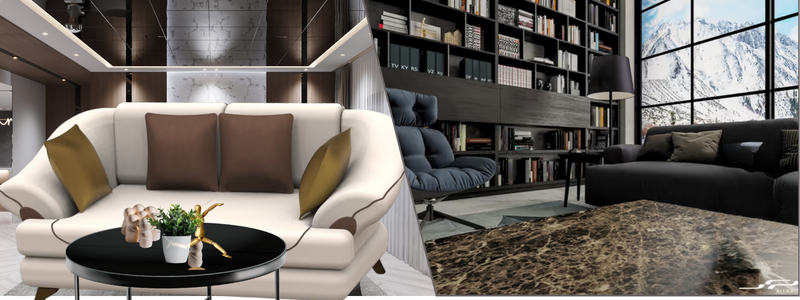
Ways-3d-furniture-rendering-improves-product-marketing

RELATED: 3D Furniture Visualization and Rendering Process: How to Create High-End 3D Content

7. Cost-effective asset repurposing

One of the great differences between a photoshoot and a 3D model is cost-effectiveness. Unlike traditional photoshoots, 3D models can be reused for different purposes. For instance, it can generate a close-up or a different angle of the furniture to emphasize textures. A 360 video of a 3D model can also be done.

While traditional photos have fixed outputs, repurposing them can be limited or even impossible, as it would feel like a duplicate. 3D models offer greater flexibility, making it more cost-efficient for brands.  

8. Early marketing and pre-sales

With modern digital marketing, it is possible to market-test first before committing to producing units. There’s no need to conduct a full-force production to know if the furniture can produce sales or not.

Early marketing and pre-sales are done to determine whether there are enough serious buyers to make the idea work. Just by transforming all concepts, ideas, and design layouts into realistic 3D furniture models, pre-sales can be done. This allows secure orders even before full production. This is a lot more useful for start-ups that can’t afford to fail on their product launches.

9. Seasonal updates on demand

It is common for some companies to change their themes with the seasons. It is costly and time-consuming to set up a studio suited to each season every time. 3D models simplify this by adjusting the 3D environment.

Through this, the themes can be easily altered to fit preferences. This keeps the marketing materials relevant year-round, with consistent quality. It also makes the engagement go on without being passive and redundant. The firms can just think of a holiday trend and generate it easily without having to incur much cost.

RELATED: How Can Companies Use 3D Renders To Showcase Custom Beautiful Furniture Designs?

10. Macro detail highlighting

It could be hard to capture small details on camera with simple lenses. In 3D models, showing the finest details of a furniture fabric or joinery can take less time. When the priority is showing or highlighting the fabric stitches or textures, 3D models can easily be the best choice.

It gives a view of even the most intricate details one can see. When the rendering is high-quality, the visualization can feel hyper-realistic design, leading one to think it is real. The close-ups are mostly applicable to luxurious furniture, wherein the focus is on the quality of the materials.

11. Consistent brand identity

When photographing every kind of furniture across different themes, there can be inconsistencies in editing and lighting. With this, the catalog may look uneven, which could weaken the overall presentation on a platform.

With 3D modeling, it is possible to maintain consistency with the furniture’s lighting, angles, and design style. This makes it more consistent in quality. When the products are consistent in the catalog, it looks like it was well-thought-out. It also helps maintain the brand identity when there’s consistency across the catalogs.

12. 360-degree product spins

Although a 360 view can also be captured in real life with a video, it is still different when a buyer can do it themselves. In 3D models, you can orbit to see multiple angles or perspectives. The brands can add this feature to their platforms to allow buyers to do it themselves.

RELATED: How 3D Rendering Enhances Virtual Furniture Showrooms & Shopping with Company Services

This gives customers an immersive experience and allows them to check out areas they want to check in. It helps them better understand the furniture’s geometry and size. They also zoom in to see fabric detailing or connections within the furniture.

13. Exploded view visuals

Sometimes it is helpful to show the furniture’s internal components to demonstrate its quality and durability. This can be done by adding exploded-view details. 3D furniture models can generate exploded views to reveal parts needed, like frames, layers, or any supporting structures.

It is mostly used for furniture like sofas, chairs, and mattresses where durability and quality matter the most. This kind of visual can’t be captured through a camera since it is hidden inside the structural parts and may need cutting to be seen.

14. Rapid iteration for designers

When the furniture design model is still in its early stages, it can be easily improved and developed through 3D modeling. This allows costly reworks in production. 3D models allow furniture to be seen as it looks in real life, while still allowing it to be modified.

This reduces the need to produce physical units just to reproduce another one with different adjustments. It is more practical to make a base design and iterate different versions to choose from. This is also important as part of the product development documentation process.

RELATED: 3D Furniture Visualization: How to Create Premium Furniture for your Company

15. Dynamic video content

3D furniture is important for high-end content and video advertisement since it adds realism to the space. The videos always run through furniture around homes and showcase its fit. It highlights the overall fit of every room.

Videos showcasing homes with furniture earn more engagement and help the furniture brand reach more potential buyers. Dynamic video content is possible with 3D furniture models. It creates an emotional attachment in buyers, influencing their purchase decisions.

16. Shadow and reflection realism

It is usually a struggle to find the perfect lighting and shadow in traditional photography. It could take a lot more effort and be difficult to acquire since it sometimes depends on the time and location of the shoot. This is not a struggle with 3D modeling.
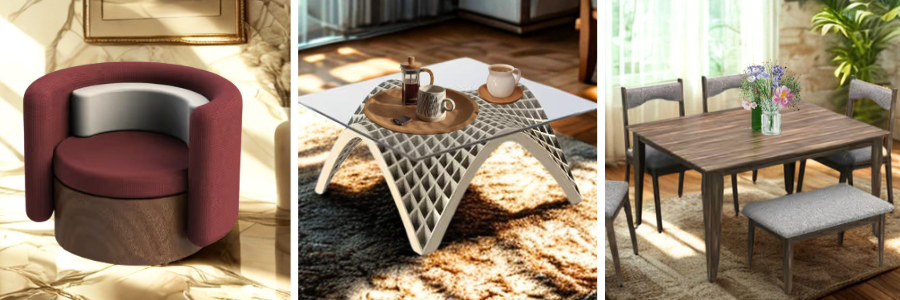
Improving-furniture-marketing-with-realistic-3d-renderings

3D furniture modeling has a more controlled and calculated light and shadow to make it realistic. These can be adjusted so they fall naturally on the furniture, making it feel grounded and stable. It is also possible to add in reflections that would feel real and polished.

17. Easy dimensional overlays

Some buyers struggle to visualize the size and fit of furniture, even when the dimensions are stated. To address this, 3D models can add clear dimensional overlays and measurements to a realistic image.

RELATED: 3D Rendering Furniture vs. Photography: Which is Better For Your Furniture Company?

For instance, the customer can now visualize how the bed fits in the room, thanks to its dimensions and labels that fully describe its fit. This makes them feel more certain than measuring themselves. It lessens ambiguity and confusion in online shopping.

18. Creative camera paths

There are several limitations that can be encountered during a product shoot. It could be site or studio space constraints, or lighting setups. 3D models can make it a lot better by capturing unique angles and perspectives that are hard to achieve with cameras.

This is very useful in creative advertisements, making the content more engaging and fun. It can highlight several areas that could be overlooked in realistic shoots. It also introduces smoother transitions and cinematic movements that appeal to buyers.

19. Global collaboration opportunities

3D furniture modeling can be done remotely, and by this, the team can explore outsourcing globally to find the right talent. It offers global opportunities to work with a professional who aligns with their brand vision and style. They can make it fit the specific budget.

This flexible collaboration allows the brand to find a talent that they trust to do the work without worrying about quality. They can focus on other tasks, like the marketing process, and conduct quality checks to ensure the outputs align with the brand.

RELATED: The Workflow Process for Interior 3D Rendering at Companies & Design Firms

20. Reducing physical waste

Doing traditional shoots would require providing a lot of resources that may or may not be reused. This includes seasonal props that may become outdated after a few months. With this, a lot of waste would be generated in just one shot.

3D modeling is considered a green technology since it does not require physical resources. It transforms designs into models without physically producing them. This makes it a more sustainable strategy and an efficient way to manage marketing campaigns.

21. Accurate color matching

Capturing the exact color of the furniture during traditional shoots is a challenge due to lighting. Even after several shots, it still needs editing to make the color pop. This often leads to differences in expectations when buyers receive the product, since the color may vary in person.

3D furniture models can capture and match the exact shade of color accurately. This way, there would be consistency in the color tones of the visuals used. This would make the marketing photos look more presentable and lessen client dissatisfaction.

22. Interactive customization tools

One of the most useful features of 3D furniture models is their customization tools or configurators. This allows users to alter the furniture’s physical attributes to their liking and see what it looks like in a 3D model in real time. They can select and change the color, fabric type, size, and style from the available options.

This is a game-changer for the shopping experience for buyers, as they can personalize their furniture. The whole customization strategy allows them to explore combinations. This  significantly increases buyer satisfaction and promotes high-value purchases.

RELATED: Custom Furniture Design – How Firms Use 3D Models and 3D Rendering Services

23. Hyper-realistic wood grain

It is a struggle to capture the in-depth textures detail of furniture materials, such as wood grain, in the studio. There are camera lenses that can’t capture its richness and detail. It wouldn’t be practical to invest in expensive cameras just to get the right picture, since lighting, angles, and a photographer’s skills also influence the outcome.

3D furniture modeling can use high-resolution scans of the real world and apply them. This simulates how the exact finish looks in real life without having to see the physical one. It helps customers understand the quality of the material and what it looks like in a realistic setting.

24. Eliminating post-production delays

After studio shoots, there are a lot of fixes to do before using the photos. It requires editing and removing unnecessary scratches and reflections. It would sometimes take much longer than expected, especially if there was a lot to edit. In 3D furniture modeling, it is easy to clean up and remove unwanted elements.

This helps speed up the publication of content on the platforms. The launch would be on time without compromising the quality of the visuals. It isn’t just an efficient approach but also cost-effective since it did not take many resources to produce it.

25. Virtual showrooms

One way to market furniture digitally is to have the users have an immersive experience. This can be done by letting them enter a virtual showroom and navigate through the products inside. This can be done on a computer or with a VR headset.

RELATED: How to Get the Best 3D Rendering Services for Furniture Design

Inside the  showroom, the furniture can be displayed virtually. This mimics the real-life shopping experience. It allows buyers to see the furniture in a more engaging way and feel a sense of attachment to the product. Doing this reduces client dissatisfaction since they’ve already seen what it could look like in real life.

26. Dynamic depth of field

In 3D furniture models, the focus on the image can be adjusted to highlight a certain detail. It can be readjusted or replaced if needed. This makes it more convenient to draw attention to a specific hardware or joinery of the furniture.

Having to do this without the need to use special lens cameras is a more efficient approach. This reduces the time to retake a photo because the lighting did not cooperate or the camera settings need to be readjusted. Controlled focus on the product makes it look more polished and presentable in a catalog.

27. Infinite product stacking

There is so much ease in placing several pieces of furniture in one space just by 3D modeling. It did not require people to set it up and arrange it. This is one of the advantages of digital models: there’s flexibility in creating visuals that are tedious and hard to achieve in real life.

The limitations in realistic settings constrain the creativity of content. This is why the digitalized ones are more engaging since they add unique setups. Stack-ups design help customers understand how each fits with the others and visualize how it adapts in the space.

28. Perfect symmetry and alignment

It is not unusual for a physical product to contain slight imperfections, such as uneven cushions, hems, or fabric creases. It may not look bad in real life, but cameras exaggerate since it’s in high resolution. 3D furniture models make the products look perfect. It improves the overall presentation of the furniture.
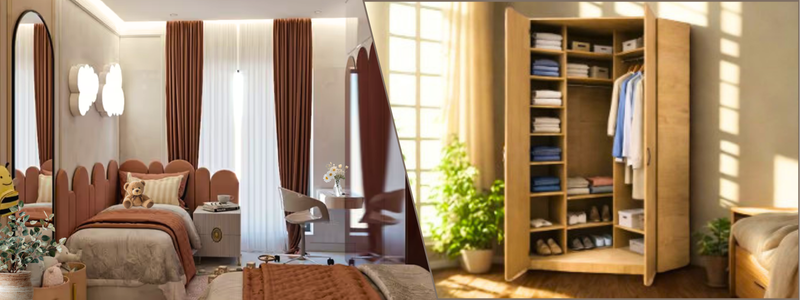
How-3d-furniture-models-transform-product-photography-strategies

RELATED: 8 Stages of the 3D Furniture Visualization Process when Hiring Rendering Services Firms

In 3D modeling, the elements are made with precision and perfect alignment. It can stay in place unless otherwise adjusted. Even with such perfection, it wouldn’t look too stiff or artificial since it can be polished to make it look real. Adding warm tones or fixing lighting can help to make it feel natural and real.

29. Simulating different times of day

3D furniture modeling can simulate different time settings by adjusting its light conditions. This can be done in several clicks. It adds dramatic appeal to the furniture and makes it look natural.

Instead of traditionally setting up a shoot at different times of the day to get the perfect shot of furniture, 3D modeling can be done. Exploration and creativity are maximized even without spending a lot of time and resources. Through this, there would be multiple selections to choose from. Not only that, but the other visuals can also be reused for some other online advertisement.

30. Recreating historic styles

When the marketing team wants furniture to be aligned with a historical or vintage theme, it can be tedious to achieve in a real-life setting. The props used may be discarded after use. 3D furniture modeling allows recreation of historical designs by decorating backgrounds and adding elements that match them.

The theme can be adjusted repeatedly without much physical effort. Several design styles can even be generated to explore the best visual. This approach helps brands provide an even more accurate context for what they’re trying to connect. It strengthens the appeal to buyers who are into that style.  

RELATED: 3D Furniture Rendering Services for Companies and Firms, Cost, Rates, Pricing

31. Visualizing large-scale installations

For marketing in commercialized projects, the best practical  way is  through 3D modeling. It would be hard to imagine how hundreds or even thousands of chairs or tables can fit in a stadium or airport. Producing a mockup of this won’t be possible because of its massive scale.

In 3D modeling, an accurate visualization of a commercial place filled with chairs and other furniture can be done. It helps the clients to see how it fits or how many could still fill up the place. Certain arrangements can also be made to match the client’s preferences. This allows decision-makers to evaluate the overall spatial impact and efficiency.

32. Multi-functional prop integration

The 3D props do not just add aesthetics to the overall visualization of the furniture. It adds functionality or connection to it. For instance, books are placed on the shelves so that buyers can see their size comparisons. It gives them a sense of scale and fit.

The small details added to the visual serve a purpose and complete the overall function of the furniture. It could tell a story of a certain lifestyle attached to it, which appeals to the target market. Or it could influence a certain routine or activity. Props help the customers picture life with the furniture.

33. High-resolution print-ready assets

3D furniture renders and models are made with high resolution. It offers even better quality than standard cameras. This is why digital models appear sharp, detailed, and crisp even when printed on large billboards or displays.

Photos captured from a camera may appear pixelated or blurry when printed. This is because the resolution matters. It couldn’t produce high definition without expensive cameras. 3D models are not a practical choice. It allows flexibility in use and purpose, especially for marketing campaigns across different platforms.

34. Managing complex reflections

There are struggles with capturing mirrored surfaces in traditional shoots since there could be incidents wherein something shows in the reflection. This can be avoided by using 3D modeling. In here, there would be nothing to ruin the shot since it is all clear.

Since everything is done digitally, the models or renders appear clean and professional. The reflection is refined and controlled, enhancing the overall composition. It brings out the sleek and premium quality appeal of the furniture. It improves the overall presentation because of it.

RELATED: 3D Furniture Visualization: How to Create Premium Furniture for your Company

35. High-speed content production

When a furniture company commits to making its models digital, it can set up a virtual studio to be consistent in quality. Here, there’s no need to manually set up lighting, background and props every time a shoot is needed. The same setup can be reused to maintain consistency within a specific theme or lifestyle.

Once the virtual studio and digitalization are established, generating content is fast and efficient. It would only take time to brainstorm an idea on how they want to present the product. But the actual design and visualization process wouldn’t take long compared to traditional shoots. It’s a flexible approach that produces consistent content for different platforms.

Conclusion

Digitalization has greatly improved the way furniture brands do their marketing content. There’s a lot more flexibility and creativity that can be explored beyond traditional photoshoots. The growing trend toward 3D models can help generate content that could boost sales and profits. It helps not only the businesses to thrive in the market but also improves buyers’ satisfaction. To help you do the creative marketing campaign you’re thinking about, explore Cad Crowd to hire vetted professionals to do the 3D modeling you need.

How Cad Crowd can help

Working with the right experts makes the dream work. Having clear communication and collaboration is a step toward making a product successful. With suitable and right deliberation, communication, and support, any simple idea can be turned into a fully made product that customers will trust and be happy to buy. Contact Cad Crowd today and start bringing your ideas to life with a free quote.

author avatar

MacKenzie Brown is the founder and CEO of Cad Crowd. With over 18 years of experience in launching and scaling platforms specializing in CAD services, product design, manufacturing, hardware, and software development, MacKenzie is a recognized authority in the engineering industry. Under his leadership, Cad Crowd serves esteemed clients like NASA, JPL, the U.S. Navy, and Fortune 500 companies, empowering innovators with access to high-quality design and engineering talent.

Connect with me: LinkedInXCad Crowd

8 Stages of the 3D Furniture Visualization Process when Hiring Rendering Services Firms


Today’s post covers the 8 stages of 3D furniture visualization. If you ever wondered how your favorite furniture brands magically display perfectly staged chairs, tables, or cabinets looking cleaner than your living room on its best day, let me assure you, it is not sorcery. It’s a 3D furniture visualization. The whole process may look smooth and effortless from the outside, but once you peek behind the curtain, you notice there is an entire world of technical artistry, digital carpentry, infinite adjustments, and more coffee than anyone should consume in a lifetime.

When one commissions 3D rendering services from a firm, one is not just paying for pretty pictures. You’re paying for a multistage production pipeline teeming with creativity, fastidiousness, and patience that will rival anyone who’s ever taken on the adventures of assembling flat-pack furniture when the screws are missing. It is a fun ride at times, very dramatic and often hilarious, if you can appreciate chaos backstage to fuel pristine visual output.

Cad Crowd happens to be one of the best places to find those talented freelancers who live and breathe this workflow. If you need skilled 3D furniture visualization experts, that community is full of artists who understand the artistic and technical sides of their craft. Let’s, in this case, go down to the brass tacks with the eight stages of the 3D furniture visualization process when one outsources rendering services to companies. By the time you make it to the bottom, you will have a pretty good idea why that nice sofa rendering looks so faultless and why those 3D artists, too, deserve applause, and maybe a bowl of warm soup for surviving the journey.

RELATED: Key Tips About CGI in Corporate Office Interior Design and 3D Rendering Services

8 Stages of the 3D Furniture Visualization Process when Hiring Rendering Services Firms

Stage 1: The great briefing session

Each project of 3D furniture visualization starts with a briefing-that’s just a fancy word for a structured info dump. That’s the place where the client brings his ideas, goals, and references to the table while turning on the gear for the visualization team to transform them all into a digital masterpiece. They’ll want it all-sketches, measurements, samples of fabric, guidelines concerning the brand, color palettes, even those vague inspirations you once caught on social media, and maybe even the emotional backstory behind a furniture piece.

They want a full picture because just one missing detail often means the difference in how a coffee table ends up looking shorter or taller, more round or square, shinier or duller than you had expected. In this session of briefing, the 3D rendering artists are merely gathering references. They are decoding your creative language. When a client says, “I want a more premium feel,” the artist starts to think of exactly what he or she feels is meant by that. Is it more gloss? Is it a darker wood? Is it brushed metal? Is it the type of texture that makes people whisper so they do not disturb the furniture’s elegance?

A briefing session gets everyone on the same page. It is now at this stage that the true value of hiring a professional becomes clear. The good visualization artist instinctively knows how to take concepts and turn them into true-to-form visual structures. They will be able to anticipate what could go wrong, advise on a better way of doing it, or even suggest refining ideas before modeling ever gets underway. This process will often go far more smoothly if you hire through Cad Crowd, as the veteran freelancers in that community know exactly what clarifying questions to ask. They no longer beat around the bush but want accuracy and clarity-they know how to get those from you, even when you come in with the vaguest instructions possible.

RELATED: Best 36 Platforms to Hire Freelance 3D Furniture Designers, 3D Modelers & CAD Experts

Stage 2: Reference gathering and digital sherlocking

Artists become detectives the moment the briefing session is over. References are collected with the same enthusiasm as a mystery investigator’s dramatic climax. The team dives deep into exploration: the brand’s archives, the manufacturer’s drawings, fabric catalogs, photos of the products, and inspiration boards within the industry. Now, the fun part-oftentimes, the client feels that he has given enough references, and yet there’s this gap that gets found by the 3D visualization designer. For example, you probably provided a front view of the cabinet and forgot its side and top views, which would leave the poor artist staring at that one view and scratching his head as to whether the cabinet has curved legs, straight legs, or no legs at all, where digital Sherlocking begins.

They go online to research similar models. They zoom into product videos for corner joints. If it is a custom design, they try to dig out the specifications from the manufacturer or resort to standard furniture proportions. Part engineer, part investigator, and part fortune teller. The reference collection is not a formality but an acting guide that governs the precision of the 3D model. Otherwise, the results may just drift into the land of approximations, something no client wants their premium furniture design to go to. The good rendering services maintain the reference collection as some sort of ritual. They know this will form a basis for everything that will finally be seen.

The more precise the references, the more convincing and photorealistic the final visualization will look. That means if you hire photorealistic rendering freelancers through Cad Crowd, you’re working with a good number of pros who already maintain a personal library of textures, wood grains, fabrics, and hardware references. These people have built up visual data over many years; this becomes priceless in the effort to re-create real-world furniture. Their detective work can be faster and more accurate, since they already have experience in solving visual mysteries.

RELATED: Top 31 3D Architectural Rendering Platforms for Freelance Maya 3D Modelers & Artists

3D furniture design services

Stage 3: 3D modeling, popularly known as digital woodworking

And now to the most talked-about stage of any discussion on 3D furniture visualization: the actual modeling. This is where digital woodworking begins. The artist sets himself up in front of his computer and begins carving out polygons with a master carpenter’s precision and with the patience of an individual assembling a thousand-piece puzzle without taking breaks. He is modeling the skeleton of your furniture piece inside the 3D software. Every surface, every curve, joint, bevel, groove, and stitch line he shapes, measuring virtual components down to millimeters to make sure everything looks accurate when rendered.

Furniture modeling can be surprisingly dramatic. A simple chair can require dozens of micro-adjustments. The sofa is totally another beast: cushion physics, fabric folds, seams, creases, and subtle sagging that needs to look believable. Wooden wardrobes need grain direction, panel separations, and correct proportions, while tables need the exact angle of leg joints and surface rounding so that they don’t look sharp enough to cause emotional wounding. With this, the artist will continuously be making decisions: Is this edge sharp enough, or too soft? Should this handle come out more? Should the cushion be firmer or more relaxed? Not only should your model match your references, but it also needs to feel physically believable.

This is usually outsourced by high-end 3D furniture rendering studios, which hire specialized modelers to do nothing but build accurate geometry all day. They develop that keen-eyed sense that could tell if a rounded corner is two millimeters too wide. With Cad Crowd, you get pros who may have modeled hundreds of furniture pieces for clients all over the world. They would know the main proportions of how the different materials will behave, and they’ve already made those mistakes that freshmen still fumble through. Which is to say, they get much cleaner, much more efficient models way faster.

RELATED: How 3D Artists Elicit Emotions with Stunning Architectural Rendering & Visualization Services

Stage 4: Texturing and material creation: the beauty transformation phase

When the modeling was finally completed, the furniture would appear as some sort of gray sculpture floating in a void. Everything would be perfectly correct and detailed, but lifeless, creepily similar to a digital ghost representation of a furniture piece. It is the texturing that gives soul to the structure. Ah, now we get to the fun stage-when all gets messy, experimental, and sometimes dramatic. He creates materials and assigns textures associated with real-life surfaces: Wood needs grain, fabric needs a weave pattern, leather needs pores, imperfections, and very subtle reflectivity; metal needs highlights and microscratches; marble needs veining and natural irregularities.

Texturing isn’t just slapping on a coat of paint. It’s a sensitive balancing act between realism and what actually is the intent of the 3D furniture rendering artist. Too shiny, it screams plastic; too matte, it loses that character of being premium; too smooth, it’s surreal-looking; too grainy, and it appears to be sandpaper. Artists often spend hours polishing roughness maps, normal maps, bump maps, reflection curves, and displacement values. They will tile together a lot of different textures side-by-side, zoomed in tight enough that the weave of the fabric fills their whole screen. They’ll examine said texture under a myriad of different lighting conditions – tweaking till all is real.

Good rendering firms have libraries of high-resolution materials. Sometimes they scan real fabrics or woods to capture actual patterns and imperfections. Of course, the goal is to recreate the tactile quality of real furniture in a digital environment. Freelancers on Cad Crowd are particularly strong in this stage, as many have built up their personal texture libraries from years of client work. They know how light interacts with materials-how to make velvet feel soft, how to make oak look rich, and how to make stainless steel appear polished, not phony.

RELATED: How Freelance CAD Designers Create Custom Smart Furniture for Modern Living Spaces

Stage 5: Setup of lighting, the digital sun, and studio moment

Once your furniture piece is modeled and fully textured, it still needs one ingredient that will provide everything: lighting. Without proper lighting, the most beautiful model will appear flat, dull, or suspiciously like it belongs in an empty basement. It is a means to bring mood, shape, contrast, and atmosphere to the visualization. It’s also that part of the process where artists test your furniture piece under different visual conditions, almost like a photoshoot, but without the risk of anyone dropping a studio lamp.

Lighting in 3D visualization services is similar to real-world photography, but much more flexible and with less concern about temperature from large bulbs. It’s where the artists position virtual light sources, adjust brightness levels, and experiment with warm, cool, and neutral lights-or sometimes even extreme curve and texture-emphasizing lighting styles. Furniture visuals often have to be made in two prevailing kinds of lighting scenarios: the traditional studio lighting setup. This is used whenever the goal is to present furniture cleanly, evenly, and professionally, much like product catalog images.

Studio lighting is intended to highlight every detail, material, and feature without distracting shadows or mood effects. The second is environmental lighting. It involves work with HDRI maps or custom scene lighting in order to achieve a look from the furniture as it would be in a realistic interior setting. Anything from a living room with soft, modern natural light to a showroom bright with huge windows, to a cozy evening apartment with diffused warm light. It helps the client better imagine how the furniture would look in real life with environmental lighting.

RELATED: Custom Furniture Design – How Firms Use 3D Models and 3D Rendering Services

3D furniture rendering company

It is a question of the degree of technical capability and artistic sensitivity that will get the lighting right. If there is too much light, then textures tend to wash out, while if there is too little light, the model disappears into murky darkness. The direction of light, the strength of light, the softness of shadow, and reflection control-all these go into the sensitive balancing act when it comes to 3d interior rendering services. Indeed, it is also an emotional roller coaster at this stage for the artist. An hour’s work on the lights, and then later, he decides that the scene still looks wrong. He readjusts again and fiddles with reflections, going ahead to change the light color.

And then he circles around, wondering why the texture now looks different-even when nothing has been touched. The dramaticity of the lighting is huge. More accomplished artists know how to build up lighting setups since they may have done it a million times before. They know how light will interact with many different materials, how other settings will affect those reflections and shadows, and can predict that from experience. This aids them in the creation of lighting that presents furniture in an exceptional light without overwhelming it.

Stage 6: Rendering, or where computers sweat

Rendering is that part of the 3D furniture visualization process when everything becomes real. It’s kind of that magic step when software computes lighting, textures, reflections, shadows, subsurface scattering, global illumination, and dozens of other complex calculations. It is at this stage that your furniture will turn from a working file into a polished image. While this process is deceptively straightforward from the outside, it’s a marathon on the inside, with both the artist and computer at their utter limits. That is where processors work the hardest, where the fans spin, and machines hum along, just like dedicated digital athletes.

RELATED: How to Select a 3D Furniture Rendering Services Company for Photorealistic Results

When the render begins, interior rendering artists often step back and just pray everything behaves properly. There are, however, two big kinds of rendering: real-time and photorealistic. Real-time rendering is fast and useful for previews; the photorealistic rendering, though, is slower but gives those high-quality, polished images that furniture brands like. Most of the rendering services firms tend to be specialized in photorealistic renderings because this captures the fine detail that sells the visual. That depends on so many factors: image resolution, complexity of the lighting, material properties, and scene composition. Meaning, the higher the settings, the longer the render will take.

A high-resolution image with complicated textures, glossy materials, and soft shadows may take a couple of hours, depending on the machine. Rendering teaches an artist a peculiar sort of patience. Artists will wait; they will watch and check for noise artifacts, incorrect reflections, weird shadow patterns, or other unexpected lighting issues. When that mistake finally does appear, then they have to cancel the render, fix the scene, and try again. Sometimes, one single misplaced reflective object manages to bounce light in some odd way, ruining what was otherwise a perfect shot.

Good artists will always find out how to optimize render settings for that sweet spot between speed and quality-that is, how to minimize noise without giving up realism. They also know when to turn some of the render engine features on and off, and how to make furniture look fabulous without forcing the computer into meltdown mode. Furniture design freelancers at Cad Crowd are actually equipped with pretty high-powered personal workstations for rendering tasks. They invest in top-of-the-line GPUs and CPUs, knowing full well how the speed of their renders impacts client turnarounds directly. With their professional equipment and experiences, they can make a polished render impressively efficient.

RELATED: How 3D Rendering Enhances Virtual Furniture Showrooms & Shopping with Company Services

Stage 7: Post-Production – a stage of visual polishing

You would think that, finally, when rendering is complete, everything is done. Not quite yet, there is still more to be done: post-production is where the artists refine the final images in image editing software. Subtle enhancements make all the difference in making excellent visuals spectacular. This involves post-production adjustment in contrast, brightness, shadows, and highlights, including color balance. Further, the artists would fine-tune the saturation to bring out the material richness without making the image look exaggerated. They remove the noise or any other imperfection that slipped through while rendering.

Slight sharpening of edges to improve clarity is done. Excessively hard reflections are softened. They will adjust the exposure to what fits the mood of the design. More realism could be added through post-processing, but perhaps merely subtle bloom effects, microshadow tweaks, and slight depth of field to give a sense of furniture anchored into space. Usually, very, very subtle: it’s not about styling an image, it’s just polishing. Also, post-processing cleans up the remaining inconsistencies by hand. Sometimes, the wood tone is too warm, the metal is too reflective, or that fabric texture just needs that little bit of tonal adjustment; the refinements these can make to the final result are amazing.

Good interior visualization firms know the key is in strong post-production. Even an image that renders perfectly will fall flat if it’s not taken through to final adjustments. Strong post-production by the artists brings out the best qualities of the furniture and makes the final visuals cohesive and professional. This is where freelancers at Cad Crowd normally shine, most of them coming from 3D rendering, though some do come from photography, digital art, and graphic design. They understand color theory and visual presentation; they know how to enhance images without overdoing it. The point here is to show the artistic understanding they have in creating a polished finish.

RELATED: Top Photorealistic Furniture Rendering Techniques for Interior Design Companies

3D interior rendering firm

Stage 8: Final delivery and client review – the grand reveal

Lastly, we show you the final stage of rendering services, when all the files are prepared for delivery before your very eyes. Now it is the time to pull back the velvet curtains, and the finished masterpiece appears. Such images are modeled, textured, lit, and rendered, then polished-and they are ready for presentation. It shall deliver the visuals in high-resolution formats such as PNG, TIFF, or JPEG, whichever applies, per your request. In case there were some animations on the project, then video formats would also be added. Some customers prefer layered files or raw renders for further editing on their end, while others prefer nicely packaged final images ready for marketing.

Now that you have final renders, the scrutiny of every little detail is checked. You’d zoom in on the weave of the fabric, wood texture, or stitch of upholstery, and the reflection of those on the metal hardware. Realistic shadowing, natural-looking lighting, and accurate materials would make for an impression of furniture being photographed in a natural setting. Client feedback often requires several revisions: perhaps you want the color changed, the lighting slightly warmer, or an alternative angle or backdrop. Architectural rendering firms count on this, and professional artists don’t bat an eye over it.

Revision usually proceeds more quickly than creation because most of the heavy lifting has already been done. The artists just have to update materials, change lighting, or re-render the scenes with new settings. Its foundation is still the same. Freelancers on Cad Crowd tend to be bang at the very least, highly communicative at this stage of the project: accustomed as they are to collaborative workflows, they listen carefully to feedback, do prompt revisions, and many of them repeat business elements owing to professionalism in the final delivery and post-delivery support.

RELATED: How to Get the Best 3D Rendering Services for Furniture Design

In that way, by the end of the project, you will be setting and tuning pictures to showcase proudly on websites, in catalogs, advertisements, portfolios, or investor presentations. Now you have a complete visualization package that takes this furniture design from concept into reality.

Conclusion

Well, 3D furniture visualization is way more than a series of steps involved in operating computers. It is actually a multistage journey of creativity, replete with digital craftsmanship, artistic decision-making, keen attention to detail, and even quite a lot of emotional investment by the 3D furniture modeling artists bringing your designs into life. From the briefing session right to the detective-like gathering of references, from the painful process of modeling through to the beauty of texturing, from decisions on lighting right to the problems of rendering, and from post-production polish to the final delivery stage, it brings something vital to the result.

Indeed, every image you get is the result of countless choices, adjustments, refinements, and hours of focused work. That is where hiring the right experts in the industry comes in. The seasoned teams can face any of those hurdles with poise. They know exactly how to work on visuals that are artistic and yet as realistic as well. They know how to convert your vision into images that could impress buyers, investors, or collaborators.

How Cad Crowd can help

If you’re looking to work with skilled freelancers who excel in every stage of the 3D furniture visualization pipeline, then Cad Crowd is the place to start your search. The platform is full of talented furniture 3D modeling artists who excel in furniture modeling, rendering, and visualization. Equipped with experience, tools, and creative passion, they manage to materialize your ideas into a tangible reality in great detail.

Take a moment to browse through Cad Crowd and see for yourself how many talented freelance 3D furniture visualization artists are available. You just may find that perfect professional who can take your ideas and then transform them into the type of images that make people stop and stare, saying, “I want that in my living room.” Get a free quote today.

author avatar

MacKenzie Brown is the founder and CEO of Cad Crowd. With over 18 years of experience in launching and scaling platforms specializing in CAD services, product design, manufacturing, hardware, and software development, MacKenzie is a recognized authority in the engineering industry. Under his leadership, Cad Crowd serves esteemed clients like NASA, JPL, the U.S. Navy, and Fortune 500 companies, empowering innovators with access to high-quality design and engineering talent.

Connect with me: LinkedInXCad Crowd