US Copyright Office Issues Landmark Guidance on AI-Generated Works


In a major move that could redefine creative and commercial output, the US Copyright Office just dropped a new report clarifying how copyright law applies to content produced in part by AI. Continue reading “US Copyright Office Issues Landmark Guidance on AI-Generated Works”

OpenAI’s Operator, Stargate, The AI Literacy Project, Trump AI Executive Order, Perplexity Assistant & Zapier Agents


Join Mike and Paul as they navigate through a huge week in AI: They unpack OpenAI’s Operator, Project Stargate, and explore SmarterX’s ambitious push to democratize AI education. Plus, Trump’s actions on AI in his first week in office, Perplexity Assistant, Zapier Agents, and more in our rapid-fire section. 

 Listen or watch below—and see below for show notes and the transcript.

Listen Now

Watch the Video

Timestamps

00:05:57 — Open AI Introduces Operator

00:18:39 — Project Stargate Announced

00:29:00 — The AI Literacy Project

00:40:50 — Trump Actions on AI in First Week

00:44:47 — Perplexity Assistant

00:48:22 — Zapier Agents

00:52:36 — Google Invests Another $1B in Anthropic

00:56:53 — Davos Conversations with OpenAI CPO

01:01:45 — Demis Hassabis on AI for Scientific Progress

01:13:35 — LeCun Predicts New AI Architecture Paradigm in 5 Years

01:17:17 — AI Apps Saw $1B+ in Consumer Spending in 2024

Summary 

Operator

OpenAI just released Operator, an AI agent that can literally take control of a web browser and perform tasks for you. 

That means Operator can actually do things like book your flights, order your groceries, make restaurant reservations, and even complete online purchases.

Here’s how it works: Operator gets its own dedicated browser window where it can click, type, and scroll just like a human would. It combines GPT-4o’s ability to understand what it’s looking at with advanced reasoning capabilities that help it navigate websites and solve problems. If it makes a mistake or gets stuck, it can try to correct itself or hand control back to you.

OpenAI is implementing strict safety measures. Operator will ask for user approval before completing any significant actions, like submitting an order or sending an email. 

For sensitive tasks involving payments or login credentials, it hands control back to the user. The system also includes defenses against malicious websites and monitoring for suspicious behavior.

OpenAI plans to make Operator available to more users through its Plus, Team, and Enterprise tiers, and eventually integrate it directly into ChatGPT. 

Stargate

In a dramatic announcement at the White House, OpenAI, SoftBank, and Oracle unveiled plans for an unprecedented AI infrastructure project called Stargate. The venture aims to invest up to $500 billion over four years to build massive AI data centers across the United States, starting with an initial $100 billion deployment.

OpenAI and SoftBank will each invest $19 billion as lead partners, with SoftBank handling finances and OpenAI managing operations. The venture will focus solely on OpenAI’s computing needs, marking a shift in its relationship with primary backer Microsoft.

The first facility is under construction in Abilene, Texas, where Oracle and Crusoe are building a massive complex requiring enough power to run a city the size of Austin. The facility will house 100,000 of Nvidia’s newest AI chips and is just the start of Stargate’s planned expansion across the U.S.

However, questions remain about funding. While the initial $38 billion from OpenAI and SoftBank is confirmed, it’s unclear how the full $500 billion will be secured. 

Experts also question whether enough power and resources can be obtained for multiple large-scale facilities, especially with 17 other major AI clusters already planned or in development across the U.S.

AI Literacy Project

SmarterX has launched a major new initiative that aims to tackle one of AI’s most pressing challenges: the growing gap between AI’s rapid advancement and people’s understanding of it. 

It’s called The AI Literacy Project, and it’s an ambitious effort to democratize AI education and prepare professionals across all industries for the future of work by making AI education accessible and personalized.

SmarterX is rolling out a three-phase plan throughout 2025. The first phase, launching immediately, expands the existing AI Mastery Membership program to include professional certificate courses in piloting and scaling AI. The second phase, coming this spring, will introduce a new technology platform with expanded course offerings and customizable solutions for businesses. The final phase, planned for fall 2025, will add specialized courses for executives, career development, and business applications.


This episode is brought to you by our AI Mastery Membership: 

This 12-month membership gives you access to all the education, insights, and answers you need to master AI for your company and career. To learn more about the membership, go to www.smarterx.ai/ai-mastery. 

As a special thank you to our podcast audience, you can use the code POD100 to save $100 on a membership. 

Read the Transcription

Disclaimer: This transcription was written by AI, thanks to Descript, and has not been edited for content. 

[00:00:00] Paul Roetzer: I do think that most of these leading AI researchers think that those breakthroughs are coming. Like we’re not going to have to wait long for some of the breakthroughs they’re referring to. Welcome to the Artificial Intelligence Show, the podcast that helps your business grow smarter by making AI approachable and actionable.

[00:00:18] Paul Roetzer: My name is Paul Roetzer. I’m the founder and CEO of Marketing AI Institute, and I’m your host. Each week, I’m joined by my co host and Marketing AI Institute Chief Content Officer Mike Kaput as we break down all the AI news that matters and give you insights and perspectives that you can use to advance your company and your career.

[00:00:39] Paul Roetzer: Join us as we accelerate AI literacy for all.

[00:00:46] Paul Roetzer: Welcome to episode 132 of the Artificial Intelligence Show. I’m your host, Paul Roetzer, along with my co host, Mike Kaput. We have a unique week going on right now. We are going to do two episodes. [00:01:00] So last week was, crazier than normal. There was a whole bunch of massive things that happened to the point by Thursday, I felt like we’d already lived like three months of bad news.

[00:01:12] Paul Roetzer: Yeah. And it was so funny because I’ve, I’ve mentioned on the show before the way this works is like throughout the week as we’re listening to, you know, podcasts, watching videos, reading articles, seeing tweets, we just keep like a running sandbox of topics, for Mike and I to go through and then we go through and kind of curate those on Sunday night.

[00:01:32] Paul Roetzer: Well, things that on like Tuesday of last week I had noted is like, Hey Mike, let’s make sure we do a main topic on this thing. Didn’t even make the cut for two episodes. Like there was, there was things that I had planned to be one of the three most important things we talk about that isn’t going to be covered on two episodes.

[00:01:52] Paul Roetzer: So we are going to break all of last week’s news into episode 132 and 133. So we are recording. [00:02:00] 1. 32, the morning of January 27th, pre market as the stocks are tumbling as we speak in pre market trading as a result of DeepSeek, the new Chinese AI model and app that we will definitely be talking about.

[00:02:15] Paul Roetzer: so we are kind of watching those stocks plummeting as we get into this episode. And then we’re going to take a little break. Mike and I are going to take a brief break and then we’re going to come back and we’re going to record episode 133. So if you’re a regular listener, you’ve got, you know, double the episodes to get through, today.

[00:02:35] Paul Roetzer: So, that’s how it’s going to work. There, there’s going to be plenty of more news to start this week out. but episodes 132 and 133 are both covering everything kind of up until January 27th. This is how to think about this. Alright, so, this episode is brought to us by the AI Mastery Membership Program.

[00:02:54] Paul Roetzer: We’ve been talking a lot about this. If any of you joined us on Friday, January 24th, we had [00:03:00] that quarterly AI Trends Briefing in which I introduced the AI Literacy Project, which we’re going to talk about. As part of that initiative, we dramatically are expanding the AI Mastery Program. So this is, an annual membership that includes generative AI mastery classes.

[00:03:18] Paul Roetzer: these quarterly briefings, ask me anything sessions where I do live one hour, sessions with members. And then we introduced on Friday that that membership for the same annual fee is now going to include our piloting and scaling AI course series. So that’s, I think, like 1, 300 in value or something is now getting added on to that membership.

[00:03:38] Paul Roetzer: I’ll explain more about why we did that and kind of what the bigger vision is around AI education and driving literacy. But the AI Mastery Membership Program is available now. You can get that with the piloting and scaling courses. So if you’ve been thinking about taking either of those kind of flagship courses we offer, You can now do it as part of that membership.

[00:03:57] Paul Roetzer: So just go to smarterx. ai [00:04:00] slash ai mastery or you can just go to smarterx. ai and click on education and then just click on the AI Mastery membership. It’s right there. And, you can use POD100, that’s P O D 100 as a promo code to save 100 off of the membership. Alright, so more to come on AI Mastery Membership and the AI Literacy Project.

[00:04:20] Paul Roetzer: And then a reminder before we get rolling here that our 6th Annual Marketing AI Conference or MAICON is taking place October 14th to the 16th in Cleveland, Ohio. And registration is now open, so you can go to MAICON. AI, that’s M A I C O N. A I, to learn more. but, if you want to speak at the conference, or if you know someone who should be speaking, the opportunity is open right now to submit a speaker application.

[00:04:48] Paul Roetzer: Those are open through February 28th, so we got one month left to get your submissions in. I would tell you, do it sooner than later because we are reviewing those submissions as [00:05:00] they come in, and we’re building the agenda sort of in real time. We’re not waiting till March to, to do all this. So, as those, spots fill, the opportunities to speak will kind of lessen.

[00:05:11] Paul Roetzer: So, if you have an idea, if you have a great story to tell, a case study, a unique perspective on, you know, applied AI, strategic AI, we would love to hear about it. And go to MAICON. AI and you can, right on the homepage, see the Submit Your Speaker Application button, and just click that and send that to us.

[00:05:31] Paul Roetzer: All right, Mike, we, um. So much to talk about. So many, so many big ideas and topics, but let’s get started with, I guess, sort of stole the news the second half of the week, maybe? I don’t even know. Like, it’s so hard to compare, like there was like Monday, Tuesday news, and then there was Wednesday and some point DeepSeek shows up and just, it became the news.

[00:05:54] Paul Roetzer: but let’s start off with Operator from OpenAI. 

[00:05:57] Operator

[00:05:57] Mike Kaput: Alright, Paul, so OpenAI [00:06:00] released Operator, an AI agent that can literally take control of a web browser and perform tasks for you. So this means Operator can actually do things like book your flight, Order your groceries, make restaurant reservations, and even complete online purchases.

[00:06:19] Mike Kaput: So here’s how this works. Operator gets its own dedicated browser window where it can click, type, and scroll just like a human would. It combines GPT 4. 0’s ability to understand what it’s looking at with advanced reasoning capabilities that help it navigate websites and solve problems. If it makes a mistake or gets stuck, it can try to correct itself, or hand control back over to you, or ask you follow up questions for logins and things like that if it needs them, and you can take control of it at any time.

[00:06:52] Mike Kaput: So this tool is powered by what OpenAI calls their Computer Using Agent Model, CUA, which is trained to [00:07:00] interact with regular website interfaces rather than requiring special programming This can work with virtually any website right out of the box. Now, initially, Operator is only available to US users who subscribe to ChatGPT’s 200 a month pro plan.

[00:07:20] Mike Kaput: Now, as part of this release, the company is implementing strict safety measures. Operator will ask for user approval before completing any significant actions like submitting an order or sending an email. When it does have sensitive things like involving payments or login credentials, it hands control back to you to input that information or give it that information to go input.

[00:07:45] Mike Kaput: And it also tries to include defenses against malicious websites and monitors for suspicious behavior. Now OpenAI does plan to make Operator available to more users through its Plus Team and Enterprise [00:08:00] tiers. They eventually want to integrate it directly into ChatGPT as well. So, Paul, let’s maybe first talk about the first impressions of Operator now that people are out in the world trying to use it for different things.

[00:08:15] Mike Kaput: What are you seeing? Well, 

[00:08:17] Paul Roetzer: Yeah, so, just contextually, we’ll put the links, in the show notes, but, you know, one thing to note is, this is, we’ve known this technology was coming for a long time. So, back in February of 23, I think, February, March 23, we, we talked about World of Bits, which is a research paper from OpenAI back in 2017, led by Andrej Karpathy.

[00:08:39] Paul Roetzer: where they tried to give computer use to these agents. They tried to enable the AI to use a keyboard and mouse, but it was too early and eventually the transformers and GPTs or, you know, large language models led to the ability for OpenAI, Anthropic, Google, and others to revisit this idea of computer. We got it [00:09:00] in fall of last year, fall of 24.

[00:09:04] Paul Roetzer: Anthropic was the first to market with like a research preview of this. We talked about Google integrating it into Chrome on a recent episode, and now we have OpenAI. OpenAI seems like it’s probably the most advanced of the previews of this technology that we’ve gotten. I would say my general perception at the moment is this is definitely more of like an experimentation thing.

[00:09:28] Paul Roetzer: I’ve definitely seen some people online really impressed with it, and that have got it to do actual things. But more than anything, I think it’s really a preview of what may be coming. And I don’t know that the average person would find this incredibly useful. Like, you might, you know, play around with it’s fun, it’s kind of cool that it does these things.

[00:09:50] Paul Roetzer: But I don’t know that most people would get this technology and think this just changed my life. So, a few reactions. Vedant Misra, who we’ve talked about [00:10:00] recently on the podcast, works at Google DeepMind, was at OpenAI previously. He said, I just used Operator for the first time. It nailed my test requests.

[00:10:09] Paul Roetzer: if even I can barely process the fact that this is already a real product, surely the general population has no idea what is about to happen. So again, sort of like a hint that this is Really impressive that they’re able to do this. Most people won’t comprehend how impressive this actually is, and more is coming.

[00:10:28] Paul Roetzer: Allie Miller, who we’ve talked about on the show many times, she said it’s, and these are, these are tweets that I’m quoting here. it’s not AGI, but it’s a step toward more autonomous systems. The operator UI is sleeker than Anthropic Clawed computer use. I like that it punts it back to the user for logins and payments, as you had said, Mike.

[00:10:46] Paul Roetzer: But navigation and typing is slow. I had several times where the website detected it was an AI and blocked it. OpenAI may be using Operator to inform their AI strategy, may be the first AI agent that’s really accessible to non developers. [00:11:00] Ethan Mollick said, Implications of Operator, number one, general purpose web agents aren’t there yet, but seem more workable than expected.

[00:11:09] Paul Roetzer: Operator is quite good. Number two, companies aren’t thinking enough about how to market to preference of agents. I actually saw a couple of examples, Mike, where like people’s websites didn’t work in the operator. I saw that too. Yeah. So it’s like that thing about as a marketer, as like a, you know, a business leader starting to think about what happens if this stuff starts working in six months and people actually start using this technology.

[00:11:32] Paul Roetzer: And then, Mollick said security is going to get very weird, very fast. and then the last one, so right as it came out, I think I tweeted, like, anxious to see what Karpathy has to say. So again, Andrej Karpathy led the team trying to do this eight years ago at OpenAI, went back to OpenAI in 2023 to work on this again.

[00:11:54] Paul Roetzer: So it’s like, there’s no one more qualified to assess Operator than Karpathy. And he did [00:12:00] end up tweeting later that day after it came out. And he said, people on my timeline are saying 2025 is the year of agents. Personally, I think 2025 to 2035 is the decade of agents. I feel a huge amount of work across the board to make it actually work is still needed.

[00:12:17] Paul Roetzer: But it should work, he says in quotes. Today operator can find you lunch on DoorDash or check a hotel, etc. Sometimes and maybe. It doesn’t really always work. Tomorrow, you’ll spin up organizations of operators for long running tasks of your choice. For example, running a whole company, which, remember, is level 5 of OpenAI’s levels of AIs basically organizations.

[00:12:42] Paul Roetzer: You could be a kind of CEO monitoring 10 of them at once, maybe dropping into the trenches sometimes to unblock something. And things will get pretty interesting. So, that was my overall take. I have not personally used it yet. I do start to think about these [00:13:00] ramifications around search. So as these agents start working more and more, start doing more of the web work for us.

[00:13:06] Paul Roetzer: What does that mean to search business, SEO? What does it mean to corporate websites? Are we building websites specifically for agent experiences? Like, do you start building these versions that it’s really just for the agent to use? Implications on marketing, sales, customer service. These things aren’t being talked about yet enough because most people can’t even wrap their minds around what this could mean in 12 to 18 months as they start becoming more reliable.

[00:13:33] Paul Roetzer: I know you have a pro license, but like, have you played around with Operator at all? Have you had any experiences with it? 

[00:13:38] Mike Kaput: Yeah, I mean, I played with it a very small amount to start and I’ll actually get into in a second why that’s the case. I only did kind of these cursory, you know, looking for flights or like making res restaurant reservations.

[00:13:53] Mike Kaput: I kind of felt along the lines of Ethan Mollick that I realized it was very limited and slow and [00:14:00] not totally autonomous because I had to keep, you know, jumping in. But it worked surprisingly well. Like it worked better than ChatGPT tasks did out of the box, which I still haven’t explored that much because it keeps breaking, maybe I’m using it wrong, but it worked fine for things like booking a table on OpenTable, but I didn’t push the limits by any means.

[00:14:21] Mike Kaput: And a reason for that, I within seconds ran into the problem that I I don’t know how we solve, which is I can think of a hundred extremely high value experiments to run and 99 of them require information or access to accounts that I’m either not, I definitely should not be doing as part of our work or personally don’t feel comfortable with.

[00:14:47] Paul Roetzer: Actually, now you’re saying that, that introduces a whole new element of generative AI policies in companies. Like if you haven’t addressed computer use in your generative AI policies. Back to the drawing board, you’re going to have to, you [00:15:00] know, integrate that. this is only available in those pro licenses.

[00:15:03] Paul Roetzer: Like, you can’t get this in team and enterprise accounts yet in ChatGPT. But again, we know that employees are using personal accounts to do business work. So, yeah, you may need to, you know, address that because the risks are huge here. Like, OpenAI isn’t even aware of all the ways this could go wrong and people could get access to data and things like that.

[00:15:25] Paul Roetzer: so, I don’t know, like, I don’t know how you feel about this, Mike. I see this probably being a novelty for consumers. Like, really advanced people, if you follow a bunch of people on Twitter, you may see, like, the 1 percent or the one tenth of 1 percent who make it seem like this is changing the world and everything’s gonna change in the next 6 12 months.

[00:15:45] Paul Roetzer: The game has changed, like those tweets you see from people. It hasn’t. Like, this is not transforming your business life or your personal life yet. I think can, can, enterprise adoption is going to be insanely slow [00:16:00] because the risks the IT would have to solve for are so massive and so many are completely unknown that there’s no way they’re going to allow this kind of thing to be used within enterprises.

[00:16:10] Paul Roetzer: So, I, I don’t know. I think it’s like really interesting technology. I think if you step back and you know what you’re looking at, you can start to see 6, 12, 18 months out how this really does start to affect things. but so much of it is going to be underlying and it’s going to be like websites and the marketing and sales processes.

[00:16:30] Paul Roetzer: And then it’s going to start to get domain specific. Like, what does this mean for lawyers? What does it mean for accountants when it can reliably fill out forms and do tax forms, like things like that, where you start to look at industry by industry and say, okay. Okay, this might actually affect this industry way sooner than maybe this industry.

[00:16:47] Mike Kaput: Yeah, I couldn’t agree more based on kind of limited tests with it. I do think this is a really good example of what you mentioned in your talks a lot, which is, look, we can’t predict exactly what’s going to happen when, but [00:17:00] we know the broad strokes of what’s coming, like agents are going to be a thing.

[00:17:04] Mike Kaput: And if I’m a marketer, especially I had like 12 questions immediately about like, well, what if someone used an agent to fill out a form a thousand times on our website? Like, that would be a huge pain. That would like derail us for like a peak to figure it out. Stuff like that could be worth starting the game out even if we’re not there yet.

[00:17:24] Paul Roetzer: And that’s one of the exciting things for me with like our Marketing Institute community and now kind of the emerging SmarterX community. is we’re seeing these domain experts who are starting to pull on the threads specific to their industry. So, doing what like Mike and I do, where we’re trying to like drink from the fire hose and then make that fire hose make sense every Tuesday for people.

[00:17:47] Paul Roetzer: That, that’s like one area here. If you’re a lawyer, or if you’re an accountant, or an HR professional, or a CEO, or a consultant, or an SEO expert, like, There is, there are careers [00:18:00] to be made figuring all this out when you zoom into a specific department or industry or career path. Mike and I aren’t going to be the ones to figure that out.

[00:18:09] Paul Roetzer: Like we can guide you on like the foundational knowledge, but this is the opportunity I see for so many people and we see it happening in our community where you get these people or experts on the legal side or the finance side and they’re now going and saying, okay, I’m going to be the one to figure this out in my company or in my industry.

[00:18:27] Paul Roetzer: And there’s tremendous opportunities to do that, to become like a thought leader in your own company, in your industry, that understands the implications of AI for specific professions and companies. 

[00:18:39] Stargate

[00:18:39] Mike Kaput: In our next big topic that hit us this week, there’s been a dramatic announcement at the White House that involves OpenAI, SoftBank, and Oracle.

[00:18:50] Mike Kaput: Kind of unveiling plans for a huge AI infrastructure project that is called Stargate. This venture aims to invest up to 500 billion [00:19:00] over four years to build massive AI data centers across the U. S. Starting with an initial 100 billion deployment. OpenAI and SoftBank say they’ll each commit 19 billion as the project’s lead partners.

[00:19:15] Mike Kaput: SoftBank will be handling financial responsibilities, OpenAI managing operations. This venture apparently is going to be exclusively dedicated to serving OpenAI’s computing needs. So this will also have a significant impact on the company’s relationship with its primary backer, Microsoft. The project’s first facility is apparently under construction in Texas, where Oracle and data center developer Crusoe are building a massive complex that will require enough power to run a city the size of Austin.

[00:19:46] Mike Kaput: This facility will house a hundred thousand of Nvidia’s newest AI chips. And represents just the beginning of Stargate’s planned expansion across the country. Now, the timing and structure of this deal also have a [00:20:00] lot of complexity to, to them. So, OpenAI CEO Sam Altman, he’d kind of grown frustrated.

[00:20:06] Mike Kaput: There had been some leaks and rumors about stories where he was frustrated with the pace of infrastructure development through Microsoft. And he is simultaneously facing a legal feud with Elon Musk. So it seems like Stargate could serve multiple purposes for the company. They’ll get some more independent computing resources, strengthen ties with the Trump administration, maybe head off some of Musk’s mounting legal pressure.

[00:20:34] Mike Kaput: But there’s a lot of unknowns here still. Like the 38 billion from OpenAI and SoftBank looks to have been confirmed, The path to getting that full 500 billion seems to remain unclear, and some experts are skeptical about if they’re going to be able to secure enough power and resources for facilities at this scale.

[00:20:57] Mike Kaput: And however, despite all this, if this [00:21:00] even gets to this 500 billion level, Stargate would actually represent the largest private investment in AI infrastructure to date. And, according to the information, would surpass even the inflation adjusted cost of NASA’s Apollo program. So Paul, first up, before I ask you this first question, I’m just glad we have a cool name for something in AI, finally, instead of all, how badly all these models are named.

[00:21:24] Mike Kaput: So follow the marketing hype. 

[00:21:26] Paul Roetzer: I, NVIDIA recently introduced something called Jetson Thor, and I was like, that’s great, man. Let’s just like mash up sci fi cartoons with movies. Like, I do appreciate this. Like, let’s just go more sci fi and have some fun with it. Yeah, I love them. So, 

[00:21:44] Mike Kaput: you know, what’s interesting though, is like, I want to get kind of just your overall thoughts on this.

[00:21:49] Mike Kaput: You know, the Apollo mission comparison was kind of interesting because you actually said on episode 120, you mentioned. We needed an Apollo level mission for AI literacy and upscaling. And while [00:22:00] this is not directly related to that, this seems like one that they’re attempting for infrastructure. 

[00:22:05] Paul Roetzer: Yeah, definitely.

[00:22:05] Paul Roetzer: So I, at a high level, this is exactly what I assumed was coming, thought needed to come. I think this is just the tip of the iceberg. We’ll get into whether or not this 500 billion is real money or not. I think more is coming. I think trillions. I really do, like in the next four years, think that we’ll have trillions committed to infrastructure, build out of data centers, energy infrastructure.

[00:22:29] Paul Roetzer: how it happens is gonna, you know, it’s up for debate and who the main players are, but this is the direction that we always knew this was going. it is a complex deal. So this was announced 24 hours after Trump took office. I think it was Tuesday night, right? Like I think the inauguration was maybe Monday night and this was Tuesday night.

[00:22:49] Paul Roetzer: holding what seemed like a kind of an impromptu press conference with Altman, Larry Ellison, and Masa san? Who’s the guy from the Yeah, Masa Hiyoshi san, [00:23:00] yeah. so, it’s, it is, it is being formed as a new company, so that came out in an open AI, AI release, and I think an information article that it was actually a new venture that OpenAI is like the operating controller of, and I think OpenAI is like 40 percent equity or something.

[00:23:16] Paul Roetzer: It’s really convoluted like how exactly the structure is going to work and what it’s set up as and where it’s incorporated at and like, there’s all these questions. it’s very apparent OpenAI doesn’t actually have this kind of money like they’re, they’re going to have to raise this on their balance sheet.

[00:23:31] Paul Roetzer: They don’t have 19 billion dollars sitting there that they can just fund. there was a great podcast like BG2, I’ve mentioned this many times, Gerstner and Gurley do this incredible podcast that’s more on like the financial VC side. But. They have awesome guys. And they had the CEO of Arm, who’s actually heavily involved in this deal.

[00:23:49] Paul Roetzer: He came from NVIDIA. and they were analyzing, like, how could they possibly even spend this kind of money? Like, even if they could get this many chips from NVIDIA, [00:24:00] which is doubtful, they, they don’t have the energy to run a two and a half gigawatt data center. So, like, nothing seems to actually add up for this, yeah, we’re gonna spend 500 billion over the next year.

[00:24:12] Paul Roetzer: And so, Gerstner’s analyst firm basically went through, like, They couldn’t possibly even spend a hundred billion this year. Like there, there isn’t, there isn’t enough energy to, to provide and there aren’t enough chips to buy to actually spend this and then they get into like, is this mostly going to be debt?

[00:24:27] Paul Roetzer: and they’re actually going to borrow most of that 500 billion and they’re going to use the data centers as collateral, like. It’s really complicated. So keep that in mind. Again, headlines don’t always equal reality. In this case, that is definitely the case. It is the 500 billion is not real yet. and there’s all these other open questions.

[00:24:46] Paul Roetzer: It does hint at the complexities of the Microsoft relationship. So the whole reason this seems to have come together is because Microsoft refused to to build the data centers that Sam wanted to build this power, [00:25:00] and so Microsoft let Sam out of their exclusive deal so he could go do a deal with Oracle to bring this to life.

[00:25:09] Paul Roetzer: and it was for a facility that was already being built. So like, it’s not even an opening ice facility. The whole thing is really weird. and then you had Satya is at, Nadella from Microsoft, is at Davos last week where there was just all kinds of insane interviews and news we’ll get into over the next two episodes.

[00:25:27] Paul Roetzer: But one of them, I think it was on Wednesday, so the day after this, and Sorkin says to Satya, like, well, what do you think about this? Is this real? And Satya has this, like, total, you know, amazing line. He’s like, all I know is I’m good for my 80 billion. Like, I’m putting 80 billion into CapEx, and like, I don’t know how they’re spending it all.

[00:25:46] Paul Roetzer: But like, I’ve got the money. And then, it’s funny because then this leads to this Twitter feud. So of course Elon Musk shows up and starts like questioning the validity of this deal. And so he tweets, [00:26:00] let’s see, so he said, okay, so I tweeted out, it was only a matter of time until Musk showed up, they don’t actually have the money, was his tweet.

[00:26:10] Paul Roetzer: To which Altman replied, I genuinely respect your accomplishments and I think you’re the most inspiring entrepreneur of our time. a little time goes by and then Must replies to OpenAI’s tweet again, SoftBank has well under 10 billion secured. I have that on good authority. To which Altman replied, wrong, as you surely know.

[00:26:29] Paul Roetzer: Want to come visit the first site already underway, which again, was already underway before this deal. and so it leads to this whole thing. But then the really interesting one is Musk, on January 23rd, so this is now Thursday, retweets Satya saying, I’ve got, I’m good for my 80 billion. So Elon says, on the other hand, Satya definitely had, does have the money.

[00:26:50] Paul Roetzer: Satya replies with the crying emoji, laughing, and all this money is not about hyping AI, but is about building useful things for the real world. That sure [00:27:00] seems like a shot at Sam. Right. All of a sudden, Satya is getting injected into this Elon. Altman feud, the whole thing is just like weird and funny and really important.

[00:27:13] Paul Roetzer: Like it’s, it’s all of these things at one time and it’s really fascinating to watch. But like, this was the Tuesday to Thursday news. This was like, great, deep seek taking over the world news. but at the end of the day, I think all of that, considering all of those elements, It demonstrates how infrastructure and energy is going to drive everything in America for this coming, certainly, half decade, if not more.

[00:27:37] Paul Roetzer: How it plays out, who the players are, how much money actually gets spent, do we have the energy, where’s the energy come from, fossil fuels versus new energy. Trump was on record on like Wednesday saying he hates solar energy, it’s ugly, and he obviously isn’t a fan of wind, and yet Elon and Sundar, like, that’s, they’re huge fans of solar.

[00:27:58] Paul Roetzer: It is truly a soap [00:28:00] opera. Like it’s, it’s amazing to watch this all unfold. 

[00:28:04] Mike Kaput: Well, what is shocking is like, again, with the caveat, who knows what will actually come to fruition here, but it really just feels like in the last month, it’s just green lights everywhere. All systems go accelerate. As fast as you want, basically, or can.

[00:28:20] Mike Kaput: Yeah. 

[00:28:20] Paul Roetzer: And we’ll talk a little bit more about the Trump executive order and the rescinding of the previous executive order. But as we said on the podcast many times last year, and definitely last week, it is all about deregulation and acceleration of technology. Like that is fundamentally what is going to happen, how it plays out, who the winners are.

[00:28:40] Paul Roetzer: it was easier to predict the winners, last Wednesday than it probably is today as the stock market crashes, or at least the technology stock crashes, as a result of DeepSeek, but, yeah. Infrastructure and energy that we are fairly confident are going to keep being built. 

[00:29:00] The AI Literacy Project

[00:29:00] Mike Kaput: All right. Our third big topic for this episode involves some news from you, Paul, and our team.

[00:29:05] Mike Kaput: So Paul on Friday, January 24th, SmarterX, your research and education firms, launched a major new initiative that aims to tackle one of the most pressing challenges we’re seeing, which is the growing gap between AI’s rapid advancement and people’s understanding of it. So this initiative. That you announced, and you’ll talk about a bit more in a second here, is called the AI Literacy Project, and this is an effort to democratize AI education and prepare professionals across all industries, not just marketing and sales, for the future of work by making AI education accessible and personalized.

[00:29:44] Mike Kaput: So through it, SmarterX is setting out to drive AI understanding and across industries and professions through affordable courses in education. You’re out to provide a path to AI mastery through content, events, and experiences, and also [00:30:00] personalize learning journeys to maximize the positive impact of AI on people’s careers and lives.

[00:30:06] Mike Kaput: So we’ve talked many times that stuff like this cannot come at a more critical time. We’ve cited some recent research from Accenture. Which says that while 94 percent of workers say they want to learn new skills to work with generative AI, only 5 percent of organizations currently provide AI training at scale.

[00:30:25] Mike Kaput: Similarly, in our 2024 State of Marketing AI report, we found that 67 percent of professionals cite a lack of education and training as a top barrier to AI adoption, and 75 percent say their company does not provide. AI education and training. So Paul, maybe walk me through the phases of the AI literacy project, like this whole big initiative over the next several years designed to address this problem.

[00:30:55] Paul Roetzer: as we’re doing this, NVIDIA is down 12 percent to start [00:31:00] with. So one of the real important parts of AI literacy is like, why is NVIDIA down 12 percent if you’re holding that in your retirement account? Why did your stock, portfolio just plummet this morning? If you understand the fundamental elements of AI, you would actually, like, understand that really quickly, what’s going on.

[00:31:19] Paul Roetzer: yeah, so, this AI literacy thing, I alluded to this multiple times on the podcast at the end of 2024 and early in 2025 that we were working on something. the AI literacy project itself, and you go to literacyproject. ai and learn more about this. what, what happened is, I think that. What we do individually, so as our company, so the Institute and SmarterX are sister companies, it’s, well, I own both these companies, like, it’s kind of like a fundamental effort by these two entities, the Institute’s focused on the marketing segment, SmarterX is focused on the story beyond marketing, so it’s like all these other industries and personas, [00:32:00] we see time and time again that there’s this lack of preparedness, that Yes, most executives, most professionals, most knowledge workers now are aware that AI is really important, that it is starting to change things.

[00:32:14] Paul Roetzer: it’s in mainstream media all the time now, like you can’t not see it. So there is an understanding that it’s there and it’s important, but there is not an understanding of how quickly it’s going to change things and how much it can start to impact individual people. You, your family members, your kids.

[00:32:33] Paul Roetzer: Like, this is fundamentally going to change everything and it, you know, we can say in the next five to ten years, we’ll talk about some of these timelines and some of these other interviews we’re going to go through these next two episodes, but there is almost universal agreement among AI researchers and leaders that within five years, everything is that, that AGI will have been achieved and surpassed.

[00:32:56] Paul Roetzer: We are either at or on the path to superintelligence where AI [00:33:00] is. as good or better than all humans at all cognitive tasks, like, they think that is a very real future, like, five years out. So, if that’s the case, we have to have a far greater sense of urgency as a society to figure this stuff out, to, to enable more people in more professions to develop domain expertise about AI relevant to them and their career paths and their companies.

[00:33:28] Paul Roetzer: And so, so much of what I try and do with this podcast, with our free Intro to AI courses, it’s like try to democratize AI education. We’re trying to bring this to as many people as possible in hopes that they pick up a piece of it and start figuring out their thing. So I’ll go through the three phases, but first I want to, I want to read you the core principles.

[00:33:50] Paul Roetzer: So again, you can go to literacyproject. ai and you can see all this for yourself. But this is the basic premise of the AI Literacy Project. So, first, we believe AI education should [00:34:00] be accessible to all. And we’re going to try and do our part to make as much of what we offer free and available to people, if not at extremely low prices, or having it underwritten by sponsors.

[00:34:10] Paul Roetzer: Things like that, so we can bring this stuff to people. we believe AI education will be the foundation of success in every organization. We believe in a human centered approach to AI that empowers and augments people. We believe in the value of human knowledge, experience, emotion, imagination, and creativity.

[00:34:27] Paul Roetzer: This is an important one to me. Like, I don’t know how this plays out. Like, I truly believe this. Like, there’s, there’s unique things humans are capable of doing, the things that provide fulfillment to us. I just don’t know how each of those things looks five years from now. And that’s like, part of this is this aspirational thing to figure this out as we’re kind of going through these changes.

[00:34:49] Paul Roetzer: Next, we believe in the potential of AI to have profound benefits for humanity and society. There are certainly dangers, but again, I try and remain optimistic about the opportunities ahead of us. [00:35:00] we believe in an open approach to sharing our AI research, knowledge, ideas, experiences and processes. We believe in the importance of upskilling and reskilling professionals and using AI to build more fulfilling careers and lives.

[00:35:12] Paul Roetzer: We believe, and this is an important one, in the potential to reimagine business models, reinvent industries and careers, and rethink what’s possible. That, to me, is the framing that allows us to be optimistic, that we are at this, like, once in a lifetime, once in a generation opportunity to reimagine everything.

[00:35:29] Paul Roetzer: It’s scary, but it’s also inspiring, if you think about it. this next one is maybe the most important one for our business leader listeners. We believe in the redistribution of talent to drive growth and innovation rather than the displacement of jobs to maximize profits from AI powered efficiency gains.

[00:35:48] Paul Roetzer: So we want to do our part to push business leaders to be proactive in figuring out how to redistribute talent, not displace it. And then we believe in partnering with organizations and people who share our [00:36:00] principles. So the phases you mentioned, Mike. the first step is what I talked about up front with AI Academy when we did kind of a brought to you by the AI Mastery Membership Program.

[00:36:10] Paul Roetzer: Phase one is as of last Friday, our piloting and scaling AI courses, which were individually 299 and 999, those are now included in the Mastery Membership Program. So that’s 1, 300 savings for anybody who wants to take those, they’re built into it. The bigger story for us is Academy 2. 0 coming in spring of 2025.

[00:36:31] Paul Roetzer: Bye. This will be a new AI powered learning management system that creates entirely new user experiences, learning paths, customer journeys, where they can go through and kind of build these journeys based on careers and departments and industries. And then dramatic expansion of our courses and professional certificates, all part of the same AI Mastery Membership Program for the same price.

[00:36:52] Paul Roetzer: There’s no increase in price to get all these other benefits. And then a turnkey AI Academy solution for businesses. This is really important to [00:37:00] me. So, as you called out, Mike, in the data, we know that these corporations all around the world do not have AI Academies. They do not have AI training and education that is going to help their employees get re skilled and up skilled fast enough.

[00:37:14] Paul Roetzer: So, I’ve been trying to kind of crack it, crack the code on how to do this, where you can get these, like, Out of the box AI academies to where a business could come to us and say, we have 3000 people. We need to teach them all like AI fundamentals. How do we do it? And we have a solution where we can turn it on tomorrow for them.

[00:37:31] Paul Roetzer: Now, now we can’t turn it on tomorrow yet, but this is the vision is that we’re going to buy spring of this year. You will be able to come in, get, there’s business account pricing, like, much more affordable than the standard plan. And it’s going to not only include the current stuff, we’re going to have a new AI fundamentals course series, which is kind of like AI 101 for knowledge workers.

[00:37:53] Paul Roetzer: The piloting and scaling courses, we’re going to do, the thing I’m maybe most excited about, a new Gen [00:38:00] AI app course series, where every week we’re going to drop AI reviews of AI apps across productivity, image, vision, writing, whatever they are. Like, there’s like five or six guys, AI agents. And so Mike and I are going to collaborate on creating this new weekly, Gen AI app series.

[00:38:18] Paul Roetzer: There’s going to be an AI for Industry series where it gets specific into like healthcare, financial services, professional services, and then AI for departments like marketing, sales, service, ops, HR, finance. So all of that is coming this spring. We’re going to be building those courses over the next few months, and then that will launch with the new platform, and then phase three in the fall, again, more courses that are all enabling people to get specific, like AI for executive series, AI for careers, you can imagine like writers, podcasters, marketers, attorneys, like it’ll kind of start building specific.

[00:38:51] Paul Roetzer: And then AI for businesses, so like agencies, law firms, things like that. And so the idea is that, you know, as we go throughout this year, people are going to be able to go [00:39:00] in and say, Okay, I’m, I’m an accountant, I’m very beginner level at this, like, what do I do? And it’s like, okay, you’re going to take AI fundamentals, you’re going to do piloting to learn how to prioritize use cases, then you’re going to take AI for attorneys and so you can imagine this like truly personalized experience.

[00:39:14] Paul Roetzer: And then going beyond courses into like what newsletters should I follow, what videos should I watch, what books should I read, like all of that is kind of being envisioned where you can have this like learning inventory that’s then personalized to people. And then beyond that, it’s about partnering with other organizations that believe in this vision of accelerating AI literacy.

[00:39:33] Paul Roetzer: And so I’ve already, like Friday afternoon after this webinar, I had like four conversations with people, different ideas of like bringing this to different audiences. Take care. And so we’re open and starting to, like, have these conversations around what else can we do together with other people who share this vision to make this AI literacy project way more than just about us discounting, you know, the pricing on our courses and offering more things for free and trying to, like, bring this into schools.

[00:39:59] Paul Roetzer: It’s like, what can we [00:40:00] do as, like, a society to, to really expand and focus on this vision? And so. It’s, you know, obviously, like, hopefully you can hear my voice, like, I’m, I’m really excited about this. Like, I think that we have, the time is right now to do this. I think we have the right partners. We have, we have access to, you know, amazing people, some of whom I’ve already spoken with and things like that.

[00:40:21] Paul Roetzer: That I think will, hopefully will help create a platform to really drive this change because I do believe urgency matters right now. 

[00:40:32] Mike Kaput: Yeah. And if everything else is going to accelerate, I mean, AI literacy needs to accelerate with it. Yes. 

[00:40:39] Paul Roetzer: I don’t know that we’re going to keep up with like the rate of change of the technology, but we’re going to do our best to try.

[00:40:46] Mike Kaput: All right, Paul, let’s dive into a bunch of rapid fire for this episode. 

[00:40:50] Trump Actions on AI in First Week

[00:40:50] Mike Kaput: So first up, just days after returning to the White House, President Donald Trump has pretty dramatically shifted the direction of US AI [00:41:00] policy. In a new executive order that was signed last Thursday, Trump revoked the Biden administration’s executive order on AI.

[00:41:08] Mike Kaput: This was a document that was heavily focused on regulation and safety. And he called for the development of AI systems, quote, free from ideological bias or engineered social agendas. Trump’s new directive gives White House officials 180 days to develop an alternative AI action plan. Focused on maintaining American global leadership in AI development.

[00:41:33] Mike Kaput: This effort will be led by a small group of tech and science officials. Including David Sachs, the venture capitalist and former PayPal executive who has been appointed as the administration’s AI and crypto czar. The order also instructs agencies to remove and potentially suspend or revise any policies stemming from Biden’s previous directive.

[00:41:55] Mike Kaput: This includes revisiting guidelines that affect how government agencies [00:42:00] acquire and use AI tools. Now, predictably, reactions to these changes have been divided, so supporters of the changes argue that Biden’s regulations were overly burdensome and threatened American technological leadership. Critics, including the former acting director of the White House Office of Science and Technology Policy under Biden, contend that the previous administration’s policies successfully balanced innovation with public protection.

[00:42:28] Mike Kaput: Paul, we made some predictions about what to expect from the Trump administration on AI way back in episode 123, which feels like a lifetime ago, the week after the election. It seems like so far this is unfolding pretty much as we expected. 

[00:42:46] Paul Roetzer: Yeah, no, no surprises at all. I think now we just wait, like see what 180 days from now, which I didn’t do the math in my head.

[00:42:54] Paul Roetzer: Was that six months? so June ish, July ish this year [00:43:00] will, will probably be the next. I’m sure we’ll hear, you know, things along the way, but basically by the, by the summer 2025, these, action plans are being delivered to the president and we’ll go from there. So, yeah. Yeah, I mean, like we’ve talked about many times, they’re going to pull back on regulation.

[00:43:17] Paul Roetzer: they’re going to accelerate technology. There’s going to be many of the risks we’ve addressed previously on the podcast are going to come to life. Like there, there will be, there will be very noteworthy incidents as a result of pulling back on this. But, a lot of certainly the people in Silicon Valley feel like it is the only path forward.

[00:43:39] Paul Roetzer: As we’ll talk a little bit more about kind of the growing. AI war with China and some of that challenges and they feel like this is necessary to win. So to be determined, I guess, but yeah, this, this is the inevitable outcome at this point. 

[00:43:56] Mike Kaput: Yeah. It seems like maybe get a ready for maybe a little [00:44:00] bit of the wild west.

[00:44:01] Paul Roetzer: Yeah. Yeah. It’s going to be wild. yeah. And then there’s just new wrinkles. Um. You know, that technological advancements that are, are going to kind of make us step back and look at this stuff through a new lens, whether it’s, you know, new models from other countries or some of these breakthroughs that you hear Demis and Yann LeCun and others talking about is like, you know, we need a couple of breakthroughs.

[00:44:26] Paul Roetzer: Based on the growing sentiment I’m getting from these different interviews that are happening, I do think that most of these leading AI researchers think that those breakthroughs are coming, like we’re not going to have to wait super long for some of the breakthroughs they’re referring to, to get to the next levels of AI, and that, that’ll change the dialogue.

[00:44:47] Perplexity Assistant

[00:44:47] Mike Kaput: Next up, Perplexity has released Perplexity Assistant, which is a new tool that can actively perform tasks across multiple apps on your phone. Now Assistant can purportedly [00:45:00] handle everyday tasks like writing emails, setting reminders, and booking dinner reservations. What makes it particularly interesting is its ability to work across different apps.

[00:45:11] Mike Kaput: So, for instance, it can open Uber and set up a ride for you or start playing specific content on Spotify or YouTube. It is also multimodal. It can see and understand what’s on your screen or what’s in front of your phone’s camera. In testing by The Verge, the assistant successfully identified recent promotional items and helped compose text messages using information from a phone’s contacts.

[00:45:36] Mike Kaput: Currently, this assistant works with apps like Spotify, YouTube, and Uber, and other basic phone functions like email, messaging, and clock apps. There are limitations, they can’t yet interact with some major platforms like Slack or Reddit, and it is currently only available on Android. Perplexity says they’re ready to bring the assistant to iPhone users as soon as Apple provides the necessary [00:46:00] permissions.

[00:46:01] Mike Kaput: Now, Paul, we have talked more and more about how perplexity seems to be kind of struggling to differentiate itself. And like, I found this really interesting of what it can do. But I guess I also maybe naively feel like this is a bit like grasping at straws. Like, I get agents are the next big thing, assistants are the next big thing, but like, how does this fit in with Perplexity’s core business as an AI search engine?

[00:46:26] Mike Kaput: Like what is going on? I, 

[00:46:28] Paul Roetzer: I don’t know. I mean, it’s like, this sounds like OpenAI’s tasks, some element of, are they doing computer use? Like, is it, I don’t even know. It 

[00:46:37] Mike Kaput: sounds like it is app use. Yeah. 

[00:46:39] Paul Roetzer: Yeah. That sounds. Like it. I don’t know. I, again, like I can be completely wrong here and perplexity could end up being, you know, IPO-ing in 18 months and end up being this massive, you know, 50 year company.

[00:46:53] Paul Roetzer: I just don’t see it like so much of this is kind of like a me too and they don’t have their own models, so they’re Right. They’re building this [00:47:00] on somebody else’s models. This, this may be open eyes, APIt might be llama. I know they like to build on top of Llama and then like name it and make it sound like it’s their own model.

[00:47:09] Paul Roetzer: Um. They don’t have their own models, so they’re pulling through the API and they’re building these, these things and again, it’s like, it’s, I’m not saying it’s not functional and if you’re not a Perplexity user, this isn’t cool. I’m just saying, so what? Like any, any tech company could do this, like you’re not doing anything that isn’t already done or someone else can’t just do better because they’re using their own models.

[00:47:34] Paul Roetzer: or, Apple can’t do themselves and basically blackball them from the App Store. Like, I don’t know, like, so, again, I haven’t tried it. It could be really cool. if, if people have had good experiences with it, like, you know, let me know. I’d love to, you know, hear, hear that. But, yeah, I just increasingly worry that Perplexity just doesn’t have, Really strong foundation in the future and that’s super [00:48:00] differentiated.

[00:48:00] Paul Roetzer: Yeah. so, and I think I did tweet this one that, they picked a great day. I think they launched this on the same day as Operator from OpenAI. I think they did too, yeah. It was like, oh geez. 

[00:48:11] Mike Kaput: Yeah. 

[00:48:12] Paul Roetzer: Or like Claude introduced something last week, like citations or something. Yep. Like they were just in the middle of, it was the worst week.

[00:48:19] Mike Kaput: You’re right. All right. 

[00:48:22] Zapier Agents

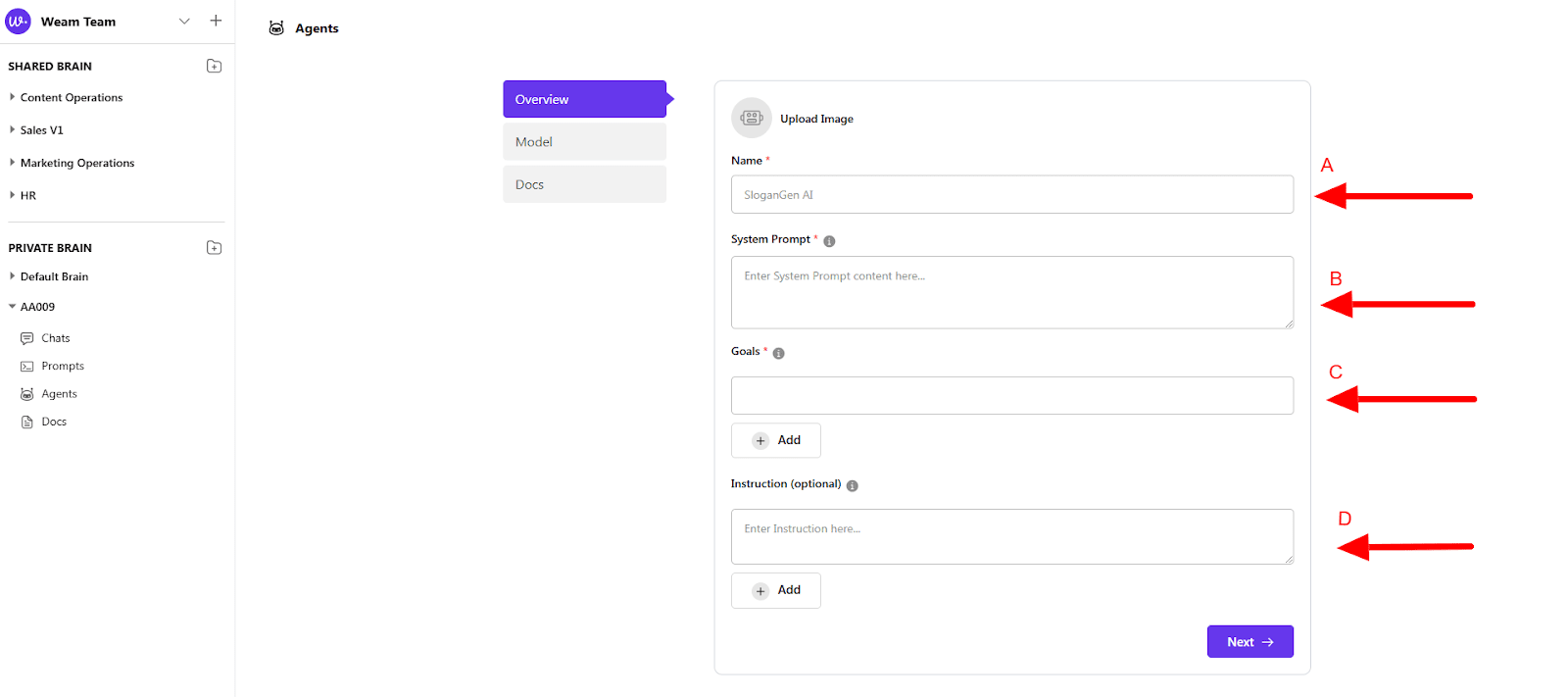
[00:48:22] Mike Kaput: So next up Zapier has also announced a revamped agent workspace, which helps users create and deploy agents that work with their apps. So this is called Zapier Agents. It’s a kind of a rebranded and overhauled version. It sounds like of the company’s. Zapier Central Workspace, which debuted back in 2024.

[00:48:44] Mike Kaput: So using it, you can create what the company kind of terms AI teammates that can work independently across your entire suite of business tools. Now, what makes this particularly noteworthy is that through Zapier, they’re able to interact with over 7, 000 [00:49:00] different applications. And require no coding knowledge to set up.

[00:49:04] Mike Kaput: So these agents, when you set them up, can end up accessing live business data, make decisions and work independently. The system includes a bunch of specialized agents for different business tasks that are kind of already built. There’s a lead enrichment agent, which researches prospects and updates your database, a sales outreach agent that crafts personalized messages to potential customers.

[00:49:29] Mike Kaput: And a support email agent that can do basic customer service inquiries using your company’s knowledge base. There’s also a Chrome extension that lets the agents follow you around the web and help with whatever you’re working on. So Paul, this is, I guess, technically a rebranding and expansion of an existing thing.

[00:49:51] Mike Kaput: But it does seem really interesting just given, I know there’s a ton of hype around AI agents, but Zapier has this interesting angle with all these existing [00:50:00] connections to current software. 

[00:50:02] Paul Roetzer: Yeah, I would put Zapier in that category if they’ve got distribution. So we talk often about like differentiators can be data and distribution.

[00:50:09] Paul Roetzer: Do you have proprietary data that you can put into these models that makes them do things that no one else can do? Like I think you and I used the example of CB Insights recently, like we have a subscription to CB Insights and they have this really cool like model layer where the models aren’t trained on CB Insights data, at least not legally.

[00:50:28] Paul Roetzer: and so, if you have a subscription to CB Insights, you can go in and experience a chatbot that has access to that proprietary data, and that makes it valuable to you and I, Mike, as users of CB Insights right away. So, they have proprietary data, and they have the distribution of their customer base. So, in Zapier’s case, again, they have distribution to an existing customer base.

[00:50:50] Paul Roetzer: They’re doing something that, Other companies could emulate pretty quickly, you know, cause again, they’re not building their own models here. So, but, but they’re integrating it right [00:51:00] into an experience people are already familiar with that just increases the, I guess the experience you have using it.

[00:51:07] Paul Roetzer: And so it could work like, and that’s the, that’s the challenge here. Again, like perplexity could do something very similar, but perplexity isn’t built into my existing workflow as an enterprise user, or maybe Zapier is. And so that’s where I think like this unknown about the future of adoption of all these different things.

[00:51:23] Paul Roetzer: They’re all building on the same six models. And now some are going to be building on DeepSeek from China, but like they’re building on these models and they come up with unique wrappers or applications that are valuable. But if you don’t have the distribution already, why would you adopt it? So another example would be like, you know, if you use QuickBooks, for example, online.

[00:51:42] Paul Roetzer: And QuickBooks introduces a chatbot right into the QuickBooks experience that’s already connected to my financial data and I trust them with that financial data. 

[00:51:51] Mike Kaput: Right. 

[00:51:52] Paul Roetzer: I’m far more likely to just use whatever QuickBooks creates than some third party company that wants access to my QuickBooks that I don’t trust [00:52:00] with access to my QuickBooks.

[00:52:01] Paul Roetzer: And so I think a lot of these conversations are happening in like IT departments. It’s like, who do we trust with our data? And maybe their chat experience. or their AI agent experience isn’t as good as company X, but we trust them. Let’s just go ahead and like, we’ll, we’ll roll with the thing we already know and trust.

[00:52:20] Paul Roetzer: And I think a lot of decisions are going to be made around that as this uncertainty about how these agents work and what they get access to and what the risks are with them. I think a lot of companies will play it really safe, especially in 2025 and like let other people make the mistakes. 

[00:52:36] Google Invests Another $1B in Anthropic

[00:52:36] Mike Kaput: Anthropic is making some waves with a couple major announcements.

[00:52:41] Mike Kaput: So first, Google has just said they are going to put an additional 1 billion investment into Anthropic that builds on their existing 2 billion dollar stake. It comes as anthropic is reportedly close to securing another 2 billion from other venture capital investors, potentially valuing them at about [00:53:00] $60 billion.

[00:53:01] Mike Kaput: Now, the company has grown very well, it sounds like, according to sources familiar with its finances. Andros revenue reached an annualized rate of $1 billion in December. Which represented a tenfold increase from the previous year. Now, alongside this, Anthropic has also launched an interesting new technical feature called Citations for its Claude AI models.

[00:53:27] Mike Kaput: This allows Claude to ground its answers in source documents by providing detailed references to the exact sentences and passages it used. It uses, which addresses a key challenge in AI application, which is verifying all the sources behind what AI is telling you. So Paul, these two things aren’t directly related, but I did find them interesting at the same time.

[00:53:50] Mike Kaput: Maybe they 

[00:53:50] Paul Roetzer: are actually. As you were saying that, I started thinking like, hold on a second, who’s really good at citations? That’s what I was, 

[00:53:57] Mike Kaput: I was kind of getting into like conspiracy theory in this [00:54:00] question here. I was like, well, this is something, A, Google would be super interested in, and B, I don’t And B, I think even too, we talked about on our trends briefing, how much Apple’s been struggling recently, with Apple intelligence.

[00:54:12] Mike Kaput: And we were like, Oh, maybe they’ll buy Anthropic or something. Well, what they struggled with recently was grounding their AI news sources, news summaries in factual content. So this is pretty interesting. So like, yeah, should we, what should we be expecting here based on this? Like, can you speculate? 

[00:54:28] Paul Roetzer: Yeah, I don’t know.

[00:54:29] Paul Roetzer: I do still think Anthropic gets acquired at some point, and I think that it’s getting harder. so if you think about their valuation at 60 billion, your potential buyer market shrinks. when they were valued at 10, 15, 20 billion, it’s a little bit easier to, like, you have a much broader spectrum of companies that could come in and buy them.

[00:54:51] Mike Kaput: Yeah. 

[00:54:51] Paul Roetzer: But Apple, Google, certainly still, you know, in the running there. yeah, I don’t know. The citation thing is really interesting [00:55:00] because that is definitely the sweet spot for Google. You can see it in Notebook LM where the citations are happening in line. we’ll talk a little bit about Demis Hassabis, a couple of interviews he did last week.

[00:55:10] Paul Roetzer: And he was talking about, you know, truth grounding and things like that. So this is a hot topic, like solving hallucinations. and making models more reliable by grounding them in some truth that you provide, you know, if it’s in your company. I don’t know, I do, I think Anthropic’s sitting on something, like I get more and more the sense they’ve been so quiet that they have to have made some progress on their models and maybe they just haven’t released them.

[00:55:40] Paul Roetzer: We’ll talk in episode 133 about Dario Amodei’s interviews. He was unusually high profile last week at Davos. He doesn’t do a ton of interviews. He was all over the place. I’m doing interviews and panels and things. So I think something’s coming from Anthropic. I wouldn’t be shocked [00:56:00] if they don’t have a new model in the next 30 to 60 days that jumps to the top of the leaderboard again.

[00:56:05] Paul Roetzer: I think they’ll have more to talk about with AI agents. Like they’re gonna keep doing their thing. I just do increasingly feel like they are a very ripe target for acquisition sooner than later. Because they’ve tripled their valuation, I think, in the last 12 months, doubled it, one more, you know, getting to a hundred billion.

[00:56:28] Paul Roetzer: And all of a sudden, that’s a, that’s a real challenging acquisition target. There’s very few companies playing in that space. So I would think that if something was going to happen with Anthropic, you could see it happening in the next 12 to 18 months before their, their valuation just gets too big. And they either have to IPO or, you know, I don’t know, you’re just perpetually raising, but they’re already one of the, Bigger private companies in the world at this point.

[00:56:53] Davos Conversations with OpenAI CPO

[00:56:53] Mike Kaput: For our next few topics, we have a handful of conversations that came out of, the [00:57:00] World Economic Forum’s meeting in Davos this year, with some major AI leaders. So we’re going to go through these one by one and. First up, OpenAI’s chief product officer painted a pretty dramatic picture of AI’s evolution in 2025.

[00:57:15] Mike Kaput: So, speaking at Davos, OpenAI CPO Kevin Whale outlined how OpenAI’s products are rapidly advancing, with the costs of AI dropping by 99 percent over the last few years, while simultaneously becoming faster. According to Weill, the heart of this transformation is OpenAI’s new O Series of models, which represent a fundamental breakthrough in how AI systems think.

[00:57:42] Mike Kaput: So we talked about these at length, they reason step by step through complex problems, unlike the current models which provide just quick, surface level answers. And this is more similar to how humans approach challenging tasks. And he mentioned the company’s upcoming O3 model has [00:58:00] progressed from ranking as the millionth best coder in the world to just to the 175th best in just three months.

[00:58:08] Mike Kaput: He also talked about how open AI is rolling out early versions of AI agents. And he emphasized that they’re taking a cautious approach, ensuring that users main maintain control over any significant decisions or transactions. Interestingly, he also suggested that by 2027 or potentially earlier, AI systems might surpass human capabilities at most cognitive tasks.

[00:58:34] Mike Kaput: However, he pushed back against doomsday scenarios, arguing that like previous revolutions in AI will ultimately change society for the better by freeing people from mundane tasks and enabling them to focus on more meaningful work. He obviously then mentioned the Stargate project, saying that this was needed to realize this future he was outlining.

[00:58:57] Mike Kaput: So Paul, there’s plenty to unpack there, but that [00:59:00] prediction about 2027 jumped out at me. Like, I feel like this timeline is getting talked about a lot more as. We kind of hit something that might be considered AGI, like multiple people have mentioned, hey, it’s maybe coming by like 2027 or sooner. Like, what did you take away from that in this interview?

[00:59:18] Paul Roetzer: Yeah, I think if I remember correctly, I watched so many interviews and listen to so many podcasts the last seven days, but I think he was asked about Dario Amodei’s comment that it was going to be in like three to five years. Yeah, I think you’re right. Yeah. Yeah. And then he said, or they asked him like by 2027, he goes, It could be sooner than that.

[00:59:37] Yeah. 

[00:59:37] Paul Roetzer: so that was definitely noteworthy. Now, there are a lot of people in the AI space who do. I believe OpenAI is the number one culprit of overhyping, kind of, this AGI path. As we heard Satya kind of taking a shot at Sam maybe on the hype side. Their argument is they’re trying to raise [01:00:00] tens of billions of dollars if not trillions eventually and so they they need this hype to continue.

[01:00:08] Paul Roetzer: So, whether it’s real or not, I don’t know. They do certainly have some data points and some research showing that they have reason to be confident in their path and their predictions. I did certainly take note, as you did, of the 03, how quickly they went from 01 being like millionth best coder to like 175th best coder.

[01:00:27] Paul Roetzer: He did say in the interview that O4 is in training, so we don’t even have full O3 yet, and they are in training in O4, so this is what we mentioned, I think, on the last episode, that these new sort of test time compute scaling laws seem to be accelerating faster than was expected, so, you know, they’re training these models really And they seem to be able to bring them to market way faster.

[01:00:53] Paul Roetzer: So that was of note. And then, you know, this idea of, I mean, it sounds like he’s talking about superintelligence by 2027, not just [01:01:00] AGI, like where it’s good at, like, most cognitive tasks are on par with human level, most cognitive tasks, but he’s talking about, like, superhuman, like better than humans at everything.

[01:01:09] Paul Roetzer: So, yeah, I don’t know. OpenAI’s timelines definitely seem to be shrinking faster than most. And it is a, Concentrated effort on their part to get that message out. Cause you have their CPO has now said this, their CFO has said this, Sam keeps saying it in varying degrees, people working at OpenAI are saying it on Twitter, like this is a, if not a, a orchestrated effort, it is certainly an approved effort to be allowed to say these things.

[01:01:39] Paul Roetzer: so I don’t know there’s, there is a strategy behind what they’re doing. 

[01:01:45] Demis Hassabis on AI for Scientific Progress

[01:01:45] Mike Kaput: Another interview that came out of Davos was with Google Hassabis. So, Demis is actually fresh off winning the Nobel Prize for Chemistry as part of work with the AlphaFold system. And he revealed in this interview [01:02:00] that over 2. 5 million researchers worldwide now use AlphaFold to map proteins.

[01:02:06] Mike Kaput: So far, the system has mapped 200 million proteins. Work that would have taken, he claims, a billion years of traditional PhD research time. He sees this as just the beginning of scientific progress, thanks to AI. So they actually now have a spin off company through DeepMind called Isomorphic Labs, that is now working to revolutionize drug discovery, combining AlphaFold with other AI models to design new medicines.

[01:02:36] Mike Kaput: He actually expects the first AI designed drugs to enter clinical trials by the end of this year. Looking ahead, Hassabis predicted we’re 5 to 10 years away from AGI systems that can match or exceed human cognitive capabilities across the board. However, he emphasizes that this timeline depends heavily on how AGI is defined and [01:03:00] likely requires one or two new breakthroughs that haven’t happened yet.

[01:03:04] Mike Kaput: As part of all this, he’s advocated quite a bit for international cooperation and oversight, even considering an international body that could guide development of the most advanced AI systems. So Paul, we’ve talked about Demis a ton of times. I think he’s such a good person to listen to with all this stuff, especially with scientific discovery, given his background, like he is really somehow has this balance of being over, not overstated, not like a hype machine, but still communicating, this is going to be transformative.

[01:03:37] Mike Kaput: Like can you walk me through why he’s so focused on AI for scientific progress? 

[01:03:43] Paul Roetzer: Yeah, I think this is where he’s always been. Like his, his whole mission in life is to solve intelligence and then solve everything else. So, you know, we’ve talked many times about interviews Demis has done. He doesn’t, he doesn’t do a ton, but he was definitely on the circuit last week also.

[01:03:56] Paul Roetzer: there was the interview you’re talking about and then I’ll sprinkle in a [01:04:00] couple of notes from the Big Technology podcast where he also did an interview. And it’s so funny, like when you, when you listen to two or three in the same week and you realize, okay, the PR people have specific talking points they’re trying to hit.

[01:04:11] Paul Roetzer: It’s like literally the same exact line will come out and you find ways to say the same stuff. You can actually start to tell what the PR people fed the interviewer of like here’s the six things we want you to cover and then you’re allowed to talk to them about other stuff. now again, like Mike and I did PR when I owned my agency.

[01:04:28] Paul Roetzer: We lived in the PR world, so I kind of know how this game works a little bit. so yeah, a couple of notes here. I think he said a lot of interesting things built on some things we’ve talked about before, but a few noteworthy items. This idea of AlphaFold folded all 200 million proteins known to science.

[01:04:46] Paul Roetzer: It takes several years, on average to find the structure of a single protein. He often says, like, a PhD will spend their entire time in PhD figuring out how to fold a single protein. They figured out a full 200 million of them. It would have [01:05:00] taken a billion years of PhD time, and they just gave it free to the world.

[01:05:05] Paul Roetzer: So this, like, we’re always trying to find ways to not feel the AGI, feel what an exponential growth curve looks like. And I think this is a practical example. And so, take this and apply it to your industry. Like, what is this, like, AGI? Unsolvable problem that, like, we could put a billion hours or years of human time at, we’re just not going to figure it out.

[01:05:30] Paul Roetzer: Now imagine something being so intelligent that it can do it in hours that would have taken a billion years. So, it, and it has happened, so now we have, like, a point of reference to look at. This is super intelligent. This is, like, beyond what a human could do in a very narrow application. Now imagine every human problem being able to be solved like this.

[01:05:56] Paul Roetzer: And that’s the vision that DEMIS has for the world, [01:06:00] like, cancer research, climate change, why does the universe exist, how was it created, like, all these big questions. That’s what he wants to do. And so biology, chemistry Moves into, like, drug discovery comes out of that. That’s what they’re working on. he talked a lot in that interview about, like, some of the breakthroughs they had.

[01:06:19] Paul Roetzer: Like VO2, which again is the video generation model. Project Astra, he said, would likely be coming to consumers later this year, which I think is the first time they publicly said that that would probably start coming. He talked about Gemini 2. 0, where they’re working on what they call a thinking model.

[01:06:34] Paul Roetzer: So, same as reasoning, they just kind of brand it differently. interesting, go back to the citations thing, Mike, we talked about hallucinations and factuality. He said there’s three basic paths to solving this. One is filter out misinformation in the training. So, you go through all the data in the training and you try and get all that out.

[01:06:52] Paul Roetzer: That is not a reasonable solution. That’s too, too hard and becomes too biased. Like, who’s deciding? Like, what’s misinformation? [01:07:00] The second is tool use, specifically being able to use Google search to fact check things. And then the third is reasoning. They have found that the more time you give these models to think, the more factual they can become when they go through like this process.

[01:07:14] Paul Roetzer: AGI thought this was interesting because his definition of AGI, he said it’s what they’ve always defined it as. Yeah, I don’t, I’m not sure that I’ve seen him say it exactly this way before, but he describes it as a system that is capable of exhibiting all the cognitive capabilities that humans have.

[01:07:30] Paul Roetzer: But he said we are maybe 5 to 10 years away, maybe 1 to 2 breakthroughs, but then in the next interview he said 3 to 5. So again, like their timelines all kind of vary. he talked about emergent capabilities, too much hype in the short term, not enough hype for midterm and long term. The open AIs of the world maybe are hyping too much, but Demis belief is five to ten years.

[01:07:54] Paul Roetzer: It’s underrated and underappreciated how much society is going to change. And then in the Big [01:08:00] Technology podcast, which we’ll drop those links into, he got a little bit deeper, because the interviewer asked, like, More questions specific like AGI. So he said, what’s missing is advanced reasoning, which we talk about all the time, hierarchical planning, long term memory, those are kind of like the main things.

[01:08:16] Paul Roetzer: And then he said, well, what do you want to see to like, know we’re kind of getting to AGI? And he said that it should be able to invent its own hypothesis or conjectures about science, not just prove existing ones. So that’s, it’s big on like invention. he said lots of outlandish and exaggerated claims right now just to raise money.

[01:08:35] Paul Roetzer: They talked a lot about world models. This is what they’re trying to work on, is like this understanding of the world around the AI, the physics of the world. He said VO2 is surprisingly accurate on physics, still makes mistakes, but like, they were a little bit shocked at how well it did. He asked them about scaling laws, which we talk about all the time.

[01:08:51] Paul Roetzer: He said they are working, like they’re still going, but they are slowing. Needs to improve ideas. Like, he said, what are the big breakthroughs? Like, where are [01:09:00] these one to two breakthroughs gonna come from? Demis said, planning, memory, search, reasoning, creativity were the big ones. And then I thought he had this cool perspective on creativity.

[01:09:10] Paul Roetzer: It’s like, he was asked specifically about like his thoughts on creativity. And he said there’s three types of creativity he thinks about. One is interpolation, which is like averaging what you see to come up with something new. So, create a cat for me. It’s seen a million cats and it creates a cat when you ask it for that image.

[01:09:27] Paul Roetzer: That’s interpolation. Extrapolation is learn from examples and come up with something new a human would never do, which he related then to AlphaGo and the infamous Move 37, where it did something that a human Go player would have just never done. So he considers that extrapolation, and that’s kind of where he thinks we are right now.

[01:09:47] Paul Roetzer: The third element of creativity is invention. That’s when it creates an entirely new game, an entirely new mathematical model, an entirely new hypothesis that a human hadn’t come up with yet. It’s not in the training data. And [01:10:00] so he said that’s, we don’t have that yet. He thinks that that’s coming. Like the extrapolation part is coming in Agents, but like the invention part is sort of the next level.

[01:10:10] Paul Roetzer: And then a couple of quick notes. Deceptiveness, he talked about that, that they are seeing the same deceptiveness. I think Anthropic had the paper on like faking alignment. He said we are absolutely seeing the same things in our models. They are intentionally deceptive and that is hard to kind of figure out.

[01:10:28] Paul Roetzer: and it does make you have to question all the other results you’re getting if you know it can be deceptive in one element. And then he got into the web, which, you know, again falls into the business marketing side of this. where it’s like what happens to the web when agents are everywhere, when operator is the thing visiting websites and agents are talking to agents and like the human’s not really doing the research and users just have these assistants and he basically said like, yeah, it’s going to fundamentally change everything.

[01:10:55] Paul Roetzer: We don’t know yet what that looks like. I thought, oh man, like [01:11:00] then the rest of us are kind of in trouble. And then two other final notes, Deep Seek, which we’re going to again, talk more about in episode 133. He did reference one of the sort of sticking points that we’ll get into a little bit more, which is it does definitely seem as though this company trained on open source models like took Data from open source models took outputs and used it to train.

[01:11:24] Paul Roetzer: And then they’re very opaque about what their training data was because they assumed they stole a bunch of it from us companies or like they got it from other places. So there, there is kind of like, it’s really impressive, probably had a bit of a headstart that they’re not going to disclose in the research papers, but it is what it is.

[01:11:42] Paul Roetzer: And then the final one, I haven’t read this Mike, but, the interviewer asked him, like, what do you think a world looks like when we have superintelligence? And he said he actually leans on sci fi a lot to try and visualize that, and he mentioned Culture Series by Ian Banks, I don’t know if you’ve heard of that, I have not, [01:12:00] as one of his favorite, books on, like, a possible future, where agents are everywhere and we’ve achieved superintelligence.

[01:12:08] Paul Roetzer: But he did say like, he’s not going to figure this out. Like the, we can’t rely on these AI research labs to solve this, that need philosophers. And he said, we need our great philosophers to sort of step up and think about this future, which is, it’s an interesting perspective, like that you and I, and these, you know, the tech people, they’re not going to be the ones that actually tell us what 20 years from now looks like.

[01:12:29] Paul Roetzer: You really need these people who can think deeply about society and humanity. And so I don’t know. Yeah. I mean, obviously I’m a huge Demis fan. I listened to every interview the guy does. But, you know, I think that each time he repeats some of the previous things, but you also build on it. And I think we got a lot of building on things in the last couple interviews last week.

[01:12:49] Mike Kaput: Yeah, that philosopher perspective is interesting. It’s going to be important because if you read any of the culture books, it gets really weird, really quick. Have you read them? [01:13:00] I’ve read a couple of them. Have you? Okay. So a really good accessible one to start with, which is one of the earlier ones.

[01:13:05] Mike Kaput: They’re all like. I think there’s like many little series in the, within this whole world, but a lot of them are one off books set in the same place. But one called Player Of Games is the like a really good one off story in this world. But it gets so strange, so quick, and you’re like, Oh my gosh, like this is.

[01:13:23] Mike Kaput: What might really happen if you had limitless intelligence and abundance. It’s like humans are not the main character in a lot of, a lot of things. 

[01:13:32] Paul Roetzer: I may have to get a couple of the audio books. And yeah, for sure. 

[01:13:35] LeCun Predicts New AI Architecture Paradigm in 5 Years

[01:13:35] Mike Kaput: All right. So one other big conversation with an AI leader that came out of Davos was with Yann LeCun, Sumedha’s chief AI scientist.

[01:13:45] Mike Kaput: He made some bold predictions about the future of AI, suggesting that current AI systems will be largely obsolete in five years. So, he argued that today’s large language models, despite how impressive they are, suffer from [01:14:00] fundamental limitations that will drive the development of entirely new AI architectures.

[01:14:05] Mike Kaput: The current generation of AI, LeCun explained, falls short in four critical areas. Understanding the physical world, maintaining persistent memory, reasoning, and complex planning. So, these limitations mean that while today’s systems are good at manipulating language, They’re not truly capable of thinking in the way humans do.

[01:14:25] Mike Kaput: He actually envisions a new paradigm built around what researchers call world models, which we just talked about. So systems that would help machines develop common sense, intuition, and genuine reasoning. He also thinks that the next decade could be the decade of robotics, but points out that even our most advanced AI systems cannot even match a cat’s understanding of the physical world.

[01:14:49] Mike Kaput: He suggested that combining improved AI with robotics could unlock a lot of new possibilities. So, Paul, I guess what jumped out to me is not only how Demis [01:15:00] said very clearly, But also, all those areas AI falls short in, according to LeCun, appear to be kind of all the areas AI labs are tackling next. 

[01:15:09] Paul Roetzer: Yeah, it definitely was echoing almost exactly what Demis said.

[01:15:13] Paul Roetzer: And Yann is, you know, as we’ve said on the show before, he is very adamant that the current language models are not the path to AGI, that things are missing. And I always think, generally speaking, these people Take different positions and they like can be contrarian to each other. But at the end of the day, when you drill into what they’re really saying, they’re all kind of agreeing with each other that they all think some breakthroughs are needed.

[01:15:39] Paul Roetzer: And I remember, I think it was in the fall. I remember listening to a Dario Amodei interview where he was talking about like the research directions at Anthropic, and it reminds me of this now because. You know, here we see, like, you know, the memory, the reasoning, the planning, the search, the world models, they’re all agreeing.[01:16:00] 

[01:16:00] Paul Roetzer: These, like, the breakthroughs are going to come from something. So they know the paths to look for, but each research lab has to make their bets about which of these is maybe the unlock. And so if you have, like, five or six potential areas where the breakthroughs may come that take us to AGI or superintelligence, Each lab has to figure out the recipe.

[01:16:22] Paul Roetzer: How important is reasoning to this? How important is the world model? And they have to make some bets of what kind of model are they going to build. We’re going to put X amount of time into the reasoning. We’re going to put this into the search. We’re going to put this into the multimodal aspect. And that’s kind of, I think, where we’re at.

[01:16:38] Paul Roetzer: That’s a good synopsis of where these AI models are in 2025. They’re getting really powerful, they’re getting generally capable, they seem to know the breakthroughs are going to come from one of, or two, or three, or five, or six areas. Now they all have to place their bets on which, where it goes. and so it’s, it is fascinating and to see where each of [01:17:00] these, the decisions they make is going to kind of decide which of these AI model companies maybe becomes The key player, but then as we’ll talk about with DeepSeek, it’s like, but how long of a lead did they really get when they figured out, is it three months?

[01:17:12] Paul Roetzer: Is it six months? 

[01:17:16] AI Apps Saw $1B+ in Consumer Spending in 2024

[01:17:16] Mike Kaput: Alright, our final topic for this episode is about consumer appetite for AI. So this apparently reached new heights in 2024. According to some reporting from TechCrunch, the spending on AI mobile apps Surpassed 1. 1 billion, which is a 200 percent increase from the previous year. So in this report, TechCrunch is citing research from the app intelligence provider, SensorTower.

[01:17:42] Mike Kaput: They released a report called the State of Mobile 2025. So according to that report, this surge in AI spending helped drive total consumer app spending to 150 billion globally. Now, interestingly, this wasn’t just driven by periodic [01:18:00] spikes around major releases like 01, whatever. Instead, consumer demand remained pretty consistently strong throughout the year.

[01:18:10] Mike Kaput: Users spent nearly 8 billion hours using AI apps, and applications mentioning AI were downloaded 17 billion times that year. ChatGPT, of course, though, emerged as a standout. It reached 50 million monthly active users faster than major platforms like Disney or YouTube Music, And the scale of this growth has them predicting that AI apps could break into the top 10 categories by consumer spending within a year, if the current trends continue.

[01:18:40] Mike Kaput: So Paul, does this number surprise you at all? This rate of growth is pretty crazy. 

[01:18:45] Paul Roetzer: Yeah, they’re big numbers. 

[01:18:46] Mike Kaput: I 

[01:18:46] Paul Roetzer: mean, it’s, it’s going to get so hard to differentiate like AI app spending. Right. Every app is going to be AI. So, yeah. Yeah, it’s it, I don’t know, I always find this kind of data interesting [01:19:00] to look at the adoption curve, but I think at the high level what it’s telling us is it’s just becoming ubiquitous within society, like they’re just, it’s just going to be everywhere, it’s going to be part of every piece of software, every app we use, and I guess it goes back to this whole idea of like the AI literacy thing is just so fundamentally important to understand how your kids are using these tools.

[01:19:19] Paul Roetzer: I was listening to a interview this morning about Like, AI, characters in video games and how that’s going to be huge in the next like one to two years. We, I think we’ve touched on that at a podcast before, but like your kids are going to be interacting with AI agents in games and those agents are going to have basically built on top of language models where they can just carry on unscripted conversations and go in different paths and like, you don’t know your kids are doing that stuff.

[01:19:46] Paul Roetzer: Like that’s a whole nother world, but they’re going to be doing that stuff. They’re interacting with AI on Snapchat and wherever else they are. Roblox, like. Yeah, it’s just going to be everywhere and we just need more people understanding that and like preparing for it. [01:20:00] 

[01:20:00] Mike Kaput: Yeah. I would also say the mobile aspect here is particularly interesting because if you’re a listener of a certain age, I would highly encourage you to look at the top mobile apps versus top desktop apps because it’s a very different list and a lot of them are apps that you and I think we’ve talked about in the past.

[01:20:19] Mike Kaput: are much more targeted towards younger generations and are pretty eye opening. 

[01:20:23] Paul Roetzer: Yeah. And especially when you get into like the companionship and relationship side, those are very popular. And that was actually something Demis touched on was, you know, this idea of companions and you have your work life, your personal life AI assistants, but people are going to increasingly look at them as friends and companions and stuff.

[01:20:41] Paul Roetzer: yeah, it’s going to get a little weird. 

[01:20:45] Mike Kaput: All right, Paul, that is it for this episode. Like we talked about, we’re going to record another one and release another one this week. we’ll be for everyone who’s kind of chomping at the bit about deep seek, we’ll cover that and a bunch of other topics. So Paul, [01:21:00] appreciate you breaking all this down for us.

[01:21:01] Paul Roetzer: Yeah, and by the way, NVIDIA in the hour and 20 minutes we’ve been on this is now down 14%. Oddly, Meta is up slightly. I actually expected Meta to get crushed because DeepSeek, if anything, is an attack on Llama, I would have thought. But, I don’t know, we’ll talk about that in the next episode. I gotta process this information in real time.

[01:21:19] Paul Roetzer: Alright, thanks everyone for joining us. We will be back on episode 133, I guess tomorrow, depending on when you’re listening to this. Thanks, Mike. Thanks, Paul. Thanks for listening to The AI Show. Visit MarketingAIInstitute. com to continue your AI learning journey and join more than 60, 000 professionals and business leaders who have subscribed to the weekly newsletter, downloaded the AI blueprints, attended virtual and in person events, taken our online AI courses, and engaged in the Slack community.

[01:21:52] Paul Roetzer: Until next time, stay curious and explore [01:22:00] AI.


How Much Does It Cost To Develop A Messaging App Like Telegram?


How Much Does It Cost to Develop a Messaging App like Telegram?


Why You Should Develop A Chat App Like Telegram/WhatsApp?

Mobile messaging apps are ruling the online communication industry. In this digital space, online communication has become extremely predominant for personal and professional chats. Online messaging apps for Android and iPhone are allowing people to chat at any time from anywhere over a secured network.

Besides personal chats, mobile messaging applications are now essential assets for enterprises too for safe and encrypted real-time communications with their on-site and remote working employees. Individuals or enterprises can share audio, videos, text messages, voice messages, and documents to a person or a group instantly right from their messaging app.

Cloud-based messaging apps like Telegram, Facebook Messenger, WhatsApp, and WeChat with their bunch of user-friendly online messaging apps are dominating the industry. Not only for online chatting, these apps were being used for making domestic and international calls at free of cost. Millions and billions of people are accessing these apps monthly.

It is the right time to hold the market opportunity for online messaging app development like Telegram and WhatsApp. Driven by the increasing user download rate of Instant messaging apps, the development of online chatting apps would be the best decision to attain market attention and a vast user base.

Want to build a messaging app like Telegram or WhatsApp?

This article would be a guide for enterprises who are looking to develop Telegram-like global leading mobile messenger app. Let’s look at the functionalities of the Telegram application. 

What and Why Is Telegram For?

Telegram is an instant messaging app and has got a place in the list of the top 10 most downloaded apps in the world. With a primary focus on speed, privacy, and security, this top mobile and desktop messaging app has launched into the market in 2013.

This cloud-based and secured online chatting application is best suitable for chatting, video calling, and document sharing over a safe and highly-encrypted network. Along with a secure private messaging facility, its potential to hold a group chat with up to 200,000 members is one of the big reasons behind its popularity.

Further, the other significant feature of the Telegram-like instant chat app is its customization and chat synchronization. Users can completely customize their application appearance as per their preferences and also can access the ongoing chats from multiple devices effortlessly.

Currently, the application has reported over 1 billion downloads and has approximately 700 million monthly active users. Here is the key information about the Telegram app.

  • Application available: Android, iOS/iPhone, Mobile web, Windows, macOS, Linux
  • Released On: 2013
  • Available in: 12 languages
  • 1,000,000,000+ downloads
  • Developer: Telegram FZ LLC and Telegram Messenger Inc.

Know about the must-have features and development costs and be ready confidently to create instant messaging apps like Telegram.

Must-Have Features Of Instant Messaging App Like Telegram/WhatsApp

With over 700 million monthly active users, Telegram has become one of the top-rated messaging service apps. Can you guess what might be the reason behind such wide adoption of this popular messaging app? The answer is its features and functionalities.

Yes, the most beneficial features of trending messaging apps are giving a big success to the application. Here are the features of Telegram-the most popular mobile messenger app worldwide that you must consider during its clone app development.

  • Hassle-free Registration & Login

App registration and login are the initial steps to access the app’s features. Telegram-like famous chat app allows users to access the application through OTP verification of their mobile numbers. It’s simple and easy login procedure is a reason for a higher user retention rate. Further, by offering multiple login methods to access the app’s features, you can increase the user experience.

A chat app like WhatsApp or Telegram should allow users to send voice or text messages to their contacts or groups instantly with simple taps. Simple messaging option in chat apps will optimize the app performance and provides online chatting access to the users.

It is one of the significant features that must be added in mobile chat apps like WhatsApp or Telegram to attract users. Enabling uninterrupted and free audio or video calling feature right from the application will make your app versatile and meets the diversified needs of app users. Making unlimited audio or video calls to persons or groups free of cost is truly a unique addition and optimizes the app’s quality.

WhatsApp or Telegram like popular online messaging applications for Android and iOS are offering instant sharing of documents, location details, contact details, photos, videos, animated stickers and emojis, and other media content with no restrictions on size. Hence, besides of general chatting feature, add a multi-media sharing facility for enriching the application’s functionality and users’ comfort.

Integration of this feature helps users to take instant photos of their choice and send them to a person or drop it in a group chat. In addition, don’t forget to integrate photo editing tools to help users in editing their images. It will add a little crunchy entertainment to app users and optimize their interest in using the application.

It’s a unique feature of a telegram-like trending instant messaging app that allows users to access their chats on multiple devices (phones, tablets, and computers) at a time by clicking on the automatic synchronization feature.

Providing high-level privacy and security to the chats is one of the top-most requirements of instant messaging app development. Hence, while developing Telegram or WhatsApp clone apps make sure to keep the user’s chat secure from unauthorized access.

It’s a general feature of any mobile application. It helps users to view/edit their profile images. Users can also customize their privacy and security features at their convenience. 

Chat notifications feature plays an essential role in notifying users upon receiving any message or content from their contacts or groups. Users can toggle the notifications feature on or off as per their interests.

Make sure to add a search feature in WhatsApp or Telegram clone app development. This feature allows users to search for contacts or groups and send instant text or media content on the go. It will save the users time and enhance their experience.

It’s purely to provide high-level security to the user’s accounts. Along with the log-in procedure, the two-step verification process validates the user’s identity by sending an OTP to the registered accounts. Hence, it prevents unauthorized access and provides 1005 privacy and security to the conversations.

These are few top features that must-add to Telegram or WhatsApp clone app development. Hire #top mobile app developers who have proven experience in the design and development of features-rich Telegram/WhatsApp-like instant messaging apps development.

Get a free app quote!


How Much Does It Cost To Build A Chat App Like Telegram or WhatsApp?

If you have plans of creating a chat app or audio/video calling app like Telegram or WhatsApp, you might be eager to know how much it cost to make a chat app like Telegram/WhatsApp. However, estimating the final cost of chat app development will depend on many factors. Here are a few significant factors that affect the mobile app development cost:

  • App features
  • App integrations
  • Mobile app development technologies
  • App development platforms
  • Complexity of app design
  • Mobile app development company’s location and team size
  • Top app developers hourly rate

Among these cost-impacting factors, the hourly cost of the custom mobile app developers you hire will decide the final cost of the software development. Considering all the above facts, the estimated cost of Telegram or WhatsApp like online messaging app development might range from $25,000 to $40,000.

Being one of the most trusted and top mobile application development companies (USA), USM offers the best economical quote for developing your chat app will all the features you require.

Final Words!

Telegram or WhatsApp or Snapchat-like instant messaging app development is beneficial as the usage of online chat apps is increasing worldwide. For personal communication with friends or family members and business communications with employees or clients, instant messaging apps are the first choice of people. Hence, investments in messaging applications (Android/iPhone/Web) offer companies incredible business opportunities. 

Drop your chat app requirements and get a free app quote!

OpenAI, SoftBank, and Oracle Just Revealed “Stargate,”A $500B AI Infrastructure Moonshot


A massive new AI infrastructure project dubbed “Stargate” just got announced in dramatic fashion at the White House—and it’s turning heads for a few reasons. Continue reading “OpenAI, SoftBank, and Oracle Just Revealed “Stargate,”A $500B AI Infrastructure Moonshot”

Comparing Top AI Models [2025]


AI chatbots continue to reign supreme. Experiencing exponential growth, its market size is expected to reach $826 billion by 2030.

Sentimentally, experts are excited and concerned about AI. Mary Chayko, a sociologist, explains:

“As communication technology advances into 2035, it will allow people to learn from one another in ever more diverse, multifaceted, widely distributed social networks. As we create and traverse these networked pathways together, we will be able to grow healthier, happier, more knowledgeable, and more connected.”

But as is often the case with technology, there’s a problem of plenty. Multiple AI models flood the market today, with Deepseek leading the pack. However ChatGPT, Gemini, and Claude are popular as they have more users compared to Deepseek. Picking the right AI tool is anything but easy.

Read on as we explore how these three AI giants—ChatGPT vs Gemini vs Claude measure up. We’ll examine their strengths, limitations, and ideal applications to guide you toward the best choice for your needs.

AI Models at a Glance

Here’s a quick overview of how ChatGPT, Gemini, and Claude compare, highlighting their key features, strengths, and areas where they shine.

What Is ChatGPT?

chatgpt vs gemini vs claude

Source

Developed by OpenAI, ChatGPT is an artificial intelligence (AI) chatbot that leverages natural language processing to drive conversational dialogue, write creative content, brainstorm ideas, summarize meetings, and even generate or debug code. 

To understand how ChatGPT works, it processes input through advanced machine learning models trained on vast datasets, enabling it to deliver accurate and human-like responses. 

Over time, ChatGPT has rolled out the following models:

chatgpt vs gemini vs claude

Source

Key Features:

  • Voice Interactions: You can initiate real-time voice conversations on the mobile app by tapping the soundwave icon. 
  • Web Search: ChatGPT integrates web search functionality to give you quick answers with direct links to web sources. However, the answers may not always be factually correct. 
  • Collaborative Writing and Coding: The Canvas feature allows you to collaborate in real time on writing, coding, and editing tasks.
  • Data Analysis and Charts: ChatGPT can analyze uploaded data, summarize it, and generate charts to visualize trends and insights. 
  • Advanced Reasoning: Advanced reasoning capabilities help solve complex problems in areas such as math, science, and coding.
  • Image Generation: Leveraging DALL-E, ChatGPT can generate images based on a brief description or detailed prompt:
chatgpt vs gemini vs claude

Source

Pricing:

  • Free: $0 
  • Plus: $20/month 
  • Pro: $200/month
  • Team: $30per user/month
  • Enterprise: Custom pricing

ChatGPT has been hailed by many users, due to it being the first to innovate in the Gen AI domain. However, over time, many users have explored ChatGPT alternatives, often looking for more affordable solutions.

What Is Claude?

chatgpt vs gemini vs claude

Source

Created by Anthropic, Claude is a next-gen AI that serves as a trusted assistant. It can process large amounts of information, brainstorm ideas, generate text and code, assist with learning, and provide guidance in complex situations. 

Here’s a quick preview of Claude’s model family:

chatgpt vs gemini vs claude

Source

Key Features:

  • Content Creation: You can draft and iterate on websites, graphics, documents, and code while collaborating with Artifacts.
  • Artifacts: This feature displays generated content in a separate dedicated screen area so you can manage lengthy conversations.
  • Advanced Reasoning: Claude handles complex cognitive tasks, going beyond basic pattern recognition and text generation.
  • Vision Analysis: You can transcribe and analyze various static images, including handwritten notes, graphs, and photographs.
  • Code Generation: Use it to build websites with HTML and CSS, convert images to structured JSON data, and debug complex code.
  • Multilingual Processing: Translate between languages in real-time, practice grammar, and create multilingual content.

Pricing:

  • Free: $0
  • Pro: $20/ month 
  • Team: $30 billed monthly (minimum 5 members)
  • Enterprise: Custom pricing

What Is Gemini (previously Bard)?

chatgpt vs gemini vs claude

Source

Brainchild of Google DeepMind AI, Gemini is an AI-powered assistant that helps you to plan, write, and learn. It continuously learns from interactions, including your prompts, responses, and feedback. It’s easily available as a mobile app and on Google services such as Google Workspace. 

Here’s a look at its model evolution:

chatgpt vs gemini vs claude

Source

Key Features:

  • Multimodal Understanding: Gemini understands text, images, audio, video, and code. You can engage in natural, human-like voice conversations with voice commands.
  • Native Image Generation: You can create and edit images, seamlessly blending them with text.
  • Response Verification: Gemini lets users click the Google icon below each answer to check the source and find more info on Google.

Pricing: 

  • Free forever
  • Gemini Business: $20/month
  • Gemini Enterprise: $36/month
  • AI Meetings and Messaging: $12/month
  • AI Security: $12month

Comparative Analysis of Key Features 

Here’s a detailed breakdown of how ChatGPT, Claude, and Gemini compare across critical features, helping you identify which AI tool suits your needs:

Feature #1: Performance and Accuracy

  • ChatGPT: As per research, GPT-4 is known to exceed 1.8 trillion parameters, allowing it to generate human-like text and analyze complex data at lightning speed. With updated training till December 2023, it offers accurate and relevant responses. You can rely on its advanced tools like text-to-image generation for creative projects—subscriptions like ChatGPT Plus or Enterprise guarantee fast access and additional features to handle demanding tasks.
  • Gemini: It handles multiple input types like text, voice, and visuals with ease. Google’s AI advancements power its efficiency, making it great for tasks involving diverse data formats.
  • Claude: A recent study by Anthropic indicated that Claude 3 contains at least 175 billion parameters. This robust architecture enables it to excel in problem-solving and technical tasks like coding and image analysis. Its ability to handle detailed processes ensures precise outputs for specialized requirements.

Feature #2: User Experience

  • ChatGPT: It makes navigating its platform simple for all users. Both professionals and casual users can quickly adapt to its straightforward design on mobile or desktop.
  • Gemini: Gemini delivers an out-and-out intuitive experience, much like Google search. Its seamless connection with the Google ecosystem enhances usability.
  • Claude: The UI is clean and sophisticated and presents direct answers. You can start chats and messages that you visit often, which makes it great for long-term tasks. It also offers light and dark modes. 

Feature #3: Customizability

  • ChatGPT: The debate of Gemini Advanced vs ChatGPT 4 highlights a key differentiator which is customizability. ChatGPT lets you create personalized GPTs to suit your needs. The GPT Store acts like an app store for AI, letting you explore and discover various custom GPTs that enhance your ChatGPT experience with specialized tools.
  • Gemini: Gemini offers a range of custom extensions that integrate seamlessly with Google services such as Maps, YouTube, Flights, and Hotels. For instance, the Google Flights extension helps users find the most affordable travel options. 
  • Claude: It focuses on tailored solutions for professionals. It’s ideal for those who need precise control over technical tasks like debugging code or managing specialized datasets.

Use Case for Each AI Model 

Below is a quick guide to understanding the ideal scenarios where each AI model—ChatGPT, Claude, and Gemini—excels.

Prompt 1: How to deal with stress and anxiety in daily life—write a creative and engaging blog

ChatGPT’s response:

chatgpt vs gemini vs claude

Source

Gemini’s response:

chatgpt vs gemini vs claude

Source

Claude’s response:

chatgpt vs gemini vs claude

Source

The verdict: The quality of outputs for all three are comparable and quality-driven. ChatGPT’s language is better than the other in terms of conversationality. Gemini’s content reads surface-level. Claude’s content structuring and headings are better formed than the other two. Its responses are also more human-like and empathetic.

Here’s a summary of the use cases for Claude vs ChatGPT vs Gemini:

Criteria ChatGPT Gemini Claude
Capabilities Technical writing, creative writing, language translation, text summarization, code generation, and research guidance. Multimodal processing of text, voice, and visual data. Integration with Google services allows seamless access to Docs, Gmail, and other tools. Advanced reasoning, coding tasks, OCR capabilities, and in-depth analysis of long or complex documents.
Use cases Marketing assets like blogs, social media posts, emails, educational content, interactive apps, and virtual assistantsMarketing assets like blogs, social media posts, emails, educational content, interactive apps, and virtual assistants. Multimedia content generation, managing emails, summarizing meetings, and integrating with enterprise tools via Google APIs. Technical writing, creating and debugging code, generating long-form research content, and analyzing data.
Ideal for For those who want accurate coding answers, creative content, and high-quality responses for simple and complex queries. For those who want human-like informative content that’s evidence-backed and want summarized information. For those who want an AI assistant that provides highly accurate, ready-to-use answers for simple queries.

Pros and Cons of ChatGPT vs Gemini vs Claude

Let’s now quickly look at the strengths and drawbacks of ChatGPT, Gemini, and Claude to help you choose the best fit for your needs:

ChatGPT

Pros:

  • Allows you to generate customizable GPTs for unique tasks.
  • Boosts productivity by automating writing, coding, and image-generation tasks.
  • Useful for multiple sectors such as customer service, technology, marketing, and sales.
  • Backed by Microsoft.
  • ChatGPT Voice is available for Android and iOS phones.

Cons:

  • Can succumb to AI hallucinations—instances where the AI produces wrong answers.
  • Answers can be slow in the free version.
  • The quality of multilingual content output is not great.
  • The context window is limited, often leading to irrelevant responses or a complete stop after a few exchanges.

Gemini

Pros:

  • Improves productivity for Google users by helping them edit documents, manage emails, etc.
  • Caters to a global user base as it supports over 40 languages including English, Japanese, Arabic, Bengali, Chinese (Simplified/Traditional), Farsi, Finnish, French, German, Gujarati, Greek, etc.
  • Google Search integration allows you to quickly verify information with a single click.
  • Supports both text and image-based responses, offering a richer and more versatile way to generate content.
  • Offers unique features that most competitors lack, such as modifying responses for length, tone, or style, and showing multiple drafts of a single response.

Cons:

  • Can offer inaccurate information or make offensive statements.
  • Sometimes, users may need to double-check their responses manually by clicking the Google button and leveraging Google Search.
  • Not all countries have the Gemini app feature.
  • Users need a personal Google account to access Gemini.

Claude

Pros:

  • Ensures enterprise-level protection with SOC 2 Type II certification and HIPAA compliance options, accessible through trusted cloud services like AWS and GCP.
  • Advanced safeguards against misuse and jailbreak attempts helps minimize brand risk.
  • Ideal for long documents and complex tasks.

Cons:

  • Users can’t edit videos or create images as Claude is strictly text-based currently.
  • Doesn’t offer source links to original sources.

ChatGPT vs Claude vs Gemini: Is There a Clear Winner?

There’s no clear winner in the argument for ChatGPT vs Gemini vs Claude. ChatGPT is the most popular AI tool, with robust language capabilities, a user-friendly interface, and an ever-expanding knowledge base.

Claude differentiates itself by prioritizing AI integrity and safety and is the most aesthetic-looking tool. However, its ability to handle complex queries is not at par. Gemini’s biggest advantage lies in its integration with the suite of Google products, including Slides, Meet, Docs, Gmail, and more. 

The right tool ultimately depends on what you want from the AI chatbot. If you can’t decide between one tool and want premium versions of all three, Weam AI has you covered.

Frequently Asked Questions

What are the main differences between ChatGPT, Claude, and Gemini?

ChatGPT, Gemini, and Claude differ in their core strengths. ChatGPT works best for conversational tasks and creative writing. Gemini handles multimodal tasks and real-time data analysis with ease. Claude is great for complex problems as it focuses on deep reasoning and detailed analysis.

Which AI model is best suited for business applications?

Custom AI Builder models are best suited for tasks involving data specific to your business whereas prebuilt models work well for common scenarios that many businesses share.

How do these AI models perform in terms of accuracy?

These AI models achieve accuracy by improving their ability to recognize patterns and make reliable predictions. This is done through strategies like expanding the data they learn from, improving how input details are processed, selecting the most effective algorithm, and fine-tuning their settings.

How Weam AI can help you access premium Gen AI chatbots?

Each AI model offers distinct features. Gemini focuses on multimodal capabilities, enabling it to process and understand both text and visual data.

Known for its conversational fluency, ChatGPT can generate detailed, context-aware responses across wide-ranging topics. Claude excels in reasoning and problem-solving, particularly in tasks requiring logical thinking and intricate analysis.

How can I choose the right AI model for my needs?

When selecting an AI model, consider factors such as:

  • Problem categorization (what type of task you’re solving)
  • Model performance (how well the model performs on your task)
  • Explainability (how easily you can understand the model’s decisions)
  • Complexity (how intricate the model is)
  • Dataset type and size (the amount and kind of data available)
  • Feature dimensionality (the number of input variables)
  • Training duration and cost (how long and expensive it is to train the model)
  • Inference speed (how quickly the model can make predictions)

AI Could Surpass Humans by 2027, OpenAI Plans AI for Advanced Coding, & Meta’s 1.3 Million GPUs


Silicon Valley is buzzing, and it’s not about OpenAI this time.

DeepSeek has sent shockwaves through Silicon Valley, shaking up conversations about AI companies’ futures, and what’s next for policies and infrastructure. Join Mike and Paul as they unpack the far-reaching implications of DeepSeek, the growing AI rivalry between the US and China, bold claims from Anthropic’s CEO about AI capabilities, the potential for AI to extend human life, and much more in our rapid-fire section.

Listen or watch below—and see below for show notes and the transcript.

Listen Now

Watch the Video

Timestamps

00:05:08 — DeepSeek

00:18:47 — The AI War Between the US and China

00:25:13 — Amodei Comments on AI Surpassing Human Intelligence

00:32:24 — Humanity’s Last Exam

00:37:56 — OpenAI Targets AGI with System That Thinks Like a Pro Engineer

00:42:17 — Zuckerberg Says Meta Will Have 1.3M GPUs by Year’s End

00:44:54 — Gemini 2.0 Flash Thinking

00:48:01 — Imagen 3 Hits #1 Image Generation Model on Leaderboard

00:50:57 — Altman Backed Retro Biosciences Raises $1B to Extend Human Life

00:55:47 — AI for Public Speaking Prep

Summary 

DeepSeek

DeepSeek, a Hangzhou-based company founded just last year, has created an AI model that rivals top US systems while spending a fraction of the time and money—and is entirely open source.

The company’s latest system, DeepSeek-V3, was built using only about 2,000 specialized Nvidia chips—compared to the 16,000 or more chips that major U.S. companies typically use. DeepSeek also claims it spent just $6 million on computing power, roughly one-tenth of what Meta invested in its latest AI technology.

This efficiency hasn’t come at the expense of performance. The system can match leading chatbots in answering questions, solving logic problems, and writing computer programs. 

The company’s AI assistant recently overtook ChatGPT to become the top-rated free application on Apple’s App Store in the United States.

The breakthrough also has particular significance because it occurred despite US government restrictions on sending advanced AI chips to China. 

On the heels of DeepSeek V3, DeepSeek also released R-1, an open source competitor to OpenAI’s advanced reasoning model, o1, which costs 90% less to use than o1—further baffling technologists as to how the company is able to create such powerful technology at such low cost.

DeepSeek’s rapid success has shaken AI builders and investors in the US, raising questions about the dominance of major labs, if a smaller player can create similar tech at a fraction of the cost and make it widely accessible. It’s challenging the belief that cutting-edge AI demands massive spending and the latest chips.

Perhaps most significantly, DeepSeek’s emergence is changing the narrative about China’s AI capabilities. 

The AI War Between the US and China

Hot on the heels of DeepSeek’s success, some US-based AI leaders are now speaking up louder than ever about the need for America to win the AI war against China.

Most notably, Alexandr Wang, founder and CEO at Scale AI, a major data platform used by companies building AI, took out a full-page ad in the Washington Post the day after President Donald Trump was inaugurated titled “Dear President Trump, America Must Win the AI War.”

The letter outlines a five-point plan to maintain US leadership in AI, especially in light of Wang’s warning that China’s government “outspends” the US government “by about 10 times on AI implementation and adoption.”

Wang’s proposed strategy centers on a fundamental restructuring of how the US government approaches AI development. He highlights a critical misalignment in current government spending, where 90% of investments focus on algorithms, contrary to industry best practices that allocate resources across three pillars: compute (60%), data (30%), and algorithms (10%).

The plan calls for five specific actions in the administration’s first 100 days. Beyond realigning AI investments, Wang advocates for building an AI-ready workforce, with projections suggesting AI could create 50 million new jobs by 2030.

He also emphasizes the need to modernize federal agencies’ AI capabilities by 2027, noting that while the US government is the world’s largest data producer, it’s not effectively leveraging this advantage.

The proposal also addresses two critical infrastructure challenges: energy and regulation. Wang calls for an aggressive national energy plan to support AI’s substantial power demands, while simultaneously advocating for a balanced regulatory framework that ensures safety without hampering innovation.

Amodei Comments on AI Surpassing Human Intelligence

In a striking new interview from the annual World Economic Forum conference in Davos, Anthropic CEO Dario Amodei has made his most definitive predictions yet about artificial intelligence’s trajectory, suggesting that AI could surpass human intelligence by 2027.

Amodei revealed that his confidence about rapid AI advancement has increased dramatically in recent months. While he previously maintained uncertainty about the timeline for transformative AI, he now says he is “relatively confident” that within the next two to three years, we’ll see AI systems that are “better than us at almost everything.”

The Anthropic chief also disclosed unprecedented details about his company’s growth. To meet surging demand, Anthropic is planning a massive expansion of its computing infrastructure. 

Amodei predicted that by 2026, his company might deploy more than one million AI chips to power its systems.

The CEO also provided a glimpse into Anthropic’s immediate roadmap, indicating that significant updates to their Claude AI assistant are coming within months.

Perhaps most notably, Amodei broke with industry norms by speaking candidly about the societal implications of advanced AI. He argued that by 2027, society will need to fundamentally rethink how we organize our economy as AI becomes increasingly capable. 


This episode is brought to you by our AI Mastery Membership: 

This 12-month membership gives you access to all the education, insights, and answers you need to master AI for your company and career. To learn more about the membership, go to www.smarterx.ai/ai-mastery. 

As a special thank you to our podcast audience, you can use the code POD100 to save $100 on a membership. 


Read the Transcription

Disclaimer: This transcription was written by AI, thanks to Descript, and has not been edited for content. 

[00:00:00] Paul Roetzer: You just showed how to disrupt the U. S. economy in three days, like in a very hands off, we had nothing to do with this kind of way. And it may be what we saw with TikTok is U. S. consumers don’t care if their private data is going to China. They just want convenience and personalization. So if an app from China offers value and use, like U. S. consumers have shown time and again, they’re going to use it regardless. Welcome to the Artificial Intelligence Show, the podcast that helps your business grow smarter by making AI approachable and actionable. My name is Paul Roetzer. I’m the founder and CEO of Marketing AI Institute, and I’m your host.

[00:00:39] Paul Roetzer: Each week, I’m joined by my co host and Marketing AI Institute Chief Content Officer, Mike Kaput. As we break down all the AI news that matters and give you insights. and perspectives that you can use to advance your company and your career. Join us as we accelerate AI literacy for all.[00:01:00] 

[00:01:02] Paul Roetzer: Welcome to episode 133 of the Artificial Intelligence Show. I’m your host, Paul Roetzer, along with my co host, Mike Kaput. This is our second episode we are recording on January 27th. So it is Monday morning, 10:50 a. m. Eastern time, January 27th. NVIDIA STOCK. Continues to go down, which we’re going to explain why in a moment.

[00:01:24] Paul Roetzer: so if you didn’t listen to episode 132, just a quick recap, normally we do one weekly episode that recaps the previous week’s news. last week’s news was so crazy that we decided to do this over two episodes. So I guess you could think of episode 30, 132 as part one, episode 133 is part two. So we are continuing on with the major news from.

[00:01:49] Paul Roetzer: Last week, this episode is brought to us by the AI Mastery Membership Program. this is a, our 12 month membership program that includes, [00:02:00] quarterly classes like Ask Me Anything sessions, generative AI mastery classes, trends briefings, and then we announced, and if you listened to episode 132, you heard us talk about this, the AI Literacy Project.

[00:02:12] Paul Roetzer: where we announced some major changes to our AI Mastery Membership Program, including, as of now, the Piloting AI and Scaling AI course series are, bundled into the membership. And then in spring of this year, we are going to be launching a new AI powered learning management system and user experience, expanding courses and professional certificates, and then a new turnkey AI Academy solution for businesses.

[00:02:40] Paul Roetzer: We’re going to launch the AI Fundamentals course series, which is kind of like AI 101 for all knowledge workers. New Piloting AI and Scaling AI courses, a new weekly Gen AI app course series that we’re really excited about, AI for Industries, AI for Departments, so just a ton coming, and it’s all going to be built into that same AI Mastery membership.

[00:02:59] Paul Roetzer: So if you join [00:03:00] now, you will get first access to all the new stuff as it’s coming online this spring. You can go to Smarter X AI and just click on education and it’s right there. Just look at AI Mastery membership in the dropdown or smarter x ai slash uh slash ai dash mastery. We’ll put the links in the show notes.

[00:03:19] Paul Roetzer: If you wanna just click on the link in the show notes and there is a promo code you can use POD 100 POD 100, that will get you $100 off the membership. And then, also a quick reminder, we have open submission right now to speak at MAICON 2025, that is taking place October 14th to the 16th in Cleveland, so, you can register too, registration is open, we’re expecting probably north of 1, 500 people last year, I think we 1, Or next year.

[00:03:49] Paul Roetzer: This year, I think we had, 1100 last year, if I remember correctly. So, in Cleveland, last year. So, this year we’re thinking 1500 plus. We’ll see. I mean, it’s hard to predict these things in the event [00:04:00] world, but, it’s looking like it’s going to be another amazing event. This is our sixth year again. So, if you want to speak, get those applications in soon.

[00:04:08] Paul Roetzer: It’s a rolling basis, so as phenomenal applications come in, we’ll reach out to people and get them out of the agenda. But I think last year we had, I don’t know, it was like close to 200 or more submissions to speak, and there obviously aren’t that many slots. get those submissions in early, just go to MAICON.

[00:04:27] Paul Roetzer: AI, that’s M A I C O N dot A I, and click on Submit Your Speaker Application, there’s a button right there on the homepage. Okay, Mike, the thing that was all the rage, I think it started on Thursday, I don’t remember when this started taking over the news cycle, at least in Twitterverse, but, all that I saw all weekend was this.

[00:04:47] Paul Roetzer: I listened to probably three podcasts about it. I’ve read probably 20 articles about it and I have been watching NVIDIA stock plummeting this morning as a result of it. So let’s talk about [00:05:00] DeepSeek, which also is the number one app in the app store, I think, as of Sunday night. So it’s just, it’s everywhere.

[00:05:05] Paul Roetzer: I’ve never seen anything quite take off like this. 

[00:05:08] DeepSeek

[00:05:08] Mike Kaput: Yes. So DeepSeek is a Chinese AI lab that is sending shockwaves through Silicon Valley because it’s had some breakthroughs. That are challenging some fundamental assumptions about AI development. So DeepSeek has actually created AI models that rival or surpass top US based or created systems.

[00:05:31] Mike Kaput: While spending a fraction of the time and money on these models and releasing them in an open fashion so others can use and build on them. So one of the company’s models, DeepSeek V3, was built using only about, they claim, 2000 specialized NVIDIA chips, which is. Compared to 16, 000 or more chips that major U. S. companies are using, even more striking is the cost. DeepSeek claims it spent just 6 [00:06:00] million on computing power, to train the model. And the model they say is comparable to something like GPT 4. 0. So it challenges the closed models cost only 6 million to train, which is literally, you know, One 10th of what someone like Meta invested in their latest AI technology.

[00:06:21] Mike Kaput: And the system can match the leading chatbots out there, apparently in answering questions, solving logic problems, writing code, I mentioned it’s open so developers can freely access and build on it. And as a result, Paul, like you mentioned, DeepSeek recently overtook ChatGPT to become the top rated free application in the app store in the US.

[00:06:42] Mike Kaput: Now, this also happened. Because, or despite of, U. S. government restrictions on sending advanced AI chips to China. So rather than hindering progress, these constraints may have forced Chinese engineers to develop more efficient approaches. [00:07:00] Now on the heel of, heels of DeepSeek v3, DeepSeek also released R1, which is an open source competitor to OpenAI’s advanced reasoning models, specifically O1, and then eventually O3, which is coming out.

[00:07:12] Mike Kaput: Now R1 actually costs like 90 percent less to use than O1, and this is kind of further baffling everybody as to how this company is able to create such powerful AI at such a low cost. So it’s raising a bunch of uncomfortable questions, which is why you’re hearing about it a lot. So if what they say is true, and that’s a big if we’ll dive into, that really calls into question how much money is required to actually build AI, how much, how many advanced chips are required to build advanced AI systems.

[00:07:44] Mike Kaput: Have all these big labs just lit money on fire and way over engineered this when there’s an easier way. And then also the emergence is having people worried about China’s AI capabilities. Former Google CEO Eric Schmidt previously estimated [00:08:00] China was two to three years behind the US in AI development.

[00:08:03] Mike Kaput: But now acknowledges they have caught up. So Paul, a bunch of different angles here, but let’s first talk about what DeepSeek says they have achieved. How credible are these claims? How likely is it that they were actually able to achieve this level of performance this fast for this cheap? 

[00:08:22] Paul Roetzer: I have no idea.

[00:08:23] Paul Roetzer: I mean, so I’ve been trying to track this as closely as possible, look at all the different angles, listen to the different players involved. there are some who think they just innovated, that, that the U. S. reducing the amount of chips they’re allowed to have just drove innovation and they found out they built more efficient algorithms to, to do this training more efficiently.

[00:08:48] Paul Roetzer: And there are some who are very strongly opinionated that they’re lying and there’s no way they actually trained it this efficiently and they probably have way more illegal NVIDIA chips than they’re saying they have. [00:09:00] And they’re never going to disclose that they do because that’s illegal, and they are certainly a fair amount of people who think they probably stole the data and illegally trained the models on U.

[00:09:11] Paul Roetzer: S. model outputs, like, obviously we have no idea, like, we have no inside knowledge on this, there are lots of opinions flying around, Whatever the truth ends up being, there, there is a lot of, concern in Silicon Valley at the moment and in the U. S. stock market that they may have actually just found more efficient ways to do this.

[00:09:37] Paul Roetzer: I think there’s probably little debate that they leveraged U. S. innovation to do this. that is, that is pretty much guaranteed. shortcut their path to success by leveraging what the U. S. had done. But throughout the weekend, the app kept climbing the app store, which is hilarious. Like, I don’t even, I don’t even know like people who, like, what, what, what would you know to [00:10:00] do with this?

[00:10:00] Paul Roetzer: Like, I don’t, I don’t know how it climbed. Like, and even that there was some question about whether it was like bots and just paid things that was getting it to the top. and then, and there was questions about, is this like a psych op by the Chinese government to actually like just mess with the U S stock market?

[00:10:14] Paul Roetzer: I don’t know. I don’t know. It, it gets really wild, really deep, but we referenced on 132 at start and we referenced at the beginning here, NVIDIA’s stock is like crashing this morning as a result of this. The reason is. NVIDIA’s value is based on the belief that we are going to keep building massive data centers filled with millions of NVIDIA chips to not only train more powerful, generally capable models, but to run the inference on these models when all of us consumers use AI apps and devices.

[00:10:45] Paul Roetzer: So NVIDIA’s entire future, at least in the stock market, is based on this belief that we’re going to keep building, we’re going to keep needing millions of chips. Well, this puts into question, do we really need all these data centers and [00:11:00] infrastructure that we just got a 500 billion for Stargate and we got trillions more coming?

[00:11:04] Paul Roetzer: Like, is that all going to be necessary? So, that’s why NVIDIA’s stock sort of, like, just dropped, because stock, Wall Street doesn’t like uncertainty, and this was, this is very uncertain. Like, there’s way more questions than answers. There’s, there are risks. There’s massive risks here. So like one, these models, if you ask them about, you know, things related to like democracy or Tiananmen Square, things like that, like they just won’t answer, like they’re, they’re obviously, in some ways controlled by, they’re from a company within China.

[00:11:33] Paul Roetzer: So they have to adhere to the policies of the government. The data is stored on Chinese servers. I believe like that. I saw something last night about like, where’s this data going? It’s, You’re sending personal data, whatever you put in, whatever the inputs and outputs are of the model, like you’re, you know, sending that through the app, you’re using the app.

[00:11:50] Paul Roetzer: but, you know, again, like, there’s differing opinions. So we had, Satya, at Davos said to see the DeepSeq new model. It’s super impressive in [00:12:00] terms of both how they have really effectively done an open source model that does this inference time compute and is super compute efficient. We should take the developments out of China very, very seriously.

[00:12:10] Paul Roetzer: Then Satya also tweeted, I may not mispronounce this, Jevons paradox strikes again. So like this. So the idea that, because something became sheep that we weren’t, aren’t gonna need the data centers. So his exact tweet was Jevons Paradox strikes again as AI gets more efficient and accessible through things like Deep Sea.

[00:12:36] Paul Roetzer: We will see its use skyrocket, turning it into a com a commodity we just can’t get enough of. So what he’s saying is, NVIDIA stock should actually be going up, is the basic, like, interpretation here. That because something was made cheaper, that there actually will be an increasing demand of it. So, Wikipedia, because it’s the quickest thing I can get.

[00:12:55] Paul Roetzer: In economics, the Jevons paradox, or Jevons [00:13:00] effect, occurs when technological progress increases the efficiency with which a resource is used, Reducing the amount necessary for any one use, but the falling cost of use induces increases in demand enough that the resource is, use is increased rather than reduced.

[00:13:16] Paul Roetzer: Meaning, we’re going to need more Danish setters, we’re going to need more NVIDIA chips. So, the stock market is making the assumption, oh, we won’t need as many NVIDIA chips or data centers. What Satya is saying is, no, that’s not the case. This is a Jevin paradox. Like, it’ll actually increase, we’ll need more as we go.

[00:13:33] Paul Roetzer: and then just like to, to drill home the significance of this, there’s a information article that said meta scrambles after Chinese AI equals its own, upending Silicon Valley. And so I’m just going to read a couple of quick excerpts here because I think this gives the mentality of, and again, this is like five days old, that just happened, like third, or whatever.

[00:13:52] Paul Roetzer: So it said leaders, including AI infrastructure director, Matthew Oldman. I have told numerous colleagues they are concerned that [00:14:00] the next version of Meta’s flagship AI, Llama, won’t perform as well as DeepSeq. Now, this is why I was kind of surprised Meta’s stock was up today. this month, Hangzoo based HiFlyer Capital Management upped the ante by releasing another version of DeepSeq that you had mentioned.

[00:14:16] Paul Roetzer: app developers can freely download DeepSeq or buy access to it through cloud based APIs. Researchers at OpenAI Meta and other top developers have been scrutinizing the DeepSeq model to see what they could learn from it, including how it manages to run more cheaply and efficiently than some American made models.

[00:14:35] Paul Roetzer: Noam Brown, who we’ve talked about many times on the show, he tweeted, DeepSeek shows you can get very powerful AI models with relatively little compute. the article goes on to say, even more surprising than the quality of DeepSeek’s results was HighFlyer’s claim that developing it cost a fraction of the amount American competitors spent on developing similar models.

[00:14:56] Paul Roetzer: A claim that various researchers have met with skepticism. [00:15:00] Underscoring the efficiency of its models, HiFlyer also sells a cloud hosted version that is 17 to 27 times cheaper than OpenAI’s comparable offerings. The arrival of DeepSeq is particularly galling to researchers at Meta because, like Llama, it is freely available for other developers to use with publicly accessible settings that control the model’s behavior, a concept known as open weights.

[00:15:25] Paul Roetzer: so this is really important because as we talked about in the, the podcast last year, Zuckerberg’s play was to undercut the market by making a free open source model. Well, he just got undercut by a Chinese company with a model that’s better, based on this article, with, than what we have today. Meta hasn’t even released yet, so like, their next model, there’s concerns at Meta that this thing is not only more efficient, it’s actually better than what they were going to release.

[00:15:53] Paul Roetzer: So the article says that they have researchers at Leading American Headlines probably impressed with the results. [00:16:00] HighFire may have taken some shortcuts to mimic already released models, including training its own models on answers from O1 and Llama. And then they said that managers and engineers from Meta, AI group and infrastructure team have started four war rooms to learn how DeepSeq works.

[00:16:17] Paul Roetzer: Two are mobilized to trying to understand how they lowered the cost of training and running DeepSeek. Meta wants to apply whatever they can learn. And then they said, managers and engineers from Meta, have started, okay, and then there was like, there was two other war rooms dedicated to different elements of DeepSeek.

[00:16:33] Paul Roetzer: So it’s surreal, like, again, they don’t know yet if they’re being truthful in, in their research and what they’re saying, and maybe there are some like larger issues at play here. But it seems like there’s enough to this that it has AI Research Lab scrambling to figure out what is going on. And then you throw in the fact that it all of a sudden is number one in the App Store, and now consumers are seeing and using this thing.

[00:16:57] Paul Roetzer: It’s like, It just, it took the world by [00:17:00] storm. It was really crazy. 

[00:17:02] Mike Kaput: And it seems like one way or another, whether they have in fact found some breakthroughs to do this or are hiding something, there’s a lot of money and interest in figuring that out because all of the investors, all the business models of these major players seem to be under threat from this, right?

[00:17:21] Paul Roetzer: Yeah. I mean, I, I didn’t do the math, but I mean, NVIDIA is a 3 trillion company. If they lost 14 percent market value this morning, I mean, we’re talking about a 400 to 500 billion market cap swing in two hours. 

[00:17:38] Mike Kaput: Right. And 

[00:17:39] Paul Roetzer: it’s a, it’s a massive economic impact.

[00:17:43] Mike Kaput: So you don’t think there’s some corporate espionage about that happen around.

[00:17:46] Paul Roetzer: That’s a hundred percent. There wasn’t something more nefarious at work here. You just showed how to disrupt the US economy in three days. Like, in, in a very [00:18:00] hands off, we had nothing to do with this kind of way. So even if it didn’t come from that, you may now see future Copycat things done where, because what we, and it may be what we saw with TikTok is U.

[00:18:13] Paul Roetzer: S. consumers don’t care if it’s from China. Like, they don’t care if their private data is going to China or it’s owned by some, a holding company in China. They just want convenience and personalization. They want that experience. So, if an app from China offers value and use, like, U. S. consumers have shown time and again they’re going to use it regardless.

[00:18:34] Paul Roetzer: So, I don’t know, man, it’s It is heavy stuff. For a second episode we’re recording in the same day, like it hurts my brain to be trying to like process this. And I know we’re only going to talk more about it in the next topic. 

[00:18:47] The AI War Between the US and China

[00:18:47] Mike Kaput: Yeah, for sure. Because the second topic is pretty intimately related to this. It kind of zooms out from just this deep seek drama and looking at how some US based AI leaders are now [00:19:00] speaking up louder than ever about the need for America to win the AI war against China.

[00:19:06] Mike Kaput: So the most notable example of this. Is Alexander Wang, the founder and CEO at Scale AI, which is a major data platform company that’s used by a lot of companies building AI, took out a full page ad in the Washington Post the day after President Donald Trump was inaugurated titled literally, Dear President Trump, America must win the AI war.

[00:19:29] Mike Kaput: This ad linked to a letter from Wang to Trump that is published on the Scale AI website And it outlines a five point plan to maintain U. S. leadership in AI. And while that is generally, you know, leading all the countries, it’s especially focused on China. Wang warns that the Chinese government, quote, outspends the U.

[00:19:50] Mike Kaput: S. government by about 10 times on AI implementation and adoption. So his proposed strategy centers on a fundamental restructuring [00:20:00] of how the U. S. government approaches AI development. He says that there’s a critical misalignment. In current government spending, where 90 percent of investments focus on algorithms, contrary to what’s actually a best practice in the industry, which is allocating resources across three pillars.

[00:20:18] Mike Kaput: Compute at about 60%, data at about 30%, and algorithms at about 10%. The plan also calls for five specific actions in the administration’s first 100 days. Beyond realigning those AI investments, Wang advocates for building an AI ready workforce with projections suggesting AI could create 50 million new jobs by 2030.

[00:20:43] Mike Kaput: He also emphasized that the need to modernize federal agencies, AI capabilities by 2027, and he notes that while the U S government is the world’s largest data producer, it’s not effectively leveraging this advantage. And the proposal also [00:21:00] addresses two critical infrastructure challenges, energy and regulation.

[00:21:03] Mike Kaput: He calls for an aggressive national energy plan to support AI’s substantial power demands while simultaneously advocating for a balanced regulatory framework that ensures safety without hampering innovation. So Paul, it is not news that there’s a brewing AI arms race between the U S and China, but.

[00:21:24] Mike Kaput: Based on the deep seek news, it seems that this is now at the forefront of everyone’s mind. Is the U S falling behind? How critical is this scenario? 

[00:21:35] Paul Roetzer: I don’t know. I’ve seen a lot of charts in the last week or so on, you know, how much China’s built out and energy and infrastructure. yeah, so, so you and I both read AI superpowers by Kai Fuli years ago.

[00:21:50] Paul Roetzer: I think anybody who wants to understand the dynamics here, because they are becoming. Very important and starting to become reality. so AI superpowers, the stuff that was China, [00:22:00] Silicon Valley, and the new world order. Kai Fu Lee was the former president of Google China, and now he runs a venture fund in China.

[00:22:08] Paul Roetzer: so he, he, he knows what he’s talking about. And so he tweeted, just yesterday, I think this was in my book, AI superpowers. I predicted that U. S. will lead breakthroughs. But China will be better and faster in engineering. Many people simplified that to be China will beat U. S. And many claimed I was wrong with Gen AI with the recent DeepSeek releases I feel vindicated.

[00:22:31] Paul Roetzer: So, it is exactly what he laid out in his book that U. S. will drive innovation. We will build the data centers. We will build the biggest models. We will have the breakthroughs in memory and reasoning and all these things. Like, that is what we do in America. And China will very quickly follow and improve on them.

[00:22:49] Paul Roetzer: And that is what has always happened in innovation for decades. And he said AI was going to be no different. And the other thing that China has going for them is they don’t have, the civil rights around [00:23:00] like privacy and data usage of civilians and things like that. So they’re going to use all the data.

[00:23:05] Paul Roetzer: One of the big question marks was always, would they allow a large language model to exist? Like, could they allow something that could talk about the actual history of Tiananmen Square? Like, would they let something like that exist? And the answer seems to be yes, that, that they will. And, you know, if they’re going to do that, it definitely creates a whole lot of new wrinkles in this, I don’t know what else to call it.

[00:23:28] Paul Roetzer: I don’t know if we have a better name for it. Like US China war, I don’t really like referring it to like that, but it is a, is an AI war for sure. And, it’s going to be fought on a lot of different levels. and sometimes we’re not going to know that that’s what’s happening. And we may find out years later that that’s, things were and how it all played out.

[00:23:47] Paul Roetzer: But, yeah, I don’t know. I mean, people listen to Wang. Scale. ai is a very important company. They, they work, you can’t even like step back and say, okay, so Alexander works with Sam Altman at OpenAI, but he doesn’t [00:24:00] like Elon Musk. 

[00:24:00] Mike Kaput: Like, no, they all work with them. Like, 

[00:24:02] Paul Roetzer: Retta uses them. I’m sure Elon uses them.

[00:24:04] Paul Roetzer: Like, they’re a critical component of the data infrastructure that trains these models. And, so people, people do listen to him. And I think that, This, I’m sure that this, you know, letter to the president has been seen and, you know, I, I think there’s elements of it that I certainly agree with and I think it’ll be fascinating to see how this all plays out, but this is going to be a major ongoing news thing.

[00:24:31] Paul Roetzer: This is not going away. This is going to only grow in importance. 

[00:24:34] Mike Kaput: Yeah, I think we talked about a bit last year, there were all these scenarios where we could see AI becoming this like hot button political issue and it kind of didn’t really hit right away. But now this is certainly one area. 

[00:24:47] Paul Roetzer: I had the same thought last night when I was like scanning through, getting ready for today.

[00:24:51] Mike Kaput: Yeah. 

[00:24:52] Paul Roetzer: That we were saying like up until November, how like AI just didn’t play a role in the election. It wasn’t really talked about as a campaign item. And then day one, [00:25:00] it’s all that’s talked about. Like it is like, you know, not all, there’s obviously immigration, a bunch of other stuff going on, but it became very obvious day one, minute one, that AI was fundamental to the administration.

[00:25:13] Amodei Comments on AI Surpassing Human Intelligence

[00:25:13] Mike Kaput: All right. And our third big topic for this episode. So the World Economic Forum had their annual conference in Davos on episode 132. We talked about a few interesting interviews with AI leaders. On this episode, we wanted to deep dive in a more, formal way into one of them from Anthropic CEO, Dario Amodei, because he made some pretty, interesting predictions.

[00:25:40] Mike Kaput: about AI’s trajectory. He suggested that AI could surpass human intelligence by 2027. And of course, people started then quoting and asking questions of other AI leaders to respond to this. He actually revealed during this interview that his confidence about rapid AI advancement increased [00:26:00] dramatically in recent months.

[00:26:01] Mike Kaput: While he previously maintained uncertainty about the timeline for transformative AI, he now says he is, quote, relatively confident. That within the next two to three years, we will see AI systems that are quote, better than us at almost everything. He also talked a bit about Anthropic’s growth, their fundraising.

[00:26:23] Mike Kaput: And their immediate roadmap indicating significant updates coming to Claude within coming months. But, really it’s this 2027 prediction, Paul, that kind of got everyone’s attention because he also said society is going to need to fundamentally rethink how we organize our economy as AI becomes increasingly capable.

[00:26:46] Mike Kaput: He said there are a lot of assumptions we made when humans were the most intelligent species on the planet. That are going to be invalidated by what’s happening with AI. So, Paul, like, can you? Maybe walk us through what is [00:27:00] he seeing that’s leading him generally to make this prediction and then even further accelerate his timeline.

[00:27:07] Paul Roetzer: Yeah, I don’t, it’s interesting. I don’t think he’s accelerating his timeline really. Okay. So if you go back to, when was this, we talked about the Machines of Loving Grace article he wrote in, let’s say this is October 15th, 2024, episode 119 of the podcast. Yeah. Okay. So he had published this Machines of Loving Grace, article where he had sort of like radical predictions for AI.

[00:27:32] Paul Roetzer: And at that time he talked about that what he calls powerful AI, he doesn’t like AGI, he thinks it’s kind of like a marketing term, so he refers to it as powerful. But he had said then, like he thought as early as 2026, so I don’t, I don’t know, he doesn’t do many interviews, so I think some, in some ways this may just, it may have gotten a lot of run.

[00:27:51] Paul Roetzer: because he was out at Davos World Economic Forum doing, doing these interviews. But he said, like, could be 2026, purpose of this essay, you [00:28:00] know, we’re looking at maybe 5 to 10 years, like anywhere in that realm, basically. So, he, he historically tends to be quite vague. Like, he’s hard to pin down on exactly what he means by things, and when exactly he thinks things are gonna happen, or why he thinks things are happening the way they’re happening.

[00:28:19] Paul Roetzer: he, he, more than most, he speaks in pretty broad generalities, and he’s hard to drill into specifics. So, I, I found, I always listen to what Dario has to say, but I think he often presents these outlandish scenarios And then basically says, like, I have no idea what it means. Like, that’s his general answer, is like, we don’t know.

[00:28:46] Paul Roetzer: Okay, why are you accelerating? If you’re so worried about this, why are you accelerating development? Well, we, like, we think, you know, it can be good, and we’re gonna figure it out, and we’re gonna build AI that figures out why, you know, the risks are, and things like that. So, [00:29:00] I, I, it’s, it’s weird. I get unsettled listening to him, I think is, like, what I’m trying to say.

[00:29:04] Paul Roetzer: I, I think he’s, I think Anthropic is probably making breakthroughs, like I said on episode 132, I think they’re holding back right now, for whatever the reasons, maybe it’s a safety thing, maybe it’s, training run didn’t work exactly how they wanted it to, but I think they have way more than they’re saying they do, or that they’re currently sharing with us, but I find interviews with him unsettling because he never seems to have answers to like, what does this mean, and he more than most people throws caution to the dangers of what they’re doing and never has the answer to, like, what we’re going to do about it, other than when we see the risk has emerged, we will solve for it.

[00:29:49] Paul Roetzer: And so, I don’t know, like, I listened to a couple of interviews with him last week and it’s a lot of the same Stuff, but he, you know, this 2027 [00:30:00] timeline, you know, I, I think it’s coming from something because we’re now, what, four months removed, three months removed from when he did the Machines of Love and Grace thing.

[00:30:08] Paul Roetzer: Right. And, I, I just, I do think that he thinks and that others think that we are very near significant advancements in AI and I, I believe that. I don’t know that he vocalizes it the best, but I, I, I think that he thinks that this is very real. 

[00:30:28] Mike Kaput: Yeah, on that note, and we’ve talked about it in previous episodes, you don’t see a lot of the major leaders saying, whoa, whoa, whoa, pump the brakes, this is slowing down a bit.

[00:30:40] Paul Roetzer: Because they’re all racing for the same funding, they’re all racing for the same influence, they all think that they’re probably best situated to identify and solve for the risks, but I, I do, I don’t know, like, I, I almost wonder if sometime this year or next year, we don’t [00:31:00] start seeing much more collaboration between these players.

[00:31:03] Paul Roetzer: Like, I, I think at some point Altman and Amodei, obviously, you know, Amodei left OpenAI. I don’t know how, what kind of terms Sam and Dario are on these days, but Dario took 10 percent of the staff with him when he left in 2021. I think at some point We, we really need Demis Esabas and Dario Amodei and Sam Altman or whoever the lead engineer is at opening, like, these people need to be in a room talking about the reality of What if we do get to AGI or superintelligence by 2027?

[00:31:35] Paul Roetzer: They all talk about the need for some international council to exist and somebody to, like, figure this out. I think they need to get together and figure this out. Like, they’re the ones building the technology and they’re just hoping someone else comes along and solves for what happens as a result of the technology that they’re all building.

[00:31:55] Paul Roetzer: Yeah. And, and so I, I don’t know. I don’t know if something needs to happen for, [00:32:00] for them to then get together. I can’t imagine Elon Musk wanting to get in the room with Sam and some of the other guys, but there’s like five or six people in the world who are leading companies that are building something that they think changes society within three to five years, and they’re not talking to each other that I’m aware of.

[00:32:20] Paul Roetzer: about what to do about that. 

[00:32:24] Humanity’s Last Exam

[00:32:24] Mike Kaput: All right, let’s dive into some rapid fire for this episode. The first up rapid fire topic is a provocative new benchmark that is called Humanity’s Last Exam. And this is highlighting just how quickly AI is advancing. And raising concerns in the process about our ability to measure its capabilities.

[00:32:45] Mike Kaput: So this Humanities Last Exam was released this week by researchers at the Center for AI Safety and Scale AI. Humanities Last Exam is basically being billed as the most challenging test ever created for AI [00:33:00] systems. It consists of roughly 3, 000 questions, spanning fields from analytic philosophy to rocket engineering.

[00:33:07] Mike Kaput: And each question is crafted by leading experts, some of whom were paid up to 5, 000 per accepted submission. And these are just not typical test questions, they are specifically designed to push the boundaries of what AI can achieve. Often matching or exceeding the difficulty of PhD level challenges.

[00:33:29] Mike Kaput: The creation of this test was spurred by an urgent problem. Existing AI benchmarks are becoming obsolete. And they’re becoming obsolete very, very quickly because new models from open AI, Google, Anthropic, et cetera, have been consistently mastering graduate level tests. So researchers are kind of stuck trying to figure out even more difficult challenges.

[00:33:52] Mike Kaput: Now, right now, the most advanced AI modeled out there are struggling with this test. OpenAI’s [00:34:00] latest systems have scored the highest among those tested. But still only got an 8. 3 percent accuracy. However, the test creator, Dan Hendricks, predicts these scores could surpass 50 percent by the end of the year.

[00:34:14] Mike Kaput: And that’s a threshold that would suggest AI systems have become world class oracles capable of outperforming human experts across virtually Any academic domain. Now, Paul, like this is a pretty interesting name. Seems like a little hyped up and wild, but definitely addressing like a real problem we’re seeing, like how closely should we be watching model performance on this particular test?

[00:34:42] Paul Roetzer: so I think these like super advanced tests were like the ARC AGI test, this one, I think they matter to the research labs a lot because they get to benchmark the, You know, the overall potential and [00:35:00] power of these models. My, this has become like my soapbox thing, I think, like. I want to see the evals by profession, like, I don’t really care, like, I, so like, I assume this is gonna be achieved in the next one to two years, like, I just, anytime I see something like this, like, oh, we figured out a way to answer, like, questions I’ve never thought of, and it’s gonna, it’s not gonna be anywhere in the training data, and it’s gonna be amazing, it’s gonna be so hard, humanity’s last, and then, like, 12 months from now, somebody will have, like, done it, and it’s like, oh, okay, like, well, now we’re gonna do this one.

[00:35:32] Paul Roetzer: What are we proving? Like, at the end of the day, I want to know how much of a writer’s job can it do? How much of a doctor’s job, a consultant’s job, a psychologist’s job, like, I want the same energy doing evals of people’s careers. Because that’s what actually matters in the economy is like, when are we going to get to the point where this thing can do 80 percent of an attorney’s job?

[00:35:58] Mike Kaput: Right 

[00:35:59] Paul Roetzer: now we got a [00:36:00] problem. And, and that’s like, that’s the part where I think we’re way closer to the answer to those kinds of questions being yes, then most people want to accept. And, and so I want, and maybe this is something like, again, kind of like the literacy project. Part of the reason I did that was because.

[00:36:20] Paul Roetzer: We talked all last year about someone has to step up and do this. Like we need to drive literacy across America and throughout the world. And it just wasn’t happening. So I was like, all right, let’s just do it. I almost feel like maybe this needs to like fit under the umbrella of the literacy project.

[00:36:32] Paul Roetzer: It’s like somebody has to start doing this evals at the professional level, at the job level. And looking and saying, okay, this job is within 12 to 18 months is going to achieve like 30 to 50 percent automation. Okay, what are we doing about it? Like, let’s be proactive here. Let’s not wait until we get to 2027 and these things are, have passed humanity’s last exam and they can do 90 percent of the jobs.

[00:36:55] Paul Roetzer: Like, I’m not saying that’s going to happen. I’m not like, don’t quote me on like 90 percent of the jobs by [00:37:00] 2027. I’m saying jobs are going to be transformed. These things are going to increasingly do the tasks that make up the jobs. And no one’s doing anything about it, like nobody’s running evals on that and nobody’s like proactively reskilling and upskilling based on that or telling us what all these amazing 50 million new AI jobs are going to create.

[00:37:17] Paul Roetzer: Like, I don’t see it. I don’t see 50 million new jobs being created by AI by 2027 or 2030. I would love for somebody to tell me what they’re going to be. Or at least, like, directionally say what they’re gonna be. again, it’s where Dario and Sam, they talk in these generalities, like, it’s just gonna be okay.

[00:37:36] Paul Roetzer: It’s gonna, it always happens when we have general purpose technologies, like, new jobs come and it’s gonna be amazing. No, it’s not. It’s not gonna happen that fast. Maybe ten years from now we’ll get there, but not in three years. So until somebody lays out that plan for me, I have a really hard time believing that, that it’s just going to work out.

[00:37:56] OpenAI Targets AGI with System That Thinks Like a Pro Engineer

[00:37:56] Mike Kaput: So this next topic is actually quite related to this because it’s kind of [00:38:00] looking at something like this, what you’re talking about in practice, because we got news that OpenAI is reportedly developing a new AI system that aims to match the capabilities of expert software engineers. So this comes from the information and they’re reporting that this advanced coding agent.

[00:38:17] Mike Kaput: is designed to handle complex programming tasks that typically require senior level engineering expertise. So, you know, there’s existing tools already like ChatGPT, other, assistants like Copilot and GitHub that help with programming tasks, but this new agent is being designed to tackle really sophisticated challenges like code refactoring and system architecture.

[00:38:41] Mike Kaput: That’s work typically performed by like high level, what they would call an L6 or senior staff engineer. So Sam Altman actually views this as crucial to the company’s revenue targets. So they want to reach 1 billion daily active ChatGPT users. in the next year, they want to generate a hundred billion in revenue by [00:39:00] 2029.

[00:39:01] Mike Kaput: Those kinds of markets require them going after these types of jobs. So like, Paul, I’m not a software engineer, but the reason I mentioned it’s related to the previous topic is like, this is an example of at least one AI lab explicitly targeting a high level, highly paid knowledge work task. I mean, Zuckerberg’s talked about this as well, that AI is going to replace mid level engineers.

[00:39:25] Mike Kaput: It seems like the impact on highly skilled jobs is like happening now, but to your point, we’re not really. preparing for this when they’re telling us what the roadmap is. 

[00:39:34] Paul Roetzer: Yeah. And so this, you know, it’s interesting as you’re reading this, it made me think back to the quote I’ve mentioned many times on the podcast, from Automate This by Christopher Steiner, where he talked, and this is the book I read in 2012, that sort of like tipped me into like insane curiosity around AI the world.

[00:39:54] Paul Roetzer: his equation was the potential to disrupt plus the reward for disruption. So if you’re going to automate [00:40:00] jobs, if you’re going to apply your ability to build these agents to take actual entire jobs, What is the most valuable job to an AI research firm? It is an engineer or an AI researcher. So, the ones we’re going to hear about, as you’re pointing out, we are now hearing about.

[00:40:15] Paul Roetzer: We have Meta Zuckerberg telling us by the middle of this year they’re going to have a mid level engineer. We have OpenAI telling us they’re going to build this. So, what are you going to build first if you’re capable of fulfilling an entire job of a human? You’re going to, you’re going to build an AI company.

[00:40:29] Paul Roetzer: Researcher and AI engineer because the compound value of that engineer is massive and it can, if it can work with other engineers, now you can build more stuff. So it’s not saying the job of engineers goes away. It’s saying like, we can employ a thousand of these super engineers and we only need a hundred or two hundred or whatever human engineers to like manage these thousand or million and, you know, AI engineers.

[00:40:52] Paul Roetzer: Yeah. So, this is kind of the canary, was it canary in the coal mine? Is that the right? Yeah. Yeah, like, this is it. We [00:41:00] build, once we do this, once we’ve built the thing that’s really complex, Now, what’s stopping us from going and building the next thing that offers massive value? And so you start working from the top down of how much value can be created by building an AI version of a whole job or profession.

[00:41:17] Paul Roetzer: so it’s, this, this is my point. We’re not going to get to the end of 2025 and have just replaced the need for humans to do all these jobs, right? You’re going to start to see the highest value jobs where the AI now can do 90 to 95 percent of the work. doesn’t eliminate the profession, but it does dramatically change what that profession looks like when we have an AI accountant or an AI attorney or whatever it is that can now do the majority of what that high performing human would do.

[00:41:47] Paul Roetzer: So this is the stuff we’re not modeling enough. People aren’t talking about this enough. Economists just are ignoring this, which I just cannot comprehend, but they’re not thinking about the reality of this and the impact on the economy or the impact [00:42:00] on education, like as we think about the jobs for our kids and stuff.

[00:42:03] Paul Roetzer: So. Yeah, it was so funny. Like, I had no intention of, like, this being, like, the thread of this podcast episode. It just so happened that as you’re going through these topics, they’re all building on this same concept. 

[00:42:17] Zuckerberg Says Meta Will Have 1.3M GPUs by Year’s End

[00:42:17] Mike Kaput: All right. So, Meta CEO Mark Zuckerberg has announced that the company plans to spend 65, up to 65 billion this year on AI infrastructure, which is nearly double their spending from last year and well above Wall Street’s expectations.

[00:42:34] Mike Kaput: So this investment includes construction of a new data center with more than two gigawatts of computing power. That’s enough to cover a significant portion of Manhattan. They also plan to amass an arsenal of over 1. 3 million GPUs by year’s end. This would cement them as one of the largest buyers of NVIDIA chips.

[00:42:54] Mike Kaput: So this comes of course, just days after we have unveiled the 500 billion Stargate initiative, [00:43:00] which is going to benefit open AI primarily. And Zuckerberg really just emphasized the strategic importance of the investment. He thinks 2025 is a defining year for AI and wants to expand Meta’s AI assistant to serve more than a billion people by year end.

[00:43:18] Mike Kaput: So, Paul, like the big elephant in the room here is that this is like, part of this is likely deep seek, putting the fear of God into Meta, perhaps, but. They also were probably going to be very aggressive with R& D, regardless, and infrastructure investment, rather. 

[00:43:35] Paul Roetzer: Yeah, I mean, this was hap it was just such a weirdly timed flex.

[00:43:39] Paul Roetzer: Like, the day when everyone else is like, Oh my God, Llama 4 just got surpassed and they’re gonna have to not release it. And Zuckerberg’s entire strategy was to undercut the market with open source models and now China just undercut him. And like, he’s tweeting a picture of Manhattan with like the size of their forthcoming data centers.

[00:43:57] Paul Roetzer: It’s like, I guess you’re just doubling down right or wrong on [00:44:00] this whole thing. So yeah, I mean, it’s been in the works forever and they already had this CapEx allocated for the year, the 60 some billion, but it was just so bizarre to like see that tweet or the threads or wherever he put it, that this is what they’re doing when everyone’s like, Dude, did Llama just get completely undercut?

[00:44:17] Mike Kaput: Right. Yeah, and you’re spending more. And like you and I were talking about before the episode, there’s no way to tell why some of these stocks are moving the way they do, but I don’t understand how they’re up a bit. Yeah, I’m truly 

[00:44:30] Paul Roetzer: This is why I don’t day trade. This is why I just buy and hold, like, the stocks I really believe in.

[00:44:35] Paul Roetzer: Last week, I said I was losing faith in Apple and they’re up two and a half percent. I assume Meta would be down more than Nvidia today, which is now down 17%. Jeez, oh man, I am not looking at my retirement portfolio. I want to get off of here. and then Meta is up like 2%. I was like, what? It makes no sense.

[00:44:54] Gemini 2.0 Flash Thinking

[00:44:54] Mike Kaput: All right. Our next update here this week is that Google has come out with a big update to Gemini [00:45:00] 2. 0 Flash Thinking, their experimental thinking model. They haven’t, the new model showcases some remarkable capabilities. It can process up to 1 million tokens of text, which is five times more than OpenAI’s PO1 models.

[00:45:14] Mike Kaput: It also has faster response times. It has achieved unprecedented scores on advanced math and science benchmarks. And what sets this release apart is really how Gemini 2. 0 Flash thinking goes about doing all these reasoning tasks. It actually explicitly shows its work, which makes its decision making process transparent to users.

[00:45:37] Mike Kaput: The model is already claimed the top spot for the time being on the chatbot arena leaderboard, and leads in categories including hard prompts, coding, and creative writing. Now what’s interesting is at least for the time being, it is also free. Google offers the model to anyone during its experimental beta testing phase in the Google AI studio platform.

[00:45:58] Mike Kaput: So Paul, I just look at [00:46:00] something like 2. 0 flash thinking, and I’m like, just have to appreciate how fast things are moving. Like we just quickly got a more transparent thinking model. It’s accessible, it’s cheap. This is like such a change from 12 months ago. 

[00:46:15] Paul Roetzer: Yeah. I mean, things have changed so dramatically.

[00:46:17] Paul Roetzer: I do think some of what you just said, like, is kind of what I saw people over the weekend talking about with DeepSeek. Like, one of the most fascinating parts of DeepSeek is to see the reasoning process and it’s almost like, people would say like, it’s like listening to a human’s internal monologue, like the challenges it has, like, oh, the human wants this, oh no, I got to do this.

[00:46:34] Paul Roetzer: And it’s like, debates with itself. So I think the more we see the underlying reasoning, because I think, like, 01 from OpenAI, if I’m not mistaken, like, it’s, there’s almost summarizes the reasoning, it’s like, yeah, it does, yeah, there’s like, this, like, deep seek, you, you truly see as those, like, the thoughts inside of a mind, it’s like, okay, they’re asking me for this, but if I give them this, then that’s not going to answer their question, so I need to do, and it’s like, this is what it’s doing in, like, milliseconds.[00:47:00] 

[00:47:00] Paul Roetzer: And so I think we’re going to learn a lot about how these models work, the more exposed we are to the thought, the chain of thought that they’re going through to, to create the output for us humans. I think it’s gonna be a really fascinating part of people actually starting to realize why three years ago you had Google engineers worried that these things were conscious.

[00:47:22] Paul Roetzer: Like when you start to really see what they do, it feels very human. And it’s. It’s very odd to have to separate yourself and realize that that’s not actually what’s happening, we don’t think. 

[00:47:34] Mike Kaput: And interesting too, just, I realized this is just an experimental model. Google obviously charges for a bunch of its AI stuff, but we even saw this with their like Google workspace pricing for Gemini, like they are releasing stuff for not that much money and or free.

[00:47:50] Mike Kaput: Because not, they don’t necessarily have to rely on these subscriptions to like power their business like someone like OpenAI might. 

[00:47:56] Paul Roetzer: Yep, which is a very large advantage. 

[00:48:01] Imagen 3 Hits #1 Image Generation Model on Leaderboard

[00:48:01] Mike Kaput: So the hits don’t stop here for Google. They’re having a great week as well with their Imogen3 image generation AI system that has now claimed the top spot on lmarena.

[00:48:12] Mike Kaput: ai’s popular AI text to image leaderboard. So this model is now leading all the other image generation models out there from competitors like OpenAI, and it’s leading right now by a wide margin. So this leaderboard, which we’ve talked about a bunch, ranks AI model capabilities based on a number of factors, including which models people actually prefer to use based on human votes.

[00:48:37] Mike Kaput: So in this particular leaderboard for these image generation models, the site doesn’t just rank overall how good the model is, But also how good it is in specific categories. So there’s one category that they have titled user prompts only that basically evaluates how well these models handle real world use cases.

[00:48:55] Mike Kaput: ImageN 3 is number one in that area as well. [00:49:00] So Paul, with everything going on, especially news around reasoning models, like we haven’t talked too, too much about image models in the last episode or two, but it sounds like innovation has been moving at light speed here too, especially from Google. 

[00:49:14] Paul Roetzer: Yeah. I I’ve heard lots of good things about this model.

[00:49:17] Paul Roetzer: I haven’t personally tested it in a little while. DALL E seems to be standing still, like open AIs. I’m not sure what their plans are there. But. You can just get a lot of the same generic outputs you did a year ago on DALL E. So, it seems like, you know, Google’s made a lot of progress on not only image generation, but video generation, like we talked about with VO.

[00:49:37] Paul Roetzer: So, this is their whole vision of, like, this multi modal model, you know, multi modalities in, trained on, you know, images and videos and text, and able to output those things. And so, I, I, I do think that, like, we’re going to see this vision really come together for Google, and maybe it is with 2. 0 in the spring, or, you know, before then.

[00:49:59] Paul Roetzer: where you truly [00:50:00] have this, like, really powerful model. I actually saw Logan Kilpatrick, I think it was on Sunday, tweeted, like, it was, it was a weird tweet in response to, like, DeepSeek being number one, in the App Store. He said, if we packaged AI Studio as an app, it would be number one. Like, because I think he was saying, like, there’s so much, Amazing stuff happening within Google’s AI studio.

[00:50:21] Paul Roetzer: And if you just like made all that super easy to access and it would just crush because people would realize all the value that’s sitting here in these different little products. So something interesting to watch. 

[00:50:32] Mike Kaput: Yeah. That is interesting to mention because I feel like even among very savvy people in our audience, I think a lot of them forget, like through AI studio and like a couple other sandbox areas Google has, you can access a bunch of these experimental models.

[00:50:46] Mike Kaput: Yeah. 

[00:50:46] Paul Roetzer: There are labs you can go in and test out. Like, I think that’s where VO2 is, isn’t it? I think it might be a lab. Yeah. They got all kinds of stuff in Google labs. It’s cool. 

[00:50:57] Altman Backed Retro Biosciences Raises $1B to Extend Human Life

[00:50:57] Mike Kaput: Our next topic is. [00:51:00] about Sam Altman doubling down on his mission to extend human life. So we had referenced in a past episode, a startup he funded, RetroBiosciences.

[00:51:10] Mike Kaput: They are now launching an ambitious billion dollar fundraising round. So this San Francisco based company was initially seeded by Altman with $180 million to develop AI powered treatments aimed at increasing human lifespan by a decade. So they have now partnered with OpenAI to create a specialized AI model that designs proteins capable of temporarily converting regular cells into stem cells.

[00:51:37] Mike Kaput: Potentially reversing the aging process. They plan to begin clinical trials this year, starting with a potential Alzheimer’s treatment in Australia. They’re also looking to accelerate the traditional drug development timeline. Rather than the typical 10 to 15 years required to bring a drug to market, they are targeting their first drug release by [00:52:00] the end of the decade.

[00:52:01] Mike Kaput: They’re pursuing three main drug candidates right now. One is a pill that restores cells, internal recycling processes. So one is a therapy to replace brain cells linked to Alzheimer’s and one is a treatment to rejuvenate blood stem cells. So the company is currently for this funding in talks with family offices, venture capitalists, sovereign wealth funds, and a major U S data center provider to secure the massive compute needed for these AI models.

[00:52:31] Mike Kaput: So, Paul, kind of related to what Demis Hassabis was saying in his interview at Davos, which we covered in the last episode, definitely seems like we’re seeing some big moves in AI for scientific progress. 

[00:52:44] Paul Roetzer: Yeah. So, I was, just made a note to myself, like, it was kind of a joke, but, Human Life Extension is like the new rocket company for billionaires.

[00:52:51] Paul Roetzer: So like, you know, 10 years ago, if you were a billionaire, you needed to be building a rocket company like SpaceX or Blue Origin. Now you need to be all in, like, Human Life Extension. [00:53:00] Seems like all these guys are talking about this. so I’m back to Dario Amodei’s Machines of Loving Grace, thing. And in that October article, he talked about biology and health.

[00:53:12] Paul Roetzer: He said, my basic prediction is that AI enabled biology and medicine will allow us to compress the progress that human biologists make, but have achieved over 50, 100 years in five to 10 years. And he talked about, doubling the human lifespan. This might seem radical, but life expectancy increased almost two times in the 20th century from 40 to 75 years.

[00:53:30] Paul Roetzer: And so it’s on trend that the compressed 21st would be to double it again to 150. So Dario’s, you know, in October talking about living to be 150. In the Demis interview, he talked about biology and life extension, and he said that The current understanding in biology is that 120 seems to be the natural limit, but that he would be very surprised if that is in fact the limit on human lifespan, that he definitely sees the ability in this [00:54:00] generation to have people living commonly past 120.

[00:54:03] Paul Roetzer: So I think part of it is these AI people see the future and see how it’s being applied to advancements in biology like alpha fold and chemistry. And they think of, aging as a disease that’s solvable. Like they don’t see anything that actually prevents the rejuvenation of cells and stuff like that.

[00:54:24] Paul Roetzer: So like to them, it’s not even that crazy to talk about human life extension. And so it’s logical that they would want to play a part in that and live longer themselves and benefit other people, I guess, so as a whole another, whole another topic, man. 

[00:54:39] Mike Kaput: Yeah, no, I feel that’s feels a lot like what you were trying to communicate with the point.

[00:54:44] Mike Kaput: Demis made about how good AlphaFold is at this stuff over humans and like, it’s like a billion years of PhD research. It’s like, okay, like we’ll see if the life extension thing is actually proven out. But the point being, these models are already capable of doing [00:55:00] things that we couldn’t even have dreamt up.

[00:55:01] Mike Kaput: So 

[00:55:02] Paul Roetzer: why not? And what Demis talked about is like their next frontier is they’re building virtual cells. So, they’re actually trying to build a cell, human cell simulation, and then once you achieve that, which he thinks they can do in the next five years, they took a bunch of the Alpha Fold people and put them on cell creation, and you can actually test drugs in a simulated human cell of how they would solve things.

[00:55:24] Paul Roetzer: So, he thinks within five years, they’ll have the ability to simulate human cells, and then once you have that ability, you can now run all these simulations. So, he sees within a decade Massive advancements, cause he’s very confident they’re going to have the ability to run these simulations within five years.

[00:55:41] Paul Roetzer: It’s wild. Like it’s so, it’s so crazy to think about like the possible outcomes of this stuff. 

[00:55:47] AI for Public Speaking Prep

[00:55:47] Mike Kaput: All right. Our last topic today, we wanted to quickly share, we’re trying to, you know, share practical AI use cases where we find them either from others or stuff we’re doing. So I just wanted to quickly share one use [00:56:00] case I found for some of the like Google AI studio tech.

[00:56:03] Mike Kaput: There’s experimental models that we just referenced in a previous topic. So I’ll just quickly, Paul, go through this, and then we can wrap this up. But really what I was able to jump into at Google AI Studio and use some of their experimental models for was a pretty cool experiment with. Leveling up my speaking skills.

[00:56:22] Mike Kaput: So I do quite a few talks. Paul, you’re, you’re on the road all the time doing talks. I was, in San Francisco last week doing a talk and, you know, obviously you prep quite a bit, even for short talks. And what I found really helpful is I was able to actually turn AI into my own personal speaking coach.

[00:56:41] Mike Kaput: So. I used a custom prompt and Google AI studio and basically recorded myself practicing, uploaded the talk to Google AI studio, the prompt basically being like, you’re a speaking coach, here’s how I want you to analyze my talk. And then it went ahead and actually analyzed it for tone, pacing, delivery, [00:57:00] and more, and the reason I did this with Google AI studio is because you can actually upload audio and video and like a very large context, but notice I was like doing like a 35 minute talk.

[00:57:10] Mike Kaput: And what’s really cool is like it caught all this stuff. I just never would have even been aware of, like it timestamped my best moments. It talked about when my energy peak, it talked about, Hey, you nailed this stat or this example and highlighted a ton of other stuff to focus on or improve. And then I was able to actually compare across different practice runs.

[00:57:31] Mike Kaput: So I do one, read the feedback. Do it again, try to apply it, so on and so forth. So it was just a really cool, really practical, immediately useful way to use some of these tools. 

[00:57:43] Paul Roetzer: That’s awesome. And I think that’s, I know you’d put it on LinkedIn, which is when I saw it. it’s just, it’s so perfectly demonstrates what we always talk about.

[00:57:53] Paul Roetzer: And again, going back to like the importance of AI literacy. Understanding what AI is capable of. enables you to then figure [00:58:00] out ways to use it for the mundane things like the repetitive data driven stuff you don’t enjoy doing but for like the creative innovative things like and that that’s the potential we all have is to like find ways to to use this technology in a positive way to just Make us better at our job, make us enjoy our job more.

[00:58:17] Paul Roetzer: It doesn’t all have to be just replacing repetitive stuff and driving efficiency. It can be about creativity and innovation assisted by AI. First, you got to understand that it’s possible. If you didn’t even know Google had an AI studio, you would never think to do this. So, and I think each week that’s what Mike and I try and bring is like this.

[00:58:36] Paul Roetzer: really foundational knowledge so that hopefully you can go take it and do all kinds of cool incredible things that Mike and I might not even think to mention on the podcast. And so yeah, I think these kind of real world examples are awesome. I, I, I think it’s fun for me because I see more and more people in my LinkedIn network who share stuff like this on LinkedIn.

[00:58:55] Paul Roetzer: Like, Hey, I did this cool thing last week with AI. Yeah. I think that’s like, it’s inspirational for me [00:59:00] because you just see people taking knowledge about AI and going and doing cool things. And That’s the opportunity. I think once you get in any profession, any business, once you get through the fear of this stuff, and the uncertainty we all face, and you just say, like, I’m just going to go use it to the best of my ability and we’ll see what happens, like, figure the rest out later, you, you really start to get excited about what’s possible and you start, you know, showing yourself what you can do to kind of re imagine, re imagine your career and that’s, that’s what keeps us optimistic about the future.

[00:59:30] Mike Kaput: Yeah, for sure. Yeah, it’s a lot of fun to also just mess around with and be able to discover this stuff for yourself. Yeah. All right, Paul, that is a wrap on our second episode of today. The second episode we’re releasing this week. Just a quick note for everyone. if you haven’t checked out our newsletter, go to marketing AI institute.

[00:59:47] Mike Kaput: com forward slash newsletter. It has all the news that we’ve covered today and everything we couldn’t fit into the episode and leave us a review if you can on your podcast platform of choice. We’d really, [01:00:00] really appreciate it. Paul, thanks so much. How was that? That was a lot. 

[01:00:04] Paul Roetzer: While we’ve been on this, I got like four messages from people asking me about DeepSeek.

[01:00:07] Mike Kaput: I 

[01:00:09] Paul Roetzer: was just going to say, this was in episode 133. Alright, yeah, thanks everyone. I, I, I, who knows what this week is going to bring. I can’t imagine it’s going to be as wild as last week, but I assume we’ll be back to one weekly episode next week. I don’t, I don’t think we’re going to make this a regular practice.

[01:00:28] Paul Roetzer: This is like our entire Monday has been taken up doing these podcasts, but Alright, hopefully it was helpful for everyone. we will be back next week, with our regular weekly episode. Thanks again. Thanks for listening to the AI Show. Visit MarketingAIInstitute. com to continue your AI learning journey.

[01:00:46] Paul Roetzer: And join more than 60, 000 professionals and business leaders who have subscribed to the weekly newsletter, downloaded the AI blueprints, attended virtual and in person events, and joined the taken our online AI courses, and [01:01:00] engaged in the Slack community. Until next time, stay curious and explore AI.


AI Agents vs Gen AI -Your Strategic Implementation Guide [2025]


Recently, Open AI launched Computer-Using Agents, “an AI agent that can go on the web to perform tasks for you”. The first statement which they included explained the use of this fresh upgrade to ChatGPT. However this poses a question shall we just ditch Gen AI? Now that super agents are in the market, will Gen AI lose its significance. 

On one hand people are still learning to adopt the initial phase of AI including Gen AI. On the other hand, the retail industry is utilizing AI agents for the benefit of their sales. As someone who has witnessed the seismic shifts in AI technology over the past half-decade, I can unequivocally state that understanding AI agents and generative technologies is no longer a luxury.

This article provides a comprehensive overview of AI agents and generative AI, why they matter for your business strategy, and how to leverage them for optimal results.

Understanding AI Agents

According to McKinsey’s 2024 survey, 72% of companies reported deploying AI solutions, with a significant interest in generative AI (gen AI) and AI agents.

What’s particularly fascinating isn’t just the percentage, but the underlying implications:

  • Mainstream Technological Convergence: This isn’t just early adopter behavior anymore. We’re witnessing widespread corporate recognition that AI is no longer experimental, but a core strategic capability.
  • Generative AI’s Rapid Normalization: The “significant interest” in gen AI suggests companies are moving beyond curiosity into actual implementation, shifting from pilot projects to integrated solutions.
  • Strategic Imperative Over Technological Trend: These numbers reflect more than technology adoption—they represent a fundamental reimagining of organizational capabilities, workflow optimization, and competitive positioning.

Are AI agents really out there? 

Well yes, Organizations utilizing gen AI agents have reported double-digit productivity gains in areas such as customer service and marketing, with some tasks being completed up to 90% faster compared to traditional methods.

Imagine a super-smart helper that can understand what you want and do tasks all by itself. Like a robot friend who can think, learn, and solve problems without you telling it every single step. It’s like having a magical assistant that gets smarter every time it helps you!

What is an AI agent?

Definition: An AI agent is an autonomous entity designed to perform specific tasks by interacting with its environment. It can perceive its surroundings, make decisions, and take actions to achieve predefined goals.

AI agents

Core Capabilities:

  1. Autonomy: Operates independently without constant human intervention.
  2. Adaptability: Learns from experiences and adapts to changing conditions.
  3. Interactivity: Interacts with other agents, systems, and humans to accomplish tasks.
  4. Goal-Oriented: Designed to achieve specific objectives, making them highly task-focused.

AI Agents Examples (5 Different Types)

  1. Reactive Agents: Respond to stimuli from the environment without memory of past actions.
    • Example: Simple chatbots that provide predefined responses.
  2. Deliberative Agents: Use internal models to make decisions based on past experiences and future predictions.
    • Example: Autonomous vehicles that plan routes based on traffic data.
  3. Hybrid Agents: Combine reactive and deliberative approaches to balance responsiveness and planning.
    • Example: Advanced virtual assistants that handle both immediate queries and complex tasks.
  4. Collaborative Agents: Work together with other agents or humans to achieve common goals.
    • Example: AI-powered customer service teams that collaborate to resolve issues.
  5. Learning Agents: Continuously improve their performance by learning from interactions and feedback.
    • Example: AI systems that optimize marketing strategies based on customer behavior.
AI agents

Key Features and Functionalities

  • Perception: Ability to sense and interpret data from the environment.
  • Decision-Making: Capability to analyze information and make informed decisions.
  • Action: Ability to execute actions based on decisions made.
  • Learning: Continuous improvement through learning from experiences and feedback.
  • Communication: Interacting with other agents, systems, and humans effectively.
  • Adaptation: Adjusting behavior based on changing conditions and new information.

AI Agent Example: Business Applications

  1. Customer Service: AI agents like chatbots and virtual assistants provide 24/7 customer support, handle inquiries, and resolve issues efficiently.
  2. Healthcare: AI agents assist in diagnosing diseases, recommending treatments, and managing patient care.
  3. Finance: AI agents optimize trading strategies, detect fraud, and provide personalized financial advice.
  4. Retail: AI agents enhance customer experiences through personalized recommendations, inventory management, and automated checkout processes.
  5. Manufacturing: AI agents monitor production lines, predict maintenance needs, and optimize supply chain operations.
  6. Marketing: AI agents analyze customer data, segment audiences, and create targeted marketing campaigns.
  7. Logistics: AI agents optimize route planning, manage inventory, and improve delivery efficiency.

Generative AI Explained

Gartner reports that by 2025, 75% of organizations will be using AI-driven automation to enhance productivity and streamline operations, highlighting the increasing reliance on AI agents for business processes. This reflects the growing recognition of artificial intelligence as a practical tool for enhancing organizational efficiency and productivity.

Also the global market for AI agents is projected to grow significantly, with estimates suggesting it could reach approximately $200 billion by 2030, driven by advancements in machine learning and natural language processing technologies.

Even many companies predicted during the end of 2024 that the start of 2025 will bring a fresh AI domain shift. Experts predict that as generative AI technologies evolve, deployment costs will decrease, enabling broader use cases and increased automation across various enterprise processes

What is Gen AI?

Think of Gen AI as the creative sibling of traditional AI agents. While typical AI agents are like diligent office workers, following specific rules to analyze data and make decisions, Gen AI is more like an artist or writer. It uses machine learning models to generate new content, such as text, images, music, or even code, based on the data it has learned from.

AI agents
  • Comparing Gen AI with AI Agents

Generative AI (Gen AI) creates new content like text, images, and code based on prompts, while AI agents perform tasks by interacting with their environment. Think of Gen AI as the artist and AI agents as the doers. Gen AI paints a picture; AI agents use it to navigate the world.

Gen AI uses large language models (LLMs) like GPT-4 to predict and generate content. It processes vast datasets, learns patterns, and produces outputs based on user prompts. Imagine feeding it a sentence, and it completes the story, drawing from its extensive knowledge base.

  • Capabilities and Limitations

The primary capability of Gen AI is its ability to produce unique content rapidly. However, its limitations include potential biases inherited from the training data and a lack of true understanding or context, which can lead to inappropriate or nonsensical outputs.

  • User Side Benefits: I’ve experienced how generative AI transforms creative and professional workflows.
    • For creative tasks like writing or ideation, generative AI acts like an incredibly fast, knowledgeable collaborator. 
    • I also witnessed Gen AI use cases in the retail industry, particularly for their product marketing team. The ability to generate multiple variations for marketing copies allows for quick refinement and optimization.
    • Whether it’s conceptual illustrations, design mockups, or exploring creative variations, the speed and depth of generation are transformative.

Generative AI vs. AI Agents: Key Comparisons

Implementation Considerations:

  • Generative AI: Implementation involves training large language models (LLMs) on extensive datasets. It requires significant computational power and expertise in machine learning. The focus is on creating models that can generate content like text, images, and code.
  • AI Agents: Implementation of AI agents involves developing autonomous systems that can interact with their environment, make decisions, and execute tasks. This requires integrating various AI technologies, including natural language processing (NLP) and machine learning, to enable agents to perform complex workflows.

Quick note:  If you are working with Weam AI, here is our guide on how to build Custom GPTs for beginners, which are partial agents. 

Resource Requirements:

  • Generative AI: Requires substantial computational resources for training and fine-tuning models. High-performance GPUs and large-scale data storage are essential. Additionally, ongoing maintenance and updates are necessary to keep the models relevant and accurate.
  • AI Agents: Resource requirements include not only computational power but also the integration of various tools and platforms. AI agents need access to real-time data and the ability to interact with multiple systems, which can increase the complexity and resource demands.

Integration Challenges:

  • Generative AI: Integrating generative AI into existing systems can be challenging due to compatibility issues, data migration, and the need for robust data pipelines. Ensuring data privacy and compliance with regulations is also a significant concern.
  • AI Agents: Integration challenges for AI agents include ensuring seamless communication between agents and existing software systems. This requires developing APIs and interfaces that allow agents to interact with various tools and platforms. Additionally, maintaining the accuracy and reliability of agents in dynamic environments can be complex.

Cost Factors:

  • Generative AI: High adoption costs are a primary concern, including expenses for training models, infrastructure, and ongoing maintenance. Managing these costs effectively is crucial to achieving a positive return on investment (ROI).
  • AI Agents: The cost of developing AI agents includes the initial investment in technology and expertise, as well as ongoing costs for maintenance, updates, and integration with existing systems. The complexity of tasks and the need for real-time data access can further increase costs.

These comparisons highlight the unique considerations, resource requirements, integration challenges, and cost factors associated with implementing generative AI and AI agents. Both technologies offer significant benefits but require careful planning and management to realize their full potential.

Criteria Generative AI AI Agents
Implementation Considerations Requires training large language models (LLMs) on extensive datasets. Involves developing autonomous systems that interact with their environment.
Resource Requirements Needs substantial computational resources for training and fine-tuning models. Requires computational power, integration of various tools, and real-time data access.
Integration Challenges Compatibility issues, data migration, and robust data pipelines are needed. Ensuring seamless communication between agents and existing software systems.
Cost Factors High adoption costs, including training models, infrastructure, and maintenance. Initial investment in technology and expertise, ongoing maintenance, and integration costs.

Decision Framework for Choosing Between AI Agent & Gen AI

When evaluating technological solutions, organizations must first conduct a rigorous business needs alignment assessment. This involves mapping specific operational challenges against the unique capabilities of AI technologies.

AI agents
  1. Assessment criteria: This is about forensically examining your technological landscape. It’s not just about capabilities, but understanding the precise problem you’re solving. Are you seeking structured, rule-based responses or creative, adaptive solutions? Each technology has its unique strengths and limitations.
  2. Business needs alignment: Mapping technological capabilities directly to strategic objectives is paramount. An AI agent might excel in repetitive, predictable tasks with clear decision trees, while generative AI thrives in creative domains requiring nuanced, contextual understanding. The key is matching technological DNA with your specific business workflow requirements.
  3. Resource evaluation: Beyond monetary investment, consider computational infrastructure, talent readiness, and integration complexity. AI agents typically require more structured data and precise rule configurations. Generative AI demands robust computational power and sophisticated training datasets. Your technological maturity, budget, and scalability goals will dramatically influence this decision.

Implementation Roadmap

Gen AI and AI agents share similarities when it comes to implementation roadmap. The areas where they differ completely depend on the scale of operation you are aiming for.

Step-by-Step Guide

  1. Assessment: Evaluate the current state of your organization and identify opportunities for AI integration.
  2. Planning: Define clear AI objectives, develop a comprehensive strategy, and establish a roadmap.
  3. Implementation: Develop and deploy AI models, integrate them into existing systems, and ensure seamless operation.
  4. Monitoring: Continuously monitor AI performance, gather feedback, and make necessary adjustments.
  5. Skill for using AI agent & Gen AI: Requires a blend of technical understanding, creative problem-solving, adaptability to evolve with rapid technological advancements, and the ability to strategically integrate AI tools to enhance productivity and innovation.
AI agents

Timeline Considerations

  • Assessment Phase: Depending on scale of operation and SOP
  • Planning Phase: Depending on scale of operation and SOP
  • Implementation Phase: Depending on scale of operation and SOP
  • Monitoring Phase: Continuous Improvement and evaluation required.

Resource Allocation

  • Human Resources: AI experts, data scientists, and IT support.
  • Technological Resources: High-performance computing infrastructure, data storage, and software tools.
  • Financial Resources: Budget for development, deployment, and maintenance.

Success Metrics

  • Performance Metrics: Accuracy, efficiency, and reliability of AI models.
  • Business Metrics: ROI, cost savings, and productivity gains.
  • User Metrics: User satisfaction and engagement.

Scaling Evaluation

  • Scalability: Assess the ability to scale AI solutions across different departments and functions.
  • Adaptability: Ensure AI models can adapt to changing business needs and environments.
  • Sustainability: Evaluate the long-term sustainability of AI solutions, including maintenance and updates.

Time to Act Now!

Choosing between a Gen AI and an AI agent can be a tough decision. Just remember to think about what you really need. If you want something that can adapt to your specific tasks and preferences. Explore the capabilities of both with Weam. We help you to use AI in the most proficient way to streamline your workflow.

Back to the hot debate. An AI agent is like a precision instrument – designed for specific, structured tasks with predictable workflows. Generative AI, on the other hand, is more like a creative consultant. It thrives in environments demanding flexibility, innovation, and broad-spectrum problem-solving. Learn your challenges, know your needs, and be ready to grow with AI. Start for free with Weam today!

An AI agent excels in structured, rule-based environments with predictable workflows, while generative AI thrives in creative, adaptive scenarios requiring complex problem-solving.

What are Computer-Using Agents?

Computer-Using Agents (CUA) are AI models designed to interact with graphical user interfaces (GUIs) just like humans do. They use vision capabilities and advanced reasoning to perform digital tasks without needing specialized APIs. CUAs can navigate and operate across diverse environments, making them versatile tools for automating a wide range of digital tasks

Are Custom GPTs a type of AI agent?

Yes, a “custom GPT” can be considered a type of AI agent, specifically a customized version of a large language model (LLM) designed to perform specific tasks based on a tailored dataset, essentially acting as a specialized digital assistant within a particular context; while not fully autonomous like some AI agents, it can still respond to prompts and generate text aligned with the provided information, making it functionally similar to an agent in many ways.

What industries can benefit from AI agents?

Look, AI agents are about to accelerate four key industries: 

  1. Healthcare, where they’ll streamline diagnostics and personalized treatment plans. 
  2. Financial Services, enabling real-time fraud detection and intelligent investment strategies.
  3. Manufacturing, optimizing supply chains and predictive maintenance.

Customer Service, delivering hyper-personalized, instantaneous support experiences that feel genuinely human.

What role does generative AI play in enhancing AI agents?

The areas where Gen AI will boost AI agents capabilities is by; 

  • Providing advanced reasoning
  • Enabling complex task management
  • High-quality content generation. 

Which sounds a lot like Gen AI itself. But there is a huge difference when it can go to the digital landscape and act using those resources.

Focus on understanding the fundamental value and specific needs of your business. When choosing between an AI agent and generative AI, it’s not about chasing the most advanced technology, but finding the right tool that solves your specific challenges.

It improves contextual understanding for coherent interactions, allows for autonomous actions, and enables customization for personalized user experiences. This integration significantly boosts efficiency and versatility in various business processes.

Optimizing Inference in the Age of Open-Source Innovation


DeepSeek’s R1 Model Sparks Excitement

The recent release of DeepSeek’s R1 model, a groundbreaking open-source model from the Chinese AI startup, has sparked a wave of excitement in the AI community. What makes the DeepSeek model so revolutionary is its focus on “inference-time computing”, a technique that emphasizes multi-step reasoning and iterative refinement during the inference process to generate more accurate and contextually relevant responses. While this approach greatly reduces computational costs and improves efficiency during model training time—as evidenced by the R1 model’s reported $5.6 million training cost, a fraction of the estimated training cost of OpenAI’s GPT-4 model—it shifts the computational bottleneck from training to inference, marking a significant shift in how we should think about AI deployment. While DeepSeek’s release is a milestone, it also highlights a broader trend: the growing importance of optimized model inferencing as the new frontier in AI.


For years, the focus in AI has been on training—building bigger, more powerful models. But as models like DeepSeek demonstrate, the real-world value of AI comes from efficient inference. As model training becomes cheaper and more accessible, organizations will turn towards AI and deploy it more widely, driving up the need for compute resources and tools that can manage this growth. This shift is already underway, driven by the rise of open-source models, which are making state-of-the-art AI more accessible than ever.


Yann LeCun captured this perfectly in his response on LinkedIn to DeepSeek’s success:

“To people who see the performance of DeepSeek and think: ‘China is surpassing the US in AI.’ You are reading this wrong. The correct reading is: ‘Open-source models are surpassing proprietary ones.'”


Open-source models like DeepSeek are not just cost-effective to train—they also democratize access to cutting-edge AI, enabling organizations of all sizes to innovate. However, this democratization comes with a challenge: as more companies adopt AI, the demand for efficient, scalable inference will skyrocket.


The Case for Optimized Compute

This is where Clarifai’s Compute Orchestration steps in. While models like DeepSeek push the boundaries of what’s possible, they also underscore the need for tools that can optimize inference at scale. Compute Orchestration is designed to address this need, offering a unified platform to manage and deploy AI models efficiently, whether open-source or proprietary.


Here’s how Compute Orchestration helps organizations navigate this new era:

  1. Optimized Inference: Features like GPU fractioning to pack multiple models on the same GPU and traffic-based autoscaling to dynamically up when traffic increases and, just as importantly, down to zero when it decreases are built-in, reducing costs without sacrificing performance.
  2. Control Center: A unified, single-pane-of-glass view for monitoring and managing AI compute resources, models, and deployments across multiple environments, giving companies better insight and control over their AI infrastructure, preventing runaway costs.
  3. Enterprise-Grade Features: RBAC controls, Organizations and Teams, logging and auditing, and centralized governance provide the security and oversight enterprises require, making it easier to deploy AI in regulated industries.


As Clarifai CEO Matt Zeiler notes, “Every open-source model needs a place to run it, and we make it easy to run it on every cloud and on-premise environment with the same set of tools.” Compute Orchestration is the backbone of this new AI ecosystem, enabling companies to seamlessly deploy and manage models, whether they’re running on cloud clusters, on-premise servers, or edge devices.


The rise of models like DeepSeek is a reminder that the future of AI lies not just in building better models, but in deploying them efficiently. As inference becomes the bottleneck, companies need tools that can scale with their needs. Clarifai’s Compute Orchestration is poised to play a pivotal role in this transition, providing the infrastructure needed to harness the full potential of AI.


Whether you’re running open-source models like Deepseek or your own proprietary ones, Clarifai ensures you’re ready for the future of AI. Experiment with DeepSeek models on Clarifai today, free for a limited time on our community:


Ready to take control of your AI infrastructure?

Learn more about Compute Orchestration or sign up for the public preview and see how we can help transform the way you deploy, manage, and scale your AI models.


How to build a Custom GPT in 5 Easy Steps: A Beginners Guide


To put it simply, creating a truly useful custom GPT that doesn’t just rehash generic responses is anything but straightforward. That’s where Weam AI comes into play, flipping the script on how to build a custom GPT. So buckle up! Whether you are seasoned AI users or just dipping toes into AI waters this guide will walk you through creating a custom GPT that actually does what you want it to do.

Understanding Custom GPTs and their Applications

Think of Custom GPTs like your sidekicks trained for specific tasks. The result obtained adds value in a specific way too. Custom GPTs have their own personality, knowledge base, and capabilities given by you. Approaching the idea this way makes it easy to understand how to build a custom GPT.

  • Definition: A version of GPT which is fine-tuned using a particular data set to perform a specific task. The tasks can belong to a requirement requested by an organization or can be used for personal needs. Considering its domain-specific knowledge, the output significantly differs from that of generic use of Gen AI.
  • Example: Building a custom GPT for writing. It can provide content brief, suggest focus keywords, edit chunks of content for you. The data set used here can belong to fundamental guidelines, writing tone, paragraphing structure, ability to answer questions set by you.

A lot of take in, hence we have prepared a simple guide on how to build a custom GPT. But first let me show you a simple illustration explaining the concept of Custom GPTs.

Flow diagram 0.1

how to build a custom gpt
How the GPT model transforms into specialized versions through custom instructions, knowledge, and capabilities.

Not so simple for a beginner? Let us make one custom GPT by ourselves to get you a clear picture.

Before You Create Custom GPTs

One of the first things in the morning you do is brush your teeth. If I say you are doing it wrong, here is the correct way: make it a guide and post it in front of your bathroom mirror. Why bother? But if I say here is a toothbrush and a toothpaste which adapts your way of brushing teeth and gives fine results. The second option seems more convenient compared to the other one.

Similarly here are some of the attributes you have to consider. Understanding how to build a custom GPT does not come with a set of guidelines. It does not justify the idea correctly too.

  1. Multi-step process: A custom GPT does multiple processes uniquely differentiating it from prompts.
  2. Accuracy: You add interactive responses to strengthen the core concept for increasing the accuracy of the final result.
  3. Versatile: Custom GPTs have a versatile nature, this comes from the multi-step process. For the beginning it can analyze the document and later it can provide you with multiple results.

Above mentioned attribute sets clear distinctions between custom GPTs and prompt. Moreover it highlights the difference between how to build a custom GPT vs an AI agent.

how to build a custom gpt
Learn how to build a Custom GPT (Generative Pre-trained Transformer) in Weam with this easy-to-follow guide for beginners.

Keeping these small details in mind we are going to debunk the myth of misunderstanding what custom GPTs are built for. We’ll do this by building our own custom GPT.

Steps to Create Your Custom GPTs in Weam AI

I am going to use Weam.ai to create custom GPT. The reason is the simplification of steps related to how to build a Custom GPT. As mentioned in the previous section the whole

how to build a custom gpt

Weam dashboard to build custom GPT

The dashboard you view by navigating through the ‘Agent’ section in Weam appears something like this. Here you can find:-

  1. Name: The name you give to your special Agent or custom GPT.
  2. System Prompt: The multi-process prompt you provide to the agent
  3. Goals: The response you expect from the Gen AIs to complete your task required.
  4. Instructions: Additional instructions which will directly influence the response and your Agents behavior.
📝Quick Note for How to Build Custom GPT: We will be using the term ‘Agent’ and ‘Custom GPT’ Interchangeable. Both terms refer to similar concepts or functionalities.
  • Steps to build custom GPT or agents in Weam:-
  • Step 1: Define purpose of your Agents or Custom GPTs & trigger.
  • Step 2: Decide the workflow your Agents or Custom GPTs must follow.
  • Step 3: Once you have all the information, enter them into the A to D fields.
  • Step 4: Choose a model.
  • Step 5: Additional documents or knowledge base.

Flow diagram 0.2

how to build a custom gpt

Illustration of steps to follow for easy Guidance

Recently one of my colleagues John (alias) said that he wanted to be active on LinkedIn. And I believe posting on social media platforms becomes a hassle for me. Many times even I don’t have the slightest idea what I should post about. However, keeping my LinkedIn account active is an important step to boost engagement.

So we helped set up a custom GPT in John’s Weam AI account. The core need was clear.

Step 1: Define Purpose & Trigger

For every week John needs a post for LinkedIn profile. His fundamentals were clear; I need to post about what I learned about Gen AI.

Purpose: To empower professionals by creating tailored, engaging, and platform-optimized content for LinkedIn, enhancing their online presence and networking opportunities.

Goal for Custom GPT: 

  • Create AI-powered LinkedIn post generator
  • Tailor content to specific professional profiles
  • Generate engaging, platform-optimized content

Potential Triggers: Simple one word prompt which will activate the custom GPT. For example: Start, Go, etc.

Here I have predefined triggers: 

  • Profile Input Triggers
  • Content Strategy Triggers
  • Contextual Triggers

Step 2: Determine Workflow

The overall workflow will include four weeks, four themes, and each theme will include 5 content types.

The four week theme framework will be something like:-

📅 4-Week Theme Framework:

  • Week 1: AI for Personal Task Management
  • Week 2: AI in Communication & Collaboration
  • Week 3: AI for Learning & Skill Development
  • Week 4: AI in Creative Problem Solving

The 5 content type I have selected are:-

how to build a custom gpt

Step 3: Configure Core Settings

No rocket science promise!  a simple intuitive easy to use dashboard to configure core settings.

  • Name: LCPgpt (LinkedIn Content Production GPT)
  • Goal: You are an AI-powered LinkedIn Content Generator specialized in creating engaging, educational posts about AI’s impact on professional productivity. Your goal is to produce a 4-week content series that explores AI’s transformative potential across different professional domains, using a structured yet dynamic approach.
  • System Prompt: LinkedIn Custom GPT Weam AI
  • Instructions:
  1. Ensure content remains platform-appropriate for LinkedIn
  2. Avoid overhyping AI capabilities
  3. Provide balanced, realistic perspectives
  4. Encourage user interaction and discussion
  5. Stay current with AI productivity trends
  6. Maintain professional yet approachable language

Content Quality Checklist:

  • Originality
  • Practical insights
  • Audience relevance
  • Engagement potential
  • Ethical AI representation

Ethical Considerations:

  • Transparency about AI’s capabilities
  • Avoiding technological determinism
  • Highlighting human-AI collaboration
  • Respecting diverse professional experiences

Step 4: Model Selection

Weam AI allows access to a collection of powerful Gen AI models. Yes! The platform is a multimodal platform with an amazing set of features.

Anyway here are factors which affect your selection of the right Gen AI model.

  1. Accuracy and precision

 Pick a model which has the ability to generate near perfect results. Obviously here the results are defined as not generic rather depending on the response you requested. Do consider models with minimal hallucinations rates and ability to maintain long contextual windows. The last two mentioned attributes are important as customGPTs perform multiple step processes.

  1. Contextual Understanding 

In the field of AI it refers to an AI system’s ability to understand and interpret information by taking its environment, background, and intent into account.

  1. Specialized Capabilities
  1. Cost Considerations

When using it for personal use it is easy to decide which is the best for you. However when your entire team is using a Gen AI tool the cost can scale. In the midst of all these finding true value in your investment becomes a hassle. Hence cost is one of the primary factors that will influence your model selection process.

  1. Practicality

A practical use case approach is the best way to land a decision. Clearly stating requirements, evaluating performance by taking various parameters into consideration. Lastly, conducting a comparative test will solidify your decision. 

Step 5: Integrate Knowledge Base

Just like humans learn from their experiences, a knowledge base strengthens the Custom GPTs ability to generate insightful responses. A knowledge base integration empowers your custom GPT to:-

  • Provide precise, domain-specific insights
  • Generate more accurate and relevant content
  • Move beyond generic responses to specialized understanding
how to build a custom gpt

Responses show difference between integrating knowledge base and not having a knowledge base

Best Practices for Using Custom GPTs

Strategic

A bit more emphasis on the nature when you begin to create Custom GPTs in Weam AI. Your unique approach meets best requirements and continuous improvement mechanisms.

  1. Define clear, specific purpose: It ensures you are investing your resources and time on initiatives that are driving results. Well-defined purpose acts as a guide fostering innovation at the same time not disrupting current activities.
  2. Understand Unique Organizational Needs: Optimizing tools according to your unique needs. Unique opportunities of growth are often hidden in relevant and best optimization of tools.
  3. Iterative improvement mechanisms: Implementing iterative improvement mechanisms allows for continuous refinement and adaptation, ensuring long-term sustainability and relevance.

Technical

  1. System Prompt Architecture: Design a comprehensive, layered prompt that clearly defines the GPT’s identity, capabilities, and interaction boundaries.
  2. Instruction Precision: Create unambiguous, specific instructions with concrete examples to ensure consistent, targeted model performance.
  3. Continuous Validation: Develop a rigorous testing framework that systematically evaluates the GPT’s reliability across diverse interaction scenarios.

Practical

Let’s go beyond technicality to address how to use Custom GPTs for the user-end side. Focusing on the real-world usability and responsible deployment of custom GPTs.

  1. User Experience Design: Craft clear, intuitive initial instructions that immediately communicate the GPT’s purpose and expected interaction style.
  2. Error Handling Strategy: Implement robust fallback mechanisms and clear guidance for scenarios where the GPT cannot complete requested tasks.
  3. Privacy and Compliance: Carefully define boundaries for data handling, ensuring user interactions respect confidentiality and regulatory requirements.

Maintenance and Updates of Custom GPTs in Weam AI

Here are five quick tips to keep in mind after you are no more stuck at how to build custom GPTs. The tips are for the maintenance and updates.

  1. Regularly Update Training Data: Ensure your custom GPT is trained on the most recent and relevant data. Regularly adding new datasets helps the model stay current with trends and information in your industry.
  2. Monitor Performance Metrics: Continuously track key performance indicators such as accuracy, response relevance, and user satisfaction. Monitoring helps identify areas where the model may need tweaking or retraining.
  3. Implement Version Control: Use version control systems to manage different iterations of your custom GPT. This allows you to track changes, compare performance over time, and roll back to previous versions if necessary.
  4. Fine-Tune Hyperparameters Periodically: Reassess and adjust hyperparameters to optimize model performance. Fine-tuning can significantly enhance the effectiveness of your GPT without the need for extensive retraining.
  5. Stay Informed About Updates in Weam AI: Keep an eye on the latest features, updates, and best practices provided by Weam AI. Just like this guide on how to build a custom GPT we also explore various capabilities of Gen AI platforms. Leveraging new tools and functionalities can improve your custom GPT’s capabilities and efficiency.

Why build custom GPTs in Weam AI

We aim to foster innovation, collaboration, and help companies maintain their accelerated pace towards their goals. Now you don’t have to spend countless hours of meetings deciding on how to build a custom GPT. Weam AI democratizes and simplifies the process. Turning complex AI development into an intuitive, user-friendly journey. 

Conclusion

So this was our simple guide on how to build a custom GPT in Weam AI. Whether you’re solving niche business challenges or exploring creative applications, custom GPTs represent the frontier of personalized AI technology.  By breaking down barriers and providing robust tools, Weam empowers developers, entrepreneurs, and innovators to craft intelligent, specialized AI assistants.

The journey from concept to functional AI is now just a few strategic steps away, inviting you to reimagine what’s possible in the rapidly evolving landscape of artificial intelligence. Build your own Custom GPTs or helpful agents in Weam. Start for free!

FAQs

What are custom GPTs? How to build a custom GPT?

A Custom GPT is a tailored version of the GPT model that allows users to customize its responses and behavior to suit specific needs or tasks. Access Weam AI to understand their easy build and more use cases.

How to change a custom-GPT model in ChatGPT?

Learning how build a custom GPT or agent in Weam AI, but confused which model to choose. You will find there is a model selection option. Here you are able to choose the Gen AI model which you prefer for your practical implementation.

Do I need coding skills to create a Custom GPT?

No, creating a Custom GPT does not require any coding skills. The process is designed to be user-friendly and accessible to beginners.

What are the prerequisites for building a Custom GPT in Weam?

You need to have an account with Weam and access to the Agent builder feature. However you can Start for Free! The first 200 messages are free in Weam for you.

What are some best practices for creating effective prompts?

Use clear and specific language in your prompts, define the expected tone and style of responses, and consider including examples of desired interactions.