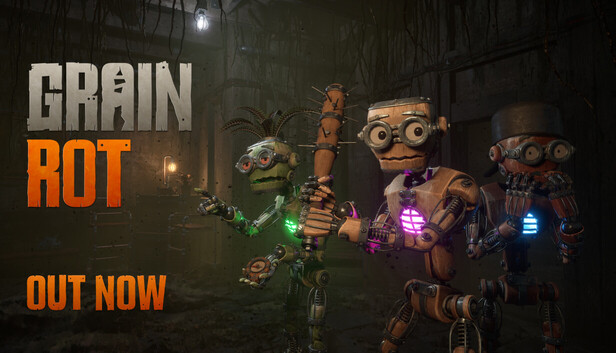
You are a Living Spark surviving inside fragile wooden vessels that splinter, collapse, and catch fire. When your vessel breaks, the Spark escapes. Death is just a change of scenery. Approximately Up
Ride a cursed elevator into shifting underground ruins with your crew. Smash furniture for resources or feed them into the Grinder for gold. If everyone breaks, your loot is lost.Trolling can become your friend’s demise. Dropkick enemies or “accidentally” launch your ally’s Spark out of their vessel. Block them in a monster-infested corridor or get stuck in the crossfire. Will your group handle the chaos you created yourselves?The deeper you go, the worse the Rot becomes. Bodies warp. Voices distort. Emotes become…worse. Or possibly better? The Deep Layers are filled with Corrupted vessels, reacting to sound, movement, and each other in ways that are impossible to predict. Fight. Build. Run. Panic.
When your vessel breaks, you stay in the run as a Spark. Guide your team through the dark and search for another host with a new set of abilities. Force your way back in before you fade out completely.Everything you haul back rebuilds your Outpost. Unlock interactive furniture, stat upgrades, rescued survivors, and stranger ways to survive the next descent. The stronger the outpost becomes, the deeper you can afford to go. Go deeper. Extract more. Leave someone behind. Make it back and build together. Or don’t come back at all.
FEATURES
Possess and swap between fragile wooden vessels
Co-op extraction horror with physics-driven chaos
Tactical carpentry with interactive furniture
Procedurally shifting underground dungeons
Persistent Outpost rebuilding and progression
Rage-bait your friends with cursed emotes
Rescue survivors trapped in the Deep Layers
Body corruption and mutation systems
Questionable cosmetics
Screenshots
SystemRequirements
Minimum
OS: Windows 10 64Bit
Processor: Inter Core i5-4590 / AMD Ryzen 5 2600
Memory: 8 GB RAM
Graphics: NVIDIA GTX 970 / AMD Radeon R9 390
DirectX: Version 11
Network: Broadband Internet connection
Storage: 10 GB available space
Support the game developers by purchasing the game on Steam
InstallationGuide
TurnOff Your Antivirus Before Installing Any Game
1 :: Download Game 2 :: Extract Game 3 :: Launch The Game 4 :: Have Fun 🙂
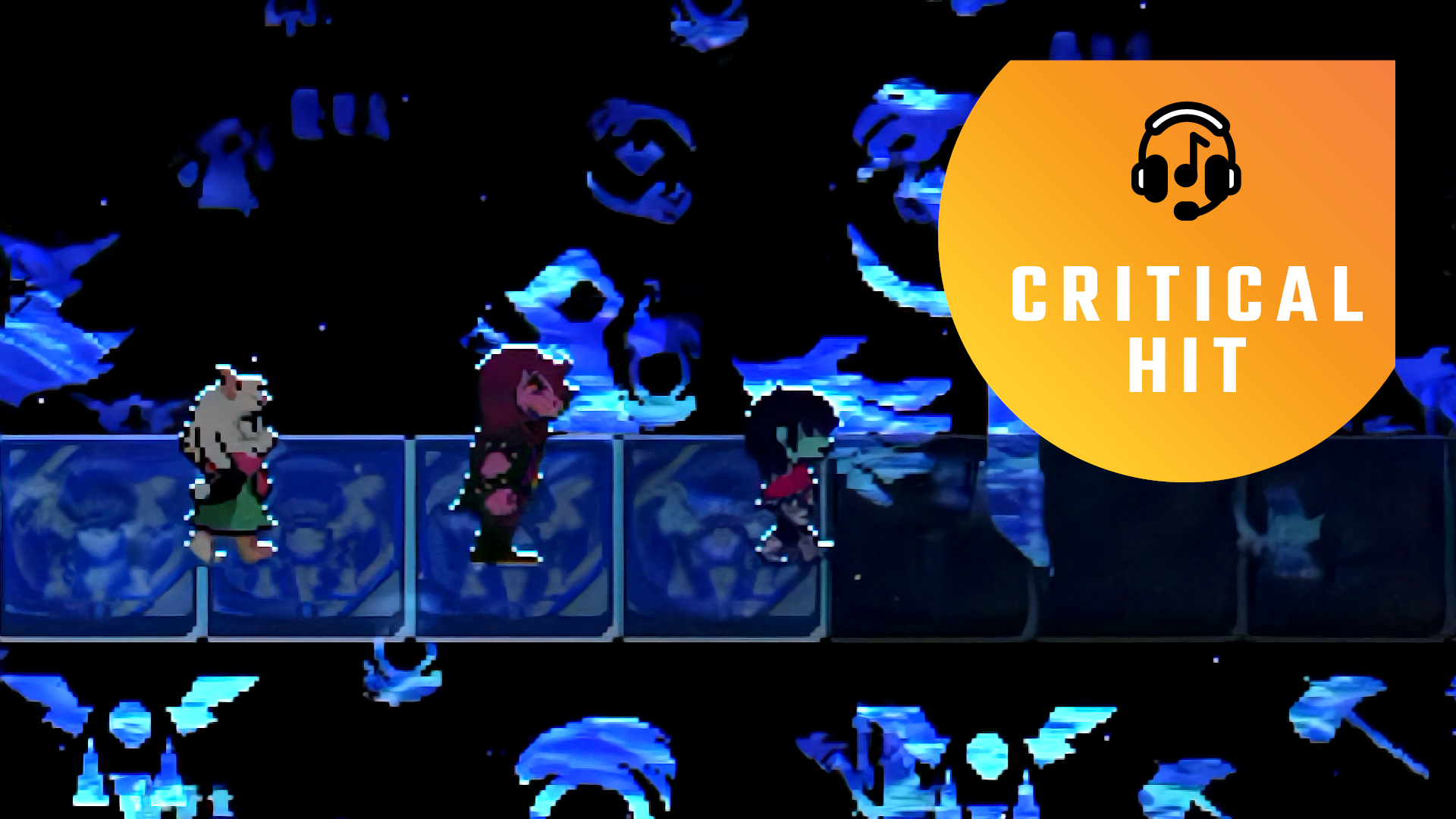
Welcome to Critical Hit, where Mollie (or someone else on the PC Gamer team) celebrate and lament all things videogame music, audio design, and the ways our favourite games make our ears tingle. This week I’m that “someone else”, and I’m here to talk your ear off about time signatures!
So I’ve recently given in and decided I won’t be waiting for Deltarune’s final chapter before I played it all in one go—too many of my mates were talking about it, so I sat my butt down to get ahead of the invariable, accidental spoilers and chew through chapters one to five.
You don’t need me to tell you that Toby Fox, developer of Deltarune (and Undertale preceding it) is an excellent composer. The dude made Megalovania, which has somehow survived being piledrivered into memedom, even by the Pope of all people, and still, inevitably, slaps. But the rest of his discography is flooded with bangers. The man can work a leitmotif, lemme tell ya.
Deltarune is no different, though for this Soundtrack Sunday, I want to focus heavily on one song from it: The Third Sanctuary, because this song might be one of my favourite tunes in a videogame ever. I cannot stop listening to this thing, even if it’s a nightmarish affront to rhythm.
Latest Videos FromPC Gamer
Spoilers for Chapter 4, if you’ve not played it yet.
The Third Sanctuary plays in Chapter 4 during the recreation of the church dark world, spawned from the hands of your good time pal and occasional chalk-eating high school dinosaur friend (I promise you this makes perfect sense if you play the game) Susie.
This attempt at recreation is somewhat flawed—see, a dark world in Deltarune is a reflection of the objects around it, who turn into its inhabitants, but it’s also a reflection of the person who created it. Susie is uncertain and conflicted for so many reasons I could write a whole other article on them.
An uncertain, mysterious prophecy weighing overhead that Susie has sworn to defy. A realisation that her new mentor figure died years ago, his ashes scattered over a hammer in the next room over. The dark world she creates is a mirror to the one the chapter primarily takes place in, reflecting this—and The Third Sanctuary represents this fragile ground by, well, just give it a listen.
Keep up to date with the most important stories and the best deals, as picked by the PC Gamer team.
63. The Third Sanctuary (DELTARUNE Chapter 3+4 Soundtrack) – Toby Fox – YouTube
Even if you don’t know anything about how music is constructed, you can sense the trepidation and strangeness in it—the starting, the stopping. The next bar of the song starts just a half-heartbeat before (or after) you think it’s gonna.
That’s due to its use of unusual time signatures, which I’ll try my best to explain. A time signature is a representation of rhythm in a song, the most ubiquitous form being 4/4, four beats in each bar. The second (bottom) number represents what kind of beats they are, also known as the note value, and the first (top) number represents how many of them are in a bar.
Britney Spear’s “Hit Me Baby One More Time” is a good 4/4 song to get your brain around the concept—sing the titular line to yourself while counting to four, and you’ll feel the rhythm: Hit(1) me Ba(2)-by One(3) more time(4)!
Another time signature you might be familiar with is 3/4 time, where there are three beats in a bar—this is what most waltzes are constructed out of (bum-BAH-BAH, bum-BAH-BAH). There’s also 5/4, which is most famously associated with the Mission Impossible theme tune.
I won’t go too far into the second number, but to keep it very simple: It’s always 2, 4, 8, or 16—2 is a half-note, 4 is a quarter-note, and so on. These can be interchangeable, for instance, you could write a 3/4 song as a 3/8 song, if you wanted—you’d just have to adjust the length of the notes accordingly, but because the number of beats in a bar isn’t changing, they can be functionally identical-sounding.
So, what time signature does The Third Sanctuary use? Yes. Yes is the answer.
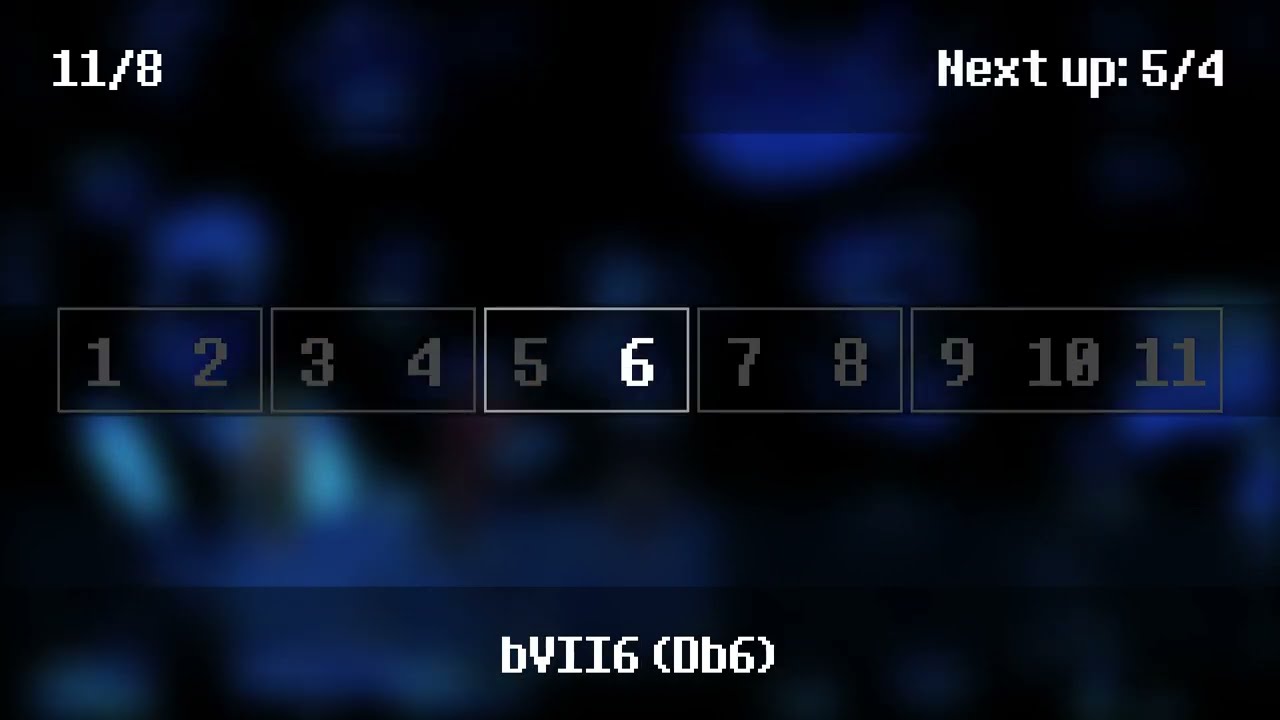
The Third Sanctuary starts out in 9/4 time, then jolts to 11/8 time with a random 4/8 thrown in there (because why not), interludes with 5/4, back to 11/8, jumpscares you with two bars of 12/8, back to 5/4 for a bit, and then the finale: A dance between 12/8 and 11/8, alternating, because who needs to be able to keep track of anything.
The Third Sanctuary – Time Signature Visualizer (Deltarune Ch.4) – YouTube
You can use an excellent visualiser, created by YouTuber 17a and embedded above, to keep track—and while this might seem like utter madness, Toby Fox isn’t just goofing off here and attempting to make drum cover artists have a heart attack, he’s using it to tell a story.
This chapter’s been out for a while now, so I am by no means the only person to come up with this analysis. But The Third Sanctuary’s time signatures of 12/8 and 11/8 don’t just clash with each other, they slowly come together over the course of the song, as though comforting each other in the darkness of Chapter 4—quite fittingly, finding each other in the dark.
The melodies present in those final bars swell and grow hopeful, despite the uncertain, stuttering strangeness of the time signatures they’re trapped in. More importantly, the main melody bridges the gap between those time signatures and flows over them in a determined way, just like Susie herself after discovering the grim truth of a (yet-to-be-revealed) prophecy.
The Third Sanctuary is incredible not just because it sounds good in spite of its time signatures, but because through them it tells the story of the entire chapter. When a friend of mine showed their musician pal the track, their analysis pretty much accurately summed up the major themes of the story despite the fact they’d never played it.
And then there’s the covers and the fan songs that have spun out of it. For the former, I’d like to share this lovely rendition by the Live Videogame Orchestra—something about hearing actual, breathing musicians manage to get a handle on the track is kinda magical.
The Third Sanctuary – DELTARUNE [Jazz Tentet Cover] – YouTube
But there’s also fan-inspired renditions. The hilariously-named 5ndth Sanctuary by IamDaDogeOfDaFuture is one of my favourites, having a wild run from 11/8, up to 15/8, up to 29/8—and still somehow managing to tickle my brain in a pleasing way. Here’s the song impossibly mashed into 4/4. Here’s the song in 5/4. People are playing with time and it’s awesome.
Toby Fox has successfully created his own little genre-pod of Math Rock enthusiasts in Deltarune’s fanbase, and I couldn’t be more delighted. The Third Sanctuary is an utter mess, it’s a drummer’s nightmare, and it’s also one of the most thoughtful moments of storytelling in a videogame, one that’s inspired countless of time-signature mad renditions.
I leave you with 4rd (not a typo) Sanctuary. This actually isn’t a fan-song, it’s a version Toby put in Chapter 5. I’m not analysing it in this article, I’ve got other things to do, but I’d like you to listen to it anyway.
You got fired from Furnox Corp 🖕. Now you start over with nothing but an axe, a few trees and revenge on your mind (╯‵□′)╯︵┻━┻ Chop down trees, turn logs into planks, craft furniture and sell it for profit. Reinvest your money into better tools, new machines and faster production. What begins as manual labor grows into optimized production lines and high value furniture sets that grant bonus payouts. Unlock new areas, discover new tree types, expand your operation step by step and improve your character with strength and stamina upgrades.
Cut down trees
Trees of all shapes, sizes, colors and questionable physics. If it stands upright and looks even remotely choppable, congratulations: It’s firewood now!
Collect & process resources
Turn raw nature into refined building materials using machines that absolutely should not be left unattended.
Craft like a maniac
Create furniture, props and tools, including deeply unnecessary but deeply impressive designs like:
If it exists … you can probably make it out of wood!
Distribute
Load up your handcrafted chaos and ship it to the nearby city.
Earn money.
Reach new customers.
Confuse absolutely everyone.
Buy components
Can’t chop it? Can’t craft it? Buy it! Use bought components to level up your character or jam them into your creations like a true artisan.
Screenshots
SystemRequirements
Minimum Requires a 64-bit processor and operating system
OS: Windows 10, Windows 11
Processor: Core i5-6700 or Ryzen 5 1600
Memory: 8 GB RAM
Graphics: GeForce GTX 1070 Ti or Radeon RX 5600 XT
DirectX: Version 12
Storage: 5 GB available space
Support the game developers by purchasing the game on Steam
InstallationGuide
TurnOff Your Antivirus Before Installing Any Game
1 :: Download Game 2 :: Extract Game 3 :: Launch The Game 4 :: Have Fun 🙂
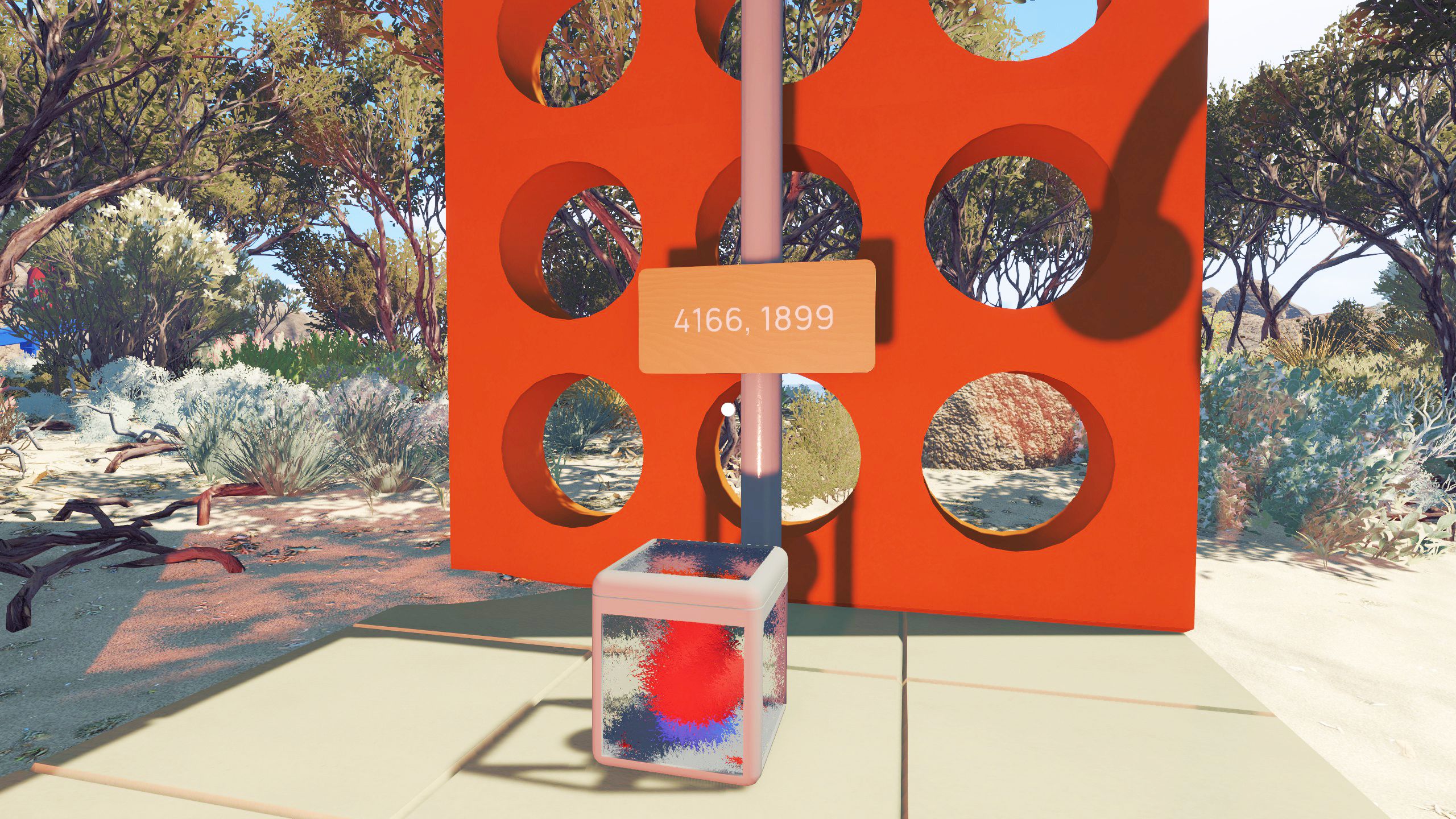
Early on in Big Walk, as you and your pals are scurrying around the world solving puzzles, you might come across a curious sight: a structure near the beach with an oblong prize (here at PC Gamer we call it a nubbin) inside a frosted glass container. Hanging on a hook above it: a sign with some numbers on it. Curious!
You’ve probably already seen a nubbin in a similar container, which could only be accessed when one of your companions held down a button in a nearby location. But what do these two four-digit numbers mean? And where’s the button?
(Image credit: Panic)
If you’re stumped with this numbers puzzle, as we were for a while, we’re happy to help.
Latest Videos FromPC Gamer
Since Big Walk is best when you figure puzzles with your friends instead of by reading guides, I’ll ease you into the solution to this number puzzle by giving you progressively more explicit hints below. This way you can get some help without completely spoiling the solution, if you like.
Hints
Hint 1:
When you first find this number puzzle, most likely just after you’ve completed the tutorial puzzles, you won’t be able to solve it. It’s just that simple. The best advice is to leave it for now and come back to it later, after you’ve solved five other puzzles and completed the red tower.
Hint 2:
When you’re looking around the rest of the world, keep those numbers in mind. Specifically, the format: two four-digit numbers. Maybe you’ll see something elsewhere that looks like it’s related.
Hint 3:
You’ll need a specific item to make sense of those numbers. There are actually two different items that can be individually used to help you with the number puzzle.
Hint 4:
The numbers 4166 and 1899 are coordinates, latitude and longitude, and they point to the button’s location on the island.
Hint 5:
There’s a map that can be used to find the coordinates, and there’s a device that displays its current coordinates on a screen, like a GPS. Either of those can be used to solve the number puzzle.
OK, that’s enough hints. Here’s the solution:
Solution
First, you can find the map, which requires placing five nubbins on the red tower’s roof. The map room will then open up right next to the starting hub, which features a large map on the floor, and a portable, foldable map and compass.
With the map opened in your hands, you can follow the longitude (the numbered lines on the sides) of 41 and the latitude (the numbered lines on the top and bottom) of 18. Where they meet on the map is the grid square to search for the button, which is east and south of the starter hub. The “66” in 4166 refers to a more exact measurement than the map shows, meaning it’s about two-thirds of the way south from the top of the grid, and 99 means it’s about as far east as you can be in the grid, right along the gridline.
Enlarge the image below by clicking on the arrows on the lower-left corner, if it helps.
(Image credit: Panic)
That’s where to look! You’ll find a small button carefully camouflaged behind a rock. Someone will have to hold down the button while another player grabs the nubbin at that puzzle building when the glass container opens, so make sure you’ve got walkie-talkies with you.
The other way to find the button (and the more fun way, in my opinion) is by using the GPS device. This item will take longer to find than the map: you’ll need to visit the green tower, which is in the same area you’ll eventually find the button, and just outside it you’ll see a red frame holding the GPS (and another sign with more numbers on it).
(Image credit: Panic)
You can hold the GPS up to friends to show current coordinates, or stick it on someone’s backpack.
With one player wearing the GPS on their back, another player can direct them which way to go. Just keep your eyes on the numbers: as you move across the island, the GPS readout will tell you if you’re getting closer or further from the location of the button. Happy walking!
WorldNeverland Daily Life in the Elnea Kingdom Direct Download:
WorldNeverland – Elnea Kingdom
WorldNeverland – Elnea Kingdom is a sandbox life simulation game where you emigrate to a fictitious kingdom and have the freedom to live life as you see fit. Korea IL-2 Series
It’s a living, breathing fantasykingdom inside your computer! Freely explore beautiful forests and rivers, as well as farms, pastures, mines, schools, churches, castles, and more. Even the lives of the kingdom’s inhabitants are simulated down the finest detail. Visiting the kingdom will feel like an MMORPG as you engage in authentic conversations with its residents. Find a partner, get married, and have children to pass on your lineage. Life within this kingdom is completely unique, allowing you to weave a different tale with each and every playthrough. This goes beyond that of a typical game, creating an experience that will stay in your heart as a cherished memory forever.
What Can You Do in This Game?
Arrive in the kingdom as a traveler, become a citizen, and start a life here.
Live in your own house and till your fields, save money and maybe even move into a mansion.
Participate as the facilitator or guest of events such as seasonal functions and national ceremonies, as well as festivals, marriages, childbirths, funeral services, and more.
Befriend and marry other single characters.
Dedicate yourself to pursuits like a trade or martial arts and work your way to the top.
Have many children to carry on your family line.
Keep playing for generation after generation of your family by transferring control to your children.
Use a variety of ingredients to make delicious food.
Explore dungeons and forests, defeat monsters, as well as gather resources and ingredients for cooking food and crafting weapons.
Compete to be the number one hero in the kingdom by entering martialarts tournaments.
Live the way you want. Everything is up to you.
Visit the library and read about the kingdom’s vast history, spanning hundreds of years.
Screenshots
SystemRequirements
Minimum
OS: Windows:10/11
Processor: A 64-bit dual-core CPU clocked at 1.0 GHz or higher.
Memory: 4 GB RAM
DirectX: Version 11
Storage: 2 GB available space
Support the game developers by purchasing the game on Steam
InstallationGuide
TurnOff Your Antivirus Before Installing Any Game
1 :: Download Game 2 :: Extract Game 3 :: Launch The Game 4 :: Have Fun 🙂
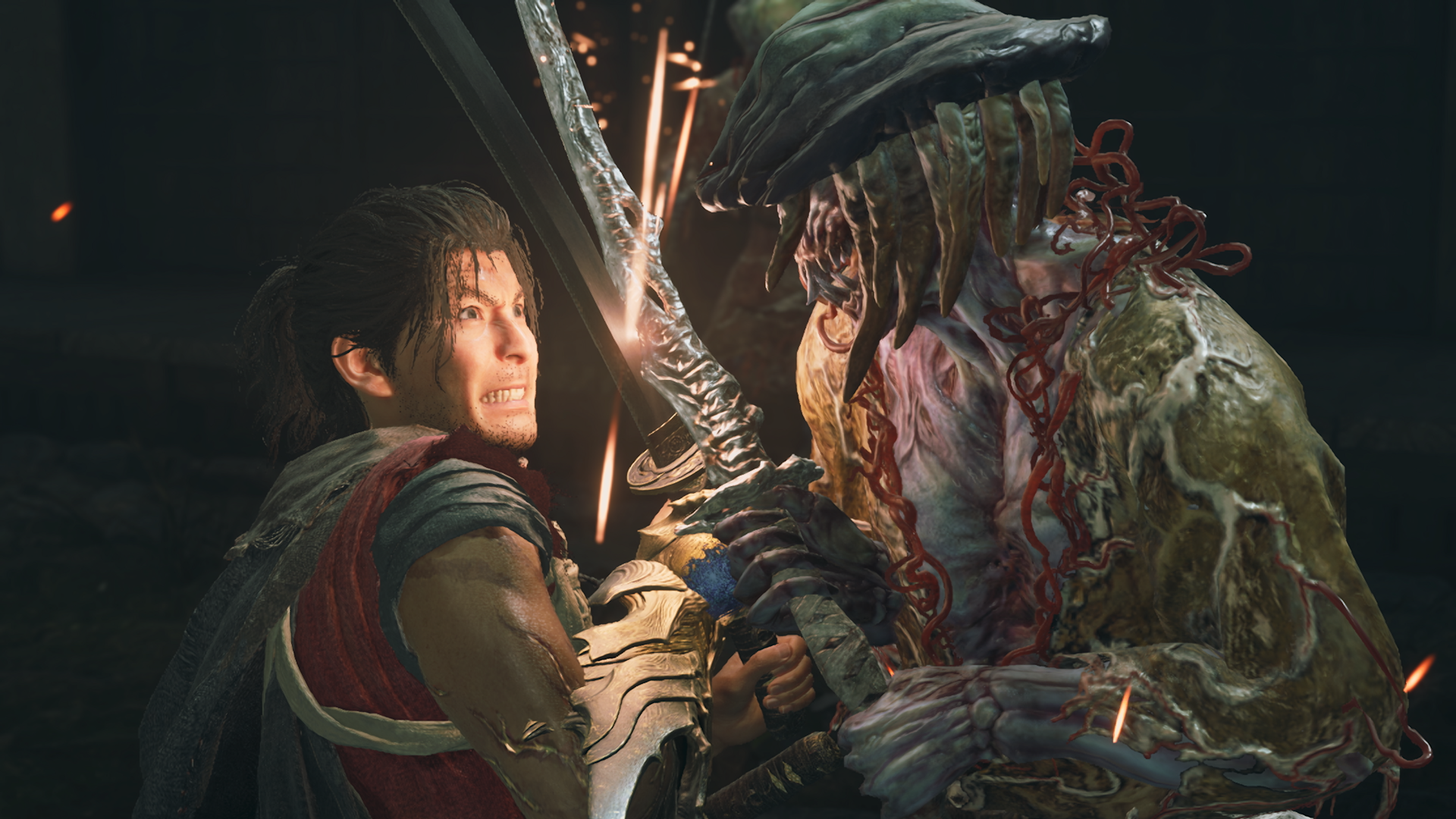
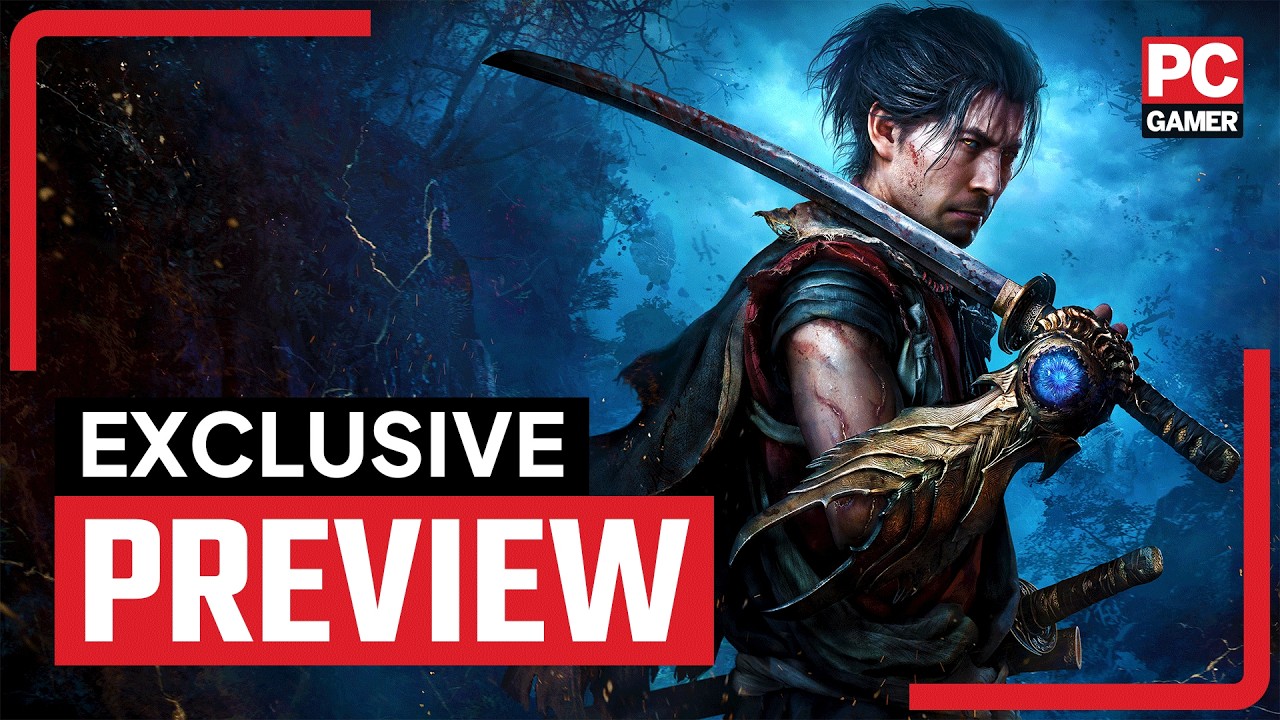
During my world-exclusive hands-on preview of Onimusha: Way of the Sword in Capcom’s headquarters in Osaka, Japan, I interviewed the animation director, Hiroshi Yugen, about creating the incredible sword-fighting animations for the game. When the star of the game is the legendary sword master, Miyamoto Musashi, a warrior who won over 60 duels during his lifetime, you’re going to want to get these animations right.
“When we get to making action in our games, the first step is always kind of self-study and learning about how to do these things and how to use these things,” explains Yugen. “And then we proceed to the stages of design and motion capture. [So I] sat down and spoke with the director, and we [decided we] really wanted to focus on creating this very realistic, grounded sword action for the game, and so from the very beginning, the main goal was first to research the depths of swordplay and how to do that.
“We figured it was best to speak to experts in the field, and so we were introduced to motion capture artists and action stunt coordinators at a studio called Katsugekiza Motion Capture Studio. So we were paired together with an expert who knows about sword fight choreography and has provided that kind of service for a lot of different famous movies and dramas.”
Latest Videos FromPC Gamer
But what was the process of shooting the animations for Way of the Sword? I’m shown footage from Capcom’s state-of-the-art motion capture studio in Osaka that has over 150 high-tech cameras for tracking and recording motion. A full team of stunt actors is suited and armed with faux weapons, and they’re all taking advice/direction from Yugen in between action takes for a scene where Musashi is attacked by a group of ninjas.
“So the first step is taking the action and the game design specifications, what we want to achieve with the action in the game, and explaining that to the actors and sword fight choreographers in the studio, so that they have an idea of what we’re looking for,” says Yugen. “So what I’m explaining in this video is the rules of the game and how things work on a mechanical level. So I was explaining to them that they need to approach from the right-hand side for the particular animation that we’re going for.”
(Image credit: Capcom)
I then watch as the team of stunt choreographers and sword technique experts act out the fight, which can be seen in part in the above Way of the Sword preview video. I’m no expert with the sword, or a martial arts expert, but it is obvious these guys know what they’re doing.
“So essentially, what you just saw there,” says Yugen, “was them basically rehearsing the action that we explained to them. So we take this temp recording, and then we can see that instantly within the engine itself, and then we can review and revise bits.”
Keep up to date with the most important stories and the best deals, as picked by the PC Gamer team.
This last bit really blew my socks off. Mere moments after the fight had been motion captured, the fight just wasn’t ready to watch back on film, but it was actually injected into Way of the Sword’s game engine, Capcom’s upgraded RE Engine, so the actual recorded animations could be appraised looking like how they would do in the game.
“With the rehearsal takes,” continues Yugen, “we can take those and iterate until we get to a form of it where we’re quite happy with the creation of the action that we’ve captured. And as with what we saw before with the rehearsal take, once we’ve recorded that, we can see it instantly within the engine. We can review the motion there.”
I ask if it is Yugen who is responsible for making the final decision on what take is good to go.
“So ultimately the decisions all come down to the game’s director. He’s the one that gets the final sign-off. But even from the actors, there are cases where we’ve been happy with the performance, but the actors themselves are not satisfied. They’re like, ‘No, no, no, that wasn’t right. I’ve got to do this again.’ And so there are many cases where they will keep doing more and more takes until everyone is satisfied.”
It’s evident that a dump truck-load of expertise, care, and attention has gone into Way of the Sword’s animations, and judging from how awesome many of my fights were during my hands-on preview of the game, I think it fair to say that it has been time well spent.
For more insight into Onimusha: Way of the Sword, be sure to check out the video preview above as well as pick up the next issue of PC Gamer magazine, which has a world-exclusive deep dive feature on the game and also includes a huge A1 Onimusha poster.
Dassault Systèmes’ CATIA (Computer Aided Three-dimensional Interactive Application)—spanning both CATIA V5 and the 3DEXPERIENCE platform—remains the industry standard for high-end aerospace, automotive, and industrial mechanical engineering. Unlike consumer-grade CAD applications or video editing suites that scale heavily across generic parallel threads, CATIA relies on a strict combination of high single-thread CPU execution, OpenGL driver-certified GPU rendering, and severe memory bandwidth requirements during large-assembly manipulation and Finite Element Analysis (FEA / SIMULIA).
This hardware analysis provides empirical recommendations and Catia system requirements for building or configuring a CATIA workstation using modern hardware platforms.
Catia System Requirements: Hardware Component Analysis
Processor (CPU)
The CPU is the primary bottleneck for parametric modeling, assembly recalculation, and geometry generation in CATIA.
Single-Core Clock Speed & IPC (Instructions Per Cycle): The vast majority of CATIA modeling tasks (Part Design, Generative Shape Design, Assembly Design) execute serially. Core clock speed (specifically single-core boost clock) and modern microarchitecture IPC are the dominant factors in geometry regeneration speed.
Multi-Core Scaling: Multi-threading in CATIA is primarily leveraged during specific tasks:
SIMULIA / FEA Mesh & Solve: Linear and non-linear structural solves scale strongly up to 16–32 cores.
Rendering (3DEXPERIENCE / Live Rendering): Multi-threaded ray-tracing.
Best Overall for Modeling & Medium Assemblies:Intel Core Ultra 9 285k or AMD Ryzen 9 9950X. Both chips offer single-core boost clock speeds approaching 5.7–6.0 GHz, yielding maximum responsiveness in interactive viewports and feature trees.
Best for Heavy FEA, SIMULIA, & Extreme Multi-Body Assemblies:AMD Ryzen Threadripper 9000 Series (9970X / 9980X) or Intel Xeon 6 Series. While single-thread boost is slightly lower than consumer flagship processors, 4-channel or 8-channel memory architecture and higher total PCI-E lanes prevent memory bus saturation during complex matrix solving.
Graphics Card (GPU)
CATIA utilizes custom OpenGL display pipelines that behave differently depending on GPU architecture and driver validation.
Workstation (NVIDIA RTX Pro / Quadro) vs. Consumer (GeForce RTX):
CATIA requires official Dassault Systèmes workstation certification for full hardware acceleration features (including Real-Time Shader FX, ambient occlusion, anti-aliasing without artifacts, and stability under heavy geometry loads).
While consumer GPUs (e.g., GeForce RTX 5080 / 5090) offer substantial raw compute power, consumer Game Ready/Studio drivers lack CATIA-specific OpenGL profile optimizations, resulting in viewport stutters or visual artifacts in large assembly modes. For this reason, we recommend Pro cards over Geforce in this application.
VRAM Requirements:
Standard Assemblies (<5,000 parts): 12 GB – 16 GB VRAM.
Large Assemblies (>10,000 parts / Complex Surfaces): 24 GB – 48+ GB VRAM.
Tier 2 (High-End Professional): NVIDIA RTX Pro 5000 (48GB GDDR6 ECC) or RTX Pro 4000 (24GB GDDR6)
Tier 3 (Mainstream CAD Workstation): NVIDIA RTX Pro 2000 (16GB)
Memory (RAM)
Insufficient RAM causes CATIA to spill memory address space onto system storage, inducing catastrophic performance drops during parametric tree updates.
Workload Scope
Part/Assembly Complexity
Recommended Memory (RAM)
Memory Type
Standard Modeling
< 2,500 parts, single surfaces
32 GB
DDR5-5600 MHz (Dual-Channel)
Large Assembly / Automotive
2,500 – 15,000 parts, complex Class-A surfaces
64 GB – 128 GB
DDR5-5600 MHz (Dual/Quad-Channel)
Extreme Assembly & FEA
> 15,000 parts, structural mesh SIMULIA
128 GB – 256 GB+
DDR5 ECC Registered (Quad/Octa-Channel)
Storage
CATIA projects involve reading thousands of discrete .CATProduct, .CATPart, and CGR (CATIA Graphic Representation) files simultaneously. Read latency and IOPS (Input/Output Operations Per Second) directly affect file open/save times and assembly load speeds.
Primary Drive (OS & Application): NVMe PCIe 4.0 or 5.0 M.2 SSD (e.g., Samsung 990 Pro 1TB/2TB or Samsung 9100).
Active Project Storage: NVMe PCIe 4.0 M.2 SSD configured as a dedicated cache drive.
Archive / Large File Vault: High-capacity SATA SSDs or 10GbE Network Attached Storage (NAS).
Estimated Benchmarks & Performance Metrics
The benchmarks below summarize internal workstation testing utilizing standard SPECapc for CATIA V5/3DEXPERIENCE workloads, measuring composite scores across Viewport Graphics (CGR rendering, shading, wireframe) and CPU Geometry Processing.
CPU Benchmark Performance (Composite Score – Higher is Better)
Key Takeaway: For pure geometry manipulation and viewport interaction, the Ultra 9 285k and Ryzen 9 9950X lead due to higher single-core frequency. However, for engineering workloads that involve continuous SIMULIA/FEA matrix solves, the multi-core scaling and memory bandwidth of Threadripper 9000 cuts simulation wait times by more than half.
GPU Viewport Performance Comparison (FPS at 4K Resolution – High Real-Time Shading)
GPU Architecture
VRAM
CATIA Viewport Composite Score
4K Viewport FPS (10K+ Parts)
Dassault Certification
NVIDIA RTX Pro 6000 Blackwell
96 GB
285.4
118 FPS
Fully Certified
NVIDIA RTX Pro 5000 Blackwell
48 GB
248.1
102 FPS
Fully Certified
NVIDIA RTX Pro 4000 Blackwell
24 GB
192.6
81 FPS
Fully Certified
NVIDIA GeForce RTX 5090
32 GB
174.2 (Uncertified)
72 FPS (Driver Artifacts)
Not Certified
NVIDIA RTX Pro 2000 Blackwell
16 GB
138.5
58 FPS
Fully Certified
Catia System Requirements: Workstation Configurations
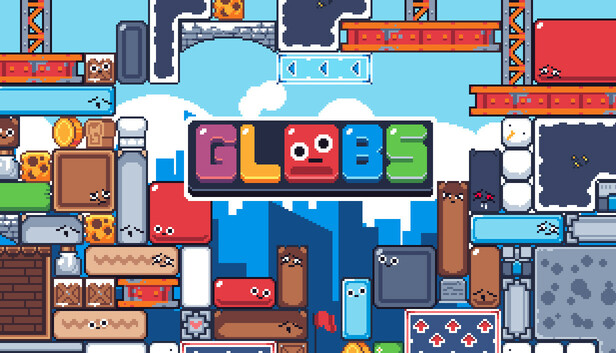
Meet the size-changing Globs in this colorful puzzle game. Use the curious properties of their bodies at your advantage to solve a variety of levels, by using them to push each other or against walls, squeeze into tight gaps, grow to block holes, and many more surprises, all in a lively and expressive pixel art aesthetic. Tower Hunter: Erzas Trial
The puzzles are designed to be approachable, but provide additional optional challenges for players wishing to put their puzzle-solving skills to the test.
Over 40 levels
A jazzy and upbeat soundtrack
Expressive character animations
Four different themed worlds each with an unique visual identity
Screenshots
SystemRequirements
Minimum
OS *: Windows 7+
Processor: x86_32 CPU with SSE2 instructions, any x86_64 CPU, ARMv8 CPU (Example: Intel Core 2 Duo E8200, AMD Athlon XE BE-2300, Snapdragon X Elite)
Memory: 4 GB RAM
Graphics: Integrated graphics with full OpenGL 3.3 support (Example: Intel HD Graphics 2500 (Ivy Bridge), AMD Radeon R5 Graphics (Kaveri))
Storage: 200 MB available space
Support the game developers by purchasing the game on Steam
InstallationGuide
TurnOff Your Antivirus Before Installing Any Game
1 :: Download Game 2 :: Extract Game 3 :: Launch The Game 4 :: Have Fun 🙂
I’ve spent the last week playing Beast of Reincarnation and I’ve really enjoyed it, though I am not, admittedly, a huge lover of parry-centric action. And Beast of Reincarnation has loads of parrying. You can’t not parry in Beast of Reincarnation, but there are ways to make the combat far less reliant on precise parries and dodges.
Protagonist Emma starts with a crossbow and when I realised this I wrote it off as a throwaway accoutrement that you can’t really rely on, kinda like the rifles in Bloodborne, or the companion drone in Stellar Blade. But no. Focusing on the crossbow and the long bow—which you get about an hour into the game—is basically the game’s easy mode, without resorting to the game’s actual easy mode (which exists, by the way).
Because if you focus on upgrading projectiles they’ll end up chewing through health bars at a stunning rate. While some bosses—especially those with two forms—will last longer than your ammo supply will, projectiles are a sure fire way to absolutely shred their health pool from a safe distance without taking too many close range risks in a game where two hits can kill.
Spoilers follow, but this is me against the first major boss in New Game +. The video isn’t really meant to demonstrate how easy it is, but more to show what crossbow violence looks like when you invest in it. This boss has a second phase, but luckily I hadn’t used a single one of my arrows yet.
(Yes, enemies can still close the distance on you if you’re not careful. No, investing in projectiles will not completely eliminate the need for parrying and dodging.)
It’s a lot of fun to float suspended in mid air, thanks to Emma’s entanglement gauge, while raining down hell on the vast majority of enemies incapable of touching you. Arrows and bolts replenish at every checkpoint campsite, and since these are very, very common (perhaps too common) you can pretty much mainline projectiles from about a third into the game.
(Image credit: Game Freak)
The best direction on Emma’s skill tree to start with is the bottom left, where Tracking Shot is the first option. This, as you’d expect, makes your ranged arrows track enemies. Further on you can increase the chance of shots not consuming arrows or bolts by up to 15% percent, which dovetails nicely with a later skill that gives a 50% chance of replenishing up to 10% ammo for ranged weapons for every enemy killed.
Keep up to date with the most important stories and the best deals, as picked by the PC Gamer team.
Another skill, Magic Bullet, will have each tracking shot loop back around and hit an enemy again once its first made contact. Add to this Scatter-Shot, which splits every ranged projectile into three spreading shots, and you can probably imagine the potential for some intense audio-visual fire works here. Whenever I was popping off bolts the area felt like a News Years dancehall.
But for Scatter-Shot and the also awesome Entangled Shot—which makes every ranged attack “slightly” restore your world-pausing entanglement gauge—you’ll also need to invest heavily in Emma’s Hair skills as well. Overall, my focus on Emma’s projectiles meant that I didn’t invest a whole lot in the mutt Koo during my first playthrough, but there’s always New Game + for that.
The skill tree isn’t the only avenue to upgrade projectiles. At workbenches and campsites you can upgrade each ranged weapon to at least +11, in my experience, which takes in upgrades to reload speed and damage. Every individual arrow and bolt can be upgraded too. For example, I’ve upgraded acid arrows to +2, which increased its damage and the amount I have in my quiver. I put the vast majority of my amber into upgrading projectiles, which probably would have seemed silly to me in most other action games but not here.
Overall, I was surprised by how viable a projectile playthrough of Beast of Reincarnation is. Now, to focus on the dog…
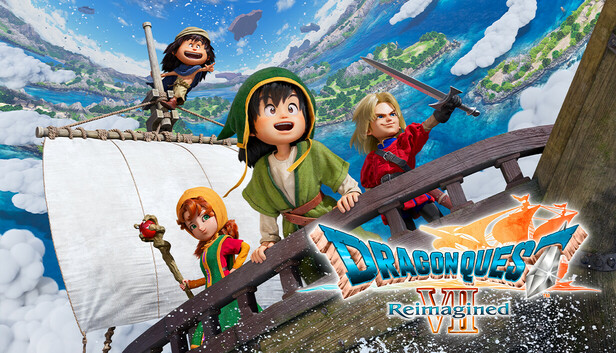
Set sail on an adventure spanning past and present in DRAGON QUEST VII Reimagined! As a bright-eyed young fisherman’s son, you’ve lived your entire life on the peaceful island of Estard. Your journey begins with a simple question: is there more to the world than this small island kingdom? On a quest for answers, you and your childhood friends discover the Shrine of Mysteries and are swept back in time. There, you uncover the shocking truth that entire lands have been sealed away by a malevolent force.
The fate of the world now rests in your hands. DRAGON QUEST VII Reimagined brings a timeless classic to life in a whole new way with charming diorama visuals, updated gameplay mechanics, and a streamlined story. For seasoned adventurers, rediscover a tale of plucky companions that is brimming with joy and heartbreak. For fledgling heroes new to the series, this is a great place to begin your DRAGON QUEST journey.
Screenshots
SystemRequirements
Minimum Requires a 64-bit processor and operating system
OS: Windows® 11
Processor: AMD Ryzen™ 3 1200/Intel® Core™ i3-6100
Memory: 8 GB RAM
Graphics: AMD Radeon™ RX 460/Intel® Arc™ A380/NVIDIA® GeForce® GTX 750
DirectX: Version 12
Storage: 15 GB available space
Support the game developers by purchasing the game on Steam
InstallationGuide
TurnOff Your Antivirus Before Installing Any Game
1 :: Download Game 2 :: Extract Game 3 :: Launch The Game 4 :: Have Fun 🙂


![The Third Sanctuary - DELTARUNE [Jazz Tentet Cover] - YouTube](https://img.youtube.com/vi/By-2R-2TGTw/maxresdefault.jpg)