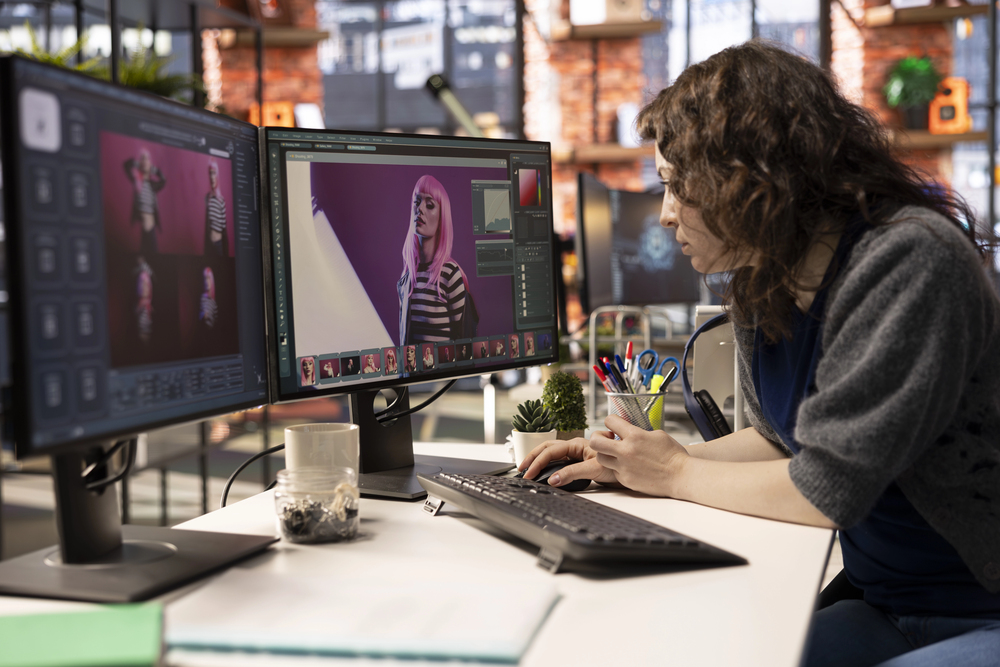

AI video can help an independent creator produce scenes without a studio, but video generation is a costly place to make every creative decision. If character, location, wardrobe, and lighting remain unresolved, each attempt becomes an experiment.
A better workflow starts with still images. Character references and AI video storyboard frames are faster to compare than full clips, helping home-based filmmakers settle the visual direction before spending credits on motion.
Why Still Images Should Come Before Video
Every video model interprets many details at once. A prompt may describe the action without defining how a character looks from different angles, what belongs in the room, or how shots connect. The result can be attractive yet wrong for the story.
Still-image planning separates those decisions. A creator can establish a character sheet, approve the setting, and choose each major composition. Weak ideas are rejected as images, while selected frames become production references.
This does not remove generative variation, but it narrows the model’s room for interpretation and can reduce unnecessary reruns.
Build the Visual Foundation in Renoise
The practical starting point is an AI photo editor that generates and revises images in the same workspace. Renoise Canvas places references, results, and later video clips on one visual board.
Begin with a brief defining the tone, period, palette, and camera style. Then build three asset types:
- Character references showing the face, clothing, proportions, and important accessories
- Environment references defining the location, lighting, and recurring props
- Story frames representing the opening, turning point, and ending of each scene
Different models serve different jobs. Midjourney can establish art direction, while GPT Image 2 supports instruction-based creation and editing with multiple references. Seedream, Nano Banana, and Grok provide other interpretations in the same workspace.
Turn a Script into Character and Story Frames
Renoise AI works here as a connected pre-production workspace rather than a single prompt box. Creators can save character references in the asset library and reuse them across tasks. Supported models also allow named asset references in prompts.
Produce a neutral character reference before dramatic poses. Generate front, side, and three-quarter views using the same clothing description. Select one version, then reuse it for close-ups and full-body frames.

Next, break the script into shots. Each frame should show who is visible, where they are, what happens, and what the camera emphasizes. For example: “Medium close-up, the same detective from the reference image, beneath a flickering hallway light, tense expression, shallow depth of field.”
Keep character descriptions and visual language consistent. Approve only the essential frames that determine continuity, performance, and pacing.
Edit Weak Frames Instead of Starting Over
When a frame is almost right, regeneration may create new problems. Renoise’s AI image editor can remove objects, replace backgrounds, expand compositions, repaint selected areas, or adjust mood while retaining useful elements.
A creator might expand a close-up into an establishing shot, remove a prop, or change daylight to night. Refining that frame gives the video prompt a clearer target than starting over.
Generative editing is not pixel-perfect retouching. Review faces, hands, and continuity details at full size before approval.
Enhance Only the Frames That Move Forward
Not every draft needs high-resolution processing. First choose the references that will guide video generation. Then use an AI image enhancer when a selected frame is soft, noisy, compressed, or too small.
Renoise enhances images to 1080p, 2K, or 4K. It reconstructs plausible detail rather than recovering missing pixels, so compare against the source. Regenerate or repaint severe blur and distorted features.
Explore at normal quality, refine the winners, and enhance only references entering production.

Move from Approved Frames to Video
Once the plan is stable, chosen images can guide Renoise video models. Use a character image as a reference, an AI video storyboard frame as the starting image, or two planned frames as a shot’s beginning and ending when supported.
Canvas preserves relationships between assets. Creators can extract one clip’s final frame and use it to open the next. The clips still require assembly in editing software, but production begins with approved visual targets rather than blind generations.
Final Thoughts
For independent creators, the biggest advantage of AI image tools is not simply producing attractive pictures. It is making video decisions earlier and more cheaply. Renoise combines image generation, editing, enhancement, references, Canvas organization, and video models in one workflow. By approving characters and story frames before animation, creators can reduce trial and error while keeping more control over the final narrative.
FAQ
What Is an AI Photo Editor?
An AI photo editor uses generative models to create or modify images through prompts and references. It can support tasks such as object removal, background replacement, composition expansion, localized repainting, and visual restyling.
Why Create Storyboard Images Before AI Video?
Storyboards define the character, location, composition, and key action before motion is generated. They give the video model clearer visual targets and make it cheaper to reject weak ideas at the image stage.
Can Renoise Keep a Character Identical Across Every Shot?
No generative workflow can guarantee perfect identity across every result. Reusing character references, keeping descriptions consistent, and connecting shots with first and final frames can improve stability and reduce unwanted changes.
When Should an Image Be Enhanced?
Enhance a frame after it has been selected for production and only when softness, noise, compression, or resolution is the problem. Regenerate or repaint frames with major structural errors instead of trying to fix them through sharpening alone.
Find a Home-Based Business to Start-Up >>> Hundreds of Business Listings.